

Latest News

a, McGill, News

McGill Innovation Week highlights projects on and off campus

McGill’s annual Innovation Week (MIW) showcased developments in technology, innovation, and entrepreneurship. Packed with more than 20 events between Nov. 15 and Nov. 20, MIW explored a wide range of issues, including intellectual property, the future of education, social innovation, and food security.

The main organizer of MIW, and Director of Innovation in Practice at McGill’s Office of Innovation and Partnerships, Isabelle Péan, spoke to the new initiatives of this year’s MIW. 

“This year, the major initiative of Innovation Week was probably Salon 1861,” she said.

Salon 1861 is the new face of the transformed St-Joseph’s church in Montreal’s Little Burgundy neighbourhood.

“[Salon 1861 will be] a wellspring for social and cultural innovation, as well as social entrepreneurship,” the MIW’s website reads.

 After a careful renovation that preserved the architectural heritage of the church, Salon 1861 opened its doors for the first time to kick off McGill Innovation Week.  

According to Péan, MIW ran smoothly. Going forward, she explained the importance of raising awareness about MIW amongst McGill students. 

 “Most people are really happy to work together during this week,” she said. “And it is really interesting to bring students, staffs, external partners all together […. However,] my main challenge is the promotion of MIW. Next year, we will have to improve it.”

One event that attracted a lot of students was a tour of innovative organizations and start-ups, such as  BioFuelNet, échoFab, and UBER, in Quartier de l’innovation, an area in Montreal’s Griffintown neighbourhood that was created as a hub for small businesses. Samuel Bellini, U2 Science, attended the tour and explained that he attended MIW because he wanted to explore opportunities in entrepreneurship. 

“I came to see what kind of resources Montreal has to offer young ambitious people who are interested in startups,” Bellini said.

Jeffrey Riley, a local Montreal resident, explained that he was interested in MIW because of the diversity of issues it covered.

“It’s a quick way [to] see a lot of great organizations that are working on social innovation,” Riley said.

Riley also emphasized how the week’s events brought together people from different walks of life. 

“It’s also a great way to bridge the French and English communities,” he said. “These are [mostly] organizations run by francophones, but are also really accessible to anglophone students.”

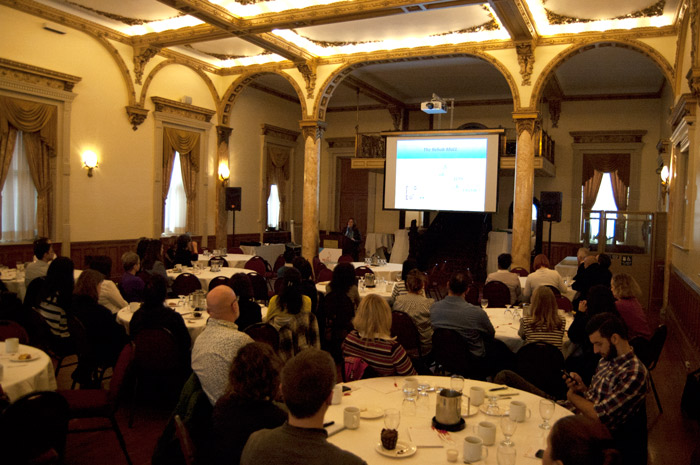
MIW also highlighted the innovation of researchers at McGill. At a speaking event entitled What about innovation at McGill? held at the McGill Faculty Club, Dr. Robert Hess, professor and director of the research department of ophthalmology, discussed his research into a potential cure for amblyopia, or lazy eye. Hess and his team have discovered what he describes as the first software drug, which has been shown to correct lazy eye through a regimented schedule of playing the video game Tetris.

Although MIW is now over, Péan explained that her office continues to engage McGill students in innovation and entrepreneurship throughout the year. 

“We also have a Student Working Group at McGill and two interns working with us this Fall,” she said. 

The Student Working Group (SWG) at McGill aims to provide an opportunity for students to explore these issues further. It is currently working towards the establishment of a fund which will support McGill students who want to create startup businesses.


a, Montreal, News

Anti-protest law ruled unconstitutional

Article 500.1 of Quebec’s Highway Safety Code, previously used to disperse and ticket protesters, has been repealed. Quebec Superior Justice Guy Cournoyer issued a ruling on Nov. 12, declaring the article unconstitutional. Quebec will have six months to amend the code.


The article in question


The Highway Safety Code is a provincial set of laws outlining legal procedure on Quebec’s highways. Article 500.1 prohibits vehicles or obstacles obstructing the highway unless previously authorized by the law. 

“No person may […] place a vehicle or obstacle thereon so as to obstruct vehicular traffic,” Article 500.1 reads. “This section does not apply during parades or other popular events previously authorized.”

Cournoyer stated that the article was used to break up protests, violating the Quebec and Canadian Charters of Rights and Freedoms. He argued that the law was intended to prevent people from blocking roads with vehicles, not to discourage protests.

Article  500.1 was first used against demonstrations during the 15th annual anti-police brutality protest on March 15, 2011. Altogether, 239 people were arrested during the protest, with most charged under the Highway Safety Code and fined $500. 


Usage of Article 500.1


Along with municipal bylaw P-6, which requires protesters to provide the police with an itinerary and prohibits the wearing of masks during protests, article 500.1 has been heavily criticized by protesters for infringing on individuals’ freedoms. Paul Ayotte, an organizer of the Confederation of National Trade Unions (CSN) demonstration that took place on Nov. 16 on McGill campus, is firmly against the use of article 500.1.

“I think it’s wrong,” Ayotte said. “Absolutely wrong. We have a right to free assembly and having to ask permission to have that right shouldn’t exist, we should just be able to have the right.”

Students’ Society of McGill University (SSMU) Vice-President (VP) External Emily Boytinck administrates all SSMU contingents of protests. She voiced similar concerns over the use of Article 500.1 to disband protests.

“I firmly believe that everyone has the right to take to the streets and demonstrate, and I’m grateful to see that one of the avenues used to ticket activists is no longer viable,” Boytinck said.

Protesters charged with a P-6 violation are fined $637, while an Article 500.1 violation costs $500. Boytinck expressed sympathy for students faced with these potential expenses, and felt that the existence of such fees, in addition to students’ generally unstable finances, discourages them from demonstrating.

“I believe that these laws have created a culture of fear for student activists,” Boytinck said. “Add the risk of getting ticketed to the risks that you will be exposed to tear gas or even pepper spray, and the likelihood that people will feel safe and comfortable going to a demonstration will be decreased.”

Ayotte and his colleagues were against the article because of what it represents.

“I think notifying the police isn’t a problem, but you shouldn’t have to ask them permission for anything,” Ayotte said. “They shouldn’t have the right to refuse, and if they didn’t have the right to refuse, why even ask in the first place.”


Implications of the Ruling


Boytinck hopes that this ruling will inspire a similar rejection of P-6.

“The SSMU has previously condemned this bylaw by writing an open letter to the city of Montreal and encouraging our membership to go to demonstrations against P-6,” Boytinck said.

The Montreal Police Service (SPVM) declined to comment. It is currently unknown how those with 500.1 tickets will be absolved, or whether those previously ticketed will be compensated.

a, Student Life

Winter style forecast

FELT COAT

The felt coat has popped up during fall, and is likely to prevail throughout the winter season. With influential designers such as Celine, the coat can reach as long as mid-calf length, is a tad oversized, and can commonly be found in neutral colours such as grey, black, camel, and olive. Its beauty lies in the fact that it is fabulous for layering and has a sleek, minimal look—no fuss about it. This style of coat can be found at stores like Zara, Club Monaco, and Aritzia. It screams for winter to bring it on, while exuding a calm sophistication, pairing perfectly with boyfriend jeans, skinny jeans—any kind of jeans really—and the cosiest sweater possible. Add extra texture and patterns with a blanket scarf, which is also perfect for those days when four layers become necessary, but buttoning up the jacket becomes a tedious mission.

(tumblr.com)
(tumblr.com)

THE GIANT HAT/FLUFFY HEAD ACCESSORY

It may be easy to be dissuaded by the obnoxious Pom Pom, but don’t be—one might as well let their winter accessories make a statement, and these hats make a fantastic conversation piece. The chunkier the knit, the better. Topshop provides an array of fantastic colours, and they have proven themselves to be warm enough to survive winter in style. Have a fear of hat hair? Perhaps earmuffs are more suitable. They are particularly practical for days with perfectly styled hair. American Apparel sells these in a plenty of shades for colour coordinating for those who prefer to go all out.

(pinterest.com)
(pinterest.com)

CREWNECK JUMPER

Throw it back to Alex Wang’s H&M collection with this structured sweater. The myriad of layering opportunities will allow this staple to smoothly translate from fall to winter wardrobes. The style has appeared in collections of other designers such as Acne Studios and Public School. It’s a classier, sleeker take on the hoodie that is characteristic of Scandinavian minimalistic style (and similar to wearing joggers, it hardly looks like you’re sporting loungewear). Wear it plain, or throw in some preppiness with a white button down shirt underneath, but make sure the bottom of the shirt is long enough to be seen from under the sweater. For versatility purposes, invest in a neutral colour such as grey. The lighter colour will also brighten spirits during the drab winter months.

Screen Shot 2015-11-23 at 9.25.46 PM

GLITTER

Winter is festive! This is the one time a year where people above the age of 10 are exempt from dressing glitter-free; thus, it is the time to wholly embrace the glitz. Glitter really should be a year-round trend; however it seems to associate itself mainly with the holiday season. Since the Balmain for H&M came and went in a matter of minutes, the one thing that’s had a lasting impact was the shimmer on many of the clothing items. A little bit of sparkle goes a long way, and can come in the form sequins, beads, thread, metallics, etc.—it embellishes any outfit for any soiree that may arise, especially during December. 

a, Editorial, Opinion

Editorial: Contradictory policy in Quebec will enable hate, not protect from radicalization

Cases of xenophobia and Islamophobia have erupted across Canada. Since the terrorist attacks in Paris, a mosque in Peterborough, ON. was set on fire, two Muslim women were targeted on public transportation in Toronto, and a Quebec man has been arrested for threatening to kill an Arab every week. In this context, McGill may seem like an oasis; current and former McGill students displayed their trust and unity in public spaces. Muslims have gone on the defensive to ensure that they are not associated with the militant fundamentalists behind the terrorist attacks that have taken place around the world. Rebuilding trust within the community is more important, and more difficult than ever; the provincial government may take the first steps in creating a new paradigm of inclusivity and tolerance.

With any act of terrorism, attitudes change. But, as Canada’s Minister of Defence Harjit Sajjan has stated, maintaining a free and democratic society is the best defence against violent Islamic fundamentalists. And yet this is easier said than done. One need only look back to 2013, and the debate surrounding the Charter of Values in Quebec for a glimpse into the attitudes that are held by many in this province.


If hindsight is 20/20, the picture is bleak; for all the talk of inclusivity and a new era of tolerance in Quebec, little is being done to ensure that the society these refugees are coming to will be welcoming. 

Currently, while some American states chose to close their borders to refugees, the Quebec government and Canada are ambitious in their humanitarian objectives. The Canadian government has pledged to bring 25,000 refugees before the end of 2015, and Quebec has said it will welcome up to 6,000 refugees this year. Most Syrian refugees have so far been supported by private sponsorship, not the government. The message that the provincial government is sending is worse than mixed; it is muddled and opaque. If hindsight is 20/20, the picture is bleak; for all the talk of inclusivity and a new era of tolerance in Quebec, little is being done to ensure that the society these refugees are coming to will be welcoming. The result is a marginalization of already marginalized groups, which is complicit to the hate that Premier Couillard says he stands against.

Quebec society has a history of pockets of xenophobia. In 2015, Rania El-Alloul was not allowed to wear her hijab in a Quebec courtroom. The former Conservative government’s stance on the niqab issue garnered support in Quebec in the 2015 federal election. Given the current international political situation, and the violence that has already transpired against women wearing niqabs and mosques, policies that promote tolerance are more important than ever. But despite the high stakes, the Quebec legislature is passing contradictory legislation that, in its imbalance, will provide the excuse for racism. Restricting Muslim dress, such as head and face coverings for public sector employees, and pouring funding into de-radicalization programs disproportionately targets those who would seek safety and tolerance in Quebec; the irony is heavy. The policies of Quebec and Montreal do not live up to the lip-service that is paid to the image of Canada as a multicultural and inclusive society. The provincial government must set a unified, clear example in its policy towards minorities and refugees; otherwise, the province will be divided in its support for refugees at a time when it ought to be laying the groundwork for accepting more out of an increasing numbers of those in need, and promoting tolerance of minorities.

All students have a responsibility to cultivate a positive environment; such a response must not only be neutral, it must be proactive. In a world of fear, hate, and uncertainty, it is essential that McGill act as a space of mutual respect. Students must not take the general sense of safety for granted, as we are all susceptible to the message of those who would divide us. In this context, the university must recall its response to the charter in 2013; professors stood up against the proposed law, and the university itself took a united stance in dissent. While this action will not end prejudice, it is what the university must strive for.

Do you have thoughts on this issue? Send a message to [email protected].


a, McGill, News

Tuition deregulation, financial report dominate Senate discussion

At its third meeting of the year on Nov. 18, the McGill Senate expressed hope that the provincial government would allow for tuition deregulation for international, and potentially non-Quebec Canadian students across all faculties. Amendments to the university’s safe disclosure policy and the continued problem of deferred maintenance to infrastructure were also discussed.


Tuition deregulation


McGill University Principal Suzanne Fortier explained the benefits of a self-funded tuition model for the university.

“If tomorrow […] all international fees were deregulated, we at McGill would [not have an] insignificant amount of resources which we could put towards increasing the quality of our programs and giving bursaries to our students,” Fortier said.

Fortier also discussed the way that tuition money is currently redistributed across the province to other universities in Quebec.

“Each of our students who is not a Quebec resident contributes to the Quebec bursary program,” she said. “However, those students are not eligible for the Quebec bursary program themselves. If we collected those fees, rather than send them to Quebec City, we would be able to use them in our own bursary program for international, non-Quebec, and Quebec students.”

Fortier went on to discuss Quebec’s complex funding structure for universities.

“[Socioeconomic diversity and tuition deregulation] are not incompatible, but this is not obvious if you don’t know the details of a very complicated funding formula in this province,” Fortier said.

Meanwhile, Arts Senator Erin Sobat questioned the university’s model for deregulated tuition.

“It was mentioned that McGill will apply a policy of ‘market rates,’ looking at our peer institutions,” Sobat said. “Would the university consider internal targets, an alternative to the market rate model?”

Provost Christopher Manfredi responded to Sobat by explaining that such decisions would likely be made at the faculty level, should deregulation be granted. The Faculty of Management, whose tuition has been deregulated since 2008, already utilizes such a method to set prices.

Manfredi also addressed questions of how the university planned to adapt tuition policy to the diversity of international funding models for prospective students.

“We’ve been working very hard on the philanthropic front to establish specialized financing programs for those students—the Mastercard program is a good example of that,” Manfredi said.

It was later revealed in an annual financial report presented to the Senate by McGill Vice-President (VP), (Administration & Finance) Michael Di Grappa that McGill returns $72 million each year to the province from the tuition paid by international and out of province students.


Deferred infrastructure maintenance


Di Grappa presented the university’s annual financial report which cited, amongst other problems, a $1.3 billion tab in deferred infrastructure maintenance on campus. One senator suggested a fundraising campaign, similar to that held in 2013, which raised over $1 billion for the university. Di Grappa, however, largely dismissed such an idea.

“Donors don’t want to give to bricks and mortar anymore,” he said. “There certainly wasn’t much in the last campaign that gave to deferred maintenance. Donors generally tend to prefer to give money for student support, scholarships, chairs, programs—that kind of thing”.

Di Grappa did remark, however, that a fundraising campaign would most likely be instituted should the university acquire the Royal Victoria Hospital Complex.

“If we were to acquire The Royal Victoria Hospital, there could be a campaign tied around that; but that is still very preliminary,” he said.


Safe disclosure policy


The only matter that elicited much disagreement amongst senators during the session was in regards to the university’s new safe disclosure, or whistle-blowing policy, designed to facilitate the good faith reporting of improper activities, such as academic and research misconduct.

University Libraries Senator Marc Richard felt that the policy did not do enough to protect accused individuals who are found innocent.

“The first sentence assures that the discloser is afforded protection in regard to position and to reputation,” he said. “What it does not do is afford the same protection to the responded […] this is particularly important to respondents who happen to be found innocent.”

Faculty of Law Senator Angela Campbell opposed such a change.

“The policy is for individuals who often feel too vulnerable to come forward,” she said.

 Campbell also remarked that the new document clearly delineates the responsibility of the university to those found innocent.

“This policy has  a provision in it that protects the right of the respondent,” she said. “There is a procedurally fair mechanism in place to investigate complaints.”

Ultimately, a motion to make a minor edit to the policy’s statement of principles to reflect protection of those ‘respondents’ found innocent failed in a vote by a roughly three-to-one margin.

a, Science & Technology

Media response to tragedies in Paris and Beirut incite controversy

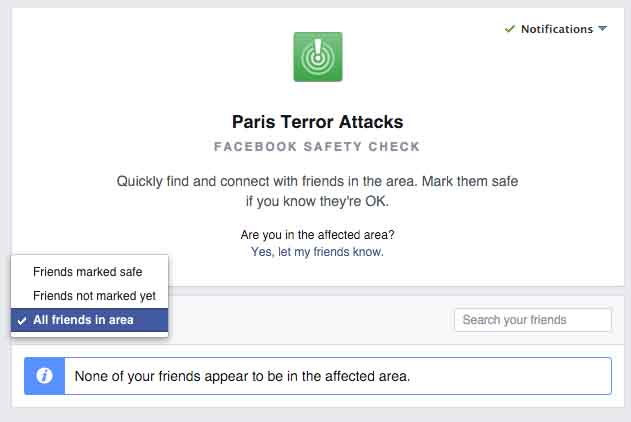
On Nov. 12, 2015, 43 civilians lost their lives in twin bombings claimed by ISIS in Beirut. The next day, 129 civilians lost their lives in multiple ISIS attacks in Paris. Both tragedies have drawn in sympathy and well-wishes from around the world, but this support has been met with controversy. Many are upset that the events in Paris garnered more support and attention from Western countries than the events in Beirut. For example, Facebook gave users the ability to add the French flag to their profile picture as a sign of solidarity with France, but presented no such option for Lebanon. 

Writers from USAToday, The Huffington Post, and The New York Times have claimed that this imbalanced reaction stems from Westerners holding lives of other Westerners above those of Middle Easterners, and consequently, the loss of their people of lesser importance. Researchers explain, however, that the difference in reactions to these two massacres is largely based on relatability. Witnessing a close family member suffering is undoubtedly bound to cause more grief and pain than watching a distant acquaintance experience the same thing. This experience—called empathy—is the ability to understand another person’s condition from their perspective.

“It is perhaps one of the most defining features of humanity,” wrote Farriss Samarrai in an article for UVAToday

This past January, a group of researchers from McGill’s Pain Genetics Lab set out to prove how the relationships between two individuals could affect emotions. To do this, the team first treated McGill undergraduate students with a painful stimuli and asked them to rate the pain. The students rated the pain similarly when tested alone or with a stranger; however, when tested with a friend, the pain levels felt by the student had increased. This increase in pain, the researched hypothesized, was due to a greater amount of empathy felt between the individuals, causing them to feel each other’s pain. 

Taking their research a step forward, the scientists pharmacologically inhibited glucocorticoid receptors—involved in stress—in their participants. When they did this, they observed higher pain ratings. By blocking the receptors, the individual felt a lower level of social stress, and thus a higher vulnerability to pain. In essence, the person was less worried about being in an unfamiliar environment with an unfamiliar person, and consequently, had more capacity to feel their pain. When the tests were emulated in mice, the team observed similar results. 

The group’s efforts provided valuable insight about how an individual is able to empathize. The inner biological actions of empathy, however, have continued to remain elusive. To shed more light on this, researchers from the University of Virginia looked at how individuals respond to threats. The team took fMRI brain scans of individuals in an experimental condition where either they, their friend, or a stranger was placed under the threat of electric shock. When the threat was to the self or a friend, similar areas of the brain, specifically the anterior insula, putamen and supramarginal gyrus, were activated. However, when the threat was to a stranger, these areas showed little activity. 

“Familiarity involves the inclusion of the other into the self, that from the perspective of the brain, our friends and loved ones are indeed part of who we are,” the researchers explained in their paper.

Through close familiarity, one person’s pain is felt by others. This is precisely the reason why there was an immense outpouring of support for those affected by the tragedies that occurred in Paris and Beirut. But this is also partly the reason why more support and recognition were shown towards Paris by Westerners. France is more ‘familiar’ to Western countries because it shares some of the same cultural and historical backgrounds as other western countries. This causes Westerners to associate with the people in Paris more than those in Beirut, and thus, feel their pain more. 

a, Hockey, Sports

Changing the Game: Fixing the NHL’s scoring problem

Goals are at a premium in today’s NHL. The average number of goals per game has fallen from 6.05 to 5.32 since the 2005-2006 season. The Tribune sports section weighs in on how to shock this icy game back to life.

  • No icing on the cake


  • Two minutes to save the world


  • Don’t mess with the status quo


  • Increased surface area


a, Off the Board, Opinion

Straightening out our public health priorities

The world has been focused on the eradication of polio since the launch of the Global Polio Eradication Initiative (GPEI) in 1988. The campaign is backed by massive funding from private philanthropists such as Bill Gates, and by the Global Alliance for Immunizations and Vaccinations (GAVI). Today, only one wild type strain is still transmitted, and the entire world is certified polio-free, except for Pakistan and Afghanistan. The measles virus, meanwhile, proliferates freely in many developing areas, and causes the most vaccine-preventable deaths of any disease worldwide. While its average mortality rate is very low, the risk of death for children under five who have malnutrition is around 10 per cent. Despite the urgency of tackling measles, global public health efforts have remained focused on polio due to philanthropic stubbornness driven by a simplistic cost-benefit frame of reference that ignores the value of human life.

From an epidemiological standpoint, three criteria must be met to successfully eradicate a virus: Scientific feasibility, social cooperation, and—most importantly—political will. Gates and others, who have donated billions of dollars with the expressed goal of eradicating polio, aren’t going to move their support to measles with the task so close to completion. Economically, this perspective makes a lot of sense. The Gates Foundation estimates that the GPEI’s efforts will generate net benefits of 40 to 50 billion USD over the two decades following eradication. The bulk of this estimate is accounted for by the fact that, once fully eradicated, it will no longer be necessary to vaccinate against polio (as was the case with the successful eradication of smallpox and rinderpest). It’s simple arithmetic: The marginal benefit of lowering annual polio cases from 50 to zero is greater than the cost of neglecting the approximately 500,000 annual measles cases.


When a problem is approached with a strictly economic perspective, compassion doesn’t factor into the equation.

There are two harsh realities to take away from this situation. First, when a problem is approached with a strictly economic perspective, compassion doesn’t factor into the equation. The second is that you can’t bite the hand that feeds you; philanthropic efforts often lose sight of the bigger picture, but at the same time, their private nature makes them unreceptive and immune to criticism. One of the reasons given on the Gates Foundation website for the urgency of the cause is that “eradicating polio is also an important milestone for the Decade of Vaccines.” The implicit message here is that it’s an important personal milestone for Gates to satisfy his own desire to go down in history as the man who eradicated polio. It betrays a dangerous element of ego that may be clouding the philanthropist’s decision-making process.

It isn’t as if the measles effort has been completely abandoned—significant reductions in measles cases have been achieved since the turn of the century—but statistics have plateaued since 2010. Due to growing anti-vaccine sentiments among many religious communities, reported cases in North America have actually increased from 66 in 2005 to 19,898 last year.

Polio reduction statistics have also levelled off over that time period, due largely to a lack of social cooperation in Middle Eastern regions where anti-Western ideology creates a hostile and dangerous environment for both foreign and local immunization workers. Even with unlimited resources, it’s impossible to build a dam when you have a tiny leak. The funds that are being poured into what is at this point a controlled situation would be better utilized if reallocated towards providing accessible two-dose measles vaccinations worldwide. This shift would be eased by the fact that the measles effort could piggyback on much of the infrastructure put in place for polio eradication, such as safe vaccination centres in developing areas. The Gates Foundation and GAVI have accomplished incredible things since the GPEI was launched in the ’80s—and polio eradication is still important—but it’s time to step back and reprioritize.

Do you have thoughts on philanthropy, vaccinations, and global health? Send a message to [email protected].


Elie Waitzer is a fourth year economics student and baseball aficionado hailing from Toronto. He also enjoys baking in his free time.


a, Student Life, Student of the Week

Student of the Week: Maud Schram

Maud Schram is passionate about human rights and global issues. A U3 student double-majoring in Political Science and International Development and minoring in Environment, Schram hopes to use her education and experience with on-campus organizations to promote global humanitarian development.

“I was born in Lyon, France, and then at the age of six I moved to the U.S.,” Schram said. “From having moved countries, I’ve just always been interested in international matters and political issues.”

To assume an active role in global affairs, Schram took on the role of co-president of McGill Students for UNICEF. She participates in fundraising, as well as advocacy and on-campus awareness about UNICEF.

Schram and her team of McGill Students for UNICEF launched a viral campaign on Sunday Nov 22 called #PiecesLeftBehind to foster awareness and empathy for Syrian refugees. 

“The goal of #PiecesLeftBehind is that people post a childhood picture of themselves and then they write three things that were significant to them in their childhood […] growing up,” Schram said. “It […] reflects back to the idea that refugees often have to leave their material possessions and sometimes their families too, and can’t afford to take everything with them.”

Schram hopes #PiecesLeftBehind will become as prominent as the ALS ice bucket challenge, and will make refugee justice and aid more visible.

 Working for McGill Students for UNICEF, however, is not just about helping the current global community, but also providing a better foundation for the upcoming generation.

“My inspiration for [getting involved with] UNICEF comes from UNICEF itself,” Schram said. “While the United Nations may not be a perfect body, I think UNICEF is key because it serves children—the upcoming generation. We hear a lot of negativity in the world; however, UNICEF, and other external factors, have worked to increase the standard of living around the world.”

Furthermore, Schram hopes to use her knowledge in international development studies and human development experience from McGill to help empower women when it comes to sexual violence. 

“In the future I aspire to change the structures we currently have in society that put women at a disadvantage,” Schram explained. “One issue that I find particularly important and deplorable is sexual assault: The stigmas that surround it, and the subsequent steps survivors are burdened with.”

Schram would like to create an awareness and outreach campaign in the near future where survivors are reminded they are not alone in their struggle. There are numerous groups and campaigns that share a similar message, but unfortunately the stigma remains prevalent. She hopes to continue to be an advocate for women’s rights and a world free of sexual exploitation. 

Something Schram also feels strongly about is McGill students’ rights to a more effective mental health clinic. She believes it is every student’s right to receive the appropriate help he/she needs from the university. 

“I’ve been dealing with some mental health issues and just the process of going through that here at McGill has been [a struggle],” she said. “It takes three months to get to see someone from McGill mental health [….] I find it pretty unfortunate and pretty embarrasing on the part of McGill for not properly taking care of mental health issues.” 

Schram believes the McGill community has an important role to play in raising awareness about the McGill mental health clinic’s inefficiency in addressing serious health problems. 

“It’s really difficult when you’re taking a full load of courses and participating in extracurricular activities,” Schram explained. “This university should just take better care of its students, and the students should speak up.” 

Schram hopes to bring positive change to the world by utilizing her experiences at McGill to enact real change. As this is her last academic year, she looks forward to spending time exploring her interests in reading about social science, discovering new places to eat around Montreal, and continuing to meet people from different backgrounds. Schram is excited to learn about the numerous opportunities her degree will lead her to after graduation—including, hopefully, a position with UNICEF. 

a, Science & Technology

Montreal’s 2015 International Game Summit

Whether it’s Candy Crush Saga or Fallout 4, video games are an increasingly integral part of everyday life. The enormous range of developers churning out games means that there is more or less something for everyone on the market. The challenge remains, however, to get noticed and then get published. Today, one of the best places for video game creators to gain popularity is at the Montreal International Game Summit (MIGS). Since its inception in 2004, MIGS has provided a platform for video game creators and enthusiasts to collaborate as well as showcase the latest hot talents and emerging technologies. 

Running from Nov. 15 to 17, MIGS 2015 began in earnest with the Big Indie Pitch event, a travelling showcase sponsored by the online magazine Pocket Gamer. During the competition, several independent developers demoed their mobile games before a panel of judges, Dragon’s Den-style. Everything from wingsuit-simulators to finger-based sorcerer combat games were showcased, and in the end, one of the simpler games took home the gold. The crowned victor, Grumz, requires only one finger to play; users must tap their screen to stop an infinitely yo-yoing ball from getting wrecked by other polygons. 

Though seemingly simple, the use of elegant and straightforward interfaces continues to dominate the industry, as seen in the Expo Zone. Here, MIGS participants presented their technology and games to attendees. Local powerhouse Ubisoft presented its brutal new third-person hack ‘n slasher For Honor in a tense 4v4 tournament, while Quebec City-based unknown Parabole showed off a visually minimalist, yet striking, exploration through northern Quebec’s wilderness with Kôna.

MIGS is the largest gaming conference on the East Coast. (Emma Hameau / McGill Tribune)
 Game developers presented their creations in the Expo Zone. (Emma Hameau / McGill Tribune)

Aside from the ongoing expo-zone, seminars and talks were presented throughout every day of the conference. One session featured Dominic Vega and Jason Kantor—resident aural wizards with developer Avalanche Studios—as they debriefed the entirety of their experience with the sound design and implementation in Avalanche’s nuclear-powered blockbuster: Just Cause 3. In their talk, Kantor and Vega highlighted the challenge of developing complex sound cascades that could be available at any second with the game’s plethora of weapons, vehicles, and destructible objects at the player’s disposal. It’s easy to tell the duo knows their stuff; coherent explanations made a concept as esoteric as spline––polynomial functions used to create everything from level-up schemes to in-game camera movement––feel as accessible as elementary school arithmetic. 

“[Just Cause 3’s mix of] aircraft, motorboats, and land vehicle [sounds] were a delight to work on,” explained Kantor. “They all sound absolutely incredible.” 

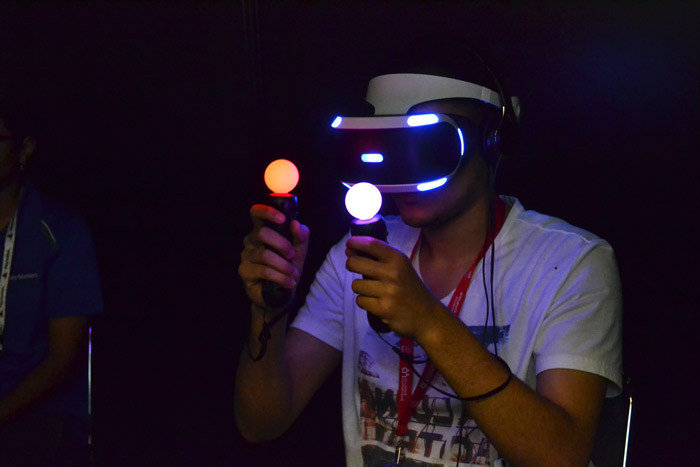
Dave Miner, product marketing manager with Yamaha, has been working with fellow music equipment company Steinberg to release the newest version of their acclaimed sound software Nuendo. The result is Nuendo 7—a software for editing and mixing sound, complete with a special tie-in for game developers. The tie-in is full integration with game audio group Audiokinetic’s ubiquitous sound software Wwise, allowing for simple drag-and-drop operation when exporting mixed sounds from Nuendo 7 to Wwise. Because of this, it now takes mere seconds, instead of hours, to transfer sounds between the two systems—which is used to put the desired sound into a game. Remarkably, this system has compatibility with platforms ranging from Android to Xbox One, and every game engine from Unity to CryEngine. In a serendipitous discovery, Miner and his team found that the Nuage mixing console’s touch feedback and ergonomic design even enable editing via virtual reality (VR) headset, effectively immersing the user in both the game and Nuendo 7 interface.  

“[When we released the technology] we had no idea [this capability] even existed,” Miner said. 

Indie developers presented new creations at MIGS15. (Emma Hameau / McGill Tribune)
 As technology has improved, game developers have been able to create more immersive experiences. (Emma Hameau / McGill Tribune)

This interest in VR was seen in works being produced by many other MIGS participants. For example, the Digital Imagery Research and Development Centre (CDRIN), is based out of CÉGEP de Matane, and possesses Canada’s largest motion capture studio—a taste of which was presented at MIGS. 

A welded metal framework surrounded by rigging fitted with infrared lights and cameras provide the staging for the experience. Clad in a bodysuit covered in reflective spheres, Camille Tremblay, CDRIN’s project manager, has her every movement rendered onscreen in real-time by cameras catching the infrared light reflected back from the spheres. Attendees are invited to join by putting on a CDRIN VR headset. While wearing the headset, users ‘see’ Tremblay as a spaceship captain inside a futuristic elevator, which is used to visit three floors featuring different virtual environments. The most notable scene is a balcony overlooking a breath-taking mountainside castle. But the VR headset goes beyond what users see, it can change the very laws of physics. In this VR world, Tremblay steps off the castle balcony and walks on air.  Participants, if they dare, are encouraged to follow.

While developers cannot yet nullify Earth’s gravity, other technologies are being introduced to create unique gaming experiences. North Carolina-based Spark Plug Games was founded by John O’Neill, responsible for the rapid-fire, run ‘n gun Mech Runner. But O’Neill’s game has a twist—it uses eye-tracking software, courtesy of Tobii Technology, in addition to a hand-held controller. With this, gamers can simply look at enemies in order to target them for destruction. If combined with a VR headset, Tobii’s EyeX Tracker could allow users the unprecedented experience of a world that reacts dynamically to both sight and bodily orientation in real-time. 

With the rapidly expanding set of tools available to game developers, new gaming mechanics are being used to tell uniquely immersive stories. After all, the most memorable games allow a person to become wholly invested––mentally and emotionally––in the experience. While big name developers may be slow to challenge conventional storytelling, this is, fortunately, where indie developers really shine. Games like the eerie, black and white side-scrolling puzzle game Limbo––a stunning example of games as an art form––can be made without massive budgets and VR technology. Add in the crowdfunding and communicative capacity of the internet, and indie developers can churn out innovative cult classics indefinitely.     

Read the latest issue

Read the latest issue