Latest News

Arts & Entertainment, Gaming, Internet

‘Kind Words’ promotes compassion and honesty in the gaming community

Video games often receive criticism for promoting toxic communities and hate-filled chats, but Kind Words offers something unique: An environment where gamers can lend a helping hand and seek input from peers. In a time of isolation, this friendly game has become a means of correspondence for thousands of people across the world.

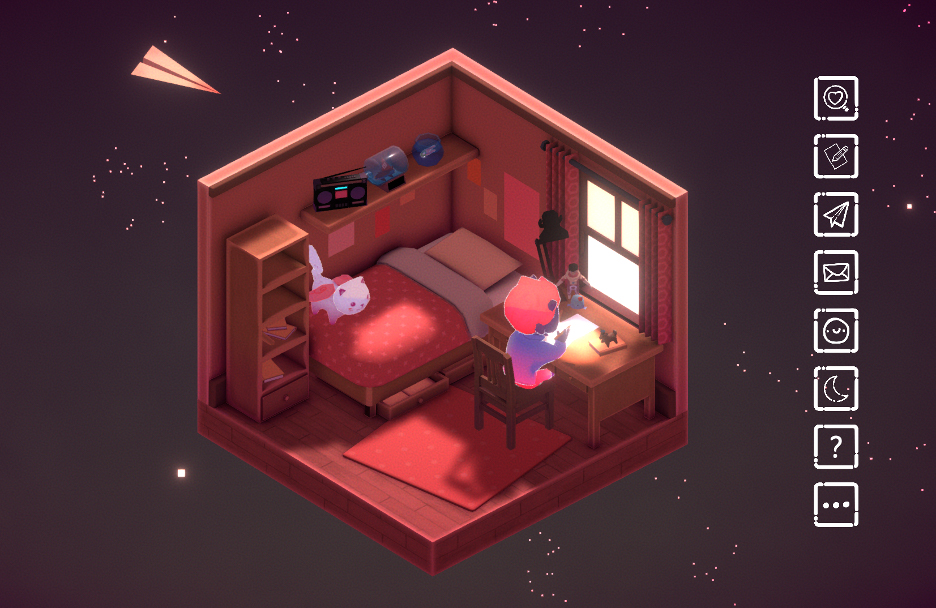
Kind Words is a growing network of anonymous people offering or seeking support and spreading positivity. Unlike social media, which consumes its users’ attention with an endless feed and stream of notifications, Kind Words encourages mindfulness in each action: The player’s avatar sits at their desk and from there, they decide whether to write a request or respond to other gamers’ requests. Paper airplanes, which can be opened when clicked, are used to deliver positive thoughts and messages to other users. A virtual deer explains the game, makes announcements, and delivers the letters. 

The purpose of the game is not to meet people or make connections. There is no back-and-forth; once someone responds to a letter, they can receive a virtual sticker as a thank you, but they will never even know who sent it. The term “game,” in a traditional sense is a misnomer: There are no levels, challenges, or skills to learn, as instead its progression system consists of collecting stickers from others and using them to decorate your avatar’s room. 

Kind Words has created a safe space for its users, where anonymity encourages each player to speak about whatever comes to mind, whether personal or lighthearted. The game’s relaxed atmosphere and lo-fi soundtrack lulls its users. The conversation requests cover a wide range of topics, from stress and burnout in school to relationship issues.

Students make up the majority of the game’s playerbase. In an interview with The McGill Tribune, Ziba Scott, the developer of Kind Words, explained why he believes the platform is popular for students.

“The student years of most people’s lives are often their most influential on their identities,” Scott said. “[It’s] a time in their life filled with a larger rotating cast of characters [….] Kind Words is a good fit for those kinds of mental [and] emotional exercises.”

While the game’s encouraged vulnerability sounds like a perfect invitation for trolls, Kind Words has done a great job keeping them at bay—in over four months of gameplay, I have yet to come across any. The game’s moderation tools and report mechanisms help to combat cyberharassment, but for Scott, the user interface of the game inherently prevents trolling.

“The structure of information flow in Kind Words makes it more like a river than a soup,” Scott said. “Most communication is directly between users and is one-way only. A shitty comment on YouTube sticks around, floats to the top and upsets everyone. In Kind Words, it washes away, seen by very few people, if any.”

The sort of vitriol Scott alludes to regarding YouTube comments are, in part, the inspiration behind the game. With a growing culture of political polarization and hate on social media, Scott and Luigi Guatieri, Kind Words’s designer, hope that the game will offer an escape centred on mindfulness and compassion.

“Lots of factors [pushed us to develop the Kind Words], but at the core of it was that it felt like a worthy use of our time in an increasingly cruel world,” Scott said.

For students experiencing the effects of social distancing or school burnout, Kind Words is worth exploring. With so much of our lives anchored in social media’s frenzy, the game’s tranquil atmosphere and low-commitment gameplay provides a much needed break. Currently, Scott does not intend to bring the game to a mobile platform because he feels it important to have a focussed and seated environment when playing. 

Kind Words is exclusively available on Steam and costs $5.69.

Features

For the love of indie bookstores

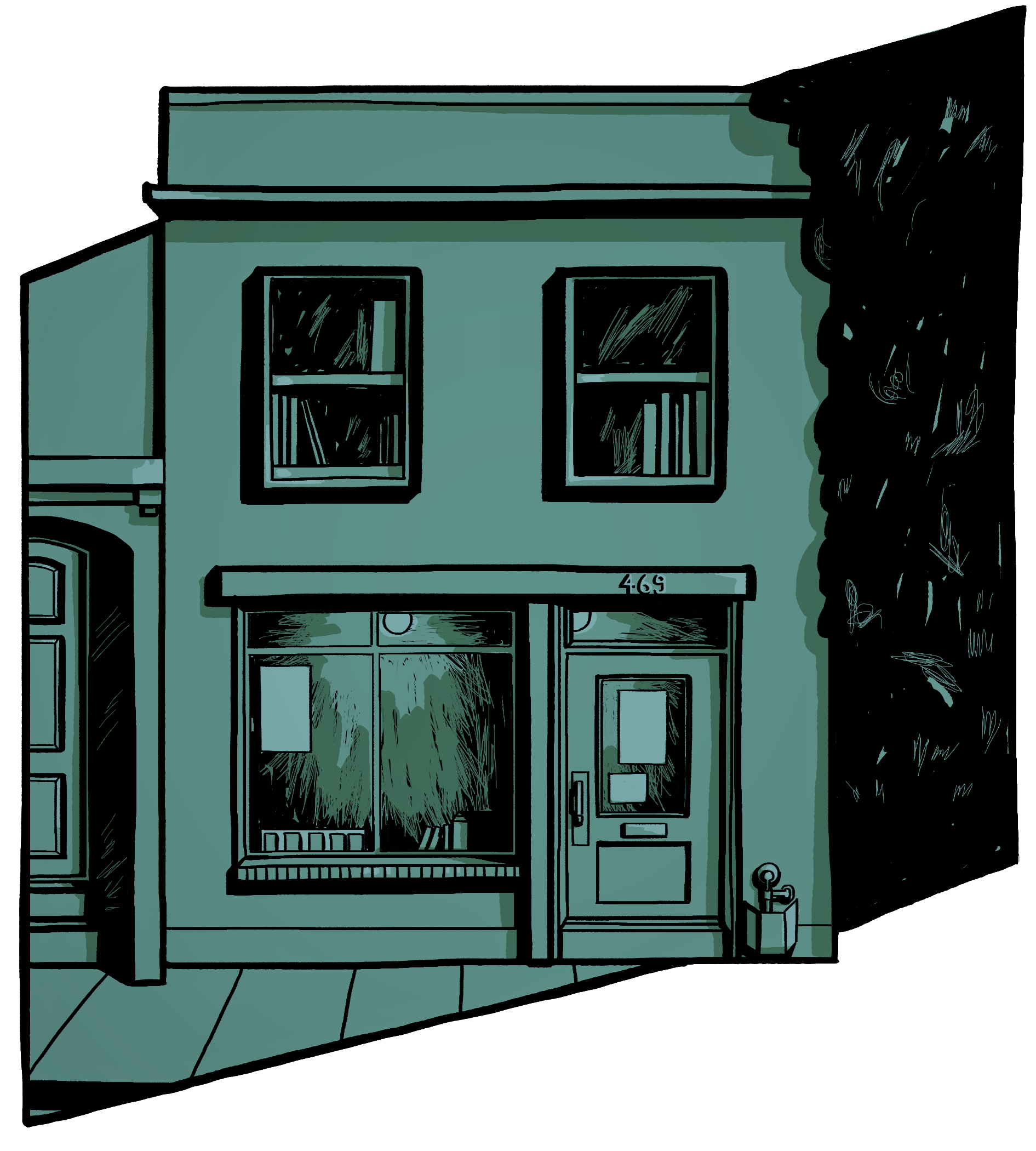
Entering a small bookstore is like dropping a pebble into a calm pond. The ripples start immediately: The door bells chime a sound of greeting, prompting the lone cashier to look up and drawing disinterested glances from other customers. Outside air whooshes in, momentarily ruffling the pages of books on display. Brief greetings are exchanged as one settles in to browse the shelves of beloved novels, and the bookstore regains its serenity. 


Such was the scene at S.W. Welch, an independent bookstore in Montreal’s Mile End, on a cold March afternoon one year into the COVID-19 pandemic. Although the capacity was capped at eight and customers were careful to respect social distancing in the store, the magic of searching through shelves of books for hidden gems remains an enchanting experience. 


This atmosphere of literary love in Montreal has been overshadowed by the looming threat of gentrification for several years. On Feb. 27, S.W. Welch’s owner, Stephen Welch, announced that an exorbitant rent hike may force the store to close. The news of the potential closure came as a shock to Montreal’s small non-essential businesses, which were only allowed to reopen stores on Feb. 8 after an extended lockdown


Before the pandemic, indie bookstores were already facing competition from big-box retailers that offer books alongside a range of other essential products. According to Charles de Brabant, executive director of McGill’s Bensadoun School of Retail Management, the retail industry had been diverging into two extremes for years. At one end of the spectrum are companies like Walmart and Amazon, which prioritize efficiency and convenience; at the other end, small, independent bookstores focus on customer experience and loyalty. Big-box book retailers like Indigo and Barnes & Noble found themselves stuck in the middle and shifted their focus to customer experience, cutting into the market for small bookstores. 


“During the pandemic, what ended up happening is that the convenience efficiency extreme thrived because those were the essential goods,” de Brabant said in an interview with //The McGill Tribune.// “Experience was mostly non-essential.” 

Science & Technology

Unravelling the engineering behind the Perseverance landing

On Feb. 18, physicists and engineers marked a new chapter in Martian history: A series of radio signals confirmed the touchdown of NASA’s Perseverance rover. Over seven months, the rover completed a 300 million mile journey to Mars, averaging a speed of about 12,000 miles an hour. 

The Perseverance Rover landed on the Jezero Crater, where it will search for signs of life by collecting samples of Martian soil. 

Montreal-born Dr. Farah Alibay is a NASA systems engineer who is part of the operations team for the Mars 2020 mission. The team was responsible for manufacturing, testing, and landing the Perseverance rover. 

In an interview with The McGill Tribune, Alibay detailed the feats of engineering behind the mission, its main objectives, and how Perseverance differed from previous rovers sent to Mars.

“We think that about two billion years ago, Mars looked like Earth,” Alibay said. “It had an atmosphere, a magnetic field, [and] liquid water [….] About two billion years ago, Earth had microbial life. If there was life on Earth back then and Mars looked like that, there could have been life on Mars too, and that is what we are looking for.”

Perseverance shares many common technical features with its predecessor, Curiosity. Although Perseverance is almost 100 kilograms heavier than Curiosity, it cost almost 300 million dollars less to build. Other paramount differences between the two rovers include an upgrade in the number and quality of cameras on Perseverance. 

“Perseverance has an additional computer onboard and that is the Vision Compute Element, which allowed us to land on the Jezero Crater,” Alibay said. “The computer was taking images as we were landing, comparing them to a map, [and] allowing the rover to make decisions on board on how to divert the rover and to land.” 

Engineers at NASA’s Jet Propulsion Laboratory (JPL) also implemented a thicker aluminum wheel with a greater diameter, but a narrower width, allowing Perseverance to overcome the sharp Martian terrain. 

Perseverance is equipped with six more cameras than Curiosity and was designed to collect rock samples in a different manner. 

“Perseverance has a robotic arm that contains a set of instruments located on its end,” Alibay said. “One of which is a coring drill that will drill out a sample and transfer it to the Sample Caching System. Another robotic arm then inserts the samples into tubes and seals them.” 

One of the main goals of the mission is to test out a new technology: The Mars Oxygen ISRU Experiment (MOXIE). 

MOXIE aims to take in Martian air rich in carbon dioxide and pass it through a series of pumps that carries the gas to an electrode that extracts the oxygen. 

“If we are ever to send astronauts to Mars, then they are going to need oxygen,” Alibay said. “Not just to breathe, but as a rocket fuel to bring them back home.”

Aboard Perseverance is Ingenuity, a four-pound helicopter set to carry out the first controlled flight mission on another planet. The 0.49 metre-tall helicopter is powered by solar energy and will have to overcome a plethora of obstacles, like low atmospheric pressure and rocky Martian terrain, to carry out a successful flight. 

“If you are having only one per cent of atmosphere then you are not getting as much lift, so we had to come up with a system that is both really light but also rugged to survive the Martian environment,” Alibay said. “We are currently looking for a site to drop off the helicopter and once we have done that, we will drop it off, do the initial commissioning and then fly it. I am hopeful that will happen within the next couple of months.”

It has been decades since humans last set foot on a celestial body. Without a doubt, the Mars 2020 mission brings us one trip closer to a human mission to the red planet.

Know Your Athlete, Sports

Know your athlete: Charlene Robitaille

For Charlene Robitaille, U3 Science, athletics are about the spirit of the team and the pure excitement of each game. Robitaille sits near the top of the women’s volleyball team leaderboards, ranking in the top five of every category. However, the esteemed middle blocker did not seriously pursue volleyball until late in high school. 

“At first, my big sport was soccer, but then my best friends were playing volleyball and they told me to come [join them],” Robitaille said in an interview with The McGill Tribune. “In my fourth year [of high school], I [switched] to a school with a better trainer and a better team so I could learn more.” 

Robitaille played through her final years of high school, developing her skills and her strength. She remained committed to volleyball at CEGEP Edouard-Montpetit and competed in the 2014 Jeux du Québec tournament, where Robitaille and her team took the victory. 

Robitaille has played on McGill’s volleyball team for three years, although she has not competed yet this year due to the suspension of all university sports. Robitaille reminisced on the energetic atmosphere that came with being surrounded by fellow athletes and enthusiastic fans.

“[The in-person games] are the thing I miss the most,” Robitaille said. “All the people there, all the other sports [teams]. We are friends with a lot of the other [teams]. The Friday nights were my favourite, [with] all the energy and all the spirit.”

Robitaille especially enjoys the camaraderie within sports teams at McGill and the supportive atmosphere on and off the court. 

“I like the relationships between every sport,” Robitaille said. “We go to see all the other sports teams play, they [attend] our games, [and] we get all this publicity on [social media]. I really love the atmosphere this creates.” 

As heavy lockdown measures in Quebec continue, Robitaille emphasized the importance of creating a schedule and following it. 

“I am doing a lot of training by myself, every day or every two days,” Robitaille said. “I do upper body, lower body, and I have weights as well. Training at home has always been something very important [to me]. I am doing it for my sport but I am also doing it for myself.”

However, pandemic restrictions have also allowed Robitaille to focus more on her academics, especially in a year as mentally taxing as this one. 

“I’m really trying to focus on school,” Robitaille said. “I’m trying to be attentive in all my classes and avoid only watching recordings [….] I tried last semester to only watch the recorded lectures and it really did not work, so I’m keeping to my schedule.”

Robitaille explained how her major in sports nutrition has positively impacted her athletic performance as she progresses to more advanced courses.

“Before, [my classes] were very general, like food chemistry and learning about proteins and enzymes,” Robitaille said. “This semester, I feel that [what we are learning] are things that I can use myself.” 

Learning about the roles of macronutrients has helped Robitaille improve her eating habits.  She explained how she modified her protein and carbohydrate intakes to fuel her activity and training levels.

Robitaille admits, however, that she has room to improve when it comes to cooking. 

“I cook a little bit,” Robitaille said. “I like to eat, but […] I did not have much time [for cooking] and was a bit lazy, but now I am trying to do a little bit more [….] I am in sports nutrition, so I need to be able to cook.”

Although university athletics remain uncertain for the upcoming year, Robitaille expressed her excitement to return to in-person practices and games.

Science & Technology

Exploring the medical uses of recreational drugs

Rates of mental illness in youth have risen significantly in recent years. However, conventional treatments such as selective serotonin reuptake inhibitors (SSRIs) do not work effectively for every patient. Recent research suggests that recreational drugs can treat mental illnesses such as anxiety and post-traumatic stress disorder (PTSD). While the use of recreational drugs as medicine has been met with controversy, new research on psychopharmaceuticals is redefining the limits of mental healthcare. 

LSD

Lysergic acid diethylamide (LSD) is a mind-altering substance that induces “trips”, which are characterized by hallucinations as well as time distortion. Discovered in the 1930s, LSD was widely used recreationally in the 1960s as an integral part of hippie culture. More specifically, the drug affects the serotonin receptors in the brain that are responsible for stabilizing mood and emotions. Disruptions in the functioning of these receptors are often associated with psychiatric diseases such as schizophrenia, depression, and anxiety. 

LSD has been shown to improve social behaviour, as measured by the number of interactions between individuals. According to Dr. Danilo De Gregorio, a postdoctoral fellow in McGill’s Department of Psychiatry, the drug could mitigate many psychiatric diseases, such as autism and social anxiety, of which symptoms include a lack of voluntary socialization. 

“Hallucinogenic compounds such [as] LSD being able to increase sociability may help to better understand the pharmacology and neurobiology of social behaviour and, ultimately, to develop and discover novel and safer drugs for mental disorders,” De Gregorio wrote in an email to The McGill Tribune

However, De Gregorio’s research on LSD yielded no evidence of its efficacy as an antidepressant. The use of LSD in minuscule doses could alleviate social anxiety, but shows little potential as a treatment for depression. 

LSD targets serotonin receptors found in the medial prefrontal cortex (mPFC), an area of the brain that regulates social information as well as memory. When studying the injuries to different areas of the mPFC, researchers found that lesions to the cortex led to social apathy. When administered to mice, LSD causes short bursts of activity in specific neurons that activate a protein complex called mTORC1, which may be blocked in individuals with social anxiety.

“We found that LSD exerts prosocial effects via a protein complex, the mTORC1, which we previously demonstrated to be dysregulated in pathologies with social deficits,” De Gregorio wrote.

Ketamine, a non-psychedelic drug used for anesthesiaand recreationallywas also shown to exhibit antidepressant effects through the activation of mTORC1.

Psilocybin

Psilocybin is a psychoactive drug that causes visual and auditory hallucinations. Like LSD, it is classified as a psychedelic and has similar mind-altering properties. As one of the main compounds in magic mushrooms, psilocybin has been studied since the 1990s for its ability to treat psychiatric diseases.

Psilocybin, like LSD, works by targeting serotonin receptors in the brain. More precisely, it increases the activity of specific serotonin receptors which are associated with somatosensory inputs and controls the way a patient processes sensory information. One study suggests that this alteration to sensory regions could help to mitigate substance abuse disorders. 

While psilocybin and LSD target the same receptors, they have different effects on mPFC neurons. LSD was found to control parts of the brain involved in emotional processing, including the mPFC-amygdala circuit. Psilocybin desynchronizes the activity between the mPFC and the posterior cingulate cortex, reducing their functional connectivity and contributing to different perceptions of reality. 

The drug can also rewire the brain by changing neural firing patterns, or the groups of cells that are transmitting information at a given time. 

“In parts of the brain that usually do not communicate together, [the neurons] will fire together [when psilocybin is given],” Dr. Natalie Gukasyan, a postdoctoral fellow at Johns Hopkins’ Center for Psychedelic and Consciousness Research, said in an interview with the Tribune

Psilocybin also changes the way the thalamus, the part of the brain responsible for relaying sensory information to different processing regions, responds to different inputs. While the substance can induce a “bad trip”, hallucinations about a physically uncomfortable or anxiety-inducing experience can assist patients in overcoming it. 

“In most cases […] it does not mean that the [patient] will have a negative long-term outcome [….] They might come out with a sense of mastery [of their experience],” Gukasyan said. “However, a challenging experience in the lab or in a clinic is different than [one] in a non-supported environment.”

When psilocybin is administered in a monitored, clinical setting, the results are promising. Without the support of healthcare professionals or dosage control, the drug can exacerbate a patient’s mental health problems. 

This treatment could alleviate conditions such as PTSD by dampening the fear response associated with traumatic memories.

Future research is needed to determine the appropriate dosing of this psychedelic. Too little does nothing to help the patient, yet too much could be dangerous for their health. Further studies are necessary to investigate the anti-inflammatory effects of the drug and how this property could be used to treat several inflammatory and auto-immune disorders such as rheumatoid arthritis

Cannabidiol (CBD)

Cannabidiol, better known as CBD, is a derivative of the Cannabis sativa plant that has been shown to affect serotonin transmitters and reduce anxiety symptoms in rats. Unlike tetrahydrocannabinol (THC), which is the psychoactive component of cannabis, CBD does not induce paranoia or hallucinations. It is currently commercially available across Canada.  

One study found that CBD blocks receptors that mediate pain sensations. CBD made the serotonergic neurons less likely to be activated and produced an anti-anxiety effect on the model rats. 

Much of the research on CBD, however, has only been performed using animal models. Dr. Irina Kudrina, assistant professor in McGill’s Department of Family Medicine, notes that it is difficult to parse out CBD’s specific effects on humans. 

“Cannabidiol (CBD) is one of many plant-derived biologically active molecules that, when a cannabis-based product is used, act synergistically,” Kudrina wrote in an email to the Tribune. “This synergy makes a ‘pure’ CBD effect difficult to discern. As cannabis research in humans is still in its infancy, our understanding of how this specific plant molecule interacts with the animal neurochemical system is quite limited.”

One study suggests that single, high doses of CBD have little effect on anxiety, depression, or psychosis, but if given at low doses for a limited period of time, it could have therapeutic properties. 

In a different study, CBD was also shown to decrease the stress response symptoms of PTSD by blocking the reconsolidation of traumatic memories and modulating the endocannabinoid system, which contains built-in receptors to CBD and regulates memory and anxiety. 

“[O]ur endogenous cannabinoid system constitutes one of the biggest and complex neuro-endocrine systems playing an important role in the development and further functioning of the human memory, learning, sleep, [and] emotional and behavioural mechanisms, to name a few,” Kudrina wrote. 

CBD also inhibits regions of the brain that are hyperactive in PTSD patients, such as the amygdala, the part of the brain responsible for the body’s fear and stress responses.

Further research is required to destigmatize the recreational use of CBD and expand upon existing treatments for mental illnesses such as anxiety disorders.

“To date, the data pointing at some anti-stress and anti-anxiety properties of CBD are still insufficient and controversial,” Kudrina wrote. “Nonetheless, the body of research on the clinical usage of CBD in these areas is growing quickly.”

Arts & Entertainment, Books

Mile End Ensemble hosts ‘read-in’ protest for S. W. Welch Bookseller

On March 13, approximately 100 people lined up outside S.W. Welch Bookseller to celebrate the survival of the business after its owner, Stephen Welch, had announced its closure, and to protest gentrification in the Mile End neighbourhood. 

The “read-in” protest was organized by Mile End Ensemble, a group that formed after news circulated online that the bookstore’s landlord, Shiller Lavy, was forcing its closure with a 150 per cent rent increase. Patricia Boushel, a member of Mile End Ensemble, noted that the neighbourhood was quick to organize upon hearing the news of S.W. Welch’s closing.

“I heard about [the closure] through Taras Grescoe’s Twitter,” Boushel said in an interview with The McGill Tribune. “He’s a local writer who took a photo of the ‘for rent’ sign in [the bookstore’s] window and then got the info circulating. A bunch of people started chiming in, especially that it was a Shiller Lavy ‘for rent’ sign. Many of us have watched that company make its way around the neighbourhood in a devastating way. Just seeing that sign was an omen of terrible things.”

Shiller Lavy’s steep rent increase continued to garner media attention, with major news outlets such as CTV Montreal and CBC News picking up the story. Meanwhile, 50 members of the community began to mobilize by holding an impromptu protest on March 1, followed by the official creation of Mile End Ensemble, which then spurned March 13’s “DOES ANYBODY BUY BOOKS TODAY? (A Read-In).” 

The public outcry successfully pressured Shiller Lavy to lower the rent for a duration of two years. Although the attention helped S.W. Welch remain open, Boushel says that the issue of gentrification goes beyond the particular barrier of rent hikes.

“It’s not just an isolated case of a rent hike, it’s a symptom of a really big interconnected problem,” Boushel said. “If we have these businesses that do not have skyrocketing rents, then our groceries can remain affordable. It’s all connected. We’re really acting out of a desire to retain accessibility and equity in our neighbourhoods.”

S.W. Welch is not the first local business to be driven out of the Mile End by gentrification. Boulangerie Clarke, a bakery known for its five-dollar sandwiches, was forced to close its doors in 2015, when their rent unexpectedly tripled after 35 years in business. Café, co-op, and queer space Le Cagibi relocated to Little Italy in 2018 when their rent more than doubled. The former spaces of these small businesses are still owned by Shiller Lavy. Ian Rogers, a long time resident of the Mile End who attended the protest, has witnessed the gentrification of the neighbourhood over the years. 

“I’ve been living in this neighbourhood for a long time,” Rogers said. “It has been about 30 years now. It’s changed a lot over that time, but just over the last 10 [to] 15 years, it started to become very gentrified, especially when Shiller Lavy started buying up so many properties on St. Viateur.”

Mile End Ensemble, Rogers, and other protesters hope that the read-in signals to government officials that action needs to be taken against predatory rent practices.

“[The municipal government] says their hands are tied but they control zoning,” Rogers said. “They control property taxes, they control licenses, they control inspections, and they’re doing nothing. This is one of their core neighbourhoods, but if they do not do anything maybe this next election we will vote for someone besides Projet Montréal.”

As for Welch himself, he is simply happy to live in a supportive neighbourhood. 

“It makes me very gratified to see it,” Welch said. “I live in an art co-op, so I know very well the power of collectivity.”

Off the Board, Opinion

Rediscovering the value of practice

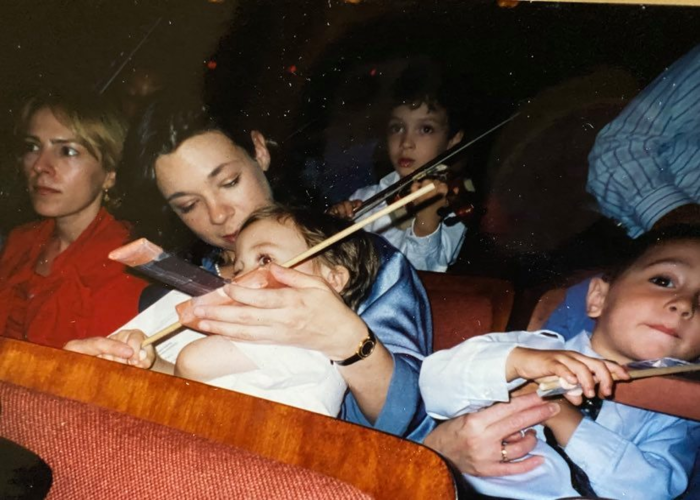
One of my earliest memories is of my mother handing me a cardboard violin and stick and having me bow along to Twinkle Twinkle Little Star. As the child of two classical musicians, I started learning music very early—at the age of two. Every day when I came home from school, I had to devote at least 45 minutes to practice before I was allowed to do anything else. 

For much of my childhood, it felt unfair that I was forced to spend this much time on something that I did not always enjoy. While my classmates were playing video games or sports, I was stuck at home working on smooth string transitions that seemed to improve little, if at all, in the long term. 

It was only when I turned 10—when I started taking lessons from someone other than my mother—that I took ownership of my practice time. I had to practice on my own, and if I did not improve significantly week to week, I faced disappointment and embarrassment. 

From an outside perspective, practice appears simple: Just pick up the instrument and play. I had a rude awakening when I attended my first sleep-away music camp at 12 years old, where tight deadlines and entire days dedicated solely to music challenged me to improve quickly. 

Under this pressure, I realized that practice was one of the most exhausting things I had ever done. One hour of intense focus made me weary. When I asked my friends and teachers how they practiced, my list of tips and tricks grew rapidly: Dedicating time to warm-ups and technique drills, dividing what I needed to work on into manageable sections, timing breaks every 20 minutes, and repeating drills were just a few of my strategies. I slowly started to plan my practice sessions through journaling. I eventually realized that practicing is a skill one must develop over many years. It is dedicated time for self-improvement, and if one does not invest effort, the only person cheated is yourself. 

It can sometimes feel as though practicing is synonymous with suffering. While it certainly can appear that way at times, it can also serve as a form of meditation. The state of mind when one decides to dedicate the next hour to improving is unlike anything else: Time comes to a halt, and all worries melt away. Suddenly it is just you and the task at hand. In psychology, this state of mind is often described as flow—the mental state of immersed, energized engagement one reaches while performing an activity, being both fully concentrated and actively focussed on the process. Many attribute greater success and happiness to those who pursue these entrancing activities dubbed “flow activities” such as art, writing, or practicing an instrument. 

Since coming to McGill, I have spent a lot less time practicing the violin. Over the pandemic, however, I have resorted to practicing music for solace. Whether it be shooting a basketball, learning a new scale on my viola, perfecting a track on Mario-Kart, throwing a frisbee, learning a yoga pose, or even chopping an onion, rigourous learning is incredibly fulfilling. Although I will not necessarily need or use all of these skills in everyday life, the grounding and satisfaction they provide is invaluable. 

My father often says that people who succeed in music find success elsewhere, and while I did not fully understand this at first, I do now. A life-long work ethic dedicated to improving one’s craft and learning will not only help with success with the task at hand, but can also be applied to living a more well-rounded and fulfilling life. 

Art, Arts & Entertainment

MMFA lecture examines Riopelle’s Arctic inspiration

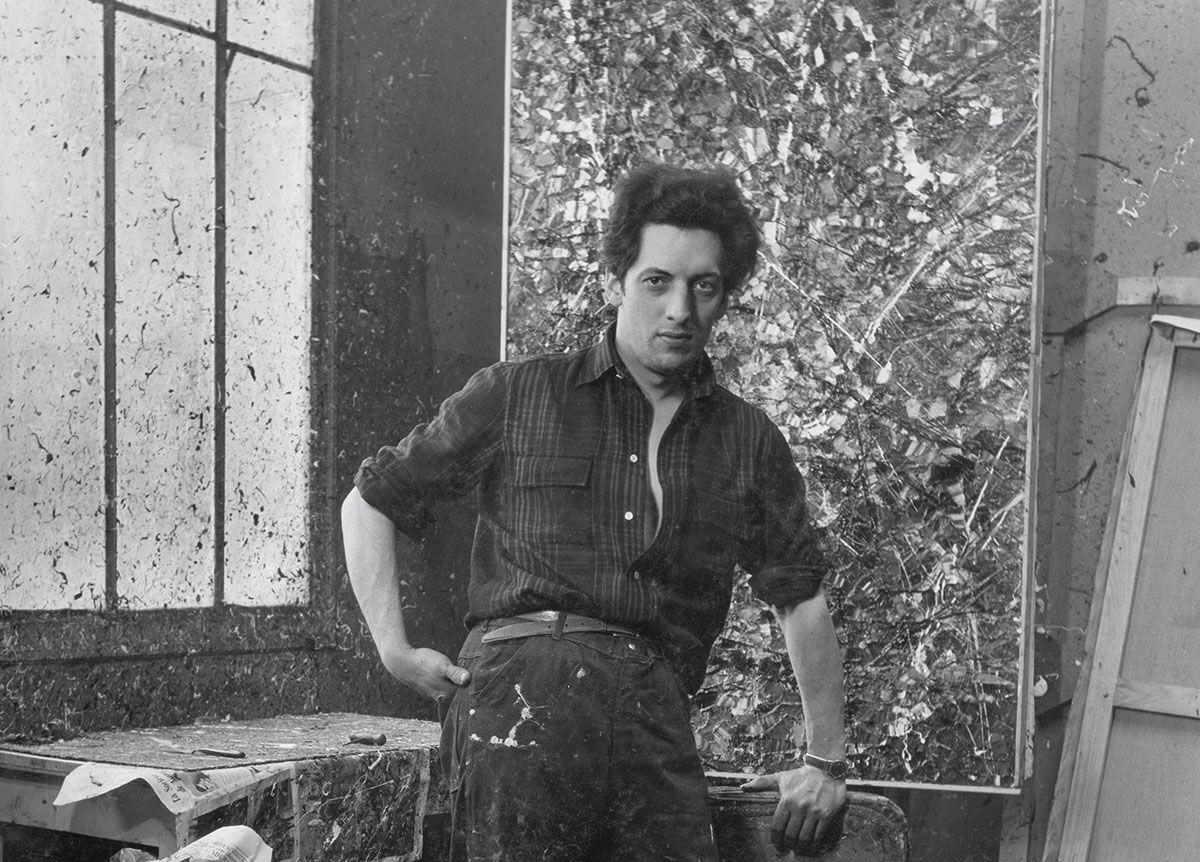
On Mar. 10, Roy Ellenwood, a retired professor from York University and translator of Québécois literature, presented “Riopelle and Indigenous Art: The French Connection,” an online lecture with the Montreal Museum of Fine Arts (MMFA). The presentation, which complemented the exhibit Riopelle: The Call of Northern Landscapes and Indigenous Cultures, elucidated the artwork’s historical and multicultural contexts.  

Until Sept. 12, 2021, the MMFA will feature a major in-person and virtual exhibition dedicated to one of Quebec’s most renowned artists, Jean-Paul Riopelle (1923-2002). Riopelle showcases over one hundred of the artist’s works, juxtaposing them with their sources of inspiration—Indigenous artworks, artifacts, and anthropological documents. By displaying Riopelle’s art adjacent to its inspirations, the exhibit connects his fascination with Indigenous art to his work.

The exhibit’s free virtual tour shows hundreds of Riopelle’s works alongside Inuit masks, sculptures, tools, and other objects that tell the story of their creation. One room, Icebergs, features walls covered in monolithic, white canvas paintings. A sculpture looms in the room’s center, alongside a case displaying Inuit tools, carvings, and postcards from Riopelle’s trips to the Arctic. The concomitant placement of Riopelle’s art with Inuit art and history demonstrates their correlative existence in Riopelle’s artistic processes. 

“It was in 1955 that Riopelle first began to make reference in his titles to the masks and sculptures of [Indigenous] artists of the Canadian Arctic and West Coast,” Ellenwood said. “These three paintings, in spite of their significant titles, are not representational [of Indigenous art] in the usual sense of the word [….] Without their titles, they would be hard to distinguish from other abstract works on paper of the same period. The point is that these paintings do not depict masks, they respond to them.”

Although Riopelle’s paintings do not exhibit visual similitude to Indigenous sculptures, masks, or carvings, they express Riopelle’s feelings upon viewing them. Ellenwood then explored the circumstances that fostered Riopelle’s fascination with and eventual exploration of Indigenous visual cultures, and how they became part of his artistic process. During and after World War II, Riopelle’s interactions with figures of the surrealist art movement, such as French art critic Georges Duthuit, inspired his craft.

“Since the 1920s, the surrealist movement had been publishing articles on and photographs of Indigenous art, arguing that it deserved to be seen as more than mere anthropological evidence,” Ellenwood said. “[They argued] that it was great art in its own right, representing an alternative to the impoverishment of European culture, a possibility of renewal in times badly in need of what they called ‘a new myth.’”

Ellenwood’s presentation offered a small, representative glimpse of the art exhibit’s featured works, with oil paintings and lithograph prints that exemplified how Indigenous cultures influenced Riopelle’s creations. Many pieces, such as Tyuk, featured string-like patterns that referenced Inuit string figures and games which were popular across the Arctic.

“Inspired by the Inuit game of making shapes by manipulating a loop of string around the fingers of both hands, [Tyuk] refers to the sound that was traditionally made by the manipulator of the string as the knots, each representing a bird, were pulled, one-by-one, and came apart, representing the bird flying away,” Ellenwood said.

Other interesting pieces of information in the exhibit included letters sent from Riopelle to his companion, Joan Mitchell, and photos and postcards from Riopelle’s excursions to the High North. Ellenwood explained how Riopelle’s personal life, including his hobbies and relationships, was inseparable from his artistic activities and persona.

“His excursions included several to Pangnirtung on Baffin Island, one of which occurred in the summer of 1977,” Ellenwood said. “During that trip, he sent a half-dozen postcards to Joan Mitchell in France, keeping in mind that she did not appreciate his new Quebec residence, and as an animal lover, hated his enthusiasm for hunting and fishing. It is hard not to read some of these notes on these cards as teasing gibes.”

Arts & Entertainment, Film and TV

In ‘Nomadland,’ there is no such thing as goodbye

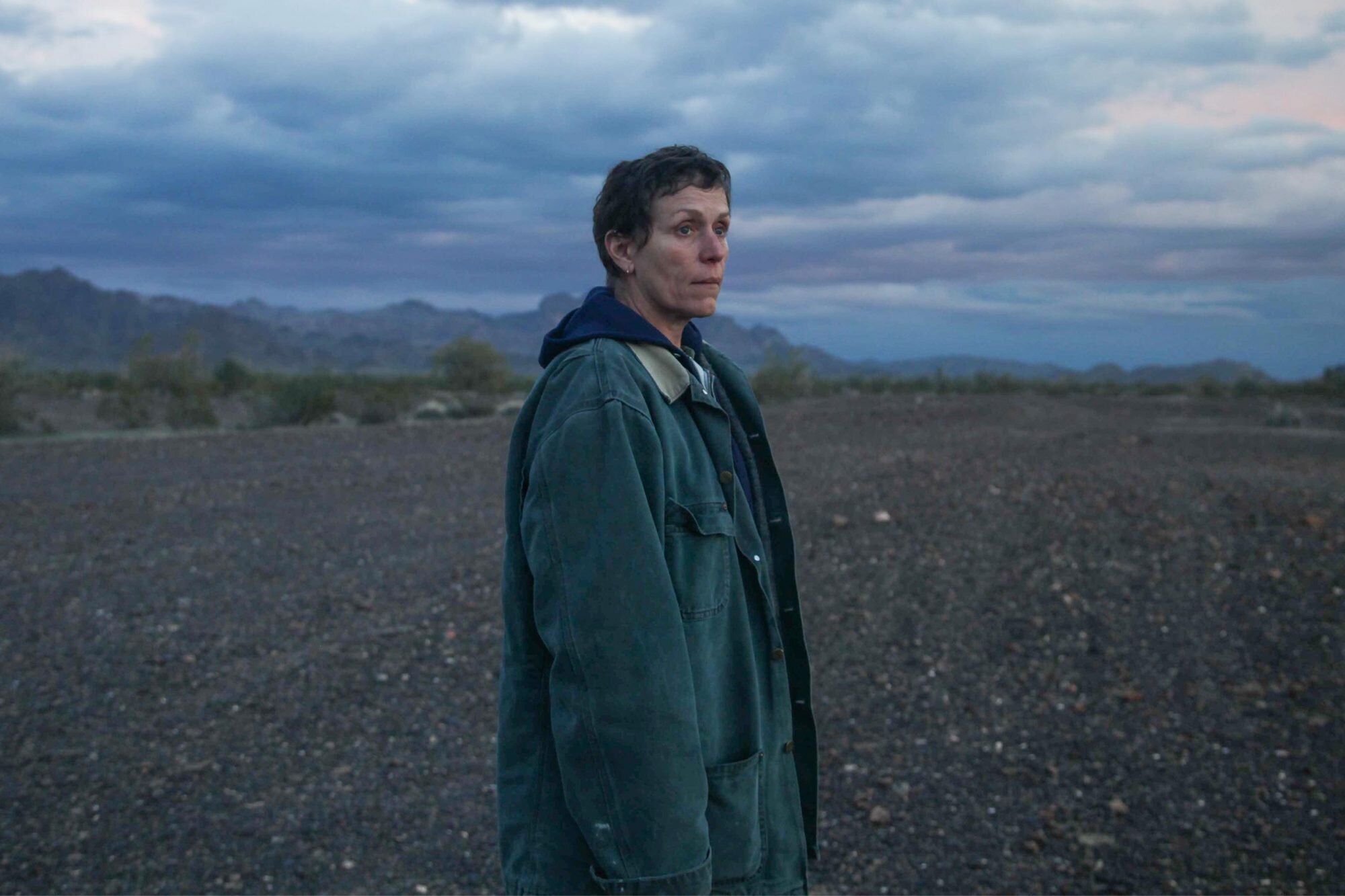
It is no secret that the distinct American brand of late-stage capitalism is pushing its working class into even deeper levels of poverty. The exorbitantly high cost of health care and housing, tied with low-yield retirement benefits and a weakened welfare state, has forced many elderly Americans to adopt a neo-nomadic lifestyle. Jessica Bruder examines this phenomenon and its political context in her 2017 nonfiction book, Nomadland: Surviving America in the Twenty-First Century. Bruder interviewed older Americans who live out of their vans and RVs, travelling across states to find seasonal work. Some of these Americans were cast as fictionalized versions of themselves in Nomadland (2020), written and directed by Chloé Zhao. The film recently won Best Picture – Drama and Best Director at both the Golden Globes and the Critics Choice Awards, and is Zhao’s third feature-length film.

Nomadland follows Fern (Frances McDormand), a 60-something nomad, as she drives from South Dakota to California and back again, working at Amazon warehouses, fast-food chains, and National Park campsites along the way. Fern’s character is based on an ex-resident of the real town of Empire, Nevada, which was wiped off the map after the sole source of its local economy—a gypsum mine—shut down after the 2008 recession. In contrast to its source material, Nomadland is much more about its own postscript—Dedicated to the friends who had to depart—than the scenes inside factory warehouses. Despite the book’s focus on socioeconomic factors, the film, in fact, does not address these issues at the foundation of the plot, perhaps to its detriment. To Fern, working for Amazon and various farms are just parts of her macro-level routine of driving around in search for odd jobs, and audiences who anticipate a take-down of the gig economy in Nomadland will find it lacking.

From a strictly formal perspective, McDormand’s raw and powerful performance and Joshua James Richards’ stunning cinematography paint a heart-wrenching portrait of grief and life’s impermanence. Fern, surrounded by the unforgiving, expansive, yet majestic American landscape, is chiefly a nomad because everything that provided her stability and security in the past has dissipated––her husband, Beau, has recently passed away, leaving her with no children, and she is forced out of her hometown. Throughout the film, Fern staunchly rejects offers from her friends and family to stay with them. Fern is unable to sit still and only feels truly at home in her van, where she can easily pack up and head to a new destination. Much like other characters in grief-centred films, especially Lee Chandler (Casey Affleck) of Manchester by the Sea (2016), Fern is stubbornly self-reliant and cannot let go of the trauma she carries. She is unable to commit to something permanent despite her ability to acknowledge that other people foster that desire. Fern encourages Dave (David Strathairn), another nomad, to return home to his son and grandchild, yet when she visits them later on, she flees without saying goodbye. In a subsequent conversation, Bob (Bob Wells), the de facto leader of the van-dwelling community, voices something Fern has believed for a while. 

“I don’t ever say a final goodbye,” Bob tells Fern. “I always just say, ‘I’ll see you down the road’. And I do. And whether it’s a month, or a year, or sometimes years, I see them again.” 

The film’s incredible depth and power come from such moments, showing the audience what it means to accept the grief and loss with open arms. Without emphasizing fear, guilt, or shame, Nomadland reminds audiences that relationships are the most fluid and impermanent parts of existence, and ultimately, that our lives are filled with person-shaped holes

McGill, News

QS rankings place McGill among the top 50 universities worldwide

On March 3, Quacquarelli Symonds (QS) World University Rankings released its annual university rankings, naming McGill University as one of its top contenders with a global ranking of 31. Thirty-two different McGill subjects placed within the top 50 university rankings by subject, with three departments—Mineral & Mining, Library & Information Management, and Anatomy & Cell Biology—ranked among the global top 10.

The QS global ranking system is reputed to be among the most comprehensive ranking systems in the world for higher education. The system examines six key metrics to determine their rankings: Academic reputation, employer reputation, the faculty-to-student ratio, citations per faculty, international faculty ratio, and international student ratio. 

Kimiz Dalkir, director, and Joan Bartlett, graduate program director, both at the School of Information Studies, attributed the school’s success to the student body and their contributions to research. 

“We owe our international reputation firstly to our students, who remain connected to us and act as the best ambassadors, and also to our researchers, who continue to have a great impact nationally and internationally,” Dalkir and Bartlett wrote in an email to The McGill Tribune. “We remain focussed on the heart of our program, to connect people to information. [This] has been the guiding principle since the School was established in 1927.”

 Frédérique Mazerolle, a media relations officer at McGill, said the university was pleased by its performance this year. 

“To be recognized is a source of pride for the McGill community,” Mazerolle said. “It is a demonstration of our collective commitment to maintaining McGill’s high standards and ensuring that we remain one of the world’s leading universities.”

Reflecting on the history of innovative research conducted at the university, Mazerolle discussed some of McGill’s most notable discoveries. 

“Our institution is recognized globally for the excellence of its teaching and research programs,” Mazerolle said. “Ernest Rutherford’s Nobel Prize-winning research on the nature of radioactivity was conducted at McGill, part of a long tradition of innovation on our campuses that includes the invention of the artificial blood cell and Plexiglass.” 

Mazerolle highlighted the university’s involvement in the field of epigenetics and expressed enthusiasm over recent research developments.

“Today, our professors are building the new field of epigenetics, developing alternative energy sources from crop plants and driving human achievement in every field imaginable,” Mazerolle said.

Brooklyn Frizzle, U3 Science and the Students’ Society of McGill University (SSMU) Vice-President of University Affairs, was less optimistic about McGill’s ranking. Frizzle believes that while university rankings affect the decisions of prospective students, they have an insignificant impact on the lives and academic careers of current students. 

“Frankly, the university is far too concerned with courting prospective students and donors with high world rankings, and current McGill students suffer for it,” Frizzle said. “It is an open secret that when applying for tenure, instructors with high-profile research experience, the kind that boosts ranking statistics, are prioritized over instructors who chose to dedicate their time to teaching or campus community involvement.”

Frizzle questioned the extent to which the university prioritizes rankings over the quality of education and student life on campus.

If you look through the principal’s remarks presented monthly to the Senate, you will find far more mentions of university rankings and illustrious award winners than community initiatives or campus heroes,” Frizzle said. “That is not to say that the university does not have a clear interest in boosting rankings [as] high ranking universities attract more students, donors, and government support, but rankings should not come at the expense of quality teaching and student wellbeing.”

Read the latest issue

Read the latest issue