
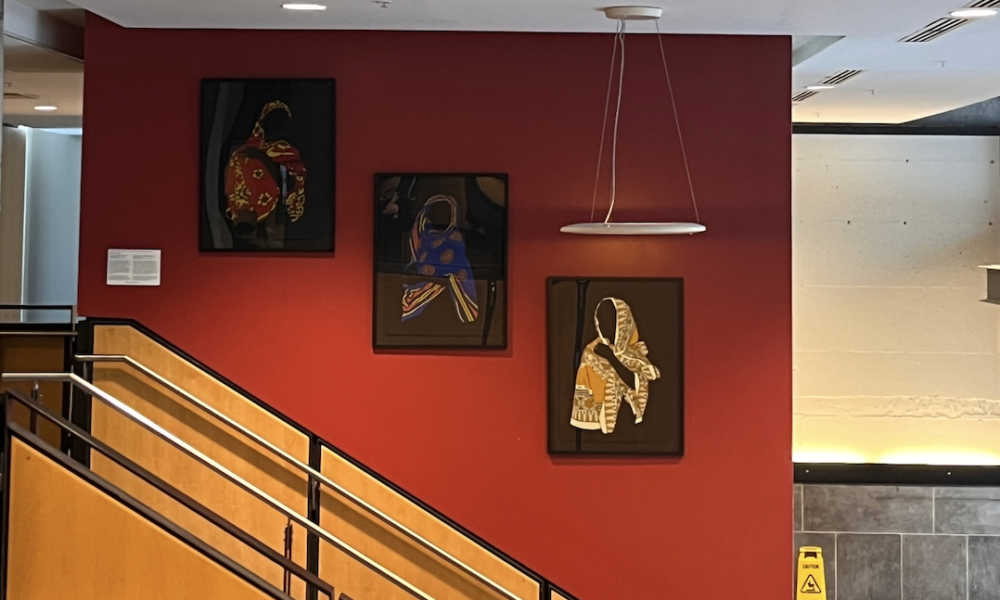

Tanzanian-American-Canadian artist Shanna Strauss’s screenprint triad Kanga I, II, III joined the student-led digital art exhibition Projections: SANKOFA on Feb. 23. Displayed in the Lorne M. Trottier Building mezzanine, the Kanga series combines negative space with vibrant colour to assert the unifying power of shared cultural identity.
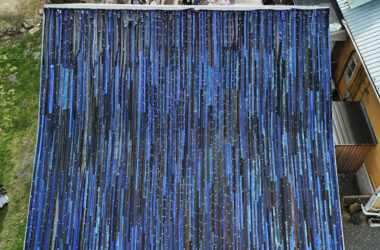
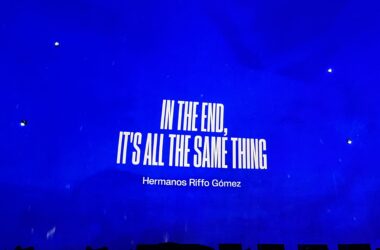
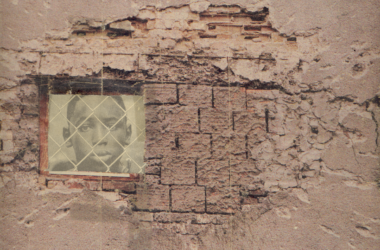
Projections: SANKOFA is a subsection of McGill’s Projections Art Series, an initiative under which students and staff jointly curate digital art exhibits aiming to increase the inclusion of underrepresented groups in the Faculty of Engineering. SANKOFA emerged as a collaboration between the McGill Visual Arts Collection, the Office of Engineering Inclusivity, Diversity, and Equity Advancement, and a curatorial team of five Black students at McGill: Dami Bali, Sarah Al Ghassani, Gloria Muco, Yvehenry Samee Julsain, and Fedgi Dony Gaspard.
Largely recruited from McGill’s chapter of the National Society of Black Engineers, SANKOFA’s student coordinators began the curatorial process with minimal formal experience in the arts. While they initially aimed for the exhibit to represent life in the global Black diaspora in its entirety, the curatorial team progressively narrowed their focus to emphasize reflection as a means of community building.
In an interview with The Tribune, Bali, B.Sc. ‘26, described how adjusting the exhibition’s scope offered opportunities for community building among Black Engineering students at McGill.
“We stepped away from trying to represent all of Africa and the Caribbean and […] the global diaspora, and focused more on encouraging people to look within themselves [and] learn about art [from] different areas of the world,” he said. “We [wanted] Black students, coming from all walks of life, to have a physical space at McGill University where they can feel […] seen and represented, […] share knowledge, share experiences, and form friendships.”
The SANKOFA curatorial team pursued this vision through an afrofuturist analytical lens, tackling questions of temporality within post-colonial Africa and the global diaspora. In an interview with The Tribune, Al Ghassani, U4 Arts, described how categorizing Black cultural practices in terms of ‘past,’ ‘present,’ and ‘future’ can risk erasing their continuity in the diaspora.
“We found at many points during the curation process how problematic [it can be to] classify culture as ‘past.’ What does it mean to say that we are ‘looking back’ to our traditional practices? Why isn’t it a current practice?” she said. “So, from there we shifted into not seeing [culture] as past versus future, but instead looking at things more fluidly.”
Through this exploration of nonlinear time, the curators landed on the series’ theme: SANKOFA, a term derived from the Akan people of Ghana which encourages reflection on the past to inform the future. The Kanga installation, the exhibition’s sole physical work, embodies this message. Strauss’s portrait series depicts three women in negative space, their kanga headscarves the only component of the pieces created via the addition of ink. This visual anonymization of the women’s features in favour of symbols of their shared cultural identity asserts the ability of a textile like the kanga to transcend space and time.
As noted by Al Ghassani, Swahili proverbs line the borders of Strauss’s kangas, reflecting the textile’s longstanding role as a communicative tool.
“Beyond its aesthetic function and utility as an everyday piece of clothing, [the kanga is] a very critical tool in Zanzibari and East African culture for sending messages [and] is still being functionally used as an everyday piece, as a form of resistance,” she stated. “To consider kanga as something that’s ‘past’ or ‘tradition’ [is] a completely false thing [….] People still utilize their tradition today and beyond.”
Beyond Projections: SANKOFA’s extensive digital art profile, the curatorial team also pursued its goal of community building through interactive events. With the assistance of Destiny Kirumira, a PhD student at McGill’s Peter Guo-hua Fu School of Architecture who helped design the events’ spatial layouts, the team brought the exhibition beyond passive viewing by incorporating art stations, short films, and live radio broadcasts of African and Caribbean music.
For Bali, events like SANKOFA’s launch are crucial in offering Black students a space at McGill for reflection and connection, particularly as Black representation among McGill faculty remains low, with only 39 Black tenure-track or tenured professors employed across the university.
“Throughout my entire time at McGill, I don’t think I’ve had a Black professor, and that was […] jarring,” Bali said. “So, the [Projections: SANKOFA] events that we host to engage the community really do mean a lot for people [….] When people feel they’re cared for, catered to, respected, welcomed, a lot of beautiful things can blossom from that.”