

Latest News

Science & Technology

The glowing DNA that can act as protein motion sensors

In the methodical world of scientific research, there is irony to be found in serendipitous stories of discovery. More often than expected, a scientist’s day in the lab is filled with more head-scratching than “eureka” moments. It is in these moments that a curious scientist would dig deeper, even in the negative data. Alexis Vallée-Bélisle, an associate chemistry professor at Université de Montréal, did just that, eventually coming to invent a fluorescent DNA nano-antenna that glows to indicate a change in the structure of proteins.   

The story begins in 2016, when Valleé-Bélisle developed the world’s smallest thermometer. This technology acts as a flambeau torch, where the stick is DNA and the flame is a dye attached to it, glowing bright when the temperature around proteins changes. 

However, Vallée-Bélisle told the The McGill Tribune that the team soon realized that the dye was not glowing due to the change in temperature, but due to a change in protein structure. This occurs when the protein performs its function or interacts with other molecules in the cell. The dye is sensitive to the environment around it and thus detects the nanoscale twists in the protein structures.

 “It was unexpected,” Vallée-Bélisle said. “But we knew we were on[to] something big.”  

“Structure equals function” is a well-known axiom in biochemistry. The proteins in the nails and skin and the proteins in our gut and brain are both made from amino acids, but they work differently because they fold into a variety of 3D structures

Once the structure of proteins is known, it is easy to predict their function. This knowledge, combined with synthetic biology, can be used to develop drugs that bind specific pockets of the 3D structure to inactivate the viral proteins, in order to fix the misfolded proteins observed in diseases, or to design novel proteins

Although the field of structural biology took a huge leap forward in 2020 with DeepMind’s AlphaFold2 algorithm—which could computationally predict the 3D structure of proteins from their amino acid composition—research still depends heavily on experimental studies. X-ray crystallography and Cryo-EM are the current gold-standard methods of determining protein structures. But these experiments are complex enough to consume one’s entire PhD, and require expertise in structural biology, limiting their broader use.  

“People are struggling to have a simple assay [method] to monitor their favourite protein’s activity,” Vallée-Bélisle said. “We need[ed] to come up with an antenna that probes small changes in the conformation of protein.”  

To determine the structural changes of these biological nanomachines, Vallée-Bélisle turned to his favourite molecule—DNA—for nano solutions.  

“DNA’s language is simple, its chemistry is much simpler and programmable,” Vallée-Bélisle said. “We have a DNA synthesizer and we can have a [DNA] antenna by the end of the day.”    

Researchers repurposed their serendipitous discovery of the DNA antenna to detect the changes in the structure of proteins occurring at the time scales of micro to milliseconds. One of the most important parts of this antenna is the glowing dye attached to the DNA. Since different dyes interact differently depending on a given protein structure, the researchers were able to detect five different types of structural changes in a single protein within months of using the same DNA antenna.  

Vallée-Bélisle plans to scale up this technology from detecting one protein structure at a time to detecting 96 possible structures of proteins with different antennas at the same time, all combined on a single palm-sized plate. 

“The goal of any scientist is to have your technology out there,” Vallée-Bélisle said. “If we could build those 96 well plate readers then we probably can make [this technology] available to everybody.”


Discoveries like this one will enable scientists to put more time into thinking of solutions and less time mixing solutions in the lab.  

Album Reviews, Arts & Entertainment

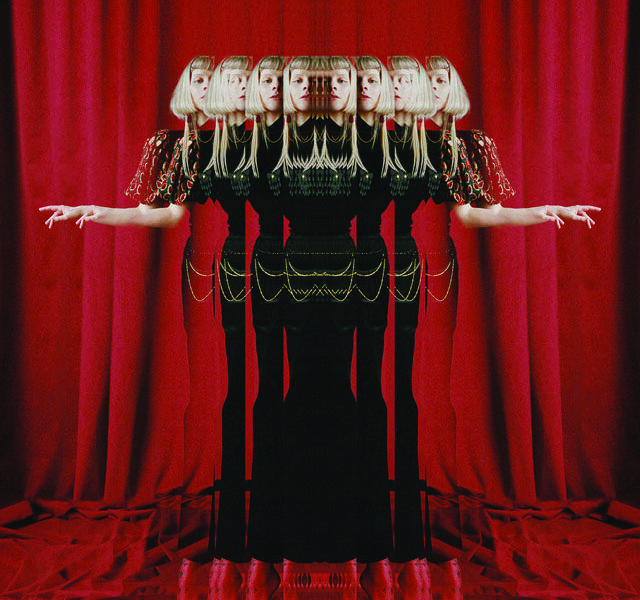
Electro-pop meets celestial beings on Aurora’s new album ‘The Gods We Can Touch’

After her 2015 single Runaway went viral on TikTok in 2020, Norwegian artist Aurora has become one of the most streamed artists on Spotify, sitting comfortably in the top 1000. Her third studio album, The Gods We Can Touch, is her newest release. 

Just like her two previous albums, The God We Can Touch diverges from mainstream pop music with its innovative and cinematic qualities. The album is almost conceptual in the thematic unity between its tracks, with each song dedicated to humanizing a different god or spiritual deity, from Greek mythological characters to Christian figures. 

Aurora opens the album with “The Forbidden Fruits of Eden,” a short song that sounds like mantras layered over a catchy beat, setting the album’s overall mystical ambiance. The second track, “Everything Matters,” continues in a similar tone, as Aurora’s reverbed high-pitched voice harmonizes with gentle piano and electronic beats. The song also features Montreal-based singer Pomme, whose French verses complement the song’s celestial tone.  

In the album, Aurora boldly navigates her way through an extensive sonic palette, combining her on-brand Nordic electro-pop sound with soft folkloric elements. While “Cure for Me” and “A Temporary High” have an energetic quality that makes the listener long for the reopening of clubs, “Heathers” and “Artemis”  are more enigmatic and folkish, with ethereal harmonies and delicate synths. Although the drastic variation of genres throughout the album may seem incongruous, the songs are carefully arranged so that even the most intense songs blend into slower ballads. Creating an album with such radically different sonic elements was certainly risky, but The Gods We Can Touch overcomes the challenge, proving that Aurora has the talent to conquer the pop scene.

Campus Spotlight, Student Life

A peace of home

For most McGill students who hail from outside Montreal, starting university means leaving the place that we have come to call home. When packing for college, we carefully select items that remind us of home and that we can turn to whenever we feel homesick. Arriving in a new city amidst a sea of strangers can make you feel overwhelmed and alienated, but having these items can bring us feelings of peace and comforting memories.

Yet, what is home? Is it a place, a person, a scent, a feeling? Everyone has a different meaning of home; it is usually not tied to a single place or experience, but rather a collection of memories linked to different places and people. 

Tracy Berbari (U1 Management):  Lebanon  

Laughter, family, calm, excitement, peace, fresh air, and love are all things that Berbari associates with the word “home.” 

Lebanon had always previously brought her these feelings. Its breathtaking views and nature brought her peace amidst the country’s hectic financial crisis. Because of the October Revolution, she and her family were forced to pack up the essentials and leave at the end of 2020. Though she does not have a specific item that reminds her of home, there is a place in Montreal that transports her back to Lebanon. 


“On a summer day, a kind man, who was my first friend in Canada, suggested that we take a tour of Montreal,” Berbari said. “Our first stop was the Bèlvédere d’Outremont. After a long walk up the hill, we finally arrived at the top, and when I saw the view I was mesmerized. We were surrounded by all the lovely elements that mother nature had to offer: the birds were chirping, the flowers were blooming, and at that moment in time, I reminisced [about] all of my childhood memories in Lebanon. Suddenly, the move to Canada wasn’t so scary, it felt like home, my home.”

The McGill Tribune / Tracy Berbari

Charlotte Mineret (U1 Arts): Belgium

Having moved multiple times during her time in Belgium, and now recently to Montreal, Mineret understands that a place isn’t the most important thing when it comes to feeling at home, but rather the connections formed with the people around her. 

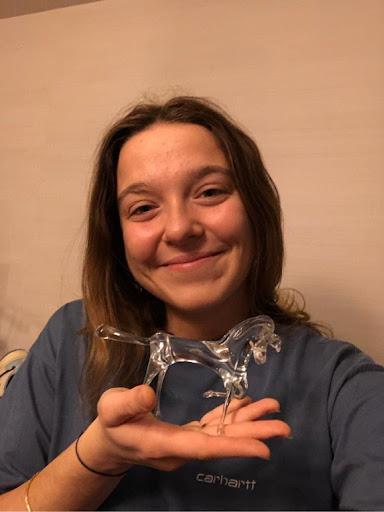
While she has brought numerous objects from home—including delectable Belgian cheese—the one item Mineret could not have left behind is her horse-shaped glass statue, gifted by her grandparents. Every time she looks at it, she is reminded of her childhood and of her time in Brussels with her family. 

“We went to this place where they made these glass statues and I saw them make it from scratch,” Mineret said. “It has always been on my desk in Brussels and it’s on my desk here in Montreal. It makes my dorm feel more personal and like a home.”

The McGill Tribune / Charlotte Mineret

Manon Fillon Ashida (U1 Arts): Tokyo/Belgium

Before coming to Montreal, Manon used to think that home was associated with one’s citizenship. Being both French and Japanese, she previously never considered Belgium as her home. However, moving to Montreal made her realize that Belgium is where she has created some of her most cherished memories.

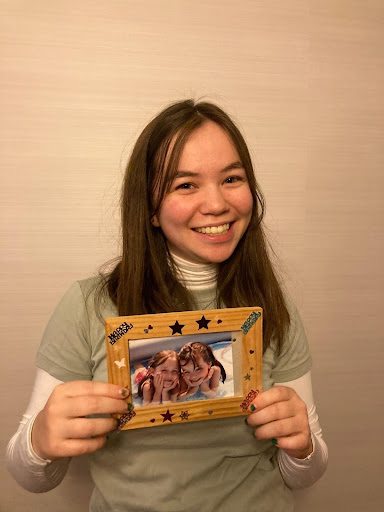
While she did not bring many items back from home—besides tons of clothes—she did bring the picture that her best friend gave her for her fifth birthday. 

“I had just moved from Tokyo to Belgium and she was both my neighbour and my first friend,” Ashida said. “She gave me this picture for my fifth birthday and I have always had it on my desk. It’s an item of great significance to me because I have known and spent so much time with her. It reminds [me of] my time in Belgium and reminds me of home.” 

The McGill Tribune / Manon Fillon Ashida
Student Life, Word on the Y

Word on the Y: First-years’ experiences on campus

Isabella González, Staff Writer

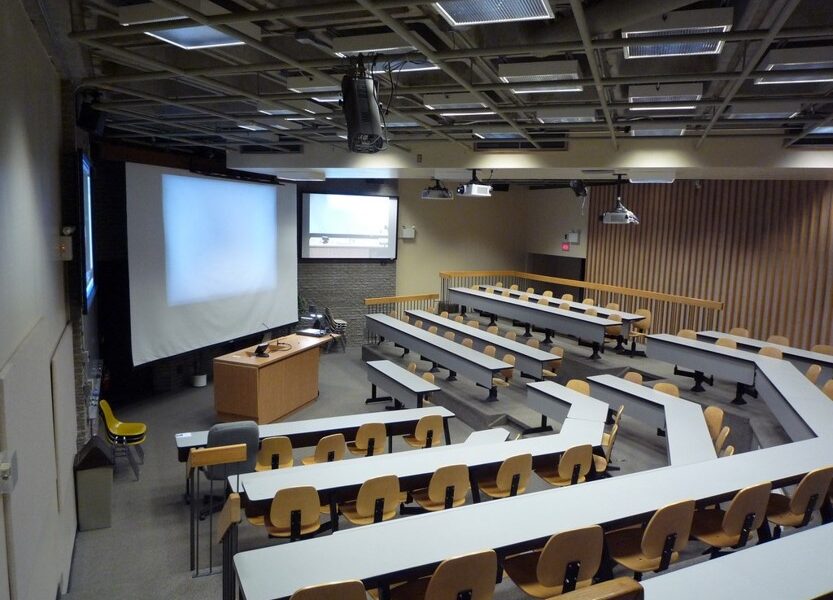
Coming from an international school where I knew everybody, I was overwhelmed when I stepped into overcrowded lecture halls with 100 different students during my first week of in-person class. As I walked into a bustling lecture hall lit up by blinding lights, I decided to take a seat next to a stranger. The anxieties teeming in my head discouraged me from saying hello, but I pushed those feelings aside and started a conversation. After all, I’m a stranger to them too; we both have the same irrational fear of being the first one to break the dense silence between us. While 100 students in one lecture hall can seem like 100 individual things to worry about, those are also 100 exciting opportunities for meaningful conversations, valuable friendships, careless laughter, brunch outings, and late-night study dates at the library. I’ve decided to embrace these opportunities in my first year, and live boldly outside of my comfort zone. While I won’t get to know everyone in my overcrowded lectures, as long as I make one or two friends with whom I can pick up a warm and comforting chai latte after class, I’m set.

Abby McCormick, Staff Writer

As I take a seat in my first in-person class of my second semester at McGill, the aura around me is one of comfortable silence. While I initially thought that being in a sea of people once again would fill my stomach with butterflies, instead, it reminds me that I’m not the only one struggling to find a sense of normalcy amid the chaos of the pandemic. I smile at the girl next to me through my black mask. She smiles back. It reminds me how much I missed the simple gestures of human contact during these weeks of isolation. With the return to the classroom, I am hopeful for more opportunities to connect with other students and make my first year one for the books. Even though I’ve missed out on many quintessential freshman year McGill experiences, like lectures in Leacock 132 and nights at Cafe Campus, I am confident that the uncertainty of the pandemic has made me more adaptable and will—hopefully—make my upper years at McGill feel all the more worthwhile. 

Rosie Kaissar, Contributor 

After a long break filled with isolation and quarantine, I couldn’t be happier to be back on the beautiful downtown campus with lots of commotion all around. While going back to McGill brings back the stress of finals week and 3 a.m. crying sessions in McLenny, the beautiful sight of white, powdery snow and feeling of the refreshing, though extremely cold, air have made it difficult to stay away from campus—even on the days when I don’t have any in person classes. I love how I can just go for a small walk and run into friends who I haven’t seen since early December. Even with the hybrid model of school this year, campus feels like a home, and I am excited to be back.

Sabrina Nelson, Contributor  

As I enter the room of my first in-person lecture, I feel out of place amid a sea of unfamiliar faces. After two years of seeing black squares on my laptop, I had forgotten what it felt like to be in a room filled with strangers. Yet, as I take my seat, the person next to me smiles and says hello. Suddenly the butterflies are gone, and I am at ease. I quickly realized how much I had missed the small pleasures of human contact—the exchange of glances, smiles, and laughter. I had forgotten the excitement that came with meeting someone in a classroom for the first time and sharing a meaningful conversation. I have missed out on so many high school and first-year experiences because of the pandemic, yet even if things will never go back to how they used to, I hope that the return to in-person will make up for everything that I have yet to experience—like Montreal’s nightlife and art scene—and that I will still get to have the college experience that I have dreamt of having. Looking forward, I will grasp every opportunity that to form valuable friendships and push myself out of my comfort zone to make unforgettable memories. I won’t take anything for granted, even the seemingly mundane things.

Student Life

Women in law panel highlights versatility and resiliency in law

McGill Women In Leadership (MWIL) and the McGill Pre-Law Students’ Society (MPLSS) joined forces on Jan. 26 to host a panel about women in law featuring prominent lawyers and legal scholars from across Canada. During the event, panellists discussed the proudest moments of their careers, the challenges of being a woman in law, and the advice they would offer to future lawyers in the audience. 

MWIL’s vice-president (VP) Events, Lis Riveros, U1 Arts, sat down with the Tribune to discuss the motivation behind this event and the importance of connecting future lawyers with other women in the field. 

“Between me and the VP Events for McGill Pre-Law, we agreed that in order for women to advocate for themselves and move their careers forward, they can’t succeed by doing it alone,” Riveros said. “The idea of being able to succeed in law and having the ability, competence, and eventual affluence of being a lawyer are usually tied to those who are not women.”

The panel featured a diverse range of women in law, including a business owner and practicing criminal defense lawyer, a corporate lawyer, an entertainment lawyer, and a legal scholar. Riveros explained that holding the panel remotely actually enhanced the event because it allowed for more diversity in the speakers they brought in. 

“If we did the law panel in person, we could only do Montreal lawyers,” Riveros said. “Zoom and online events give endless opportunities and creativity.”

Riveros highlighted that the goal of this year’s event was to emphasise versatility in law. When planning, it was important for MWIL and MPLSS to include women who were extending the boundaries of their law degree.

For instance, panellist Jordana Goldlist, criminal lawyer and owner of JHG Criminal Law, studied civil litigation before switching to criminal law and eventually starting her own company. 

“My biggest accomplishment is my business overall,” Goldlist said. “After five years [at a criminal law firm], I wanted to do things differently. I left on a leap of faith and started my own practice in 2015. I’ve grown a fantastic practice, a great reputation, and it’s nothing but hard work and dedication.” 

The speakers were also candid about the ugly side of law and the gender bias that follows many women in the legal field. 

Sarit Batner, a corporate lawyer at McCarthy Tétrault in Toronto highlighted how challenging it is for women in law to get their foot in the door. 

“The list of challenges that women have to face in law […] is great and long, and if you’re a racialized woman you can add layers to that. What I was most surprised by were lines of referral. You come into law expecting that there’s no gender difference. However, the client sources are still men, the networks are still men, and being excellent is super helpful, […] but [it’s] often not enough.”

Despite the obstacles they have had to overcome throughout their careers, the panel emphasized to the audience that there is great potential to make positive institutional change with a law degree. 

Professor Priya S. Gupta at the McGill Faculty of Law explained that the law gave her the knowledge and leverage to address the issues she is most passionate about. 

“One of the things I loved [about law school] was how it could teach you to engage in the world, through all these different fields and all these different modes. When you have the things you’re interested in […] the law gives you the profession that allows you to make those changes in the world.” 

Campus Spotlight, Student Life

From study mates to study dates

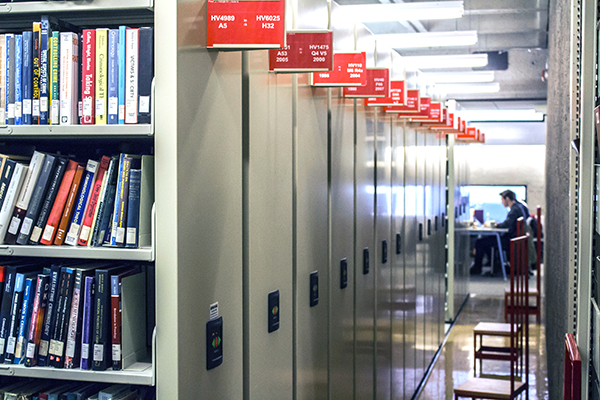
McGill is notorious for its work-hard mindset. If you walk into Redpath or McLennan on any given day, including the weekend, you’re bound to see students studying, catching up on work, or desperately completing assignments that are due at midnight.

Although many students flood the library to study in groups, there are many stragglers who make the trek to the library to cram all by themselves. For some, this might be by choice, but for others, the pandemic and COVID-19 restrictions have made it increasingly difficult to find study partners or connect with peers in Zoom classes.

Sanghoo Oh, U3 Arts & Science and creator of StudyDate, noticed the isolating effect the pandemic was having on students, whether that was struggling with coursework, job applications, or networking. Oh himself said he experienced difficulties networking in his field of interest, UX design. These factors inspired him to create StudyDate, a student networking website designed to help students find study dates or mates.

The platform has a dating app layout, where you can customize your profile to include what classes you’re taking, random facts about yourself, what skills you have and what skills you want to build upon. Depending on your wants, needs, and interests, the website will match you with someone compatible, and you can set up a study date from there.

Although students can connect on social media platforms such as Facebook and Instagram, or dating apps such as Tinder or Bumble, Oh feels that these platforms aren’t as conducive to fostering  healthy and productive relationships.

“I don’t think any of them really have a generally positive notion to them, nor do they really act to connect people, per se, physically,” Oh said in an interview with The McGill Tribune. “It’s more for entertainment browsing nowadays, and maybe very shallow digital connection.”

Oh also believes using studying as a channel to create friendships or even find romantic interests is a much more compelling idea for students and a more effective way of creating conversation. Many of his friends, for example, had awkward encounters when meeting people from dating apps, seeing as there’s not much common ground from which to spur conversation.

“Studying can solve that issue in a way,” Oh said. “If I’m meeting someone from my same class, for example, and I’m meeting them for a date, there’s already a great icebreaker of sorts.”

Many McGillians have already begun to enjoy StudyDate. Jennifer Shi, U1 Management, found out about the website on the Facebook page Spotted: McGill and immediately signed up, looking to find more people to build friendships given the uncertainty of the pandemic.

“I think [StudyDate] is fun cause it’s in the style of a dating app,” Shi said. “You get to see people’s profiles that you wouldn’t necessarily see just through their Facebook or Instagram profile or in a group chat because you can write things you want other people to know [about you].”

After the final testing period of the platform ends in May 2022, Oh is considering extending StudyDate to the public. But for Shi, its student-community focus has been extremely valuable. 

“When you sign up, you have to use your McGill email, and it makes sure it’s all university students, which I think is just safer and also something I’m more comfortable with,” Shi said.

As StudyDate’s popularity grows on campus, its creators hope that it will be able to bring together students on campus who would have never connected otherwise. 

“It’s something I never knew that I wanted or needed,” Shi said. “It’s literally the perfect platform where you can make friends during a pandemic and not be stressed out that it’s a dating app.”

Hockey, Sports

The course of true love never did run smooth

Many Montrealers will be able to tell you where they were on June 24, 2021, when the Canadiens scored an overtime goal in game six of the second-to-last round of the playoffs against the Las Vegas Golden Knights—a win that propelled the team to the Stanley Cup Final for the first time since 1993. 

I was away at a cottage with friends at the time, crowded around an old television watching the game. When Artturi Lehkonen scored that goal, the three of us watching went wild––much like many across the province and even the country. When we managed to settle down, the first thing I did was call my mom, the person from whom I inherited my love for the Habs. She, too, was over the moon and mentioned how she wished her dad was around to see it happen. 

As I was growing up, my mom would tell my grandfather, ahead of each season, that this year might be the one the Habs would surprise us and finally win their 25th Cup. Each time, regardless of how well the team was doing, my grandfather would reply, “No, not this time.” Evidently, he was always right. 

It should have been unsurprising, then, when the team succumbed to the Tampa Bay Lightning two weeks later. After all, the boys had put on a lacklustre regular season performance, somehow managing to scrape by only when it counted. With each round, first against their arch-nemeses the Toronto Maple Leafs, then against the Winnipeg Jets, and finally against the Golden Knights, commentators who had been positive that the end of the Habs’ run was imminent were forced to eat their words. Despite the unlikely odds, the city was sent into a period of mourning when the final series came to a close. 

Given the team’s stellar run last year, fans had high expectations going into the 2021-2022 season. But the off-season brought with it the losses of key players like Phillip Danault and Corey Perry––and not to mention injuries that prevented captain Shea Weber and star goaltender Carey Price from returning to the ice in the fall. Now, the team is standing dead last, making it statistically impossible for them to make the playoffs. Between injuries and placements into the NHL’s COVID-19 protocol, several games in December and January saw the team made up almost entirely of players from the Laval Rocket.

While this fall from grace is rather extreme, it hearkens back to past episodes of Cup hopes that electrified the city. In 2009-2010, Jaroslav Halak’s success briefly called into question whether Price would remain the city’s starter or even remain in Montreal. That season, the team made it further into the playoffs than they had in years, but ultimately failed to make the final, losing their shot at clinching the Cup. 

The recurring pattern begs the question of why Canadiens fans remain so deeply devoted to a team that consistently disappoints. The Habs are said to have the “most intimidating home-ice advantage in the league,” with the Bell Centre known to draw in the loudest, most passionate fans. Beyond the atmosphere of their arena, furnished with energy that travelled across downtown Montreal from the historic Forum in 1996, the team also boasts the most Cups and the most retired numbers in the league. 

Perhaps it’s the way the franchise’s history is so intimately tied to the culture of the city and the province. Or, maybe it’s the lack of another highly popular professional sports team in Montreal, or even the overwhelming number of iconic players to have sported the bleu-blanc-rouge. Regardless, the Canadiens have become a staple in many––arguably, the majority of––Quebecers’ lives, making them a cultural giant rather than merely a sports team. 

With new leadership and the looming possibility of a rebuild, some Habs fans are cautiously optimistic about the possibility of a team that is consistently great, not just in random, haphazard bouts. But I’ll always take the lengthy droughts in exchange for even a once-in-a-decade chance to experience the thrill, camaraderie, and joy that comes with times like the playoff run of summer 2021. 

Editorial, Opinion

Closing the curtain on political theatre

On Jan. 20, Quebec Premier François Legault held a press conference in which he made two statements: First, that citizens should “stand in solidarity” with hospital workers, and second that they should “stay prudent.” Combined with the shifting recovery plans in light of the Omicron variant, these remarks show that the province’s response to the COVID-19 crisis remains chock full of political theatre. The government’s mismanagement and poor communication conceals important decisions being made on travel, schools, and health, among other issues. To individuals’ risk, political theatre obscures government responsibility, and Quebec is certainly matched in performative statements coming from the federal, municipal, and university levels. 

While these theatrical actions reveal the oft-improvised nature of government preparation, idle, action-less rhetoric continues to emerge. While seemingly innocuous, messages like “Canadians, please come home” and “the pandemic does not discriminate” use emotional calls for unity to distract from the ways that structural inequalities disproportionately affect groups in Canada and around the world. Closing borders, for example, after South African scientists discovered the Omicron variant, was discriminatory toward African countries that had similar rates of infection as European countries. What is more, when leaders position healthcare workers as “heroes,” their sincerity rings hollow, as they appear benevolent without taking concrete steps to improve material conditions for these “heroes.” Similarly, the McGill administration encourages students to focus on their mental health, all while their asinine decision-making and messaging leaves students confused and without flexible accommodations. It was these same aggressive displays of authority that forced social work students into the classroom and their fieldwork placements. Communication between the Canadian government and Canadians, the Quebec government and Quebecers, and McGill and McGillians is rife with disparities between what authorities say, and what they actually do.

This theatre from powerful leaders, of course, has its audience: With a federal minority Parliament and a provincial election on the horizon, the importance of popularity should not be prioritized over successful action or proper public health measures. Furthermore, contradicting information from the top-down breeds immense distrust within the public. We have come to a point where politicians have not only politicized masks, but also restrictions—encouraging skeptical and vaccine-hesitant citizens to embrace individual freedom over collective safety. When a curfew is implemented and lifted seemingly at random, politicians face the risk of undermining science. For example, some  Indigenous people rightfully hold mistrust in Western medical institutions and, by extension, COVID-19 vaccinations.  Quebec’s health-care system has a brutal history of systemic racism. The death of Joyce Echaquan, an Atikamekw woman who died at the hands of medical professionals in 2020, highlighted the degree to which  racism is embedded in multiple levels of health treatment. Over federal jurisdiction, Canada also conducted unethical vaccine experiments in residential schools. These reasons qualify mistrust and hesitancy in interacting with governmental health services—and all the while, the government’s political performance does nothing to address these issues head-on. 

Efforts to scale back political theatre tend to put the onus on individual citizens, who face the impossible task of overcoming their own lacklustre, yet powerful, elected officials. For instance, it is unfair to ask students to compensate for McGill’s ever-changing decisions. Nevertheless, when governments separate science from their actions and McGill trades effective change for tired buzzwords like “student accomodations,” without actually providing them, citizens and students are burdened with mobilizing against their higher-ups’ overall ineptitude. At the municipal level, Montreal must hold newly elected Mayor Valerie Plante to her commitments to double the budget for services for the unhoused—and not let her get away with only making PR-fueled statements on shelters without addressing structural barriers to housing equality. Similarly, citizens should stress the importance of vaccination and vaccine equity, and support initiatives like Park Ex’s vaccine confidence measure WeCanVax. By matching meaningful measures to collective action, individuals can work to pull back the calculating and capricious curtain of political theatre.

Baseball, Behind the Bench, Sports

An axe to grind: It’s time for Atlanta’s ‘chop’ to go

The transition away from dehumanizing caricatures of Indigenous peoples within the sports world has been marked by many teams dropping their blatantly racist names. After years of activism, McGill changed the moniker of their men’s varsity teams to the “Redbirds” in 2019. The Washington Football Team eliminated their degrading nickname in 2020 and the Cleveland Guardians followed suit in 2021. 

Throughout their successful bid for a World Series ring in 2021, the Atlanta “Braves” and their notorious “Tomahawk chop” received rightful scrutiny while being placed in the spotlight. As the audio cue for the “chop” rang throughout Truist Park, the TBS channel panned out to show Atlanta fans in cartoonish regalia and headdresses chanting a “war-cry” while chopping their arms back and forth. The refusal of Atlanta to move away from the “chop,” combined with Major League Baseball (MLB) and TBS’s encouragement of the cheer, has left many fans perplexed as to why MLB would endorse such an objectionable act. 

Racism within the Atlanta “Braves” organization traces back to the team’s sale in 1912 to James Gaffney. Gaffney was an alderman for Tammany Hall—a New York City political organization named after Chief Tamanend of Lenape Nation. Tammany Hall referred to its members as the “Braves,” a term associated with Indigenous warriors. 

In 1991, when the “chop” was adopted from Florida State University, a number of Indigenous groups protested outside the Metrodome, criticizing the chant and hand motion for making reference to scalping, a violent practice stereotypically associated with Indigenous peoples that is, ​​in reality, practiced predominantly by white settlers who were institutionally encouraged and rewarded for this horrifying practice. 

When partnered with Atlanta’s legacy of racist caricatures and the “Braves” name, the “chop” becomes a harmful misrepresentation of Indigenous peoples that marginalizes the Indigenous experience. As an accepted part of baseball fandom, the “chop” and its associated “war-cry” instill settler-colonial stereotypes of the “savage Indian” into mainstream baseball culture. 

The National Congress of American Indians (NCAI) has also been unwavering in its calls for MLB, TBS, and FOX Broadcasting Company to refrain from showing the “chop.”

In a conversation with the Post Dispatch, Ryan Helsley, a pitcher for St. Louis Cardinals and a member of the Cherokee Nation, described his experiences playing at Truist Park as disappointing and disrespectful. 

“It depicts them in this kind of caveman-type people way who aren’t intellectual,” Helsley said. “I don’t see why professional teams are so far behind on that.”

In response to this comment, Atlanta decided to stop distributing red foam tomahawks to fans, and to refrain from playing the audio cue—but only when Helsley was in the park. 

In an interview with The McGill Tribune, Yann Allard-Tremblay, assistant professor in McGill’s Department of Political Science and a member of the Huron-Wendat First Nation, expressed his disappointment with Atlanta’s response. 

“You can acknowledge that it is wrong but [the MLB] is still in a position where it doesn’t have to change,” Allard-Tremblay said. “[They’re] consolidating [their] dominance. It says a lot about how much care is taken to the relationship with Indigenous peoples. As it is presented to me, Ryan Helsley seems to be saying that there is something wrong, that he is not comfortable, and the response is, ‘well local Indigenous people are fine with it.’”

If MLB commissioner Rob Manfred is going to continue to make weak excuses for his ongoing support of the name and its associated chant, Atlanta needs to take a name change into their own hands. Circulating petitions have suggested the Atlanta Hammers as a tribute to former Atlanta baseball star, Hammerin’ Hank Aaron. 

“There is often an attachment to power,” Allard-Tremblay said. “Being questioned about the power you exercise is often something that will lead to no answer. You see that in so many social dynamics of people who have entitlement and do not want to lose their entitlement. I am sure that is present here [with the MLB and Atlanta].”

As a team that has held six different names in three different cities, it is clear that Atlanta is not resistant to a name change or rebrand of the team. What they are resisting is the transition away from the exploitative representation of Indigenous peoples that continues to be profitable for Major League Baseball.

McGill, News

Faculties rally to strike as McGill resumes in-person classes

Many McGill students entered the classroom for the first time this semester on Jan. 24. The majority of McGill courses—except Tier 1 activities—began online due to the spread of the highly contagious Omicron variant of COVID-19 and a subsequent provincial lockdown. The university’s decision to require students and staff return to campus has been met with controversy, particularly from students who worry it is premature.

From open letters and statements to strikes, many members of the McGill community and student organizations have opposed the timing and execution of the university’s reopening. Students have called attention to the highly contagious nature of Omicron, the weak accommodations for students and staff who are immunocompromised or live with at-risk people, the speed at which the university is reopening, and the lack of respirator-style masks available on campus.

In the weeks leading up to the re-opening, the administration sent a slew of university-wide emails, spoke to campus media and other student bodies, and made a 40-minute video interviewing students and faculty about their perspectives on the reopening in an attempt to ease safety concerns and address student confusion.

The Arts Undergraduate Society (AUS) followed suit, holding a town hall on Jan. 21. The first substantial point on the agenda was a question-and-answer period with Arts Faculty Associate Dean (Student Affairs) Manuel Balán, which ran well over the allocated 30-minute period. Most questions regarded McGill’s COVID-19-related accommodations and the possibility of making course materials accessible remotely. Balán explained that rules in place to protect instructors’ autonomy and intellectual property prevent the university from creating a blanket requirement to record classes.

“Given our rules, there is no possibility of mandating […] instructors [to record class content], and MAUT and instructor associations have been really protective of me, as an instructor, and my freedom to manage my content,” Balán said. “I’ve been working with a number of instructors who have those concerns, to try to get them to post recordings.”

Balán also recognized the gaps in the accommodations framework, but vowed that the university is working to address them, urging students facing difficult circumstances to reach out to him directly in the meantime. 

“There’s a framework for […] instructors who are in a position that may put dependents [at] risk [of contracting COVID-19], but for students, there’s no such framework in place,” Balán said. “In the absence of that framework, […] we don’t have easy answers right now, but […] I will ask to hear from students in those situations and we will do our best, within our abilities, to try to help you navigate that.” 

After the question period with Balán elapsed, Anya Narang, AUS speaker of the council and town hall facilitator, conducted a “temperature check,” polling the 40 or so attendees on their willingness to accept McGill’s plans for a Jan. 24 return to campus. The majority voted “no” in the informal poll. The town hall then entered an open period to discuss what position the AUS should adopt in regard to the return to in-person instruction, with talk of a potential strike front and centre.

George Ghabrial, U0 Arts and town hall attendee, suggested that a larger assembly with more AUS members present would be a good next step in deciding whether the society should call for strike—a decision that would translate to a refusal to attend in-person classes.

“I think one of the most important things, really, is to […] have some sort of general assembly that is open to the broad [arts] student body,” Ghabrial said. “We have seen time and time again […] that the McGill administration just does not […] seem to have the students’ best interest in mind.”

Codey Martin, U3 Social Work, town hall attendee, and active participant in the School of Social Work’s strike emphasized the need for compassion during these times given the many factors that affect the accessibility of both in-person and online instruction.

“Our mandates, and our efforts to strike this in-person is about compassion and an understanding [of] the realities of the respective homes that we come from,” Martin said. “We are all placed in unique, and difficult, situations. Some may, or may not, carry internet, or have limited access. [Some may have] learning disabilities, whatever it may be.”

Martin also shared a sentiment echoed by many throughout the event: That McGill is prioritizing profit over student safety. 

“A lot of us that are advocating and speaking up to this colonial power and oppression, that comes from the heart, that is compassion,” Martin said. “What McGill, and everything about this situation, is building off of is capitalism [and] loss of revenue on the campus downtown.”

Though it failed to establish concrete action items, the town hall concluded with high energy levels and a clear need for further discussion. 

On the same day as the AUS town hall, Jan. 21, the McGill administration held a student media roundtable on the return to campus with Associate Provost (Teaching and Academic Programs) Christopher Buddle and Deputy Provost (Student Life & Learning) Fabrice Labeau. Both Buddle and Labeau stressed that McGill believes conditions are safe enough to return to in-person instruction. 

When asked whether the procedural masks the university is distributing provide adequate protection against the Omicron variant—a point of contention raised in the Students’ Society of McGill University’s (SSMU) press release—Labeau referenced a recent Institut national de santé publique du Québec’s (INSPQ) comparison of the efficacy of procedural and respirator-style masks. 

“That report—which, by the way, is very much corroborated by our own medical experts—[finds] that there are not many settings in a university environment that could justify wearing an N95,” Labeau said. “Overall, given the conditions under which we interact and the level of risk, a procedural mask is really what we should go with.”

SSMU announced on Jan. 21 that it will be distributing respirator-style masks on a pay-what-you-can basis to at-risk students and those who come in contact with at-risk people frequently. Additionally, SSMU has created a spreadsheet with information about courses’ remote accessibility. 

During the roundtable, the provosts also explained that there has been a shift in Quebec’s, and thus McGill’s, attitude toward pandemic management, noting that the Omicron variant, while more contagious, looks to cause less severe disease in most. Labeau acknowledged that McGill’s COVID-19 dashboard will be less accurate and will provide less detail given the decreased availability of testing and the onus now being placed on individuals who test positive to conduct contact tracing themselves.

“What we will be watching is the trends: Are we getting more calls this week or is it going down?” Labeau said. “That will give us a sense of the trend at McGill, but we will never have access to the absolute number of cases.”

As of Jan. 24, undergraduates in the School of Social Work and graduates in the Education Faculty have decided to strike until Feb. 25 and Jan. 25 respectively. Each faculty will hold a vote over whether or not to extend the strike when each respective date approaches. Some students within both the Faculty of Law and the Faculty of Arts are mobilizing for potential strikes as well.

Read the latest issue

Read the latest issue