Latest News

Commentary, Opinion

The mandatory meal plan should be taken off the table

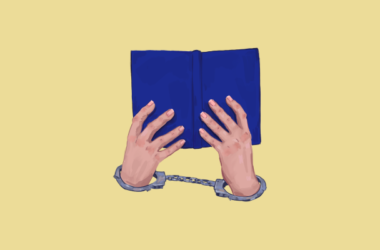
Cramped dorm rooms, unknown roommates, and questionable cafeteria food are all pillars of the first-year university student experience. However, in enforcing a mandatory meal plan for all students in residence, except for those in Solin Hall and the MORE houses, McGill stifles student autonomy. Meal plans are not mandatory at many of Canada’s other top universities: Schools such as the University of Toronto and Waterloo use a tiered system where students are given the option to choose a plan that best suits their needs. In contrast, McGill’s singular, mandatory meal plan fails students in the transitional period of first year, and is not only coddling, but outdated. Students should be given the choice to select tiered meal plans of varying sizes, or opt out altogether, and the residence meal plan should, fundamentally, not be mandatory. 

Given that the first year of university can be overwhelming, being able to fall back on prepared meals can certainly take the pressure off having to prep and cook meals for the week. Although shopping for groceries and cooking is not a viable option for every first-year student due to lack of space and cooking amenities in residence, it remains a valuable skill set once they move into their own apartments. Adopting a tiered meal plan system, or an optional one where students can add money when desired, would allow students flexibility to do as they wish, whether that be cooking for themselves all the time, sometimes, or not at all. Additionally, the average cost of groceries is around $300 to $400 a month—multiply that by the eight months of the school year, and the top end is $3,200. McGill’s mandatory meal plan, on the other hand, is $5,975. Paying for convenience is one thing, but that nearly 90 per cent increase in fees is entirely another, ultimately making the system financially inaccessible to some. A tiered meal plan would give students the choice, and flexibility to spend money on food as they wish.  
Particularly in the last two years, the mandatory meal plan has become less and less useful. With students being online for at least a portion of their schooling, be it last year or this one, many decided to stay home. Despite the introduction of a rollover plan, where unused dining dollars could be used in the next year, it still seems like a waste of money. McGill does also offer a Saver Meal Plan, albeit not for students in residence, so those who wish to continue eating at the various dining halls can do so throughout their degree. It seems odd that students have the choice to extend their meal plan, but not opt out of it. Though the dining hall food is not infamously terrible like other universities, students are not even given the choice: McGill forces OneCard on first-year residence students, and the money has to be spent one way or another.  

Furthermore, for students who have dietary restrictions, the meal plan does not even provide convenience due to the lack of options—especially during the pandemic with restrictions and limits on occupancy and staff. Halal and kosher options are scarce, and there are accommodations for those who are vegan, vegetarian, and gluten/dairy free, but they are repetitive and lackluster. With limited options, many students with special dietary needs resort to grocery shopping on top of paying for the meal plan—which should not be necessary considering the plan’s base cost. 

With its compulsory meal plans, McGill forces its students to give up some of their autonomy in first year. On top of the steep fees, the meal plan’s options are limited, and often not as accommodating to dietary restrictions as one would expect. And from the last two years, students have accumulated hundreds of dollars in rollover, despite the fact that the dining halls accept other forms of payment. So though you might be craving RVC pasta, or a Quesada burrito, it is easy to forget that OneCard should not have to be your only option. 

Know Your Athlete, Sports

Know Your Athlete: Louis-Philip Guindon

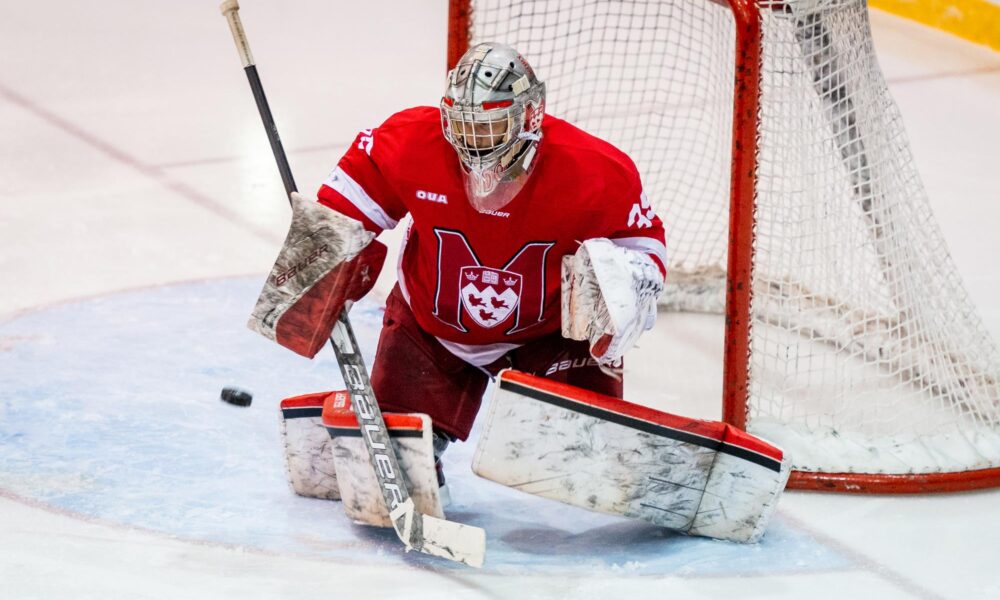
Moving from McGill hockey to the American Hockey League (AHL), Louis-Philip Guindon is one of McGill’s greatest sports successes. After signing with the Laval Rocket on a player try-out, Guindon reflected on his history with hockey and how his time at McGill helped him in his journey toward the big leagues. Born in Montreal, Guindon fell in love with hockey from the moment he could hold a stick. 

“I started playing when I was very young,” Guindon said in an interview with The McGill Tribune. “Every kid in Quebec plays hockey, that’s just how it is. All my friends were playing, so I played too.”

Guindon developed a passion for the netminding position soon after he laced up his skates for the first time. 

“I observed goalies at a tournament when I started playing and realized that the position of goalie stands out the most on the ice,” Guindon said. “They are the stars, and that’s what I wanted to be.”

Although hockey first began as a rite of passage for Guindon, it quickly consumed his life. Like many high-level athletes, he did not pick up other hobbies or activities outside of hockey—that is, until he found himself at McGill. In university, reading and writing became creative outlets for Guindon, who learned to balance his athletic endeavours with his academic interests. 

“I had a good excuse to be able to read and write [in school], since being on a McGill sports team requires their players to keep up with their studies,” Guindon said. “For the first time, I had an easy time balancing hockey and something else I thoroughly enjoyed.” 

After his time spent with the McGill Redbirds, Guindon moved on to the Wheeling Nailers in the ECHL. After about a year with the Nailers, Guindon secured a tryout contract with the Laval Rocket in the AHL. Although this was a step up on a professional level, Guindon emphasized that this promotion meant more than just a career achievement. 

“I was blessed to receive the opportunity to play on the Rocket,” Guindon said. “It wasn’t always something I was striving for specifically. I just want to be able to work hard and do my absolute best when I play hockey [….] Playing at a higher level gives me a greater challenge above anything else.” 

As a goalie, Guindon had much to say about the position and his critical role in every game. 

“Goalies make an impact on every moment of the game. There is a lot of pressure and everyone is watching you,” Guindon said. “You are the only player that’s on the ice the whole game and you have to make sure to keep your composure 100 per cent of the time and focus on your primary objective: Making saves.”

Instead of focussing on the future, Guindon prefers to stay grounded in the present moment. 

“I take life day-to-day and I work hard for more opportunities to open up,” Guindon said. “If another chance comes along, I evaluate what to do and move forward from there. I am able to do my degree while playing hockey and I work hard in everything I do to have as many options for my future as possible.” 

And it is clear that Louis-Philip Guindon has a bright future ahead of him. He thanks McGill for a large portion of his success, citing his time at university as essential in preparing him for his future in both hockey and everyday life. For now, Guindon will continue to strive forward in his hockey career—and only time will tell where he ends up next.

Sports

2022 X Games bring extreme spirit to the slopes

The weekend of Jan. 21 to 23 marked the historic 25th edition of the Winter X Games. Remembered for new tricks and creative moves, the X Games are every extreme sport enthusiast’s favourite event of the year, and this year was no exception. Held at the Buttermilk ski resort in Aspen, Colorado, the Games ran just weeks before the 2022 Winter Olympics. While Olympic events have scoring breakdowns and are judged according to specific skill sets, the X Games have no such limits, providing seasoned and rookie athletes alike the chance to let loose in events with less stringent rules and more room for unfiltered imagination. For instance, snowboarding, an activity well known for its adrenaline rushes, saw some of its best and brightest carve out their slice of winter sports history. 

Inaugurated in 2019, the Knuckle Huck event—where snowboarders “huck,” or launch, themselves over the “knuckle,” or side, of a hill—had fans watching Fridtjof Sæther Tischendorf, Tyler Nicholson, brothers Dusty and Dillon Henricksen, and others perform what seemed like gravity-defying jumps. With a 35-minute “jam session” format, where no points are scored and results are only revealed at the end, the Knuckle Huck marks athletes based on the swagger of their best jump.

Marcus Kleveland, after whom the event was inspired, took home the golden knuckle with a clean yet exhilarating front side cork, with Tischendorf coming second, and Dusty Henricksen taking home third. 

Jaea Kleinberg, U2 Arts and an avid snowboarder herself, emphasized the creative opportunities afforded by the freestyle nature of the Knuckle Huck.

“While I do enjoy events such as Slopestyle, Big Air, and SuperPipe, the Knuckle Huck is definitely my favourite,” Kleinberg said. “It’s still a newer event, so it’s great to see the riders having fun and getting creative to impress the judges.”

Though the Knuckle Huck is arguably the event with the least rules, riders got to show off their skills in a variety of other competitions too. Starting the X Games this year was the women’s slopestyle, another 35-minute jam session where each rider performed moves over a series of railings followed by three possible jumps. This event featured familiar faces like Jamie Anderson, Anna Gasser, and Quebec’s own Laurie Blouin

Kleinberg was happy to see Canadian female athletes represented at the Games this year. 

“It’s particularly nice to see at least one Canadian rider in all the female snowboarding events,” Kleinberg said. “Being a female snowboarder myself, it’s great to see such powerful women representing their country at the X Games.”

Despite an initially rocky start and early fall, Anderson, who began this year’s Games with 19 medals under her belt, earned second place, adding yet another one to her collection. Anderson’s now-20 awards make her the most decorated woman in Winter X Games history. First place went to Zoi Sadowski-Synnott for her first run, where she landed a backside 1080 double cork with ease. 

Blouin, who jumped, twisted, and landed her way to a third place podium finish in Women’s Slopestyle, was not the only Canadian snowboarder kicking up a snowstorm at the Games. 

Indeed, Mark McMorris made a notorious comeback in the Men’s Slopestyle event, winning gold—his 21st X Games medal—and maintaining the record for most Winter X Games awards won. Marcus Kleveland and Sven Thorgren won second and third respectively. Last year, notable athletes like McMorris and Max Parrot withdrew from the X Games after contracting COVID-19, and it was refreshing to see them return.

“It’s always great to see such awesome Canadian riders like Darcy Sharpe, Laurie Blouin, Mark McMorris, Elizabeth Hosking, Tyler Nicholson, and Max Parrot competing,” Kleinberg said. “The Canadian spirit will hopefully remain high for this year’s X Games!” 

Features

From hustling to health

One evening this past semester, my roommates and I were discussing the McGill mascot, Marty the Martlet. Although we knew what Marty looked like, none of us had any idea what an actual martlet was. After some research, we discovered that our beloved mascot is based on an ancient mythological bird––with no feet. From the second the martlet enters the world, it is in perpetual flight until the last flap of its wings. 

Suddenly, we had a revelation; Marty the Martlet wasn’t so far fetched after all. A bird that can never take a break from flying, which must continuously flap its wings to survive? I couldn’t think of a better creature to represent McGill students. 

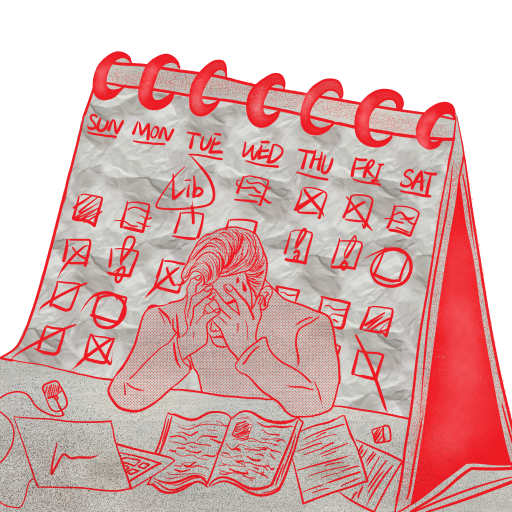
It didn’t take me very long to sense the intense, competitive, hustle culture––I was exposed to it before I even arrived in Montreal. Soon after I accepted my offer at McGill, I joined the Facebook group for entering students to make some connections before arriving at university. Although the Facebook group’s purpose was to lessen the daunting stress of starting university just months ahead of me, it did the opposite. 

I was bombarded with introductions from hundreds of students. The idea was simple––to share a few fun facts about oneself. Yet even that simple prompt quickly became an incitement for competition. If the first student that posted spoke two languages, then by the time the tenth student posted, they spoke 10 languages and were the son of an important diplomat.

“There definitely is a hustle culture at McGill,” wrote Alisa Nosova, U3 Arts, in an email to //The McGill Tribune.// “Everyone is hustling to get the best opportunities, get into the most interesting classes, build relationships with professors that teach classes of 200+ students, and take on executive positions in clubs. It’s competitive out there.”

Nosova is no stranger to the rat race. After arriving at McGill, she did everything in her power to try and compete: She took on multiple executive positions, became involved with the Arts Undergraduate Society, and acquired a part-time job. It wasn’t long before Nosova’s mental health took a hit. “I felt so hopeless […], I felt I needed to make a Plan B for myself,” she said. After she realized that she had spread herself too thin, she decided to take a step back and focus on herself in her final year. As she put it, “I lost myself in the process of pampering my resume and chasing all the experience.”

Off the Board, Opinion

When nature nurtures

I spent this break wandering through the Shenandoah National Park, irresponsibly lost at points. With root systems and fungi speaking deep under the earth and leafless canopies suspended overhead, the woods enveloped me on all sides. I felt more at peace than I had in months. In nature, I feel a kind of insignificance, like I am an infinitesimal part of a whole. Time somehow simultaneously speeds up and slows to a crawl. 

I am not someone who just loses track of time. On the rare occasion that I do, feelings of guilt and panic often ensue. What have I let slip through the cracks? Why did I let myself waste so much time? My mind seeks data, control. One of the only things that can cut through the noise is being in nature. A switch flips, and suddenly, I am able to let go of the control I usually crave.

I am not alone in this experience. The science behind what makes nature so good for our mental health varies, but research affirms its profound impact. Even short periods in nature, like a walk through a park in the middle of a city, and visual depictions of nature can have a positive impact on one’s mental health and cognition. Furthermore, research links increased time in nature to greater respect for the natural world and our fellow earthlings. 

One explanation for the impact that nature has on me, and others, is the biophilia hypothesis; based largely on qualitative data, it suggests that humans have an innate, genetic connection and draw to the natural world. I find this notion—a sort of vital link to nature which we often assume exists in other animals but not in ourselves—incredibly beautiful. It defies speciesism and unites us with the rest of the animal kingdom.

All of this begs the question: If nature helps and heals us, why do we tear it down? Humans have, by and large, let our relationship with nature become corrupt. We see the earth and our fellow inhabitants on it as tools at our disposal for expanding, uprooting, and containing. We take until there is nothing left to take, and refuse to stop a moment sooner. 

My mind immediately goes to TC Energy’s Coastal GasLink (CGL) Pipeline currently being built through unceded Wet’suwet’en territory with strong backing from the Canadian government. This project is egregious on numerous grounds: It threatens Indigenous sovereignty, harms the land and surrounding ecosystems, and exposes the hypocrisy of the supposedly climate-conscious, liberal Canadian government all in one fell swoop. 

There are plenty more examples of extractivism, a practice often intertwined with the brutal and ongoing legacies of colonialism. Indigenous communities have long stood against this practice, recognizing the importance of treating the land and animals with respect and dignity and staunchly advocating for environmental protection measures. Wet’suwet’en land defenders, for example, have set up checkpoints and are bravely fighting, despite a brutal, militarized response from the RCMP, to stave off the CGL pipeline. Others have taken to the courts and streets in protest.

Those who subscribe to the biophilia hypothesis, like renowned biologist Edward O. Wilson, have long argued for its role in conservation efforts. A renewed emphasis on the human-nature connection and the non-material, sustainable, well-being that we can derive from nature—even in an age rife with technological innovation—might help combat extractivist tendencies. 

Admittedly, my relationship with nature is also a greedy one. I use it as a crutch to cope with my anxiety and still fall into the all-too-easy trap of taking it for granted at times. But I like to think I’ve fostered a symbiotic relationship with my corner of the world: It will soothe me, and I’ll respect and defend it. 

I can’t imagine anyone standing amongst the trees as I did over break—feeling tiny, immensely content, and grateful—and not taking issue with the havoc we wreak on the natural world. So I argue for a relationship to the natural world that is founded in reciprocity and inspires respect, awe, and creativity, rather than neglect and abuse. 

McGill, News

Social Work Student Association votes to strike until February 25

After the McGill administration denied the School of Social Work’s decision to independently hold classes remotely until at least Feb. 25, the Social Work Student Association (SWSA) held a General Assembly (GA) on Jan. 17 to discuss the possibility of a strike. The motion to strike was successfully passed, with 70 in favour, three against, and two abstaining. The SWSA had previously detailed their concerns in an open letter to the McGill Administration before the GA and vote occurred.

The strike is set to run until Feb. 25, when another GA will be convened to vote on whether it should continue past March 4. Students will strike from School of Social Work classes held in person for the duration of the strike. However, they will continue to attend field internships and are encouraged to attend those courses held online. The SWSA will end the strike if McGill grants the School of Social Work full independence in choosing how and when its students return to in-person learning.

Students at the GA, such as Jo Roy, U3 Social Work, felt that the SWSA’s decision to strike was in line with the ethos of social work.

“[Social work] is very much a helping profession and one that cares about people and the ethics of it are very much in tandem with what we just did,” Roy said in an interview with The McGill Tribune.

Codey Martin, U3 Social Work, echoed Roy’s sentiments, noting that approving the motion to strike was an effort to apply the principles of social work in real life. 

“It’s the basic fundamentals of the social work program that we are currently learning, […] to put all the course content material learnt in the three-year degree into practice,” Martin said. “It comes down to supporting one another.”

Alyssa Salaciak, U2 Social Work and the internal affairs coordinator at SWSA, was the chairperson for the GA. With the strike in motion, Salaciak is tasked with supporting social work students by holding Zoom meetings for students to voice any concerns or offer points of advice to one another. 

“Now that we have agreed to strike, what does that mean for [SWSA]?” Salaciak said. “[It means] supporting students as they do it because it’s quite scary […] We’re here for you. We’re here for each other.”

Hannah Kirk, U3 Social Work, has an internship working with elders and older people living in Kahnawake, Mohawk Territory located on the south shore of the Saint Lawrence River. Like other social work students, Kirk is concerned about the risk of contracting COVID-19 in in-person classes and spreading it to the Indigenous communities with whom she interacts.

“The implications of me, as a white person, going to a class of 40 people, contracting COVID-19, and going on reserve and spreading it are really heavy, and McGill is responsible for that,” Kirk said. “When it comes to actually making decisions that protect the Indigenous community […] they don’t care.”

The SWSA is not the only students’ association at McGill pushing for school-specific autonomy in regards to remote learning. The Education Graduate Students’ Society (EGSS) announced a strike vote on Jan. 19. The Law Student Association will hold a Special General Meeting on Jan. 28 to discuss student concerns and the possibility of a strike.

According to Martin, the motion to strike is just the beginning of a greater movement for the SWSA. 

“I think it’s going to build momentum and people are going to start to really start to voice their concern and speak for a better understanding of the situation that McGill and other institutions are putting people in,” Martin said. “As much as I want to be in person, I’d love to be in-person, but unfortunately in the last 21 months of not contracting a virus, I kind of want to keep it that way.”

Arts & Entertainment, Pop Rhetoric

‘Degrassi’ keeps it real, for better or worse

If something happened at your high school, it probably also happened on Degrassi. Although the show’s “classic” era ended with Degrassi High in 1992, the Next Generation series surpassed it both in length and popularity. This was largely due to the show’s memorable cast: Toronto rapper Drake and actress Nina Dobrev both appeared as main cast members before finding considerable fame elsewhere. Most of the actors were the same age as their characters, bringing an authenticity to their onscreen awkwardness and growth. However, it is clear that many of the actors were relatively inexperienced, with scenes bringing the audience to tears from ridiculing laughter rather than powerful performances.

The long-running teen drama franchise, set and produced in and around Toronto, began with The Kids of Degrassi Street, which ran from 1979 to 1982. Its successor, Degrassi Junior High, began airing in 1987 and was directly followed by Degrassi High in 1989. The series officially concluded in 1992 and wasn’t revived until 2001, when Degrassi: The Next Generation premiered. The show was briefly continued as Degrassi: Next Class on Netflix from 2016-2017, with a new reboot of the show set to hit HBO Max in 2023. With the next iteration of the franchise imminent, it’s worthwhile to examine the impact that the show had on the television industry and beyond. 

Degrassi: The Next Generation stood apart from other teen shows for its procedural format and more grounded approach to portraying teenagers. By depicting nuanced emotional conflicts and social situations, Degrassi solidified its reputation as a show that wasn’t afraid to touch on darker or more controversial subjects. While Dawson’s Creek and other American shows featured older actors with exaggerated plots and questionable realism, Degrassi: The Next Generation was entertaining without needing excessive stylization. 

When I first encountered the show, it seemed drastically different than anything I’d seen before, especially since it was airing on TeenNick, the teen-aimed, mature Nickelodeon programming block that I never actually felt cool enough to watch. Degrassi: The Next Generation began airing music video promos in season 10, establishing the sustained appeal of the franchise and enticing new viewers. Several episodes of Degrassi: The Next Generation generated major attention for how they handled mature subject matters: “Accidents Will Happen” from season three, for instance, focussed on Manny (Cassie Steele) having an abortion after getting pregnant at the age of 14. American network The N refused to air the episodes, which only became available in the United States in 2006, two years after their initial release in Canada. While the U.S. clung to shiny, happy-go-lucky teen programming, Canada wasn’t afraid to tell it like it was. In season 10, Adam Torres (Jordan Todosey) was introduced, becoming one of the first transgender characters on scripted Canadian television. Degrassi High: School’s Out!, a television film that served as the finale for Degrassi High, even featured the first use of the word “fuck” on Canadian primetime television. 

Degrassi has always been relatively self-contained, which has led to the creation of many memes and jokes in the years since it went off-air. Despite the questionable fashion, gritty acting, and excessive school bands on the shows over the years, the series’ realism has allowed it to endure longer than other teen-oriented shows such as Riverdale. While the lengthy duration of The Next Generation forced certain plots to get recycled—like teen pregnancy, car crashes, makeovers, and fights—they never became trivialized or glamourized. Unlike other soulless reboots, reviving Degrassi feels loyal to the trajectory of the franchise. The show’s theme song rings true: Whatever it takes, Degrassi will make it through. 

Arts & Entertainment, Pop Rhetoric

Where do I begin: NFTs

Non-fungible tokens (NFTs) are the new year’s craziest phenomenon and strangest mystery. Following in the footsteps of Bitcoin and other cryptocurrency investments, these tokenized digital commodities have taken the internet by storm. NFTs allow collectors to own original pieces of artwork in the digital form. What started as a way for artists to sell the rights to their work has evolved into a bustling marketplace for status symbols and Twitter profile pictures. The question remains: Are NFTs the next evolution of art dealerships or nothing more than a passing collection craze?

An object or asset is fungible if its owner can trade it for another object of equal value, such as money or Air Miles. Both physical and digital assets can be fungible. In art markets, collectors buy and sell paintings, sculptures, and other artifacts, but do not exchange or trade them. Art is therefore non-fungible; NFTs bring this phenomenon onto the internet. An NFT is a digital “token,” or object, that can only be purchased with cryptocurrency. Whereas bitcoin or other forms of crypto are fungible, NFTs are publicly verifiable assets authenticated on the blockchain. When an NFT is designated as a token on the blockchain, it can be sold like a tangible piece of artwork. In other words, NFTs are the digital public ledger of cryptocurrency. What sets NFTs apart from other forms of digital art ownership or copyright is the tokenization of each asset. This helps prevent fraud by publicly publishing the ownership of these commodities.

On the one hand, NFTs allow artists to profit from the sales of one-of-a-kind digital works, including paintings, videos, and music—much like painters do with physical pieces.  However, tech millionaires, hip-hop artists, and other celebrities have latched onto NFTs as the newest way to gaudily display their wealth. For example, popular digital artist Bored Ape Yacht Club has garnered over $1 billion in sales since its May 2021 launch, selling unique cartoons of apes valued as high as $3.4 million. Although some artists treat NFTs as another way to financially thrive off of selling their creations, others do very little in the way of fostering creativity, favouring profit. NFTs differ from other art purchasing sites, such as Etsy, in that the buyer doesn’t just own a copy of the digital art, but the rights to that particular digital image. Many NFTs posted to digital marketplaces like OpenSea are frauds, simply screen captures of an image with no accompanying proof of ownership. Social media users and celebrities alike have flocked to Bored Ape Yacht Club, displaying their NFTs as social media profile pictures. Recently, Twitter began a pilot program allowing users to upload not just a photo, but the verified copy of an NFT to set as their profile picture on Twitter, which will appear as a hexagonal icon to indicate its authenticity. Instead of having the owner of an entity simply screengrab the image of the digital token and upload it to their profile, they would be able to upload the token onto Twitter and prove their ownership of the NFT.

Theoretically, NFTs seem like a fair way to give artists the privilege to distribute content online in a profitable, trustworthy way. However, due to the common lack of originality and authenticity in the art, as well as the abrupt spike in interest, NFTs resemble more of a fad rather than industry-altering technology. Relying solely on consumer-generated excitement and often lacking the depth or complexity that grants artistic works their timelessness, NFTs possess little long-term value. Instead, they offer the possibility of exorbitantly displaying wealth as one would with streetwear or excessive jewelry—only online. At the end of the day, many NFT sales are less about art quality and more about brand names and showing off one’s money.

Chill Thrills, Student Life

Sustainable projects for staying at home

The end of January: Add/drop is over, winter break is but an amorphous memory, and outside is really, really cold. Instead of venturing into the frigid outdoors, try your hand at some sustainable projects to distract yourself from the gloom of 5 p.m. sunsets—all without ratcheting up your screen time or purchasing superfluous materials. 

Grow microgreens

Microgreens—nutrient-dense seedlings of plants or herbs—are often touted as exclusive to fine-dining menus or superfood listicles. But fear not: They are easy to grow at home. An ideal project for students who lack the time or resources necessary to garden, microgreens can inject some green into your home and diet during the bleak midwinter. Once packed with soil, the individual cups of an egg carton make snug homes for pre-soaked seeds. After three-ish weeks, simply harvest the newly grown shoots and start again. While at first you might baffle your roommates as your makeshift planters hoard sunny windowsill real estate, you’ll impress them with a dinner garnished with home-grown produce. 

Fold origami 

Don’t let the scribbled coursework of semesters past haunt you. Instead of chucking your old notes, try folding the scrap paper into creative creatures or bewildering beasts—origami dragons, anyone? Beginners can start with simpler patterns like cranes and stars, and eventually graduate to succulents, elephants or lanterns; the list goes on. Instructions-wise, YouTube is your friend: Video tutorials show each fold in 3D, and are often easier to follow than written steps. Once you’ve got the hang of the basics, the world is your (origami) oyster. Keep your hands busy while binging Netflix or rewatching lectures by folding butterflies or sparrows, which, when hung from a window frame, cast pretty, swaying shadows during golden hour. You could even try assembling a chess set with recycled cardstock as the board and tiny shapes as the pieces. 

Pen a letter (or many)

Tearing open an envelope to receive a thoughtful, heartfelt letter is a unique joy, a gift mutual to the writer and the receiver. Short notes can be just as novel as a dozen pages: Your family or friends will appreciate receiving a freshly stamped letter in the mail, even if it’s only a few lines. To save on expensive stationary, fold your own envelope from recycled paper, and hand-deliver your letters on campus or to their apartment. Severing an old greeting card in half yields a makeshift postcard from the front image while preserving the original message on the other. Tuck this, along with other goodies like tea bags, stickers, or even some origami, into a decorated envelope to add an extra-special touch. 

Reuse kitchen scraps

It can be difficult to conjure the hopeful optimism of spring, with all its burgeoning flower buds and delicate petrichor, during the current sub-zero temperatures. But you can summon the season early with some easy projects. Prepare for your balcony garden by planting bulbs indoors now so they are ready to transfer outside after the first thaw. For something more immediately gratifying, save the bottoms of green onions and place them in a shallow glass, making sure to submerge the roots in water. The onion will regrow quickly—just trim the tops and add to your meals. Turn a sprouted potato into a stamp by cutting it half and carving a simple design. Triage your houseplants to determine if they are nutrient deficient: If the soil lacks calcium, add crushed eggshells;  if it lacks nitrogen, add old coffee grounds or steeped tea. Just remember to carefully monitor the soil’s pH to ensure the plant thrives.

Build a birdfeeder

Help out your friendly feathered neighbours by providing them with high-calorie foods. Try crafting a bird feeder from recycled materials such as plastic bottles or hoary wooden spoons. Buy a brick of suet—rendered fat, essentially—and hang it in a suet feeder. You can make your own by melting leftover meat drippings with other ingredients like peanut butter, seeds, and dried berries. Pour the mixture into a muffin tray or container, place a loop of twine on the top, and pop it in the freezer to solidify. Hang the loops of twine on your balcony or in a tree and wait for hungry birds to flock. And if the squirrels end up devouring it first, well—they’re hungry too!

Science & Technology

Demystifying ARSACS, a rare neurodegenerative disease concentrated in Quebec

Autosomal recessive spastic ataxia of Charlevoix-Saguenay (ARSACS) is a rare neurodegenerative disease first identified in the Charlevoix-Saguenay region of Quebec. The disease affects muscle control, making a range of activities, from swallowing to speaking to walking, more difficult. Brenda Toscano Marquez, a postdoctoral researcher, and Alanna Watt, a biology professor at McGill, along with other researchers, recently published a paper in Frontiers in Cellular Neuroscience describing an intriguing discovery that is changing the way they look at the disease. 

ARSACS is categorized as a rare disease worldwide, but in the Charlevoix-Saguenay region, it afflicts an estimated one in 1,500 to 2,000 people. The disease targets the cerebellum, the region of the brain responsible for motor control and coordination. ARSACS is caused by a mutation in the SACS gene, which tells cells how to make a protein called sacsin

“[Sacsin] plays a role in the organizing [of] proteins from the cytoskeleton and might be involved in mitochondria health and distribution in the cells,” Marquez wrote in an email to the Tribune.

When the SACS gene is mutated, the cells make an unstable form of sacsin. While it is still unclear how this mutation prevents the protein from performing its normal functions, it nonetheless causes the neurons in the cerebellum to die. The Watt lab at McGill and labs all over the world are working together to solve this mystery. 

One unique characteristic of ARSACS is that the cerebellum does not degenerate the same way throughout—most of the degeneration happens in the anterior part of the structure, which is nearer to the front. Both the anterior and posterior part of the cerebellum contain zebrin-negative cells, these are cells in the cerebellum that are more likely to degenerate. However, from the results obtained by this group of McGill researchers, the zebrin-negative cells are only degenerating in this anterior part of the cerebellum.

  “Our finding shows that there are other molecular players in cells that have a zebrin-negative phenotype and that are located in the anterior part of the cerebellum that are making these cells more susceptible to die,” Marquez wrote. “If we can find who those players are, we could target them to treat the patients.” 

Since ARSACS is a rare neurodegenerative disease, people that have it risk being misdiagnosed. For instance, ataxia is usually identified by uncoordinated movements due to injury in the cerebellum, but given that many different conditions can cause ataxia—from stroke to alcohol use—other symptoms and family history should be taken into account during the diagnosis process.

“ARSACS usually starts very early in life, around two years old,” Marquez wrote. “It is also accompanied by other symptoms like spasticity, peripheral nerve damage and retinal hypermyelination.” 

These symptoms, accompanied by genetic tests to search for the sacsin mutation, are how doctors can confirm the presence of ARSACS. However, there is currently no treatment available.

“Rare diseases don’t get a lot of attention and it’s hard to get [pharmaceutical companies] interested in them,” Marquez wrote. 

The disease affects those with the condition while they are very young, usually when they are toddlers. As patients grow older, these symptoms only get worse. Most require a wheelchair by the time they reach early-to-mid adulthood.

“The symptoms take a big toll on family members and on patients [who] require constant help,” Marquez wrote. “That can also affect the mental health of the patient, who can’t live a more autonomous life.” 

New discoveries about the biological underpinnings of ARSACS, such as that by the Watt lab, will bring the research field closer to finding a treatment for this rare disease. 

Read the latest issue

Read the latest issue