
Latest News

Commentary, Opinion

Movember should spotlight BIPOC men’s mental health

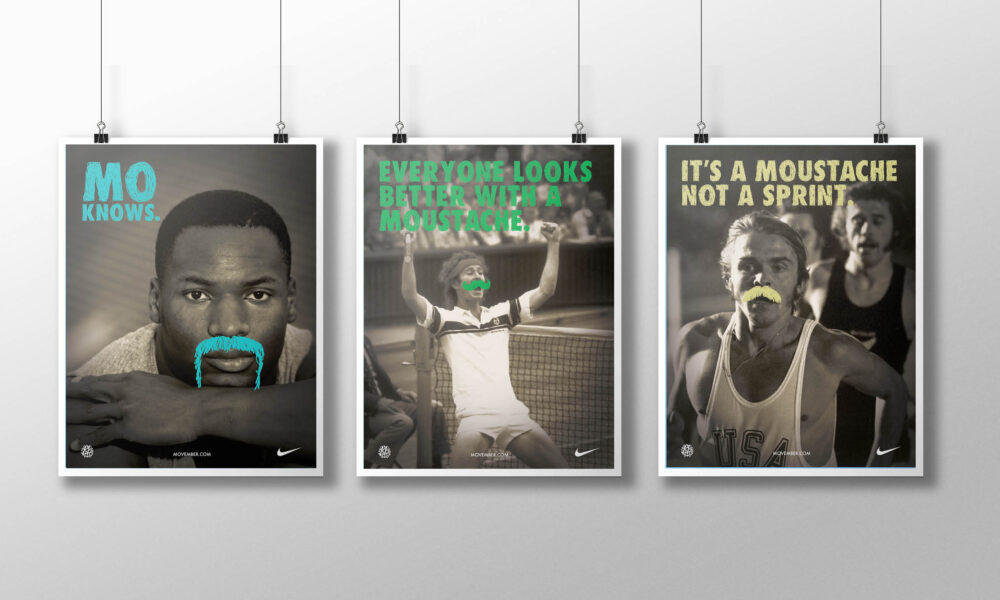
The Movember movement’s popularity has risen over the past decade since its founding in 2003. Movember is an annual event where participants grow moustaches during November to raise awareness for men’s health concerns, primarily cancer. Recently, however, they expanded their mission to support men’s—often overlooked—mental health struggles. In Canada, men account for 75 per cent of suicides, linking to pervasive stigma around mental health. Many organizations like Movember are working tirelessly to dismantle this culture and destigmatize men’s mental health. 

Certain marginalized communities face distinct challenges when it comes to their mental health and their access to support. The lack of diverse voices within discussions of men’s mental health must be brought to light to address concerns unique to BIPOC men, and Movember must take an intersectional approach to create universally effective campaigns. 

BIPOC communities historically and currently face systemic discrimination, and harmful stereotypes continue to affect the way Black men are treated in medical and social spheres—discouraging conversations about mental health. This rhetoric comes from within communities and from institutions that have historically discriminated against racialized men, such as school systems. Many view mental illness as a personal shortcoming rather than a real, diagnosable, treatable reality. When this reluctance to address mental health is paired with racism, the consequence is Black men often exhibiting searing hatred and distrust toward not only the system, but mental health treatments, and even themselves. Given that BIPOC communities face systemic discrimination in healthcare, there is often a lack trust in the fields of psychology and therapy. But, there is also a gap in representation in psychology. Due to a lack of analogous life experiences, white clinicians frequently underestimate the effects of racism on a person’s mental health, resulting in poor quality of treatment. This lack of diversity widens the gap of experience and knowledge regarding various traumatic and life-altering experiences between physicians and therapy-seeking individuals. 

This year, a move was made toward addressing mental health concerns amongst racialized men through a partnership between Contiki and Movember. This included a series of virtual panels to discuss challenges to BIPOC mental well-being. The panels aimed to offer tools and methods that men can take to support and empower themselves and others. This is an excellent step forward to showcase the particularities of racialized men’s mental health and help tackle the issue of lack of resources and treatment. 

When speaking to McGill students about their work load, there is often a consensus: McGill is notorious for its academic rigour and high expectations. The reality is that many students risk their mental or physical health in order to excel in their coursework. BIPOC students face especially harmful situations when McGill’s demanding academic environment is paired with racially rooted stigma around mental health. McGill, therefore, must increase their mental health resources for their BIPOC students: The university should hire counsellors who can cater to the BIPOC student population. Frameworks that centre white students’ experience cannot be expected to work for racialized individuals.  


McGill seems to have understood this to some extent; they have recently started to offer mental health resources for the BIPOC community. Particularly, the Student Wellness Hub offered a limited time workshop series called “Being Black at McGill.” The workshop series was a chance for Black students to share their experiences while reflecting on the impact racism and discrimination can have on their mental health. The workshops’ popularity indicates the need for McGill to offer more resources and campaigns to suit the needs of BIPOC students. Movember is a strong and poignant campaign because men’s mental health continues to be overlooked, but we must pay careful attention to the individuals and communities who face the brunt of it and make change for them—because we see them and they deserve more. 
Know Your Athlete, Sports

Know Your Athlete: Jamal Mayali

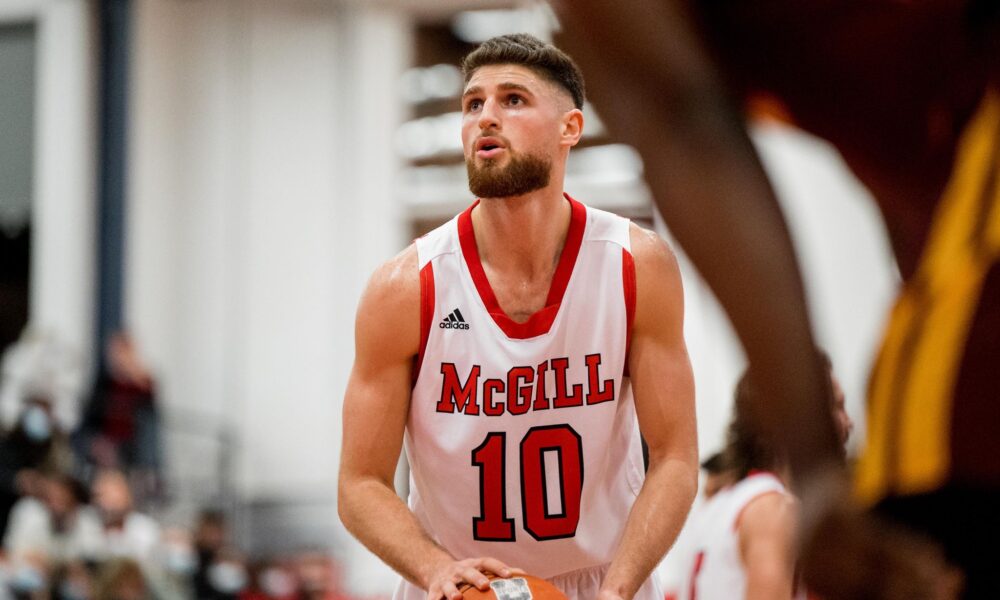
Jamal Mayali, a fifth-year Political Science student, was named the McGill athlete of the week on Nov. 15 after steering the Redbird basketball team to a win in their opening game of the RSEQ season against Concordia. In 29 minutes of court time, he made nine of 16 field goal attempts and six of 12 attempted three-pointers. With this impressive game record, Mayali is a player to look out for on the Redbirds squad this season.

As a product of Bill Crothers Secondary School, a prestigious sports academy in the Greater Toronto Area, Mayali arrived well-suited to his position on the McGill team. The academy has a gifted athlete program, which exposes students to job opportunities in a variety of sports fields such as management, promotions, coaching, and health sciences. 

“I learned a lot [at Bill Crothers] from the coaching staff to older veteran players. [The school] helped me to get [attention] from university schools [across Canada],” Mayali said in an interview with The McGill Tribune

After graduating from Bill Crothers in 2017, Mayali enrolled at McGill and has played basketball for the Redbirds since his first year.

Last year, he was also awarded the opportunity to play overseas for the Palestinian National Basketball team in the 2021 FIBA Asia Cup. The opportunity to play in the Asia Cup was a culmination of Mayali’s childhood dream of representing the Palestinian National Basketball team.

“The [Palestine Basketball] Federation has been reaching out to me for a couple of years now. [However], I didn’t have time to play for them before as I was in university,” Mayali said. “The pandemic presented an opportunity to play overseas [as the RSEQ season was suspended].”

University can be tough to navigate, especially for student athletes. The academic demands and the athleticism required to play varsity sports can take a toll on one’s mind and body. Mayali was honest in admitting his journey at McGill as a student athlete has not been easy.

 “[To be a student athlete] is tough, I wouldn’t lie to you,” Mayali said. “We practice almost twice a day, six to seven days a week, and with school you have to be able to manage that too.” 

Apart from basketball, Mayali has a keen passion for martial arts. He competed in boxing as a child and even wanted to pursue it as a career at one point. However, given the full-time demand of the sport, Mayali, on the advice of his mother, decided to pursue basketball and has kept the childhood passion at bay—for now. 

“[My mother] said, ‘You got to get a degree first and maybe after school [you can consider] fighting again,’” Mayali recalled.

As a student athlete, Mayali sees sports, and in particular, team sports, as an important part of university life. 

“Individual sports are great, and you learn a lot of things from them, but [the skills] you learn from team sports apply a lot to the real world,” Mayali said. “There are a lot of things only sports can teach us.”

The troika motivating Mayali to play basketball at the varsity level is his country, his parents, and his teammates.

“[To play for] my country Palestine motivates me [along with] the commitment that my parents have put into me and supporting my goals since I was young, and my teammates,” Mayali said. To him, the Redbirds Basketball team is “kind of like an army regiment—you are fighting for the guy next to you.”

Features

From feminism to feminisms

I’ve lost count of the number of times I’ve brainstormed the perfect slogan to scribble on my cardboard sign right before a protest. Almost always, I end up settling on something I deem to be just so-so. The same thing happened in January 2017, a day after Donald Trump’s inauguration, when I joined what felt like the rest of the world at the Women’s March in Washington D.C. for possibly the largest single day of protest ever, cardboard sign in hand. 

While I didn’t have a “pussy” hat—pink hats with little cat ears sparked by then-president Trump’s comments about grabbing women “by the pussy”—I was the stereotypical attendee in almost every way: A white 15-year-old girl, passionate, idealistic, more than a little naive, and fully prepared to have no voice the following day from all the chanting and screaming.

I think this is the side of feminism many relatively privileged girls and young women are introduced to first. It’s made readily available to us. It’s the stuff that makes the news. —iIt’s loud, and it’s flashy. I don’t say any of this to belittle protesting, or this brand of feminism more broadly, but as I’ve grown up, I’ve realized how many other forms feminism can take.

It turned out that what I once saw as a relatively homogeneous movement was much more site-specific than I had thought. For example, In Washington D.C., where I’m from, for example, the feminism I engage with in Washington D.C., where I’m from, is often entangled with federal politics: Which senate and congressional races are looming, whether the candidates are progressive or regressive on so-called “women’s issues,” and so on and so forth. Only when I got older did I learn about other feminist movements other forms of feminism taking place in my city, namely Black feminist organizing like Jaimee A. Swift’s Black Women Radicals. These non-mainstream forms of feminism rarely receive marginal the same external validation and media coverage, but nevertheless carry out vitally important work.

While it’s easy to think of feminism as only the sort of concrete and easily -identifiable activism we see in the news, like Women’s Marches, in reality, it encompasses much broader, more nuanced movements, ideologies, and art forms. This is probably why Alexandra Ketchum, a faculty lecturer in McGill’s Institute for Gender, Sexuality, and Feminist Studies, offered me thesome sage advice to “: “I would go with plural of ‘feminisms’ rather than single ‘feminism.,’” she said. 

Traditionally, scholars have summarized the historical stages of the feminist movement into three, and more recently four, “waves,” each characterized by a set of core principles and practices. As the story goes, during the first wave, first-wave feminists were mostly preoccupied with securing the right to vote for white women, while second-wave feminists took up a broader range of issues, like reproductive rights, the wage gap, and more, rallying around the cry “the personal is political.” Third-wave feminists rejected much of prior feminist thought, further challenginged notions of gender and sexuality, and began to advocatinge for the feminist movement to adopt a more an intersectional approach. 

Behind the Bench, Sports

Peng Shuai resurfaces, but justice for survivors is nowhere to be found

Content Warning: This article discusses sexual violence. 

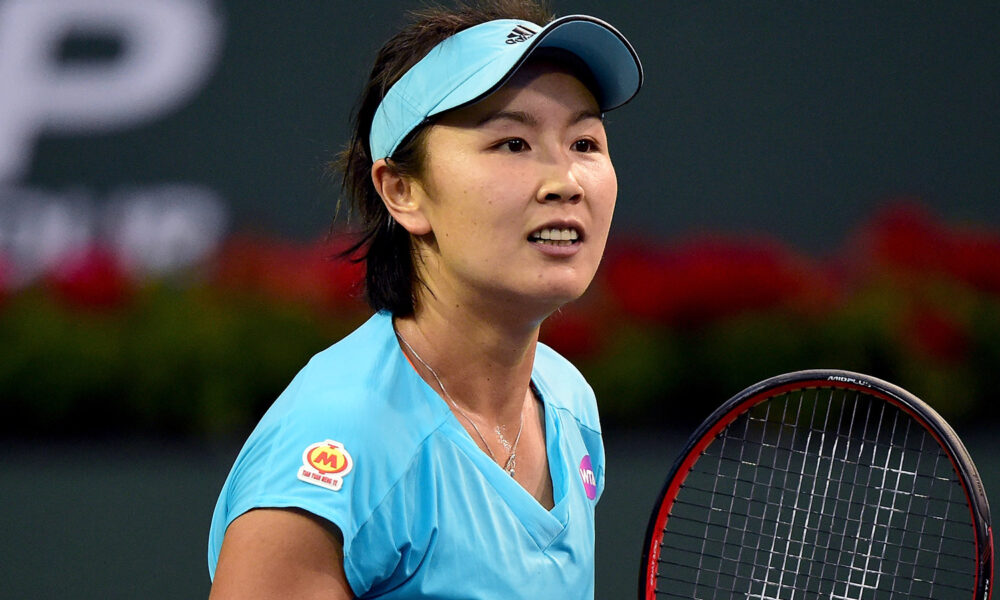
On Nov. 2, Chinese tennis player Peng Shuai posted a statement to Weibo, a Chinese social media platform, accusing former vice-premier Zhang Gaoli of sexually assaulting her in his home three years prior. Shortly after, the statement was deleted from the platform and Peng Shuai disappeared from the public eye.

The post was censored and Chinese media did not allow citizens to search certain terms related to the situation, such as Peng Shuai’s name. This disappearance has led to international concern for her safety.

The hashtag #WhereIsPengShuai has been trending on various social media platforms and fellow athletes such as Serena Williams, Naomi Osaka and Novak Djokovic expressed their distress over the situation. 

On Nov. 17, an email allegedly written by Peng Shuai to Steve Simon, the chairman and CEO of the Women’s Tennis Association (WTA), attested to her safety and well-being. Simon openly questioned the veracity of the statement, tweeting that “​​Peng Shuai must be allowed to speak freely, without coercion or intimidation from any source.”

Simon has threatened to cease the WTA’s business in China if the safety of the tennis player is not confirmed. 

On Nov. 20, disturbing footage of the tennis player dining in Beijing was released. In the videos, Peng doesn’t speak and clearly looks uncomfortable. Though the videos are a reassuring indicator that Peng is alive, the footage does not guarantee her security or comfort. 

That Peng Shuai could have her autonomy stripped just for telling her truth reflects a larger culture of silencing and dismissal that many athletes face when they speak out about sexual assault within the sports world. Over the years, multiple athletes have been reduced to silence regarding the sexual abuse they have endured at the hands of coaches and teammates.

Sexual violence is severely underreported, and sports organizations such as USA Gymnastics have also played a part in encouraging the culture of silence in athletics. It appears that the athletes’ performances and organizations’ reputations are deemed more important than athletes’ mental or physical health.

In 2018, former USA Gymnastics coach Larry Nassar was tried and sentenced to prison for sex crimes. Nassar had sexually abused at least 265 girls and women under the guise of medical treatment and procedures. This abuse was covered up and brushed under the rug by multiple institutions at the expense of the athletes.

Michigan State University received reports of sexual abuse regarding Nassar in the 1990s yet continued to employ the doctor. Only in 2015 did the FBI begin privately investigating him. Between the beginning of the investigation by federal authorities and the public denunciation of his abuse by The Indianapolis Star, Nassar had abused more than 40 women and girls.

The Nassar case is a clear example of the failure of athletic institutions and organizations to treat sexual abuse and assault cases seriously. As recently as 2021, Alen Hadzic, a fencer for Team USA, was allowed to compete in the Olympics despite multiple accusations of sexual misconduct against him. Allowing athletes and coaches with a history of sexual misconduct to attend and participate in sporting events is detrimental to those athletes who have experienced sexual abuse—and also puts others at risk.

Prominent American gymnasts who suffered abuse by Nassar, such as Simone Biles and Aly Raisman, have denounced the system that enabled their abuse and faced backlash for speaking out. However, Peng’s situation is particularly worrying because the entire narrative of her story is controlled by the Chinese government. 

The case of Peng Shuai reveals a culture of silence that blankets athletes around the world, protecting perpetrators and stifling survivors. There need to be significant changes made in the way cases of sexual abuse and sexual misconduct are handled by athletic institutions. When reports of abuse are constantly dismissed or pushed aside, athletes are led to believe that speaking out will change nothing, while abusers are never held accountable.

Arts & Entertainment, Theatre

Tuesday Night Café Theatre production ‘The Elephant’ is a powerful musical about surviving abuse

Content Warning: discussion of sexual assault

Tuesday Night Café Theatre (TNC)’s newest production The Elephant is a powerful story of survival and perseverance. Written and directed by Troy Lebane, U3 Music Education, this musical portrays characters in the aftermath of an abuser’s arrest in his former workplace and offers a powerful exploration of how survivors can regain power over their narratives.

Set within a high school theatre department, The Elephant begins after the  department’s former head is arrested for sexual misconduct against a student. The musical depicts the varied responses to this event: Ignorant principal Brad (Jacob Barton, U4 Music and Education) attempts to cover up the situation, while vice-principal Phyllis (Nina Vukelic, U2 Arts) blames Orlee (Renée Withnell, U2 Arts & Science), another teacher, for not reporting the allegations internally before involving the police. Despite this rampant victim-blaming within the administration, teachers Tanner (Lebane) and Tamara (Will Barry, U3 Arts) take a stand by actively questioning the administration’s dismissive attitude and lack of support systems available to students. 

Lebane’s writing expertly handles this heavy topic, and the musicality of his score offers a new,lighthearted mode of delivery. Each song spotlights a different character’s internal monologue, showing how complex the issue of sexual assault is at the level of individual affect. In a catchy song, titled “Couture over comfort,” Tamara encourages Tanner to come forward with his story, comparing his way of speaking up to a couture pair of shoes—uncomfortable yet unapologetic, and therefore superior to comfortable shoes.

While the show centres sexual assault and its aftermath, it does not actually portray the abuse itself. Instead, Orlee and Tanner’s sexual assault stories are told through gossip and personal monologues. These two communication methods often contradict, showing how stories become warped when spread as rumours, conveying how dismissive responses—like those of the administration—harm survivors emotionally. 

Lebane’s musical was inspired by the #MeToo movement and his own experience with sexual assault. The #MeToo movement amplifies the voices of sexual assault survivors and aims to create a dialogue that condemns abusers, particularly those in positions of power.

“Often you don’t see men represented in the narrative of coming forward because a lot of them are the perpetrators,” Lebane said in an interview with The McGill Tribune. “But there are a lot that are survivors as well, and have yet to tell their story. Toxic masculinity plays a big part in men not coming forward because they’re afraid they’ll be seen as less than or less masculine, less tough.”

Tanner routinely defies toxic masculinity throughout the show by being vulnerable, proving that there is nothing wrong about a man sharing his emotions and speaking up against his abuser. It is also worth mentioning that despite Tanner and Orlee’s internal conflicts on whether or not to come forward, their friends constantly support them. 

“I want [survivors] to know, especially men, that they are not alone,” Lebane said. “It’s a very courageous thing to come forward. It’s never going to be the right time for anything. It’s never going to feel amazing. But it’s a step in the right direction if we can hear more people’s stories.”

Although The Elephant focusses on how survivors cope with sexual assault, the musical also shares with the audience ways in how they can support survivors. By listening to and believing survivors, sexual assault will no longer be the elephant in the room. 

’The Elephant’ will have two more performances at TNC on Nov. 25 & 26 at 8 p.m.

Arts & Entertainment, Pop Rhetoric

The treacherous trend of celebrities dating teenagers

Music fans far and wide rejoiced on Nov. 12 over Taylor Swift’s re-recording of her 2012 hit album Red, rebranded as Red (Taylor’s Version). This redux country-pop album joins Fearless (Taylor’s Version) on the singer’s journey to finally own all the rights to all her music. Die-hard fans were especially excited for this album, as it includes the highly anticipated, 10-minute version of “All Too Well,” a song rumoured to be about her relationship with actor Jake Gyllenhaal. 

The release was accompanied by a short film, written and directed by Swift herself, starring Stranger Things actress Sadie Sink, a 19-year-old, and Teen Wolf star Dylan O’Brien, who, at 30, is 11 years her senior. Swift’s casting decision mirrors a pattern of grooming and exploitation that appears all too frequently in the entertainment industry. Beautiful and haunting, the film depicts a brief but intense relationship between the two main characters. The film’s casting is intended to make the viewer feel uncomfortable, even if this juxtaposition is often normalized. The story forces the viewer to confront the notion of physical relationships between people of vastly different ages, especially during one visceral scene when O’Brien and Sink are shown together in bed. 

On camera it looks, and feels, wrong. Sadie is physically much smaller, her movements are more colourful and she stands in stark contrast to O’Brien’s tall and dark persona. Emotionally, the same pattern is suggested. But in Hollywood, A-list celebrities in their 30s and 40s are known for having wives and girlfriends fresh into their 20s—precisely what Swift highlights in her film. Jake Gyllenhaal, 40, Swift’s former paramour, is currently dating Jeanne Cadieu, a 25-year-old French model who was 21 at the start of their relationship. Leonardo DiCaprio, 47, hasn’t dated anyone older than 25 since 1999. This gap is normalized and sensationalized, with actors celebrated for their professional success while their relationship misgivings are ignored. Swift’s film does what we should all be doing: Questioning why relationships that are undertaken between partners at tremendously different life stages are so common and accepted. Although technically legal, there’s something to be said about celebrities starring in Oscar-winning movies with partners freshly graduated from highschool—it feels potentially abusive and exploitative, and sets a dangerous precedent for young adults entering relationships. 

Audiences have always accepted age gaps in relationships between incredibly young women and significantly older men. For this, we can look at recent releases like the series Never Have I Ever, which stars Darren Barnet, 30, and Maitreyi Ramakrishnan, 19, as love interests. Swift rejects this practice, truthfully portraying the trope of an innocent, naive ingenue, and her older, cruel lover as problematic. A line in her song, “All Too Well (10 Minute Version)” states, “The punchline goes, I get older but your lovers stay my age,” highlighting a joke and drawing attention to a decades old custom.

This phenomenon of older men dating younger women is not restricted to Hollywood either, as young adults have taken to TikTok to share the relatability of the film. The phenomenon in Hollywood has spilled over into the everyday lives of young people, who are now helping to dismantle the normalization of such relationships. Taylor Swift’s short film is a beautiful, intentional piece of media and the message is clear. In the age of women’s empowerment and Gaslighting, Gatekeeping, and Girlbossing, the acceptance of such inappropriate power dynamics should not persist. Taylor Swift is doing what she knows best and using her art to take a stand—this time against the glamourization of the Hollywood age gap.

Arts & Entertainment, Film and TV

‘The Wheel of Time’ turns, and women are behind it

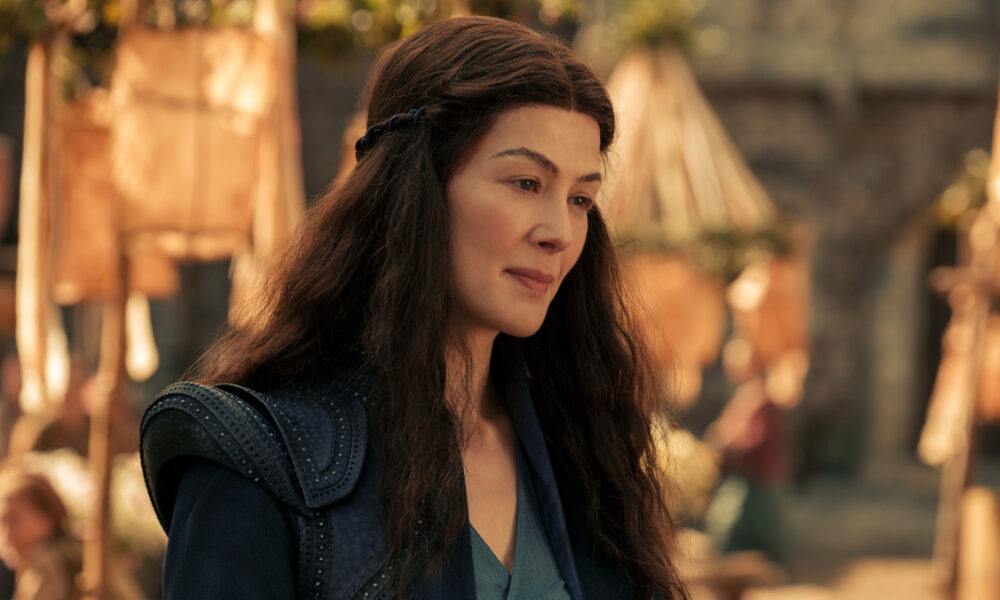
Robert Jordan’s famous fantasy novel series The Wheel of Time has long been considered unadaptable to film and television due to its complex world and the hundreds of characters that populate it. Amazon Video’s new spin on the series, of which the first three episodes premiered on Nov. 19, undertakes the massive project of rendering this fantasy epic to the big screen. In the first episodes, these reservations seem to be well-founded, as the complexity makes it seem like there are too many subplots. The epic, which will reportedly run for eight seasons, is only starting to spin its wheels. Despite a rough start, the show has so far been saved by the careful attention it grants its female characters, who drive most of the action. 

The show is based on Jordan’s epic fantasy series spanning 14 books—15 if you count the prequel—with each entry well over 500 pages. For the uninitiated, the story follows Moiraine Damodred (Rosamund Pike), a member of the powerful all-female organization known as the Aes Sedai, on her quest to find the Dragon Reborn, a prophesied individual who will have the power to either save or break the world. Moiraine and her warder (Daniel Henney) reach Emond’s Field, a small and practically forgotten village, and together find five young adults (Josha Stradowski, Marcus Rutherford, Zoë Robins, Madeleine Madden, Barney Harris). One of them is the Dragon Reborn, though Moiraine does not know which of them it is.

Jordan’s world-building and carefully woven introduction demand more time than the first three episodes can provide. Although there are great moments of tension, especially between Moiraine and Nynaeve (Zoë Robins), the show rushes through each interaction, leaving viewers no time to properly absorb the outstanding performances. Even when their stories are not given enough time to develop, all the actors are skilled enough that the characters live up to their counterparts in the books. Still, the fast pace makes some of this drama and dialogue feel as uninspiring as a cheap young adult novel. 

The show’s outstanding qualities lie in its nuanced and varied representation of female empowerment. From the first scene showing Moraine gearing up for her journey while in voice-over informing viewers that she is setting out to find the Dragon Reborn, it is clear that women run this fantasy world. During an action scene, a group of older women from Emond’s Field fight back against a Trolloc—a giant bestial servant of the Dark One, the story’s mysterious, evil antagonist. But the show doesn’t limit itself to the “strong female character” archetype. Rather, women populate the world as village wisdoms, blacksmiths, property owners, and of course, powerful sorceresses. This is an incredibly refreshing step away from male-dominated fantasy franchises such as The Lord of the Rings.  The show’s female characters are also treated infinitely better than the overly sexualized women of Game of Thrones. Furthermore, in the books, the prophesied Dragon Reborn could only ever be a man. In the show, Moiraine suggests that the Dragon could be of any gender, amending the strict gender binary that permeates almost every aspect of Jordan’s world. Ultimately, The Wheel of Time holds much potential. Visually, the show is a true spectacle, with CGI magic and landscapes of epic proportions that elevate the show to a dazzling level of mysticism. But the true magic comes from the performances of the leading actors, especially of the women, who bring power and life to an otherwise clunky exposition. Hopefully, now that some of the foundation has been set, the show will grant its characters enough time to weave a story as compelling as the one Jordan penned.

Cross-Country / Track, Sports

McGill cross-country finishes strong at U Sports championships

On Nov. 20, cross-country runners from across Canada gathered at the Plains of Abraham in Quebec City for the U Sports championship. Representing the Martlets was fourth-year Maia Watson and graduate student Chloe Fleurent-Gregoire. The Redbirds, led by second-year Matthew Beaudet, represented McGill as a team at nationals for the first time in five years. 

The day started out with the women’s race at 12 p.m. The course, eight kilometres in total, consisted of four laps of a very technical and hilly two-kilometre course. Jessy Lacourse of Laval and Lauren McNeil of UBC Okanagan established themselves as the clear leaders early on in the race, creating a significant gap between them and the next runners. While McNeil led for the majority of the race, Lacourse had a stronger kick and passed McNeil in the last 500 metres of the race to claim the national title. Fleurent-Gregoire was the first McGill finisher, coming in 34th out of 128 runners with a time of 30:33, just over two minutes behind first place. 

Although Fleurent-Gregoire did not achieve her goal of coming in the top 30, it was extremely close and she was pleased with her performance overall. Having her teammates cheering from back home was reassuring, though she missed their presence at the race.

“I have been to nationals as a whole team before and that is a special experience,” Fleurent-Gregoire said in an interview with The McGill Tribune. “Obviously, I had my teammate Maia with me, which was nice, but it’s not the same as having your whole team. [I] knew they were watching and it inspired Maia and I to race hard for them. I hope that I am inspiring them to hopefully come to nationals as a team in the next few years.”

Watson finished almost exactly two minutes after Fleurent-Gregoire, placing 94th with a time of 32:35. This was only the second eight-kilometre race of the season for both Martlets, with the only other equidistant race being the RSEQ Championships. 

The men’s competition kicked off at 1 p.m., with a large pack of tightly clumped runners taking the lead. As the race went on, the rest of the pack spread out, but the group of runners at the front, which included McGill’s Beaudet, remained neck-and-neck. The front runners battled it out until the very end, when Guelph’s Mitchell Ubene outkicked Laval’s Thomas Fafard, winning the race by one second. 

Beaudet finished strong to come in seventh with a time of 24:47. While his time was just slightly slower than his provincial time, the conditions and the competition made the national race more challenging.

“It was very difficult, a lot muddier than provincials and the field was a lot more competitive and dense,” Beaudet said. “I knew that I had to stay with two runners from Laval, Thomas Fafard [and Jean Simon] Desgagnés, as they were going to be leading or right near the front. So the plan was to stick with them for most of it and do what I can in the last kilometre.”

With a strong showing at his first Nationals to cap off an impressive season, Beaudet was named national rookie of the year and made First Team All-Canadian.

The Redbirds boasted other strong performances as well. The next four McGill runners finished fairly close together, with third-year Henry Wellenstein leading the charge. Wellenstein ended strong, creating some distance between himself and the rest of his teammates and ending with a time of 25:52, a 41-second improvement from his time at the RSEQ Championships. 

First-years Tom Secheyron, William Davalan, and Jack Stanley rounded out the top five Redbird finishers—Davalan and Stanley finished only six and a half seconds, or five places, apart. With such a young team, the Redbirds cross-country squad have a bright future and could pose a real threat to powerhouses like the University of Laval or the University of Guelph in the years to come.

Basketball, Sports

Redbirds basketball bests Bishop’s in thrilling affair

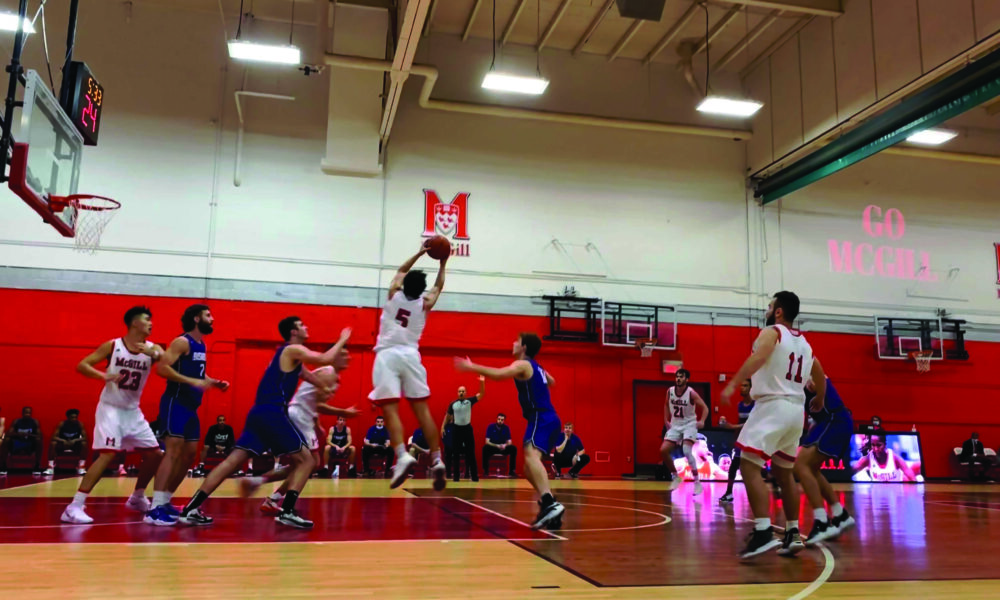
The energy in Love Competition Hall was brimming with anticipation ahead of the opening tip-off between the McGill Redbirds (3–0) and Bishop’s Gaiters (1–2) on Nov. 20. The hotly contested match ended in a narrow 76-74 win for the Redbirds, who furthered their three-game win streak to sit atop the RSEQ conference standings. 

The two teams had not faced off since the 2019-2020 season, when McGill swept Bishops in all five games. Given this history, the visiting Gaiters set out to prove that they were a new-and-improved team, scoring more points than the Redbirds in three out of four quarters. Despite missing two key players, they gave the Redbirds a run for their money, but the home team ultimately outlasted them. Fifth-year Sam Jenkins scored his first double-double with 17 points and 14 rebounds in total. 

It was a physical game from the get-go: The Gaiters established a relentless pace of play, racking up early threes and keeping the McGill squad on their toes. Despite energetic performances from Jenkins and fourth-year Kevin Li, who boasted 10 points in only 14 minutes played, the Redbirds ended the first period down 22-18. 

The second period was when the Redbirds really hit their stride, dribbling circles around their opponents and snagging rebounds to sink a series of tip-ins, not to mention the four free throws to cap off the frame 45-38.

After halftime, the Redbirds were starting to get worn down and their man-to-man press suffered as a result; fouls out of frustration led to a string of opportunities in the lane for Bishop’s. Guard Carl Dubois sank one free throw after another to reduce the gap late in the third quarter, bringing the score to 62-57. 

In the final frame, the Gaiters were hot on McGill’s heels and would not go down without a fight. The final minute of the game had the crowd at the edge of their seats, especially after a crucial turnover by McGill handed Bishop’s the layup they needed to even the score. But Cameron Elliot retaliated with a layup of his own to put the Redbirds in the lead with less than a minute left. Despite a last-ditch trey attempt, the Gaiters could not respond in time and the game went to the home team. 

In a post-game interview with The McGill Tribune, Kevin Li explained how the Redbirds were feeling in that last minute when the score was still tied.

“We were pretty calm because […] we played another game against UQAM, one of the best teams in the league, and we beat them by two points,” Li said. “We were down by five, but we all knew we were going to come back [….] We have the confidence to win.” 

When asked about points to improve upon in the future, Li mentioned one in particular.

“Just rebounds,” Li said. “I left too many boards, I thought my team was going to get it but I had the idea in my mind that [I was] going to get every rebound.”

Teammate Cameron Elliot added a few elements of play he thought the team could work on to maintain momentum going forward.

“It starts with defence, always making sure we’re all on the same page [and] knowing who’s who on the other team, and making sure that we’re working harder than them,” Elliot said. 

While a couple of Gaiters stood out for their efforts, the Redbirds’ teamwork shined through. Elliot felt that the team chemistry has improved since their pre-season lineup. 

“I think we got off to maybe a rocky start, getting used to new things and stuff,” Elliot said of the team’s pre-season record. “But we’re starting to click and mesh a little better.” 

This is certainly evidenced by their undefeated record in the RSEQ conference so far. The Redbirds head to Laval to face the Rouge et Or in their last matchup of the fall semester on Nov. 26. 

Moment of the game: 

With only 47 seconds left on the clock and the scoreboard reading 74-74, third-year guard Cameron Elliot scored the final basket that was left unanswered, clinching the win. 

Quotable:

“I think we made some mistakes, we made some good plays, but at the end of the day, we got the win and that’s what matters.” —Third-year Cameron Elliot 

Stat corner:

The Redbirds were deadly at the free throw line, sinking 14 out of 17 attempts (82.4 per cent). 

Arts & Entertainment, Film and TV

‘Ghostbusters: Afterlife’ fails to recapture the magic of its predecessor

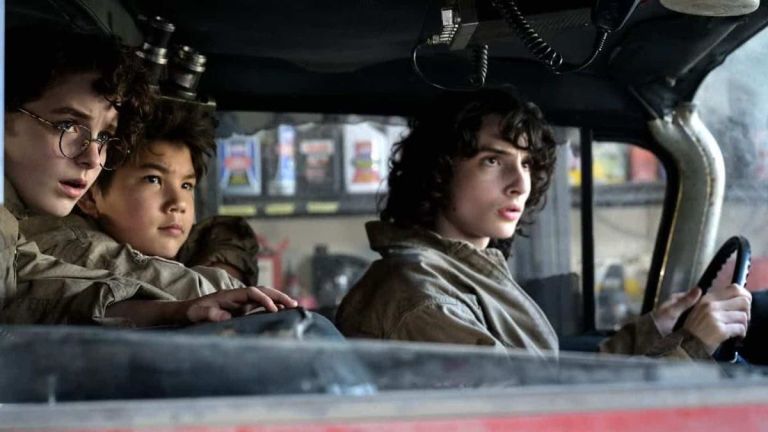
Hollywood’s obsession with reboots has given birth to one of its worst yet, Ghostbusters: Afterlife. Arriving in theatres across North America on Nov. 19, this long-delayed film might have been better off going straight to video-on-demand. Although  director Jason Reitman is the son of the original installment director Ivan Reitman, Ghostbusters: Afterlife reinscribes the sarcastic comedy of the original movies into a cheesy story about friendship and family values. With an astounding 124-minute runtime, the movie spends nearly half of this without any significant plot development—it focuses more on self-referential jokes than it does trying to build its own plot. 

The film follows Callie (Carrie Coon), a single mom struggling to make ends meet. After her estranged father dies, she moves her family into his old farmhouse near a small mining town to the disdain of her children, Trevor (Finn Wolfhard) and Phoebe (Mckenna Grace). As they sort through the rubble of their grandfather’s life, Trevor and Phoebe discover their connection to the original Ghostbusters and the secrets their grandfather left behind. In order to solve the mysteries and save the world from impending doom at the hands of a demonic ghost, they need a little help from fan favourites like Peter Venkman (Bill Murray) of the original series. 

Avid fans of the franchise will immediately notice that the film largely ignores the original sequel as well as the 2016 reboot. Ghostbusters: Afterlife attempts to create a more dramatic take on the beloved franchise, but the result diverges too far from the source material. Lacking the signature comedic style from the 1984 film, Ghostbusters: Afterlife feels less like a faithful sequel and more like an attempt to capitalize on the nostalgia and success of the original film. It turns a beloved fantasy-comedy into what more closely resembles a melancholic family drama. 

Most of the members of the family completely lack any personality and complexity. Callie receives next to zero screen time after her introduction and Phoebe’s newfound friend is so single-minded, his name is literally just his hobby: Podcast (Logan Kim). Trevor and Phoebe are nothing more than the tired archetypes of the belligerent teenager and the overly precocious younger sibling. That being said, both young actors do a fairly good job with the dry material they were given. Grace plays possibly one of the most annoying child geniuses ever seen on film, but excellently portrays Phoebe’s growing connection with her grandfather, and Wolfhard is a bonafide veteran of the genre. His competence in making the absurd sound realistic almost allows the audience to suspend their disbelief. 

Even the ghosts in Ghostbusters: Afterlife are an uncanny shell of the original franchise, using undoubtedly some of the worst CGI in recent memory. Using a strange combination of practical effects and green screens, the film looks cheap. All attempts at suspense, terror, or seriousness are dampened by the appearances of cartoony ghosts. Straddling its identity between that of a thriller and a cartoon, the film can’t decide whether it wants its audiences to laugh at, or be scared of, the supernatural.

Ghostbusters: Afterlife epitomizes the rationality behind why reboots should end: It is impossible to recapture the magic of the original franchise. The film is purely trite ‘80s nostalgia packed with callbacks to the original, but nothing more. With a weak plot, hackneyed dialogue, and an awful combination of bad CGI and SFX, the film fails to recapture the charming cynicism of its predecessor.

Read the latest issue

Read the latest issue