


Latest News

News, SSMU

SSMU by-election fails to make quorum, results nullified

The Students’ Society of McGill University (SSMU) closed its executive by-election polls for the Vice-President (VP) Student Life and VP Sustainability and Operations roles on Nov. 29. The by-election voting window was nine days long, starting on Nov. 20. 10.7 per cent of SSMU’s constituency cast a vote, meaning that the vote failed to make the quorum of 15 per cent, leaving the positions remaining vacant.

Justice Bongiovanni and Alice Postovskiy were competing for the VP Student Life position, which was left unfilled after Chloé Muñoz’s resignation on Oct. 29. Bongiovanni, U1 Arts, ran with the campaign slogan, “Vote for change, vote for Justice.” His campaign included proposals to invest $10,000 CAD to help students facing food insecurity and funding more affordable extracurricular courses to teach career development skills. 

Bongiovanni wrote to The Tribune that although he enjoyed being a part of the SSMU electoral process, he found the results of the election disappointing. 

“The fact that the by-election was nullified is a shame for [the] 10.7 per cent of students that took part, and democratically problematic,” Bongiovanni wrote. “However, I want all students to remember that an executive general election is coming relatively soon, despite this situation, and that their voices still count.”

The other candidate, Postovskiy, U3 Arts, ran on a platform that included maintaining SSMU services for students, helping streamline SSMU finances, and improving clarity for student groups on the union’s regulations. 

In a comment to The Tribune, Postovskiy wrote that she believes that SSMU’s Internal Regulations do not outline a quorum for executive by-elections. Postovskiy added that she asked the SSMU Chief Electoral Officer to release the results of the election, but was refused. She plans to bring this issue to the SSMU Judicial Board if the student union does not revert their decision to nullify the election. 

“Beyond just the by-election, this echoes a trend at the SSMU of not taking student democracy seriously,” Postovskiy wrote.“The McGill Student Union Democratization Initiative Policy, passed by referendum in 2021, has not been implemented. There have been various controversies with the SSMU failing to adopt policies passed by referendum, notably last year’s Policy against the Genocide in Palestine [….] It is unfortunately not clear to me what the McGill student body can do to achieve democratic control over its student union.” 

Neither the Internal Regulations nor SSMU’s Constitution specify a specific quorum for executive by-elections. Thus, the question will go to the union’s Judicial Board. SSMU President Dymetri Taylor, wrote to The Tribune that if the Board rules there is no quorum, that could lead to an undermining of student democracy as—in an extreme case—a single voter could determine the outcome of an election.

Kareem El Hosini and Arya Cheuk were competing for the VP Sustainability and Operations role, following Meg Baltes’ announcement that she will be resigning effective Dec. 13. El Hosini (U3 Engineering)’s campaign slogan was “Efficiency. Transparency. Enrichment.” El Hosini promised to improve underused spaces, revitalize McGill’s community garden, and bring more affordable and accessible food to campus.

“I’m disappointed that [people] don’t care enough to vote but I also understand why they don’t. I’ve noticed that [people] typically feel indifferent towards or don’t like [SSMU] in general due to past actions,” wrote El Hosini.

Cheuk, U1 Arts and Science, had a campaign slogan of “Vote Arya for a Greener Area.” Cheuk hoped to improve composting on campus and to encourage clubs to get sustainability certificates. 

In a comment to The Tribune, Cheuk described the election results as anti-climactic. She attributed the low voter turnout to students’ disinterest in student politics and the election’s timing coinciding with finals season. 

“I am happy I had the opportunity to run as a candidate, and that so many had come together to help nominate me in such a short [time]. I am apologetic that I could not materialize their support,” Cheuk wrote. 

Taylor wrote that he was not surprised that the election did not meet quorum, as SSMU has struggled to get high numbers of students to participate in elections, compared to universities such as the University of British Columbia.

“Clubs, services, and other groups that rely on SSMU will experience a slowdown in operations as the tasks [of the vacant positions] are distributed to other executives,” Taylor wrote. “So far, I’ve been working very closely with the services to create a better structure for them and, hopefully, provide them with some financial freedom vis-a-vis the VP of Finance & bank accounts [….] We have chugged along and will continue to do so.”


Behind the Bench, Sports

Karolina Wisniewska and Nikki van Noord speak on women’s leadership in sports in alumni panel

The McGill Women’s Alumnae Association partnered with the McGill Women in Sport Program to host a panel featuring Paralympic Ski Champion Karolina Wisniewska and McGill Assistant Swim Coach Nikki van Noord to speak on their careers in sports, the influence McGill had on their success, and how gender affected their journeys.  

In her first year at McGill, Wisniewska, BA ‘99, made the Canadian Para-Alpine Ski Team and spent the rest of her four years balancing her skiing career with academics. While a student, she became World Champion in Super G and won silver at the 1998 Paralympic Games in Japan. 

“It was very challenging to be on the national team and pursue that [academic] schedule,” Wisniewska said. “I was in my first year, and I’d never been to university or to Montreal, so I was a bit lost. And I just went about it the best way I knew how.” 

She shared that she regrets not asking for help and urged other athletes struggling to learn from her mistake.

Van Noord, M.E. ‘22, is currently pursuing a doctorate in exercise physiology. She swam for five seasons at McGill before joining the coaching staff, where she helped McGill win the 2024 Réseau du sport étudiant du Québec Championships and was selected for the 2024 U SPORTS Female Apprentice Coach Program.

“I came to McGill as a pretty mediocre swimmer,” she said. “Peter [Carpenter] will admit to me now that I was the last pick the first year of my McGill career […] him taking that chance on me is, fundamentally, what’s changed my entire life [….] Sometimes all you need is one person believing in you and seeing your potential when you don’t see it in yourself; that’s something I can only hope to be for [other] athletes.” 

When the speakers were asked how their gender impacted their experience in sports, van Noord described her evolving goals.  

“I’m hoping that [leadership positions] can be something that not just women are a part of, that we can build it and have a more equal showing,” she said. “And part of that as an athlete is becoming captain of the team or trying to strive for a leadership role. This led me to be like, ‘Well now in this leadership role, there’s only so much that I can do. What can I do next?’ And that next step was becoming a coach. Now I’m like, ‘Well, now that I’m this woman and coaching, what can I do now?’” 

She concluded her response by reiterating that she hopes she can help inspire even just one athlete, and Wisniewska caught her with an important correction. 

“You keep saying, ‘Maybe I’ll hopefully touch one person’s life.’ Stop it. Everybody who is female in this room, just stop that ‘Oh maybe one person,’” she said. “[Instead say,] ‘Yes. I’m going to impact a lot of people’s lives for the better.’”  

This moment was a significant one that audience members and Martlet Soccer players Aaliyah Kamdar, U2 Arts, and Alexandra Hughes-Goyette, a Master’s student in science, highlighted.  

“Imposter syndrome is a thing a lot of women experience. So just hearing these successful women talk about that today really helps with how to deal with it,” Kamdar shared.  

“It validates those feelings, to know that I’m not the only one who feels that way in those settings,” Hughes-Goyette added.  

As a final question, the panellists were asked to share advice for young women athletes. Van Noord underlined the importance of passion and leadership when playing a sport or coaching one, emphasizing that inherent talent is not in the criteria for success in coaching. Wisniewska also highlighted the importance of hard work. 

“I was never the best skier because I was born disabled […] until you have the results […] until I see how you’re skiing, or how you treat your teammates and your coaches, that’s what counts,” Winiewska said. “Just shut up and get to work. That’s the point. Do the work, put in the time. You will get the results.” 

Local Stories, Student Life

Social media signalling isn’t enough

In the wake of the U.S. election, my social media feed was flooded with reactions. Old classmates from my New Jersey high school shared Instagram Stories condemning Donald Trump, highlighting allegations against him, and denouncing his voters. These posts were swift and impassioned: An immediate outpouring of anger and grief. Yet, within 48 hours, the fervour had all but disappeared. No links to community organizations, no resources to turn outrage into action—just a digital silence.

This isn’t to say that social media activism lacks value. Social media is an incredible tool for spreading information, especially in moments of crisis. It can amplify marginalized voices, expose injustices, and mobilize movements. In 2020, the Black Lives Matter movement was fueled by the virality of posts educating people about systemic racism, police violence, and ways to support Black communities. Digital networks can be a powerful tool to galvanize the activism process. In community organizing, this notion is known as the ladder of engagement, where more and more people are encouraged by their peers to take on progressively greater action in pursuit of a goal. Social media is a new digital rung on the ladder that’s easier to reach than many offline alternatives. Additionally, platforms like Instagram and Xhelp shed light on conflicts and catastrophes that mainstream media often overlook. 

Cecilia Eu-ahsunthornwattana, U1 Arts, shared their thoughts on the role social media can play in spreading awareness.

“I learnt about a lot of causes or social issues that I wouldn’t have even heard about through social media,” Eu-ahsunthornwattana wrote to The Tribune. “A lot of them are subjects that I’m now more educated in and see the importance of, from hearing personal stories of other people and doing extra research.”

“There has never been a time before where information could be so wide spread, and I think being able to share on social media gets a population that may not have been educated on subjects involved,” wrote a student who wished to remain anonymous.

But there’s a darker side to this: Are we using social media to inform and create action, or are we simply signalling our moral alignment? After the election, many posts felt less like calls to action and more like declarations of group identity. Sharing a story condemning Trump wasn’t just about what the post said—it was about what it meant. These posts functioned as social signifiers, telling followers, I’m one of the good guys. I’m on your side.

This phenomenon isn’t unique to elections. Story posts often serve as a form of performative activism—symbolic gestures that communicate outrage or solidarity without necessarily leading to tangible change. A person might share an infographic or photograph but stop short of donating, volunteering, or organizing. 

The issue lies in the echo chamber of social media. We create online communities with people and perspectives that align with our own. When we post about activism, it’s likely that much of our audience already agrees with us. 

Soffia Gaw, U2 Arts, talked about the purpose of reposting in a written statement to The Tribune

“Rarely do I see a reposted political story not meant to display an overt message that is on behalf of the person reposting. I think those who repost aim to create greater knowledge for their audience while also re-establishing their position on the issue.”

Sharing a post is easy; taking meaningful action is harder. It takes more effort to attend a protest, contact elected officials, or engage in community organizing than it is to tap “share” on an infographic. This isn’t to diminish the importance of raising awareness—education is a critical first step in any movement. But if awareness isn’t followed by such efforts, what’s the point?

Activism requires more than just visibility—it requires action. Sharing a story is a start, but it shouldn’t be the end. 

Campus Spotlight, Student Life

Queer McGill’s drag night defies traditional drag categories

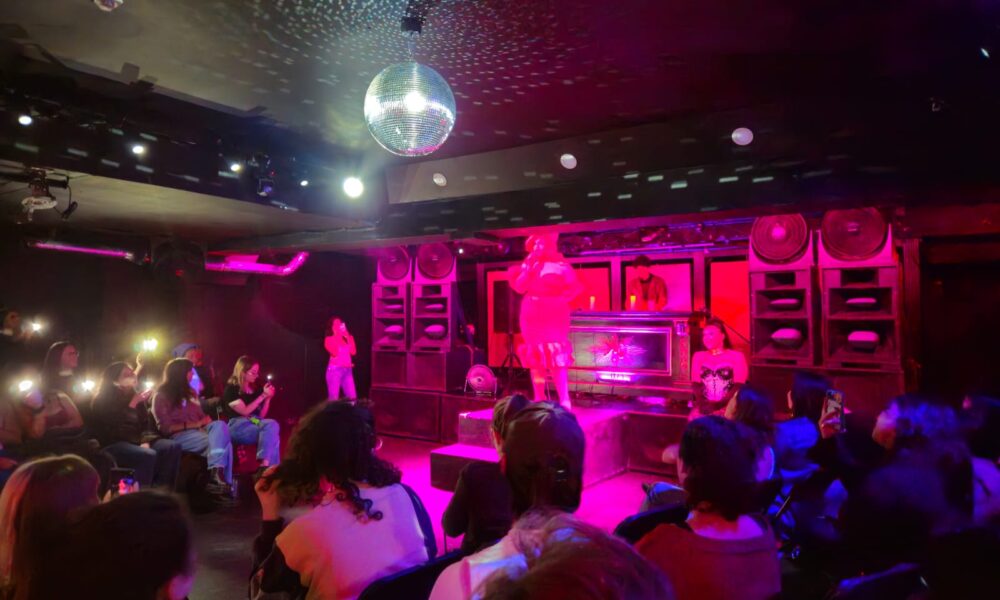
“Whenever you put on a lash, it’s not just for fun, it’s resistance.” These were the opening words from host Rosa Golde at Queer McGill’s annual amateur drag night on Nov. 28. On the pulsing dancefloor of Cabaret Berlin, eight up-and-coming performers gave their all to deliver a show for the ages. From political satire to burlesque, the drag artists pushed the boundaries of traditional “drag king” and “drag queen” categories, showcasing a new wave of avant-garde stars looking to break down and transcend binaries. 

Self-proclaimed “drag thing,” Pandora’s Box Muncher, U3 Arts and Science, debuted at a Queer McGill drag show in 2022. Their act combined theatre and cinema in an eclectic live rendition of Barbra Streisand’s “I’m the Greatest Star” from Funny Girl and Pearl’s monologue from Pearl (2022)

“In this colonial, imperialist, white supremacist culture, [drag] is something that’s suppressed. Drag at the fringes—like less mainstream [than] RuPaul’s Drag Race drag—is important in pushing back,” they told The Tribune, speaking on the political importance of drag. 

In another act, Tall Graycie embodied this sentiment in their identity as a “drag creature.”

Pandora’s Box Muncher commented on the importance of a student group such as Queer McGill hosting a drag night. 

“I have met five people tonight who are telling me it’s their first drag show and that in itself is important,” they said. “Promoting drag in places where it’s not usually promoted allows more awareness.” 

Indeed, as Rosa Golde and co-host Augusta Wind asked how many people in the crowd were “popping their drag show cherry” that night, many people cheered and raised their hands. The energy in the room was electric, with the audience unprepared for what was to come. Notably, the acts varied widely from each other; the night was a mix of traditional lip-sync dances, instrumental numbers, and live singing performances.

“We not only want and need designated spaces in order to thrive and succeed but we want to have fun and memorable experiences,” Valeria Munoz, a Master’s student in Educational Leadership and one of Queer McGill’s Events Coordinators, shared in a written statement to The Tribune. “We must push boundaries and go beyond comfort zones […] We think it’s a valuable opportunity to use our platform to foster connections within the McGill and Montreal community.” 

In keeping with this mission, Queer McGill hosts various events such as movie screenings, queer orientations for incoming students, and ballroom workshops—an underground queer subculture of competitive performance invented by the first person known to describe himself as a drag queen, William Dorsey Swann.

Overall, the reception of the drag night was spectacular. The performers shared how encouraging and supportive everyone was; they expressed thanks to the staff of the venue, the Queer McGill executives, and the crowd themselves. 

“This event was truly an astounding success. [Event Coordinators] Anushka Manoj and Valeria Munoz’s teamwork and coordination skills were reflected in the way they singlehandedly contacted the venue [and] performers, and did the marketing/promotion of the event,” the Queer McGill events team shared in a written statement to The Tribune. “Between all of these moving parts and the anxiety built up right before doors opened, I’m impressed with ourselves and couldn’t be happier.”

Evidently, there was no need to worry. The team delivered an amazing show that highlighted the evolving landscape of drag arts. Furthermore, they reaffirmed the need to provide outlets for new creatives and to expose more students on campus to queer culture and history. Overall, Queer McGill’s amateur drag night exemplified the importance of being your authentic self and how the gender revolution will be led by drag artists.

Local Stories, Student Life

At rock bottom? It might be time to dig a little deeper!

It is a truth universally acknowledged that all great stories of the world require adversity. In critical times of civil unrest and political despair, it can feel like an act of hard faith in the face of a cruel joke to believe things might truly improve. We get so invested in loving a world that seems to not love us back that we grow resentful and tired. The will to change is a lost art—as students, we feel too small for our ambitions and too restless for our own good. 

Sophia Mugford, U2 Science, spoke about despair as a catalyst for change in an interview with The Tribune

“Grief is an expression of compassion,” she said. “It’s the mirrored other side of the coin of love to be hurt and lost at times. Without these feelings, you don’t get the anger you need to confront the unjust feelings of unfairness and sadness needed to move forward and enact change.”

Addressing transgender rights activism particularly, Mugford highlighted that giving in to despair means giving up on living authentically. 

“The greatest form of protest is to live,” Mugford said. “Being open to the truth of who you are and commanding space is a life-saving act for people like you.” 

Fear, too, can be a powerful tool in mobilizing communities, acting as a wake-up call to action.

Coming from a science background where politics are often less front-and-center in the classroom, Apollo Goderich, U3 Science, pointed out that activism and solidarity has the power to pull students out of the daily grind and into engaged communities. 

“You have to keep focusing on schoolwork like nothing is happening. It’s isolating and reminds you of the city’s apathy [….] When we talk with each other, we cultivate understanding—we share our anger and suffering,” Goderich stated.

The weight of the ecological crisis has driven many members of Gen Z to question whether bringing children into this world is ethical, given our grim environmental outlook. However, Rebecca Solnit, an American writer, is quick to rebut that in her experience, many activists who face the realities of the climate crisis daily are people with family and children—for whom they hope to secure a better, liveable future. This defeatist surrender reveals Gen Z’s uniquely nihilistic doubts for a prosperous future generation—it’s not uncommon to hear friends and siblings say, “We don’t even want another generation.”

Setareh Setayesh, U3 Science, however, delineates between optimism and actionable hope. 

“You can’t just have blind hope and optimism that everything will be okay—it’s satiating but it’s not fuel,” Setayesh told The Tribune. “People need to recognize the urgency, we don’t need to be comfortable and optimistic, we need to be hopeful and opportunistic.” 

Hopelessness is an emotion masked with false hope. We push things away and hope they will change, when change is an active participatory performance of will. We need to live with despair and try to understand it intimately to find ways out of it. Grief is an act of merciless, unsentimental love which spares no one. We owe it to ourselves and future generations to create a better world, working through our despair and grief to find a way forward. 

Recalling her Fundamentals of Global Health class, Setayesh recalled Thunberg’s words: “Once we start to act, hope is everywhere. So instead of looking for hope, look for action. Then, and only then, hope will come.”

Art, Arts & Entertainment

‘Witches: Out of the Shadows’ demystifies the resilient witch

The final room of Witches: Out of the Shadows is one of the most powerful exhibition endings I have ever witnessed. Kiki Smith’s bronze sculpture Woman on Pyre lies atop the centre pedestal, engulfed by a circular structure of distorted, geometric mirrors; it confronts the senses, inviting viewers to witness an execution scene frozen in time by its cast medium. Just because a pinprick drew no blood, the figure now kneels atop serrated logs that gnaw at her legs’ flesh, tearing through her barren form that helplessly pleads for mercy. At first glance, one could ask how a woman so vilified by the public as a violent figure hunches over in desolate surrender to her fate, but the motion of her outstretched arms beckoning for a final sliver of forgiveness takes the shape of a spirited resistance. She rises from her damnation as an accused witch, asserting resilience and fortitude even in death. Smith’s work bears witness to these silenced narratives of the demarcated witch, capturing the essence of this spirited exhibition.

Pointe-à-Callière’s exhibition Witches: Out of the Shadows considers the witch both as a historical construct rooted in sexism, and as a contemporary popular symbol of combined strength and folly. With its wondrous collection of diverse objects—scientific manuscripts, ritual accompaniments, tarot cards, and couture fashion, and more—the exhibit beautifully depicts the continuously remoulded perception of this mystical being. The jewel tones that cascade down from the walls accentuate witchcraft’s artistic nature, reasserting the ephemeral beauty of these historical items.

The exhibition begins with the genesis of the witch as a religious symbol of the blasphemous unknown and heretical magic. It then investigates its subsequent transformation into a secular vision of women’s disobedience in the Middle Ages as a perceived threat to the man-dominated sphere of science. Portrayed through manuscripts, medieval woodcuts, and manuals for witch elimination, the room artfully curates a glimpse into the world of intense paranoia of women’s power. Anything unknown to man, such as the woman-dominated world of natural healing and midwifery, would be deemed “otherworldly” and therefore indicative of wicked intentions. We see the torture devices reserved for these so-called witches, and are forced to face this appalling history of subjugating women’s bodies to physical torture for scientific excellence.

Moving from room to room, the exhibit masterfully balances examples of women’s suffering with feminist reclamations of this violently circumscribed label. A dress by Alexander McQueen, titled In Memory of Elizabeth Howe, Salem, 1692, comments on the culture of traditional women’s practices, like textile design, and the use of structured garments as a form of armour. The piece builds off the hardships of ancestors to strengthen tenacity in a modern age where blatant inequalities still exist. Flanked by a 17th-century painting of the Salem Witch Trials and a tranquil video installation about witchcraft, the couture garment’s unexpected inclusion highlights this continuous presence of the feminine subject, not as victims but as demystified beings of enduring force.

The upper floor covers the dissemination of the “witch” into popular culture via urban legends, otherworldly games, and a process of spiritual protection through physical guidance. On display are antique Ouija boards, hand-painted tarot cards, religious amulets, and other modes of metaphysical connection. Projected onto the installation’s walls, the witch has taken shape across mediums as a misunderstood, beautified being who tirelessly revolts against hardship—and through power, reclaims her agency. Witches: Out of the Shadows brings light to this levelling of the perceived “cultural witch,” reminding attendees of the lengthy history of systemic expulsion and the subsequent revolution of the feminine spirit.

Witches: Out of the Shadows runs until Apr. 6, 2025. Tickets are available online or in person at Pointe-à-Callière.

McGill, News

McGill hosts Mosab Hassan Yousef talk despite students’ objections

Faced with criticism from 14 student groups and over 3,000 students, McGill moved—but did not cancel—a talk by Mosab Hassan Yousef from the McIntyre Medical Building to Zoom on Nov. 26. Yousef is the son of Hamas co-founder Sheikh Hassan Yousef. Defecting from Hamas in 1997, Yousef acted as a spy for the Israeli government until moving to the U.S. in 2007. McGill’s decision to host this speaker was met with backlash from many student groups on campus, who pointed to Yousef’s Islamophobic and xenophobic comments on social media and at other university campuses

On Nov. 22, the Muslim Law Students’ Association (MLSA) contacted McGill’s Vice-President (Administration and Finance), Fabrice Labeau, and the Interim Deputy Provost (Student Life & Learning), Angela Campbell, to request that the talk be cancelled. The MLSA stated that Yousef’s lecture violated the Charter of Students’ Rights, which affirms that all students have the right to be treated with equality, dignity, and respect on campus. 

The group also issued a call to action, asking that 1,000 students who objected to the talk also email the administration with their concerns. Over 3,000 joined the initiative and submitted letters. MLSA claims that Campbell and Labeau refused to cancel the talk, noting that McGill routinely hosts “controversial speakers” and that beyond providing “space and security,” the administration does not endorse the message behind these lectures. McGill did not offer further comment on this issue.

The Muslim Students’ Association (MSA) created an open letter that demanded McGill cancel the talk due to the harm Yousef’s Islamophobic rhetoric could have on Muslim, Palestinian, and Arab students on campus. The MSA also called for an investigation of the faculty members responsible for organizing the event. Student groups such as the Syrian, Moroccan, Egyptian, Algerian, Iraqi, Lebanese, and Bangladeshi students’ associations signed the letter, as well as 378 students and 571 members of the community beyond McGill. 

In a written statement to The Tribune, the MSA stated that they wrote the open letter to demonstrate that their safety concerns were shared across McGill’s student body.

“[Yousef’s] ideas, deeply rooted in his animosity towards us, promote dangerous and baseless narratives that are undeniably Islamophobic and xenophobic, even going so far as to deem us as less than human,” the MSA wrote. “This goes well into the realm of hate speech, and directly contradicts the university’s stated mission to foster a campus environment built on respect and inclusion.”

Montreal4Palestine planned an on-campus protest on the day of the talk for all opposed to Yousef’s rhetoric. To discourage this demonstration, McGill elected to move the talk from an in-person event to Zoom. In an email sent to all students afterwards, Labeau and Campbell wrote that the planned protest “incited waves of online anger, including a targeted death threat.” They went on to state that although guest talks are a vital part of life at McGill, the university’s first priority is to avoid the obstruction of academic life on campus. 

“Where security threats exist, we must intervene, and that threat level has been escalating steadily, today reaching a new height,” Labeau and Campbell wrote. “We have communicated with police, but the risk to event participants and the McGill community remains unacceptably high. Accordingly, we have required the organizers to move their event online.”

Labeau and Campbell further wrote that until January, the university will cease approval of “space bookings for extracurricular events.”

The Iraqi Students’ Society (ISS) expressed disappointment, but not surprise, at McGill’s decision to still hold the talk despite the concerns brought forward by multiple student groups.

“Admin only moved this event online out of fear of any ‘violence’ that could take place,” ISS wrote to The Tribune. “But the more proper reason should have been to protect the safety of its Muslim students from an openly Islamophobe extremist.” 

The MSA explained that the open letter was created to prevent a precedent from being set, which would allow further extremists to spread harmful rhetoric on campus. 

“Our safety and right to peacefully partake in campus life are non-negotiable,” the MSA wrote. We neither can nor will be silenced in the face of such extremist ideologies or other threats to these rights. We will always unite in defense of the Muslim community, and push the university to recognize this event for what it was—a profound moral failure.”

Commentary, Opinion

Prêt à Manger—not as prêtty as you’d like to believe

It’s a common phrase: You are what you eat. Because people have such an intimate relationship with it, food makes for a particularly powerful political protest tool. Everyone has an opinion on food—anyone could delineate a bad egg from the apple of one’s eye. Similarly, much can be inferred about a protest by the food that defines it—as food is what nurtures us, it is also what fuels our political activism. This truth is reflected in the longstanding history of food protest.

It was that green gloom of Oct. 7 that first struck me when I paced the Sherbrooke-paved Roddick Gates. A large white van parked perpendicularly, rested halfway ajar like a wink, encasing a baker’s way-too-many of brand-name gourmet salads and sports drinks. 

What I will never forget was our shared broken laughter as I remarked that the police brigade in front of McGill must’ve managed to strike up a pretty penny sponsorship deal with none other than the local sweetheart salad bar. The joke writes itself: “Headliner! Signature meal prep company dabbles in domestic militia practices.”

It wasn’t until I recalled the Palestinian starvation protest that I started thinking about what silly salads might say about the possibly even sillier people who eat them. It’s a tragicomic disparity, a striking demonstration of privilege and power: Coordinated swarms of police officers parading on horseback, gratuitously eating expensive, curated, balanced diets. These same optics and the symbolic weight of food in political protest have permeated centuries of revolution. It is easy to conjure up the image of a bad vaudeville-era theatre performance pelted mercilessly with rotten tomatoes as a token of disapproval. When the audience is normally passive, the concept of projecting rotten produce represents a shift towards audience interactivity and freedom of expression. The tomato is accessible and inexpensive, and the soft, messy texture makes for a very emotional statement. The rotting symbolizes rejection and literalizes the audience’s disgust by materializing it on the stage for everyone to see. 

This brings to mind the brief 2019 UK trend of “Milkshaking,” where far right-wing figures were condemned by having milkshakes publicly thrown at them. Note the particular choice to use milkshakes—a dairy product which rots and “goes bad” the same way a corrupt politician might. The juxtaposition between severe, powerful leaders, and the sweet juvenile confections which streak their faces of outrage convey ridicule and detract from their optics of authority by reducing them to tantrum-ing tyrants who can’t help but cry over spilt milk. 

It is only through our very personal relationship with food that it is able to hold so much power as a political symbol. With such a collective, concrete public consensus, we begin to see playfulness take root as we are constantly challenging our preexisting associations and redefining our understanding of food and the social groups we choose to affiliate it with using layers of validated expectation and alternative subversion. 

Starvation, by comparison—such as that of the pro-Palestinian hunger strike—is an example of desperation embedded with a sense of helpless dread. Fundamentally, to starve is a plea to be seen once more as uncomfortably human. Allowing your body to break down on full display without concern for dignity poses a challenge to the cold uncaring negligence that characterizes the modern political landscape. 

This contrast between abundance and starvation in protest is much more complicated than access to expensive foods, and it’s much more horrifying than saying starvation is cheaper than a salad. It is an invitation to question the apathy we’ve grown so comfortable with. But I guess that’s just some food for thought.

News, The Tribune Explains

The Tribune Explains: Childcare services at the Macdonald Campus

At the Post-Graduate Students’ Society’s (PGSS) Nov. 7 Fall General Meeting, a graduate student in attendance raised concerns about the lack of childcare services at the satellite Macdonald Campus.

According to McGill’s 2021 Student Demographic Data Survey, 5.3 per cent of students have one or more dependents for whom they are the primary caregiver. Among survey respondents that did not opt out, 76.2 per cent—or 361 students—with dependents are caring for children.

For students with dependents, The Tribune explains the childcare services offered at both the Macdonald and downtown campuses.

What are the different types of daycares in Quebec?

There are four types of daycares in Quebec. 

Early childhood centres are non-profit daycares that provide services at the reduced rate of $9.10 CAD per day. This rate includes an 11-hour daycare service with one meal and two snacks, provided that the child qualifies for the reduced parental contribution and forsubsidized daycare by the ministère de la Famille. Private subsidized daycares are for-profit, but they offer childcare services at the reduced rate as well. 

Private non-subsidized daycares usually set their own rates, but parents who use their services may redeem a tax credit to pay for them. Home-based daycares are run in private homes and can be offered both at the subsidized or non-subsidized rates.

What childcare services exist for students at the Macdonald Campus?

The only operating daycare on campus is the Centre de la Petite Enfance (CPE) du Campus. It is a non-profit organization, providing childcare services to the staff and full-time students of both the McGill Macdonald campus and the Cégep John Abbott College. The CPE currently holds a permit to care for 60 children from three to 59 months in age. The daycare also accepts some children with special needs.

Nearby subsidized daycare services include the Centre Éducatif à Ciel Ouvert in Sainte-Anne-de-Bellevue and Le Coin des Marmots in L’Île-Perrot.

How does childcare at the Macdonald Campus compare to the downtown campus?

The Students’ Society of McGill University (SSMU) currently runs the SSMU Daycare and Nursery on the downtown campus. The SSMU Daycare Fee (SSMC), charged to all undergraduate downtown campus students, contributes to the expansion of childcare services provided at the Daycare and Nursery. According to its website, the cost of childcare service is $9.10 CAD per day per child under the subsidy by the ministère de la Famille. The fee covers a 10-hour daycare service that includes snacks, meals, and education up to a maximum of 261 days per year.

On top of that, the McGill Childcare Centre also serves 110 children of McGill students, staff, and faculty at the downtown campus. The daily rate of childcare services, similar to the SSMU Daycare and Nursery, is subsidized and governed by the rules and regulations of the ministère de la Famille. There is a $25 CAD membership fee per family to be paid first in order to access the childcare centre’s services.

At the downtown campus, students who are pregnant, or students who have at least one child under the age of 5 attending daycare, may obtain parking permits for spots directly on campus. However, the Macdonald Campus does not have any specialized parking permits for students with dependents. 

How are McGill and student unions addressing concerns over childcare at the Macdonald Campus?

In an email to The Tribune, the Macdonald Campus Graduate Students’ Society (MCGSS) President Jasmine Muszik acknowledged the lack of daycares on campus and wrote that Valérie Orsat, the Acting Dean of the Faculty of Agricultural and Environmental Sciences at Macdonald Campus, has been made aware of these concerns. Muszik noted that the issue has also been brought up at an MCGSS town hall where Orsat was present.

According to Muszik,  Joan Butterworth, the Chair of the Joint Board of Governors and Senate Committee on Equity’s Subcommittee on Family Care also plans on raising this issue at the next meeting.

For more information on childcare at McGill, visit the university’s Family Care website.

Behind the Bench, Sports

Bowers and Pulisic’s “Trump Dance” celebration met with criticism

Sports and politics are interwoven in increasingly complex ways. From Tommie Smith and John Carlos’ powerful silent protest on the podium during the 1968 Mexico City Olympics to Colin Kaepernick kneeling during the national anthem at NFL games, athletes have used sport to have their voices heard. In the weeks following the 2024 U.S. presidential election, another political trend has emerged across the sporting world: The “Trump dance.”  

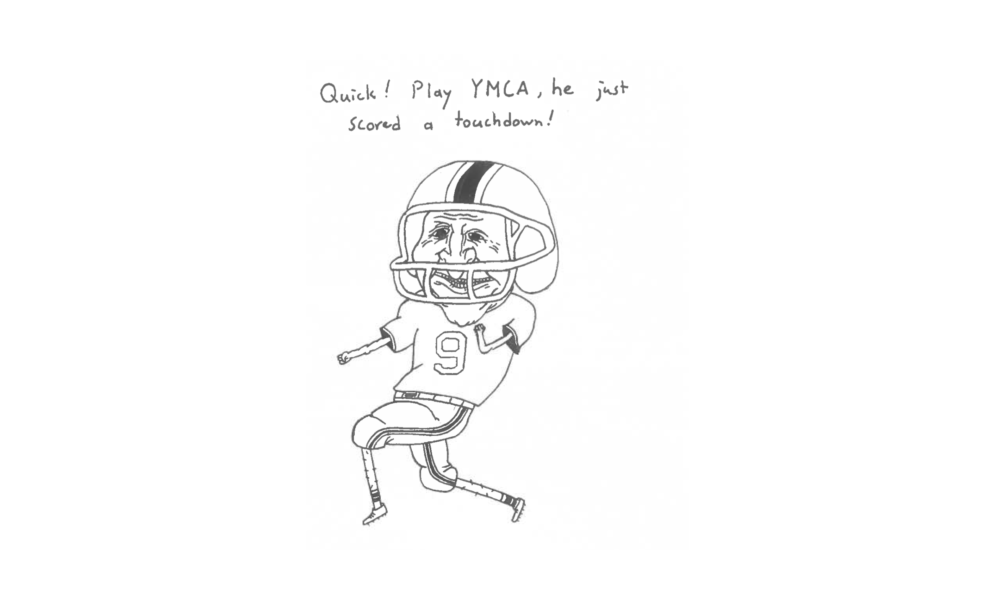
Popular amongst supporters of President-elect Donald Trump, the dance involves a herky-jerky shaking of the arms and hips. It has been used to celebrate goals, touchdowns, and other big-time plays in the last month. Raiders breakout rookie tight end Brock Bowers and U.S. men’s soccer star Christian Pulisic were among the players who used this dance as a celebration. When questioned postgame about the dance, both athletes had a similar response—that the dance wasn’t political, and was just used because it was “fun” and popular. 

The players owe spectators a better explanation than that. They are more than entitled to celebrate their achievements in any fashion they want, but to do so by paying tribute (whether they meant to or not) to a controversial leader like Trump while simply writing the celebrations off as jokes is unacceptable. Even overt homages to Trump are not commented on by the athletes themselves. San Francisco 49ers star defensive lineman Nick Bosa interrupted Quarterback Brock Purdy’s post-game interview while showing off a Make America Great Again hat but had little to say about the incident in a press conference afterward. Bosa was eventually fined because he violated the league’s uniform policy, but the damage was already done; his actions had set social media ablaze. 

The effect of the players’ celebrations is compounded by their lack of explanation, reflecting the position of privilege these athletes have. When basketball legend and current Lakers forward LeBron James commented on the challenges that Black athletes faced, including an incident where someone graffitied a racial slur on his house, Fox News personality Laura Ingraham told her viewers that James should just “shut up and dribble,” a now-infamous phrase.

American conservatives have been campaigning for what seems like forever to remove any political statements from athletics. Every sports fan has heard “keep politics out of sports” in numerous contexts, whether it be against Pride Month celebrations or anti-racism efforts from leagues worldwide. Now that the political action being taken in sports is from athletes whose beliefs land on the conservative side of the spectrum, detractors of people like Kaepernick and James are now celebrating the actions of Pulisic and Bowers. It outlines a clear double standard within the sports world. 

Kaepernick was blackballed from the NFL because of his anthem displays. In addition, NFL general managers were outwardly resentful of Kaepernick and his political views, with the late Houston Texans owner Bob McNair going as far as saying that they “couldn’t have the inmates running the prison.” McNair later apologized for his racist comment, then walked back his apology.

The overarching problem with these celebrations is not that the athletes should not be able to do the Trump dance, it’s that their post-game comments show a profound ignorance of the consequences of their actions. White athletes writing off a Trump-inspired celebration as nothing more than a joke unrelated to politics, while Black athletes have faced career-ending consequences for similar displays, is a clear example of injustice. There is a willful ignorance around the reaction to these celebrations, and a lack of consideration for how the dance can be used to further the popularity of a president whose leadership has brought pain and struggle to families across the United States. The lack of understanding by these players that their actions have consequences is disappointing but unsurprising, and the increased normalization of these celebrations will only bring on more support from conservative fans.

Read the latest issue

Read the latest issue