Latest News

Features

Theatre needs political engagement, not escapism

“Why theatre?”

 Friends, acquaintances, extended family members, and even artists in other mediums ask me this question regularly. Most times, it’s accompanied by a puzzled smile and a furrowed brow, a friendly face that communicates the rest of their unfinished question: “Why theatre now?” Why pursue a career in theatre, a notoriously rocky industry, at a time when the country’s arts and culture sector is already in a precarious state of decline? In an urgent call to action released this March, the Professional Association of Canadian Theatres (PACT) painted an alarming picture of an industry in crisis. Since 2019, theatres’ operating costs have, on average, increased by roughly 35 to 41 per cent while their attendance rates have decreased by nearly half. Clearly, the theatre industry is not doing enough to entice audiences back to live theatre post-pandemic. Once a cheap, popular form of entertainment, theatre has become synonymous for much of the public with artistic elitism, an art form reserved for the few well-off retirees or wealthy business people who can afford it. 

So why should the average person spend time and money to attend the theatre when streaming services offer a near-endless array of film and television options to watch from the comfort of their own home? The answer to this question lies in live theatre’s capacity to build community and engage its audience members with the political and social realities of our current moment. In a time when the scale of violence and suffering around the world can feel as all-consuming as it is daunting, theatre must not be reduced to detached escapism—rather, the art form must engage with the world around us. 

Strong as I am in these convictions, my original “why” for getting involved with theatre was fairly straightforward and entirely apolitical: My parents believed I needed an outlet for my incessant chatter and big feelings. Perhaps they assumed (not incorrectly) that my boisterous personality and dizzyingly high energy levels made becoming a theatre kid a natural fit. Whatever the case, they signed my eight-year-old self up for a summer drama camp, which I attended for a week and fell in love with all things theatre. 

Having found the activity that made me the happiest, I stuck with theatre throughout the rest of my schooling. I acted in plays, took musical theatre lessons, and got involved with improv, forming a close circle of like-minded theatre kid friends along the way. Ever the entertainer, I loved the feeling of making people laugh or smile with a silly voice or song. As I entered high school, I began to see the art form as more than a fun pastime for the artists and easy entertainment for the audience. By working on plays that used the imaginary to grapple with themes of political violence, mental illness, and sexual assault, I saw how audience members connected with and were moved by the stories happening onstage. 

Katherine Zien, an associate professor dually appointed in the Department of English’s Drama & Theatre and Cultural Studies streams, spoke to why theatre’s live format might make it especially effective at engaging audiences with political and social issues. While reading a book, watching a movie, or looking at a painting whose content is political can certainly prompt reflection, it is far easier for the viewer to disengage with these forms of media if they have a dissenting opinion, feel discomfort, or even react with disinterest; all they have to do is put down the book, turn off the screen, or walk away from the artwork. By contrast, the tacit social contract of the theatre—the societal norm present in most traditional theatrical spaces that the audience sit quietly, watch the show, and only make noise when it’s finished—dissuades audience members from disengaging with a piece of theatre, even when it explores difficult subject matter. 

“[As an audience member] I’m going to just try to follow along with whatever you’ve put out there for me, and […] I’m going to generously give my time and money over to this thing,” Zien remarked in an interview with The Tribune

Zien acknowledged that, while there is no way to know how an audience member will react to or engage with political content, the simple act of sharing space with the performers may make the audience more open to listening. 

“When you think about going and sitting in a space with strangers and respecting people who are performing, […] there’s a real act of care and generosity that I see there.”

While my understanding of theatre’s potential to engage with wider issues was still forming, these early experiences with more politically-minded theatre bolstered my dedication to the art form. By the time I was approaching graduation, I felt ready and excited to audition for post-secondary theatre programs. Then, the COVID-19 pandemic stopped me in my tracks. As the world ground to a halt in March 2020, theatres everywhere shuttered their doors. Now in university classes or acting conservatories, I watched as the upperclassmen friends I’d made during my early high school years spent their days trying to do voicework and movement in front of computer screens. Meanwhile, we watched, helpless, as hundreds of thousands of people died, many of whom belonged to vulnerable and underserved communities. We watched in horror as videos of the murder of George Floyd circulated online, forcing folks across the United States and Canada to contend with the brutal violence and discrimination embedded in our policing systems. All the while, tides of doubt crept into my mind, lapping away at my convictions about the importance of theatre, wearing them down until one thought remained: Why theatre? What was the point of trying to be a theatre artist at a time like this? 

Shaken and unsure, I ultimately made the difficult decision to leave theatre behind and enroll in Cognitive Science at McGill. In my first year of university, I deliberately took a break from performing. I convinced myself it was for the best; trying to get involved with university theatre would have meant voluntarily spending even more hours in front of my computer screen on Zoom. While I still loved the art form, I felt too jaded to dedicate my time to it; what use was escaping into a play in the midst of the very real issues around me? 

By the time lockdown restrictions began to ease up during my second year, I decided to return to acting, if only as an extracurricular. I missed the joy of working with others on a shared passion project. Eager to fill this missing piece of my social life, I joined Tuesday Night Cafe Theatre (TNC), a nonhierarchical student theatre company. 

This desire to make friends and be a part of a larger community is a common motivator for joining theatre and was echoed by Molly Frost, U3 Arts, a student theatre artist and the current Executive Director of TNC. Having arrived at McGill in the fall of 2021, when most classes were still being delivered in a hybrid environment or in-person with strict masking restrictions, Frost joined McGill’s Savoy Society and later TNC with the hopes of branching out and meeting folks outside of her program. 

 “It was very fun […] meeting the people on the exec team, and seeing the space. Not to sound corny or cliché, but I kind of fell in love with it. […] It was a great sense of community,” Frost said. “I think [being in theatre] just sort of like fast tracks a path to friendship, […] even if you’re not, like, best friends seeing each other all the time, it still [provides connections with] people that you know and that you care about and respect.” 

Alongside my search for this sense of community, I was drawn to TNC because of their expressly political mandate, which dictates that the company produce plays that are experimental, subversive, and engage with intersectionality. This commitment to political engagement helped assuage my worries about theatre’s tendency towards navel-gazing. 

While some may believe theatre should be apolitical, I believe art does not exist in a vacuum. Whether it’s embedded in the text itself, the casting, or apparent by omission, theatre will speak to its sociopolitical context. Catherine Hernandez, an acclaimed author, screenwriter, and playwright, expressed her belief that artists have a responsibility to engage with their real-life context.  

“To me, activism and artmaking is dreaming of possibilities. When you are part of a movement, you contribute your talents, whatever they may be,” Hernandez wrote in an email to The Tribune. “I’ve chosen the role of an artist by dreaming new worlds into being, where all people have a place; have an equal right to live and love with equal access to resources.” 

Historically, theatre’s ephemeral format has proven useful to artists looking to explore and disseminate more radical political messaging while minimizing the threat of financial or political repercussions. 

“Theatre has often benefited from being overlooked. [For instance,] Latin American theatre artists [living under] dictatorship have really benefited from not always being recorded,” Zien explained.  “They could do and say things that were subversive because it was live.”   

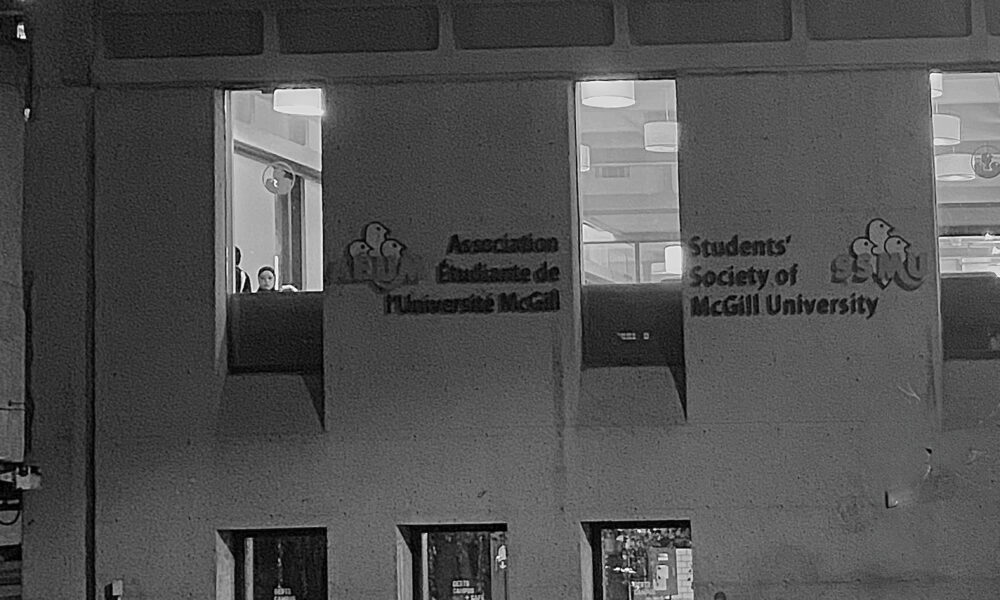
This upside to being overlooked resonates with student theatre companies like TNC, whose budget is comprised of funding from the Department of English, ticket sales, donations. The group is not beholden to the desires of Students’ Society of McGill (SSMU), the potential censorship of governmental arts organizations, or the whims of the theatre-going public. As such, it may be easier for them to weather the potential financial risks that come with taking a controversial political stance.

By contrast, artists like Rahul Varma, co-founder and current Artistic Director of Teesri Duniya Theatre, are all too familiar with the threat of censorship and financial ruin to political theatre. Founded in 1981, Teesri Duniya is a prominent professional theatre company whose works centre on a diverse range of BIPOC voices. While many other companies stayed silent on their positions or released vague statements in response to the horrific events of Oct. 7 and Israel’s ensuing siege on Gaza, Varma insisted that Teesri dive in headfirst. 

“I think that it surprises me that in the theatre community, the response has been pretty mute, and many of the theatre artists are privately talking about it, but not publicly,” Varma expressed. “We as theatre artists, what we have is a voice and our craft. If we suppress our [voices] and talk privately but not publicly, we are basically breaking our connection with the public. We are an instrument of communication, and we do communicate with artistic beauty [….] If we do not do this, we are just betraying our own sector, our own craft, our own discipline. So I think that silence is not an option. By default, silence goes to support the dominant force.”

To ensure Teesri’s actions were going beyond lip service, Varma shelved previously planned productions and instead spent late 2023 and early 2024 preparing an entirely new season entitled “Staging Freedom.” Described as “a theatrical response to war, occupation, and genocide,” this new theme tied together various plays, workshops, and events focused on championing Palestinian rights. 

Despite facing budget cuts to his operational funding from various governmental organizations that he maintains are a direct result of his company’s outspoken stance on Palestine, Varma believes that the community’s response has made the high-stress changes worth it. Audiences received the company’s first show of the season, Two Birds One Stone by Natasha Greenblatt and Rimah Jabr, with open arms. A touching auto-fictional account of its two playwrights’ friendship and their respective connections to the occupied Palestinian territories, the piece’s series of moderated post-show talkbacks offered an avenue for productive, engaging community discussions. 

Hernandez has been similarly vocal about her pro-Palestinian perspective, both through her words and her actions. Earlier this year, she removed her novel Behind You from consideration for the 2024 Scotiabank Giller Prize in protest of the relationship between the award’s primary sponsor and Elbit Systems, an Israeli weapons manufacturer that serves as a primary supplier to the IDF. 

“I want people to understand that the ability to speak up for what is right is not some magical talent you’re born with. It’s a skill. And like any skill it takes practice and bravery.

This last year has been a personal exercise in learning to be brave despite being among the hundreds of authors who have experienced censorship and repression due to our activism. I have lost opportunities and employment. The future of my career is uncertain.,” Hernandez expressed. “But what I fear most is the continued violence worldwide due to predatory capitalism. As an artist, I know my work—be it my paintings or writing—is to encourage others to be brave with me.”    

Theatre, like all artforms,  is inextricably intertwined with the social and the political. The choice of what scripts to platform, how to run a company, and the emphasis placed on community-building are all reflective of one’s values. As audiences, we must continue to support local theatre and engage with politically conscious productions. As theatre makers, it is crucial that we use our voices and our platforms to speak truth to power and explicitly oppose violence and injustice through our works. Theatre is at its best when it is community-oriented and politically-minded, and we must do all we can to keep it that way. 

McGill, News

McGill uproots tree planted during Haudenosaunee peace ceremony in solidarity with Palestine Solidarity Encampment

On Nov. 17, approximately 200 individuals gathered for a Haudenosaunee peace ceremony in which Kanien’kehá:ka (Mohawk) women planted a white pine tree. The organizers then decorated it with white and purple rocks and a wooden placard commemorating the site where the Palestine Solidarity Encampment stood on the Lower Field for 75 days over the summer. The Kanien’kehá:ka women led the ceremony alongside the Palestine Youth Movement (PYM) Montreal. Within a day of the planting, McGill removed the pine sapling, an action which lead some to question McGill’s commitment to reconciliation.

(Drea Garcia Avila / The Tribune)

At the ceremony, organizers described the event as a gesture of unity in shared struggles for land and justice, and a continuation of the solidarity expressed during the student encampment earlier this year.

“Just like the olive trees of Palestine, the white pine is a symbol of resistance and undying hope for liberation,” a PYM Montreal representative who wished to remain unnamed, explained to the crowd. “This tree of peace is a symbol of the solidarity of the Kanien’kehá:ka people, with the students of McGill and Concordia who established a peaceful encampment here in 2024.”

A Wendat graduate student from Université Laval, Marjorie Laclotte-Shehyn, came from Quebec City to attend the ceremony. In an interview with The Tribune, she emphasized the significance of the Kanien’kehá:ka asserting their right to the land through the event.

“I think it’s kind of [historic] to have an Indigenous community come here and assert that this is their unceded land,” Laclotte-Shehyn said. “They want to bring peace to this land. I hope the administration understands that they’re on stolen lands.”

(Drea Garcia Avila / The Tribune)

The event also featured statements from Kanien’kehá:ka representatives who discussed the historical importance of the land, mentioning cornfields and longhouses that once stood there.

“This is the earth of our ancestors. This is the earth where many moccasins, many bare feet, many ceremonies, many songs were sung [….] This is Haudenosaunee land. It always has been,” Ellen Gabriel, a Mohawk activist, said.

According to a Nov. 5 written statement from the McGill Media Relations Office (MRO) to the ceremony’s organizers, the university told organizers that they would not support the proposed tree planting. Within one day of the ceremony, the university removed the tree and accompanying decorative rocks. The MRO confirmed to The Tribune that the tree had been repotted and arrangements were made to return it to the organizers. 

“The organizers decided to proceed without permission. Accordingly, McGill took the appropriate action of moving the sapling and decorative rocks that were left on its property,” the MRO wrote.

Onkwehón:we Konón:kwe

One attendee, Haifa Ghassan, said that the administration’s opposition did not align with their commitment to reconciliation and demonstrates a disregard for Indigenous voices that challenge them. 

“[The administration] try to say that they’re here to honour Indigenous peoples and they support reconciliation […] but they still oppress people who try to criticize their actions against Indigenous people. So I think it’s hypocritical,” Ghassan said.

Gabriel expressed her hope that McGill will accept the tree and highlighted the sense of responsibility that she and other Mohawk people feel to stand against violence that takes place on their land. 

“We are making a small change to the landscape that is known as McGill. It’s a very small thing to ask. It’s a very small thing to want peace. It’s a big thing when we all participate in that peace,” she said. “We are here as well because on our homeland, we saw students being beaten up, pepper sprayed, and silenced. That’s not going to happen on our watch. We are obliged to ensure that there is peace.”

(Drea Garcia Avila / The Tribune)

Gabriel also noted that for the organizers the ceremony was a proactive step toward justice, bypassing institutional barriers to take matters into their own hands. 

“We’re not waiting for McGill to begin reconciliation. We’re starting reconciliation right here, right now, under our terms and our laws and in our way and in our protocols.”

In response to McGill’s removal of the tree, Onkwehón:we Konón:kwe (Women of the Land) sent a letter stating that they had nothing to gain from the ceremony other than spreading the message of peace, and decried the uprooting as violent.

“This desecration to the Haudenosaunee symbol of peace is also a hate crime […] This is not reconciliation, it’s a praxis of colonialism,” they wrote. “History will judge them.”

Feature_Image
Features

A Minor Is Not Enough

I have a major headache. Literally: I have a headache because of my major—or lack thereof, I suppose. 

Most people are shocked to hear that there is no Indigenous Studies major at McGill—fellow students, my family back home, and even this university’s professors. In 2024, the Center for World University Rankings (CWUR) ranked McGill as the second-best university in Canada and 27th-best in the world. McGill cannot be a “world-class” university without adequately addressing the dismal state of its Indigenous Studies program.

Indigenous studies and contemporary Indigenous issues are the crux of my academic being—I live and breathe for Indigenous studies. My dad, Mi’kmaq from Listuguj First Nations reserve, started me off young. I was 11 years old, reading excerpts of Richard Wagamese’s //Indian Horse// to my seventh-grade class (which was definitely not age-appropriate for an 11-year-old). I’ve since expanded my library to include books like Suzanne Methot’s //Legacy// and Darryl Leroux’s //Distorted Descent//, and a deep yearning has grown in my soul to learn more about this country’s relationship with the first peoples of this land to mark a path of decolonization. 

When I committed to McGill, I knew that was no Indigenous Studies major, but I decided to make the best out of a mediocre situation. I accepted that I would have to cobble together a make-shift Indigenous Studies program through a Sociology major and Indigenous Studies and Political Science minors. Even though I couldn’t pursue the major I dreamed of on paper, I figured I would still get an excellent education at one of the best schools in the country.

But my God, is McGill’s current program a pain in the ass.

 I greatly underestimated the disparity between the Indigenous Studies program and other disciplines. There are real academic gaps between the Indigenous Studies program at McGill and other departments in the Faculty of Arts. The difference between a full major program or “just a minor” in Indigenous Studies goes beyond what will be written on your diploma. Without a major, there is no opportunity to write a thesis for an honours degree, fewer courses available, and less incentive for professors to come to McGill to broaden the program’s reach. 

Indigenous Studies is a highly interdisciplinary field, so when there are only a handful of professors available, students get pigeonholed into one or two areas of scholarship and don’t have the opportunity to specialize in what they are passionate about within the Indigenous Studies minor. For example, Nina Barry, U2 Arts, who is pursuing a Psychology and Behavioural Science double-major and an Indigenous Studies minor, believes that the increased array of courses that a fully-fleshed-out program could offer would open up more diverse learning opportunities.

“One thing I am really interested [in] is mental health facilities for Indigenous communities, and I would have loved to be able to combine my passion for psychology and my passion for Indigenous Studies, but that’s just not really something that’s offered here,” Barry said in an interview with //The Tribune//.

Comparatively, the Political Science department at McGill, which also takes an interdisciplinary approach to a complex discipline, contains five main fields that are all equally developed: Canadian Politics, Comparative Politics, International Relations, Political Theory, and Methods. While students in Political Science majors need to take classes in each area, you could easily focus on international politics of diplomacy in South Asia if that’s where your heart lies. 

Meanwhile, in Indigenous Studies, there are only six courses with the INDG course code available during the 2024-2025 academic year, two of which do not have professors associated with them yet. Students in the minor program, like myself, are forced to fill in the gaps with complementary classes in adjacent departments. While these classes do present opportunities to learn more about Indigenous issues, they often have non-Indigenous Studies-related prerequisites that make filling your minor requirements just that much more difficult.

“It’s sad [because] I and other Indigenous students came to McGill expecting the Indigenous programming to be as strong as McGill’s counterparts. Unfortunately, that is not the case,” said Rune Hartgerink, U1 Arts, an Anishinaabe student majoring in Sociology and Archeology and minoring in Indigenous Studies.

Mateo Itzam Jimenez-Haham, Maya Mam U3 Arts student at McGill, began his academic journey here as I did: He wanted to major in Indigenous Studies but compromised by doing the minor instead and registering in Sociology. 

“I barely took any classes in that major because it wasn’t really what I wanted to study,” Jimenez-Haham said. 

However, with the help of Professor Noelani Arista, director of the Indigenous Studies program, and former professor Jimena Marquez, they created a 46-page proposal for an ad hoc Bachelor of Arts degree which allowed Jimenez-Haham to design his own course of study.

“If [McGill] really wanted to [create an Indigenous Studies major], they would, but they don’t. They’ve been reluctant. They’ve been dragging their feet,” Jimenez-Haham said. “[McGill] made a minor [and] said a major would just soon follow. It’s been about a decade, and even despite many people advocating for its implementation, it still is not a reality. I’m really hopeful that this ad hoc BA can show [McGill] that people are genuinely, really wanting this [major] to be a reality and hopefully speed up the process a little bit for everyone.”

In December 2023, A McGill hiring freeze issued “a complete halt of all new hiring, both academic and administrative.” The freeze, coupled with within-faculty tensions, led some professors to leave the university. My fears grew about the future of Indigenous Studies at McGill. Like many of my peers in more niche areas of study such as Music Composition, I worried that McGill’s current financial situation would disproportionately affect departments that are already struggling.

At Concordia, First Peoples Studies is a BA with a major and a minor. However, First Peoples Studies is not a department, as it is housed in the School of Community and Public Affairs. As it is not its own department, they do not have direct access to the budget, but these barriers are not unique to First Peoples Studies. 

The Tribune spoke with Nicolas Renaud, Huron-Wendat and Québecois Assistant Professor and Director of the First Peoples Studies program at Concordia University, about the impacts of having a major program in Indigenous Studies. 

“There are certainly other majors in culturally based studies, about a given people or nation in various parts of the world, so there’s no reason that the first people of this land wouldn’t be included in the subjects of this university,” Renaud said in an interview with //The Tribune//.

However, he advised caution around assuming that adding a major would automatically make the university more decolonial or inclusive of Indigenous students and faculty. 

“Yes, it’s better if they can be a major, [but] it’s not the only criteria of how a university will offer something meaningful about Indigenous people,” Renaud said. “A university might not offer a major in the field and yet be a good place for Indigenous students and profs, based on other aspects of the environment it provides and the space given to Indigenous perspectives.”

Further west, the University of British Columbia (UBC) has an exemplary First Nations and Indigenous Studies (FNIS) program. One of the strengths of the FNIS program at UBC is their research practicum where students work to meet the research needs of one of over a hundred Indigenous organizations that have partnered with UBC. Not only does it prepare students to be effective researchers, but the projects are designed based on the unique research needs of local Indigenous organizations. 

Linc Kesler, Oglala Lakota emeritus professor at UBC, was the first director of the FNIS program and developed its curriculum. After establishing an Indian Education Office at Oregon State University, Kesler was well-prepared to design the curriculum of a strong and meaningful Indigenous Studies program: Oregon State’s Ethnic Studies department, which Kesler helped to create in the middle of a budget crisis. At UBC in 2008, which was also in the midst of a budget crisis, Kesler explained that the new President made the “very wise decision that the university should address the budget crisis by forming a strategic plan to guide the priorities and funding.” Kesler used this opportunity to incorporate plans for an Indigenous Studies program into the revised budget. 

“There’s no point in being daunted by a budget crisis,” Kesler said.

On their website, McGill states that they “will heed the call of the [Truth and Reconciliation Commission] by engaging and collaborating with Indigenous communities to identify, explore and advance ideas, initiatives and plans that will embed Indigeneity in the life and activities of the University while seeking to enhance the presence and success of Indigenous students, faculty and staff at McGill.” In the 31st of their 52 Calls to Action, McGill also states that its programs’ “success aligns with experience at other institutions in Canada and the United States where full-blown Indigenous or Native Studies programs have been proven successful for the past several decades.” While this language sounds encouraging, the lack of classes and no major program in sight makes one wonder how much institutional support there really is behind these statements. 

Across North America, dedicated Indigenous Studies programs are still relatively new, and many institutions are still in the process of building comprehensive programs. 

“There’s Indigenous nothing happening [at the University of Toronto (UofT)],” said Kesler, who received his PhD from UofT in 1981. “Of course, that was like 50 years ago, but I don’t think it’s a whole lot better now [….] You know, the bar is pretty low. You can become a leading institution by doing anything.”

When it comes to concrete plans, there is little information available online about the trajectory of the Indigenous Studies program. A Google search turns up little else other than information on the minor and two decade-old articles, one from //Anishnbek News// and another from //The McGill Daily//. Both articles are from when the program was first announced nine years ago.

Since the path forward is so vague, let’s do some of the work that McGill’s administration should be doing and imagine what a strong, durable, and meaningful Indigenous Studies program could look like. 

First, there must be collaboration between the university and local Indigenous communities and organizations. The university must exercise humility and base its curriculum on the ideas and needs of local communities. An academic program is just an empty shell without true, meaningful relationships with the people it claims to serve. These connections will serve to pressure the university to continue evolving its program as well as keeping the curriculum relevant. 

“I will tell you that I think in both my experience in Oregon and my experience at UBC, what was critical to the success of both of those initiatives was engagement with the Indigenous community in Oregon,” Kesler said.

Second, Indigenous faculty must be involved in the process of building the program. In an interview with //The Tribune//, Professor Vernon Coburn, an Anishinaabe associate professor and Faculty Chair of McGill’s Indigenous Relations Initiative, emphasized the need for caution in such circumstances. He explained that the University of Ottawa’s Institute of Indigenous Research and Studies crashed before being able to truly take off because it was not created ethically or relationally. 

“It’s been almost a dismal failure,” Coburn said in an interview with //The Tribune//. “I think it was because it was led very narrowly, without engagement from the community and input from Indigenous faculty and staff and the larger university community.” 

Third, the program must be more than a vanity project. McGill has encouraged faculty to begin events with land acknowledgments, only to turn around and engage in a legal battle against the Kanien’kehá:ka Kahnistensera (Mohawk Mothers) over possible unmarked graves at the site of McGill’s New Vic Project at the former Royal Victoria Hospital (RVH). The Indigenous Studies program must be designed as more than a flashy banner on McGill’s website that claims a journey toward reconciliation. 

“A lot of that reconciliation and Indigenization stuff is show—it’s a spectacle, just like reconciliation in general is a spectacle for good conscience of the settler society,” Renaud said. “Real change is very different.” 

Finally, the program must be set up to succeed. Once established, the university cannot treat the program like a “diversity experiment” where if it fails, the Indigenous faculty would be at fault. This highlights discrepancies between Indigenous and non-Indigenous disciplines, which are given more institutional support. McGill has an obligation not just to establish the program but to truly ensure its success and longevity. 

“It’s like offering one person a Cadillac and then offering the other person a little Ford or some other rinky-dink vehicle,” Coburn said. “We can see the differential treatment. And then you blame us for it failing? [They] say, well, look, every time we give the Indigenous people something, it doesn’t work, they break it [….] And look, it’s their own fault that it failed. It’s like, if you helped department X so much, why don’t you give us the same amount of help to succeed?”

“It’s just going to be an embarrassment if you do it off the back of a cocktail napkin. No, this needs to be comprehensive,” said Coburn about the future of McGill’s Indigenous Studies department.

But why do Indigenous Studies programs matter? Kesler said it plainly in an interview: “As to why to do it, it’s pretty simple. Because it’s the 21st century, you’re in Canada, [and] Canada has a long and terribly troubled relationship with Indigenous people. […] If we continue to graduate the leaders of British Columbia and Canada from this university ignorant of this history, what are we doing? We’re failing in our responsibility to provide people with the necessary information to lead this country and this province.” 

Ignorance is a weapon utilized by the settler-colonial state to further its objectives of the elimination, dispossession, and displacement of Indigenous peoples. Settler-colonialism is not a thing of the past, and neither are we as Indigenous peoples. For too long, Indigenous peoples have been ignored, especially by colonial institutions such as McGill. Universities, as self-proclaimed beacons of knowledge and research, cannot afford to enable ignorance. As academics and humans, we must ensure that we orient ourselves onto the right path for the right reasons. McGill has this responsibility not only to Indigenous folks across the country but also to settlers. Only by learning from the past and the present can we guide ourselves and all our relations into the future.

Editorial, Opinion

Montreal’s unhoused population deserves care, not cruelty

The Société de transport de Montréal’s (STM) recent decision to close a major entrance to the Atwater metro station until April 2025 exemplifies Montreal’s unempathetic approach toward its most vulnerable residents. This entrance has long served as a crucial warming space for unhoused individuals during Quebec’s harsh winters. The STM’s vague justification—citing “safety concerns” and “undesirable behaviour”—thinly veils what housing advocates identify as a calculated strategy of displacement for unprotected populations. This closure comes at a critical time when weather forecasts predict an unusually severe winter and shelters for unhoused individuals consistently operate beyond capacity.

Enacting this closure for the year’s coldest months is particularly cruel. While construction workers are deemed unable to work outside during extreme cold, unhoused individuals are expected to survive in these same conditions—a double standard that normalizes the notion that some members of our community deserve essential protection while others do not. 

Such institutionalized indifference to the safety of unhoused individuals emboldens a disturbing pattern in urban policy, where public spaces increasingly incorporate hostile architecture—from divided benches to spiked surfaces—designed to exclude rather than protect unhoused individuals. By enacting policies that prioritize pushing vulnerable people out of sight rather than actively addressing the crisis, Montreal officials avoid accountability for the housing crisis by making it invisible to those privileged enough to ignore it.

The consequences of such policies extend far beyond immediate displacement. Unhoused individuals may resort to desperate measures to survive the deadly winter months, from increased alcohol consumption to deliberately seeking arrest and jail time, thus further obstructing their paths to economic stability. Moreover, the health implications of prolonged exposure to extreme cold overwhelm an already strained healthcare system. Rather than addressing the root causes of this crisis through housing solutions and accessible public spaces, Montreal treats its unhoused population as a public hindrance to be removed rather than members of our community deserving protection and care. This stigmatization becomes self-fulfilling: The more unwelcoming we make public spaces, the more we reinforce the dangerous narrative that unhoused people themselves—rather than the systems that failed them—are the problem.

This structural breakdown highlights the entanglement of housing instability with entrenched systemic neglect of marginalized communities. Although Indigenous peoples make up just 0.6 per cent of Montreal’s population, they represent a staggering 10 per cent of the unhoused population—a direct consequence of generations of governmental destruction of Indigenous social structures. Other marginalized groups, including 2SLGBTQIA+ individuals, and those with mental illness or disabilities face disproportionate rates of housing insecurity due to institutionally ingrained barriers and discrimination.

The McGill community cannot passively observe these public policy failures. The Milton-Parc neighbourhood, where many students reside alongside large numbers of unhoused people, yet tend to actively ignore their existence, starkly illustrates our direct connection to this crisis. We must acknowledge how our presence drives rising rents and gentrification, directly contributing to housing instability in the area. Such recognition demands more than passive awareness—it requires active engagement in advocating for holistic housing solutions to address the very crisis our presence perpetuates.

McGill’s own practices—such as maintaining a reliance on the Service de Police de la Ville de Montréal on campus, disproportionately targeting Black, Indigenous, and other people of colour, and preserving physical barriers that segregate our campus from the broader Montreal community—mirror the city’s hostile approach. As members of this community, we must recognize our role both in exacerbating these crises, and in our capacity to challenge and transform them.

 The solution begins with shifting narratives and approaches. Instead of treating unhoused individuals as problems to be solved, we must recognize them as valued community members. Montreal must prioritize evidence-based solutions like safe consumption sites and legislation ensuring safe and affordable housing, while the STM must reverse hostile policies that endanger lives. McGill can lead by example—by reconsidering how spaces like the Royal Victoria Hospital, which was used as a shelter for the unhoused, are being converted into campus infrastructure, supporting student initiatives addressing food insecurity, and fostering meaningful dialogue that reckons with McGill’s role in harming unhoused populations. Individual actions, from supporting local organizations to challenging stigmatizing language, work to dismantle unempathetic precedents that value property over people, and appearances over humanity.

News, SSMU

SSMU VP Sustainability and Operations resigns, second executive departure this semester

The Vice-President (VP) Sustainability and Operations of the Students’ Society of McGill (SSMU), Meg Baltes, announced her resignation at a Legislative Council meeting on Nov. 7. This follows the resignation of the former VP Student Life, Chloe Muñoz, who left the position on Oct. 29. Baltes will be staying on the executive team during the election period—Nov. 5 to Nov. 29—and her resignation will go into effect on Dec. 13. 

In a written statement to The Tribune, Baltes explained that she is leaving the position to accept a job offer in her field of study. She will begin the role in January, making her unable to continue her duties as VP Sustainability and Operations for the coming Winter 2025 semester. 

“I have enjoyed my position here at the SSMU and believe I have contributed effectively to restructuring my departments and committees,” Baltes wrote. “I hope to leave the position in good hands and be a helpful resource to whoever takes the position next!”

Though Baltes’ notice of resignation comes just nine days after Muñoz’s resignation took effect, the VP Sustainability and Operations noted that her reasons for resigning were “unrelated” to those of the former VP Student Life. Muñoz cited the demanding workload of executives as a reason for resignation, and expressed frustrations with SSMU’s structure impeding executives’ abilities to create change on campus. 

Baltes’ successor will take over responsibilities such as managing the University Centre, overseeing campus businesses such as Gerts Bar and Café, and sitting on SSMU’s Gardens and Grounds Committee and the Senate Committee on Physical Development. The position also comes with managerial duties, as the VP Sustainability and Operations helps maintain SSMU’s relationship with McGill’s administration and oversees a team of coordinators, commissioners, and general staff. 

Sustainability Commissioner Kai Hollett is responsible for organizing SSMU activities that bring awareness to environmental issues on campus. As part of the sustainability team, he and Baltes work together on the SSMU Environment Committee, making sure that initiatives and programs at McGill take a sustainable approach to all their endeavours. In a written statement to The Tribune, Hollett wrote that his working relationship with Baltes was supportive and productive. 

“[Baltes]’ commitment to the McGill student body shone through in everything that she did,” Hollett wrote. “We are committed to a smooth transition between [Baltes] and her successor to ensure that the student body can continue to access the services provided by our team.”

If no replacement is found before Baltes’ resignation goes into effect, the remaining five SSMU executives will divide the role’s workload, on top of their own responsibilities which, as of Oct. 29, have included the duties of VP Student Life.

In a written statement to The Tribune, SSMU President Dymetri Taylor expressed that the recent executive resignations reflect larger patterns in SSMU’s culture in which executives fail to prioritize the long-term best interests of the union. For Taylor, many of the current challenges that come with an executive role at the SSMU—too many clubs, too few events, a lack of student engagement—are the result of past boards failing to think about the future.

“Over the last decade, executives have mostly been thinking in the short term: ‘What will stand out on my CV?’ or ‘What is the easiest solution?’” Taylor wrote. “These positions require you to think beyond that simple framework and focus on the heart of the matter: How can I improve the SSMU for the future?”

The nomination period for both VP Student Life and VP Operations and Sustainability ended on Nov. 15, with two persons showing interest in the role of VP Operations and Sustainability. The campaign period will begin on Nov. 20 and the election will take place on Nov. 29. 

Behind the Bench, Sports

Whoopi scores big with new all-women sports network

You might know Whoopi Goldberg from her witty hosting on The View or her iconic role as a nun in Sister Act. What you might not know is for the past 16 years, Goldberg has been planning something entirely new: The first 24/7 all-women’s sports network in the U.S., straight-forwardly titled All-Women’s Sports Network (AWSN). 

The network officially launched on Nov. 13, and it is the first of its kind in the U.S., dedicated entirely to showcasing women’s sports. Co-created by Goldberg and Jungo TV, AWSN is available in 65 countries and is projected to reach over 2 billion people worldwide, providing comprehensive coverage of women athletes at all levels for various sports. The network includes coverage of soccer, cricket, table tennis, volleyball, field hockey, judo, and more—as Goldberg said in an interview on The Tonight Show with Jimmy Fallon, “If a woman is playing it, we’re showing it.” 

It’s about time—women’s sports deserve the spotlight, not just as a niche interest but as a central part of the global athletic narrative. Back in 2001, Canada launched the world’s first 24-hour Women’s Television Sports Network (WTSN), but it shut down after a measly two years—a failure that many attributed to the controversial idea that women simply didn’t watch sports as much as men. However, in recent years, things have changed. United Nations Women (UN Women) reports that seven out of 10 people globally watch women’s sports, and over half of them started only in the past three years. In one year alone, between 2022 and 2023, the Women’s Super League saw a 258 per cent increase in internet searches. There is undoubtedly a demand for more women’s sports in the media. 

This demand for representation becomes more pressing when considering the positive effects of sports on young girls. According to UN Women, engaging in sports can enhance physical health, improve mental well-being, and foster a sense of belonging. Despite these benefits, by the age of 14, the rate of girls dropping out of sports is double that of boys, largely due to a lack of representation, resources, and role models. When girls don’t see women athletes who look like them in the media, it sends a message that sports aren’t a space for them. This is where AWSN can make a real difference: By showcasing a diverse array of women athletes across various sports, it has the potential to inspire the next generation.

Another barrier that AWSN can help overcome is the discrimination and stereotyping faced by women athletes, especially racialized ones. This is something that thousands of people across the world witnessed in the 2024 Paris Olympics, when sports commentators and even politicians questioned Algerian boxer Imane Khelif’s biological sex and speculated that she must be a man simply because of her athletic strength and success. This blatant discrimination is exactly why platforms like AWSN are so crucial. By giving women athletes the visibility they deserve, AWSN pushes back against the deeply ingrained biases that continue to undermine them. 

But here’s the reality: The success of AWSN depends entirely on whether we pay attention. The demand for women’s sports is undeniable, but it won’t mean a thing if viewers don’t tune in. This network represents a pivotal moment in sports media, a chance to prove the naysayers wrong and show that women’s sports are not just a niche market—they’re a vital, untapped reservoir of talent, excitement, and passion. AWSN can only be the game-changer it’s poised to be if we, the audience, choose to support it. Young girls must be shown that the effort and time they put into their sport is valued, and that there is potential for their passion to go beyond just recreation—and this only happens when viewers choose to watch. 

By actively watching, engaging, and investing in platforms like AWSN, we’re not just inching toward equity; we’re sprinting.

Out on the Town, Student Life

The light is always greener on the other side

It’s the neverending question lingering in the back of everyone’s mind, the eternal darling in the dark of Montreal urban legend—the unspoken elephant in the room, if that elephant were green and also floating a hundred metres in the air. For decades, there have been reported sightings of an ominous green sky patch of twilight, disturbing the usual white halo of light pollution over downtown. This experience has become so widespread that it has lovingly been dubbed “the Montreal green light.”  

The Montreal green light is much more than your average folie à deux; it’s a very real enigma that haunts the recent memory of all who have encountered it. Like a mirage, it’s faint, hardly even there—never less than an arm’s length away, never more than shoulder-width apart. Nietzsche once said that if you gaze into the abyss long enough, the abyss will also gaze back into you. But does the abyss also use progressive lenses or is hindsight actually always 20/20? Only time and a little research might tell who or what this green light precisely is. 

Upon interviewing students on campus, I quickly noticed that while the experience of seeing the light is nearly universal, the interpretations of it varied fiercely. 

Karman Dhesi, U1 Science, reported sentiments shared in her social media circles, where the green light is interpreted as a UFO or some semblance of supernatural alien presence. Contrastingly, Ash Chen, U1 Science, said that many of her international friends express a fond recollection of the light as an aurora borealis sighting. Especially her friends coming from regions nearer the equator seem to disproportionately believe in the concept of the green light as an organic uniquely northern meteorological phenomenon. 

Though having never seen it in person, Helen Zhao, U2 Science, is convinced that it is the consequence of some sort of man-made incident. 

“Possibly failed fireworks, maybe a plane passing by or some sort of accident,” she said in an interview with The Tribune

And she isn’t the only one who is skeptical of a man trying to play god and flying just a little too close to the green sun. Riana Dutta, U3 Engineering, has suggested that corporate greed might be to blame. 

“I’ve been seeing it a lot more frequently now that you mention it, I used to think that it was global warming or pollution but something tells me it might be like a publicity stunt for the theatrical release of Wicked,” Dutta said. 

One thing remains universal: People want to know where this giant green haze is coming from. Like moths to a very green flame, the light straddles a thin line between being infamous and famous.  

When I turned to Google, it turned out to be easy to find that the real culprit was light pollution all along. The internet really does ruin everything. The light casts a shadow against prime suspect number one: The Desjardins Complex. 

You may be wondering how a building on the ground could project light hundreds of meters into the sky? Well, it’s elementary, my dear Watt-son. Instead of using a wide selection of halide lights to project light outwards, the bank has chosen to install industrial-scale LED lamps at the base of the building, firing light upwards—a controversial decision with light pollution activists that also raises ethical questions about the use of public space for corporate advertisement. This creates a gradient of green across the building, with all the excess firing off into the sky. Though most winter evenings the beam goes unnoticed, when the stars align and the clouds catch the light just right, they disperse it into the foreboding green halo that we all think of today. 

Despite the green light being a product of light pollution, it serves as a beacon of hope in literal dark times. 

“Ah, the Montreal Northern Lights. During winter when it gets dark out early and people are smoking and it’s freezing or depressing, it becomes sort of a little talking point. A recurring source of levity that kind of gets brought up when morale is low,” Jillian Ludl, U1 Arts, said.

Local Stories, Student Life

How to host a hassle-free dinner party

Between the whirlwind of assignments and the weight of impending deadlines, opportunities to gather with friends can feel like a rare luxury. Why wait for a special occasion when you can create it yourself? This was the epiphany that prompted my first foray into hosting. While I can’t promise perfection, I aim to spare the future student host some trial and error with six lessons I learned from hosting my first dinner party. 

Lesson 1: Keep your guest list manageable

The key to a seamless dinner party starts with the guest list. Take a moment to realistically assess how many people your home can comfortably accommodate without overcrowding your space or overwhelming yourself. Don’t let your enthusiasm to host cloud your judgment. A smaller group of friends who fit comfortably will create a more relaxed, intimate evening than stacking people up in every corner of your studio apartment. 

Lesson 2: Pick a theme or focus

A theme is the secret ingredient that can turn a dinner into an experience. Whether it’s cozy comfort food, international cuisine, or breakfast for dinner, a theme can tie everything together and excite your guests. It sets their expectations and gives them something special to look forward to. Plus, if you plan on being a repeat host, themes keep things exciting and allow you to get creative without the event feeling repetitive. From the menu to the décor, centring your evening around one idea helps streamline decisions—less stress, more fun.

Lesson 3: Budget smart

Hosting a dinner party doesn’t have to break the bank. Get creative with inexpensive but filling ingredients like pasta, rice, or bread—these staples can be turned into flavourful dishes without costing a fortune. Consider shopping seasonally to take advantage of cheaper produce, and if you have the time, visit a few different grocery stores to scout out the best deals. Being strategic with your shopping will let you serve a delicious meal without the financial hangover the next day.

Lesson 4: Plan a simple but tasty menu

When it comes to the menu, simplicity is key. Stick to dishes you’ve made before or ones that are suited to your confidence level in the kitchen. Be sure to keep your friends’ dietary restrictions in mind, and make sure there’s something for everyone. If you don’t know where to begin, start with a main dish and build your sides around it by using some of the same ingredients. This way, you’ll have complimentary dishes and a streamlined shopping list. A theme is also a great way to guide your decision in terms of choosing the menu.

Lesson 5: Prep in advance

Don’t underestimate the power of preparation. One of the best ways to avoid last-minute chaos is by choosing a handful of cold dishes that can be made ahead of time. Salads or desserts that chill in the fridge overnight save you valuable time on the day of your dinner. Take it a step further by prepping ingredients in advance—chopping veggies, measuring spices, or even pre-cooking parts of the meal. That way, when it’s time to entertain, you’re focused on enjoying the evening rather than scrambling in the kitchen. The more you prepare ahead, the more you can relax and enjoy your guests. After all, you deserve to savour the time together just as much as they can. 

Lesson 6: Phone a friend

Being the host doesn’t mean you have to do everything yourself. Ask your friends to bring sides, desserts, or drinks to take some pressure off your shoulders. You might also need to borrow a few extra chairs, dinnerware, or glasses, so don’t hesitate to reach out. McGill’s Plate Club also provides free reusable dishware. Just because you’re the one taking the lead doesn’t mean you can’t lean on your guests to pitch in. Your friends don’t expect you to be the next Barefoot Contessa. A great dinner party is about collaboration, and the best evenings are the ones where everyone plays a part in creating something memorable.

Know Your Athlete, Sports

Know Your Athlete: Emilia Mastromatteo

Emilia Mastromatteo, U3 Science, is a shark among the minnows. Hailing from Kenora, Ontario, Emilia has overcome numerous challenges to become a standout swimmer in the pool. A sprinter for the backstroke, breaststroke, and butterfly 50m and 100m, she has made a name for herself within the Martlets Swimming squad. 

Her journey began at four when she joined her local swim club, the Kenora Swimming Sharks, where her mother, Janet Hyslop, is the head coach. Although coming from a family of swimmers, she initially dabbled in various sports before swimming truly captured her heart at 13. She quickly rose through the ranks, achieving national-level success in age-group competitions and catching the eye of Team Canada

Mastromatteo told The Tribune that she likes the collaborative and competitive nature of varsity, as opposed to age group swimming, due to its focus on team spirit. 

However, as she transitioned to varsity swimming, Mastromatteo faced a significant hurdle: Injury. Diagnosed with thoracic outlet syndrome, she began experiencing severe pain and numbness in her arms. Despite this setback, she remains undeterred, leaning on her support network and adjusting her training to accommodate her limitations.

“I’ve had to be really resourceful and innovative in what I do and I’m trying to be innovative with things outside of the pool,” Mastromatteo said. “I am a unique sprinter [due to my injury], so I am in the gym four or five days a week working on a lot of strength components and mobility components. I do a lot of work with healthcare: Physio, osteo, all of them, and they’ve been really helpful.” 

Her unwavering determination and positive outlook have allowed her to continue pursuing her passion for swimming, which has materialized in huge successes for the McGill team this season; she won Réseau du sport étudiant du Québec (RSEQ) Athlete of the Week on Nov. 12, and has been named McGill Athlete of the Week four times this season. 

“I have won gold in all my races to date this season,” she said. “To know that something’s working this early on in the season is really encouraging. Some of the golds are for relays so that’s been really exciting for the girls’ team, just to be a part of the relay team and get a gold with more than just yourself. I think the thing I love most about swimming is the community you build.”

This sense of community is evident in the strong bond between the McGill swimmers. Emilia has witnessed the positive impact of their supportive environment—particularly during challenging times—through the powerful sense of camaraderie between athletes, in the way they turn to each other for advice. 

“The best thing I’ve learned is to rely on older athletes who’ve done it before. So now I try to support some of the younger swimmers who kind of feel those first feelings when they’re adjusting,” she emphasized.

Mastromatteo’s dedication to her sport is matched by her academic pursuits. She credits her success to efficient time management and the support of her coaches. Looking to the future, Mastromatteo aspires to pursue a career in medicine, prompted by her own experiences with injury and rehabilitation. She also wants to stay involved in the sport as a coach, giving back to the swimming community.

Mastromatteo’s story is one of perseverance. She gave some final advice for younger athletes aiming to pursue varsity sports.

“To have a goal and stay true to that goal is really important, but try not to get so fixated on one outcome and one plan,” she said. “You have to always be open to guidance and advice from other people, especially different coaches with different perspectives.”

Recipes, Student Life

Two Thanksgiving sweet treats to bring some of home to Montreal

With American Thanksgiving quickly approaching, the sun setting earlier, and longings for comforting home-cooked meals increasingly omnipresent, homesickness for the holiday season is at an all-time high. While this time of year may be tough for Americans missing Thanksgiving, these sweet treats will hopefully offer a little taste of home.

These recipes are some of my personal favourite Thanksgiving desserts. I hope to bring my love for them to the McGill community and assuage some nostalgia amongst fellow Americans who cannot make it home this year. 

For homesick apple lovers: Comforting applesauce

This year, I wanted to bring an annual tradition of mine to Montreal: Making my grandmother’s applesauce. While applesauce may not be a traditional Thanksgiving dish, this family recipe is a big crowd-pleaser and can curb any homesickness with its cozy, fall flavours.

When it came to applesauce, my grandmother took a more simple approach—using mainly apples and sugar—but this take on her recipe adds a few elements to enhance the apple’s tartness. This applesauce tastes great as a topping on other treats and pastries, à la mode, or on its own! 

This recipe makes about 10-12 servings, and keeps well in the fridge.

Ingredients:

  • 15 McIntosh apples, or any soft apple that is not too tart 
  • 2 cups water
  • ¾ cups of white sugar
  • 1 tbsp ground cinnamon
  • 1 tsp cardamom (optional)
  • Sprinkle brown sugar (optional)

Steps:

  1. Wash and peel the apples.
  2. Slice the apples into thin cubes.
  3. In a medium or large pot, cook apple slices on medium heat for about 15-20 minutes, until the apples are softened and browned.
  4. Add water, sugar, and cinnamon, stirring frequently to prevent the apples from burning.
  5. Lightly mash the apples with a spatula to create a saucy consistency.
  6. Once the mixture is to a desired texture, add cardamom and brown sugar to taste.

For those clinging onto the last remnants of autumn: Smooth pumpkin pie

Whether you’re in charge of baking dessert for Friendsgiving, or just love the taste of a pumpkin spice latte, this pumpkin pie is perfect to whip up as fall comes to a close. Its nostalgic taste is sure to keep you going through the end of the semester, and to spark excitement for the holidays to come.

Ingredients:

  • Store-bought or home-made 9-inch pie crust
  • 3 eggs
  • ½ cup white sugar
  • ⅓ cup light brown sugar
  • 1 can pumpkin purée (or 2 cups)
  • ¾ cup heavy whipping cream
  • 1 tsp vanilla extract
  • 1 ½ tsp ground cinnamon
  • ½ tsp ground ginger
  • ¼ tsp ground cloves
  • ¼ tsp salt

Steps:

  1. Preheat the oven to 425℉ (218℃).
  2. Place pie crust on a 9-inch round tin and chill it in the refrigerator while preparing other ingredients.
  3. In a medium-sized bowl, whisk together both the white and brown sugar until they combine to a smooth texture.
  4. Add in your pumpkin purée, heavy whipping cream, vanilla extract, cinnamon, ginger, cloves, and salt. Whisk these ingredients together until they form a thick batter-like texture.
  5. Remove the pie crust from the refrigerator and pour your pumpkin pie filling into the pie crust.
  6. Bake the pie at 425℉ (218℃) for 15 minutes.
  7. Rotate the pie, to cook the filling evenly.
  8. Reduce the temperature to 375°F (190°C), and continue baking for another 35 to 45 minutes. Once this step is complete, you should be able to stick a toothpick in the center of the pie and have it come out clean. If not, let it cook a bit more until you can do so.
  9. Cool on a drying rack for 2 to 3 hours.
  10. Place the pie in the refrigerator to set overnight and enjoy!

Read the latest issue

Read the latest issue