

Latest News

Commentary, Opinion

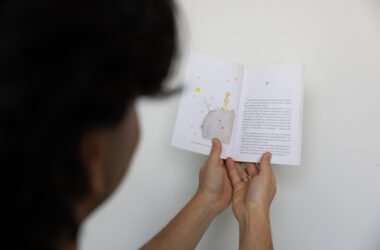
Happiness isn’t a formula—just ask The Little Prince

When an existential crisis knocks at your door, avoidance feels impossible. In such moments, finding meaning and addressing inner conflicts becomes urgent, even though it may be painful. In The Little Prince, Saint-Exupéry explores this search for meaning, teaching readers to view life through fresh, unclouded eyes, and to appreciate its unique beauty. The book has a lot to teach us in adopting a ‘new set of eyes,’ to cherish the preciousness of life. This lesson is especially relevant in today’s fast-paced, efficiency-driven Western societies—where disregarding emotions and feelings has become common, especially among overworked and over-achieving students at McGill.

Amid the weight of adulthood, there’s a need to recapture the openness and curiosity that children bring to the world, embracing life as something to be explored and appreciated rather than merely managed. In this way, we become creators of meaning in our lives, painting each day with renewed wonder.

To “see” is to observe, to notice, to take in. It is with your eyes that you first experience the world each morning as you wake, transitioning between the dream’s fog and tangible reality. Yet, surprisingly, our eyes are not always the best tool to truly perceive our surroundings. The Little Prince teaches us to look at the world through this “new set of eyes,” encouraging us to grasp the singularity and preciousness of life. So, why don’t we start by using the powerful human faculties Mother Earth gifted us to adopt a more holistic outlook?

Driven by a success-oriented mindset, many overlook their emotions, deeming them irrational or distracting from measurable achievements. However, they have the potential to reveal more about our inner workings if we’re open to listening. Sweaty palms betray the tension of an exam, a racing heartbeat reveals the thrill of a first date, and a shaking leg exposes the fear stirred by a horror film. Each of us carries around 10 million sensory receptors, constantly absorbing data about our inner and outer worlds. These signals are invaluable; they remind us to pay attention to the little things and align with our deeper selves. As The Little Prince teaches, noticing these subtle messages is a crucial step toward a more authentic and fulfilling existence. In essence, our body is constantly speaking to us, and true clarity lies in the mind’s willingness to listen. 

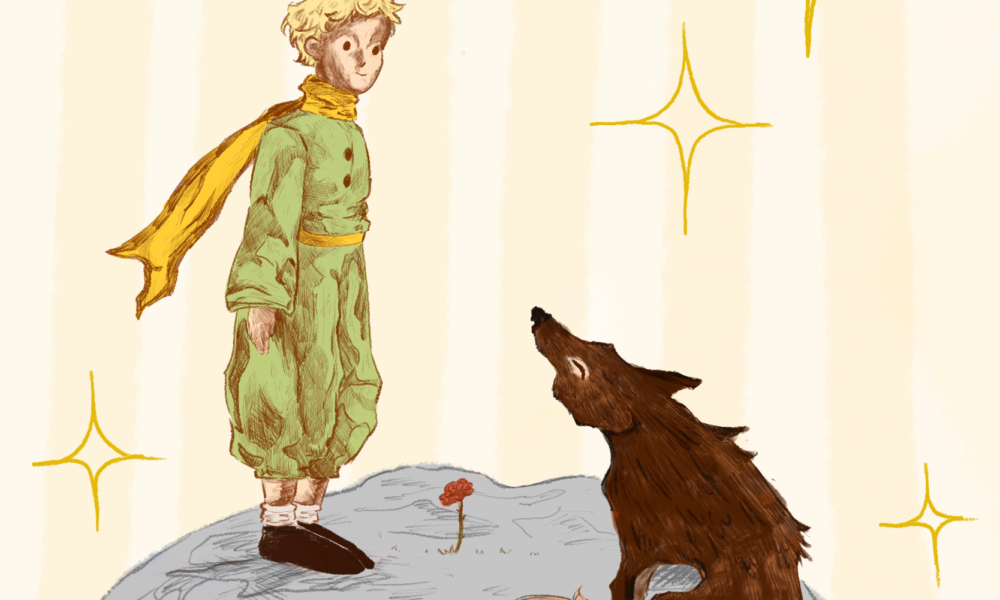
In The Little Prince, the wise fox teaches readers to explore the external world and their inner selves, though this enterprise requires time, patience, and commitment. Following the fox’s guidance, the Little Prince embarks on a transformative journey, prompting him to appreciate life to the fullest, as he comes to understand the beauty of his planet—beautiful because of its uniqueness. After comparing his life to that of a businessman and a lamplighter, who have been perverted by society’s vices, the Little Prince realizes he has nothing to envy. He has found true peace and fulfillment in his values and relationships with his friends: The fox, the rose, the volcanoes, and the nature on his planet, which he carefully nurtures. 

The Little Prince epitomizes the everyman—excited about the sight of sunsets and shaken by the existential dread of loneliness. In the modern age, adults and young adults have gotten too serious. There is an urgent need to leave condescension behind the door and learn from children’s clarity to view the world and appreciate each piece of it. From the Latin, exsistere—as in ‘existence’means to ‘come into being.’ On this account, life is a piece of art and you are the artist. No previous experience or fancy degree is required to build something meaningful in one’s own life. Worrying about the length of your LinkedIn or the prestigious schools you will attend will not help in your quest for meaning. True fulfillment results from one’s ability to appreciate the small details of everyday life and to treasure what one already has. Life is a canvas where no mistakes can occur, as we each live within our own universe, viewing the world through our unique prism of perception. 
Arts & Entertainment, Music

MJ Lenderman ushers the spirit of Asheville into Montreal’s Théâtre Fairmount

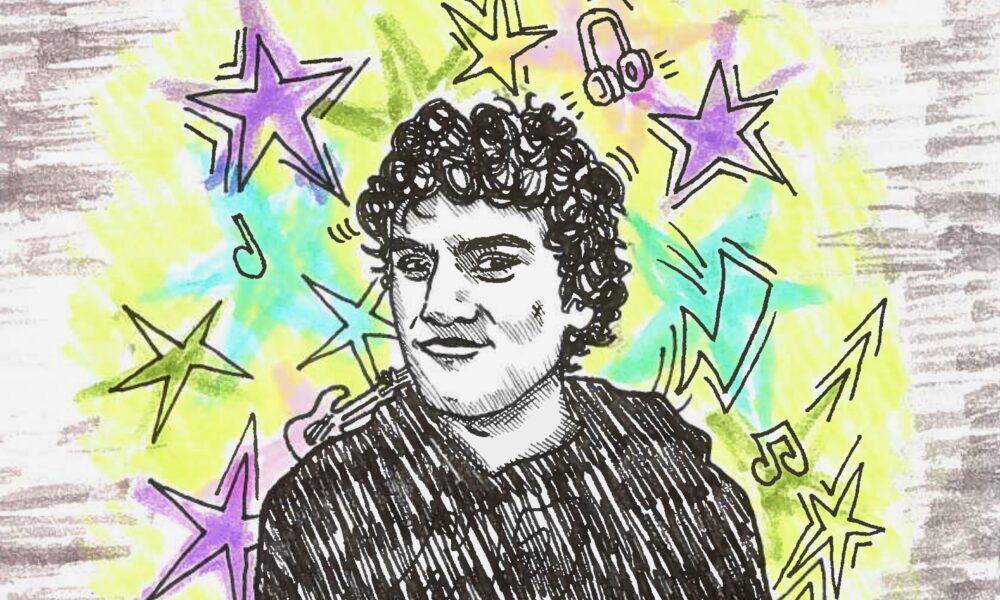
Whirring guitars pierce through the night, sloshing through the cramped crowd of Théâtre Fairmount. The amps engulf the room in a communication of riffs, a call-and-response of rhythmic strums with the scalding guitar whistles and twang of the pedal steel. As the audience returns lyrical chants to the stage, shock transforms the performers’ modest demeanours into a mix of shy charisma and humble fortitude. Sporting clogs and a pair of worn-out Levi’s, MJ Lenderman and his touring band, The Wind, took to the stage in effervescent fashion, riding the high of the venue’s vibrant energy.

On his first of three major tours in subsequent months, Lenderman played in Montreal on Oct. 21 in support of his recent record, Manning Fireworks. After its release and succeeding critical acclaim, Lenderman’s fame reached new heights, with many publications pronouncing him the second coming of the pure indie-rock genre. The record is undoubtedly characteristic of several seminal “alt-country” and “loner-rock” records of the early 2000s by the likes of Bill Callahan, Will Oldham, and David Berman, many of whom Lenderman has described as huge influences on his musical output. Manning Fireworks is a lesson in paying homage: His inspirations are apparent in the constructed soundscapes, yet the narratives presented throughout the record are uniquely fresh and unabashedly honest.

In his lyrics, Lenderman embraces the mundanity of the world, humourizing life’s most monotonous moments and embracing the boredom that existence has to offer. There’s art in elevating the unexpected—beauty in the absence of chaotic experience. Each song is an amalgamation of short anecdotes, grappling with the predictability of life in the unintentionally humourous American landscape. In “Joker Lips,” he confesses, “And you know I love my TV / But all I really wanna see / Is see you need me,” and in “You Don’t Know The Shape I’m In,” he recalls how “We sat under a half-mast McDonald’s flag.” His words carry a meta-recognition of the falsities of the American psyche and the emotions that plague a society so reliant on consumerism and corporate power structures. Lenderman’s tracks come across as honest documentations of America’s depravities and frank recollections of the modern world’s accidental absurdism. On “Rudolph,” he somehow describes accurately and emotively the feeling of helpless vulnerability with the comedic metaphor of a “Deleted scene of Lightning McQueen / Blacked out at full speed.”

His lyrics become more potent when considering the current landscape of loss in Lenderman’s hometown of Asheville, North Carolina. The shocking arrival of Hurricane Helene in late September destroyed homes and entire neighbourhoods as a result of mass flooding. Many figures in the Asheville music scene—including Lenderman’s other band Wednesday—have documented the displacement and devastation experienced by the city’s residents and called upon people across the country to donate to the city’s reconstruction. As a result, Lenderman cancelled several of the tour’s early stops. Lenderman informed the show’s audience of a new song he contributed to the compilation album Cardinals At The Window. With over one hundred participating musical artists, the record is only available through purchase, with its proceeds going to rebuilding Western North Carolina. Playing the new track, “Pianos,” Lenderman’s performance was a triumphant reassertion of Asheville’s musical spirit and the strength of its residents in the face of disaster.

The power of MJ Lenderman and The Wind as a musical unit is clear: They don’t play separate parts, but rather formulate a soundscape reliant on creative convergence and the synergy of their musical contributions. With every song, one could feel the immense joy emanating from each member; they were playing for themselves, yet their joy was undeniably contagious. 

MJ Lenderman’s music can be found on all music platforms.

Know Your Athlete, Sports

Know Your Athlete: Zach Bye

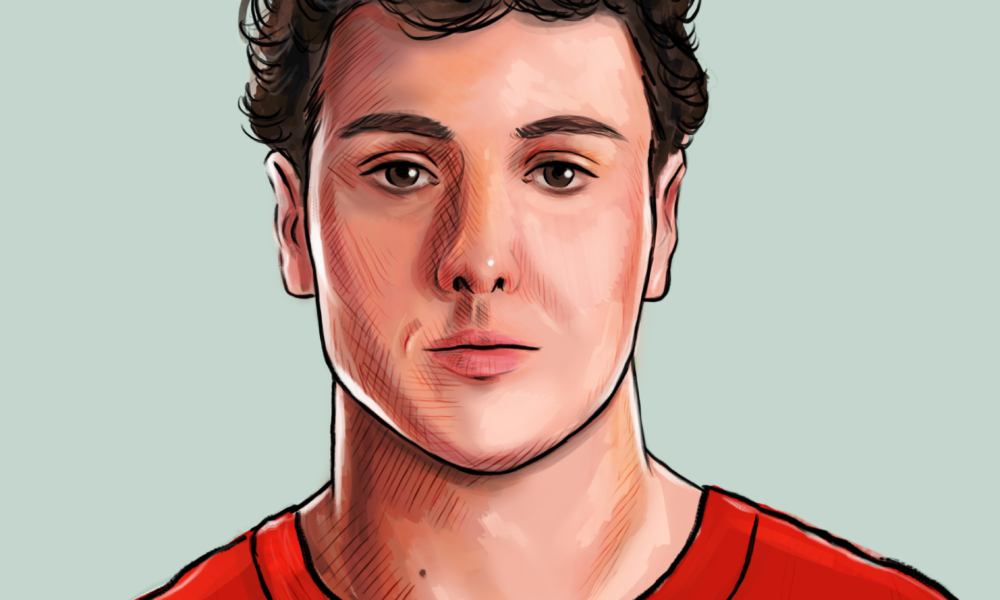
Zach Bye, a 21-year-old attacker for Redbirds Lacrosse, U0 Arts, has quickly made a name for himself in his first year at McGill. Hailing from Greenwich, Connecticut, Bye has started his McGill lacrosse career with a bang. The freshman has been named McGill Athlete of the Week twice this season and has been a driving force behind the team’s success this year.

Following in his grandfather’s footsteps, Bye began his career at the age of seven at Fox Lane Youth Lacrosse Club, later playing for The Hotchkiss School in Lakeville, Connecticut. He played both hockey and lacrosse throughout his youth but initially chose to focus on hockey after graduating high school. Before coming to McGill, Bye spent two years playing junior hockey in the North American Hockey League for the Amarillo Wranglers. Realizing his passion for lacrosse, Bye decided to return to his roots when he started university. The idea of getting back into the sport of his childhood was compelling, and he knew he had what it took to make it worthwhile. 

The transition to student life was a big adjustment for Bye, who hadn’t been in a classroom for two years. However, he explained to The Tribune that he has found the balance between academics and athletics manageable. 

“As long as you’re doing the right things, there’s a lot of time in the day,” Bye said. “Our coach is very understanding if you have class or something that overlaps with practice. He understands that school comes first and you’re here to be a student and an athlete. So that makes the whole thing a lot easier.”

On the field, Bye is a standout performer. He leads the league in goals this season with a remarkable total of 29 goals scored and has been instrumental to the Redbirds’ success in the conference, with the team currently 10–0–0. Looking ahead to their qualifier game against Bishop’s University on Oct. 26, Bye has high hopes that the team will secure a spot in the semis. 

“We’re feeling confident. We’re a good team and have been strong all season, but we know that we’ve had a close game with Bishops earlier in the season—we won by one goal,” Bye said. “I think even though they’re in sixth and we’re in first, we know that the gap isn’t that wide, so we have to be ready to go all out to fight for a spot in that semifinal.”

All in all, Bye’s confidence paid off, as the Redbirds stormed over their opposition in a convincing 19-5 victory against Bishops on Sunday afternoon. 

Beyond his on-field accomplishments, Bye is known for his positive attitude and team spirit. Commenting on the difference between playing high-level hockey and lacrosse at the Varsity level, Bye explained the sense of camaraderie on his new team has changed his perspective on university sports. 

“[The team] is one of the tightest groups I’ve been around. I think it’s definitely different playing a sport at university than just another team. Like, obviously, you want to represent the team, but when you’re representing a school it’s more exciting because it’s a whole student body, rather than just your teammates, that you put on your shoulders,” Bye said.

As Bye looks ahead to the future, he hopes to continue playing lacrosse for as long as possible. With three years of eligibility remaining, he has plenty of time to make an even greater impact on the McGill lacrosse program. He believes that the team’s freshman class has what it takes to bring success to the program in years to come.

Given his hiatus from lacrosse to pursue high-level hockey, Bye has faced challenges and ridden the highs and lows of competitive sport. Returning to lacrosse so successfully was no small feat. Bye spoke about his approach to maintaining a consistently high level of performance at the university level. 

“My advice to the younger players, and players that want to get into varsity sports, would be: If you put in time and effort every day, it is compounding,” Bye said. “I’ve had success this year, even though I’ve spent time away from the sport. It sounds cliché, but like it really just is down to how often you’re playing your sport and how badly you want it.”

Editorial, Opinion

Selective storytelling sanitizes genocide

American news network CNN has sparked outrage over its recent article focusing on Israeli soldiers’ experiences of trauma and suicide risk after their deployment to Gaza. Critics argue it whitewashes perpetrators of violence while minimizing Palestinian suffering in an attempt to generate sympathy for the aggressors. The article’s framing is emblematic of western media coverage that perpetuates the dehumanization of Palestinians while manufacturing empathy for those committing heinous war crimes against them. 

The piece details how a former Israeli Defense Force (IDF) soldier can no longer eat meat because it reminds him of the bodies he crushed with a bulldozer in Gaza, sadistically equating Palestinians to animals. While the original article included trigger warnings for mentions of suicide and PTSD, editors notably omitted any warning about the graphic description of violence against Palestinians.

It is only in a world where Palestinian lives are dehumanized, reduced to mere numbers and statistics, that their genocide becomes normalized. The fact that an IDF soldier’s trauma, which resulted from his conscious choice to bulldoze civilians, garners more concern than the innocent lives taken by war criminals, demonstrates how irresponsible journalism like CNN’s has the power to desensitize its audiences to Palestinian suffering.

Such reporting represents a fundamental neglect of journalistic responsibility. When globally influential news organizations choose to give authority to those participating in genocide while rendering their victims invisible, they become complicit in the sanitization of state-sanctioned violence. Avoiding the explicit term genocide in this article about violence in Gaza fails to accurately inform and provide context for readers, given that Israel’s actions in Gaza fit the legal definition of genocide, and international human rights organizations have categorized it as such. CNN’s article does not attempt to represent both sides—it is a conscious editorial decision to frame war crimes through the perspective of their perpetrators.

As Israel continues its deadly military campaign in Gaza, Lebanon, and Iran, mainstream media’s persistent negligence to adequately cover Israel’s abominable actions forces Palestinian journalists to risk their lives documenting their own ethnic cleansing. From denying journalists access to Gaza, killing and targeting Palestinian journalists, and propaganda campaigns, Israel has deliberately presented innumerable challenges to responsible reporting. Yet these obstacles do not excuse the mainstream media’s failure to amplify Palestinian voices and explicitly call out Israel for its crimes against humanity.

Media institutions must aim for equitable and accurate coverage that tells the stories of the oppressed and speaks truth to power. This means recognizing that the trauma IDF soldiers face stems from the disproportionate violence and brutalization they actively choose to commit on Palestinians. Responsible journalism does not mean creating false equivalencies of suffering when the weight of truth is clear. It requires the courage to name genocide for what it is, to challenge systems of oppression rather than amplify them, and to recognize that objectivity in the face of atrocity serves only to protect the perpetrators.

When we passively consume media that sympathizes with oppressors while disregarding the victims of their violence, we, too, become complicit in the devaluation of Palestinian lives. Critical engagement requires questioning why certain stories dominate headlines while others are disregarded, and examining which perspectives are granted authority and which are systematically silenced. Readers must challenge institutions––including McGill University— that claim to inform while serving as mouthpieces for state violence.This means actively amplifying voices from communities most impacted by violence, supporting independent Palestinian journalists who courageously document horrific realities, and sharing these perspectives with those misled by mainstream narratives. It means holding powerful media outlets like CNN accountable, and demanding equitable coverage that humanizes Palestinians rather than reducing their reality to a statistic on a screen. Through alternative media, campus organizing, and academic discourse, we have a collective responsibility to forge spaces for Palestinian narratives that mainstream outlets continue to suppress.

McGill, News

Superior Court rejects McGill’s injunction request to extend restrictions on campus protests

On Oct. 21, the Superior Court of Québec dismissed McGill’s provisionary injunction request to limit protest activities on campus. The request came after the university successfully obtained a 10-day injunction barring campus demonstrations under specific conditions following a protest on Oct. 7. 

McGill and Concordia students organized this protest to demand their institutions divest from companies complicit in the genocide of Palestinians. The Oct. 7 rally ended when police used tear gas on protestors, some of whom smashed the windows of the Sylvan Adams Sports Science Institute on Avenue des Pins. McGill also restricted access to campus from Oct. 5-7 in anticipation of Oct. 7 protests, and later extended these restrictions through Oct. 8.

Like the 10-day injunction, McGill’s injunction request named Students for Palestine’s Honour and Resistance (SPHR) at McGill as the defendant. The injunction request aimed to extend the same measures put in place with the 10-day injunction, which banned SPHR and “any person having knowledge of or having received service of the judgment” from actions such as obstructing entrances to buildings on campus, protesting within five metres of campus buildings, and disrupting academic activities.

The hearing for the injunction request took place on Oct. 18, the same day that the 10-day injunction expired. In the ruling, Justice Gary Morrison wrote that he dismissed the request because McGill had not shown that SPHR’s past activities, such as its demonstrations, demanded an urgent need for the injunction. 

In an email to The Tribune, the McGill Media Relations Office (MRO) explained that the university submitted the injunction request to “protect its academic mission and to defend students’ and instructors’ right to learn and work in an environment that is safe, stable, and suitable for teaching, learning, and research.” 

A representative from SPHR, who wished to remain unnamed, argued that this injunction is one of several legal actions that McGill has filed against student activists protesting Israel’s attacks on Palestine and Lebanon. As an example, they cited the injunction the university filed in May requesting the removal of the Palestine Solidarity Encampment.

“This isn’t the first time that McGill has [filed an] injunction against the students,” they said. “This shows that the protests are affecting McGill and are working [….] So it’s more motivating than anything.”

As SPHR did not attend the hearing, Justice Morrison allowed four organizations to act as intervening parties in the case: Independent Jewish Voices (IJV) McGill, the Association of McGill Professors of Education (AMPE), the Association of McGill Professors of the Faculty of Arts (AMPFA), and Palestinian and Jewish Unity

Associate Professor in the Faculty of Education and Interim President of AMPE, Dennis Wendt, told The Tribune that the union chose to be an intervening party because the injunction could restrict the union’s right to protest. 

“Given the injunction’s broad scope to include anyone aware of the decision, we were concerned about a precedent […] of clawing away at actions pertaining to protests or picketing […] that unions or other groups would be involved with,” Wendt wrote.

Kyle Kubler, Interim Second Vice-President of AMPFA and Faculty Lecturer at the McGill Writing Centre, expressed concern that the injunction could act as a way for the university to control the actions of those on campus.

“We’re worried about the type of precedent this behaviour could create where McGill simply turns to injunctions rather than dialogue to deal with dissent, be it from students, faculty, staff or the public,” Kubler wrote. 

Kubler went on to claim that by banning protests within five metres of campus buildings, the injunction would also interfere with the union’s right to safely protest outside of their workplace. According to Kubler, this rule would mean some instructors—such as those working in Sherbrooke 680, like himself—would be forced to stand in the street rather than demonstrate on the sidewalk.

The MRO maintained that the 10-day injunction did not violate staff and students’ rights to freedom of speech or freedom of assembly, and that McGill supports community members’ rights “within the limits of the university’s policies and the law.”

For the SPHR representative, the court’s decision is a “victory” for the student movement for Palestine. They reaffirmed that SPHR would continue to pressure McGill to cut financial and academic ties with Israel.

“It’s […] a really great time for the student movement to keep pushing for their goals of [ending] their academic institutions’ complicity in the genocide in Gaza.”

Chill Thrills, McGill Recommendations, Student Life

Halloween costumes on a budget

Whether you’ve partied over the past weekend, are about to start a bender on Thursday, or just want to dress up at home, costumes are at the heart of Halloween celebrations. This is your sign to not be intimidated by the planners of our world—those who’ve had their outfits ready since last Halloween—and to embrace creative solutions. The following recommendations for costumes on a budget are not only cheap, but also trendy and easy to put together last minute!

Search for inspiration

Thanks to the internet, there are endless sources of costume inspiration for Halloween. Searching for “DIY halloween costumes” on Pinterest is an easy way to get started. Thousands of photos are available and often more relevant than what you’d find through a simple Google search. When you find something you like, the algorithm will look for similar pins to explore. A costume can be anything you want it to be! Some good places to start are your favourite characters from movies, singers in iconic tour outfits, and even inanimate objects. Gone are the days of needing your choice to be recognized—Halloween is all about enjoying yourself. If you want to go as a jar of pickles, nothing’s stopping you.

Look into your closet

Now that you have an idea of what you want to dress up as, it’s time to take inventory. Before heading to your nearest Spirit Halloween, take a look at your own clothes. If historical accuracy is not a problem for you, then substituting in a shirt or an accessory that’s a few shades off-model is an easy way to save money. It’s a good idea to ask any friends for items as well—just make sure to return it vomit-free afterwards. If your wardrobe is looking a little bare, be on the lookout for clothing swaps, where you can exchange second-hand outfits, or dig through the closet of a generous friend. Additionally, going to a thrift store and checking their seasonal aisle is a budget-friendly alternative. Also, if you’re going to buy a piece of clothing you know you’ll only wear once, try to donate these items once Halloweekend is over.

Get creative

To elevate your everyday clothes to fantastical levels, try a bit of arts and crafts. Do-it-yourself projects do not have to be time-consuming, complicated, or permanent. A few pieces of masking tape can last you throughout the night, and the next morning your clothes will return to normal. With just some scissors, markers, and a basic sewing kit, you can make virtually anything. Plus, it’s always nice to get a compliment on a costume and be able to say you made it yourself!

Don’t be afraid to reach out to friends: The only thing more fun than making costumes is making costumes with friends. If your make-up skills are not up to par, you might know someone who’s eager to test their special effects skills on you. You can even turn a somewhat tedious task into a fun get-together. Just buy masquerade masks from the dollar store and form your troupe of black swans, jesters, or musketeers! 

Some ideas to get you started

Here are some costume ideas you need to try this year:

  • Art, Tashi, and Patrick from Challengers (2024): All of the characters in this film wear pretty normal clothes. If you own a tennis racket, it’ll be pretty easy to dress up as any of the three. This goes for any sports-related costumes: Props are your best friend.
  • Olympic breakdancer: All you need to embody your inner Raygun is a fully green outfit and some confidence. The best part about this costume? You can test out some crazy dance moves and say it’s all in character.

Post-ironic Brat: It’s time to accept that while brat summer is over, brat autumn has just begun. In fact, brat will never end. Between remix albums and world tours, maybe we all need to pick up a sharpie and a neon green shirt this Halloween. The good thing about brat shirts is that you can write whatever costume you wish you’d bought; just make sure it’s in a lower case font.

Student Life

How to support your American friends as the presidential election looms

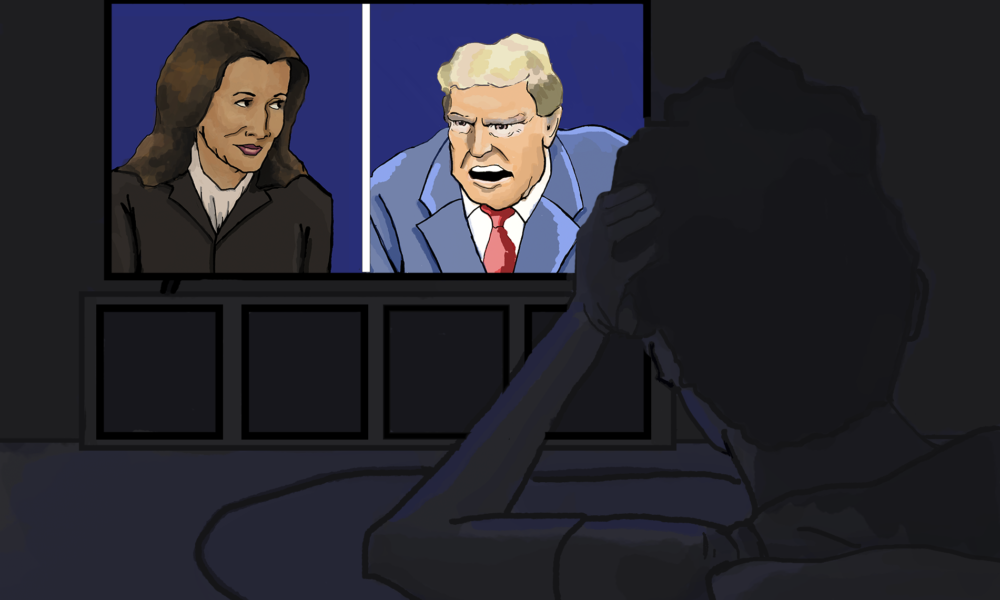
As Election Tuesday approaches, it’s likely to be a tense week for our neighbours to the south. Here’s some advice from a concerned American to help you look out for your friends from the States. 

Check in about their plans for election night

With months of build-up, no clear polling data, and incredibly high stakes, Tuesday, Nov. 5 is likely to be one of the most stressful political days of the year for anyone with a vested interest in the U.S. government. Everyone deals with this in their own way: Some will likely be passing out drunk on the couch at an election watch party, some will be anxiously checking their phones every five minutes while pretending to study, and some will be trying to distract themselves any way they can. Whatever they’re up to, it can be a nice gesture to check in on your American friends to see if they’d like company, support, or a distraction. 

Take a quick break from complaining about Justin Trudeau

Look, we know you’re not a fan of him. We know about the blackface, his inability to say “LGBTQ,” and that his dad has an airport named after him. But honestly, compared to what Americans are dealing with, anyone who can speak in coherent sentences is looking pretty good right about now. 

Look into their local elections

During presidential election years, the race for the top spot usually gets all of the attention, but there are also many crucial elections happening at both the state and local levels. If you know what state or city your friend is from, look up what additional items are on their ballot using websites like vote411.org, or ballotpedia.org for more information on specific measures. Depending on the state, there may be important races for governor, senate, or state legislature. There are also often referendum questions on topics like the legalization of marijuana, abortion rights, and school funding. Familiarizing yourself with some of these ballot items can go a long way towards showing you care—and understanding what exactly your American friends are so stressed out about this week. 

Know the swing states

While every American is affected by the outcome of the presidential race, the election-night experience can be very different depending on whether your state is solidly blue, solidly red, or up in the air. If your friend is from Pennsylvania, Georgia, North Carolina, Michigan, Arizona, Wisconsin, or Nevada, their races are still well and truly considered toss-ups, and their results will have a disproportionate impact on the national outcome. 

Help them out with Wednesday classes

Votes will be tallied well into the evening on Tuesday, so if your friends are staying up to see the final results, it may be a late night. And depending on the outcome, they may not be feeling very motivated to attend class the next morning either. If you share a Wednesday-morning course with an American, it might be helpful to send them your notes or an audio recording of the lecture. 

FAQ: Addressing some common questions so your American friends don’t have to

Are you going to vote?

While voting is a crucial part of living in a democracy, and many American citizens living abroad are eligible to vote in state and federal elections, at this point it’s too late to start the process of requesting an absentee ballot for many states, and any Americans who haven’t voted are likely feeling guilty about it, so no need to rub salt in the wound. 

Do you think you’re gonna move back to the U.S. after you graduate?

They still have no idea. At the very least, you should probably wait until a couple of weeks after Nov. 5 to start asking again. 

Have you seen the results?!

Yes. They have.

Arts & Entertainment, Music

‘Hearing Things’ is a lighthouse for the future of music journalism

In January 2024, magazine conglomerate Condé Nast announced that it would be folding Pitchfork, a music coverage site, into Gentlemen’s Quarterly (GQ), resulting in mass layoffs for the site. This sparked outrage for fellow journalists and readers alike—along with concerns for the future stability of cultural journalism. On Oct. 15, over 10 months later, this story received a surprisingly optimistic update: Five of the former Pitchfork writers have started their own publication, Hearing Things, a worker-owned music coverage site focused on making quality music journalism accessible. 

“An antidote to the information overload that has poisoned the internet, we’re a destination for curated and considered music journalism,” the team told online music publication Resident Advisor (RA) in an article announcing the launch of the site. 

From the outset, the Hearing Things team is prioritizing diversity, both in regards to the music that they choose to cover and the voices that cover it. The public frustration for the layoffs at Pitchfork was twofold: There were large attempts to add more women staff  staff at both the writing and editorial levels over the past decade. This made the layoffs especially frustrating considering that many of the people fired were women, and the website was being folded into a men’s magazine.

Jill Mapes—former Features Editor at Pitchfork and current Hearing Things founding member—  was fired in the mass layoffs from Pitchfork in February 2024. She took to X (formerly Twitter) to share her frustration:

“I’ve referred to my job at pitchfork as being on a ferris wheel at closing time, just waiting for them to yank me down. after nearly 8 yrs, mass layoffs got me. glad we could spend that time trying to make it a less dude-ish place just for GQ to end up at the helm,” Mapes wrote.

Hearing Things wanted to directly address gender marginalization within the workplace while constructing the new publication. On their website, they write about how when streaming was introduced, it promised to be a mass democratization of music. It has instead promoted a more monotonous, algorithmic consumption that leads to a lack of diversity in both the artists doing the creating and the genres they’re working within. 

In an era of algorithmic music consumption, journalism and criticism are some of the only tools of mass media to combat artificial uniformity. Criticism allows us to challenge our opinions on the things we love—and exposes us to new artists, genres, and ways of thinking about them.

As a worker-owned publication, Hearing Things prioritizes labour equity within an industry that is often incredibly exploitative towards its employees, while also granting journalists more creative control. 

On their website, the team writes that they hope to bring an unfiltered look to the work that they review, as well as—occasionally—a more casual tone. By letting their opinions loose and writing in a more approachable manner, they aim to build real trust with their new audience and pull in new readers who might have not previously engaged with art criticism.

Currently, the website’s content is free to view, but readers have the option of subscribing for as little as $7 USD /month or up to $1000 USD/year. This “patron” tier system is designed in the hopes of keeping the writing open and accessible to everyone while still adequately compensating workers. 

It’s exciting to see the ways in which highly creative writers can adapt to publishing in the modern landscape. Whether working with or against social media conversations about music, these five writers have found a way to continue doing what they love while making space for the next generation of journalists to come.

All Things Academic, McGill Recommendations, Student Life

How do we escape our phone during midterms?

While the end of October highlights the traditional joys of the fall season, such as Halloween and pumpkin-spice lattes, it also stands as a gruelling reminder of midterm season. Given the anxiety and stress that can easily wash over us during exams, we tend to gravitate to our phones as a temporary distraction from these negative emotions. Yet when we browse through feeds, messages, or media platforms, we’re all aware—whether we admit it or not—that doomscrolling only digs us deeper into a hole.

Fortunately, this shared experience has inspired many students around campus to find different approaches to staying focused. Olive Bohdanowycz, U1 Arts, discussed how she manages her school work while being mindful of her screen time, sharing her personal strategies for different study locations. 

“When I’m at Schulich or McLennan, I normally use the phone lock machines to completely remove myself from my phone’s distractions. When I’m at home though, I just rely on DND [do-not-disturb] to silence everything,” Bohdanowycz said. 

In addition to the basic do-not-disturb function, many phones now have versatile personal, work, and sleep modes allowing you to customize which specific apps you receive notifications from. Setting these precise restrictions on your phone can improve self-discipline and help prevent procrastination.  

Daphne Barrett, U1 Arts, also found success with limiting access to her phone. Along with adopting similar do-not-disturb approaches to Bohdanowycz, she used strategies that relied on other people to get involved with her personal screen time limitations. 

“I’ll either have one of my friends or housemates take my phone away, or set timers so I can see how much work I’ve done without my phone,” she explained. “It’s motivating to see my time and track my hours of studying.” 

Through methods like this, Barrett was able to balance effective studying habits with a feeling of satisfaction and progress, specifically through her timer strategy. This approach of transforming screen time restrictions into a motivating process seemed to be effective and popular with many other students as well. 

Juan Garnica, U2 Desautels, mentioned apps that use similar tactics as a motivating tool. For instance, Flora is an app that plants a virtual tree for a set duration of study time. When the timer runs out, the tree appears fully grown in your virtual garden. He explained how closing the Flora app kills your tree, forcing you to restart the process. 

“Seeing that I’ll kill my tree makes me think twice if I really want to go on my screen. It is a way to make me realize my priorities,” Garnica said.

Like Barrett, Garnica uses this app to stay focused on his work by reducing distractions and using the virtual trees as a motivating reward. Turning focused work and studying into a game is an ideal way to get through difficult tasks. 

On the other hand, Shirley Tu, U2 Arts, tries to avoid their phone entirely whenever possible.  

“Usually when I’m listening to music, I try to always connect my headphones to my laptop instead of my phone so if I’m changing the song or volume, I’m not distracted by any notifications or feel the need to look at other apps,” Tu said. 

Using an alternative device like a computer, which lacks the disruptive qualities of phones such as constant sporadic alerts and the ease of getting lost in distractions, can be effective for staying on task. While we may try to justify constantly having our phones close by to listen to music or keep up with text messages or other vital alerts, Shirley’s method shows that it is possible to do these things without a phone. 

While simply silencing their phone may be enough for some, others might need to find alternatives to fight the urge to scroll and keep themselves focused on school. Whether you use a screen time regulation app or completely remove your phone from the equation, these insights can help us develop strategies for balancing work and phone usage. By locking up our phones, we can unlock our full study potential to achieve a successful midterm season.

McGill, News

QPIRG Radical Walking Tour explores Milton-Parc and McGill through a critical lens

On Oct. 21, organizers with the Quebec Public Interest Research Group at McGill (QPIRG) hosted a Radical Walking Tour, stopping multiple times along Avenue du Parc, Avenue des Pins, and on McGill campus to offer a critical presentation of both the university and the Milton-Parc neighbourhood. QPIRG is a student-run collective that seeks to engage students with the Montreal community and with social justice issues.

The Radical Walking Tour is one of the many events of Culture Shock, QPIRG’s annual free fall programming series on “anti-racism, migrant justice, and Indigenous solidarity.” The Students’ Society of McGill University (SSMU) also provides organizational support for the event series.

The tour began at QPIRG McGill’s Office and Alternative Library, which shares a space with the headquarters of the Milton-Parc Citizens’ Committee, a grassroots collective working to preserve the neighbourhood’s spaces and its residents’ rights. Carl Bystram, Working Groups and Community Research Coordinator at QPIRG, spoke to the importance of showing McGill community members the history of the neighbourhood.

“We find that situating people in the wider community around Milton-Parc and explaining the struggles that have happened here, as well as the broader struggles around McGill […] really fits in well within the Culture Shock agenda,” they said.

This site of intergenerational community and collaboration set the stage for the first half of the walking tour, which focused on the activist history and ongoing projects in the Milton-Parc community. The tour’s speakers described Communauté Milton Parc (CMP), the largest co-operative development (co-op) in North America, housing over 1,000 low- and moderate-income individuals in its 616 residential units. The tour guides explained how the CMP substitutes the conventional system of landlords charging rent for profit with a participatory housing arrangement, where residents support building maintenance and governance to cut down on rent-related costs for tenants. Further, the tour stopped at Co-op Bar Milton-Parc, a separate co-op that occupies commercial space from the CMP and acts as a bar and a solidarity space for community events.

Other Milton Parc resources spotlighted throughout the tour included food bank programs such as St. John’s Lutheran Church, Santropol Roulant, the Climate Justice Hub, and independent social-justice publisher Black Rose Books. The tour then moved onto McGill campus, starting at the Sylvan Adams Sports Science Institute (SASSI)—a construction project commenced in 2022 upon a donation of $29 million CAD from billionaire Sylvan Adams.  

Speakers on the tour criticized McGill’s choice to partner with Tel Aviv University on the SASSI project due to its development of Israel’s genocidal killing of Palestinians and the Dahiya doctrine for bombing civilian infrastructure. 

McGill’s Media Relations Office (MRO) did not provide comment to The Tribune on McGill’s partnership with Tel Aviv University.

The Radical Walking Tour continued by passing the New Vic Project site. There, speakers discussed the MK-ULTRA experiments which took place at the site in the 1950s and 1960s—a project where the CIA performed research on mind control and brainwashing techniques on unconsenting patients, many of whom were Indigenous. Speakers went on to highlight McGill’s ongoing legal battle with the Kanien’kehá:ka Kahnistensera (Mohawk Mothers) to search for unmarked graves they believe are on the grounds.

The tour concluded by pointing out sites on campus where student demonstrations have transpired, including the Bronfman Building—which students blocked on Feb. 22 to call for McGill to cut ties with Israel—and the spot where a statue of James McGill stood until July 2021, which students had long demanded to be removed.

The MRO affirmed the university’s commitment to social justice in light of founder James McGill’s enslavement of Black and Indigenous peoples and participation in the transatlantic slave trade.

“In the 200 years since its establishment, McGill University has evolved to become a world-class institution of higher education marked by pluralism and diversity,” the MRO wrote in a statement to The Tribune.

For SSMU Vice-President External Affairs Hugo-Victor Solomon, the tour’s focus on lived experiences beyond McGill promotes important avenues for community development.
“By participating in Culture Shock, we’re extending the invitation to SSMU membership at large to […] make connections that they wouldn’t otherwise make, and to be sensitized to issues that may really resonate with them that they haven’t had the chance to learn about yet,” Solomon said in an interview with The Tribune.

Read the latest issue

Read the latest issue