

Latest News

McGill, News

McGill no longer subsidizing French classes

After several years of subsidizing French as a Second Language class fees for international students, McGill has determined that it can no longer afford to offer the program at such a low cost.

Last spring, the university decided that it would raise international tuition rates for FRSL classes in to improve McGill’s severe deficit.

According to Students’ Society Vice-President University Affairs Joshua Abaki, the Ministry of Education subsidized the fees which allowed international students to pay Quebec tuition rates for French classes at McGill until 2008.

“When [the Ministry of Education] stopped providing that subsidy because of deregulation of international tuition, McGill still continued enabling international students to pay Quebec rates,” he said.

The lower tuition rates were offered as part of the Principal’s Task Force on Diversity, Excellence and Community Engagement’s policy of encouraging international students to learn French and better assimilate into the Montreal community. After the Ministry of Education stopped subsidizing the fees, McGill continued to offer the lower tuition rates, but has since decided that this is no longer possible.

“The university is severely underfunded,” said Deputy Provost (Student Life and Learning) Morton Mendelson. “It simply cannot afford to deliver services like this for free.”

The change has raised concerns about the way it was adopted and the time frame for notifying students.

“Normally [McGill] does such a good job of telling the students [about fee increases], and they always give students enough time to plan ahead,” Abaki said. “This time that wasn’t done.”

Mendelson, however, said the university made numerous attempts to let affected students know of the tuition increase for FRSL classes.

“Websites were updated in early April to convey this information to students and an email was sent to students registered in the courses in order to give them enough time to change their programs, if they wanted to, without penalty,” he said. “For the summer term, students who were newly registered for the programs were notified in early May.”

Abaki maintained that students were not realistically given enough time to “actually plan ahead and budget.”

Abaki also pointed out that the fee increase schedule has been pushed back for graduate students, giving them more time to take FRSL classes with lower fees.

Ryan Hughes, VP external of the Post-Graduate Students’ Society of McGill Univeristy, explained that graduate students were not informed of the fee increase until September 1 2010, so the administration did not increase these fees for the fall.

“The waiving of fees for the Fall semester was not [the PGSS’s] doing,” he said.

Hughes added that although graduate students have had more time to prepare for the changes, he is unhappy with McGill’s decision.

“I find these increases problematic considering our diverse student population and their ability to both comfortably perform at McGill and appreciate the vibrant culture of Montreal,” said Hughes. “Obviously McGill is trying to balance the budget and of course, we are in hard economic times, but what the administration is doing is extremely short-sighted.”

The issue will be addressed at Wednesday’s Senate meeting, and Abaki is hoping a resolution can be reached so that McGill can make a commitment to provide all students the opportunity to enroll in FRSL courses if so inclined.

“If that means setting aside a lot of money raised from tuition for financial aid specifically for those courses, that would definitely help the situation,” Abaki said.

“Of course another thing would be to consider postponing the tuition increases maybe until the winter semester, or until next year, just so that students have enough time to plan ahead,” he added.

“Charging tuition that we must, and which we are entitled to charge, shouldn’t be seen as a lack of support for international students who are trying to engage more fully with the Quebec community and society,” Mendelson said. “We do, of course, try to help students who find themselves in financial need and in this case students were invited to contact the Scholarships and Student Aid Office if they needed help.”


Montreal, News

Bat found with rabies

A deceased bat found September 10 at the corner of Sherbrooke and McGill College has tested positive for rabies, according to Montreal public health officials.

Officials are looking for anyone whom the bat may have scratched or bitten. One person was bitten while trying to put the bat in a box, La Presse reported Friday, and officials have urged anyone else who may have been in contact with the animal to seek medical assistance or examination, even if they have no visible symptoms of rabbies.

“In the case of a bat, [the] bite can be very small and not cause you concern,” said a notice from the Montreal Public Health Department.

Rabies is transmitted when infected saliva enters the bloodstream, which can take place through an open cut, the mouth, or the nose. If left untreated, rabies is fatal, but an infection can be treated easily within the first 21 to 90 days of initial contact.

According to the Gazette, the bat was captured and taken to the Biodome for analysis. Last week, test results were issued indicating that the bat was carrying rabies.

Most of Montreal’s bat population is harmless, while only a small percentage are rabid, according to the Gazette. In 2000, a Quebec resident died after being bitten by an infected bat. Although deaths in North America are rare, 50,000 people die of rabies each year around the world.

Officials have posted warnings around the McGill campus, and are asking people with information or questions to call Info-Santé at 811 or McGill Health Services at 514-398-6017.

News

Lunchtime science

Gabriela Gilmour
Gabriela Gilmour

For McGill students, Midnight Kitchen is usually the best bet for snagging a free lunch on campus. But for one week at the beginning of each semester, Soup and Science edges out the vegan cooperative, offering free soup, sandwiches, and lectures by some of McGill’s brightest young professors.

The idea behind Soup and Science, said Faculty of Science Dean Martin Grant, originated several years ago when McGill was in the midst of a hiring boom.

“We hired so well and so fast that we lost track of who everybody was,” Grant said.

As the university hired dozens of new professors each year, various departments held mixers in which scientists would briefly explain their research over wine and cheese or, less traditionally, cookies and beer. About five years ago, those informal discussions grew into Soup and Science, which celebrated its 10th anniversary last week.

Every day for a week, four or five recently hired McGill professors address a packed house of undergraduates—and a few graduate students—in the Redpath Museum’s auditorium. Each professor has three minutes to explain his or her research, after which professors and students line up for soup and sandwiches in the museum’s lobby.

Fitting several years’ worth of research into three minutes is a tremendous feat of concision, which each scientist approached it differently at last week’s event.

Christopher Barrett, a charismatic chemist who researches new ways to mimic organic phenomena, spoke rapidly, giving several examples of the kind of natural phenomena from that inspires scientists—everything from seashells to spiders.

“You want to see the world’s best solar cell?” he asked. “Go take a walk in the woods.”

Barrett is currently working on mimicking one of nature’s least appealing substances: mucous. Human bodies, he said in his brief lecture, often reject artificial organ transplants because of the devices’ unfamiliar metal surfaces. His lab is working to create a synthetic mucous with which doctors can coat such organs.

After the presentations, Grant asked students in the audience technical questions about the information the scientists had just breathlessly spewed. When a student got an answer right, Grant lobbed a rolled-up Soup and Science t-shirt to the lucky undergraduate.

As they slurped soup after the presentations, many undergraduates stood in small semicircles around the professors who had spoken, asking questions about their research.

Getting more undergraduates involved in research is a major goal of Soup and Science, said Victor Chisholm, the Faculty of Science’s undergraduate research coordinator, who has run Soup and Science since its inception. Because most of the scientists who speak are fairly new to McGill, they are also more likely to need help in their labs.

Undergraduate interest in research has picked up since the event began, Chisholm said. “In the last year or two, I’ve got more questions from students about research, even [those] in U0,” he said.

Many students who attended were enthusiastic about spending their lunch hour listening to the scientists’ presentations.

“It’s been absolutely wonderful—probably just one notch below Frosh,” said Alex Geller, a U1 microbiology and immunology student who went twice last week.

Geller, who works in Donald Sheppard’s microbiology lab on campus, said Soup and Science can help undergraduates feel comfortable approaching their professors.

“This sort of bridges the gap between being a student and doing research,” he said.

Students aren’t the only ones who hold Soup and Science in high regard, though. At the end of his presentation, Barrett grinned.

“I learn a lot from these things, too,” he said with a laugh.

News

AUS VP Events Londe steps down

Arts Undergraduate Society Vice-President Events Nampande Londe resigned her position on Tuesday, citing personal reasons.

Londe had recently come under fire for allowing Arts Frosh to run a budget deficit and faced the possibility that AUS Council would impeach her. But she and AUS President Dave Marshall denied that this was the reason for her resignation.

“Confusion has come out of all this, at least the perception is that she resigned as a result of this unfortunate deficit,” Marshall said. “[But] she’s no longer a student at McGill, so she is ineligible to be the vice-president events and she had to resign.”

Marshall also denied that the AUS was planning to impeach Londe, although the decision to do so was ultimately in the hands of AUS Council.

“Right off the bat, even though, of course, as a body we were discussing a variety of different ways of taking responsibility for this, there was no plan to go ahead with an impeachment,” Marshall said.

Londe, on the other hand, never considered resigning, but conceeded that impeachment did cross her mind after AUS realized Frosh had run a deficit.

“I stood by what we did, you impeach someone because they do something unlawful, wrong, or unethical,” she said. “There was nothing unethical about opening up Frosh to more kids or restricting it to first years in the Faculty of Arts. It was a risk that we took in consultation with the Frosh coordinators.”

AUS executives first became aware of the deficit in the aftermath of Frosh. The event, they said, did not actually run over budget. Instead not enough first-years registered for the event to break even.

“From all the information that we had there was no reason to predict that it was not going to work,” she said. “[What went wrong] in my opinion was mostly that we had a stricter policy regarding who was allowed to register.”

In addition, Londe explained that there are no institutionalized procedure within AUS regarding the way budgets are done, and how records are kept to make sure information is passed on to future years.

“It seems that in previous years there was just this sort of idea that it didn’t matter which events were over budget so long as at the end of the year they broke even,” she said. “My policy going out of Frosh was that any event that should be put out there should cover its own expenses.”

As for future events in the AUS portfolio, both Marshall and Londe said they will not be affected, mainly because the vast majority of AUS services are funded through independent fees.

“We did run a deficit for frosh, but the way AUS is run, that is not going to affect the rest of student services for the year,” Londe said. “Also the details of the budget are never looked back at, so this does not mean that the rest of the events are not going to be less quality events.

“I feel [that] people sometimes have a tendency to jump to conclusion and get really agitated about things before having enough facts to have a real perspective of what’s going on,” she added. “AUS is still taking steps towards making sure that no other events this year run a deficit.”

The AUS wiill hold a by-election at their council meeting on Wednesday to fill the VP events position.

News

World Energy Summit tackles Canadian tar sands

Greenpeace protesters greeted delegates at the World Energy Congress 2010, a triennial energy summit held at the Palais de Congrès last week, while covered in molasses in an attempt to resemble crude oil—a protest against drilling in the Canadian tar sands.

“The Charest government must announce an immediate moratorium on exploration for oil and gas in Quebec,” said Virginie Lambert-Ferry, climate and energy campaigner for Greenpeace, in a press release.

Activists said they were concerned about the drilling process, which increases carbon dioxide emissions and creates excess sulfur deposits, damaging the environment.

The tar sands, however, are viable sources of oil, particularly for the United States. According to Rod Sobchishin, the director of business development at Willbros, a Calgary company that builds oil pipelines, the tar sands are the largest source of oil exported to the U.S. Oil is currently being extracted from three tar sands in Alberta, which account for over 40 per cent of the domestically produced oil in Canada, according to the WEC 2010 Survey of Energy Resources Executive Summary.

After their initial protests, Greenpeace took action through bureaucratic channels on Wednesday. Julien Vincent, also a climate and energy campaigner for Greenpeace, spoke at a WEC issue session on “public awareness and involvement in decision making.”

He greeted the crowd of energy executives saying, “We are here to remove your social and political rights to operate as dirty energy companies.”

Vincent then explained Greenpeace’s “Energy Revolution” scenarios, which suggest that carbon emissions can be reduced up to 84 per cent by 2050 using renewable energy. The German space agency developed the software that Vincent uses to create models which are then verified by the European Renewable Energy Council and local experts.

Helene Pelosse, interim director-general of the International Renewable Energy Agency, spoke later on Wednesday saying that 50 per cent of the world’s energy could be renewable energy by 2050. This is contradictory to Vincent’s 100 per cent renewable energy scenario.

During Q&A for the public awareness session, a member of the audience asked Vincent about his views on nuclear power, a much-discussed topic at WEC. Vincent replied that he does not support nuclear energy because of its associated dangers. Pierre Guimond, president and CEO of the Canadian Electric Association, who chaired the session, then mentioned that Patrick Moore, one of the founders of Greenpeace, was in support of nuclear energy.

Many other speakers promoted nuclear energy at this year’s WEC, discussing the need to educate the public on the benefits and safety of nuclear power.

“Energy security is in the forefront again,” said Anne Lauvergeon, CEO of AREVA. “Once we build the [nuclear] plant, we know how much it will cost for the next sixty years.”

Petr Shchedrovitskiy, deputy director general of Russia’s State Atomic Energy Corporation Rosatom, discussed recent advancements in nuclear technology. Nuclear “fast reactors” are theoretically capable of using spent fuel from thermal reactors and carbon-free generation.

The final WEC press release stated: “included representatives from various sectors of the energy industry and Greenpeace have confirmed that it is impossible to expect successful implementation of projects if citizens are not involved in the consultation process.”

However, Vincent expressed disappointment in the integration of executives and delegates.

“The level of involvement in civil society in this congress has not been what it should be,” he said.

News

Guidelines proposed for laptop ban

Alissa Fingold

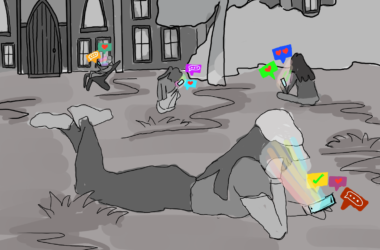
The days of over-the-shoulder Facebook stalking and bemoaning the poor Tetris moves of the girl sitting in front of you could be coming to an end. A work group made up of a Teaching and Learning subcommittee of the Academic Policy Committee has developed guidelines for professors to outline the kind of action they can take regarding mobile device use in McGill classrooms. This has led to talks of banning laptops, or at least restricting their use.

Arash Abizadeh, a McGill political science professor, has already taken advantage of the new guidelines by completely banning the use of mobile computing or communication devices in his classrooms, barring extenuating circumstances.

Abizadeh cited multiple studies linking evidence of the use of such devices in the classroom to poor academic performance, greater distraction for users and fellow students, and decreased ability to “digest and synthesize” main points.

Although evidence exists supporting these claims, it could become a problem for students who depend on their laptops take notes legibly and keep them organized. Katherine Barry, U2 chemical engineering, said the use of her tablet PC is essential to staying organized, and the programs are extremely helpful for work pertaining to her major.

“A lot of my classes involve drawing graphs, complex formulas, and pictures,” she said. “The tablet laptop allows me to draw those by hand when needed. I also use a program called OneNote, which lets you take screen clips of any of the content published online. I can get the notes online and insert them into my personal notes to keep everything in one place.”

Some students who use laptops in class, though, admit it can be a distraction. Stas Moroz, U3 economics and political science, said he uses his laptop for certain classes but it sometimes affects his focus.

“Sometimes I’ll check my email and check the news, and when the professor is saying important stuff, I’ll miss it,” he said.

Some students believe the burden is on the professor to keep them interested and engaged. Theo Lyons, U3 political science, noted, “If the professor is boring, then I get distracted, but if the professor is really engaging, then the laptop doesn’t distract me.”

While it may be difficult for some students to give up laptop use in class, it will be seen as a positive for others who take notes by hand and could avoid being preoccupied by other student’s laptops.

“I don’t mind if people just have their Word document open and they’re taking notes,” said Trenton Millar, U2 political science and religious studies. “It’s distracting when they’re on Facebook, and then CNN, then some blog, then Wikipedia and they’re all over the place.”

Opinion

Open letter from an Architecture student

I would like to begin this letter by thanking you, students of this university, for your outpouring of support regarding the matter of the Architecture Café. It warms our hearts to know that, despite our faculty’s detachment from the rest of the student body, our cause is not lost on you. Thank you. We appreciate you. Moreover, a special thanks for those of you who have taken the time to write articles for the Daily, the Tribune, the McGill Reporter, Le Délit, and even Concordia’s paper, the Link—we needed to get the word out, and you were all quite successful in that respect.

It is important to tell this story from my point of view, if not from that of the all of the students in Architecture. Please bear in mind that this might not be the opinion of the Architecture Students’ Association, the Engineering Undergraduate Society or the Students Society of McGill University. It is, however, the opinion of a former ASA president, former Café manager, alumnus, and curent graduate student.

Our curriculum and pedagogy isolates Architecture students from the rest of the university. We have very few electives outside Architecture, we tend to work a lot, and we operate on a schedule that is not always normal. As the semester draws on, we lose touch with our friends on the outside, and even those on the inside who don’t happen to be sitting right beside us in studio. However, we have had, since 1993, if nothing else, at least one tether to the world at large: the Architecture Café. And we understand that the Architecture Café does not, in any way, belong to the Architecture students. Yes, we might eat there, we might run operations and work there, and we might be the ones who do the dishes , at the end of the day, but besides that, have you ever seen any of us sitting there? No. The Architecture Café is a gathering place of students of arts, geography, political science, music and more. And we love it for that. We love it for belonging to everyone. We love it because all are at home there—students and faculty alike, no matter their background. The Café is an oasis of individuality and placeness (architecture reference, look it up), in an often sterile and detached university environment. No place like it exists on campus, and therein lays its value.

Furthermore, there are fewer and fewer “places” for students on campus. Although I understand some of the reasons for closing the Café, it is important to stress that I do not agree with the way this decision was made. Students were not only left out of discussions concerning the future of the Café, but also deceived about the reasons and bullied into not asking questions. I do not believe a university should treat anyone, especially its own students, in such a way.

I want everyone to know and understand that despite all our efforts, we may not succeed in saving the Architecture Café. But that doesn’t mean we shouldn’t try. This is about more than saving the Café. It is about creating a place for students to belong—where they feel comfortable taking off their shoes, laughing until coffee comes out of their noses, and changing the music without asking for permission. We are all members of this university and of this community. If we do not succeed in saving our beloved Café, it must remain a space for students, a place that belongs to all of us. Stay posted—this isn’t over yet.

Katherine Messina is an Architecture Master’s student, and can be reached at [email protected].

Opinion

Why I still ride my bike on campus

“One has not only a legal but a moral responsibility to obey just laws. Conversely, one has a moral responsibility to disobey unjust laws.”

—Martin Luther King Jr.

I have decided not to obey McGill’s new “no biking on campus” policy. Why? Because it was not based on serious research or consultation, no alternatives were considered, and because it is an obstacle to creating a truly sustainable campus. Simply put: McGill got it wrong.

McGill’s principal argument for defending the “no biking” policy is pedestrian safety. The administration argues that there have been a number of accidents involving cyclists and pedestrians, yet, no statistics have been shown. Moreover, these accidents occurred while cars were still allowed on campus. Cyclists and pedestrians behave differently when cars are on the road. Once cars are gone, it is actually easier for the two groups to coexist.

Are pedestrians scared of cyclists? McGill has not told us of any serious research into how pedestrians feel about sharing the road. Professor Jacob T. Levy (School of Urban Planning) has looked into the issue, and concluded that most McGillians feel comfortable sharing the road with cyclists. So is McGill overlooking the facts?

The policy also creates borders between road users that could make it difficult to reintegrate in the future. Some individuals are already starting to believe that cyclists and pedestrians are incompatible, which goes against the best practices and examples of cities around the world.

McGill’s most elaborate counter-argument is: “What’s the big deal? Is it that hard to walk your bike?” This is not a matter of laziness or stubbornness. It is one of coexistence among road-users. It could even be seen as an exercise in campus democracy.

I propose a better policy: “Bike: with respect and care of others.” Biking should be allowed during non-peak hours (which are basically all the time, except during those 20 minutes in which thousands of students walk from one class to another), and at slow speeds. Most cyclists self-regulate: if a road is packed with people, we will walk our bike. If it isn’t, we will continue pedalling with care.

Care is the key word. The McGill administration is scared of reckless cyclists, but the guards are not stopping this problem. An absolute ban even creates an incentive for reckless individuals to push boundaries. Traffic-calming designs, such as those used in cities like Portland, New York, Amsterdam, and Bogota have helped make roads safe for pedestians and cyclists alike. Using McGill’s research capital to find out more about this type of option and helping make cyclists more aware of pedestrians are what will really keep reckless bikers at bay.

Many McGillians (pedestrians, cyclists, students, staff, alumni) as well as urban planners believe this “no-biking” policy will not work in its current form. The way to ensure safety for all users is to actively engage students, staff, and professional research to create a sustainable campus in which intelligent inclusion is the norm.

If you have an opinion about this situation, University Services and the Students Society of McGill University will be having an open forum on the matter next Thursday, September 23rd on SSMU’s 3rd floor from 3:30 p.m. to 5 p.m.

You could also email Jim Nicell to let him know you are a caring cyclist that wants and deserves to share the road in a respectful way at [email protected].

Christian Scott Martone is a U3 student in Sociology and International Development Studies, and can be reached at [email protected].

Arts & Entertainment, Film and TV

America’s Most-Trusted Comedian

Last week, New York Magazine put Jon Stewart’s cherubic face on its cover, accompanied by a bold headline: “The Jon Stewart Decade.”

In the article, Chris Smith outlined a fairly familiar argument: that Jon Stewart is our generation’s Walter Cronkite, the most trusted man in America at a time when the issues facing the country seem tailor-made for mockery.

But Smith takes his point a bit further. When Stewart took over as The Daily Show’s host in 1999, Americans were still wringing their hands over President Clinton’s Oval Office shenanigans—a scandal gift-wrapped for comedians.

In the following decade, however, Stewart and his comedic correspondents faced an increasingly bleak line-up of issues: terrorist attacks and two wars. As American politics has grown ever more polarized, Stewart has tried to inject himself as an unlikely champion of moderation, lampooning Democrats and Republicans alike.

He’s also taken aim at the more shrill elements of the news media. In 2004, Smith writes, Stewart appeared on Crossfire, CNN’s famously combative current affairs program, and “delivered a nuanced, impassioned plea for Paul Begala and Tucker Carlson to ‘stop hurting America’ by peddling mindless bickering as partisan debate.” The network cancelled Crossfire months later.

Jon Stewart is, of course, a comedian. But in his decade of hosting The Daily Show, Stewart has walked a fine line between wisecracks and serious political commentary—a line he may have just stepped over.

On Thursday’s episode of The Daily Show, Stewart unveiled his long-anticipated “big announcement”: a massive event on the National Mall in Washington, D.C., called “The Rally to Restore Sanity,” The rally, which Stewart has also called the “Million Moderate March,” is set for October 30.

The event, Stewart said, is designed to combat the political extremism displayed by both Democrats and Republicans in recent years, with leftists calling President Bush a war criminal and right-wingers smearing President Obama as a socialist.

Like so much of Stewart’s comedy, the rally is only half in jest. Staffers will be distributing signs to protesters with slogans like, “I Disagree With You, But I’m Pretty Sure You’re Not Hitler.” And Stephen Colbert will lead a parody of the rally on the same day called “The March to Keep Fear Alive.”

In the midst of an endlessly petty midterm election campaign, Stewart’s faux-rally seems to have tapped into a very real desire among Americans for a more sane political landscape. Stewart may not be our generation’s Cronkite, but the enthusiasm for the Million Moderate March suggests he might be filling a more important role. Amid the discordant screeching of American politics, Stewart is a voice of comic sanity.

Opinion

McGill once too many

I despise the “McGill Once, McGill Twice” cheer. The words are as follows:

McGill once, McGill twice, holy fucking Jesus Christ. Wham, bam, God damn, son of a bitch, shit! Three cheers for McGill: Fuck! Fuck! Fuck! Three cheers for fucking: McGill! McGill! McGill!

Since the first time I heard that song, I never thought it to be anything more than a crude little piece of cheering that had little to do with the spirit of McGill. Yes, I get the point of the song. It’s supposed to be funny and to reflect a sense of school pride, but its vulgarity—combined with the amount of boorish behaviour I witnessed at the McGill-Concordia football game Friday night—is beyond annoying. Yes, football is a spectator sport, and it invites all sorts of lewd and debaucherous behavior, which is fine—as long as it’s in tune with the game. However, when you’re talking to your friends, swinging around your five dollar can of Molson Ex with your back turned to the game you supposedly came to watch (featuring a team from the school you supposedly support), things get a little bit pointless. Screaming and waving to your friend 50 rows back while you block my view is alright for maybe 10 seconds, but holding a full conversation while drunk from that distance gets quickly irritating for those caught in between.

My rant is especially addressed to the young gentleman from McConnell Hall, who wouldn’t shut up with the “McGill Once, McGill Twice” song, or stop smoking for the whole first half. I get that it’s cool to look like you’re the one starting the cheers all the time, and it makes you proud and allows you to fist pump with the boys when the cheer is done and you’ve officially done something for the university, but trust me, you’re not the first to try to rally the student body into singing a song that is, in itself, pretty bad. The cheer that exists to belittle Concordia would have made much more sense given the fact that we were, in fact, playing a football game against Concordia. This cheer, although also in the crass department, was maybe heard twice through the first half, while the “McGill Once, McGill Twice” cheer was sang every three minutes or so. The fascination with a song that has nothing to do with sports or rivalries or mentally intimidating the opposing team still astounds me.

I’m all for school spirit. I enjoy championing McGill, but this cheer has nothing to do with school spirit. My qualm with the song is that students will find any opportunity, in or out of school, to scream it at the top of their lungs. This is especially true during Frosh. On Lower Field, around other students, after a bunch of beers, cheer this song to your heart’s content. However, I do take offence when you’re screaming it on St. Catherine Street while a 10-year-old walks by, hand-in-hand with his mother. As a leader, I tried my best to vocalize the song strictly within the bounds of the campus, but there were always groups who were very raucous in their support of the cheer. I may be alone in my distaste, but even so, a modicum of decorum whilst cheering would be appreciated. I know the Concordia song is difficult to learn, longer, and more complicated, and I sympathize. But if you’re at a sporting event where we’re playing our in-town rivals, think about learning it. Maybe next time we can scream it together.

Read the latest issue

Read the latest issue