

Latest News

Art, Arts & Entertainment

Richard Avedon’s ‘Immortal-Portraits of Aging’ has revolutionized photography

In a time of glamourized celebrity personas and pristine, unchanging faces, Richard Avedon’s work is a breath of fresh air. The American fashion photographer and portraitist treasured the honest representation of aging in those he photographed. The exhibit Immortal–Portraits of Aging at the Montreal Museum of Fine Arts features his successful capture of the natural beauty of his subjects. By shooting in black and white, Avedon highlighted wrinkles, reflection in the eyes, and human imperfections, placing subjects face-to-face with viewers.

Avedon produced a diverse array of portraits, including notable directors, artists, singers, and politicians—some of the most well-known being Ronald Reagan, Patti Smith, and Willem de Kooning. Today, celebrities are constantly altering their appearances to look more youthful. Whether through plastic surgery or Instagram filters, audiences barely get to see those who have created impactful art as their true selves. Avedon, however, captured his celebrity subjects with no filters and no glamorous poses, just their bare selves. In doing so, his work continues to challenge traditional beauty expectations, revealing that aging is a beautiful blessing, not a curse.

The exhibit also includes nine photographs of his father, Jacob Israel Avedon, as he battled liver cancer between 1969 and 1973. Avedon captured the final portrait only days before his father’s death. Through these images, viewers sense the close relationship the two men shared through Jacob’s natural positioning in the photos. These images expose the ephemerality of life; no matter who we are, time will take us all in the end. The photos portray the final moments between a father and a son, immortalizing the temporary, countering the loss of a loved one with an eternal appreciation for their life.

Richard’s photographs depict love, sadness, and most prominently, satisfaction. He successfully conveys how legacies live on into old age, and how the spirit his subjects held in their craft persists. A prominent portrait in this exhibit is that of actor Gloria Swanson at age 81. Swanson is shown with a large smile on her face, running her hands through her hair, wearing glamorous red lipstick and eye shadow. She was known throughout her career for her glamour, and this image illustrates how she continues to uphold her style beyond her acting years.

Another photo in this exhibit is of William Casby, a man born into slavery, taken in 1963. True to style, the photograph is a close-up and reveals many of Casby’s facial features. Avedon, including such a highly detailed photograph of Casby, reminds us that historical atrocities such as American slavery are not so distant a past. In reality, it was so recent that high-resolution photographs of survivors are something we can view today. Immortal–Portraits of Aging not only shows the beauty of aging, but also puts into perspective moments in history.

Another prominent theme of this exhibit is what love looks like as you age. A photograph of pediatrician Benjamin Spock and his wife Jane Cheney Spock kissing depicts how love can transform from youthful joy into something deeper and more passionate. The photograph illustrates the intimacy that has grown between two people who are deeply familiar and comfortable with each other.

Immortal–Portraits of Aging is a love letter to continuous change throughout human life. It illustrates both the beauty and sadness that come with aging, teaching us to appreciate our lives and embrace the changes we will undergo as we continue to live.


Immortal–Portraits of Aging runs at the Montreal Museum of Fine Arts from Feb. 12, 2026-Aug. 9, 2026

News, The Tribune Explains

The Tribune Explains: Abortion rights in the Quebec Constitution Act

On Oct. 9, 2025, Quebec Minister of Justice Simon Jolin-Barrette introduced Bill 1, the Quebec Constitution Act, to the National Assembly of Quebec. The act intends to establish a provincial constitution, allowing for more legislative autonomy by enshrining popular Quebec values, such as French language protection, secularism, and abortion rights. However, on Feb. 20, Jolin-Barette withdrew Section 29 of this bill, which would have guaranteed the right to abortion as part of the prospective constitution. The Tribune breaks down Section 29 of the Quebec Constitution Act, examining how its withdrawal may affect the protection of abortion rights in Quebec.

What is Section 29?

Section 29 of the Quebec Constitution Act states, “the state shall protect the freedom of women to have recourse to a voluntary termination of pregnancy.” Jolin-Barrette originally added this clause due to his concern that women’s reproductive rights may one day be called into question, which he described in an open letter.

“I am sincerely worried. Worried that in the coming years, women’s rights—of our mothers, our sisters, our daughters—will crumble, at the risk of their health and dignity,” Jolin-Barette wrote. “It is this deep and persistent concern that convinced me to include in the draft Constitution a provision that would commit the Quebec government to act to defend women’s free choice to have an abortion.”

Why was the clause protecting abortion withdrawn?

The idea of withdrawing Section 29 first gained traction on Feb. 18 in the public hearings for Bill 1, when Claude Morin, a former member of the National Assembly of Quebec, asked whether the clause was being considered for removal. Etienne-Alexis Boucher, a former Parti Québécois member for the Johnson electoral division, expressed support for the section’s withdrawal. 

“My recommendation to all parliamentarians is to improve the bill so that the final version can respond to criticism. And you are right, there has been very strong criticism of the right to abortion,” Boucher said. “If this type of enhancement to the bill allows [us] to broaden the consensus on this one, I think that would be a good idea.”

Later in the hearing, Natacha Meilleur, a representative from the Clinique des femmes de l’Outaouais, requested the removal of Section 29 from the bill. She argued that the clause does not aid abortion rights, but rather puts them at risk. 

“Enshrining abortion in a constitutional text would [offer no] additional protection demonstrated,” Meilleur said. “Canada protects abortion with autonomy and personal safety. And, moreover, the Canadian model is legally more integrated into the fundamental rights structure. And that’s what makes it more stable. It is therefore the absence of legislation that is our strength. Legislating on abortion is therefore a way of offering a breach, a legal hold that may be interpreted, challenged, or modified in the future.”

Following the arguments introduced in this session, Jolin-Barrette removed Section 29 from the Quebec Constitution Act. 

What protections are in place for abortion rights in Quebec?

Currently, abortion rights in Quebec are protected based on jurisprudence that supports the right of women to choose, such as R. v. Morgentaler.  This case overturned a 1969 law that criminalized abortion except in specific circumstances across Canada. The case used Section 7 of the Charter of Rights and Freedoms—specifically the right to security of the person—as the legal basis for removing the abortion restrictions, arguing that they infringed on pregnant women’s right to security. 

In a written exchange with The Tribune, McGill’s chapter of the Women’s Network, the largest collegiate networking organization for women in North America, emphasized the significance of protecting women’s bodily autonomy as fundamental to women’s rights. 

“It is important to protect abortion rights because they are integral to a woman’s freedom, independence and self-autonomy,” the Women’s Network wrote. “Abortion rights are human rights and women’s rights, and it is important that the legislation reflects that. One should have the right to make decisions regarding their own body and future without judgment or fear of legal or social repercussions.”

For more information on accessing abortion at McGill, please visit a previous article published on Nov. 19, 2024.

Commentary, Opinion

Quebec is failing the basic test of reproductive care

Despite increasing sexual health awareness, long-term oral contraceptives are still relatively inaccessible to young individuals within Quebec, as many fall victim to the province’s high healthcare costs and physician unavailability. This lack of uncompromised access to basic healthcare perpetuates the stagnation in promoting reproductive health in Quebec.

In October 2024, Bill C-64 (the Pharmacare Act) was established across Canada. Its objective was to allow single-payer coverage on contraceptives, boosting attainability and building the pharmacare expansion foundation. However, the Bloc Quebecois’s arguments that healthcare is a provincial matter quietly influenced the bill’s implementation into the province’s existing health insurance plan, Régie de l’assurance maladie du Québec (RAMQ). 

Those in the young adult demographic who lack access to a family or employer plan typically rely on RAMQ’s Public Prescription Drug Insurance Plan, which generally reimburses only up to the cost of the lowest‑price generic medication in a given class. The provincial government has failed to acknowledge that young adults residing in Quebec do not have adequate pharmacare access. Those in the young adult demographic without familial endorsement typically use RAMQ’s Public Prescription Drug Insurance Plan, which covers only the lowest-price medication. If the patient can only obtain affordable medication, this option changes multiple times a year. This inconsistency can cause detrimental hormonal side effects. RAMQ lacks attentiveness to potential health compromisers, consequently disregarding healthcare nuances. 

A 2025 study states that women aged 20-29 made up 58 per cent of Canada’s unintended pregnancies. Within Quebec, women in this same age group made up over one-third of all births in 2024—highlighting the disproportionate concentration of pregnancies within young adults. This range aligns with the average years of peak fertility, the pursuit of education, and when individuals learn most about their sexual preferences. These intersecting life factors illustrate why accessible contraception is particularly critical for this demographic. Another study details how even if contraceptive use is desired, individuals are fearful of facing judgment when purchasing. The lack of easy access to oral contraceptives has created a significant barrier to their use.

Furthermore, physicians in Quebec prescribing these medications already struggle with understaffing. The passing of Bill 2 now ties physicians’ salaries to province-set performance targets. The bill’s unrealistic goals exacerbate existing strain, pushing doctors to leave the province.

This problem is perpetuated through McGill’s very own Wellness Hub. It is seemingly impossible for students to receive care in a timely fashion—or get appointments at all. This inaccessibility stems from the fact that the Wellness Hub is not the primary place of employment for its healthcare workers. Physicians sign up for extra hours to work at McGill, and are not paid specific salaries. This is unfair to thousands of McGill students who may otherwise struggle to access care.   

Ruba Ghazal, Québec Solidaire’s co-spokesperson and leader of the second opposition group at the National Assembly of Quebec identified this inaccessibility struggle. In May 2025, she proposed Bill 994, or the  Act to foster sexual and reproductive health through improved access to contraception. Its objectives include improving anonymity and destigmatization, enhancing personal autonomy, reducing unplanned pregnancies, and alleviating societal inequalities. 

If the bill is passed, its desired implementation would occur in four divisions. Ghazal’s first proposed stage allows individuals under the RAMQ free access to contraceptives, also offering coverage to unhoused people, minors, and others. The second stage will design pilot projects that enable designated professionals (such as midwives and nurses) to administer contraception—a role typically reserved for physicians. The final measures touch on awareness and privacy. Stage three describes confidential distribution methods for prophylactics across high schools, colleges, and universities, and the fourth implements mandatory sexual education in grade schools. Bill 994 would grant Quebec the opportunity to promote a more nuanced approach to fundamental healthcare.  

Thus far, safety concerns have prevented the bill’s approval. Politicians are worried that the administration of such medication from non-physicians risks a lack of open familial communication, as well as poor medication quality. Families have expressed concern that minors could access high-impact medications without guardian consent or knowledge of potential implications, particularly if prescribed by non-physicians without full understanding of the patient’s health. But granting these responsibilities to other notable care providers proactively addresses the healthcare understaffing issue. Allowing the distribution of all contraceptive brands without cost ensures increased access to effective medication. Consequences like unplanned pregnancy are greater risks when individuals have concealed, unprotected sex—not concealed, protected sex. 

Furthermore, Bill 994 would save the Quebec government money. According to Action Canada for Sexual Health & Rights, for every $1 CAD put into covering contraceptive costs, $9 CAD is saved in pregnancy-related fees. 


Ghazal’s Bill 994 allows young adults to access a basic form of healthcare while offering solutions to Quebec’s pharmacare challenges through the Free Access to Contraception Program. With creativity and a humanitarian approach, Ghazal has shown that working to rebuild a broken system is possible—it just requires the right mindset.

Behind the Bench, Sports

The Olympic prescription?

Popularized between 2021 and 2023, GLP-1 drugs have become all the rage. As the new band-aid weight-loss solution, products such as Ozempic, Wegovy, and Ro have moved from pharmacy counters into mainstream media, promising quick and efficient ways to keep the weight off. During coverage of the 2026 Milano Cortina Winter Olympics on CBC Gem, advertisements for Ozempic began appearing in between sporting events—an unexpected pairing for a global event built to celebrate athletic performance.

Originally developed for patients with type 2 diabetes, GLP-1 agonists work to regulate blood sugar, slow digestion, and increase feelings of fullness. Drugs like Ozempic contain semaglutide, a compound that stimulates insulin release while suppressing appetite, leading many patients to experience significant weight loss. What began as a metabolic treatment has quickly evolved into a cultural phenomenon, with a recent survey suggesting that about three million Canadian adults are currently taking GLP-1 drugs.

Seeing these medications advertised during Olympic coverage raises questions about how/and where pharmaceutical products like Ozempic should enter the public eye, especially when they appear alongside an elite athletic competition.

In Canada, prescription drug advertising is tightly restricted under the Food and Drugs Act and Food and Drug Regulations. Given the strict guidelines, pharmaceutical companies rely on ‘reminder ads,’ which may name a prescription drug but cannot mention what it treats, and ‘help-seeking messages,’ which discuss a disease or condition but do not identify a specific medication for it, prompting viewers to consult their healthcare providers.

Concurrently, these direct-to-consumer ads communicate vague and ambiguous drug information to Canadians. When these ads appear during major international sports broadcasts, they can blur the line between public health information and pharmaceutical marketing.

In an interview with The Tribune, Etay Ben-Eli, U3 Kinesiology, spoke about the implications of advertising Ozempic during the Olympic Games.

“These are the elite athletes of the planet. These are top-shape individuals being advertised beside something that’s either used for diabetes or for extreme weight-loss or for people who have difficulty losing weight,” Ben-Eli said. “It’s just especially shocking to see that in the Olympic Games, where there’s so many people watching, kids included.”

This juxtaposition is what viewers witnessed firsthand. In one moment, hockey fans watched Mitch Marner score a heroic overtime goal for Team Canada against Czechia in the Olympic quarterfinals—an impressive display of speed, endurance, and precision. Seconds later, the broadcast cut to a commercial break featuring an advertisement for Ozempic.

The use of elite athletes to promote GLP-1 drugs extends beyond Olympic broadcasts. During the 2026 Super Bowl, 23-time Grand Slam champion and all-time tennis great Serena Williams appeared in an advertisement for Ro, a telehealth-based weight loss program that provides access to GLP-1 medications. The commercial featured Williams using a GLP-1 drug, framing the medication as a tool for weight loss and self-improvement.

“There’s kind of this sad reality that these companies are almost not selling medication. They’re just searching for profit and they’re using elite athletes to sell [the idea] that this is not just a medication for people who need it, this is just an easy fix to a common problem or even a nothing-problem,” Ben-Eli said. “I don’t understand why Serena Williams would ever endorse this medication, or even take it. She’s in incredible shape and is one of the best athletes on the planet. So it’s sad to see the stretch that they’ve gone to convince people that this [drug] should be normalized.”

The growing presence of GLP-1 advertising in major sporting broadcasts raises questions about how these messages shape public perception. When 30.5 million Canadians tuned into the 2026 Olympic Games, frequent drug advertisements blurred the line between medical treatment and lifestyle marketing. Media organizations such as CBC Gem risk facing increased scrutiny regarding the role they play in disseminating pharmaceutical messaging and its potential impact on audiences.

“These are giant corporations and they need to be careful about the messages that they portray,” Ben-Eli explained. “So I think to myself, CBC, do all they care about is just making deals with companies to just put some money in the back of their pocket? Or do they actually care about the sports they’re showing?” 

Off the Board, Opinion

Face it!

I saw my mom for the first time this summer. Sitting alone in the busy Toronto Pearson Airport, I waited for my flight to Edmonton to join my family on a trip. I was armed with a couple of pencil crayons, a sharpener, and an Above Ground sketchbook bought from their tiny store next to OCAD University

I had been working at a children’s art camp where I spent my breaks outside sketching strangers from my Pinterest boards or friends from university. The kids would clamour around, ask me questions about the people I was drawing, and then enthusiastically confirm that my 15-minute scribbles did, in fact, look like their reference photos. Sometimes, perhaps unnecessarily, they would be brutally honest and tell me that I was way off. 

It’s hardest to draw people you know personally; when you know someone’s face so casually from seeing them every day, you take the minute details of their facial features for granted. However, you also know what makes these people who they are, so when they don’t fully resemble themselves, you can tell. Perhaps you drew a friend’s face perfectly, but it still wouldn’t be right unless you managed to capture their boundless whimsy you could only know from years shared together and a particular glint in their eyes. 

So, when I was stuck waiting in the airport, I felt like I was seeing my mom properly for the first time in this rough sketch of the woman who raised me. It was still imperfect, because the reference photo I used was a couple of years old—her smile lines and the creases in her eyes were softer than what greets me nowadays—but these are things I would only know from loving her.

I find that drawing people you’re close with makes you confront how much you actually don’t know about their faces. My mom’s face is one I’ve seen my entire life, but as I was drawing her, I forgot which side her mole is on. I realized I did not know that the right corner of her mouth tilts down at the very end. I do know, however, how loving her smile is, and how we have the same nose.

My favourite thing to draw has always been faces. I love drawing a portrait, starting with the same proportions and guidelines I learned from an Instagram tutorial when I was 11, then moving on to the eyes, nose, and mouth. Faces of people I know, faces of people online, faces of movie characters, and characters I made up. Landscapes and still-lifes bore me—I wish to understand people.

And, as much as I enjoy drawing portraits, others are even more delighted to have their portraits drawn. They like being seen, being recognized, and being known to others. Not only seeing themselves in a picture, but also knowing that someone took great care to translate their face into a piece of art. 

 The guidelines don’t change: A circle split by a horizontal line to indicate where each facial feature goes, and a vertical one for symmetry. You have to be careful, though, because if you mess up the roundness of their cheeks or the angle of their nose, the face distorts into a new stranger. It’s the same process each time, but I always get to learn something new. What does it look like when a person with monolids furrows their brow, or when an old man laughs? 

When the Sports section of The Tribune writes a “Know Your Athlete” piece, I sign up to do the illustration. Should you search through issues, you will find I have done several portraits for various sections. Some are scientists, rugby players, television characters, or filmmakers

It is an intimate and quiet waltz between my subject and me. Who has loved this face, I wonder? What features are they proud of? Which would they change if they could? These are strangers I will never meet, people who will never know someone spent hours staring at their faces, searching for their most recognizable features to ensure that they are represented as accurately as possible. Yet I know how their eyes crease at the corners, I gather how shy they may be to smile in front of a camera, and I see the way they style their makeup for a professional headshot. Maybe I even fall in love with them, my dance partner, while my pen etches lines and shadows. Though don’t tell them, of course.

I still struggle to draw myself. My eyes always turn out too wide or my nose too small, and please don’t get me started on the shape of my jaw. But I’ll keep trying; whether it’s the narcissistic impulse of a 20-year-old, or an effort to know myself as well as these strangers whose portraits fill my sketchbooks’ pages. Each time, I am a little more faithful to my image, slowly improving until the day I will recognize the face as my own. I wish to see myself as I saw my mother on the pages of my sketchbook, with her sweet but stern look etched in turquoise and dark blue pencil crayons

My mom, Penny Lee 

– August 2025

Commentary, Opinion

Canada must respect informed consent in its handling of residential school reports

In 2017, the Supreme Court of Canada presided over Canada (Attorney General) v. Fontaine, a case brought against the federal government by former National Chief of the Assembly of First Nations (AFN) Philip Fontaine. Fontaine demanded the destruction of Indigenous residential student testimony gathered during the Indian Residential Schools Settlement Agreement (IRSSA), arguing that maintaining these records for potential future disclosure violates the confidentiality of survivors, many of whom shared experiences of intense physical and sexual abuse in their testimony. The Supreme Court ruled in favour of Fontaine, citing the government’s promise to protect witnesses’ privacy as the basis for their decision.

The federal government and some Indigenous groups have argued that destroying records undermines accountability for the horrors perpetrated against Indigenous people at residential schools. However, if implemented correctly, this ruling marks an important step toward honouring survivors’ autonomy by allowing them to control the fate of their testimonies.

As part of the IRSSA’s Independent Assessment Process (IAP), the Government of Canada conducted hearings and negotiated settlements with nearly 40,000 former residential school students. During these hearings, all students testified under the pretense of indefinite confidentiality. Given this, the legal basis for preserving these files in their totality (presumably for future reference in some capacity) is dubious. AFN National Chief Perry Bellegarde echoed similar sentiments in a press release, emphasizing that Indigenous community members shared their experiences under the assumption that hearings were private. While some individuals are comfortable publicizing their testimony, others testified //only// with the assurance that their anonymity would be protected. For this reason, the original stipulations of the IAP should be respected, and personal statements must remain confidential.

The Supreme Court’s ruling does not mandate the destruction of all residential school testimonies, but leaves the fate of individual records to the witnesses themselves. IAP participants have until September 19, 2027, to request that their files be preserved for public use by the National Centre for Truth and Reconciliation (NCTR). Whether residential school testimonies are preserved in federal records is not for the Canadian government to decide, nor is it the decision of the NCTR. Rather, it is an individual decision owed to those who endured the horrors of residential schools. Even within Indigenous communities in Canada, discourse surrounding testimony preservation has been divisive. While governing bodies like Anishinabek Mukwa Dodem have strongly advocated for the reversal of Canada v. Fontaine, the legal injunction by the AFN under Fontaine proves that support exists for the Supreme Court’s ruling. First Nations and Indigenous people do not share monolithic perspectives, and this heterogeneity must be reflected in policy that respects privacy wishes on an individualized level.

Additionally, it is important to recall the original purpose of the IRSSA, the IAP, and its associated testimonies. The IRSSA was never a social education campaign. Rather, it was an effort to win financial compensation and a formal apology for individuals who have been deeply harmed by residential school systems. Witnesses should not be required to compromise the privacy of their traumatic experiences in exchange for acknowledgement of the wrongs committed against them. 

The Canadian government must honour the legacies and experiences of these survivors by centring the preferences of those directly affected. While the universal preservation of IAP testimonies would likely be useful in promoting government transparency and public education, it would also be yet another undercut to the autonomy of Indigenous people living in Canada, many of whom have expressed a desire for these records to be concealed or erased. 

Fundamentally, it is not for the Canadian government, nor for other non-Indigenous institutions, to dictate how reconciliation is most meaningfully implemented. Just two years ago, McGill, which officially recognizes the Kanien’kehà:ka as the “traditional custodians of the lands and waters on which [the university meets],” removed a ceremonial pine tree planted by Kanien’kehà:ka community members. This move exemplifies the dissonance between the university’s stated dedication to honouring Indigeneity and its disregard for Indigenous wishes that counter McGill’s agenda. It is time for both McGill and the Canadian government to decide whether they will approach reconciliation merely as a semantic exercise or truly commit to a healing process set on Indigenous terms. 

Private

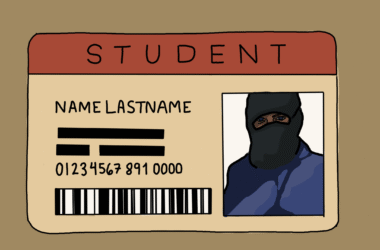
Student activists argue McGill’s proposed identification policy threatens free expression

McGill proposed an Identification Policy for Access to Properties Owned, Occupied, or Used by the University to the Senate in January 2026. If approved, it would allow authorized personnel to require individuals on campus to present a McGill or government-issued ID “for a legitimate purpose.” These aims include safeguarding the integrity of the university’s academic and administrative activities and protecting McGill property, while also ensuring the safety of members of the McGill community and others on campus.

In a written exchange with The Tribune, McGill’s Media Relations Office (MRO) wrote that there is currently no university-wide policy for governing identification requirements, and that the proposal aims to provide a comprehensive framework only. The MRO asserts the policy is intended to complement existing university policies rather than override them.

“[The policy] does not change or diminish rights and protections already in place, including to lawful protest and those set out in the Charter of Students’ Rights and the Statement of Principles Concerning Freedom of Expression and Peaceful Assembly,” MRO wrote. 

The policy has, however, drawn pushback from student activist groups. On Feb. 23, Divest McGill issued an open letter for students to sign, which will be submitted to the Senate for discussion at its next meeting on March 18. As of 3:00 p.m. on March 5, 474 undergraduates, graduate students, faculty, and alumni had added their signatures.

Divest McGill hopes this campaign will mobilize the Senate to push back against the policy. In a written statement to The Tribune, a representative from Divest McGill explained that the policy regulates behaviour through a framework of risk—one that assumes suspicion rather than fairness or justice—which may discourage students from expressing dissent.

“The ambiguity of the policy particularly in areas of training leaves room for violence and racial profiling, almost all treatment of the student seems to be up to the ‘authorized personnel’s’ discretion,” the representative wrote. “There is more than enough room in this policy for authorized personnel to imbue it with their own personal biases and allow for possibly hateful actions to be taken and validated by this general discretion provided.” 

Further, Divest McGill worries these policy developments suggest McGill has increasingly taken steps to limit protest on campus, and the proposed policy appears to be part of this. 

Barry Eidlin, associate professor in the Department of Sociology, said in an interview with The Tribune that this policy would leave a chilling effect on campus. He argued the mandate is counter to the university’s intellectual mission and its commitment to free expression

“For the university to have these tools at their disposal, to threaten and intimidate people engaged in protest, is going to hamper or restrict our own scope of action, and so it’s important for us to take a stand, to protect our own rights as well,” Eidlin said. 

Regarding free speech, Eildin further described the proposed identification policy as part of a broader pattern of administrative overreach. 

“We don’t know what other contexts they might feel that it’s appropriate to use this [policy],” Eidlin explained. “Part of the problem with the policy is that it is overly broad […] so it’s going to be applied in arbitrary ways without any sort of clear criteria to determine when it’s used.”


The representative from Divest McGill quoted the open letter, expressing that the policy, if approved, would instill a fear of surveillance in students. 

“Under this policy, McGill community members’ right to learn, work, and research can be interrupted without any evidence of wrongdoing. Not even the police, who must have reasonable suspicion of a crime having been committed to request identification, have this much discretionary power.” 

Arts & Entertainment, Film and TV

‘Love Story: John F. Kennedy Jr. & Carolyn Bessette’ reinvents the look of love

Warning: This piece contains spoilers.

New York in the 1990s, bike rides in the rain, an avoidantly-attached girlboss, and the son of a former president who falls for her—this is what the new FX show, Love Story: John F. Kennedy Jr. & Carolyn Bessette, offers. Produced by the most powerful man in TV,” Ryan Murphy, this series is a dramatic retelling of the tragically beautiful romance between Calvin Klein’s fashion publicist, Carolyn Bessette, and People’s 1988’s Sexiest Man Alive, John F. Kennedy (JFK) Jr. 

Starring Sarah Pidgeon and newcomer Paul Anthony Kelly, the show dramatizes the relationship between the most eligible bachelor of the ‘90s and the woman who finally captured his heart. Among recent pleas on social media to “bring back yearning,” the show lives up to the task. The lead actors yearn, suffer and plead throughout, but especially in a particularly memorable scene where John stands in the rain at Carolyn’s doorstep, pleading to come in, managing to make me feel particularly single. It’s beautiful.

The show shines a light on this cherished love story whilst critiquing the intensity of the press, which felt it had a right to invade the private lives of the Kennedy family. Pidgeon’s portrayal of Carolyn Bessette stands out as she encompasses the legend of this powerful woman whilst delivering a relatable and raw performance. The Kennedys are depicted with all the pompousness, pride, and ridiculousness that accompany a dynasty family endlessly preoccupied with upholding their title as “America’s Royal Family.” The show explores their humanness, depicting JFK Jr. as a well-intentioned, intelligent, and caring, privileged man, used to things going his way. In contrast, Carolyn Bessette is the first woman who is not set on indulging him, and what results is a love story that transcends time.

In his breakout role, Kelly delivers a convincing performance as America’s Prince, quickly becoming Canada’s boyfriend by virtue of being an Ontario native. Episode 5: Battery Park stands out as a cautionary tale about the potential downfall of women who risk giving up their identity by marrying powerful men. After receiving John’s marriage proposal, Carolyn must decide whether marrying the man she loves is worth having her life publicly scrutinized and invaded. Reminiscent of Princess Diana’s marriage to King Charles III, the love story between Bessette and JFK Jr. has fascinated the public since the ‘90s, only amplified by their tragic death in a 1999 plane crash.

Notably, Kennedy family members, including Jack Schlossberg, have criticized the show’s creators for not contacting them before making the series. The show’s creators have defended their choice, claiming it allowed them to remain objective in their treatment of the material. They were thus able to take creative liberties whilst retaining the allure of the love story that has fascinated people for three decades. Accordingly, the show stands out as a beautifully entertaining story that exposes the highs and lows of the mesmerizing romance. It makes me want to move to New York, fall in love, wear a capsule wardrobe, and dye my hair platinum blonde.

Still, it is important to question the ethics of adapting a story without the subject’s consent. Further, we must also question the necessity of platforming a family that has consistently dominated American politics. Wouldn’t it be better to adapt novel love stories or romances that have remained hidden on the margins of history? In my view, shows like Fellow Travelers greatly succeed at this task.Despite everything, Love Story: John F. Kennedy Jr. & Carolyn Bessette is a great watch and reinvents the look of love, because telling someone you ardently need to see them while standing in the rain is a lot more romantic than receiving a “you up?” text at 1 a.m.

Behind the Bench, Sports

Respectability politics in football

On Feb. 17, Sport Lisboa e Benfica (S.L. Benfica) hosted Real Madrid CF in Lisbon for the first portion of a two-leg Union of European Football Associations (UEFA) Champions League playoff. Real Madrid’s Vinicius “Vini” Jr. opened the scoring in minute 50 of the game before running towards the corner flag to celebrate—an action that Benfica fans and players alike did not take well.

Benfica fans threw objects onto the pitch towards the celebrating Madrid players in addition to making monkey gestures at Vini, and several Benfica players attempted to confront him, including winger Gianluca Prestianni. Prestianni got in Vini’s face and covered his mouth with his shirt before saying something that left Vini incensed. This led to Vini running straight towards the referee, exclaiming that Prestianni had just made a racist remark. Unfortunately, without Prestianni admitting to the remark, there is no evidence that can be used to ban him, and to this day he maintains his innocence. Instead, he reportedly told investigators he used an anti-gay slur—as if that is any more acceptable.

After the game, Benfica Head Coach José Mourinho went on the offensive and implied both that Vini may have lied and that he was at fault for the racist abuse he received.

“He should have […] not messed with 60,000 people in this stadium,” he said in a post-game interview.

Mourinho then went on to make comments suggesting that Benfica as a football club could never be racist because their greatest player ever—Eusébio da Silva Ferreira—was Black.

Eusébio was Portuguese by way of the nation’s colonization of Mozambique. He played in Portugal while the nation functioned as a brutal right-wing dictatorship under Antonio Salazar. Eusébio scored plenty of goals for both club and country and thus was well liked in Portugal and is looked upon favourably. However, he still dealt with racism both at an individual and systemic level. Eusébio never spoke openly about racism during his playing days, as Vini has often spoken to the press in Spain about the racism he faces in opposing stadiums. One must imagine that had he been outspoken as Vini has been, he would have most certainly been targeted even further by racists in a similar manner to Vini. 

Mourinho’s comments highlight a certain colonial logic: Conform or be at fault for the racism you are faced with. It is the same logic we often hear when folks try to explain why they do not like immigrants. Oftentimes it is grievances over immigrants not speaking the same language, or complaints that immigrant communities still maintain their own culture. The concept is known as respectability politics: If you assimilate to and imitate the dominant group, then you earn your dignity. In Vini’s situation, this logic places the blame on him for celebrating rather than on Prestianni or the numerous fans in the stands making racist gestures. 

In a similar vein, Manchester United and INEOS Chemical Group Owner James Ratcliffe went after immigrants in an interview with Sky News, suggesting that they are invading the United Kingdom and blaming them for societal problems the nation faces. There is a certain irony to a British man saying his nation is being colonized and the colonization is causing larger societal issues when three of the UK’s largest immigrant groups in recent years are folks from India, Pakistan, and Nigeria—all of which are former British colonies

Ratcliffe’s reasoning for his anti-immigrant stance both in his initial statements and in his so-called ‘apology’—that felt more like an explanation—is that he feels immigrants are a burden on the UK economy despite the amount of money they generate for his various businesses. Ratcliffe has since explained that the ideal immigrant is one who generates economic growth. 

Despite the differing context, the backwards idea both Ratcliffe and Mourinho push remains the same: Basic dignity for immigrants and people of colour is not a given and it must be earned by following the ideals of those in charge. This implication from two of the sport’s most influential figures is extremely disheartening and a reminder of how much progress is needed. Not only should governing bodies like UEFA take action against perpetrators like Prestianni, but there ought to be punishment for anyone who insinuates that racism can be justified because of the victim’s behaviour. 

Campus Spotlight, Student Life

WUSC helps students like Zawadi seize higher opportunities in university

Zawadi Ombeni, U1 Science, is just like any other McGillian. She studies Software Engineering, jokes about her bi-weekly mad dash from Adams Auditorium to McIntyre Medical between back-to-back lectures, and wonders if we can truly call our exams “mid-terms” when they don’t end until finals have already begun. 

Unlike most students, however, Zawadi arrived at McGill from a refugee camp in Malawi.

Zawadi is one of thousands of student-refugees that World University Services Canada (WUSC) has sponsored to re-settle in Canada and pursue higher education over the course of its century-long existence. In an interview with The Tribune, Zawadi reflected on what receiving such a sponsorship meant for her. 

“I heard about WUSC when I was still at secondary school, and that it [provides] opportunities to help young refugees to be relocated to Canada and […] [pursue] an opportunity to study at university,” Ombeni said. “I was like, ‘Whoa! This is a very great opportunity for me to become the very first person ever in my family to go to university.’”

For hundreds of young refugees, WUSC provides a path to opportunities that would be otherwise unimaginable for students fleeing war, violence, persecution, and socio-political instability

“It’s a beacon of hope for quite a lot of us young refugees, whereby you’re living in a place where opportunities are very limited. [WUSC] helps you to be relocated. It helps you navigate through the finances. It helps you navigate accommodation. Arriving here, at a new place, where you don’t know anybody, you don’t have [for instance] an uncle here that is going to help you, but WUSC and the local committees have always been there trying to help you.”

Despite the resources WUSC provides to students like Zawadi, young refugees still face a range of complex barriers when coming to study in Canada. McGill’s rigorous admissions process, for example, emphasizes high secondary-education grades but often does not fully consider the extreme extenuating circumstances many displaced students face when applying. 

“[W]ith a refugee camp, it’s not like you’re assured every time [that] you’re going to have something to eat. It’s not like you’re assured there’s electricity, or [that] you [will] have other resources. No. It’s not like a person who has gone [to school] here in Canada who has resources, who has got WiFi, who has got […] electricity, because sometimes […] in the camp, you can even do one month without having electricity.”

Besides facing obstacles at the administrative level, Zawadi described the complicated social pressures that student-refugees must navigate upon arriving at university. Often, she said, such students must reconcile the struggle to adapt to a new culture with the need to put down roots, all the while striving to maintain relationships with the family and friends with whom they are now physically distanced. 

“You have the pressure from the families upon arriving here, [who are still] living in the camp. Coming from there, you know the situation. You also have pressure […] to send money back to them, and then, [also in] trying to understand everything: ‘How does this new system work? How am I going to get registered for a new class? What do I do? How do I communicate?’” Ombeni said. “Now, this is another environment. It’s another cultural environment. I need to get adapted to that.”

Nevertheless, Ombeni is confident, eager to work hard, and endlessly grateful to have the opportunity to study at McGill. Thinking ahead to what she’d like to pursue post-graduation, she hopes to help other students from difficult situations receive excellent higher education. 

“I’ve started becoming involved with different humanitarian organizations [around campus], although I’m still studying [….] [At these organizations], you try to advocate for girls in the community, [and] try to speak for somebody who cannot speak for themselves,” she said. “If I have the potential to speak for somebody who cannot speak for themselves, why can’t I do that?”


Students interested in getting involved with WUSC’s humanitarian work can join the organization’s McGill Local Committee, a SSMU club that organizes funds and assists student refugees in their transitions to McGill

Read the latest issue

Read the latest issue