Latest News

Science & Technology

38th Soup & Science event sees talks on ice, stars, and Panama

The McGill Faculty of Science hosted the 38th edition of Soup & Science in the SSMU Ballroom from Sept. 3 to 6. Here, professors and students across many disciplines, from psychology to astrophysics, presented their scientific passion projects. 

Monitoring Arctic sea ice

To begin the Sept. 5 presentations, Mallik Mahmud, assistant professor in the Department of Geography, discussed how satellite imagery can detect changes in sea ice.

“The area of sea ice is decreasing drastically. At the same time, the thickness of the ice is also reducing over the years,” Mahmud explained. “Compared to the last 20 years, we have a very different set of ice in the [Arctic].”

Mahmud and his team also trekked to the Arctic to set up weather towers and use techniques like radar imaging, which uses light to create two-dimensional landscape images, to confirm the satellite imagery.

Eco-evolutionary dynamics in Alaskan lakes

Andrew Hendry, a professor in the Department of Biology, studies the evolution of biological diversity and is especially interested in the ecology of Alaska’s lakes.

“What [the Eco-Evolutionary Dynamics Laboratory does] is think about the fact that within each of those species, there is evolutionary variation,” Hendry explained. 

His group is researching how genetic variation affects the structure of lake ecosystems, paying special attention to the population of fish.

“[The fish] have all been sequenced individually with high coverage across their entire genome,” Hendry said. “We have complete knowledge of the genetic variation of all the [fish] in these lakes.”

Fast radio bursts—a cosmic mystery

Victoria Kaspi, a professor in the Department of Physics, discussed fast radio bursts (FRB), which are short radio wave flashes from space that last a few thousandths of a second. Kaspi said that FRBs are an “astrophysical mystery” that has received much public attention, with many erroneously ascribing it to extraterrestrial intelligence.

“How do you study the phenomenon? That’s the challenge,” Kaspi explained. “We need a telescope that can point everywhere all at the same time, all the time. We haven’t invented that, but we’re close—and that’s the CHIME telescope; the Canadian Hydrogen Intensity Mapping Telescope.”

Canada’s CHIME telescope is located in British Columbia and has detected thousands of FRBs since its activation in 2018. 

How and why are friendships formed between people?

Melanie Dirks, a professor in the Department of Psychology, runs a lab that studies relationships and focuses on friendships.

Dirks explained that adults have certain beliefs about romances that extend to friendships. These beliefs are categorized into two groups: “Destiny” and “Growth” mindsets. A person with a Destiny mindset believes that a person is either “right” for you or not, and there is nothing to do about it. A Growth mindset, however, emphasizes the importance of overcoming conflicts that arise within the relationship.

“We tracked undergraduates’ friendships over the course of a year, and it turned out that people who more strongly endorsed Destiny beliefs and weakly endorsed Growth beliefs were more likely to tell us they had friendships end over the course of the year,” Dirks explained.

Sloths & science: The Panama Field Study Semester

Kristy Sanchez Vega, U2 Science, talked about her Panama Field Study Semester (PFSS), a four-month academic endeavour in Panama, and how beneficial the experience was.

“You take some amazing courses in PFSS,” Sanchez Vega said. “They vary from year to year, but the ones I took were history, agriculture, biology, and then an environment research course.”

Sanchez Vega described PFSS as an intellectually rewarding exchange which shaped her knowledge about land and environment. She also said that PFSS members receive an opportunity to present their research at the Smithsonian Tropical Research Institute in Panama.

“There’s only so many opportunities that you can take like this in undergrad, so if anyone decides to take PFSS after this, then I think I’ve done my job,” Sanchez Vega said.

Soup & Science is a semesterly event that showcases McGill’s brilliant minds. The event allows the student audience to explore their scientific curiosities and aims to foster their drive to pursue new academic challenges.

Commentary, Opinion

Canada’s railway system is failing

Last weekend, what was meant to be a three-and-a-half-hour Via Rail trip between Montreal and Quebec City turned into a disastrous 10-hour ordeal. Due to the train breakdown, passengers were stranded mid-tracks with no food, water, or access to a toilet for hours on end. This delay is just one of many challenges that Canadian railways have faced in the past month. On Aug. 23, rail workers voted to authorize a strike, claiming that Canadian rail companies were not bargaining in good faith and were attempting to undercut progress on working conditions. Though Via Rail’s commercial passenger trains were not directly impacted by the strike, the unpredictable shifts in railway traffic during this period incited delays on all fronts of railway transportation. 

When comparing Canada’s railway systems with those in other countries, it’s clear that the country prioritizes freight over passenger services. Historically, railway infrastructure was funded by taxpayers, but today it is privately owned with no public obligations. The privatization in 1995 of the Canadian National Railway (CN) led to the company acquiring both trains and tracks. This effectively created a freight-dominated monopoly as the commercial line, Via Rail, must pay CN to use the train lines. In contrast, 80 per cent of European rail transport is dedicated to passengers, while only 15 to 20 per cent is for freight. This disparity highlights a significant issue in Canada, where the focus on moving goods rather than people has led to inadequate transportation options. 

Many Canadians have heard rumours of a high-speed train connecting Toronto and Montreal over the years. Via Rail’s high frequency rail proposal seems like the most recent move towards this becoming a reality. However, no concrete plans have been set into action. Countries such as the Netherlands and France have benefitted from high-speed trains connecting Amsterdam and Paris since 2009, and Japan’s Shinkansens have been around since 1964. These demonstrate the availability of technology and infrastructure for efficient and climate-friendly travel for those who are willing to invest in it. Despite Canada being one of the world’s self-proclaimed leaders in climate action, Canadians wanting to travel sustainably by rail are faced with old trains and tracks, delays, unfair labour conditions, and exorbitant prices. Sustainable transportation is not simply achieved through pushing for electric vehicles; it entails allowing Canadians to get around their large country at a reasonable rate, and to eliminate a dependence on cars and planes for short-distance trips. 

Many students consider more than one city home. In McGill’s fall 2023 entering class, respectively, 21% per cent of McGill’s undergraduate and graduate student bodies are from outside of Quebec, pointing to an urgent need for a modernized and efficient rail system in Canada. As Canada’s rail system continues to prioritize freight over passenger services, students—many of whom are already grappling with tuition fees, housing costs, and other rising expenses—are disproportionately impacted by the lack of affordable, dependable, and eco-friendly transit options. This adds an additional stressor that the Canadian government could easily remove by implementing laws to place passenger trains at the forefront of railway traffic and travel.

Additionally, McGill has a vested interest in lobbying for a system that works better as it would benefit its students. If a better passenger transportation system is to be established, universities like McGill should collaborate with Via Rail to encourage and incentivize students to travel by train, whether through discounts, annual passes, or reward programs.


The Canadian government must work to end the monopoly that CN has on Canadian railways, which has impeded efficient passenger travel for far too long. A shift towards a passenger-focused approach in Canada’s rail system could transform infrastructural priorities, making private rail companies’ profits dependent on their ability to transport people efficiently. This would also ensure that commuters are not caught in disputes between private sector workers and management, ultimately aligning workers’ rights with the public’s need for reliable transit. And most importantly, it will emphasize how Canada’s trains can be central to a sustainable future.

Know Your Team, Sports

Know Your Team: McGill Kendo Club

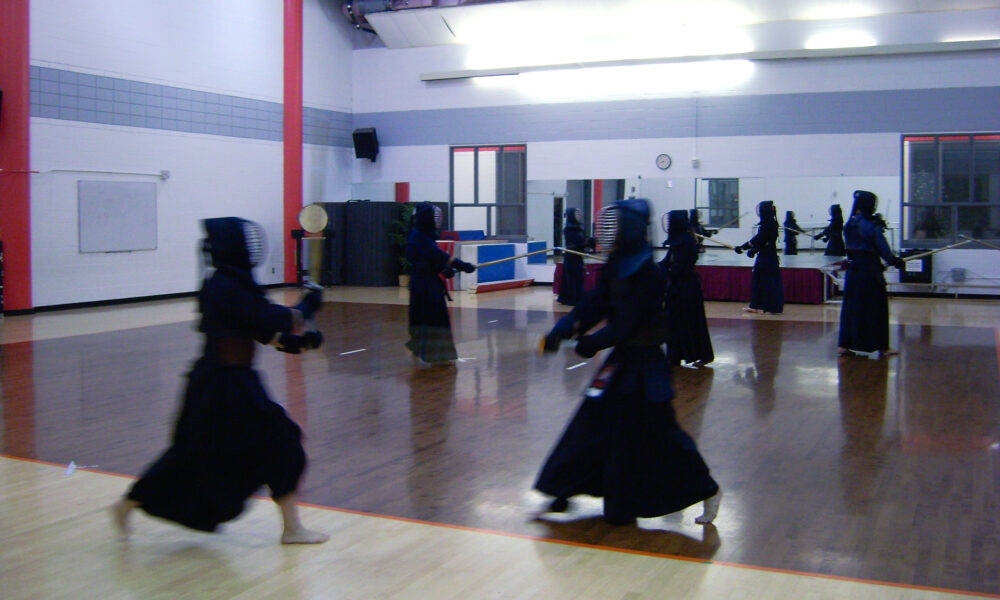
Many McGill students only encounter the McGill Kendo Club through brief glances into the glass windows of the Aerobics Room on their way to the B2 gym. In the hallway, the dull whirl of the air conditioner and the B2 stereo system muffle most of the noise coming from the club’s practice. Yet just a few steps inside, yells, the stamp of bare feet on the gym floor, and the slap of colliding shinai—bamboo swords—echo around the mirrored room and fill the space with sound. 

Kendo is a form of Japanese martial art which focuses on swordsmanship using shinai. This lively period of sparring comes at the end of each of the club’s practices, which are offered as classes at the Athletics Centre. Lesley Roberts, U3 Arts and Vice President Curriculum and Training of the club, explained to The Tribune that these classes are led by experienced sensei, many of whom are alumni from McGill or Université de Montréal. Classes are open to all experience levels and to the general public, not just students.

“At the start of the Fall and Winter semesters, we take people who’ve never done kendo before aside, and usually we rent a separate room, and we teach them all of the basics that they need to know. Then they rejoin the main class on Tuesdays and Saturdays,” Roberts said. “Around your second semester, you’re invited to join Thursdays too, [which] is our day for people who have been in what’s called Bogu—the armor—for a little while.”

Roberts added that self-motivation is an important aspect of practices. This opportunity to challenge herself is among Roberts’ favourite parts of being involved with the club.

“I think every practice is a chance to push yourself as hard as you want, and it’s your choice how hard you work,” Roberts said. 

Throughout the year, the club also performs demonstrations at Montreal festivals such as Otakuthon and YATAI MTL, and attends tournaments to compete against other clubs from across North America. At a competition in November 2023 at the Japanese Canadian Cultural Centre in Toronto, the club’s team of Roberts, Ai Matsumoto, U1 Arts and Science, and Véronique Marchand won first place in the women’s team category. Matsumoto also took home second place in the women’s Nidan and up category.

Matsumoto has been practicing kendo since she was seven, and told The Tribune that a major draw for attending McGill was its reputable kendo club. She highlighted that several of its alumni have gone on to compete for Team Canada, such as Tania Delage.

Outside the gym, the club organizes social events, with past activities including combat archery, disco bowling, and a stay in New York City following a tournament there. Post-practice boba tea is another common outing for the group. 

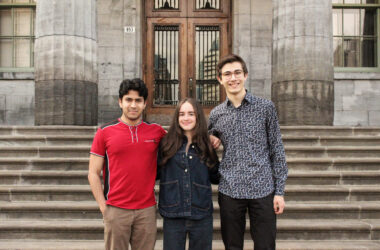
Kevin Nguyen, U2 Engineering, joined the club after having practised fencing for around five years. Nguyen spoke to the club’s sense of community, which he found especially beneficial when he joined as a new student at McGill.

“It’s really good for meeting people,” Nguyen said. “You start out [at university] and you’re a bit lost. You’re like, ‘I don’t know anyone.’ But [through the club] you get to get really close to people. It’s really fun, and a good way to socialize.”

For Matsumoto, the club was not just a way to meet other people at McGill but also a way to connect with a wider kendo community beyond Montreal over a love of the sport.

“If you go to Toronto, you can meet people from the University of Toronto, or just regular people who practice kendo,” Matsumoto said. “You can get to share Instagrams, and you can become friends. The next time you go there, you can text them and be like, ‘Oh, we can stay at your house?’ or [say], ‘Let’s GO train.’ There’s a whole network of people who love kendo and make no money from it. They just love kendo as a passion, and you get to be friends with them.”

The McGill Kendo club’s next competition will take place on Nov. 23 at the Japanese Canadian Cultural Centre in Toronto.

Science & Technology

Neurodevelopment through an infant’s eyes

Before kids obtain the ability to smoothly track a moving object with their eyes, there is a brief period in infancy when this skill is out of reach. Visual tracking, a crucial milestone in our cognitive development, begins to develop about one month after birth.

In a recent publication in the journal Brain and Cognition, Patricia Silveira, an associate professor in McGill’s Department of Psychiatry, explored the relationship between visual tracking abilities in newborns and several factors, including the mother’s biological features, the surrounding environment, and neuromotor development in the infant. Various existing studies suggest that early development of visual tracking has a positive correlation with cognitive skills in the long run. 

“I was always fascinated by the fact that you could check fine motor skills in newborns just by observing the way they could [visually] track a stimulus. In a way, you were testing their future capacity for handling objects, and could even predict things like cognition and more elaborated executive functions,” Silveira said in an interview with The Tribune.

Silveira was interested in investigating how the physical characteristics of both the infant and their surrounding environment were correlated with better eye-tracking capabilities. 

She collected data from 51 pairs of mothers and their newborns through a series of home visits in Porto Alegre, Brazil.

“Maternal behaviour and this interaction with the baby is something that drastically influences development. But for this particular ability, it didn’t make a difference,” Silveira said. “The visual ability of the baby was much more linked to metabolic and nutritional aspects.” 

When the mother’s breast milk had a higher concentration of proteins, the children tended to have a poorer capacity to track visually. However, breast milk with a higher concentration of prolactin and thyroxine—two hormones known for their involvement in child development—was correlated with better visual tracking capabilities.

Although Silveira’s study was conducted in Brazil, she made efforts to ensure the study was applicable to a global population.

“All the instruments that we use are instruments that exist in many different countries and are validated tools. For example, Coding Interactive Behaviour is classic for assessing maternal behaviour. So is the Alberta Infant Motor Scale, which is actually a Canadian tool, but it’s used in Brazil and many other places,” she explained.

In addition to Silveira’s research, there are numerous pediatric studies being conducted in Canada. One example is McGill’s Montreal Antenatal Well-Being Study, a national initiative which examines how different factors affect the likelihood of mothers developing mental health problems during and after pregnancy. 

What differentiates Silveira’s research from the other studies is its focus on collecting in-depth data. The smaller sample size enabled her and her team to collect significantly more detailed information. During home visits, they were able to observe the mother-infant relationship and the living environment, and collect biological samples.

“We don’t have extensive numbers, but we have a very detailed phenotype, which can be an interesting way to look at the research question as well,” Silveira explained.

As both a pediatrician and a researcher, Silveira has long been involved in ground-breaking natal and perinatal studies. The significance of her work can be partially attributed to the philosophy that guides her.

“I think it’s very important to provide support to families and children very, very early and set them up for a good trajectory in life. What motivates me is to really make an impact for the lives of young children,” Silveira said.

Silveira’s work sheds light on the many factors that influence early visual motor skills. Continuing her dedication to her work and her drive to support families, Silveira plans to conduct larger prospective studies to confirm these findings and identify potential biomarkers for early neurodevelopmental outcomes in newborns.

Features

Is oral tradition dead?

“I can always point out your great uncle Charlie right away. I think he must’ve had a different father,” my grandmother says, only half-joking, as we page through family photos together. 

This conversation was one of many small moments where a piece of family history was passed on to me—usually after a couple of beers. It’s the usual sort of material for an Irish Catholic Wisconsin family: Which cousin drowned in which lake, the farmhouse they used to live in next to Dundee Mountain (which is about 50 metres tall, but still taller than anything around), and the trials and travails of having a sibling in every grade of the local elementary and middle school. 

As I’ve gotten older, I’ve tried to patch these stories together into some kind of cohesive narrative, working against the natural inconsistencies of a few tipsy old women burdened with 70 years of Catholic guilt. My view of the story has deepened and evolved over time, as I’ve heard different versions and gotten let in on more secrets. 

Although I didn’t call it this at the time, this was my first experience of what I’ll (somewhat loosely) refer to as “oral tradition.” An exact definition of oral tradition is a little hard to pin down, but we can think of it as a practice that passes on stories, ideas, and knowledge from one generation to the next via the spoken word. 

“Oral tradition is really tied to living culture and stories that are passed down through generations,” Steven High, a professor in Concordia’s history department and co-founder of Concordia University’s Centre for Oral History and Digital Storytelling explained in an interview with The Tribune. “And it’s often tied to the land […], but I think it’s important to actually think broader than that; like every family has an origin story that gets passed down.”

The oral traditions of different families and cultures have varying degrees of structure and religious meaning and also incorporate writing and technology to different extents. To take the example of my family, the stories were relatively unstructured, told in spontaneous bits and pieces, as opposed to being concentrated in a relatively consistent set of stories, memorized and passed on with the aid of formal structures and mnemonic devices. Our family tale also incorporates some writing—parts of the story are only supported by a handful of journals, typewritten documents, and emails. 

Researchers sometimes make a binary distinction between “oral” cultures, with no writing system, where all stories must be passed down through speech, and “literate” culture, with a written body of literature and an emphasis on the prestige and utility of writing. 

However, this categorization ignores the many ways that written and oral material interact with one another. For this reason, Ruth Finnegan proposed the concept of the oral-literate continuum, with different cultures and texts incorporating different degrees of spoken versus written transmission. As Robert Miller writes in his 2012 paper on the topic, “Oral tradition and written literature are related phenomena, and in fact, writing often supports oral tradition and vice-versa.”

This is perhaps more obvious to our generation than it ever has been before: We wouldn’t blink an eye at watching a TikTok with a caption referencing one trend (possibly displayed in two different languages), narration referencing another, and a video of something else. Or imagine a friend of yours sends you an audio message summarizing a book you were supposed to read for class, told in their own style, and tops it off with a couple of pictures of quotes and some emojis. 

Breaking down this binary distinction between oral and literate begs the question: Where do we fall along the continuum? As students in twenty-first-century Canada, how do we experience and participate in oral traditions? Do we at all? In what ways are those experiences supported, changed, or undermined by writing?

For many students, family history is their first exposure to an oral storytelling tradition, but there are often large gaps, where previous generations either did not or could not pass on their stories. 

“A lot of the students I work with come from diasporic communities, and so in a sense, they’re geographically cut off from their heritages,” Anna Sheftel, a professor in Concordia’s School of Community and Public Affairs, said in an interview with The Tribune. “And those are often the students that are really interested in oral history and oral tradition, because they’re trying to put together pieces of a puzzle where they have missing pieces.”

Additionally, while there is often a strong emphasis on oral tradition in Indigenous cultures, many stories have been lost as a result of the Canadian government’s attempt to break the generational transfer of knowledge in Indigenous communities through measures like residential schools and cultural suppression. 

This is a serious hazard of oral tradition: If the last person to remember dies, the stories and knowledge go with them. 

“In memory studies, we talk a lot about how the other side of memory is forgetting,” Sheftel said. “So you’re never going to have the full story, but you have an obligation to understand the silences and why they’re there and acknowledge them.” 

Similarly, if people’s retellings change over time, either intentionally or as a result of changing memories, the stories shift too, and minor differences can add up. 

I recently asked my great uncle Charlie (yes, the one from before) about a story from his youth, and he began his answer with a warning. 

“I’ll do my best,” he told me. “But you know, I’m Irish, and we love stories—that’s one of our big things. So when we get asked questions, and we have to explain things and this and that, we don’t even know we’re not telling the truth.”

Despite my uncle’s trepidation, he’s actually participating in a pattern that’s widely acknowledged among those who study oral traditions and folklore: There’s often a shared set of relatively consistent stories and ideas, which individuals repeat and rework. Each time a given story circulates, its teller makes modifications, either because their memory has shifted, or to adapt it for their audience, goals, and personal style. 

Lynn Kozak, a professor in McGill’s Classics department who has performed the Iliad before live audiences, noted that while these changes introduce instability, they also add something special to a given tradition.  

“There’s something wonderfully human about it too, right? Because it’s like that game of telephone where everybody gets to put their own spin on it. And when I perform Homer, it comes out in my voice, and the way I translate Homer, it’s my vernacular that’s coming out,” Kozak said in an interview with The Tribune

Molly Frost, U3 Arts and Executive Director of Tuesday Night Café Theatre (TNC), described a similar experience in her work with TNC, which often finds creative ways to perform classic plays. 

“It’s really about taking a story that has been told, and breathing new life into it, and finding moments that maybe some of the things that were funny when it was first being performed or first being written, may not be as relevant now, because times have changed and the context has changed, but you can find new things and new moments to bring out,” Frost said.

Since the advent of the internet, folklorists have begun to wonder if this same pattern is at work online, and there is now a growing body of research on “digital folklore.” 

While TikTok is still so new that the academic research on it is thin, Joseph Hewlett-Hall makes the case in his 2023 article “Folklore, Storytelling and Coping with the Internet on TikTok” that trend cycles on TikTok fits the traditional folklore paradigm of “conservative precedent and dynamic transformation,” with each new video both referencing a popular idea and putting a unique spin on it. 

But TikTok and other social media platforms are also clearly different from more traditional ways of sharing folklore. For one thing, they’re on hyperdrive. With short-form content, no geographical boundary on how far stories can travel, and a phone in your pocket at all times, there is an unprecedented opportunity for stories to spread and change quickly. 

Walter Ong refers in a 2013 essay to the “hyperactivated oral world of today,” where electronic media connect us to more oral content than ever before. However, he cautions against assuming that, “since [prehistoric] man was highly oral and we are likewise more oral than our immediate ancestors, we are back in the state of preliterate man once more.” 

Rather, Ong proposes distinguishing between “primary orality,” which describes a culture without a formal writing system at all, and “secondary orality,” where a culture does have an oral tradition, but it exists alongside writing, print, and digital technology. While they can look similar, Ong argues that there are several key differences: For example, since we can use writing as a backup for knowledge, we no longer need to rely on easy-to-remember structures and mnemonic devices to remember stories. He also argues that having writing allows us to place more emphasis on creativity and originality, rather than skill in remembering and retelling existing stories.

These differences began to pop up in our culture as soon as print media became widespread, but the internet has further revolutionized how we pass on stories and knowledge. Crucially, you can now orally transmit a story to someone without any in-person conversation or performance. While this is incredibly convenient for connecting people across time and space, it risks bypassing some of the human aspects of storytelling. 

Kozak spoke about the emotional power of live performance, which is impossible to fully replicate online. “The moment when you’re performing, it’s a shared experience. And I can see people’s responses, and I can see how people are feeling, and you know, I can always see that there’s one person asleep or something, but there’s that space that’s created through orality.”

While students have the opportunity to experience this kind of communal, live performance through student theatre and spoken word events like Mcsway’s open mics, it’s worth exploring campus radio as a kind of halfway point between live performance and podcasts. Radio is an interesting edge-case of oral transmission, since the broadcaster is completely disconnected from their audience in space, but is almost always broadcasting in real time.  

“When you’re doing radio, you’re sitting in front of a microphone and you’re talking to the void, and you don’t know who’s listening,” Jack Solar, CKUT’s Spoken Word Coordinator and McGill alum (MA ‘19), said in an interview with The Tribune. “But I do think of radio as a spontaneous and constant co-creation, so everything that we are doing and broadcasting is meant to become part of the fabric of our communities.”

While the number and variety of radio stations have decreased in recent years, campus radio stations have largely managed to hang on, continuing to provide a platform for students to find and share music and stories that matter to them. 

Lastly, one of the oral traditions we engage in most often as students is also one of the least talked about: University classes. Oral classroom instruction in universities goes back hundreds of years in the modern European tradition, and thousands of years more generally. Originally, this was a result of technical constraints: Prior to the printing press and widespread literacy, getting a bunch of students in a classroom and explaining concepts to them was the most efficient way to pass on information quickly. 

But as the printing press caught on and literacy spread to the middle classes in Europe, people began to wonder if lectures still made sense as a teaching method. 18th-century literary critic Samuel Johnson even went so far as to say we should get rid of them altogether: “Lectures were once useful, but now, when all can read, and books are so numerous, lectures are unnecessary.” In other words, he argued that a literate tradition should supersede the old oral tradition of earlier universities.

And yet, here we are three hundred years later, still (mostly) attending oral lectures as a primary means of learning, although it is deeply intertwined with written materials like lecture slides and course texts. We seem to believe that there is something meaningful about a professor’s unique personal explanation of a topic. We intuitively recognize this value when we complain about a professor who reads paragraphs from the textbook off of their 15-year-old PowerPoint slides: A university lecture is not simply a live audiobook. The missed opportunity of this approach is the missed chance to connect over the material on a human level. 

While we have clearly strayed far from Ong’s idea of “primary orality,” I believe that oral traditions are more alive and present in our lives than we generally recognize. Whether through family history, technology like social media and radio, lectures, and performing arts, we all engage with oral storytelling in our own ways, both as speakers and listeners. While these traditions may be fundamentally changed by print and digital media, they are still alive, and they are still deeply human.


Know Your Athlete, Sports

Know Your Athlete: Caroline Crossley

Having recently returned to Canadian soil one Olympic silver medal richer, Caroline Crossley was a prominent member of the Canadian Women’s Rugby Team at the 2024 Paris Olympics. As an incoming student in the Faculty of Law, she has had to balance a demanding curriculum with her international athletic commitments. 

Like many McGill athletes, Crossley’s love for rugby began at a young age. She was encouraged by her friends to join a local team. The lack of girls’ teams at local clubs meant Caroline and her peers had no choice but to play for the boys’ team as her introduction to the sport. As rugby grew in popularity, Crossley played a pivotal role in establishing women’s programs at her local club and high school with the help of her father, David Crossley, who organized the first girls’ team at their local rugby club. Within four years of organizing the team at her club, Crossley’s exceptional talent caught the attention of the Canadian national team, leading to her selection for the Canadian national sevens team at just 16 years old.

“It was really easy to have role models, they definitely helped me find confidence in the sport,” Crossley said in an interview with //The Tribune// on the impact of being surrounded by so many high-performance woman athletes. 

Crossley is excited to transfer her confidence on the field into the classroom. With aspirations to juggle a rigorous law school schedule with international rugby competitions, it will be no small task. Crossley candidly discussed the challenges she faces, including time management, the anticipation of her academic pressures, and the physical demands of both pursuits. However, she remains optimistic about her ability to excel in both realms.

“It’s a constant balancing act, but I’ve learned to prioritize and make the most of every opportunity,” Crossley said. “I think my whole life I’ve been balancing a thousand things, like when I was in high school, I was travelling internationally and trying to keep up with high school. I’ve taken courses all throughout my national team career and had to balance those things.”

Despite the challenges of juggling life off the field with her athletics, Crossley’s dedication and determination are propelling her to new heights. Competing in the Paris Olympics was a dream come true for her. 

“We weren’t sharing the stadium with the men, like we had our full weekend to ourselves, and we had almost 70,000 people watching us [in a] sold-out stadium at our quarterfinal. And I was like ‘Oh, my God, all these people are here to watch us,’” she said. “It was definitely a full circle moment for me, because I honestly never thought that that would be a reality within my lifetime.” 

Looking ahead, Caroline expressed her desire to continue playing rugby while pursuing her law degree. She emphasized the importance of exploring various career paths and building a well-rounded identity beyond her athletic achievements, to develop herself in a more holistic and professional manner. 

“I think for me, I [am] actually kind of excited to shed my athlete identity a little bit coming into law school, because it’s just something so different,” Crossley said. “I am very ready in my life to pursue other passions. I love rugby, but I’m not one of those athletes that’s like, this is my be-all, end-all, and I’m going to stay in the sport as long as I can.” 

Crossley is a strong advocate for gender equality in rugby and within the sporting world, having witnessed firsthand the strides made in recent years. However, she acknowledges that challenges persist, emphasizing the need for continued support and investment in women’s athletics. 

“It’s incredibly inspiring to see the growth of women’s sports, but we still have a long way to go to ensure that young girls have equal opportunities to pursue their athletic dreams,” she said.

Crossley’s journey from grassroots rugby to the global stage is a testament to her unwavering dedication and exceptional talent. As a woman athlete navigating a sport dominated by men, she has faced unique barriers. Despite these challenges, her perseverance and leadership have been instrumental in fostering a more inclusive and equitable environment for women in rugby.

Beyond her athletic achievements, Crossley’s commitment to academic excellence and personal growth is equally inspiring. Her ability to balance demanding law school coursework with international competitions demonstrates her remarkable determination and resilience. As she continues to break down barriers and inspire the next generation of woman athletes, Caroline Crossley’s future is undoubtedly bright.

Arts & Entertainment, Books

‘A Way to Be Happy’ book review: Short stories for a rainy day

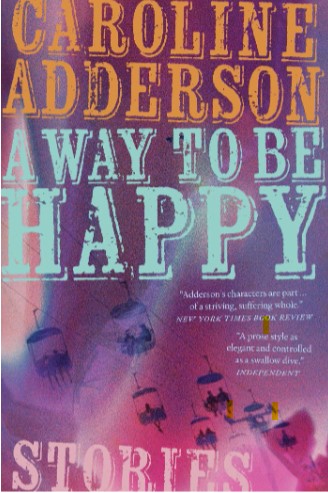
A Way to Be Happy is the latest work of short stories by Canadian author Caroline Adderson. Adderson, who currently lives in Vancouver, B.C., has published five novels and several popular children’s books. 

The eight stories in this collection range from mundane to fantastical, showcasing the benefits of the short story as a form; without reading an entire novel, you get to experience a variety of tales. Adderson weaves between stories without losing her artistic voice, delivering compelling narratives throughout. Each story in A Way to Be Happy exists within its own world, shaped by the unique characters within it. Whether dealing with a routine colonoscopy, a string of holiday robberies, or moving to a new town, the stories’ uniting factor is, as the title suggests, a consideration of what happiness is—and what it means to find it. 

Adderson’s prose is straightforward but doesn’t flatline;  every word choice feels intentional. When she goes into detail, it is perfectly placed to highlight her characters’ idiosyncrasies, making the reader empathize with their struggles. The beauty of a short story collection is the narrative diversity which means that, hopefully, there can be something for everyone. Here are some of my favourites.

“From the Archives of the Hospital for the Insane” is a poignant depiction of a group of women attempting to help a young girl escape from the hospital they have been admitted to. While the women’s names are fictionalized, their experiences are not. In the acknowledgments, Adderson reveals that she took inspiration from British Columbia’s Provincial Hospital for the Insane in the early 20th century, using records from the BC Archives to shape her story. She incorporated quotes from real patient files to highlight the historical attitudes towards women’s mental health. Adderson shows the tenderness and solidarity the women develop through their shared circumstances and explores their agency, even in a marginalized position.

“Yolki-Palki” is the story of Varlam, a Russian hitman with a mysterious lung disease who begins to recall past events, some of which he has a hard time placing. Though they are fuzzy, Varlam keeps returning to visions revolving around an older woman and the forest. He struggles to understand the source of his distress and isn’t sure if he’s dreaming, but as the story progresses, his visions solidify in his mind. When Varlam finally understands his illness, so do the readers, and we see how the natural imagery within the story comes to symbolize Varlam’s lost innocence and unresolved guilt in a dream-like ending. 

In “All Our Auld Acquaintances Are Gone,” Adderson follows a couple, Corey and Taryn, on New Year’s Eve in Vancouver. After losing their friend Kayla to an overdose, the pair infiltrate a holiday party to rob it so they can make a new life somewhere else. We follow Taryn throughout the night, who struggles with her confidence more than Cory, creating internal conflict. Adderson explores the difficult experience of grief in relation to the glimpses she gets of the partygoers’ lives. Despite being the shortest story of the collection, Adderson skillfully balances character-building and narrative tension. Her stories also incorporate Canadian locations and brands, making this story and others more familiar to Canadian readers.

These humorous and touching stories are perfect for a rainy day this upcoming fall, whether you’re an avid reader or someone looking to get into it.

A Way to Be Happy by Caroline Adderson will be available at local bookstores on Sept. 10.

Out on the Town, Student Life

The best thrift stores for fashion and sustainability

We all share a responsibility as consumers to seek the most ethical and practical options—the best way to do this is to thrift. Thrifting consists of shopping at second-hand clothing stores that offer other options than fast-fashion outlets, which contribute to modern slavery, countless human rights violations, and environmental issues worldwide. Turning towards this alternative to expand your wardrobe is both a conscientious and affordable choice—perfect for students on a budget! After all, shopping ethically is the key to being truly fashionable. 

Here are some stores you can visit for good finds.

La Boutique Les Petits Frères 

Boutique Mont-Royal, 1284 avenue du Mont-Royal Est

Boutique Gilford, 1380 rue Gilford 

Located in the Plateau Mont-Royal since the 1980s, La Boutique Les Petits Frères presents thrift clothing, vintage items, jewelry, books, toys, and furniture. There are currently two Petits Frères boutiques in the Plateau, situated a short walk away from each other, both restocking well-curated items daily. All revenue generated goes towards the Little Brothers Foundation, which funds programs to support Quebec seniors and counteract isolation among the elderly. La Boutique Les Petits Frères welcomes volunteers from various backgrounds and prides itself on providing excellent customer service. 

Mala MTL 

Rosemont, 5425 rue de Bordeaux suite 101-F 

Mala MTL is a Latinx-owned and operated plus-size thrift store offering sizes from L to 6X. Founded by Sandra Munoz Diaz in 2018, this independent business aims to promote body positivity through affordable clothes, vintage items, accessories, jewelry, and commissions for custom pieces. Shopping for plus-size clothing has been and continues to be especially challenging, with most stores putting little to no effort into offering fitting and stylish size-inclusive clothes. Diaz displays her passion for fashion by creating a safe place for the plus-size community and hand-selecting various quality pieces. You can catch the frequent promos of the store on its Instagram account @malamtl, with “2 for 1” deals and items going for $10 CAD and below!

Salvation Army Thrift Store

Côte-des-Neiges/Notre-Dame-de-Grâce 1620, rue Notre-Dame ouest Montréal ― Centre, 7066, rue St-Hubert 

Montréal ― Sud, 4025, rue Wellington, Verdun 

The Salvation Army is a Christian Protestant church and international charitable organization serving more than 130 countries worldwide. They offer a wide range of clothing, shoes, fashion accessories, books, toys, antiques, and more. The stores provide accessible shopping for people with disabilities by ensuring access for wheelchair users and people with mobility aids. It also participates in a program to help reduce waste production in Canada and the profits finance its services.

Renaissance 

Saint-Léonard, 4127, rue Jean-Talon Est 

Outremont, 1085 avenue Bernard 

The renowned and go-to thrift store Renaissance is a non-profit organization. You can find one at almost every corner of Montréal, offering exceptionally affordable selections—most clothing items cost less than $10 CAD, and you can find many pieces from well-known and trendy brands by browsing through the racks. Renaissance has welcomed volunteers with mental and physical disabilities for more than twenty years. Plus, if you’re looking for a day of thrifting, you can pass by the two Les Petits Frères boutiques in Plateau Mont-Royal, conveniently located beside Renaissance Plateau.

Eva B 

Ville-Marie, 2015 Boulevard St-Laurent

Eva B is a Montréal-based vintage boutique decorated with an 80s flair and a vegan café inside. The store has shoes, jewelry, books, paintings, artsy pieces like modified mannequin torsos, and furniture making the place unique. While the bottom floor is reserved for selected vintage items predating the era of fast fashion—with prices over $25 CAD—the top floor offers more modern and affordable clothes starting at only $3 CAD. Eva B’s bistro/bar presents a selection of drinks, sandwiches, and sweets you can enjoy inside, including a $1 CAD espresso! Eva B preserves the authentic thrifting experience of hunting for good finds and also has a second boutique called Eva D just a minute’s walk away. You can donate or sell clothes and receive store credit for your next purchases! 

McGill, News

TAs urge McGill to uphold contract at back-to-school rally

Call-and-response chants of “Union! Power!” punctuated the Association of Graduate Students Employed at McGill (AGSEM)’s back-to-school rally on Sept. 4. AGSEM, the union representing teaching assistants (TAs), exam invigilators, and Academic Casuals such as graders and tutors at McGill, held the event to mark their full return to instruction after a lengthy TA strike in the spring. 

The strike, which lasted three weeks, came to an end on April 15 when AGSEM and the university formed a new collective agreement (CA) dictating pay and working conditions for graduate employees. Although the CA ensured a pay raise for TAs—six per cent retroactively and three per cent in future years—McGill has not yet met the deadlines for remittance established by the back-to-work protocol agreed upon. 

The university agreed to compensate TAs for any unpaid hours worked before the strike. They additionally agreed to retroactively compensate TAs by paying the difference in the hours paid at the pay raise level established by the new CA versus the original pay level. According to rally organisers, McGill committed to paying AGSEM members for all hours worked at the base pay level by June 20 and then with retroactive effect by July 19; however, McGill has yet to finish making these payments. 

AGSEM delegate and McGill Physics TA Nick Vieira expressed the need for pressure against the university to receive the benefits of the CA in a speech at the rally.

“This contract doesn’t mean a whole lot unless we work with each other to defend and follow it, and unfortunately, at every turn, McGill has not followed that […] contract,” Vieira said. 

In a written statement to The Tribune, McGill’s Media Relations Office (MRO) reported that the university has been “in a transition period” since reaching the CA with AGSEM in the spring. The MRO maintained that they continue to collaborate with the union on any outstanding issues.

AGSEM organisers also reintroduced their No More Free Hours campaign at the rally, urging attendees to keep careful track of their time worked this school year. Vieira explained in his speech that 48 per cent of TAs at McGill work an average of 13 hours over their contract, which amounts to $470 CAD of unpaid labour per semester.

Vieira also spoke to the importance of continuing to advocate for the union and its members’ rights.

“We went on strike, we worked hard to get it, we owe it to those who came before us, and we owe it to ourselves to defend our contract,” Vieira said.

Speakers at the rally additionally addressed the labour negotiations that have begun between AGSEM’s invigilator unit and the university in advance of the expiration of the current, invigilator-specific CA. Magnus L’Argent, President of AGSEM, reported that the union hopes to raise the current invigilator wage of $18 CAD an hour due to understaffing and the physically demanding nature of the role. 

In a statement to The Tribune, the MRO expressed optimism about future negotiation with AGSEM’s invigilator unit.

“As for negotiations with AGSEM’s invigilators’ unit, the collective agreement expires in December 2025 and we expect the negotiations will go well,” the MRO wrote.

Several other McGill unions showed their support at the rally, including the Association of McGill Professors of the Faculty of Arts and the Association of McGill Professors of Law (AMPL), who are currently on strike.

Evan Fox-Decent, the President of AMPL, addressed the crowd—including many fellow Law professors associated with the union—outside the Bronfman Building.

“Only by working and fighting together will you make your working conditions and our students’ learning conditions better for all, and keep us together as a community and not […] splintered […] as McGill would otherwise [want],” Fox-Decent said. 

Similarly, Dallas Jokic, an AGSEM member involved with CA negotiations during the winter 2024 term, affirmed the importance of inter-union support.

“The employer has a lot of advantages against us […] access to the fanciest union-busting lawyers that money can buy, [and] they have connections [among] politicians and in the media,” Jokic said. “But the advantage that we unambiguously have over the employer is that McGill works because we do.”

Arts & Entertainment, Film and TV

Misogynistic tropes in ‘Strange Darling’ overshadow its thrills

Content warning for sexual violence and violent content. Contains Spoilers for Strange Darling.

With an endorsement from The Haunting of Hill House creator Mike Flanagan on its poster, JT Mollner’s latest film, Strange Darling, is receiving high praise from Stephen King and critics as a shocking and brilliant new thriller. It follows two characters named in the opening sequence as “The Lady” (Willa Fitzgerald) and “The Demon” (Kyle Gallner) who play a cat-and-mouse game after a one-night stand turns into an unidentified serial killer’s latest spree. While the film has unique stylistic elements and strong acting by the leads, the twist left a feeling of discomfort as it played out to the end. 

Strange Darling begins by announcing that it was shot entirely on 35mm film. Its most notable stylistic aspect is that the story is broken up into six parts, shown non-linearly. It starts with Part 3: We see “The Lady” running through a field for her life as a cover of “Love Hurts” by Z Berg plays, clearly referencing the deadly turn their potential relationship has taken. The fragmented storytelling purposely confuses the audience as the first two parts immediately follow, starting violently with no build-up. As evidenced by the name “The Demon” and the loud, ominous score that accompanies his onscreen appearances, the audience is led to believe that he is the serial killer. 

Despite the promise of a shocking twist, it was no shock to me that Fitzgerald’s character was the serial killer instead. By watching the one-night stand unfold, we see their kinky dynamic progress as her sexual desires turn darker. A shot from the film’s opening of “The Demon” choking her is recontextualized when it is revealed that she requested and encouraged this violent act. The film could have delved deeper into the kink aspect of a budding relationship like the films Secretary and Sanctuary. Instead, in a typical femme-fatale act, “The Lady” uses “The Demon’s” sexual desire for her to incapacitate him with drugs and attempts to murder him after finding out he is a cop. The cat-and-mouse game ensues as he gets away and then hunts her down. 

My distaste for Strange Darling was strongly shaped by the final parts of the film and the dangerous message they convey. As “The Lady” finally kills her target, the cops show up and a troubling scene emerges. She pulls down her pants and falsely claims that “The Demon” raped her in an attempt to get away. The female cop immediately believes her claims while the male cop has doubts despite the violent scene she shows. After the revelation that Fitzgerald is the serial killer “The Electric Lady,” the cop’s initial disbelief of a self-proclaimed sexual assault survivor is proven right. 

However, only a small percentage of rape allegations are false, which raises the question of why this was included if not to be used as a fearmongering example of a vindictive woman. In what could have been a compelling film about a female serial killer, the film chooses instead to play on unfounded fears of men who feel unease about the #MeToo movement. This male fantasy of a lying woman being punished is clear when the film ends with her apparent death.

While Strange Darling stands out among recent horror films for its inventive structure and gorgeous cinematography, the misogynistic tones of the ending sequence left me feeling troubled. “The Electric Lady” is not given enough backstory to make her a compelling character—though Willa Fitzgerald does much heavy lifting with her powerful acting skills, especially when she realizes that she has truly been caught. In 2024, a film’s final message should not translate to “women can lie, too”—especially when concerning sexual violence. 

 Strange Darling is now playing at Cinema du Parc

Read the latest issue

Read the latest issue