



Latest News

Features

In Search of Silence

Who ever sits in silence anymore? 

Imagine me in my bed. It is past midnight, dark but never perfectly dark. The curtains glow ghostly white in the columnar light of my phone screen. Streetlight pours over my static body. I am lulled by the sound of Seinfeld, the sitcom dialogue running like a current through my headphones, the laugh track looping until I lose consciousness. This is how I sleep.

Imagine me in the shower. Any time of the day or night, the bathroom is transformed by warm LEDs into a pseudo golden hour. My phone rests upside down on the metal grate of a shower caddy, sprayed with droplets from the busted showerhead. YouTube videos play on shuffle. I am only half listening; waterfall drowns everything into a murmur. This is how I shower.

Imagine me making dinner. I cut onions, grate garlic, open cans of beans with firm twists of the wrist and hand. Vegetables sweat and simmer on the stove. My eardrums thrum with the rhythm of a reality television argument. A woman decides she hates her boyfriend. Someone says someone else is “really fake, right?” I smile at the cutting board and shake my head, detached, tethered to the present moment only by the smell of toasting spices and the slicing knife’s haunting sharpness. This is how I cook.

Imagine me on the sidewalk. There is a hat over my ears or a scarf against my cheeks, protecting me from the wind, cupping the frozen mist of breath against my face. The muffle of headphones softens my footfalls. Between my ears, two women dissect Canadian politics, a mortician deadpans an unsolved murder case, a twenty-five-year-old reads his old tweets and laughs aloud. This is how I walk.

I have rarely felt silence in almost three years.

My need for constant entertainment began in high school. While applying for university, the pressure of GPAs, admission averages, and potential rejection caused me to have what my doctor called ‘a bit of an episode.’ As I started to spiral, I adopted some ironclad coping habits. I struggled to get out of bed in the morning, so I let myself watch Netflix once I left my room. I struggled to shower, so I played podcasts or YouTube videos from my phone speaker. I struggled to sleep, so I stayed up watching Family Guy reruns until I couldn’t keep my eyes open. The common theme was noise. For months, I worked diligently to ensure that I didn’t spend a single waking moment in the terrifying emptiness of quiet. I was never fully feeling, never fully living, always distracted.

During that time, thinking was a risky ordeal because I suffered badly from intrusive thoughts. Silence posed an opportunity for my brain to fill in the blanks—even innocuous moments, like waiting for class to begin or riding the bus or shaving my legs, were an opening for some devious mental popup. Chain-smoking endless streams of content felt like the best form of protection. Being constantly entertained didn’t come without costs: These practices alienated me from myself and the tertiary experiences of my life. But the habits allowed me to go through the motions and maintain my sanity. After a few months, I got a diagnosis, started on meds, and became less miserable. Still, my need for noise stayed. 

Constant entertainment was not just my personal depression life hack—it’s a scientifically vetted strategy. Experiencing occasional intrusive thoughts is not uncommon, but when intense and frequent, they quickly become distressing. If you’ve ever sat in a quiet meeting and felt you might start yelling uncontrollably or gotten the overwhelming sense that you might hit someone while driving, you have had an intrusive thought. They only become dysfunctional when you can’t turn them off.

How do you cope with a stream of distressing thoughts you can’t seem to stop? A 2014 study on OCD found that using “distraction as coping behaviour is an effective technique for managing clinically significant intrusive thoughts.” Scientists determined that people’s ability to distract themselves from intrusive thoughts was essential to their ability to function. Instead of enduring the cycle of becoming upset and calming themselves down, patients could shift their attention before they had begun processing an emotional situation. While they couldn’t fully work through whatever had upset them in the moment, the strategy was adaptive, allowing participants to continue operating without becoming inconsolable. 

Luckily for stressed-out people craving distraction, there is an endless variety of options to choose from, ranging from a minor auditory earworm to a fully immersive virtual world where no real-life concerns can intrude. We all know intuitively that music is pleasant, and television and podcasts are engaging, but nothing shuts your brain off completely like a TikTok or a Reel—they are a perfect trifecta of sound and image and text. Even better is combining multiple kinds of distraction at once, scrolling TikTok while you watch a show and online shop in a second tab. There are a million jokes on X (previously known as Twitter) about consuming five different types of content to eliminate the possibility of a single thought, but they are only half-joking. Distraction can feel more silent than actual silence, because it may be the only time that you get peace from your internal monologue. 

“Not only do I have music playing at all times, but playing it out loud feels too far away […]  so I keep my headphones on […] I usually fall asleep to TV if not music,” said Gianna Mountroukas, U3 Arts. When I asked why, she admitted she’s “tired of thinking” constantly—she feels like she’s “never in silence” even when the music is off. Like me, she is hungry not just for physical quiet but moments of internal peace, respite from a tireless stream of consciousness. These can be difficult to achieve without the aid of distraction. 

Although the studies I discussed deal with mental illnesses, this process can exist with any kind of stress for any kind of brain. Even if you’re predisposed to mental wellness, just checking the news is enough to send anyone into a spiral. There is an endless list of things that you might want to avoid thinking about. Accordingly, many of my peers reported complicated relationships with silence. 

Several of the people interviewed for this article described a love for background noise. Rowina Debalkew, U3 Arts, said that silence “can be both comforting and disturbing” depending on the circumstance, but she “can’t walk anywhere without music.” Theo Shouse, U2 Arts, said “Silence [is] only for sleep. Otherwise, I require constant podcasts and music.” Alvise Ceolato, U2 Arts, explained he only enjoys silence while smoking, as he’s forced to “listen to the pace of [his] breath.” Otherwise, he says silence “makes me feel like I need to judge myself and try to look at my own true colours.”

These reports indicate a widespread use of distraction as a coping mechanism. Dismissing our collective obsession with entertainment as stupidity or sloth is an incomplete conclusion—clearly, something deeper is going on. Still, recognizing that we distract ourselves for a good reason does not mean the practice is beyond reproach. 

Personally, I began to wonder just how much I was blocking out. It had been too long since I sat with myself and puzzled through any big questions because I’d learned to avoid mental pathways that could end in anxiety. But over the summer I decided I wanted to reconnect with myself, with that internal monologue I had been blockading. I needed to reflect: What am I like when nobody else is around? Am I happy with how I’m spending my time? What are my dreams? 

You can’t work these questions out with yourself in a 15-minute rap session. They require time and deep attention, the cumulation of many little ideas and realizations during the passing moments of your life. I got worried that I had robbed myself of many such moments because I was scared of what I’d feel along the way. The more time I spent in quiet, growing less and less afraid of what awaited me there, the more I felt the floodgates open. Instead of coping by preventing the upset before it began, I tried to complete the emotional cycle. I let myself fully experience my thoughts, fretting and crying and whatever else I needed to do to process them. Once I learned to sit with the discomfort, my brain became more peaceful. Silence became soothing. Being deeply connected to my surroundings allowed me to ground myself in times of stress and refocus on what was happening in the world outside my head. 

I’ve seen promising signs of others reconnecting with their ability to exist without digital distraction. There was that New York Times article about the Neo-Luddite teens, who meet up to paint watercolours in the park instead of going on their phones. There’s the You Don’t Need a Smartphone pamphlet  by New York indie writer August Lamm, who is trying to help others reclaim their attention and time. And there are the people ‘raw-dogging’ long flights, braving 19 hours with no entertainment. A BBC news article published in Aug. 2024 identifies the trend as a result of “collective yearning for balance as people seek to reclaim mental space and foster a deep connection with their inner selves.” McGill student Gaby Godfrey, U4 Arts, described this practice on a smaller scale—whenever they fly home they “have to sit alone with [their] thoughts for a minimum of 45 minutes,” if only to prove they can. Instead of using quiet moments as opportunities for distraction or productivity, I see a growing respect for the ability to unplug. Granted, it’s strange that doing nothing is not just a normal part of everyday life, but a bizarre enough practice to warrant a ‘trend’ and a place in the news cycle. Still, I’m glad the idea is coming to the fore.

I heard many other heartening accounts of my peers taking back their quiet time too. Sam Batson, U3 Arts, used to feel the urge to “consume media at every given moment,” before she concluded that this habit “increases stress rather than soothes it.” Now, she loves “just chilling in all the natural noises of life.” Instead of constantly listening to music, Celia O’Hara, U3 Arts, has begun taking silent walks—she finds them better for reflecting and reconnecting with her sensory environment. And when I asked Johnny Carter, U3 Education, about quiet, he said it makes up a significant portion of his normal day. He missed it badly at summer camp, where the kids preferred constant music blasting. 

I’ve been rejoining the world in this same way, a little at a time. I took a month away from Instagram. I have downloaded countless social media time-saving apps from the webstore. I own a physical notebook and a dusty typewriter. I’m learning to fall asleep in silence again, to shower with only the sound of the water running. These steps might sound small, but the habits are deeply ingrained and shockingly hard to kick. Being bored can be scary and uncomfortable, especially when the feeling has grown foreign—sitting in silence has become a skill which must be cultivated. 

The idea that you feel better when you’re not constantly entertained is well-documented and intuitively obvious. But to address this pervasive issue, I think we must first give ourselves more credit, recognizing that we do these things for a reason: To make ourselves more comfortable and our lives more livable moment-to-moment. Understanding this behaviour for what it is—a coping mechanism—helped me unburden myself of guilt for what I thought was laziness or a character flaw or me wasting my own time. Once we correctly identify the problem, we can start to regard coping strategies like distraction with appropriate criticism, and effectively weigh the short-term comfort against the long-term costs.

I’m not suggesting we all throw away our headphones and embrace a monk-like reticence. That would be hypocritical—I’m listening to music as I type this. But I think that the ability to sit with your thoughts, to be bored, to endure the joy and discomfort of every tedious and terrifying and wonderful moment of your life, is an undervalued skill. If you, like me, crave distraction, don’t just slap yourself on the wrist when you see your screen time report—try to identify what you’re avoiding. If you want to nurture this skill, start small. Sit on the bus or an airplane or the curb and look around, notice everything you can, listen to what happens when you aren’t wearing headphones. 
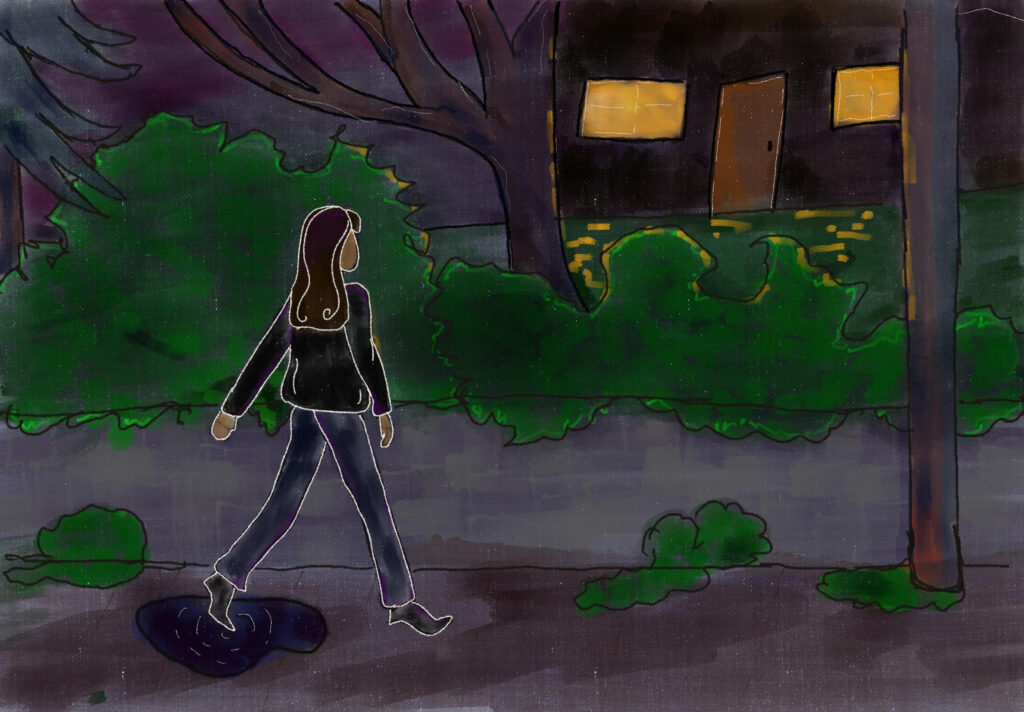
Imagine me walking through my neighbourhood at night. It’s twilight and the sidewalks are abandoned; the sky is all grey clouds, the power lines and houses darkly contrasted, the yellow windows lit from within. My pant legs swish past each other at the knees as I walk. The wind makes a shushing noise as it moves through the trees. 

It’s quiet. My thoughts are no longer too large for my body. I bet yours aren’t either— but you should see for yourself. 

Editorial, Opinion

Military spending fuels oppression, not peace

Canada’s military spending has recently faced increased scrutiny, with the United States urging the Trudeau government to meet the North Atlantic Treaty Organization (NATO)’s defence spending target of two per cent of their GDP. As one of the lowest spenders on defence among NATO allies, Canada has continuously faced criticism from U.S. officials for its perceived lack of commitment to military investment. In the context of Canada’s pervasive ties to the colonization of Palestine, increased military spending directly furthers Canada’s involvement in violence that contradicts its values of protecting human rights and promoting peace. Paralleling McGill University’s private investments, Canada’s federal budget allocations directly contribute to the ongoing genocide of Palestinians. Without divestment from the Israeli state and its enterprises, Canada and its complicit institutions—including McGill—will remain bloody-handed. 

Canada’s complicity in Israel’s terror reflects a broader issue of military expenditures supporting systems of oppression and colonialism. Meeting the spending target would place a large strain on Canada’s budget, especially while the country faces pressing issues such as high living costs and underfunded social programs including healthcare and education. The choice to spend an already exhausted fiscal budget on the deployment of special officers to support Israel’s killing of Palestinians, rather than prioritizing domestic needs, reflects an interest in the propagation of violence abroad over the wellbeing of its own people. 

In only three months, Canada exported more military goods to Israel than it has in the past 30 years—and Canadians are calling for their country to stop this funding. This is evident in its colonial military expenditures, its extensive history of genocide against Indigenous peoples, and its legacy of slavery.

Historically, Canada has often relied on the U.S. as a shield from international scrutiny. In return, Canada has supported U.S. interests in the Middle East by endorsing Israel as a key ally. As Canada faces a critical decision now, it must confront its historical shortcomings and decide whether to act in line with its so-called “peacekeeping” reputation, even if that means differentiating itself from its neighbours and allies. This decision is pivotal in defining what Canada truly stands for, as well as encouraging its institutions, such as McGill, to act accordingly. By not succumbing to pressures in meeting the two per cent NATO target, Canada will be taking an active step towards ending its complicity in violence. 

Students worldwide have frequently been at the forefront of protests against military funding. In 1985, McGill became the first Canadian institution to divest from South African apartheid—a decision that was monumental in the movement against imperialism in South Africa, with a major impact on federal funding towards the apartheid. Decades later, McGill refuses to do the same with respect to the genocide of Palestinians. The contrast between the university’s explicit condemnation of Russia’s invasion of Ukraine and its refusal to recognize the war on Gaza as genocide by Israel—instead referring to the humanitarian crisis as a “geopolitical conflict half a world away”—demonstrates its commitment to upholding structures of white supremacy. With the International Criminal Court convicting Israel of their genocidal operations in Palestine and people worldwide criticizing the actions of the state, Canada and McGill continuing to fund genocidal investments cannot be justified by NATO obligations or other external excuses.

Considering recent events like the forceful dismantling of McGill’s Palestine Solidarity Encampment and the administration’s violence against students, it is evident that student action towards divestment is imperative. Given that student tuition funds enforce McGill’s ties to Israel, the university’s decision to solely focus on tuition hikes as a student issue, while ignoring transparency about investment allocations, further illustrates McGill’s disingenuous approach. Universities such as McGill have increasingly been operating as businesses, prioritizing lucrative investments in sectors like weapons manufacturing over the values and welfare of their students.

To implement meaningful change, McGill’s leadership must align their investment practices with ethical standards and engage with student movements, not just in promise but in practice. This will not only compel the Canadian government to acknowledge that one of its leading institutions rejects genocide, but it will also forge a transformative new legacy for the university. Students, particularly incoming freshmen, have a vital role in this process. They should educate themselves about ongoing campus issues, join activism efforts, and ensure their voices are heard in shaping the future of their institution. By staying informed and engaged, students have the power to guide our surrounding institutions toward a future where spending reflects a prioritization of morality over exploitation.

Art, Arts & Entertainment

Saints, Sinners, Lovers and Fools subverts time

Standing in the final room of Saints, Sinners, Lovers, and Fools, I find myself transported into an era abundantly different from my own. My eyes glance over the drapery of richly pigmented paint layers, taking in the synthesis of colour, subject, and function. On the walls hang over 20 paintings, with sculpted borders of golden wood and gilded frames just inches apart. I stand in a recreation of a 16th-century “Cabinet of Curiosities,” a private collection of artifacts used to convey a vast knowledge of the universe. The show recaptures a time when paintings like these were hung in private homes, plainly tacked onto wooden walls, only glanced at casually while walking from room to room. We stand in the art cabinet as if beings from the past, in swooping historical silhouettes, assuming the role of a 16th-century noble to shoulder the fears, desires, and cultural anxieties of this early modern Flemish population.

The exhibition Saints, Sinners, Lovers, and Fools has been on view at the Montreal Museum of Fine Arts since June 8. Organized in collaboration with The Phoebus Foundation, the curators include Chloé M. Pelletier, known for her focus on pre-1800s European art, and Phoebus’s own Katharina Van Cauteren. It is a pictorial navigation through the cultural foundation of the Low Countries and a glimpse into the Flemish psyche, one of anxious consternation of the looming afterlife ahead.

Upon entering the first room, entitled “God is in the Details,” we are greeted with an extension of diverse visual mediums: A wooden statue of a saint, an ornately decorated illuminated manuscript, two triptychs, and several paintings, all of religious sentiment. The divinity of these images is accentuated by the use of gold leaf and rather surrealist imagery. Following the toils of the Black Death, the Low Countries found salvation in contemplating the world that follows life; art became a medium of cultural exploration, both for use in spiritual practices and an examination of anxieties surrounding death. 

The room’s highlight comes in the form of a painting, a surrealist representation of a fiery afterlife: 1540’s “Hell,” painted by a follower of Hieronymus Bosch. The imagery is all-consuming, engulfing the viewer in its rabid eccentricities to convey the overarching presence of religious fear in the Southern Netherlands. In one corner, a beaked creature devours a human; in another, dogs gnaw hungrily at the stomach of a knight while a flying fish impales five souls right beside. These depictions of anguish and suffering exhibit themselves in this surreal landscape as a manifestation of the nation’s restless uncertainty about what accompanies death. Its inclusion is a masterclass in curation, elevating a placated religious apprehension that, after its viewing, accompanies all other artworks in the room.

The symbiotic flow of galleries continues as subject matter ebbs and flows, highlighting noble portrait art, the sins of societal “fools,” scientific discoveries, and the ever-changing progression of the Flemish spirit in times of war and struggle. Notable works of Anthony van Dyck and Peter Paul Rubens adorn the walls alongside works from the MMFA’s own art collection. 

The Montreal leg of this exhibition contains several pieces owned by the museum, including Lucas van Valckenborch’s astounding 1595 scene, A Meat and Fish Market (Winter). While it typically hangs in the Pavilion for Peace’s third floor, the work is brought to life amongst these complementary Flemish works. These selected paintings are exceptional additions to the show, contextualizing many pieces seen regularly by the Montreal community in a culturally congruent space.

The selected works of Saints, Sinners, Lovers, and Fools solidify curation as an art form in itself. Every room, every wall, and every painting holds resonance in defining a Flemish identity. Immersing oneself in this culture and exploring the emotions of the period allows for seeing a rendered beauty in its fear and trepidation. It redefines art as cultural remedy and illuminates emotions long forgotten.

Saints, Sinners, Lovers, and Fools runs until October 20, 2024. Tickets are available online or in person at the MMFA.

Ask Ainsley, Student Life

Ask The Trib: Your guide to thriving socially in your first semester at McGill

Dear Tribune,

I’m starting my first year at McGill and am struggling to figure out how to connect with people and make friends, whether in my program or elsewhere on campus. I feel lost socially and worry that this might prevent me from fully enjoying and making the most of my first year.

Do you have any tips on how I can navigate this new environment?

Sincerely,

Socially Overwhelmed Student (SOS)

Dear SOS,

Your feelings and concerns are completely valid and resonate with many incoming students (we’ve all been there). Making new friends and meeting people in a large environment like McGill can be overwhelming. Whether you’re a newcomer or a returning student, navigating campus life and building connections can feel daunting. However, there are many ways to form long-lasting connections at McGill without getting stressed.

Making friends in your program
The first few weeks can be a bit tricky. Many students might be dropping or switching classes, which can make it harder to find a steady group on campus. However, don’t let this discourage you. In the meantime, try sitting near someone alone in your classes. Fellow students are often in the same position as you—feeling a bit lost and looking to make new friends. Starting a conversation can be as simple as asking questions about the course material or the professor. This approach not only breaks the ice but also helps you find common ground with your peers. 

When it comes to meeting people in your program, try not to stress too much. You have the entire year to connect with classmates, and it’s natural for friendships to develop over time. Even if you don’t chat with people on the first day, it is never too late to do so. Sometimes, your closest friendships may form just weeks before the semester ends. Stay open to meeting new people and avoid putting pressure on yourself or comparing your social progress to others.

Attend campus events

If you’re part of a faculty, make sure to follow their official social media page, as well as the page for their undergraduate student association. Faculties at McGill organize tons of events on and off campus year-round, and sometimes even host meet-ups in local pubs and bars. What better way to meet people and be more involved on campus than by embracing opportunities offered by your own faculty? These events provide valuable opportunities to connect with faculty members and students in your field of study. 

Another way to meet new people on campus is by attending events hosted by McGill. The school often hosts intramural and varsity football, soccer, hockey, and basketball games where university teams compete against each other and other schools. Keeping up with the latest updates from //The Tribune’s// Sports section is a great way to stay informed about athletic events.

Explore clubs and volunteer opportunities

While it may sound cliché, one of the best ways to make friends on campus is to step out of your comfort zone. With over 250 clubs, there’s undoubtedly a match for everyone’s interests at McGill. Whether you’re into fashion, writing, social activism, or sports, there’s a club waiting for you. Explore club listings on Instagram to connect with student groups and organizations, enriching your McGill experience. Don’t miss out on the Students’ Society of McGill University’s (SSMU) Activities Night on September 11-12, where many SSMU groups showcase their offerings, providing a chance to interact with executive members and sign up. You could also find community in identity-based organizations like the Black Student Network, the Spanish and Latin American Students Association, and the Arab Students Association, among many others. 

Additionally, searching for volunteering opportunities at Activities Night or through the McGill website is a fantastic way to engage with the campus community and meet like-minded students. Not only will it strengthen your academic CV, but it will help you make friends.

Don’t forget to be yourself

At the end of the day, the best way to meet new people and make the most out of your academic year is by being yourself. By remaining authentic, you will attract the right connections and opportunities. Trying to fit a mould or certain expectations can be exhausting, so take a deep breath, relax, and enjoy your new year at McGill.

Commentary, Opinion

Sowing the Seeds of Health: Macdonald campus practices should spread to downtown

As the Fall term begins, so does the reality of budget-conscious student eating, considering the lack of fresh produce on students’ plates. Whether that is due to their longevity or expense, many students encounter barriers when buying fruits and vegetables. But what if quality fruits and vegetables are more accessible to McGill students than it seems? 

While there are vegetable baskets available at the downtown campus through the McGill Farmers’ Market every Thursday until October, the Macdonald campus’ efforts towards accessibility and visibility for local produce are undoubtedly superior. 

Located only 32 kilometres away from downtown campus, the Macdonald Campus Farm boasts 240 hectares of land—it is McGill’s own living laboratory. Graduate and undergraduate students alike are taking their plant breeding research beyond the lab to the field to foster produce of better quality and higher yield, while simultaneously integrating pest management control. Genetic improvements are leading to better colour, taste and shape of fruit and vegetables— integral factors in consumer decision-making. This work is predominantly based at the Horticultural Research Centre, a space consisting of orchards, vegetable research plots, fruit grading equipment and cold rooms. It has also sparked the McGill Feeding McGill project that supplies 25000 kg of fresh produce—including green peppers, red peppers, butternut squash, and strawberries—each year across Montreal. Furthermore, the Macdonald Student Ecological Garden (MSEG) grows their own produce for their weekly market stall at the Sainte-Anne-de-Bellevue farmer’s market and for their basket subscriptions to Montreal communities. 

The projects led by McGill’s Macdonald campus are increasing agricultural awareness and promoting agricultural education. They encourage local consumption of improved produce and avoid the excess packaging often seen in supermarkets.  However, the wide-scale accessibility and visibility of the projects have not been adequately broadened to the downtown campus. 

Such projects are certainly benefitting Macdonald Campus students socially, financially, and environmentally. However, the same cannot be said for students based at the downtown campus. Innovations so close to home remain out of reach.  Such efforts must be made accessible to students across both of McGill’s campuses through increasing mobility between the two, raising the Macdonald  campus profile, and providing more opportunities for Macdonald campus representatives and speakers downtown to make the presence more known. A shift in attention could prove critical, as around 37,000 of the over 39,000 students enrolled at McGill are based downtown. If anything, this statistic highlights the importance of knowledge, accessibility, and visibility in reaching each and every student in every faculty at McGill, not just those based at Macdonald campus. While the tradition is wonderful, the weekly McGill Farmers’ Market isn’t enough to point students in the direction of the organic, affordable produce coming from the Macdonald Campus Farm. Eating sufficient fruit and vegetables plays a crucial role in a healthy lifestyle, especially for students. So, let’s hope that soon the secret wonders of the Macdonald campus will move those 32 kilometers to downtown, or else our shopping baskets will remain a little less full and our platefuls the same boring beige.

Student Life

Top-tier terrasses

Montréal truly comes alive during the warmer months, when restaurants swing their doors—and ceilings!—open to transform into al-fresco dining rooms. These charming outdoor spaces attract both locals and tourists alike; enjoying delicious dishes and refreshing drinks while soaking up the precious sunlight is an unparalleled experience. The Tribune presents our favourite spots for you to try for yourself. 

1. Taverne Atlantic

Step into this Art Deco tavern in the Mile-Ex and you’ll instantly feel like a character straight out of a Wes Anderson film. The trendy ambiance, unpretentious meals, and extensive list of sumptuous refreshments accommodate solo dinners, dates, and a friends’ night out. For cocktail enthusiasts, the Royal Daïquiri and the Indian Summer are a must. If you’re feeling peckish, they offer gourmet pizzas, hot dogs, and poutines. Don’t forget to make your way to their rooftop barbecue where beer, music, and food lovers reunite to enjoy picturesque views of the neighbouring post-industrial landscape. 

Address: 6512 Park Ave
Hours: Every day 4 P.M. –1 A.M.
Price : $-$$

2. Poincaré Chinatown

If you’re a fan of fermented foods, there is no better place than Poincaré’s rooftop. Start with any of their curated low-intervention wines, artisanal liquors, or mocktails. While clinking glasses, make your way through their house-made confectionaries—sourdough, kimchi, and seven-day lacto-fermented fries with confit shallot mayo are must-try dishes. This breathtaking rooftop terrasse fizzles with love and care, and you’ll likely make a point to come back for their sleek seasonal creations every time you’re near Chinatown. 

Address: 1071 St Laurent Blvd, second floor
Hours: Sunday-Wednesday 4 P.M. – 1 A.M., Thursday-Saturday 4 P.M. – 2 A.M.
Price: $$

3. Club Social PS

Although most Montréalers have heard a thing or two about the sophisticated contemporary Italian eatery Elena, few know that by day, it transforms into a haven for promenaders seeking to escape the Notre Dame strip. Discover the charm of Club Social PS in Saint-Henri by savouring Elena’s famous Caesar salad, the “M. Funguy” wild mushroom and taleggio pizza, or their mouth-watering mafalda pasta. This is exactly what makes Club Social PS the perfect spot for a laid-back lunch accompanied by a bottle of wine. This relaxed yet refined terrasse combines casual elegance, welcoming staff, and top-notch flavours. Soon enough, you’ll understand why this superb restaurant consistently receives high ratings from world-renowned critics like Claire Saffitz.

Address: 5090A R. Notre Dame O, entrance by Parc Yamaska (Located behind Elena and accessed from around the back)
Hours: Monday-Thursday 4:30 P.M. – 10 P.M., Friday-Sunday 11:30 A.M. – 11 P.M.
Price: $-$$

4. Perché

The attentive staff, hints of the West Coast, and globetrotting wine list make Perché a standout from all the ultra-popular contenders in the Old Port. Nestled on the fourth floor of Hotel William Gray, their stellar menu screams summer, and their vibrant cocktails will make you feel like you hopped on a plane to California. For the ultimate beach resort experience, we suggest ordering their guacamole, peach salad, and salmon tartare while washing them down with a Ungava gin and tonic. If you’re lucky enough to be in the area on a Wednesday or Saturday summer evening, world-class fireworks accompany this unforgettable outing. We promise that by the end of the night, you’ll be thankful to have chosen the lesser-known of the two terraces in the elegant Hotel William Gray. 

Address: 153 Rue Saint-Amable, fourth floor in Hotel William Gray
Hours: Monday-Wednesday 12 P.M. – 10 P.M., Thursday-Friday 12 P.M. – 11 P.M., Saturday-Sunday 10:30 A.M.–11 P.M.
Price: $-$$

News, SSMU, The Tribune Explains

The Tribune Explains: SSMU’s Gender Affirming Care Plan

Accessing gender-affirming care at McGill can be overwhelming, intimidating, and time-consuming. As we reach the mid-point of the Change-of-Coverage and Opt-Out Period, which falls between Aug. 14 and Sept. 27—The Tribune brings you a guide to SSMU’s Gender Affirmation Care (GAC) Plan, which was first introduced in Fall 2023. 

Who is eligible?

The GAC Plan falls under the dental portion of SSMU’s Student Care Plan, meaning that it automatically covers both international and domestic undergraduate students. Canadian students can change their health insurance coverage between Aug. 14 and Sept. 27, or between Dec. 11 and Jan. 30 if they begin the academic year in the winter term. During this period, Canadian students can unenroll from SSMU’s Health and Dental Plan, or choose to enroll their spouse and/or dependents. This option is not available to international students. Since SSMU offers the GAC, it is exclusively available to undergraduate students at McGill’s Downtown Campus. 

What does GAC cover?

The initiative is meant to supplement provincial coverage and the International Health Insurance (IHI) plan—provided by McGill and insured by Medavie Blue Cross. Therefore, when looking to submit a claim to insurance provider GreenShield for reimbursement, students must first check if their existing healthcare insurance covers it.

The only procedures that are not covered across all 13 provinces and territories and are thus guaranteed to be eligible for coverage through the GAC are vocal surgery and vaginal dilators. However, since gender-affirming healthcare options vary across Canada, students may be able to claim a variety of procedures like breast augmentation, facial feminization surgery, tracheal shaving, and laser or electrolysis hair removal that may not be covered by their provincial insurance or the IHI plan. Fertility preservation is not covered by the GAC. 

The GAC covers a maximum of $5000 CAD per procedure, with claims for reimbursement limited to a lifetime maximum of $10000 CAD. 

What are the GAC’s limitations?

To the Resources Coordinator at the Trans Patient Union (TPU) Sam*, the GAC Plan has two important shortcomings. First, they explained the GAC’s maximum offered coverage is not enough to take care of most procedures not already covered by provincial or international insurance that students are likely to need. Sam explained that both the maximum coverage per procedure and lifetime maximum amounts are insufficient. 

“For a lot of procedures that patients are going to want to get, this coverage is just wildly inadequate. For example, when you’re talking about facial feminization surgery, those costs are measured in multiple tens of thousands of dollars,” Sam said. “This plan is good for these smaller procedures like hair removal, [but] if you want to get a surgery covered under [GreenShield], they are probably not going to make a huge difference.” 

Second, Sam noted that Greenshield requires students to receive a gender dysphoria diagnosis from a doctor or nurse practitioner before accessing care, despite the fact that it is not a requirement for receiving gender-affirming care via Quebec health insurance. 

To be diagnosed with gender dysphoria, patients typically have to experience symptoms for six months. While this creates a barrier to accessing care, Sam noted that practitioners at the Student Wellness Hub have been willing to work with students and provide diagnoses without waiting for six months. 

How can students pursue care?

Sam stated that the Wellness Hub is a good place to start for students looking to begin receiving gender-affirming care as it provides quicker access to treatments like Hormone Replacement Therapy, since wait times are faster than many other clinics in Montreal.

Sam also suggested that students looking to receive gender-affirming care get in touch with the TPU, which has a number of resources for students and provides one-on-one support to people who need help with their transition.

*This name has been changed to preserve the individual’s identity.

Behind the Bench, Sports

The Tribune’s sports moments of the summer

The adrenaline has been high this summer, with several high-profile tournaments and events falling within months of each other. Alongside annual events such as Wimbledon and the Formula 1 Grand Prix that draw tens of thousands of fans every year, this summer also featured the UEFA European Championships (Euros), the CONMEBOL Copa America, the International Cricket Council (ICC) T20 Men’s World Cup, and, most notably, the Summer Olympic and Paralympic Games held in Paris. Five writers from //The Tribune// break down their favourite moment from this summer of sports.

UEFA European Championships – Matias Plasencia Sanchez

Spain entered the Euros as one of the dark horses of the competition, despite their illustrious history. Their triumphant run from 2008 until 2012, in which they won two consecutive Euros and a World Cup made them one of the best international squads of all time. But a lot had changed since then—most of the players from that squad had retired, and their Tiki-taka style had aged. 

That was until December 2022, when the Spanish Football Federation decided to appoint Luis de la Fuente as the new manager of the Spanish National Team. This new head coach had a different approach from traditional Spanish managers in the past, as he ushered in younger, speedier players like Lamine Yamal and Pedro (Pedri) González López over veterans—a strategy that proved successful. Though Spain was not a tournament favourite, they were able to win all of their group-stage matches, beating highly-ranked teams: Croatia, Albania, and Italy. 

They later faced off with Georgia in the Round of 16 and beat them 4-1, leading them to move on to face the home favourites Germany, who they narrowly overcame by scoring a late goal to reach the semi-finals. In a thrilling semi-final matchup, Spain edged out France 2-1, thanks to a spectacular goal from the 16-year-old rising star Yamal. They faced England in the final, where a late goal secured Spain’s fourth European Championship title. As a Spaniard, watching my country secure its first major triumph in 12 years was undoubtedly the highlight of my summer. 

Biles and Chiles on the Olympic podium – Lialah Mavani

This summer, as everyone around me became consumed by the Olympics, I was equally captivated. Like many others, my eyes were focused on the gymnastics events and on watching Simone Biles, following the scrutiny she had received for withdrawing from the 2020 Tokyo Olympic Games

I was particularly in awe of Biles’ sportsmanship toward her competitors despite the adversity she has faced. One moment that stood out to me was during the floor competition. After Biles and her teammate Jordan Chiles placed second and third respectively on the podium for the Women’s Floor event, there was a powerful moment in which the two bowed down to Rebeca Andrade, the winner of the event. This act was seen as both a sign of respect and sportsmanship from the two American gymnasts to their Brazilian counterpart for her remarkable skill as one of the few gymnasts to beat Biles on the Olympic stage. 

This moment was very significant to me because this was the first time in Olympic history that there was a podium filled with all Black athletes. Seeing three woman athletes of colour reach the peak of their sport felt pretty incredible, not only because they made history in a traditionally European-dominated sport but also due to Biles and Chiles’ discussions around mental health. The two are constantly proving to the world how resilient they are as both athletes of colour and athletes who have openly struggled with their mental health. Figures like Andrade, Biles, and Chiles are so important in both highlighting the prominence of mental health in sports and paving the way for so many young aspiring athletes of colour.

USWNT wins gold in Olympics – Anoushka Oke

It’s been a rough few years for American women’s soccer fans, years during which the U.S. Women’s National Team (USWNT) most notably got knocked out of the semifinals of the 2020 Olympics by Canada and out of the 2023 World Cup Round of 16 by Sweden. After the post-World Cup resignation of head coach Vlatko Andonovski—who had often been criticized for the team’s underperformance—and a short interim period, former Chelsea Women head  Coach Emma Hayes was hired as the new manager. Hayes’ tenure started strong, and going into the 2024 Olympics, she was yet to lose a game—which, combined with the availability of exciting young players like Sophia Smith, Trinity Rodman, and Jaedyn Shaw, offered a beacon of hope for USWNT fans. 

The USWNT flew through the group stage and won every game, then handed 1-0 defeats to Japan in the quarterfinals, Germany in the semifinals, and Brazil in the finals. Seeing the team receive their medals felt like it symbolized the end of an era of heartbreak for American fans of women’s soccer. It was exhilarating to see how competitive the tournament had been—as it is indicative of the fact that more and more countries are investing in women’s soccer. It was even more exciting to see that the USWNT can still emerge successful against such tough competition. I’m so excited to see how the identity of the team continues to be built around this core of young, talented players, led by Hayes and her depth of experience.

Sue Bird’s legacy – Shani Laskin

I went to the Seattle Storm’s 25th anniversary game back in June and haven’t been able to shut up about it since. The Storm faced the Connecticut Sun, claiming victory in the end with a score of 72-61. 

Sitting in the Climate Pledge Arena, surrounded by both long-time fans and people new to women’s basketball, I felt so grateful to be able to cheer on my favourite team in such a momentous game. Throughout the game, history reels played on the jumbotron highlighting key moments in the team’s history: From the inception of the Storm to Sue Bird’s recruitment, to the team’s four WNBA Championship wins, it was a powerful reminder that while women’s basketball has seen a recent surge in popularity, they’ve been hustling for decades.

After the game, the crowd was encouraged to stay back to watch the top 25 Storm players be recognized for their contributions to the team. I watched as each of the women received their awards, and met the rest of their acclaimed peers on the court. Knowing that current players like Jewell Loyd and Ezi Magbegor were included among the ranks of Sue Bird and Lauren Jackson, I’m so hopeful for the next 25 years of Storm history.   

Wimbledon Men’s Singles final – Zain Ahmed

The summer was filled with some headline sports moments—but none quite captured my eye like the Wimbledon Men’s Singles final between Novak Djokovic and Carlos Alcaraz. As an avid tennis player in my high-school years, this was a match that had everything a player or fan would want: Thrilling comebacks, stunning individual performances, and a climactic finish between one of the greatest players in tennis history, and his ambitious young contemporary.

The final was a battle of wills between two of the biggest players on the scene today. Djokovic, the defending champion and widely-loved legend of the sport, was seeking his eighth Wimbledon title, while Alcaraz, the rising star, was looking to add another tally to his growing list of accomplishments. The match was a marathon, lasting over four hours and featuring some of the most spellbinding tennis shots I have ever seen.

The final set was a rollercoaster of emotions, with both players forcing each other to their limits. In the end, it was Alcaraz who emerged victorious, securing his first Wimbledon title and cementing his status as one of the best players in the world. The celebration that followed was a joyous occasion for Alcaraz and his team, as they had achieved something truly remarkable.

This moment holds a special place in my heart. Watching one of my tennis idols go toe-to-toe with a young player I have watched ace his way onto the biggest tennis stages was more than just spectatorship; it was a chance for me to reflect on the power of the human spirit, the thrill of competition, and the beauty of sport.

Behind the Bench, Sports

An uneven playing field: The economics of underrepresented sports

Spectator sports have long been a cornerstone of global culture, captivating millions of fans and generating substantial economic value. From cricket and football to golf and rugby, these events have the power to inspire, unite, and entertain. Financial investment plays a pivotal role in shaping the landscape of these sports, driving growth, popularity, and economic impact. However, excessive investment can also lead to unsustainable growth, compromising the core values and traditions that define these beloved pastimes.

In recent years, cricket, for example, has experienced a surge in popularity and financial investment. In particular, the rise of Twenty20 cricket (T20)—with its fast-paced format, glamorous style, and emphasis on entertainment—has attracted new fans and expanded the sport’s global reach. T20 cricket is currently pioneered by the Indian Premier League (IPL). Players are on higher-paying contracts, teams have cheerleaders and more sponsorship, and therefore more fans. While the IPL already exists and is arguably the most popular variation of the sport from a spectatorship perspective, other formats of large-scale cricket—such as the Cricket World Cup—are increasingly revealing themselves on the global stage. This growth in the game has been fueled by significant investments from various sources: Private equity firms, government bodies, and corporate sponsors such as JP Morgan, Jaguar, and Samsung, to name a few. 

One of the most significant benefits of financial investment in spectator sports like cricket is the potential to increase popularity and viewership. A swell in marketing budgets, enhanced promotion, and improved accessibility can attract new fans and expand the global reach of these sports. The success of T20 cricket’s global expansion and the recent influx of Saudi Arabian investment into the 2024 LIV Golf series are prime examples of how financial resources can fuel growth and engagement.

Moreover, these financial investments in sports can improve infrastructure, leading to better facilities and training grounds, as well as enhanced spectator experiences. The plans for the development of world-class cricket stadiums in the United States and the growth of rugby infrastructure in Canada testify to the transformative power of financial support. Increasing grassroots introductions to these sports and augmenting their representation on both a micro and macro level will be transformative. Such investments can simultaneously contribute to talent development, therefore enhancing competition.

However, excessive investment in spectator sports can also pose significant risks. For instance, too much cash flow can create inflated salaries and transfer fees, leading to unsustainable wage growth. In the long run, this creates financial instability and compromises the competitive balance within the sport. The English Premier League has experienced rapid growth due to large-scale investments, but this has consequently led to concerns about the sustainability of the league’s financial model.

Furthermore, the pursuit of commercial gain can often lead to changes in a sport’s core values and traditions. Often spoken about, the transition of soccer from an easily accessible universal sport to an obscenely overpriced spectator sport and extortionate business model has diluted the public’s love of watching the game. Additionally, the commercialization of cricket has increased scrutiny about the potential erosion of its unique spirit and cultural significance. Excessive focus on financial returns within sports can create pressure on leagues and teams to prioritize short-term gains over long-term sustainability, increasing the risk of economic instability and even a potential for bankruptcy.

The Toronto Arrows, a professional rugby team inMajor League Rugby (MLR), provide a cautionary tale. Despite initial success, the team struggled to secure sustainable funding and ultimately ceased operations. This case highlights the importance of a balanced approach to financial investment in sports, one that prioritizes the long-term health and sustainability of the league.

The future of spectator sports will undoubtedly be shaped by the interplay of financial investment and core values. While financial support can drive growth and enhance the experience for fans, it is essential to avoid excessive investments that could compromise the integrity and sustainability of these popular pastimes. By striking a balance between commercial interests and the preservation of tradition, sports can continue to thrive and captivate audiences for generations to come.

Horoscopes, Student Life

The Tribune predicts: Back-to-school season horoscope

While the beginning of a new school year is usually synonymous with the unknown and doubts about what’s to come, the stars may already have a glimpse of what this semester will look like for you. 

Aries (Mar. 21 – Apr. 19): Get ready to enter your fashion era. Like leaves changing colour at the beginning of Fall, this season is going to hold a shift in style with new outfits to surprise your fellow classmates. Thrift shops are your ally this semester. 

Taurus (Apr. 20 – May 20): Be careful where you walk, Taurus! You tend to be a little distracted, already missing summer and constantly searching for the sun in the sky. But with the amount of construction happening on campus, you should watch your step to avoid a dramatic fall.

Gemini (May 21 – June 21): Success is on its way! Your new nickname is “academic weapon”. Straight A’s are coming for you this semester, and you’ll deserve them. Office hours hold no secret for you, and you’ll have absolutely no trouble locking in.

Cancer (June 22 – Jul. 22): New motto unlocked: “A healthy mind lives in a clean space.” Cleanliness will be your strong suit this semester. Your personal space will always look brand new and feel cozy. This will take a huge burden off your shoulders and allow you to be fully invested in your activities, much to the relief of your parents. 

Leo (July 23 – Aug. 22): Remember, patience is key. Things might not always go your way this semester, but it is only a matter of perspective. If you survived the line for OAP, you can overcome frustration without a doubt. You’ll do great in every aspect of your life as long as you are willing to take a step back and not rush into things. 

Virgo (Aug. 23 – Sept. 22): Luck is on your side! All your classes are recorded, your exam dates fit your hopes to a T, your profs are nice and engaging, you don’t have a class up the hill, and life is good. Enjoy this break—it won’t last forever!

Libra (Sept. 23 – Oct. 23): While school is not necessarily your priority this semester, your social battery will never run dry. You’re about to become an expert in BdA, 4à7, and Blues. Be prepared to have a buzzing social life. 

Scorpio (Oct. 24 – Nov. 21): Just like the delicious smell of grilled cheese in the Leacock basement on a Thursday night, love floats around you. You’ll be the remaining rays of sunshine when the fall clouds kick in, and everybody’s going to want to feel your warmth. 

Sagittarius (Nov. 22 – Dec. 21): You and the libraries are going to be the most iconic duo this Fall. Birks is your new home, and it will make your study sesh look like a Pinterest board 24/7. However, you may sometimes forget that you need to actually do work there, so keep your eyes on the prize.

Capricorn (Dec. 22 – Jan. 19): With a Tim Hortons cup in your right hand and a reusable water bottle in your left, balance is the key word for Capricorn. You’ll have absolutely no trouble going from a hectic party at Gert’s to a study session in Schulich at all. This semester is going to check all the boxes!

Aquarius (Jan. 20 – Feb. 18): Hibernation might start a little early this year. The stars are expecting power naps regularly and full 10-hour nights of sleep. All-nighters and excessive consumption of caffeine are not on your agenda. Both your physical and mental health will thank you in advance.

Pisces (Feb. 19 – Mar. 20): Pisces rhymes with coffees—and yes, that’s plural. Montréal overflows with cute and trendy coffee shops that you’ve never tried, despite your friends’ constant recommendations. This never-ending cycle is finally over. Fall 2024 will be the coffee season you’ve been dreaming of.

Read the latest issue

Read the latest issue