

Latest News

Opinion

LIFE LINES: To Infinity and Beyond

The glitz and glamour of attending a prestigious university in a sexy city can be quickly extinguished by seven a.m. wake-ups, whole libraries worth of reading assignments, and that smug bastard in your history class who seems to expertly manage both. Before long, you’ll experience the long lines at the Arts basement Subway and the cyberspace torture that is Minerva, then you’ll really start feeling depressed.

But we’re big kids now, right? We’ve made it this far, to a place where light afternoon reading could be titled “The Ecological Validity of a Non-Valid Probably Improbable City-State” by Professor Tweed Jacket. Which is exactly why I want to start off the year with the following key words. Pay attention: they may determine your success at McGill. Here we go: Finding Nemo, Toy Story, Ratatouille, Up, and Wall-E

That’s right, animated films. And good ones. If there’s something all these films have in common it’s that you probably liked them. If you didn’t, you are in one of the most distinct minorities in the history of mankind. There are more people in the Solidarity For Cute Puppy Haters club than in yours. Why is this? Because these films have consistently maintained that goal of all endeavors: creative excellence.

Since its humble beginnings, Pixar has consistently produced high-quality movies. Pixar’s journey has been fascinating to follow, with personal creativity and product quality continually in conflict with larger, strict financial goals. Despite initially being overbearing, Pixar’s parent company, Disney has been swayed by a consistent record of success to step aside and gradually give the animation studio greater independence. Among the company’s executives are people like John Lasseter, Brad Bird and Pete Doctor – artists, not standard corporate big-shots. They’re the ones actually directing the films. How often do the creators of art seen by millions have almost full control over how that art is made and displayed? Less often than Minerva makes sense, that’s my estimate.

The Pixar story is a random case for inspiring resilience at McGill, but it’s a fitting one. At McGill we are constantly surrounded by an atmosphere of competitiveness that demands results. Through such a process we fit into the overall structure of the institution. There is a fine line between a culture that fosters success and one that requires its own nuanced version of it, a line McGill often flirts with. It’s bound to get tricky when the organization that rewards accomplishment is also the one that defines it. But in the face of everything, remember our computer-generated friends, from the fish who got lost to the rat who can cook. Pixar was by no means getting high fives from Disney right off the bat, but now they have to dodge thankful bear hugs 24/7. It’s because they stuck with their own definition of excellence from day one.

Yes, we are big kids now. We have made it here. But let’s not roll through it; let’s rock it with eyes wide open. Whether the prof gives you an A- or a B on an essay, a student newspaper tells you to think this and that way, or a campus group says boxers – not briefs – are the way to go, know that part of striving for excellence is defining it for yourself.


Opinion

EXCHANGING MINDS: The Art of Understanding Each Other

“The mind of a bigot is like the pupil of the eye. The more light you shine on it, the more it will contract.” – Oliver Wendell Holmes

A polarizing topic comes up. We get anxious. Adrenalin floods into our veins, and our hands shake with the rhythm of our drumming hearts. We don’t just disagree. We disagree big-time. This is a sensitive subject, and today we will not compromise. Today, we are settling the score.

We are prisoners of our nervous systems. We salivate over the opportunity to enter intellectual combat. I want to destroy your arguments. You want to explode mine.

With our emotions hijacked, we do not realize that our engagement is severely impoverished, and our discourse inevitably fruitless. Indeed, we will both walk away with our beliefs reaffirmed and our mutual hatred reinforced. Instead of understanding you through your experiences, I fill in the blanks with my own prejudices. In the end, my heart oozes hatred towards an enemy carved out of my own ignorance. You become a deformed shadow of my own evil.

Has the thought of exchanging not just thoughts, but entire perspectives, ever occurred to you? What if we swapped minds for an hour and understood one another’s sincerest intentions? What if you could look through a window and see into my sincerest intentions? What if I could replay, episode after episode, the very experiences that weaved together your moral fibre, and understand you as you ought to be understood?

Last week, three young Canadian Muslims (one a McGill alumnus) were arrested for allegedly partaking in a terror plot. No evidence has so far been released, no verifiable facts exposed, no hearing conducted. Still, these men are already considered terrorists by many Canadians. Stephen Harper took the opportunity to alarm us about the “very real threat” of “homegrown terrorism.” So much for presumption of innocence.

That the likes of Canadian-born-and-raised Dr. Khurram Sher, respected pathologist, father of three, superstar hockey player, even a former Canadian Idol contestant, are being cynically used by Muslim Canadian Congress founder Tarek Fatah to justify nation-wide suspicion of anyone with ties to Pakistan, Afghanistan, or Somalia – no matter how thoroughly Canadian – is embarrassing in the land of true patriot love.

Earlier this year, we saw our country criticizing the wardrobe of a handful of Canadian women, and dictating to them how they ought to dress. Isn’t that oppression?

Bigotry also reigns in the debate over the Islamic Center in Lower Manhattan, with thousands of Americans likening it to the erection of a statue of Hitler at the former site of Auschwitz. Another mosque, Masjid Manhattan, has been there since 1970, even before the Twin Towers. Doesn’t this imply that all Muslims are complicit with the attacks on 9/11, and that all mosques are training grounds for terrorists?

When will we take the time to ask our fellow Canadian her reasons for wearing the niqab? When will we invite Canadian men and women – besides alarmists like Tarek Fatah and his ilk – to talk on our shows and express those mainstream views of Islam adopted by millions of Muslims, not just a few radicals?

We must remember that bigotry is a process, not an event. Next time we find ourselves infuriated by an individual or a group, we must ask ourselves a prudent question: did we exchange minds?

Montreal, News

For the Gazette, no more Sundays

Twenty-two years after its introduction, the last copy of the Sunday Gazette hit Montreal’s dépanneurs and doorsteps on August 1, cutting the Gazette’s printed editions down to six days per week.

The venerable newspaper-Montreal’s sole English-language daily-made the announcement in mid-July, citing the small amount of advertising dollars brought in by the Sunday edition.

“The Sunday edition has always been a challenge to break even on,” said Bernard Asselin, the newspaper’s vice-president of advertising and sales, in a recent interview. “The ratio of advertising, the revenues from circulation and so on were always challenging.”

Most of the Sunday Gazette’s popular content has been moved to the expanded Weekend Gazette, which publishes on Saturdays. Susan Schwartz’s science-focused column, the newspaper’s Social Notes feature, and The New York Times Sunday crossword puzzle have all made the shift.

Some readers were disappointed at the Sunday edition cancelation, Asselin said, but others were happy to make the adjustment as long as The Times puzzle remained in the paper. “I don’t think we’ve lost a lot,” he said.

The Gazette cut no jobs when it made the change, and the newspaper said that it will devote the resources freed up by the Sunday edition’s cancelation towards increasing its online coverage.

The Sunday Gazette’s cancelation came just a year after La Presse, one of Montreal’s three French-language daily newspapers, cut its Sunday edition as well.

“It’s part of a very broad trend of cutting and trimming,” said Marc Raboy, the Beaverbrook Chair in Ethics, Media and Communications at McGill. “We’ve seen newspapers like the Gazette shutting down entirely in the past year or two, especially in the United States. I think we have to be prepared for that possibility in Canada as well.”

Other newspapers have tried to boost their weekend circulation numbers by offering special promotions. The New York Times, for example, advertises special subscription rates for its Friday, Saturday, and Sunday editions under the moniker “The Weekender.”

As big metropolitan dailies attempt to adjust their business models to an increasingly Web-oriented world, other newspapers may consider moves similar to the Gazette’s.

“I think, on the whole, we’re going to see conventional newspapers trying to reduce costs without drastically reducing their services,” Raboy said. “The Sunday edition is an obvious place to do that.”

McGill, News

McGill Campus Becomes Pedestrian Friendly

McGill took several steps to make campus more pedestrian-friendly this summer, drastically reducing the number of vehicles on both Lower Campus and McTavish Street.

On May 28, McTavish Street was closed to cars and non-official traffic was eliminated from across campus. Changes included the removal of parking spaces, restricted delivery hours, and the required dismounting from bicycles on campus.

“We wanted to create an environment that was free of parking and try to start dealing with some of the transportation issues,” said Jim Nicell, McGill’s associate vice-principal (university services). “We have cyclists, cars, delivery vehicles and pedestrians all in the same area.”

The move was part of the university’s broader Greening McGill initiative, as well as an attempt to create a safe environment for pedestrians on campus. Although cars are still seen on campus, fewer parking spots and restricted delivery hours between 7 and 11 a.m. have significanly reduced traffic.

“We had to make sure that whatever traffic that does occur there is the minimum possibility of an accident,” Nicell said.

Cyclists not travelling to the university have been asked to take the bike path on University and de Maisonneuve rather than cutting through campus. Those entering the campus are asked to dismount their bikes.

“[Cyclists are] not to ride their bikes on campus, so we ask them to dismount and that’s a difficult challenge,” said Pierre Barbarie, associate director of University Safety and Security Services, adding that disputes constantly arise between cyclists and security agents.

“We have issues with the cyclers in terms of not respecting the rules, challenging our agents, and our agents being verbally assaulted on a daily basis,” he said.

“[Security agents] are the messengers and they have taken abuse that nobody deserves to take,” he added.

Although happy with the changes, Students’ Society Vice-President Internal Tom Fabian explained that the initiative has also brought a lot of complications.

“There’s not a bunch of cars lined up all over campus and that’s great,” he said. “But it has caused tons of hell for us to not have any cars on campus during Frosh and Open Air Pub, too. We don’t know when [deliveries are] going to arrive. I don’t want to have a deliverfree campus.”

Fabian agreed, however, that cyclists should dismount on campus.

“There’s a lot of bikes that come in that are not McGill students because it’s a very convenient way,” he said. “[So] we just have a huge amount of bikes coming through and that’s just taking away from students walking around, which can be annoying.”

Barbarie said that every other form of transportation requires a certain amount of walking and that biking should not be the exception.

“Certain cyclers feel that sense of entitlement that they can get anywhere with those two wheels and nobody should be telling them what to do or how to ride,” he said. “You’re not supposed to be jaywalking, so you will get a ticket. Why should it be any different for bikers?”

Nicell, meanwhile, said he hoped that over time students will adapt and respect the rules.

“I don’t want our security officers to turn into police.”

News

NEWS IN BRIEF: Former McGill Principal Named Canada’s New Governor-General

Former McGill Principal David Johnston was named the 28th governor-general of Canada on July 8, capping a long academic career at several Canadian universities.

Johnston served as McGill’s principal from 1979 to 1994, after which he returned to teaching law at the university. He has also held positions at Queen’s University, the University of Toronto and the University of Western Ontario. He most recently served as president of the University of Waterloo.

“On behalf of the entire McGill community, I offer my sincere congratulations to Prof. Johnston on being named to this important office,” said Heather Munroe-Blum, McGill’s current principal, in a press release issued shortly after the announcement. “He will serve the people of Canada extraordinarily well and will bring the determination, dedication and dignity the post demands.”

Johnston’s appointment, Munroe-Blum said, symbolizes the importance of research, innovation, and higher education for Canada’s global progress.

“David Johnston has made an enormous contribution to higher education in Canada,” she said. “We at McGill are absolutely delighted to see this inspired choice to be the Queen’s representative in Canada.”

Professor Johnston has also served as chairman of the Board of Overseers of Harvard University, from which he graduated in 1963. McGill awarded him an honorary doctorate in 2000. In the release, Munroe-Blum noted that Johnston’s legal background should help him navigate the constitutional complexities of his new position.

David Johnston is set to take over from MichaÃlle Jean, the current governor-general, on October 1.

Rally Racing

Laoreet dolore magna aliquam erat

This is some dummy copy. You’re not really supposed to read this dummy copy, it is just a place holder for people who need some type to visualize what the actual copy might look like if it were real content.

If you want to read, I might suggest a good book, perhaps Hemingway or Melville. That’s why they call it, the dummy copy. This, of course, is not the real copy for this entry. Rest assured, the words will expand the concept. With clarity. Conviction. And a little wit.

In today’s competitive market environment, the body copy of your entry must lead the reader through a series of disarmingly simple thoughts.

All your supporting arguments must be communicated with simplicity and charm. And in such a way that the reader will read on. (After all, that’s a reader’s job: to read, isn’t it?) And by the time your readers have reached this point in the finished copy, you will have convinced them that you not only respect their intelligence, but you also understand their needs as consumers.

As a result of which, your entry will repay your efforts. Take your sales; simply put, they will rise. Likewise your credibility. There’s every chance your competitors will wish they’d placed this entry, not you. While your customers will have probably forgotten that your competitors even exist. Which brings us, by a somewhat circuitous route, to another small point, but one which we feel should be raised.

Long copy or short – You decide

As a marketer, you probably don’t even believe in body copy. Let alone long body copy. (Unless you have a long body yourself.) Well, truth is, who‘s to blame you? Fact is, too much long body copy is dotted with such indulgent little phrases like truth is, fact is, and who’s to blame you. Trust us: we guarantee, with a hand over our heart, that no such indulgent rubbish will appear in your entry. That’s why God gave us big blue pencils. So we can expunge every example of witted waffle.

For you, the skies will be blue, the birds will sing, and your copy will be crafted by a dedicated little man whose wife will be sitting at home, knitting, wondering why your entry demands more of her husband‘s time than it should.

But you will know why, won‘t you? You will have given her husband a chance to immortalize himself in print, writing some of the most persuasive prose on behalf of a truly enlightened purveyor of widgets. And so, while your dedicated reader, enslaved to each mellifluous paragraph, clutches his newspaper with increasing interest and intention to purchase, you can count all your increased profits and take pots of money to your bank. Sadly, this is not the real copy for this entry. But it could well be. All you have to do is look at the account executive sitting across your desk (the fellow with the lugubrious face and the calf-like eyes), and say ”Yes! Yes! Yes!“ And anything you want, body copy, dinners, women, will be yours. Couldn’t be fairer than that, could we?

Student Life

Psst… guess who likes you?!?

Too shy to talk to that hottie in Poli Sci? Curious about the exciting world of anal beads? Need a course that won’t bring your GPA down two points? And, while we’re at it, who was the handsome stranger at the bar and what’s his story?

Fret not my wretched friend, for the creators of McGillGossip.com have found the solution for the classic student woes that plague us all. Launched last spring, the website is striving to become a one-stop shopping source for indispensable student information; namely, all the latest who’s who, who’s sleeping with who and who hates who in our beloved school. Essentially, it’s more gossip than you can probably handle.

As the website explains, the site is “McGill’s number one hookup [pun intended?] for news you can’t prove. If you’ve got a story to tell, we’ve got a place for you to put it.”

The brainchild of two McGill students, Alec Tallman and Nicole Bechard, the site describes itself as “a place to vent, a place to talk, and a place to hang out online.” The creators are quick to add that they are in no way affiliated with the school and any official organizations.

The site features discussion forums, a columnist named Dick McGill, an advice column by resident sexpert Naughty Natalie, a picture gallery, an events calendar, course reviews, chatrooms, polls, and uncensored message boards.

The latter seems to have attracted the most attention, and consequently, the most controversy. Visitors can leave anonymous messages on all aspects of university life, but discussion mainly centres around the lives and loves of fellow peers on the three uncensored boards, aptly named “Total Gossip”, “McGill Matchups” and “The Wall”.

Surprising? Hardly.

These three uncensored boards have raised several eyebrows, with upset students writing in to protest the nature of the boards and select comments. Despite detractors’ claims that the site is a defamation tool, Tallman maintains that the site is merely an online student hangout. He sympathizes with those who have been offended, but maintains that individual users of the site can be neither predicted nor regulated.

“Considering that we like to think of ourselves as the last bastion of uncensored free speech, I try to let individuals post what they like until someone complains. The one thing that bugs me most is when people just yell rude things…those get pulled in a second,” Tallman explains.

When a complaint is submitted, the objectionable comment is removed at once in order to protect individuals from character denigration.

“Justifiable criticism of people in the public eye is one thing, outright defamation is hurtful, and all-around pretty pointless,” he says.

The site attempts to discourage perceived abuse in their “Rules and Disclaimer” section stating, “this site was not created for character assassination, directed and cruel criticisms, maliciousness or other nasty goals…Information in your submissions must be kept anonymous. Names are not anonymous.”

This, however, has not prevented users from using full names in their posts. Threats of lawsuits have been brought up, but the editors have retained their jovial outlook and remain unfazed.

“In the beginning, before people saw what the site was really about, they got pretty nervous about the name,” notes Tallman. “But as for a team of lawyers and a class-action lawsuit, well, let’s just say I’m still waiting.”

The creators want to stress that the site isn’t merely about gossip, as its name would suggest; but should also be utilized as a form of communication amongst students. With such a big student population, it’s often difficult to maintain active discourse, and the creators hope that this will become an avenue for lively discussion and debate about issues pertaining to McGill student life.

The site also boasts an anti-calendar, a unique feature where users can discuss the courses they’ve taken and compare notes about the good, the bad and the ugly. It is organized according to faculty, and then by respective subjects. Currently, there are less than a dozen courses that have been reviewed.

“What drives me nuts is that the structure is complete,” laments Tallamn. “People just need to fill it in. I really think it’s a great service, and I want it to rock.”

Tallman definitely recognizes the inane nature of gossip, though has no intention to stop it.

“Gossip suffers from being mostly untrue, and often exaggerated. As a source of information, it’s way down there. But that doesn’t make gossiping any less fun. After all, everyone does it!”

This truism led him to believe students would eat it up, but the response hasn’t been overwhelming. With only 40 registered users at present and an average of 350 hits a week, the site is still struggling to find its niche amongst students. New content is never lacking, however, and the small staff maintains the labour of love by absorbing the upkeep costs. In the future, they hope to have expenses covered by advertising.

Monika Dygut, a U0 Management student, laughed upon first seeing the site.

“I don’t know what to say-the boards seem to be cluttered with a lot of silly gossip; a lot of it is pretty immature. I’d appreciate it more if there was more relevant, practical information on there…but things like the anti-calendar are great ideas!”

Response, for the most part, has been positive, assert the creators.

“Once people get over the fact that the site has the word gossip in its name, people like it. The name McgillGossip.com is meant to be provocative and fun. We provide our share of gossip, but that’s really not the point,'” says Tallman. “The point is that someone who wants to have some fun reading and responding about McGill related issues now has the chance to do that.”

So if you’re ever wondering how to initiate contact with that cutie in Moral Issues, or whether you’re more of a Jerome or a Jeremy Farrell-a burning question in the life of any normal student-mosey on over to McGillGossip.com. Its got the market covered.

Opinion

Ain’t nothin’ but a P Thang – “You have mail” and other horror stories

My mother always told me that “hate” was a very strong word. And I agree. Today, I no longer hate liver, I just intensely dislike it. I no longer hate my life; I only wish it were different. Completely different. Heck, I no longer hate Graham Jacobs, though I wish I could smash his conceited little face into a billion pieces and then send the smithereens to that new skank he’s dating. See, I am mature now.

However, there is one hate that I have never gotten over: my hatred of technology. Oh, technology. How do I loathe thee? Let me count the ways.

You reconnect me with the ghosts of my pathetic past. I ain’t no Scrooge, and I sure as hell don’t need to be haunted by the evils of yesteryear. The Facebook, however, doesn’t seem to understand this. Last week, I got an e-mail informing me that I had a friend awaiting confirmation. Who is it, but Krystal Jones from 10th grade. The nerve! This is the very girl who said I could only be her friend if I let her copy my English homework every week. How dare she try and use me today as just another name in her pursuit of plastic popularity? Oh, Facebook, why must you remind me of my traumatizing past?

You expose me for the asshole I really am. MSN Geeks will be the ruin of me. For those backstabbers not in the know, take note. This is a Web site that allows people to check who has deleted them off their MSN Messenger list. Friendships will be marred and hell will break loose. Case in point: my friend Gertrude (names have been changed to protect the identities of the snubbed and mortified) got deleted by best friend Hortense. Cue Jerry Springer-esque “oooh.” Not only that, Hortense just got hitched and Gertrude was her maid of honour. I know! Can you believe it? After hearing this tragic story of treachery, I decided to try the site out for myself. My list was nothing scandalous. Folks that had me deleted were friends that I haven’t seen since Saved by the Bell was cool. So, figuring I was safe, I decided to spread the word about this nifty tool. Bad move. Within a day, I had seven indignant people confront me about deletions. Oops.

At first I tried to deny them, stammering and stuttering like Daffy Duck. Then, I tried to justify myself. Yet, how do you explain to someone that you just had to delete them because your list was at maximum capacity and in order to add a new contact-that cute guy you met in class the other day-you just had to delete someone. And that someone just had to be them. Yeah, awkward. Welcome to Dickwad City… population: me.

You make me live in a constant state of fear and paranoia. Each time my cellphone rings, I cringe. Further, as I spend most of my waking hours in the basement of a school building, I don’t get reception for most of the day and have to deal with lots of angry messages when I finally leave my dungeon each night. While I fear my phone and, thus, avoid checking my voicemail as much as possible, my fear of e-mail has surpassed all rationality. I am so scared of e-mail that I check it 17 times a day. All five accounts-two personal, three official.

Does this mean I am efficient about replying to e-mails? Hardly. You see, I often forget about e-mails. Like the victims of traumatic experiences that block out the painful parts of the past from their minds, I sometimes subconsciously block the particularly distressing e-mails from my memory. I am paranoia personified.

Technology will be my downfall. Thoreau once proclaimed, “Lo! Men have become the tools of their tools.” While I agree with my predecessor, I myself am not so eloquent. So let this be P Thang’s statement to technology: bite me.

Student Life

Sexy Stats: the science of love

Ladies, be coquettish and coy and play hard-to-get. Men, wait three days before calling. From Sex and the City to Seinfeld to Swingers, people today are bombarded by rules as to what to do, how to do it, and when to do it when it comes to dating, that game we all love to hate. But what actually works? Research shows that playing hard-to-get will make you a person who’s hard-to-like. Wait… could it be? Is it possible that people don’t like mixed signals? Shocking.

So take off your lucky underwear-we like it when you go commando, anyway-and lend science your ear. How can it improve your chances for scoring? Ignore those damn Rules and other such hogwash, the Trib, is here to set matters straight.

Braggin’ rights. Guys place more importance on youthfulness and physical attractiveness than their female counterparts when choosing a partner (those shallow bastards!), while girls are more focused on the vocational status, earning potential, kindness, and other emotional appeals of a man (okay, so our interests are piqued by the scent of money but, hey, at least we’re sensitive gold-diggers).

And we’ve caught on to what the opposite sex likes. Men display their “marketable” resources by bragging about their strength, athleticism, and sexual prowess, while women are more apt to display physical cues like wearing make-up and stylin’ threads.

At least you now know what to flaunt.

Pray for good genes. Gals like their arm candy to be, on average, six inches taller than they are, while men prefer women approximately four-and-a-half inches shorter than themselves. Men prefer women with an hourglass figure, as studies show that men are more attracted to those women with a waist-to-hip ratio between 0.6 and 0.7 (thin is so not in. Case in point: Kate Moss has a waist-to-hip ratio of 0.4.). It has also been found that women prefer men with a waist-to-hip ratio of about 0.9, implying a trim waistline.

Cross-cultural studies demonstrate consistency as to what female facial features are deemed attractive to men. It was found that females with larger eyes, a greater distance between eyes, slender noses, narrow faces, small chins, high and expressive eyebrows, large lower lips, high cheek bones, as well as a well-groomed, full head of hair were deemed more attractive. The things those crazy scientists say-as if men don’t like bald women. What will they come up with next?

Men prefer girls with a strong jaw, and both sexes preferred men with more feminine features. Symmetry also plays a huge part in physical attractiveness as both overall physical symmetry and facial symmetry were viewed as appealing to both men and women. Women prefer men with a larger upper body. So yeah, plastic surgery, anyone?

Aunt Flo = Cupid? A study where men were asked to smell T-shirts worn by women at varying stages of their menstrual cycle and rate their odours found that the odours of ovulating women consistently ranked much higher than those who were not. So perhaps it is not a curse, but a blessing instead.

A woman’s body may also undergo minor physical changes during ovulation. For example, soft tissues, such as those found in the ears and breasts, become more symmetrical, and waist-to-hip ratios tend to decline. A woman’s complexion is at its lightest and the skin also becomes aglow during ovulation. This is what is biologically deemed as attractive-think of what women strive to look like when they apply blush or lipstick, or seek breast implants: they are mimicking what they would look like during ovulation.

Who knew? Our monthly visit from our annoying little friend is like a monthly makeover from a helpful little matchmaker.

First impressions matter, so be a copycat. The initial meeting is crucial for relationship bliss-if you make a bad first impression, it takes 11 subsequent good impressions to offset the initial mishap. What’s more, evidence suggests that first impressions can be made subconsciously in as little as seven seconds. After this initial contact, individuals will confirm and establish a positive relationship generally within five minutes of being with another. Now that’s pressure. What’s a blubbering, klutzy, yet oh-so-horny individual to do?

The chameleon effect can work wonders. On your next date, mimic the postures, mannerisms and facial expressions of the object of your desire. Ultimately, mimicry has been found to promote the ease of interactions and increase your likeability. In fact, studies show that it can be predicted whether or not a couple will leave a bar together based on the synchronization of their movements.

Talk less, make bedroom eyes more. Studies show that only seven per cent of what a person takes away from a conversation comes from the words that are spoken, 38 per cent of meaning is derived from the way the words are articulated, while an astonishing 55 per cent of meaning is conveyed in facial expressions. Moreover, it has been found that nonverbal signaling is far more instrumental than other factors, such as physical attractiveness, in getting a man’s attention.

This means that ugly, boring people do still have a chance! Our advice? Don’t talk much, just wink repeatedly while pointing to your crotch region.

But what does it mean? Non-verbal communication can reveal lots about how a date is going. Guys who are interested in a partner touch them to convey care, conviction, sensitivity, and strength. Girls, on the other hand, are more likely to touch people to display property rights, those possessive demons. If a man leans back and touches his hair, it implies that he is not interested.

Women are more adept at decoding these cues as it has been consistently found that men are quite ignorant in reading body language. Does this come as a surprise to anyone?

Girls are also more likely to make the first move in a social environment through subtle movements such as standing near their potential prey. Conversations between men and women generally only begin after a female has acknowledged a man. Evidence suggests that women first display interest through eye contact followed by immediately looking away from their target. Subsequently, they are likely to lower their head slightly and cast another glance towards the individual. Coy. And hot. We approve.

Okay, so we guess these rules are not that much better than standard dating folklore. If you’re going to get plastic surgery just to get that 0.6 waist-to-hip ratio, perfect the first seven seconds of any meeting, and work on blinking at the exact same time as your date, you might as well wait three days before calling. But then again, what do we know.

SOURCES: Buss, D.M. The Evolution of Desires. (2003, Basic Books); Prager, K. The Psychology of Intimacy. (1995, Guildford Press).


Opinion

Ain’t nothing but a P thang: Love me, validate me, confirm and poke me

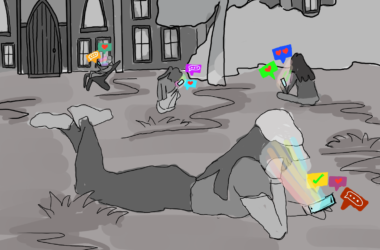
Jared had Subway. Fergie had Jenny Craig. I, Panthea Lee, have the Facebook. Just as those above institutions changed the lives of J-Money and F-Train, the Facebook has transformed the life of yours truly. (Note: for those poor, deprived souls that know not of what I speak, go to Thefacebook.com and prepare to see the light.) Before the Facebook, I led a shameful existence. With a none too attractive visage and a horrible memory for names and faces, I was destined for social ruin. The appearances thing I couldn’t do so much about-fret not, I’m not one of those ugly folk that tell themselves it’s what’s inside that counts; I know no one wants to befriend a fugly. With the Facebook, this is no longer a problem.

My profile page showcases an image of myself that is Photoshopped to perfection-you’d be surprise what the blur tool can do. This allows me to trick beautiful people-yes, even ugly people don’t want to be friends with other visual horrors-into “confirming” me as a friend. Once they have been duped into becoming one of my Internet pals, they feel obliged to smile back when I see them out and about. And I milk this for all it’s worth. Finally, to have friends! Okay, fine, “friends” may be stretching it. Finally, not being glared down when I say hi to others… it feels great!

For those gracious individuals that were willing to look beyond physical appearances-God bless their souls-I still could not befriend them in my pre-Facebook days, for I have an atrocious memory. I would stare blankly at those who said hi to me on the streets, and wrack my brain trying to figure out where I knew them from, but my attempts were always in vain. Ensuing conversation was always extremely awkward. Today, when such incidents occur, I can simply run home and enlist the help of the almighty Facebook. I can browse through the thousands of mug shots on the site until I find the person who said hi to me.

Then, the next time I see the individual in question, instead of stammering something about hating the weather and having too much work (yawn), I can come out with gems such as, “Why Hector, it is just marvelous to see you! How are you doing these days? Say, how is that Physiology 517 Artificial Organs class you’re taking? Your birthday is coming up in three days, isn’t it? Will I be invited to your party? What’s that you say? We don’t really know each other? That’s no problem… we both love Radiohead and Pink Floyd, what else do you need?”

The Facebook has done wonders for my social life. Instead of being some random awkward girl, I have now reached a new level of the social ladder: I am now known as that creepy girl who prowls the Facebook and knows way too much information about you.

For the Facebook naysayer, I say get off your high horse and join the party. “The Facebook is just a popularity contest, it’s just about showing off the number of friends you have,” cry the too-cool-for-Facebook crowd. Oh, how wrong you are. The Facebook is not about showing off the number of friends you have; rather, it is about showing off just how pushy and creepy you can be. It is about proving your resourcefulness in tracking down every single person with whom you have ever crossed paths. The girl who shared a couch with you in the crowded Shatner lounge, or perhaps the guy you saw at BDP the other night who’s friends with the brother of that girl who lived with you in Rez… they’re all fair game. They all want to validate you, to boost your friend count, and to inflate your ego.

So, my fellow ugly and socially awkward brothers and sisters, our day has arrived. The Facebook is our chance to overcome discrimination and join the ranks of individuals with friends, so make good use of it. I wish you the best of luck in scamming some friends for yourself and, remember, creepy is the new cool.

Read the latest issue

Read the latest issue