

Latest News

Commentary, Opinion

McGill’s policy on social injury leaves few options for protesters

On March 28, McGill’s Provost and Executive Vice-President (Academic) informed the campus community via email that “some protestors and picketers again attempted to disrupt University activities” and that “police made at least one arrest and the university has chosen to press charges.”

Reports suggest the disruptive actions were carried out in solidarity with McGill students engaged in a protracted hunger strike over the university’s position on the violence currently being inflicted on people in Gaza.

Addressing “those who choose to engage in protests or pickets going forward,” the Provost warned: “You have a range of legitimate, legal, peaceful options for raising awareness of your views,” and threatened that “where other options are chosen instead, consequences will follow.”

What kinds of “legitimate, legal, peaceful options” does McGill’s governance structure make available for the specific concerns expressed by these protestors?

These courageous activists are not seeking simply to “raise awareness” of their views (state-sanctioned killing and starvation of innocents because of their ethnicity and where they live is not something about which one has “views”). They are, instead, trying to persuade the Board of Governors to withdraw McGill’s investments from companies they believe “directly or indirectly support Israel’s apartheid state and its ongoing genocide against Palestinians” and to cut McGill’s ties with the Israeli state and Israeli universities. 

Under the circumstances, this is not an outrageous request. Yet the university’s own mechanism for receiving expressions of concern about its investments all but guarantees the Board will never consider it.

The university’s investments are subject to review by the Committee on Sustainability and Social Responsibility (CSSR), which is mandated to ensure McGill does not invest in companies whose activities result in “grave injurious impact,” including those which “violate or frustrate the enforcement of rules of domestic or international law intended to protect individuals against deprivation of health, safety, or basic freedoms, or to protect the natural environment.”

Is petitioning the CSSR one of the “legitimate, legal, peaceful options” available to the hunger strikers and their supporters (1200 signatures, and counting), an institutional process through which they can express concerns about the role played by companies in which McGill invests in the grave injuries being committed against the people of Gaza and the West Bank?

As it turns out, not really.

An August 2023 revision to the CSSR’s terms of reference stipulated that “a legal person [i.e., a corporation] shall not be deemed to cause ‘social injury’ simply because it does business with other legal persons which are themselves engaged in socially injurious activities.” 

Under this provision, if a group of McGill students discovered the university was investing in a company that provided support to Hamas in its horrific October 7 attack on Israeli citizens, they would have a hard time bringing this before the Board as a potential violation of the university’s policy on socially responsible investing.

Sadly, hypothetical examples are not necessary. We have before us an actual case in which a significant portion of the McGill community believes that companies in which the university invests are profiting from activities implicated in the killing, maiming, forced starvation, and displacement of thousands of innocent people in Gaza. Consideration of these claims and related evidence is deliberately undermined by the rules of the very body that supposedly exists to decide such grave questions on behalf of the university.

The option to express these concerns by “legitimate, legal, peaceful” means in a forum where this could have real impact has been effectively foreclosed. As a result, we are left with the heartbreaking spectacle of McGill students starving themselves and getting arrested, just to get the university’s attention.

The communique sent to the McGill community referred to McGill’s “//esprit rassembleur//,” a recent coinage intended to evoke a special McGillness supposedly at risk due to the unruly activities of human rights advocates, trade unionists, and the Gouvernement du Québec. But if there is a threat to McGill’s //esprit rassembleur//, it is not the alleged excesses of passionate protest, labour organization, and cynical public policy. It is university governance procedures that leave serious people without genuine options for bringing legitimate concerns to forums where consequential decisions are being made.

If the university’s administration is truly concerned about the political climate on campus, it could start by asking the Board to rescind its prejudicial definition of social injury so that the options available to people acting in good faith are real, instead of imaginary.  

Arts & Entertainment, Film and TV

The surrealism of ‘Problemista’ elevates its poignancy

Scored with futuristically unsettling synth melodies and interjecting choral staccatos, narrator and famed arthouse actress Isabella Rosellini relays the complicated and costly process of acquiring a sponsored visa in the United States in Problemista. What begins visually as a cramped, two-room equation expands into a maze-like structure of trapdoors, fluorescent lights, obscured keys, and stairs of beige file cabinets. Protagonist Alejandro (Julio Torres), or “Ale” for short, steers aimlessly through this dreamlike sequence in a desperate search, traversing through the maze of the American immigration system. He finds himself in a miserable catch-22: The system demands he pay immense fees to be allowed to work, yet he must work to acquire the necessary funds to settle these payments. As Rosellini simply states, “The maze is impossible to navigate.”

Screenwriter and director Julio Torres’s surrealist comedy Problemista, released worldwide in cinemas on March 14, poignantly explores the narratives of the contemporary American Dream through a humorous lens brimming with fantastical elements—both understated and absurd. The film was partially inspired by Torres’s experiences as an artist immigrating from El Salvador; Alejandro travels to the States in hopes of becoming a world-famous toy designer for Hasbro. In his application to the company, Alejandro monotonously details a few of his ideas, including a Barbie whose fingers are covertly crossed behind her back, creating intrigue and drama in the dreamhouse, and a snake that bungees out from its can with a sign that reads, “I’m sorry, I was trapped in this can and scaring you was the only way out.” The absurd specificity of this dialogue, though delivered lifelessly via Alejandro’s webcam video, is only a minuscule drop of this film’s unabashed hilarity. 

As he waits for Hasbro’s response, Alejandro begins working in the archives of FreezeCorp, a lab caring for cryogenically frozen corpses. But Ale finds himself in a limbo between visa sponsors after being fired for presumed medical malpractice; onscreen, the grains of his metaphorical 30-day hourglass begin seeping out in the vast backrooms that stack thousands of these looming timers in their dank shelves. Eccentric art critic Elizabeth, played by the magnificently commanding Tilda Swinton, dominates the screen in every scene she’s in. She looms over everyone with her crimped and dyed red hair, avant-garde clothing choices that seemingly caricature every New York art enthusiast, and intimidating attitude and verbal assaults on everyone she encounters. Elizabeth enlists Alejandro’s help in curating a show dedicated to the legacy of her artist husband, now cryogenically frozen but once known for his beautifully tragic and emotionally transcendent egg paintings. In return, she promises to be his sponsor after the show’s success.

Alejandro soon learns how to navigate the intricacies of the contemporary art world, while simultaneously taming Elizabeth’s temper as he organizes her late husband’s show. With Elizabeth’s reluctance to sponsor him and the departure of her paid intern Bingham (James Scully), who leaves after receiving a Guggenheim grant for “being cute in the arts,” Alejandro turns to Craigslist for cash. The menacing Craigslist (Larry Owns) is a personified tentacled Ursula-inspired creature who offers jobs inspired by Torres’s actual experiences: Handing out hair salon promotions on the street or being a “cleaner” for a man who wishes to watch him.

Problemista achieves all that it sets out to, presenting pointed critiques of both the modern art world and the American immigration system. It parodies a world in which legacy is commodified and art becomes a product. While Torres’s narrative serves to highlight the injustices of the visa process, the film also embraces and celebrates the strengthening solidarity of the immigrant experience. Alejandro is only one of the many who risk their lives each year for opportunity in a new country, and this portrayal of the contemporary American Dream calls into question the term’s legitimacy in the first place. He presents his story through this absurd humour, because the world is absurd: It’s unforgiving, unjust, and arranged such that power is permanently reserved for those who already have it. 

It’s incredibly rare that a film can be so simultaneously hilarious and moving. Problemista’s surrealist elements transcend comedic tradition, becoming a memorable film from its authenticity and uniqueness.

Problemista is now playing in select theatres.

Behind the Bench, Sports

Breaking up with university sports: How I learned to love soccer again

From the moment my parents first put me into house league soccer at five, I was hooked. Growing up, I never thought about how my relationship with the sport would change. Girls my age seemed to follow a set path from elite youth development teams to university soccer. This path became more than a set of destinations to checkmark: It was an identity. 

I committed to McGill for soccer in the fall of my grade 12 year. My time playing for McGill was anxiety-inducing. I loved practicing and the thrill of game days but did not know how to stand up for myself against coaches who did not treat me with respect. In spite of this, my love for soccer only grew. I became a superfan of Liverpool Football Club; I was as obsessed with watching and reading about soccer as playing. I became even more determined to succeed, to recreate the happiness I used to feel every time my foot touched the ball. 

On my way to practice, I noticed men on the soccer fields near my house playing pick-up. I envied the fun they were having. Here I was, playing for a varsity team, yet the team brought me no joy. Although there were never any women there, I mulled over the possibility of approaching and asking to join in a game. After a particularly negative practice, I impulsively decided to go and play, promising myself I would play for an hour at most. I ended up playing for three. 

On the lighter days of the gruelling McGill pre-season, I began to play additional hours of pick-up soccer. The environment was a stark contrast to that of the McGill women’s soccer team. Most players were young men from North or West Africa, and the language of choice on the field was French. My years of French immersion came in handy, and my French improved rapidly. I was almost always the only woman and one of the few who had grown up in Canada.

When I was abruptly cut from McGill soccer at the start of my third year, I was devastated. Yet, this moment was the catalyst for rediscovering joy in my sport. Instead of crying to the coaches, I played pick-up soccer for two hours. 

For the rest of the semester, I would go to the field and play from whenever my last class of the day ended until 10 p.m. I felt totally lost, but I found solace in playing. Although my body ached from playing so intensely every day, I couldn’t resist the pull of the field. 

Certainly, some days were difficult. When my team would lose and have to wait on the sidelines for long stretches of time, I would question myself and what I was doing. Being the only woman on the field also wasn’t easy. Those who hadn’t seen me play would avoid being on my team and blame me if we lost. At first, I felt like an outsider, but I slowly gained everyone’s respect and affection, as they did mine. 

Eventually, I found a futsal team, Underdogs FC, that introduced me to the world of Quebec women’s soccer outside of the university sphere. Last weekend, we even won the Coupe de Québec, a trophy which eluded us by one goal in last year’s finals. But this year, we won against our arch-rivals, and I scored the winning goal in the last minute. 

While my journey has not been conventional, I would not change it for the world. It was painful to see the scores of Martlet soccer’s matches. Yet if I was still on that team, I would never have found this wonderful world, full of people very different from those at McGill. I would have never played futsal, or for Simcoe County Rovers, and I certainly would not have had the opportunity to be a Sports Editor at The Tribune. Now, I know how to set boundaries with coaches and recognize harmful behaviour. I know that mistreatment doesn’t have anything to do with how good you are: It is a failure of the individuals in power. I know that no journey is linear: There will always, always be avenues to play your sport if you just look hard enough. At the heart of all sports, there must be joy and respect. More than anything, I am grateful for the spaces where I have rediscovered my joy. 

McGill, News

Arts professors and faculty lecturers form McGill’s third and largest faculty union

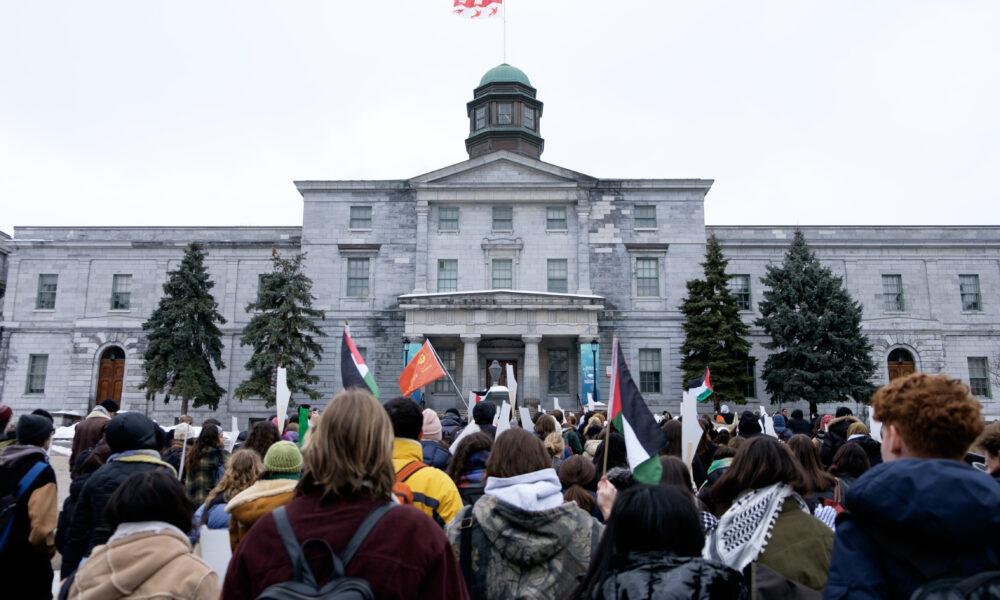
With over 9,000 students and more than 300 staff members, the Faculty of Arts is the largest on campus. Despite its size, the Association of McGill Professors of the Faculty of Arts (AMPFA) surpassed the number of signed union cards necessary to file for certification at the Tribunal Administratif du Travail (TAT) within three months of active organizing. On April 4, a day after AMPFA submitted its application to the TAT, the McGill community gathered by the snowy stairs of the Arts Building to celebrate the launch of the union, which, if certified, will represent all tenure-stream professors and faculty lecturers. 

AMPFA emerges on the heels of other faculty unions forming at McGill. The Association of McGill Professors of Law (AMPL) won its battle for certification against the university in 2022 and the Association of McGill Professors of Education (AMPE) is currently fighting for certification at the TAT. Barry Eidlin, an associate professor in the Department of Sociology, attributes the current wave of faculty unionization at McGill to a broader labour movement against corporatization and precarious academic employment across North American universities. 

“There’s been [a] sort of corporatization of higher education, where the administration has […] cut itself off from the faculty, so this idea of […] collegiality and faculty governance has been eroded,” Eidlin said in an interview with The Tribune. “The shift in the university has been towards more casualized forms of academic labour, so more reliance on teaching assistants, on contingent […] course lectures and faculty lectures,[…] and that’s what’s been […] driving a lot of this push towards unionization [….] People are realizing that […] that these academic jobs are not as secure as they used to be [….] So what we’re trying to do is to make collegiality real again by levelling the playing field.”

AMPFA and AMPE diverge from their inaugural counterpart AMPL by including faculty lecturers in their membership. Sabeena Shaikh, a faculty lecturer at the Institute of Islamic Studies, spoke about the significance of her membership in a speech at AMPFA’s launch rally.

“[Faculty lecturers] have limited representation and influence in institutional governance and decision-making processes, affecting our ability to advocate for our own needs and interests within the academic community,” Shaikh said. “This union represents our collective voice advocating for fair compensation, job security benefits, and professional development opportunities. Together we can ensure that the contributions of all faculty members, regardless of tenure status, are valued and respected.” 

Representatives from other faculty, student, and staff unions on campus braved the elements in solidarity with AMPFA and its executives. A representative from the Association of Graduate Students Employed at McGill (AGSEM), the union representing teaching assistants (TAs) and invigilators who are currently on strike, emphasized the need for cross-union solidarity in their address to the attendees.

“McGill seems to forget that this institution gets its name and recognition from the cutting-edge research and education that faculty and graduate students are provided every day and that […] the extremely high salaries of the administrators also profit from this daily work,” said the representative from AGSEM who wished to be unnamed. “We are showing now that McGill works because we do [….] We’re showing McGill that they will not divide us. Workers, faculty, and TAs will fight together for better working conditions, higher pay, pension benefits, [and] parental leaves among many other improvements to their contracts.”

In a post-rally interview with The Tribune, English professor and Interim Secretary of AMPFA Derek Nystrom echoed the rally’s speakers and chants—such as “Our unions, united, will never be defeated”—to highlight the timely nature of the Arts faculty’s unionization given the university’s response to the TA strikes. 

​“One of the things that I found again, and again […] is that when one of the unions on campus goes on strike, there’s this expectation that the faculty will pick up the slack, and in that way, put less pressure on the university to resolve the strike and bargain in good faith,” Nystrom told The Tribune.  “Becoming certified as a union will allow us to say, ‘We can’t be used as a pawn anymore,’ […] that we’re actually going to stand with our fellow workers and you can’t add to our workload in the expectation that we going to do the work for you.”

A previous version of this article stated that out of the three faculty unions, only AMPFA included faculty lecturers in its membership. In fact, both AMPFA and AMPE have applied to represent faculty lecturers in their bargaining units. The Tribune regrets this error.  

Behind the Bench, Sports

Julie’s hot takes

The PWHL Trophy should have a different name

Fans of the Professional Women’s Hockey League (PWHL) may have followed the unveiling of the new prize that will crown the team that wins the playoff, the best of the best of that year: The Walter Cup. Designed by renowned jeweler Tiffany & Co, the trophy is named after Mark and Kimbra Walter, the owners of the Mark Walter Group, who played an important financial role in backing the launch of the PWHL. The suggestion to name the trophy after Walter came from sports icon and PWHL advisory board member Billie Jean King. However, many were disappointed by the cup’s name. Despite the good intentions, the Walter Cup enshrines the corporate, financial side of the PWHL instead of honouring previous women’s ice hockey trailblazers who are the real reason for the league’s creation. While there is no doubt that the Mark Walter Group played a massive role in the creation of the PWHL, the decision not to honour women’s hockey players was a missed opportunity. 

This naming also breaks with trophy tradition in professional women’s hockey. In the Premier Hockey Federation (PHF), the predecessor of the PWHL, teams competed to win the Isobel Cup, named after Lady Isobel Gathorne-Hardy—one of the first women known to play ice hockey and daughter of Lord Stanley––the namesake of the National Hockey Leagues’ Stanley Cup. Teams competing in the Canadian Women’s Hockey League (CWHL) fought to win the Clarkson Cup, named after its commissioner, Governor General Adrienne Clarkson. Many optimists hope that names paying homage to women’s hockey trailblazers will be given to conference trophies or other awards, but regardless, the Walter Cup is not what we hoped PWHL teams would compete for. While it is understandable to celebrate and pay respect to a family that supported the PWHL’s creation, naming the trophy after them put an abrupt end to custom appreciated by fans and players alike. The Walter family could be honoured with another trophy or prize to celebrate their good deeds or generosity more akin to the Walter Group’s role in the PWHL.

There’s an abundance of outstanding women’s hockey players throughout the sport’s history: Figures such as Manon Rhéaume, Angela James, or even Canada’s beloved Marie-Philip Poulin easily could have inspired the name of the championship cup. After all, there is no reason a women’s hockey team should have to compete for a trophy named after a man. 

Rooting for loser teams

Coming to a new country, and delving into a new sports environment, people are often faced with a unique opportunity—choosing who to root for. While some might take the easy way out by bandwagoning onto the dominant teams at that time or choosing to support their local team; others may take the road less travelled and root for whichever team seems the most pathetic. 

After moving to Montreal from France, I had the unique opportunity to consider the pros and cons of rooting for each NHL team. As a lazy person, I would not want to go the extra mile and root for teams geographically inconvenient—bye-bye Anaheim, Colorado, and Seattle. We could have been a good pairing, but I will not stay up that late to follow games every week. With the Western Conference teams out of the running, I established my preference for Eastern teams—hello Metropolitan and Atlantic divisions. Could I choose to root for the Montreal Canadiens, for not only being in the city I live in, but also the only francophone team in the league––unless you count Ottawa? Yes, but I wanted to feel special and didn’t feel particularly drawn to the team. So, my devotion and support went to the next-best team, with the perfect ratio of competitiveness and charm—the Toronto Maple Leafs. The story of the first-round curse striking yet again the hopeful and passionate team during the 2021-22 season convinced me that this team deserved my devotion. The deep folklore surrounding the franchise sealed the deal for me. Supporting a seemingly hexed and forever unsuccessful team brings a new sense of camaraderie between supporters––having to constantly endure losses, and experiencing the highs and lows of having incredibly talented players yet overwhelmingly disappointing results.  
I encourage others to follow in my footsteps and find community in supporting not the most successful, or local team, but the one that promises to pull on your heartstrings as you tell your similarly deluded friends that this is our year.

Arts & Entertainment, Music

Melodies of a lifetime with Claude Dubois

As I pulled into the parking lot of Théâtre Hector-Charland on March 29, eager to see a Québecois musical legend perform, I noticed a bus transporting residents from a nearby retirement home had beat us there. This moment hinted at the crowd that I would find sitting inside, waiting for the imminent arrival of Claude Dubois, a ’70s and ’80s star of our province.

After we spent a few minutes of fidgeting in our seats, the 76-year-old singer arrived onstage, walked straight to the microphone as the crowd applauded, and sang as though it was as natural to him as breathing. He started with his composition “Le Labrador,” followed by a string of his sometimes groovy, sometimes melancholic classics, such as “Femme de rêve,” “Le mangeur d’étoiles,” and “Besoin pour vivre.” After a few songs, he took a few gulps from a bottle that he promised was filled with water, eliciting laughter throughout the whole audience.

Dubois isn’t a stranger to substances, having a complicated past with alcohol and heroin. While some of his less-than-responsible decisions may have sent him to jail a couple of times, nothing could stop the old man from singing his heart away—not even the cancer diagnosis that brought his career to a halt in 2016.

Halfway through the show, an elderly woman shouted, “We love you, Claude!” To which he answered, “I love myself, too.” Sometime later, the same woman exclaimed, “We’ve been following you for over 40 years!” He responded that he was impressed, as even he had a hard time following himself all those decades ago. 

A talented band accompanied Dubois—a drummer, a bassist, a pianist, and a guitarist—with whom he shared the spotlight on more than a few occasions. They harmoniously combined their individual strengths like pieces of a musical puzzle to complement Dubois’ work with jaw-dropping musical solos.

It was impossible not to feel nostalgic when he sang “J’ai souvenir encore,” a song in which he revisits his childhood growing up in the Old Port of Montreal. The artist expressed a common homesickness felt when thinking about those memories time has painted yellow— childhood feels like the happiest time of our lives, even when, looking back, it wasn’t always perfect. Notably, he mentioned the rats living in his house, and the sex workers waiting on the neighbouring streets. But the sweet, innocent melody that accompanied these lyrics made it clear that no amount of rodents could change the warmth with which he reflects on these golden memories. 

Claude Dubois received three standing ovations, one of them for his performance of “Si Dieu existe,” which he dedicated to all our lost loved ones, especially those who left us too early. The song describes a dying person’s soul slowly floating up toward the sky, seeing the world from above. In a room full of retirees, it not only stirred emotions but also highlighted a sense of solidarity among the audience. It was not difficult to spot more than a few wet pairs of eyes. When the crowd stood up from their seats to applaud the singer, there was a collective recognition of our interconnectedness, especially in moments of loss, and it was clear he had touched our hearts.

Many have an insatiable love for art that society often encourages us to set aside to pursue more professional, corporate careers. “Blues du businessman” perfectly describes this sentiment. It is an anthem of sorts for those who aspired to be artists, singers, or actors—for those who always feel like they could have been more, and who spend a few hours between nine to five daydreaming about who and where they would rather be. Though the feeling might be melancholic, the crowd found solace in the idea that Claude Dubois did become an artist—and a wonderful one at that. 

Student Life, Tribute

Thank you, Freddy

I first got to know Fred Vardon in my second year at McGill, after seeing him every night at 8:55 p.m. in the Islamic Studies Library. Right before closing at 9 p.m., Vardon would empty the trash can by my adopted desk on the second floor, and that was my signal to pack up and head home. Those of us with an anxious attachment to Morrice Hall—its warm nooks, high ceilings, and that one comfortable couch—may also be familiar with Vardon’s famous friendly face. For those of you who don’t know the comforts of Morrice, Vardon is the porter. After caring for the building for nearly ten years, he has become a part of its ecosystem, intertwined with every surface and wall that he wipes down. 

Vardon is retiring this September. Before he retires, I thought we’d hear some of the stories he has to tell, and how he came to form the affinity he has for McGill. Vardon, a native Montrealer, has been with McGill for 44 years and has developed a unique relationship with the student body, and many hilarious accounts attesting to McGill’s wildest years.

In an interview with The Tribune, Vardon recalled that in the ’80s there was a skiing race down McTavish and beach parties in Gerts—which, back then, occupied four floors. One morning, after a huge party, he got a call from his supervisor asking him if he had heard from the cops. When he said no, he was told that some students went into the vehicle he was working in the night before to smoke a cigarette, and lit the whole thing on fire.

“The wheel and dashboard were completely gone,” Vardon laughs. 

It’s clear that times have changed. Vardon says McGill students today are more studious than back in the ’80s and ’90s; he used to have to pick them up off the floor after their pre-finals 72-hour cram because they hadn’t gone to school all semester. Although he was never a student at McGill, Vardon has had some wild times on campus. In 1997, he had his wedding reception at the Alley, the pub that used to be in the basement of the SSMU building.

“It was an open bar, and we got all the wine bottles for $5 […] it was fun,” Vardon said. It was also catered by McGill Food Services, where he worked at the time, before becoming a porter in 1999. 

Despite the roar of the late ’80s and early ’90s, one of Vardon’s most cherished memories is when a student he knew became valedictorian. In her speech, she gave Vardon a shout-out, saying she couldn’t have made it without him feeding her and making her smile along the way. Vardon tells me that every year, he gets to know the ten students who run the theatre next to his office on Morrice Hall’s first floor. When his favourite barbeque place, Bar/B Barn, was still around, Vardon used to bring ribs for everyone on the closing night of the play. 

Vardon’s memories reflect his fondness for the McGill community and the kindness he has shared with students throughout the years. His favourite spot in Morrice is the Islamic Studies lounge because that’s where he has said he has made many friends. Sumaria Nawaz, a Ph.D. student at the Institute who frequents the lounge, elaborated on Vardon’s connection with the student body. 

“I can’t imagine a day [when] he didn’t beam at me and ask me how my day was going,” she told //The Tribune//

As his time at McGill comes to an end, Vardon reflected on how Morrice Hall has been a “pleasant place to work, where the librarians, students, professors, and staff are all like one big family.”

For Vardon, Morice Hall’s diversity, and the network of care it sustains, make it a great place which “the whole world can take […] as an example.” He feels that “if the world was like that one fucking building, it would be a better place.” If it weren’t for his arthritis, Vardon says he wouldn’t leave. 

Vardon’s love for McGill and its students reminds us all to cherish the memories we have made and are making at McGill. His message to the McGill student body is: “Keep studying, work hard, make your parents proud, and I am going to miss everybody.” On behalf of the McGill student body (especially us Morrice Hall regulars), I can assure you Freddy, we’ll miss you too!

Opinion

Campus Conversations: Solidarity

Solidarity beyond interest-convergence 

Fanta Ly, Features Editor 

Solidarity is trending at McGill. The “historical anomaly” of the current mobilization lies in the diversity of positionalities standing against power. As a result, the face of those calling for solidarity is diversifying beyond specific student groups to encompass large portions of the student body as well as professors who are unionizing. Though the engagement of this ever-increasing coalition is commonly credited to rising solidarity, the more adequate term capturing this moment is interest convergence. This is not a pedantic distinction, but an essential one to understand. During times of interest aligning between different groups across campus, solidarity must be met with critical engagement on how interests and positionality shape this mobilization.

In his theory of the interest-convergence dilemma, Derrick Bell, an American lawyer, legal scholar, and civil rights activist, argues that the interests of Black people, the minority group, only advance when they converge with those of white people, the dominant group. This theory is an interesting framework for understanding the current moment, highlighting the nascent alignment of interests between professors and other groups on campus. However, it is also essential to reflect on past periods when this level of convergence and solidarity was not as widespread to engage authentically with the dynamics of change on campus.

This wave of mobilization and calls for solidarity unexpectedly includes white McGill professors, many of whom are getting their first taste of administrative violence, a novel and certainly unpleasant experience for many of them. Given this context, it is crucial for these professors to reflect on their involvement, whether it manifests as apathy, excitement, complacency, or continuous support. They should consider both their historical and current acts of solidarity, along with their reactions or lack thereof to the institutional violence they have undoubtedly observed before. This reflection can be bolstered through coalescence with organizations like the Black Students’ Network (BSN), Solidarity for Palestinian Human Rights (SPHR) at McGill, and Queer McGill among others. These groups have a long history of advocating for solidarity and improving campus life for marginalized students and others who have experienced the same violence. Despite facing continuous harm, they remain committed to fostering unity and support. For many, solidarity is both a means and an end. Recognizing the different stakes, both material and psychological, faced by those well-acquainted with solidarity is the starting point.

The current wave of unionization underscores how the privileged position of white professors has rarely led them to challenge the administrative violence that historically protected their interests. However, recent actions by McGill administrators seem to have disrupted the previously aligned interests between these professors and the administration. This shift places professors in a position all too familiar to those who have been marginalized by the same administration: an ongoing struggle to demand better and equal treatment. To be clear, demanding better working conditions differs fundamentally from defending one’s humanity against administrative violence. But the focus here is not comparing the scope of administrative violence, but emphasizing that it stems from the same source. Ending up side by side due to shared adversity is not the same as making a conscious decision to stand in solidarity. 

Nevertheless, even this small commonality serves as a foundation for mutual support. Sustaining solidarity requires extending the love we show to ourselves when we demand to be treated better to others pursuing the same, regardless of our ability to relate to their experiences. This extension must be free from tone and policing, or any sense of entitlement to dictate how individuals articulate their demands.

In this period of interest convergence, we will witness both the convergence and divergence of ideas on what solidarity is and ought to look like. The real challenge lies not just in generating these ideas, but in taking intentional actions to ensure that the diversity of those embracing solidarity is maintained well beyond the present moment. 

Solidarity and selflessness

Isaiah Albert-Stein, Opinion Editor

Working to serve others can never be truly selfless. No matter how difficult the work is, when you find yourself helping someone else, the sense of accomplishment and goodwill benefits you in return. The same is true for solidarity—it feels good to stand up for what’s just, especially when you are standing with others. A close friend explained this to me when I was 18. Or at least they told me something along those lines. But as an idealistic teenager trying to figure out my place in the world, I internalized a flawed message: Solidarity and selflessness are incongruent, and we have to make every effort to avoid being self-serving as we engage in activism. 

In the years that followed, I fixated on instances of what I considered “selfish” solidarity. I grimaced as friends discussed the need to snap Instagram stories at a protest or the importance of adding experience with an advocacy group to their resume. On June 2, 2020, I encountered the most obvious example of self-serving solidarity: A feed full of people posting #BlackoutTuesday. For many, a black box with the hashtag as a caption served to solidify their status as a “good person” forever, as if a social media post would end racism immediately. Encountering activism that carried personal or professional benefits validated my naive, black-and-white view that selflessness in solidarity was ultimately unattainable. This doesn’t mean I stopped speaking out for causes I cared about or doing work to try to build a better world. If anything, I worked even harder for the things I believed in. I tried desperately to find out how anyone could be selfless, then beating myself up when I felt proud of successful organizing or when I felt fulfilled after supporting others.

Recently, I finally reached a realization that had spent years hiding behind these surface-level contradictions I kept telling myself: Selflessness should not prevent us from benefiting from solidarity. Solidarity is not transactional. It emerges from our connection with others, not from giving or receiving as if it were an object. Whether the cause is standing up for anti-racist movements, workers’ rights, or Palestinian liberation, solidarity does not exclusively benefit the people most affected. We should feel good about standing with others. When attending a protest or organizing within your community makes you feel more hopeful and less alone, it is not an intrusive feeling of selfishness; rather, that positive feeling is the whole point. To feel collective grief, mobilization, and optimism is the very core of solidarity—and selflessness means recognizing yourself as part of this collective community and working actively to make it better.

Nurturing Arab culture

Yusur Al-Sharqi, Staff Writer 

Growing up in Canada as an Iraqi immigrant, my parents were determined to preserve our Arab and Muslim heritage. Admittedly, I often resented them for this; not a Sunday went by when I did not complain about the Arabic classes my mom forced me to attend. However, a frightening realization struck me when I came to McGill. I would no longer have someone to ensure that I immerse myself in my culture. I feared that the daunting task of preserving Arab culture in my own life would rest solely on my shoulders. However, recent events at McGill in support of Palestinian liberation have shown me that I am not alone in this preservation; solidarity flows all around me, in all directions. 

For many Arabs, the Palestinian struggle feels inherently linked to our own countries’ struggles against colonialism and imperialism. I was reminded of this when I heard the Iraqi national anthem, Mawtinimeaning homeland—at a Palestinian rally on campus. It was at that moment that I discovered it was also an anthem of Palestine. I was awestruck that a song so pivotal to Arab pride would be played aloud and with such pride on McGill’s campus, heard by non-Arab students from across the world.

I am not usually one to lavish praise to allies—not because I do not appreciate their efforts, but because I feel they receive enough credit as is—but McGill students’ solidarity with the Palestinian cause demands acknowledgement. Taking a stand against the Israeli regime is fraught with risks such as doxxing and harassment. Yet, many McGill students and organizations bravely persist. And every time they do, they make it known that McGillians from diverse backgrounds, even with no personal ties to the cause, are rooting for peace and transformation in the Arab world.

My cultural preservation did not end with my parents sending me to school with kibbeh, a Levantine roll of ground beef and bulgur wheat, in my lunchbox while my white friends got PB&J sandwiches. It continues from the Arabs around me who make Moroccan tea every night and wear abayas at dinner parties; it flows from my non-Arab friends who say mashallah every time they pay me a compliment and the non-Muslims who host iftars despite not fasting themselves. Most of all, solidarity pours from the displays of Palestinian support by various organizations and individuals at McGill. As I reflect on this, any sense of anxiety around my cultural heritage dissipates; I feel more connected and proud of my Arab identity than ever.

Editorial, Opinion

Solidarity with BDS for the future of our campus

On March 21, the Université du Québec à Montréal (UQAÀM) became the first Canadian university to have all of its student unions adopt Boycott, Divestment, and Sanctions (BDS) mandates. This final vote follows more than six years of tireless activism from Solidarity for Palestinian Human Rights UQAAM (SDHPP). In comparison, McGill’s history regarding BDS is fraught: After a 2016 BDS motion passed with 58 per cent of non-abstaining McGill student voters’ support, the Judicial Board ruled against its adoption, citing that it would be unconstitutional for the Students’ Society of McGill University (SSMU) to take positions against specific countries. The echoes of this decision resound in the legal and constitutional actions against two other democratically-elected policies, the 2022 Palestine Solidarity Policy and the 2023 Policy Against Genocide in Palestine. UQAÀM’s vote must be a signal to students to continue mobilizing, acting in solidarity with Palestine, and ending McGill’s complicity with Israel’s siege on Gaza.

Generations of McGill students have worked to reach a consensus on anti-colonial struggle, at home and abroad. Protests continue to garner support, with pro-Palestine students, staff, and faculty speaking up against McGill’s investments in corporations that fuel genocide and partnerships with universities that actively contribute to the military-industrial complex. UQAÀM’s student activists’ historic policy victory serves as a broader framework for change—a message that our tuition dollars make us complicit, and that as students we can and must reshape this university.

BDS as a movement democratizes the university and upends the normalization of complicity in the form of academic and economic investment in genocide and colonialism. Years of Black and African-led mobilizations in the 1980s pushed McGill to become the first Canadian university that divested from apartheid South Africa. This recent history, alongside the 11-year struggle to divest from direct holdings in Carbon Underground 200 fossil fuel companies, demonstrates student power and affirms that true learning can only exist alongside striving for self-determination, human rights, and peace. The 2021 Divest for Human Rights Campaign asserted that students’ efforts for environmental justice, racial justice, and decolonization begin on campus. On unceded land and on the exploitation of enslaved Black and Indigenous children, our university’s founding has informed this ongoing fight against white supremacy and settler colonialism. Grounding Palestinian struggle on campus in these histories allows us to propel our solidarity and understand the limits of institutional recognition.

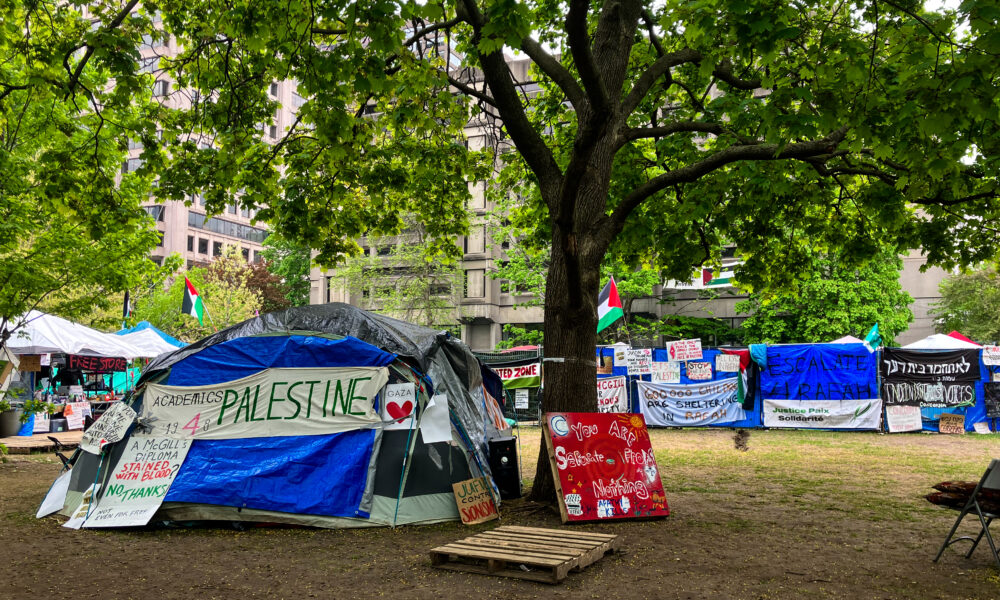
In their efforts to push for the adoption of pro-Palestine policies, activists from Solidarity for Palestinian Human Rights (SPHR) at McGill to Law Students for Palestine have worked inside and against the institution. When the injunction in November halted the Policy Against Genocide in Palestine, students continued to mobilize on campus against the ongoing genocide in Gaza. Student activists have increasingly organized successful direct action through protests in university buildings, the Bronfman blockade, and the courageous hunger strike. When their activism upsets daily procedure on campus, history emerges in popular education on the ground and it becomes impossible to view the university as apolitical. These actions necessarily refute the university’s misinformation and its monopoly on the interpretation of events. What the administration sees as disruption and hostility is the invocation of liberation from students. The chants, teachings, and care integral to these actions generate community amid the violence, recognizing that another university and another world is possible. The university acts from a powerful position of fear, weaponizing students and workers against one another by requesting police intervention and attempting to diminish student activism. To counter the administration’s frantic fear-mongering in every email, condemnation, scab effort, and police call, activism on this campus only grows louder and cuts across constructed divides.

Calls for a BDS policy highlight institutional failures across the board. Unionizing efforts from Law, Education, and Arts professors alongside the Association of Graduate Students Employed at McGill (AGSEM) have enlivened the possibilities of our university. Struggles interlink with one another when AGSEM shows support for Palestine and the hunger strikers raise awareness of the teaching assistants and the Kanien’keha:ka Kahnistensera (Mohawk Mothers). McGill’s role in exploiting workers and dispossessing Indigenous peoples and their land cannot be the same. The administration’s disregard for Palestinian and Arab students and suppression of protest reveals that this community will rise up, demanding the end to unbearable forms of oppression.

Our time at McGill is brief. Boycotting, divesting, and sanctioning Israel, calling for a ceasefire and Palestinian liberation are three important steps that will become intergenerational struggles. As this academic year ends, these struggles do not. Acting in solidarity, mobilizing on the ground, and carrying forward activist memory will allow us to pursue justice here and abroad, now and in the future.

Arts & Entertainment, Music, Pop Rhetoric

Cash grab or uninspired choice? Deluxe editions of albums are both

Typically as an artistic or stylistic choice, deluxe editions of albums are released a few months or so following the initial album drop, expanding upon the original record with the inclusion of more songs. With (relatively) recent examples such as Olivia Rodrigo’s GUTS (spilled) (2024) and Tyler, the Creator’s CALL ME IF YOU GET LOST: The Estate Sale (2023), deluxe albums are becoming an increasingly common fixture in the music industry. But are deluxe albums truly necessary? 

Personally, I find deluxe albums pretty pointless. While I understand the financial or artistic appeal of releasing new music in this format, the songs often render the album less cohesive as a whole. Almost like an afterthought, the songs from deluxe editions of albums usually stick out and don’t feel like a necessary part of the original. Even though the songs can sometimes be great, it is hard to tack new songs onto the end of an album, especially after most albums have a distinct final song that signifies the end of an album. Attempting to add more songs after a strong closer makes the album feel more confusing, especially as most deluxe editions generally don’t close in the same manner. 

Furthermore, the songs on deluxe editions are often of a lesser quality than those on the standard tracklist. For instance, on Taylor Swift’s 2010 album Speak Now, the songs released on the extended edition were, in my opinion, notably weaker, particularly in terms of the slightly boring songwriting. Lately, Swift has been rerecording her old music and adding “from the vault” tracks to her albums as an excuse to further extend the already deluxe edition. Bloated with these extra songs, her 2021 rerecording of Red (Taylor’s Version) clocked in at a whopping two hours and ten minutes. As someone who mostly enjoys listening to music by playing through a full album, when would I ever have time to listen to this in one sitting? 

Most of the time, deluxe editions feel like an unimaginative cash grab rather than the result of an artist’s genuine creative impulse. The attention surrounding a deluxe album release can be almost as big as that of the initial album rollout, helping to raise the artist’s profile and bolster their streaming numbers. With streaming platforms like Spotify keeping the original album addition available, deluxe editions also expand the album’s outreach, thus further increasing its potential for streams. If a deluxe edition is just going to include one extra song, like Swift’s folklore (deluxe edition) (2020), why not just include it on the original album in the first place? Similarly, if a deluxe edition is going to be upwards of five songs, why not just release an additional EP or a full-length album instead? It feels like a lapse in creativity; instead of taking the time to craft a new album to satisfy their fans, an artist is just repurposing songs that purposefully weren’t included on the album in the first place. 
Deluxe albums certainly aren’t going anywhere, but that doesn’t mean we have to enjoy them. In an ideal world, artists would take a cue from Lana Del Rey; the (former) indie artist extended her 2012 album Born to Die by releasing Paradise as both a deluxe edition of the former album and as a standalone EP. If an artist feels like an album is unfinished when it’s released, they shouldn’t release the original album in that state. But if there is a dire need to release songs that didn’t make it onto a record, an artist should at least try to separate it and release a new EP or album with those songs.

Read the latest issue

Read the latest issue