From boxers to bodybuilders to road trippers and beyond, the past six months have given us an unprecedented number of movies about queer women. As slow, candlelit period pieces fueled by stolen glances, often the sole lesbian representation in media, feel increasingly outdated, this new “golden age” presents an exciting prospect in terms of representation. Films about queer women are expanding in scope, genre, and number, marking a sharp contrast with their television counterparts, which often face cancellation after just one or two seasons.
A film that could be credited with bringing lesbian cinema to the mainstream isBottoms. Apart from its incredible script, hilarious antics, and revival of the raunchy teen comedy genre that has been largely absent but sorely missed, the primary draw of the movie lies in its co-leads: Ayo Edebiri and Rachel Sennott. Both breakout stars in their own right, they seem to stand as role models for a younger, predominantly women, queer audience, as well as leaders in a comedy space that hasn’t always been so welcoming to them. Though this trend of genre reclamation and revitalization is particularly evident in Bottoms, it can easily be applied to the success of other recent mainstream movies about queer women as well.
Sapphic stories on the silver screen have also seen a remarkable genre expansion as of late. From road trip movies to neo-noirs, the first few months of 2024 have seen delightfully messy interpretations of lesbian relationships onscreen. Drive Away Dolls is unabashedly raunchy and unafraid to depict lesbian women fully in control of their sexuality, as opposed to continually struggling with some sort of repressed desire. By allowing the characters to freely explore and express their sexuality without being a side plot to a separate heterosexual storyline, a certain level of authenticity shines through in the way these women communicate, engage with, and relate to one another. Moreover, by using genres that are not often explored in queer cinema, like mob movies, the screenwriters can effectively exploit the differences that a diverse perspective brings to a tired or worn-out genre.
In a similar vein, Rose Glass’sLove Lies Bleeding,starring Kristen Stewart (Lou), revitalizes the genre of noir filmmaking from a lesbian character’s perspective. Both Stewart and Glass have spoken about not using a coming-out narrative, favouring genre-based elements instead. Drive Away Dolls and Love Lies Bleeding use this decentring of identity to seamlessly integrate representation into these often violent and grotesque genres. The result is media creation that allows queer women viewers to connect with a story based on their identity while still enjoying the particularities and tropes of a specific genre.
While movies featuring lesbian characters are succeeding at the box office and online, their television counterparts, like Amazon Prime’s A League of Their Own or Netflix’s First Kill, are frequently axed after just one or two short seasons. Showrunners consistently push forward shows featuring gay men as critical darlings and beacons of diversity, while they often sideline lesbian women even in conversations about representation within the 2SLGBTQIA+ community. Many of these shows have passionate and young online fanbases, leading media critics to take them less seriously. Consequently, these shows are deprioritized both in terms of awards and finances, making them first on the chopping block when it comes time for renewal. Lesbian films can operate under the umbrella of high art, slipping by under the guise of subversion, whereas lesbian TV shows, with all their glorious authenticity, are more vulnerable to criticism.
It has undoubtedly been an incredible year for queer women in film, and hopefully, it sets a precedent that allows more young queer women to develop stories and characters that reflect their lived experiences. It would be fantastic if the success of queer women in film could help propel sapphic-centred TV shows into second seasons and beyond.
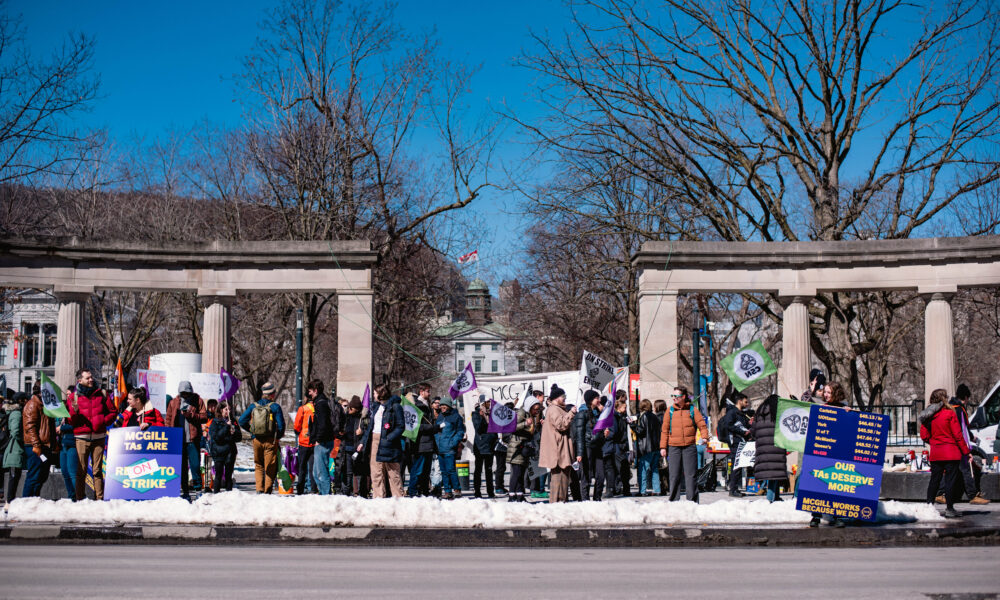
Students walking through Roddick Gates on Monday, March 25 were met with the sounds of bells, chants, and honks, as well as a massive banner that read “McGill is a union university.” This picket line marked the start of McGill Teaching Assistants’ (TAs) strike for better pay, healthcare, and indexed working hours.
The Association of Graduate Students Employed at McGill (AGSEM)—the union which represents TAs—hopes that this strike will pressure McGill to take negotiations for a new collective agreement (CA) more seriously. Since the beginning of the academic year, AGSEM has met with McGill 15 times to bargain over both monetary and non-monetary aspects of a new contract.
At an AGSEM rally on March 20, Dallas Jokic, a member of the AGSEM bargaining team, explained that TAs felt the need to go on strike because they did not feel that the university was genuinely considering their demands for fair pay.
“TAs are just really feeling the difficulty of getting by on a day-to-day basis,” Jokic said to The Tribune. “We talked to members who are having to make difficult choices like skipping meals or moving apartments. McGill is one of the top schools in Canada. It’s one of the richest schools in Canada. We know that they have the money to pay us fairly.”
On campus, AGSEM has been putting up posters to raise awareness about the fact that TAs at McGill are paid $33.03 per hour, while TAs at other Canadian universities tend to make $40 to $50 per hour.
AGSEM’s monetary proposal, which was submitted on Dec. 18, proposed a 40 per cent raise to bring their wages in line with those offered at other post-secondary institutions. The proposal also asked for cost of living adjustments, indexing working hours to class sizes, and healthcare benefits. When AGSEM and McGill convened on Jan. 30, McGill rejected the proposal but was unprepared to make an offer of their own.
In subsequent bargaining meetings, McGill submitted a counterproposal and offered a pay raise of 1.25 per cent the first year and 1 per cent in subsequent years, and then increased their offer to 2.25 per cent the first year and 1.25 per cent in subsequent years. Neither offer addressed cost of living adjustments, indexing, or healthcare. In the AGSEM newsletter, the bargaining and bargaining support committee argued that since McGill’s offers were not in line with the current rate of inflation, they essentially constituted a pay cut.
After passing a strike mandate during the week of March 11, AGSEM met with McGill again on March 19 to try to reach an agreement and avoid calling a strike. McGill raised their offer to a 4.25 per cent wage increase the first year, 2.25 per cent the second year, and 2 per cent in subsequent years and offered to put indexation on the agenda of the Labour Relations Committee. However, AGSEM did not feel that this was a fair offer and ultimately decided a strike was necessary.
While on strike, TAs are not allowed to do any work—meaning they cannot grade, hold office hours, run conferences, or answer emails. If TAs do work while on strike, they are violating the law. They are also not receiving pay from the university. Those who participate in strike activities can, however, get strike pay from the union.
Emma McKay, AGSEM’s mobilization officer, told The Tribune that the union is acutely aware that the lack of pay while on strike puts many TAs in a precarious position. They explained that there are a few pools of funds that AGSEM is pulling from to pay those who engage in strike activities or need emergency funds to pay their expenses.
In the absence of TAs, many have questioned who will be responsible for grading coursework. In the leadup to the strike, McGill issued a Quick Guide for Instructors Regarding Student Assessments and a Frequently Asked Questions page about the “labour dispute” with AGSEM, which states professors can take on the grading that is typically done by TAs in the event of a strike.
On Friday, March 22, after it became clear that a strike was imminent the following Monday, AGSEM’s lawyers sent a cease and desist letter to McGill. In the letter, AGSEM’s lawyers state that McGill instructors cannot legally perform the work of striking TAs and claim that the university has falsely attempted to position lecturers, instructors, and faculty as TAs’ managers to allow them to break the strike and perform scab work.
The letter reads, “It is clear that you are trying to influence the power balance in favour of the Employer by using disinformation and by sending directives meant to convince other employees to perform TA tasks, in contravention to article 109.1 of the Labour Code. Such tactics will not be tolerated.”
The McGill Association of University Teachers (MAUT)—which represents instructors—consulted Melançon Marceau Grenier Cohen, a Montreal law firm that specializes in labour law, and came to a similar conclusion a little under two weeks before the strike began. The association issued a statement to their members indicating that professors may be in violation of labour law if they grade work that is typically evaluated by TAs during a TA strike, as they have been instructed to do by many of McGill’s program directors and deans. MAUT doubled down on this position on March 25, giving their members advice on how to proceed if asked to do TAs’ work.
“If an instructor is asked to take on more grading than usual, as a result of the strike, they should first ask the Dean to reconsider in light of section 109.1 of the Quebec Labour Code. If there is no change, the instructor may challenge [e]mployer direction to do more grading than normal by filing an application under section 109.1 of the Quebec Labour Code as soon as possible,” the statement reads.
Renee Sieber, a McGill professor and the 2022-2023 MAUT president, explained that the administration has been closely regulating what messages managers send out about the TA strike.
“We’re seeing very tight message control; that deans and chairs cannot make any modifications to these messages,” Seiber said. “It is incredibly top down.”
Seiber also stressed that the McGill administration does not seem to recognize the immense value that TAs bring to the entire McGill community.
“We’re all in a community of higher education. Our TAs work with us. They’re often also our graduate students, and we support them [….] They’re part and parcel of the intellectual engagement in this community,” Seiber said.
Anthony Voileau, U2 Science, expressed a similar sentiment, asserting that TAs have been integral to his life as a student at McGill.
“I’m a computer science student and the computer science TAs are basically how I pass my classes. I think it’s completely normal for them to be asking for more wages. They’re absolutely essential to my McGill life.”
At the picket line, McKay told The Tribune that TAs sympathize with students who are anxious about the academic repercussions of the strike. However, they noted that better working conditions for TAs would produce better learning conditions for undergraduate students in the long run.
“All of us in the union have spent a long time in academia, and we can all really empathize with the situation of undergrads here,” McKay said. “[But] we know that every time we stop the fight because it’s hard, we lose.”
McGill Director of Labour and Employee Relations Francis Desjardins issued a statement to staff and students on March 23 recognizing TAs’ right to go on strike. However, he asserted that TAs did not have the right to picket on university property.
“We expect to see picket lines on public property around the downtown campus, as is within the rights of striking employees. However, they may not picket on University grounds nor impede normal access to buildings,” Desjardins wrote.
In a statement published in February before their own strike, the Association of Law Professors Employed at McGill (AMPL) put out a statement contesting McGill’s claims that picketing on university grounds is illegal, writing that the McGill University Health Centre had been penalized in the past for prohibiting similar picketing by striking workers. AGSEM has referred to this statement to challenge McGill’s claims.
McKay told The Tribune that the union has no intention to implement any hard picketing strategies.
“Our top priorities when picketing is safety for everyone involved, and avoiding legal consequences for everyone involved. So we have absolutely no intention of doing something that would put our members at risk,” McKay said.
However, McKay noted that AGSEM would be picketing on university property and that despite Desjardins’ statement, they were legally entitled to do so.
In the afternoon that the strike began, McGill sent another university-wide message claiming that picketers had partially blocked entrances and instructing students and staff to call security if they could not gain access to buildings or had their classes disrupted.
Some, like a TA named Sebastien, who preferred to only be referred to by first name, think that McGill is using misinformation as a tactic.
“I think one of McGill’s last-ditch attempts at subverting the strike is misinformation. They’ve been spreading a fair amount of it,” Sebastien said while picketing in front of the Arts Building. “Several things that they’ve said over the past couple of weeks have just been inaccurate. We are perfectly allowed to picket on McGill University grounds, as we currently are. They’ve also completely misinformed a lot of course lecturers and faculty. Fortunately, we have huge amounts of solidarity, I think both from the student body and from professors and lecturers.”
McGill declined to comment on the CA negotiations or cease and desist letter from AGSEM. Media relations officer Frédérique Mazerolle briefly commented on the value of TAs and the impacts of the strike.
“McGill deeply values the contributions of teaching assistants and hopes for a timely end to the strike,” Mazerolle wrote. “The University is continuing its operations, prioritizing the measures necessary to ensure that students are not unduly affected by the labour action.”
AGSEM will have its next bargaining meeting with McGill on March 26.
A few weeks ago, Montreal’s temperatures peaked at 16 degrees, awakening the insatiable and overpowering urge to get an iced coffee from deep within us. It’s a normal response for any caffeine-driven student, even though the blissful warmth only lasted a day. So, here are our recommendations for iced coffee near(ish) campus.
Mintar has quickly become our go-to coffee place. It’s close to campus, has a relaxing vibe perfect for finishing an assignment, and has a great selection of food and drinks. Their iced latte, made with either regular, soy, almond, or oat milk, is a real star in its own right, and while you can add syrups, it might only take away from the flavour. The real show-stopper is their caffè crema, which is coming back soon. And for an added treat, you’ll get to support a Palestinian-owned business in the process.
If you’re looking for an iced coffee that’s both delicious and unique, Cafe RÌ YUÈ is a great choice. Though we only sampled their basic iced latte, the café’s other flavour options, including dalgona, osmanthus, and sesame, have us champing at the bit to go back. You can replace the milk with plant-based alternatives for 50 cents, and if you already reached your caffeine limit for the day, they have an extensive offering of cold non-coffee drinks. We took our coffees to go, but highly recommend taking the time to enjoy the adorable tableware, the immaculate vibes, and the stunning cakes.
If you’re in the mood for something plant-based, Leaves House is a perfect option close to campus. It’s even better if you usually feel constrained by the small variety of iced coffee options at cafés: All of their drinks, from coffees to hōjicha super-lattes, can be upgraded to an iced version for free, and you can choose from five varieties of oat, macadamia, or pistachio milk (we’ll definitely be trying the last one soon). Take a break from McGill in their light and airy study space, perfect for clearing your mind and regenerating your energy.
When your group project is getting too irritating and you need a break from other people, head to this cozy spot near the Verdun metro station. Café Chatois a vegetarian café and more importantly, a space for rescue cats looking for a new family. They offer an extensive menu of cold beverages and their iced latte is sure to hit the spot. It’s a great spot to take a break, pet some cats, and relax. Keep in mind, the weekends tend to be busy with families and kids, so going on a weekday might be more enjoyable.
You’ve been on campus all day, shifting between lecture halls and libraries, and you can’t bear the thought of spending another minute in the McGill bubble. Not to worry: The East End is calling your name, and we think you should answer. While the commute might be daunting, Café Milano in St-Leonard is totally worth it, if only for their caffè crema. Think of it as a frapp, but Italian and better in every way. As a bonus, you get to explore Montreal’s changing urban morphology as you ride the bus eastward.
A few issues ago, when recommending places to get soup near campus, we named Tim Hortons as the place to avoid. While we stand by what we said, we think Timmies deserves a redemption arc. When you’re in a pinch and on a budget, our national treasure has everything to offer. Choose from varieties of flavoured or plain cold brews and iced lattes, or opt for an Iced Capp to bring a nostalgic summer vibe to your study session. Good thing they don’t make iced versions of their soups.
McGill’s Student Accessibility and Achievement (SAA) program consistently faces criticism for not providing thoughtful support tailored to student’s needs and not adequately addressing the diverse range of student challenges. Forty per cent of Canada’s university students self-identify as having a disability, which raises the question: Are students truly receiving the support they require? The SAA’s consistent failure to adapt causes concern regarding the effectiveness of disability support services for McGill students.
The SAA works online and in-person to ensure widened access for students with mental and physical disabilities. Their services include extended time for exams, shared notes, and guidance to assist in navigating personal and academic development. However, McGill students are required to provide provincially mandated medical documentation from a professional sanctioned by PL-21—an amendment of Quebec’s Professional Code and mental health laws, to gain access to resources. Only then does the program work with students to determine which services are most suitable to their individual conditions.
Unfortunately, numerous students struggle to acquire SAA support due to a lack of access to proper medical documentation. Many students fail to receive proper diagnoses at the university due to McGill’s lengthy waitlist and have a similarly hard time when searching outside the university due to immense costs restricting access to private healthcare, especially for those who do not have proper insurance. Why is there not an appropriate program in place for those without medical documentation? McGill’s Student Wellness Hub (SWH) is not enough to assist those in crisis. While helpful for some, services such as group therapy do not increase a person’s ability to focus, and the SWH’s months-long wait to speak to a medical professional compounds anxiety.
When a student does provide proper documentation, there are still numerous restrictions preventing them from taking full advantage of available support. The Canadian government determines the SAA’s funding, affecting the distribution of resources. For example, upcoming budget restrictions could result in a reduction of the program’s operational capacity. Public opinion of disabilities factors into government decisions, potentially causing students to miss out on essential opportunities. Marginalization already affects the stability of many students’ university life due to negative social perceptions of disabilities and when compounded by the lack of accommodation at McGill, it creates a sense of discouragement.
The SAA claims to modify its support based on student and stakeholder feedback. However, if a portion of this feedback comes from students registered with the SAA, why have so few necessary changes been made? For example, students must sign up for exam accommodations at least 14 days prior to the date of assessment. Attempting to manage a full course load as a disabled student, alongside sign-up dates for course assessments, is overwhelming. While the SAA reminds students through emails and posted announcements, this is insufficient for those with memory and organizational challenges. Additionally, numerous courses do not announce assessment dates within the SAA’s provided time frame. If an evaluation is announced one week in advance and a student fails to seek support prior to that time, they are disqualified from receiving assistance.
Despite its shortcomings, the SAA remains crucial at McGill, supporting a marginalized part of the student body. From facilitating meetings with Learner Support Specialists to working on individualized academic strategies, the SAA provides essential student services. However, McGill must pay attention to where it can and should be improving. Enhanced staff training on disability awareness, increased support for those without direct access to the SAA due to inaccessible medical care at McGill and across Canada, and better implementation of student feedback are vital to the SAA’s resource improvement. The program must evolve to address fluctuating barriers affecting students, offering personalized supports that ensure equitable access. In this age of an evolving disability justice movement, why is it so difficult to assist students primed for success?
“Memory was my source material and my tool. Without it, there’s nothing.”
Gabriel García Márquez began to write Until August toward the end of his life. It was intended to be part of a much longer work, cut short by García Márquez’s battle with dementia.
His final verdict was absolute: “This book doesn’t work. It must be destroyed.”
García Márquez left behind five versions of the novel. The newly published version—released on March 6 in Spanish and March 12 in English—stems primarily from two texts: “Version five, dated July 5, 2004,” which Cristóbal Pera describes as García Márquez’s favourite of the five in the editor’s note of the novel’s Spanish edition, and a digital document of all alternate passages and scenes that had not made the cut.
Rodrigo and Gonzalo García Barcha—García Márquez’s sons—waited ten years after their father’s death before revisiting the text.
“Judging the book to be much better than we remembered it,” they wrote in the preface, “another possibility occurred to us: that the fading faculties that kept him from finishing the book also kept him from realizing how good it was.”
Delving into the novel, I was astonished to find this story—the real one—refracted around every corner.
Ana Magdalena Bach (whose name is one “n” short of that of Johann Sebastian Bach’s wife, Anna Magdalena Bach) returns to an indeterminate tropical island every August. It’s where her mother asked to be buried; Ana doesn’t know why.
She’s married—happily, mostly. But every year on the island, she takes a new lover, just for a night. Each affair winds up, climaxes, and eventually ends in disappointment. A night of sex is soured when her lover leaves her a 20-dollar bill. Years later, Ana sees another former lover on the news, wanted as a pimp, perhaps a murderer.
Her trips to the island are an effort to discover untold truths about her late mother, to communicate with the dead. This is effectively what Until August is: A previously untold story emerging from the past, a window into a dead parent.
The story of the novel is also the story of its publication.
García Márquez deftly blends curiosity and desire until they become one and the same. Until August suggests that sexual desire is not so different from the desire for knowledge—and that they are both ultimately expressions of love.
The title Until August focuses on the before, the gaps in the year preceding visits to the island, but also Ana’s life before her mother’s death. García Márquez inserts whole worlds into these gaps, leaving threads of other stories in Ana’s wake.
We are reminded of the worlds existing within people coming and going, music floating into the foreground, married couples taking refuge in motel rooms, flowers on gravestones, and bishops who have sex in hotels.
García Márquez said that Until August should be destroyed. But he didn’t destroy it. Opening the novel felt like divulging a secret, as if I were doing something I shouldn’t. But it’s a kind of infidelity that stems from love.
“In an act of betrayal, we decided to put his readers’ pleasure ahead of all other considerations,” his sons write in the preface. “If they are delighted, it’s possible that Gabo might forgive us.”
To call it an unpublished masterpiece may be a little strong—but it’s still very good. It’s still Gabriel García Márquez.
Near the end of the novel, Ana begins to realize that her life on the island is not entirely her own.
“She did not feel sad but rather encouraged by the realization that the miracle of her life was to have continued that of her dead mother.”
This is what stories do—they continue in those left over after their germination has faded away into the past. We are left to wonder what could have been written if García Márquez had had time to weave something out of the still-hanging threads.
As a third-year student at McGill, I’ve taken my fair share of courses at the university—90 credits worth to be exact. Some were hard, some were reading-heavy, and others were just plain boring. To help you avoid the pitfalls of an elective gone wrong, here are some of my favourite courses I have taken at McGill so far.
Why are people prejudiced? What factors contribute to differential outcomes between groups? How can we combat discrimination? If these questions interest you, Inter-Group Relations is the course for you. The class delves into research and theories related to stereotypes, prejudice, and discrimination, with an emphasis on racial inequities. Professor Axt, who runs the McGill Intergroup Cognition Lab, provides fascinating lectures with real-world examples and interactive components. PSYC 331 does not use a textbook and instead relies on YouTube interviews with experts in the field and Vox articles to supplement the lecture material. One important note is that this course requires PSYC 215: Social Psychology, but I promise, sitting through the prereq is worth it.
WCOM 250 (formerly CEAP 250): Research Essay and Rhetoric
Semester I took it in: Winter 2022
Professor I took it with: Zachary Abram
If there is one class at McGill that I believe should be mandatory for all undergraduate students, it is this one. Tackling topics such as concision, grammar, purpose, and style, WCOM 250 teaches students the art of essay writing. I can honestly say that this course is what took my writing from high school to university level. The course includes rhetoric and citation workshops along with lectures and group discussions designed to help students improve their writing. Students can submit multiple drafts of assignments and receive feedback on each one, creating a collaborative learning environment between students and their professors (and a great way to boost your grade).
Contemporary Moral Issues analyzes modern-day topics, such as the Black Lives Matter and the #MeToo movements through a philosophical lens. The course introduces students to argument-building, and philosophical writing, making it a great elective for those with no prior experience in philosophy. Professor Leary’s slides are crystal clear and, despite some of the readings being challenging, she does a great job of explaining them. The class also has weekly conferences, which are a great way to engage with your classmates and TAs.
PSYC 204: Introduction to Psychological Statistics
Semester I took it in: Fall 2022
Professor I took it with: Jessica Flake
You may think I’m crazy for including a math course on a list of fun electives. But, trust me on this one: PSYC 204 with Jessica Flake is interesting, fun, and easy if you put in a little effort. The course details basic statistical principles, including means, standard deviations, and t-tests with examples that are relevant to students’ lives. The grading scheme is nicely distributed between attendance, online homework (with multiple attempts per question), tiny tests, a final exam, and extra credit points for participating in psychology studies.
Professors I took it with: David Harpp and Joe Schwarcz
No list of electives would be complete without Chem of Foods. This fully online, asynchronous course allows students to work through short videos at their own pace. The professors are highly engaging and their passion for the subject can be felt through the screen. Plus, you can use your notes for the exams, as they are fully online and open-book.
Honourable Mentions:
CANS 301: Topics in Canadian Studies: Leadership in Canada
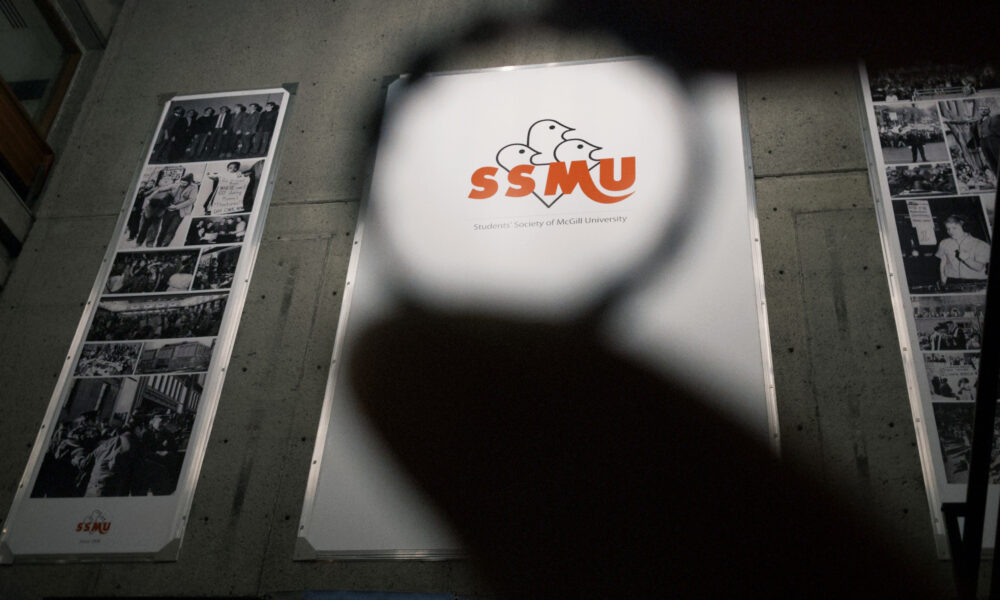
Polls to decide next year’s Students’ Society of McGill University (SSMU) executive team and the results of the 19 Winter 2024 Referendum questions closed on March 22. Of the 22,504 eligible voters, 19.1 per cent cast a ballot in the election for the executive board, and 19.2 per cent voted on the referendum questions, in comparison to the 35.1 per cent of students who cast a ballot last semester. All but three referendum questions passed.
The question of an SSMU Base Fee increase failed with 58.3 per cent of voters casting a “No” vote. The increase would have mandated that full-time students in all faculties excluding Law, Dentistry, and Medicine pay an additional $27.11 per semester for a total of $95.59, and part-time students in all faculties excluding Law, Dentistry, and Medicine to pay an additional $13.16 per semester for a total of $46.40 per semester. SSMU had heavily advertised for a “Yes” vote to this question in the weeks preceding the election, as the fee increase also failed to pass last semester. SSMU argued that an increase to the membership fee was necessary to continue to provide 18 services, over 200 clubs, continue to operate Gerts, and pay SSMUnion employees liveable wages, as SSMU it has been operating at an anticipated annual deficit of $726,257.90.
In a written statement to The Tribune, the SSMU executive team expressed that they were disheartened by the result of the vote, and will have to reduce their operations significantly.
“[M]aintaining such a large deficit is not sustainable. We have already done what we can to reduce our deficit without reducing student benefits, and we have reached the limits of those cuts,” they wrote. “We will be working closely with the SSMUnion over the next few weeks to discuss next steps, as they are a key collaborator and supporter of the base fee increase. We intend to reassess the base fee campaign and to better understand the students’ needs in anticipation of running at least one more referendum to increase SSMUnion employee salaries.”
Alongside the referendum questions, the 2024-2025 SSMU executive board was also voted in—excluding the positions of President and Vice-President (VP) Finance—as no candidates came forward for these two positions during the nomination period.
Chloé Muñoz was elected VP Student Life, with 50.2 per cent of the vote. Avin Ahmadi, who also ran for the VP Student Life position, received 32.4 per cent of the vote. Muñoz expressed that she feels pleased that her hard work campaigning paid off, and that she looks forward to spending the summer revamping and standardizing processes for SSMU clubs.
“Through this process [of campaigning] I was also able to learn more about community concerns directly,” Muñoz wrote to The Tribune. “This one-on-one discussion is something I hope to carry through in my position.”
In a written statement to The Tribune, Ahmadi wished Muñoz well for the upcoming year and explained that she would not be running for the remaining two executive positions, as she felt her experience was more relevant and aligned with the VP Student Life role.
“In my opinion, the main purpose of elections is for students to choose who they want to have on the executive team, and ultimately the executive staff are there to represent students. I respect the results and wish Chloé all the best,” Ahmadi wrote.
VP-elect Sustainability and Operations Meg Baltes, who ran unopposed, was elected with 80.3 per cent of the vote. Baltes expressed her excitement to begin the role in a written statement to The Tribune, thanking all the students who voted for her. Baltes explained that her first steps in the position would include working to understand the actions of past executives.
“I believe using my training period to fully flesh out the position will ensure that I can be successful throughout the school year,” Baltes wrote. “While I do not want to go into the role with a preconceived agenda, I do believe that it is important to make spaces for student organizations and clubs in the building (especially ones that offer essential services to students to tackle issues such as mental health and food insecurity), revitalize Gerts to make it a community hub, and make sure mini-courses are accessible to a larger amount of the student body through increased subsidies.”
Baltes also addressed concerns surrounding her candidacy, including the fact that she is a full-time honours student, which could potentially limit the hours she is able to dedicate to the position.
“[M]y busy schedule may serve as a benefit to the position. I am a big proponent of efficiency and usually hate bureaucracy because of its incredible time lag in enacting tangible policies. Therefore, I am coming into this position with no intention of wasting my time. I want to go into the school year with a clear vision, effectively delegate responsibilities, and not entertain meetings or discussions that are arbitrary,” Baltes wrote.
For the VP External position, Hugo Solomon received a 52.1 per cent vote, while Michal Ekiert* received a 29.1 per cent vote—the other 18.8 per cent of voters chose neither of the candidates. Solomon expressed that he felt elated to win the election in a written statement to The Tribune.
“It might sound cliché but it’s an immense privilege to represent the SSMU members and student body in such a consequential, powerful moment. I’m excited, sure, but also candid about the multifaceted challenges that me and the board will undoubtedly face in making our vital objectives manifest. I welcome the coming challenge, and I celebrate the journey which has led me to this moment,” Solomon wrote.
Solomon also acknowledged that many students continue to grieve the ongoing genocide in Palestine and promised to work alongside Palestinian advocacy groups on campus.
“I see your frustration. I see the undeniable determination and resolve of the hunger strikers putting their very lives on the line. So let me be clear: I pledge to work with you to achieve justice, working across communities and student groups to make our campus safer and reflective of our values,” he wrote.
Zeena Zahidah*, who ran unopposed, won the VP Internal Affairs position with a 79.3 per cent vote.
Abe Berglas won the VP University Affairs position after running unopposed with a 75.4 per cent vote. Berglas declined to provide a comment to The Tribune.
A by-election will likely be held to fill the President and VP Finance positions. The nomination period for the presidency began on March 25.
“We are hopeful that a candidate will step forward in the by-election and have even received a few people interested in the role before the by-election was announced. In the scenario that no candidates present themselves, the tasks of the president will likely have to be distributed among the executives,” SSMU President Alexandre Ashkir said in a written statement to The Tribune. “Work has been done this year to increase transparency and accountability by the membership, which we hope will invite further involvement of members in their union.”
Along with the question of the SSMU Base Fee increase, two other questions failed on the referendum. The question of an increase to the Referral Services fee—which currently supports the Union for Gender Empowerment (UGE), Queer McGill, the Peer Support Centre, the Eating Disorder Resource Centre, and Nightline—failed with a 54.6 per cent “No” vote.
UGE explained that the majority “No” vote means that UGE will not receive its allocated $1.25 of the Referral Services fee increase, and subsequently will have to run its services at a reduced capacity.
“To be specific, this means that our resource co-op, which offers pay-what-you-can gender-affirming gear, reusable menstrual products, and safer sex supplies, will not be as well stocked next year,” a representative of the UGE who wished to remain anonymous told The Tribune. “We will not be able to hire a full team of staff, or run as many events. Unfortunately, we foresee that the UGE will simply not be able to serve as many students as we would like.”
In addition, the question of the First-Year Fee reinstatement failed with a 51.9 per cent “No” vote. The fee, which supports the First Year Council in organizing events and giveaways for first-year students at McGill, also failed to pass in the Fall 2023 Referendum.
A student-initiated question concerning the renewal of the opt-outable fee toward Student Support—a for-profit company that provides students with services such as Calm, ProWritingAid, and Udemy—also passed. While the SSMU Legislative Council voted to terminate its relationship with the company on Feb. 9, 2023 due to the company’s history as FundQi and ethics, the question received a 57.6 per cent “Yes” vote.
SSMU WALKSAFE passed its fee increase, with a 65.9 per cent “Yes” vote. The service provides students with a safe means of travelling throughout Montreal, with a team of two volunteers to accompany them on their walk home or on public transportation.
The student-initiated question for an opt-outable fee increase for MustBus—a student-run bus service that has routes to cities like New York, Toronto, and Boston—passed with a 51.1 per cent “Yes” vote. Keep.meSAFE—a service that provides free and confidential mental health for students—also successfully renewed its fee with a 64.4 per cent “Yes” vote.
The Black Students’ Network (BSN) service fee increase passed with a 61.2 per cent “Yes” vote. The opt-outable fee increase will aid BSN in implementing the Addressing Anti-Black Racism Plan and continue to offer events throughout Montreal. The Arab Students’ Network fee increase also passed with a 56.1 per cent “Yes” vote.
Two questions regarding the funding of the Legal Information Clinic passed. The first was to renew the clinic’s fee, which passed with a 72 per cent “Yes” vote. The second was to increase the fee from $4.50 to $5.71, which passed with a 59.4 per cent “Yes” vote. Similarly, the Campus Life fee was renewed with a 60 per cent “Yes” vote and secured a fee increase (from $2.00 to $2.83 per semester) with a 50.2 per cent “Yes” vote.
Other questions that passed included the Queer Equity Support Fee increase, Club Fee increase, the Student Academic Support Services fee increase, the Library Improvement Fund fee renewal, and the Creation of Student Rights Fee and Fund.
*Ekiert and Zahidah could not be reached for comment in time for publication.
On March 18, the men’s football international break began and hundreds of footballers joined their senior and youth national teams for international friendlies to prepare for the Copa America and European championships this summer. Wearing the badge, if only once, is their ultimate aspiration. Most can only dream of standing under those lights, hand on their heart, ready to play with the hopes of millions of their compatriots on their backs. Yet for some, this dream is more loaded than for others. Muslim French players have been told that it does not matter if they are good enough: To represent their country, they must repress their personal and spiritual beliefs.
Three days after the beginning of the international break, the French Football Federation (FFF) announced they would not permit any players associated with the French national training centre, Clairefontaine, to fast, instead directing them to make up the days after Ramadan. The decision forcedMahamadou Diawara to leave the under-19 French national squad so that he could continue his fast. This comes only one week after the FFF refused to allow evening matches in France to be paused for players to break their fast upon the arrival of Iftaar at sundown. This contrasts the approach taken by professional leagues in England, Germany, and the Netherlands, where games may be paused for a few minutes at Iftaar for players to drink water and eat. Considered the most important month in the Islamic calendar, Ramadan is of tremendous spiritual importance to Muslim communities all over the world, including some of the world’s best footballers such as Mo Salah, Granit Xhaka, and İlkay Gündoğan.
Muslim footballers such as Zinedine Zidane, Frank Ribéry, and N’Golo Kanté have formed the core of the French national team for the last thirty years, a period in which France has won two World Cups and been runner-up in two more. However, the racial and religious composition of //les Bleus// has never been more contentious. In the wake of a message the player wrote on Twitter sending prayers to Gaza in October, French international and former Real Madrid star Karim Benzema was falsely accused of having links to the Muslim Brotherhood by Interior Minister Gérald Darmanin.
It is not just men’s professional footballers who are victims of these policies. Women athletes were banned from wearing a headscarf in France, a rule which has been relaxed temporarily for non-French internationals at the Olympics in Paris this summer, but will nonetheless be reinstated immediately afterward. This comes in the wake of the infamous burkini ban in many French jurisdictions in 2016 which led to Muslim women being excluded from public spaces including pools and beaches.
The French sporting authority’s purposeful misinterpretation of the principle of //laïcité//, which maintains the separation between church and state, is cited as justification for the overt discrimination against Muslim athletes. Yet there is no reference to the fact it is the state, not private citizens, which are beholden to this. It would be ludicrous to expect any typical private citizen to change their spiritual beliefs upon entering their workplace. Why does the FFF expect players to give up their religion upon entering the playing field?
Muslims make up a significant proportion of the French population, and have been the victim of political attacks by members of the resurgent far right for over a decade. The irony of France—a country that colonized, repressed, and exploited huge swathes of the Muslim world—now repressing its own Muslim citizens, is lost on none. For Muslim French athletes, playing for the tricolour is weighted with contradiction and hazard.
France is one of the global talent centres for football and is home to some of the best men’s and women’s professional football leagues in the world. France’s sporting authorities owe a safe space to their youth and senior athletes to engage in their spiritual beliefs. The FFF must have the courage to stand up for their athletes instead of pandering to the fancies of Islamophobic politicians who refuse to accept the diverse reality of modern France. Muslims who play sports are not refusing to assimilate to France: They are participating in one of the most important nation-building components of public life, and helping expand the meaning of French citizenship.
A quick look at the Y-intersection’s collection of baggy pants, tiny sunglasses, tote bags, and ironic baseball caps indicates an unspoken truth—many of McGill’s trendiest students may have been fans of Brockhampton in their heyday. The “best boy band since One Direction” was a groundbreaking force in hip-hop in the late 2010s with a DIY approach to songwriting that highlighted both the variety of each member’s style and the unity of the eclectic group—but it was the band’s distinct visual style and emphasis on inclusion that won the hearts of young listeners. With openly gay frontman Kevin Abstract at the helm, the racially diverse, self-labeled “boy band” wrote deeply personal verses covering their experiences with racism, patriarchy, poverty, and homophobia. Brockhampton challenged the very notion of a boy band or rap collective by designating all the performers, producers, designers, and photographers as members, underscoring this collaborative approach with a curated aesthetic across their videos and performances. Even today, anyone wearing overalls in public might be part of Brockhampton.
However, well before their breakup in 2022, Brockhampton began to fade from relevance as their boundary-pushing act lost steam. Ameer Vann’s sexual assault allegations and departure from the band following 2017’s acclaimed SATURATION album trilogy cast a shadow over Brockhampton’s subsequent releases and eroded their cohesive boy band image. While their first post-Vann single, 2018’s “1999 WILDFIRE,” is a strong contender for the group’s best song, and 2019’s “SUGAR” went platinum and sparked an early TikTok trend, the group slowly fell out of fashion with their young audience. Even if you can still rap Brockhampton member Matt Champion’s opening verse on “SWEET” word-for-word, you probably aren’t following any former member’s career closely enough to know about Champion’s new album, Mika’s Laundry, which released on March 22.
Today, Brockhampton’s frequent collaborators continue to outperform them and appeal to Gen-Z listeners who have long left the group behind. McGill students are far more likely to favour artists such as Dominic Fike, who filmed a music video with the group and featured on Kevin Abstract’s Arizona Baby in 2019, or rising indie artist Dijon, who produced for Brockhampton early in his career. Dijon now lends his own musical credibility to Champion’s album with a feature on “Aphid” and assorted production credits.
Champion’s first solo release since 2017 is an ambitious R&B album that artfully incorporates complex production and wide-ranging vocals into a creative, modern sound. Still, he mostly fails to move beyond the boundaries of his former and current co-creatives. Champion produced the album with Henry Kwapis (lead producer for Fike’s Sunburn and much of Dijon’s discography) and much of Mika’s Laundry feels a little too inspired by those more progressive artists; the vocals on “Everybody Likes You” are effectively a thin impression of Dijon’s more soulful style. Other songs reveal the constraints of Champion’s boy band past—“Gbiv” could pass as an outtake from Brockhampton’s GINGER.
Champion’s personal voice stands out more when he moves further from his previous sound. On “Dogfish” especially, his skill as a rapper and singer shines over the adventurous, groovy production and highlights the best qualities of his performance throughout the album. His collaboration with BLACKPINK’s JENNIE on “Slow Motion” stands out among the lineup of features by combining JENNIE’s soft vocals and Korean R&B style with currently trending jungle and garage drum beats. With more than seven million streams since its single release three weeks ago, this collaboration could show promise in the mainstream market for Champion’s solo career.
Brockhampton proved to be more of a fad than the legacy-building supergroup they claimed to be in their prime, and Mika’s Laundry certainly isn’t a sign of their return to relevance. Does the fact that Brockhampton has grown “uncool” mean that we’ve left their members behind for newer artists and trendier directions? Maybe. Would Matt Champion make a ripple without his past in the once-ubiquitous boy band? Probably not. Mika’s Laundry isn’t perfect, but its best moments show promise for an interesting career—if Champion can shed the weight of his Brockhampton past.
Summer is nearing, and with it come those mid-lecture daydreams of travel. For some, visions of an idyllic European getaway dance through their heads. For others, bucket list travel may look like an adventurous road trip or a rugged hiking adventure through some of Canada’s national parks. Where do McGill students dream of travelling? The Tribune talked to some students to learn more about some of their bucket list travel spots.
“I’d really like to go back to Indonesia. A couple of years ago, my family and I went to Bali, and I really enjoyed it. So it would be fun to go back and do that again or see some other areas with friends or with my sister [….] I’ve never been to other eastern Asian cities. I think a place like Tokyo or somewhere like that could be fun. But there’s so much out there; it’s hard to pick!” – Zola Campisi, U1 Science
“I think it would be really cool to go to Newfoundland and do some camping trips in some of the parks there. I really like hiking, backpacking, canoeing, and that kind of thing.” – Liam Foese, U2 Arts
“I would love to travel and spend a couple of weeks in South America and visit Colombia, Argentina, Ecuador, and Brazil. The coastlines and landscape there seem beautiful and there’s a lot of history and ancient ruins I would love to explore. I plan to spend a semester in Colombia next year to learn Spanish and continue to learn more about South America! I think it would also be cool to visit more of South and South Eastern Asia at some point. Those cultures are also super interesting and I’m a geography minor, so the new master-planned cities interest me.” – Sonali Cowieson, U2 Arts and Science
“I would really like to visit my cousin in Tokyo, see the cherry blossoms during the day [….] At night, my cousin promised he’d take me to his favourite bars and to the karaoke bar Scarlett Johansson and Bill Murray sing at in the movie, Lost in Translation.” – Emilia Oliver, U2 Science
“My bucket list travel plans would be to visit countries in Southeast Asia. In the past, I feel like I’ve only ever really travelled to countries that have very Western cultures, so I want to get the chance to see something different. It might sound stupid, but in particular, I really want to visit Cambodia because I really like the food there!” – Iona Wyper, U3 Science
“One of my bucket list trips right now would be hiking the mountains in Peru and Argentina just because I’ve seen so many pretty photos and astrophotography photos from trails up in this area. I would also like to visit this park in Northern Canada called Auyuittuq National Park which is only accessible by boat for part of the year and requires guides to protect you from the polar bears. I saw the mountains while I was flying over the Park and it looked insane, so it’s an eventual goal to go there. These places are fairly remote and hard to find, but in the shorter term, I’d love to go visit Churchill which is the polar bear capital of the world and do some backpacking in the mountains in Norway. I really like travelling to get to see new parts of the world that you can’t really see anywhere else and I really love hiking, the mountains, and the ocean.” – Tristan Stevens, U3 Science