Latest News

Research Briefs, Science & Technology

What nurses have to say about healthcare for the underprivileged

We often take many aspects of our lives for granted. Among these are access to healthcare, a place to stay permanently, and a safe and stable home, which are all critical for a healthy and prosperous life. However, many people lack access to these necessities. 

Overlooking the improvement plan for greater access to healthcare in vulnerable communities,

McGill University’s Ingram School of Nursing (ISoN) opened an on-site nursing service at a large homeless shelter called Accueil Bonneau near the Old Port area of Montreal in 2021.

Amid this initiative, Molly Korab, a registered nurse (RN) in Internal Medicine and a research leader at ISoN, has pursued an interview-based qualitative project to encompass the perspectives of frontline shelter staff regarding the health needs of the unhoused population. 

This study aims to shape service development and expand the existing literature on frontline shelter staff’s perspectives in informing the development of health services for the unhoused.

“I was passionately seeking to communicate with shelter staff one-on-one in order to gain a

thorough understanding of the nursing service needs and determine the potential contributions

that the McGill clinics can provide,” Korab said in an interview with The Tribune.

To understand the reasons behind the challenges faced by people living in shelters, nurses interviewed unhoused clients and shelter staff to translate their personal stories into actionable issues to be addressed. Among the many anecdotes, one common theme emerged: Unhoused people prioritize addressing their basic needs like food, shelter, and survival before focusing on healthcare.

The root cause of many health issues often stems from experiencing any form of homelessness. A higher share of unhoused Canadians have poor mental health than the overall population does, primarily due to the lack of constant personal healthcare and the issues that arise from these instabilities. Consequently, the stigma surrounding healthcare in this population has intensified, further exacerbating the already poor health outcomes experienced by these individuals. 

“I think that hospitals are also stretched thin [as a result of COVID-19]. We see it in the media. And I think that [makes] the hospitals less patient with our clientele,” one of the shelter staff highlighted during her interview with Korab for this project.

Due to staff shortages and intermittent absence of on-site nursing, medical referrals to these services decreased even after the pandemic. The fluctuating presence of on-site nursing services and the turnover of frontline staff led to a decline in health referrals to doctors, even as staffing rates slowly returned to levels seen before the pandemic.

“For example, during the COVID-19 pandemic, many individuals who were not well-connected

with the healthcare system faced difficulties in accessing necessary medical care,” Korab explained. 

Amid these shortages, the remaining nurses were on the frontlines fighting for their everyday lives. Currently, nurses are urging for better conditions to reduce the strain on healthcare staff and the unhoused population. This includes improved hygiene assistance on-site, narrowing frontline staff knowledge gaps, and reducing administrative barriers.

“I strongly believe in highlighting and valuing the voices of those who are actively involved in

this. Whether it’s community nurses, shelter staff, or individuals without homes, I believe the idea of frontline healthcare workers has somewhat disappeared recently,” Korab said.

Meeting the unique needs of the unhoused population requires collaboration between healthcare and community service providers. As Korab highlighted, it is important to create a safe environment where unhoused individuals can build trust and develop long-lasting relationships. To effectively serve this population, health systems should prioritize easy access to primary care and community-based services.

In the meanwhile, Korab advocates for the endless possibilities that nursing research offers to improve healthcare and protect our rights to quality care. By encouraging more nurses to participate in research, we can continue pushing the boundaries of knowledge and ensure that healthcare remains a fundamental right for all individuals.

Montreal, News

Montreal feminist network speaks about organizing collectively and intersectional feminism 

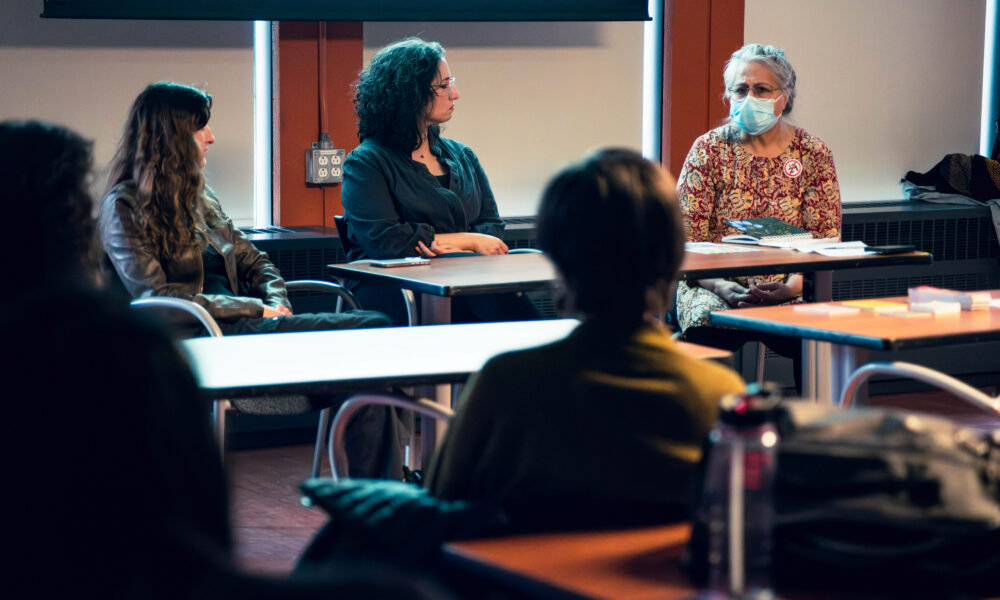
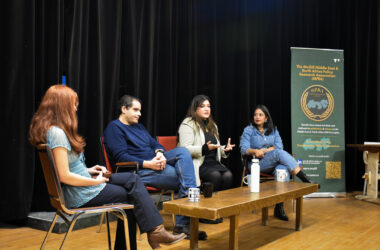
On March 14, the Quebec Public Interest Research Group (QPIRG) at McGill and the Students’ Society of McGill University (SSMU) hosted Women of Diverse Origins (WDO-FDO) for an event titled “Are You Outraged? Organize Collectively: A History of Women of Diverse Origins and the Militant Women’s Movement in Montreal-Tio’tia:ke and beyond.” The two-hour workshop drew nearly two dozen students, with WDO-FDO organizers Zaïnab El Guerrab, Dolores Chew, and Dina El Sabbagh leading the discussion. 

The event began with a presentation from El Guerrab, in which she outlined the history of WDO-FDO. The organization brings together networks of grassroots anti-imperialist women’s groups and consists of women of diverse ethnicities, religions, ages, and sexual orientations who unite in their “struggles against patriarchy, racism, capitalism, colonialism, fascism, and imperialism.” 

“Colonialism and racism didn’t stop during the pandemic,” El Guerrab said. “Women are still resisting war, colonialism, and capitalism, and [now] we are united in demanding justice, equality, quality, and integration [….] These [global struggles] are a reflection of how we take both current and global struggles, and we try to bring them here.” 

WDO-FDO is a member of several international alliances, including the International Women’s Alliance, the International Migrants Alliance, and the International League of Peoples’ Struggle. El Guerrab also shared that WDO-FDO has organized activities to mark International Women’s Day, March 8, since its inception in 2002 and remains involved in various other initiatives throughout the year, such as showing solidarity with Palestine, fighting militarization, and participating in “Don’t Touch Syria” protests in 2017.

“Whether it’s snowing, whether it’s a global warming winter, […] we take the streets, but we are also very keen to learn and to share our learnings and to speak up,” El Guerrab said. “Reading lineages between different groups, different struggles, finding ways to strategize, to learn from each other.”

The workshop then turned to an open-floor discussion with the audience members, in which attendees were encouraged to ask questions. Alex*, an attendee and WDO-FDO member, encouraged audience members to share their own experiences of being outraged over the patriarchy. Alex also emphasized the inclusive nature of the organization, recalling their own experience joining WDO-FDO after just moving to Montreal. 

“Because of this perspective that FDO has, that they welcome people, regardless of how long they’ve been around,” Alex said. “It allows someone like me to take over an elder who was previously involved. So I think those principles are what guide the day-to-day work. So that when objective conditions change, individuals fall sick, or they move or something else happens, the work still persists.” 

El Guerrab hopes that students will see the importance of taking collective action in the face of a capitalist system that encourages separation and competition.  

“[Thinking and acting collectively] offers these kinds of fresh air to think differently and try to build in an anti-imperialist, feminist, anti-racist [space],” El Guerrab said.  

In an interview with The Tribune after the event, Chew explained that she enjoys coming to the McGill campus to engage with students of all ages who have never heard of WDO-FDO and to reflect on how far she’s come from when she was a student and later a secretary at McGill. 

“Looking at faces with people who are in their twenties and remembering myself at that time […] what a great impression it made on me to hear women who were older, who had been doing things, and like thinking, ‘Oh, really, that can be done. I can do it,’” Chew said. 

Student Life

The Tribune’s natural skincare guide

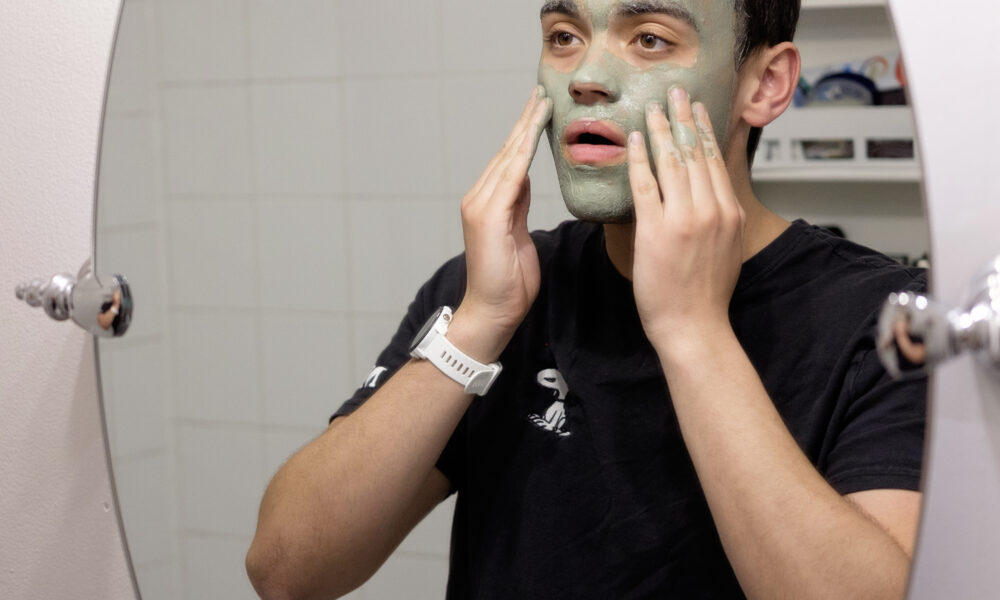
Do we need skin? Most would say yes. Some would say it depends. I, for one, believe that the former is the case, which is why I’m committed to sharing my skincare routine with the McGill student populus. 

For some context: I’m a minimalist at heart. I only use a five-in-one shampoo/body wash/toothpaste, I have worn the same pair of jeans since I was seven, and I believe in reusable toilets. Does this make me more qualified than your board-certified dermatologist? I like to think so. Some may argue that I’m not qualified to give “skincare advice” because I “have never struggled with acne,” but being an empath, I have always struggled with other people having acne.

Let’s start with the essentials. Sunscreen? Probably. Tanning beds? Only if you enjoy melanoma, so why not? Formaldehyde? Chairman Mao would say so. Chocolate? Delicious. However, the real key is that, like my grandma used to say, “The best skincare is self-love. Scratch those chicken pox.”

Now, alternative, more expensive, options also exist. Botox always seems like a good idea until you wake up one morning and realize your eyes never fully closed. If you’re considering mud baths, just keep in mind that you can’t just accrue tons upon tons of street mud from your neighbourhood and store it in the free bathtub you found in your local Ikea—trust the professionals—like me.

If none of my suggestions have helped you so far, you may be saying, “It’s not working. I’m so worried about my acne.” Do you know what you should be worried about? Crime. Maybe the best skincare routine is you being less shallow.

Still, I have a few more tricks in my shoe. Like all university students, I try to craft my points from different perspectives, something my future employers will surely cherish and appreciate. If one were to take a communist lens, perhaps a hard day’s work is what is missing in your skincare routine. Maybe you should go on LinkedIn or Craigslist, then apply for any underwater oil rigging jobs you can find, preferably welding. Even if you still have acne after the eight-month expedition, you will at least have abs of steel and new-found respect for blue-collar life.

Anyone who has had the profound experience of booking an appointment with a dermatologist, waiting four to eight months, and being prescribed topical steroids after a seven-minute appointment, will tell you the same thing: It’s about the journey, not the destination. In the process of trying new moisturizers and throwing out overpriced cleansers, one finds their true self, a genuine and once kind soul driven mad by the depraved restraints of skin. 

But I’m here to tell you that this doesn’t have to be the case. Just remember to always wear sunscreen when it’s sunny outside, change your pillow sheets every other week, eat well whenever you can, and always prioritize your sleep. These simple, but essential steps, will do most of the heavy lifting necessary to rejuvenate your skin and help you feel better along the way.

And remember, if none of my skincare recommendations work, give the underwater oil rigging another shot.

McGill, News

Food Security Summit fosters collaboration between student food advocacy groups

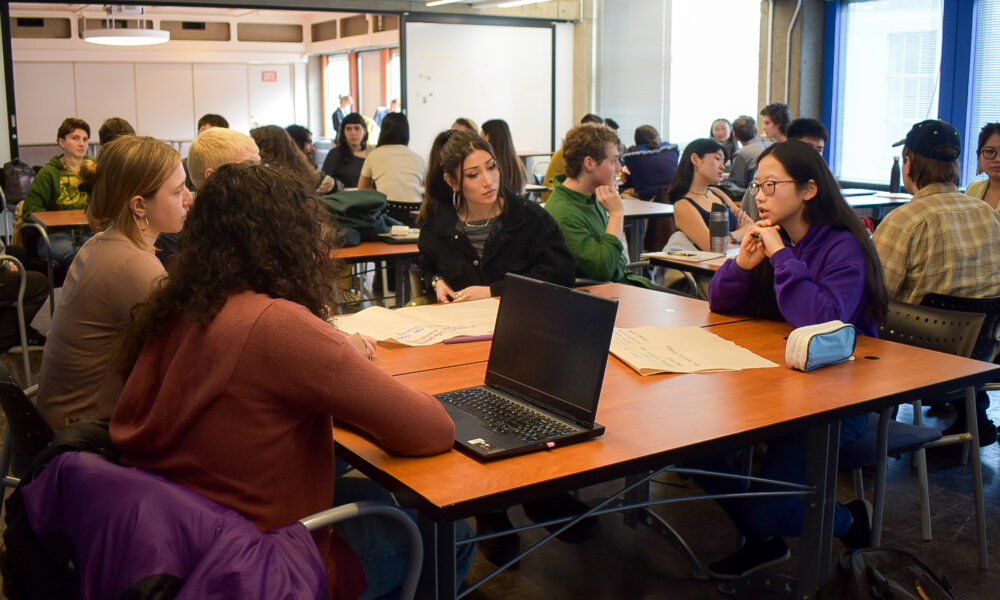
Representatives from student groups across campus and beyond gathered in the University Centre for a Food Security Summit on March 15 to discuss ways to improve the sustainability, accessibility, and affordability of food systems at McGill. The summit included presentations, “visioning sessions” where attendees exchanged ideas on discussion questions in smaller groups, and a free lunch. 

The summit was organized by McGill senators, representatives from the Students’ Society of McGill University (SSMU), members of food advocacy groups, and Let’s Eat McGill. Let’s Eat McGill representative and SSMU Nursing Senator Naomi Pastrana Mankovitz moderated the event, beginning with a land acknowledgement. She then defined what achieving food security looks like—all community members having “stable access to affordable, fulfilling food that is nutritious, where no student minimizes or cuts meals because of cost or insufficient options.”

In an interview with The Tribune, Pastrana Mankovitz highlighted that knowledge transmission was a key motivation for organizing the event. The choice to incorporate both presentations and discussions from and between attendees was a way of spurring collaboration and ensuring future generations of students have a base to build upon when discussing food insecurity.

“We don’t want this research that we’ve done over the years just to be lost and [future students to have to] start from scratch,” Pastrana Mankovitz said. “I wanted at this event for people to be aware of what’s already been done, and what the history is, so that we [don’t] start from scratch.”

Representatives from various groups present at the summit—including Midnight Kitchen and the Student Nutrition and Accessibility Club—then gave brief updates about their work during this academic year. Associate director of Student Housing and Hospitality Services (SHHS) Zach Suhl also addressed attendees, explaining that although students have expressed that they felt SHHS did not listen to their concerns, he is committed to maintaining greater transparency with them.

“I can promise you that I will work as best I can to support all the groups and to support students being able to eat affordably on campus,” Suhl said.

Following this, Pastrana Mankovitz gave a short presentation on the history of student advocacy for food security at McGill. She noted that during the 2000s, student societies, such as the Arts Undergraduate Society (AUS) and Engineering Undergraduate Society (EUS), managed their own cafeterias, cafes, and vending machines. Around 2007 and 2008, the university strategically took over many of these spaces and privatized them despite student resistance. This included the work of the Coalition for Action on Food Services—a group of students, staff, and faculty advocating for a food system founded upon input from the entire McGill community. Pastrana Mankovitz explained that since then, every few years “there’s been waves of student uprising” advocating for improved food security. However, each time, the movement loses momentum when organizers graduate.

Two student groups also presented projects under the Integrated Management Student Fellowship (IMSF) relating to food security, each echoing the importance of knowledge transmission and collaboration. The Food Fighters discussed their proposal to create a McGill Food Coalition (MFC) to coordinate efforts between student groups on campus. The group also described a proposal for creating a community kitchen for students to use on campus.

A second group of students called Food First presented their plans to create a guidebook—which is currently available as a draft version—to institutionalize the knowledge gathered by student activism and make it more accessible. Catherine Chen, U3 Management and member of Food First, spoke about using the history of mobilization at McGill to empower students in an interview with The Tribune.

“[My group] noticed that when we entered McGill, we just sort of accepted how it was as the norm […] the lack of non-corporatized cafes on campus,” Chen said. “Knowing that it used to be all student-run or used to be run by different companies, it’s important […] to inspire future efforts and further empower students who might wanna start their own co-op or cafe.”

Sam Liptay, U3 Science, attended the summit as a representative for the Macdonald Student-run Ecological Gardens. Liptay explained in an interview with The Tribune that one reason he came out to the event was to bring his perspective as a food producer to larger conversations about food security. 

“I think it’s really interesting to see all the different levels at which people are working with food, whether it’s making it, growing it, supplying it or processing it […] or even people doing waste diversion,” Liptay said. “And understanding these problems are all part of one system that different people in the food system can contribute to in different ways.”

Creative

Modern Day Reverence – Graffiti Scripture

Captured in the Park Extension neighborhood of Montreal. I enjoy the playful contrast between the broken, crumbling, raw infrastructure and a rather uplifting and spiritual message. The veins of the city are poking out next to a citydweller’s message to the common passerby. This photograph serves as a reminder of the beauty in the broken and finding everyday joy.

Creative

Life in a Postcard

I call this series Life in a Postcard, a visual love letter to my hometown. Growing up, I failed to

take the time to explore the possibilities within my small rural town. My parents were never big

outdoor people and since I was little, nothing seemed to matter except school and sports. After

suffering a sports injury that ultimately ended my time with that sport, I began to look for

meaning in other things. I found myself leaning on art, music, and the outdoors during this time.

What seemed in the moment an incredible loss, ended up introducing me to something even

more inspiring and significant to my life today.

Combining my love for photography and the outdoors has been such a gift. While I could never

convey the entire experience of being within the mountains, photography has allowed me to

express my love for the outdoors and has offered me an opportunity to attempt, to the best of my

abilities, to share its beauty.

Along with my love for the outdoors, is my love for my friend; who was key in introducing me

to it. Portrayed in a couple photos within this series, it can not be over-emphasized her

contributions to these experiences.

Behind every one of these photos, is a mind, body, and soul experience. If I had one wish, it

would be to give the world these moments.

Features

Home runs in a circular motion

As a kid with a penchant for playing house, I was always concerned by the ideal setup for community living. After much thought, around the age of eight, I decided that acquiring a barren piece of desert and erecting a flower-shaped cul-de-sac, with each petal boasting one house, would be most sensible for my purposes. Hastily, I drew up a plan.

(cartoon: picture of the imagined flower, cloudy for dream emphasis)

(maybe labels: friend’s house #1, friend’s house #5, playground, paths for crossing, the rest of society)

I was enchanted by the American suburban promise of safety in seclusion, a concept graciously fed to me in the form of Bil Keane’s Family Circus comics. Drawn within a circle rather than the common square, an irresistible snugness contained each faithful ode to the nuclear family. A simple existence in a utopically peaceful neighbourhood, recurring every day for the comic’s six-decade history? I was sold.

(cartoon in 2 squares: a simple life in a circle, an exciting life in a jagged shape)

Growing out of that sentimental illusion swung me dramatically in the opposite direction. My need for environmental novelty brought me to Montreal, and once I got used to life here, I moved on to Paris. In standard twenty-year-old style, my ultimate aim was to shoulder off any anchors and escape the confines of convention. However, after returning from my semester abroad, my appreciation for the community here blossomed, and I accidentally began to feel rooted.

I was then faced with the challenge of nurturing stability and a sense of being home while fending off the reverence for tradition that often underpins these sentiments. How do you establish a sense of permanence in a place when there is no promise that you, or your peers, will continue living there in a few years’ time? I brought the question to some articulate young folks with exceptional home-making faculties.

(Quotes in speech bubbles, in a 3-square comic strip)

Aleksi: “It’s hard to put into words… May I do an interpretive dance?”

Eva & Natalia: “The home is our playground.”

Aleksi: “Home is where the hugs are.”

These poetic remarks awakened me to the centrality of kinesthesia to the matter. Following the counsel of these experts, I turned my attention to how the desire to stay put manifests physically, and ventured to build a space that nurtures that feeling.

(cartoon, 2 squares: a nice space vs a hostile one)

A truly comforting space arrests the body, holding it in relief and allowing a heavy serenity, even sleepiness, to wash over it. Uncomfortable spaces can be arresting in the opposite way—the sterile white lighting and cramped plastic seating found in most lecture halls survey, rather than envelop, their students.

ENGL 472–Feminist Cultural Studies: Video and Performance, taught by Professor Celia Vara, was a research-creation cultural studies seminar that attended to the body in a way that I had not yet encountered at McGill. The environment reflected each student’s personality, and such tailoring required an overhaul of the classroom’s defining features. Often, the overhead lights were replaced by a coloured lamp, tables and chairs were displaced to serve the activity of the day, and soft drapes and blankets were brought in for physical ease. Music played as we worked.

(Cartoon of Jocelyn: “why must you pester me on my vacation?”)

For Jocelyn Wong, a classmate and recent research-creation convert, spending a semester in this space altered her perspective on knowledge. 

“The research-creation method reframed my conception of learning from focusing on the result to being process-oriented,” Wong explained. “The environment for each of the group projects was curated to provoke specific feelings which would create each of the moods that were intended.”

This mutable, emoting, and nourishing environment recalled the classrooms of my early childhood, where learning and playing were seen as one and the same. I came to understand that most successful learning spaces treat the classroom as a type of home.

(Cartoon diagram: Figures 1 & 2

Is a person’s circle like this?

Or more like this?

I like to think of it in Figure 2’s terms)

A desire to reintroduce this wide-eyed warmth became the catalyst for my current fixation: Circle Time. 

An unruly spin on the joyful aspects of the classroom, Circle Time is a series of gatherings, primarily chez moi, which seek to nurture the kinds of knowledge that flow out of feeling safe and united with one’s peers. At Circle Time, we provide our attendees with gentle, undemanding stimuli—themed music and visuals, small and optional activities, and a lot of free space to gather and get comfy.

Cartoon of Anna: “It has made me more of a constructivist.”

I spoke to Anna Chudakov, my Circle Time co-conspirator, roommate, and Multimedia Editor at //The Tribune//, about the impetus for this style of event. 

“As someone who was raised with the Montessori method, the tactile element of learning was really formative, and every time I am in a typical classroom, I feel a burning lack. Every time I am forced to raise my hand instead of placing it on my teacher’s shoulder, a small part of me withers, and I am left to pine for more,” Chudakov generously shared. “Circle Time revolves around a return to playfulness, and cultivating a space of safety and curiosity where the participants can bring in an element of themselves.”

(Cartoon of Vivian – In speech bubble: “Circle Time was crazy… it literally felt like a weight was lifted off of my shoulders… or my chest, whatever the saying is.”)

(photo of Circle Time)

At Circle Time, the limiting social codes typical to a party scene are nowhere to be found. Chudakov explains: “We pay a significant amount of attention to the space in which our events take place, out of the belief that in a comfortable space, people take on a more open and inquisitive attitude.”

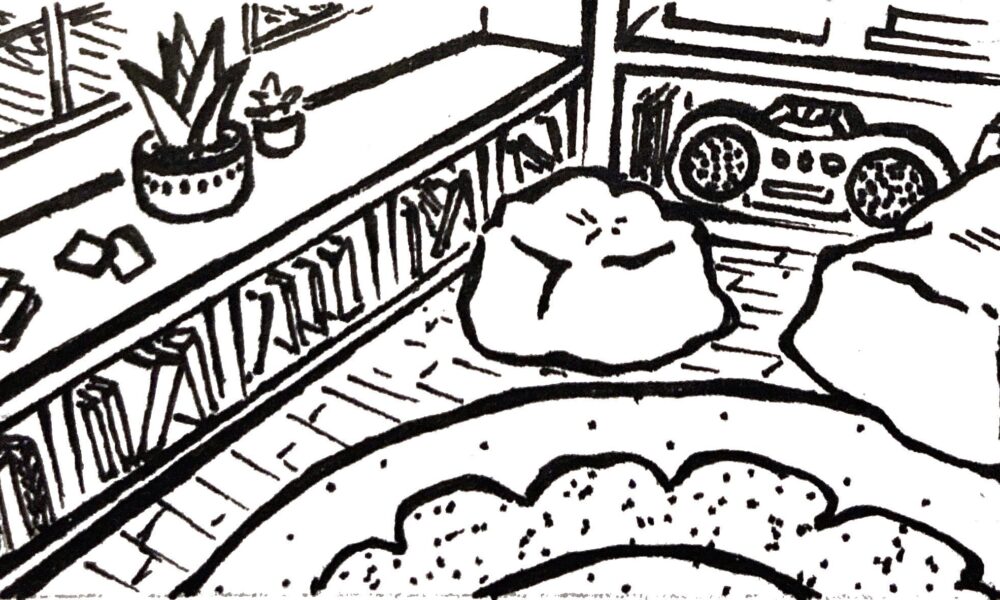
Opportunity to lay down and go silent abounds. In this regard, we draw inspiration from the 1990s vision of a chillout room. Providing dancers with a beanbag-padded, ambient musical haven, the chillout room was a feature of early rave spaces which the party cultures of today have largely abandoned.

(Cartoon of Sako)

There are, however, event organizers in Montreal who keep this fantasy alive in innovative ways. Sako Ghanaghounian, man-about-town and ambient sleepover specialist, is one of them. The first edition of S0undbath (now zzzzzz.club) transformed a loft space into a cloud-filled, downtempo dream world, made for drifting in and out of sleep. 

“The ambient events I’ve hosted in the past, particularly the sleepovers, draw heavy influence from chillout rooms that many raves would have in the ’90s and ’00s,” Ghanaghounian explained. “Unfortunately, parties in Montreal don’t normally feature side rooms where people are given the opportunity to collectively rest, immerse, and bliss out in such a way due to the limited amount of spaces and resources in this city–so why not just make it an event of its own?”

(photo of S0undbath, provided by Sako)

Creative ideas always seem to flow in these states of half-consciousness, when the body is totally relaxed and the mind has long wandered off into a cloudy landscape. Making room for drowsiness is as crucial for innovation and exploration as it is for leisure—and this can be induced by the qualities of a space. Circle Time attendee and seasoned chiller Vivian Miyata noted, “I think it was the blue lighting that really did it for me. I felt like I was underwater, it felt like I could fall asleep at any moment […] it was lovely and beautiful.” For Ghanaghounian, the comfort of an event depends on having “ample room to move about without disturbing those around you, an abundance of spaces to rest so that you can endure the night, and very careful attention to the way the room sounds, with low amounts of lighting.”

(dreamscape cartoon)

Under the purview of Tourisme Montréal, access to this kind of awe and escape has become framed as a purchasable “immersive experience”—but collective rest and sensory nurturing don’t need to be mediated by a museum exhibit. The marketization of “chill out” products can lead us astray from the truly healthful pleasures of a comforting collective existence. By the late 1990s, music associated with the chillout room scene was co-opted by television programs and commercials which sold relaxation as a quick fix, fitting into a stressful schedule. Now, as the once-radical concept of self-care is increasingly linked to individualism and indulgence, we need to look for comfort elsewhere.

(cartoon of a person luxuriating in ‘self-care’)

As student-residents of Montreal, we can find ourselves at home by separating tranquility from removal, stagnation, and consumption. Crafting temporary “chillout” spaces for shared comfort provides a way to engage with homemaking and community-building that accommodates change and retains a forward-looking creativity. Contrary to expectation, you don’t need to invent your own suburb to build space for a peaceful togetherness—though I’m still not opposed to employing the flower as a template where possible. Wherever we are, we deepen our connection to place and with each other by gathering around—and learning from—rest


Editorial, Opinion

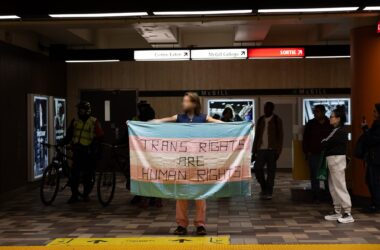
McGill must protect its queer students and stand against growing bigotry

On Feb. 22, 2024, the town of Westlock, Alberta, voted to prohibit rainbow crosswalks and flying anything other than government flags. This measure is yet another recent example of Canadian politicians implementing homophobic and transphobic policies, all of which normalize hatred against queer communities.

The Westlock decision came after Alberta Premier Danielle Smith announced a dangerous plan early last month to prevent young people from accessing gender-related therapies such as hormones and puberty blockers. In response to Smith’s policy, Conservative leader Pierre Poilievre claimed that young people should only be able to make choices concerning their bodies “when they’re adults” and explicitly stated his opposition to puberty blockers for people under 18. Poilievre also affirmed his undying support for trans-exclusionary rhetoric, saying that trans women have no place in women’s sports. As politicians weaponize women’s identities and openly disregard science to serve their electoral agenda, institutions—from all levels of government to universities—must speak out against this dangerous rhetoric and actively protect the human rights of the 2SLGBTQIA+ community.

Decisions taken “in the best interests of the child” not only cater directly to Conservatives’ ideas of what gender identity should look like but are also life-threatening to trans youth. According to a 2022 study published in the Canadian Medical Association Journal, transgender adolescents are five times more likely to consider suicide and almost eight times more likely to die by suicide. Restricting access to gender-affirming care will increase mental suffering for young transgender people who already face isolation due to a lack of support systems. Requiring parental approval for trans teenagers to access care, whether it is for surgery or for changing their pronouns, ignores the rejection and bigotry that many trans children face within their families and larger social circles.

These discourses and policies that put trans youth’s bodily autonomy in the hands of their parents emerge directly from an ideology that perpetuates shame, hate, and violence against trans identity and trans people. Smith and Poilievre dishonestly build their anti-trans rhetoric around “safety” while putting 2SLGBTQIA+ youth in danger. Just last month, 16-year-old two-spirit teen Nex Benedict died following a violent confrontation with classmates in their high school in Oklahoma. Across North America, two-spirit people, the broader Indigiqueer community, and other queer and trans people of colour experience homophobia and transphobia in addition to white supremacy and settler colonialism.

The Liberals’ response to the Conservatives is far from sufficient. Prime Minister Trudeau’s accusation of Poilievre attacking “some of the most vulnerable people in society” does not provide any tangible measure to protect queer and trans Canadians. The 2SLGBTQIA+ community must be included in policy discussions of their human rights, not sidelined as vulnerable.

Furthermore, the political sphere is not alone in enabling harmful discourse against transgender people and endangering their autonomy and livelihood. Though McGill has offered resources in support of 2SLGBTQIA+ students often well after community organizing by Queer McGill, the Union for Gender Empowerment, and the Trans Patient Union, powerful stakeholders in the administration have platformed transphobic speech in the name of academic freedom. In Jan. 2023, McGill University’s Centre for Human Rights and Legal Pluralism (CHRLP) invited transphobic professor and lawyer Robert Wintemute to host a talk entitled “Sex and Gender Identity.” The McGill community responded immediately as protesters from various student groups stopped the event before it even began, successfully forcing its cancellation. 

The McGill administration must live up to the values of openness that they publicly promote. Navigating academic spaces for the first time can be a considerable strain on trans students especially, and they should not have to struggle with bureaucracy when it comes to changing their student ID and email address to align with their chosen name. Queer McGill has led a campaign against misgendering and deadnaming, and the university must listen.

McGill students must continue to stand against transphobia and refuse to let their university put trans people’s rights up for debate to fulfill their commitment to “the exchange of ideas.” Trans people’s right to exist is not a conversation, and with substantive care, protection, and support, will not become one.

Sports

Know Your Sport: The McGill Woodsmen saw it all

On Mar. 9, McGill’s Macdonald Campus hosted its 62nd Annual Woodsmen Competition, serving as the penultimate stop for the universities competing in the Canadian Intercollegiate Lumberjacking Association (CILA). The athletes hailed from six different Eastern Canada post-secondary institutions: Algonquin College, Dalhousie University, Fleming College, Maritimes College of Forest Technology, and the University of New Brunswick.

With over a dozen events, the competition is split into team, doubles, and singles events, each of which is subdivided by gender. After the opening ceremony’s early 8:30 a.m. start, friends, family, and curious onlookers were welcomed by the pulp-throwing events, introducing the physical and excitement that would unfold during the day.

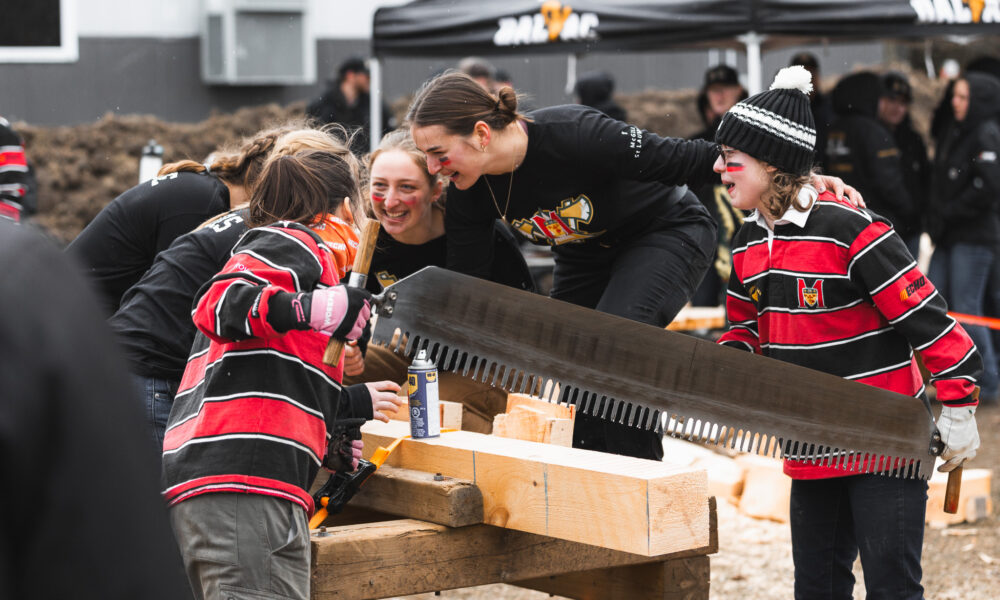
Events revolved around traditional lumberjack skills, including multiple variations of woodchopping, with competitors using a Swede saw, a single buck saw, a chainsaw, or an axe. Other events, such as axe throwing or log rolling, offered constant entertainment for the families and friends in attendance. 

Arguably one of the most impressive events—the pole climbing competition—saw multiple competitors try to climb a 28-foot-tall pole as fast as possible. Parker Chase led McGill to a third-place finish under the watchful eyes of her teammates. Next to the pole, the log decking event took place, where athletes took turns trying to roll the log from end to end of the course. McGill’s log decking team faced some challenges, as the log slipped and had to repeatedly be brought back on the trail.

The afternoon opened with light rain and hail, but that did not deter the pairs from competing in the overhand and quarter splits events. Women’s captain Louanne Marquis and teammate Marlene Herzog succeeded Massimo Malorni and Sebastien Beaulieu for the underhand event.

“We were excited for the competition today with all our family and friends out here to support,” said Herzog, who was competing in the overhand and single buck event, in an interview with //The Tribune//. “I feel like we’re crushing it so far today.” 

This prediction came to fruition, as the McGill women’s team delivered an outstandingly speedy and technical performance on the team Swede. The even saw six teammates try to succeed each other in chopping wood discs from a trunk as possible in under five minutes. Their cohesion and technique propelled the women’s team to second place overall, closely following Dalhousie University’s score. The team achieved first place in the team sawing and crosscut saw events, as well as winning individual honours, with first place in single buck sawing and individual supersweet sawing, and podiuming in chainsaw and water boiling. 

The competition ended with the long-awaited water boil event. Each participant gets a tin can filled with water and soap and needs to make a fire out of a supplied log, bringing the can’s contents to boil until the liquid overflows. The spectacular panorama of competitors, each kindling the flames in hopes of heating the can as fast as possible, left audience members speechless. 

As the 2023-24 season is coming to a close soon, coach Andreanne La Salle reflected on the performance of the teams. 

“We just want to keep up our game like it is right now. Just keep focusing and correct a few things that could have gone better in the last competition,” La Salle said. “Maybe fine tuning a bit of technique [here and] there.”

As the only Quebec team on the circuit, the team faces more difficulty with recruiting, which plays a role in their ability to compete with provinces where logger sports are more popular.

“For example, in the Maritimes, the logger sports are something that they do in 4-H, whereas in Quebec, even though we do have really big, deep roots in the logger disciplines or work field, it’s not a sport that’s well known,” La Salle concluded. 

The Macdonald Campus Woodsmen will be travelling to Nova Scotia to attend Dalhousie’s 38th annual Rick Russel Loggersport Competition on Mar. 23.

Read the latest issue

Read the latest issue