

Latest News

Science & Technology

Upping the ante: The latest research on communication in ant societies

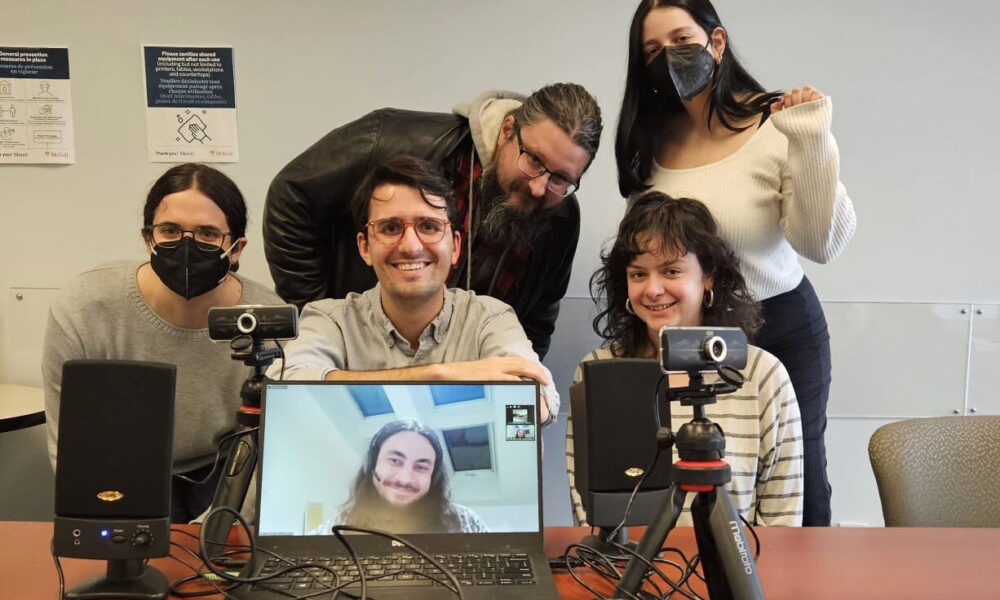
On Feb. 29, McGill’s Department of Biology hosted a lecture on ant societies, led by Daniel Kronauer, an associate professor at Rockefeller University and a leading researcher in the field of ant evolution, genetics, and neuroscience.

“In my lab […] we try to understand how ant societies have evolved, how they are organized, and how they function,” Kronauer said in his lecture. 

To study ant societies, Kronauer’s lab breaks their research down into three major components: How the ants differentiate into different classes, such as workers and queens; how they communicate with each other; and how that communication leads to collective behavior, such as evacuating a dangerous area or exploiting a food source. 

Kronauer focused on communication in his lecture, discussing how ants use insulin controls, fluid exchange, and pheromone sensing to send signals and coordinate their actions effectively. 

First, he discussed insulin signaling, which is used in ants and other animals, including humans, to regulate chemical processes. The researchers knew that when an ant colony had young larvae, the adult worker ants had lower insulin levels than when they were in the egg-laying process, called the reproductive stage. The insulin levels in turn controlled worker behavior, such as foraging for food or laying more eggs. 

But how exactly the insulin levels were controlled was a mystery. To investigate this, Kronauer’s lab removed larvae from one colony and inserted them into another. 

“When you do that, what happens is quite dramatic,” Kronauer explained. “The larvae really regulate the insulin levels of the adults, so when you take the larvae out, insulin levels increased pretty rapidly, and if you add larvae to a colony in the reproductive phase that really suppresses it.”

Yet the question remained: How were the larvae regulating the insulin levels of the adults?

One possible answer lies in another communication method used by ants, fluid exchange. 

This insight came from another experiment conducted by Kronauer’s lab, which involved separating the ants by developmental stage, so the pupae, larvae, and adult workers were all placed in separate enclosures. This allowed them to study each developmental state closely and in isolation.

“People have been regarding pupae as a more boring, passive state,” Kronauer explained. “But when [another researcher at the lab] started to isolate the pupae, she found that in the last week of metamorphosis, they started to secrete copious amounts of this clear liquid.”

Getting curious about this process, the researcher injected food dye into some pupae and placed them in an enclosure with adult ants. They found that the dye soon transferred to the adult ants, meaning that the ants must have been eating the liquid secreted by the pupae. Further, the adult worker ants would place young larvae on the pupae so that they could eat the liquid as well, providing a source of sustenance. 

While this appears to be an important food source for the larvae and adults, it also seems to play a social role. 

“The secretion is a pretty complex fluid. So there’s a lot of interactive substances in there, there’s a lot of hormones in there,” Kronauer said. “So we think that it probably has a lot of important effects on both larvae development and also adult behavior.”

Finally, Kronauer looked at ants’ remarkable olfactory system, which has developed to perceive a wide variety of pheromones. 

“When you look at ants, you’ll see that they are really just small walking chemical factories,” Kronauer noted. “So every worker species has about a dozen or so exocrine glands, which produce different types of pheromones.”

This impressive production of pheromones requires a large array of odorant receptors, about an order of magnitude larger than those found in fruit flies. Studying the neurobiology of this system is incredibly difficult and requires precise genetic testing. Kronauer’s lab made headlines by using CRISPR to create the first genetically altered ants. 

What they found was striking: In ants where pheromone sensing had been interrupted, their behavior became completely asocial, failing to participate in collective behaviors and struggling to survive in the colony. 

McGill, News

Queer McGill Deadnaming Dashboard highlights deadnaming and misgendering in McGill IT systems

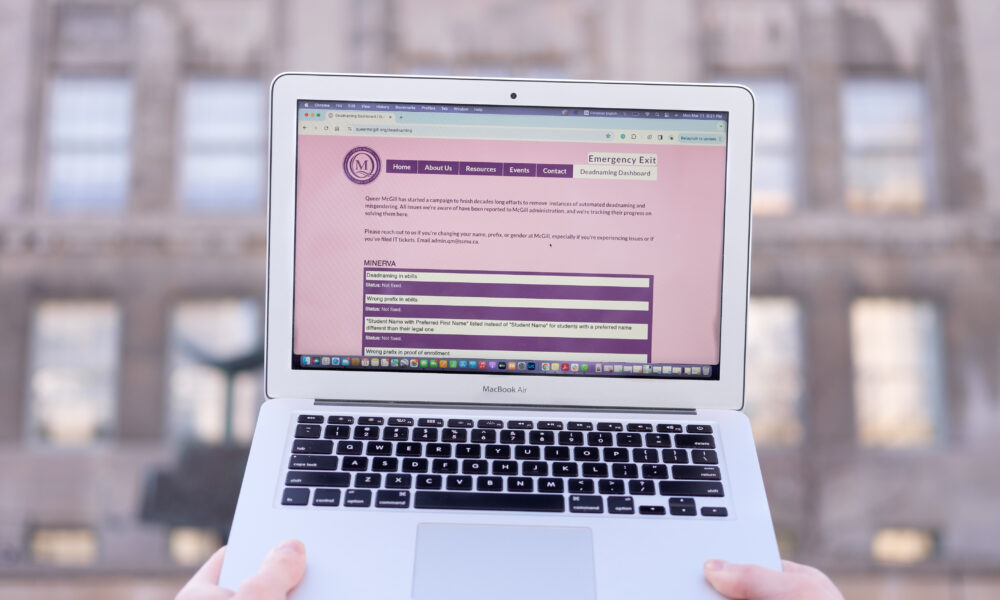
Queer McGill—a service run by queer students for queer students, non-students in the Montreal area, and allies—started a Deadnaming Dashboard “to end automated deadnaming and misgendering […] last fall,” within IT systems such as Minerva, MyCourses, UPrint, and the Student Wellness Hub (SWH).

The Dashboard displays all McGill IT services that are currently misgendering and deadnaming students, as well as status updates regarding specific ways in which these online services are failing trans students—all of which currently read “not fixed.” Queer McGill invites students dealing with these issues to contact them for support when being misgendered by McGill IT systems.

The group explained that the university has long deadnamed and misgendered trans students, though McGill claims to have made progress. 

“Trans students continue to be dead-named and misgendered by automated IT systems from attendance sheets to departmental mailing lists. McGill’s Wellness Hub and housing department are aware of these problems but resist calls for change [….] These systems give staff unnecessary access to trans students’ deadnames, and some—like the Student Wellness Hub—have no documented process to make a change at all,” Queer McGill wrote to The Tribune.

In an email to The Tribune, McGill Media Relations Officer Frédérique Mazerolle reaffirmed McGill’s “efforts to challenge transphobia, biphobia, and homophobia and to foster a robust sense of belonging for all within our campus community, regardless of gender or sexual identity.” Mazerolle also noted that the Deputy Provost of Student Life and Learning Fabrice Labeau launched an Ad Hoc Committee on Preferred Names in February 2024, to address IT-specific deadnaming and misgendering issues.

“The goal of this committee is to investigate current areas where McGill IT systems are falling short compared to those outlined in the 2021 SSMU Report Preferred Name and Pronoun Use at McGill University, and track progress. Committee members include representatives from Enrolment Services, Student Services, IT Services, the Equity Office, Human Resources, and the SSMU,” Mazerolle wrote.

A McGill student who wished to be unnamed said that their efforts to have deadnaming issues fixed by McGill staff have gone unaddressed, leading to anxiety and apprehension about what in-class deadnaming could lead to. 

“Honestly, it’s devastating. I’ve spoken to multiple people, multiple times to sort out this issue and nothing has ever changed [….] One of my professors has offered to contact people on my behalf within McGill about this issue and has received no response. Each time it’s the first week of classes I’m terrified that my legal name will be called out instead of my preferred name. I also have to see my legal name every time I use teams, which is daily,” they said. 

Queer McGill Resource Coordinator Arwyn Regimbald also spoke to McGill residence staff, who continuously misgendered them whilst they were living in residence, describing this as “pervasive attacks on [their] dignity, self-worth, and ability to function.” 

“When I lived in student residence, the staff systematically deadnamed and misgendered me in nearly every interaction I had,” Regimbald said. “I repeatedly cautioned them; I asked them to stop; I involved McGill admin. There was one time where they started crossing off my (then) preferred name on parcels, and writing my deadname. One residence worker even told me I was committing a criminal offence by using a name that wasn’t legally mine.”

Queer McGill Administrative Coordinator Abe Berglas reported that McGill departmental heads often refuse to believe students when they report deadnaming, leading to students being unwillingly outed.

“When we come up with proof, they explain why the system works the way it does. But knowing that the transphobia is impersonal doesn’t protect us from being outed. I’ve never seen a group of people more defensive about being able to continue their transphobia. When potential new students ask me if McGill is accepting to queer students, I can’t say yes in good conscience,” Berglas said. Despite ongoing efforts made by Queer McGill, they wrote that “trans students continue to be dead-named and misgendered by automated IT systems from attendance sheets to departmental mailing lists,” and although “McGill’s Wellness Hub and housing department are aware of these problems, [they] resist calls for change.”

McGill, News

AGSEM plans to hold strike vote during week of March 11 

After months of bargaining meetings with McGill to negotiate a new Collective Agreement (CA), the Association of Graduate Students Employed at McGill (AGSEM) is holding a strike vote during the week of Mar. 11. This decision comes after teaching assistants (TAs) gathered at an assembly on Jan. 30, during which members voted unanimously on a motion mandating AGSEM’s Mobilization, TA bargaining, and Executive Committees to organize an assembly and hold a vote for a strike mandate. If the vote passes, all teaching assistants (TAs) currently working at McGill will go on strike. 

The union submitted its monetary proposal on Dec. 18, 2023, demanding a wage raise from $33.03 per hour to $46.36 per hour—which AGSEM claims is the average amount TAs make at other Canadian universities, such as the University of Toronto. It also seeks a cost-of-living adjustment, meaning that wages will follow a change in inflation if the latter is more than three per cent. Furthermore, the group wants the university to adjust TAs’ working hours to the number of students in the class that they are TAing. Lastly, AGSEM is asking that McGill provide healthcare benefits for TAs and that care be divided into three types: Care for domestic students, care for international students, and gender-affirming care.

According to AGSEM, McGill submitted its monetary proposal on Feb. 2, proposing a 1.25 per cent wage raise—which equates to an increase of 41 cents per hour—with a 1 per cent increase for each subsequent year. This stood in stark contrast to the 40 per cent AGSEM demanded. McGill’s proposal did not include sections concerning indexing working hours to class sizes, cost-of-living adjustments, or healthcare. 

Following their first monetary proposal, McGill proposed a 2.25 per cent wage increase on Feb. 26, raising the hourly rate to $33.77 with a 1.25 per cent increase for each following year. AGSEM wrote in its newsletter that this increase does not address inflation, which totalled 4.45 in 2023 in Quebec.

In their newsletter, AGSEM wrote that McGill framed its offer in the context of the decreasing funding from the Quebec government. History Delegate to the union, member of the bargaining support committee, and TA Donnie Morard acknowledged McGill’s tight financial situation but noted that expenses related to TAs—around 13 million per year according to AGSEM’s estimates—amount to a very small portion of the institution’s operating budget.

“I believe our wages amount to something close to [one] per cent, likely less, of McGill’s budget,” Morard said. “This is despite the invaluable work we do running labs, teaching conferences, and grading assignments. Giving TAs a big raise is a good investment in improving the quality of education at the university, especially since it won’t seriously undermine McGill’s bottom line.”

As the union did not accept McGill’s proposals, the university filed for conciliation. According to Harlan Hutt, president of the Association of McGill University Support Employees, conciliation consists of the process where “the union and employer bring in an independent arbitrator to help negotiate a collective agreement when they reach an impasse in collective bargaining.”

“Conciliation is normal within the process of negotiating a Collective Agreement, and is a standard part of collective bargaining. AMUSE has utilized conciliation before, notably during our 2017 Collective Agreement negotiation with McGill.”

AGSEM will hold two of its assemblies for the strike vote at Centre Mont-Royal, near the downtown campus, one on Wednesday, Mar. 13 at 6 p.m. and the other on Saturday, Mar. 16 at 2 p.m. It will also organize a meeting at 2 p.m. on Mar. 14 at McGill’s MacDonald Campus. Members only need to go to one of the assemblies to vote.

Negotiations will continue in the meantime, as both parties are planning to meet on Mar. 14, a day after assemblies for the strike vote start. Fanny Teissandier, a TA and AGSEM Anthropology Delegate, stated that the union seeks to avoid a strike in an email to The Tribune.

“The AGSEM bargaining team has told McGill and the conciliators that the union is willing to negotiate every single day ahead of our strike vote assemblies,” Teissandier stated. “On March 14 and 19, McGill may still avert a strike by reaching a tentative agreement with AGSEM’s bargaining team, which will be presented to the union’s membership for ratification.” 

McGill declined to comment for this piece.

Ask Ainsley, Student Life

Ask Ainsley: Finding the perfect roommate

Dear Ainsley,

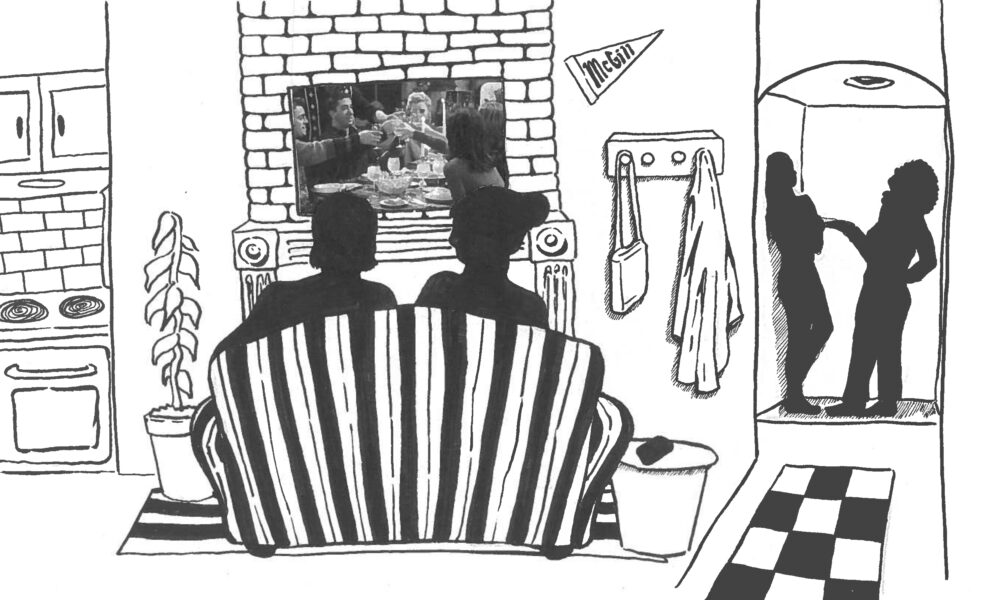
We are already halfway through the semester and I will soon need to pack up my room in res to go home for the summer, but I still don’t know where I’ll be coming back to in September. Time has gone by so fast and I now realize that before even starting to look for apartments, I need to find my future roommate. But where do I start? Please help.

Sincerely,

Panicking Over Flatmate (POF)

Dear POF,

Don’t worry, I have been in your shoes and so have thousands of other students. You still have time. Finding a roommate is not something that you should rush. Here are a few tips to help you figure out who you’re going to live with.

Living with a friend?

It’s true that for some, living with a friend is the best way to find the perfect roommate. But for others, it breaks the friendship: You can be really close friends with someone and still not be made to live together, and that is okay—it doesn’t mean that you love the person any less. Sometimes, it’s better to live with someone you don’t know. That way, there are no expectations involved and no room for disappointment. It’s also a great way to meet new people. Remember to set boundaries and communicate and everything will work out fine.

I would suggest living with a friend of yours only if their living style is compatible with yours. Otherwise, my biggest advice is to go to McGill Residences events. They organize a talk called Life Beyond Residences and you can be sure to find other people looking for roommates there, and they give great guidance as well. Apart from this, don’t hesitate to mention that you’re looking for a roommate to people around you—in your classes and to friends of friends for instance—and to check out some McGill Facebook groups as well.

Cleanliness 

Who in this world actually wants to live with someone dirty? I know I definitely don’t. It is crucial that you and your future roommate agree on the cleaning processes and boundaries. My roommate and I agreed when we moved in together that the dishes should be done immediately after eating if possible, or should not stay more than 24 hours in the sink. This is what works for us. Find what criteria work for you and make sure your future flatmate agrees. It can be really irritating to live with someone who doesn’t care as much about cleaning, or who cares far more about it, than you. 

Social battery levels

If you lived in residence with a roommate during your first year you know how important having a compatible schedule is. As someone who likes staying at home with a book and a cup of tea on Thursday night, you might not want to live with a party animal—and vice versa. I recommend finding someone who matches the way your social battery level fluctuates. It’s fine if you do not always want to do the same things but trust my word on this: It’s not nice coming home after a long day of school wanting to go to bed early to find your roommate partying in the living room. 

Complementary habits 

Cooking together is a great way to bond with your roommate at the beginning of your shared journey. While it’s always nice to discover someone else’s go-to food, my advice is to find someone who has pretty similar taste as you do—especially if you are a picky eater. If you don’t like cooking then you might want to find someone who does and would be down to prepare delicious meals for the both of you. In exchange, you could offer to handle the dishes for instance. Either way, the perfect roommate should align with your preferences. 

I hope this helps. Signing a roommate agreement might also be a good idea in order to put your standards for each other into writing and avoid a mid-semester crisis. Don’t forget that the only person you are going to be living with for the rest of your life is yourself—you are your own perfect roommate—so don’t stress too much about finding the perfect roommate when your stay with them is not going to last forever.

News, The Tribune Explains

Tribune Explains: Tenants’ rights in Montreal

The apartment search is ramping up for many as Quebec’s July 1 moving date looms closer. The Tribune brings you a guide to understanding and invoking your rights as a tenant when renting an apartment.

What are the regulations around landlords increasing rent?

Landlords must give written notice of their intention to increase rent three to six months before the end of the lease. If they do not meet this deadline, the rent must stay the same the following year. Each year, the Tribunal administratif du logement (TAL) recommends a percentage by which landlords adjust rent, but does not set a hard cap on rent increases. The Tribunal suggests tenants negotiate with their landlord if they think the rent increase is too steep and allows tenants to formally contest increases with the TAL if negotiation does not work.

What other housing regulations exist?

  • Landlords cannot require a security deposit. They can, however, request the first month’s rent early when the tenant signs the lease.
  • Landlords must give 24 hours notice before entering a tenant’s apartment, except in the case of an emergency. Visits should be between 9 a.m. and 9 p.m., and work should be done between 7 a.m. and 7 p.m.
  • Landlords must respond to unsanitary conditions—for example, a pest infestation or serious plumbing problem. If a landlord does not intervene promptly, the tenant can call 311 to have the city intervene to ensure decent living conditions.
  • Landlords must perform urgent repairs—for example, fixing a broken front door that will not lock. If a tenant cannot get in touch with their landlord over an urgent matter, they are allowed to take reasonable action and demand reimbursement from the landlord.
  • If a landlord wishes to repossess an apartment that has a lease of over six months, they must give notice at least six months before the lease ends. In the case of a six-month lease, they must give notice at least one month before the lease ends.
  • Tenants are able to break their lease if they are no longer able to live in the dwelling due to a disability, if they or their child is the victim of domestic abuse, or if they have been allocated low-rent housing.

What is Bill 31?

On Feb. 21, Quebec’s Bill 31, “an Act to amend various legislative provisions with respect to housing,” came into effect. Among other provisions, the Bill means that lease transfers—the ability to sign over one’s lease to another person, protecting the rent from hikes—can now be stopped by landlords without reason. Previously, landlords had to have “serious concerns” to deny a transfer. The Coalition of Housing Committees and Tenants Associations of Quebec and other organizations that advocate for tenants have protested the Bill, saying that limiting lease transfers will dramatically worsen the already critical housing crisis in Montreal. In 2023, the CBC reported that Quebec’s unhoused population had nearly doubled in four years

Where can one get legal information and advice on housing law?

The Legal Information Clinic at McGill (LICM) and the StudentCare legal care program are both valuable resources for students who believe their housing rights have been violated. The LICM is staffed by McGill law students and provides legal information and know-your-rights workshops for students and the Montreal community. The StudentCare legal care program is available to students through the Students’ Society of McGill University (SSMU) insurance plan for an opt-outable $30 per year. The program allows students to access both legal advice and legal representation. 

The TAL can be reached by phone or email. Appointments at the Tribunal’s information offices can be booked online.

How does one file a complaint if their rights are being abused?

It is a good idea to make it clear to your landlord that you know your rights. If they still do not take corrective action to respect your rights, you can take the issue to the TAL—a process the LICM, the StudentCare legal care program, or the TAL themselves are equipped to help you navigate. An application can be filed online, in person, or by mail.

Hockey, Sports

Know Your (PWHL) Athlete: Ann-Sophie Bettez

Growing up, Ann-Sophie Bettez idolized both the women on Canada’s Olympic hockey team and the men playing in the National Hockey League. The existence of a perennial women’s hockey league at the professional level was uncertain. As such, Bettez earned a Bachelor of Commerce at McGill in 2011 and became a financial planner, balancing a job in the corporate world while continuing to play hockey. Bettez went on to play for Les Canadiennes de Montréal in the Canadian Women’s Hockey League and later, the Montreal Force in the Premier Hockey Federation.

Recent investments in women’s hockey have had a significant impact on the local sporting landscape. The former Martlet emphasizes the importance of Centre 21.02, a high-performance training centre at Verdun Auditorium dedicated specifically to the women’s game. According to Bettez, this was especially important during the COVID-19 lockdowns.

“The Centre had [a certification] that allowed athletes to be on the ice during COVID. We were able to practice over the course of the summer and have skills coaches on-ice to be able to make sure we kept in shape,” Bettez said.

Bettez credits Centre 21.02 and its mission as contributing factors to the success of professional women’s hockey in Montreal.

 “[The Centre] has hockey camps throughout the year, being able to get girls at a younger age, making sure they know the discipline it takes to be able to get to the next level,” said Bettez.

“I feel like all of this is kind of a melting pot that just led to this professional league.”

The launch of the new Professional Women’s Hockey League (PWHL) allowed Bettez to be involved in a special part of hockey history, having netted the league’s first-ever overtime goal in a game against Ottawa on Jan. 2. For Bettez, PWHL Montreal’s season opener in Ottawa was memorable.

“We were waiting for so long. Training camp started in November, and it was so long before Jan. 2 came,” the McGill alum said. “It was the first game, it was our first win, and it was my first goal. They gave [the overtime goal puck] to me at the end of the game, so that’s a very special memory.”

Personal accolades aside, Montreal has had a successful start to the season, sitting atop the standings with a 5–3–2–2 record. When asked about the team’s objectives for the rest of the season, Bettez noted the importance of winning games in regulation and building chemistry within the squad.

“We have success by winning games in regulation, because […] a win in regulation time is three points. Going into overtime and winning is two points. So definitely trying to get some wins, five on five in regulation time [is important],” Bettez stated. “And just keep building that chemistry that we’re establishing off the ice, learning the tendencies of the players, and making sure we learn from our mistakes and making sure we also learn from the good things we’ve done.”

For Bettez, Montreal’s home victories end with a post-game victory dance accompanied by teammates Mariah Keopple, Gabrielle David, and Sarah Bujold. The four players created a dance to the tune of //Le Bal Masqué//, the team’s victory song, arising after the group heard the song while playing //Just Dance// during a road trip. This led to a spur-of-the-moment celebration at Place Bell.

“We were in a hotel, and that song came up. And then I was like, ‘This is a pretty cool song,’ and we started doing a dance,” the former Martlet said. “We decided [Le Bal Masqué] was gonna be our game-winning song and when we first did the dance at Place Bell it was kind of ‘Oh my god, did we just do that!?’ That was pretty cool.” 

The celebration after Montreal’s home victories serves as a reminder for all fans of the joyous moments that sports can provide.

“It’s just a matter of putting smiles on people’s faces,” the forward said. “And to remind people that hockey is fun.”

The Tribune’s interview with Bettez was conducted on Feb. 7.
PWHL Montreal (5–3–2–2) will play next on Mar. 2 at 4:00 PM EST against PWHL Boston (4–2–2–4) at Verdun Auditorium. Follow the action live on CBC Gem, RDS, or the PWHL YouTube channel.

Hockey, Sports

Point-Counterpoint: Fighting in hockey

Anti-fighting

Tillie Burlock, Managing Editor

Given the decline of fighting in hockey over the past decade, some may argue that there is no need to institute a formal ban. While it is enjoyable to watch the occasional bout between two tough guys, we must ask—at what cost? Fighting leads to an increased risk of chronic traumatic encephalopathy, a degenerative disease linked to repeated head trauma that can only be diagnosed after death. It wreaks havoc on the body, and many players who fought throughout their careers suffer from both physical ailments, mental health issues, and even premature death

The most common claim made by those wanting to keep fighting in hockey is that it “polices” the game. The “unwritten” rules of hockey dictate that a dirty hit or play will result in the perpetrator having to fight. Therefore, many argue that the prospect of fighting acts as a deterrent against dangerous plays. However, a 2022 study contradicts claims that fighting deters further violence in games and goes on to emphasize the link between fighting and traumatic brain injury. After examining all penalties in the National Hockey League (NHL) for games between the 2010-11 and the 2018-19 seasons, the study found that of the 2,842 games in the period with a fight, there was a 66 per cent increase in violent minor penalties committed in ensuing game play, compared to games without a fight. 

Moreover, the NHL’s inconsistency with enforcing rules on hits from the behind or to the head, combined with the increased pace at which today’s game is played, makes it near impossible to correctly decipher which plays warrant a fight. As such, players often end up being forced to fight for clean plays. The declining role of the enforcer––players whose main job is to fight and protect their teammates––means that oftentimes, skillful, smaller players who are not good fighters are forced to “answer the bell.” 

If you can’t get on board with eradicating fighting from the NHL level, you should support banning it from the Canadian Hockey League (CHL)––Canada’s Major Junior League. The CHL currently faces a number of lawsuits from players who allege that teams pressured them to fight when they were as young as 16 among a range of other issues within the CHL such as hazing and sexual abuse. As teenagers, they would match-up against fully grown 20-year-old veterans and even years removed from playing, a number of them claim they still suffer the consequences. 

Pro-fighting

Liliana Mason, Opinion Editor 

Ryan Reaves said it best: “Make hockey violent again.” Fighting in hockey has a legacy as long and as storied as the game itself. In fact, the first-ever game of indoor ice hockey in Montreal in 1875 was followed by a fight—though it was between players and spectators, rather than among the players. The NHL introduced the first official fighting regulation in 1922, just five years after the league was created. 

In 1967, the expansion of the NHL precipitated the beginning of the “goon era,” as new teams attempted to compensate for their lack of playing talent. By the 1980s, 100 per cent of NHL games had fights. Although the frequency and severity of fights in this period saw many “goons” suffering from long-term injuries, this era of fighting is definitively over, and for good reason.

Still, fighting remains an important, and significantly more regulated, component of hockey games. Regulations include suspensions, extra fines, and penalties for players who instigate a fight, leave the bench to join a fight, or remove their helmet before a fight. With increased safety, dropping the gloves now has many important functions beyond the classic “enforcer” role. Fighting continues to be a significant draw for fans, building rivalries between teams and bringing a certain irreplicable excitement to games.

Moreover, hockey is a fast-paced, intense game that inevitably stokes tensions between players. The kind of fighting we see in the NHL now is a significantly less dangerous and bloody alternative to players attempting to get cheap shots off at one another in order to blow off steam.

Rather than focusing on fighting—an inevitable, valuable, and highly controlled part of the game—hockey organizations should shift their attention to more pressing safety issues such as the implementation of mandatory neck guards. And let’s be honest, even those against fighting love a little rock ‘em, sock ‘em moment. 

Read the latest issue

Read the latest issue