Latest News

Student Life, Tribute

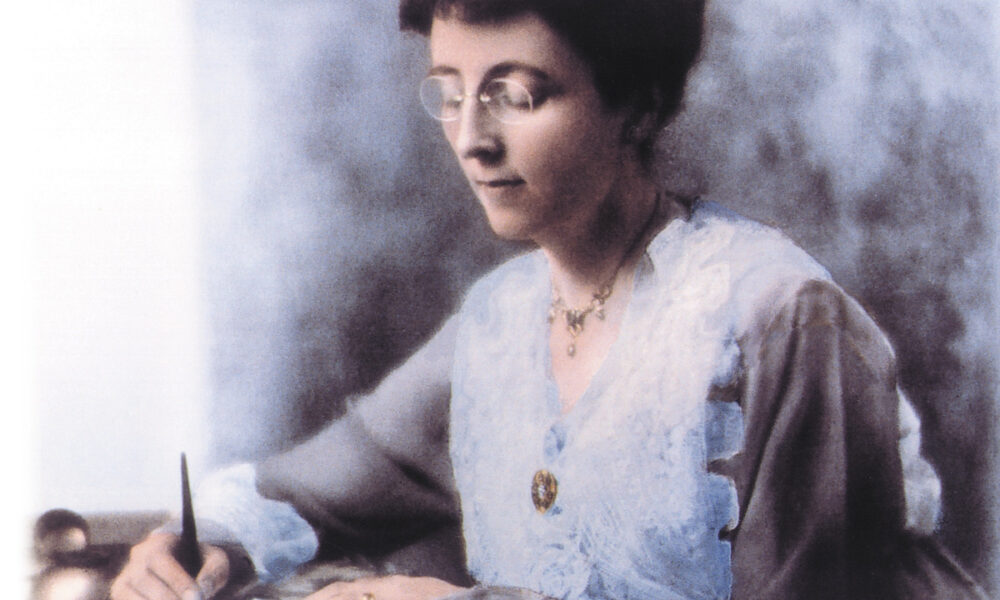
Tribute: Remembering Professor Monica Popescu

Born in Brasov, Romania in 1973, Monica Popescu was a star student throughout her studies. After receiving degrees from the University of Bucharest, the University of Windsor, and the University of Pennsylvania, she began teaching at McGill in 2005, where she taught courses on African literatures, literary and social theory, imperialism, gender studies, and the Cold War. On February 24, after a year-long battle with glioblastoma, Monica passed away at age 50.

In her presence, we were all Monica’s students. Her commitment to anticolonial pedagogy challenged what this university and a liberal arts education could be—she always “moved the centre” to use Ngũgĩ’s phrase. In teaching the mandatory survey course for English literature majors, she passionately lectured about African, Caribbean, and South Asian histories, literary traditions, and revolutionary struggles. Over many eagerly anticipated office hour visits, her encyclopedic knowledge, fierce determination, and tender soul enchanted me, as did our discussions on Zoe Wicomb, post-Communist politics, and campus organizing. I was lucky to have Monica as my Honours supervisor and to grow under her exuberant light, warmth, and mentorship. Her words, lessons, and generosity fortify me—I will miss her dearly. 

Below, Monica’s students, colleagues, and friends share their memories of this beloved scholar.

Monica Popescu made so many things possible. She was one of the most brilliant and insightful scholars I’ve ever met—and also one of the kindest, most down-to-earth, and committed friends. During our twelve years together at McGill, we published, edited, and organized several transformative books and symposia. She brought celebrated writer, activist, and professor Ngũgĩ wa Thiong’o to McGill—a watershed. We shared jokes, stories, lunches, karaoke sessions, birthday celebrations, and walks.

And there was so much more work left to do. Her loss leaves a yawning abyss. Its pain ripples through all the lives she touched. I know that Monica’s legacy will live on through our work and our tributes. – Katherine Zien, Associate Professor, Department of English

“It is a truth universally acknowledged” that Monica had a deep love of Jane Austen and a penchant for all things Regency. We never got to attend a Jane Austen theme weekend at the Governor’s House in Vermont or to co-teach a course on decolonizing the Regency, as we had hoped. But “let other pens dwell on guilt and misery.” Austen wrote that “perfect happiness, even in memory, is not common” but attending the immersive Bridgerton ball experience with my dear friend was one such moment of perfect happiness and a memory that I’ll always cherish. – Fiona Ritchie, Associate Professor, Department of English

Monica came into my life ten years ago and we felt close almost instantly. Her easy laugh and generous, heartfelt compliments broke your defences and brought out something more elevated in people she encountered. She infused a vibrant and joyful spirit into the academic projects we embarked on together. Monica had a talent for deep literary readings fused with a critical historical analysis. She brilliantly expanded the field of Cold War literary and cultural studies, a legacy that we must all strive to uphold and amplify. – Bhakti Shringarpure, Associate Professor at the University of Connecticut

Professor Monica Popescu was a phenomenal and humane person and a stellar scholar. Monica possessed a profound respect for African literatures, and she shaped generations of students at McGill. Monica was an exemplary educator. Her love of Africa infused the African Studies Program with a weight and intellectual gravitas belied by its still limited resources. Whenever Monica was around, we all knew that African Studies had a home and that it had a future at McGill. Such was her electric energy that she almost single-handedly centred Africa on campus. The renowned Nigerian writer, Chimamanda Ngozi Adichie, famously warned of the danger of Africa being contemplated in terms of that ‘single story,’ that single narrative, and how this often robs readers and writers alike of understanding Africa’s full diversity and humanity. Monica never needed to be taught that cautionary tale. At McGill University she taught all of us that this particular lesson was as profound as commonsense. – Khalid Medani, Chair of African Studies 

As everyone who knew her will attest, Monica Popescu was a profoundly capacious human being. In addition to being a brilliant and groundbreaking scholar, she was incredibly generous in mind and spirit. Monica wanted her students to have the opportunities that she had, and she went out of her way not only to open doors that would have remained closed but to devote her energy to transforming their minds and lives. Within the Department of English, I always thought of Monica as the “gold standard.” What I mean by that is that I always felt that her intelligence, political beliefs, and ethical integrity were the keystone to our department. Monica proved that one could be at the very top of their scholarly field without sacrificing time for their students, or one ounce of their kindness. She was also a dear friend, who was always so supportive of every one of my endeavours. I loved her and will miss her beyond measure. – Ara Osterweil, Associate Professor, Department of English

“I am so glad you could come—I have heard a lot about you from common friends.” These were Monica’s words to me when we met for the first time—in the corridor connecting Arts to Leacock, during my campus visit in February 2013. In a few months, Monica became my departmental colleague and fellow “postcolonialist” (notwithstanding, as I was soon to realize, that we shared a disdain for that term). But she was also, as I would call her, my fellow co-conspirator and a dear, dear friend.

We all know of her formidable scholarship but what may be less obvious is how warm and generous she was to others; how encouraging of others as they pursued their own lines of thinking. Monica embodied warmth, joy, and laughter, and was one of the kindest people I have had the privilege to call a friend. And she was funny. I recall one Montreal winter evening she arrived late for drinks: “Sorry I got late,” she said as she entered the bar on Avenue du Parc. “I slipped on the snow and fell—I think I am a fallen woman now.”

This was just one of the many memories I have of sharing a meal or a drink (often several drinks) with her. These moments were times to catch up and compare notes: about course texts and syllabi but also about new restaurants in Montreal and possible endings to the Game of Thrones (Monica preferred the novels to the television show). She initiated me to the joys of mici, the Romanian sausage, on one such outing; on another, I introduced her to the classic Bollywood song “Monica, my darling.” Her laughter at seeing the video—the legendary Helen, twisting and twirling to the words—still rings in my ears. Monica leaves us poorer—I miss the warmth, joy, and that sparkling laughter that she brought to all our lives. She was, simply put, wonderful. Or as she would have said, in that incantatory joyfulness that was so singularly her: “wonderful, wonderful, wonderful!” – Sandeep Banerjee, Associate Professor, Department of English

Monica probably had the premonition that she wasn’t going to be here forever, so she packed the goodness of five lifetimes into just five decades. Unarguably the kindest academic I ever met. Sad that I knew her too late. Sad that she had to go the way she did. – Onyeka Dike, MA ‘23

Of Stars and Grief (for Monica Popescu, 1973-2024)

I started this note without tears in my eyes

I started this note with a kind of beautiful denial

I started this note from a place some of us have known:

grief—that city we must all reach, that unmapped terrain.

I refused to believe Monica is no more, that Brasov’s pearl lies still

I cannot imagine that she will sleep subterraneanly somewhere in the city

I am haunted by Monica’s eternal silence

Even my words are reluctant in their acceptance:

Monica is no more—her breath is history.

My people say that those the gods love do not live long

They kiss the world just enough to complete their mission

They leave us, we who outlive them, with a rare gift:

A lifetime of the best memories, a bowl of endless affects

From the mountains of Transylvania to the estuaries of Pennsylvania

From the prairies of Windsor to the rapids of the St. Lawrence:

Everything and everyone bear testimony to Monica’s existence

The favourite of the gods and of mortals: Monica lived

We all testify with tears in our eyes.

Mathias Orhero, PhD candidate in the Department of English

Read the full tributes below:

Monica was one of the most welcoming, open-hearted, and collaborative friends and colleagues. When I arrived at McGill, I was eager to meet her. She took me out to lunch and for a Labrador tea. I was immediately charmed by her gentle, kind, and enthusiastic nature. A bit later, we started to realize that our research interests intersected in important ways. I was becoming fascinated by the Cold War in Latin America, and she was at work on what would become the ground-breaking At Penpoint. She invited me to several workshops of the African studies group in Montreal, and we organized a colloquium on ‘Third World aesthetics’ and invited amazing scholars and people to take part. Monica’s academic circles were so cool. Shortly thereafter, we would start working on our edited volume, The Cultural Cold War and the Global South: Sites of Contest and Communitas. With the fantastic Kerry Bystrom, we created this book – a community, really – including many of our friends and colleagues working on literature, theatre, film, and visual art throughout the global south during the Cold War years. Although our work intersected with the Covid pandemic, our zooms kept us going. It was a wonderful collaboration.

Monica started a book series and included me and Sandeep Banerjee as co-editors. She welcomed us into this collaboration, and I was so appreciative. She also invited Ngũgĩ wa Thiong’o to speak at McGill around 2016 – a watershed event. I was in the first trimester of pregnancy and completely exhausted, but this event was so amazing. Meeting Ngugi and hearing him speak will forever be one of the highlights of my professional and personal life. Monica made so many things possible. And throughout she remained one of the kindest, most down-to-earth, and committed scholars and people I’ve known. Her loss is huge and resonates on so many levels. She touched so many lives. The unfairness of her passing so young, before she could finish her several works in progress on world literature and Ngũgĩ, is so painful. I know, however, that her legacy will live on through our work and our tributes.

Monica was both a cherished colleague and a great friend. She and I enjoyed lunches at Mamaia, having her homemade sour soup with mici, karaoke with Fiona and Alanna, tea at café Aunja, birthday dinners, and chats in the hallways. Seeing the light on in her cheery yellow office always made me happy. She would regularly come and knock on my door with a story or joke to share. Her eyes had a wonderfully impish twinkle, full of humor and keen intellect. She was stylish and flamboyant and perceptive and proud and funny and brilliant and totally special and unique. My only regret is that we didn’t spend more time together. I will miss her forever. – Katherine Zien, Associate Professor, Department of English

Professor Monica Popescu was a phenomenal and humane person and a stellar scholar. What I remember most is the students who would come up to me and say do you know of her course, it is terrific. I didn’t know that African literatures were so fascinating. Monica possessed a profound respect for African literatures, and she shaped the thinking of that genre for generations of students at McGill. Monica was an exemplary educator. Her love of Africa infused the African Studies Program with a weight and intellectual gravitas belied by its still limited resources. Whenever Monica was around, we all knew that African Studies had a home and that it had a future at McGill. Such was her electric energy that she almost single-handedly centered Africa on campus. When she taught more broadly thematic courses on English language literature, she made sure African literature was included as an integral rather than a peripheral part of her syllabi and curriculum. She refused to situate African authors on the margins or represent them as outside of the canonical texts as is so common elsewhere. Monica was also a generous colleague far more interested in building an intellectual community around African Studies across the disciplines rather than pursue a singular and narrow path in her work and life. For Monica, the joy of education was embedded in community. Monica also represented something else: perhaps more profound in its learning properties; more resonate in its teaching moments. While she was not from Africa, she quietly modeled for non-Africans how scholars working on Africa can teach Africa on its own terms absent epistemologies borrowed from the Eurocentric tradition. Few professors enjoyed such loyalty from African students and an earned trust from all students wary of the misrepresentation of Africa and Africans in and outside the classroom. At a time when conversations around the ‘decolonization of the curriculum’ have emerged as immensely important but also disappointingly controversial, Monica was surprised at this controversy, this dispute over representing and centering African voices in literature. After all, she had been engaged in just such a project for years throughout her career. For Monica this came naturally, it was unremarkable, it was right, and it was just. More importantly, it was simply the love of literature. Her legacy then was to mute the facile debate over what constitutes ‘grand’ and canonical literature, and to include everyone across the false divides of nationality, race, and gender. One always knew that Africa and Africans were safe in her company and that she would interject a kindness and empathy whenever she entered a classroom, an African Studies Program meeting, or just when she took the time to talk to you over a cup of coffee. The renowned Nigerian writer, Chimamanda Ngozi, famously warned of the danger of Africa being contemplated in terms of that ‘single story,’ that single narrative, and how this often robs readers and writers alike of understanding Africa’s full diversity and humanity. Monica never needed to be taught that cautionary tale. At McGill University she taught all of us that that this particularly lesson was as profound as commonsense. – Khalid Medani, Chair of African Studies

Of Stars and Grief (for Monica Popescu, 1973-2024)

Mathias Orhero, PhD Candidate in the Department of English

I started this note without tears in my eyes
I started this note with a kind of beautiful denial
I started this note from a place some of us have known:
grief – that city we must all reach, that unmapped terrain.

I refused to believe Monica is no more, that Brasov’s pearl lies still
I cannot imagine that she will sleep subterraneanly somewhere in the city
I am haunted by Monica’s eternal silence
Even my words are reluctant in their acceptance:
Monica is no more – her breath is history.

As the first tears I shed trickled from my eyes
They forged an image of Monica on my mind:
I remembered last night’s dream of stars and stardust: cosmic elements vital to our existence
A star is formed from the forces of fusion and gravity within cosmic clouds
They shine and illuminate the universe, pulling cosmic forms into orbit
When their energy is spent, they become iron, sprinkled across the universe
In life or death, they shine bright and spread across the eternal, infinite void.

Monica was made of the same elements as the stars
Her presence was luminous, boldly wrestling the darkness of our world
She was the brightest star around – creating the orbital motion of everything
The gravity she pulled allowed things to swim easily:
Those caught in her orbit sing of beauty, harmony, motion
Their tongues confess Monica’s stellar simplicity
Their eyes bear witness to Monica’s exemplarity
Even now, they sing and weave tales of Monica’s luminosity

A nebula is where stars are born: where creation unfolds
Monica comes from Orion, one of the brightest ones
She danced to the music of the spheres, natalized the libra constellation
Her colours are rare – those you see once and feel fulfilled
Monica now dances again with the stars –
Look towards the night sky, she is Polaris, guiding us all
Her cosmic story tells us that the brightest things in the universe are not far from us.

My people say that those the gods love do not live long
They kiss the world just enough to complete their mission
They leave us, we who outlive them, with a rare gift:
A life time of the best memories, a bowl of endless affects
From the mountains of Transylvania to the estuaries of Pennsylvania
From the prairies of Windsor to the rapids of the St. Lawrence:
Everything and everyone bear testimony to Monica’s existence
The favourite of the gods and of mortals: Monica lived
We all testify with tears in our eyes.

Album Reviews, Arts & Entertainment, Music

The Children’s Hour is going home

As the bouncy plucks and resonant acoustics of the nylon-string guitar line underscore “Going Home,” vocalist Josephine Foster joins in, crooning, “I am going home.” Her vocal inflections are sweet and sombre, resembling the warbling mimicries of a lark as a spidery electric guitar melody spins between the interweaving words. The track straddles the line of loud and soft, balancing the mellow acoustic rhythms with moments of booming chorus brimming with melodious vocals and aching guitar harmonies. Foster sustains her operatic hums into the song’s ecstatic and sonorous peak, crying soberly, “If you wait for me, my darling, I will wait for you.” Amid the culminating noise of the track, the melodic pattern of the song’s opening emerges isolated once again to resolve the album.

On Feb. 23, The Children’s Hour released their sophomore record, Going Home, two decades after its initial recording in 2003. Originally a duo, songwriters Andy Bar and Josephine Foster met the third member of their trio, David Pajo, at Chicago bar The Hideout while playing at a variety show in 2002. A member of the band Zwan at the time, Pajo befriended the pair after lending his guitar to Foster for their set, soon asking them to open for Zwan’s 2003 tour. For a louder sound fit to fill the depths of these large concert halls, Pajo joined Bar and Foster on the drums, producing new and distinct arrangements of songs the two had been playing acoustically since their conception. This album, recorded after the tour’s completion, was lost for twenty years among the Kentucky studio’s tapes and archives. In 2023, producer Paul Oldham finally unearthed the recording, and The Children’s Hour, now separated, reunited for the record’s mixing and mastering.

Going Home is a groundbreaking record brimming with nostalgia and eccentricity, familiarized by its traditional folk roots and poetic lyricism. The songs elicit the feeling of musical storybooks, comforting while invigorating in their structures and melodies. Throughout the album, there is an underlying sense of familiarity and connection that the band upholds through their partnership with symbiotic trust. 

“We have a bond we’ve worked on,” Bar said in an interview with The Tribune. “I like playing with Josephine because I really respect her as a songwriter, and I learn from her as I’m playing with her as well.”

The album features an exploration of vastly different tonal narratives and genres. “Bright Lights” chronicles the sentimental yet celebratory final minutes of a person’s life, transitioning harmoniously into themes of gloom and reflective sorrow in “Rainbow.” 

“This album is two kind-of shy kids singing songs together, what they come up with, and how they express themselves. We tried to write a dance song, like ‘Dance With Me,’ and it definitely comes from wallflowers,” Bar said. “I remember the day that I came up with that opening [for ‘Dance With Me’], I showed it to Josephine and it was kind of a fun moment. It was such a special song to us so I’m glad that it’s finally out on a record.”

“Dance With Me” is a whirling jive that explores and embraces introversion and stands out as one of the record’s finest. The unadulterated joy and amusement that emanates from this track is contagious, beckoning every listener to join the sea of twirling recluses and poetic angst.

On Mar. 23, The Children’s Hour will embark on their album release tour, playing two shows throughout the U.S. before finishing at The Hideout—the Chicago venue where it all began twenty years ago. The nostalgic sentiment that much of Going Home’s content evokes is further heightened by the circumstances of the record’s release. It celebrates the past, acknowledges the group’s accomplishments, and commemorates the band’s musical relationship. With Going Home, The Children’s Hour achieves a dreamlike soundscape of conviviality and liveliness, reminding us through music to savour every passing moment.

Student Life

On the (internship) hunt

“What are your summer plans?” As 12-degree days start to make their way back to Montreal, so too does the topic of summer plans. How about an internship?  

While internship application periods vary depending on the field, late winter can often be a busy period with many job openings being posted and deadlines looming. Here are some valuable tips and resources to help make this process a little bit less painful. 

Set aside a dedicated internship day

With school and other responsibilities, internship applications can get lost in the shuffle. Time batching, when you set aside one day a week to focus on a particular task, will pay off in terms of productivity. 

Head to a café or any location outside of your usual routine and allocate three to four hours to research and work on applications—you’ll thank yourself later for this commitment.

Get organized 

Being organized before you start your search is incredibly important to help you stay on top of the entire process. Some may prefer project management software like Notion, while others may choose a simple spreadsheet. Regardless of your platform of choice, having a central place that holds all relevant information such as the position and company name, required material, deadline, links to applications, and emails of contacts will prove invaluable. 

It is also key to keep tabs on which materials you have sent to each application. You should be sending a tailored version of your CV and cover letter to each job, so when it comes time to interview, you want to know what information the interviewer has seen.

The search 

There are many tried and true places to search for internships. First, there are public sites, such as Indeed, where users can browse and apply for internship postings made by companies. Another place to search is LinkedIn, a professional site where users can network, apply for internships, and be recruited by employers. One of the benefits of LinkedIn is the ability to connect directly with current employees at your companies of interest. This can help tremendously with not only your search but also with making your application stand out in the hiring process. 

School resources, such as myFuture, Workday, and faculty-specific internship offices, provide a host of specific internship programs that are of interest to students. 

Your McGill email is another great place to find internship opportunities, as faculty coordinators and professors will often forward openings to students. Setting aside a specific folder for these emails will help you make sure you don’t miss any opportunities. 

Finally, don’t be afraid to use your McGill connections. Reaching out to professors, or alumni can be a great way to search for potential opportunities, and maybe even get a referral. 

Or… create your own internship

Just because a company doesn’t have an internship posting doesn’t mean that they don’t offer one, or are not open to creating an internship program. Don’t be afraid of sending cold emails or making cold calls if you don’t see an internship available at an organization of interest. You can find tons of tips online for cold-calling effectively.

The applications

Applying to internships is a job in itself: It requires time and attention to detail. With enough practice, you’ll know how to tailor your CV and cover letter to each opportunity. Highlight your past work, volunteering, leadership experience, and skills in your CV, while using your cover letter to explain why you are the best fit for the role.

Some final tips 

Be creative. This is just one step in your long career process so it can be a great time to branch out and try new things. Finally, don’t be afraid to ask for help. McGill Career Planning Service (CaPS) offers students a host of resources, from workshops to career guidance appointments. You can get help at any stage in your search and application process, whether you’re just writing your CV or prepping for a final interview. Best of luck!

Montreal, News

Writer and filmmaker asinnajaq explores art, technology, and perspective in virtual talk

On Feb. 29, artist, writer, curator, and filmmaker asinnajaq took to Zoom to give a talk on their artistic practice and works. The talk was organized as part of the Disrupting Disruptions: Feminist and Accessible Publishing, Communications, and Technologies speaker and workshop series in collaboration with the Indigenous Futures Research Centre (IFRC) at Concordia University, an organization that supports Indigenous-led research.

Disrupting Disruptors is a series that unites diverse disciplines such as computer science, feminist studies, LGBTQIA+ studies, and critical race theory to explore “critical approaches to publishing practices, innovative communication strategies, and techniques for making research dissemination more accessible.” The Institute for Gender, Sexuality and Feminist Studies (IGSF) at McGill also provides financial and administrative support for the series.

Remarking that “making slideshows is one of [their] love languages,” asinnajaq began their presentation by discussing some of the methods and core values that they bring to their work. They noted the importance of asking themself “Am I the person to do this?” when approaching a project and reflecting on how they can bring their unique perspective to the art, as well as doing research and listening to others to best explore the subject at hand. 

asinnajaq then described several of their mixed media artistic projects, such as the installation Where you go I follow, which incorporates a photograph printed on a fabric sheet and written scores. They also detailed their installations Nuna and qulliq as part of the exhibit ᐊᖏᕐᕋᒧᑦ / Ruovttu Guvlui / Towards Home, which originally appeared in the Canadian Centre For Architecture. asinnajaq’s work in the exhibit included creating an augmented reality (AR) artwork as part of Geronimo Inutiq’s installation, which audiences could view using Microsoft Hololens. The AR exhibit depicted an ever-changing landscape in the gallery room—clouds hanging overhead, a running river, and iridescent ravens swooping from perch to perch. 

“[This] installation to me was really about Iqaluit and about the feeling of being there,” asinnajaq said. “One thing that I could see that I could really add to make it feel like Iqaluit was to add something about the atmosphere and some environmental elements like the clouds, the water. And […] we have the Raven which are iconic for their tenacity […] and their character.”

asinnajaq finished their presentation by discussing their 2017 documentary short film, Three Thousand, which they created out of archives from the National Film Board of Canada. They explained that the film uses roughly 100 years of archival representations of the Inuit to create a “timeline of colonization and our cultural fabric.”

During the question and answer period, asinnajaq spoke to the way the film is for them “a document primarily for Inuit so that we can see and understand how we got to where we are,” while also underscoring the possibilities for change.

“Because there are some people, some fellow Inuit that I know, that sometimes forget […] the situation we’re in with really precarious situations with mental health, housing, food, safety, security […] and trauma that so many people are moving through is not an inherent part of us, and it’s happening for a reason,” asinnajaq said. “While doing that, I always want to leave space for hope […] that we can create worlds that we want [….] This world is a created world, and we can create worlds.”

Alex Ketchum—the organizer of Disrupting Disruptions and Assistant Professor at the IGSF—spoke to the connections between asinnajaq’s work and the themes of the series in an email to The Tribune.

“The asinnajaq event came about due to my partnership with the Indigenous Futures Research Centre,” Ketchum wrote, noting that their “work thoughtfully engages with technology.”

IFRC programming coordinator Joëlle Dubé explained in an email to The Tribune that the organization’s collaboration with Disrupting Disruptions for the speaker series was motivated by an interest in exploring disciplines in science, technology, engineering, art, and math (STEAM), as well as from Indigenous, queer, and feminist perspectives. 

“Whereas the acronym used to be STEM, we were curious to delve deeper into the role arts can play as the latest inclusion within this cluster of disciplines,” Dubé wrote. “We thought that the way asinnajaq makes use of new technology, through their work as a filmmaker, an artist, and a curator exemplifies a not-yet-presented perspective or facet of STEAM, one that pertains to visual storytelling.”

The next event in the Disrupting Disruptions Series is a workshop by Gabryelle Iaconetti and Liam Devitt on Queer Oral Histories on Mar. 15.

Off the Board, Opinion

Putting the retro in retrospective

Every year, as winter festivities approach, an air of excitement comes around that fills most with joy. For others, however, the holiday season brings a sense of unease. Each year, I dread the onset of my mortal enemy: Spotify Wrapped. Spotify’s yearly retrospective may provide insight for some, bringing to light that obscure phase you went through in the beginning of June where you only listened to Carrie Underwood or mixing that niche Phoebe Bridgers song you played on repeat during exam season back into your daily rotation. But for me it is a reminder of my shameful addiction—my obsession with old-school French songs. 

For as long as I can remember, summers boiled down to the same few elements—my grandparents, the sun, and the special television programs I could finally watch. The latter evolved from the Gulli and Teletoon+ cartoons that we did not have access to toward prime-time poor-quality TV shows that are only aired on French networks. However, one program remained constant: N’oubliez pas les paroles, the French version of the American game show Don’t Forget The Lyrics. The show’s target audience must have been at least 50 years old, given that the song selection focused almost exclusively on the 1980s and 1990s. With my lack of exposure to contemporary music, this show became the reference on which to build my musical repertoire. 

My musical baggage still grew from my mother’s collection of Téléphone and Dalida CDs—or her favourite—Patrick Bruel, with songs from Les Dix Commandements, Mylène Farmer, or Indochine. While newer artists continued to emerge and songs continued to be released, I remained a step behind, catching up on decades of classic songs in hopes of one day being in tune with my contemporaries. 

Maybe it’s the living abroad thing that makes every reminder of home that much sweeter, or maybe it was growing up with limited access to French TV—and the subsequent way that I was relying on the much more accessible music to connect with my friends back home that skewed my listening choices. Having limited access to French-speaking TV and music stations as a kid, I mostly relied on CDs and DVDs to fuel my desire for leisure. My routine included leaving for school when William Leymergie’s Télématin started and sprinting home to watch Mozart l’opéra rock for yet another time or Belles Belles Belles, a musical revisiting Claude François’s repertoire. When I passed my driving test this past winter, the first song I listened to on the way home with my grandmother was from a compilation of his greatest hits: Magnolia Forever

Maybe these patriotic listening habits are the reason why I feel a bit sad for the American public, who see every song become a world phenomenon. While songs like “Don’t Stop Believin” may feel uniquely American, they often reach multiple platinum certifications in countries worldwide. There is something to be said about American cultural hegemony and how it may come at the price of national cohesion. This is not to say that indie music doesn’t exist in the U.S. But even thousands of kilometers away from home, anytime the first few notes of “Les Démons de Minuit” or “Le Chasseur” ring, I know that my fellow countrymen will back me up on this national monument of a song. 

This is not to say that I don’t listen to anything else—I have been working on expanding my listening habits since coming to Montreal. I have been rediscovering music I remember marking my childhood. This past year, Pitbull, The Strokes, and Megan Thee Stallion took their place in my Wrapped alongside Nekfeu and Luidji. Am I the most unique and thought-provoking music listener? No, but nor do I claim to be. As the end of the semester and finals are just around the corner, you can find me walking around with a determination only “Hotel Room Service” can bring to a person.

Commentary, Opinion

From hypermasculinity to policy advisor: McGill’s alarming choice for Indigenous oversight

In 2022, McGill University began on-site work at the Royal Victoria Hospital (RVH) site, in service of the New Vic Project. They proposed the expansion project would facilitate “state-of-the-art research”; however, the McGill administration failed to complete a thorough survey of the area and investigate the possibility of unmarked graves from victims of medical experiments and malpractice on the site of the former Royal Victoria Hospital (RVH). The harmful medical and burial practices that took place at the RVH, along with McGill’s involvement with the MK ULTRA experiments, were forms of violence that disproportionately affected Indigenous communities. In Oct. 2022, the Kanien’kéha:ka Kahnistensera (Mohawk Mothers) secured a Quebec Superior Court injunction to ensure a vigilant and culturally sensitive approach to unmarked graves. Taiaiake Alfred’s appointment as McGill’s Senior Policy Advisor in June 2023—which coincided with news of the Historic Human Remains Detection Dogs’ discovery of the scent of potential human remains on the RVH site—prompts scrutiny of the university’s commitment to Indigenous oversight. 

Alfred works with the Mohawk Council of Kahnawake (MCK), a band council formed under the Indian Act. Attracting very few voters and little support in Kahnawake, the council operates far from the consensus mandated by the Longhouse’s traditional decision-making system. Traditionalists have widely criticized his work on a “new governance project” for the MCK as replacing their ancestral government with band council governance structures imposed by colonial powers. One such criticism is that many workshops associated with this system of leadership did not allow anyone over 35 to attend. Therefore, Alfred’s questionable vision of a new way of governance was shielded from the oversight and criticism of elders and has the potential to mislead younger generations. This problematizes his alignment with colonial structures and indicates concerning implications for Indigenous peoples and perspectives at McGill.

Alfred’s new role at McGill follows his controversial exit from the University of Victoria (UVic) amid accusations of a toxic environment in their Indigenous Governance program.  When //Two Row Times// asked for a response to the allegations, Alfred, who regularly puts forward his U.S. Marine infantry veteran status, said “[I]f you’re asking me if I’m hyper-masculine, well, I’m Mohawk from Kahnawake.” This puzzling assertion raises concerns about his accountability, particularly given the matriarchal nature of Kanien’kéha:ka traditions and that the Kahnistensera are from Kahnawake. 

As the Senior Policy Advisor, Alfred’s responsibilities include guiding Indigenous policy development at McGill. But his public history raises serious questions about his ability to represent the interests of Indigenous communities and students. Will Alfred’s appointment only ensure that Indigenous consultation aligns with McGill’s objectives? 

Beyond the immediate concerns regarding the New Vic Project, McGill’s track record of sidelining Indigenous voices and resisting court-ordered oversight is abhorrent. Their ongoing defiance against the Kanien’kéha:ka Kahnistensera and their appeal against a court-ordered reinstatement of an archaeological panel reveals the hypocrisy of the administration’s stated dedication to ethical practices and Indigenous rights. 

Over the past eight years, the Kahnistensera have engaged in a multi-layered struggle against McGill, the Société québécoise des infrastructures (SQI), and others. Their legal battles, including their landmark injunction in Quebec Superior Court, showcase persistent efforts to protect unmarked graves around the former Royal Victoria Hospital. Despite court orders, McGill and SQI’s actions during archaeological investigations, including the disbanding of an independent expert panel of archaeologists, underscore this process’ lack of integrity. 

The New Vic Project uses a destructive and denialist strategy to undermine the stories of survivors who witnessed and suffered the atrocities that occurred at the RVH site. McGill’’s actions suggest a pattern of prioritizing expansion over ethics, and Alfred’s role seems to be an attempt to legitimize disregard for valid Indigenous concerns and shield the university from rightful criticism.McGill must foster meaningful engagement with Indigenous communities on their own terms.   Seeking validation that supports the administration’s opportunist agenda is unacceptable. The university must uphold basic principles of equity, justice, and respect for nature and end its support for toxic, patriarchal behaviours, and extractive practices. Let us seize this opportunity to honour the wisdom of the Great Law of Peace that guides the Mohawk Mothers and the land McGill occupies, and genuinely embark on a journey of reconciliation, unity, and collective well-being.

Research Briefs, Science & Technology

Patient-centric progress: Advancements in technologies for type 1 diabetes

Living with diabetes goes beyond managing its symptoms. It involves grappling with social stigma, the necessity of a continuous supply of insulin, the lurking fear of hypoglycemia, and the financial burden of disease management in failing healthcare systems. Recent advancements in diabetes technology aim to assist with insulin adjustment and alleviate the mental burden diabetes patients face. A recently published paper titled “Exploring Technology’s Influence on Health Behaviors and Well-being in Type 1 Diabetes: a Review” features insights on such developments. This paper was written by a team of dedicated researchers including Meryem Talbo, a PhD candidate in McGill’s School of Human Nutrition

Type 1 diabetes (T1D) accounts for approximately five to 10 per cent of all cases of diabetes. In contrast to type 2 diabetes, where insulin production is impaired, T1D is characterized by the complete absence of insulin production. This condition puts T1D patients in greater need of ongoing technological assistance. 

“We do this research to serve the people,” Talbo stated in an interview with The Tribune, emphasizing the shift in the lab’s research focus from chronic or long-term complications such as glaucoma and renal failure to hypoglycemia after consulting with a patient group. 

According to patients, hypoglycemia—a condition in which blood sugar drops to a dangerously low level—is a more urgent and significant barrier as its symptoms are coupled with the chronic fear and anxiety of its development. The symptoms of hypoglycemia are categorized into three stages ranging from mild to severe, including convulsions, fainting, and loss of consciousness. Immediate treatment, typically involving administering rapid sugar or glucagon, is crucial but requires a trained healthcare professional who is educated on hypoglycemia treatment. This is a significant source of stress for patients, as the consequences are severe and support is not always readily available and reliable.

To address this concern for patients, the paper reviewed two main technologies used for the prevention of hypoglycemia and promotion of health behavior changes. The first is a continuous glucose monitor. It tracks glucose levels in the interstitial fluid—body fluid found in the spaces around cells—providing early alerts for potential hypoglycemia. The second is an insulin pump, which is currently more widely known. Because it delivers a consistent insulin dose through a catheter placed in the abdomen, the pumps are a less intrusive alternative to insulin injections. Recent advancements, particularly in automated insulin delivery (AID) systems, integrate sophisticated algorithms, aiming to reduce management burden while promoting healthy eating habits. 

“The ultimate goal is for the patients to sustain their lives without being inconvenienced by the disease, practicing health behavior [and] self-management,” Talbo emphasized. 

Given increasing life expectancy and the lifelong nature of diabetes management, proactive disease management can prevent long-term complications and relieve economic burdens, benefiting patients in the long run. 

The review extends to digital platforms in the global stage, showcasing TangtangQuan, an app developed specifically for T1D patients in China. This application provides a personal diabetes diary, dietary panel, diabetes education modules, and a peer support community. A cohort study including 693 adults with T1D observed glycaemic improvements after 12 months of app use. In North America, the Bolus Calculator app, developed by BC Children’s Hospital, is widely used for determining the insulin dosage based on the nutritional composition of meals by using a photo-based insulin dosage estimation system.

The review highlights the life-changing power of these technologies but also emphasizes the importance of acknowledging patients’ needs and maintaining an open channel for feedback as they develop. The path forward involves continuous research, patient-focused solutions, and collective efforts to ensure an improved quality of life for those living with diabetes.

Album Reviews, Arts & Entertainment, Books

What we liked this reading week

In the End It Always Does by The Japanese House – Izzi Holmes

It’s time to give Amber Bain her flowers for In the End It Always Does. The Japanese House’s 2023 album opens with the pop synths of “Touching Yourself” and closes with the melancholic melodies of “One for sorrow, two for Joni Jones,” making Bain’s sophomore work the ideal soundtrack for a sunny winter day. Upbeat yet mellow tracks such as “Sunshine Baby” and “Morning Pages (feat. MUNA)” occupy literal and metaphorical space between these extremes, making for an experience that is both texturally complex and sonically cohesive. Though the British singer-songwriter’s honest lyricism seems bare in print—she repeats the title fourteen times in “You always get what you want”—her rich vocals complement the glittering instrumentals to ensure each repetition is more atmospheric than the last. Whether you feel like dancing or crying until spring rolls around, In the End It Always Does is the perfect companion. 

Americanah by Chimamanda Ngozi Adichie – Ava Ellis

Chimamanda Ngozi Adichie’s third novel, Americanah, is more than a love story. Winning the National Book Critics Circle Award for Fiction in 2013, the book captivated readers with its poignant exploration of race, identity, and belonging. Protagonists Ifemelu and Obinze are young lovers faced with disruptive strikes at the University of Nigeria, which force them to emigrate for better opportunities. After moving to America to finish her studies, Ifemelu must confront both her distance from her loved ones and, for the first time, what it means to be Black in the United States. While it is a lengthy love story, Adichie expertly narrates the immigrant experience in the West. Contrasting an undocumented Obinze in London and Ifemelu’s academic success in America, Americanah is an insightful and honest observation of race and how its social effects influence relationships on all levels. 

The Idiot by Elif Batuman – Isobel Bray

Step into the world of Selin, a Turkish-American linguistics student at Harvard in the mid-90s, and the novel’s titular “idiot.” Selin’s world is moving from analogue to digital just as she herself is moving from teenagehood to adulthood. It’s easy to relate to her in this liminal space as she navigates friendships and a relationship with her classmate Ivan. The protagonist’s compelling narrative voice is a standout feature, often verging on stream-of-consciousness. Elif Batuman’s prose, stark yet beautiful, captures Selin’s unfiltered dry humor and witty remarks. Selin is an observer, noting absurdities in the world to gain a deeper understanding of herself and where exactly she fits. The novel is a coming-of-age rooted in academia, with Selin providing her thoughts on philosophy, languages, and literature. Selin swings between academic brilliance and social awkwardness, providing entertainment without dampening the story’s emotional resonance.

The Penelopiad by Margaret Atwood – Kellie Elrick

Mentions of sexual violence

When the novella begins, Penelope is dead. She has been for thousands of years. As part of the Canongate Myth Series, Atwood revisits the Odyssey through Penelope’s perspective; ​​Odysseus’s dutiful wife, unfazed by hordes of persistent suitors, patient for her husband’s return, receives a new voice—and she wants to talk about the twelve maids (they appear, too, acting the part of the Chorus). Upon Odysseus’s return, he kills the suitors. But he also hangs the maids whom the suitors slept with, or, more appropriately, whom the suitors raped. Homer compares them to thrushes caught in a snare: Their feet twitch, and then they stop. The simile is beautiful; the scene is horrible. Atwood’s Penelope is all too aware of how slippery language is, reframing both Odysseus’s wiliness (Atwood’s Odysseus is a schmuck) and the orality of Greek epic. Penelope passes her afterlife in the Fields of Asphodel. So do the maids. Their feet still twitch. Homer’s Penelope weaves and unravels a shroud; Atwood’s Penelope weaves a tale, and refuses to let it go.

Science & Technology

SciTech Reviews: ‘Superior: The Return of Race Science’

Science has helped society make sense of the natural world and all of its intricacies. Advancements in medicine, technology, and mathematics have all led to improvements in human welfare. At the same time, science can be applied unequally, benefiting those of a specific race or class, in ways that distort the field and legitimize racist ideas. One such example is making an unfortunate comeback: Biologically-based race science, or the study of racial difference, has reemerged after decades on the fringes. As Angela Saini explains in the 2019 book Superior: The Return of Race Science, race science has been rebranded and is now gaining ground in several academic circles. 

To lay the groundwork for her argument, Saini opens by deftly explaining and demonstrating that race is not an identifier of intelligence, temperament, or any other complex characteristic. Saini makes clear that, in the scientific community, race is considered a social construct. Race realists, those who subscribe to the idea that race determines human variation, fight against those who they feel are ignoring real science in favour of political correctness. 

Saini explains the first wave of race science in the middle of the 19th century asserted European racial superiority to justify slavery and colonialism. European scientists measured skulls to determine brain size and assessed development based on the model of European cities, culture, and lifestyle. This eurocentric method of measuring advancement was obviously flawed, Saini argues, defining science by the views of the scientist. Race science further developed into the field of eugenics in the late 19th and early 20th century, taking off in the United State. The American eugenics movement included the forced sterilization of around 100,000 poor and minority women and was one of the models for Nazi Germany’s own horrific project of eugenics. Eugenics was “fashionable,” partly due to its association with science and scientific objectivity, Saini writes. The terrors of the Holocaust pushed eugenics out of the mainstream in the latter half of the 20th century, but a small circle of academics, who were invested in race research and had already made a name for themselves in the field, held on to the problematic idea that race determined a person’s inherent qualities.

In the 20th century, Saini writes, the misinterpretation of genetic data paved the way for a resurgence of race science, this time under the banner of race realism, which in turn conferred an increased sense of respectability upon it. By studying genomes of different population groups, scientists maintaining this ideology believe that they can find some inherent differences between races. Saini notes there is no evidence to support those claims. At the same time, enough mystery remains surrounding genetic determinants of intelligence and temperament, that this has been used to support the possibility. It is thought that thousands of different genes may contribute to what we think of as intelligence, each potentially controlling a different brain pathway; however, only a small percentage of these genes has been discovered. Critics of welfare and equal opportunity in education use the perceived racial differences asserted by race scientists as evidence of the inevitable failure of such programs. They assert that discrimination and colonialism are not the causes of inequality but rather the result of genetic differences. The absence of definitive genetic evidence neither confirming nor denying “inferiority” is thus used as a shield for bigotry, in spite of the general consensus among scientists that race is a social construction. 

Archaic humans, such as Neanderthals, were considered to be lower in intelligence than modern humans, or Homo sapiens. Europeans made the leap that Neanderthals were, in turn, closely related to so-called “inferior races.” When researchers discovered that white Europeans share more DNA with Neanderthals than many of those they deemed inferior, Neanderthals experienced a sudden makeover. No longer were they our lowly ancestors, but our brilliant cousins. The scientist makes the science, spinning stories out of data, often in line with their biases. 

Science & Technology

Upping the ante: The latest research on communication in ant societies

On Feb. 29, McGill’s Department of Biology hosted a lecture on ant societies, led by Daniel Kronauer, an associate professor at Rockefeller University and a leading researcher in the field of ant evolution, genetics, and neuroscience.

“In my lab […] we try to understand how ant societies have evolved, how they are organized, and how they function,” Kronauer said in his lecture. 

To study ant societies, Kronauer’s lab breaks their research down into three major components: How the ants differentiate into different classes, such as workers and queens; how they communicate with each other; and how that communication leads to collective behavior, such as evacuating a dangerous area or exploiting a food source. 

Kronauer focused on communication in his lecture, discussing how ants use insulin controls, fluid exchange, and pheromone sensing to send signals and coordinate their actions effectively. 

First, he discussed insulin signaling, which is used in ants and other animals, including humans, to regulate chemical processes. The researchers knew that when an ant colony had young larvae, the adult worker ants had lower insulin levels than when they were in the egg-laying process, called the reproductive stage. The insulin levels in turn controlled worker behavior, such as foraging for food or laying more eggs. 

But how exactly the insulin levels were controlled was a mystery. To investigate this, Kronauer’s lab removed larvae from one colony and inserted them into another. 

“When you do that, what happens is quite dramatic,” Kronauer explained. “The larvae really regulate the insulin levels of the adults, so when you take the larvae out, insulin levels increased pretty rapidly, and if you add larvae to a colony in the reproductive phase that really suppresses it.”

Yet the question remained: How were the larvae regulating the insulin levels of the adults?

One possible answer lies in another communication method used by ants, fluid exchange. 

This insight came from another experiment conducted by Kronauer’s lab, which involved separating the ants by developmental stage, so the pupae, larvae, and adult workers were all placed in separate enclosures. This allowed them to study each developmental state closely and in isolation.

“People have been regarding pupae as a more boring, passive state,” Kronauer explained. “But when [another researcher at the lab] started to isolate the pupae, she found that in the last week of metamorphosis, they started to secrete copious amounts of this clear liquid.”

Getting curious about this process, the researcher injected food dye into some pupae and placed them in an enclosure with adult ants. They found that the dye soon transferred to the adult ants, meaning that the ants must have been eating the liquid secreted by the pupae. Further, the adult worker ants would place young larvae on the pupae so that they could eat the liquid as well, providing a source of sustenance. 

While this appears to be an important food source for the larvae and adults, it also seems to play a social role. 

“The secretion is a pretty complex fluid. So there’s a lot of interactive substances in there, there’s a lot of hormones in there,” Kronauer said. “So we think that it probably has a lot of important effects on both larvae development and also adult behavior.”

Finally, Kronauer looked at ants’ remarkable olfactory system, which has developed to perceive a wide variety of pheromones. 

“When you look at ants, you’ll see that they are really just small walking chemical factories,” Kronauer noted. “So every worker species has about a dozen or so exocrine glands, which produce different types of pheromones.”

This impressive production of pheromones requires a large array of odorant receptors, about an order of magnitude larger than those found in fruit flies. Studying the neurobiology of this system is incredibly difficult and requires precise genetic testing. Kronauer’s lab made headlines by using CRISPR to create the first genetically altered ants. 

What they found was striking: In ants where pheromone sensing had been interrupted, their behavior became completely asocial, failing to participate in collective behaviors and struggling to survive in the colony. 

Read the latest issue

Read the latest issue