

Latest News

Sports

Yes, football has a misogyny problem.

On Feb. 22, the former Brazil, Juventus, and Barcelona footballer Dani Alves was sentenced to four years and six months in prison for sexually assaulting a 23-year-old woman in a Barcelona nightclub. This is a welcome step forward for Spain in the aftermath of the “la manada” assault case that kickstarted sweeping changes to Spanish law. In 2022, this culminated in the passage of “only yes is yes” sexual assault legislation which eliminates the burden of proof of the use of force for sexual assault convictions and centres around whether express consent is given by victims. While Alves’s conviction is remarkable on its own given the history of sports institutions ignoring assaults perpetrated by famous athletes, the implications of this case goes beyond the Barcelona courtroom. 

Several high-profile cases have involved players going to trial, such as Benjamin Mendy, formerly of Manchester City, and Mason Greenwood, on loan at Getafe from Manchester United. Alves, one of the most decorated footballers of all time, is one of the rare cases where a footballer accused of sexual assault has actually been convicted. Indeed, there is an active Premier League player who has been accused of sexual assault by five women since April 2021 and has been arrested twice, but continues to play week in and week out for his club. Another Premier League player for Everton was also arrested in 2021 due to suspected child sex offences, only to have the charges dropped 21 months later. However, Everton did suspend the player indefinitely and did not renew his contract upon the revelation of the accusations. 

Sexual assault is a widespread issue in the professional football environment. Yet messages of support for victims from players, coaches, and other powerful figures around the game are completely absent. On the contrary, coaches will testify at the accused’s trial in efforts to protect their current or former players. But why? As Sara Shepard writing for the Athletic points out, for players, this is personal. In an age where their every action is televised and made available to an audience of millions, players fear the trial-by-social media, which they perceive as threatening their careers and prospects. Male footballers fear they will be “unjustly” punished for their behaviour with women, or worse, falsely accused, by overzealous individuals seeking to make money off their reputation. While Mendy was not convicted of sexual assault, his trial revealed that he holds deeply misogynistic attitudes toward women. But when Mendy was found not guilty, many high-profile players leapt to his defence, lamenting the loss of his reputation and the damage done to his career. In hyper-masculine competitive environments, brotherhood is key to success. This is not an excuse to remain silent when teammates commit sexual assault.

When Greenwood, an incredibly talented academy prospect, had all charges dropped against him due to the withdrawal of key witnesses, many Manchester United fans wanted him to return to help bolster their faltering attack. Manchester United was going to bring him back until Adam Crafton of The Athletic broke the story early and the backlash was so severe that they pivoted and sent him to mid-table obscurity in La Liga with Getafe. Rumours that the initial delay in the decision was because United was waiting to consult the women’s team players who were at the Women’s World Cup last summer led to harassment of players online. Many members of the women’s squad privately expressed discomfort with Greenwood’s potential return. 

These cases illustrate the barriers in place for the true inclusion of women in football. Afterall, how can women’s football grow when their male counterparts are repeatedly excused for some of the most vile acts a person can commit against another person? 

Professional football must change. The misogyny endemic to football must be stamped out if we want the game to grow and be truly inclusive of all, especially women. For male footballers, we must begin capacity-building programs regarding consent and sexual assault when they are young, and create accountability structures which root out abusers at both the playing and coaching levels as fast as possible. Clubs must suspend players under investigation of sexual assault and domestic violence. Abusers do not deserve to sully the football pitches we so love. In the absence of judicial reforms, football must be transformed from within.

Art, Arts & Entertainment

In Montreal, public art is its own form of architecture

Montreal’s rich history of public art is well-documented, with much attention given to the vibrant murals that adorn the city’s streets and alleys. But an often overlooked component is sculptures—an art form that may not be as trendy but has an equally large impact on the city’s residents. Whether commissioned by the city or installed by an artist as an act of resistance, these sculptures contribute to the way we interact with our surroundings in public parks, along roadsides, or lining bike paths. Exploring the current landscape and historical context of sculptures on public land in Montreal provides valuable insight into the city’s boundary-pushing art and its profound impact on its residents’ lived experiences.

When walking through the Plateau, you may encounter a number of sculptures situated in front of private residences—many of these were created by Glen LeMesurier, a Montreal-based sculptor with over 25 years of experience. Working primarily with steel, LeMesurier’s sculptures are located in many of Montreal’s boroughs, colouring desolate corners with vibrant and geometric expression.. 

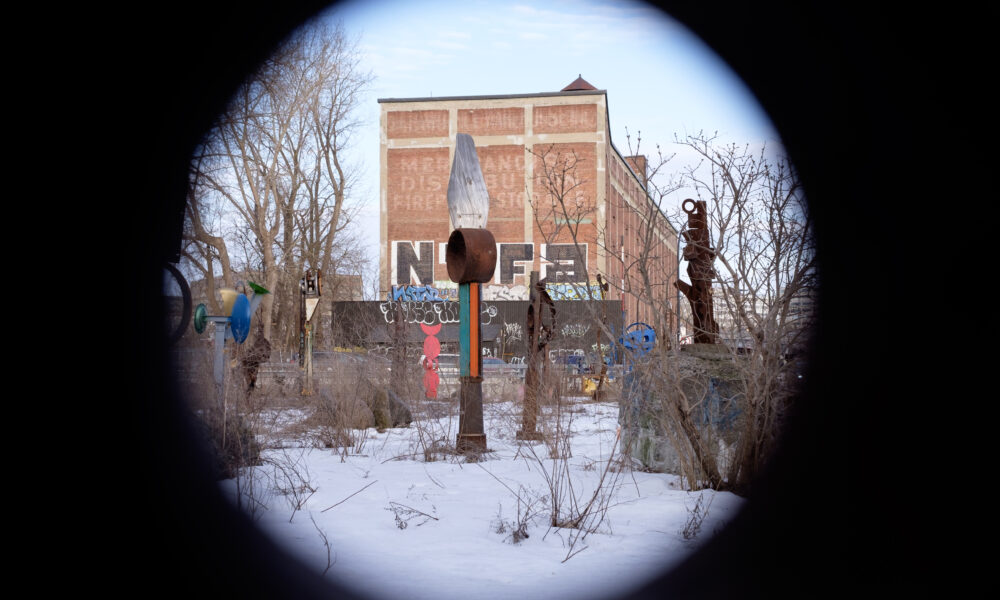
In an interview with The Tribune, LeMesurier recounted starting his most recognizable work, a sculpture garden called Jardin du Crépuscule, or Twilight Garden, that sits at the corner of Van Horne and Saint Urbain. The garden, composed of over 200 unique steel sculptures, is built on a plot of land that LeMesurier claimed over 20 years ago. Since then, he has used the property as a repository for some of his most vibrant work, to the extent that it spills onto the side of a bike lane. 

LeMesurier told The Tribune that the work isn’t cohesive or particularly planned out; rather, each individual piece encapsulates its own story. 

“I pour the cement and I installed the piece. And if that arrondissement wants it removed, they can, they can probably ask me to remove it. But I put in so many pieces, that it’s a lot more difficult for them to ask me to move 25 pieces, than one.”

He takes meticulous care in detailing his most recent projects, placing his statues in front of private residences. These sculptures, much like those found in the Twilight Garden, create a visual symphony of diverse colours, shapes, and sizes—no two pieces look quite the same. However, in this case they are spread all across the city in front of homes, apartments, and co-ops. The network of sculptures has become so expansive that a former McGill graduate student in the Department of Geography, Corey Dickinson, MS ‘21, built LeMesurier a map to keep track of all of them. 

There is quite the unique system for dispersing his artworks. After gaining permission from a residence to place a sculpture, he offers the choice to buy the work or to let it sit there temporarily, at LeMesurier’s discretion. Many choose the former option, helping him fund the rest of his artistic endeavours. The catch? The residents never quite know what the artwork will look like—LeMesurier told The Tribune that he doesn’t like to relinquish creative control over any of his projects. 

His newest residential project is a series of sculptures for a co-op on Hutchinson Street. LeMesurier had his eye on the beautiful brownstone building for some time, and when a friend residing there asked if he would create something for them, they agreed. Seeing as the co-op lacked the funds for the project, they opted to let LeMesurier maintain ownership of the piece, having it temporarily live at the co-op. He joked that they started making requests regarding the art’s colours and sizes, which he immediately shut down—as LeMesurier put it, he’s the architect.

The sculptures are both visually and principally opposite to many works of public art displayed elsewhere in the city. His work is about reclaiming pieces of Montreal as spaces for art, whether that be by the side of a road, along a canal, or in front of someone’s home. 

Jonathan Villeneuve is another Montreal-based sculpture artist using his work to change the city’s landscape. Villeneuve uses a mix of architectural methods to create sculptures in tune with the surroundings, both natural and constructed environments. With permanent installations all across Quebec, Villeneuve is changing the way the public interacts with art. 

When speaking to The Tribune, Villeneuve recounted the process by which he was commissioned to create his more permanent outdoor pieces. Because of a policy enacted in 1961, one per cent of the budget of all federal buildings constructed in Quebec must go towards funding a piece of public art created by a local artist for the building’s exterior. A small council comprising government officials and art specialists from across the province decides upon these grants. Villeneuve has been the recipient of many of these grants, allowing him to create pieces outside the Québec National Assembly and Parc Jean Drapeau. When drafting his proposals for these works of art, Villeneuve pays special attention both to how observers will interact with the work and how the work will interact with its surroundings. 

Villeneuve’s projects largely sit at the intersection of nature and technology—a marriage that is well suited for outdoor pieces. His work Utopie, found in Parc Jean Drapeau, nestles perfectly amongst the trees and gardens, while simultaneously mimicking the historically built environments, with the Biodome in the background. The yellow metallic sculpture showcases LED lighting that is intricately linked to its support beams. During the day, it forms captivating geometric shapes, and when night falls, it transforms into a dazzling display of radiant beams of light. Villeneuve cites natural elements, such as waves, as major influences on the way he incorporates the use of light and movement within his sculptures. This combination of nature and technology is also present in the design process, which is primarily achieved using design software. 

“My work doesn’t hold the traits of manual work so much, they’re all manufactured material from industrial processes. I don’t make bronze sculptures or moulding. But they’re all custom parts.”

Villeneuve describes his process as almost architectural; he completes design work on his computer, creates models, and then allows a manufacturing process to bring his creation to life. “I work with the professionals also, like programmers, designers, fabricators. And I’m not really attached to one specific technique.”

It is this convergence of artistic and technological innovation that allows his pieces to feel participatory for the observer. His work avoids alienating the audience by inviting observation, questioning, and interaction. 

Another artist who has been a recipient of the Quebec public art grant is Catherine Bolduc. Based between Montreal and Val-Morin, Bolduc’s works have been displayed internationally in both public spaces and art galleries. Her work in the public realm has focused primarily on reflecting the neighbourhood in which it is situated. In 2014, the City of Montreal commissioned Bolduc to erect a piece at Parc Lahaie. Les Anges Domestiques is a love letter to the wonderfully diverse architecture surrounding the park. 

“In front of the church, there’s one of the oldest [locations of] the Bank of Montreal, and on the corner, the [building] that is kind of Gothic—which is fire station now—used to be the City Hall of Saint-Louis-du-Mile-End before it was amalgamated into Montreal,” Bolduc said in an interview with The Tribune.

The piece is crafted entirely from bronze casts of items found at garage sales in and around the neighbourhood. Each arch on the piece represents a different population living within the neighbourhood, reflecting their unique architectural and artistic history. Bolduc spoke about wanting her public arts to feel comfortable and reflective of the neighbourhood in which it is situated. She recounted stories of building sculptures placed at elementary schools and wanting them to appeal to the students who went there. 

“I want to do something that people will like; it’s their neighbourhood. I did a few [sculptures] for primary schools so then you think about the kids because you [want them to] enjoy it, and like the teachers, they love it when it’s something that the kids will appreciate because they can learn something about [art]”

This same principle seems to be applied to her work in the Mile End—wanting all parts of Montreal’s diverse cultural communities to feel welcome and represented within public art.

Tactile public art, such as sculptures, has a profound impact on both the physical landscape and the residents who live there. Montreal is fortunate to have a thriving community of artists who go beyond beautifying the landscape and actively contribute to creating a welcoming environment for its residents. They have the opportunity to make a significant impact by reclaiming abandoned properties and infusing them with artistic spirit, breathing new life into these spaces. By creating art that is responsive to its viewers, artists can engage with the community on a deeper level, fostering a sense of connection and belonging. Their work has the power to fundamentally alter the way we feel represented and welcomed within our spaces, transforming them into vibrant and inclusive places for all.

McGill, Montreal, News

Students shut down Bronfman Building, call for McGill to cease Israeli investments and study abroad program

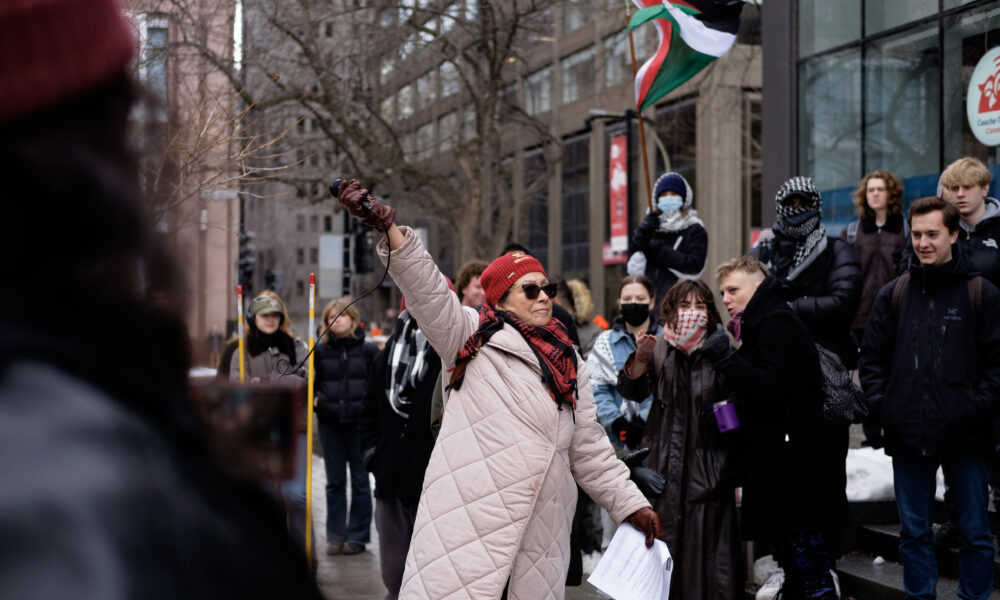
Dozens of students, faculty, and Montrealers blocked the entrances to the Bronfman Building around 8:30 a.m. on Feb. 22 to compel McGill to divest from its Israeli investments, call for a ceasefire in Gaza, and discontinue its study abroad programs in Israel. At 10:16 a.m., McGill sent out an alert to all students and staff advising that all in-person classes in the building be switched to online for the day. Members of Solidarity for Palestinian Human Rights (SPHR) at McGill, Independent Jewish Voices (IJV) McGill, and the Kanien’kehá:ka Kahnistensera (Mohawk Mothers) gave speeches throughout the day. 

Members of SPHR, IJV, and students who are participating in a Hunger Strike for Palestine were present at the Bronfman building’s three entrances. The blockade allowed exit from the building throughout the day, and beginning at noon, allowed entrance into the building through one entry point. In an interview with The Tribune, a member of IJV McGill, explained the thought process behind blockading McGill buildings and disrupting classes. 

“McGill hasn’t listened to anything else we’ve tried. We’ve obviously been doing rallies for four months now, and they’ve not responded with anything. We tried to pass the referendum policy [the Policy Against Genocide in Palestine] and they didn’t listen—they vetoed it,” the member, who wished to be unnamed, said. “So, we felt we had no other choice. [This] is the only channel that we could go down that McGill admin would listen to.” 

They elaborated on the specificity of choosing Desautels Faculty of Management, explaining it offers two courses—ORGB 434: Special Topics in OB, Comparing Startup Ecosystems of Israel and Canada and FINE 434: Topics in Finance—which include a collaborative three-week study trip with the Hebrew University Business School

“[The courses] historically have promoted Israel as a startup nation, rather than a genocidal entity that it is. It’s promoted using […] quotes saying Israel’s military advancements [and] technological advancements are the best in the world when in reality, they used those technological advancements on Palestinian civilians,” they said. 

In a speech to the crowd, Carter Forman, a member of IJV, further contextualized the decision to blockade the Bronfman building, explaining that Samuel Bronfman was President of the Canadian Jewish Congress from 1939 to 1962. 

“This organization was, for nearly a century, the most influential advocate for Zionism and the State of Israel in Canada. Samuel Bronfman is also universally portrayed as a philanthropist and as a hero to the Jewish people. As a Jewish person myself, I am sick and tired of being taught to idolize people like Bronfman,” Forman said. 

“What’s important is that as we speak, Israel is ruthlessly bombing Rafah, which is now one of the most densely populated places on the planet [….] Our community is not represented by the forces that aim to annihilate the Palestinian people, [and] that continue to starve, displace, and murder innocent Palestinians as we speak. To stand against genocide is not antisemitism. In fact, true antisemitism is to conflate all Jewish people with the violent settler colonial state of Israel through antisemitism to represent our Jewish people.”

Shortly after noon, building access via the North entrance was restored. An SPHR representative who wished to remain anonymous told The Tribune that protesters allowed entry into the building in the afternoon after alleged threats from McGill administrators. 

“Despite consistent threats of police violence from McGill administration, the coalition of students succeeded in holding up the picket line all day. Only in the afternoon did we allow a limited amount of people to enter through the north entrance but all classes remained cancelled,” they wrote.

In a written statement to The Tribune, McGill Media Relations Officer Frédérique Mazerolle explained that McGill’s Security Services and police had arrived shortly after the protest began.

“To our knowledge, no one was prevented from exiting the building at any time. Due to the disruption, several classes were held online,” Mazerolle wrote. 

Members of Chabad McGill were stationed in front of the McLennan Library complex, facing blockaders throughout the day. Various individuals filmed the blockaders, played music, and danced with Israeli flags. A member of Chabad McGill told The Tribune that they were there “to call for peace.” 

The Mohawk Mothers gave a speech to the crowd at around 12:30 p.m., beginning with Mother Kahentinetha explaining that in 2015, she sent a letter to the then Principal and Vice-Chancellor Suzanne Fortier objecting to McGill’s invasion of Kanien’kehá:ka land. She also recalled that the same year, Palestinian students had approached the Mothers with the concern of McGill creating weapons that would be used by the Israeli Defense Forces. 

Mother Kwetiio subsequently told the crowd that everyone must do their part to support Palestinians and ensure that the atrocities McGill invests in are stopped, or they will be complicit in the genocide. 

“If we don’t get stronger, if we don’t use our minds, and our intelligence, and our understanding, it could be one of you. That’s not fair. So, we all need to do the work, you need to involve your families, you need to do everything you can do because it’s very hard to change the minds of a whole community. That’s our job,” Kwetiio said. 

In an interview with The Tribune, Kwetiio expanded on Palestinian-Indigenous solidarity, explaining that the key factors that unite the two groups are land seizure and oppression. 

“Palestinians are going through the same thing we went through,” Kwetiio said. “I feel like our two groups, we see the major similarities where someone came onto your land and told you that you’re insignificant. They told you that you’re less than human.”

Assistant Professor in the Department of Integrated Studies in Education Nanre Nafziger was also present at the blockade to support students’ demands for the university to divest. She emphasized that students voted in majority to pass the Policy Against Genocide in Policy, which McGill “did not recognize.” She urged McGill to listen to its student’s demands. 

“As an educator, as someone who loves children, it’s devastating what’s going on in Palestine. It’s also hurtful here today to also see students, the divisions, and us not being able to agree on something as basic as not killing human beings,” Nafziger said. 

A student who had their class cancelled due to the blockade and who preferred not to be named told The Tribune that they have felt isolated throughout their degree due to the lack of diversity and people of colour on campus. They shared that the blockade marked one of the first days they had “felt seen” on campus. They hoped that people would recognize that missing one day of classes was incomparable to the day-to-day experiences of Palestinians. 

“Just going into the school today, the amount of Islamophobic, hateful, and racist comments I’ve heard […] just because we’re missing one day of classes. What is that? Maybe three, four classes, whereas almost 100,000 people have been killed [or] injured in this war,” they said. “I feel like the point just keeps flying over people’s heads, and I think it’s really just a result of privilege or a result of the university stance, and as a result of the voices that aren’t heard enough and that aren’t amplified enough.”

Classes resumed as normal on Friday, Feb. 23. 

On Monday, Feb. 26, President and Vice-Chancellor Deep Saini sent a university-wide communication to all staff and students regarding protest-related disruptions calling for McGill to cease ties with Israeli institutions.

“McGill will not unilaterally sever its research and academic ties with Israeli institutions. Moreover, McGill will not interfere with the academic freedom of individual members of the university community to engage or partner with an institution simply because of where it is located. To do so would be wholly opposed to our institutional principles,” Saini wrote. 

Saini also shared university protocols for peaceful protest on campus, reminding students that the Code of Student Conduct and Disciplinary Procedures is violated “when the exercise of freedom of expression and assembly knowingly obstructs University activities such as teaching, research, and studying,” as the Bronfman Building blockade did. 

“Accordingly, I must stress that in any future instance where obstruction to University activities, or any other breach of our policies occurs, the application of the protocol for addressing campus disruptions referred to above will be swift,” Saini added.

Arts & Entertainment, Film and TV

The poison drips through in ‘The Zone of Interest’

Minor spoilers for The Zone of Interest

How would you depict an atrocity onscreen? What would you show, and perhaps more importantly, what wouldn’t you? In Jonathan Glazer’s new five-time Oscar-nominated film, The Zone of Interest, these choices are put at the forefront of the narrative. The result? Nothing short of cinematic greatness. 

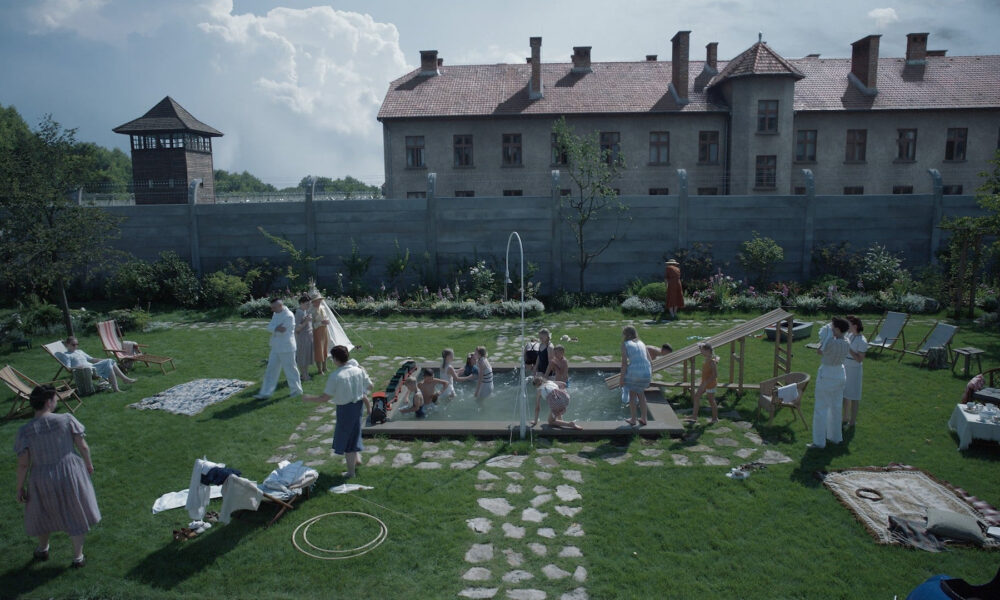
The film follows Rudolf Höss (Christian Friedel) and his wife Hedwig (Sandra Hüller) as they move through their seemingly monotonous daily lives. They attend picnics, swim in the river, celebrate birthdays, and read bedtime stories to their children—the picture of a happy nuclear family. However, something sinister looms beyond the walls of their garden. Never out of sight (or more accurately, out of earshot) are the smokestacks, gunshots, and screams from Auschwitz. Indeed, Höss is no ordinary father: He is the commandant of a Nazi death camp.

Though the film takes place directly outside of Auschwitz—the now-infamous curved barbed wire fence delimits the family’s garden—its interior is never shown. This is a stark departure from previous Holocaust dramas, such as Schindler’s List and The Pianist, which heavily feature concentration camps and Jewish ghettos. Instead, the camp acts as an unseen shadow over their daily lives. It infuses every action that they perform with the darkness of their complicity, without directly interfering in their “normalcy.” Here, the banality of evil is on full display. 

The girls don’t go shopping; they get clothes delivered from “next door.” They don’t use compost to fertilize their garden; they use ash instead. The tension between the family’s actions and what they represent is visceral—nearly unbearable. It would be one thing if they didn’t know where their clothes and “garden fertilizer” came from; it’s another because they do. It is these innocuous moments that punctuate the film’s central drama, and Glazer makes sure that we are constantly reminded of just how terrible this ordinary family truly is.  

The Zone of Interest is shot simply, with wide, still takes and a pale colour palette. But it works; dramatic flair has no place in this grim story. The film’s matter-of-fact visual style subtly reflects how the Holocaust’s horrors became normalized, bureaucratized, and clinical. Furthermore, this makes the moments which deviate from this style that much more impactful. After an important scene, Glazer holds a close-up of a rose for a little too long and a little too close for comfort. The bright red that fills the screen is a simple but powerful metaphor: No longer are roses beautiful and idyllic, instead they are sown from blood and hatred. 

Glazer masterfully conveys utter horror and evil without ever explicitly showing it. One reason for his success is sound: Tarn Willers and Johnnie Burn engineer a quietly nightmarish soundtrack. Screams of agony and burning fires are a constant presence but somehow fade away after some time. You are lulled into complacency, only to be reminded of where the film takes place by a loud gunshot followed by a piercing shriek. 

Like the visuals and sound, the Höss family simplifies and decontextualizes their day-to-day lives to make them more bearable. The parents do not explicitly mention the genocide happening on the other side of the wall, nor do the kids seem to understand what their father’s job truly consists of. Yet Glazer argues with vigour that the family’s hearts and souls are affected nonetheless—the poisonous deeds of their complicity affect them in ways that they cannot yet see. 

In its final 15 minutes, The Zone Interest reaches new heights. Having set the scene in the previous hour and a half, Glazer then delivers the film’s most poignant and harrowing moment. His creative risks pay off in the end and elevate the story beyond a traditional Holocaust narrative. Given its disturbing subject matter, The Zone of Interest may not be a film you want to watch, but it is certainly one you need to watch. 

Editorial, Opinion

Floor fellows need a better foundation, not elimination

Content Warning: Mentions of suicide, sexual assault, and racial discrimination.

On Feb. 15, McGill’s Student Housing and Hospitality Services (SHHS) informed their 65 Floor Fellows via Zoom that their positions would be eliminated, effective this fall. SHHS announced the meeting only two hours in advance and the call lasted a mere eight minutes, ending before the Floor Fellows––unionized members of the Association of McGill University Support Employees (AMUSE) Unit B––had the opportunity to ask any questions. Floor Fellows are essential members of the residence life community at McGill, and this decision risks the physical and mental safety of incoming first-years living in residence. Furthermore, SHHS’s actions expose the university’s dangerous disregard for unionized workers on campus.

Though the Floor Fellow position provides financially vulnerable students with rent-free housing and an annual meal plan, their job also comes with the invisible cost of exploitation and 24/7 emotional labour. Floor Fellows have long protested the difficult conditions and high demands that residential services place on them. During the Winter 2022 semester, AMUSE Unit B reached an agreement after a two-week strike for a 14.8 per cent wage increase, the first meal plan increase in five years, and other gains on union priorities—a much-needed adjustment to their contracts and a testament to the union’s organization. But in March 2023, the university announced that Floor Fellows would be moving to smaller rooms in residences and, in some cases, forced to share communal washrooms with residents. 

Addressing McGill’s residence issues by removing Floor Fellows without clear justification is unconscionable and irresponsible. Most students in residence are minors or young adults living on their own for the first time. Floor Fellows support students learning to navigate adult life and the university workload in Montreal. First-year students look to these older peers for help understanding the often-opaque bureaucracy of McGill services, like the Student Wellness Hub (SWH) or the Quebec healthcare system. Most importantly, as both peers and authority figures, Floor Fellows are often the first people that residents will go to for help when they suffer from incidences including racial discrimination, harassment, and sexual assault, which run rampant in residences. They are the first to respond to emergency instances of alcohol poisoning and overdose—the difference between life and death. 

SHHS intends to hire more Residence Life Facilitators (RLFs) to compensate for the loss of Floor Fellows. However, the main roles of RLFs are event planning and advising residence councils, not crisis prevention and intervention. This is not an adequate replacement for Floor Fellows. 

SHHS argues that Floor Fellows’ training sessions do not adequately qualify them to address the needs of students who disclose sexual assault, express suicidality, indicate signs of self-harm, or struggle with mental health in numerous other ways. They also argue that Floor Fellows are primarily tasked with directing struggling students to the proper resources. This denies the on-the-job experience that Floor Fellows gain from regularly dealing with urgent student concerns and also distracts from the university’s failure to provide appropriate resources for students. The SWH is unequipped to handle urgent mental health crises and forces students to turn to the province’s failing healthcare system, which is struggling with widespread practitioner shortages. McGill’s limited support for the Office for Sexual Violence Response, Support and Education (OSVRSE) creates unnecessary obstacles for survivors of sexual assault to receive the help that they need and deserve. Floor Fellows step up for first-year students when McGill fails to provide the resources to survive university life.

McGill cannot boast its status as a “top employer” when its actions depict its employees as disposable. The abrupt nature of the announcement to terminate the Floor Fellow position disturbs organizing among a campus union. This restriction of support aligns with a dangerous trend among Canadian universities to develop student housing as an entrepreneurial endeavour rather than a service for students. McGill benefits from its status as an elite research institution while mistreating the people who contribute most to the university. Viewing future generations of students as potential profit will strip the university of its prestigious reputation. Floor Fellows are necessary for the safety and well-being of students in residence, and McGill must reverse its decision and commit to uplifting these essential members of the university community.

Arts & Entertainment, Film and TV

Massimadi Festival highlights Black queer stories

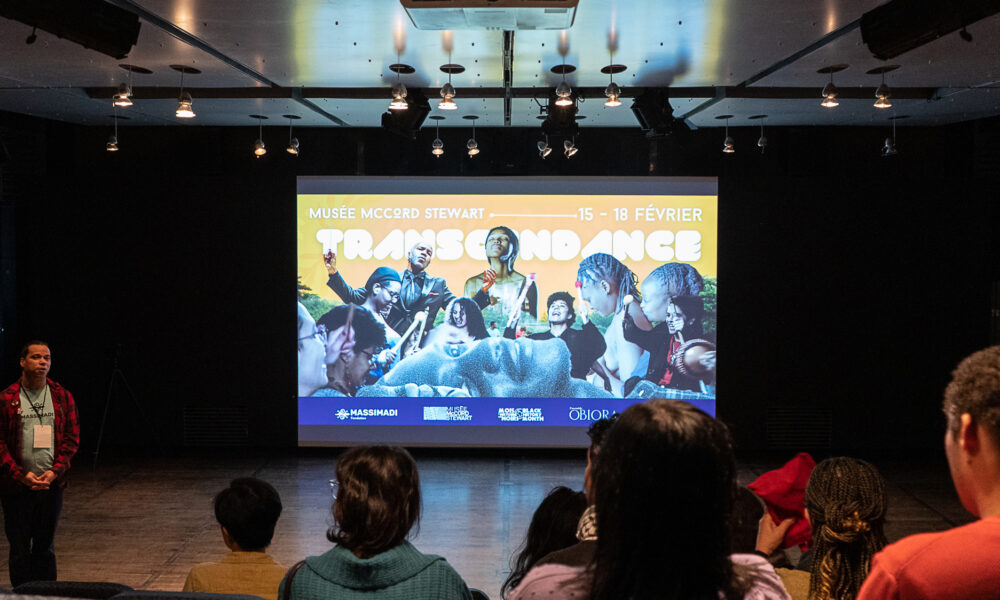
From Feb. 15 to 18, the Massimadi Foundation held its annual Afro LGBTQ+ Arts and Film Festival at the McCord Stewart Museum in Montreal. In honour of Black History Month, this special edition of the festival, themed “Transcendence,” highlighted Black queer stories that are not often seen or heard by the mainstream public. The Foundation’s president, Laurent Lafontant, decided that Black History Month was the ideal time to call attention to these stories. 

“We want to put forward the achievements of Black, queer people […] to promote Afroqueer culture and give them visibility,” Lafontant said in an interview with The Tribune.

The festival included a number of films, including All the Colours of the World are Between Black and White, the directorial debut of Nigerian filmmaker Babatunde Apolawo. The movie tells the story of two men, Bambino and Bawa, who cross paths at Bawa’s betting shop and grow closer to each other while developing Bawa’s ambitions to become a photographer. Bambino and Bawa are each painfully aware of the barriers facing gay men in Nigeria, but they find ways to grapple with their queerness and deal with their budding relationship in very different ways. Bawa has accepted his sexuality and wants to explore their connection further, whereas Bambino struggles with accepting Bawa’s advances. This highlights the struggle that gay men face both through persecution from governments but also in one’s own clear discomfort with the subject of queerness. They both make mistakes in the film, failing to communicate with each other and hurting each other, with Bawa even outing Bambino to a group of thugs on the street. It is difficult to see these moments, but it is still incredibly emotional to see them find a connection that they may never fully be able to commit to. 

While this incredibly tender story is playing out, the fact that members of the LGBTQIA+ community face enormous amounts of discrimination in Nigeria is always present in the character’s minds. The two men rarely touch, yet their connection is palpable. This film allows us to see that, even in the darkest of circumstances, people find love. They may not be able to openly be together in Nigeria, but they show us that anything is possible.

Lafontant said that his favourite part of organizing this festival was the process of watching and selecting the movies because it allowed him to bring queer stories to a new audience. It is evident why when watching this film. Living in a metropolitan city like Montreal, often interacting with a diversity of individuals, can make us feel like we know more about the world than many others do. However, the stories that the Massimadi Festival highlights make us realize that the world is much bigger than it seems. Through films such as All the Colours of the World Are Between Black and White, viewers learn about stories that otherwise would not be seen or circulated. Queerness has a long history in Nigeria, predating colonialism, making this film an important cultural statement. In a time where it seems to many that we are moving backward with our treatment of the 2SLGBTQIA+ community, queer stories in films from around the world are more important than ever. While the circumstances that Bambino and Bawa find themselves in may not be immediately relatable to people in Western countries, the emotions—love, loneliness, loss—at the heart of their story are widespread. These films make the world smaller and allow us to connect with people who live oceans away.

Student Life

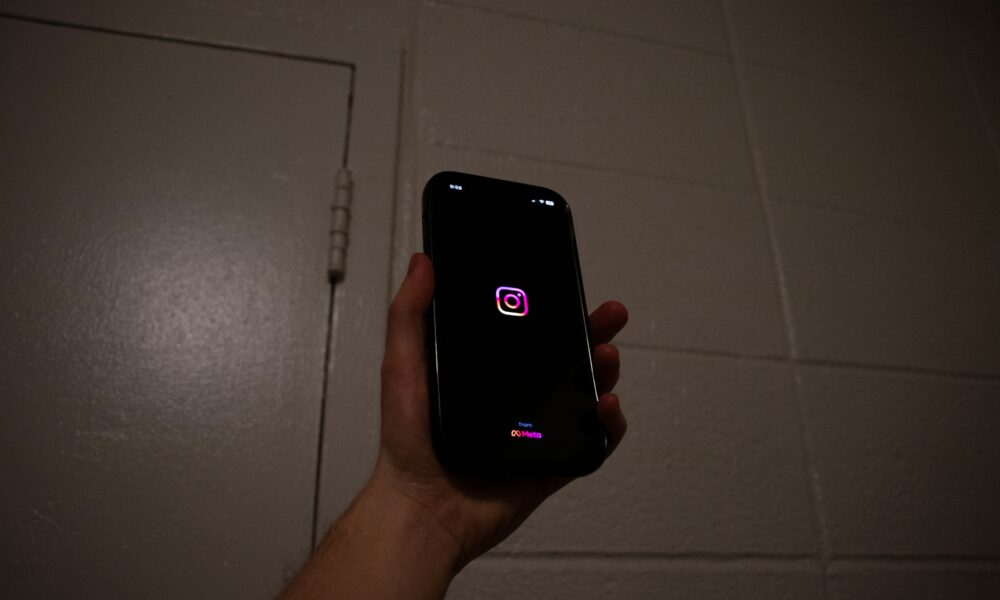
Curating the perfect photo dump

For painting, it was the self-portrait. For sculpture, the bust. For movies, the film noir. Every art form has an influential format that forever changes the medium, yet none can compare with the format that has taken the art of social media posting by storm—the photo dump. 

A collection of up to 10 seemingly unrelated photos combined in a single Instagram post, the photo dump appears deceptively simple to the untrained eye. Yet any true social media connoisseur knows that making Instagram casual again requires countless hours and painstaking attention to detail. Perfecting the art of the dump may sound intimidating, but fear not, dear reader! As a beloved content creator myself, I have taken time away from my intense academic pursuits (passing out slack-jawed on my desk after struggling through the first ten pages of a poetics paper) to guide you in the art of curating an exquisite photo dump. All it takes is three easy steps. 

Step 1: Cultivate your aesthetic 

Overplayed aesthetics abound on the internet—tomato girl, cottagecore, coastal grandmother—so if you hope to separate yourself from lesser influencers, your best bet is to develop your own niche subculture. Personally, I’ve committed my last three and half years at this institution of higher learning to refining McGill-core: Equal parts dark academia, rat girl summer, and good old-fashioned asbestos poisoning

Step 2: Select your photos 

Everyone knows that a good photo dump should represent your most authentic self, so meticulous photo op planning is key. How else can you expect to get your effortless spirit across?

First, snap a pic of your morning latte. There’s nothing like subtly signalling a caffeine dependency to endear you to your peers. But beware! This relatability can bring you dangerously close to giving off “ordinary student” vibes. To maintain your aura of mystique, nourishing your individuality complex is key. Swap your Couche-Tard filter coffee for a to-go cup from any number of cool Plateau coffee shops; not only will you seem sophisticated and worldly for stepping outside of the McGill bubble, you’ll prove that your palette is far superior to the Desautels plebeians scampering to and from the Bronfman building.

Next, throw in a tasteful selfie—you deserve a little vanity as a treat. For maximum effect, take the shot from an unexpected angle or mix up the aspect ratio. If you catch a passerby or a Redpath rat in the background, don’t sweat it! As a master photo dumper, I can assure you that a little photo editing goes a long way. Armed with just a jpeg of a pink ribbon and a dream, I turned my furry little photobombers into coquette companions—how chic! 

Finally, make sure that you’ve got a candid shot of yourself and your besties out on the town. How else will your loyal followers know that your thriving social life is cooler than theirs? While a sophisticated spot like Datcha or Darling would make the ideal backdrop for posing with cocktails, Gerts and some pitchers of sangria will do in a pinch. Just grab your digital camera, add a blur filter, and no one will know the difference.

Step 3: Write your caption 

A picture is worth a thousand words, and you just put ten photos in—don’t you think you have enough words? Exactly. So swap the long-winded caption for an artful selection of themed emojis. A string of pink bows? It’s giving coquette! A strawberry, sparkle, and sunshine? You’ve become the ultimate farmer’s daughter! Want to show others you’re going for that #cleangirl aesthetic? Hit ‘em with the soap emoji. Feel free to throw in an esoteric emoji or two to keep your loyal followers intrigued—protecting your not-like-other-girls status is a genderless pursuit. My personal recommendation? The ball of yarn, onion, and mousetrap icons—the girlies who get it, get it. 

Ta-da! In just three simple steps, you have curated a one-of-a-kind photo dump to rival any influencer. Happy posting!

Out on the Town, Student Life

How to plan a reading week staycation

With reading week on the horizon, many of us are creating plans to escape the city (or reading responsibilities). But if you happen to be sticking around Montreal here are some cool things to check out for your reading break staycation. 

Music

Montreal’s thriving music scene is always bustling with local talent. With ample time to nurse a hangover and recover from the ringing in your ears, reading week is the perfect time to discover your next favourite artist.

On March 6, there is an open mic night at Turbo Haüs on Saint Denis. This bar is usually rocking out with amazing talent, and its open mic would be a great event to check out some new Montreal musicians. Their cocktail menu is to die for, and if drinking on a Tuesday is your vibe, the No-Moshing is delicious.

To cap off the week, on March 8 there is the album launch of Seelonce with John Cohen Experimental at Casa del Popolo. Tickets cost only $10. With their combined listener numbers on Spotify being a mere 77, if they ever make it big you could have the most pretentious-person points by saying you “knew them before they were popular.”

Skating

Take advantage of the dwindling winter with some skating, and bring a buddy to stay warm, //wink wink//. Skating is notoriously one of the best date activities; though Valentine’s Day has passed, it’s a great way to “accidentally” fall into your lover’s arms. Montreal has a plethora of outdoor rinks to choose from, many of which are located close to campus. For some fresh air, up the elevation, bring your skates, and check out the rink near Beaver Lake near the summit of  Mont-Royal.

If you want to rent some skates, Patin Patin is a skate rental service currently offered at four Montreal rinks: Parc Jean-Drapeau, Old Port, Parc Maisonneuve, and Quartier des Spectacles. The Quartier des Spectacles location is right near many trendy cafés and bars where you can go in and warm up with a hot chocolate or shot of whiskey. This aphrodisiac of a sport is so popular in this city that Montreal could dethrone Paris from its title as the “city of love.”

Cross-country skiing

If you’re looking for some solo activities, cross-country skiing is the perfect sport to pick up. It is a great cardio workout for when running on the icy streets becomes a treacherous task. Mont-Royal has 16 kilometres of trails of varying levels for cross-country skiing that wrap all around the mountain. The park rents equipment at its lodge located at 2000 Remembrance Rd. When choosing your trails, keep in mind that the easiest ones are marked by green circles, intermediate by blue squares, and expert by black diamonds and double black diamonds. 

Anticafe

If you are someone who is actually going to read over this reading break, I’ve found an amazing place to do it. Anticafe on Sainte Catherine street near Place des Arts is a funky kind of café where you don’t pay for the coffee. The pay is per hour and snacks and coffee are unlimited. The pay rates start at $4 and max out at only $20. It is a great place to spend an entire day with a constant flow of cappuccinos and a nose in a book. With its quiet atmosphere and whimsical decor, it is one of the coziest spots in Montreal.

With the plenty that Montreal offers you don’t have to go far for a little fun. Before we return to campus and to what the exterior wall of Redpath library calls “blissful studies,” you can take a little local adventure. 

Commentary, Opinion

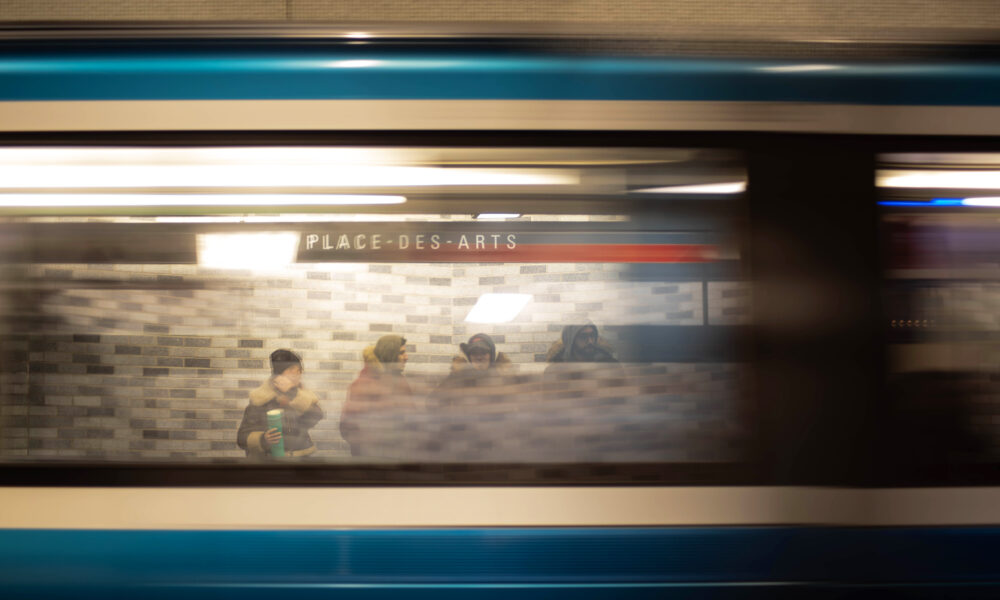
STM safety ambassadors are customers in uniform, not adequate emergency responders

If you saw an emergency on the metro, what would be your first instinct? Would you intervene yourself? Would you call the police? Ask another bystander for help? Google what to do? Odds are you didn’t say, “Find one of six safety ambassadors scattered around the metro station who cannot actually intervene in an emergency but will call the police for me!” Yet, the Société de transport de Montréal (STM) believes this is what Montrealers need. 

In October, the STM announced that officers responsible for monitoring metro stations would now be armed with pepper spray on duty, a drastic and violent measure intended to ease the safety concerns of commuters. After complaints poured in, the STM implemented a new strategy, deploying safety ambassadors at metro stations. The STM made this decision to address commuter safety concerns around houselessness, drug use, and mental health crises at metro stations. However, safety ambassadors do not adequately solve these issues. They cover up the city’s failure to implement practical, effective solutions to the problems that residents are voicing their concerns over, such as fatal drug overdoses occurring openly in front of commuters’ eyes. 

The implementation of this system will also increase police violence and surveillance that individuals experiencing houselessness already face. Specifically, statements of offence issued to unhoused Indigenous peoples have increased exponentially over the past few years. Considering that the role of safety ambassadors is to monitor metro stations, these numbers are likely to rise even more, hurting already marginalized and vulnerable communities. 

What can safety ambassadors do that any ordinary person with a phone could not? The STM refers to safety ambassadors as a source of “reassurance,” someone to answer questions related to safety and to provide information and guidance. Another role of the safety ambassadors is “supporting major events”—an absurdly vague and meaningless task. The STM called the safety ambassadors the “eyes and ears” of the metro system, but the Director of Security and Fire Safety of the STM said the same thing about STM customers just one day before. Evidently, safety ambassadors are no different than any STM customer—they are simply customers in uniform.

Additionally, the STM has not clarified whether the 80 hours of training that safety ambassadors undergo involves actual intervention in emergencies such as administering overdose-reversing drugs or de-escalating physical conflicts. The STM has said that these ambassadors are trained to assist customers and contact the police in an emergency. Anyone can call the police when witnessing an emergency, even without 80 hours of training. 

The STM website redirects users to a customer contact form for non-emergency concerns. One of five options in direct emergencies is to alert a safety ambassador. But the chances of somebody looking for one of the three pairs of ambassadors roaming the station are slim. Most likely, people are going to press one of the big red emergency buttons or dial 911 on their cellphones. Posters or even the website remain much more accessible and useful than six people walking around the station in intimidating uniforms. 
This new system shows that the government’s idea of taking action and tackling important issues is in fact doing nothing at all. Meanwhile, safety concerns inevitably continue, and their root causes—unaffordable housing and inadequate social services—have yet to be dealt with. While safety ambassadors are certainly a better option than increased policing they are just another band-aid solution. At some point, the government of Montreal will have to address these problems head-on—the safety ambassadors only delay this essential work. Instead, the government of Montreal should reallocate the funding for these systems into subsidized housing for unhoused populations or invest it in community-based mental health services, both of which have proven to be effective measures at preventing crime and contributing to a safer city.

Science & Technology

Black joy: A key to Black maternal health and well-being

On Feb. 21, McGill’s Equity, Diversity, Inclusion and Anti-Racism Standing Committee (EDIAR-SC) and the Department of Global and Public Health co-organized an engaging Black History Month event titled “Joy, Liberation, and Vitality in Black Maternal Health.” 

This event was led by Ijeoma Nnodim Opara, a prominent Detroit-based physician and global public health expert. Recognized for her impactful work during the COVID-19 pandemic, she founded Opara Equity and Justice Labs and co-chairs the End Race-Based Medicine Taskforce

Beyond her medical roles, Opara is a proud mother, dancer, and advocate for joy, justice, and liberation for Black communities worldwide.

Opara started the talk with a song titled “Peace Like a River.” This song belongs to a genre of music called African American spirituals, which enslaved African people created in North America between 1619 and 1860.

“African American spirituals contained our stories, our pain, oppression, suffering, grief, and trauma,” Opara said. “They also contained our resistance, protest, faith, hope, love, and joy.” 

To exemplify the trauma and suffering Black women have undergone, Opara delved into the health disparities among pregnant Black women.

“It is no secret that the United States is a deadly place to be a pregnant women. Of all high-income countries, the United States has the worst statistics in maternal and infant health,” Opara said. “Black women are three to four times more likely to die from pregnancy-related complications than white women, regardless of income and education levels. In some states like New York, the numbers are up to 12 times.”

Black women are also disproportionately affected by maternal morbidity—unexpected outcomes of labour and delivery—such as high blood pressure and anxiety, which can result in significant short- or long-term consequences to their health and well-being.

“Black women are set to experience higher rates of severe maternal physical and mental morbidity due to inadequate prenatal and postpartum care,” Opara said.

Although Black women deserve to receive high-quality, culturally centered, and respectful care that meets their physical, emotional, and social needs, their health has long been compromised by systemic racism and implicit bias among healthcare professionals. 

A large majority of Black women report having had negative experiences with health care providers. They are twice as likely as white women to report that a healthcare provider ignored them or refused a request for help in a reasonable amount of time. The mistreatment and disrespect Black women have persistently encountered, in turn, have fueled a deep mistrust of healthcare institutions and undermined their relationship with maternity care.

Subsequently, Opara moved on to talking about the reproductive justice movement, which is more expansive, intersectional, holistic, and less individualistic compared with the reproductive rights movement. This movement was created by a collective of Black women to posit reproductive justice as a human right that analyzes power systems, centres those who are the most marginalized, and addresses intersecting forms of oppression.

“This movement fights for the right to have a child, the right to not have a child, and the right to parent a child,” Opara said. “It also fights for the necessary enabling conditions to realize these rights.”

Due to Black women’s racist and traumatic experiences, Opara also emphasized spiritual nourishment, also known as Black joy, to fight against the negative stress. 

“Black joy is how we love ourselves and each other. Our joy enables us to ground ourselves in the ever ongoing history, grapple with the challenging present, and access a future that celebrates our continued existence, thriving, and abundance,” Opara said. “Joy is an act of resistance. It is the choice we make every day.”

Black joy is a way of resting the body, mind, and spirit in response to devastating and life-altering experiences. It is believed to be one of the keys to Black maternal health and well-being.

To holistically improve Black maternal health, practicing Black joy must be present alongside policy changes to address the social factors impacting Black women’s health, particularly racism, income, access to health services, and education.

Read the latest issue

Read the latest issue