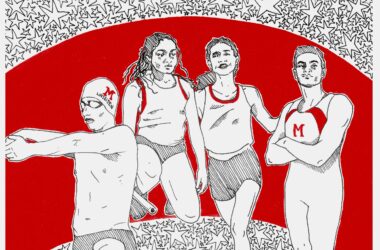
After dominating all season long, McGill Swimming excelled again this weekend at the Réseau du sport étudiant du Québec (RSEQ) Provincial championship. Earning over 1,100 points and 33 medals combined, including 19 gold, Redbirds and Martlets left little for their competitors. In 2023, McGill became the first team to win all three categories for three consecutive years, and they broke their own record this season,winning it for a fourth time.
With four medals, third-year software engineering student Naomie Lo was crowned athlete of the meet, alongside senior engineering student Hazem Issa, who tied with senior Elizabeth Ling to be the most decorated athlete of the meet with five gold medals.
Closing the RSEQ championship on a victorious note, rookie Mats Baradat was crowned Athlete of the Year and Rookie of the Year after stellar performances on 1500m and 4x200m relay during the season.
McGill will be hosting the USPORTS National Championships on March 7 to 9 at Pointe Claire.
Martlet Hockey (5–18–2)
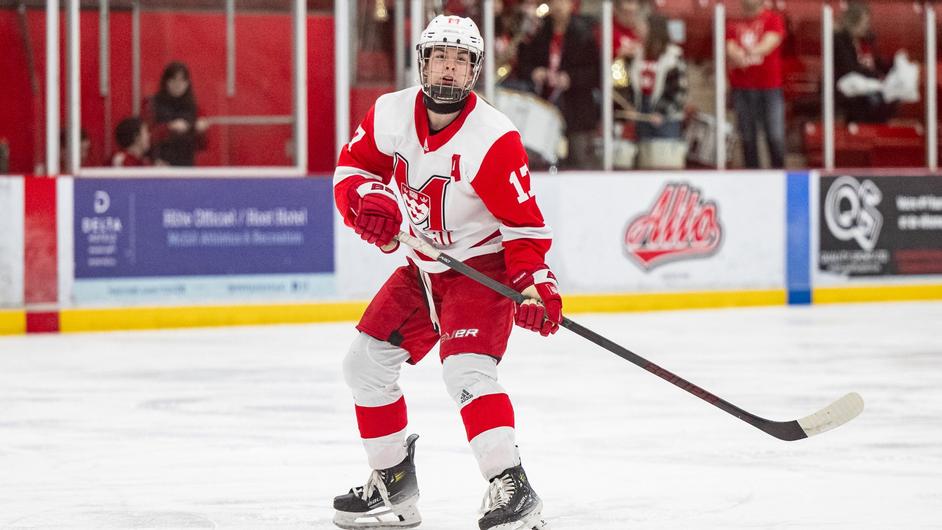
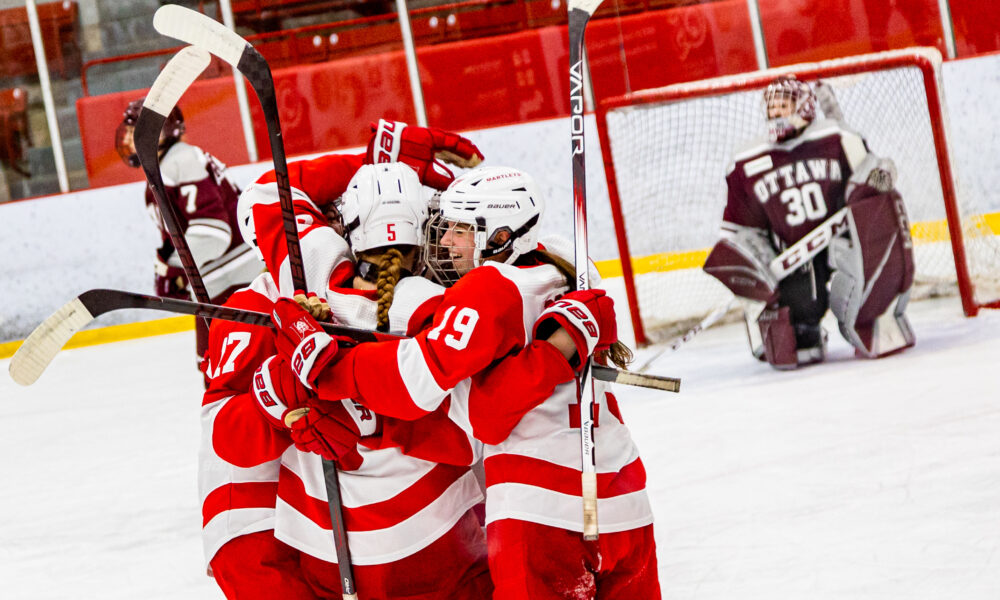
Martlet Hockey were edged 2-1 by the Carleton Ravens (18–16–1) in overtime on Feb. 16 at McConnell Arena. This defeat marked the end of the season for both sides, as well as the Ravens’s last ever game in the RSEQ as they are set to move to the Ontario University Athletics along with UOttawa Gee Gees for next season. Finishing last place, it was a challenging season for a young McGill squad. The team has been rebuilding for the last two seasons after their run to U SPORTS Nationals in the 2021-2022 season, and hope that the challenges of the last two years will propel them back into playoff contention in 2024-2025.
Martlet Basketball (5–10)
Martlet basketball was defeated by the Concordia Stingers (6–9) on Feb. 17 at Love Competition Hall. While the Stingers only led 18-15 at the end of the first quarter, McGill was unable to close the gap, and lost 76-59. While McGill was outclassed, exciting freshmen Lily Rose Chatila led the scoring with 10, and Seyna Diggs and Daniella Mbengo bagged nine points apiece.
Martlet Basketball (5-10) will be hosting undefeated Laval Rouge et Or (15-0) in the last game of the regular season at Love Competition Hall on Feb. 24. This is also the Martlet senior night.
Redbirds Basketball (3–12)
Last-place McGill Redbirds prevailed over the league-leading Concordia Stingers (11–4) to claim the Lengvari Cup in a 83-81 thriller that went right to the buzzer. Co-captain Sean Hercovitch scored 11 points and made 14 assists, breaking the school record for most assists in a single game (10) which had stood since 2009. This is the fourth year in a row that McGill have won the Lengvari Cup, only losing the initial iteration of the competition. This victory is not only a significant morale-booster, but also jeopardizes Concordia’s first-place position.
The Redbirds (3-12) play their final game of the season against fourth-placed Laval (6-10) on Feb. 24 at Love Competition Hall.
Martlet’s Volleyball (15–6)
On the heels of a dominating 3-0 (25-23, 25-18, 25-15) win against the University of Ottawa Gee-Gees (10–11), the Martletshosted the first place Université de Montreal Carabins (17–4) for their final game of the regular season. Despite being their first home loss all season, the ultimate 0-3 (16-25, 15-25, 19-25) loss for the Martlets was a big one as it occurred on their Senior Appreciation Day. With co-captain Victoria Iannotti sidelined with a cold, the Martlets were no match for the Carabins as they boasted 44 kills and only 12 errors on 98 attempts while McGill had just 24 kills and 18 errors on 98 chances. To add insult to injury, McGill posted a season low .061 hitting percentage while the Carabins dominated with a .327 success rate. Finishing second overall in the RSEQ standings, the Martlets will kick off the playoffs with a best-of-three semifinal series against Sherbrooke Vert et Or that is yet to be scheduled. McGill finished the season ninth overall in the USPORTS women’s volleyball rankings.
Every serious person knows the importance of preparation. The simple act of extensively accounting for every iota of variability within one’s pursuits. Without it, Napoleon would never have set Europe ablaze, Genghis Khan’s conquest would not have claimed the lives of millions, Pitbull would never take on the moniker “Mr. Worldwide.” It is with this mindset that I set out to fulfill my lifelong dream, to make a low-budget student film.
Part I. The Story
This did not come easy. It’s practically common knowledge that the most important factor for a filmmaker to make a great film, outside of a strong liver for their scotch consumption and an even stronger arm for throwing chairs at unpaid interns, lies in a solid script.
My initial idea was a film about love and glory, delving into friendships and hardships, all through the adventures of a team of brave, technologically advanced guinea pigs. To my horror, I quickly learned that this film had already been brought to life in 2009’s //G-Force//. So, once again, I returned to the drawing board.
My second idea, inspired by the touching vignette I had written the year prior about my childhood love for Richard Nixon, was the tale of an underdog. A story about a small child from Thunder Bay, Ontario, (a town with which I have no affiliation) that decides to rebel against the system, changing the perception brought upon by the old guard and restoring Nixon’s reputation. And they know just how to do it, by contacting Nixon’s ghost through a spiritual medium so that they can bathe in his wise words and put them into action.
I had a basic premise, but a script needs so much more: It required an antagonist. For reasons I can’t fully explain, the first and only contender was… a pigeon. Following this, I needed a source of conflict and decided it would naturally be the aforementioned pigeon. A vile and cruel creature hellbent against the restoration of Nixon’s image. Some might suggest the pigeon serves as a metaphor. Those people need to back off; the pigeon is all too real.
To this day, I’m still ambivalent about which aspect of a pigeon’s nature makes it the perfect heel to my story. Is it their lightweight skeletal structure, perfectly adaptable for flight? Perhaps it was their short, conical beaks, remarkably efficient for seed and grain consumption? Or maybe, it was the lingering memory of being violently attacked by a one-eyed, crooked-beaked pigeon as a child? I’m not sure; it remains a complete mystery to me still. Yet I was determined to find an answer. I reached out to avid baseball card collector and my paterfamilias, Majid Kamel, for potential answers.
In an interview with //The Tribune//, Kamel said, “What are you talking about? What pigeon? Is this seriously how you’re spending your last semester? You have the MCATs in three months, Arian.”
The mystery continued.
Nonetheless, no matter its Freudian origins, I know that I had a deeply powerful and moving story in hand, and that it was my responsibility to create it.
Nixon, Mon Amour (Screenplay) – Scene #14
———————————————————————————————————————
INT. SPIRITUAL ROOM – NIGHT
The INCREDIBLY HANDSOME LEAD paces nervously, addressing the
SPIRIT MEDIUM.
INCREDIBLY HANDSOME LEAD
Could you ask Nixon what I need to do to fix his reputation?
It seems people are unaware or forgetful of all the great things he’s done, I don’t know what else I can do to wake the masses up!
SPIRIT MEDIUM
(Contemplative)
Hmm…yes…the spirits seem to be saying that Nixon is
mentioning “real estate speculation in Cali” a lot, so maybe that’s something.
INCREDIBLY HANDSOME LEAD
(Confused)
He’s mentioning “real estate speculation in California”?
SPIRIT MEDIUM
(Nodding)
Yeah, he seems to have a good feeling about the current market.
INCREDIBLY HANDSOME LEAD
I don’t understand.
Suddenly, a PIGEON breaks through the glass window, very intimidating stuff.
SPIRIT MEDIUM
Your doubt has angered the spirits; they’ve taken a host. Relax spirit, calm BOY, CALM. They come in peace; they mean you no harm!
PIGEON bodies the medium (almost certain death); chaos ensues.
———————————————————————————————————————
Part II. The Production
The next point of order for my magnum opus is tackling the actual production elements—the essential tools to turn my script into cinematic reality. However, I once again stumbled upon another bump in the road—a complete lack of funding, resources, and technical skills. A lesser filmmaker may let this stop them, but I had a secret weapon—humility.
I drew inspiration from the mantra “Lights, Camera, Action” and figured that all I needed for my production were a few cameras, some lighting equipment, a couple batteries, perhaps one or two CGI experts, around a dozen intimacy coordinators, and an experienced pigeon tamer. The only issue was, I had no idea where to find them.
Leveraging my higher-education critical thinking skills, I quickly turned to Google and typed in “McGill short film?” And there was my answer, like a beautiful quail perched upon a slightly less beautiful branch, the club known as Student Television at McGill (TVM).
Wasting no time, I quickly sat down and interviewed the honourable Sofia Andrade, president of TVM and my former subletter, to better understand what my next steps would be.
———————————————————————————————————————
Interview Transcript with Sofia Andrade
//What exactly is TVM?//
TVM is a filmmaking service that provides McGill students with the support and equipment to make any kind of video project.
//You do student short films? Why?//
Yeah! We do all sorts of projects. Anything video-related. We do service requests, event coverage, podcasts, and short films.
McGill does not have a filmmaking program so having a space where students can meet other filmmakers, borrow equipment, access software, and generally learn how to create films—even with no prior skill—is very important.
//How much money do I get?//
If you make something as a TVM project, we’ll do our best to fund what your film requires. We provide equipment and assistance, and we’ll make sure everyone gets fed.
Filmmaking can be a very expensive venture and while we don’’t have an infinite budget, we do what we can to make sure it can be an accessible venture for McGill students.
//Are my chances of getting TVM’s help decreasing as this interview continues?//
Perhaps.
———————————————————————————————————————
TVM’s generosity meant that I had the equipment I needed, leaving the props as the final missing element for my shoot. My lack of capital however did necessitate a certain dose of creativity.
Unusually tall stool → Graciously beg Gerts bar manager to borrow stool (cost: Free?)
Richard Nixon T-shirt → I actually already own three (cost: parent’s pride)
Spiritual voodoo table → Ikea table that I found on Facebook (cost: $5.00)
Worn-out watch → I actually inherited a watch from my great-grandfather recently (don’t worry, he passed away peacefully in his sleep…while driving) (cost: family tragedy)
Part III. The Cast
The final step of my preparation would be the most important. I needed to cast the right talent to portray the harrowing, dark, criminal depictions of human struggle and strife in my film. Luckily, with the abundance of Nixon clips available online, hiring a lookalike to reenact Nixon’s charming demeanor would be unnecessary and significantly reduce costuming costs.
This would be my sole consolation in this wretched journey called life.
Now, I wasn’t completely sure where to find the right actors: Facebook, the streets, or approaching people donning scarves inside cafes? None of the options felt right.
I decided to do what all great directors before me have done; I resorted to pressuring my close friends to get involved. And I’m proud to report that after only two months of dignified begging, haggling, and more begging, I successfully rallied enough support to commence filming. For my dear readers who are also aspiring to create their cinematic works and possibly doubting this approach, I spoke with one of the actors involved to highlight the specific talents and skills I was seeking.
In a discussion on her acting “method,” Sadie Bryant, an actress and potential pigeon tamer, shared with //The Tribune//, “I know it’s controversial, but I find the scientific method always works best for me. You know, question, research, hypothesis. It prepares me for pretty much every project I take on.”
(Sadie [left] & me [right])
I was able to quickly fill the cast this way, except for one role, some would say the most important role: Pigeon. It makes sense: To play a pigeon to its full potential, one would need real talent, mental fortitude, physical grace, and of course, a great intellect. This combination of qualities could not be found at McGill…yet. If you believe you or your loved one could fit his description, please get in touch. I don’t bite, on most occasions.
“Pigeons: They’ve got wings, but they walk a lot.”
Karl Pilkington
Part 4. The film
Throughout my journey, I have been confronted by skepticism from those around me. “Are you writing about Nixon again?” “I don’t understand what the pigeon is for.” “Man you’re so talented and probably better than most at long division.” Some comments come up less than others.
Despite these doubts, I remain steadfast in my commitment to my vision. The upcoming weeks are crucial, as we will start filming and editing before submitting our work to the Cannes Film Festival. I’m not entirely sure what’s driven me to this moment, maybe ego, probably boredom, but I’m genuinely excited to spread my wings and walk towards a brighter tomorrow.
In the last few years, confrontations with histories of abuse have shaken the world of Canadian sports. Following the settlement of a case of sexual assault involving eight members of the Canadian Hockey LeagueCHL in 2018, The Globe and Mail’s investigation that followed unveiled the existence of multiple slush funds exceeding $15 million intended to protect athletes from legal troubles regarding non-insurable offences such as sexual abuse. On Jan. 30 of this year, five players—four of whom are currently signed to contracts in the National Hockey League––were charged with sexual assault. The Hockey Canada scandal, however, reveals that systemic abuse pervades all elite competitive sports in Canada. Given sports are a fundamental aspect of Canadian identity and influence abroad, federally funded sports organizations must address the structures of abuse that harm youth and professional leagues.
Abusive coaching practices are central to the socialization of young children in sports. Coaches teach young athletes from the moment they enter sports to prioritize winning above all else. For this reason, hostile coaches are able to justify hitting children as a tool of motivation or verbal abuse in front of teammates as tactics to help the team win. The Standing Committee on the Status of Women delved into many abuse allegations in 2022, revealing stories of Gymnastics Canada coaches who fixated on players’ eating habits, publicly chastising them if they were seen to have gained weight. For many athletes, these damaging coaching practices also come in the form of ignoring dangerous hazing practices that often deteriorate into sexual abuse.
The fixation on performance trumps all other elements of an athlete’s well-being. The extreme emphasis on winning entrenches abuse even deeper into sports culture. Young athletes then struggle to identify abusive situations they are involved in, let alone speak out against them. When parents make a considerable financial investment in their children’s athletic careers, this raises the stakes to perform well and exacerbates the pressure to ignore abuse.
With this reality in competitive sports, minority athletes are often even more vulnerable to abuse. In emphasizing diversifying sport through inclusion, institutions pay little attention to how marginalized individuals are treated by teammates, coaches, and fans after they are brought in. As such, practices of predatory inclusion in which sports include non-white players under exploitative premises continues to pervade the predominately white world of elite sport in Canada. Moreover, when it comes to speaking out, it is much more challenging for marginalized athletes to come forward as their inclusion remains conditional on the acceptance of white supremacy.
The reality of abuse in sports speaks to a larger culture of acquiescing to violence within Canadian institutions. The same strategies of protection and silencing are at play. Abusive authority figures are moved from institution to institution, while violent coaches are often transferred to teach at lower levels when their practices are called out. Canada continues to address this issue on an individual basis, instead of recognizing the overall systemic issues that both perpetuate and encourage abuse.
The three-person commission to investigate systemic abuse and human rights violations in Canadian sport announced by the federal government on Dec. 11 is simply not enough. Canada must launch a national inquiry—as many former athletes have called for—and implement a public database of coaches and athletes involved in abuse.
As the accusations of abuse at Western University show, university sports face the same endemic issues. Canadian universities, including McGill, lack a system of accountability to address abuse as athletes enter what are often the final stages of their playing career. At the university and in all other leagues, Canadian sports need to actively support victims who speak out to dismantle the system of abuse, both through better psychological care of athletes and steps toward accountability for perpetrators. Sports must come back to its roots of community and the passion for playing, rather than just owning the podium.
Valentine’s Day is not the time for chocolate or flowers or even love. It’s the time for playlists. Breakup playlists to scream at your ceiling, classy playlists for candlelight dinners, or salacious playlists for “late-night activities.” Whatever playlist you might be making, here are four great love songs to consider adding.
If you’re in the mood for an infectious serotonin boost and a delulu level of self-confidence, this is the song you want on blast. But beware: The song comes with an inescapable bout of sudden obsession for Reneé. Apart from turning heads with her unique and modernized take on the classic character of Regina George, her performance of “Not My Fault”has been circulating on TikTok, inciting a truly terrifying wave of simping fans in the comments. The song encourages confidence, self-respect, and spontaneity in relationships. Recommended for anyone who feels like the mess of relationships is hitting them too hard. It will remind you not to take things so seriously…well, that and to “get her number [and] her name.”
Joyce Cisse is the lead singer of flowerovlove and an up-and-coming Black artist. At only 18 years old, she is becoming a popular lo-fi artist in Gen Z’s eyes. The overthinking that comes alongside the giddiness of a new crush is a universal experience—and this song encapsulates that uncertainty. Staring at the sent message on your phone, dissecting every word as you anxiously stare at the “read” symbol below it. Feeling the butterflies, but fearing that they might not feel the same way. flowerovlove captures the vulnerability present at the spark of every romantic connection. Fortunately, instead of overthinking your own crushes, you can simply put her song on repeat. floverovlove articulates both heterosexual and queer relationships with the fluid switch of the lyrics—“would a boy like you like a girl like me”—to “would a girl like you like a girl like me” and “would a boy like you like a boy like me.” Through these subtle shifts, flowerovlove highlights the fluidity and complexity of relationships, while portraying the universal human experience of falling for someone new.
We all know “Bohemian Rhapsody”and “Another One Bites the Dust,”but with all the love in the air, we ought to give some recognition to Queen’s song “You’re My Best Friend.”It’s easy to get caught up in relationships and romance. Good friendships can be hard to find, but when you do find those connections, they are often some of the most special relationships in your life. Often we forget to tell our friends how much we care for and appreciate them. So this Valentine’s Day, show your friends some love by blasting this classic Queen song. Who needs a date with that kind of plan?
P.S. I am well aware that the song was written with the intention of being a love song from John Deacon to his wife, so Queen superfans, don’t come for me.
Although on the surface this may not seem like a love song, it is a proponent of perhaps the most important type of love—appreciation for those who inspired you. Hozier wrote the song with the goal of paying homage to various jazz players who came before his time, honouring them and their songs through lyrical references. In doing so, he portrays the love and reverence that we might have for those who inspire and pave the way for us. In another aspect, listeners of this song have taken away a different type of love. All across TikTok, people have sparked the sweetest trend from Hozier’s song, creating compilations of themselves during struggling moments and comparing them with how they are now—as happy as they were when they were in the innocence of childhood. Although this was perhaps not his intention, Hozier sparked a trend of internal affection, showcasing the self-love that everyone deserves.
Earlier this year, the federal government announced that this Black History Month (BHM)’s theme would be “Black Excellence: A Heritage to Celebrate; a Future to Build.” Almost thirty years after its adoption, BHM today signals a response to persistent problems in Canadian society—anti-Blackness as old as the country itself and the histories of enslavement, neo-colonial exploitation, and carcerality that devise the present. BHM comes to us today from decades-long collaborations of historians, organizers, activists, and politicians, including the first Black Canadian woman Member of Parliament (MP) Jean Augustine, who saw our historic contributions as valuable to the national story. Yet, when we consider the precarious history of Black Canadian life, we must recognize that many of these contributions were coercive—and we are still here.
Conceptualizations of Black excellence reorder the violence that Canada continues to perpetuate. As a counter-insurgent, elitist formulation, the term segments our people and alienates those who defy the norm. It is to say that despite history, structural racism, and ongoing oppression, you must be excellent and palatable to the majority. Why should our gifts be recuperated by this nation? Has Canada not extracted enough from us? This theme erases not only longer freedom movements, but the everyday acts of resistance and refusal that Black Canadians practice; what we do quietly, for ourselves, and for our peace.
Our presence on these stolen lands marks survival, struggle, and strategy against state intervention. The enslaved and formerly enslaved people who came North knew that in the empire, freedom is always dangerous and often conditional. The sleeping car porters and domestic workers who migrated in the nineteenth and twentieth century faced abuse, exploitation, and dehumanization. In the twentieth century, African Americans fled to the Prairies seeking a better life and during the era of decolonization, many Caribbean young people came to Canada in search of education, opportunity, and cross-border solidarity. From the 1950s and 1960s, McGill and Concordia (formerly Sir George Williams students) alums ignited a vibrant protest culture that Black students in Montreal inherit to this day. My grandfather was one of these students, and is the reason I chose to attend McGill—to complete what he and his circle started.
This century, when the police killed Black and Indigenous peoples—unlawfully imprisoned Montrealer Nicous D’Andre Spring, teenaged Eishia Hudson, Black-Ukrainian-Indigenous Torontonian Regis Korchinski Paquet, Black Bramptonian D’Andre Campbell, Tla-o-qui-aht woman Chantel Moore, Somali-Canadian Abdirahman Abdi, and Montrealer BonyJean-Pierre, and far too many others—we organized, gathered together, and demanded life. In 2020, my white-majority hometown’s Black community mobilized, and we said the unspeakable: No justice, no peace, abolish the police. Say their names again.
Black excellence is not a fitting theme for what this month should be for our community. Almost four years after the murder of George Floyd, the global reckoning against policing, imperialism, and white supremacy led simply to discursive shifts rather than material transformation. Our Prime Minister paused for 21 seconds. MPs and political hopefuls came to protests. Year by year, police budgets in Montreal and Toronto increased drastically. “Abolish” became “defund,” which became “reform,” which became “fund,” which became “expand.” Instead of hearing our calls, officials once again sought to reconfigure anti-Blackness into forms acceptable to our uneven citizenship. What did it mean in 2020 that we could no longer accept Canada’s racism, yet policies across healthcare, education, and justice still marginalize us?
I have spent my last four years at McGill working through this paradigm. This generation entered our undergraduate degrees knowing our namesake James McGill’s history of enslaving Black and Indigenous people—thanks to Professor Charmaine Nelson, who left McGill due to institutional racism, and her students, and the Black Students Network that circulated this history in popular media. Black students, staff, and faculty continue to speak out—in our ongoing revolt, the McGill we came to cannot be the same university that we will leave.
In an era of firsts, transformation and liberation can end this hyperfocus on the excellent individual. Beyond the federal government’s imposition, this month must be about recommitting ourselves to our ancestors’ radical imaginations for a free world. Refuse excellence. Dream otherwise, of an anticolonial future.
Coming back after a disappointing loss against third-in-the-standings Université de Montréal’s Carabins (13–9–2) on Feb. 9, the Martlets returned to the ice against the University of Ottawa’s Gee-Gees (7–12–5) on Feb. 11. The physical game was also the senior salute, which gave graduating students a thrill going into their final game against Carleton.
Before the game started, the graduating players were called to a red carpet in the middle of the ice to take photos with the Martlet hockey coaches and their parents. The rest of the Martlets lined up to the side, tapping their sticks and cheering when each senior’s name was called.
Both teams were evenly matched in possession in the first 10 minutes. 11 minutes into the opening period, the Martlets took advantage of a power play to open the scoring with a clinical finish by first-year defenceman Meganne Chailler to open the scoring for the afternoon. Whoops and cheers filled through McConnell Arena. A minute and a half later, defenceman Mia Giles put another one through the net, making it 2-0 for McGill.
The Gee-Gees fought back aggressively in response. Six minutes into the period, defenceman Reece Mepham accidentally knocked down a referee. A commotion ensued as the referee team called for Mepham to be taken off for physical abuse of an official, which the Gee-Gees coaches contested. Yet the 5-minute match penalty was awarded as Mepham was evicted from the match.
Just as the power play ended, Giles encircled the Gee-Gees net again, giving the Martlets a 3-0 advantage with only two seconds left on the clock.
In the second period, the Gee-Gees dominated and played cleanly, scoring early to make McGill work to hang onto their lead. Ottawa eventually broke through 11 minutes in, with forward Arianne Gagnon scoring to make it 3-2. Despite letting a goal in, McGill goaltender Jade Rivard-Coulombe remained a brick wall, saving the numerous shots hurtled toward the net.
The tension became palpable in the arena during the third period. Gee-Gees forward Béatrice Bilodeau scored within the first 30 seconds from close range. But the 3-2 win still seemed safe for the team. However, in the last 20 seconds, the Gee-Gees swarmed the McGill net again. Forward Katherine Birkby scored, tying the game 3-3.
As the game carried into overtime, the atmosphere was tense: The Martlets were pushing for their first home win of the season. But the deadlock would not last long. With 45 seconds left, Giles shot on the Gee-Gees from mid-range, swiftly landing it in the net and giving the Martlets a victory.
Head coach Alyssa Cecere spoke to //TheTribune/ about how the Martlets headed off Ottawa’s tenacity throughout the match.
“Ottawa’s an aggressive team and they don’t back off,” Cecere recounted. “We knew that was coming, but they gave us a good game and it was a good game overall.”
Going into their last game, senior forward Meg Harley highlighted the significance of Sunday’s win.
“We got one more left, so it’s bittersweet, but I mean for us to win our first home game tonight was really special,” Harley said. “We’re out of the playoffs now, but we still want to win and we still want to upset these teams. To disappoint [the Gee-Gees] was very exciting for us and hopefully we will carry that on to next week.”
The Martlets (4–18–1) will be facing off against Carleton University’s Ravens (7–15–1), who are currently second to last in the Réseaux du sport étudiant au Québec’s (RSEQ) standings.
Quotable
“It was just incredible. Our first period as a team was solid. I want to give kudos to the people who assisted the goals, because it wouldn’t have happened without them. But yeah, it was just really cool to put out a win today as a team [….] We stayed really disciplined and we were able to take the hits.”
– Defenceman Giles on the team’s victory in the tense match
Moment of the Game
The first 20 seconds of overtime were evenly matched, and then McGill took the puck. Chailler sprinted around the goal, drew in the Gee-Gee defenders, then passed it to Giles, who shot from mid-range, winning the game.
Stat corner
The match featured eight power plays. The Martlets scored on two out of their five, while the Gee-gees scored on two out of their three.
Valentine’s Day is right around the corner. For some, it’s a commercially well-defined opportunity to express their feelings to their loved ones; for others, it’s a bleak reminder of what could have been. Regardless of where you fall on the scale of romantic relationships, you can rest assured in the fact that beloved and award-winning actress Cate Blanchett has a role to match.
For when your relationship is internally conflicting: Carol Aird in Carol (2015)
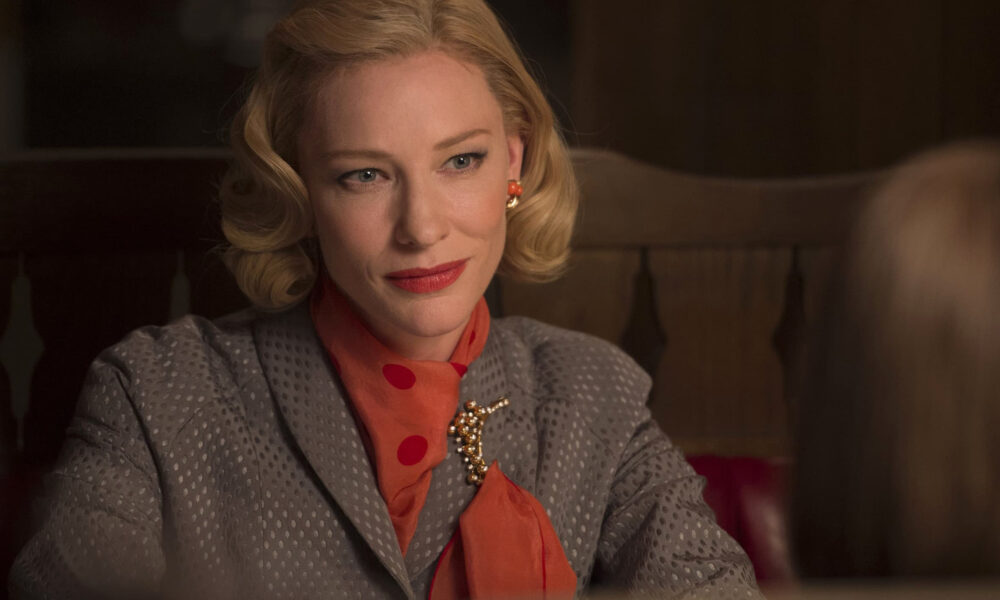
In Carol, Cate Blanchett’s titular character shows that love is not a linear path. While going through a divorce from her husband, Carol’s heart regains its beat for Therese (Rooney Mara), a department store clerk whose gaze she catches from across the room. But the pain of social persecution leaves Carol conflicted, blurring the channel of emotional communication. It seems that neither the viewer nor Carol herself know what’s going on in her head. Ultimately, she admits her feelings in what can only be an accumulation of unspoken passion. In Carol, love is intense and distressing, but it’s meant to be.
For when you can’t get over it: Jasmine French in Blue Jasmine (2013)
If you’re struggling to get over a past relationship, Jasmine French gets it. In Blue Jasmine, Cate Blanchett’s character is left bewildered by the traumatic arrest and subsequent death of her husband, followed closely by the loss of her excessively pretentious life of wealth. Forced to move across the country to live with her sister and her disapproving boyfriend, Jasmine slowly spirals into obsession—she is unable to accept that she has lost everything. Cate Blanchett’s role in Blue Jasmine shows us that it’s neither okay nor healthy to grip onto the past.
While slightly more niche, you might relate to the predicament in which Cate Blanchett’s character finds herself in The Life Aquatic with Steve Zissou. Pregnant with a married man’s child, reporter Jane Winslett-Richardson distracts herself by documenting marine cinematographer Steve Zissou’s (Bill Murray) aquatic expedition. While Zissou and his son, Ned (Owen Wilson), both develop feelings for Jane, neither relationship works out, thankfully and tragically. This causes additional problems for Jane, whose love life prior to the trip was complicated enough. Here, Cate Blanchett’s character offers a perspective on the painful complexity of relationships, perhaps helping you guide yourself through your own.
For when you feel like they’re being toxic: Lydia Tár in Tár (2022)
Lydia Tár is not a good person. Pretentious and egotistical, she cannot comprehend that the people around her exist as their own individuals. In Tár, Cate Blanchett exemplifies what a relationship should not be through the eyes of a misogynistic maestro. The film revolves around her relationship to the women who surround her, from her manipulation of and infidelity towards her wife, Sharon (Nina Hoss), to the way she physically appraises the women in her professional life to determine their value. Cate Blanchett’s role in Tár should not act as a model, unless you’re looking for a model of people to avoid.
For when you just want to be your own date: Lou Miller in Ocean’s 8 (2018) Valentine’s Day can feel aggravating if you’re not a relationship kind of person. Cate Blanchett is here to show you that that’s okay. In Ocean’s 8, criminal mastermind Lou Miller is somewhat solitary, save for the company of Debbie Ocean (Sandra Bullock) and five other crime-oriented women. Lou has no love interest nor ambiguous relationship, while still being a complex and multifaceted character. If you find yourself single this Valentine’s Day, Cate Blanchett’s character in Ocean’s 8 proves that a relationship with yourself is as good as any other. But if you take inspiration from here, perhaps opt out of organized crime.
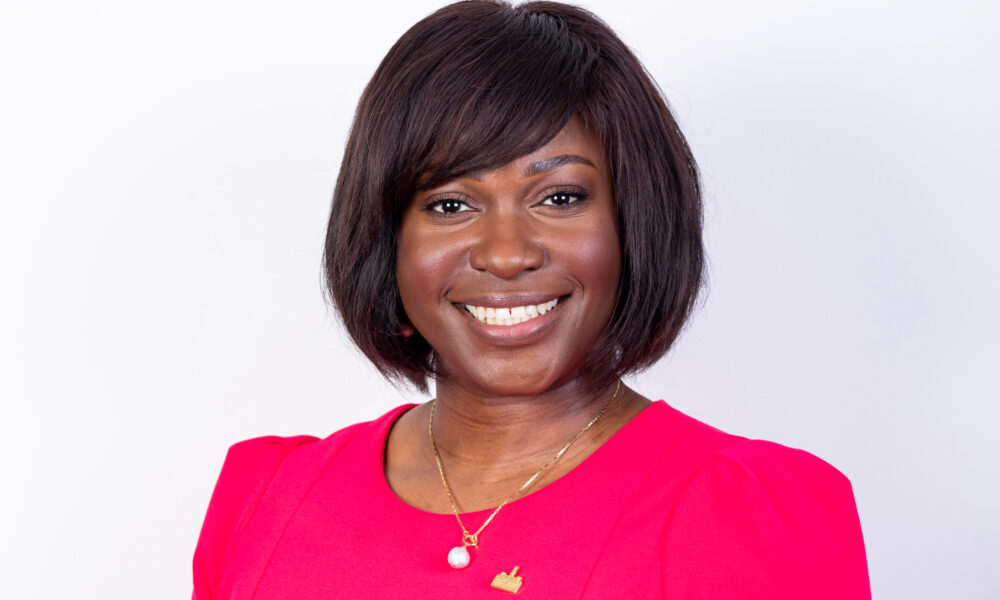
While Montreal is known for its diversity, government representation remains an issue for the city. On Feb. 1, Gracia Kasoki Katahwa, mayor of Côte-des-Neiges– Notre-Dame-de-Grâce borough and the first Black borough mayor in Montreal’s history, made history when she joined the city’s executive committee, responsible for human resources and combating racism. Katahwa wants her role to normalize the participation of minorities in power, proving that though it’s not easy, it can be done. To ensure continuous improvement in representing Black constituents, Montreal’s political parties must place more emphasis on providing the proper resources to Black candidates during their campaigns.
A 2023 report by the Commission des droits de la personne et des droits de la jeunesse (CDPDJ) showed that people of colour working for Quebec public organizations face barriers in both accessing jobs and being promoted to senior positions. In March 2022, the CDPDJ found that within the 338 public bodies examined, only 11.2 per cent of the workforce consisted of visible minorities. This percentage represented an increase of less than three per cent since 2009, demonstrating slow growth in diversifying Quebec’s institutions. How can the interests of marginalized groups be truly promoted without representation in government? For effective changes to be made by the municipal government for minorities, change must be made within the provincial government’s own body, and at the local level.
The successful election of four Black women in the 2021 Montreal elections highlights the importance of the campaign process. Projet Montreal, a party started in 2004 that emphasizes environmental action, has been in power in the city for the last five years, and Guedwig Bernier, Project Montréal’s current president, joined the party in 2018. Emphasizing Montreal’s diversity, Bernier put more effort into ensuring that Black candidates were able to run and supporting them to become elected through properly funded and targeted campaigns. Without Bernier’s explicit emphasis on Black candidates and their campaigns, these women would have faced significantly more challenges in getting elected. Bernier hopes that by breaking the boundaries of diversity within Montreal politics now, it will not be as significant of a barrier in future years.
Many activists and political leaders commended Katahwa on her momentous election, showing the enthusiasm of Black communities to be represented by someone like her. After her mayoral victory, Benoît-Pierre Laramée, Canada’s ambassador to the Democratic Republic of Congo, applauded her victory as a historical moment. If this wide recognition demonstrates the significance of her election, such celebration also testifies that this is too rare of an occasion. Black representation and the election of minority groups should be much more achievable within society, and not an exceptional phenomenon.
Katahwa is not alone in her accomplishments, and other Black women made history in 2021. Dominique Ollivier is not only a member of the Montreal City Council, but also in 2021 became Montreal’s first Black executive committee president. Ollivier has ultimately come under fire for her use of tax-payer money and resigned—for which she received racist attacks––but her election itself must not be ignored despite her faults. The election of Black executives and the increase in diversity in local government is essential for advancing the representation of Black Montrealers—as visible minorities make up more than a third of the city’s population. Diversity in councillors helps to mirror the makeup of the population and provide better representation, which needs to be followed with substantive policies promoting the interests of their Black constituents.
Now that Montreal’s government is beginning to truly represent its constituency, it has begun the journey of advancing the participation and inclusion of marginalized groups. As a government is meant to be a representation of its constituents, this progress is long overdue. Although monumental, Montreal leaders must continue to ensure that the city’s government creates pathways for candidates from marginalized groups to win elections. As Mayor Gracia Kasoki Katahwa shows, her experiences have helped make her such a motivated leader and helped her push past the barriers stopping her. More diversity must be seen in local politics to help advance the positions of the minorities in Montreal. Serving as a crucial representation and an inspiration to younger generations, Montreal must continue to focus on increasing Black voices in government.
My bat mitzvah was a week away. As my soft spoken tutor, Aaron, desperately tried to get me to focus on my D’var Torah, the speech I would be delivering before an audience of family members and bored preteens, Jose Bautista stepped up to the plate. I convinced Aaron that I could multitask; writing the speech while watching Game 5 of the American League Division Series between the Blue Jays and the Texas Rangers. I lied. As Aaron tried to draw me back to the kitchen table, I stood in the living room, riveted to the TV, watching as Bautista sent the Skydome into pure and utter chaos with the infamous bat-flip that would hook me on baseball for years to come.
In the eight years that followed, I struggled to find my way playing on all-boys teams, attempting to figure out exactly how I fit in. The seasons from eighth to 10th grade were marred by constant teasing, being left out of the team group chat, and the snide whispers of parents who couldn’t figure out why I was taking away playing time from their son, obviously destined to play professionally. But thirteen- and fourteen-year-old me didn’t care. No amount of being called a bitch to my face or behind my back diminished my love for the smell of wet grass at an early morning practice or the strange satisfaction of seeing the seams come up on a bruise from blocking a ball in the dirt.
Attending a high-performance school for sport when I was 16, I found myself in a situation where a coach twice my age pushed me out of a training facility that had once been my happy place. I suppose my flirty teenage personality led this coach to believe I was interested in him not as a coach, but as something more. The motivations of the coaches I had worked with quickly became blurred. When I turned 18, I was fair game, as they say, and coaches who I hadn’t heard from in years reached out, trying to connect in a way that felt so wrong, distorting my perception of what all those years of hard work had truly meant. As I matured, baseball quickly became a place of discomfort. I love you baseball, but not like that.
In 2022, my relationship to baseball changed again. That summer, I worked as a scout—a scouting intern as it were—and re-asserted myself in the very spaces that I felt alienated from when I was a younger girl. Occasionally, an older scout would ask my co-workers which one of them was sleeping with me, never letting me forget that my acceptance in baseball was conditional. I watched with jealousy as 16-year-old boys unselfconsciously fielded ground balls, free from the assumption that their presence on the field had anything to do with their gender or sexuality. My male co-workers looked on beside me, shielding me from the comments made just out of earshot, yet, watching from the place of comfort I longed to be part of.
Now, four years removed from my playing days, I wonder what my life may have been like if I had never fallen in love with you, baseball. Would I have made my way in a sport better equipped to accept women? Maybe one that does not employ an abundance of domestic abusers at its highest level? Maybe one that would have been easier to love.
I still love you, baseball. In spite of the complexity, the diamond will always feel like home.
Yours,
Tillie
Peter James Cocks, Contributor
Dear my darling football,
You have been by my side my entire life. I have known you since my first steps, darting through the kitchen whilst my mother tried marking me from threatening corners. You introduced me to my first friends with the evergreen pickup line “What team do you support?” followed by hours of kickabouts, pointless nattering and a lifetime of friendship. Even now, there are few friends I can point to who didn’t come my way via football. And no, America, the bludgeoned sport you play with an egg is not ‘football’.
Even your cold concrete terraces have kept me comfortable through all these years, standing shoulder-to-shoulder with the legions watching loss after loss. There’s a warmth in them, a fiery hope that one day we can return to the pub for a pint of lager to break the streak of consolation bitters. Even the deadened discussion over whether playing three at the back is outdated in today’s game gifts me an embracing escape from the monotony of life.
People say you’re unpredictable; I disagree.
I don’t know if I’ll go to my lectures; I don’t know when I’ll get around to doing my week’s shopping. But I sure as hell know when Chelsea is playing. Battling to find a video stream, to summon the energy for hope, to pray my mood is better in 90 minutes. To this day I can identify key moments of my life—anniversaries, hospital visits and deaths—by the football calendar encased in my brain. Call me a sad-case or obsessed, I simply do not care. You have been the one constant of my life, and I know I am not alone.
Football can, and always will be, the world’s sport. All you need is two jumpers and a ball.
Love forever more,
Peter James Cocks.
Suzanna Graham, Arts and Entertainment Editor
Dear Cross Country,
I miss you. I remember the first time we met—I was a naive girl in a dress running toward a chalk line in the dirt a half mile away. My legs held no muscle then (and my arms still don’t). I remember feeling the wind floating through what was left of my thin ponytail and I knew: You were the one, my one.
It’s been 16 years since that first meeting. We don’t talk every day anymore. I still love you. Maybe the timing wasn’t right, or maybe I got lost in my head, seeing you as a punishment rather than a gift. Sometimes I think we should talk more. But I still see your influence. I see you when I look at myself in the mirror. The strength in my thighs and calves. The way I fix my gaze at an obstacle, and beat it. The drive to win—if only to impress myself.
We haven’t always been exclusive. I’ve flirted with basketball, frisbee, and skiing. But during every other sport, I thought of you. Playing basketball, I thought of your shin splints, and iced my shins and knees after every game. In frisbee, I used your finishing kick to score the winning point. While skiing, I channeled your endurance that I’d finally earned, to push myself across kilometeres of vast snow. I’m not sure I always wanted you to be my forever. At this point, I don’t think I have a choice. It’s always been you.
I was five when I ran that first race in my dress, thinking I’d die after a cool half mile. I was fourteen when I competed at the state championship—and had qualified all on my own. I was seventeen when I left competitive cross country. Two days ago I was 21, running amid ice and snow for the sole purpose of fulfilling my own drive. I imagine myself at 60, with grey hair and new runners, running alongside a dog and hoping to avoid my family’s hereditary bad knees. You’re always there––always.
Maybe our love isn’t a quick, fiery burn. Maybe our time isn’t up. Maybe they were right when they said love is a marathon not a sprint. Maybe I’m not sure who //they// are, but I know you. And I know that in the marathon of life, I’m still running. And you’ll be at the finish line, cheering me on.
All my love,
Suzanna
Megan Belrose, Contributor
Dear Basketball,
When I was three years old, my parents bought my brothers and me a Little Tikes basketball net. The rest was history. You were the first sport I knew and loved. My dad is a huge fan—really, I think he has the largest collection of Golden State Warrior shirts on the planet—and he instilled a passion for the sport in me. Basketball became a way for me to spend time with my family, whether that be playing pickup in the back lane or just sitting down to watch an NBA game.
In high school, basketball was a welcome escape from the monotony of the classroom. Nothing quite compares to the atmosphere on the court when my team was fighting for a win. The feeling of community, the exhilaration when a basket falls, and the endless hours spent practicing in gyms are aspects of the game I’ll remember forever.
I helped coach intermediate girls teams at my high school, and despite the hard work, I never wanted to stop. I loved seeing the elation on a player’s face after they made their first basket of the season. It reminded me of how it felt to play when I was their age, when every degree of improvement made me feel like I was walking on clouds.
The professional sport is another level entirely. I’ve been lucky enough to go to NBA games, and the physicality, drama, and passion are unmatched. There are moments of the game where you can’t help but hold your breath, knowing the fate of your team hinges on which way the basketball bounces. I love those moments more than anything.
Basketball is fun. I love every part of it, and the game has been and will continue to be an important part of my life.
With chocolate boxes at every store, roses lining the windows of florists, and people blushing as their crushes awkwardly ask if they’re free on the 14th, Valentine’s Day is right around the corner. To all those happy couples or new Valentines, I wish you a lovey-dovey day, but for those who are dreading this Wednesday or waiting for the discount chocolate boxes, maybe you’ll appreciate this mix of awkward, sad, and cute romantic moments at McGill. With the former two being the most popular responses I received, I have to ask: McGill, where is the love?
The Happy Couple
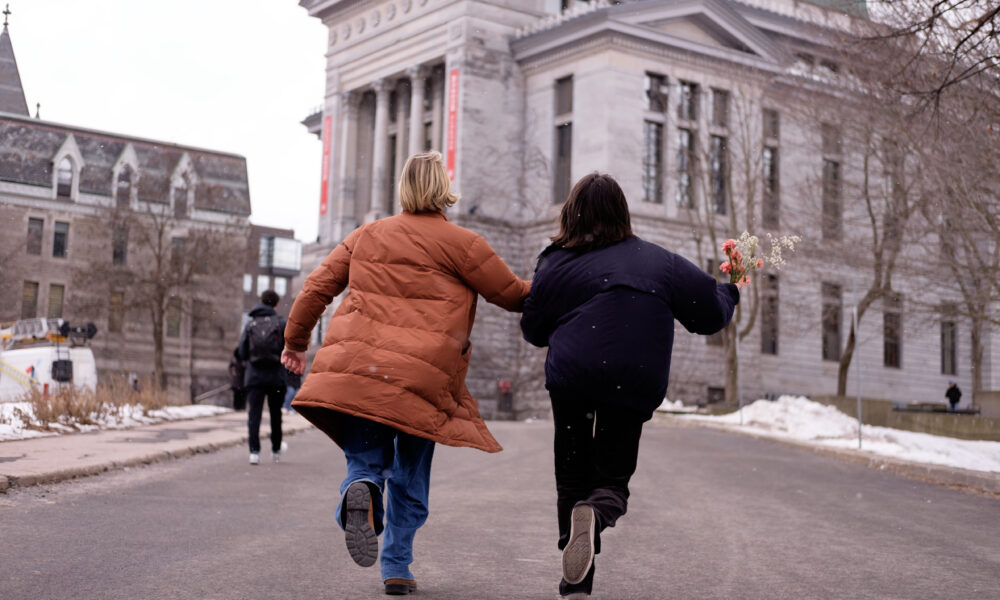
“I played a gig here in Montreal, actually, my first gig in that band, and my girlfriend brought me flowers and hid them until the end. It was one of the sweetest things someone’s ever done for me—of course, we met at McGill.” — Wes Norton, U2 Arts
A Foiled Confession of Love
“One of my best friends one day suggested I should study with her twin brother because he’s in the same program as me. It wasn’t a setup or anything. I mean I wasn’t looking for love. Before I knew it, I had a crush on him, which I proceeded to ignore. The thing is, finals season came and I couldn’t take it anymore! Keeping the feelings in was adding too much to my stress, and this boy was making me unfocused. I needed to tell him and get over it, so I made a plan to tell him after class. My heart was racing and I had all this adrenaline and then right as I was about to tell him, my friend—his sister—came walking up to us, having finished a test early. Just like that all my mental psyching myself up and my plan went out the window. I was disappointed. I mean, I said it eventually, but I think it’s funny how the timing played out.” — Anonymous
A Short and Sweet Horror Story
“One man was involved with both me and my best friend at the same time and neither of us knew.” — Anonymous
A Failed Case of Friends to Lovers
“There was this guy I had been friends with for a while, since res, and this semester he started leaving hints, and his friends made it clear he was down. I didn’t know if I wanted to do anything about it, but after a month, I realized maybe I did feel that way and I should give it a chance. We started hanging out, and it was cute. We studied in the library a couple of times and got food together. A couple of weeks in when things didn’t progress, I expressed that I wasn’t looking for casual, and if that’s not what he wanted, we should end things. He spent the next 45 minutes convincing me he didn’t want casual but just wanted to take it slow. Sounds kind of romantic, right?
Yeah, until after a week of hanging out, he texts me, ‘Can we go for a walk?’ and proceeds to tell me on this walk that he doesn’t know what he wants so he can’t continue seeing me. As you can expect I didn’t take this well. I mean I tried to break up with him a week before, but, no, he had convinced me he wanted more! I’m just upset he compromised a friendship, and now when we see each other at every friend event it’s awkward. The most annoying part is that he’s a nice guy who was simply confused. UGH—basically, don’t waste people’s time!” — Anonymous
Romantic Holidays
“There was a guy I had been seeing casually, and I was texting him one day, and it came up that it was International Women’s Day. Later he asked to meet up and when I arrived, there he was with a bunch of flowers. I have to admit, it was sweet.” — Anonymous