Latest News

Hockey, Sports

The Tribune tries: PWHL home game at Place Bell

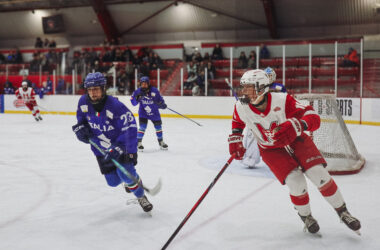
January has been a big month for the Professional Women’s Hockey League (PWHL). Not wanting to miss out on the action, The Tribune stepped out to watch PWHL Montreal take on PWHL New York on Jan. 16 at the Place Bell. And if you are wondering if it was worthwhile, going to watch a Montreal-based team with a winning record was a refreshing experience to say the least. 

On Jan.  13, PWHL Montreal hosted their first home game at the Verdun Auditorium, their principal venue, where they sold out the 4,114-seat arena. Montreal will split their home games between the Verdun Auditorium and  Place Bell––a 10,062-seat arena that is home to the Laval Rocket of the American Hockey League. PWHL Montreal, like the other five teams in the league, is playing without a logo or unique name, a decision that was made so as not to rush the creative process and to use the time to build an identity that reflects the history of women’s hockey and each individual team. 

On a cold Tuesday night, The Tribune arrived at Montmorency station, picked up a quick bite to eat at Five Guys, and walked over to the arena. Our tickets, which were $23 each, were midway up the corner section and offered a clear view of the entire ice. The crowd of 6,334 filled the lower bowl nearly to capacity.

The first period saw Montreal dominate play by controlling the neutral zone and limiting New York’s high-danger chances. The crowd was electric from the get-go but it reached another level  nearing the end of the first period when Montreal scored twice in 17 seconds, setting a PWHL record for fastest consecutive goals. This is the second game Montreal has played against New York, after a 5-2 victory the week before, and it was noticeable, with players finishing their checks and more physicality than in Montreal’s previous games. The rowdy environment in the stands and on the ice lead us to think that a rivalry could be forming. 

After the DJ kept the crowd excited during the intermission, the second period picked up right where the first left off, with lots of good chances for Montreal and strong defensive play before ultimately giving up a shorthanded goal in the final minutes. 

We spent the second intermission walking around the concourse. The gin bar is lovely: It’s a great place to sit and relax before the period starts back up. There is a nice selection of merch available, but my Montreal Maroons sweater was slightly too similar to justify buying their the PWHL Montreal crew neck. Maybe next year, when their new logo adorns the front, I will reconsider. 

Early in the third period, New York scored to tie the game at two, but a dancing competition, the wave, and one fan’s poster saying “Who runs the world?” kept the energy up. In the final five, Montreal captain Marie-Philip Poulin capitalized on a turnover and scored what was ultimately the game-winning goal. The crowd erupted and the noise didn’t wane from that point on. The team gave a salute to the crowd after the final buzzer and Poulin was honoured as the first star.

Going to a PWHL game is worth a trek to Verdun or Laval. From a hockey perspective, the players are skilled, and the game is fast, competitive and physical. The ambiance is exciting, especially when players like Poulin can rally the crowd every time she touches the puck. Sitting behind me was a group of  girls from a youth hockey team, who were talking about their favourite players, waving their posters, and cheering every time Ann-Renée Desbiens made a save. The nicest part of the game is seeing these moments. With its strong financial backing,big sponsors, including historic broadcasting deals, and a proper collective bargaining agreement, it seems like the PWHL will be around for the long-haul. With the future laying in front of us, catching a game during the inaugural season in the league’s Original Six phase is a lovely feeling and The Tribune cannot wait for more to come.

McGill, News

McGill and AGSEM meet to discuss increases in TA wages and healthcare fund

The Association of Graduate Students Employed at McGill (AGSEM) and McGill proceeded with their ninth round of negotiations on Jan. 16. Following the expiration of AGSEM’s last teaching assistants’ (TA) collective agreement with the school in July 2023, negotiations have been ongoing, largely focusing on AGSEM’s non-monetary demands. On Dec. 18, the association presented its monetary proposal to the university.

Before the negotiation meeting started, AGSEM held a rally in front of Roddick Gates where members chanted and spoke to students about the organization’s demands. According to a press release, AGSEM’s monetary proposal consists of increasing TA wages to levels comparable with the wages of TAs at other large Canadian universities and implementing a cost-of-living adjustment in years when inflation exceeds three per cent. Additionally, the union requests that the number of hours that TAs work be indexed to the number of students enrolled in the class. Lastly, the proposal also includes a request for three separate healthcare funds, dedicated to general healthcare, gender-affirming healthcare, and healthcare for international TAs. 

One of the members present at the rally, Emma McKay, a PhD student in the Department of Integrated Studies in Education (DISE) and the Chief Delegate Mobilization at AGSEM explained in an interview with The Tribune that they are interested in seeing McGill’s monetary proposal. 

“What we’re most hoping to hear in this negotiation session is McGill’s counteroffer for our monetary proposal,” McKay said. “How much, in terms of hourly wage, are they willing to offer us out of the gate? In terms of healthcare, are they willing to even consider it? Indexing TA hours to student enrolment, are they even willing to consider that or a modification of it?”

The union’s expectations, outlined by McKay, were not met in the negotiation session. According to AGSEM, McGill was unable to provide a monetary counteroffer at Tuesday’s meeting. According to a press release, McGill’s representatives used the meeting’s time to comment on the proposal made by the union at their previous meeting.

McGill pointed to differences in the Quebec labour market as a justification for the difference in TA wages compared to other Canadian universities. AGSEM responded to this argument by noting McGill’s professed self-inclusion in the “Canadian Ivy League” as a context in which they are comfortable comparing the school to its Canadian counterparts.

According to AGSEM, the current wage of a TA at McGill is $33.03 per hour, compared to $40 to 50 per hour at other Canadian universities such as University of Toronto and Queen’s University. But Queen’s University TA Tai Withers, MSc candidate and member of Public Service Alliance of Canada 901, maintains that their TA wages are not sufficient to cover the rising cost of living in Kingston, Ontario, where the university is located. In an interview with The Tribune, Withers also stated that the workload as a TA can become overwhelming when combined with research and coursework as a graduate student. 

“If you isolate the TA workload, I think that’s fair. In combination with being a graduate student I think it can certainly be more than is entirely reasonable” said Withers. 

At the rally preceding the negotiation, Dallas Jokic, PhD candidate in philosophy and member of AGSEM’s bargaining committee spoke about the unique case of Quebec when it comes to the rising cost of living.

“I think McGill has always advertised itself as ‘Oh, Montreal is so affordable’, but as

we all know the cost of living is getting so much more expensive here. The cost of living is

rising faster in Montreal than almost any other city in Canada,” Jokic said. 

The Canadian Press reported that rents are increasing at a faster rate in Quebec than in the rest of the country.

As discussions moved in the direction of the proposed healthcare funds, McGill 

asserted that the coverage currently provided to graduate students at large is already more expansive than that offered to the majority of McGill employees.

The university expressed an understanding of AGSEM’s desire for a cost-of-living adjustment in years with high inflation. However, McGill said it was unable to meet the demand, citing the uncertain nature of economic activity.

McGill indicated that it plans to share its counter-proposal shortly.

McGill declined to comment on ongoing negotiations.

McGill, News, SSMU

SSMU Legislative Council approves Motion Regarding Action Against Tuition Hikes

The Students’ Society of McGill University (SSMU) held its first Legislative Council meeting of the year on Thursday, Jan. 18. The meeting began with a brief review of the councillors’ holiday activities which, among other things, included knitting a sweater and cat-sitting. The session also included an announcement from the Scarlet Key Society about their annual award for outstanding student leaders, a reminder about this week’s Winter Activities Night, and a debate concerning a Motion Regarding Action Against Tuition Hikes.

The first announcement came from the President of the Scarlet Key Society, Eric van Eyken, (BCL/LLB ‘09). Van Eyken explained their annual Scarlet Key awards, which recognize students who exhibit outstanding leadership and commitment to their peers and community. Awardees are inducted into the Society and invited to events throughout the year. Van Eyken encouraged people to apply before the Feb. 11 deadline.

Next, Vice President (VP) Student Life Nadia Dakdouki reminded those in attendance that Winter Activities Night will take place on Jan. 24 and 25. The event will be held in the University Centre instead of its usual location, Tomlinson Fieldhouse, due to scheduling conflicts with intramural sports and the high cost of alternate venues.

President Alexandre Ashkir celebrated McGill’s commitment to divest from their direct holdings in Carbon Underground 200 fossil fuel companies by 2025, which was reached at the Dec. 14 Board of Governors meeting.

“The fight is not over. There’s many more divestments the Board of Governors needs to accomplish before being equitable. But this is a step in the right direction and the result of a lot of work from the student body,” Ashkir said.


The meeting then entered a question period. Sofie Fournier, a representative for the Science Undergraduate Society, asked if any plans had been made to protest or advocate against the French language requirements proposed by the Quebec government for incoming McGill students. In response, VP External Liam Gaither expressed that though SSMU has a solid position against tuition hikes and for free education, it does not have a clear stance on French language or French-learning policies. However, Gaither stated that he was open to working on this.

After a recess, councillors voted to debate the Motion Regarding Action Against Tuition Hikes. The motion was submitted to the Legislative Council by Rishi Kalaga, U1 Arts, who developed it with law councillor Jacob Shannon. Shannon explained that the approval of the motion would allow SSMU to form a group dedicated to developing a strategy in the fight against the government’s proposed tuition hikes. This could include legal action if it is deemed appropriate following consultations with law firms.

“It’s simply a group to perform consultations, to brainstorm ideas, and to conduct the necessary research that needs to be conducted to determine whether legal action is a possibility,” said Kalaga.

Fournier followed up with a question concerning how the committee would be held accountable to making progress and achieving tangible goals. In response to this, Kalaga explained that the group would determine its goals after consulting lawyers and doing research. Thus, it can not currently lay out a clear timeline and define their goals until the motion passes.

Shannon later highlighted how important it is that this motion was submitted by a constituent.

“[The motion] has constituent input, and it’s the first time all year a constituent has really brought us something they care about, so I do think we should acknowledge that,” Shannon said.

In the end the motion was adopted via a unanimous vote. Then the meeting concluded with a confidential session.

Moment of the Meeting:

Speaker Jonathan Dong recommended that the Council prepare for the upcoming General Assembly by consulting with constituents to learn about their needs and concerns. The General Assembly will take place on Feb. 5.

Soundbite:

“The dais would like to highly encourage more constituent participation in the Legislative Council.” — Dong, as the public portion of the meeting concluded.

All Things Academic, Student Life

The dilemma of add-drop period

For me, the first few weeks of school—the liminal period of add-drop—are emotionally charged and stressful, demanding coordination and thorough planning. In this piece, I offer my internal monologue during add-drop, and some meagre advice on coming to terms with the schedule you end up with.

Last fall, I wrote about going to random lectures and concluded that the ultimate joy of the university experience (to me, at least) is getting to go to a class solely to feed your curiosity for learning. I’ve always been the kind of person who can’t just take any course solely to satisfy my credit minimum. Instead, I’ve imposed on myself a kind of precarious balance between needing to enjoy the content on a deep level but also liking the evaluation scheme, and knowing at least a few people in the class for comfort. This has worked out for me so far, but as I entered my last semester I found myself in an unfamiliarly stressful position: Not knowing what course to take anymore.

It seems I’ve taken every course McGill has to offer within the limits of my program. I’ve always been lucky during add-drop, with the same routine every semester: Thinking my schedule is good on the first day, only to gradually realize that I need to change everything immediately, stressfully composing emails to my extremely kind and caring advisor, ultimately finding a solution that fit my three criteria on the last day. But this semester was different, as I was only missing three credits to graduate, and could not find anything left to take. I settled on a course in an unfamiliar department, deeply interesting in content but heavy on midterms, which I have managed to avoid in most of my classes so far.

To me, add-drop is more stressful than finals week. I’ve always had a hard time explaining it, especially when it comes to my three selection criteria. A lot of my friends and family who are McGill alumni have told me that it doesn’t really matter what courses I take, or that I need to leave my comfort zone. I know I’ve been very lucky to enjoy every course I’ve taken so far, which is why I found it so hard to acknowledge that this semester would have to be different: I would have to take a course that forces me out of my comfortable and predictable degree schedule.

These past few weeks, I realized that I’ve already taken all the classes my friends are taking this semester. In other years, I was more than excited to take classes in my department, where a sense of camaraderie helped me persevere through any kind of evaluation. But this semester, as I asked around, hoping I would be able to take a class with one of my friends, I realized that it wouldn’t be possible. In a way, I have to accept that I’m in my last year of undergrad and that I don’t have the luxury of choice anymore.

This add-drop period, after countless hours of worrying, stressing, and crying over my schedule, I’ve managed to rearrange my thoughts by shifting my perspective. Taking a class outside of my comfort zone isn’t a plight—it’s a wonderful opportunity to see what else McGill has to offer. I’m genuinely excited to take a class where I get to deepen my knowledge in a topic I’ve always been interested in, even if it means writing a humanities midterm for the first time in four years. Enjoy your semester, even if your schedule didn’t turn out the way you thought it would. Try to engage with those unfamiliar courses; you’re only here for so long. Make the most of it.

Horoscopes, Student Life

The Tribune predicts: Winter horoscopes

Snow has fallen, sidewalks have frozen, and you desperately need something to look forward to. You’ve come to the right place because, for better or worse, The Tribune is about to reveal everything you need to know this winter semester.

Aries (March 21 – April 19): Aries, I fear that your eyebags might only get bigger this semester! Slow down and take a nap, because you need to spend more time at home than at your local cutesy coffee shop chugging double espressos. 

Taurus (April 20 – May 20): There’s absolutely nothing that will stop you this semester, Taurus. You were born during finals season for a reason: You will keep being the academic weapon you’ve always been.  

Gemini (May 21 – June 20): Gemini, you should trust your instincts this semester, especially when it comes to choosing the best spot in the library. Stay away from the panicked comp-sci students frantically debugging their programming assignment and the business majors crying over their paint-by-numbers worth 75 percent of their grade. 

Cancer (June 21 – July 22): Cancer, don’t let deadlines and midterms get to you. My sweet summer child, you were made to live and have fun for the rest of us, not to sit at the library worrying about grades. Remember, they’re just a number. You deserve a break, and a little bit of sun. 

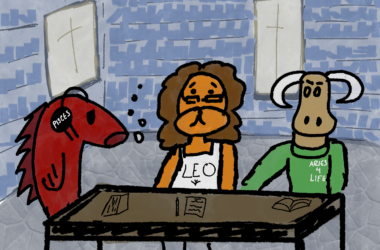
Leo (July 23 – August 22): The funny thing with “Leo” is that it rhymes with “zero”… which is going to be your GPA if you keep slacking off. It’s -20 degrees outside and the sun sets at 4 p.m. anyway, so you have no more excuses to not lock yourself inside and study. Come on—get to work, party animal! 

Virgo (August 23 – September 22): Virgo, your prayers have been heard. We know that you’re on the hunt, and the stars have aligned: You will find that perfect aesthetic Montreal apartment with a balcony for the one month of summer. Plus, it will have a sweet rent that will allow you to actually afford food. Yay!

Libra (September 23 – October 22): Libra, this semester, make sure to find the right balance between your social life and your five courses. I know what they say about college being the best years of your life, but don’t forget about the 60 pages of poli-sci readings waiting for you. 

Scorpio (October 23 – November 21): Scorpio, you’re the silent kid at the back of the conference room because you’re obviously too cool to share your thoughts and reflections with the rest of the group. Keep it up if you want, but don’t come crying when you don’t get your A because you were too busy being mysterious. 

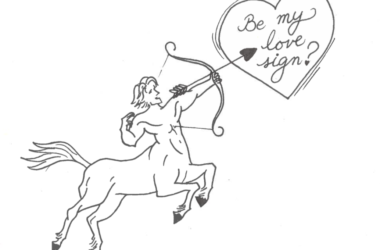
Sagittarius (November 22 – December 21): If you’re looking for an adventure to fulfill your unstoppable nature while keeping up with the academic fast-life, just hike up to McMed once or twice a day. It will do the job. 

Capricorn (December 22 – January 19): No one doubts how ambitious you can be, Capricorn. You might need Hermione Granger’s “Time-Turner” so you can fit all your courses and your six clubs into your schedule. But don’t forget to take a deep breath from time to time.

Aquarius (January 20 – February 18): We know how creative you can be, Aquarius. Your ability to imagine new worlds and sweet delusions is unparalleled, and it might come in handy during your next 8:30 a.m. conference when you forget to do your readings. 

Pisces (February 19 – March 20): My crystal ball seems to like you a lot, Pisces. Your innate gift to pretend to take notes in your bird class while actually planning your dream solo Interrail trip will have absolutely no consequences on your grades. Nothing less than A’s this semester. 

Features

Why do we refuse to protect our athletes?

Imagine you are a rookie varsity athlete. You arrive at the field to begin pre-season training at a brand-new university. Your hands tremble as you lace up your cleats for the first time as a McGill athlete. Suddenly, your hands stop shaking as you jog onto the field: You’ve made it. You’ve earned a coveted place on a university team, and it’s bigger than you: You’ve made your family and friends proud, and you’re determined to continue doing so. After all, how else could you justify the years of sacrifice? The countless hours of work, the late nights in the gym, the expensive club fees, the time spent driving you to training, the missed social events? Ever since you were in middle school, you were told that the beginning and end of your elite sporting career was to play at the university level. Yet, nothing could have truly prepared you for what would come next. 

This was my exact experience. Despite starting soccer at five, I only began to play at an elite level when I was 13. All I ever wanted was to play the sport that I love at the highest level for as long as possible. Everyone assumed throughout my youth soccer career that I would play in university. When I began exploring different schools and their programs, I was eager to find a place where I could thrive academically and athletically, leading me to McGill. I gave it my all, jumped in head first, and put my faith in the institution, expecting support and protection should anything turn sideways. It never occurred to me to ask questions about coaching philosophy or team culture—I just wanted to play. 

Preseason started as planned in August 2021, and I made my debut as a varsity soccer player. Despite always playing at a competitive level, I had never been in an environment outside of youth soccer. I did not know what to expect. More importantly, I did not know how the coach-player relationship evolved with age. In our initial team meeting, the coaches gave a presentation about the upcoming season. The first thing they said to us was: “We don’t owe you anything.” Over time, my experiences showed me just how deeply they meant those words. 

I entered the season aiming to keep my head down and earn my playing time as a rookie. Almost instantly, this proved to be impossible. Yelling was a central feature of our coaches’ philosophy, and I soon found myself a common target, to the point where teammates would regularly ask if I was okay at the end of practices. Putting on my shin pads during a team talk or losing focus at any point during a 40-minute video session resulted in public castigation as if I were a child having my knuckles rapped by a strict school teacher. These circumstances made me anxious about the team, but I loved my teammates and I loved playing. Besides, I was a strong, tough varsity athlete, not a quitter. Also, despite being a rookie, I was playing a lot. It never occurred to me to leave. 

Gradually, I began to obsess and feel anxious about making mistakes out of fear of getting yelled at. The constant berating made me lose confidence. My teammates and I spent hours discussing the team and our experiences, but these conversations were all overshadowed by what I now recognize as a general state of malaise.

This anxiety transferred over to the field. Practices were marred with uncertainty and unease. Receiving the ball would often result in yelling, no matter what decision I made. I began to accumulate painful muscle injuries, requiring extensive physiotherapy. I no longer felt the same unbridled joy on the field. I blamed myself. The public yelling and humiliation was justified because I was making mistakes. I believed that if I worked hard I could earn more play time, respect, and would enjoy playing again.

After a difficult winter filled with injuries, I was excited to compete at the start of my third year. Unaware I was at risk of being cut, I was led to believe I was competing for a starting spot on the field, not on the roster. In late August, a few days before the start of the season, I had my start-of-season meeting. Immediately upon entering, I was told my career as a varsity athlete at McGill was over. I was completely stunned. Never in a million years would I have expected this to happen to me. 

As in previous meetings, they took every player who could potentially play in my position, went through the list, and asked me if I thought that I was better than them: A coaching tactic all too familiar to those who followed Mike Babcock’s stint with the Toronto Maple Leafs. Many of my teammates were my good friends—I am ashamed to say I let them get to me and said I was better than a number of them. Their reaction was to tell me, then just 20 years old, that I was “delusional.”

Panicking as the opportunity to play varsity soccer was suddenly taken away from me, I asked about where else I could play soccer in Quebec that fall. I was told there were no other playing options for me except McGill. They suggested they could assist with a school transfer, yet the new semester was just a few days away, and I was not even eligible for a transfer. They suggested that I could train with the team in winter and try to join as a walk-on. Their advice to “treat this like a long-term injury,” was out of touch and insensitive at best, and at worst callous and cruel. 

There was no offer to help me collect my gear from the changeroom, nor any display of genuine sympathy. Only an offer to get in touch with the team’s mental performance coach for a single session. My world was rocked, and I have not seen the coaching staff since. While I am happy to say I recovered quickly in both my sporting career and personal life, it took me a long time to understand what had happened to me: I was in a toxic environment that caused me significant harm. 

Abuse in sports

My experience was not an isolated incident but rather reflective of what many varsity athletes experience. Derek Silva, an associate professor of sociology at Western University and the Eakin Visiting Fellow at McGill for the Fall 2023 term, studies abuse in Canadian sport. He describes instances of abuse within sporting organizations not as outlier cases, but as characteristic of the Canadian sport system. 

“The culture of coaching and varsity sports plays into this, the culture of coaching from youth to professional, gives coaches so much power over athletes,” Silva said in an interview with //The Tribune//. “There’s very little if any accountability structures, structurally speaking, there are very few [independent] boards that you can go to be like ‘this happened to me, and therefore that person needs to be investigated.’”

Silva outlines the role of status coercion in ensuring compliance. Coaches have control over playing time and membership within the team, as well as having the potential to harm future opportunities through their network of contacts. Punishment and coercion are normalized to ensure that athletes comply, but also ingrains the belief that they deserve abusive treatment. 

Steph Yang, writing for The Athletic in 2021 about abuse in the National Women’s Soccer League, emphasises how major sporting tenets such as accepting authority and prioritizing winning over all else socializes athletes into accepting exploitative and abusive behaviour. Many athletes, subjected to this behaviour since childhood, come to believe that it is justified. Yet, when placed in any other academic or professional setting, this accepted sports behaviour becomes unimaginable. This fosters a paternalistic culture where coaches keep athletes in a “perpetual state of adolescence.” In this environment, they justify punishment and coercion as necessary for the pursuit of victory. Normalizing such behaviours, especially from a young age, can seriously impact how players perceive their future relationships with people in power in the workplace, and in their personal lives. 

In Billy Hawkins’s article for the Law and Political Economy project, he outlines how university officials and coaches use language romanticizing varsity sport. They refer to athletes as “privileged” to detract from the physical labour they participate in for their university. Especially in Canada, where few students receive scholarships or bursaries for sports, the “amateurism” of sport is emphasized, implicitly undermining players’ claims to protection.

At McGill 

In conversation with several McGill athletes, they all shared similar experiences, bringing forward allegations of verbal and psychological abuse including gaslighting. These tactics led to players feeling isolated, insecure, and disrespected by their coaches. 

Each athlete I spoke to stressed how much they loved their teammates, and how they found some of their best friends on their team. However, they also felt that these connections were undermined by a persistent feeling of insecurity perpetuated by actions of the coaching staff. 

Sara Reardon played for the women’s soccer team from 2021-23, described the isolation she felt from the very beginning. She “walked on” to the team, however, her status was unclear to her despite starting an in-season game. After asking explicitly if she had made the final roster, she was told that the coaching staff would not be telling players if they were on the team because this may undermine their “hunger.”

She also explained how coaches would often tell her their personal opinions of her teammates during one-on-one meetings. She described it feeling as though they were “trying to pit us against each other, and make us feel insecure in our team, and in our relationships and friendships with the people who are on our team.” 

Bria Labella played for the McGill women’s soccer team as a goalkeeper between 2021 and 2023. While the coaches gave her largely positive feedback, she felt they were dishonest with her and disrespectful about why she was not given opportunities to perform.

While the coaches constantly asked for feedback, both Labella and Reardon said they would become defensive when any criticism was brought up. Labella said there was no “reciprocity” in the relationship, input from players was ignored and derided, and much like my experience, both players blamed themselves. 

(Lack of) Accountability at McGill

McGill athletes mentioned to //The Tribune// the inadequacy of feedback structures at the university. They did not feel comfortable bringing up concerns to coaches because they felt they would be ignored, and coaches would be defensive rather than receptive to criticism. While athletics distributed end-of-season feedback forms, they began by asking how many minutes the player has played. Players recounted feeling invalidated if they had grievances, and said there was no follow-up to the feedback submitted on the form. 

The structure of university sports is characterized by high player turnover as athletes typically graduate within four years. This dynamic means that athletes often leave the environment by the time they mature and become empowered to make their own decisions. They are then replaced by a new class of rookies. Varsity athletes are inherently more vulnerable and have fewer formal protections than professionals. 

The lack of accessible structures for reporting any issues to do with coaching make this profound lack of accountability abundantly clear. The hazing scandal in 2005 resulted in McGill’s 2007 //Policy on Hazing and Appropriate Initiation Practices//. This failed to prevent another hazing incident in 2017. Since then, student athletes undergo mandatory anti-hazing training each season and are encouraged to report any behaviour that violates any league, regional association, or university rules and/or breaches of the Varsity Guide to their head coach, the Director of Sport Programs who oversees all varsity teams at the University, or Executive Director, Athletics and Recreation. According to McGill’s media relations officer Frédérique Mazerolle, if a player’s allegation(s) relate to hazing or the use of banned substances, it is then immediately brought to the attention of the Deputy Provost, Student Life and Learning.

The Varsity Guide outlines conduct for players and details potential repercussions related to athlete behaviour. However, it lacks detail for coach conduct around players, and it  does not provide information on avenues of redress if a player takes issue with their coaches’ conduct. While under USPORTS and the Réseau du sport étudiant du Québec (RSEQ), the governing bodies of McGill sports, behaviours deemed unacceptable by coaches are more explicitly stated, there are not enough mechanisms for athletes to recognize harmful situations and apply these policies. While a local wellness advisor was hired full-time in 2023 to “act as a resource for student athletes who need some extra support,” the current structures for addressing athletes who have issues with their coaches remain insufficient. 

The question still stands: What does a McGill athlete do if they have an issue with their coach? If at a team dinner the coach comments on their weight? If their coach yells at them, humiliating them in front of the entire team, and brings them to tears? 

What next? 

McGill Athletics is failing its athletes by not ensuring a safe, secure environment for performance. It is necessary that McGill not only improve its accountability structures to protect athletes but also engage in capacity-building programs. This will empower athletes to create sporting environments where they can thrive and feel they can turn to both their coaches and McGill for support. 

After all, who is actually on the field playing? Who is sacrificing their time and energy and putting their bodies on the line to represent their school? Coaches are protected by unions, contracts, and networks of support throughout their institutions. Athletes don’t have those luxuries. 

People perform best and are at their most creative when they are happy, safe, and secure. Success in sport is not ensured through physical prowess: It is achieved through creativity and environments of mutual support where teammates stand up for each other. 

McGill must do better by its athletes in creating a sporting culture we can be proud of as representatives of this institution. Current policies and structures are unacceptable and insufficient. There is an opportunity to be innovative and at the forefront of an athlete-centric, collaborative model that does not yet exist in Canadian varsity sports. Otherwise, McGill will continue a legacy of harm and shame where athletes continue to be put last. 

Arts & Entertainment, Music

Where do I begin? Corridos Tumbados

Corridos Tumbados, a form of regional Mexican music, exploded in popularity in 2023. At the forefront of this phenomenon was Peso Pluma, who rose to global fame after his feature on Eslabon Armado’s “Ella Baila Sola,” which topped the Billboard Global 200 and was Rolling Stone’s song of the year. The global success of the song—as well as of hits such as “AMG” and “PRC”—propelled Peso Pluma to worldwide stardom, making him the most streamed artist on YouTube and the fifth-most streamed artist on Spotify in 2023. Peso Pluma, however, is just one part of a movement in Mexican music which has brought traditional sounds to millions of new ears.

Corridos Tumbados is loudly and proudly Mexican, making use of traditional instruments such as the Tololoche (bass) and Bajo Sexto (12-stringed guitar) as well as various brass instruments. However, the genre is also heavily influenced by American hip-hop, especially in lyrics and iconography. In the music video for “Dijeron Que No La Iba Lograr” (“They said I wouldn’t make it”), Fuerza Regida’s Jesus Ortiz Paz (JOP) and his 16-year-old protégé Chino Pacas flex chains and shoes to flaunt their success. The video for “PRC” by Natanael Cano and Peso Pluma features both artists dealing and preparing drugs, and the title is an acronym referring to cocaine, ecstasy, and methamphetamine. 

Through rap’s aesthetics, Corridos Tumbados tells stories of the streets, crime, drugs, and success shown through flexing money, cars, and name brands. In terms of iconography, the artists’ clothing styles and music videos are often indistinguishable from those of American rap. Contrasted with traditional sounds of Mexico’s rural music, rooted in the centuries-old corrido tradition, these modern motifs create soundscapes of struggle and adversity. Corridos Tumbados bridges today’s most influential themes and iconography so that traditional Mexican music canspeak to a new generation of listeners. 

A defining feature of Corridos Tumbados is its ability to transcend the U.S.-Mexico border. Many of the most popular artists of the genre are American, such as Fuerza Regida, Eslabon Armado, and DannyLux. Peso Pluma went to high school in Texas and worked as a construction worker in Los Angeles before his fame, and Natanael Cano moved to Los Angeles at 17 after being signed to the influential label Rancho Humilde. The label’s owner, Mexican-American Jimmy Humilde, deserves significant credit for the emergence of Corridos Tumbados. 

In a 2020 interview with Forbes, Humilde described the genre as “the streets of the U.S. and Mexico put together. I’m talking about the grimiest, the ghetto-est, the lowest-income neighborhood that there is.” He emphasized the importance of Mexican-Americans’ exposure to Black culture to the development of the genre. It was Rancho Humilde’s Natanael Cano who coined the term Corridos Tumbados, after his 2019 album of the same name. The pioneering role of Rancho Humilde and Mexican-Americans as a whole has created a genre that centres Los Angeles rather than Mexico City. Despite deep American ties, Corridos Tumbados is proudly Mexican; Peso Pluma has taken to displaying Mexican flags and shouting “Viva Mexico!” at concerts to wild adulation. 

Corridos Tumbados is a beautiful mess of contradictions: It’s both traditional and modern, proudly Mexican but with significant American influence. It shows how identity can be conveyed through music and how genres and cultures can borrow from each other while conserving their own identities. And, most importantly, it sounds good. In a genre that uses real instruments and vocal talent, the musicians tell everyday stories with everything from songs of love and heartbreak to crime, struggle, and success. The worldwide success of Corridos Tumbados shows that traditional music can survive and thrive in the 21st century as a powerful expression of identity while adapting to modern themes and influences. 

Editorial, Opinion

Reconceptualizing free speech on an unequal campus

The debate over free speech in higher education has attracted significant attention in recent months. Elite universities, such as Harvard and the Massachusetts Institute of Technology (MIT), have received international attention as raging conservative movements take down administrations while these same administrators stumble over institutional oppression. Recent right-wing backlash against Harvard’s former President, Claudine Gay, highlights the parallel limitations of free speech at McGill. On campus, speaking out against conservative anti-intellectualism is necessary to ensure that campus activism and a better institutional future can exist.

On Jan. 2, Gay resigned from her position following a campaign against her which manifested widespread racist and sexist harassment. Billionaire Harvard alumnus Bill Ackman and conservative activist Christopher Rufo levied accusations of plagiarism against Gay as part of their harmful fight against DEI (Diversity, Equity, and Inclusion) at Harvard. Their public attacks built on national criticism of her response to on-campus antisemitism, which reached a high point in early December when Republican Representative Elise Stefanik challenged Gay and the presidents of University of Pennsylvania (UPenn) and MIT in Congress. Accusations of plagiarism against Gay and her questionable response to activism against the ongoing genocide in Palestine deserve legitimate consideration and scrutiny, but her right-wing critics’ actions betray their dangerous motivations: Weaponizing conversations around antisemitism and academic integrity against free speech. 

As a Black woman and a child of Haitian immigrants, Gay has consistently been held to unattainable standards and directly targeted with slurs and other racist, xenophobic threats. Criticisms of Gay’s DEI measures have explicitly racist undertones and emerge from far-right rhetoric which similarly deploys “woke” as a hateful stand-in for “Black.” With conservatives claiming Gay’s resignation as a “culture war” victory, the former president suffered unconscionable mistreatment with her identity making her the perfect figurehead for white supremacist attacks on academia.

Examining the claims against Gay raises broader questions about the state of academic freedom at universities. Gay’s fellow academics, including one alleged victim of her plagiarism, have defended her qualifications against uneven understandings of plagiarism’s harms. What is the effect of unveiling plagiarism among groundbreaking scholars with significant contributions to their fields? Who has the power to control conversations and include or exclude certain voices? And how do we determine what is ‘political’ amid institutional systems founded upon and sustained by colonial ideals? 

Discussions of academic freedom require recognition of how definitions of freedom of speech can be politically motivated. The asymmetrical repression of free speech depends on students’ positionalities and politics. Just as President Gay was at higher risk against conservative attacks, Harvard students experienced the same vulnerability under her administration when the university met pro-Palestine demonstrations with increased surveillance and policing, most directly affecting Black, Indigenous, and Arab students and students of colour. 

At McGill, the administration has routinely condemned pro-Palestine activism and remained silent on violent threats toward Palestinian students while claiming to remain apolitical. McGill repeatedly uses the excuse of political neutrality when confronted with activism against their white supremacy and settler colonialism. Consider the institution’s denial of unmarked graves in response to the Mohawk Mothers’ tireless fight and the administration’s refusal to take responsibility for platforming a transphobic speaker. Still, situations such as the administration’s vocal support for Ukraine demonstrate that our institutional leaders determine what is political based on what best serves their interests. 

McGill, too, is an elite institution with significant international influence, and many current McGill students will go on to be the next generation of foreign policymakers, global affairs advisors, and “Middle East Affairs” experts. Currently, three of Montreal’s Liberal Members of Parliament, Anthony Housefather, Anna Gainey, and David Lametti––all with ties to McGill––have sent a letter to Canadian universities attempting to carry out the same right-wing campaign which Rep. Stefanik levied against President Gay in the name of “opposing antisemitism.” Restricting freedom to criticize the institution will continue to produce McGill graduates who maintain the university’s historical, colonial power.

The McGill community must not participate in these active threats against academic freedom. Where higher education is supposed to teach students to think critically and speak truth to power, McGill is denying students these rights by challenging forms of research and campus activism that question the institution. Repressive academic environments are ultimately antithetical to the very possibility of free speech.

Album Reviews, Arts & Entertainment, Books, Film and TV

What we liked this winter break

Amid a well-deserved break from classes and assignments, here is what the Arts & Entertainment section was reading, watching, and listening to over winter break. 

Lust for Life by Lana Del Rey – Lily

As a fan of Lana Del Rey, I have every single one of her songs memorized. But, I usually only listen to the same two albums, NFR! and Ocean Boulevard, due to their similar production style and strong lyricism. This break, I decided to change things up and listen to Lust for Life, an album from 2017, which I often describe as my least favourite. The middle chunk of the album, with its cliché lyrics and uninspiring instrumentals, doesn’t necessarily stand out to me.

I noticed on this listen how strong the majority of these songs are—despite a few duds—especially in context of the entire album. Part of why I now enjoy it so much is because this album marked a change in her discography. Lana opens herself up to happiness and she is, as the title suggests, lusting for life. Closing with “Get Free”—arguably one of her best songs—I’ve always interpreted it as her singing about growing up and learning how to see life through a less idealistic lens than in previous albums. Lana is moving on from painting her world in a way she wishes it would be and instead begins to sing about it in the way it actually is. Lust for Life marks Lana’s exit, in her words, “out of the black, [and] into the blue” in her own life, but also in her music career. 

Percy Jackson and the Olympians – Mia

Among the wave of shows released this winter, Percy Jackson and the Olympians (2023) stands out as a heartwarming and nostalgic adventure, based on the beloved book series of the same name. In a world filled with the gods, monsters, and mayhem of Greek mythology, 12-year-old Percy Jackson (Walker Scobell) must journey across the United States with his questmates Annabeth (Leah Sava Jeffries) and Grover (Aryan Simhadri) to free his mother (Virginia Kull) from the Underworld and retrieve Zeus’ stolen lightning bolt. The trio faces new monsters and deities from the mythos, aligning Percy with Theseus, Perseus, Bellerophon, Orestes, and many more legendary heroes. 

Instead of being stuck in the novels’ mid-aughts past, the series updates iPod-Touch and side-swept-hair Percy to floss-dancing young Percy, letting him resonate with the show’s Gen Z audience. Percy Jackson, in all its mediums, revives ancient stories for contemporary audiences, reflecting the spirit of evolving storytelling.

Although the pilot was fast-paced, subsequent episodes honed in on the friendship between Percy, Annabeth, and Grover. Amid all the action, chemistry-laced scenes among these three heroes wove an emotional heartbeat into the story. If you’re looking for an engaging show that brings you back to your childhood, Percy Jackson and the Olympians awaits. 

The Bear and the Nightingale by Katherine Arden – Isobel

Katherin Arden’s debut novel, The Bear and the Nightingale, the first book of her Winternight Trilogy, offers a mesmerizing journey set in a fantastical medieval Russia that blends Russian classics, folklore, and mythology. Arden’s lyrical prose creates an enchanting tale perfect for winter.

At the heart of the story is Vasilisa “Vasya” Petrovna, the stubborn and quick-witted protagonist who can communicate with ancient spirits of the land. Through them, she helps maintain harmony between her village and the formidable wilderness. However, when her father marries a devout noblewoman, which disrupts the balance between modern religion and ancient beliefs, Vasya becomes the family’s sole hope against impending evil spirits. 

Arden’s rich description paints a vivid portrait of life in medieval Russia, immersing readers in the atmospheric northern landscapes. She captures the essence of classic Western fairy tales, managing to seamlessly integrate spirits from Russian folklore and to evoke the coldness of the setting as a character in its own right. Vasya stood out to me because of her gentle strength and determination. Her connection to the landscape immerses the reader into the story. Though the novel progressed gradually, I was still gripping the pages to see what would happen next, and I can’t wait to read the next book.

Arts & Entertainment, Film and TV

‘The Sweet East’: A tumultuous teenage odyssey

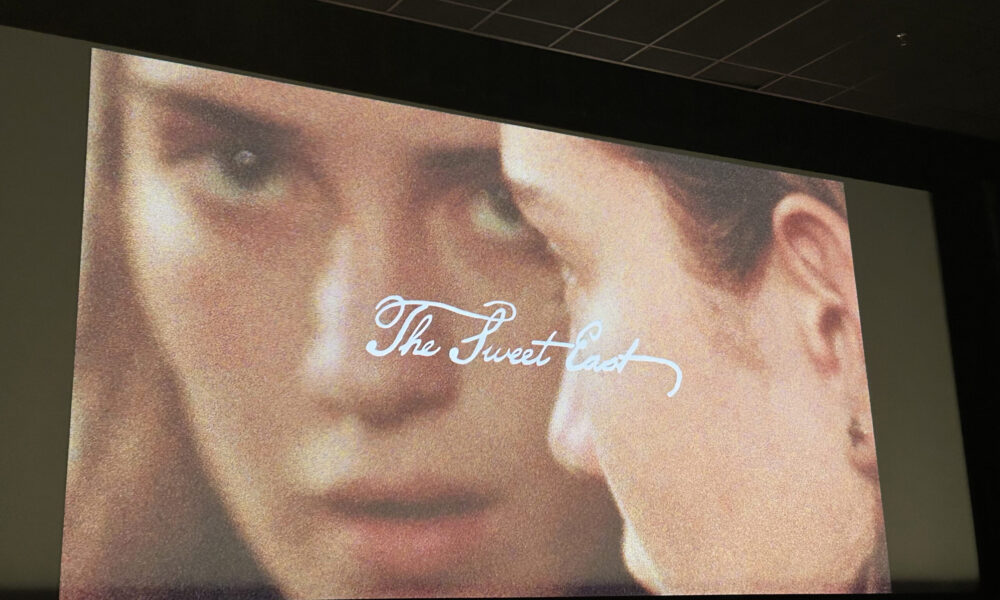
Underscored by chaos and life in flux, Sean Price Williams’ The Sweet East is a picturesque tale of a teenage girl’s voyage across the East Coast of the U.S. amid turbulent political and personal landscapes. Lillian (Talia Ryder) is a South Carolina native, separated from her classmates during a high school senior trip to the nation’s capital. She then travels to various states and eventually back home, encountering a multifarious cast of characters along the way. Meticulously curated anachronistic costumes and gorgeous cinematography give the film an inviting visual appeal. 

The film had its Montreal premiere at Cinéma du Parc on Jan. 12 with writer Nick Pinkerton in attendance, who indulged the packed theatre in a post-screening Q and A. 

The Sweet East is the directorial and screenwriting debut for both Williams and Pinkerton, who found inspiration for the project in the aftermath of Trump’s victory in 2016. 

“After the Trump election, Sean texted me: ‘Let’s make a MAGA movie.’ Not, of course, a pro-MAGA movie […] but something that seemed to be responding to the way things were at the time,” Pinkerton explained in the Q and A. This inspiration shines through in the film, both in explicit and subtle, overarching ways. 

In the second part of the movie—after parting ways with a punk activist group based in Baltimore—Lillian finds herself living with Lawrence (Simon Rex), an amateurish English professor with a penchant for Poe and neo-Nazism. Lillian’s tolerance, or rather, weathering, of him reflects a national drive to survive in the face of less-than-desirable circumstances. 

Her escape comes in the form of Molly (Ayo Edebiri) and Matthew (Jeremy O. Harris), fast-talking indie filmmakers on the hunt for a lead actress. But ‘escape’ is relative; Lillian, still a long way from home, navigates unfamiliar terrain. The instability of The Sweet East is tangible, echoed by the changing seasons, settings, and ever-rotating cast of supporting characters. This instability feels all too relatable to me and to anyone sensitive to the uncertainties of the real world—political or otherwise.

One of the film’s strongest elements is its protagonist. Demure and often inscrutable, Lillian might be considered a “blank slate”—a person not yet changed by beliefs or experience. To hear Pinkerton tell it, Lillian is anything but blank.

“We take oversharing, or the messy spilling out of personality, as being synonymous with there being a lot there. In my mind, [Lillian] is the most full person in the movie, in that she has a sense of privacy [and] boundaries. The people who are constantly disgorging themselves onto her: They’re the empty ones.” 

I have to agree. When Lillian returns home at the end of the movie, enlightened from her journey, her cousin informs her that most people believed she’d run off to shoot pornography films. Residents of her hometown can only imagine a narrow scope of the outside world. The viewer grows empathetic to Lillian’s desire for a life beyond the people and places that limit her. 

During the Q and A, Pinkerton rebuked reviews of the film that fail to talk about the sound. And so, I would be remiss if I didn’t touch on the film’s sound and music. Williams and Dean Hurley’s original score is unsettling, rendering even the most mundane of Lillian’s interactions into tense, unpredictable scenarios. The film also features an original song, “Evening Mirror,” written by Paul Grimstad and performed by lead actress Talia Ryder. The soothing, mystical tune plays over the opening credits, as Lillian sings to herself in the mirror. This musical moment, never again replicated, prepares the viewer for an uncanny experience.

Through its technical successes, The Sweet East cements itself as a well-produced package of youthful curiosity and unconventional girlhood on the Eastern Seaboard, and ultimately as strong debuts for both Sean Price Williams and Nick Pinkerton. 

The Sweet East is now playing in theatres.

Read the latest issue

Read the latest issue