


Latest News

Editorial, Opinion

Reconceptualizing free speech on an unequal campus

The debate over free speech in higher education has attracted significant attention in recent months. Elite universities, such as Harvard and the Massachusetts Institute of Technology (MIT), have received international attention as raging conservative movements take down administrations while these same administrators stumble over institutional oppression. Recent right-wing backlash against Harvard’s former President, Claudine Gay, highlights the parallel limitations of free speech at McGill. On campus, speaking out against conservative anti-intellectualism is necessary to ensure that campus activism and a better institutional future can exist.

On Jan. 2, Gay resigned from her position following a campaign against her which manifested widespread racist and sexist harassment. Billionaire Harvard alumnus Bill Ackman and conservative activist Christopher Rufo levied accusations of plagiarism against Gay as part of their harmful fight against DEI (Diversity, Equity, and Inclusion) at Harvard. Their public attacks built on national criticism of her response to on-campus antisemitism, which reached a high point in early December when Republican Representative Elise Stefanik challenged Gay and the presidents of University of Pennsylvania (UPenn) and MIT in Congress. Accusations of plagiarism against Gay and her questionable response to activism against the ongoing genocide in Palestine deserve legitimate consideration and scrutiny, but her right-wing critics’ actions betray their dangerous motivations: Weaponizing conversations around antisemitism and academic integrity against free speech. 

As a Black woman and a child of Haitian immigrants, Gay has consistently been held to unattainable standards and directly targeted with slurs and other racist, xenophobic threats. Criticisms of Gay’s DEI measures have explicitly racist undertones and emerge from far-right rhetoric which similarly deploys “woke” as a hateful stand-in for “Black.” With conservatives claiming Gay’s resignation as a “culture war” victory, the former president suffered unconscionable mistreatment with her identity making her the perfect figurehead for white supremacist attacks on academia.

Examining the claims against Gay raises broader questions about the state of academic freedom at universities. Gay’s fellow academics, including one alleged victim of her plagiarism, have defended her qualifications against uneven understandings of plagiarism’s harms. What is the effect of unveiling plagiarism among groundbreaking scholars with significant contributions to their fields? Who has the power to control conversations and include or exclude certain voices? And how do we determine what is ‘political’ amid institutional systems founded upon and sustained by colonial ideals? 

Discussions of academic freedom require recognition of how definitions of freedom of speech can be politically motivated. The asymmetrical repression of free speech depends on students’ positionalities and politics. Just as President Gay was at higher risk against conservative attacks, Harvard students experienced the same vulnerability under her administration when the university met pro-Palestine demonstrations with increased surveillance and policing, most directly affecting Black, Indigenous, and Arab students and students of colour. 

At McGill, the administration has routinely condemned pro-Palestine activism and remained silent on violent threats toward Palestinian students while claiming to remain apolitical. McGill repeatedly uses the excuse of political neutrality when confronted with activism against their white supremacy and settler colonialism. Consider the institution’s denial of unmarked graves in response to the Mohawk Mothers’ tireless fight and the administration’s refusal to take responsibility for platforming a transphobic speaker. Still, situations such as the administration’s vocal support for Ukraine demonstrate that our institutional leaders determine what is political based on what best serves their interests. 

McGill, too, is an elite institution with significant international influence, and many current McGill students will go on to be the next generation of foreign policymakers, global affairs advisors, and “Middle East Affairs” experts. Currently, three of Montreal’s Liberal Members of Parliament, Anthony Housefather, Anna Gainey, and David Lametti––all with ties to McGill––have sent a letter to Canadian universities attempting to carry out the same right-wing campaign which Rep. Stefanik levied against President Gay in the name of “opposing antisemitism.” Restricting freedom to criticize the institution will continue to produce McGill graduates who maintain the university’s historical, colonial power.

The McGill community must not participate in these active threats against academic freedom. Where higher education is supposed to teach students to think critically and speak truth to power, McGill is denying students these rights by challenging forms of research and campus activism that question the institution. Repressive academic environments are ultimately antithetical to the very possibility of free speech.


Arts & Entertainment, Film and TV

‘The Sweet East’: A tumultuous teenage odyssey

Underscored by chaos and life in flux, Sean Price Williams’ The Sweet East is a picturesque tale of a teenage girl’s voyage across the East Coast of the U.S. amid turbulent political and personal landscapes. Lillian (Talia Ryder) is a South Carolina native, separated from her classmates during a high school senior trip to the nation’s capital. She then travels to various states and eventually back home, encountering a multifarious cast of characters along the way. Meticulously curated anachronistic costumes and gorgeous cinematography give the film an inviting visual appeal. 

The film had its Montreal premiere at Cinéma du Parc on Jan. 12 with writer Nick Pinkerton in attendance, who indulged the packed theatre in a post-screening Q and A. 

The Sweet East is the directorial and screenwriting debut for both Williams and Pinkerton, who found inspiration for the project in the aftermath of Trump’s victory in 2016. 

“After the Trump election, Sean texted me: ‘Let’s make a MAGA movie.’ Not, of course, a pro-MAGA movie […] but something that seemed to be responding to the way things were at the time,” Pinkerton explained in the Q and A. This inspiration shines through in the film, both in explicit and subtle, overarching ways. 

In the second part of the movie—after parting ways with a punk activist group based in Baltimore—Lillian finds herself living with Lawrence (Simon Rex), an amateurish English professor with a penchant for Poe and neo-Nazism. Lillian’s tolerance, or rather, weathering, of him reflects a national drive to survive in the face of less-than-desirable circumstances. 

Her escape comes in the form of Molly (Ayo Edebiri) and Matthew (Jeremy O. Harris), fast-talking indie filmmakers on the hunt for a lead actress. But ‘escape’ is relative; Lillian, still a long way from home, navigates unfamiliar terrain. The instability of The Sweet East is tangible, echoed by the changing seasons, settings, and ever-rotating cast of supporting characters. This instability feels all too relatable to me and to anyone sensitive to the uncertainties of the real world—political or otherwise.

One of the film’s strongest elements is its protagonist. Demure and often inscrutable, Lillian might be considered a “blank slate”—a person not yet changed by beliefs or experience. To hear Pinkerton tell it, Lillian is anything but blank.

“We take oversharing, or the messy spilling out of personality, as being synonymous with there being a lot there. In my mind, [Lillian] is the most full person in the movie, in that she has a sense of privacy [and] boundaries. The people who are constantly disgorging themselves onto her: They’re the empty ones.” 

I have to agree. When Lillian returns home at the end of the movie, enlightened from her journey, her cousin informs her that most people believed she’d run off to shoot pornography films. Residents of her hometown can only imagine a narrow scope of the outside world. The viewer grows empathetic to Lillian’s desire for a life beyond the people and places that limit her. 

During the Q and A, Pinkerton rebuked reviews of the film that fail to talk about the sound. And so, I would be remiss if I didn’t touch on the film’s sound and music. Williams and Dean Hurley’s original score is unsettling, rendering even the most mundane of Lillian’s interactions into tense, unpredictable scenarios. The film also features an original song, “Evening Mirror,” written by Paul Grimstad and performed by lead actress Talia Ryder. The soothing, mystical tune plays over the opening credits, as Lillian sings to herself in the mirror. This musical moment, never again replicated, prepares the viewer for an uncanny experience.

Through its technical successes, The Sweet East cements itself as a well-produced package of youthful curiosity and unconventional girlhood on the Eastern Seaboard, and ultimately as strong debuts for both Sean Price Williams and Nick Pinkerton. 

The Sweet East is now playing in theatres.

Basketball, Sports

Redbirds’ basketball falls to rival Concordia in seventh loss of the season

The Redbirds (1–7) basketball faced off against the Concordia Stingers (6–2) in a disappointing loss on Jan. 13 at McGill’s Love Competition Hall. The game remained largely evenly matched, with the Redbirds and Stingers exchanging shots to keep the point differential within a couple of baskets for much of the game. Despite an impressive performance from first years Saransh Padhy, who put up 20 points, and Dilane Pele, who had a career-best 12-point game, the Stingers prevailed and finished the game with a 71-61 win.

Although the Stingers won tipoff at the start of the first quarter, McGill had an exciting opening with the first point of the game going to Padhy. Despite a lively start, with guards Pele and Cameron Elliott both putting up impressive threes, the Stingers held out to end the first quarter up 18-14. 

McGill came back with a bang in the second quarter, with point guard Sean Herscovitch putting up the first point of the quarter. Subsequent points from Padhy, Pele, and Joshua Soifer––a recent graduate from the University of Oxford––tied up the game. First-year guard Benjamin Onyenwosa sunk a heavily contested layup followed by a free throw to give McGill a 27-24 lead. Spurred on by the lead, the Redbirds began to step up their defence, with both teams having trouble making shots. Pele made two additional free throws to bring McGill’s lead up to 29-24. However the Stingers were able to tie it up to end the half 29-29.

Coming into the second half the Redbirds had a rough start, with the Stingers recording the first few shots on the board and sinking a series of threes. Following the first point of the half from Padhy, the Redbirds called a timeout to regroup. Entering the game after the timeout, McGill was reenergized, with Padhy, Pele, and Soifer all putting up impressive shots to bring McGill back in the lead at 41-39. The Redbirds’ defence also stepped up, with Herscovitch and first-year guard Rahim Baakoe forcing a series of turnovers from the Stingers. 

In a particularly memorable moment, Baakoe lost a shoe in a scuffle under the Stinger’s basket and—without enough time to put it back on––ran back down the court to play defence in his socks. Both teams appeared to be getting heated by the end of the quarter, which left McGill down 43-47.

The last quarter started with two free throws from the Stingers, who managed to keep their energy up to close out the game. The Redbirds put up a valiant effort with Herscovitch executing an impressive fake and several players putting up points—including first-year point guard Matt Phaneuf, whose brother Alec Phaneuf is a third-year guard for the Stingers. Despite their best efforts, the Stingers continued to outscore the Redbirds to end the game up 71-61.

Despite the undesirable outcome of the game, Herscovitch maintained that the Redbirds demonstrated their tenacity and ability to compete.  

 “[We’ve] shown that we can compete with every team in the league,” Hersovitch told The Tribune//.  “We just need to take it to the next step and grind out a win next time.”

Moving forward, Associate Coach Kris Joseph explained that the Redbirds are aiming to reflect on the progress they have made to this point in the season. 

“‘Just continuing to work hard every day and practice, and keep working on the small details,” Joseph said.  “When you win or lose by this margin of points […] it comes down to the small details [….] The details matter in everything that we do.”

The Redbirds will play next against the Bishop’s University Gaiters (4–5) on Jan. 18. 

Moment of the Game

Onyenwosa drilled a tough layup in the second quarter to an eruption of applause from the crowd, bringing McGill into the lead and spurring a boost in energy from the Redbirds.

Quotable

“Our younger guys really stepped up, especially Saransh, and so did our bigs [….] We’re still a new team so we’ve got to play together more to build that chemistry.”

– First-year guard Benjamin Onyenwosa on what went well 

Stat Corner
This disappointing result marks the fourth loss in a row against the Stingers, contributing to McGill’s abysmal 19–30 at-home record against Concordia since 2003.

McGill, News, SSMU

SSMU revokes permission for SPHR to use McGill’s name

On Dec. 18 the Students’ Society of McGill University (SSMU) announced that it has revoked Solidarity for Palestinian Human Rights (SPHR) McGill’s right to use the McGill name. The decision comes after the Office of the Deputy Provost, Fabrice Labeau, delivered a notice to SSMU on Nov. 6 which stated that SPHR’s use of the university name violates SSMU’s Memorandum of Agreement (MoA) with McGill University. As per section 12.2 of the MoA, a 30-day working period took place between Nov. 17 and Dec. 17, during which SSMU and SPHR met but were unable to resolve the alleged violation. Although they have been instructed to remove the university name, SPHR remains affiliated with SSMU. 

The first claim of an MoA violation due to SPHR’s use of the McGill name came in an Oct. 10 communication from Provost and Vice-Principal Christopher Manfredi condemning SPHR’s since-removed social media post following the Oct. 7 Hamas attack on Israel. In an email to The Tribune, McGill media relations officer Frédérique Mazerolle explained that in accordance with section 7.6 of the MoA, SPHR was able to use the university name in their official club name, McGill Students for Solidarity for Palestinian Human Rights. Mazerolle wrote that McGill believes SPHR’s use of the McGill name on social media and websites violates this agreement, also highlighting that the content of the group’s social media post opposed McGill’s values.

“In contrast with the official, authorized name of the club, [the name] ‘SPHR McGill’ [on social media] wrongly implies a direct affiliation with the University,” Mazerolle wrote. “This implied affiliation is troubling, especially given the social media post, which has since been deleted, that described the Hamas attack of October 7 and hostage-taking as ‘heroic.’”

In an interview with The Tribune, a representative from SPHR who wished to remain anonymous explained that SSMU’s decision to revoke their permission to use the university name did not come as a surprise. They also claimed the removal of the name was a distraction from the university’s complicity in the ongoing genocide in Gaza. 

“We were unfazed,” the representative said. “Students who speak up for Palestine will receive repression [….] Our administration has taken a very clear stance, […] they refuse to condemn the ongoing genocide as we demanded. We also consider this as a way for them to evade accountability, because the student body is now very aware of just how complicit our university is in the occupation of Palestine and the ongoing genocide on Gaza.”

In an email to The Tribune, SSMU president Alexandre Ashkir emphasized that the demand for the university name to be removed originated from McGill administration rather than SSMU, and reaffirmed SSMU’s commitment to reinstating SPHR’s use of the name. 

“[The removal of the McGill name] has no bearing on SSMUʼs commitment to supporting our Palestinian members or the student groups that represent Palestinian people,” Ashkir wrote. “It is disappointing that SPHR is no longer able to use the McGill name as we recognize the importance of student groups being able to place themselves and their representation on this campus, however, we will continue to advocate for the re-establishment of SPHRʼs use of the name with the university.”

According to the SPHR representative, SSMU’s decision constitutes a larger pattern of actions in which the students’ union has failed to represent the student body and show solidarity for Palestine. The representative also criticized SSMU for delaying the ratification of the Policy against Genocide in Palestine.

“We just see this trend of them resorting to these bureaucratic regulations and procedures as a way to repress us,” the representative said. “The student body has clearly spoken [as] 79 per cent voted in favour of the policy [Against Genocide in Palestine], and thousands of students are still showing up to our rallies and to our events […] in mass mobilization. So it’s just another way to distract [and] to try and undermine this collective will.”

Baseball, Sports

Trib Explains: Shohei Ohtani’s contract, net present value, and MLB’s competitive balance tax

On Dec. 9, the day after a social media frenzy where Toronto Blue Jays fans tracked a Shark Tank investor’s private jet from Anaheim to Toronto, thinking that prized free-agent Shohei Ohtani was on his way to sign with the Jays, the reigning AL MVP announced his signing with the Los Angeles Dodgers through an Instagram post. What a time to be alive. The Dodgers signed the two-way star (Ohtani, not the Shark Tank guy) to a 10-year deal worth $700 million—with the majority being deferred to the end of the contract. Ohtani will be paid $2 million annually for the next 10 years, for a total of $20 million until 2033, and $68 million annually for 10 years starting in 2034, for a total of $680 million until 2043. All told, the Dodgers will pay Ohtani $700 million over the next two decades. What’s particularly interesting about this deal is its implications for the Competitive Balance Tax (CBT).

Unlike some other professional sports leagues, Major League Baseball (MLB) does not have a hard salary cap. Instead, teams are forced to pay a tax, colloquially known as the luxury tax or the “Steve Cohen tax,” named after the billionaire New York Mets owner who paid a record CBT of $101 million last season only to miss the playoffs. The 2022 Collective Bargaining Agreement outlines payroll thresholds for CBT purposes. For reference, the 2024 threshold is $237 million. It will increase to $241 million in 2025 and $244 million in 2026. Teams whose payrolls exceed CBT thresholds receive a stern look of disapproval from Rob Manfred and are forced to pay a tax bill on all overages.  

The proceeds drawn from the luxury tax are then reallocated to fund MLB Player Benefit Plan Agreements, individual player retirement accounts, and the Commissioner’s Discretionary Fund which is reallocated to clubs––at the commissioner’s discretion. This reallocation is based on factors such as a club’s non-media revenue growth rate, their success in reducing their share of revenue sharing proceeds, and their long and short term efforts to grow their non-media local revenue. Essentially, small market teams deemed by the commissioner to have made an honest effort to sell more hot dogs and foam fingers receive a pat on the back, an “attaboy,” and a share of Steve Cohen’s money.

Back to the Ohtani signing: Officially, the deal is for $700 million over 10 years, which results in an average annual value (AAV) of $70 million. However, the Dodgers will be paying Ohtani $20 million over the next 10 years, meaning the remaining $680 million is deferred money. The contract’s structure has allowed the Dodgers to sign other big ticket free agents such as pitchers Tyler Glasnow and Yoshinobu Yamamoto. After all, they will be paying one of the game’s best players $2 million for the next 10 years, freeing up some cash on the short-term to make some other moves. 

For CBT purposes, MLB employs a “net-present value” calculation for deferred contracts. Shohei will earn $700 million in American legal tender over the course of the contract, but the value of money decreases over time. There is a safe assumption that $68 million today is worth more than $68 million 10 years from now. MLB and the MLB Players Association have agreed to apply a discount rate equivalent to the federal mid-term rate on deferred contracts, essentially “converting” future money to its current value. This means that the $20 million Ohtani will earn until 2033 will not be discounted for CBT purposes. The discount rate for this deal is 4.43 per cent, and it is estimated that the net present value of the contract is $460 million, not $680 million, the former of which falls closer in line with what some industry insiders were predicting to be the value of Ohtani’s contract.

There will be high expectations for the Dodgers this year. With the team failing to win a postseason series in each of the last two seasons, will they have more success this year? Baseball fans are eagerly waiting to find out. Some hope the Dodgers will make a deep postseason run. Many others hope to see them fail. All are itching to hear those two words, marking the beginning of spring: “Play ball!”

Commentary, Opinion

Post-secondary education is a right that must be asserted

Is McGill already not expensive enough? For many, the Coalition Avenir Québec (CAQ)’s announcement of a tuition hike and the requirement of French language proficiency is a definitive sign of the increasing precarity of higher education. Potential out-of-province students will simply be priced out of attending university in Quebec. This policy change spurs an important discussion of whether students’ educational rights are properly protected. Canadian leaders must put mechanisms in place to prevent further barriers to higher education, including an expansion of positive rights in the Charter to ensure the protection of educational rights. 

Canada has two types of rights preserved in its laws—both provincially and federally—negative and positive rights. Negative rights limit what other people or entities can do to an individual. Freedom of speech, for instance, is a negative right. In Canada, most rights fall under this category. Conversely, positive rights are those that provide entitlements to a good, service, or treatment. For Canadians, the most prominent positive right is the public provision of healthcare. Generally, positive rights compel governments to provide for their citizens and, accordingly, the state disregards them as being too onerous. The Canadian Charter does not include any positive rights, meaning it unfortunately omits education, leaving a glaring omission in the most important and protected piece of Canadian law. 

Post-secondary education is one of the most determining factors of social mobility, and requires greater action for its constitutional protection. The inclusion of positive rights in the charter would drastically improve access to education. Currently, the Universal Declaration of Human Rights states that higher education should be equally accessible to all on the basis of merit. Despite Canada being a signatory to several international instruments affirming the right to education and thereby agreeing to uphold this right, equal access is not a reality. Instead, the dawn of the neoliberal age in Canada—beginning with the interest rate shock of the 1980s and spurred on by Brian Mulroney’s emphasis on the importance of free-trade—has led to slashed funding for all types of education. Further, because education is a matter of provincial jurisdiction, there are varying and significant differences in tuition costs and access to financial aid across the country.  

The recent CAQ proposal is a targeted attempt to reallocate funding from English universities to French universities. These measures shift the burden instead of adequately funding the entire public university system. As a result, funding tertiary education has become the responsibility of students and their families. Therefore, whether one can access a university education is determined by access to money. Creating economic barriers to higher education inherently stratifies opportunity, making education a pervasive symbol of increasing class inequality. 

Ideally making post-secondary education a positive right in the charter would be easy, however, the practicality of doing so is slightly more complex as the government would have to ensure that a university education is available to every capable citizen. Effectively, this would mean that the burden of tuition costs would be shifted away from students and onto the provincial government. Hypothetically, the law could even be further interpreted to provide that living expenses would be covered by the government as well. 

The positive right to higher education would allow for both universities and their students to reach their full potential. Through the removal of financial barriers, there would be a greater emphasis placed on merit, as opposed to self-selection, in university admissions. Positive recognition of educational rights would also free secondary institutions from restraints imposed on them in their current state as profit-seekers. With monetary constraints no longer posing a barrier, student diversity would drastically increase. Furthermore, expanding positive rights in education would also open the door for the implementation of other federal rights. This would have broader effects which could even help ameliorate the housing crisis as governments would have an obligation to build non-market housing, instead of leaving housing to the behest of market forces. In the age of neoliberalism, students need to have greater protection of their rights and the best way to do that is with a little positivity.

McGill, Montreal, News

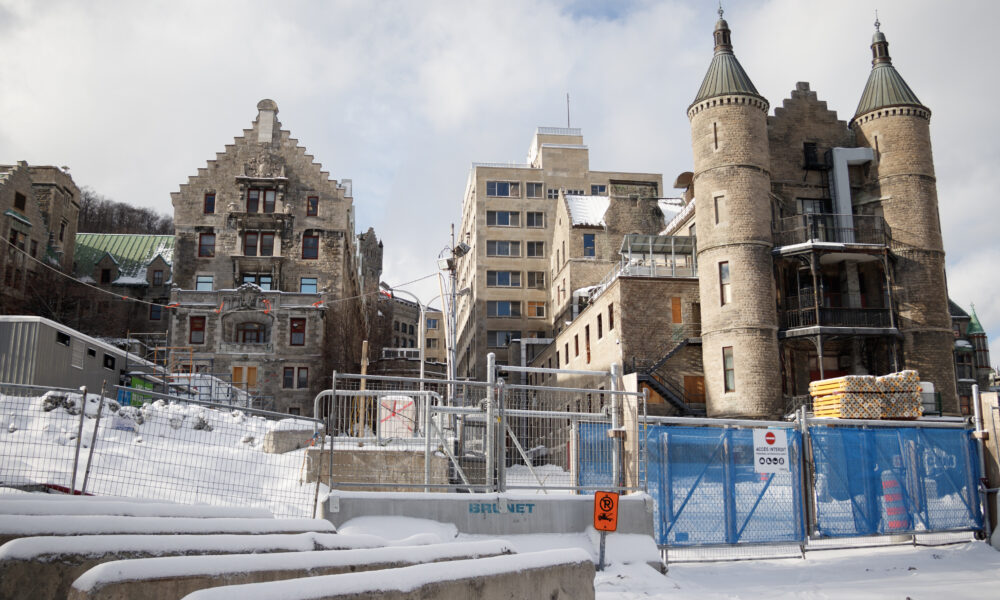
McGill appeals reinstatement of archaeological panel overseeing work on New Vic site

Provost and Executive Vice-President (Academic) Christopher Manfredi emailed all students and staff on Dec. 20, providing an update on McGill’s New Vic Project and a “clarification of salient facts.” This came as the Kanien’kehá:ka Kahnistensera’s (Mohawk Mothers) ongoing investigation into the New Vic Project site, where they fear that there may be unmarked graves, continues. The Mothers returned to court on Oct. 27 to refute what they see as McGill and the SQI’s premature disbandment of the court-appointed archaeological panel, and Justice Gregory Moore ruled to reinstate the archaeological panel on Nov. 20. McGill and the SQI have appealed this decision, claiming Justice Moore misinterpreted the settlement agreement, with a planned appeal hearing on Jan. 16. 

Manfredi’s email disputed several perceived misconceptions, including the disbandment of the archaeological panel, Historic Human Remains Detection Dogs (HHRDD) detecting human remains on the site, the mishandling of evidence, and the use of student fees to fund McGill’s legal proceedings. 

In a written statement to The Tribune, court-appointed Indigenous cultural monitor Karonhia’nó:ron explained that his role on the site includes reminding the defendants—including McGill, the Société québécoise des infrastructures (SQI), the Royal Victoria Hospital (RVH), the City of Montreal, and the Attorney General of Canada—that the investigation should be Indigenous-led, that proper Indigenous protocol must be followed, and that the archaeologists must abide by the settlement agreement and the recommendations of the expert panel. Karonhia’nó:ron expressed that he found Manfredi’s email to be “disgusting and infuriating.”

“The statement that no evidence of human remains has been discovered since the investigation began in June 2023 is despicable and wholeheartedly untrue.” Karonhia’nó:ron wrote. “HHRDD have flagged two separate locations as potentially containing human remains, ground-penetrating radar surveys have detected dozens of anomalies, [and] hundreds of [animal and unknown] bone fragments have been found on-site.” 

Karonhia’nó:ron also addressed McGill’s claim that it did not fire the expert archaeological panel, explaining that after the panel submitted its initial recommendations of July 17, 2023, as mandated by articles 11 and 13 of the settlement agreement, one of the panel members resigned. Shortly after, on Aug. 3, McGill and the SQI disbanded the panel. 

McGill media relations officer Frédérique Mazerolle explained in a written statement to The Tribune that the panel was dissolved in August as the panel’s mandate—as stipulated by the settlement agreement and contracts provided to panel members—had concluded.

“Its mandate was ‘to assess and identify the appropriate archaeological techniques to be used on different areas of the site to detect whether there are unmarked graves,’” Mazerolle wrote. “Its mandate having been completed, it dissolved, with the understanding that should some unexpected discovery take place on the site, the panel would be consulted.” 

Mazerolle additionally expanded on McGill’s decision to appeal Justice Moore’s Nov. 20 decision to reinstate the archaeological panel. 

“That ruling addressed the circumstances under which archaeological work on the site of the RVH is to be carried out,” Mazerolle wrote. “Our decision to appeal was not taken lightly and is based on our view that the judgment made legal and palpable errors. Specifically, we believe the Settlement Agreement was misinterpreted in the judgment.” 

Karonhia’nó:ron found the appeal to be “repulsive,” expressing that he believes taking the case back to court would be a waste of time and resources. 

Manfredi’s email additionally stated that the agreement does not stipulate that the investigation should be Indigenous-led. Phillippe Blouin—an anthropologist and associate of the Mothers—responded to this claim in an interview with The Tribune, expressing that he found it to be improper to pursue an investigation of this sort without Indigenous leadership. 

“The government and university really want to take that position that the searches for missing Indigenous and murdered Indigenous children should not be led by the Indigenous community?” Blouin asked. “They want the potential perpetrators of atrocities […] to lead the research. It just doesn’t seem very consistent with international law.” 

A previous version of this article stated that Karonhia’nó:ron said that “hundreds of [animal and human] bones” were found on the site. In fact, no confirmed human bones have been found on the site. Animal bones and some bones of unknown origin, which archaeologists believe are animal, have been found. The Tribune regrets this error.

A previous version of this article stated that Mazerolle said that McGill and SQI dissolved the panel as they believed its mandate had ended. In fact, the panel was dissolved when it had met the terms stipulated in its members’ contracts, which were written by McGill. The Tribune regrets this error.

Montreal, News, Private

Montrealers pay tribute to the over 100 journalists killed by Israeli strikes on Gaza

On Jan. 11, about two hundred people gathered in the streets of Old Port to pay tribute to journalists who died in Gaza in a vigil organized by the Palestinian Youth Movement (PYM) Montreal. According to Al Jazeera on Dec. 23, authorities in Gaza have stated that at least 100 journalists have been killed by Israeli strikes on Gaza since Oct. 7.

The vigil started at 6:30 p.m. with a speech from Haya, a representative from PYM. Haya welcomed the crowd with a few words recognizing the importance of journalists reporting in Gaza, while simultaneously condemning several major Canadian media outlets for their coverage of the conflict.

“Palestinian journalists offer a window into a world that is otherwise isolated from us, both metaphorically and literally [….] While Palestinian journalists have been risking their lives every single day to showcase [to] the world the brutality of Israel’s genocidal campaign, Canadian news networks have been shamefully complicit,” Haya said. “The language that Canadian media uses grossly minimizes the war crimes committed by Israel, which in the end, further dehumanizes Palestinians.”

She finished her speech by encouraging the crowd to continue fighting for Palestine, and to take inspiration from the killed journalists to “continue to carry the torch in their honour.”

Ellen Gabriel, a Mohawk activist from the Kanien:keha’ka nation, then took the floor to express support of Indigenous communities in Canada for the Palestinian cause.

“I think of the parallels of what has been done to Indigenous peoples in Canada and the lies that have been said about us [….] I say to Justin Trudeau and to Mark Miller […], Canada has a long history of genocide against Indigenous peoples. It’s time for Canada to stop being complicit in genocide, and actually be on the right side, and actually stop a genocide,” Gabriel said.

Gabriel’s speech was followed by a moment of silence to honour the journalists killed in Gaza, while their names, stories, and pictures scrolled on the projection. 

“This is the only time we should be silent when it comes to Gaza,” Gabriel concluded.

A representative from PYM then encouraged the crowd to repeat the names of journalists who were killed in Gaza, such as Hamza Dahdouh, son of Al Jazeera’s journalist Wael Dahdouh.

Among the speakers, Inès Pahaut, a journalism student at Université de Montréal, shared her concerns about the media coverage of the Palestinian cause with The Tribune.

“I’ve been extremely disappointed by my classes, my classmates, my teachers because the way they were covering what’s happening in Gaza was far away from what I was actually imagining in journalism,” Pahaut said to The Tribune. “For weeks, I kept having arguments with my teachers, because I was like, why aren’t you talking about it? Or why are you using this narrative? Why are you even encouraging this choice of vocabulary? Because they don’t see their biases. And I tried to explain it, so many times. And it was super frustrating.”

In a conversation with The Tribune, Alex*, a McGill student, drew a parallel between media coverage and McGill’s communications with the student body.

“Both as just regular people, but especially as students at McGill, the rhetoric that has been pumped out in the [administration’s] emails that are sent out to the campus, there’s been a real recklessness with how the emails are written,” Alex said.

As the vigil reached its end after around two hours, PYM offered warm drinks to participants who braved the cold and invited attendees to leave a prayer or a message on poster boards. The organizers concluded with some final words encouraging everyone to keep mobilizing.

“As we prepare to mark the 100th day of the relentless aggression on Gaza on Sunday [Jan. 14], let us carry this moment with us. We will mourn and we will shed tears for people, but to honour them is to rise and to keep fighting for them,” Sarah Shamy, an organizer with PYM, said. 

*Alex’s name has been changed to preserve their confidentiality.

McGill, News

McGill divests direct holdings from Carbon Underground 200 fossil fuel companies

On Dec. 14, the McGill Board of Governors (BoG) voted to divest from all direct holdings in Carbon Underground (CU) 200 fossil fuel companies, which currently constitute 0.5 per cent of total McGill Investment Pool (MIP) holdings as of December 2022. CU 200 companies include the world’s top 200 coal, oil, and gas reserve owners, ranked by the carbon emissions content of their reported reserves. Divestment will be implemented in 2024, and completed in 2025. This comes after 12 years of student and faculty mobilization, primarily through Divest McGill

Zahur Ashrafuzzaman, BA ’23, a former member of Divest McGill, explained the work that the student group has done in the past decade to advocate for divestment in an interview with The Tribune. They shared that since its founding in 2012, the group has organized highly publicized events at the university, submitted extensively researched briefs to the BoG, and circulated petitions.

“It’s been a long time coming [….] It further validates the importance of all the work everyone has been doing over the past decade. It’s beautiful to see,” Ashrafuzzaman said. “It is a community effort from everyone involved, for so many years, so many graduation cycles.” 

Another member of Divest McGill, Lola Milder, U3 Science, shared that the divestment came after the group’s September 2023 presentation to the BoG, where BoG members committed to voting on divestment by December 2023. While Milder shared that she was excited by the decision, she expressed a sense of ambivalence surrounding whether McGill would follow through on this commitment. 

“I think we’ve seen so many other universities across Canada commit to divestment, but then fall short of their commitments, like Concordia, which had to renew their commitment last year because they were basically sitting idle on their commitment to divest,” Milder said. 

Divestment was one of eight commitments approved by the BoG, with another initiative consisting of allocating ten per cent of the MIP to sustainable investment strategies as per United Nations Sustainable Development Goals. McGill media relations officer Frédérique Mazerolle described this action as the most important out of all of McGill’s commitments. 

“We are moving from investing five5 per cent of our portfolio in sustainable investments to 10 per cent. These are investments that advance the United Nations Sustainable Development Goals, which address not only climate change, but such goals as alleviating poverty and advancing sustainability—we are furthering our steps in tackling global challenges,” Mazerolle wrote.

Darin Barney, a professor in the Department of Art History and Communication Studies, was a member of the BoG from 2017-2019 and resigned from his position as governor in 2019 in protest of the BoG’s handling of Divest McGill’s petition to the Board to divest from its endowment in fossil-fuel companies. While Barney celebrated the BoG’s decision to divest, he highlighted the need for McGill to divest from the remaining 0.4 per cent of indirect holdings in fossil fuel companies.

“Beyond that, McGill should continue and intensify its efforts to decarbonize the operations of the University in all it dimensions, including by providing enhanced material support and recognition for low-carbon scholarly practices in research, publication, teaching and administration,” Barney wrote in an email to The Tribune

Greg Mikkelson, an ex-professor at McGill who resigned over the university’s lack of divestment in 2020, called for McGill to lobby their peers at other universities to likewise cut their ties with oil and gas companies. He also asserted that the university needs a stronger democratic representation of students and staff on its BoG. 

“The fact that McGill’s corporate-dominated board took so long to go along with divestment—despite overwhelming support on campus from students, faculty, and staff—cries out for a democratic overhaul of that board,” Mikkelson said in a written statement to The Tribune

Ashrafuzzaman also expressed hope that the fossil-fuel divestment will inspire McGill to divest from other socially unjust endowments, including companies that support the Israeli state. 

“What comes to mind is investments in companies that support the Israeli occupation and apartheid in Palestine. McGill is invested heavily into companies like Lockheed Martin […] and various other companies that are heavily implicated in the ongoing genocide,” Ashrafuzzaman said. 

Divest McGill plans to bring together students, staff, and alumni to celebrate the divestment. A date has not yet been decided.

Commentary, Opinion

Quebec needs to rethink its French tuition agreement

Since 2018, an agreement between the governments of France, Belgium, and Quebec has exempted francophone students from France and Belgium from the skyrocketing international tuition fee supplement. Under this collaborative initiative allowing Quebec to maintain the Francophonie, these undergraduate students are subject to the Canadian rate of tuition, while graduate students follow the Quebec rate of tuition. McGill’s French and Belgian student body constitutes a noteworthy 18.6 per cent of the university’s international student population. 

This arrangement exclusively benefits students holding citizenship from these two countries, despite French being acknowledged as an official language in 28 nations worldwide, most of which are on the African continent. To genuinely advance the Quebec government’s supposed mission of increasing francophones in the province, including students from non-European French-speaking countries is a necessity.

In 2022, the Canadian government denied study permits to students from Algeria, the Democratic Republic of the Congo (DRC), Togo, Senegal and Cameroon at a rate of 80 per cent, while applications from France boasted a nearly automatic acceptance rate with 93 per cent of students being successful. Quebec, the sole province in Canada where French is the primary language, is the region with the most limited prospects for obtaining permits for these students. During the 2022-23 year, the McGill International Student Body only had a combined 14 students from the DRC, Madagascar, and Cameroon, meanwhile these three countries have some of the highest French-speaking populations in the African continent. The DRC itself is the second most French-speaking country in the world, with an estimated 37 million people, followed by dozens of other African countries who struggled and resisted under French and Belgian colonialism. The disparity in approval rates between European and African French-speaking applicants undermines the fairness and inclusivity of the permit application process. In doing so, it hinders the diversity and richness that international students from various linguistic and cultural backgrounds bring to Quebec’s academic landscape.

This lack of action toward welcoming French-speaking students from non-European nations is unsurprising given the Quebec government’s oppositional stance toward multiculturalism. Premier François Legault has stated that there is only one culture, calling for a focus on “interculturalism” where newcomers are expected to integrate into the Quebec culture. This idea does not hold up as culture blends different influences, and Quebec’s culture cannot stand alone. Preserving one’s culture should not deny the integration of others, as this only deepens divisions and increases marginalization. By expanding programs that facilitate the entry of French speakers from non-European countries, Quebec society and culture has the opportunity to evolve and flourish, and for the language to thrive. 

The Quebec government consistently claims that the province is not racist and that it is welcoming to immigrants. But the ongoing mistreatment of immigrants, particularly those from African nations, disproves that. The failure to extend reduced tuition benefits to these students perpetuates a neocolonial system, as it fails to acknowledge the historical context and the impact of colonialism on language acquisition. Francophone African students’ language proficiency is a result of a shared, colonial history. Denying them the same privilege as French and Belgian students perpetuates an inequitable system. Ensuring that all French-speaking students, regardless of their geography and ethnicity, receive equal treatment is fair and inclusive and promotes a more just immigration and educational environment for all.

Quebec’s universities should be advocating for the government to expand the agreement to offer the same educational opportunities to students coming from non-European nations and they should advocate for better treatment of these students upon their arrival. This will both help the Quebec government in increasing French in the province––a goal embodied by the recent tuition hikes at anglophone universities––and it will help diversify universities’ student bodies. The current discrepancy underscores the need for a more inclusive and equitable approach in educational policies to address systemic racism. Recognizing and rectifying such disparities is essential to foster a truly inclusive educational environment that values and respects the diverse linguistic and cultural identities present within the student body.

Read the latest issue

Read the latest issue