Latest News

All Things Academic, Student Life

Befriending the light at the end of the tunnel

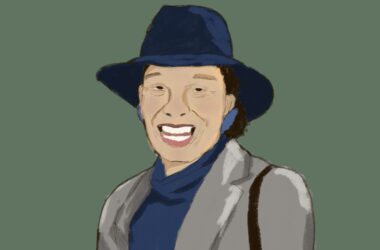
Last semester, I found myself entering my final year at McGill with a very foreign feeling. Many of my friends in my program had graduated the previous spring, and the unfamiliarity of the new faces around campus felt confusing and slightly distressing. Returning to school only to feel like a stranger can be a desolate sentiment. 

Senioritis is a silent affliction that creeps up on you when you least expect it. You might confuse it for early-semester jitters, maybe because you’re taking upper-level classes, starting a thesis, or applying to grad school, and all of this is new to you. Here is some friendly advice on how to say no to the final-year blehs

The strangers around campus are your friends

I used to love studying in the Geography Information Centre (GIC). With its carpeted floors and laid-back atmosphere, I could always walk in and find at least a handful of my friends. But times changed, people left, new students arrived. 

It’s strange to walk into a previously familiar space only to feel like an outsider. But you were once a first year too, and you might remember befriending people who were about to graduate. It can feel odd being in their shoes now. 

Joining clubs is a great two-for-one in your final year. It’s an opportunity to meet new people and make friends, but can also fill some of your spare time, especially if you’re a part-time student completing your few remaining credits before graduation. This is why I joined The Tribune. Trying out different activities can also be a way to find a new purpose to your degree. After three years, you might find school to be bleak, and academic burnout is a real thing. Finding joy in your spare time, even if it’s just once a week for a few hours, can brighten the mental spaces that senioritis shades over. 

Take the courses you want

This is your last year at McGill, and by now half of it has gone by. At this point, feeling apathetic toward your studies can take the pleasure out of school. If you have a flexible program with a broad list of complementary courses, or if you just have a lot of electives left, now is the time to make the most of it. The beauty of school lies in its ability to allow you explore your deepest interests, or perhaps even discover new ones. 

Take that class on your niche interest, or the one you’ve been eyeing since your first year. Enjoy learning for the sake of learning, instead of simply fulfilling your credit requirement and completing your degree. It’s your last semester, why not make the most of it? 

You don’t have to apply to grad school 

This is especially necessary to hear if you have friends who finished their degrees and immediately went on to pursue the graduate programs of their dreams. Comparing yourself to them, even unconsciously, might make you feel like you’re behind—I know that I felt this way. Applying to grad school well in advance might be a good idea if you know exactly what you want with conviction in your heart, but putting together applications can be stressful enough without the additional weight of the future’s uncertainty. Grad schools aren’t going anywhere, and the program you’ve been considering with vague interest out of a need to fill the void of an academically free life will still be there in a year. 

Gap years are a refreshing opportunity to figure yourself out. Maybe you want to flesh out your interests, or maybe you just want to take a much-deserved break from academia. Both options are valid! This is your year; do whatever your heart desires. Find a job in your field of study, or try out something entirely different. Travel. The world is your oyster, and it’s time to break it open and find your pearl.

McGill, News

Dozens of students rally, call on McGill to divest from companies supporting the Israeli regime

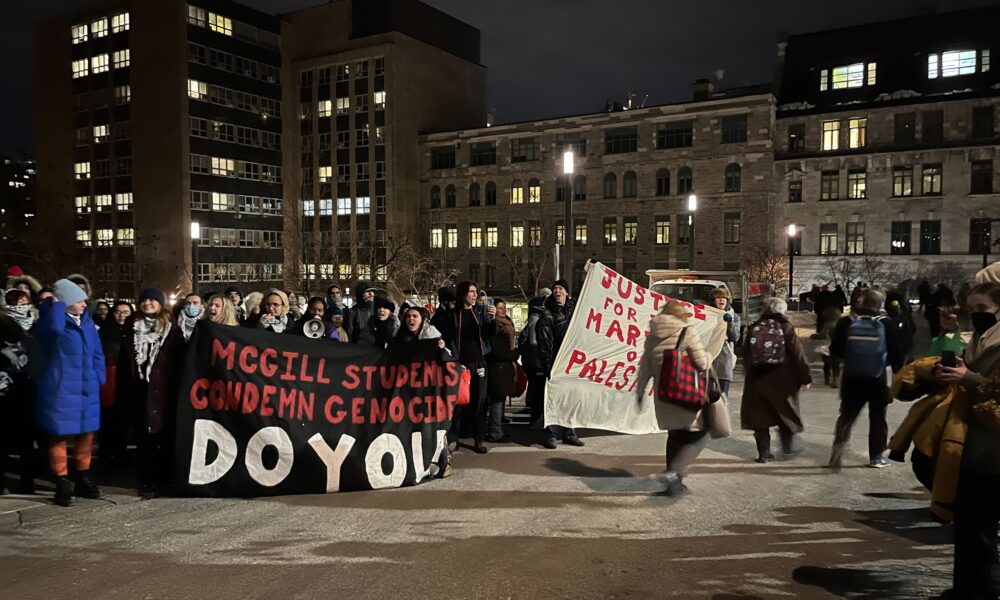
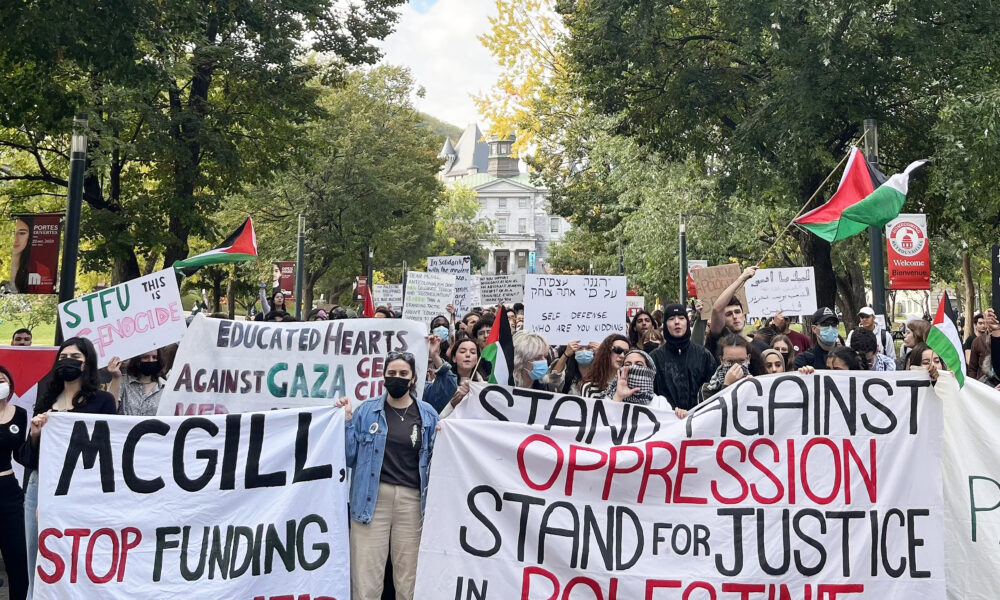
On Dec. 14, dozens of students gathered in front of the Arts Building and demanded that the university end its investments in companies supporting or operating in the state of Israel, amounting to around 20 million dollars in total. The Divestment From Genocide rally—organized by Solidarity for Palestinian Human Rights (SPHR) McGill*, Independent Jewish Voices (IJV) McGill, and the Association of Graduate Students Employed at McGill (AGSEM)—took place at the same time as the university’s second Board of Governors (BoG) meeting of the semester. 

SPHR McGill has found that, as of June 30, 2023, the university invests in 12 companies that are tied to the monetary or arms funding of the Israeli state. Some of these investments include $1,608,930 in Thales, which manufactures weapons and collaborates with Israeli defense companies, and $1,507,748 in Safran, which provides military technology to the Israeli occupation in the West Bank. 

Organizers started assembling at 4 p.m., chanting “Free Palestine” to warm up a crowd of around sixty protesters. The number of students grew closer to a hundred as the rally moved in front of the James Administration Building, where the BoG was meeting to discuss, among other matters, the university’s investments for the next fiscal quarter. Kareem, a representative from SPHR McGill addressed students, informing them of the BoG’s plans to end the university’s investment in fossil fuels, and claiming this is insufficient.

“You should be angry, because McGill tomorrow will send an email, assuming the divestment vote passes, touting this accomplishment and they will use it to advertise itself as an institution motivated to bring about positive social change,” Kareem said. “We deny this because our university has offered not one word of acknowledgement for the [19,453] innocent Palestinians who have lost their lives.” 

Alice Maitlis, U1 Arts and a representative of IJV McGill, then addressed the crowd and asserted the Jewish community’s support for Palestine. 

“Since October 7, my Jewish peers and I have seen the McGill administration constantly weaponize our identities to justify their support of the genocidal state of Israel,” Maitlis said. “We are here to say not in our name [….] We condemn the blatant attempts to conflate anti-Zionism and antisemitism. We know that to stand against apartheid and genocide is not antisemitic.”

The speech was followed by the crowd chanting “McGill, McGill, you can’t hide, we charge you with genocide.”

In an interview with The Tribune, a representative of the McGill Lebanese Students Association who wished to remain anonymous expressed their solidarity with the Palestinian cause.  

“All of our freedoms are interlinked at the end, so by fighting for the Palestinians, [students] are able to dismantle the system that is oppressing all of the smaller groups and minorities,” they said.  “I hope to see more and more people protesting and speaking up, advocating for divestment, for freedom, and for liberation because it is crucial for everyone to know about what is happening in order for Palestine to be free, and in order for them to be free.”

Protesters’ “Divest now” chants grew louder at around 5:30 p.m., as members of the BoG walked out of the James Administration building, greeted by cries of “Shame.” Members of the administration walked away from the rally without responding. 

In a written statement to The Tribune,  McGill Media Relations Officer Frédérique Mazerolle explained that they do not invest in individual stocks or companies, but rather go through external fund managers who select investment for mandates in segregated accounts and in pooled funds, “the composition of which change continuously.” 

“In July 2022, McGill became a signatory of the United Nations-supported Principles for Responsible Investment (UNPRI), a leading global network for investors who are committed to integrating [environmental, social and governance] (ESG) considerations into their investment practices and ownership policies,” Mazerolle wrote. “As a result, 99 per cent of the [McGill Investment Pool] (MIP) assets are managed by those who follow an ESG Policy or are signatories of the UNPRI.”*At the time of the event, discussion between the McGill administration and SPHR concerning the removal of “McGill” from the group’s name had not yet concluded.

Features

We who ran The McGill Daily

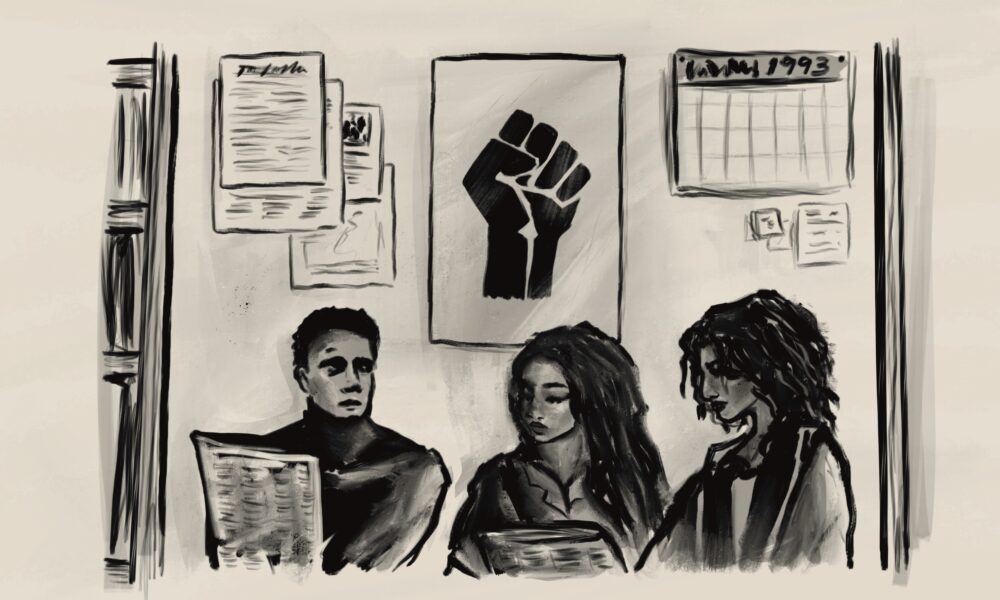
In the summer of 1993, Bajan student Melanie Newton was on break, keen to take up a new post as Culture Editor at //The McGill Daily//. Newton, who studied German and British imperial history after switching majors from French and Spanish, wanted to get more involved in highlighting Black struggle, both in the classroom and across the world. 

Newton knew intimately how white supremacy took shape at McGill. Before running to be an editor, she wrote her first piece for //The Daily// in 1992, “Realism or Racism?” critiquing her psychology professor and his decision to stand by a racist and infantilizing film of Black Americans that he showed to the class. After confronting the professor with some classmates, Newton ran into her friend David Austin who told her to write for //The Daily//. She never looked back.

The politics of Newton, Austin, and the number of Black writers taking the pen would be meteoriccataclysmic. The day that she ran for an editor position, two protests broke out: One at Montreal’s South African consulate after Chris Hani’s assassination, the second from Zionist students angered bydismayed at //The Daily//’s stances.

Fresh off the semester and her successful run for editor, Newton had picked up a copy of Guyanese anticolonial intellectual Walter Rodney’s 1969 //The Groundings with my Brothers//. Rodney’s manifesto recounts the 1968 Congress of Black Writers, held in McGill’s Union Ballroom. Around Thanksgiving, Montreal and Canada very briefly became the centre of Black Power in North America. Yet, the media offered no substantive coverage, reproducing the white imperialist distortion of Black radical thought—with one exception.

“Of course, the white press of Canada did not see fit to talk about those points,” Rodney wrote. “I think I saw it only in //The McGill Daily//.”

Newton learned then that no other paper but the one she and her collaborators worked for had reported on this piece of Black history. Austin, by this time an incoming Features Editor, took it further, poring over bound volumes of //The Daily// to read about the connections between campus journalism and Black radical activism. 

//The Daily//’s reporting in the 1960s, however, was not without its controversies. In a letter two days after the Congress titled “We used to get along so well,” writer Barry Katz compared Stokely Carmichael (Kwame Ture) to Hitler, igniting debate about the role of white liberalism in Black movements. The following day, reporter Ed Horka’s news piece, “Black nationalism has white roots,”covered Robert Hill’s lecture on Frantz Fanon. It concludes, “Ultimately, [Hill] said, the Black man will succeed where the white man has failed.” 

A week after the Congress, //The Daily// covered the Jamaican government’s decision to bar Rodney from returning to his family. Reporter Robert Wallace interviewed Congress co-chair and future Prime Minister of Dominica Rosie Douglas, who said, “We have a crack in the system now. We must do everything possible to widen it not only on the student level but on the mass level.” 

Wallace’s journalism is crucial, but it reveals the limits of an editorial board that waits to report on colonial and racial violence rather than taking a stand against it. How might Black editors and anti-oppressive journalism have changed the story and this history? How did they ‘widen the cracks’ in a white journalistic system? 

Fast forward 25 years to 1993: Black McGillians saw no hope in deliverance by white editorial boards. The 25 years since Rodney praised //The Daily// did not see  Black liberation spurred through the paper’s progressive politics. Unable to take race and culture as foundational to politics, campus papers would not serve Black students, Indigenous students, diasporic students, and students of colour. Alongside massive global uprisings, racial violence in Montreal, the end of the Cold War, and settler colonialism from Kanehsatà:ke (Oka) to South Africa to Palestine, the rediscovery of this piece of //The Daily//’s history emboldened a cohort of Black editors, writers, and contributors to speak truth to power. This brings us to the group of Black McGill students poised to usher in radical change. 

Like Newton, Coordinating News Editor for //The Daily// Cherie Payne was a student of the history of social movements, and was no stranger to making history herself. In 1982, in her hometown of Vancouver, Payne was the first Black person to attend her school.

Ottawa-raised Patricia Harewood felt personally and politically enriched upon coming to McGill, where she joined the Black Students’ Network (BSN) and the Shakti womanisten of colour collective. Her older brother, Adrian Harewood, was a soccer player turned //Daily// contributor. For a short time, he also did the layout for (and recommended Payne to) //The Tribune//. The Harewoods’  parents were educators who regularly wrote for the Black Canadian newspaper //Contrast//

The very friend who encouraged Newton to join, David Austin, had moved between England, Toronto, and Jamaica. A competitive basketball player, he eventually settled on McGill. These were ordinary students who would take extraordinary actions.

Speaking with these five alumni reminded me of the 90s’ uniqueness. The cohort I spoke to all mentioned one another and fondly remembered each other’s work. Each uplifted the bold voices and auras of their many collaborators—Mebrat Beyene, Astrid Jacques, Ahmer Qadeer, Azim Hussain, Rima Banerji, Audrea Golding, Ted Runcie, Chantal Thomas, and Mariame Kaba, among others. These students inherited Rodney’s struggle in Montreal. As I look 30 years ahead to 2023, we still have significant work to do on campus to write for liberation. I joined //The Tribune// in 2020 as the only Black writer and editor. Canadian journalism still has a white supremacy problem, and campus journalism must do everything in its power to combat it. In the aftermath of the Civil Rights and Black Power movements of the 60s, the 90s at McGill show us the need to maintain our history and seize every opportunity for change. But, to practice anti-oppressive student journalism was not so simple, as Culture Editor Patricia Harewood explained to //The Tribune//.

“The hours that were put in to produce what was produced and the fact that it was so constant, right? There was so much copy. And the reason why I say that is the work in and of itself was not easy,” Harewood said. “The issues that we were tackling in the paper were not issues that [were]

 easy, and people read the paper. So there was no consensus on campus [….] You know, people today talk about, ‘oh, we have to be comfortable in our uncomfortable conversations.’ We were way past that, way past. The paper sat in what I would call discomfort and disruption all the time.”

Harewood and Newton were vocal participants inspoke to me about McGill campus politics, especially surrounding the Shakti womanisten of colour collective’s multiracial, feminist coalition politics, student democracy, and tuition hikes. Austin recalled to me the urgency of mobilization from the BSN’s perspective a few years before //The Daily//’s transformation.

“After my first year of being a [BSN] coordinator, we started to feel that the environment that //The Daily// had was not always very welcoming. There was this alternative kind of anarchistic left-speak, but in practice, there was a lack of understanding and appreciation of the issues that were being raised around race and politics. And it was reflected in the data, and also […] everybody was white. And a few of us got together [….] And we showed up through the elections. The same thing happened at CKUT. We had organized under the auspices of the Black Bloc, established by Richard Iton,” Austin said. “So we conspired, it was planned and orchestrated. We had lots of conversations about it. We were in a climate where it would have been difficult […] but it turned out that the face of //The Daily// changed dramatically.”

We must remember how those who preceded us asserted their place, how they infused their content with the hope and possibility of Black life, and how they moved from the page into the world. I have read dozens of issues of //The Daily// from this time. Haiti was a beacon of their content, as were African and Caribbean politics, both here in Montreal and abroad. This broader cohort gathered together, wrote, edited, and organized crucial work, all amid police killing Black Montrealers, rising student debt, questions of Quebec sovereignty, and the antiapartheid struggle. Harewood situated how those issues were on the agenda. 

“To be broader, when I say that there was a desire to have more voices, I don’t mean that in the narrow ‘equity, inclusion, and diversity’ way—I mean, in fundamentally having different worldviews, different ideas, different ways of seeing issues, reflected in the paper, so [it] wasn’t just ‘Okay, let’s, let’s find with somebody who’s from the Caribbean,’ or ‘let’s find a couple of racialized people,’ ” Harewood said in an interview with //The Tribune//. “//The McGill Daily// was a very progressive paper. It was a paper where there was room for discussions around what kind of society we want. Questioning, for example, capitalist ideologies, talking about socialism and incorporating that into articles, and sharing those kinds of ideas. […] [T]he cohort that I’m talking about, not everybody was homogenous, but they would have also been progressive in exploring those issues.”

Campus was in transition during those years. The moment created a horizon, an open future, a blueprint for Black students. As Adrian put it, “it was a time of possibility here, a time of movement […] a Black Renaissance.” Many of the students who wrote overlapped at the BSN, socialized together, cared for one another, and knew each other’s families. 

“The four years [of undergrad] were an amazing time of joy, a feeling that you were really reaching your full potential. And also, just the way you’re 30 years removed from the 90s, we were 30 years removed from the 60s. And so we really felt like, ‘Okay, this is the fruition of all of those civil rights fights.’ They really laid the groundwork, and we are here to capitalize on the foundation that they built,” Payne said.

The office was more than just a workspace; it served as a lively centre of deliberation, peace, and planning. Writers like Payne fondly remembered the joy and the music playing as the editorial team handcrafted each daily issue. Austin recalled casual gatherings, and Newton noted how the smoky air from nearby Gerts would occasionally invade the space. The collaborative and interdependent culture was crucial in forming this generation. 

The fight for Black studies and the expansion of African studies raged on campus as Black artists, intellectuals, and thinkers graced both the pages and the experiences of these writers. Patricia discussed her coverage of George Seremba’s play //Come Good Rain// and her interest in the conditions of the Black diaspora, while Austin and Adrian brought up influences like Spike Lee’s //Malcolm X// and Henry Louis Gates Jr.’s and Julius Garvey’s visits to McGill. 

For Austin, this atmosphere required that journalists properly engage with all forms of media and activism. 

“It didn’t feel like work, it felt like we were bringing the world that was outside the walls of McGill into the newspaper that was then going back out there in the world. And I have to tell you this that, you know, we had people that were not students picking up copies of the daily, regularly to read during that time. I don’t mean just the Black History Month issue.” 

History palpably entered the room with these students, who were among the first Black editors at a McGill campus paper. 

“There was really a sense of it being a moment, we were quite aware of that. It was just a couple [of] years after the fall of the Berlin Wall, you know, and it was this moment of transformation. That felt fragile, as well, but also quite extended,” Newton said in an interview with //The Tribune//. “It wasn’t so clear what the world was going to be like. The end of apartheid in South Africa. The Peace Accords in Israel-Palestine, when there was this real sense of a window of possibility that doesn’t feel the same now.”

Payne also sensed this transformative change. Her realization came when Newton, then Coordinating Editor, observed that they might be the first two Black women to run a paper in the country. “That’s when it hit me that, actually, this is quite huge. This is quite huge,” Payne said. “The way it manifested in the paper is that during Black History Month, we would dedicate an entire issue where every single story had to do with Black issues, politics, culture, as a celebration of Black History. But also, we were aware that that was an artificial and […] a little bit insulting sort of segregation. And so we had a lot of Black writers at the paper. And so [we] interspersed stories throughout the year as a natural way to tell stories, because why wouldn’t you? You’re telling human stories, and Black people are part of it.” 

This period, as Patricia described, was marked by fluid engagement with BSN and a harmonious integration of activism in journalism, not just about diversifying content. Newton emphasized embracing activism “in the most capacious ways,” warning against taking progress for granted and stressing the history of struggle and reversal. 

Adrian, who is now a professor at Carleton’s Journalism and Communication school after a 20-year career at the CBC, underscored the sentiment. We should not equate, he explained, advancing a particular position as a journalist with asking questions, making informed journalistic decisions, and framing stories in ways that allow the reader to make up their mind.

“I came to journalism from activism. […] Journalism was about trying to change the discourse. It was about bringing light to dark spaces. [….] It was trying to counter a lot of the misinformation and also disinformation,” Adrian said. “So we entered journalism to disabuse people of certain misconceptions that they might have had about people who look like us or people who talk like us or sounded like us. We were trying to also show that another world is possible, trying to imagine different ways of being […] where, as C. L. R. James would say, every cook can govern, right, that everyone has a place at the table, that regardless of your station, that you have a story to tell.”

Thirty years on, their efforts still resonate—and the work continues. We are not past this history; it is a call to action. These students’ radical imaginations shifted McGill, Montreal, and Canadian journalism. Their collaboration created Black worlds, put anticolonialism on the front page, and indexed activism, community, and change. The responsibility to uphold and advance this legacy is ours. Our campus and future depend on it. 

Editorial, Opinion

Palestinian artists will not be silenced on campus and in liberation

Since the recent escalation of violence in Gaza and the West Bank, artists worldwide are raising their voices in solidarity with Palestine, advocating for a ceasefire amidst dire violations of human rights and mass destruction of Palestinian land. In parallel, a disturbing pattern of censorship and backlash, particularly targeting Palestinian artists, jeopardizes their careers and silences their critical voices. For the Palestinian liberation struggle, art not only expresses beauty and community but also powerfully and politically documents and preserves history. The narratives woven through the strokes of a brush, the verses of poetry, or the frames of a film document the lived experiences of a community grappling with constant mass atrocity. We cannot let them be silenced. 

Within various industries,Palestinian and pro-Palestine artists have been stripped of opportunities to showcase their work. Wanda Nanibush, an Indigenous art curator, left her position at the Art Gallery of Ontario following criticisms of her since-deleted social media posts in support of Palestine.Citing “heightened sensitivities related to the Israel-Hamas conflict,” Toronto’s Royal Ontario Museum (ROM) proposed changes to a Palestinian-Muslim display created by four Palestinian women. The display, part of a travelling art exhibit, depicted Palestinian burial rites. Refusing the alterations, two of the artists, Sameerah Hosam Ahmad and Malak Kanan, engaged in an 18-hour sit-in at the ROM, forcing the museum to walk back its decision and allow the exhibit without any changes. Stepping outside of Canada, Palestinian author Adania Shibli was set to receive a prestigious literary award at the Frankfurt Book Fair for her novel Minor Detail on Oct. 20. LitProm, the German literary association that organizes the prize, publicized that the award ceremony was cancelled “due to the war in Israel.” 

The violent arrests of protesters targeting Indigo, Canada’s largest book retailer, further illustrate this literary censorship. Concerns have been raised regarding Indigo CEO Heather Reisman’s involvement with the Heseg Foundation for Lone Soldiers––an organization that she co-founded to provide scholarships and funding for non-Israeli Jews volunteering to serve in the Israeli Defense Force (IDF). Protesters also interrupted the Scotiabank Giller Prize ceremony, criticizing Scotiabank’s role as the third-biggest shareholder in Elbit Systems––an arms company that supplies weapons to Israel. Police arrested three protesters following the event, prompting more than 1,800 writers and publishers, including Sarah Bernstein––the winner of the Giller prize––to sign a letter calling for the charges to be dropped. With Scotiabank and Indigo having great power in the Canadian literary industry, their ties to the IDF severely threaten authors’ freedom of expression and Canada’s vibrant literary plurality. 

In spite of industry resistance, the artistic community’s responses to these incidents indicate mass collective support. Letters of solidarity for targeted pro-Palestine artists and protesters underscore the crucial need to resist censorship, uphold freedom of expression, and support artists conveying authentic narratives amid genocide. 

The Orientalist gaze reduces the identities of Palestinian and Arab people to stereotypes, echoing patterns seen in the suppression of Palestinian artists. DenyingPalestinians self-representation allows mainstream media to construct dehumanizing narratives devoid of emotion. Palestinian art is a vital form of resistance, offering a crucial avenue for autonomy and self-representation in the face of mass cultural erasure and counteracting sensationalized narratives.

Despite advocating for academic freedom, McGill not only falls short in standing against censorship, but also actively enables it. The suppression of anti-colonial thinkers and the lack of support for Palestinian human rights advocates means that institutions should reevaluate their stance on freedom of expression when it comes to Palestine. In acknowledging the limitations of mainstream discourse, universities must use their resources to ensure a diverse and nuanced understanding of cultural and political conflicts.

Students, staff, and faculty must support Palestinian artists by recognizing the importance of the Palestinian-led Boycott, Divest, and Sanction movement and engaging with Palestinian art on and off campus. The suppression of Palestinian art aims to control and manipulate the historical narrative. By stifling the voices of those who live under the realities of Israeli occupation, censorship seeks to rewrite the history of a people. We must challenge censorship, promote critical engagement, and recognize art’s power to shape narratives and foster empathy. McGill students must make the walls of our university echo with the vibrant hues of artistic resistance, ensuring that no voice is lost to the shadows of erasure. 

Commentary, Opinion

Compassion, inclusivity, and respect is impossible without divestment from genocide

Content Warning: Mentions of antisemitism, Islamophobia, violence, rape and death

On Nov. 9, I spoke on behalf of McGill’s pro-Palestine Jewish students at a rally organized by SPHR McGill in front of the Arts Building. Within hours, I received anonymous threats that included my full name, which I had never shared publicly. This slew of hateful and disturbing messages included “Isaiah supports the r*pe and murder of Jews” and far worse. These words attacking me as a “self-hating Jew” left me fearful of what the in-person consequences could be. In an encounter with several members of on-campus Jewish groups, one pro-Israel student said to me “remember that we know who you are.”

When it comes to feeling unsafe at McGill over pro-Palestine activism, I am in no way  exceptional. For years, students have faced threats, verbal and physical harassment, doxxing, and blacklisting for speaking in support of Palestinian human rights. Yet, rather than responding to these students’ activism and demands, McGill capitalizes on individual students’ experiences of harassment to detract from a much more significant issue: We are currently witnessing a genocide, and our university is complicit.

As of Dec. 4, Israel has killed more than 15,500 people in Gaza according to the Associated Press, and destroyed nearly half of the homes in the region, bombing hospitals, churches, mosques, and schools. Claiming “self-defence” as a response to the Oct. 7 Hamas attacks places this violence in a vacuum. It disregards the forced resettlement and murder of thousands of Palestinians during Israel’s founding in 1948 and the continued settlement and occupation that many major human rights organizations such as Amnesty International designate as apartheid. Pro-Israel activists perpetually weaponize the trauma of the Holocaust to justify unchecked violence against Palestinians, manipulating the growing threat of worldwide, supremacist antisemitism to further Zionist aims––all with continued financial and ideological support from Canadian institutions.

In the face of such unprecedented violence, Principal and Vice-Chancellor Deep Saini and the McGill administration claim that the university’s mandate prevents them from addressing “geopolitical crises.” McGill’s refusal to stand against this obvious affront to human rights is both unconscionable and deeply dishonest, as the university’s endowment includes more than $20 million invested in companies that provide arms and surveillance equipment to Israel and financial support to the violent settlement of the West Bank.  

The McGill administration chooses to focus on “antisemitism and Islamophobia” on campus, framing both activism and harassment as motivated by hate and religious bigotry, rather than as responses to an urgent humanitarian crisis. Stated measures to combat antisemitism and Islamophobia on campus perpetuate both the antisemitic notion that Judaism is intrinsically connected to the actions of the Israeli state and the racist generalization of Arab communities as singularly Muslim and intolerant to other religions. Furthermore, when the administration misconstrues pro-Palestine activism as antisemitic and falsely projects claims of violence onto peaceful student rallies, they encourage the very “tensions” they condemn.

The fixation on local experiences exacerbates a fear for personal safety, purposefully shifting attention from Gazans’ immediate danger to largely unfounded threats of violence in North America. This portrayal directly foments the harassment and intimidation that we see at McGill and other college campuses and has encouraged senseless violence in Canada and the United States. In Burlington, Vermont last weekend, three 20-year-old Palestinian college students were shot while walking down the street wearing keffiyehs. This week, one of the victims bravely reminded those concerned for him that his suffering is part of a much larger story of Palestinian oppression and resistance. 

By now, I am well acquainted with the risks that I, along with many other activists both at McGill and elsewhere, face in our criticism of Israel and our support for the victims of its violence. However, I am also aware that the threats we face pale in comparison to the genocide Israel is perpetrating against Palestinians; their voices and suffering must be the focal point of any activism fighting against the state of Israel. 

Yet, as student safety continues to permeate conversations regarding Israel and Palestine in North America, students cannot expect to feel fully protected while attending an institution that actively funds violence around the world. The reality of activism is that it makes people feel unsafe as it functions with the very goal of threatening the comfort of the status quo. McGill must understand that in a moment where the Israeli government threatens to “eras[e] the Gaza Strip from the face of the earth,” we must be uncomfortable. McGill can try to shut down campus activism and willfully ignore its complicity in Israeli violence, but our university community strongly, clearly, and overwhelmingly stands with the liberation of Palestine.

Arts & Entertainment, Film and TV, Internet, Music, Private

The Tribune presents: THE BEST AND WORST OF 2023

TV Shows

Best

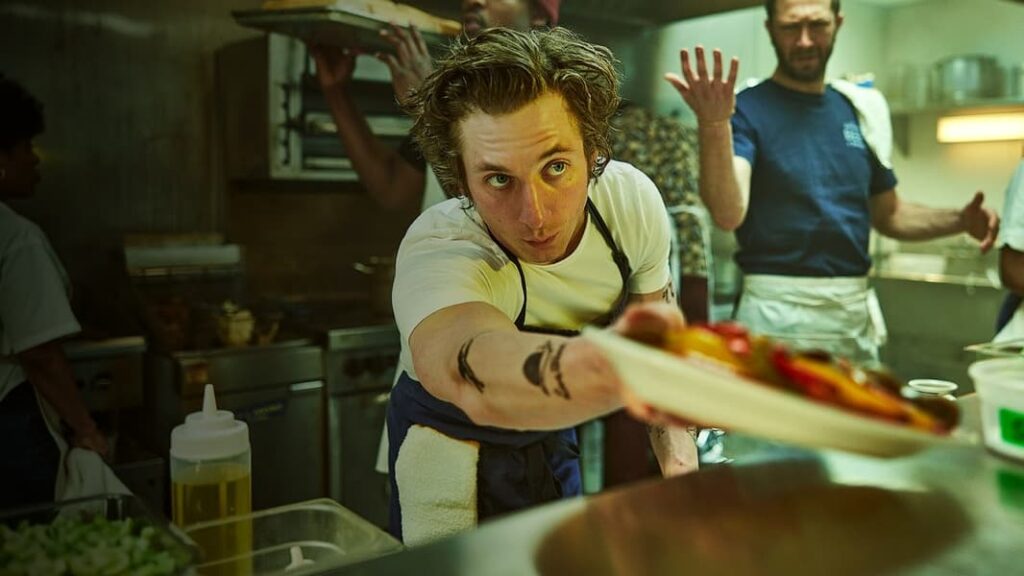
The Bear (Season 2)

(themoviedb.org)

Avoiding the sophomore slump attributed to most sequels (I’m looking at you, Madagascar 2), season 2 of The Bear manages to retain the first season’s hype. The series allows for the exploration and growth of supporting characters: Pastry chef Marcus (Lionel Boyce) travels to Denmark to learn new pastry techniques from Chef Luca (Will Poulter), while Sydney (Ayo Edebiri) confidently steps into her role as the new sous-chef back in Chicago. This season sees Carmy (Jeremy Allan White) with a love interest which—to be honest—he is not prepared to handle, but in a refreshing way that is true to life. Critics are lauding it as one of the best follow-up seasons in a long time, and that’s not just due to Jeremy Allan White’s chokehold on the Internet.

Succession (Season 4)

(themoviedb.org)

Both timely and timeless, modern Shakespearean epic Succession aired its fourth and final season this spring to a rapturous reception. Featuring cutting social commentary on the state of American politics and media, as well as an ensemble cast’s tour-de-force performance, this final season solidifies the show’s place in the pantheon of greatest shows of the 21st century. A heavyweight in today’s water-cooler chatter, discourse on X, formerly known as Twitter, Succession’s conclusion leaves a definite void in the sphere of monoculture television viewing. With multiple Emmys, Screen Actors’ Guild (SAG) awards, and Golden Globes under its belt, this is hopefully not the last time we’ll see the faces of the Roy children and their associates on our screens. 

Worst 

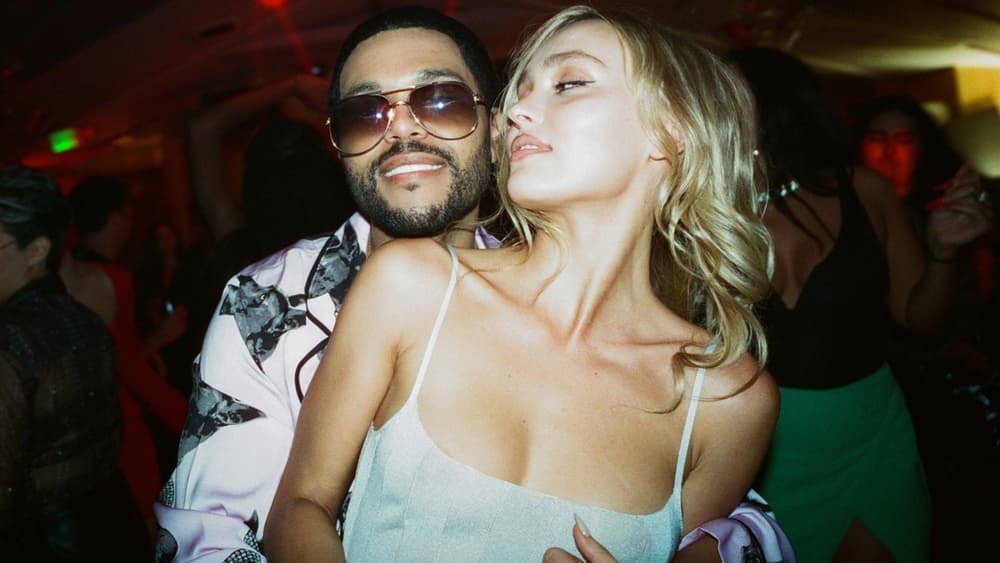
The Idol

(themoviedb.org)

Sam Levinson and The Weeknd’s joint passion project, The Idol, couldn’t quite hit the right notes. It’s visually stunning, but that’s part of the problem. It deals with ugly topics but attempts to make them beautiful—is glamourizing pain ever truly honest? The Idol tried to be too many things at once: A commentary on the toxicity of the music industry, a sordid tale of corruption, an exploration of predators, publicity, pop culture, pop stars, pornography—and it ended up becoming everything it tried to criticize. It’s ultimately hard to tell whether it’s an indictment of how young women are treated in the music industry, or a fantasy that’s a little too real.

Films

Best

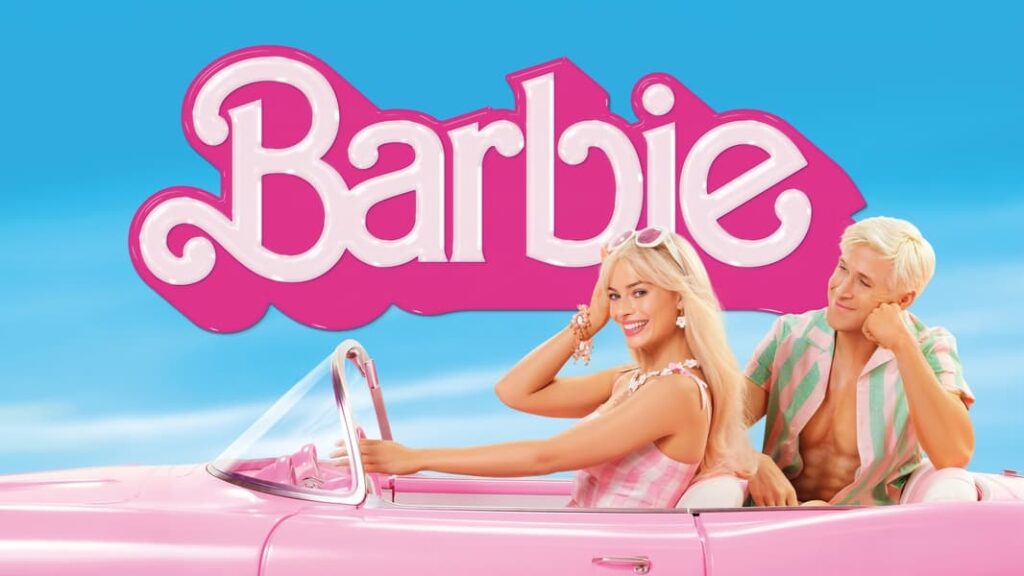
Barbie

(themoviedb.org)

Did I learn all of Barbie’s “most profound” revelations in a first-year Gender Studies class? Yes, yes, I did. Just had to get that off my chest. Now that I’ve given my critique of Barbie, let’s dive into why this movie was such a success. Not only was it the highest-grossing movie by a female director at the domestic box office, critics say it elegantly combines mainstream fun-in-the-sun adventure with cutting satire and socially-conscious undertones. Margot Robbie (Barbie) and Ryan Gosling’s (Ken) performances were picture-perfect, and the impressive world-building and attention to detail, especially in the background sets of Barbie world, is cause for applause.

Bottoms

(themoviedb.org)

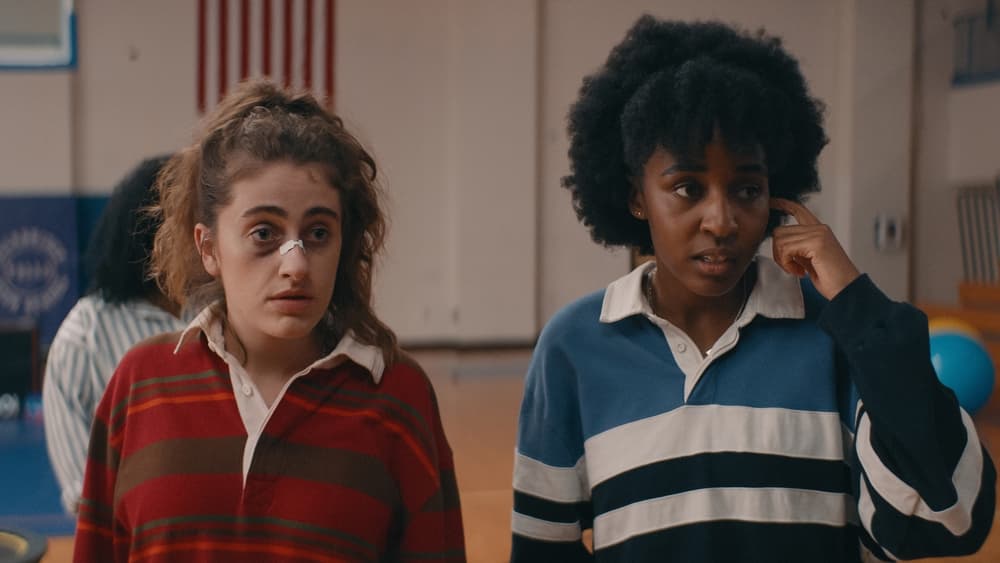
This knock-out raunchy comedy took the internet by storm as director Emma Seligman and actor Rachel Sennott teamed up for their second collaboration. Bottoms tells the story of two best friends, PJ (Sennott) and Josie (Ayo Edebiri), as they start a fight club to try to lose their virginities to cheerleaders. The cast’s impeccable comedic timing and swoon-worthy chemistry are a perfect match for the hilarious yet surprisingly gory script, making this modern twist on the typical teen comedy format an instant classic of the genre. Seligman and Sennott’s mission of creating queer representation in a space that has long been lacking was a smashing success.

Worst 

Winnie the Pooh: Blood and Honey

(themoviedb.org)

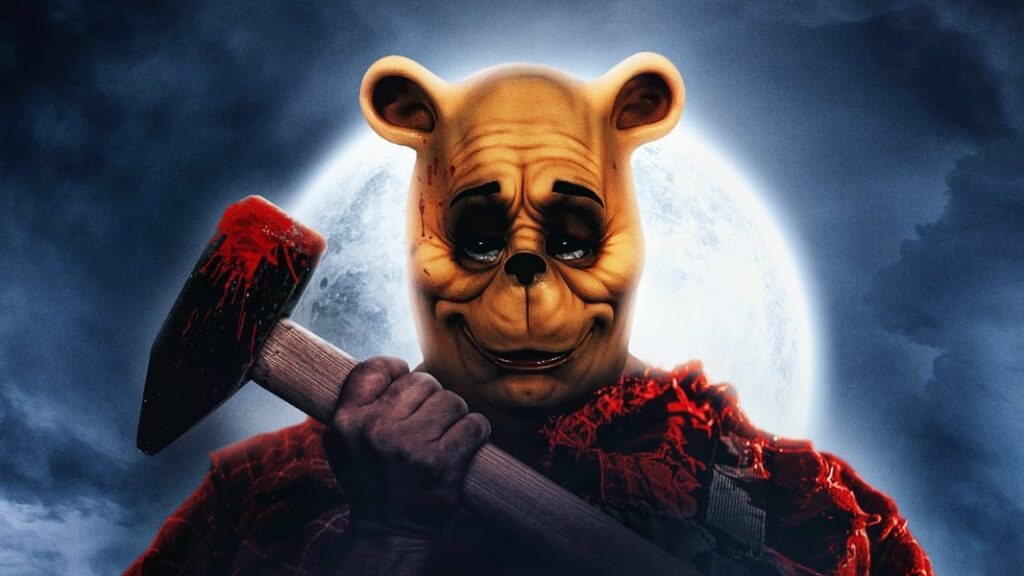
In 2022, Winnie the Pooh entered the public domain. In 2023, he entered Hell. The premise of Winnie the Pooh: Blood and Honey is this: Christopher Robin has left for college, and without the young man around to bring them food, the animals starve—and resort to cannibalism (they eat Eeyore first, but keep his tail to use as a whip). Pooh and Piglet proceed to chloroform young women, run people over with cars, and strangle Christopher Robin’s wife. I don’t consider these spoilers because I doubt anyone is going to watch it (the film’s only redeeming quality is an underlying message about keeping in touch with your childhood friends). Still, it could be a good watch if you don’t like your childhood, and/or hate nature.

Songs

Best 

Rush (Troye Sivan)

(Ted Eytan / Wikimedia Commons / https://creativecommons.org/licenses/by-sa/2.0/deed.en)

It’s giving electro-pop-meets-late-2010s-dance-tracks. It’s giving pounding lights and masses of people, hands in the air, jumping so hard the floor shakes. While “Rush” by Troye Sivan is not in any way revolutionary as a pop track, it does deliver on what it set out to do: Be the biggest party hit of the summer. Nominated for both Best Pop Dance Recording and Best Music Video at the 2023 Grammy Awards, it also won Sivan Best Solo Artist at this year’s ARIA Music Awards. Sivan has cemented himself into the hearts of Gen Z with hits such as “My My My!” and “Youth”; Rush simply continues this trend. 

Not Strong Enough (boygenius)

(Raph_PH / Wikimedia Commons / https://creativecommons.org/licenses/by/2.0/deed.en)

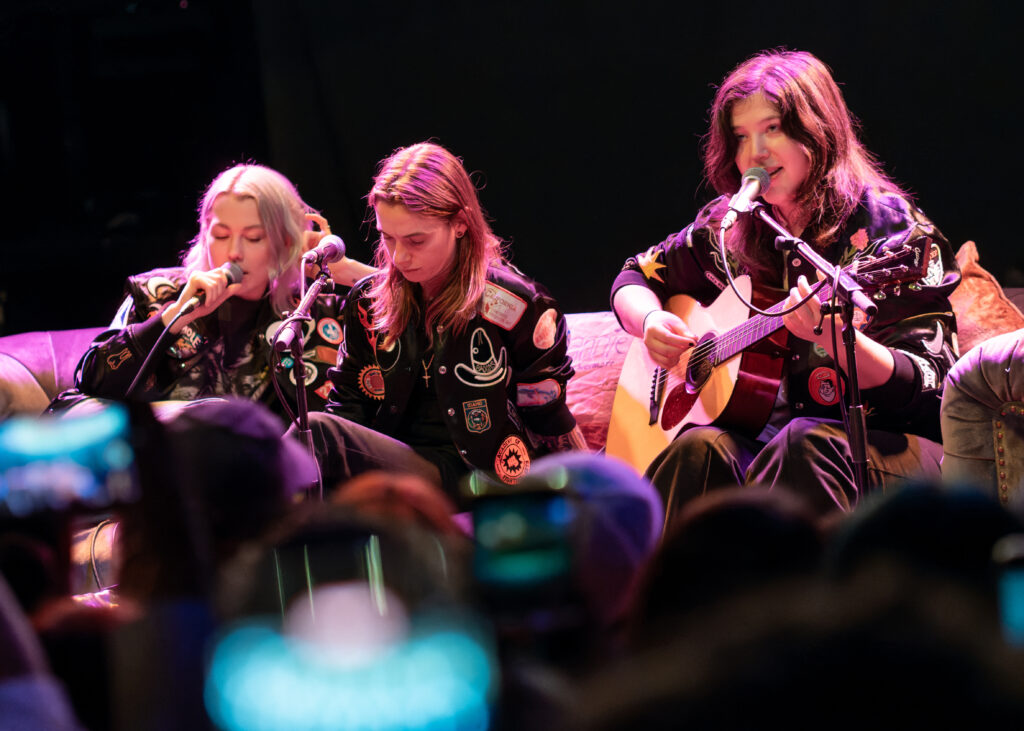
As their most streamed song, “Not Strong Enough” is the stand-out track off of boygenius’ debut studio album the record. The country-pop-inspired track works as a direct response to Sheryl Crow’s 1993 hit “Strong Enough” with the refrain “not strong enough to be your man,” reversing Crow’s hook to profess their uncertainty about love. Bandmates Julien Baker, Phoebe Bridgers, and Lucy Dacus each take a solo verse, showcasing their uniquely impressive vocal stylings while embodying a variation on the anxieties set up in the chorus. With a propulsive guitar melody and lyrics that you can scream on a long drive, “Not Strong Enough” is a perfect piece of sonic catharsis.

Worst

Toxic Gossip Train (Colleen Ballinger)

(123wikiuser / Wikimedia Commons / https://creativecommons.org/licenses/by-sa/4.0/)

In a sea of notes-app celebrity apologies, short videos that feature them sitting on the floor, surrounded by expensive (but neutral-toned) furniture, usually wearing white clothing, pausing to wipe dry tears, talking of shame and accountability and giving videos all-lowercase titles—Colleen Ballinger stands out for making her case through a 10-minute-long ukulele song (entitled “hi.”). “Toxic Gossip Train” was a ham-fisted—albeit creative—way to shirk responsibility for the numerous allegations made against Ballinger (which include sending suggestive messages to underage fans, blackface, and sending unsolicited nude photos of Trisha Paytas to fans). The song includes lines such as “not a groomer, just a loser,” and interjections of something that might be spoken-word poetry. Though, to her credit, she has left the comments section on.

Celeb moments

Best

Cillian Murphy eats cheese to cope with writers’ strike

(themoviedb.org)

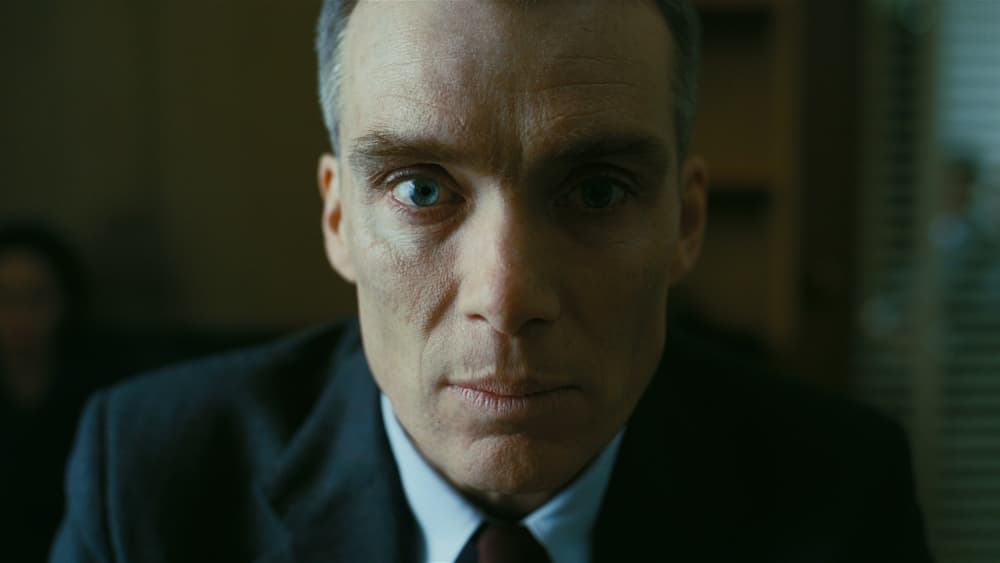
While the SAG strike had many actors wishing to get back on press tours or in front of the camera, Cillian Murphy took the opportunity to adopt the habits of a mouse. The Oppenheimer star reportedly spent his strike time lying down on the couch eating cheese. Can we blame him? Between this summer’s “Barbenheimer” frenzy and what is sure to be a long awards campaign, the star did as McGill students do between midterms and finals—completely ignored his work and responsibilities in favour of some much-needed rest and relaxation. 

Josh Hutcherson Whistle edit

(imgflip.com)

The Josh Hutcherson “Whistle” edit, for all those out of the loop, first originated in 2014 and featured a thirst-trap-like photo of Josh Hutcherson with the song “Whistle” performed by Joel Merry (a cover of Flo Rida’s iconic song “Whistle”). In November, the edit resurfaced from the depths of the Internet with the recent release of Five Nights at Freddy’s (dir. Emma Tammi), in which Hutcherson stars. It seems as if the Internet caught on (helped by the new release of The Ballad of Songbirds and Snakes)—yet again—to the beauty that is Peeta the bread boy in The Hunger Games franchise.

Worst

Submarine explosion

(Madelgarius / Wikimedia Commons / https-::creativecommons.org:licenses:by-sa:4.0:deed.en)

This summer, the world held its breath waiting for news of the Titan (the submarine is the celebrity), prompting discussions around submersible safety, social class, memes, the Titanic, memes about the Titanic, an international search, and a larger reflection upon what stories we choose to sensationalize. Experts eventually determined that the submarine imploded, killing everyone on board instantly, and that the trip was, well, quite stupid. But who cares about billionaires—why did it surface over other stories about suffering? At some point, the conversation shifted to how frustrating it was that all anyone could talk about was the stupid submarine while the boatloads of refugees drowning every day failed to get our attention—but of course, that was exactly what we did; we talked about the Titan and moved on.

Opinion

Campus Conversations: Curiosity 

On preserving childhood curiosity

Lulu Calame, Contributor

The greatest tragedy that comes with adulthood is that it is no longer acceptable to be freely curious. 

I grew up on a small island on the eastern tip of Maine, and my greatest victories lay in the discovery of a washed-up buoy or the bobbing purple head of a lion jellyfish under the downtown fishing pier. These discoveries were to no end but my own excitement, and I never wished them to be anything more. 

But with growing up comes an awful social expectation that the world’s mystery should melt away and be replaced with a logical curiosity in only the things that hold productive value. Whether that be a degree, a career, or a salary—curiosity is no longer serendipitous, but mechanized. It is no longer appropriate to be curious with justification of its productivity––and this product is never just whimsical pleasure. 

I often wonder, being only on the edge of adulthood, when I might cease to find a frozen puddle worth stopping for. I am already saddened that I no longer jump inside an elevator to see if my head will hit the ceiling, or that I have stopped running outside in the morning to test whether last night’s snowfall is powder or packable—always hoping for the latter, because every sledding hill needs a jump. I am sure that my eight-year-old self, for whom there was nothing more important than such explorations, would be shocked at the indifference ten years have brought; and I am scared further still for what ten more years might take. 

Such unabashed curiosity requires a vulnerability that adults have sadly been trained to avoid, but which should be preserved at all costs; it honors the unpredictable, the odd, and the subtly beautiful. It makes me sad that an adult’s destination is such an imposition that they no longer stop to watch an ant carry a twig twice its size down the sidewalk. 

Allowing oneself to be freely curious, and, for even ten seconds, to commit one’s thoughts wholly and unapologetically to something as small as an ant, holds an importance that the grown-up world has forgotten.

Curiouser and curiouser: Dogs, dildos and discovery 

Jayda Smith, Staff Writer 

I need to do something more interesting than just studying before I die. A jarring thought that might lead some to hop on a plane to Europe and others to start training for a marathon, but one that led me to attend animal therapy in the Healthy Living Annex of the Brown Building––the beginning of a series of curiosity-led escapades. 

Animal therapy is where I met Bau. Bau is an adorable Bichon who skillfully performs his duties as a therapy dog. I laughed as Bau executed various athletic manoeuvres; he sat, laid down and danced bipedally. Animal therapy wasn’t the only engaging thing the Annex offered. Across from where I sat was a store called The Shag Shop.

It sells affordable and inclusive sexual health products, including, but not limited to, menstrual cups and adult toys. Shame had stifled my curiosity and prevented me from visiting before, but now that I was only a few feet away, I couldn’t pass on the opportunity. Somewhere between nervousness and indecision, I found her. The Double Dancer: A purple toy that boasts three speeds of increasing vibration and “dual flickering teasers” (whatever that means). I tried not to look too embarrassed as I cashed out and hurriedly stuffed the device into my backpack. It was my first time buying such a toy, but embarrassment was a small price to pay for a new experience. Needing one last adventure to end the day, I took a trip to the farmer’s market in the SSMU building. My most remarkable find was a book: “Anansi the Spider: A Tale from the Ashanti.” 

This tale featured a famous trickster spider from Ashanti folklore. Though the tale originates from West Africa, I know Anansi intimately. In Belize, my home country, we learn of Anansi’s hijinks around the same time we learn our multiplication tables. It touched me that culture was strong enough to have preserved Anansi across thousands of miles, depositing him safely from West Africa to Belize. 

From just one day of exploring my curiosities, I found therapy dogs, sex toys, and home, all on one campus. What else might I find if I ask more questions? Exploring my curiosities turned into self-care and self-discovery, and it all started with a dog. 

Changing majors and career paths

Sophia Micomonaco, Contributor

Last week, I attended a conference on campus for women students interested in finance. As someone who considers changing majors weekly, the thought of choosing a career is one of my biggest sources of anxiety. I signed up for the conference wondering if finance could be my new calling.

I would consider myself a “big-picture person,” partly because of this anxiety. I view every possibility as if it will affect me in fifty years’ time. I judge new ideas intensely and make a plan for outcomes A, B, and C (with subsections). In the past I have decided on plans and then strongly stuck to them, like when I thought that I was going to major in philosophy. I signed up for philosophy courses and realized that I didn’t really like them, but I stuck it out because I was fearful of losing the path I had temporarily chosen. When these courses didn’t go as well as I had hoped, I tried again with more subjects, repeating this cycle of confusion and dissatisfaction in the pursuit of the “perfect” subject area for me. 

The conference featured successful women in finance as its speakers, some who did not hold finance degrees––just like me. Participants asked a range of questions and many of the speakers unknowingly provided very similar answers. When asked what they were looking for in an internship candidate, the most common response was “curiosity.” A lot of the women said that it was okay to change careers, and that one’s past decisions wouldn’t be a waste. If you were curious about something, even if it ended up being the wrong fit for you, at least you tried. 

This provided me with a lot of reassurance, because my attempts to plan for one kind of career were dwindling. The week before the finance conference I was planning for my career in public relations… or mediation… or both. I don’t know if I’m going to work in finance, but now I at least know that I’m interested as I am with so many other things. This time, I’m going to accept that I don’t have a plan yet—because it’s better to be curious than resistant. 

Off the Board, Opinion

What to do if you can’t be an astronaut

I’ve always wanted to be an astronaut. When I was seven, I begged my mom for a telescope, convinced that the €40 plastic lens would equip me well enough to pierce through the polluted Parisian sky and uncover the secrets of the universe. I never got the telescope, and so naturally, I never became an astronaut.

Carrying the weight of this professional failure at such a young age was incredibly distressing. Years passed, and as I slowly mourned the loss of a life spent in space, while the calls of the job market only became louder. I needed to find something else. At eleven years old, I finally decided: I was going to be a journalist. After all, I liked asking unnecessary questions and writing stories about everything and nothing, so why not?

Well, dear past-me, here’s a few “why nots.” My parents get credit for most of them, and sadly, part of me can’t even disagree. When I come home to visit, conversations at the dinner table go to the tune of how will you make money to start a family?, journalism is a dying industry and AI will take your job, or —my personal favourite—feminist girls like you should be in science. Yet here I am at twenty years old, having failed modern feminism and writing about it for my university’s newspaper. Nine years after abandoning space exploration, I still want to be a journalist.   

Journalism never came to me as a revelation. I found myself wavering among choices, swinging back and forth between a career in diplomacy, publishing or the music industry until eventually, journalism was the only thing that stuck—a blessing and a curse. As I see many around me facing an existential crisis, uncertain of the life their future job may bring them, I sometimes envy them. Truly, I often wish I didn’t know where I was heading. In French, we say journalism is a “métier-passion,” or a job you need to do with passion—but passion doesn’t pay the bills.

With every local paper shutting down or falling into the hands of another conservative billionaire, with every new team of reporters being laid off or every ad that pops up as I read my articles—my heart sinks a little. I think to myself, “Democracy does not die in darkness, it dies behind a paywall.”

My worries are not simply about the industry itself. Our collective attention spans are getting shorter, and we mostly consume news in concentrated shots of information. How can we produce compelling stories that hold the powerful accountable, if no one has the bandwidth to read them? Is there a future where people have the time to read past the headline? I don’t have the answers to any of these questions, and frankly, I’m not sure I want to know anyway. Despite this, my hope for journalism is undeterred and I still pine for a future in it. 

I’m well aware that student journalism is its own comfortable bubble, where being overworked and underpaid is not an immediate reality. Maybe that’s precisely the reason why I still have so much hope—it’s a tiny window into what professional journalism could be, in a better world. Every time I open a new issue, my doubts about the future seem to go away as my eyes glide over the freshly printed paper. There is a new generation out there that still understands the importance of writing people’s stories, of speaking truth to power. 

But I realize now that it doesn’t really matter whether I’m right or wrong because, truth is, I don’t have a choice. It’s probably too late for me to become an astronaut, and journalism is the only other option that checked all the boxes on my list of job requirements. Looking back, I’m almost glad my mom never bought me the telescope. I no longer want to see the pale blue dot we live on from a distance. I prefer to zoom in as close as possible on what’s going on around me––to ask questions, write stories and uncover new kinds of secrets.

Arts & Entertainment, Music

Where Do I Begin? Country music artists of colour and the industry

Tracy Chapman’s “Fast Car” recently hit the No. 2 spot on Billboard’s Hot 100, winning Song of the Year at the 2023 Country Music Awards. I know what you’re thinking; no, it’s not 1988 again. A cover of the hit, released by country music artist Luke Combs on his newest album “Gettin’ Old,” has been garnering these accolades. Additionally, it has won Combs “Single of the Year” (CMA Awards), hit No. 1 on the Billboard Country Airplay Chart, and was recently certified platinum. While Combs’ success is impressive and spotlights Tracy Chapman thirty-five years after the song’s release, critics are torn over what this means given the discriminatory nature of country music. Some are uneasy about Combs’ achievements as a white man gaining so much attention for covering a queer Black woman’s work. 

Tracy Chapman has been quoted saying she never expected to find herself on the country music charts, and Black country music artists have been striving to get there for decades. Radio stations playing the music of predominantly white male country singers have exacerbated this struggle. A study from the University of Ottawa found that within the country music genre, the ratio of spins for male to female artists was 9.7:1. Another study conducted by SongData showed that between 2014 and 2020, artists of colour only received 4.8 per cent of country music format’s airplay. Both of these findings emphasize the strong bias toward white and male artists within the genre. 

Despite the country music community’s whiteness, Black artists are integral to the fabric of the genre. Historically, both the African-American and white communities in the Southern United States played “country music”. Its origins were largely influenced by African-American and Native American communities; enslaved peoples began the first string bands, and the blues—one of country music’s hallmarks—was an invention of African-American communities. Some credit the banjo as originating from West Africa, and a Kanaka Maoli teenager, Joseph Kekuku, created the steel guitar. Even the lyrics of country music have their origins in enslaved people’s spirituals, hymns, and field songs—all predominantly Black sources. Important early Black country artists include Lesley Riddle, who shaped the genre of modern country music primarily through his collaborations with the Carter Family, and Arnold Shultz, who was integral to Travis Picking’s development.

Country music began to be marketed along racial lines in the Jim Crow era, as the industry divided it into two categories: “Hillbilly” and “race.” While both of these terms are problematic, the “different” categories have the same roots. White country music, labeled as “hillbilly,” was specifically targeted toward the expanding white middle class in order to bring respect as well as profits to the genre. Eventually, this turned that demographic into the stereotypical audience of country music known today. 
The marginalization of Black voices and influence has continued to the present. Mickey Gurton, who has fought to be recognized in the genre for over ten years, became the first Black female country music star to perform at the Grammys in 2021, singing her hit single, “Black Like Me.” Up until that point, radios excluding women artists and artists of colour afforded her little air time in order to present her music to the public. Since her Grammy performance, however, her songs have amassed millions of streams on both YouTube and Spotify. 

While “Fast Car” was not originally a country music song, its popularity in the genre as a cover by a white male artist is cause for scepticism, especially considering the genre’s history of marginalization. As consumers, advocating for marginalized voices to be given airspace and monetarily supporting these artists are small but effective ways to work toward larger social change. We must interrogate how we represent country music and whose voices we centre at both the individual and industry levels.

Art, Arts & Entertainment, Books

‘A Haunted Girl’ is a soul-stirring take on mental health and a hero’s journey

Mentions of suicidal ideation and mental illness

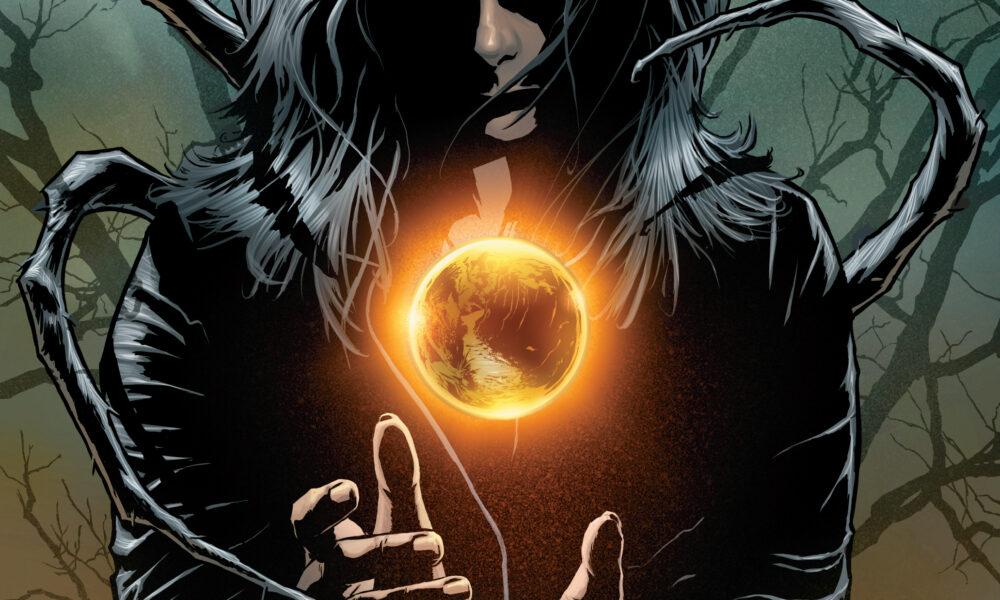
Four years ago, in a hospital cafeteria, Ethan Sacks (BA ‘94) sat waiting for visiting hours to start in the pediatric psychiatric ward. As his mind turned over, he wrote down, “The fate of all life on Earth depends on a girl who doesn’t know if she wants to live,” which would later become the tagline for A Haunted Girl. The new independent comic series, co-authored by Ethan and his daughter Naomi Sacks (U1 Arts), chronicles the journey of 16-year-old Cleo as she navigates the challenges of returning to school after being hospitalized with severe depression, anxiety, and suicidal thoughts. On top of the troubles of fitting back into her old life, she starts to see visions of ghosts, leading her to question what’s real and what’s a figment of her imagination. With the first issue published on Oct. 11, this four-part paranormal thriller expertly balances a page-turning supernatural adventure with the real experiences of teenagers facing major mental health crises. The Tribune spoke to Ethan and Naomi about the comic’s conception and creation, as well as their hopes for the role it can play in the lives of young people facing similar challenges.

A Haunted Girl has an intensely personal origin. In a letter included at the outset of the first issue, Ethan describes this scene in the hospital cafeteria, years ago, waiting for his daughter (and now co-author) Naomi, who was seeking treatment for depression, anxiety, and suicidal ideations. Although the initial idea came from Ethan, Naomi’s involvement with the project grew through her recovery, culminating in her official co-authorship of the comic. She told The Tribune that there wasn’t necessarily a moment in which she became involved; rather, it was a gradual process. 

Ethan wanted Naomi to see herself within the story—the characterization of Cleo needed to feel reflective of her own experiences. When describing the process of collaborative writing, the duo explained that Ethan tackled the supernatural and action-based scenes and Naomi handled everything to do with therapy, recovery, and navigating high school. 

“It’s almost like internal demons and external demons,” Naomi jokes, pointing at herself and then her dad.

When asked what books they read or movies they watched in preparation for writing the comic, Ethan said that horror movies became critical texts for uniting his portion of the work with Naomi’s. He specifically highlighted The Exorcist, both for its obvious themes of connecting the supernatural to a medical context and for its creative usage of the parent role.

“For me [The Exorcist] was a touchstone […] Sure, there’s a demon and there’s all that imagery, but it’s also [about] a parent who can’t help their child,” Ethan said. 

Ethan worked closely with the American Foundation for Suicide Prevention (AFSP) to ensure that the comic wasn’t perpetuating any harmful tropes or stereotypes. He wanted to avoid potentially stigmatizing mental health issues and presenting language that could be triggering to a vulnerable audience. To help with this, A Haunted Girl received a sensitivity reading from the organization. Additionally, AFSP resources are listed in the back of each issue, providing techniques for coping with stressful situations and those in immediate distress. Ethan and Naomi hope that the comic can incite readers, particularly teenagers, to seek the help that they may need.

A Haunted Girl is a thoughtfully written and beautifully illustrated comic that demystifies an issue that is so rarely authentically portrayed—especially in the comic medium. It is unafraid to use the language of therapy and destigmatizes asking for and getting help. At the same time, the language isn’t clinical. This messaging, immediately juxtaposed with the creepy supernatural elements, creates a heartwarming yet enthralling read. The mission statement is clear: To inspire those whose struggles mirror Cleo’s as they go on their own hero’s journey. 

‘A Haunted Girl’ is available in bookstores across the country. Issue #3 will be released on Dec. 13

Read the latest issue

Read the latest issue