Latest News

McGill, News

Student Wellness Hub faces province-wide healthcare practitioner shortage

The Student Wellness Hub (SWH) is a multi-functional program proposed and opened in 2019 to encourage the well-being of students, staff, and faculty members. Since its creation, however, the SWH has faced obstacles in providing care due to a province-wide shortage of practitioners and a requirement that doctors volunteer their time. This has led to limited access to appointments and clinical availability for students across campus.

Lennox Wong-Chor, U1 Music, shared his experience with the SWH in an interview with The Tribune

“I think realistically, the Wellness Hub is doing everything they can [….] I called the Wellness Hub bright and early, at 8:30, and by the time I called, I was 17th in line, even though I called as soon as they opened,” Wong-Chor said. “In a perfect world, I’d want there to be less of a wait time and more physicians, but I know realistically, it’s not going to happen because it’s not student-run and the doctors are volunteering their time.”

In a written statement to The Tribune, Dr. Hashana Perera, Medical Director of the SWH and a faculty lecturer in McGill’s Department of Family Medicine, explained that Quebec mandates specific amounts of time that doctors have to work in order to continue working in the province. 

“Family physicians in Quebec are required to commit 12 hours per week to certain medical activities to maintain their license to practice in a region [….] Time spent seeing patients at McGill does not contribute to fulfilling these weekly required 12 hours,” Perera wrote. “Consequently, I must maintain a separate family medicine practice with 600 patients and work at a community walk-in clinic. While our doctors thoroughly enjoy working with our students, the difficulty lies in finding physicians willing to take on additional responsibilities beyond the government-mandated requirements.”

This requirement has led to a practitioner shortage at universities, including McGill, as doctors have to be willing to volunteer their time. Additionally, more than 80,000 Quebec healthcare practitioners organized a two-day strike on Nov. 8 and 9, as a result of Bill 15—Quebec legislation that stands to overhaul the existing health system. Bill 15 includes a proposal to increase the clinical hour requirements to account for post-pandemic labour shortages, which would likely lead to a decrease in practitioners able to volunteer their time at university clinics. 

Alice Maitlis, U1 Arts, reports having a smooth experience visiting the SWH despite practitioner shortages, but agrees that there are barriers to access.

“My experience was fairly positive with the Student Wellness Hub, it was efficient, kind and there was no awkwardness, which was good,” Maitlis told The Tribune in an interview. “I doubt that everyone has equal access to the Hub, due to linguistic barriers or not being encouraged to go by friends or family. I’ve only accessed the physical health side of it which seemed very well run, and I assume in terms of mental [health] it [is] too, although those could always be more well funded in facilities like these.”

When asked about student accessibility at the SWH, the Hub responded that they have managed to reduce wait times over the years, but stated that students’ medical experiences could be further improved if provincial legislation allowed for easier practitioner recruitment. 

“We’re proud of how we’ve leveraged our team of different clinicians to connect students with care when they need it,” the SWH wrote in a statement to The Tribune. “Mental health wait times have been reduced significantly over the past few years and we can often connect students with a mental health clinician within a few days […] If hours worked in our clinic were counted as clinic hours required under provincial legislation for all GPs, we would be able to recruit more doctors to provide medical services for students.” 

Science & Technology, STEM EVENTS

Innovation ignited at McGill’s 8th Annual Physics Hackathon

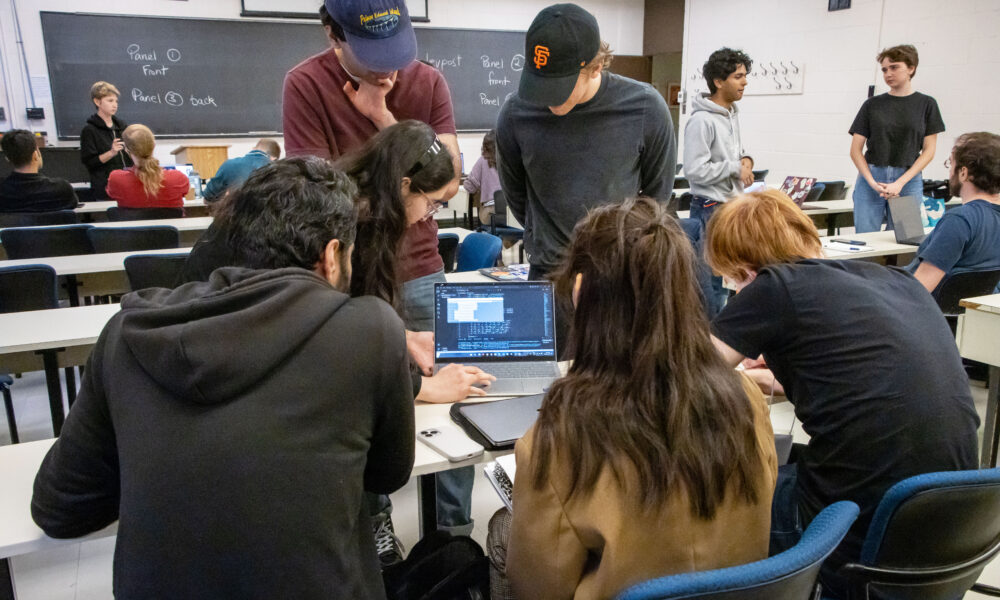
Amidst the vibrant hum of friendly competition, close to 150 students gathered in the Rutherford Physics Building on Nov. 3 for the eighth Annual McGill Physics Hackathon. An enduring event, the hackathon has persisted seamlessly, even switching to virtual hacking during COVID-19. In its current edition, participants form teams of two to five and engage in a 24-hour creative sprint over three days. Their task: Craft a project intertwining computer programming and physics.

David Gallacher, the lead organizer of the hackathon and a Ph.D. candidate in physics at McGill, spoke to The Tribune about the event’s purpose. 

“The main motivation for the hackathon is to inspire and encourage students to use computation alongside their physics knowledge that they’re going to develop throughout the undergraduate [program] or that they’re learning in CEGEP, or high school physics. To combine computing and software with physics because that’s something that doesn’t get emphasized very much.”

This year saw a surge in demand, prompting the hackathon to sell out two weeks prior to the event. To accommodate the overwhelming interest, the organizers released a second round of tickets, which packed the venue to capacity. The academic background of competitors was especially diverse, with 50 per cent pursuing bachelor’s degrees, approximately 40 per cent from CEGEP, and the remaining attendees comprised of graduate and high school students.

“The way we view it is because, at the research level, […] it’s kind of expected for you to know how to code in order to do most of the physics research. This is kind of an opportunity to get people excited about learning new things, and to get some practice,” Gallacher said. “We give them support in terms of mentors and volunteers, who are graduate students, or postdocs, or sometimes alumni who are working in industry.”

The organizers of the McGill Physics Hackathon based their evaluation of different teams on three distinct criteria: Technical implementation, effective storytelling, and aesthetics.

Gallacher further elaborated on what exactly the judges were looking for during the two project pitch presentations that all teams had to do.

“[We assessed] how challenging was the problem you were trying to solve? How was your solution to solve the problem?” Gallacher explained.

He also raised the inclusion of science communication as one of the competition’s foremost benchmarks.

“We judge them on their communication, their ability to tell a story about the project, and they have five minutes to present at the end of the hackathon,” Gallacher said. “And then we have a third category, which is aesthetics/visualization. Some projects have much more aesthetic connectedness, because they’re a demo or interactive, like a GUI where you have to play with some knobs and change some physical parameters to teach a physics concept.”

The winning project, SingularIO, was a simulation that displayed technical expertise and effective storytelling in addition to beautiful aesthetics. The team consisted of three first-semester computer science and mathematics students from Vanier College. Marco Alturk, Le Tuan Huy Nguyen, and Justin Bax enthusiastically signed up for the McGill Hackathon together after knowing each other for only two months. They discussed their exciting project, their individual perspectives on metaprogramming, and what they will take away from this unique experience in an interview with The Tribune

“We got inspired from this game called Agar.io. We made these masses that float around. And we used Newtonian physics [fundamental branch of classical mechanics that describes the motion of objects detailing physical facts such as inertia and the relationship between force and acceleration] to calculate the acceleration to be able to simulate how it would look like in real space, how they would orbit around greater masses and how they would collide into each other and become bigger,” Alturk explained. “One thing that was more complicated was the simulation of space-time visualization, like the distortion of space-time around greater masses.”

The team paid extra care to their project’s visual presentation, even drawing parallels between the pleasing physics aesthetics and life more broadly. 

“We spent a solid ten minutes, just the three of us admiring the orbits and wondering if the n-bodies are going to fall in or if they’re going to orbit. So it’s really beautiful within both our application itself, but also the physics behind it, because our simulation is aiming to show people how physics, astrophysics and the dynamics behind them can create useful things, both chaotic and not chaotic,” Bax said.

With the increasing popularity of artificial intelligence (AI) applications such as ChatGPT, the organizers faced a particularly challenging task in defining necessary guidelines. Striking the right balance between testing a group’s capabilities, but also not ignoring the practicality of AI as an increasingly essential tool posed a unique challenge according to Gallacher. 

“From my experience, and from talking to colleagues, we’ve always viewed computation as a tool to help us do more physics,” Gallacher explained. “There is definitely a place for them in my research, and as a programming assistant. And it really can speed up the development process quite a lot. I think it would be silly to not encourage people and to not tell them about these tools.”

However, the practicality of AI technology does not seamlessly translate to its appropriateness in various programming competitions.

“The approach that we took is that by design, our event is already fairly resistant to that kind of thing [AI] being a dominating factor. Because we don’t evaluate participants or their teams on their code, on the execution of their code, or on really anything to do with their actual program,” Gallacher said. 

All three members of the winning team shared some of their perspective regarding the use of ChatGPT during the hackathon.

“I think we barely used ChatGPT except for image generation. I personally don’t find the need to use it,” Bax noted.

Nguyen then provided additional nuance by discussing ChatGPT’s degree of helpfulness according to the context where a programmer would use it.

“I think it is a tool that can definitely help. But I’d say 90 per cent of the work is you just toying around with whatever you’ve got, and you’re trying to build from what you have. So I’d say sometimes it can be a bit of a hassle to even use it, but can definitely be useful,” Nguyen said.

Alturk also provided a specific instance where AI can be more of an obstacle than an aid. 

“If you give it the wrong prompt or it misunderstands it, it makes a lot of errors, especially in programming. And I think that decreases your productivity, because now you have to fix the code that it gave you instead of writing it yourself. So for things like physics, or the optimization that we did, we didn’t use ChatGPT,” Alturk said.

To create a program worthy of the first-place award title, the three CEGEP students toiled over SingularIO with great persistence and admirable collaboration. 

“The total time it took us was maybe 30 hours in total, because we would come to McGill, we’d work on it, and then we would go back home, and continue brainstorming ideas until 2:00 a.m.,” Alturk shared. 

In response to reflecting about the three-day long excitement filled with physics, coding, camaraderie, and amicable rivalry, Bax illuminated the team’s biggest takeaways with bonding being a big one.

“The people around this, in my opinion, really made the hackathon enjoyable,” Bax added. “We were very inexperienced and otherwise all around us, we had teams of undergraduates or even graduates writing super complex equations on blackboards. We learned a lot of things.” 

McGill, News, PGSS

PGSS general assembly fails to meet quorum, discusses ways to increase attendance

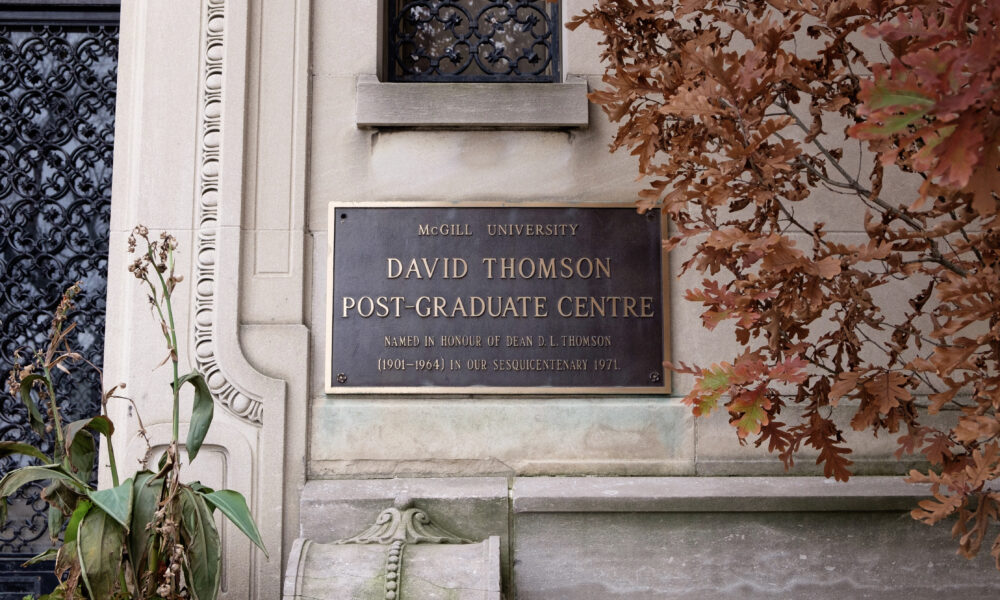
On Nov. 8, the Post-Graduate Student Society (PGSS) held both its November council meeting and general assembly (GA) at Thomson House. As the GA failed to reach quorum—which is one per cent of PGSS members, or 96 students—no motions could be passed and all items on the agenda were for consultation and discussion purposes only.

The November council was led by Nora Delahaye, the Council Speaker, who explained the new submission guidelines for agenda items. Instead of agenda items being submitted on the Wednesday before the meeting, the new deadline would be the preceding Monday, as the extra time is needed to produce French copies of documents in compliance with Bill 96

Next, the speaker presented proposals for the library improvement fund, which were approved. External Affairs Officer Ansley Gnanapragasam explained what the two projects, which total over $12,000, entail for the Islamic Studies and Osler Libraries. 

“These two projects were submitted last year and sent to the library asking for the quote. We received the quote this year, reviewed it, and we found it reasonable,” Gnanapragasam explained. “[They] are more or less new ergonomic desks and chairs for the two libraries.”

PGSS Secretary General Satish Kumar Tumulu then touched on the motion regarding a PGSS response to Quebec’s proposed tuition hikes. The motion outlined potential actions PGSS could take, including an official statement, endorsement of politicians opposing the hikes, support for protests and demonstrations, and an email template for PGSS members to express their disapproval to provincial politicians. The motion was approved.

The council briefly pivoted to a call for candidates to fill vacancies for representatives on the appointment board before adjourning a few minutes past 6 p.m.

After a half-hour break, the GA began. The first dozen minutes were spent trying to reach quorum by urging people to join the Slido, an online voting platform. However, the efforts proved to be unsuccessful. As a result, it was not possible to vote on motions and the purpose of the meeting was therefore consultative; voting will take place at the winter GA on Feb. 7, provided quorum is reached.

The question period was the night’s greatest speaker-audience engagement. In response to a question regarding how PGSS intends to achieve quorum at the winter GA, the Secretary General acknowledged the lack of success in achieving quorum since the COVID-19 pandemic.

“If [each] counselor can bring one extra person then we have a quorum. Right now we have 75 people in both in hybrid and in person,” Tumulu said. “We just need 21 more people to get quorum. It’s not that hard.”

Tumulu and Gnanapragasam mentioned that if all 122 council members attended, quorum would easily be reached. Various attendees then got up to offer suggestions on how to increase attendance and reach quorum. 

David Gallacher, a third year PhD candidate in physics, referenced his own department’s success in achieving quorum at meetings. 

“The most effective thing we did was just to go out and invite people in person, like walk around to all the offices, introduce ourselves and invite them to [our] GA,” Gallacher said. “One thing we found is that just sending more and more emails is increasingly less effective. Adding more emails is worse than having fewer emails.”

Other members insisted that the email communication be more direct and easy-to-understand, straying away from acronyms to lower the knowledge barrier and briefly explaining what can be achieved at PGSS meetings. One member even suggested that draws and raffles be used as a way to lure more participation. After acknowledging that the suggestions will be taken into account, the Secretary General dismissed the meeting a few minutes before 7 p.m. 

Moment of the meeting:

A member commented on the phrasing of Chapter 9, Section 4 of the Society Activities Manual, about how former executives “cannot run for election the same year and the following year,” pointing out that it would mean that they could run during either the current or following year but could only not run for both. After discussion, it was decided the word “and” will be substituted for “or”. 

Soundbite:

“Please call your friends so we have quorum.” — Delahaye, urging the crowd to help bring the GA to quorum.

Out on the Town, Student Life

Winter on wheels: BIXI attempts its first-ever year-round bike-sharing program

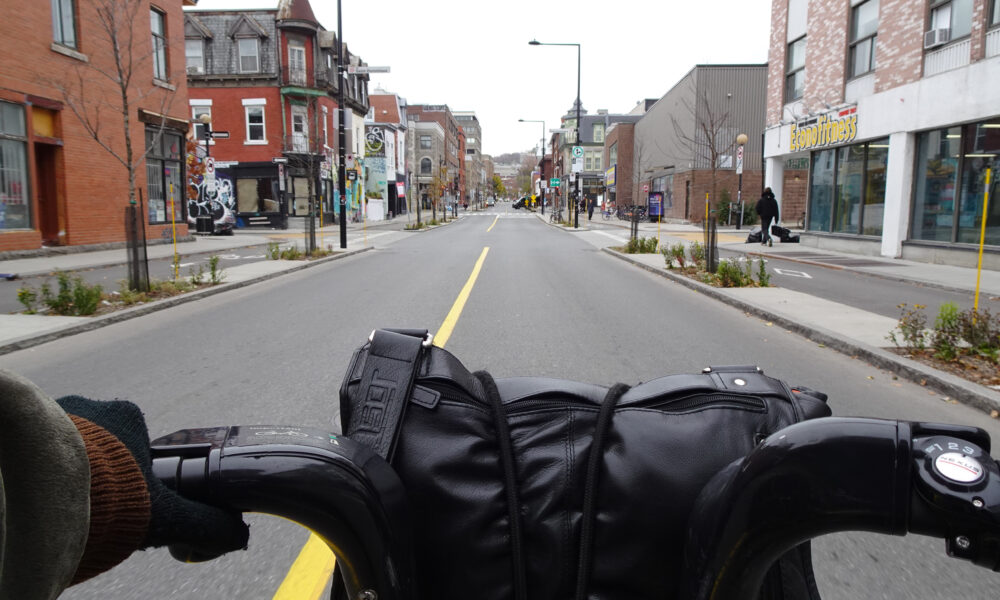
November usually marks the beginning of the frigid, seemingly everlasting Montreal winter. Dropping temperatures and the end of Daylight Savings Time are usually a wake-up call for city-dwellers to finally say goodbye to their bikes. But as Montrealers everywhere prepare for hibernation, BIXI bikes will sit—or ride—this one out. Last April, Montreal’s only public bicycle-sharing system announced an extension of its services through the winter months. Although the company usually ceases its operations in mid-November, its new year-round program will allow residents, for the first time, to BIXI during the colder months. This new initiative follows those in other North American cities such as Toronto and Chicago, where citizens experience similar, albeit milder, winters.  

Bikes at every corner? Think again.

For those used to readily available BIXIs, the company’s winter program will work a little differently: Bikes will only be accessible in seven of the cities’ boroughs. These include Ahuntsic-Cartierville, Villeray–Saint-Michel–Parc-Extension, Mercier–Hochelaga-Maisonneuve, Rosemont–La Petite-Patrie, Plateau-Mont-Royal, Ville-Marie, and the Southwest. BIXI’s year-round station map, available on its website, pinpoints the exact spots where bike stations will be located. Unsurprisingly, they are mainly focused downtown and adjacent to certain metro stations in the Plateau. 

So, will students turn to BIXIs?

The extension of BIXI’s regular services into the colder months of the year is a game-changer for students who rely on public transportation to get to and from campus each day. As great as all of this sounds though, an obvious barrier remains: Montreal’s biting weather conditions. 

After all, there is a reason that BIXI refrained from introducing this initiative for so long. The city’s weather pattern of strong winds, blizzards, and iced pavements is difficult enough to cope with on two feet… let alone on two wheels. However, BIXI seems committed to overcoming that challenge. Its regular bikes will be equipped with studded tires and non-slip pedals—features which are essential for safe winter biking. Electric BIXIs, for their part, won’t make a reappearance until next spring. 

Despite BIXI’s plan to provide Montrealers with safe equipment, the city must also be committed to regular road and bike path maintenance. Cyclist safety remains an ongoing issue in Montreal as the city saw a 22.7 per cent increase in bike-related injuries in 2022. These numbers only threaten to increase as layers of snow, ice and slush appear are added to the equation. 

Is “BIXI-ing” truly a worthwhile option?

Unlike the Société de Transport de Montréal’s (STM’s) public transportation services, which offer discounted student passes for bussing and taking the metro, BIXI has yet to introduce a student-friendly discount on their services. Monthly memberships are currently priced at $20, and seasonal memberships amount to $99. 

This is somewhat justifiable, considering that BIXI’s summer services are extremely reliable: with over 884 bike stations, customers are almost always guaranteed to find bikes within walking distance during the regular season. However, BIXI’s new year-round program is set to reduce the number of bike stations available during the winter months: Only 150 stations will continue their operations—18 per cent of the company’s usual number of available stations. Despite this, membership rates are somehow identical to those applicable during the regular BIXI season. This raises the question as to whether these costs will end up being worth it, as access to the service will certainly change.

Montreal’s everlasting winters have become synonymous with over-crowded buses and metros, but year-long biking suggests that, perhaps, Montreal’s public transport scene will look a little different in the future. The question remains, however, as to whether Montreal’s spring-and-summer-only bikers will be persuaded by this change. 

Science & Technology

Concrete’s sandy underbelly and hidden carbon costs

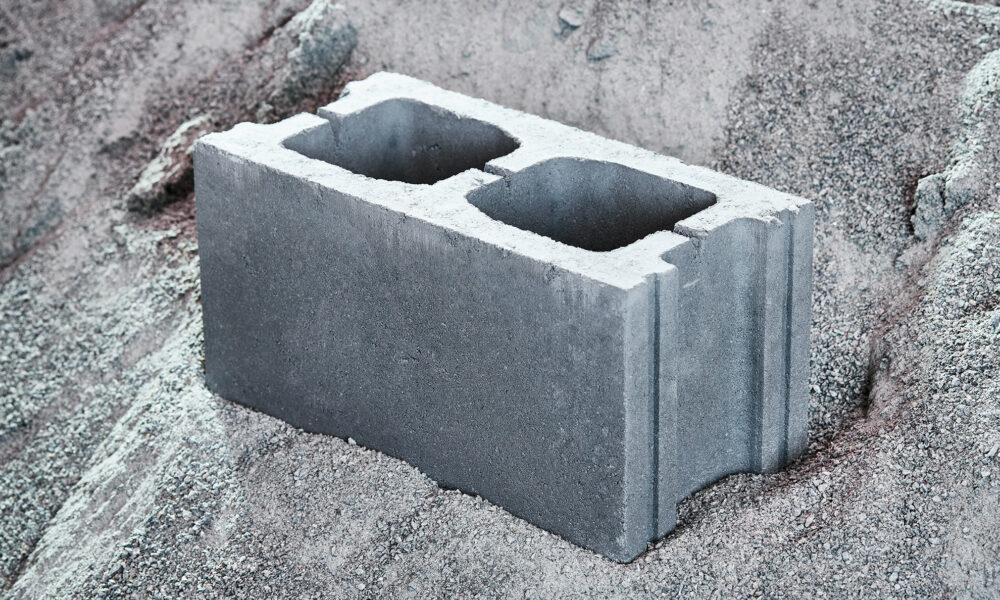
As McGill students, we might not find the sidewalks we walk on during our daily walks to class particularly interesting. And yet, concrete is a major pillar of our society—quite literally. Its use and production affect our lives in innumerable ways. The construction industry uses more concrete than any other material on Earth. Society depends on it, from constructing skyscrapers to paving sidewalks. 

However, with the universal necessity of concrete comes a steep environmental cost. Its rigid construction amplifies the effects of floods, leaving pools of water on our streets and sidewalks. By some estimates, concrete is responsible for four to eight per cent of CO2 emissions. Water is also an integral component in concrete production, depleting this valuable resource in regions that need it most.

CarbiCrete, a concrete technology company based in Montreal, has an interesting approach to limiting the negative impacts of concrete use: They produce carbon-negative concrete. In other words, the company’s method of production not only limits carbon dioxide emissions, but also captures carbon from the atmosphere during the process. Along with water, a mixture of aggregates—like sand and gravel—make up concrete with cement binding everything together. CarbiCrete licenses their technology to concrete producers, who then implement it in their production process. 

“Typically, in the cement-based process, you take aggregate, water, cement; you mix those together. You mold them into whatever product it is you want to create. And then you cure the product with either heat or steam,” Yuri Mytko, CarbiCrete’s Chief Marketing Officer, said in an interview with The Tribune. “With our process, we replace the cement with steel slag [a by-product of the steel smelting process] […] but then when it comes to curing, we cure our products with carbon dioxide.” 

This process simultaneously recycles a by-product of the steel industry and, during the curing process, uses carbon dioxide that likely would have been released into the atmosphere. Incorporated in 2016, the company first brought its technology onto the market this September. They are working to license their technology with established concrete companies and expanding their operation.

“We’re constantly being inundated with requests […] there is a lot of interest. Our focus has really been on standing up this one facility in Drummondville. Basically, we had a pilot project set up at their facility that has essentially been turned into a commercial operation,” Mytko said. 

With CarbiCrete up and running and growing their business with investors, The Tribune spoke with Mette Bendixen, assistant professor in McGill’s Department of Geography, to better understand what issues the industry of concrete production still needs to address.

According to Bendixen, the aggregates that are mixed with cement or, in the case of CarbiCrete, with steel slag, opens up a whole new can of worms centred around another seemingly inconspicuous resource: Sand. Although most people do not think of sand as a critical substance, it is the most mined resource on Earth, and sand excavation is eroding ecosystems worldwide. Demand for it has even resulted in “sand mafias”—individuals vying for control and profit in the sand trade. Its scarcity has also forced countries such as the United Arab Emirates to import sand from other countries, including Belgium. 

“[Sand excavation] naturally erodes the river banks […] meaning that we have houses falling into the rivers. It has huge consequences when you start digging that sand,” Bendixen said. 

Bendixen noted the carbon negative aspect of the technology, but also highlighted the lack of green initiative with regard to the aggregates used.

“What might be lacking in that story […] is are they even addressing this point about aggregates. Is that something that’s considered?,” Bendixen asked.

As CarbiCrete further establishes itself in the construction field, with interest in the company increasing exponentially, it will be important to address other areas of concrete production according to Bendixen. Of course, CarbiCrete has brought about a brilliant new technology. It will need to take more initiatives that are equally as forward thinking, however, to address the other issues our environment faces, even in industries as superficially ‘boring’ as sand.   

Science & Technology, STEM EVENTS

Inaugural Business Ethics Conference discusses a more inclusive health system

On Nov. 10, McGill’s Desautels Faculty of Management organized the Inaugural Business Ethics Conference. This full-day conference featured three insightful panel discussions centred around ethical management in the context of systemic challenges, with a focus on the healthcare industry. 

In the panel titled “Promoting Inclusion and Equity in Healthcare,” global health experts shared thoughts on the status quo in health equity from the perspective of marginalized groups such as Indigenous and queer communities. 

Marcia Anderson, Vice-Dean of the Rady Faculty of Health Science at the University of Manitoba, began by highlighting the health disparities for Indigenous peoples that the COVID-19 pandemic exacerbated.

“Not only were First Nations people at a higher risk of COVID-19 but they were also at a higher risk of severe outcomes due to COVID-19 at significantly younger ages,” Anderson noted. “The median age for hospitalization for First Nations people was a full 15 years younger than that for the general population.”

Through the COVID-19 pandemic, Anderson also discussed the intertwining relationships among various social determinants of health—the non-medical factors that influence health, including race, income, education, employment, housing, and access to quality healthcare. 

According to Anderson, racism is a major driver of unequal access to education, employment, and healthcare services, resulting in substantial health disparities among certain populations, such as Indigenous peoples, members of the 2SLGBTQIA+ community, and Black Canadians. Given that, Anderson emphasized the urgent need to invest in equity-focused and ethical public policies to improve health outcomes and create a sustainable healthcare system.

Following Anderson’s speech, Richard Budgell, assistant professor at McGill’s Department of Family Medicine, moved the conversation forward by expressing concerns regarding the underrepresentation of Indigenous peoples, especially Inuit people, in healthcare professions. 

“If we do not have Inuit within the healthcare system, then we are not making recommendations that are informed by the Inuit. That means the form of healthcare that the Inuit receive is not the form [they prefer], and that’s a problem,” Budgell said.

For Budgell, the problem lies with the difference between Western and Indigenous approaches to care. Western medicine mainly focuses on the physical aspects of health, whereas Indigenous traditional healing embodies a holistic approach that takes into account a person’s physical, spiritual, emotional, and intellectual well-being.

Subsequently, Seeta Ramdass, associate director of the Office of Social Accountability and Community Engagement at McGill’s Faculty of Medicine and Health Sciences, expanded on the importance of racial and ethnic diversity in the healthcare workforce.

“If you are an Indigenous patient, and you happen to have on your healthcare team someone who is also Indigenous, then there is a language and cultural understanding, which can put the patient at ease right away. That actually leads to easier interactions and better health outcomes,” Ramdass explained.

Digital literacy is another barrier that makes healthcare less accessible for Indigenous populations. Due to a variety of systemic factors including lack of funding for Internet access on reservations, a 2017 report by the Brookfield Institute found that Indigenous peoples living in rural areas generally face more barriers to acquiring digital literacy than the rest of the Canadian population. 

Finally, Timothy Evans, director and associate dean of McGill’s School of Population and Global Health and Associate Vice-Principal, commented on future perspectives of the education of healthcare professionals. These new approaches take seriously the consequences of various social changes, such as the COVID-19 pandemic, increasing concerns about health disparities, and healthcare globalization—a trend where organizations worldwide work collaboratively to tackle pandemics.

“[The global demographic change has resulted in] situations where countries have decreased fertility and aging populations, meaning they don’t have a productive workforce that meets their needs for all services, inclusive of healthcare services,” Evans said.

To address the healthcare system’s overall performance, Evans pointed to the need for instructional and institutional reforms in the education of healthcare professionals by encouraging the inclusion of formative and transformative learning: The development of leadership skills that allow healthcare professionals to facilitate change.

Overall, the equity panel made clear that sufficient multi-level interventions, focusing on individual, organizational, community, and policy levels, are imperative for the eradication of health disparities in Canada and worldwide.

Student Life

Magasin le Chaînon opens a new location with style

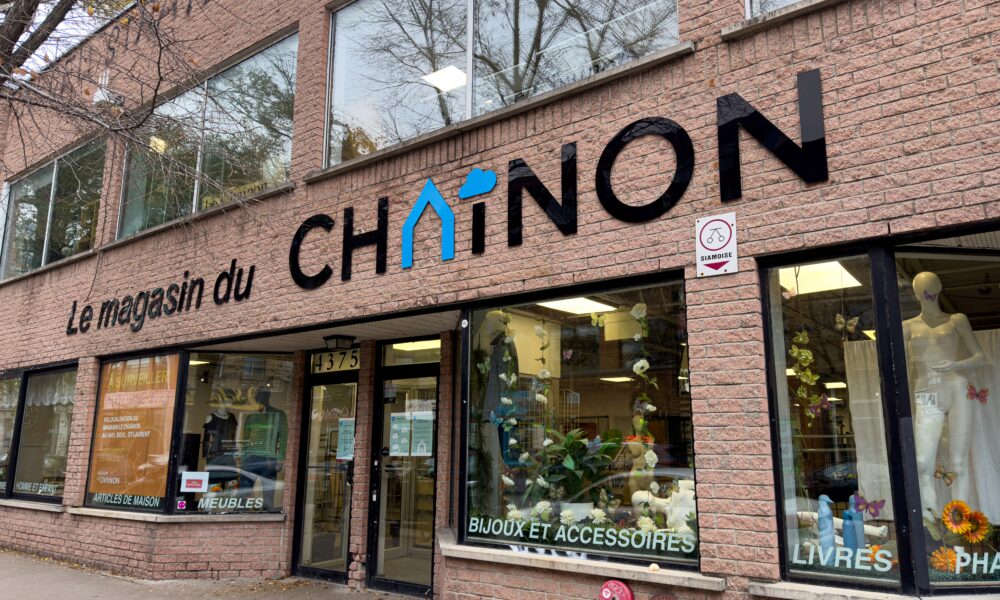
On Nov. 2, beloved Plateau thrift store Magasin le Chaînon opened a new location at 4461 Boulevard Saint-Laurent, closing the doors at 4375 Boulevard Saint-Laurent, where it was based for over 20 years.

The grand opening was originally set for Wednesday, Nov. 1, but was postponed to the following morning due to a technical outage. However, once the doors opened on Thursday morning, the eager crowd filled the redesigned boutique to the brim.

By 10 a.m., the store was practically buzzing. Clean, organized racks and shelving units allowed for accessible browsing of a variety of items, from fur coats to household knick-knacks.

The details of the new store, such as its generous lighting, exposed wood panelling, and coherent floor plan, make it feel like a boutique. You could almost forget that the stock is, in fact, second-hand.

Magasin le Chaînon’s original location was opened in 2000 as a major fundraising arm for Le Chaînon, a group of women’s shelters in Montreal. Le Chaînon was founded in 1932 by Yvonne Maisonneuve, who ran a small women’s shelter on Avenue Fairmount. 

The organization has expanded since then to operate three shelters in Montreal for various lengths of stay, but it stays true to the original mission: To provide judgement-free support for any woman in need.

Store Director Stéphane Lamarche explained that how donations are selected and priced is central to the success and mission of Magasin le Chaînon. Lamarche wants to push against the idea that second hand stores sell items that are always dirty and in disrepair. 

“We have great respect for the merchandise,” he said in an interview with The Tribune. “You go to other thrift stores and find holes and dirty merchandise all the time. Not here.”

Lamarche explained how the store’s corps of over 75 volunteers combs through public donations and adds new items daily. The first rounds of donations are given straight to the shelters, while the items left over are sold at the store.

Valérie Tondreau, Director of Marketing, was quite busy the morning of the opening, coordinating on-floor operations and even jumping in behind a register to help shorten the checkout line that stretched the length of the shop. Despite the air of cheerful chaos throughout the store, Tondreau was not at all surprised by the turnout.

“When we would open up at 10 a.m. at the old store, there would already be people lined up outside every day,” she remarked.

The store sometimes undergoes multiple restocks in one day, meaning some Magasin le Chaînon fans will visit the store two or three times a day, according to Tondreau. These fans followed the trusty Plateau thrift store as it moved a couple of hundred metres down the block to the location formerly housing luxury furniture store Dubois. Lamarche was adamant that the store’s stock, prices, and mission did not change despite its distinct facelift.

Julia Michaud, U3 Management, would visit the old location almost every day. She explained she had counted down the days until the opening, and on Thursday morning, she and a friend were browsing the knick-knacks.

“I think the space is great. I think it looks more cohesive. It’s definitely a nicer space. I kinda miss how eclectic the other store was, but it’s got all the charm, just a little bit nicer now,” Michaud said.

Le Chaînon plans to open up a second store in Villeray at 8601 Boulevard Saint-Laurent in December 2023. This location will be the operation’s sole donation collection point.

McGill, News

AGSEM and McGill’s third bargaining meeting: New demands over collective agreement

On Nov. 9, the Association of Graduate Students Employed at McGill (AGSEM) entered its third bargaining meeting with the McGill administration. Since Sept. 21, AGSEM—the union representing teaching assistants (TAs) at McGill—has been negotiating terms for improved working conditions and wages following the expiration of their collective agreement in July. Amidst negotiations, the union’s No More Free Hours (NMFH) campaign focuses on seeking better compensation for extended work hours not covered by TA’s current salaries. 

The recent meeting centred on a discussion around job security and healthcare, according to the union’s press release. Representing AGSEM, bargaining committee members Nada El Baba, Dallas Jokic, and Nick Vieira sat alongside Grievance Officer Jean-Philip Mattieu, Mobilization Officer Kiersten Beszterda van Vliet, Confédération des syndicats nationaux (CSN) advisor Sébastien Boisvert, and CSN intern Andrea Cano.

Six additional union members attended the meeting, including Jesse*, a graduate student and TA in the Department of Anthropology. Jesse asserted that McGill supervisors and administrators discourage graduate students with external or internal fellowships and grants from applying for TA positions. In an email to The Tribune, Jesse described how many of their peers received informal emails from administrators requesting that these students “take one for the team” in favour of incoming students without supplemental funding.  

“The implicit message was that students with extra funding were greedy for wanting to take TA positions, even though their external or internal awards amount to an annual revenue that is still under Montreal’s poverty line,” Jesse said. 

AGSEM expressed concern that the practice undermines the priority pool rights of those with prior TA experience, a rule ensured in the now-expired collective agreement. Nick Vieira, a third-year physics Ph.D. candidate, wrote to The Tribune in an email, adding that not only does the university hurt the priority pool through discouraging certain students from becoming TAs, it also conflates TA wages with student funding packages.

“In some egregious cases, TA positions are included in students’ funding packages even when the department cannot guarantee that all graduate students will receive TA positions,” Viera wrote. “[Graduate] students are promised that they will receive $X + Y and then told Y is not available to them.”

In the email, Vieira alleged that McGill was willing to ban prohibitory language, where department heads would outright tell students not to apply to TA positions, but would not agree to the union’s proposed language for preventing any discouragement of students looking to become TAs. 

During the meeting, union members vocalized demands for better healthcare, namely to align their collective agreement with Article 12 of the Quebec Act Respecting Occupational Health and Safety, which states that workers have the right to refuse work if it exposes a worker “to danger to his health, safety or physical or mental well-being.” 

Vieira expressed that workers in the teaching industry can be subject to pressure from supervisors or be put in compromising situations. 

“We reject McGill’s suggestion that psychological danger is any less real or pressing than physical danger,” he wrote. 

Alex*, another TA in the social sciences department, stated that “wage theft takes the form of difficult situations,” explaining the pedagogical responsibility TAs feel to help students even while receiving no compensation for spillover hours. 

The backdrop of the Quebec government’s newly proposed tuition hikes has created a new impetus driving AGSEM’s NMFH campaign. With McGill under financial pressure, Alex fears that the tuition hikes will be used as a pretext for austere budgeting. 

“It becomes even more important that our basic wage offers some sense of security when everything around us is being chipped away,” Alex said, voicing anxiety that institutional capacities, extra funding, and resources will be stifled by the tuition hikes. 

While negotiations have only discussed non-monetary proposals, Vieira affirmed that the union will bring forth other demands of the NMFH campaign in the future. 

“If McGill has to make sacrifices, they should fall to high level administrators who make half a million dollars a year, not students or workers trying to make ends meet,” Vieira stated. 

Cynthia Lee, McGill’s Associate Director in Media Relations, in response to a statement request from The Tribune, said “McGill will not make any comments regarding the current discussions and will let the negotiation process run its course.”

*Jesse and Alex’s names have been changed to preserve their confidentiality.

A previous version of this article stated that AGSEM had not touched on non-monetary proposals as of the time of publication. In fact, the union had only discussed non-monetary proposals. The Tribune regrets this error.

McGill, News, Private, SSMU

SSMU Legislative Council approves SSMU statement for empathy and against doxxing

The Students’ Society of McGill University (SSMU) gathered on Nov. 9 for its fifth Legislative Council meeting of the semester. Members of the council discussed students’ responses to tuition hikes, issues of food security on campus, and a potential statement in response to the ongoing Israel-Palestine conflict. 

The meeting started with reports by councillors representing the Senate Caucus, the Arts and Science Undergraduate Society (ASUS), and the Nursing Undergraduate Society (NUS). The Senate Caucus discussed food security, stating that it meets with Let’s Eat McGill bi-weekly, and met with the Concordia Food Coalition on Nov. 8. The Senate also presented a university-wide survey on food security and encouraged the assembly to share it widely. Nursing Senator Naomi Pastrana Mankovitz explained that data from the survey will be used to write a motion for the creation of a Senate committee concerning food security.

“We need to assess food insecurity so we can better advocate for more security, with data,” Pastrana Mankovitz said.

Student Senators then presented questions they submitted to the McGill Senate in preparation for their upcoming meeting on Nov. 15. The first question—regarding the ongoing investigation into potential unmarked graves on the New Vic project site—was deferred due to the ongoing court case, but councillors noted McGill’s lack of transparency on the issue as a concern. Student Senators answered another question about the communications sent out by McGill on the Israel-Palestine conflict. As a representative of the caucus, Pastrana Mankovitz expressed its doubts on the decision-making process behind McGill’s communications.

“We are wondering about the consultation process behind the mass emails sent by McGill, their consequences and their apparent one-sidedness,” Pastrana Mankovitz said.

Arts and Science Councillors explained why ASUS decided to not release a statement on the Israel-Palestine conflict to students in the faculty. Councillors cited the faculty’s relatively small size and its limited resources, which could be allocated elsewhere considering that Arts and Science students already receive communications from both Arts Undergraduate Society (AUS) and Science Undergraduate Society (SUS).

The meeting continued with reports from different committees, including the Gender and Sexuality Advocacy Committee’s presentation of its plans to increase the amount of the Queer Improvement and Partnership Solidarity (QUIPS) Bursary—which distributes funds to queer students and recent graduates. If accepted, this would increase the $3,000 currently being distributed to support queer students’ urgent needs and community projects. 

The Committee then updated the assembly on its advocacy work, such as their push for the removal of the gender dysphoria diagnosis requirement in StudentCareʼs new Gender Affirming Care policy, which provides coverage and legal assistance for students on their gender affirmation journeys. They also mentioned future projects of counter-protesting events to respond to anti-trans hate on campus.

SSMU executives then briefly reported on their activities. Vice President External Liam Gaither presented a few measures to address the recent announcement of tuition hikes in the province, such as a teach-in held on Nov. 8. 

“There will be another protest on November 30th. Follow @ssmu_ea for more details, and wear the red square,” Gaither said.

Members of the council also approved a motion regarding a Statement on Commitment to Empathy, Respect and Anti-Doxxing on Campus. The statement will condemn doxxing—a practice that broadcasts private information about an individual—and provide resources for students who fall victim to doxxing in an attempt to make campus a safe place for students to express their views. 

“‘[This] aligns with the SSMU commitment to fostering a safe and inclusive environment on campus and protecting students from harassment,” councillor Jacob Shannon explained, reading from the official motion. 

Moment of the meeting:

The council concluded that McGill’s response to the Israel-Palestine conflict was inappropriate. They specifically expressed concern on the consequences of these mass emails on the student body.

Soundbite:

Resources in ASUS are already limited and although we support any statement released by the SSMU, this would not be the best allocation of resources for ASUS.” — Councillor Natan Sakariji on ASUS’ decision to not release a statement addressing recent events in Gaza.

Behind the Bench, Sports

Voided races, national desertion, and the mess that was the 2023 Pan American Games

From Oct. 20 to Nov. 5, Chile hosted the 2023 Pan American Games (PAG) in Santiago. The competition included a total of 33 sports, with 28 being part of the 2024 Summer Olympics in Paris, France. The PAG are held every four years among athletes from North, Central, and South America in preparation for the Olympic Games, with the PAG serving as a direct qualifier for almost half of the sports held. All in all, the 2023 Pan American Games saw more than 1379 medals awarded, with the USA being the most decorated nation with 124 gold out of their 286 medals. Canada arrived at the top of the podium, earning a new record of 164 medals: 46 gold, 55 silver, and 63 bronze. However, the Games did not unfold without numerous setbacks noted by fans and administrators alike.

In Aug. 2023, the Canadian women’s national soccer team announced their withdrawal from the PAG citing scheduling issues. This decision disappointed fans, as they were eager to see the team play after their lacklustre performance and early exit in the Women’s World Cup this past July. 

Attendees might have noticed that several athletes were competing under a neutral flag, still hoping to participate. The Guatemalan delegation was unable to compete under its national flag, as the Executive Board of the International Olympic Committee (IOC) had suspended the Guatemalan National Olympic Committee (GOC) on Oct. 15, 2022. The Guatemalan Constitutional Court had raised concerns about some provisions of the GOC and subsequently invalidated the GOC election in 2022. After having warned the GOC, the IOC effectively withdrew its recognition of the committee. This suspension prevents athletes from officially representing Guatemala and does not allow the GOC to receive  IOC funding. 100 Guatemalan athletes were still able to compete under a neutral flag, allowing them to perform and, for some of them, like Adriana Ruano, secure points toward Olympic qualifying. 

Outside of the large number of athletes competing under neutral flags, there were also a number of hiccups throughout that led the PAG to run far less smoothly than usual. To begin, the women’s 20-kilometre race walk on Oct. 20 left many people scratching their heads. The athletes’ times were voided after it was revealed that the course was three kilometres shorter than regulation. The officials only realized the mistake once Peruvian gold medallist Kimberly Garcia crossed the finish line in 1:12:46, beating the world record established by China’s Jiayu Yang by over ten minutes. Garcia supposedly realized the anomaly from the start when it was clear that her pacing did not match her splits through the race and had raised her concerns to officials. After investigation, organizers redrew the route to fix the issue for the men’s event. This mistake cost several athletes the chance to secure crucial points in an attempt to qualify for the Olympics, as the rankings are determined by finishing position times and bonuses. Although the Pan American Athletics Association (APA) took full responsibility for this mishap, the athletes remain robbed of a crucial opportunity. This event begs the question of how such a mistake could have happened at such a regulated international competition.

The Games also saw a number of political incidents facing the Cuban team, as six members of Cuba’s women’s field hockey team requested asylum in Chile, fleeing from their home country. Those players were joined by a seventh Cuban athlete competing in the 400-metre hurdles event. Earlier this year, three male rowers also defected from Cuba during a qualifying event for the PAG in late April as well as three members of the women’s hockey team, who remained in Barcelona, Spain in early May. Three male field hockey players had also left during training camp in Chile in late May. Those desertions contribute to the growing list of Cuban athletes who have decided to abandon their teams and flee their home country. By some estimates, up to 63 athletes have defected in 2023. 

As the Games drew to a close, the audience, athletes and administrators alike turned their attention to Barranquilla, Colombia, who will host the 20th edition of the Pan American Games in 2027. In the meantime, some athletes will hopefully reunite at the 2024 Summer Olympics.

Read the latest issue

Read the latest issue