

Latest News

Editorial, Opinion

Quebec needs real housing solutions, not Bill 31

On Sept. 20, hearings about Bill 31 wrapped up in the National Assembly. The bill proposes a number of changes to current housing legislation, including altering eviction procedures and allowing landlords to prevent lease transfers. Since the bill’s tabling, housing group coalitions such as Regroupement des comités logement et associations de locataires du Québec (RCLALQ) have organized protests in opposition, arguing that it deprives tenants of integral rights while failing to address key causes of the housing crisis. This bill is indicative of whose voices are being heard by the provincial government, through both the Quebec landlord coalition, and by virtue of the fact that so many of our politicians are landlords themselves—an obvious conflict of interest that often goes unmentioned. In removing the ability to lease transfer, this bill is a blatant attempt to deprive tenants of the already very limited power they have.

In a city where it is extremely difficult to find adequate, realistically affordable housing––not just what the Quebec government deems affordable––preventing lease transfers will exacerbate an already dire housing crisis. Under current laws, lease transfers are the backbone of solidarity between tenants, who can prevent landlords from drastically hiking rent by transferring their lease to prospective inhabitants. Allowing landlords to obstruct this process will force many to stay in unlivable situations. Whether it is an abusive landlord or a toxic roommate situation, lease transfers are often the only way to escape an unfit living environment without a disastrous financial cost. 

Bill 31 further imbalances the already-fraught relationship between tenants and landlords. It is reductive to view this relationship as one between customers and vendors, given the blatant power dynamics at play when one party has total control over the other’s housing—a basic human right. Within the student community in particular, age, gender, and citizenship often contribute to this uneven power dynamic. Landlords frequently ignore regulations and laws, assuming––often rightfully so––that students are either unaware of their rights, or will be too timid or financially unstable to seek legal action. 

Although the bill is largely harmful to tenant rights, there are two clauses that may help limit landlords’ overwhelming power. By requiring them to disclose how much they plan on increasing rent over a five-year period, landlords will need to be transparent, preventing them from surprising tenants with drastic rent hikes. The bill will also shift eviction processes, by assuming that tenants who do not respond to eviction notices have rejected the eviction—rather than assuming they have accepted it, as is the case now. This change will force landlords to defend their eviction in court, should the tenant not respond to their notice. Despite these small steps toward protecting tenants, the numerous steps backward far outweigh them. Bill 31 fails to address any of the core issues causing the housing crisis, including rent hikes, Airbnbs, and the lack of affordable housing

The fight for housing must be part of a labour revolution. In the same way labour unions rally for fair working conditions, every housing-related action is a political stance justifying or criticizing the current system—including staying silent about it. The housing crisis most prominently affects marginalized communities, and as students we must always work to defend their rights. We must stand in solidarity with the Black and Indigenous peoples who have been dispossessed from their neighbourhoods and had their land stolen out from under them as we move forward. 

It is high time that the provincial government stops protecting landlords, and starts prioritizing the creation of more affordable housing options for tenants. This must include implementing rent controls, disincentivizing ownership of multiple properties, and ensuring that tenants have access to clear and comprehensive information about their rights and abilities. Montreal cannot hold onto its historic reputation as a city for young people in the workforce, artists, and students, without addressing the endemic failure of its housing system. The housing crisis must be addressed with real solutions that protect lower-income and racialized communities from gentrification, provide actual affordable housing, and enable freedom of movement between living situations. Bill 31 does not address the lived experiences of the housing crisis and therefore, must be stopped.


Commentary, Opinion

The bi in bilingualism means two: Quebec’s government must embrace Montreal’s bilingualism

Despite the Quebec government’s efforts to make the province primarily monolingual, a study released by Statistics Canada found that the prevalence of English-French bilingualism in the Montreal metropolitan area reached a record level of 56.4 per cent in 2021. This has concerned Quebec sovereigntists that the popularity of English in Montreal is undermining the province’s francophone culture. The historical and colonial significance of Montreal’s French inheritance is evident throughout the city; Old Montreal, for example, harbours structures and designs reminiscent of the 17th century. Given the city’s cosmopolitan culture and its critical positioning between anglophone and francophone Canada, this statistic suggests that English  can continue to co-exist without overshadowing French. Quebec’s government must embrace English-French bilingualism in Montreal, not fear it. 

Considering that Montreal’s youth, with the exception of a select few, are required to be educated in French until the completion of secondary-school studies, the fear that English fluency might overwhelm that of French is blown out of proportion. Bilingualism offers many benefits, ones that Quebec seems to ignore while focusing on promoting solely the French language. While exposure to English media and culture outside of school may influence a child’s fluency in it, this is not enough to make them wholly reliant on English. According to the Linguistics Society of America, the easiest way for an individual to become fluent in any two languages is through regular interaction in both during their early childhood development. In Montreal, consistent use of French is no issue for the average child due to the Charter of the French Language, which is concerned with making French the primary language of education– not to mention the increasing number of bills in Quebec, like Bill 96, aimed toward French-language supremacy. 

The overstated panic surrounding the escalating traction of English also fails to consider that Montreal’s residents have significant incentives to thoroughly learn both French and English. Given the opportunities and ease of living that arise when they achieve fluency in both, French-English bilingualism is a lucrative business. Based on statistics featured in one Montreal Gazette article, degree-holding bilinguals in Montreal earn up to 20 per cent more than their unilingual counterparts. The capacity of bilingualism to improve occupational prospects encourages Francophones, Anglophones, and Allophones to develop a knowledge of English and French. For non-Francophone immigrants who come to Montreal in search of better opportunities, learning French is hardly a suggestion. Montreal’s gravitation toward bilingualism works in both directions. 

While globally relevant, English-French bilingualism is particularly useful to students at McGill. The university typically conducts classes in English, allows students to submit assignments in English or French, and still has an estimated 20 per cent Francophone population. Bilingualism ensures integration among and interaction between English and French speakers on campus. This integration is of particular interest to McGill given that the university is home to over 12,000 international students while being located in a francophone province.

Language bridges the gap between the university and the larger Montreal community. Many McGillians end up calling Montreal their home for the entirety of their undergraduate or graduate programs. Wanting to feel more comfortable and natural in a new city, students look to French, as it is difficult to get a sense of Montreal’s neighbourhoods outside of Milton Parc without some degree of familiarity with the language. The incentive of tuition fee exemptions only drives students further to certain French-language courses. 

As with most cases of governmental or community initiatives to protect cultural languages, seeking to preserve French in a province surrounded by English requires balance. Resorting to polarizing panic only serves to disregard the practicality of learning a language as advantageous as English and forgets that bilingualism implies proficiency in French as much as it does English.

Laughing Matters, Opinion

McGill must bring back the backpack

As summer comes to a close and fall finally settles over Montreal, the cool weather blesses students with colourful leaves, crisp air, and of course, an onslaught of germs. McGill students face colds and the frosh flu––not to mention COVID-19. Yet, in this whirlwind of poor health, we have failed to notice the real epidemic: Terrible posture. The Tribune staff knew they had to get to the bottom of this mysterious plague. Through weeks of tireless investigation that involved camping outside McLennan library, conducting experiments, interviewing sources, and tracking students on their walks up McGill’s aggressively steep hills, we came to the conclusion that there was only one suspect to blame: The tote bag. 

McGill is obsessed with trendy bags. We all know that we attend a fashionable school: The Y-intersection is practically a catwalk. In such conditions, why even come to campus if you’re not wearing your best fit? No outfit is good enough without the perfect bag to tie it all together. Most McGill fashionistas would rather transfer to Queen’s than trade out their vintage pleather, deceptively capacious Diesel purse for a backpack. But the perfect style comes with a cost—lopsidedness. 

So if you’re asking yourself, “Am I the only one whose back is more knotted than a climbing rope? Am I the only one whose left shoulder is now permanently lower than the right from favoring a tote over a backpack?” The answer is no, you’re not. A degree from McGill is more likely to send you to the chiropractor than to grad school. 

The tendency of McGill’s best dressed to lean rightwards to compensate for the weight of their computer, three textbooks, water bottle, packed lunch, and sweater, all dangling precariously from one shoulder––a shoulder that, let’s face it, is probably bare, thanks to the tasteful off-the-shoulder top they just thrifted last weekend––has led to a sideways student body. Not only does this asymmetry, propagated by the desire to embody the style of someone not headed to three back-to-back-to-back classes in Stewart Bio, McConnell, and the Education Building, form a permanent knot on one side of your back ensuring future health issues, but it looks ridiculous! If only backpacks would come back into fashion, McGill’s student body might stand a chance. 

Why is no one talking about this issue threatening the student body? Maybe it’s because we’re all too distracted by the physical damages inflicted on us by our classes and the work itself. Nothing screams future Spondylolisthesis like spending twelve hours bent over a computer in McLennan. Or an all-nighter spent scribbling over an iPad, body bent at a near ninety-degree angle, while trying to maintain blood flow to your brain. 

Despite our best intentions, no amount of impromptu desk yoga will ever reverse the damages of even one finals season at McGill. But you know what will? Wearing a backpack! Imagine the relief of having the crushing weight of your academic responsibility distributed evenly between your two shoulders. Or the joy of Bixi-ing to campus without the threat of toppling over into the road in the attempt to keep your tote stable on your shoulder. The solution is so simple and yet, McGill doesn’t seem ready to sacrifice fashion for the sake of physical health. 

Overwhelmed by unbearable course loads, tyrannical professors, and the stimulating social pressures of student life, we’ve neglected to address the obvious solution to the physical toll McGill is reaping on our spinal cords. Proposed solutions such as mandatory spinal fusion surgery, or requiring the purchase of a posture corrector when paying student fees seem so far-fetched when you remember that all can be solved by simply wearing a backpack. 

You might be thinking, “How could I even consider myself  a McGill student without my beloved Goyard purse?” But remember, it only takes a few hundred students to turn the tide, so the next time you find yourself reaching for your trendy tote bag, take a stand and go for the backpack. 

Arts & Entertainment, Books, Pop Rhetoric

The haunting myth of the celebrity novel

The practice of ghostwriting has been around for centuries—even before the official term’s coining. Back when the primary mode of communication was oral storytelling, people used ghostwriting to scribe Bible passages and transfer religious schools of thought onto paper. Today, the most common cultural association with ghostwriting involves celebrity memoirs, leading to the debate on the authenticity of modern ghostwritten books. While the ingenuity of the texts is open to interpretation, the act of ghostwriting is so deeply embedded in popular culture and academic fronts rendering it practically inescapable for the modern reader.

Ghostwriting, the employment of an individual who writes material on behalf of someone else, in the majority of cases involves active participation from the named author. Celebrities often hire ghostwriters to pen their life stories and creative ambitions. This includes household names such as Keith Richards and Prince Harry, whose own biographies were ghostwritten. Most recently, actress Millie Bobby Brown is facing backlash from the general public for employing a ghostwriter to write her debut novel Nineteen Steps. The central argument against Brown and other authors using a ghostwriter is that the process takes away shelf room from other authors—debut authors, in Brown’s case—who compose their own work. 

Ghostwriting has philosophical implications in the relationship between writer and reader. Naturally, there is a level of falsity when you put your own name as the primary author on a book which you actually paid someone else to write. Ghostwriting can be a humiliating revelation for readers who perceive the act of purchasing and reading a novel to be a sacred exchange between the writer and themselves. While it may seem melodramatic, the concept of ghostwriting breaks the connection between the reader’s perception of the author and the inscription of their words and thoughts onto the page. 

However, even books written by the advertised author, regardless of their fame and status, are never entirely the work of that one person. The publishing process includes a multitude of diverse roles, from the authors and editors to the publishers and marketers; therefore, it is fundamentally impossible to consider a celebrity memoir or novel a scam. This thinking translates beyond literature to other aspects of the arts including writing for television, film, and theatre. There is never one sole ‘author’ who can claim one hundred percent intellectual ownership when the services of so many other individuals are involved. 

Genre choices create a palpable difference in the reception to ghostwriting. The concept of a ghostwritten celebrity memoir is easier to support because the name on the cover still plays an indisputable role in the book’s creation. Even with an unadvertised writer behind the novel, celebrity memoirs are still rooted in the truth of their lives. The celebrity novel, however, is much easier to rebuke as the contents and stories in the novel do not belong to the celebrity and are works of fiction composed by an unnamed pen. 

Despite the varied opinions surrounding ghostwriting, at its core, ghostwriting has strong ties to economic functions such as business transactions between the celebrity and the physical author. With ghostwritten celebrity books (both fiction and non-fiction), the celebrity’s name and status are explicitly used to sell copies and make money for the various parties involved: Publishers, editors, celebrities, and ghostwriters. Also in line with the concept of ghostwriting as a business, companies like The Ghostwriters Agency function as a talent agency, recruiting authors and matching them with the named individuals who intend on producing the books. 

Ghostwriters are the silent force behind many of the world’s most famous works of literature. While the ethics of the concept continue to be debated, without a clear violation or cons to the business world, ghostwriting (including the discourse that accompanies it) will remain in the business of writing for the foreseeable future. 

Off the Board, Opinion

Having it all: How to be a singer, journalist, and barista

For a large part of my adolescence, I was sure that I wanted to be a professional singer. For nearly a decade, I participated in competitive choirs, took voice lessons, and performed in more musicals than I could count. I dreamed of Broadway and worked toward it earnestly. If someone asked me if I was a singer, I would have given an unequivocal “yes.”

By the time I came to university, my dream of being on Broadway had faded—I realized that I did not want to make music my career. By the end of my teens—working in a coffee shop in an American college town—I had realized I wanted to go into politics, journalism, environmental sciences, or any of the number of academic disciplines that presented themselves to me.. Singing, as a result, became a hobby—one that I did not often indulge in for fear of my roommates or neighbours hearing me. I had sidelined singing to the point that I could feel the skill I once had slowly melting away. Without the daily practice, my range began to diminish, my vocal chords tired more quickly, and my pitch accuracy, which was once a point of pride, started to become less sharp. 

At the same time, I started to wonder what made me a singer in the first place. I saw my peers in the Schulich School of Music, dedicating their time at university to art. I saw other friends joining bands or gigging at bars around the city. All the while, I felt too shy to sing in my own home. It begged the questions: Could I call myself a singer if I wasn’t performing? Could I call myself a singer if it wasn’t what I was going to dedicate my life to? And the scariest of all: Could I call myself a singer if I wasn’t sure that I was even very good anymore?

These questions plagued me in the beginning of my university journey. I couldn’t figure out how to reconcile my perception of my own identity with the new reality I was facing. The doubts coalesced with other aspects of my life, too. Before I’d arrived at McGill, I thought I was smart, only to find that my peers were brilliant. My confidence was shaken when I heard the thoughtful and eloquent points my classmates raised in class. The idea that I had misunderstood who I was began to haunt me. 

This clashing of old and new perceptions sent me for a loop. How was it possible that I could be two different things at once? After some time, I’ve come to the realization that while labels can be empowering and self-assuring, they can also lead us to neglect a core tenant of being human: Contradiction.

There’s a tendency to ascribe ourselves personality traits with the intention of grounding our senses of self. I tell myself that I am smart, kind, brave, loyal, and other platitudes. And while those things can be true, it is just as true that I have the capability to be lazy, scared, and even mean. These things exist at once and don’t negate one another. If I can reconcile the fundamental contradictions in my character, I can also reconcile the feeling of being a singer and an amateur at once. 

I was once sure that I was defined by what I did. I was a singer, a student, a hopeful journalist, and a former barista. And while all of these things are true, I’ve come to realize that in so many more ways, what we do is defined by who we are. I sing because I love it, I learn because I’m curious, I write because I’m passionate, and I sometimes make coffee over the summer because I need to pay for my gas.

Arts & Entertainment, Books

Don Gillmor’s ‘Breaking & Entering’ bears the unbearable mid-life crisis

The body reacts to extreme heat much like a city—its systems so overburdened, its relationships so strangely altered, that it is forced to cope in unlikely ways. In Don Gillmor’s fourth novel, Breaking and Entering, a Toronto heatwave is the crucible under whose pressures the illusions of normal life begin to fray. In reticent, spare prose, the novel chronicles the senseless mess of city living and the cruel ironies of old age, divorce, and family with the finely wrought texture of real, unspectacular life. Yet just as couples tire of their once-magnetic attraction, so too can the delights of witty cynicism become exhausting in rhythmic repetition. In combination with a distinctly generational lens, Breaking and Entering’s stunning portrait of the modern mid-life crisis nears hubris as its myopic vision and bitterness recall the voice of those who cannot see past their own inflated despair.

With her son away at university and her marriage gone cold, protagonist Beatrice ‘Bea’ Billings’ fiftieth birthday looms. After a listless Google search for ‘escape’ sparks an interest in lock-picking, Bea’s lurid curiosity for other people’s secrets compels her to transgress the boundaries that divide and uphold polite society. Increasingly indifferent to the potentially damaging consequences, Bea’s actions inch her toward the novel’s climatic upheaval, disrupting all that was once stagnant, and shamelessly confronting the ever-tightening limits of her future.

Breaking and Entering is a red-hot novel, sweaty and sexy, that pulls off a complex three-way analogy between the unsustainability of intimacy, our increasingly unlivable and volatile climate, and the coy seduction of caressing a lock until it eases open. Unsurprisingly, Bea’s perverse thrill at being an invisible intruder slides into voyeurism, creating an amusing interplay where she, the readers, and the author are all complicit in the desire to probe into the lives of strangers. With its subject of inescapable doom, the novel’s logic is necessarily self-aware and pessimistic—it infects its form with the sardonic humour of those who have lost all faith in the future. Gillmor has a caustic irreverence for the delicacy with which one would usually handle life’s shames—infidelity, pornography, or hating those whom you should love. Well past the age for euphemisms, Bea leaves readers no reprieve from the assault of absurdities that mimics the onslaught of a too-hot sun. No irony escapes her—not the persistently optimistic name of her mother’s long-term care home, nor the marriage counsellor who has lost too much faith to marry.

Students may find their unflattering mirror-image in Bea’s distant son Thomas, an aimless McGill student whose misgivings about university and carousel of romantic partners frighten his parents into delivering tense moral lectures over the phone. Bea fears that she has failed to prepare Thomas for the demands of adult life and that he is one of those ‘lost men’ she reads about. Among the novel’s assortment of inchoate anxieties, this one reads as conspicuous melodrama. I am unconvinced that there is genuine cause for worry in Thomas’ character, given just how many ‘Thomases’ I know and the degree of respect I have for them. Here, Gillmor’s address of the intergenerational rift unwittingly reveals his own bewilderment at youth culture and risks alienating younger readers. A comic and unfairly represented character, Thomas would benefit from a more nuanced gaze than that of his parents, or that of the author. I will let the reader, however, judge the veracity of his claim that McGill only accepts ‘crazy’ women, and all the ‘sane’ women are sent to Yale.

By turns depressing and hilarious, Breaking and Entering charms with its understated humour and surprising range of intertextuality with other novels, films, and art history. Though this novel deals with the anxieties of another generation, student readers will undoubtedly find their likeness in its characters and a fondness for Gillmor’s searing wit.


Don Gillmor’s latest novel, Breaking and Entering, is available at all book retailers.

Lacrosse, Sports

McGill Lacrosse wins 9-5 over Queen’s during Legacy Game

After a tough loss against Trent Excalibur (5–1) on Sept. 23, the McGill men’s lacrosse team (3–2) returned to Percival Molson Stadium with hopes to bounce back against the Queen’s University Gaels (2–1) in their second annual Legacy Game

The first Legacy Game was played on Sept. 30, 2022, created in collaboration by representatives from McGill Athletics and the Office of Indigenous Initiatives, including the First Peoples’ House. The game is intended to provide a platform to discuss Truth and Reconciliation while also recognizing the Indigenous roots of lacrosse. Lacrosse originated within Indigenous communities well before the arrival of settlers and was often used to settle disagreements between communities. In these games, hundreds of players would take the field and it is believed by the Haudenosaunee peoples that lacrosse is a gift from the Creator and that playing the sport shows appreciation and thanks to the Creator.

The Redbirds also sported orange jerseys during the game with Indigenous designs. The shoulder detail represented traditional Indigenous tattoo patterns, while the sleeve detail presented a Skydome pattern that illustrates the skyworld, the earth, and plants that exist in both the skyworld and on earth. The waistband detail represented the grasses and fields, with a pattern illustrating the residential school children who have been found and recovered, below. 

The Redbirds had a shaky start as they lost control of the ball in the first two minutes of play, however,  a goal by midfielder Louis-Antoine Habre from the top of the crease opened the score for McGill. Two minutes later, midfielder Dylan James scored from the side of the net before John Miraglia notched the third goal of the game. With seven minutes left in the first quarter midfielder Rowan Birrell scored to make it 4-0. 

After a foul by the Gaels, James netted his second goal of the game, followed by a rush by Miraglia to score the last goal of the quarter and give McGill a dominating 6-0 lead. 

In the second quarter, Queen’s forced the Redbirds back on their heels, but with five minutes remaining in the first half, goalkeeper Joseph Boehm made an excellent save before passing the ball to James who sent captain Isaiah Cree down the field to score his first goal of the night. Two minutes later, the captain scored his second and with just seven seconds remaining Queen’s was able to bury a goal, bringing the score to 8-1 at the half.

Queen’s sank their second goal of the game just three minutes into the third quarter, quickly landing another one two minutes later. The Gael’s fourth straight goal moved the score to 8-4, with three minutes left to play in the quarter.  

In a post-game interview with The Tribune, Birrell described how he felt after the end of the third quarter. 

“There wasn’t anything dropping. It was like we were getting some looks and we’re getting them early on in our shot clock too. We weren’t wasting [time]. We were possessing a lot,” Birrell explained. 

After a frustrating third quarter, Queen’s was able to score one last goal before McGill regrouped and ended the game strong. In the seventh minute of play Birrell attempted a shot on goal that was ultimately blocked. Birrell recovered the rebound and was able to get the ball in the net, setting a final score of 9-5. 

Head coach Nicolas Soubry emphasized the importance of getting on top early moving forward in order to prepare his team for the next game. 

“It is good to start fast. So starting the game fast and getting those goals early really helped us at the end there,” Soubry said.

The Redbirds will play next against the Bishop’s Gaiters (1–3) on Oct. 4.

Moment of the game: Birrell redeemed himself from a blocked shot in the third quarter, scoring the last goal of the game, and giving McGill a four-goal advantage. 

Quotable: “For me personally, to have this how big it was, like the ceremony, everything. It’s just surreal. [….] Hopefully, there’ll be more than just two guys in the team that are Indigenous.”

– Isaiah Cree on the importance of the Legacy Game

Stat Corner: The Redbirds lost their 18-year win streak over the Gaels last year, which spanned from 10/24/2004 to 9/30/2022.

Out on the Town, Student Life

Mic drop: The Tribune’s guide to Montreal karaoke bars

Karaoke bars are on the rise. Why go to a concert when you can hear the screech of your own voice blasting through a microphone? Why go to a club when you can dance your heart out to the sound of your friend butchering every note of “Shallow”? One thing is for sure: Karaoke bars are in, and everything else is out. Here are The Tribune’s ratings of some karaoke bars around campus.  

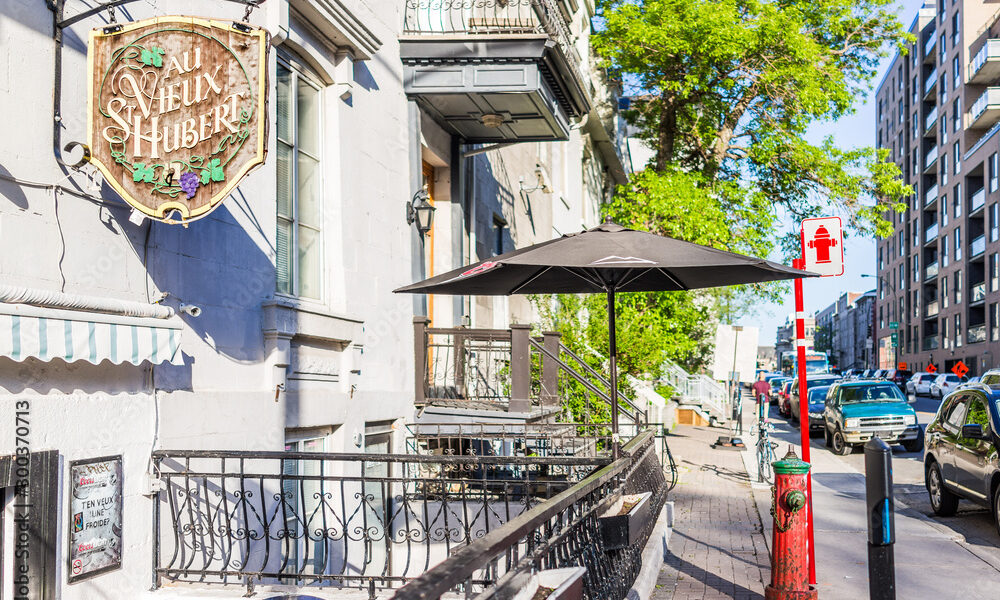
Au Vieux St-Hubert

Author: Agatha Ryan, Contributor

Address: 1241 Rue St-Hubert

Distance from campus: 30-minute walk, 13-minute metro ride

Au Vieux St-Hubert is the definition of a genuine karaoke bar, with a jukebox and a hilarious emcee. The bar’s selection of songs isn’t large, but that adds to the authenticity, as Au Vieux St Hubert takes you beyond the world of YouTube Karaoke. The crowd is incredibly fun and supportive, singing along and clapping even if you miss every note. With no private rooms, everyone sings along together, and the drinks are decently priced. On the Saturday night I attended, the crowd was a mixture of students from McGill and Université du Québec à Montréal, a bachelorette party, some solo singers, and other groups of friends. By the end of the night, after the emcee had engaged us all in a collective rendition of Pitbull’s “Fireball,” everyone was dancing to one another’s songs. 

There is a certain vulnerability that you allow yourself to give in to the second you enter a karaoke bar, an open mindset that you must adopt. Sometimes that is anxiety-inducing, but everyone there leaned into the fear and the fun of it all, and we all fell into karaoke’s welcoming spirit. 

Rating: 9/10

Le Mic Karaoke Lounge

Author: Naomi Gupta, Contributor

Address: 1695 Boulevard De Maisonneuve Ouest

Distance from campus: 15-minute walk, 5-minute metro ride

Located a few kilometres away from campus, Le Mic Karaoke Lounge hosts groups of anywhere between a couple of people to 20 or 30 guests. I joined 15 of my friends there last February, where we rented a private room for the reasonable cost of $25 an hour. Although their private rooms appeared well-equipped, various pieces of karaoke equipment were, in fact, malfunctioning—such as one of the two karaoke microphones provided. Le Mic’s catalogue was fairly limited, which meant that we either had to settle for a handful of mediocre pop songs released between 2016 and 2019 or resort to good old YouTube Karaoke—where performances were punctuated by the occasional awkward advertisement. 

The service was satisfying; the staff were polite, efficient, and most importantly, didn’t rush to kick their clients out as soon as their time was up. I wouldn’t say that this place offers you significant bang for your buck, but it certainly does the job if you’re looking for a fun night out with friends at a close and accessible location.

Rating: 6/10

Bar K Karaoke 

Author: Abby McCormick, Student Life Editor

Address: 2110 Crescent Street

Distance from campus: 10-minute walk, 6-minute metro ride

Bar K Karaoke offers private rooms for groups of up to 16 people. Each room comes equipped with sofas, two TV screens, and two microphones. You can choose from thousands of songs in many different languages, including English, French, Vietnamese, and Russian. The bar’s English song list is a whopping 117 pages! Bar K also offers a wide selection of beverages and snacks for purchase. 

Since this bar is made up of private rooms, its ambiance is really what you make of it. If you go with a group of friends who are ready to sing judgment-free, it might just be one of your best nights out yet. However, if you aren’t ready to let loose, this bar might fall flat. 

Bar K’s room rental price is a bit steep, especially for students, with a four-person room costing $35 per hour. But, if you’re looking to splurge every so often, this bar’s vast array of songs and warm service have made it a personal favourite.
Rating: 8/10

Arts & Entertainment, Film and TV

‘Sex Education’’s finale waves an unsatisfying goodbye to our favourite characters

Spoilers ahead for Sex Education season 4

Netflix’s highly acclaimed Sex Education released its fourth and final season on Sept. 21. With the third season ending on a cliffhanger of paternal origin, a love triangle, and several breakups, fans greatly anticipated the fourth season’s answers to these lingering questions. Unfortunately, these answers were much like most women experiencing la petite mort—quite disappointing.

A glaring issue with the season is its shift in focus. When the show was primarily concentrated on protagonist Otis’ (Asa Butterfield) sex clinic in previous seasons, all of the characters’ issues with relationships and intimacy felt like natural obstacles in their life. In light of a season with more serious personal issues, the plotlines for many characters were stretched thin and lacked the engaging, meaningful development that characterized previous seasons. Many conflicts are resolved too neatly, with resolutions feeling rushed and unsatisfying. This is especially apparent in Otis’ conflict with rival sex therapist O (Thaddea Graham), which the show drags out for eight episodes only to solve immediately in the finale. However, with fans rooting for different relationship pairings, the writers clearly felt the pressure of trying to provide an adequate conclusion to its diverse fanbase. 

This season also introduced several new main characters who were not fully fleshed out due to inadequate screen time—ultimately distracting from viewers’ favourite Moordale personalities. While sometimes a fresh breath of air—such as Ola, Cal, and Viv—new characters can often feel forced. Season four aims to represent every single marginalized group, rather than properly develop or appraise them. Newcomer Abbi (Anthony Lexa) was kicked out of her home and church due to her transgender identity. In spite of these noteworthy hardships, the show barely delves into her struggles, leaving her extremely one-dimensional. Instead, Abbi and her friend group serve as a tool to create conflict between Otis and his best friend Eric (Ncuti Gatwa) rather than serving the group’s own purpose in the plot. 

Many fans were also anticipating a conclusion to the tumultuous love triangle between Otis, Maeve (Emma Mackey), and Ruby (Mimi Keenee). No matter which pairing viewers rooted for, the writers failed to satisfy. Maeve and Otis spent much of the season apart, and Otis’ emotional development from the past seasons seemed to completely disappear, turning him into a whiny, uncaring boyfriend and friend. This lack of consistency undermined the emotional investment viewers had made in his growth over the years. While Maeve’s struggle with grief over the loss of a parent added a more sombre note to Sex Education, the show missed an opportunity to demonstrate Otis’ dedication to supporting her during this challenging time. This made the show difficult to watch, due to it hinging on Otis’ new inability to understand relationships and become a better person.

Nonetheless, the season still had some upsides. The relationship between Mr. Groff (Alistair Petrie) and his son Adam (Connor Swindells) stood out as genuine, providing a satisfying conclusion to their individual character arcs. Both Groffs’ storylines delved into the impact of toxic masculinity on sexual identity and relationships. Adam’s journey sheds light on the challenges many young people confront when accepting their sexual orientation, and Mr. Groff underscores the struggle to show affection in a society that often imposes strict gender norms. 

Ultimately, the final season of Sex Education struggles to replicate the humour and charm that made earlier seasons so enjoyable. It suffers from poor character development, unfocused storylines, and an overabundance of characters, which all lead to a subpar result. Many fans were left disappointed in the series’ ending and the development of several relationships. However, teenagers are messy and unpredictable, and Sex Education has always been a reflection of these flaws. Despite this reality, it is clear that in this case, fans deserved more thorough character development and conclusions to wrap up this series.

Season 4 of Sex Education is now available on Netflix

Student Life

Reflections from the COVID class

A bulk of the undergrads who will walk the graduation stage this year spent their entire first year of university online due to the COVID-19 pandemic. Heading toward graduation myself, I can’t help but reflect upon the odd university experience that I and many other students who started in the fall of 2020 endured. 

Residences were open for those who came to Montreal, but many stayed home for the whole year. Provincial and university restrictions hindered typical first-year experiences: Frosh was virtual, dining halls had limited capacity, and for much of the school year, Montreal was under an 8 p.m. curfew

I spent my first year at home in Washington, D.C., and at first felt I had missed out on many formative experiences. I often wonder if this loss has significant effects on how fellow COVID first years view their university experience as a whole. 

Emma Chothani, U4 Science, spent her first semester at home in Pittsburgh before moving into Campus1 for the Winter 2021 semester. Chothani feels that while COVID first years missed the crazy phase that many experience when they first arrive at university, this wasn’t necessarily such a loss, as students in residence ended up creating close bonds.

Aixa Lacroix, U4 Management, also came to Campus1 during the winter. Lacroix came to cherish any chances to connect with peers in person, even if it was just sharing a meal with a friend. 

“University is what you make of it, so it’s better to take advantage of what you do have,” Lacroix said.

And take advantage we did. 

In some ways, though, COVID opened doors and encouraged first-years to delve into new opportunities and friendships.

I feel like we learned to connect with people digitally in a way that we had never had to before,” LaCroix reflected.

Harry Boutemy, U4 Science, spent his whole first year at Royal Victoria College and met one of his best friends at online Science Frosh. 

YoYo Peng, U4 Science, stayed in China during her first year. She joined the Computer Science First Year Council, which ended up being one of the best decisions she made during first year, as it helped her jump straight into the McGill community when she arrived in Montreal.

“I really wanted to join some sort of club or something,” Peng said. “Otherwise I’d just be another username on the screen.” 

I recall joining The World University Service of Canada Local Committee (WUSC) McGill. Not only did WUSC connect me to the McGill community, but it gave me a sense of purpose during my first year. Helping coordinate the arrival of Student Refugee Program students in Montreal was rewarding because it allowed me to feel like I was contributing to the McGill community even though I wasn’t in Montreal. 

It’s been hard at times.

Despite this remarkable digital adaptability, the loss of that normal first year did have impacts on the subsequent years. 

“I do feel like the graduating class of 2024 is less connected in some ways,” Arezo Farah, U4 Arts, said, having spent her first year at home in Vaughan, Ontario. 

I personally recall arriving in Montreal for the Fall 2021 semester after having been a student for a whole year and feeling on par with the 2021 freshman in terms of McGill experiences. Even for students who were in Montreal their first year, residence life during COVID was isolating and even depressing at times—especially when there was a lot of time to fill with little to fill it with.

But it works out in the end.

Everyone I interviewed felt satisfied with, or at least accepting of, their relatively truncated university experience as they head toward graduation.

“I’m leaving university with a ton of friends and great experiences,” Lacroix said. “I almost feel like if you just focus on what could’ve been, you’re not taking full responsibility for your experiences, because ultimately it is your life, and you can shape it.” 

Take this fourth-year wisdom as a lesson. Appreciate what you do have and dwell not on opportunities lost. Rather, make these years your own, and you too will leave these gates feeling just as fulfilled as us.

Read the latest issue

Read the latest issue