

Latest News

Baseball, Sports

Redbirds baseball stuns Stingers in thrilling walk-off win

After an undefeated weekend in Ottawa with six wins in three days, the Redbirds headed back across the Quebec border to play their regular season opener against the Concordia Stingers (0–1) on Sept. 5. 

The game opened with a two-run top of the first for Concordia, but McGill was quick to respond, tying the game 2-2 in their at-bat. In the top of the second, the Stingers took a 3-2 lead, but third baseman Evan Dunne led off the bottom of the inning with a triple to deep centrefield, and right fielder Brandon Kim scored him on an RBI double to tie the game. 

After allowing three runs in the top of the third, starting pitcher Gabriel Braun was removed from the game and pitcher Braden Tennill entered with the bases loaded. Despite his best efforts, two more runs scored on back-to-back walks, allowing Concordia to exit the inning 7-3. 

Following a quiet bottom of the third and top of the fourth, Kim reached base on a single and centre fielder Alessandro Perreault blasted a two-run shot to bring the Redbirds back within two runs in the bottom of the fourth. 

“I think [the home run] really rallied the team and really got us going,” Perreault told The Tribune. “Obviously it was a little bit difficult even after that, but we still picked it up and found a way to win that game.” 

With the bases empty, shortstop Brad Marelich beat out a ground ball and stole second on a wild pitch. After a walk and a flyout, the Stingers walked three straight batters to tie the game 7-7. Following an RBI single from Dunne and a hit-by-pitch with the bases loaded, McGill exited the fourth inning with a 9-7 lead. 

In the top of the fifth with two outs, an infield single resulted in runners on first and second, and as both runners moved into scoring position on a wild pitch, the pressure was on. The Stingers hit a ground ball to third base—a seemingly guaranteed third out. However, the runner was called safe at first, allowing Concordia to score two runs and tie the game, with first baseman Sacha Remillard still holding the ball. The Stingers scored another run to take the lead 10-9, sending the Redbirds back to the dugout, drained by both the mental error and the humidity. 

After a quiet inning and a half, Concordia scored in the top of the seventh, giving them an 11-9 lead heading into the final frame. 

As the game completed its third hour, Marelich and second baseman Daniel Zevnick reached base on a walk and a hit-by-pitch, respectively, in the bottom of the seventh. With one out and Remillard up to bat, the Redbirds accomplished a double steal, moving the runners to second and third. Despite his fielding misplay in the top of the inning, Remillard became the hero with a massive two-run triple to tie the game and electrify the stadium. 

“It meant everything because I had a feeling of letting down my whole team and this triple was like redemption for all the mistakes I did, so at least it ends on a good note,” Remillard said, still trying to catch his breath after the game ended. 

Dunne then singled to centrefield to score Remillard and walk-off the game. Three hours and 25 minutes after they began, the Redbirds remained undefeated. 

“They were really tired, and you could sort of tell by the length of the game today,” newly appointed head coach Christoper Haddad explained. “One thing I’m going to attest to is they battled every single inning.”

However, when asked what they will be doing to prepare for their next game against the Université de Montréal Carabins on Sept. 12, Haddad had just one thing to say: “Rest.” 

Moment of the game: In the top of the first, catcher Chris Bodine threw out a runner trying to steal second, limiting Concordia to just one run that inning. 

Quotable: “Attitude. Never giving up. [….] Fighting and battling. Also, hitters. [Our] hitters came through big time.”

– Coach Haddad on what went well for McGill.

Stat Corner: There were a total of 25 walks and seven hit-by-pitches. 

Horoscopes, Student Life

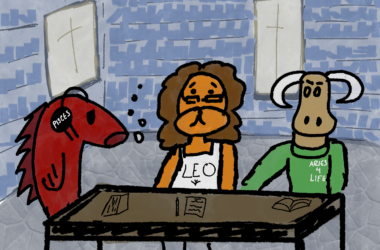
The Tribune predicts: Fall horoscopes

With an end to the summer heat finally in sight and life returning to campus, you may be struggling to adjust to your new school routine. But don’t worry, dear McGillians—the stars are here to plot out the perfect start to your fall semester.

Aries (March 21-April 19): Romance is in the air for you this fall, Aries. A special someone will turn up at the campus Starbucks that will leave you smitten. Don’t forget about your studies, though—those deadlines aren’t going anywhere. 

Taurus (April 20-May 20): Venus retrograde is coming to a close, which will bestow you with clarity and creativity. Use this opportunity to start cultivating your post-grad plan; there’s no better time. You may also find yourself developing a new hobby you had never considered before. Go for it, Taurus!

Gemini (May 21-June 20): Be careful, Gemini! A rocky living situation will come to a head, leaving you frayed at the edges. Luckily, your friends will be there to support you and help you get back up on your feet.

Cancer (June 21-July 22): As your sign aligns with Jupiter, fortune is on the horizon, Cancer. You will experience a series of events that will leave you feeling more financially secure. It’s also a great time for you to socialize. So, head out to Gerts with your friends or check out the McGill Farmer’s Market before school gets too hectic. 

Leo (July 23-Aug. 22): You’re in for a great month, Leo! As the sun aligns with Jupiter, your social life will be on fire. Use this opportunity to branch out and talk to a new classmate in your lecture hall. You never know—maybe a romance will blossom. 

Virgo (Aug. 23-Sept. 22): The sun is in your sign this month, so the spotlight is on you—make sure to use it wisely. At the end of the month, you will get a stroke of inspiration that will leave you more confident. Go get ‘em, Virgo. 

Libra (Sept. 23-Oct. 22): Oof! Libra, you’re in for a rough start to the month. A long-term plan will come crumbling down, leaving you to pick up the pieces. Lucky for you, when the sun enters your sign on Sept. 23, your social life will flourish.

Scorpio (Oct. 23-Nov. 21): This back-to-school season, you will be on your A-game, Scorpio. You will spend hours in McLennan getting a head start on assignments. Fortunately, these immaculate study habits will pay off when your assignments come due.

Sagittarius (Nov. 22-Dec. 21): After an evening at Activities Night, a new passion will ignite a spark in you that you never would have imagined. Whether it be a school club, sports team, or social cause, take full advantage of it—it may help guide your future career prospects. 

Capricorn (Dec. 22-Jan. 19): With all those classes at the top of McTavish, you will be getting fit this semester, Capricorn. Just don’t be tempted to skip your classes—midterms are coming sooner than you think! 

Aquarius (Jan. 20-Feb. 18): You will start the semester feeling like the mouse in Redpath library at midnight: Everyone is moving on without you. But don’t worry, you’re not alone in feeling lonely. Things will turn around at the end of the month when you hit it off with someone in line at the hot dog stand. Will it be a friendship or romance? Only time will tell. 

Pisces (Feb. 19-March 20): This fall will bring a new set of challenges for you, Pisces. Don’t be afraid to tackle them head-on. If you maintain a positive mindset, this month will be rewarding—with new challenges come new opportunities.

Editorial, Opinion

Divest from fossil fuels and end greenwashing—McGill needs climate action now

The past week has been marked by a heatwave sweeping across the country, with temperatures rising approximately ten degrees higher than the September average in Montreal. As McGill students walked to classes through the humid air, one thing was made clear: Even the most privileged are no longer spared from the effects of climate change. 

The recent heatwave is only the latest example of climate change’s devastating effects. As of now, the wildfires raging across Canada this summer have destroyed 165,000 square kilometres of land, making it impossible to ignore the life-threatening reality of the climate crisis. Even within the comfort of the McGill bubble, smoke filled the lungs of anyone outdoors in the weeks of late June when Canadian cities experienced the worst air quality in the world. 

In cities where the search for affordable housing is already a heavy weight on the shoulders of young adults, the climate crisis only serves to exacerbate this issue. In California, where subsidized housing is being built in wildfire-prone areas, insurance companies are gradually starting to pull out, leaving residents unsafe and uninsured. In Canada, Desjardins is threatening to increase insurance premiums in response to Quebec’s wildfires. While the government has failed to control the current housing crisis, it has surveilled, policed, and underserved unhoused populations in Montreal who need care, shelter, and social services. Moreover, the lack of compassion toward wildfire victims does not address the struggles displaced populations face in acquiring permanent, safe housing. 

Despite climate change’s universal consequences, Indigenous peoples in Canada are still disproportionately affected by the climate crisis. When land turns into property, when respect for the land turns into greed, climate change becomes the ultimate effect of settler colonialism. We must listen to Indigenous voices and seek solutions from those who know and care for the land and its many relations best. Indigenous peoples, who make up just five percent of the world’s population, protect 80 per cent of our global biodiversity. Embracing a comparative approach to climate justice will allow governments to understand what land means to others to better protect it. The loss of land for Indigenous peoples in rural and urban spaces goes beyond economic interests or environmental violence as the loss of a core, grounded, and personal connection, built from a young age. 

Still, the Canadian government will not say or practice Land Back.  Indeed, when it comes to Canada’s attitude toward the climate crisis, the Greenbelt controversy represents its failures. Ontario’s Greenbelt––a protected area of two million acres of farmland, forests, and rivers––prevents urban sprawl and ensures Ontarians’ access to local food, clean water, and nature. Last year, however, Ontario’s Progressive Conservative government announced the construction of 50,000 homes in these protected areas, thus removing 7,400 acres of land from the Greenbelt and using the housing crisis as an excuse to please donors. The housing crisis is not a reason to dismiss environmental protections and vital legislation that safeguards the little protected land Canada has left.  

Yet, both the government and institutions such as McGill engage in the individualistic rhetoric of climate change, displacing the blame on everyday people to protect themselves. With every summer getting hotter and every fire burning more fiercely than the last, throwing your bottle in the right bin on campus will never be enough. What we need is collective action on the ground and legislative action from above.

McGill needs to put an end to its greenwashing campaign and take action. As a university that  takes pride in its brilliant researchers, McGill must listen to the voices of environment experts around the world. Fossil fuels are by far the biggest contributors to global climate change, accounting for nearly 90 per cent of all carbon dioxide emissions. McGill, which is investing tens of millions of dollars in the fossil fuel industry—$11,982,749 in Royal Bank of Canada and $2,610,419 in TC Energy as of Dec. 31, 2022—is not only complicit in global warming, it is complicit in the forests that are burning and in all the disasters to come. McGill needed to take climate action 20 years ago and now, more than ever, it needs to divest once and for all.

Arts & Entertainment, Film and TV

‘Bottoms’ tops all other summer comedies

Dubbed ‘Lesbian Fight Club,’ Bottoms is Canadian director Emma Seligman’s second feature film. Reminiscent of beloved 90s and mid-aughts teen comedies like Superbad and American Pie, the film delivers a hilarious and unapologetically gross romp that is sure to become an instant cult classic. With a tight 90-minute runtime, Bottoms should be at the top of everyone’s watch list this weekend. 

The film follows PJ (Rachel Sennott) and her childhood best friend Josie (Ayo Edebiri), two nerdy high schoolers who start a fight club masquerading as a self-defence club, in an effort to lose their virginities to cheerleaders. As the club gains traction, the most popular girls in school join, much to the delight of its founding members. Soon, the duo finds themselves in way over their heads as their web of lies starts catching up with them. 

Seligman and Sennott’s first collaboration, 2020’s Shiva Baby, was gripping but unsettling‌. In this venture, which Sennott co-wrote, the pair swap suffocating anxiety for a lighter, more improvisational narrative. They have crafted a script that plays within the established rules and tropes of its predecessors while remaining relevant to modern young audiences’ tastes. It feels in touch with the pop culture references of the moment, making liberal use of Twitter’s cultivated vocabulary, without ever veering into cringy. Pinpointing cultural touchstones can be challenging in our ever-changing social media landscape, but the writing duo seems to accomplish more than what so many others can—creating a script that still feels relevant and clever, rather than quickly becoming outdated like the trends it draws from. The result is a piece of media that feels genuinely authentic in speaking to its audiences.

Edebiri and Sennott are magnetic and infinitely watchable, and the central premise of their friendship keeps the occasionally surrealist plot grounded as a teen comedy. However, the pair with the best chemistry is by far Edebiri and Havana Rose Liu, who plays cheerleader Isabel. The two bring an electric rom-com energy that adds a sweet and satisfying touch to what is otherwise a rather violent and absurdist final act. With adorably awkward run-in and swoon-worthy confessions of love, the two instantly become audience favourites—simply put, they are the couple you root for, a staple of the genre. 

The rest of the supporting cast fills out the captivatingly hilarious and absurdist world of PJ and Josie’s high school with equal panache. Nicholas Galitzine shines as Jeff, star quarterback and world-class idiot, and Kaia Gerber, making her acting debut, portrays an unsurprisingly believable popular cheerleader Brittany. The chemistry of this great ensemble only adds to the ever-expanding repertoire of players in the Zillennial Cult Comedy Cinematic Universe.  

The film’s true crowning achievement is how it’s able to do queer representation in a fun and light-hearted format. Mainstream queer representation, particularly lesbian representation, at the box office often comes in the form of serious dramas, so it’s refreshing to see a movie built for young queer audiences to have fun with. PJ and Josie’s trouble with getting girls isn’t about them being lesbians—there are other out queer students at their school—it’s just that they’re losers. Bottoms celebrates and has fun with young queer culture without it having to feel like a talking point of the movie. 

With such roaring success, the bright future that Seligman and Sennott have as a creative team will be undoubtedly hilarious to watch. From needle drops to costume choices, the duo evidently have a great affection for the teen comedy genre and may be able to give it a full revival, if not a makeover, for a new generation. With killer jokes, dynamic chemistry, and a final set piece worth the price of admission, Bottoms is a breath of fresh air in the space of teen comedies.


‘Bottoms’ is currently in theatres across the country.

Campus Spotlight, Student Life

Frosh 2023: A test of the head, heart, and liver

McGill Frosh is an infamous four-day university orientation, sending thousands of first-year undergraduates across Montreal to concerts, bars, clubs, boats, beaches, and rooftops. Frosh is not an event for the faint of heart, legs, or liver. Drinking often begins in the morning and continues far into the night, giving the event a controversial reputation. Nevertheless, Frosh is a beloved and tried-and-true introduction to university life for thousands of first years that many, even years after, cite as their favourite memory at McGill.  

While it elicits generally positive reviews, it seems that Frosh caters to a very specific personality. Gabrielle Chen, U0 Arts, highlighted that Frosh’s audience can exclude party-averse students in an interview with The Tribune

“You have to really love that one type of partying to have a good time because it’s not really dynamic or a very well-rounded event,” Chen said. 

Maya Santos, U1 Management, also pointed to the event’s focus on drinking culture.

“Frosh isn’t very school-related. It’s more party-related.” Santos said.

Sara Prins, U0 Arts, agreed with Santos’ sentiments. She enjoyed Frosh, though attributed the majority of this experience to her outgoing nature. 

“[Frosh] is built for a specific person,” Prins said. “If you’re not comfortable with dancing, you’re kinda screwed. If you’re not comfortable being around mobs of people, you’re kinda screwed.”  

While “screwed” may be an exaggeration in some cases, Frosh activities lack the versatility required to appeal to their diverse participants. Beyond the restrictions of personal character, many froshies—to use the colloquial term—are 17 years old and thus not of legal drinking age. These students must stay sober at events where most other froshies are drinking heavily. In addition to the feelings of isolation that come with such a restriction, underage froshies receive no discount on their Frosh ticket.

Beyond the alcohol issue, Frosh requires a high level of adaptability and flexibility. It is an exciting but ruthless mix of beginning-of-year nerves, poor sleep, sub-par meals, and lots of walking. 

“If you have a lot of allergies or any sort of disability—even like anxiety—[Frosh] could be really tough,” Chen pointed out. 

Beyond accessibility, some first-years opt out of Frosh for a variety of reasons. Ava Monet-Jazt, U1 Arts, lives in Montreal and has a group of friends and chose to skip the boozy and expensive orientation.

“I also know all the bars and all the clubs that I enjoy, so why would I spend 250 dollars to get really day drunk with a bunch of strangers if I can go and get drunk at the bars I already like with the friends I have?” Monet-Jazt said.

Though Frosh saw a great deal of complaints about long days, too much alcohol, and the expensive ticket price, the event still garnered generally positive reviews this year. 

Aaron Bentros, U0 Arts, even rebutted the argument that there was pressure to drink during Frosh. 

“I can’t drink too much, so I staggered myself out with water, and I don’t think anyone’s pressuring me to do anything,” Bentros said. 

Chloe Dann, U0 Arts, described Frosh as a great way to make close friendships with other first-year students, reporting that many of her closest friends thus far were made during the week’s activities.

While Frosh could certainly use some changes, it nevertheless provides a foundational opportunity for one to make friends, discover the essentials of Montreal nightlife, and jump headfirst into the McGill community. 

McGill, News

Floor fellows file grievance against McGill over poor working conditions

The union representing floor fellows at McGill, the Association of McGill University Support Employees (AMUSE), has filed a grievance against the university over changes to floor fellows’ accommodations. Floor fellows are upper-year students hired to live in residences and support the primarily first-year students living there, who are often new to living on their own. A grievance is a formal complaint made on behalf of the employees about a violation of their rights in the workplace. It can mean a violation of the law or the collective agreement.

Beginning in the 2023-2024 academic year, McGill’s Student Housing and Hospitality Services (SHHS) converted larger rooms formerly designated for floor fellows into rooms for students, with floor fellows now occupying smaller rooms. According to AMUSE Vice President (VP) Floor Fellows Graeme Scott, this change in accommodations increases the number of spaces where floor fellows will be forced to interact with students throughout their daily routine, making it more challenging for floor fellows to take a break. AMUSE claims that the policy violates the 36-hour rest period guaranteed in their collective agreement with McGill.

“Imagine if you work at a more conventional office where you go home at five o’clock. Imagine if you’re at home on a Sunday morning and your co-workers from the office can just wander into your kitchen and start talking to you,” Scott said in an interview with The Tribune. “By removing floor fellows’ ability to have these private spaces where we can step away from our residents, it makes it impossible for us to ever take a break from working.”

In a written statement to The Tribune, McGill Media Relations Officer Frédérique Mazerolle reported that these changes, specifically the renovation of some floor fellow rooms to accommodate additional students, were made in response to a growing demand for student housing—but do not breach McGill’s legal agreement with floor fellows.

“The renovations were not a factor in the negotiations with [AMUSE] and are a separate project that does not affect the terms of the contract,” Mazerolle wrote. “Our priority is to provide an equitable living experience for all residence students.”

AMUSE has also accused the university of bargaining in bad faith. Documents Scott shared with The Tribune reveal that the policy of smaller rooms for floor fellows has been under development for the past five years. However, the policy was first introduced to floor fellows by the SHHS on March 17 of this year, after strikes demanding higher pay in Spring 2022 paved the way to finalize their collective agreement with McGill. 

Scott believes the timing of the policy’s implementation was strategic. Currently, floor fellows can no longer strike or perform work stoppages or slow-downs because they are bound to Article 28 of their collective agreement.

“Trying to separate this policy from the contract is, I think, a false and an absolutely disingenuous framing of the issue,” Scott said. “If we had known about this [policy] during the bargaining period, this would have been a massive priority. Now that we’re locked into this collective agreement, [McGill] chose to strike at a time when we have very little recourse through collective action.”

Scott also alleged that SHHS made it clear to floor fellows—both in communications with them regarding union relations and as employees—that the policy was primarily designed to generate additional revenue. 

“It has also been made clear that this policy is an attempt to generate extra revenue, in order to help SHHS clear its debts, which we have been told are in the area of multiple [tens] of millions of dollars,” Scott wrote. “If the primary motivation were to accommodate more students, McGill would not be renting out the larger Floor Fellow rooms to first years.”

Joey* is among the many floor fellows who claim the policy has had significant negative impacts on their quality of life in the residences. One of Joey’s major concerns with the policy is that it forces them to share a bathroom with first-year students. In their residence, the hooks to hang up towels are across from the shower stalls, creating the potential for students and floor fellows to walk in on one another while they are undressed. 

In July 2023, floor fellows requested that SHHS designate certain bathrooms specifically for floor fellows. In an email chain obtained by The Tribune, SHHS responded by telling them it would not be logistically feasible to do so because it would limit the number of bathrooms for students. As a compromise, the SHHS offered to install hooks in the showers to allow for more privacy for floor fellows and students. As of Sept. 11, however, hooks beside the showers have not been installed in Joey’s residence bathroom.

“This unresolved issue has placed me in a vulnerable situation [of] being assaulted or harassed. I do not feel safe when I go to shower every night,” Joey wrote to The Tribune. “I feel disappointed that no action is being done to fix this easily solvable issue.”

Joey also shared that the changes make it more difficult for them to spend time with their friends. Their smaller room size means there is less space to accommodate guests, and their floor fellow duties make it difficult to find time to visit their friends’ homes. They explained that the policy has consequently interfered with their social life and has negatively affected their mental health. 

“My social well-being has been impacted negatively as I no longer have the luxury of hosting many guests in my room,” Joey wrote. “The room changes have definitely decreased my social interactions with friends and exacerbated feelings of loneliness.”

For Joey, the impacts of this policy have extended to the attitude they bring to their work as a floor fellow. Previously, they had spent time outside of their work hours planning bonding activities such as dinners and game nights for their floor, but they do not intend to do so this year.

“The morale is low within the floor fellow community,” Joey wrote. “I am no longer motivated to go above and beyond my job requirements.”

The Tribune interviewed several first-year students, none of whom reported any major disruptions to floor fellow support so far. According to Charlotte Dominy, U0 Arts, her floor fellow ran several activities during the first week and created a floor-wide group chat that helped students bond.

“The welcome week, I think it went by smoother because we had the opportunities to connect on socials because of the floor fellow,” Dominy said. 

While floor fellows have reportedly assisted in a smooth transition into residence life for many first years, Scott believes that the worsened working conditions of floor fellows will ultimately lead to “a massive reduction in the quality of care” for first-year students. He stressed that without a culture of respect between floor fellows, AMUSE, and SHHS, floor fellows will lose motivation to go beyond for students in residence.

“When floor fellows are deprioritized by student housing, then the natural long-term result is that floor fellows begin to deprioritize their jobs in return, because why should we give extra when we’re not being treated fairly,” Scott said.

AMUSE has referred the grievance to the legal team of their parent organization, the Public ServiceAlliance of Canada (PSAC). AMUSE hopes to reverse the policy and receive monetary compensation for the university’s allegedly bad-faith bargaining through arbitration or court hearings. 

*Joey’s name has been changed to preserve their confidentiality.

Arts & Entertainment, Music

FEMINAE NOX: Empowering Black, Indigenous, and people of colour working in music

Walking into Francesco’s Discoteca, I was met with hazy red lights that lit up the long room with a seductive glow. Large mirrors scattered the sparkle of at least 30 disco balls around the room, dipping guests in a starry glow. Francesco’s was vibrant, from the postmodern art warming the walls to the towers of shining glasses ready to be filled. But if the venue was a living, breathing entity, then its beating heart was the music. FEMINAE NOX brought the place to life. 

Founded by three incredibly talented McGill alumni—Mira Silvers (BA ‘11), Gloria-Sherryl François (BA ‘21), and Seny Kassaye (BA ‘20)—FEMINAE NOX is an equity-driven platform striving to prioritize Black, Brown, and other racialized women on stage and behind the scenes. This Thursday, Sept. 7, 2023, marked the launch of the platform’s residency at Fransesco’s Discoteca, ushering in a new era of soon-to-be regularly scheduled shows. 

A city with an unquenchable thirst for nightlife, Montreal boasts many clubs that entice people out for a night of dancing. However, under the glamour of these establishments lies a static and restricted field. The agents, DJs, and staff in the music scene are predominantly white men, with little signs of a changing atmosphere. Unlike other professions that have strict qualifications, the music industry lacks strict criteria for choosing a job candidate. The beauty of this informality is a seemingly accessible and mixed industry, but in reality, it creates an environment based on connections where friends hire friends—a barrier that often restricts access for Black people, Indigenous peoples, and people of colour.

I interviewed co-founder Mira Silvers, who connected me with the two other co-founders. She also came up with the platform’s intriguing name—using both Latin and a reference to the Greek Goddess Nyx to mean “Goddess of the Night.” She has worked internationally in music in marketing and now is a live agent for musicians, artists, and DJs, as well as an artist manager. 

Silvers acknowledged the industry’s unwillingness to allow entry to racial minorities. “There’s a fear that sharing info will detract from your own pocket,” she said in an interview with The Tribune. “I’m anti-gatekeeping, the more we can share, the better the industry can get. We can create a platform built by us for the people being left on the fringes. We can create the industry we want.”

Silvers remembers the challenges she faced breaking into the industry, especially in Montreal, where she noticed a lack of support and guidance. Likewise, co-founder Gloria-Sherryl Francois (also known as the incredible G L O W Z I) and co-founder Seny Kassaye (a live agent and marketing executive who has worked on digital marketing compaigns for artists like Cardi B, Central Cee, Megan Thee Stallion, and the Barbie Soundtrack) both faced many challenges themselves. It is these plights and difficult experiences that brought the three leaders together, determined to reshape the industry’s future. 

With FORT Agency—of which Seny and Mira are live agents and G L O W Z I is a client—offices in London, New York, Los Angeles, Chicago, and Montreal, these women are ushering in a wave of change internationally. 

Kassaye’s nomination for the Young Executive Award at the 2023 International Live Music Conference’s Arthur Awards highlights her groundbreaking role as one of the only Black booking agents in Canada. While this is a trailblazing moment to be proud of, the reality of her being one of a few Black booking agents is a harrowing reflection of the stagnant state of diversity in the industry. 

“People tell us we’re making history, but this history should have been made way in advance,” Silvers stated. 

FEMINAE NOX will continue to disrupt the nightlife scene one event at a time, spotlighting racialized people & nonbinary people sharing their fiery love for music. 

FEMINAE NOX’s next live show will be during POP Montreal on Sep 29th featuring Annahstasia + Eritrean-Canadian M.I.Blue.

For more information concerning the underrepresentation of Indigenous, Black, and People of Colour Live Music workers in Canada, consider reading https://www.canadianlivemusic.ca/closing-the-gap

Science & Technology

Global collaboration is key to avoiding extinction

As the world is adapting to global-scale environmental crises, the scientific community must collaborate like never before. Current, unparalleled rates of biological diversity loss demand prompt implementation of science-informed policy. 

In response, scientists belonging to the Group on Earth Observations Biodiversity Observation Network (GEO BON), co-chaired by Andrew Gonzalez, professor and Liber Ero Chair in Conservation Biology at McGill University, have developed a proposal for the Global Biodiversity Operating System (GBiOS). 

GBiOS would primarily exist to support each nation’s goals of preserving biodiversity by pooling together global data, knowledge, and technology. By connecting countries’ individual efforts, this system would also encourage collaboration and inform international policy-making.

Existing data repositories, like the Green Climate Fund (GCF), while valuable, lack a systematic approach. This hinders their international analysis and comparison, essential for guiding the strategic introduction of conservation measures and determining priority areas for conservation efforts.

“We can’t just keep going with a patchwork, opportunistic approach,” Gonzalez said in an interview with The Tribune

GBiOS would take advantage of pioneering technology, including a constellation of satellites, and the use of drones, environmental DNA, and camera traps, to bring the global science community together in monitoring and sharing critical data related to biodiversity. 

The system would not only inform biodiversity-related policy-making, but become an imperative tool for the corporate sector due to an upcoming international framework that will soon require companies to report their environmental impact.

“In order for companies to [disclose their impact], they’re going to have to have data,” Gonzalez explained. “And they don’t see something organized coming together that applies the proper scientific standards.” 

While a system like GBiOS is clearly critical for scientists, policy-makers, and business executives, it is currently nothing more than a proposal, requiring government funding and public support to become a reality. 

Gonzalez analogized GBiOS’ proposed infrastructure to a bucket that has been created by various global entities. A consistent, reliable flow of investment then needs to fill up this bucket. While certainly more complicated in reality, Gonzalez emphasized its feasibility. 

“We have a governance model, and a funding mechanism, and I know it sounds crazy, but it’s really not difficult,” Gonzalez said. “We have the organization in place, and there’s plenty of money in the system. It’s just not being invested at this point.”

While every nation might not necessarily be in agreement with GBiOS, Gonzalez recently returned from the Intergovernmental Science-Policy Platform on Biodiversity and Ecosystem Services (IPBES) 10 Plenary with a clear takeaway: “Many countries, both developed and developing, need the support [that GBiOS can offer].”

Though necessary when tackling global issues like climate change and biodiversity, achieving international cooperation is always tricky to navigate. If any global framework, such as GBiOS, is going to have a fighting chance, it needs to be designed with international support from the ground up. After all, climate change and biodiversity know no borders.

“It’s a very 20th-century solution for a few wealthy Northern Hemisphere countries to come together, decide what to do, build a big system, and then have everybody jump on if they want to […] the world has changed since then,” Gonzalez said. 

GEO BON, the organization behind GBiOS, addresses this issue by calling for a global approach, with an international team of scientists drafting the proposal. The system would concede to a slower, cooperative process, ensuring the equitable distribution of infrastructure across the world, so that relevant data is acquired fairly, efficiently, and reliably. 

The loss of biodiversity has a universal impact. Everyone, including the McGill community, must continue to think of themselves as a contributor to a larger global network. Working internationally promises a much greater pay-off in the end, a truth that Gonzalez concluded with the old proverb: “If you want to go fast, go alone. If you want to go far, go together.”

Hockey, Martlets, Sports

Bishop’s Gaiters trounce Martlets in a 7-0 sweep

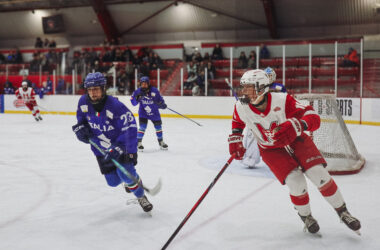
Following a disappointing 2022-23 season ending with a 2–32 record overall, the McGill Martlets hoped to start off on a better foot facing off against the Bishop’s Gaiters in a preseason match-up on Sept. 8. However, just 56 seconds into the first period, Bishops’ defenseman slid the puck past Martlets goalkeeper Sarah Carmichael, kicking off an early lead that McGill would not be able to counter for the remainder of the game.

Playing with a fresh roster composed of eight new players coming into the first game of the preseason, it was apparent that the Martlets struggled to gain their foothold. Despite attempts to generate offensive momentum, including first-year India Benoit’s rush into the offensive zone, the first period consisted mostly of sloppy passes, mishandled pucks, and sporadic possession. In the final minute of the period, Carmichael took a glancing blow off the helmet, saving a hard shot on a Bishop’s two-on-one. This led to the Gaiters keeping their lead at 3-0 lead heading into intermission.

Still, all three of Bishops’ first-period goals were scored in the first half of the period, and although McGill allowed two goals apiece in the following two periods, the pace of the game would improve steadily as the Martlets slowly found their footing. 

Undeterred by the rough start to the game, Martlets’ forward Sarah-Maude Lavoie, whose standout performance kept the game competitive, believed the game was a stepping stone for the team. 

“The first period was hard because it was the first time playing together but it got better,” Lavoie said. “We know now [what we need to work on], so I think we’re going to go in the right direction.” 

The second period started with another early goal from Bishop’s but by the close of the period, the Martlets were able to better hold off their opponents’ offensive rushes, ending the period with a misleading 5-0 score.

The game ended in a 7-0 defeat for the Martlets, but despite the blowout score, head coach Alyssa Cecere remained optimistic about the coming season.

“Having a stronger start would be something the girls would want to focus on [and] us as a staff would want to focus on,” Cecere said. “We know we’re not going to necessarily get it all done in the first game, the second game, and we’re building up to the season.” 

First year forward Taylor Garcia mentioned the challenging transition from youth hockey to the varsity level. 

“It’s definitely [that] the game just moves a lot faster, you have to make decisions much quicker because everyone is just older and at the next level,” Garcia told The Tribune

Although the Martlets home opener ended with a disappointing loss, the season will progress and the game shouldn’t be taken as a harbinger. How the young team will respond to the challenges of the coming season remains to be seen, but with the confidence of the coach behind their backs, this will test their capacity for growth. 

//The Martlets will play their next preseason game against St. Thomas University at McConnell Arena on Sept. 23.//

Moment of the Game: The Martlets put forth a valiant effort during a penalty-kill halfway through the second period, including an impressive forecheck ending in a shot by forward Sarah-Maude Lavoie. 

Quotable:

“New batch, new blood, fresh legs, that I would say is the notable thing, […] They’re eager to learn, they’re going to push the others as well. You saw it today, they work hard, they’ve got some good hockey sense, some good skills, we’re excited about that.”

 –Head coach Alyssa Cecere on the team’s potential 

Stat Corner: Despite allowing 14 shots on goal in the first period, the Martlets were able to cut Bishop’s momentum in half by the end of the game allowing only seven shots on goal in the third period. 

Art, Arts & Entertainment

“Mother, Memory, and Cellophane:” A queer performance of a haunted past

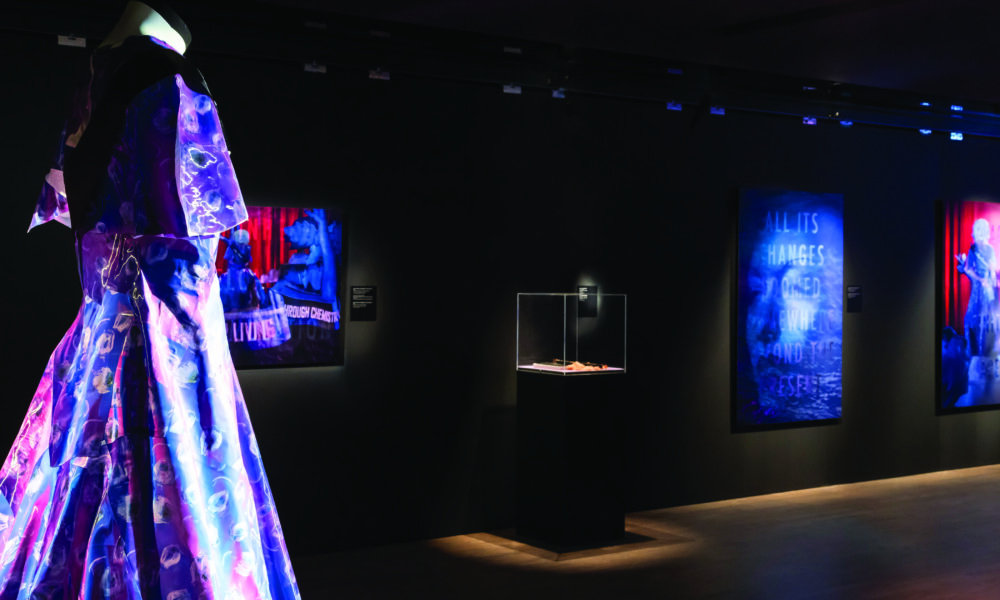
Stepping into Séamus Gallagher’s “Mother, Memory, and Cellophane” at the McCord Stewart Museum transports the viewer to a haunting world of artificiality and feminine identity, with a future in ruins. The exhibit melds femininity with the synthetic through drag performance, embodying imagined ideas of progress and their striking relevance in today’s world. 

The exhibit takes its cues from the 1939 New York World’s Fair, whose theme was “The World of Tomorrow.” The fair featured the figure “Miss Chemistry,” the DuPont company’s living advertisement for the world premiere of nylon stockings. The next year, a newspaper survey found that mother, memory, and cellophane were the most beautiful words in the English language, thus inspiring the name of Gallagher’s exhibition.

Consisting of five prints, each made up of two images that change based on the viewer’s perspective, the exhibit creates a dazzling choreography for visitors. These images present a tension between visibility and invisibility, and much like the second skin of nylon stockings, prove to be elusive. 

In video form, Gallagher plays the drag representation of Miss Chemistry’s ghost, circulating through the past, present, and future, posing a promise of innovation gone awry. What is most enticing about Miss Chemistry is her eerie face: Shadow and light dance across her mask, veiling her full portrait. She is unreachable by the audience, much like how the shiny material of a nylon stocking conceals the leg that wears it. 

At the time of the New York World’s Fair, the nylon stocking was viewed as the pinnacle of chemistry and innovation—it harnessed coal, air, and water into a new, consumable form. 

“Oil transmuted to stockings to rope. This material, less of an object, more of a movement,” Miss Chemistry’s ghost says. “Like those old nets and ropes, I’m unable to return to where I was before.” 

These products, once hailed as symbols of progress, are now viewed in a new light. This material cannot be recycled—DuPont was responsible for the excessive pollution of rivers and soils within the United States. The boundless optimism of 1939 has since evolved into a sombre understanding, as the repercussions of industry, notably climate change and pollution, unfold before us in real-time. This exhibit perfectly captures the haunting of a past in which anything seemed possible. 

This exhibit falls under the larger umbrella of the 18th MOMENTA Biennale de l’image. The event takes place across sixteen venues, with twenty-three artists presenting solo projects that all explore the theme of “Masquerades: Drawn to Metamorphosis.” 

Curator Ji-Yoon Han told me that this project aids in reinventing notions of identity, opening it to new meanings. According to Han, identity is becoming, rather than being. Identity exists within a liminal space, between self and other; it remains unfixed. 

“The title of the exhibition was the three words that appealed in 1940, and I think it’s perfect,” Han said in an interview with The Tribune. “You have all the plastic and the cellophane that has been so instrumental in the modern world, but there is also memory, which has to do with the past, and mother, this kind of impossible nostalgia of going back to a lost future.” 

One of the main facets of the Biennale’s masquerade is mimicry. Gallagher’s portrayal of the original Miss Chemistry provides a glimpse into how various figures and ideas have changed over time. 

“Drag culture plays a lot with the stereotypes of femininity and pushes them to an extreme. I’m really interested in that excessive part; that also goes with the slippery part that Séamus is creating with their work,” Han explained. 

“You can see the defaults, it’s not quite there. And drag culture is also about that; you would never be completely fooled, it’s not like a perfect mimicry, on the contrary, it’s an imperfect mimicry.”

Mother, Memory, and Cellophane” runs from Sept. 8, 2023, to Feb. 4, 2024. Student tickets are $15 and are available on the McCord Stewart website or at the ticket counter.

Read the latest issue

Read the latest issue