

Latest News

Science & Technology, Student Research

Ad Astra: McGill Rocket Team’s successful launch

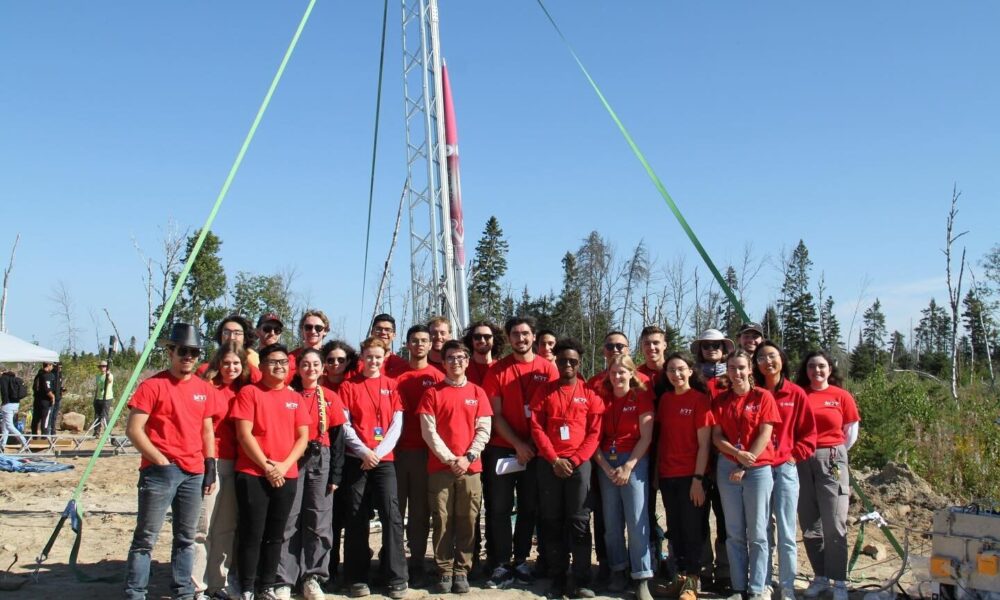
On Aug. 29, 2023, the McGill Rocket Team, having driven the ten hours from Montreal to Timmins, Ontario, successfully launched their lovingly-engineered rocket Porthos. The vehicle flew to a height of 10,000 feet, and most impressively, the flight used a fully student-researched and developed hybrid engine.

Project Porthos earned them second place in the Advanced Category in the Launch Canada 2023 Challenge, not only showcasing the team’s exceptional expertise in rocketry but also confirming their reputation as a formidable force in innovative aerospace endeavours. 

In an interview with The Tribune, Kay Romann, U2 Mechanical Engineering and Technical Director of the team, discussed the extensive commitment the team has put into Project Porthos over the years. 

“There’s been years of development and […] testing. It takes a lot of time to validate an engine; you have to do it multiple times to identify issues and solve these problems,” Romann explained. “There’s the whole mathematics and physics of writing models to predict the performance of your engine [….] And so all of these aspects have been worked on by multiple generations of students that have now gone on to do research [and] commissioned research.”

Indeed, designing a hybrid motor—one that contains both solid fuel and liquid oxidizer—is no small feat. 

“Engines that we’ve flown in the past, that most people buy, are solid motors, so both the oxidizer and the fuel are solid,” Amanda Kronish, U4 Mechanical Engineering and Co-Captain of the McGill Rocket Team, explained to The Tribune. “Hybrid engines are a lot more complex because you need to have plumbing to fill your rocket with that liquid oxidizer and transfer the liquid oxidizer to the combustion chamber. And that’s why […] it is so much more complex and it takes so much more work.”

This level of complexity does not come without its own set of substantial challenges.

“Our first hybrid rocket Athos […], actually never got to fly. That was the first rocket we built after the pandemic,” Alexandre Fahmy, U4 Mechanical Engineering and Co-captain of the team, said. “A lot of our members graduated, so we lost a lot of experience and knowledge. It was a huge challenge to build that rocket Athos; every little thing was difficult. […] But all of that experience allowed us to do much, much better this year.” 

As they looked ahead to the new academic year, the McGill Rocket Team shared their two major objectives with The Tribune. One of the team’s goals is to significantly step up the power of their rockets. 

“For this coming design cycle, we’re designing a rocket that goes to 60,000 feet, which is the maximum height that a rocket can fly at the competition that we attend,” Kronish said. “We want to push our engineering skills to their limits.”

The rockets that the team usually launches fly to 10,000 feet, which is a difficult task in itself, but achievable with a subsonic flight—one where the rocket never moves faster than the speed of sound. In order to achieve 60,000 feet, the rocket would have to go supersonic. 

“It presents a whole new host of engineering challenges like making an airframe that survives that kind of speed, electronics, recovery, all kinds of things,” Kronish said.

The team’s other aim involves the work of the Payload subteam

“We also are trying to start an orbital CubeSat program,” Kronish said. “In our rocket, we always have a payload, which is a scientific experiment, because we always want our rockets to have some kind of purpose, and an orbital CubeSat would basically be an extension of that program. So we want to send scientific experiments to space.” 

Science & Technology

A guide to McGill’s first-year science lecture halls

Leacock 132

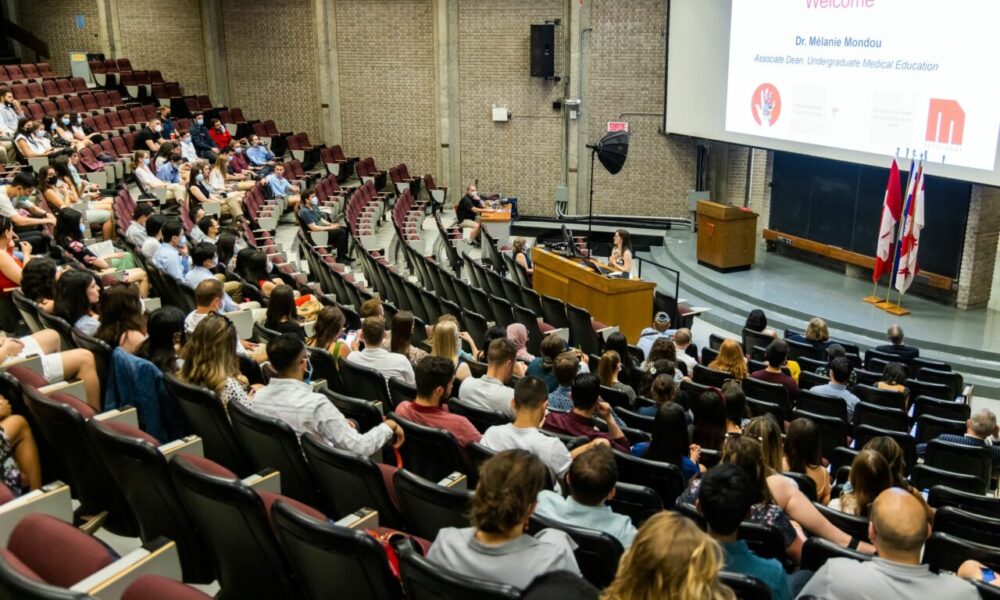
Any analysis of McGill’s intro-level science lecture halls has to start with Leacock 132, by far the most infamous room in a U0 Science student’s life. The largest lecture hall at McGill, Leacock 132 seats 650 people. While the space has an impressive resume, having hosted speakers such as Jane Goodall, Susan Sontag, and Ralph Nader, most students know it simply as one of the dreariest places to spend 50 minutes on campus. 

“I’ve had six classes there and nothing of note has happened,” Ella Klein, U2 Arts, said, referencing their extensive experience with the lecture hall as a psychology major, in an interview with The Tribune. “Leacock 132 is a staple for psychology classes. I think all of the intro psychology classes are in it.”

One tip from an upper-year physics student: Keep a close eye on your pencils in this lecture hall, as the tightly-packed chairs make it almost impossible to find a missing item. 

“I dropped my Apple Pencil one time in Leacock 132,” Mikey Baker, U2 Science, said in an interview with The Tribune. “It was the most stressful five minutes of my life.” 

Stewart Biology S ¼ 

New students encounter a variety of problems with Stewart Bio S ¼ before taking their seat: How do you make it up the hill without working up a sweat? What’s the difference between the South and North buildings? How are you supposed to say ‘¼’, anyway? After trudging up the punishing slopes of Mount Royal, navigating Stewart Bio’s bizarre numbering system is sure to throw even the most dedicated engineering students off their game. And that’s in good weather— as Cypress Zufferli, U1 Arts & Sciences, explained, bad conditions can make it downright dangerous to make the trek up. 

“When it’s raining or snowing, Docteur-Penfield turns into a slip ‘n slide,” Zufferli told The Tribune

However, once you get inside, S ¼ is one of the better lecture halls of the bunch. 

“The chairs are good,” said Zufferli. “I mean, they’re plastic, but they’re good. The annoying thing about it is the desks don’t move. So when you are trying to leave, you’re hitting your knees on the desks. And it makes for an awkward situation, if you’re late to class trying to get in.”

McIntyre Medical Building 522

McMed, one of the other major McGill buildings that require a trip up Mount Royal, received similar reviews from the science students I spoke to. 

“I don’t have problems with the actual classroom,” Klein said. “But the way there is absolutely awful.”

In the case of McMed, which is even farther up the hill than Stewart Bio, the journey can be impossible for some students, although new students should note that there is a tunnel and elevator connecting Stewart Bio to McMed for ease of access. 

“My biggest problem with McMed 522 is that I had a friend who, because of their disability, found it really difficult to get up the hill, especially in winter,” Baker explained, who took COMP 206 in McMed 522. “And, like, they just couldn’t attend class. We were lucky that that class was recorded, but I feel like some of this stuff goes beyond the level of inconvenience.”

Adams Auditorium

Adams Auditorium is certainly in a more convenient location than Stewart Bio or McMed, but the room makes up for that with its overall dreary atmosphere. The drooping ceiling tiles and flickering lights add to the ambiance created by the complete lack of windows and the indecipherable derivatives on the blackboard. 

“There’s times where I’ve been in calc and I’m like ‘am I going crazy because I’ve been here for an hour and a half or is it because the lights do that?’” Zufferli said.

After your hour and a half in Adams Auditorium is over, make sure to budget a good five to ten minutes for exiting the lecture hall, winding out through the single stairwell and returning to the fresh air of Lower Field.

Basketball, Know Your Coach, Sports

Know Your Coach: Kris Joseph

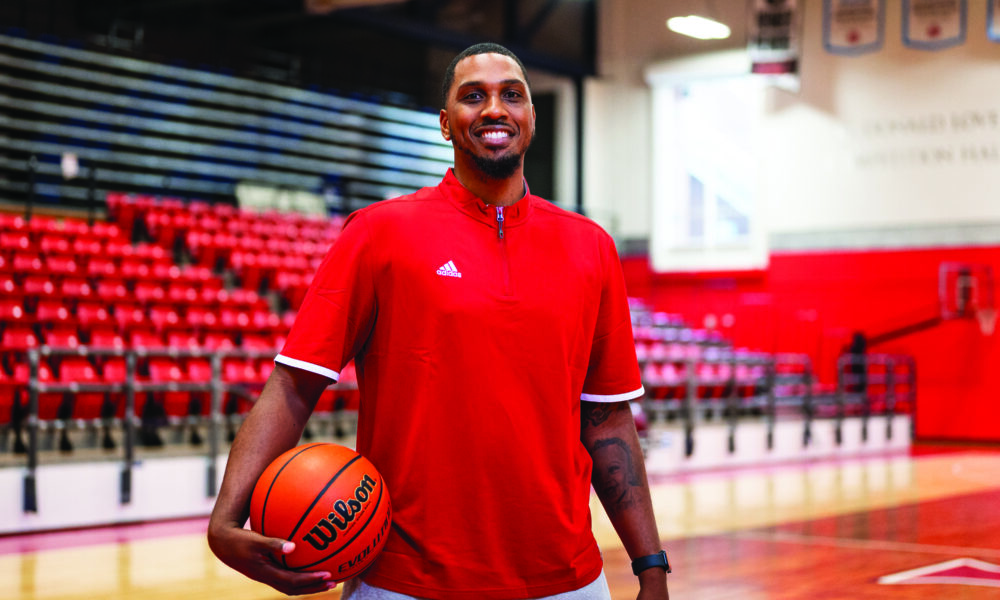
After a disappointing season for Redbirds basketball last year, McGill Athletics brought in reinforcements through the hire of former National Basketball Association (NBA) player Kris Joseph as the associate coach and recruiting contact. He will be the lead assistant coach of the team.

In an interview with The Tribune, Joseph expressed his excitement for the unique role that an assistant coach gets to play in the team.

“Being an assistant is definitely an intricate role,” Joseph told The Tribune. “For one, being the bridge between the head coach and the players, because sometimes players don’t like to ask too many questions.”

The new coaching role is a sort of homecoming for Joseph, who was born in Montreal and spent most of his childhood in the neighbourhood of Côte-des-Neiges. While growing up in Montreal, he played city basketball for Sun Youth and the Dawson Community Blues.

In his last two years of high school, Joseph made the life-changing decision to finish his education in Washington, D.C.—a choice that led him to receive a number of full-ride scholarships to play basketball at top National Collegiate Athletic Association (NCAA) Division I schools such as Georgetown and Clemson. Joseph ultimately decided to attend Syracuse University, appreciating its proximity to Montreal as well as its status as alma mater of Carmelo Anthony, one of Joseph’s all-time favourite players.

Having played basketball during his university years, Joseph understands the struggles that come with being a student-athlete, and feels that he is particularly suited to advise players who hope to play professionally.

“Knowing how to manage classes, practice, [and my] social life were all issues that I had to go through as a young man, so [I know] that these are problems they are going to encounter on their journeys to being successful basketball players,” Joseph said.

“I’m able to be that person that they can come to and ask questions and, more likely than not, if I didn’t experience it personally, I’ll know someone who did.”

– Kris Joseph

After graduating from Syracuse, Joseph was drafted 51st overall by the Boston Celtics in the 2012 NBA draft. He played six games for the Celtics before he was waived. Later that season, Joseph signed with the Brooklyn Nets, playing four games before moving to Europe. He then continued his professional basketball journey in leagues across France, Italy, Spain, and Portugal while briefly returning to Canada in 2018 to play with the Niagara River Lions in the National Basketball League of Canada and the Ottawa BlackJacks of the Canadian Elite Basketball League in 2021. 

Although moving to Europe was daunting at times, Joseph enjoyed his time playing overseas.

“[It’s important to] just embrace the culture you’re in and make the best out of every experience,” Joseph said. “You’re in a whole different country, a whole different part of the globe, so it’s just kind of embracing where you’re at [in] the moment.”

On advice for hopeful professional players, Joseph emphasized the need for a strong work ethic—adding that hard work in basketball translates well to skills needed in life outside of the sport.

“If you’re practicing to be a pro, you’re building good habits, […] that’s going to transfer to everyday life whenever you stop playing,” Joseph said. “Make sure you handle your business, which is to make sure you’re handling the school aspect of [being a] student athlete, and make sure you know that this is what you signed up for.”

Despite having played for the Celtics and the Nets, Joseph is a die-hard Los Angeles Lakers fan. He also supports the Montréal Canadiens, and once tried playing some hockey before realizing skating really was not his forté. Outside of sports, Joseph enjoys spending time with his family, and hopes to be there for pivotal moments of his kids’ lives—something he was unable to do while playing overseas.

With the Redbirds playing their first game of the RSEQ season on Nov. 2 at Université du Québec à Montréal (UQÀM), Joseph has his focus set on the start of the season and is excited to continue to prepare with the team. 

McGill Recommendations, Student Life

So long, McLennan!

As some library-goers may be aware, the Redpath-McLennan Complex will be under renovations for an estimated three years as of early 2024, as part of McGill’s Fiat Lux Library Project. The closure of the university’s largest library complex will change the study routines of many McGill students. Fear not, though! The Tribune has compiled a list of alternative study spaces across the downtown campus for those in search of a new favourite. 

Schulich Library of Physical Sciences, Life Sciences, and Engineering

Space type: Quiet and group study

Noise level: Moderate

In terms of capacity and hours, the six-floor Schulich complex will be your closest match to McLennan throughout the construction. Much of the interior walls are exposed brick that section each floor into a variety of study areas with desk arrangements to suit your mood and study style, while broad half-round windows provide generous natural light. For those feeling hungry, plenty of dining options are available within a few minutes’ walk, including the RVC dining hall, Mezze Café, and Dispatch Coffee

Address: 809 Sherbrooke Street West

Hours: 8:30 a.m.-midnight (open 24 hours over exam season)

Marvin Duchow Music Library

Space type: Quiet study

Noise level: Quiet


The Marvin Duchow Music Library occupies the third through fifth floors of the Elizabeth Wirth Music Building. Carrels, study tables, and couches line the perimeters of the three floors, providing lively views of Sherbrooke below for mid-work people-watching. One distinctive feature of the Marvin Duchow Music Library is its proximity to the Sherbrooke Starbucks.

Address: Elizabeth Wirth Music Building, 527 Sherbrooke Street West

Hours: 8:30 a.m.-9 p.m. (Monday-Thursday), 8:30-6 p.m. (Friday), 10 a.m.-6 p.m. (Saturday), 11 a.m.-7 p.m. (Sunday)

Nahum Gelber Law Library

Space type: Quiet study

Noise level: Low

A short uphill walk from the heart of campus, the Nahum Gelber Law Library is on the quieter side, making it the ideal spot for independent study. A dimmer library, one of its most charming and distinguishing features is the arched desk lamps on each sleek wooden desk. If the five floors of both desks and tables are not quite quiet enough for your study style, the Law Library has two soundproof pods on the second floor that are available first come, first serve.

Address: 3660 Peel Street

Hours: 9 a.m.-midnight, (open 24 hours over exam season)

688 Sherbrooke Ninth Floor Study Space

Space type: Quiet study

Noise level: Quiet to moderate

Situated on the ninth floor of 688 Sherbrooke, this study space is clean and spacious, lending itself to hours of deep, productive work. With plenty of natural light, outlets, and cushioned office chairs, the environment is both bright and well-equipped to finish that pesky assignment that’s been glaring at you. The defining feature of this study space is the row of desks overlooking campus, which encourages individual work. 

Address: 9th floor, Academic Personnel Office, 688 Sherbrooke St. West

Hours: 7 a.m.-11 p.m. (Monday-Friday), 8 a.m.-6 p.m. (Saturday)

Geographic Information Centre (GIC)

Space type: Group study

Noise level: Moderate to loud

Students looking for more of a chatty workspace can find a home in the GIC. This fifth-floor study space is bright and airy, and is scattered with various indoor plants for that much-needed mood boost. Restaurant-style booths allow larger groups to cozy in shoulder-to-shoulder, while high-tops provide smaller groups a place to collaborate. There are also 75 desktop computers in the GIC for students’ use. 

Address: 5th floor, Burnside Hall, 805 Sherbrooke Street West

Hours: 8:30 a.m.-9 p.m. (Monday-Friday)

Islamic Studies Library

Space type: Quiet study

Noise level: Very quiet

An incredibly quiet library situated adjacent to Redpath Library in Morrice Hall, the Islamic Studies Library is one like no other. The highlight of this library is the Octagon Room, where laden bookshelves and stained glass windows surround the 16 study desks and a round central table. Studies have shown that working in high-ceilinged spaces has benefits for creativity and abstract thinking, making the Islamic Studies Library the perfect spot to brainstorm for that final term paper. Outlets are few and far between in this grand study environment, so come fully charged, or be prepared to stick to pen and paper.

Address: Morrice Hall, 859 Sherbrooke Street West

Hours: 9 a.m.-9 p.m. (Monday-Friday), 10 a.m.-6 p.m. (Sunday)

Research Briefs, Science & Technology

Discovery of new mechanisms elucidates breast cancer metastasis

Finding more effective drugs that target certain aggressive forms of breast cancer first requires a deeper understanding of the disease’s progression mechanisms. The need for increased insight into the mitigation of breast cancer growth fueled a seven-year-long study at the Research Institute of the McGill University Health Centre (RI-MUHC).

Nathalie Lamarche-Vane, a professor in McGill’s Department of Anatomy and Cell Biology, and her team investigated the molecular and cellular processes underpinning the metastasis of breast cancer. 

“This study goes deeply into the mechanism of metastasis to show the role of this molecule [CdGAP] as an important driver of metastasis,” Lamarche-Vane said in an interview with The Tribune

Metastasis is a key step in the growth of a cancer, during which cancer cells detach from the primary tumour and migrate to take over distant organs. Understanding the mechanisms driving this phenomenon is crucial because it constitutes the primary cause of mortality among breast cancer patients.

Since the subtype of breast cancer known as HER2+ amounts to nearly one-third of breast cancer cases with early-stage metastasis, the study focused on this specific type. While previous research has linked high expression of CdGAP with poor survival rates in HER2+ cancer, Lamarche-Vane’s research sheds light on the role of CdGAP in the tumorigenesis and metastasis caused by HER2+.

“This protein, [CdGAP], was discovered 20 years ago, [and] it’s really step by step that we came to the idea that it may have some role in cell migration and cell proliferation,” Lamarche-Vane said. “To our surprise, [the mouse breast cancer cell lines used as a research model] were having a high level of expression of CdGAP and that is what caught our attention, because normally, this protein, because of its known roles as a regulator of small GTPase enzymes, it should have been [suppressing rates of tumour growth rather than increasing them].”

The researchers established that CdGAP promotes HER2+ breast cancer growth and is instrumental in its metastatic evolution. CdGAP interacts with the adaptor protein talin to act as a transcriptional target for the TGF-β signaling, a crucial factor in cancer development. More specifically, CdGAP modulates an epithelial-mesenchymal transition (EMT), which enables tumour dissociation by functioning as a molecular target of the TGF-β pathway. 

They also identified talin as a protein interacting with CdGAP to regulate focal adhesions, mechanical structures allowing cell movement, and integrin activation, which signals to the cell that it is time to get ready to move. These molecular processes collectively contribute to the enhanced migration, invasion, and adhesion of cancer cells, ultimately fueling the aggressive metastatic progression of HER2+ breast cancer.

Lamarche-Vane and her team’s dedication to investigating CdGAP and unraveling the foundational science described above has paved the way for the eventual breakthrough of a new therapy against HER2+ breast cancer. 

“The difficulty [in devising a drug against CdGAP] is that this is not like a receptor,” Lamarche-Vane said. “So when you have a receptor at the surface, […] you can design the molecules to block the binding to the ligands or antibodies. The CdGAP is [instead] a molecule that is inside the cell, in the cytoplasm. So to derive drugs becomes a bit more difficult, but it is feasible. There is some indication that that could be the future.”

Although Lamarche-Vane acknowledged that this paper has been funded by the Canadian Institutes of Health Research (CIHR), she emphasized the bleak reality that fundamental research like this, which aims to establish a foundation on which future life-saving discoveries can be built, is widely under-funded

“This is [fundamental] science, but then it’s the future, it takes time, it takes years, but this is what will lead, eventually, to [more practical discoveries such as] therapeutics,” Lamarche-Vane said.

Commentary, Opinion

Does A.I. development need more doomerism?

In the blink of an eye, artificial intelligence (A.I.) has been incorporated into nearly every aspect of our lives. From education to grocery shopping to music––there is no escaping it. Following the roll out of OpenAI’s ChatGPT, the quantity of publicly available A.I. technologies exploded, leaving a chasm of unregulated opportunity for the continued development of artificial intelligence. However, with a compilation of the terrifying uses of existing A.I. already able to fill a library, the question must be asked: Does A.I development need more doomerism? 

A.I. phone scams are just one of the consequences of the rapid evolution of artificial intelligence. With many people having recordings of their voice on the internet, whether that be on social media or in a video presentation posted online for school, publicly available A.I. voice cloning technologies can use machine learning to simulate any person’s voice. This disturbing practice has resulted in cases of scammers cloning the voices of children, then calling the children’s parents demanding a ransom for their “kidnapped” child. 

Non-consensual deepfake porn is another exploitative dimension of our new reality. Not only is this content readily accessible through Google, the practice is so successful that popular deepfake creators are advertising paid positions to help create content.  

If this is not convincing enough, the increasing role of A.I. in the military should send you into a spiral, contemplating how long the world is going to last. The use of A.I. in geopolitical conflict goes beyond the incorporation of A.I. into weaponry and decision-making. Misinformation campaigns pose a dystopian reality in which A.I. generated audio, video, and text can be manipulated to replicate political officials and military leaders to falsify orders within military rankings or create panic amongst civilians. Not only are militaries already looking to use deepfakes in special operations, the continued development of and investment in such technologies poses the threat of an Oppenheimer-like catastrophe. 

To draw brief attention to the benefits of this rapid A.I. development, the use of A.I. in the healthcare field to aid in cancer imaging, or even detection, reminds us that our future with artificial intelligence does not need to resemble a dystopian horror movie. But any application of A.I. to the healthcare system must be careful, under the increased potential of data breaches and the likelihood of underlying bias––a known issue for many machine learning systems. 

We can no longer depend on government regulation to reign in Big Tech. Addressing direct threats such as election interference and disinformation campaigns that directly affect democracy has already proven too tall a task for government regulation. Guided by Cold War-era fears, the A.I. arms race makes it near impossible for government regulators to put barriers in front of A.I. development. 

If governments are unwilling to provide adequate guardrails around artificial intelligence, who will? Anthropic––a safety-focused A.I. start-up established by a group of employees who left OpenAI out of concern that the company had gotten too commercial––employs the doomers of A.I. development. Despite developing an A.I. chatbot months before ChatGPT was released, Claude––a Constitutional A.I. model––was never released publicly out of fear of how it may be misused. Anthropic claims to have created an “A.I. safety lab” where their anxiety of the potential catastrophe their creation may inflict on the world influences every decision they make. 

The world of A.I. is scary and will likely only get scarier. A.I. tools are already in the hands of bad actors, and the consequences are cataclysmic. Despite concerns of whether or not Anthropic is just a capitalistic ploy attempting to appear responsible in a generally irresponsible field, it presents a case for how to promote critical A.I. development. Considering the impossibility of pressing pause on the development of machine learning, the only possible answer to ethically continue down this path is anxiety-informed A.I. development.

News, PGSS

PGSS says Bill 96 costs the society $7,000 per month, seeks monetary compensation

The Post-Graduate Students’ Society (PGSS) gathered for its first council meeting of the Fall 2023 semester on Sept. 6. Led by speaker Nora Delahaye, the hybrid session’s agenda included teaching assistants’ (TA) rights and Bill 96

The meeting began with a presentation from Kiersten van Vliet, a representative from the Association of Graduate Students Employed at McGill (AGSEM)—the union representing graduate TAs and invigilators. Van Vliet outlined the rights and responsibilities of TAs and invigilators and encouraged them to reach out if they felt that their workers’ rights were being violated.

“If you have experienced harassment, discrimination, or sexual violence, [AGSEM officials] will be your advocates because you are entitled to a safe working environment as an employee of McGill,” van Vliet said. 

Van Vliet also informed the council about AGSEM’s No More Free Hours campaign, a work-to-rule strike aiming to prevent course supervisors from asking TAs to exceed their contracted working hours—time that they are not compensated for. 

“Before AGSEM represented graduate teaching assistants at McGill, the lowest paid TAs were earning minimum wage, which at that time was $7.25 an hour,” van Vliet said. “There are some departments at McGill that would pay us minimum wage if they could.”

PGSS University Affairs Officer Racchana Ramamurthy stressed in an email to The Tribune that this campaign is key to reducing the power imbalance between TAs and course supervisors.

“TAs hesitate to update the workload form if they exceed the hours fearing refutation from their supervisors and departments,” Ramamurthy wrote. “This has to be addressed immediately, and I am sure AGSEM’s No More Free Hours campaign will raise awareness about this and encourage TAs to exercise their rights.”

Following van Vliet’s presentation, PGSS External Affairs Officer Ansley Gnanapragasam took the floor to discuss the impacts of Bill 96 on the society. The bill, which requires that all organizations and businesses serving people in Quebec produce documents written in French, has reportedly cost PGSS $7,000 per month in translation fees since its implementation in June

“This is an unsustainable cost,” Gnanapragasam told the council. “We [need] to translate documents such as meeting minutes, contracts, and other documents pertaining to the PGSS.” 

Gnanapragasam acknowledged that this is not only an issue that graduate students at McGill face, but one that also affects other English-speaking institutions throughout the province.

“[We have] contacted some other English-speaking universities to see whether or not this is an issue that they’re also facing,” Gnanapragasam said. “This has been the case at Concordia, some CEGEPs, as well as Bishop’s University.”

PGSS has reached out to both the provincial and federal governments to request monetary compensation to help cover the cost of translation. The council hopes that the government will establish a fund to assist non-French-speaking organizations grapple with the effects of Bill 96. 

PGSS Secretary-General Satish Kumar Tulumu echoed the financial strain of Bill 96 on the council in an email to The Tribune.

“More than three-quarters of PGSS membership are from outside Quebec and the vast majority of members from outside Quebec are also from non-French-speaking nations,” Tulumu wrote. “Many of the office bearers can’t write [in the] French language, leading to the hiring of French translators. This is good that we are employing local [francophones] but it makes us economically unsustainable.”

Moment of the Meeting:

Despite being scheduled for 1.5 hours, PGSS’s general meeting lasted only 42 minutes. Additionally, the council met its quorum of one per cent of total graduate membership, which has been a struggle in previous years. 

Soundbite: 

“What we have found by surveying teaching assistants is that 48 per cent of teaching assistants worked above their contracted hours. On average, that would equal $430 of unpaid labour per TA. That equals a million dollars of unpaid TA labour that McGill is stealing from us every year.” 
Kiersten van Vliet on the importance of fair pay for TAs

Student Life

Spotted: McGill reveals our imperfections and greatness

Content Warning: Mentions of sex

Have you noticed your Instagram feed filling up with your fellow students’ intimate, hilarious, disgusting, and bizarre confessions? For those who follow the account Spotted: McGill, the answer is yes. The popular page allows students to anonymously confess whatever they wish to the public via a Google Form. Of course, not all submissions are published—for which we should be grateful, considering how intense (and sometimes risqué) the published content can be. But many students have succeeded in getting their message out there, for everyone else to read (including myself—not telling which submission is mine, though).

Confessing is fun and carefree: Students can open their hearts enough to feel the relief of revealing a secret, without the embarrassment or even legal consequences that can come with a true confession. For those who leave Montreal in the summer, Spotted: McGill keeps them connected to campus goings-on. Reading about others’ romantic escapades in McLennan Library or disastrous dates at Thai Express reminds students of their lives back in Montreal. 

Spotted: McGill helps students cut themselves slack by witnessing others’ embarrassing antics and blunders. We can empathize with one confessor who couldn’t figure out how to break up with a boyfriend who wouldn’t make time for them. We can giggle at the graduate student who apparently watches porn in the back of their class. A relatable confessor admitted to going to campus on days when they don’t even have class “just to feel something.” Plenty can sympathize with the confessor who lamented McGill athletes’ inability to satisfy her. Many posts are people confessing their crushes. Others are about people who can’t make the first move, can’t get over their crush, or are just lonely. Perhaps this is a bit sad, but it’s comforting to know others are out there.

Despite Spotted: McGill’s seeming popularity, plenty of students on campus are unconvinced of its trustworthiness or are even critical of its content. Tahys Courrier, U2 Arts, believes that all the confessions are true, making her wary of certain parts of campus.

“Tellement—genre—the bathroom, I’m not going to the bathroom anymore,” she said.

Lucie Harnais-Cheusel, U2 Arts, believes 70 per cent of the confessions are true. 

“The pegging lore is way too intense to not be accurate,” she explained.

Harnais-Cheusel and Courrier also pointed out that the crushes described in the confessions are often attractive by traditional Western standards—for example, having blond hair or being skinny.

Another critique was that Spotted: McGill fails to actually connect people who are interested in one another. Even if you realize you’re the subject of a confession, you don’t know who your secret admirer is—the downside of anonymity. Margaux Chaillou, U2 Arts, who found Spotted: McGill’s obsession with silly student love life frivolous, stated her opinion plainly: “I vouch for its downfall.”

Despite criticism, the account is thriving with over 12,000 followers. “Spotted” Instagram accounts are popular at many universities. In fact, someone once wrote on Spotted: UofT that Spotted: McGill’s confessions frightened them.

“To the person who said go to McGill . . . I’m scared of you guys . . . Maybe York,” read the UofT confession.

Should you be scared of us? Maybe. Spotted: McGill is a cracked mirror that reveals our quirks, ferocious libido, and general awesomeness. We are weird and scary. Our squirrels are fat. Our administration isn’t zippy, to put it lightly. Our confessions are awe-inspiring and stomach-churning. So be it. 

UofT and York students be warned.

News, SSMU

SSMU BoD vote to fill VP Finance position temporarily

The Student’s Society of McGill University (SSMU) Board of Directors (BoD) gathered for their first meeting of the fall semester on Sept. 7. During the public session, they voted to elect Vice President (VP) External Liam Gaither to take over the VP Finance’s voting power. The responsibilities attached to the VP Finance position will remain shared amongst the executives. Next, it was decided that a by-election to elect a permanent replacement to carry out the rest of the term will likely be held on October 5. The Board also chose to postpone a motion to move the Grocery Program from the President’s portfolio to that of the VP Sustainability and Operations. 

The board began the meeting by discussing a motion regarding filling the VP Finance position, which has been vacant since Alice Fang resigned in August. Following Article 6.10 of SSMU’s constitution, if an executive resigns, the BoD must nominate and subsequently elect one of their current members as a temporary replacement. Then, SSMU needs to host a special by-election—an election to replace a vacant position prior to the formal election period—for the students to elect a new VP Finance, who will carry out the rest of the term.

“When a director position is empty, the seat must be filled in accordance with the constitution,” SSMU President Alexandre Ashkir said. “Within the [executives], we had a vote and Liam came out unanimously.”

There was neither debate nor opposition to the adoption of this motion. As such, the motion assigning Gaither to take over the VP Finance’s voting seat until the by-election passed. 

The second motion centred around the transfer of the Grocery Program from the President’s portfolio to that of Hassanatou Koulibaly, the VP Sustainability and Operations. Ashkir said that the motion was brought up prior to the VP Finance’s vacancy, and as such, he had not discussed with Koulibaly if she was still able to handle the extra responsibility. To mitigate any confusion, Ashkir moved to postpone the motion, promising he would re-establish the motion at a later date. For now, the Grocery Program will remain a part of his portfolio. 

The final discussion surrounded the logistics of the special by-election to permanently fill the VP Finance position. 

“[The Internal Regulations of Elections and Referenda say] we have to waive rights to have a special by-election [since] elections should only happen at the end of a winter semester,” Koulibaly said. 

The BoD also decided a constitutional amendment was needed to determine when the newly elected officer would start training for and acting in their duties. The current guidelines state the new officer would start within two business weeks of training, but did not specify when training would start. Consequently, the Board amended the section to require training to start within two weeks of the moment the election is announced. 

VP Student Life Nadia Dakdouki pointed out that the First Year Council election is scheduled to take place during the same period.

“[The issue] is that there’s a week’s difference [between elections] and we’ll have to convince students to vote in two election periods,” Dakdouki said. 

Ultimately, the Board decided the risk of potential confusion would not dissuade them from hosting a by-election. 

Moment of the Meeting:

Ashkir explained that the dates of the by-election would be finalized on Sept. 11 in a legislative council meeting. He also stated that the Board needed to consult with Elections SSMU to ensure the dates would work.

Soundbite: “I had a conversation with Elections SSMU [about] if [having overlapping elections] is a serious concern. They say it’s not [a concern] […] The confusion aspect can be mitigated by campaigning.” 

—Ashkir on his hesitancy to postpone the First Year Council elections or by-election due to their two-day polling period overlap

News, The Tribune Explains

Tribune explains: Unions and associations at McGill

McGill employs over 12,500 staff across its two campuses. There are fourteen unions and two associations that represent, support, and advocate for part- and full-time, academic and non-academic employees of the university. 

What are unions and associations?

Unions bring workers together to hear their concerns and advocate for better working conditions. They negotiate collective agreements (CAs) with employers that outline the specific terms of employment; for example, CAs often spell out regulations surrounding pay scales, benefits, health and safety of workers, and discrimination. Similarly, associations bring members together to try to better working conditions and advocate for their members, but generally have less bargaining power than unions. Both unions and associations typically elect their leadership.


Unions at McGill

The Association of Graduate Students Employed at McGill (AGSEM)

AGSEM has two units, one representing invigilators and another representing teaching assistants (TAs). Each unit has its own CA with the university. AGSEM was accredited in 1993, making it the oldest TA union in Quebec. The union was certified to represent invigilators in 2010. It is currently pushing for better working conditions and pay for TAs—who they claim are overworked and underpaid by the university. The most recent CA for TAs expired at the end of July, and negotiations for a new contract are underway between AGSEM and the university.

The Association of McGill University Research Employees (AMURE)

AMURE represents postdoctoral fellows and research associates and assistants at the university. AMURE was accredited to represent research associates and assistants in 2010 and signed the first CA for research associates and assistants with the university in 2013. The union was accredited to represent postdoctoral fellows in 2015, and the first CA for postdoctoral fellows was signed in 2017. 

The Association of McGill University Support Employees (AMUSE)

AMUSE represents floor fellows and non-academic casuals at McGill. The union was certified to represent non-academic casuals—part-time, non-academic McGill workers—in 2010, and was later certified to represent floor fellows in 2014. Both CAs are set to expire in 2025. In March 2023, McGill decided to reduce the size of Floor Fellows’ accommodations, citing increased demand for housing. This announcement led to backlash from the union, which believes this is a breach of the floor fellows’ CA and has filed a grievance against the university.

The McGill Course Lecturers and Instructors Union (MCLIU)

MCLIU represents course lecturers and instructors at the university. The union was accredited in 2011 as a third unit of AGSEM, but broke away and was re-certified in 2013. It ratified its first CA in 2015. The second MCLIU CA expired in August 2022, and negotiations are currently underway to sign a new one. 

The McGill University Non-­Academic Certified Association (MUNACA

MUNACA represents clerical staff, laboratory and IT technicians, support staff, and library assistants at the university. The union was accredited in 1994. The current CA will expire in May 2024.

Service Employees Union Local 800 (SEU)

The Service Employees International Union (SEIU) represents over two million service employees globally. SEU Local 800, a member of the SEIU, represents service employees throughout Quebec, including some at McGill. Data Centre employees, Faculties Management and Ancillary Services employees, Powerhouse employees on the downtown campus, Printing Services employees, Trades employees at the downtown campus, and Trades and Powerhouse employees at the Macdonald campus are all unionized, and each group has its own CA with the university.

The Association of McGill Professors of Law (AMPL)

AMPL, the first professors’ union at McGill, was certified in late 2022 after an extensive push from professors in the Faculty of Law. The new union is currently facing litigation from the university and has not yet signed its first collective agreement.


Associations at McGill

McGill Association of University Teachers (MAUT)

MAUT is a voluntary association that represents non-unionized teaching staff at the university. Founded in 1951, their website states that it works to engage faculty in the governance process, “foster academic freedom,” and better working conditions.

McGill University Non-Academic Staff Association (MUNASA)

MUNASA is a voluntary association that represents non-unionized non-academic staff at McGill. It was created in 1972 and amended after MUNACA was formed to represent management staff.

Read the latest issue

Read the latest issue