

Latest News

Martlets, Soccer, Sports

Martlets soccer takes home back-to-back wins to open RSEQ season

On Aug. 30, following the first day of classes, the Martlets soccer team (2–0–0 ) kicked off their home opener and first game of the RSEQ season. With midfielder Mara Bouchard sporting the captains’ armband and the Université de Québec à Trois-Rivières (UQTR) Patriotes (0–1–0 ) looking to put an end to a nine-game losing streak against McGill, Percival Molson Stadium was ready to go, despite the rainy weather. 

The first half saw steady play from both UQTR and McGill, with the Martlets failing to solve the Patriotes’ netminder despite several opportunities. 

However, as the rain began to lighten up and the Martlets stepped onto the field for the second half, early pressure from McGill led UQTR to turn the ball over, allowing midfielder Hana Yazdani to send the ball to midfielder Chloe Renaud for a beautiful behind-the-back pass that found forward Arianne Lavoie. With 49 minutes on the clock, Lavoie escaped the Patriotes’ defense and netted the breakaway pass from Renaud for a 1-0 lead. 

As the game entered extra-time, pressure grew as McGill entered UQTR’s zone to try and extend their lead with forward Annika Schmunk just inches away from a goal with the Martlets’ final shot of the game. With a 1-0 final score, McGill took home the win, and goaltender Sophie Guilmette earned her first shutout of the season. 

With the season opener in the rearview, the Martlets played their second game on Sept. 3, facing off against the Concordia Stingers (0–1–1) at home. This time, however, they took the pitch with a newfound confidence and in much better weather. 

“The first game we were nervous,” head coach Jose-Luis Valdes told The Tribune. “It’s our first game at home. It’s the first game for a few players on the team. […] Whereas today, there were no nerves.” 

At the 28-minute mark, midfielder Katherine Chadwick netted the opening goal to give the Martlets a 1-0 lead. Shortly thereafter, forward Liliane Lefebvre scored a graceful header off of a pass from Renaud to close out the first half and put the Martlets up 2-0. 

After the half, Guilmette continued her strong performance from the season opener with a number of stellar saves to protect McGill’s lead. In the 75th minute, forward Alexandra Hughes-Goyette scored the Martlets’ third goal of the game, all but securing the win. However, the Stingers crushed hopes of another shutout performance, finding the back of the net with eight minutes of regular time remaining. In a 3-1 final score, the Martlets picked up their second win of the RSEQ regular season, and hope to carry on their success in their upcoming game against the Université de Montréal Carabins for their first game of the RSEQ season. 

As for their early success, Bouchard attributes the two wins to the team’s ability to carry over what they learned from their preseason games. 

“[During] the preseason, we worked a lot on just keeping the ball to feet, practicing our tilt, all going on the same side,” Bouchard explained. “I feel like both of the first two games we’ve been doing great at this. We did a good job and we’re solid defensively.” 

Guilmette also emphasized the importance of getting points early on in the season. 

“It was a team effort but I think a big part of what we need is to get those points, we have an objective to go to Nationals,” the netminder said. “These points against tougher opponents are really important early on in the season so that we can carry on towards the end of the season.” 

The Martlets are back at home on Sunday, Sept. 10 against the Bishop’s Gaiters (1–1–0) for their Pride game.

Moment of the Game: In their game against the Patroites, following a rush from UQTR that almost tied the game in extra time, Schmunk went back the other way, nearly netting an insurance goal and swaying the momentum back in McGill’s favour. 

Quotable: “On a more personal note, I was hoping for the shutout today, didn’t get it, unfortunately, but we got the dub, that’s what matters.” 

– Goaltender, Sophie Guilmette

Stat Corner: Between the two games, McGill totalled 15 shots, 12 shots on net, 10 corner kicks, and 19 fouls. 

McGill, News

Water advisories issued due to high lead levels in six McGill buildings

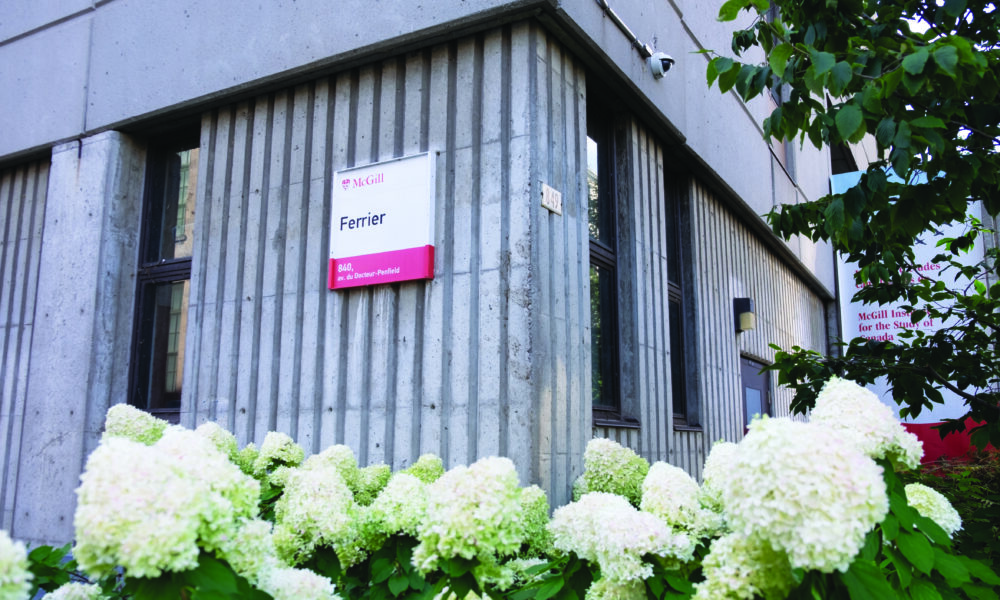
On July 27, the McGill community received an alert from Interim Vice-Principal for Administration and Finance Diana Dutton that water advisories had been issued for six McGill buildings: La Citadelle, Carrefour Sherbrooke, Elizabeth Wirth, Ferrier, Thomson House, and 3647 Peel. Routine water testing found that the lead levels in the buildings’ water sources exceeded the Government of Quebec’s thresholds. Over a month later, Ferrier, Thomson House, and 3647 Peel are still under the advisory. In addition, a new advisory was issued for the Barton building on the Macdonald Campus on Aug. 25.

Exposure to lead, even in small amounts, can cause serious health issues including high blood pressure, miscarriages, and even death. Lead can enter water sources from old pipes. The Government of Quebec’s website writes that buildings built past 1989 are very unlikely to have lead in their plumbing systems.

According to McGill Media Relations Officer Frédérique Mazerolle, lead tests are conducted annually. Mazerolle explained the protocols McGill follows in case water exceeds provincial thresholds—anything above five micrograms of lead per litre of water—to protect community members from ingesting the water.

“Warning signs are put up next to faucets, drinking fountains are turned off, and building directors provide information on other sources of drinking water,” Mazerolle wrote to The Tribune. “If possible, community members are directed to other locations for water. In the recent case of two student residences, bottled water was provided. For Carrefour Sherbrooke, where the advisory lasted four weeks, the second step was installing reverse osmosis filters to reduce dependence on bottled water.”

Lara Landauro, U3 Science, worked as a McGill Summer Academy (MSA) Crew Member when the advisories were first issued. MSA students were housed in McGill residences and were affected by the advisories put into place. Landauro wrote to The Tribune that, ultimately, the response was quick and the situation was handled smoothly.

“We weren’t able to drink the water from the hotel for several days. The hotel would give us water bottles instead,” Landauro wrote. “McGill responded well to the issue, finding a solution to our problem. It would have been better if the water problem was fixed earlier.”

While advisories have been lifted for Carrefour Sherbrooke, La Citadelle, and Elizabeth Wirth, three downtown campus buildings have yet to be put in the clear. 

André Pierzhala, Operations Manager for the Post-Graduate Student Society said that Thomson House, one of the remaining affected buildings, has been dealing with the advisory by buying bottled water for students and the kitchen’s use. Pierzhala shared that Thomson House was initially given two pallets of water by the university and, subsequently, he has been buying large jugs to use around the building.

“It’s a different way of operating […] and it works,” Pierzhala said in an interview with The Tribune. “It hasn’t prevented us from running our operation. It’s not the end of the world, it’s more of a nuisance but […] as far as a crisis goes, I prefer having this as a crisis than something that’s a lot more serious.”

Pierzhala also noted that action on the part of the administration was swift given the circumstances.

“This is something that crept up and surprised everyone,” Pierzhala said. “The response from the institution was extremely quick in installing filters, specifically designed to remove lead from the water. So, I have to thank them because they were very responsive, very quick.”

Further testing for the downtown campus buildings was conducted on Aug. 28, the results of which will be released in the coming days.

Commentary, Opinion

Residence staff deserve more respectful conduct from first years

In popular media, dorm life is represented as the pinnacle of the student experience. However, often forgotten are those who make this experience possible. Light must be shed on the pillars of residence life: The staff. As thousands of McGillians are returning to Montreal, many of whom are arriving on campus for the first time, residence staff members are preparing for the most stressful weeks of their job. Amidst the exciting yet scary chaos of settling into a new city, the residence staff that help new students build a home often go underappreciated and overworked by McGill and by many of the first-years in residence.  

Porters, janitors, security guards, floor fellows, and other staff are the heart of McGill residences, and the quality of a first-year’s experience is moulded by them. Remove them from the picture and the residences freshmen call home are suddenly just old, dusty buildings.  

I spoke to a janitor during my time at McConnell, one of the three residence buildings that make up the Upper Residence. Although ready to retire, he was one of the first people to show me kindness in a new city filled with strangers. Before he left, he took it upon himself to pass on some of his extensive knowledge to a clueless first-year in desperate need of someone to talk to. He showed me where the more secluded bathrooms were, knowing that the communal bathrooms could take some getting used to, along with the emergency exits in the event I would ever need them. He wished me luck with my studies and told me he knew I would succeed. Being one of the few Black people in Upper, having someone who looked like me and who, just like me, hailed from the Caribbean, tell me his story, brought tears to my eyes. 

Although he enjoyed his work and loved meeting new people from all over the world, the waves of students arriving and leaving each year was the toughest part. These parts of the year, filled with excitement, can make first years particularly unaware, and oftentimes disrespectful. He had many stories to tell that were very amusing at first—like when a student released a live chicken in the building as an end-of-year prank—but it quickly became clear that not everyone was laughing, as it became the burden of the residence staff to deal with the situation. 

McConnell’s famously lovable porter never fails in getting packages to students––it’s like every name and room number is engraved in his brain. As a confidant for many students, I remember his friendliness, which is why it was hard to ignore the disheartening sight of soda bottles and wrappers simply left by freshmen on the tables and floors of common areas, shared by both the students and the staff. 

Yet, trash left on a table seems so mild upon reflection of the horrors sighted in the common bathroom. If I could barely stomach looking at the mess, what would it have been like to have to clean it? I wouldn’t wish that task upon my worst enemy, much less the friendly staff of Upper. For all the nights when empty bottles lined the bathroom counters like some form of upcycled art décor, the cleaning staff rose with the sun and all stalls would be spotless by the time I woke up. 

For many, “college student” rhymes with freedom, and some degree of carelessness is to be expected. However, as first-years transition into this new, adult chapter of their lives, they also need to hold themselves accountable for their actions, and the consequences of those actions on those who surround them. 

The first year of university is an unforgettable period for those who were lucky enough to experience it. But it’s worth reminding all incoming first-years that people work to support your newfound adulthood. With this, welcome to the new set of first-years, and remember that while this experience is exciting, being respectful should be a priority.

Commentary, Opinion

Big tech has to pay, but Bill C-18 is not the way

An already-undermined Canadian media landscape is facing further silencing from Big Tech. In retaliation to the passing of The Online News Act, otherwise known as Bill C-18, Google and Meta announced that they will be blocking posts from Canadian news outlets on their platforms. By passing Bill C-18, the Canadian government is giving tech companies an excuse to trample Canadian news.

The era of print media is fading. Gone are the days of sitting around the breakfast table with the daily paper in one hand and a coffee in the other. Rather than paying for a subscription to newspapers that will be dropped on your doorstep or turning on cable, people tend to access news by easily clicking on links through Meta or Google. In fact, a recent poll from the Maru Group found that the most common way for people aged 18-34 to get their news was through social media platforms like Facebook or Instagram. 

With fewer subscribers and less revenue from ads in print papers, news outlets have been losing money for years. In an attempt to make up for lost funding, Bill C-18 requires large tech companies to negotiate compensation with Canadian news outlets in order to share their content on the companies’ platforms. In theory, the bill has the potential to bring a second wind to Canadian journalism––outlets would have more resources to hire more journalists, invest in equipment, and improve their coverage. In doing so, the public would be better informed, fostering a critical and thoughtful society, and allowing journalism to do what it is meant to do—speak truth to power.

However, the Canadian government’s refusal to back down from its David-versus-Goliath stance has the potential to devastate Canadian media before any good can come of the bill’s prerogatives. For Meta and Google, Bill C-18 only means extra hassle and money to host news on their platforms. Driven by profit and unconvinced by the importance of a healthy democracy, the companies have no qualms about blocking Canadian media from their platforms. In reality, the profits that Canada provides Meta and Google are pennies to the dollar when considering their relation to ad revenue, making negotiation completely unnecessary. Meta has already begun blocking Canadian media from its platforms, with Google planning to follow suit. In order to access trusted publications, Canadians will need to become more active as readers, directly navigating an outlet’s website—a significant change for a society so accustomed to the convenience that comes with social media use.

This power play from Google and Meta severely undermines the importance of Canadian news, particularly smaller local papers. Larger publications like The Globe and Mail and CBC will certainly see the effects, but thanks to their reputation as well-established and trusted news sources, they will survive. The fate of local news, however, is less certain. Local news outlets have already been struggling to stay afloat amid budget cuts from large parent corporations, and Bill C-18 may be the nail in the coffin. 

Moreover, by blocking Canadian news, the work of student journalists is much more likely to go unnoticed. The Tribune, for instance, has had some of the most comprehensive coverage of McGill’s lawsuit with the Mohawk Mothers, writing nearly twenty stories on the case. Small papers across Canada need to be accessible and promoted. Otherwise, crucial stories go unheard. 

The problem lies with the outsized power of Big Tech in our democracy. The fact that Google and Meta can single-handedly make local news inaccessible to over thirty-eight million people indicates that changes need to be made in digital media consumption. Meanwhile, news outlets cannot afford to suffer while the government tussles with Google and Meta. For the preservation of Canadian news, there has to be another route.

Out on the Town, Student Life

Seven spots to escape the hustle and bustle of university and go for a hike

With fall just around the corner and the sweltering summer heat finally starting to break, it’s the perfect time to immerse yourself in nature. Contrary to popular belief, hiking doesn’t have to be expensive and inaccessible; you can even find some lovely spots that are easy to reach by public transit on the island of Montreal. If you’re looking for camping gear or to go on a group trip, the McGill Outdoors Club offers affordable equipment rentals, guided outings, workshops, and even an outdoor frosh. Buses, ride-sharing services, and renting a Communauto are all great options to get outside on a budget. If you choose to rent a car, remember that the more friends you invite the less each person will need to pay. Without further ado, here is a breakdown of some of the best hiking spots within an hour of McGill. 

Parc du Mont-Royal

Distance from campus: 10 minutes by foot

Entrance fee: None

While not exactly a hidden gem or a secluded experience given its proximity to downtown, Mont-Royal is a beautiful and convenient way to escape to nature without veering too far from campus. In total there are around 30 kilometres worth of trails on the mountain, meaning one can explore for hours. As a bonus, running and hiking groups frequent the trails—making it the perfect place to get in some movement with friends.

Parc-nature de l’Île-de-la-Visitation

Distance from campus: 1 hour by public transit or 35 minutes by car

Entrance fee: None

Also in Montreal, but less well known, is the Parc-nature de I’Île-de-la-Visitation. It follows the Rivière des Prairies for over 8 kilometres, providing gorgeous views of the water. There are also plenty of historical buildings, such as the Maison du Pressoir, along the way if you’re one to stop and read a plaque or two. Keep in mind, however, that the park is more urban than Mont-Royal and you are likely to see many other people during your stroll. 

Parc national du Mont-Saint-Bruno

Distance from campus: 35 minutes by car

Entrance fee: $9.55

With beautiful lakes and over 30 kilometres of trails, Parc national du Mont-Saint-Bruno is a great option if you are looking for a more private experience than you could get within city limits but don’t want to sacrifice too much time on the commute. There are also paddle board and canoe rentals if you fancy a dip in the lake. 

Parc national des Îles-de-Boucherville

Distance from campus: 35 minutes by car

Entrance fee: $9.55

At the Parc national des Îles-de-Boucherville, 21 kilometres of trails weave through five islands in the middle of the St. Lawrence. Biking, sea kayaking, canoeing, and paddle boarding are all fan favourites on the islands—and the park rents out equipment. There are even campsites that you can reserve if you want to stay the night!

The Morgan Arboretum 

Distance from campus: 40 minutes by car

Entrance fee: $5.50 (for students)

Operated by McGill and located on the Macdonald Campus, the Morgan Arboretum has a web of roughly 20 kilometres of hiking trails. This is an especially great option if you are interested in horticulture and like the idea of seeing a wide variety of flora and fauna while on the trail. 

Gault Nature Reserve

Distance from campus: 1 hour by car

Entrance fee: $9.55

Operated by McGill, the Gault Nature Reserve offers 25 kilometres of trails and a variety of hikes for every skill level. Hiking up Mont-Saint-Hilaire provides beautiful panoramic views of the surrounding landscape, including Lac Hertel. You might even see a McGill scientist in the wild!

Parc national d’Oka 

Distance from campus: 1 hour by car

Entrance fee: $9.55

With over 28 kilometres of trails and an impressive beach, Parc national d’Oka has something for everyone. The park offers paddleboard, kayak, and bike rentals for those interested, and there are a plethora of campsites if you’re looking to stay the night. Before visiting, read up on the history of the 1990 Oka Crisis—a 78-day standoff between Mohawk protesters and members of the Quebec police, RCMP, and Canadian Army over the proposed development of a golf course in Kanesatake. The land in question has never gone back to the Mohawks of Kanesatake. It’s important to know the history of where you go before you go.

Science & Technology

The journey of a microplastic: An unfolding story

From the packaging of an online order to the takeaway cup holding a morning coffee, plastic is everywhere. In 2019, humans produced 460 million tonnes of plastic, an enormous increase from the mid-twentieth century when roughly two million tonnes were produced annually. A key aspect of plastic pollution is that it comes not just from large items such as water bottles and plastic bags, but also from microplastics—pieces that are five millimetres or smaller.

We know that the scale of plastic pollution is enormous, but what happens when microplastics infiltrate aquatic ecosystems? The Ricciardi Lab at McGill is looking to understand the routes by which organisms accumulate microplastics in their bodies. 

The team, led by Geneviève D’Avignon, who recently received a PhD in Biology from McGill, and advised by Anthony Ricciardi, professor of invasion ecology & aquatic ecosystems, worked to create a basic replica of a benthic food web in the lab—a network of food chains for species living at the bottom of a body of water. To do this, they used three interacting organisms: The Quagga Mussel, the Gammarid Amphipod, and the Round Goby

The mussel and gammarid have a commensalistic relationship—where one organism is benefited and the other is neither hurt nor helped. In this case, the gammarid eats the discarded food from the mussel, and the mussel is unaffected. In addition, both the mussel and gammarid are prey for the goby.

The study replicated the food web between the three organisms and conducted single-exposure trials in which microplastics were added to the tanks in various concentrations. In each trial, the team observed multiple paths of microplastic uptake and noted how the organisms recovered. In particular, they examined the microplastic uptake through environmental routes such as water and sand as well as how microplastics are transferred through interspecies interactions.

“We ran different tests: There was the uptake, where we just exposed the animals and looked at how much particles they took up, how much they ingested in their bodies,” D’Avignon shared in an interview with The Tribune. “And then depuration, when you put the organism in a clean environment, and once they’ve been ingesting or taking up these particles, I’m looking at how long […] it take[s] for them to release all the particles out of their bodies.”

The researchers discerned that non-trophic interactions—that is, interactions between species other than predator-prey, like commensalism and interactions with the environment—also account for a significant amount of microplastic transfer and uptake. For instance, the mussels, which ingest more of the water-suspended microplastics, transferred those microplastics to the gammarids.

D’Avignon also noted that the depuration times were longer than she had anticipated. In general, the study served to enhance researchers’ understanding of the food web processes that are responsible for circulating microplastics. 

“We saw that sometimes particles, in the mussels, for example, would stay for [about] 72 hours,” D’Avignon said. “It means that these organisms can retain them long enough for more transfers to happen.”

To her, this was a key takeaway because outside of the lab, with many other factors at play within an ecosystem, depuration times could be increasingly affected. Particularly, in nature, microplastics are a constant presence, so organisms may be able to expel microplastics at the rates studied in the lab. However, unlike the controlled environment of a lab, they will continue to accumulate microplastics, increasing the burden on the organisms’ bodies.

Ultimately, this experiment was a preliminary study that the team hopes to continue building upon by creating more and more complex models, with the end goal of understanding inter-species dynamics more comprehensively and working to heal ecosystems from man-made pollution. 

Valuable information was gleaned from the experiments, but D’Avignon explained that there is still a long way to go in order to understand microplastic transfer in complex ecosystems. 

“In reality, a lot of these species interact with the water column, interact with the sediments, interact with other species,” D’Avignon said. “So how much plastic they’re actually exposed to in a day, or that passes through our system can actually be, perhaps, increased in comparison to what we thought.”

Baseball, Sports

Major League Baseball has a “nutting” problem

Professional sports leagues across North America all face the familiar practice of tanking: When teams underperform on purpose. They trade away their best players, neglect fan experience, refuse to sign franchise players to extensions, and intentionally make the team worse. The motivations behind tanking can vary. Oftentimes, the reason to tank is to have a better shot at selecting higher in the following years’ draft, like the 2002-03 Cleveland Cavaliers’ infamous tank to get a shot at LeBron James—a gamble that was ultimately successful. 

In other cases, tanking is a necessary evil; teams sometimes need to be bad in order to rebuild and be good again. Take the Houston Astros of the late 2000s and early 2010s—they are the prime example of how to properly rebuild a team by acquiring veteran assets as well as promising prospects in order to build a fresh system from the draft up. This process resulted in five American League West division titles, four American League pennants, and two World Series titles between 2017 and 2022. 

Major League Baseball (MLB) is plagued by a different type of tanking—a practice characterized by owners who take advantage of MLB’s revenue sharing system and continuously put out bad teams, much to the distaste of their fanbases. Although they find some success in winning seasons and make the odd playoff run in spite of their ownership, these teams do something beyond tanking, what Effectively Wild podcast host Meg Rowley calls “nutting.” 

The etymology of nutting comes from the Pittsburgh Pirates owner Bob Nutting and can be defined as “the act of an owner pocketing revenue instead of spending it to improve the team.” After acquiring majority ownership of the Pirates in 1996 and finishing last in the National League Central that same season, Nutting handcuffed team spending, refusing any commitment to spending on acquiring players or fixing existing player development issues.  

All the while, the Pittsburgh Post-Gazette reported that in most years since 2007, the Pirates have been able to cover their payroll with their gate revenue (ie. ticket sales, concessions, stadium merchandise sales, and parking) alone. This does not include any revenue from national or local television, or, most importantly, revenue sharing. 

Under the new collective bargaining agreement (CBA) negotiated in 2022, each MLB team pools 48 per cent of local revenues with the total amount split equally between all 30 teams. This results in each team taking in 3.3 per cent of the total—an estimated $110 million USD, if not more. Teams also receive a share of national revenues, totalling around $90 million USD per team. The goal of revenue sharing is to allow small market teams to compete with big market teams like the New York Yankees and the Los Angeles Dodgers that bring in more money from ticket sales and merchandise. However, nutting has inspired many teams to exploit loopholes in this system, pushing revenue sharing money into other areas without improving their on-field product by increasing payroll. 

The Oakland Athletics (A’s) are another team that practices what the Pirates preach. In the past decade, the A’s have either traded their best players away for minimal return (explaining their 22nd overall farm system ranking) or lost them to free agency. However, the motivation behind the A’s nutting has been not only to avoid spending money but to service the team’s relocation to Las Vegas—a move that A’s owner, John Fisher, claims will allow the team to stop using “Moneyball” tactics to field their roster.

The move to Vegas has not only alienated A’s fans, prompting “the Summer of Sell” movement––there is no guarantee that Fisher will not continue to roll out teams similar to this year’s abysmal $56.9 million USD player payroll that resulted in a current record of 42–96.

Despite the MLB Players Association pushing to further regulate revenue sharing, nothing in the new CBA forces teams to put these dollars towards their on-field product. Questions of whether a salary floor or greater restrictions on revenue sharing dollars are the solution is up for debate, but there is one certainty: MLB needs to put a stop to nutting.

Science & Technology

Shrek at the beach: Would green sunscreen be worth it?

Eumelanin, a form of melanin typical of mammals, is a brown-black coloured pigment found in skin, hair, and eyes. It absorbs sunlight energy and transforms it into heat, acting as a natural sunscreen. 

For a pigment that plays this crucial role—and many more—surprisingly little is known about its composition and biosynthesis. Dr. Jean-Phillip Lumb, associate professor in McGill’s Department of Chemistry, and his research group recently published their research in Nature Chemistry, exploring eumelanin’s composition and chemical function.

In addition to its more well-known function as a natural form of sun protection, melanin has several additional functions that are not well understood. 

“Melanin is produced in certain regions of your body that are not exposed to sunlight,” Lumb said in an interview with The Tribune. “One example is in the inner ear, there are [pigmented] hair follicles. If those hair follicles get damaged and stop producing pigment, it can lead to problems with ability to balance.” 

The substantia nigra, a region of the brain involved in dopamine production, also contains a type of eumelanin. “People who experience neurodegeneration have a decline in the amount of the pigment in that region,” Lumb said. “But the truth is, a defined precise role for melanin in the brain is not available—we don’t know exactly what it’s doing.”

One of the main objectives of Lumb’s research is to understand the structure of eumelanin to provide insights into its physiological roles.

Eumelanin granules are formed in pigment-producing cells called melanocytes, within football-shaped compartments called melanosomes. Inside them, a naturally occurring amino acid L-tyrosine becomes oxidized, causing it to lose electrons. This part of the process is well-documented; however, researchers still don’t fully understand what happens after oxidation. The next step is thought to be polymerization: The formation of a long ‘string’ of smaller subunits. 

“What we think happens is that L-tyrosine gets oxidized [into] DHI [5,6-dihydroxyindole], and then DHI continues in this oxidation-polymerization pathway. Up to the work that we did, nobody had ever been able to isolate anything from the oxidation of DHI,” Lumb shared. 

DHI is further oxidized into indole-5,6-quinone (IQ)–after which everything gets more complex. Polymerization likely accompanies this oxidation, making it hard to isolate IQ. To tackle this, Lumb’s group chemically modified DHI by adding bulky groups surrounding the periphery of the DHI molecule, making polymerization difficult. By doing so, only oxidation occurred—allowing researchers to study the process in isolation.

Lumb’s research group soon discovered that some of eumelanin’s components possess its properties. Semiquinone radical (SQ)—an intermediate between DHI and IQ—has paramagnetic properties just like eumelanin, which is very unusual for a biomolecule. Equally interesting is that green-colored IQ exhibits sun-protective properties reminiscent of those of eumelanin. 

Eumelanin-derived sunscreen would be different from our traditional reflective sunscreens, such as zinc oxide, which reflect light and typically have white or light color. Absorptive sunscreens absorb radiation and transform it into something innocuous, like heat, instead of giving it off in the same form, rendering it less dangerous to the skin. 

“That is exactly what eumelanin does—it is extremely good at converting light energy into heat, and that’s how it plays the role of a sunscreen.” Lumb shared. “It absorbs everything from the beginning of the ultraviolet spectrum all the way into the near infrared.”

Since IQ possesses eumelanin’s sun-protective properties, it could potentially be isolated and used as a sunscreen. However, there is one major problem: The compound is green. 

This could limit its wide use as sunscreen—unless we all agree that looking like an alien from a ‘90s movie is fashionable. Either way, Lumb’s new research expands our understanding of eumelanin’s components and roles, with potential applications in medicine.

Science & Technology

McGill’s most sci-fi courses of the 2023-24 academic year

PHYS 534 Nanoscience and Nanotechnology 

This course, taught by professor Peter Grutter, aims to provide an overview of nanotechnology, a field that studies and manipulates incredibly tiny materials, ranging from one to 100 nanometres in length. To put this in perspective, a DNA double helix is typically 10 nanometres wide, and a single virus can be around 100 nanometres in diameter. Nanotechnology has a wide range of applications, from nanoelectronics to drug delivery. PHYS 534 discusses scanning probe microscopy, a revolutionary method for collecting surface information from nanomaterials to study their form and composition. Grutter’s own research involves developing microscopes to advance nanotechnology. The course also covers chemical self-assembly, computer modelling, and the field of microfabrication, which aims to create and alter nanomaterials. 

GEOG 325 New Master-Planned Cities

What if you could build a city from the ground up, considering the latest research in urban planning, balancing the local concerns of your population and landscape, and optimizing for environmental efficiency? Increasingly, governments across the globe have been constructing cities from scratch, which can create more functional cities with higher quality of life and lower environmental impact. But designing a place where tens of thousands of people will live and work is no easy task, and some argue that these cities, which often have private money behind them, have a sinister socio-political side. This course, taught by professor Sarah Moser, explores these issues, looking at the design of master-planned cities, their cultural politics, and the impacts of their construction. 

PHGY 518 Artificial Cells

There’s no better place to study artificial cells than the place where they were invented. Artificial cells, a broad term for a variety of human-made materials that replicate the properties of natural cells, have revolutionized the field of medicine since they were invented here at McGill in the late 1950s by Dr. Thomas Ming Swi Chang. Chang was an undergraduate at the time and used improvised materials to create a permeable membrane to contain hemoglobin. Chang has been a major figure in the field of artificial cells ever since and is currently the course supervisor for PHGY 518. Today, the applications of this technology include blood substitutions and drug delivery, with ongoing research working towards the goal of assembling an artificial cell that could properly be called ‘alive.’ 

COMP 545 Natural Language Understanding with Deep Learning

With the public release of OpenAI’s groundbreaking ChatGPT last year and the rapid advancement of human-machine interactions, computer science is one of the hottest areas of innovation, making McGill’s computer science department one of the most futuristic branches of the university. They offer a variety of classes covering AI, large language models, and neural networks, including COMP 545, which focuses on natural language understanding (NLU). NLU is a field dedicated to allowing computers to not just process and use language but also to ‘understand’ it, which requires getting at the very fundamentals of meaning in language and finding innovative ways for computers to interface with it. The course is taught by professor Siva Reddy, whose research focuses on natural communications between humans and machines.

ASPL 637 Space Law: General Principles

McGill boasts an entire institute devoted to air and space law, a developing field that has a wide range of applications, including aviation regulations, satellite-based telecommunications, and the potential militarization or commercialization of outer space itself. ASPL 637, which provides a general overview of space law, is taught by Professor Ram Jakhu, who among other things sits on the Board of Directors of the International Institute of Space Law and has edited a large-scale study on global space governance. The course looks at Canadian elements of space and communication law, as well as international law and telecommunications at a global scale. 

Science & Technology

The sky’s the limit—or is it?

McGill hosted the eighth Interstellar Symposium from July 10 to 13 and assembled a stellar panel of experts, ranging from National Aeronautics and Space Administration (NASA) engineers to space lawyers, to discuss how to expand civilization into space.

The public panel featured: Alan Stern, the engineer in charge of the NASA New Horizons mission to Pluto and beyond; Philip Lubin, director of the University of California, Santa Barbara Experimental Cosmology Group; Erika Nesvold, a co-founder of JustSpace Alliance; and AJ Link, a space lawyer from Howard University.

Stern began the panel by revealing the technology NASA is researching to make traversing the stars easier.

“Our corporate mission is to develop a fusion drive that can take us to stars in a century or less. How’s that?” Stern said, which prompted a cacophonous applause.

The engineer also discussed how the New Horizons spacecraft was the first human-made object to ever approach Pluto and is critical in understanding the area beyond Pluto called the Kuiper Belt.

“New Horizons sounds like it’s science fiction, but it’s not,” Stern said. 

“We launched the spacecraft that crossed the entirety of our solar system between its launch in 2006 and 2015. It did the first exploration of Pluto and its system of moons, and is now out exploring the Kuiper Belt, the third zone of our solar system, and it’s travelling so fast that it’s leaving the solar system.”

Although New Horizons is travelling away at a break-neck speed of 482 million kilometres per year, Lubin argues that directed energy, which uses light to sail across the stars, has the potential to leave the probe in the cosmic dust.

“Directed energy is a path forward,” Lubin stated. “It’s the only way I know of, with the exception of an antimatter annihilation engine, to go relativistic—and by that, I mean greater than 10 per cent speed of light—and that will enable very fast interstellar missions.”

Such solar sails work by having the directed light transfer its momentum to a spacecraft’s reflectors as it bounces off them, giving it a gentle push that balloons to a massive impact in the vacuum of space. 

While Lubin’s excitement is understandable, what happens when technological advancement starts to outpace ethical development? Nesvold answered that in her own talk regarding space ethics.

“So, a lot of people who advocate for building communities in space talk about space as if it’s a blank slate where we reinvent ourselves,” Nesvold said. “But it’s only a blank slate before the humans get there—we’re still bringing all our baggage and problems with us.” 

Nesvold pointed out that stargazers should first look back down to earth and determine if the problems here will be exacerbated in space.

“How will [workers] be compensated?” Nesvold asked. “What happens when you are working on Mars and you lose your job, and you can’t pay rent, or for water or air, or for a ticket back to Earth?”

Her questions grounded the audience by acknowledging that we should not repeat the mistakes made on one planet on another. However, laws will need to be drafted to ensure this, which is why lawyers like Link exist.

“My background is Space Law, and I teach Space Law, but I evolved into someone who really works on space communication and accessibility,” Link said. “We immediately start talking about colonizing space, right? And is that language accessible to people who survived colonization?”

For Link, the stars are for everyone, and humanity should maintain that.

“I think we should just take a second to think about who’s been excluded,” Link said. “Are we designing our spacecraft so that people who use wheelchairs or don’t have use of their legs can use it? How about the blind? Are we really being [as] inclusive as we want to be?”

By asking such questions, humanity will ensure a future where space has enough space for everyone.

Read the latest issue

Read the latest issue