

Latest News

McGill, Montreal, News, SSMU

Super Sandwich closes after thirty five years of business

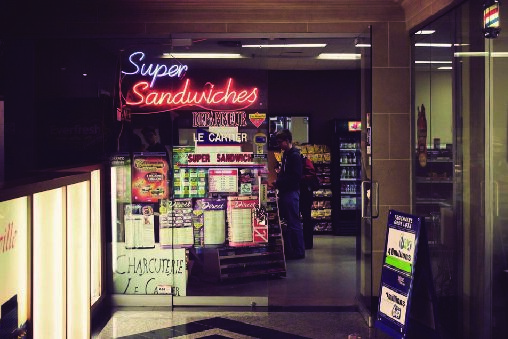
McGill student-favourite Super Sandwich shut its doors on June 23, citing increasing rent. The small dépanneur, which opened in 1988 and operated out of the basement of the Cartier Building, was popular among McGill students for its affordable sandwiches. Consequently, Super Sandwich reached out to SSMU, considering the possibility of reopening on campus in the University Centre. However, the Students’ Society of McGill University (SSMU) and McGill administration are still discussing the logistics of implementing long-term leases with businesses in the University Centre.

Super Sandwich owner Mathis Lo explained the circumstances of the shop’s closure in an interview with The Tribune. According to Lo, the shop’s rent would have increased to double what they were previously paying. 

Like for many other small and family-owned businesses, the COVID-19 pandemic was a challenging period for Super Sandwich. The business was also forced to increase the prices of their products earlier in 2023 because of food inflation, which reached its highest levels in decades. When their landlord informed them of the increased rent, Lo stated that he and his family did not want to feel pressured to put in even more hours at the store as a means to pay the rent.

“We didn’t want to be tied down to the store. Now we’re in a position where we can actually decide what we want to do, [whether] we want to leave or not,” Lo said.

Additionally, Lo explained that he did not see raising prices further as an option.

“For us, it wasn’t worthwhile staying because we didn’t want to increase our prices […] we wanted to keep our prices affordable for the students, and, for us, it didn’t make sense to overcharge,” Lo said.

Quang-Hai Francis Dinh, U3 Science, sees Super Sandwich’s closure—which he described as “devastating”—as both a sign of the times and a warning.

“Both rising rent and food insecurity are growing problems in Montreal. The hardships of small businesses [are] representative of bigger issues to come,” Dinh said. “The closure takes away one of the most popular food spots near campus. Other sandwich shops exist but the main attraction was the cheap price.” 

Many students have felt the burden of high food costs at McGill leading to demands from Let’s Eat McGill last Spring for better quality and cheaper food options. This year, Student Housing and Hospitality Services switched the dining halls from à-la-carte to a buffet-style, all-you-care-to-eat plan. In addition, students have led initiatives such as the Good Food Boxes offered by the Student Nutrition Accessibility Club, and the newly opened independent grocery market Les Fermes du Marché in the University Centre.

Currently, SSMU is considering housing Super Sandwich in the University Centre. SSMU’s Vice-President of Operations and Sustainability, Hassanatou Koulibaly, wrote in an email to The Tribune that SSMU has ongoing conversations with the Office of Deputy Provost of Student Life and Learning to be able to offer long-term leases to businesses in the University Centre in the future. 

“As we currently are discussing the terms of our agreement with McGill, we cannot give the long-term leases needed for Super Sandwich and other businesses to move into the University Centre,” Koulibaly wrote. “Once we secure an agreement with McGill, we will be able to accommodate many initiatives such as Super Sandwich in the University Centre.” 

Meanwhile, Lo is looking forward to reopening the store in the University Centre if the proposed lease offers long-term stability and the rent is affordable. He believes that if SSMU is willing to offer an affordable rent price, then Super Sandwich will be able to offer low prices for their products, benefiting Lo and McGill students. 

Martlets, Rugby, Sports

Martlets shine in rugby season opener against Bishop’s Gaiters

On Aug. 31 at Percival Molson Stadium, the Martlets rugby team (1–0) put an end to a three-season-long winless drought in a thrilling defeat of the Bishop’s University Gaiters (0–1). 

The Martlets established an early lead with a try seven minutes into the game by backrow Lauren Minns, but failed their conversion kick, leaving them up just 5-0. McGill’s lead was quickly overturned when the Gaiters took the ball through the Martlet defense, giving them a 7-5 lead after a successful conversion. Despite the Martlets’ strong defense and a try scored by second row Catherine Murphy, the Gaiters made use of two penalty kicks to pick up several points throughout the game. By the midway point of the second half, Bishop’s led the game with a score of 13-10.

However, in the final ten minutes, any fears of prolonging the three-season losing streak were put to rest as the Martlets’ forwards stunned the audience with a series of impressive plays. Minns punctured Bishop’s defense in a breakaway to score McGill’s third try of the game, allowing them to overtake Bishop’s lead. Minutes later, in the final moments of the game, McGill secured their 22-13 victory with another try by Minns and a successful conversion by team captain and fly-half Raurie Moffat

Minns spoke with The Tribune after the game and noted the resilience of the team in securing the final try through a particularly grueling pick-and-go strategy.

“After the second-to-last try, I knew time was running out, and I also knew how important the lead was for this team and this program,” Minns said. “I think the forwards took control of those last ten minutes because it’s the safest way to keep the ball alive [….] It’s a very tiring style of play but we only had five minutes left, so it’s just pick-and-go after pick-and-go […] up and down the field.”

The game’s thrilling atmosphere was fueled by a vocal crowd of Martlets fans in the stands.  A group of McGill varsity rugby alumni and the Redbirds rugby team made the audience particularly boisterous, rallying the crowd with team cheers and chants throughout the match. 

Moffat emphasized that this spirited crowd motivated the team, especially as games in the past have seen sparser turnout.

“This was a huge change for me, personally,” Moffat said. “And I’m sure a lot of the other teammates feel like this too—hearing people supporting us in the crowd helped me […] stay in my game and work really hard.”

Head coach Allan Swetman explained that the team’s victory is just one step towards the progress they hope to make throughout the season as they stay focused on overall improvement.

“For me, it’s not really about the results, it’s about how we play and watching every player continue to grow, and that’s kind of the aim for the season,” Swetman said. “So this is just a stepping stone and hopefully everyone on the team will continue to get better.”

McGill will next play Concordia University (0–0)on Sept. 6 in the 18th annual Kelly-Anne Drummond Cup.

Moment of the game

Moffat’s conversion of the team’s final try came at the 80-minute mark. As the ball sailed between the goalposts and the game came to an end, the athletes on the field and McGill fans in the stands erupted into cheers.

Quotable

“Are we going to win the entire season? Probably not, but this is a stepping stone to show that all the work this team has put in the past years is gonna come to fruition eventually. […] I think we’re only headed in the right direction.”

–– Lauren Minns, on the team’s goals for the season

Stat Corner

Minns scored her three tries of the game with 40-yard, 53-yard and a 17-yard runs, respectively, after having to sit out the past two seasons due to injuries.

Student Life

Making Montreal your home away from home

McGill is home to many international students, with nearly 30 per cent of the student population hailing from outside of Canada. This is one of the university’s greatest strengths, and a key reason that I and many others chose to attend.

I visited Canada for the first time in January 2021, when I moved into residence in the COVID-quarantine-curfew-hellscape that was the province of Quebec as an international student. Although I feel represented as French and American in a province that is famous for its blend of these two cultures, it is still hard being far away from home; I can’t imagine the feeling of homesickness that international students without that cultural presence can face.  

One of the main ways you can combat homesickness is by trying to meet people who are from the same country, region, or cultural background as you. This can be done, among other ways, by joining clubs or associations through the university. There are over 20 religious and cultural clubs at McGill—from the Belgian Student Society to the Malaysian and Singaporean Students’ Association, you might just be lucky enough to have a built-in community to join. 

Thankfully, finding your community doesn’t stop at the McGill bubble. As an international student in Montreal, you are living in an immensely multicultural city. By some estimates, around 24 per cent of the Montreal population is made up of immigrants

Take my roommate Beatriz, U3 Arts, for example. She is Portuguese, and we serendipitously signed a lease to live in Little Portugal our first year. When we first moved in, she went to the hardware store closest to our house to pick up some move-in essentials. When she came back, she was ecstatic. 

“It turns out the hardware store is Portuguese, and the old ladies in there were speaking the same accent as the people from my mom’s region!” she exclaimed enthusiastically. 

The piles of Portuguese dried fish, Bacalhau, sold at Segal’s—the Plateau grocery store beloved by many students—also reminded her of home.

To me, this illustrates one of the greatest things about Montreal: That you can find a small piece of your home country, scattered throughout the city. 

Some international students will be more disoriented in Montreal than others. As a half-French person who had never been to Quebec before, I was shocked to find all of my favourite French pantry items stocked in the Provigo next to my house—it was so comforting. 

Food is one of the ways in which international students can feel more at home in Montreal. Taste and smell are the senses most linked to emotion, so you might be able to find your Madeleine de Proust in the city. 

Montreal residents pride themselves in having restaurants from nearly every cuisine around the globe, where the owners and employees faithfully cook their native dishes, often importing ingredients for authenticity. From the Za’atar in Lebanese restaurants to the legs of Serrano ham hanging from the ceilings of Spanish eateries, there is always a bite of your home country to be found through culinary experience. 

These details can make eating in a restaurant from your home country and interacting with the patrons a very comforting experience that can help to keep homesickness at bay. Personally, the smell of bread baking in Toledo bakery on Mont-Royal and the inclusion of taxes in their prices is all I need to feel like I’m back in Paris. 

If you don’t feel like going out or are trying to save money, you can still use food as a medium to combat homesickness. The many international grocery stores around the city are perfect for finding imported products from your home country. The McGill International Student Services website is a great resource for anyone trying to find food from home here.

At the end of the day, however homesick you might feel, you will eventually end up making Montreal your home. As an international student graduating this May, I think I will be homesick for Montreal wherever I move next. 

Student Life

The Tribune’s guide to digital declutter

Whether it’s your file manager, desktop, or inbox, it’s easy for our digital world to get messy. So, before this semester’s workload picks up, set aside some time to declutter your computer. This will help you build better habits that’ll make you more efficient and relaxed during the school year. 

Deep clean

The first part of this fall semester spring cleaning is to uninstall apps that you don’t need. Open the program manager, if there’s an app you can’t remember using or installing, delete it. If the antivirus that came with your computer only exists now to notify you that your trial expired, delete it.

Next is likely the most daunting, organizing your files. Start by creating a fresh hierarchy of folders. For your studies, try school -> degree -> semester -> course code for an intuitive way to sort both previous and upcoming semesters. Then, go through your files, folder by folder, making sure all important documents are sorted appropriately and others are deleted. Come up with a naming scheme for documents and as you’re going through them, rename them to be consistent. Last, pin the current semester for quick access. 

Now it’s time to open the browser. Breathe, you can get through it. First, close your open tabs. If you haven’t revisited them yet, you probably aren’t going to. Next, look at your bookmark bar. Do you really need all those links accessible at all times? Chances are, probably not. Remove the bookmark bar and save the truly important links as buttons on your homepage. The extra browser space and reduced visual clutter will have a big impact. Finally, remove those extensions you don’t use anymore. 

Study the built-in organization features of your browser and use them. Don’t be afraid to try new browsers either. Vivaldi, Opera, and Sidekick have well-executed tools for ordering tabs and workspaces. On Mac, SigmaOS and Arc are two powerful alternatives to Safari. 

Taking preventative action 

Does your email app have a notification badge in the triple digits? It may be time to do something about it. If manually deleting emails is too overwhelming, simply mark them all as read. Go through emails and unsubscribe from newsletters that don’t do anything but annoy you. Consider using automatic sorting features going forward to prevent this from happening again.

The commotion that happens when your computer boots up shouldn’t be overwhelming. Restart your computer and for all the programs that start up when you sign in, go through the program’s settings and disable any feature that allows them to boot up automatically.

Take a pledge

All this effort will be short-lived if you don’t make a few promises to yourself. Vow that you’ll treat your desktop like you would an actual desk. Don’t toss random files willy-nilly; the desktop should not be the go-to for unsorted files. A few important folders and frequently used apps are okay, but you should be able to see your background. On Mac, take advantage of the stack by feature for quick decluttering.

The downloads folder should not be an endless list of randomly named documents and files, where there is no way to discern what is actually important. Delete what you don’t need, retitle the files where the original name makes no sense, and move the important files to your recently organized file system. But most importantly, promise yourself that you won’t rely on the download folder as a catchall for files you don’t want to deal with. Be conscientious going forward and change your browser settings to prompt you for where to file each download.

A new era

Organizing your computer has probably been on your to-do list for some time. This is your sign to get it done. It might seem daunting but set a realistic timeline and tackle it step by step. Once your schoolwork gets more intense, you’ll be impressed by your new efficiency and structure. 

Art, Arts & Entertainment

The Pop of Life! captures the bold spirit of the Pop Art movement

Bright reds, yellows, and blues frame the stunning new Pop Art exhibit at the Montréal Museum of Fine Arts (MMFA), which features works from iconic international artists like Andy Warhol and Eduardo Paolozzi as well as Québécois trailblazers like Pierre Ayot. Iris Amizlev, curator for the MMFA since 2020, curated The Pop of Life! to be interactive, cozy, and exciting, while at the same time integrating the serious themes of political tension, consumerism, and scientific discovery from the 1960s and 1970s. 

“The art is very serious and it’s very cerebral, but it’s also very delightful and fun. It’s a real reflection on what was happening at the time,” Amizlev said in an interview with The Tribune.

The exhibition is delightfully sectioned into categories—Plastic Blitz, Future Now!, and Ordinary Things, to name a few—that bring forth a particular theme from the time period. Still, the categories merge gracefully as each artwork presents multiple, nuanced themes and messages. Regardless of these sections, which bear large titles along the walls of the exhibit, the artwork is subtly arranged like a house, with imaginative sculptures of a stove, chairs, and sofas fitting amongst a kitchen, living room, and foyer. So, while the room is an explosion of colours and geometric shapes, the soft lighting and home-like organization give the exhibit a cozy and relaxing atmosphere. 

The Pop Art movement is famous for its love of ordinary things: A can of soup, a bowl of fruit, an assortment of shoes. In this exhibit, one will find creative and fun reimaginings of a mop, sandwich, and sink. 

There is even a sculpture fashioned from a real stove, titled Pollo allo spiedo (1985), by Montréal native Pierre Ayot. Inside the stove, Ayot placed a video of a chicken cooking on a 2-hour loop. 

“This [sculpture] is truly a brilliant work. He’s totally transformed [the stove].,” Amizlev explained.  

The Pop of Life! transports the visitor into the political arena of the ‘60s and ‘70s, where one learns how artists used the Pop Art style to capture the political tensions of their environment. Among local historic periods, James Brodie’s piece Québeclove No. 3 (1981) highlights the October Crisis of 1970. In revolution-inspired colours of bloody red and black, a Québécois man rests against his building while holding a gun. The harsh colours symbolize the extreme conflict of the October Crisis, yet they portray a member of the Front de Libération du Québec (FLQ) in a leisurely pose, which calls attention to the ordinary people entangled in the Crisis. Through the art, the exhibition features artists from the period who deeply understand the contested politics and the humanity of those involved with each movement. 

The displays, particularly in the Space Age and Future Now! sections, launch the visitor into out-of-this-world pieces centred around rising technology and extraterrestrial discoveries. 

“I find it very interesting as we’re approaching this new era of technology, artificial intelligence, and also new space exploration. It’s good to think about the ways in which artists confronted these advancements,” Mary-Dailey Desmarais, Chief Curator of the MMFA, said in an interview with the The Tribune.

In an interactive sculpture titled Big Sleep (1968), artist Edmund Alleyn crafted a brain within a grey machine that whirrs and lights up when a visitor presses a button. The black screen from a sculpture of a television shaped like an astronaut helmet, titled Videosphere Television Set (1970) by the Japan Victor Company, reflects viewers and our modern aspirations for technology and scientific discovery. Among the rockets and futuristic furniture, the area invites visitors to explore, imagine, and get lost in curiosity.

“Everything is still relevant now,” Amizlev added. “That’s what makes this exhibition extremely accessible and […] that’s what I find so amazing.”

The Pop of Life! is on display at The Montréal Museum of Fine Arts until March 24, 2024.

Student Life

The beloved OAP: McGill’s essential kickoff event

McGill’s Open Air Pub (OAP), run entirely by student volunteers, is a quintessential Montreal amalgam of fashion, nonchalance, music, beer, and social hubbub. Held at the beginning and end of each school year—this semester from Aug. 28 until Sept. 8—OAP showcases more than 25 small bands and DJs. OAP is open every weekday from noon until 9:00 pm, with the first artists performing in the early evening on a small stage in the Lower West Field of McGill’s campus, surrounded by a charming scatter of picnic tables and tents for food and drink.

OAP finds a way to encapsulate both a daytime mellowness and the high energy of nighttime. After the sun sets, students are quick to congregate in front of the stage for dancing, lit by the flashing red, blue, and green club lights and shrouded by a smoke machine. In the hours before, however, the atmosphere is much more relaxed, with students mingling near picnic tables, enjoying a hot dog, or sipping a beer. 

Allesandria Papia, U1 Arts, spoke to why students choose to congregate at the event.

“Everybody there was looking for similar things, which is to meet people and to have fun,” Papia said. 

Entrance to OAP is free—any McGill student can walk in and enjoy the music at no cost. Food and drink, however, require tickets. The general consensus seems to be that prices are reasonable and quality is satisfactory, though nothing earth-shattering; attendees reported that the cheeseburgers were the best food option (though they sell out quickly), and the hot dogs are a good deal—two hot dogs for four dollars. The vegetarian options, though, are lacking. Several hopeful veggie-burger consumers complained that while well-made, the veggie options are unreliable and run out quickly, so the OAP vegetarians should not count on a meal.

OAP holds a special place in the hearts of McGill students as it is the first social event of the year apart from Frosh, which is reserved for first-year students. For upper year students, it is a long-awaited reunion and a chance to see familiar faces, while for first years it is an opportunity to settle into their new school community. 

Some students, however, found OAP to be a less than ideal setting to meet new people. Addy Crocksen, U1 Arts and Science, is more hopeful for next year’s OAP.

“I don’t know a lot of people at this school, so I found it intimidating in that setting to be meeting people because a lot of people already knew each other and were in their own groups. I feel like I would have had a lot more fun in second or third year,” Crocksen said. 

The buzz around OAP brings with it a line that stretches far around the perimeter of the fences. Three girls standing towards the middle of the line reported that they had been in the queue for an hour and a half. When asked what their hopes were for the event, they laughed and admitted that they would be happy just being allowed in after waiting so long in line.

Those who attended OAP in past years generally complemented its attention to sustainability and consistent high-quality music, though they also offered some improvements. The advertising of OAP as a daytime festival, for some, means that the organizers prioritize music to the detriment of offering other activities such as games or sports to keep crowds occupied. 

OAP is an event that reflects the energy it receives. It is an epicentre of both beginning-of-year reunions and first-time introductions; it offers the choice of casual daytime music-listening or more energetic DJ-centric dancing; it can function as the event of the evening or as a preface to a later night out. But above all, OAP nurtures the essential Montreal fusion of community and entertainment, offering good food, drink, music, and socializing in a way that is casual, stylish, and wonderfully seamless.

McGill, Montreal, News

McGill reports nine potential grave zones at New Vic site a week after security verbally assaulted Mohawk Mothers

CW: Mentions of assault and death 

On July 25, the Kanien’kehá:ka Kahnistensera (Mohawk Mothers) were verbally assaulted by security personnel on McGill’s New Vic project site. A week later, on Aug. 3, McGill issued a comprehensive press release about the ongoing investigation into the New Vic project site, announcing that nine anomalies were found during archaeological work. However, the Mohawk Mothers soon released their own statement, alleging that McGill and the Société québécoise des infrastructures (SQI) had failed to report all the findings on the site and isolated the Mothers from the investigation. 

The Mothers have been present for the archaeological excavation on the New Vic site, alongside archaeologists and security personnel hired by SQI as stipulated by their settlement agreement with McGill, the SQI, the Royal Victoria Hospital (RVH), the City of Montreal, and the Attorney General of Canada. Court-appointed Indigenous cultural monitors—who are responsible for performing cultural ceremonies and ensuring that excavation is completed in accordance with Indigenous protocols—have also been present on the site.

In an interview with The Tribune, Mohawk Mother Kwetiio shared that on the afternoon of July 25, the Mothers and cultural monitors were on the New Vic site taking a virtual meeting when archaeologists informed them that work would end earlier than usual that day. As the meeting was wrapping up, Kahentinetha, another of the Mothers, decided to walk up the hill on the New Vic site, prompted by one of the cultural monitors. 

“After we finished our meeting […], Kahentinetha was coming down the hill towards us from the security guards and said, ‘They’re calling the police.’ I was startled,” Kwetiio said. “I went up the hill […], and [a member of the Mothers’ team, Alex*] came along with me.” 

Alex pulled out their phone to record the interaction. However, when the pair got to the top of the hill, a security guard whose name remains unknown snatched Alex’s phone out of his hands.

“She grabbed [the phone] and started hollering at [Alex] that ‘No, I’m not being filmed, and you have no right,’” Kwetiio said. “And here’s me being like, ‘Wait a minute, calm down, like there are older people here.’” 

The security guard then handed Alex’s phone to another security guard, who stopped the recording and deleted it from the device. Kwetiio explained that the interaction became increasingly hostile when the security guard told the Mothers that they were not allowed to be present on the property unless they had a court order and demanded that the Mothers show her the document. 

“I said, ‘[…] You’ve been here all week. I’m pretty sure you know who we are, and you know why we’re here. And if you give [Alex] back [their] phone, [they] can pull it up on our email, and you will see the court order,’” Kwetiio said. 

The security guard went on to threaten to call the police numerous times. In an interview with The Tribune, Mother Kahentinetha shared some of the remarks the security guard made toward the Mothers. 

“[The security guard] says, ‘You should have some kids to take care of,’ or something like that. I said, ‘We had kids, but they ended up here in McGill and they were tested on.’ She says, ‘That’s a lie, that’s a lie.’ And I said, ‘Well, that did happen, and you got the benefit from this.’ And that’s when she said, ‘Yes, we sure did. We got the benefits,’” Kwettio said. 

The security firm did not respond to The Tribune’s request for comment. 

Since the altercation, the cultural monitors have refused to be present for additional work on the site until a resolution is reached. As the monitors must be present for any onsite work, the archaeological efforts were halted on July 26 but resumed Aug. 23.  

A private meeting to discuss the altercation took place on Aug. 1, with the Mothers, the SQI, cultural monitors, and a representative of the Office of the Independent Special Interlocutor, Kimberly Murray, present. The Mothers pleaded with the defendants to hire a Kahnawake-based security firm to patrol the site, which was initially met with resistance from the defendants. However, all parties are in ongoing negotiations to potentially hire a Mohawk security firm. Currently, an SQI-appointed security firm continues to oversee the project’s security, while two representatives from a security firm chosen by the Mothers are also to be present on the site. 

While work remains halted after the altercation, ground penetrating radar (GPR)—a non-intrusive method of surveying and mapping land—has already been used on the site. On Aug. 3, McGill Provost and Vice Principal Christopher Manfredi issued a press release to all students and staff informing them that the GPR was performed by Geoscan—a geophysical archaeological firm that was recommended by the appointed panel of archaeologists. He shared that GeoScan’s findings have deemed that “no likely grave-type features [were] identified across the site,” but that nine anomalies, containing potential grave-type features, were found. 

According to anthropologist and associate of the Mothers, Phillipe Blouin, McGill’s announcement failed to include numerous additional findings. He explained that while only the nine reported anomalies were the correct size to be potential adult burial sites, several others of different sizes  were omitted from the press release. 

“There’s a much larger number of unknown anomalies [where] it’s possible that there are graves of children or graves without coffins,” Blouin said. “These results have been squarely silenced, denied, and minimized by the SQI.” 

SQI asserted that they have not denied or minimized the results of Geoscan’s report in a written statement to The Tribune. They stated that Geoscan indicated that the features of the “unknown anomalies” are not necessarially indicative of graves. 

In an interview with The Tribune, Associate Provost Angela Campbell explained that the reason McGill’s press release did not include the unknown anomalies was because the nine conclusive findings were of the most interest to the McGill community. The additional discoveries were highly unlikely to be potential graves, and were not definite findings. 

“[Our press release] wanted to communicate things that were certain,” Campbell said. “What was certain is that there’s nine potential unmarked sites, and so that’s where the work would begin [….] There’s no denying that there were many [findings] that were called an unknown source.”

Blouin explained that the panel of archaeologists wanted to review and characterize the found anomalies, in addition to allowing the Canadian Archaeological Association (CAA) to peer review the data. However, the service providers would not allow this. 

SQI argued that the panel of archaeologists’ mandate was limited to identifying the appropriate archaeological techniques for the site and recommending service providers to carry out such techniques. They stated that it was never agreed upon to allow the panel to review or interpret the data obtained by the GPR. 

Additionally, Campbell explained that Geoscan was a service provider recommended by the panel of archaeologists. She also stated that as GeoScan is one of the most qualified archaeological firms in the country, she felt that it should be entrusted with the interpretation of GPR findings. 

“We need to be able to trust that company to collect and interpret their own data,” Campbell said.
“That’s the reason why we don’t feel that we ought to subject the data to a second review. That company has the expertise, and we have to have the confidence in them to do that work.” 

While the investigation was halted, excavated soil remained above ground, which the Mothers worried could be damaged by weather conditions. 

“That is soil that is supposed to be sifted for human bones, and it’s left to the rain [….] It’s extremely improper for any type of archaeological inventory, and even more when there’s potential criminal ramifications and forensics,” Blouin said. 

In an interview with The Tribune, Executive Director of the New Vic project Pierre Major clarified that while the soil left on top of the land has been documented and covered with tarps during the investigation’s halt, the soil is unlikely to contain evidence. 

Direct excavation has resumed in recent weeks in the areas flagged by search dogs. However, the Mothers still feel there is a lack of sufficient communication and cooperation from the defendants. 

“The SQI and McGill are taking every little grey area that we haven’t created a protocol for, and they’re using those grey areas to try and take over the investigation and not make it Indigenous-led,” Kwetiio said. 

*Alex’s name has been changed to preserve their anonymity.

Out on the Town, Student Life

Good places, good food, good vibes: A love letter to picnicking in Montreal

Vibrant with culture and entertainment, Montreal is the perfect city to spend our precious school-free months. While this summer’s weather has left us wanting more, those occasional warm, sunny days mean one thing: It’s time for a day in the park. Luckily for us, despite the forthcoming Fall semester, the Montreal picnic scene offers more than our hearts desire.

Montreal, your picnic scenes are a gift. 

On a hot summer day, when the sun shines in all its might, the last thing many of us want to do is haul a tote bag, packed to the brim with snacks and bottles, around the busy streets of Montreal. So, keep it close! Parks such as Jeanne-Mance and La Fontaine are favourites among McGillians because of their proximity to campus. And they are classics for a reason: They offer shaded sitting areas as well as soccer, volleyball, and tennis courts, and the latter’s lake (with the ducks that inhabit it) is a pleasure to sit around. 

But sometimes, you want to get away from the McGill bubble. Sir-Wilfrid-Laurier and Jarry are parks but a metro ride away from campus. To really soak in the sun, try getting there by bike—the St-Denis REV provides a direct path with a lively ambiance, making up for the uphill trek. The outdoor pools at Laurier and Jarry will perfectly complement your picnic with a quick dip.

For a more spontaneous picnic, start by exploring some of the neighbourhoods you might be less familiar with, such as Little Italy, Park-Extension, and Rosemont. Walk or bike around until you come across a local restaurant, where you’ll hopefully try the best meal of your life.  Place an order for takeout, find a spot in the shade at a nearby plaza or park, crack open a cold drink of your choice, and your day is made.

Montreal, you’re a delight to explore.

Montreal’s many parks offer a great picnic setting, but the way you get there can be just as fun. There’s nothing more joyful than feeling the breeze through your hair as you make your way to your favourite destination. If you don’t have a bike, hop on a BIXI—and if you’re worried about breaking a sweat, the electric bikes are a worthwhile upgrade. For something a little further out, bike along the canal to reach René-Lévesque Park, where the picturesque picnic spots along the water will make you feel like you’re in a movie. Also accessible by bike is Jean-Drapeau Park, an urban park rivalling Mount-Royal. Taking the Route Verte might be a bit longer, but the views of the St-Lawrence and Montreal skyline will make it worth it.

Montreal, sharing a summer picnic with you makes my day.

Whether you’re alone or with company, picnicking in Montreal is a great go-to activity in the summer. If you want to spend some quiet time by yourself, grabbing a book or plugging into a podcast and laying down for a while, surrounded by others who share the same good vibes as you, picnicking can be very special. You’ll beat the boredom of lazy summer days. Enjoy your charcuterie board and cool seltzers while the weather is still warm and pleasant and the squirrels and geese still audaciously walk up to you as you open up your snacks. Spend your Montreal summer days as you wish, but make sure you take advantage of our city’s beautiful outdoor spaces—you’ll miss them in a few months.

McGill, News, SSMU

Independent grocery market to open in the SSMU building

An independent grocery market aiming to beat chain prices and support farmers and small businesses in Quebec is coming to the University Centre at the end of August.

Les Fermes du Marché, the brainchild of McGill graduate Maude Laroche, BA ‘23, will sell everyday items, including fruit, vegetables, and bread, for less than $4. McGill students will also receive a 10 per cent discount, according to its founder.

The store, dubbed “The Student Market Project,” will be located on the first floor in room 18 and open from 9 a.m. to 9 p.m., Monday to Friday. The University Centre will be Laroche and her team’s first physical location after starting Les Fermes du Marché as an online farmers’ market in 2022.

“Don’t fear for affordability, we are really concerned with that [….] My goal is to be cheaper than IGA and Provigo all the time,” Laroche said in an interview with The Tribune.

While most products will be sourced directly in Quebec from local farmers and food producers, they plan to also source internationally to expand their product range. However, Laroche stressed that they will try to support Quebec businesses by preparing and packaging internationally-sourced products in Quebec once they arrive. 

Another priority for Laroche is minimizing waste. An initiative they are looking into is pre-ordered weekly grocery boxes, which would allow them to order a predetermined amount of food stock. 

“I don’t want to be food wasting […] Because food, first off, is expensive,” Laroche said.  “Second, all the money I’m spending on this waste, I do not spend on stuff for the store or to give back to the community [….] The lower my food waste, the better my pricing.”

Students’ Society of McGill University (SSMU) vice-president (VP) Operations and Sustainability Hassanatou Koulibaly affirmed SSMU’s support for Laroche and her team in a written statement to The Tribune. She explained Les Fermes du Marché will occupy the space short-term and that the SSMU team will review whether it aligns with students’ interests.

“[Laroche] will be offering products for students that are healthy, locally sourced, and with decent price points,” Koulibaly wrote. “We hope that this pop-up will go very successfully for Maude and her team but mostly for our student base.”

According to Koulibaly, who was also the SSMU VP Student Life during the 2022-2023 school year, SSMU has more food-related projects in the pipeline, but she has not responded to further questions for more details. 

The opening of Les Fermes du Marché comes after food inflation last November reached the highest levels since 1981. In tandem with increasing city rents, it has had a disproportionate impact on students’ cost of living, prompting an uptick in student initiatives, from Let’s Eat McGill’s protests to higher demand for Midnight Kitchen’s free meals on Thursdays. 

For twenty-two year-old Laroche, who coined the name Les Fermes du Marché while searching online name generators, the campus drive to improve food security and sustainability is timely. Coming from a family of farmers and entrepreneurs, she has always been passionate about agricultural development. 

“I came up with this idea because I wanted to increase food security first,” Laroche said. “Secondly, I wanted to create something that’s easy to access for people. [And] I want to have quality products.”

At McGill, Laroche studied geography and international development studies and graduated in Winter 2023. During her time, she took agricultural courses from Caroline Begg, a Faculty Lecturer in the Department of Plant Science. This included Begg’s internship course AGRI 310, in which students produce a research paper or do a hands-on project.

“For Maude’s internship she worked at Ecole-O-Champ, which is an organization that helps educate children on agriculture, the environment, and nutrition,” Begg wrote in an email to The Tribune. “Maude was able to interact with agricultural producers and give […] education modules to various children.”

Laroche also developed her business plan for Les Fermes du Marché under Begg’s guidance in two independent research courses, FAES 313 and 323.

The first day of business will be on Aug. 29, and they will also kick off the store’s opening with a launch party on Aug. 30. Laroche hopes that the store’s opening will be the first of many in universities and across Quebec.

Ask a Scientist, Science & Technology

Cyanobacterial growth: An underlying cause for unsafe drinking water

Cyanobacterial toxins are amongst the most hazardous substances for humans. Their presence in drinking water due to cyanobacterial growth can result in undesirable health effects such as hay fever-like symptoms, skin rashes, respiratory and gastrointestinal distress, and even liver and kidney damage upon exposure. Therefore, there is an urgent need to better understand cyanobacterial proliferation. 

Since light is a key factor driving cyanobacterial growth, the dynamics of cyanobacteria in darkness are less extensively investigated, as shown by past research lacking evidence of potential cyanobacterial growth during sludge storage in the dark. 

Recently, Jesse Shapiro, an associate professor in the Department of Microbiology and Immunology at McGill, and his team filled this research gap in a paper published in Toxins. They conducted a comprehensive investigation on natural cyanobacterial growth and compositions during sludge storage under controlled conditions.

Cyanobacteria, more commonly known as blue-green algae, are microscopic organisms that are found in all forms of water, such as fresh water and seawater. They use sunlight to make their own food in a process called photosynthesis

In favorable environments, particularly warm and nutrient-rich environments, cyanobacteria can overgrow, forming blooms that spread across a body of water. Cyanobacteria blooms produce toxins called cyanotoxins, which are extremely poisonous to humans upon exposure via ingestion, inhalation, skin contact, or eye contact. The common types of cyanotoxins include microcystins, anatoxin-a, and saxitoxins.

Conventional treatment methods have been widely applied to ensure adequate drinking water quality using drinking water treatment plants (DWTPs)—facilities that employ different water treatment processes to remove hazardous substances, such as cyanotoxins, in the water. 

Although these water treatment processes can remove 60 to 99 per cent of cyanobacteria from water, they can cause an accumulation of cyanotoxins in the sludge—the waste products generated from water treatment processes, potentially leading to health issues.

“A growing number of drinking water treatment facilities are now considered at risk and must install costly treatment barriers to remove cyanobacteria and their toxins,” wrote Hana Trigui, the second author of the paper and a research associate in the Department of Civil, Geological, and Mining Engineering at Polytechnique Montréal, in an email to The Tribune. Safety issues with drinking water due to the presence of cyanotoxins also pointed to the need to better understand cyanobacterial growth during sludge storage.

In their new study, Shapiro, Trigui, and the rest of the team examined cyanobacterial diversity and dynamics in the sludge stored in a DWTP in the dark. 

Although cyanobacteria rely on light for growth, they have to adapt to darkness when needed, such as after sunset.

“Cyanobacteria frequently encounter transitions between light and dark in their environment,” Trigui wrote. There are generally decreased cyanobacterial cell activities in the dark, suggesting a reduced cyanotoxin release

However, cyanotoxin release is not as insignificant as the researchers have expected. 

“Cyanobacterial cell growth in the stored sludge leads to cyanotoxin release up to four times higher than the expected concentration,” Trigui wrote.

Despite a high concentration of cyanotoxin being released, the number of cyanobacteria was largely reduced in the dark. 

“Not all cyanobacterial species are able to survive in the dark during sludge storage,” Trigui wrote. “Storage [in the dark] causes significant changes in microbial diversity, leading to the selective persistence of some cyanobacterial species over other communities.”

Shotgun metagenomic sequencing was used to identify cyanobacterial cells that persistently grew during sludge storage. 

“This method involves taking a sample from the sludge from a drinking water treatment plant and extracting the DNA from all bacterial species in the sample. Then, we take the short pieces of DNA and match them with a database of known genomes of different bacteria,” Shapiro said in an interview with The Tribune. “We can then say what bacterial species are likely present in the sludge where the sample is taken from.” 

During sludge storage, the researchers observed persistent growth of cyanobacteria from the genera Microcystis, Aphanocapsa, Chroococcus, and Dolichospermum, all of which are capable of producing cyanotoxins.

Overall, the findings provided consistent and comprehensive evidence of cyanobacterial growth and dynamics in the stored sludge. “Treatment plant operators, therefore, need a set of better practices to reduce toxin production, prevent the breakthrough of toxins into drinking water, and manage toxic sludge,” Trigui wrote. “To this end, our research aimed to determine best practices to prevent the accumulation of toxigenic cyanobacteria and the release of toxins in full-scale treatment plants.”

Read the latest issue

Read the latest issue