

Latest News

Baseball, Sports

Major League Baseball has a “nutting” problem

Professional sports leagues across North America all face the familiar practice of tanking: When teams underperform on purpose. They trade away their best players, neglect fan experience, refuse to sign franchise players to extensions, and intentionally make the team worse. The motivations behind tanking can vary. Oftentimes, the reason to tank is to have a better shot at selecting higher in the following years’ draft, like the 2002-03 Cleveland Cavaliers’ infamous tank to get a shot at LeBron James—a gamble that was ultimately successful. 

In other cases, tanking is a necessary evil; teams sometimes need to be bad in order to rebuild and be good again. Take the Houston Astros of the late 2000s and early 2010s—they are the prime example of how to properly rebuild a team by acquiring veteran assets as well as promising prospects in order to build a fresh system from the draft up. This process resulted in five American League West division titles, four American League pennants, and two World Series titles between 2017 and 2022. 

Major League Baseball (MLB) is plagued by a different type of tanking—a practice characterized by owners who take advantage of MLB’s revenue sharing system and continuously put out bad teams, much to the distaste of their fanbases. Although they find some success in winning seasons and make the odd playoff run in spite of their ownership, these teams do something beyond tanking, what Effectively Wild podcast host Meg Rowley calls “nutting.” 

The etymology of nutting comes from the Pittsburgh Pirates owner Bob Nutting and can be defined as “the act of an owner pocketing revenue instead of spending it to improve the team.” After acquiring majority ownership of the Pirates in 1996 and finishing last in the National League Central that same season, Nutting handcuffed team spending, refusing any commitment to spending on acquiring players or fixing existing player development issues.  

All the while, the Pittsburgh Post-Gazette reported that in most years since 2007, the Pirates have been able to cover their payroll with their gate revenue (ie. ticket sales, concessions, stadium merchandise sales, and parking) alone. This does not include any revenue from national or local television, or, most importantly, revenue sharing. 

Under the new collective bargaining agreement (CBA) negotiated in 2022, each MLB team pools 48 per cent of local revenues with the total amount split equally between all 30 teams. This results in each team taking in 3.3 per cent of the total—an estimated $110 million USD, if not more. Teams also receive a share of national revenues, totalling around $90 million USD per team. The goal of revenue sharing is to allow small market teams to compete with big market teams like the New York Yankees and the Los Angeles Dodgers that bring in more money from ticket sales and merchandise. However, nutting has inspired many teams to exploit loopholes in this system, pushing revenue sharing money into other areas without improving their on-field product by increasing payroll. 

The Oakland Athletics (A’s) are another team that practices what the Pirates preach. In the past decade, the A’s have either traded their best players away for minimal return (explaining their 22nd overall farm system ranking) or lost them to free agency. However, the motivation behind the A’s nutting has been not only to avoid spending money but to service the team’s relocation to Las Vegas—a move that A’s owner, John Fisher, claims will allow the team to stop using “Moneyball” tactics to field their roster.

The move to Vegas has not only alienated A’s fans, prompting “the Summer of Sell” movement––there is no guarantee that Fisher will not continue to roll out teams similar to this year’s abysmal $56.9 million USD player payroll that resulted in a current record of 42–96.

Despite the MLB Players Association pushing to further regulate revenue sharing, nothing in the new CBA forces teams to put these dollars towards their on-field product. Questions of whether a salary floor or greater restrictions on revenue sharing dollars are the solution is up for debate, but there is one certainty: MLB needs to put a stop to nutting.

Science & Technology

The journey of a microplastic: An unfolding story

From the packaging of an online order to the takeaway cup holding a morning coffee, plastic is everywhere. In 2019, humans produced 460 million tonnes of plastic, an enormous increase from the mid-twentieth century when roughly two million tonnes were produced annually. A key aspect of plastic pollution is that it comes not just from large items such as water bottles and plastic bags, but also from microplastics—pieces that are five millimetres or smaller.

We know that the scale of plastic pollution is enormous, but what happens when microplastics infiltrate aquatic ecosystems? The Ricciardi Lab at McGill is looking to understand the routes by which organisms accumulate microplastics in their bodies. 

The team, led by Geneviève D’Avignon, who recently received a PhD in Biology from McGill, and advised by Anthony Ricciardi, professor of invasion ecology & aquatic ecosystems, worked to create a basic replica of a benthic food web in the lab—a network of food chains for species living at the bottom of a body of water. To do this, they used three interacting organisms: The Quagga Mussel, the Gammarid Amphipod, and the Round Goby

The mussel and gammarid have a commensalistic relationship—where one organism is benefited and the other is neither hurt nor helped. In this case, the gammarid eats the discarded food from the mussel, and the mussel is unaffected. In addition, both the mussel and gammarid are prey for the goby.

The study replicated the food web between the three organisms and conducted single-exposure trials in which microplastics were added to the tanks in various concentrations. In each trial, the team observed multiple paths of microplastic uptake and noted how the organisms recovered. In particular, they examined the microplastic uptake through environmental routes such as water and sand as well as how microplastics are transferred through interspecies interactions.

“We ran different tests: There was the uptake, where we just exposed the animals and looked at how much particles they took up, how much they ingested in their bodies,” D’Avignon shared in an interview with The Tribune. “And then depuration, when you put the organism in a clean environment, and once they’ve been ingesting or taking up these particles, I’m looking at how long […] it take[s] for them to release all the particles out of their bodies.”

The researchers discerned that non-trophic interactions—that is, interactions between species other than predator-prey, like commensalism and interactions with the environment—also account for a significant amount of microplastic transfer and uptake. For instance, the mussels, which ingest more of the water-suspended microplastics, transferred those microplastics to the gammarids.

D’Avignon also noted that the depuration times were longer than she had anticipated. In general, the study served to enhance researchers’ understanding of the food web processes that are responsible for circulating microplastics. 

“We saw that sometimes particles, in the mussels, for example, would stay for [about] 72 hours,” D’Avignon said. “It means that these organisms can retain them long enough for more transfers to happen.”

To her, this was a key takeaway because outside of the lab, with many other factors at play within an ecosystem, depuration times could be increasingly affected. Particularly, in nature, microplastics are a constant presence, so organisms may be able to expel microplastics at the rates studied in the lab. However, unlike the controlled environment of a lab, they will continue to accumulate microplastics, increasing the burden on the organisms’ bodies.

Ultimately, this experiment was a preliminary study that the team hopes to continue building upon by creating more and more complex models, with the end goal of understanding inter-species dynamics more comprehensively and working to heal ecosystems from man-made pollution. 

Valuable information was gleaned from the experiments, but D’Avignon explained that there is still a long way to go in order to understand microplastic transfer in complex ecosystems. 

“In reality, a lot of these species interact with the water column, interact with the sediments, interact with other species,” D’Avignon said. “So how much plastic they’re actually exposed to in a day, or that passes through our system can actually be, perhaps, increased in comparison to what we thought.”

Science & Technology

Shrek at the beach: Would green sunscreen be worth it?

Eumelanin, a form of melanin typical of mammals, is a brown-black coloured pigment found in skin, hair, and eyes. It absorbs sunlight energy and transforms it into heat, acting as a natural sunscreen. 

For a pigment that plays this crucial role—and many more—surprisingly little is known about its composition and biosynthesis. Dr. Jean-Phillip Lumb, associate professor in McGill’s Department of Chemistry, and his research group recently published their research in Nature Chemistry, exploring eumelanin’s composition and chemical function.

In addition to its more well-known function as a natural form of sun protection, melanin has several additional functions that are not well understood. 

“Melanin is produced in certain regions of your body that are not exposed to sunlight,” Lumb said in an interview with The Tribune. “One example is in the inner ear, there are [pigmented] hair follicles. If those hair follicles get damaged and stop producing pigment, it can lead to problems with ability to balance.” 

The substantia nigra, a region of the brain involved in dopamine production, also contains a type of eumelanin. “People who experience neurodegeneration have a decline in the amount of the pigment in that region,” Lumb said. “But the truth is, a defined precise role for melanin in the brain is not available—we don’t know exactly what it’s doing.”

One of the main objectives of Lumb’s research is to understand the structure of eumelanin to provide insights into its physiological roles.

Eumelanin granules are formed in pigment-producing cells called melanocytes, within football-shaped compartments called melanosomes. Inside them, a naturally occurring amino acid L-tyrosine becomes oxidized, causing it to lose electrons. This part of the process is well-documented; however, researchers still don’t fully understand what happens after oxidation. The next step is thought to be polymerization: The formation of a long ‘string’ of smaller subunits. 

“What we think happens is that L-tyrosine gets oxidized [into] DHI [5,6-dihydroxyindole], and then DHI continues in this oxidation-polymerization pathway. Up to the work that we did, nobody had ever been able to isolate anything from the oxidation of DHI,” Lumb shared. 

DHI is further oxidized into indole-5,6-quinone (IQ)–after which everything gets more complex. Polymerization likely accompanies this oxidation, making it hard to isolate IQ. To tackle this, Lumb’s group chemically modified DHI by adding bulky groups surrounding the periphery of the DHI molecule, making polymerization difficult. By doing so, only oxidation occurred—allowing researchers to study the process in isolation.

Lumb’s research group soon discovered that some of eumelanin’s components possess its properties. Semiquinone radical (SQ)—an intermediate between DHI and IQ—has paramagnetic properties just like eumelanin, which is very unusual for a biomolecule. Equally interesting is that green-colored IQ exhibits sun-protective properties reminiscent of those of eumelanin. 

Eumelanin-derived sunscreen would be different from our traditional reflective sunscreens, such as zinc oxide, which reflect light and typically have white or light color. Absorptive sunscreens absorb radiation and transform it into something innocuous, like heat, instead of giving it off in the same form, rendering it less dangerous to the skin. 

“That is exactly what eumelanin does—it is extremely good at converting light energy into heat, and that’s how it plays the role of a sunscreen.” Lumb shared. “It absorbs everything from the beginning of the ultraviolet spectrum all the way into the near infrared.”

Since IQ possesses eumelanin’s sun-protective properties, it could potentially be isolated and used as a sunscreen. However, there is one major problem: The compound is green. 

This could limit its wide use as sunscreen—unless we all agree that looking like an alien from a ‘90s movie is fashionable. Either way, Lumb’s new research expands our understanding of eumelanin’s components and roles, with potential applications in medicine.

Science & Technology

McGill’s most sci-fi courses of the 2023-24 academic year

PHYS 534 Nanoscience and Nanotechnology 

This course, taught by professor Peter Grutter, aims to provide an overview of nanotechnology, a field that studies and manipulates incredibly tiny materials, ranging from one to 100 nanometres in length. To put this in perspective, a DNA double helix is typically 10 nanometres wide, and a single virus can be around 100 nanometres in diameter. Nanotechnology has a wide range of applications, from nanoelectronics to drug delivery. PHYS 534 discusses scanning probe microscopy, a revolutionary method for collecting surface information from nanomaterials to study their form and composition. Grutter’s own research involves developing microscopes to advance nanotechnology. The course also covers chemical self-assembly, computer modelling, and the field of microfabrication, which aims to create and alter nanomaterials. 

GEOG 325 New Master-Planned Cities

What if you could build a city from the ground up, considering the latest research in urban planning, balancing the local concerns of your population and landscape, and optimizing for environmental efficiency? Increasingly, governments across the globe have been constructing cities from scratch, which can create more functional cities with higher quality of life and lower environmental impact. But designing a place where tens of thousands of people will live and work is no easy task, and some argue that these cities, which often have private money behind them, have a sinister socio-political side. This course, taught by professor Sarah Moser, explores these issues, looking at the design of master-planned cities, their cultural politics, and the impacts of their construction. 

PHGY 518 Artificial Cells

There’s no better place to study artificial cells than the place where they were invented. Artificial cells, a broad term for a variety of human-made materials that replicate the properties of natural cells, have revolutionized the field of medicine since they were invented here at McGill in the late 1950s by Dr. Thomas Ming Swi Chang. Chang was an undergraduate at the time and used improvised materials to create a permeable membrane to contain hemoglobin. Chang has been a major figure in the field of artificial cells ever since and is currently the course supervisor for PHGY 518. Today, the applications of this technology include blood substitutions and drug delivery, with ongoing research working towards the goal of assembling an artificial cell that could properly be called ‘alive.’ 

COMP 545 Natural Language Understanding with Deep Learning

With the public release of OpenAI’s groundbreaking ChatGPT last year and the rapid advancement of human-machine interactions, computer science is one of the hottest areas of innovation, making McGill’s computer science department one of the most futuristic branches of the university. They offer a variety of classes covering AI, large language models, and neural networks, including COMP 545, which focuses on natural language understanding (NLU). NLU is a field dedicated to allowing computers to not just process and use language but also to ‘understand’ it, which requires getting at the very fundamentals of meaning in language and finding innovative ways for computers to interface with it. The course is taught by professor Siva Reddy, whose research focuses on natural communications between humans and machines.

ASPL 637 Space Law: General Principles

McGill boasts an entire institute devoted to air and space law, a developing field that has a wide range of applications, including aviation regulations, satellite-based telecommunications, and the potential militarization or commercialization of outer space itself. ASPL 637, which provides a general overview of space law, is taught by Professor Ram Jakhu, who among other things sits on the Board of Directors of the International Institute of Space Law and has edited a large-scale study on global space governance. The course looks at Canadian elements of space and communication law, as well as international law and telecommunications at a global scale. 

Science & Technology

The sky’s the limit—or is it?

McGill hosted the eighth Interstellar Symposium from July 10 to 13 and assembled a stellar panel of experts, ranging from National Aeronautics and Space Administration (NASA) engineers to space lawyers, to discuss how to expand civilization into space.

The public panel featured: Alan Stern, the engineer in charge of the NASA New Horizons mission to Pluto and beyond; Philip Lubin, director of the University of California, Santa Barbara Experimental Cosmology Group; Erika Nesvold, a co-founder of JustSpace Alliance; and AJ Link, a space lawyer from Howard University.

Stern began the panel by revealing the technology NASA is researching to make traversing the stars easier.

“Our corporate mission is to develop a fusion drive that can take us to stars in a century or less. How’s that?” Stern said, which prompted a cacophonous applause.

The engineer also discussed how the New Horizons spacecraft was the first human-made object to ever approach Pluto and is critical in understanding the area beyond Pluto called the Kuiper Belt.

“New Horizons sounds like it’s science fiction, but it’s not,” Stern said. 

“We launched the spacecraft that crossed the entirety of our solar system between its launch in 2006 and 2015. It did the first exploration of Pluto and its system of moons, and is now out exploring the Kuiper Belt, the third zone of our solar system, and it’s travelling so fast that it’s leaving the solar system.”

Although New Horizons is travelling away at a break-neck speed of 482 million kilometres per year, Lubin argues that directed energy, which uses light to sail across the stars, has the potential to leave the probe in the cosmic dust.

“Directed energy is a path forward,” Lubin stated. “It’s the only way I know of, with the exception of an antimatter annihilation engine, to go relativistic—and by that, I mean greater than 10 per cent speed of light—and that will enable very fast interstellar missions.”

Such solar sails work by having the directed light transfer its momentum to a spacecraft’s reflectors as it bounces off them, giving it a gentle push that balloons to a massive impact in the vacuum of space. 

While Lubin’s excitement is understandable, what happens when technological advancement starts to outpace ethical development? Nesvold answered that in her own talk regarding space ethics.

“So, a lot of people who advocate for building communities in space talk about space as if it’s a blank slate where we reinvent ourselves,” Nesvold said. “But it’s only a blank slate before the humans get there—we’re still bringing all our baggage and problems with us.” 

Nesvold pointed out that stargazers should first look back down to earth and determine if the problems here will be exacerbated in space.

“How will [workers] be compensated?” Nesvold asked. “What happens when you are working on Mars and you lose your job, and you can’t pay rent, or for water or air, or for a ticket back to Earth?”

Her questions grounded the audience by acknowledging that we should not repeat the mistakes made on one planet on another. However, laws will need to be drafted to ensure this, which is why lawyers like Link exist.

“My background is Space Law, and I teach Space Law, but I evolved into someone who really works on space communication and accessibility,” Link said. “We immediately start talking about colonizing space, right? And is that language accessible to people who survived colonization?”

For Link, the stars are for everyone, and humanity should maintain that.

“I think we should just take a second to think about who’s been excluded,” Link said. “Are we designing our spacecraft so that people who use wheelchairs or don’t have use of their legs can use it? How about the blind? Are we really being [as] inclusive as we want to be?”

By asking such questions, humanity will ensure a future where space has enough space for everyone.

McGill, Montreal, News, SSMU

Super Sandwich closes after thirty five years of business

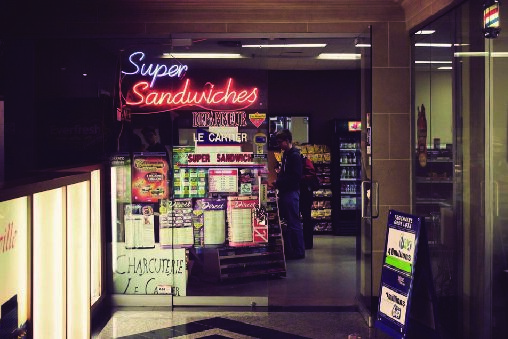
McGill student-favourite Super Sandwich shut its doors on June 23, citing increasing rent. The small dépanneur, which opened in 1988 and operated out of the basement of the Cartier Building, was popular among McGill students for its affordable sandwiches. Consequently, Super Sandwich reached out to SSMU, considering the possibility of reopening on campus in the University Centre. However, the Students’ Society of McGill University (SSMU) and McGill administration are still discussing the logistics of implementing long-term leases with businesses in the University Centre.

Super Sandwich owner Mathis Lo explained the circumstances of the shop’s closure in an interview with The Tribune. According to Lo, the shop’s rent would have increased to double what they were previously paying. 

Like for many other small and family-owned businesses, the COVID-19 pandemic was a challenging period for Super Sandwich. The business was also forced to increase the prices of their products earlier in 2023 because of food inflation, which reached its highest levels in decades. When their landlord informed them of the increased rent, Lo stated that he and his family did not want to feel pressured to put in even more hours at the store as a means to pay the rent.

“We didn’t want to be tied down to the store. Now we’re in a position where we can actually decide what we want to do, [whether] we want to leave or not,” Lo said.

Additionally, Lo explained that he did not see raising prices further as an option.

“For us, it wasn’t worthwhile staying because we didn’t want to increase our prices […] we wanted to keep our prices affordable for the students, and, for us, it didn’t make sense to overcharge,” Lo said.

Quang-Hai Francis Dinh, U3 Science, sees Super Sandwich’s closure—which he described as “devastating”—as both a sign of the times and a warning.

“Both rising rent and food insecurity are growing problems in Montreal. The hardships of small businesses [are] representative of bigger issues to come,” Dinh said. “The closure takes away one of the most popular food spots near campus. Other sandwich shops exist but the main attraction was the cheap price.” 

Many students have felt the burden of high food costs at McGill leading to demands from Let’s Eat McGill last Spring for better quality and cheaper food options. This year, Student Housing and Hospitality Services switched the dining halls from à-la-carte to a buffet-style, all-you-care-to-eat plan. In addition, students have led initiatives such as the Good Food Boxes offered by the Student Nutrition Accessibility Club, and the newly opened independent grocery market Les Fermes du Marché in the University Centre.

Currently, SSMU is considering housing Super Sandwich in the University Centre. SSMU’s Vice-President of Operations and Sustainability, Hassanatou Koulibaly, wrote in an email to The Tribune that SSMU has ongoing conversations with the Office of Deputy Provost of Student Life and Learning to be able to offer long-term leases to businesses in the University Centre in the future. 

“As we currently are discussing the terms of our agreement with McGill, we cannot give the long-term leases needed for Super Sandwich and other businesses to move into the University Centre,” Koulibaly wrote. “Once we secure an agreement with McGill, we will be able to accommodate many initiatives such as Super Sandwich in the University Centre.” 

Meanwhile, Lo is looking forward to reopening the store in the University Centre if the proposed lease offers long-term stability and the rent is affordable. He believes that if SSMU is willing to offer an affordable rent price, then Super Sandwich will be able to offer low prices for their products, benefiting Lo and McGill students. 

Martlets, Rugby, Sports

Martlets shine in rugby season opener against Bishop’s Gaiters

On Aug. 31 at Percival Molson Stadium, the Martlets rugby team (1–0) put an end to a three-season-long winless drought in a thrilling defeat of the Bishop’s University Gaiters (0–1). 

The Martlets established an early lead with a try seven minutes into the game by backrow Lauren Minns, but failed their conversion kick, leaving them up just 5-0. McGill’s lead was quickly overturned when the Gaiters took the ball through the Martlet defense, giving them a 7-5 lead after a successful conversion. Despite the Martlets’ strong defense and a try scored by second row Catherine Murphy, the Gaiters made use of two penalty kicks to pick up several points throughout the game. By the midway point of the second half, Bishop’s led the game with a score of 13-10.

However, in the final ten minutes, any fears of prolonging the three-season losing streak were put to rest as the Martlets’ forwards stunned the audience with a series of impressive plays. Minns punctured Bishop’s defense in a breakaway to score McGill’s third try of the game, allowing them to overtake Bishop’s lead. Minutes later, in the final moments of the game, McGill secured their 22-13 victory with another try by Minns and a successful conversion by team captain and fly-half Raurie Moffat

Minns spoke with The Tribune after the game and noted the resilience of the team in securing the final try through a particularly grueling pick-and-go strategy.

“After the second-to-last try, I knew time was running out, and I also knew how important the lead was for this team and this program,” Minns said. “I think the forwards took control of those last ten minutes because it’s the safest way to keep the ball alive [….] It’s a very tiring style of play but we only had five minutes left, so it’s just pick-and-go after pick-and-go […] up and down the field.”

The game’s thrilling atmosphere was fueled by a vocal crowd of Martlets fans in the stands.  A group of McGill varsity rugby alumni and the Redbirds rugby team made the audience particularly boisterous, rallying the crowd with team cheers and chants throughout the match. 

Moffat emphasized that this spirited crowd motivated the team, especially as games in the past have seen sparser turnout.

“This was a huge change for me, personally,” Moffat said. “And I’m sure a lot of the other teammates feel like this too—hearing people supporting us in the crowd helped me […] stay in my game and work really hard.”

Head coach Allan Swetman explained that the team’s victory is just one step towards the progress they hope to make throughout the season as they stay focused on overall improvement.

“For me, it’s not really about the results, it’s about how we play and watching every player continue to grow, and that’s kind of the aim for the season,” Swetman said. “So this is just a stepping stone and hopefully everyone on the team will continue to get better.”

McGill will next play Concordia University (0–0)on Sept. 6 in the 18th annual Kelly-Anne Drummond Cup.

Moment of the game

Moffat’s conversion of the team’s final try came at the 80-minute mark. As the ball sailed between the goalposts and the game came to an end, the athletes on the field and McGill fans in the stands erupted into cheers.

Quotable

“Are we going to win the entire season? Probably not, but this is a stepping stone to show that all the work this team has put in the past years is gonna come to fruition eventually. […] I think we’re only headed in the right direction.”

–– Lauren Minns, on the team’s goals for the season

Stat Corner

Minns scored her three tries of the game with 40-yard, 53-yard and a 17-yard runs, respectively, after having to sit out the past two seasons due to injuries.

Student Life

Making Montreal your home away from home

McGill is home to many international students, with nearly 30 per cent of the student population hailing from outside of Canada. This is one of the university’s greatest strengths, and a key reason that I and many others chose to attend.

I visited Canada for the first time in January 2021, when I moved into residence in the COVID-quarantine-curfew-hellscape that was the province of Quebec as an international student. Although I feel represented as French and American in a province that is famous for its blend of these two cultures, it is still hard being far away from home; I can’t imagine the feeling of homesickness that international students without that cultural presence can face.  

One of the main ways you can combat homesickness is by trying to meet people who are from the same country, region, or cultural background as you. This can be done, among other ways, by joining clubs or associations through the university. There are over 20 religious and cultural clubs at McGill—from the Belgian Student Society to the Malaysian and Singaporean Students’ Association, you might just be lucky enough to have a built-in community to join. 

Thankfully, finding your community doesn’t stop at the McGill bubble. As an international student in Montreal, you are living in an immensely multicultural city. By some estimates, around 24 per cent of the Montreal population is made up of immigrants

Take my roommate Beatriz, U3 Arts, for example. She is Portuguese, and we serendipitously signed a lease to live in Little Portugal our first year. When we first moved in, she went to the hardware store closest to our house to pick up some move-in essentials. When she came back, she was ecstatic. 

“It turns out the hardware store is Portuguese, and the old ladies in there were speaking the same accent as the people from my mom’s region!” she exclaimed enthusiastically. 

The piles of Portuguese dried fish, Bacalhau, sold at Segal’s—the Plateau grocery store beloved by many students—also reminded her of home.

To me, this illustrates one of the greatest things about Montreal: That you can find a small piece of your home country, scattered throughout the city. 

Some international students will be more disoriented in Montreal than others. As a half-French person who had never been to Quebec before, I was shocked to find all of my favourite French pantry items stocked in the Provigo next to my house—it was so comforting. 

Food is one of the ways in which international students can feel more at home in Montreal. Taste and smell are the senses most linked to emotion, so you might be able to find your Madeleine de Proust in the city. 

Montreal residents pride themselves in having restaurants from nearly every cuisine around the globe, where the owners and employees faithfully cook their native dishes, often importing ingredients for authenticity. From the Za’atar in Lebanese restaurants to the legs of Serrano ham hanging from the ceilings of Spanish eateries, there is always a bite of your home country to be found through culinary experience. 

These details can make eating in a restaurant from your home country and interacting with the patrons a very comforting experience that can help to keep homesickness at bay. Personally, the smell of bread baking in Toledo bakery on Mont-Royal and the inclusion of taxes in their prices is all I need to feel like I’m back in Paris. 

If you don’t feel like going out or are trying to save money, you can still use food as a medium to combat homesickness. The many international grocery stores around the city are perfect for finding imported products from your home country. The McGill International Student Services website is a great resource for anyone trying to find food from home here.

At the end of the day, however homesick you might feel, you will eventually end up making Montreal your home. As an international student graduating this May, I think I will be homesick for Montreal wherever I move next. 

Student Life

The Tribune’s guide to digital declutter

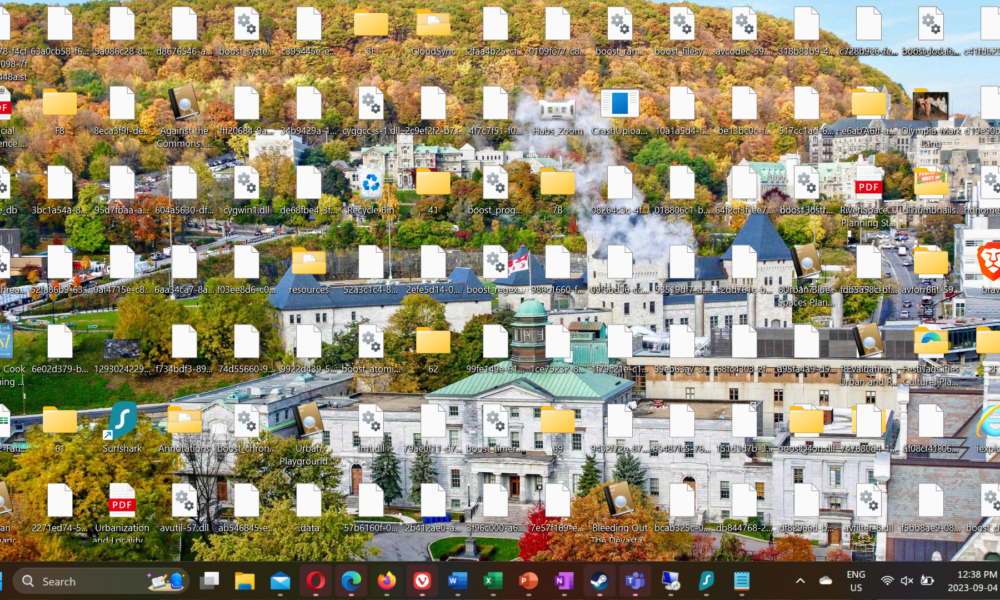
Whether it’s your file manager, desktop, or inbox, it’s easy for our digital world to get messy. So, before this semester’s workload picks up, set aside some time to declutter your computer. This will help you build better habits that’ll make you more efficient and relaxed during the school year. 

Deep clean

The first part of this fall semester spring cleaning is to uninstall apps that you don’t need. Open the program manager, if there’s an app you can’t remember using or installing, delete it. If the antivirus that came with your computer only exists now to notify you that your trial expired, delete it.

Next is likely the most daunting, organizing your files. Start by creating a fresh hierarchy of folders. For your studies, try school -> degree -> semester -> course code for an intuitive way to sort both previous and upcoming semesters. Then, go through your files, folder by folder, making sure all important documents are sorted appropriately and others are deleted. Come up with a naming scheme for documents and as you’re going through them, rename them to be consistent. Last, pin the current semester for quick access. 

Now it’s time to open the browser. Breathe, you can get through it. First, close your open tabs. If you haven’t revisited them yet, you probably aren’t going to. Next, look at your bookmark bar. Do you really need all those links accessible at all times? Chances are, probably not. Remove the bookmark bar and save the truly important links as buttons on your homepage. The extra browser space and reduced visual clutter will have a big impact. Finally, remove those extensions you don’t use anymore. 

Study the built-in organization features of your browser and use them. Don’t be afraid to try new browsers either. Vivaldi, Opera, and Sidekick have well-executed tools for ordering tabs and workspaces. On Mac, SigmaOS and Arc are two powerful alternatives to Safari. 

Taking preventative action 

Does your email app have a notification badge in the triple digits? It may be time to do something about it. If manually deleting emails is too overwhelming, simply mark them all as read. Go through emails and unsubscribe from newsletters that don’t do anything but annoy you. Consider using automatic sorting features going forward to prevent this from happening again.

The commotion that happens when your computer boots up shouldn’t be overwhelming. Restart your computer and for all the programs that start up when you sign in, go through the program’s settings and disable any feature that allows them to boot up automatically.

Take a pledge

All this effort will be short-lived if you don’t make a few promises to yourself. Vow that you’ll treat your desktop like you would an actual desk. Don’t toss random files willy-nilly; the desktop should not be the go-to for unsorted files. A few important folders and frequently used apps are okay, but you should be able to see your background. On Mac, take advantage of the stack by feature for quick decluttering.

The downloads folder should not be an endless list of randomly named documents and files, where there is no way to discern what is actually important. Delete what you don’t need, retitle the files where the original name makes no sense, and move the important files to your recently organized file system. But most importantly, promise yourself that you won’t rely on the download folder as a catchall for files you don’t want to deal with. Be conscientious going forward and change your browser settings to prompt you for where to file each download.

A new era

Organizing your computer has probably been on your to-do list for some time. This is your sign to get it done. It might seem daunting but set a realistic timeline and tackle it step by step. Once your schoolwork gets more intense, you’ll be impressed by your new efficiency and structure. 

Art, Arts & Entertainment

The Pop of Life! captures the bold spirit of the Pop Art movement

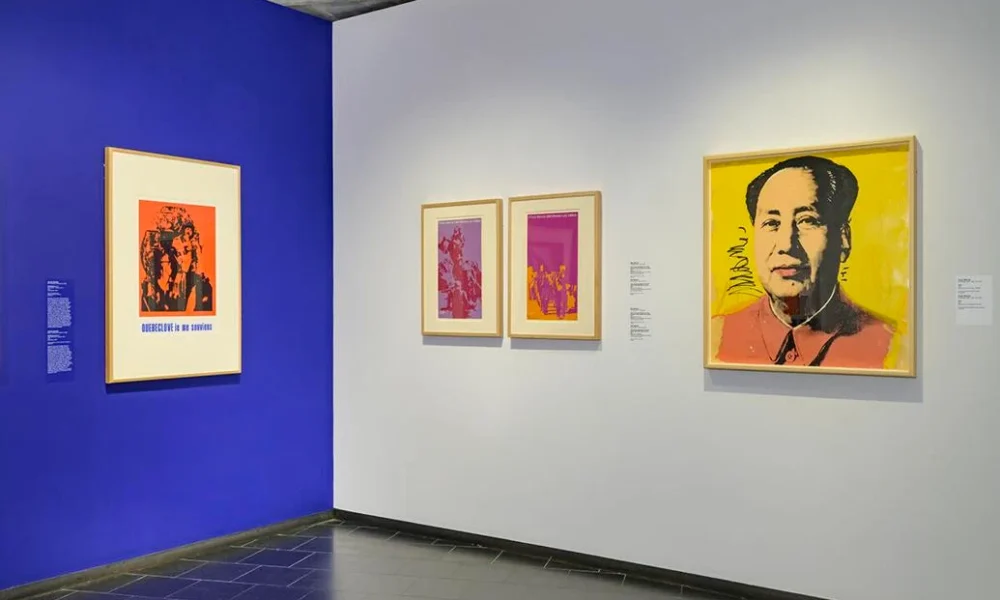
Bright reds, yellows, and blues frame the stunning new Pop Art exhibit at the Montréal Museum of Fine Arts (MMFA), which features works from iconic international artists like Andy Warhol and Eduardo Paolozzi as well as Québécois trailblazers like Pierre Ayot. Iris Amizlev, curator for the MMFA since 2020, curated The Pop of Life! to be interactive, cozy, and exciting, while at the same time integrating the serious themes of political tension, consumerism, and scientific discovery from the 1960s and 1970s. 

“The art is very serious and it’s very cerebral, but it’s also very delightful and fun. It’s a real reflection on what was happening at the time,” Amizlev said in an interview with The Tribune.

The exhibition is delightfully sectioned into categories—Plastic Blitz, Future Now!, and Ordinary Things, to name a few—that bring forth a particular theme from the time period. Still, the categories merge gracefully as each artwork presents multiple, nuanced themes and messages. Regardless of these sections, which bear large titles along the walls of the exhibit, the artwork is subtly arranged like a house, with imaginative sculptures of a stove, chairs, and sofas fitting amongst a kitchen, living room, and foyer. So, while the room is an explosion of colours and geometric shapes, the soft lighting and home-like organization give the exhibit a cozy and relaxing atmosphere. 

The Pop Art movement is famous for its love of ordinary things: A can of soup, a bowl of fruit, an assortment of shoes. In this exhibit, one will find creative and fun reimaginings of a mop, sandwich, and sink. 

There is even a sculpture fashioned from a real stove, titled Pollo allo spiedo (1985), by Montréal native Pierre Ayot. Inside the stove, Ayot placed a video of a chicken cooking on a 2-hour loop. 

“This [sculpture] is truly a brilliant work. He’s totally transformed [the stove].,” Amizlev explained.  

The Pop of Life! transports the visitor into the political arena of the ‘60s and ‘70s, where one learns how artists used the Pop Art style to capture the political tensions of their environment. Among local historic periods, James Brodie’s piece Québeclove No. 3 (1981) highlights the October Crisis of 1970. In revolution-inspired colours of bloody red and black, a Québécois man rests against his building while holding a gun. The harsh colours symbolize the extreme conflict of the October Crisis, yet they portray a member of the Front de Libération du Québec (FLQ) in a leisurely pose, which calls attention to the ordinary people entangled in the Crisis. Through the art, the exhibition features artists from the period who deeply understand the contested politics and the humanity of those involved with each movement. 

The displays, particularly in the Space Age and Future Now! sections, launch the visitor into out-of-this-world pieces centred around rising technology and extraterrestrial discoveries. 

“I find it very interesting as we’re approaching this new era of technology, artificial intelligence, and also new space exploration. It’s good to think about the ways in which artists confronted these advancements,” Mary-Dailey Desmarais, Chief Curator of the MMFA, said in an interview with the The Tribune.

In an interactive sculpture titled Big Sleep (1968), artist Edmund Alleyn crafted a brain within a grey machine that whirrs and lights up when a visitor presses a button. The black screen from a sculpture of a television shaped like an astronaut helmet, titled Videosphere Television Set (1970) by the Japan Victor Company, reflects viewers and our modern aspirations for technology and scientific discovery. Among the rockets and futuristic furniture, the area invites visitors to explore, imagine, and get lost in curiosity.

“Everything is still relevant now,” Amizlev added. “That’s what makes this exhibition extremely accessible and […] that’s what I find so amazing.”

The Pop of Life! is on display at The Montréal Museum of Fine Arts until March 24, 2024.

Read the latest issue

Read the latest issue