
Latest News

McGill, News, SSMU

Independent grocery market to open in the SSMU building

An independent grocery market aiming to beat chain prices and support farmers and small businesses in Quebec is coming to the University Centre at the end of August.

Les Fermes du Marché, the brainchild of McGill graduate Maude Laroche, BA ‘23, will sell everyday items, including fruit, vegetables, and bread, for less than $4. McGill students will also receive a 10 per cent discount, according to its founder.

The store, dubbed “The Student Market Project,” will be located on the first floor in room 18 and open from 9 a.m. to 9 p.m., Monday to Friday. The University Centre will be Laroche and her team’s first physical location after starting Les Fermes du Marché as an online farmers’ market in 2022.

“Don’t fear for affordability, we are really concerned with that [….] My goal is to be cheaper than IGA and Provigo all the time,” Laroche said in an interview with The Tribune.

While most products will be sourced directly in Quebec from local farmers and food producers, they plan to also source internationally to expand their product range. However, Laroche stressed that they will try to support Quebec businesses by preparing and packaging internationally-sourced products in Quebec once they arrive. 

Another priority for Laroche is minimizing waste. An initiative they are looking into is pre-ordered weekly grocery boxes, which would allow them to order a predetermined amount of food stock. 

“I don’t want to be food wasting […] Because food, first off, is expensive,” Laroche said.  “Second, all the money I’m spending on this waste, I do not spend on stuff for the store or to give back to the community [….] The lower my food waste, the better my pricing.”

Students’ Society of McGill University (SSMU) vice-president (VP) Operations and Sustainability Hassanatou Koulibaly affirmed SSMU’s support for Laroche and her team in a written statement to The Tribune. She explained Les Fermes du Marché will occupy the space short-term and that the SSMU team will review whether it aligns with students’ interests.

“[Laroche] will be offering products for students that are healthy, locally sourced, and with decent price points,” Koulibaly wrote. “We hope that this pop-up will go very successfully for Maude and her team but mostly for our student base.”

According to Koulibaly, who was also the SSMU VP Student Life during the 2022-2023 school year, SSMU has more food-related projects in the pipeline, but she has not responded to further questions for more details. 

The opening of Les Fermes du Marché comes after food inflation last November reached the highest levels since 1981. In tandem with increasing city rents, it has had a disproportionate impact on students’ cost of living, prompting an uptick in student initiatives, from Let’s Eat McGill’s protests to higher demand for Midnight Kitchen’s free meals on Thursdays. 

For twenty-two year-old Laroche, who coined the name Les Fermes du Marché while searching online name generators, the campus drive to improve food security and sustainability is timely. Coming from a family of farmers and entrepreneurs, she has always been passionate about agricultural development. 

“I came up with this idea because I wanted to increase food security first,” Laroche said. “Secondly, I wanted to create something that’s easy to access for people. [And] I want to have quality products.”

At McGill, Laroche studied geography and international development studies and graduated in Winter 2023. During her time, she took agricultural courses from Caroline Begg, a Faculty Lecturer in the Department of Plant Science. This included Begg’s internship course AGRI 310, in which students produce a research paper or do a hands-on project.

“For Maude’s internship she worked at Ecole-O-Champ, which is an organization that helps educate children on agriculture, the environment, and nutrition,” Begg wrote in an email to The Tribune. “Maude was able to interact with agricultural producers and give […] education modules to various children.”

Laroche also developed her business plan for Les Fermes du Marché under Begg’s guidance in two independent research courses, FAES 313 and 323.

The first day of business will be on Aug. 29, and they will also kick off the store’s opening with a launch party on Aug. 30. Laroche hopes that the store’s opening will be the first of many in universities and across Quebec.


Ask a Scientist, Science & Technology

Cyanobacterial growth: An underlying cause for unsafe drinking water

Cyanobacterial toxins are amongst the most hazardous substances for humans. Their presence in drinking water due to cyanobacterial growth can result in undesirable health effects such as hay fever-like symptoms, skin rashes, respiratory and gastrointestinal distress, and even liver and kidney damage upon exposure. Therefore, there is an urgent need to better understand cyanobacterial proliferation. 

Since light is a key factor driving cyanobacterial growth, the dynamics of cyanobacteria in darkness are less extensively investigated, as shown by past research lacking evidence of potential cyanobacterial growth during sludge storage in the dark. 

Recently, Jesse Shapiro, an associate professor in the Department of Microbiology and Immunology at McGill, and his team filled this research gap in a paper published in Toxins. They conducted a comprehensive investigation on natural cyanobacterial growth and compositions during sludge storage under controlled conditions.

Cyanobacteria, more commonly known as blue-green algae, are microscopic organisms that are found in all forms of water, such as fresh water and seawater. They use sunlight to make their own food in a process called photosynthesis

In favorable environments, particularly warm and nutrient-rich environments, cyanobacteria can overgrow, forming blooms that spread across a body of water. Cyanobacteria blooms produce toxins called cyanotoxins, which are extremely poisonous to humans upon exposure via ingestion, inhalation, skin contact, or eye contact. The common types of cyanotoxins include microcystins, anatoxin-a, and saxitoxins.

Conventional treatment methods have been widely applied to ensure adequate drinking water quality using drinking water treatment plants (DWTPs)—facilities that employ different water treatment processes to remove hazardous substances, such as cyanotoxins, in the water. 

Although these water treatment processes can remove 60 to 99 per cent of cyanobacteria from water, they can cause an accumulation of cyanotoxins in the sludge—the waste products generated from water treatment processes, potentially leading to health issues.

“A growing number of drinking water treatment facilities are now considered at risk and must install costly treatment barriers to remove cyanobacteria and their toxins,” wrote Hana Trigui, the second author of the paper and a research associate in the Department of Civil, Geological, and Mining Engineering at Polytechnique Montréal, in an email to The Tribune. Safety issues with drinking water due to the presence of cyanotoxins also pointed to the need to better understand cyanobacterial growth during sludge storage.

In their new study, Shapiro, Trigui, and the rest of the team examined cyanobacterial diversity and dynamics in the sludge stored in a DWTP in the dark. 

Although cyanobacteria rely on light for growth, they have to adapt to darkness when needed, such as after sunset.

“Cyanobacteria frequently encounter transitions between light and dark in their environment,” Trigui wrote. There are generally decreased cyanobacterial cell activities in the dark, suggesting a reduced cyanotoxin release

However, cyanotoxin release is not as insignificant as the researchers have expected. 

“Cyanobacterial cell growth in the stored sludge leads to cyanotoxin release up to four times higher than the expected concentration,” Trigui wrote.

Despite a high concentration of cyanotoxin being released, the number of cyanobacteria was largely reduced in the dark. 

“Not all cyanobacterial species are able to survive in the dark during sludge storage,” Trigui wrote. “Storage [in the dark] causes significant changes in microbial diversity, leading to the selective persistence of some cyanobacterial species over other communities.”

Shotgun metagenomic sequencing was used to identify cyanobacterial cells that persistently grew during sludge storage. 

“This method involves taking a sample from the sludge from a drinking water treatment plant and extracting the DNA from all bacterial species in the sample. Then, we take the short pieces of DNA and match them with a database of known genomes of different bacteria,” Shapiro said in an interview with The Tribune. “We can then say what bacterial species are likely present in the sludge where the sample is taken from.” 

During sludge storage, the researchers observed persistent growth of cyanobacteria from the genera Microcystis, Aphanocapsa, Chroococcus, and Dolichospermum, all of which are capable of producing cyanotoxins.

Overall, the findings provided consistent and comprehensive evidence of cyanobacterial growth and dynamics in the stored sludge. “Treatment plant operators, therefore, need a set of better practices to reduce toxin production, prevent the breakthrough of toxins into drinking water, and manage toxic sludge,” Trigui wrote. “To this end, our research aimed to determine best practices to prevent the accumulation of toxigenic cyanobacteria and the release of toxins in full-scale treatment plants.”

Ask a Scientist, Science & Technology

To cure the incurable: Stem cell transplantation process provides insight into potential HIV cure

Human Immunodeficiency Virus (HIV) is a viral infection characterized by its ability to harm white blood cells that are crucial for the immune response. This makes HIV patients very susceptible to slightly or moderately acute diseases (that would not normally pose a serious risk for healthy individuals) by diminishing their immune system’s efficiency. If HIV progresses, it will lead to the potentially lethal stage of Acquired Immunodeficiency Syndrome. Around 1.5 million people worldwide were infected with HIV in 2021, and the virus took the lives of 650,000 people that year. 

A paper published in Nature Medicine by Dr. Björn-Erik Ole Jensen from Düsseldorf University and his team this February reported that HIV was cured in a patient who had undergone a surgical transplantation of hematopoietic stem cells (HSC) – a cell type that produces blood cells. To understand the scope of Jensen’s work and its potential implications, The Tribune spoke to Anne Gatignol, a professor in McGill’s Department of Medicine and Microbiology & Immunology, who has been researching HIV for 35 years.

HIV is a retrovirus, meaning it uses single-stranded ribonucleic acid (RNA) to store its genetic material. Once HIV infects cells, it incorporates its RNA into the host cell genome, making it virtually impossible to cure. Nevertheless, there are currently ways to diagnose, treat, and prevent disease transmission. Unlike a cure, a treatment does not eradicate the virus from infected cells but still prevents it from exerting its damaging effects. 

“Once [viral] DNA is incorporated into the host chromosome, it [becomes] part of the replication cycle. The reason why it’s so difficult to treat [HIV] is because once it is [in the genome], [it] cannot [be] remove[d] from the cell,” Gatignol said. “If you want to treat it, you have to kill the cell, but you can stop the replication cycle with drugs.”

Human immune systems mount a response against pathogens by generating antibodies—Y-shaped molecules secreted by B cells—which are essential in clearing the infection. Yet antibodies are not quite as effective in fighting  HIV.

“The immune system does target HIV and cells infected with the virus [with antibodies], but the virus keeps mutating to evade the immune response. It is an ongoing battle between the virus and the new emerging immune responses,” Robert Scarborough, research associate in Dr. Gatignol’s lab, said. “Then also because [HIV] can lay dormant in cells without expressing [viral proteins], these cells are resistant to the immune system and to drugs. And that means it is there forever.”

HIV takes advantage of cell surface molecules on the surface of white blood cells known as co-receptors to enter its target cells. Two main co-receptors have been shown to be involved in HIV infection—CCR5 and CXCR4. Co-receptors are molecules that are typically found on the surface of cells and other molecules and such receptors are involved in letting the viral particles into the cell

Individuals who lack these co-receptors are naturally resistant to HIV. This gives rise to the rationale behind HSC transplantation: If you can replace the white blood cells of an HIV patient with donor cells from someone who lacks co-receptors, it could cure HIV.

Gatignol explained that HSC transplantation is traditionally used to replace the blood cells of a patient with blood cancer. In the case of Jensen’s patient, the donor’s cells had a CCR5 mutation and thus didn’t express a co-receptor necessary for the HIV to enter cells. As a result, the blood cancer treatment cured HIV as a ‘by-product.’

However, HSC transplantation may have many complications—one concern is that there is a chance the new immune cells will attack the host.

“For the HSC transplantation, risk [of death] has been estimated 10 to 12 per cent at the time of the transplantation, but 40 to 45 per cent after one year. So, globally, the risk is very high,” Gatignol said. “But the risk of HIV[-related death] is now very low, and people living with HIV now live almost complete lives.”

Thus, HSC transplantation is unlikely to become a commonplace HIV cure due to its risks but also because of small patient sample sizes in such studies, making it difficult to generalize obtained results to wider, more variable samples. Nonetheless, HSC transplantation can give us valuable clues on how to develop therapeutic treatments for HIV. 

“The field that we’re working towards is to take a person’s own cells and to engineer HIV resistance in the person’s own cells—you eliminate the possibility of having the grafted cells attack the recipient’s cells—graft versus host disease—because you’re taking the person’s own cells,” Scarborough said. “That’s where we could go to [find] a cure for HIV that would be acceptable and safe for all individuals, not just those who require a transplant [due to] cancer.”

Arts & Entertainment, Comedy, Film and TV, Internet, Pop Rhetoric

Pop Rhetoric: Twitter and the Gen Z-ification of SNL

I’ve never been a particularly avid watcher of Saturday Night Live. Like many people my age, my opinion of the show is mainly shaped by watching clips via Twitter, YouTube, and TikTok—I really only see the best and the worst of the series. But a few weeks ago, I enjoyed the rare experience of watching an episode in its entirety while visiting my parents. To my surprise, the show was…kind of funny? 

It shouldn’t come as a shock that a comedy series with 87 Emmy wins was able to make me laugh. But criticism thrives on the Internet, multiplying into thinkpieces and off-the-cuff commentaries, where Twitter becomes flooded with nostalgic viewers who are quick to comment on how SNL used to be good, but isn’t anymore. 

The show’s creator, Lorne Michaels, has called these types of viewers out, remarking that people usually prefer the SNL seasons from when they were in high school due to the nostalgia these old clips evoke in the viewer. However, Gen Zers like myself may not have watched the show in the same way that millennials or Gen Xers did since network television’s popularity has been replaced by shorter, more easily digestible videos on social media. But that doesn’t mean we aren’t watching—now and again, I’ll browse YouTube for old iconic sketches, some from before I was even born, and I’ll experience the uncanny longing for and identification with something I wasn’t even around to enjoy in the first place. 

Twitter users love to talk about SNL nostalgia, but nothing thrives on the online platform quite like controversy—of which SNL has had its fair share. Yet, with a show as powerful and resilient as SNL, any press is good press. SNL was heavily criticized for featuring controversial figure Elon Musk back in 2021, with clips of Musk’s cringey performance spreading like wildfire on Twitter and other platforms. Still, the show benefited from Musk’s controversies with great ratings on the episode, not unlike the time SNL was hosted by then-presidential candidate Donald Trump in 2015.

Speaking of Trump, I’d be remiss not to mention Alec Baldwin’s overdone portrayals of the notorious politician as a possible culprit for the show’s poor online reputation, especially with the younger generation. Between 2016 and 2020, when many Gen Zers were in high school, Baldwin played the role a total of 47 times, a gimmick that quickly grew stale with viewers. SNL has been making political sketches for decades, but the writer’s efforts to humiliate and enrage the president (which worked—he tweeted his disdain for the show a number of times during his presidency) made these sketches more about pushing a top-down agenda than being funny.

Since then, SNL has made increased efforts to appeal to a younger audience, possibly in response to how comedy has shifted on social media. In 2021, the sketch comedy group Please Don’t Destroy was hired by SNL to write and produce prerecorded sketches for the 47th season. Two of the members, John Higgins and Martin Herlihy, are the respective sons of former SNL writer Tim Herlihy and current SNL writer Steve Higgins. They were called out in New York Magazine’s iconic nepo-baby chart back in December, but Gen Z-ers don’t seem to mind as they respond surprisingly positively to their sketches.

The trio may have had a leg up on other SNL comedians given their popularity on Tik Tok. Ben Marshall’s account has amassed over 340 thousand followers, with the top-performing video receiving 19.7 million views. I imagine that at least part of their success on SNL is owing to their popularity on the social media app, which makes them seem more relatable and down-to-earth.

I’m curious to see how SNL will adapt to the popularity of short-form comedy and continue appealing to a younger audience, whether it be through younger writers, more relevant subject matter, or their growing social media presence. SNL‘s popularity has fluctuated over the past 50 years, and after an unusually rough period during Trump’s presidency, I’m ready to see a comeback.

Arts & Entertainment, Film and TV

Embracing boundless voices: The liberating experience of Image+Nation’s 2SLGBTQIA+ Short Film Festival

From June 22 to 25, the Image+Nation 2SLGBTQIA+ Short Film Festival took centre stage, offering a virtual platform that showcased diverse queer narratives and experiences. With an impressive lineup of 34 films spread across five curated programs, the fourth edition of the festival celebrated the power of short films as a medium for amplifying 2SLGBTQIA+ voices. 

In an interview with The Tribune, Kat Setzer, the festival’s programming director, explained how the festival was born out of the community’s desires and needs following the COVID-19 pandemic. The virtual format ensured an inclusive and transnational reach, allowing a broad audience to participate regardless of location or financial limitations. While discussing the criteria for the festival, Setzer emphasized that centring 2SLGBTQIA+ stories is fundamental for cinema. 

“It is not just important; it is essential. It is the mandate upon which our organization is built. It is time to amplify the voices that have not been as representative within the queer canon, queer society, and society at large,” they said. 

The festival consisted of five programs: A Question of Gender, Encounters/Amour, Queer Fighters, Declarations, and Queerment Québec, each offering a unique perspective on the queer community. The programs, organized by theme, featured at least five films each. With comedies, documentaries, and profound love stories, there was truly something for everyone. With each program lasting approximately an hour and a half, the viewers could watch the films at their own pace over the weekend. 

“Declarations” explored unreserved queer stories. This program was unapologetically queer, and featured creators who held nothing back, emphasizing the power of filmmaking. By supporting and promoting 2SLGBTQIA+ creators, we push further away from cis- or heteronormative ignorance and discrimination. Standouts include Alison Reid’s Escape to Eternity, a four-minute tale of a sorceress saving her girlfriend from execution. Kim Kielhofner’s Today I Did Nothing brilliantly used playful imagery to contrast its difficult, tense personal essay. 

“A Question of Gender” showcased honest stories from trans and non-binary creators. Notable films included Nyala Moon’s Dilating for Maximum Results, a humorous account of a Black trans woman’s experience dilating after four years, and Golden Voice, an uplifting narrative about a trans man who returns to his village in Cambodia after surviving the Khmer Rouge. The film does not focus on the genocide, instead retelling his story of finding the local queer and trans community, and also his future wife. This film was my personal favourite as it follows older queer people while still being refreshingly positive.

The “Queer Fighters” program focused on films by Ukrainian artists, highlighting the role of art and artists in the current war with Russia. Oksana Kazmina’s The Secret, The Girl and the Boy echoes Adam and Eve by depicting two individuals, playing in a garden, left to themselves while the authorities are busy fighting. This program reminds us that filmmaking can express the personal effects of contemporary crises while also educating us on past crises. The Wonderful Years used archive video material and interview excerpts to create a narrative of how queer women lived in late Soviet Union Ukraine. Directly followed by Simeiz, we learned about an underground gay resort on the southern coast of Crimea, where 2SLGBTQIA+ people found a safe space in the Soviet era.

“Queerment Québec” brought contemporary Quebec stories to the forefront and “Encounters/Amour” pulled at viewer’s heartstrings with tense relationships. The latter featured Fernando Reinaldos’ The End (Fin), a heartbreaking tale of an elderly woman caring for her wife who has Alzheimer’s.

As the films across the five programs reflect our world, transform perspectives, and emphasize the importance of queer storytelling, Setzer highlighted the profound impact of art and artists. 

“Art and artists are the reflections of our world. Images and representations change minds and let us feel connected to the world and one another across the globe,” they said. “Their voices need to be heard. They need to be given the opportunity, spaces, and platforms upon which to yell.” 

By showcasing underrepresented narratives and embracing a virtual and accessible format, the festival served as a vibrant platform for connection, comprehension, and celebration. Setzer’s reassurance of future editions and the upcoming 35th edition of the Image+Nation film festival in November reflects the festival’s commitment to continue serving as a catalyst for change and creative expression. 

Arts & Entertainment, Film and TV, Music

‘Daisy Jones & The Six” is more or less a Fleetwood Mac mockumentary

Spoilers ahead for Daisy Jones & The Six

Daisy Jones & The Six is Prime’s latest hit novel adaptation. Based on the sex, drugs, and rock & roll filled 70s, the show adapts the book’s documentary interview format with added flashbacks that would not have been accessible otherwise in written form. Loosely based on the iconic band Fleetwood Mac, author Taylor Jenkins Reid took inspiration from the turbulent relationship between performers Stevie Nicks and Lindsay Buckingham. Much like Fleetwood Mac, “Daisy Jones & The Six” creates a captivating narrative that echoes the dynamics, trials, and triumphs of real-life rock bands. The show employs a similar storytelling approach to true documentaries of the 70s: presenting interviews, anecdotes, and accounts from different characters involved in the band’s journey. A captivating story, the show explores a band trying to make it in the rock industry while balancing their tumultuous relationships and substance abuse issues.

Riley Keough plays lead singer Daisy Jones, and does not disappoint with her powerful vocals and quirky charm. In contrast, while Sam Claflin is a talented actor with a great voice, he doesn’t entirely achieve the “it factor” or charisma of the book’s Billy Dunne, and looks far older than his character’s technical age. The chemistry between the cast is genuine and engaging, with Karen (Suki Waterhouse), and Camila (Camila Morrone) standing out in their supporting roles. Moreover, both Graham (Will Harrison) and Eddie (Josh Whitehouse) are both made more likable than their aggravating book counterparts through the charm of their characters. Furthermore, the changes made to the book also ensure that the book’s fans remain happy due to the show’s loyalty to the source material, while still being surprised along the way with new twists and additions. The writers also highlight Daisy’s best friend Simone Jackson (Nabiyah Be) as an explicitly queer character, which was not explored in Reid’s novel. Her relationship with the newly created character Bernie (Ayesha Harris) is a more intractable one as the show explores what it meant to be a Black, Queer musician in the 70s. 

While often lighthearted, the show probes heavier themes as well, emphasizing both Billy and Daisy’s addictions. The most impressive aspect of Sam Claflin’s performance is his struggle with substance abuse issues, especially when balancing fatherhood and touring. Unfortunately, much of his strife with addiction gets swept under the rug to make room for other scenes related to the band’s music. In contrast, the show fails to capture the more serious effects of Daisy’s addiction from the book, accrediting much of her quirk and personality to her usage. Despite this, the show does portray Billy and Daisy as kindred spirits, and scenes centered around their shared struggles are some of the most genuine in the show.

However, this authenticity has its limits. Daisy Jones & the Six falls short in creating romantic relationships that make viewers root for them. While Billy and Daisy’s “forbidden” romance should make the audience long for them even more, their chemistry is not as compelling as one would hope. In the novel, the pair never acted on their feelings, demonstrating that they were too similar to be together. In contrast, the show allows them to act on their passions, which elucidates the problematic nature of the pair. While exciting the viewer, this change makes one feel awful for Billy’s wife and longtime supporter, Camila, whose tragic story is amplified when broadcasted onscreen. Moreover, bandmates Karen and Graham initially seem like an opposites attract slow-burn, but it becomes clear throughout both the show and the book that their feelings for each other never quite align—making it impossible for them to have a compatible relationship. Even with these shortcomings, many fans still root for these couples, generating mixed reviews on the romantic aspects of the show.

While the style and set design retain accuracy for the time period, the show lacks conviction in its creativity. Several outfits, specifically Billy’s hoodies and sweatpants, lack authenticity and oftentimes seem as if Sam Claflin simply rolled onto set in his own clothes. Similarly, while many of “The Six’s” original songs are catchy and showcase the band’s undeniable talent, they lack the feel of a true 70s classic rock sound. Partly due to the modern production value, as well as weaker lyricism, the Six’s music is easily distinguishable from true 70s classics.

Overall, Daisy Jones and the Six is an enjoyable watch for lovers of classic rock and the 70s due to its documentary format and the ease of the accomplished cast. However, it falls short in several areas, revealing that the show is clearly 2023 doing the 1970s. For music lovers who enjoy rooting for complicated relationships, the show is still a must-see. 

Daisy Jones & The Six is now streaming on Amazon Prime.

McGill, Montreal, News

Search dogs detect evidence of human remains in front of Hersey Pavillon

CW: Mentions of death and abuse

On June 9, search dogs identified areas that could contain evidence of Indigenous human remains in front of Hersey Pavillon on the site of McGill’s New Vic project. Three weeks later, on June 29, the Kanien’kehá:ka Kahnistensera (Mohawk Mothers) appeared in the Superior Court of Quebec for a case management hearing to discuss potential next steps, including adding more security to the site, expanding the archaeological panel overseeing the excavation, and enforcing transparent communication between parties. 

Three human remains detection dogs, led by Kim Cooper from the Ottawa Valley Search and Rescue Dog Association (OVSARDA), surveyed the New Vic project site and identified an area that could contain human remains. In court, Julian Falconer—the lawyer for the Office of the Special Interlocutor—emphasized that the search dogs’ findings do not ascertain that there are remains below ground. In other words, while the dogs have identified the odour of human remains on the land, no actual human remains have been physically identified. Ground penetrating radar, which is a non-intrusive technique used to survey, map, and record land, is set to begin on the identified areas on July 10. 

Justice Gregory Moore acknowledged that the plaintiff’s current settlement agreement with McGill, Société Québécoise des Infrastructures (SQI), Royal Victoria Hospital (RVH), City of Montreal, and the Attorney General of Canada does not outline a course of action after the approved archaeological techniques have identified human remains. Furthermore, while McGill and the SQI are contracting service providers to investigate the site, Mohawk Mother Kwetiio told the court that neither the archaeological contracts nor applications for archaeological permits have been shared with the Mothers. 

In a written statement to The Tribune, the SQI stated that nothing definitively confirms or denies the presence of human remains at the moment. Furthermore, they asserted that the Mothers are regularly informed of the implementation of archaeological techniques in accordance with the terms of their settlement agreement. 

The Mothers indicated that the defendants have failed to maintain transparent communication, specifically pointing to McGill’s stalled responses to the Mothers’ months-long requests for archives. Moreover, the day after their case management hearing, the Mothers discovered that McGill had begun digging around McGill’s McLennan-Redpath Library complex for its reconstruction, entirely without the Mothers’ knowledge. 

In an interview with The Tribune, anthropologist and associate of the Mothers Phillipe Blouin shared that the Mothers fear that the redevelopment is underway both extremely close to potentially undiscovered human remains as well as significant previous findings of an ancient Iroquoian village’s remains in 2016 at the Dawson Site located by Sherbrooke and Peel St. 

“We don’t know even if there are Indigenous [cultural] monitors involved in this archaeological investigation, or if it’s just this private firm Ethnoscop,” Blouin said. “We do not know if the results will be made public, or if there’s going to be bioarchaeologists, or if some precautions [exist] in the case that the human remains are also present, because we know that Mount Royal was a burial site for hundreds if not thousands of years.”

In a written statement to The Tribune, McGill’s media relations officer Frédérique Mazerolle stated that McGill has been following appropriate archaeological procedures in accordance with regulations stipulated for designated heritage sites, such as the McLennan-Redpath Library complex. 

“Standard protocol requires that McGill conduct an archeological excavation before starting any large-scale construction project. The archeological survey took place in coordination with the Mohawk Council of Kahnawá:ke,” Mazerolle wrote. 

On the same day that the search dogs’ findings were made public, the Quebec government announced plans to carry out a study to determine the feasibility of turning part of the New Vic property into an inter-university hub for research. The New Vic project would occupy 15 per cent of the site. 

“It hasn’t even been discussed with us, and we’re the owners of that land. It’s not appropriate to carry out this study while the land title is about to be discussed in court,” Mother Kahentinetha said. 

Along with a lack of communication, Kahentinetha shared that insufficient security has come with an upswell of trespassers at the New Vic site. Blouin explained that these security threats existed as soon as the settlement agreement was signed, with trespassers including individuals recreating Ghostbuster videos, unauthorized archaeologists digging pits, and denialists who could potentially steal or destroy evidence. 

“Obviously, [the site] is not being taken care of because the public is all over that place. The traditional protocols we have for regard for burial sites are being totally trampled on,” Kahentinetha said. 

As the current settlement agreement does not cover how to address such security concerns or how to proceed after human remains are found, Justice Moore gave the Mothers three options going forward: They can recommence litigation, enter a mediation process with the defendants in an effort to revise the original settlement agreement, or modify and expand the archaeological advisory panel. Blouin shared that while the Mothers have until July 14 to decide, they are leaning toward expanding the panel, as litigation would consume more time and resources.  

“It seems like the only thing that brings these institutions to collaborate is when the court is involved, and that’s very unfortunate because the Mohawk Mothers don’t want to spend more resources and time fighting [for] something that’s right,” Blouin said. “You know, people thought they were crazy at first, but there are human remains, and they have to be respected.”

A previous version of this article stated that search dogs identified evidence of human remains in front of the Hershey Pavillion. In fact, it was the Hersey Pavillion. The Tribune regrets this error

McGill, Montreal, News

Mohawk Mothers seek an investigation into the abuse at L’Hôpital de la Miséricorde

CW: Mentions of infanticide, abuse, and rape

The Kanien’keha:ka Kahnistensera (Mohawk Mothers) submitted a letter of formal notice to the City of Montreal, Société québécoise des infrastructures (SQI), and the Government of Quebec on May 29 to request the termination of the sale of the Hôpital de la Miséricorde. Spurred by the homologation of the Mothers’ settlement agreement with McGill University over potential unmarked graves on the site of the New Vic project, an investigation has found the Hôpital de la Miséricorde to be one of many institutes culpable of abuse against young women and children. The Mothers seek to examine the hospital grounds prior to its sale to private investors, as they believe it may contain remains of infants.

In an interview with The Tribune, anthropologist and associate of the Mothers Philippe Blouin explained that these allegations are based on newly found hospital records. Lana Ponting, an MK ULTRA survivor, has been involved in the Mothers’ investigation into the abuse that allegedly took place on the site of the New Vic project. In her testimony, Ponting shared that she was sent to the Hôpital de la Miséricorde after being raped by psychiatrists at the Allan Memorial Institute—a psychiatric hospital formerly located on the plot of land that presently encompasses the New Vic project.

“It was like an automatic thing, direct transfers from the Allan Memorial to the [Hôpital de la Miséricorde],” Blouin said. “So [the hospital] seems to be part of that network.”

The hospital operated under a group of nuns called the Sisters of Miséricorde for over a hundred years before being shut down in the 1970s. In an interview with the Tribune, Mohawk Mother Kahentinetha explained that the hospital functioned as a birthing grounds, to which the Quebec government and municipal law enforcers sent unmarried young women. 

“Nobody knows what happened to their babies. They were either declared as orphans, or they were adopted out or placed, or […] they did away with them,” Kahentinetha said. 

Figures obtained by the Mothers show that the death rate of babies born at the hospital was 37.7 per cent. Furthermore, Blouin alleged that additional hospital records show that the nuns who worked on the site were often content with Indigenous infants passing away. 

“When the babies died, [the nuns] were happy. They were thanking God for getting rid of that devilish baby,” Blouin said. “That’s really how they viewed Indigenous people [….] Those children born out of marriage, it was like blasphemy, and they had to be gotten rid of. The records show that they were happy to get rid of those babies.” 

In an interview with the Tribune, Mohawk Mother Kwetiio expressed that institutions such as the Hôpital de la Miséricorde often tried to eliminate Indigenous children in attempts to eradicate any future clashes with Catholic institutes. 

“In general, they were trying to get rid of native children, ‘unruly’ children. But they’re not unruly, it’s just that they were really, really smart,” Kwetiio said. “They didn’t want someone who’s going to promote or fight for the truth [….] They didn’t want the smart kids to do that, or form an alliance. They wanted religion to be mainly Catholic.” 

With an increasing number of sites revealed as actors in the web of institutions responsible for the abuse and deaths of millions of Indigenous peoples, Kwetiio shared that the malicious intentions behind these institutions were always hushed. 

“Straight across the board, [these institutions] were meant for deaths, to get rid of either unwed mothers that are Catholic or that aren’t the right religion, or Indigenous people having Indigenous babies. It was a big secret that was rampant everywhere,” Kwetiio said.

The secrecy of such events even permeated Indigenous communities, where members feared the repercussions of speaking out against Canadian institutions.

“I look back down at how my mother was brought up, under Kaianere’kó:wa,” Kwetiio said. “Yet, there were certain characteristics that she had inside her, thinking, ‘Shhhh. I’m not supposed to talk about that’ [….] It was because you’ll get in trouble, they’ll find out, they’ll come to your house, something will happen to you.”

The current owner of the Hôpital de la Miséricorde is the Integrated University Health and Social Services Center (CIUSSS), under the Government of Quebec. In response to the Mothers’ letter of formal notice, the SQI informed the Mothers that it could not respond to their requests as it does not own the building. Additionally, the City of Montreal expressed that while it is ready to collaborate with Indigenous groups in terms of learning more of the history of Montreal’s institutions, it does not hold any ownership of the property and therefore does not intend to comment further on the case. The CIUSSS did not respond to The Tribune’s requests for comment. 

A few potential buyers have expressed interest in the property, including the Museum of the Miséricorde and Hervé Bertrand, the President of the Duplessis Orphans Organization. Bertrand hopes the building will be turned into an educational museum remembering the genocide of Indigenous peoples and the mistreatment of children in Quebec. In hopes of further education into the abuses that Indigenous peoples faced, Kahentinetha urges Canadians to do their own research into historical institutions that served as sites of injustice.  

“How about these hundreds of other institutions that are here around you that did all these things? How about finding out more about them? You can’t expect four women […] to be doing all this by themselves,”  Kahentinetha said. 

A previous version of this article stated that Blouin claimed that private records showed that Ponting was raped by psychiatrists. In fact, rather than records containing this information, Ponting shared this anecdote in her testimony in court. The Tribune regrets this error.

Student Life, Travel

The Tribune’s guide to beating travel FOMO

During the summer months, scrolling through my Instagram feed does nothing but foster a deep feeling of despair. Aside from the usual FOMO I get from seeing people have fun without me (how dare they?), summer brings a surge of posts from people galavanting around the globe. Whether they’re taking a summer course in Singapore, backpacking through South America, or staying at what they call a European country home—a notion that I still haven’t been able to wrap my head around—it seems that everyone is travelling but me. 

But I’m not the only one! So for fellow students staying home this summer, here are some ways to feel like you’re travelling without going far from home and strategies to get you to your dream destination in the near future.

Being a tourist in your own city

During the chaos of the school year, it can be hard to get out and explore Montreal. Summer is the perfect time to act like a tourist, wander around Old Port, hike Mont Royal, or go to museums. If you’re on a budget and looking to feel cultured, the Musée des Beaux-Arts offers free admission to their permanent collection every first Sunday of the month and is free year-round for people twenty and younger. Music lovers can catch a performance at MTELUS or smaller venues like Bar Le Ritz PDB, Casa Del Popolo, and Diving Bell Social Club. For foodies, one of the largest and most diverse food truck festivals can be found outside the Olympic Park on the first Friday between June and October. Take the summer to remember that Montreal is a city that has so much more to offer than just a university degree.

Plan day trips

While it’s not the same as hostel-hopping around Europe, planning day trips can be a great way to spice up your summer. Within a couple of hours from Montreal, there are plenty of quaint towns, parks, and beaches to explore. Hop on a bus or a train to go hiking at the Gault Nature Reserve, Mont Tremblant, or Lac-Brome. Rent a car, through Communauto for example, to access the Eastern Townships, Ontario, Vermont, or New York State.

Saving for travel

Setting a budget can be a great way to plan for future travel proactively. By looking ahead to your travel goals, you can come up with a rough idea of how much money the trip would take and set money aside throughout the year. Additionally, getting a travel credit card can help you save money and get perks like airline deals and hotel points. Opening a new credit card isn’t for everyone, but a few are more accessible to students with no annual fees; some even waive the first year’s fees. 

Travelling for cheap

If you’re anything like me and finance and credit card talk stress you out, don’t worry; there are plenty of other ways to save money while travelling! It just takes some digging to get the best deals. Skyscanner compiles the cheapest flights from your local airport, making it easy to find great deals. For accommodations, check out Hostelworld. Hostels can be a great way to make friends while travelling and find cheap lodging. Many hostels even provide breakfasts, walking tours, and other events. Pro tip: Once you find a place in Hostelworld, compare the price with the hostel’s website, as Hostelworld often overcharges. Working while you’re away is another way to save money while travelling. These programs normally require travellers to work and offer lodging, food, or money in return. Opportunities like this can be found through Worldwide Opportunities on Organic Farms or Workaway.

Ultimately, beating FOMO is all about finding ways to enjoy where you are, even if it’s just your hometown. While I work on that, though, I will be deleting Instagram.

Campus Spotlight, Student Life

The rosebuds and thorns of McGill’s campus gardens

Students often stroll past the little pockets of greenery peppering McGill’s campuses without a second glance, but there is more to these urban gardens than meets the eye. The umbrella term “urban garden”—which falls under the terms  urban horticulture or urban agriculture—encompasses a variety of different gardening techniques, including container gardening, community gardening, guerilla gardening, and green roofs. Urban gardens benefit their communities by providing green spaces for people to enjoy and by improving the air and soil quality. They can also be used for educational purposes, connecting city-dwellers to food systems that may be remote and inaccessible

McGill University’s history with urban gardens goes back to the 1960s with the Robertson Herb and Scent Garden, the first cultivated crop garden on campus. For most of their history, the gardens on the downtown campus primarily served a decorative function and were maintained by the McGill Grounds Team. In the last 15 years, however, urban agricultural initiatives have grown rapidly, thanks in part to resources such as the Sustainability Projects Fund (SPF), launched in 2009. The largest of its kind in Canada, valued at over $1 million annually, the fund has helped kickstart over 300 sustainability projects. Today, most of the gardens are maintained by student groups and organizations, such as the McGill Faculty of Education Garden (MFECG), Campus Crops, and the Midnight Kitchen garden. 

“The goal of the McGill Faculty of Education Community Garden is for it to be an outdoor learning space [and] a place to experiment and showcase what can be done in a space like this so people know they can reproduce it at home,” said Eva Colleoni, a U4 Environment student and coordinator at the garden. The priority of the MFECG is to provide an educational space for hands-on learning and workshops, rather than a space for the mass production of food. 

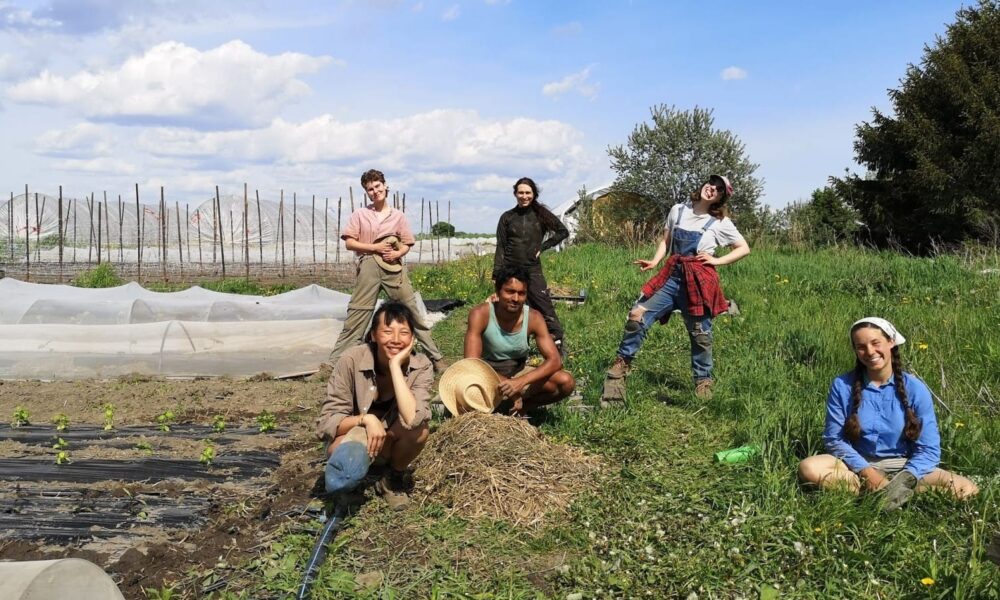
Macdonald Campus has not been left behind in this surge of agricultural student initiatives. The Macdonald Student-Run Ecological Garden (MSEG) has been operating continuously since they first received SPF funding back in 2010. Their emphasis on organic farming practices and vegetable diversity resemble those at MFECG, but, as a student farm, they put a greater focus on the quantity of food produced.

“A typical day depends on the season, but right now, we are split between harvesting, taking care of the crops we’ve already planted, and planting new ones,” Sam Liptay, a U3 Environment student and a manager at MSEG explained. 

The MSEG’s six-person team organizes the growing season so there will be enough produce harvested each week to fill the Community Supported Agriculture (CSA) baskets. Paying a flat rate at the beginning of a season, members sign up for these baskets 8 to 10 weeks at a time. Unlike the oligopoly of large Canadian grocers, such as Provigo, MSEG’s operations run far closer to the local communities that they serve. 

The main difficulty for campus gardens is keeping enough consistent student involvement to operate these initiatives, due to the quick turnaround of students and unforeseen circumstances such as the COVID-19 pandemic. For the MFECG, Colleoni hopes that by involving students with community meals and workshops, there will be enough interest to maintain the program for years to come. For Liptay, these difficulties, coupled with the unpredictability of farming, mean getting through each year is a success in itself.

“It’s inspiring to be running a farm with six people under the age of 23 and also […] to show that it’s possible, even though it’s tough, is really cool. Just having a successful, long-running student group that also contributes to the local community through our food and our baskets is an end goal in itself,” he concluded. 

To learn more about these urban gardens, check out their Instagram pages.

McGill Faculty of Education Community Garden: @mcgill_education_garden

Macdonald Student-Run Ecological Gardens (MSEG): @macdonaldeducationalgarden

Midnight Kitchen Collective: @midnightkitchencollective

Campus Crops: @campuscrops.mcgill

Read the latest issue

Read the latest issue