Latest News

ABCs of Science, Science & Technology

McGill Science Writing Initiative pushes students to share their knowledge accessibly

On April 9, the McGill Science Writing Initiative (MSWI) announced the winner of their third annual Case Competition. For this competition, McGill undergraduate students presented their projects in a variety of formats, including children’s books, podcasts, and literature reviews. Five teams made it to the final round of the competition, with each team presenting their work at the MSWI Symposium before a panel of judges announced the winner of the competition. 

All of the projects this year centred around the theme of evolution, which can mean anything from the biological evolution of animals to the evolution of scientific fields over time. Their past themes have included diversity and sustainability.

The winning team, competing under the name Baobabes, focused their research on adaptation to adversity. “With the theme of evolution in mind, our team decided to settle on the topic of adaptation following adversity: A perspective which views psychological and physiological changes following early life stress as active alterations made in the interest of survival,” wrote the team in an email to The Tribune.

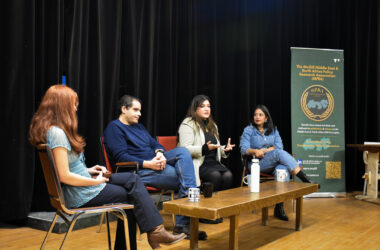
The Tribune spoke with four of the club’s organizers, Peter El Khoury, U3 Science, Sydney Wasserman, Masters U2 Nursing, Anh Ngo, U2 Engineering, and Abigail Wolfensohn, U2 Science, about the role MSWI plays in teaching science communication skills at McGill. 

“[MSWI] is a student-led club for students to kind of relieve this pain point about not having enough information on scientific communication, scientific writing, on the McGill campus in general,” El Khoury said. 

Although science writing is a critical skill, it is often overlooked in McGill classrooms, leaving a large gap for clubs like MSWI to fill. 

“As much as we might develop our understanding of our fields and really learn how to be an engineer, a nurse, or a scientist, we can’t actually bring any of that to fruition or incorporate any of the things that we learned unless we learn how to communicate it to a variety of audiences,” Wasserman explained. 

To help students learn these skills, MSWI challenges teams to present their science projects in three distinct formats.

The team’s first challenges involved creating a graphic essay to incorporate visual storytelling into science communication. Then they interviewed an expert on their topic and assembled a podcast or video based on the discussion. The final challenge, which was presented on Wednesday, was to conduct a formal literature review.

Throughout these stages, the target audience ranged from young children to adults in other disciplines to scientists with background expertise, challenging participants to communicate in a wide range of levels of complexity. 

Each finished product is reviewed by a team of judges, which includes scientists, journalists, and economists.

“We tend to try to have as wide a variety of people from different professions, different levels of life, just to be able to really, you know, kind of get those different opinions on the judging process,” Wasserman said. “We had a reporter be one of the judges for our news article task last year, and it was really cool.”

While the competition focuses primarily on science writing, the MSWI team invites students from all faculties to participate. 

“Science communication is so important for students in science, but also beyond science, we actually encourage a lot of students in all faculties and in all departments,” Wasserman said. “We’ve had people from architecture, from arts, engineering, finance, science, so it’s really exciting. Just about anybody can join.”

For those looking to get involved, MSWI has a variety of resources available on its website, including an ebook with tips for getting started with science writing. Additionally, they plan to release a podcast over the summer that features interviews with professional science educators. The Case Competition runs yearly, with applications typically opening in December and the projects running throughout the Winter semester.

Editorial, Opinion

We’re changing our name. McGill should, too.

We are divorcing McGill from The McGill Tribune. And it’s about time our university changes its name, too. 

As McGill entered its third century in 2021, it launched a $2 billion fundraising campaign celebrating its history and legacy as an institution. This campaign, however, illustrated the university’s continued indifference toward its violent, colonial, and racist origins. In June 2020, former McGill art history professor Charmaine Nelson, along with some of her students, released a 98-page research document entitled “Slavery and McGill University: Bicentenary Recommendations,” investigating James McGill’s history as a brutal enslaver and profiteer of the transatlantic slave trade. The document also issued recommendations for the university to begin confronting its violent origins and its ongoing systemic racism both at the student and faculty levels today.

As we have seen at Toronto Metropolitan University, which changed its name in response to widespread student activism urging the institution to stop celebrating colonial figures, it is possible for large universities to take steps to untangle themselves from their violent histories. Yet, we also recognize that name changes are not the be-all and end-all of social justice and redress. For example, McGill’s varsity sports team renamed itself the ‘Redbirds’ in 2019, dropping a name that caricatured Indigenous people. But this did not stop the university from engaging in a legal battle with the Mohawk Mothers, a group that is demanding there be an investigation into potential unmarked graves under the New Vic site. 

Name changes are one small step, necessary but not sufficient in and of themselves. The Tribune will accompany its name change by continuing to hold ourselves accountable through our own journalism, creating more avenues for community engagement and diverse perspectives, and engaging with more student groups on campus. 

As a newspaper, we have editorialized countless times on McGill’s persistent failure to create a safe and welcoming environment for Black, Indigenous, and racialized students and faculty, both in the lecture halls and on campus. We must supplement the progress made on the Action Plan to Address Anti-Black Racism set forth by the Office of the Provost and Vice-President Academic to rid McGill of its systemic racism. In its official land acknowledgement, the university fails to mention James McGill’s violent subordination of Indigenous children and Black people, such as Jack, Sarah, Marie-Louise, and Marie Potamiane, and one enslaved person whose name has not been uncovered. McGill frames its founder as a philanthropist, but hardly acknowledges that the donated fortune, the gift that ensured he would be our namesake, was amassed through the exploitation of enslaved people in Canada, the Caribbean, and the slave trade more broadly. His legacy persists, and Black and Indigenous faculty and students are still dramatically underrepresented in number and in the curricula of most academic programs, which fail to reflect demographic, methodological, and epistemological diversity. 

The Tribune has in the past been guilty of institutional racism, and as we continue working towards redress and strive to eliminate all forms of institutionalized oppression, our Editorial Board feels it can no longer bear the name that so unapologetically upholds and honours these systems. Our Editorial Board’s hiring process had discriminatory barriers to entry that did not open doors to all, and our channels for ensuring equity and a safe working environment were not made adequately available. We have acknowledged The Tribune’s history of exclusion toward Black students, Indigenous students, and students of colour––voices needed for any paper to thrive. Since then, we have revised our Workplace Conduct Policy and application process, and aimed to remedy institutional underrepresentation across all levels. The work does not stop there, and only through continual steps toward redress can we call ourselves a newspaper of record.

Our mandate urges us to be vocal and critical about the systems of oppression persisting on our campus and around the world, centring our perspectives on the voices that journalism has silenced. In order to uplift these narratives, we must also recognize the privilege that allows us to comment at a distance, from a predominantly white and privileged anglophone university in North America. McGill, in its billion-dollar marketing campaigns, may be primarily interested in upholding the prestigious veneer of its namesake on an international stage, but as an independent student-led publication, we choose to reject the social capital that associating with McGill and its legacies may yield. If we cannot reject this name, we cannot in good faith stand behind any of the changes we have advocated for.  As journalists, we choose to keep speaking truth to power instead of fearing it.

Off the Board, Opinion

Life in a patterned shirt isn’t so bad

At the beginning of the fall semester, I went thrifting. Alone. 

I spent a couple of hours walking through aisles, paging through shirts and sweaters before deciding on three button-down shirts: One plaid, one polka-dot, one gingham. They were the first patterned shirts that I’ve owned since the first grade. 

I don’t know how it started. I have often wondered to what extent my gravitation toward men’s clothing was simply a case of internalized misogyny. I must have seen the bright pink colour my parents had naively painted my childhood bedroom, soaked in the gender narratives my grandparents, my cartoons, and my toys produced. I took one look and said “nope.” 

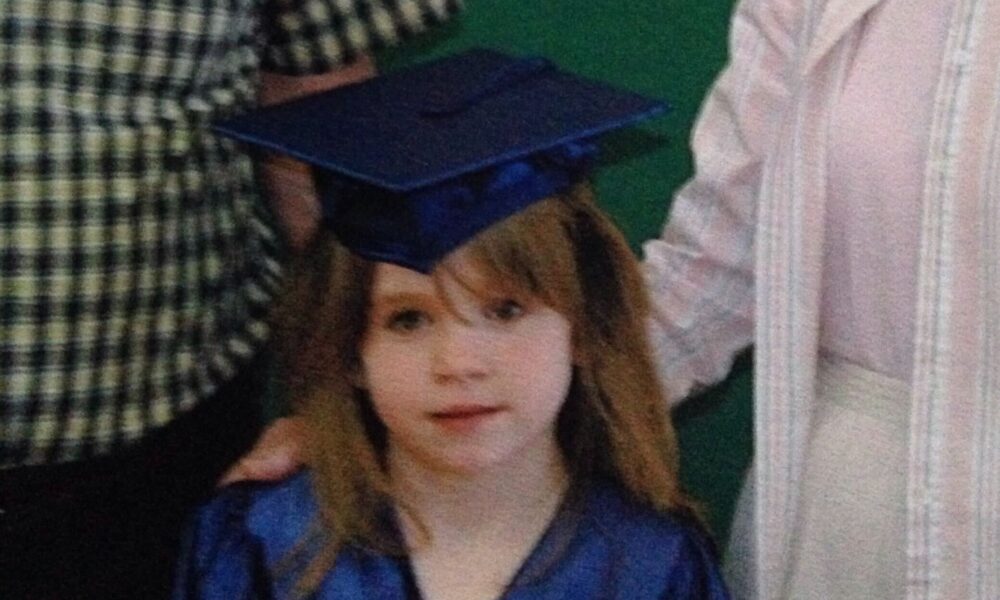
You can see the shift in my family photos: Sitting peacefully in a white dress in a mall-photo-studio seashell at age two transformed to shorts and a polo at age three, tuxedo and Converse at age five. 

At some level, there were a couple of happy years spent in that tux, where I didn’t worry about my body or my hair, about the complexities of gender expression in modern America, or what people must have thought of me when I wore that clip-on necktie to kindergarten. 

But as I got older, instances of gendered expectation began to intrude into my childhood mind. The pink underwear. The American flag bikini offered to me one Fourth of July. Even the suggestion of a heart-shaped sticker on the cover of my English notebook. 

Shopping was always the moment which brought this conflict to the forefront: For the rest of the year, I could play Minecraft and try not to think about it too deeply, but on shopping days, I confronted the gendered adult world head-on. And so I chose the most nondescript pants I could find. I shopped in the school uniform section of the store, going plain and simple and sticking to the default—of course, meaning male. 

Gradually, patterned clothes disappeared from my closet, swimsuits were off the table, and by middle school, only the black pants and button-downs remained. 

Somehow, I had transformed my gender confusion into a presentation of stubbornness and rigidity. Classmates, teachers, and friends asked me how I could cope with the tedium of wearing the same thing every day. I said that it just worked for me. I did not tell them that it was too stressful to imagine doing anything else. 

Gym class began to unravel this precarious system of dressing. While the clothing policy was flexibly enforced, I quickly discovered that you got 20 per cent off of your grade for wearing a button-down during volleyball. I sheepishly approached my mom after school: We needed to go to the store and buy a T-shirt. 

So, standing there, last pick for the dodgeball team, I showed my arms in public for the very first time. 

And yet, after my 45 minutes of dodgeball were over, I realized I had stumbled upon an opportunity. I left my button-down unbuttoned on top of that gym T-shirt on my way to geometry class. I didn’t die. I felt ashamed of how small a step this was, and how big of a step it felt like. 

I began to push the boundaries in ways that felt too feeble to admit to people at the time. The next summer, I bought a pair of jeans. This year, a patterned shirt.

I realize now that the problem was not that I was stubborn, or inflexible, or any of the things I thought I was during that gym class. It was that I was unhappy. I don’t know if I’ll ever get to a place where I feel comfortable enough to wear a dress, but I don’t know if I care, either. 

What I do know is that walking around in my polka-dotted shirt, a pair of Converse, and the occasional hoodie, I feel more at peace than I did as that kid in that uniform. 

I still put off shopping for as long as I can. But I did go thrifting again last Saturday, and I added a pink sweater to the rotation. 

Arts & Entertainment, Film and TV, Music

The Tribune’s definitive list of guilty pleasures

Perfect Match

There are no two ways to say it: I love reality TV. I’ve watched the American and British Love Island editions and all three versions of the Selling franchise (Selling Sunset, Selling Tampa, Selling the OC). I’ve seen love in every form: Blind, on an island, or at the end of an ultimatum.

As somewhat of a connoisseur, I went into Netflix’s Perfect Match not expecting to be wowed. The show invites former Netflix reality-show stars (ft. Francesca Farago, Nick Ulenhuth, Anne-Sophie Petit)  to a tropical villa to battle through challenges and drama to hopefully find their “perfect match.”

It was a masterpiece.

Something about contestants battling not just for a partner, but for a PrettyLittleThing contract renewal made the shouting fights more intense. Somehow, the jaw-dropping, omg-why-did-he-pick-her moments hit harder, knowing that these are people with egos, followers, and a knack for mind games.

Suffice it to say, Perfect Match has earned a spot in my personal reality TV hall of fame. 

Strong Woman Do Bong Soon

What better way to out myself as a K-drama enthusiast than to review arguably the best one? Its plot is heartwarming, the side characters are loveable—though slightly ridiculous—and the love triangle is typical, but cute. No matter how technically bad it may be, I will defend Strong Woman Do Bong Soon (SWDBS) to the end.

The plot centres around Do Bong Soon (Park Bo-young), an ordinary woman with extraordinary strength who uses her superpower to help stop a city-wide kidnapping spree. The main highlight is the relationship between Bong Soon and Ahn Min Hyuk (Park Hyung-sik), a CEO who helps Bong Soon out while trying to solve his own mystery. Alternate casting would have downgraded this show from life-changing to mid real fast, but Park and Park have the strongest chemistry of any on-screen couple ever. It’s basically a fact. 

Stream SWDBS on Rakuten Viki to see how this 2017-adorableness captured my heart. 

Buffy the Vampire Slayer

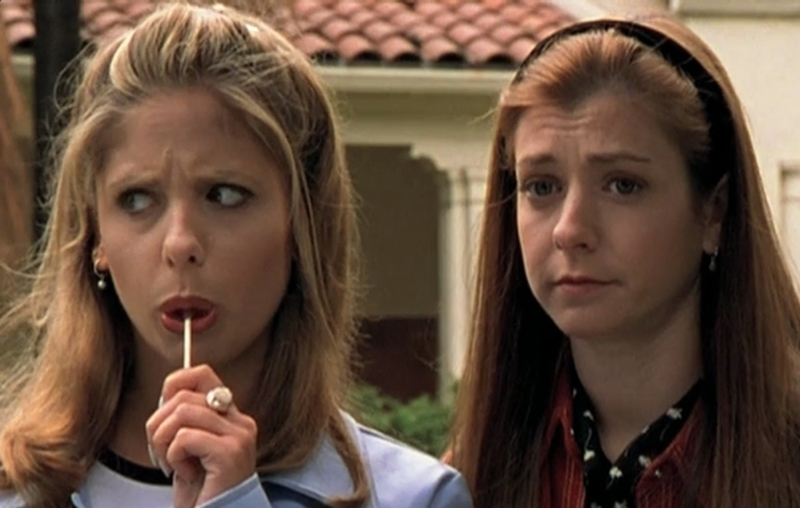
In my unbiased opinion, television began when Buffy Summers (Sarah Michelle Gellar) showed up at Sunnydale High in 1997 with a wooden stake and some kickass one-liners. Think back to all the questionable decisions you made in high school: All the rotted relationships, sneaking out late, trying out Wicca…the good ol’ days! Now imagine all those things happening in a town on a Hellmouth

With a monster-of-the-week format and a healthy mix of teen drama, Buffy is pure entertainment. Granted, at this point, we’ve seen almost every imaginable rendition of the high-schoolers-defeat-evil TV show trope. But Buffy did it first. If you look past (or even embrace) the 90s-quality special effects and some questionable story arcs (feel free to clock the “my teacher is secretly a sexy praying mantis” plotline), you have hours of campy demons, teens trying their best, and the girlboss of all girlbosses. 

Foals—Mountain At My Gates

A certain model of the indie band came to dominate Britain in the late 2000s. Their name was nondescript, only faintly pretending to allude to some deeper meaning—‘Klaxons’ anyone? They modelled themselves on their more pioneering early-2000s peers, sporting skinny jeans, overgrown haircuts, and silly vintage jackets. Camden Town was their London headquarters, an epicentre of sweatily-performed guitar riffs, earning derision from bored critics who termed the phenomenon “landfill indie.” 

Foals are all of this and more. Catching the landfill indie scene’s comedown, Foals soldiered into the present with an admirable, if also baffling, seriousness. They embody the sounds of sleepovers as a 13-year-old, gorging yourself on M&Ms and fizzy drinks in a friend’s basement while the indie exhilaration of Mountain at My Gates reverberates off the soundtrack of an engrossing FIFA 16 game. Melding jangly guitars with a charming lyrical metaphor of…well, mountain climbing, Foals show us there’s a great deal of fun in harking back to bygone times, however trite they may have been.

Student Life, The Viewpoint

Archives that evade

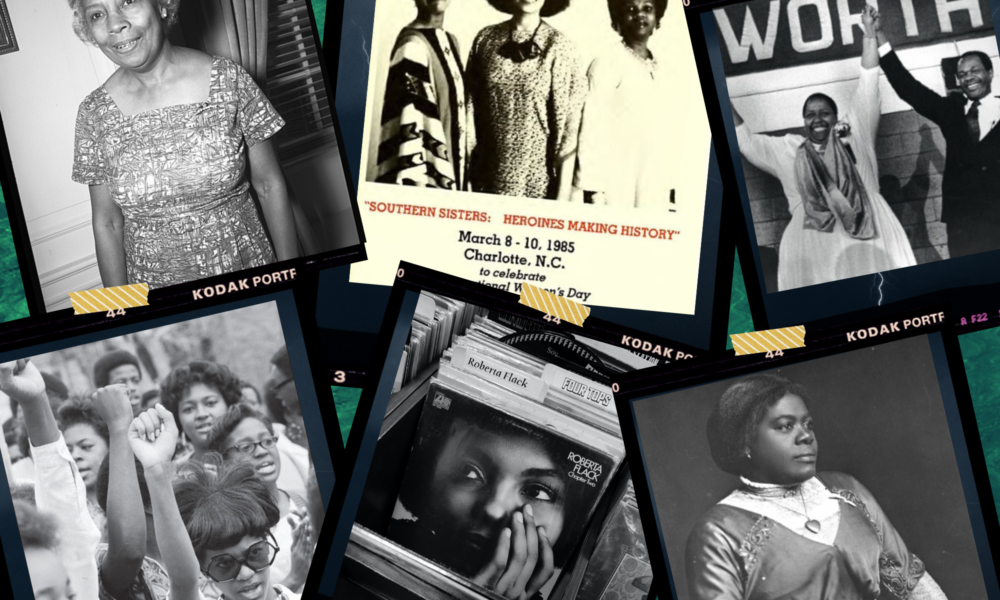
In 1974, the first Black woman Random House editor gathered photographs, sheet music, advertisements, obituaries, patent applications, materials, art, and ephemera in a collection entitled The Black Book. These archives, anthologies, collages, and scrapbooks celebrated, bore witness to, and captured the spectacular and the quotidian of Black life in all its forms since the so-called United States founding, all in one. Of, by, and for us––two scripts run parallel, knowing their touch, their fraught point of intersection is tender, causing blood and ink to spill. How could this publishing house make legible histories, performances, and comings-into-being of Blackness without minstrelizing, over-disclosing, running foul of the secrets we’ve kept for ourselves across generations––shared in the quiet moments of collective grace?

I (once again) heard about Toni Morrison’s editorial pursuits in this endeavour in the Leacock Building, for a public talk. As one of few Black attendants, other than the speaker, my walk to the building passed the Arts Building’s steps. A gateway to the humanities that stands in front of the violent memorial to our namesake who slumbers peacefully, with no regard for his enslavement of Indigenous children and Black people. The haunt of our ancestors hangs in his wake, Black life, labour, aliveness, solidarity, at the place where margin erupts into the centre; for to be advertised is to be remembered. By work all things increase and grow. 

How do we commemorate lives and ourselves outside of the popular modes of redress, commissions, public declarations; the plans, lists, records, books, numbers, and names made available? The Tribune sat down to articulate practices of counter-archives, archives that feel, that glint with golden futurity, that hold the muck and mess of the past and acknowledge the inaccessible dimensions of what we consider to be the standard archive. 

Forging the ephemeral

When we think of archives, or extracting from archives, the image we construct are thick stacks, sign-up sheets manned by an agent with extraordinary discretionary power, silence, clubs that not all of us can join (they scattered the ashes and went). What would it be to say the informal archive might be loud, clamoured by voices chanting, singing, screaming, guiding, fostering, choking, or not always tied to the institution? Your memories matter because you studied at an international institution, shielded from the fall, and actively manufactured death.

Think about the amorous, nebulous glance from a potential lover, the nod from a comrade, the modes of social organizing and policing that attempt to strip Black and Indigenous people, women and queer and trans people of colour from spreading the unspeakable for revolution, the contact points that touch softly in times of peace and war. The photos, the laughs, the stillness of wandering in a time outside of the clock.

The art of losing’s not too hard to master. Write it! Scribble on the peripheries. Avoid the malconstructed public demands that impede your privacy. Our lives depend on the extraordinary within the ordinary practices of remembering, seeing, thinking, and living with each other differently.

Archiving with each other

The private is ripe with offerings to transform our public accounts of memory practice. Activist-author-organizer-researcher-librarian-abolitionist Mariame Kaba reminds us to move beyond carcerality and policing in the blooms only a library could gift us. We must navigate the violence that asks us to remember when our media circulates photographs of Black death and suffering, violence against refugees, Indigenous peoples, women, girls, and Two-Spirit people missing in the favour of white sentimental global uplift. No apologies without structural transformation should be accepted.

The question endures––what can the library, the more formal archive, build from this? Our communication, cryptic and coded, must work to a critical consciousness. Radical library practice means opening up doors, placing value on the democratic need to sit, to recover, to evade the seemingly insuperable burdens of in the cracks of underfunded social institutions. Sharing what we have, the books, the zines, the newspapers of eras gone by, the films, the music, and the tapes, in and outside national, provincial, and local libraries fuels what a better world could be. What it must start with, however, is reimagining the archive and its exclusive practices informally and otherwise.

Sports

Behind the bans on transgender women in sports

On March 25, World Athletics, the governing body that regulates track and field, cross country running, road running, race walking, mountain running, and ultra running competitions at the international level, voted to completely ban transgender women athletes who have gone through male puberty from competing at international events. 

The decision follows a wave of “fair competition” policies that were put into place after Lia Thomas, a swimmer for the University of Pennsylvania, became the first-known transgender woman to win a National Collegiate Athletic Association (NCAA) swimming championship. World Athletics joins World Aquatics and World Rugby as one of the several international organizations to ban transgender women athletes based on whether or not they have gone through male puberty, instead of blood testosterone levels. 

The World Athletics’ decision reverses the previous policy that required transgender women to keep the amount of testosterone in their blood under the maximum of five nanomoles per litre, and stay under this threshold continuously for 12 months prior to competing in the female category. World Athletics claims that its “preferred option” was to continue to allow transgender women to compete in the female category while implementing more aggressive regulations for testosterone levels. But the proposition allegedly garnered “little support” from stakeholders, such as member federations, athletes, coaches, and the International Olympics Committee (IOC), as well as transgender and human rights groups. 

World Athletics also elected to alter their policy for athletes with differences in sex development (DSD), a group of rare conditions involving genes, hormones, and reproductive organs resulting in different sex development trajectories, halving the maximum level of blood testosterone from five to 2.5 nanomoles per litre for women’s competition. Those with polycystic ovary syndrome (PCOS), in whom excess testosterone is common and typically exceeds this new cutoff, may also be barred from competition. 

Many organizations that have elected to ban transgender athletes cite a study from the British Journal of Sports Medicine (BJSM) that concludes there is an association between the use of gender-affirming hormones and changes in athletic performance. The BJSM study suggests that more than 12 months of gender-affirming hormone usage is “needed to ensure that transgender women do not have an unfair competitive advantage when participating in elite-level athletic competition.” 

However, some experts are critical of the study’s conclusions due to sample size, narrow research questions, and misleading language. 

“It feels like our sort of Cirque du Soleil contortionist style stretch to say that that’s enough evidence to sort of make that blanket statement,” Dr. Lindsay Duncan, an associate professor in McGill’s Kinesiology and Physical Education Department, told The Tribune. “They present the best evidence available […] to address a pretty specific research question with sport performance defined in a pretty specific, narrowly conceived way [….] Sport performance involves so many other factors [….] There’s a lot more going into it than that one pretty specific study could address.” 

Dr. Charlotte Usselman, an assistant professor in McGill’s Department of Kinesiology and Physical Education, is also concerned with the content of the research paper. 

“Given that some people were only assessed once after starting hormone therapy (and most were only assessed twice), we have no idea how many people are included in the ‘2+ year’ time point,” Usselman wrote in an email to  The Tribune.

 “[T]he authors interpret their findings to directly suggest that ‘governing bodies for sporting competition should require more than [one] year of testosterone suppression prior to competition’,” Usselman continued. “[T]hey did not present enough evidence to support this conclusion.”

The BJSM study, along with the International Federation of Sports Medicine (FIMS)’s 2021 Consensus Statement––a study that concludes serum testosterone concentrations are an objective biomarker to regulate the inclusion of transgender athletes––acknowledge the limitations of their respective research. Many of these limitations stem from the lack of sports performance data from athletes before, during, or after testosterone suppression, in addition to small sample sizes.

World Athletics claims the ban prioritizes “fairness” over inclusion, citing a potential competitive advantage for transgender women athletes competing in women’s categories. These concerns of a competitive disadvantage for cisgender women athletes arise from the BJSM and FIMS studies that conclude transgender women retain physical advantages such as larger wingspan, increased lung capacity, and greater muscle mass, despite reducing their testosterone levels and taking gender affirming hormones. However, with no transgender athletes currently competing at the international level, many question the true prerogatives of the ban. 

“Bans on trans athletes are not primarily concerned with actual trans athletes, they are about stoking fear of trans women and presenting us as ‘invading women’s spaces,” a member of the Trans Patient Union (TPU) wrote to The Tribune.  

“When trans people and transfeminine people in particular are banned from participating or stigmatized for participating in sports, the harm done is also about making it harder for us to participate in everyday life,” wrote TPU’s external affairs co-coordinator, who wished to stay anonymous. “Like bathroom bills, athletic bans don’t present trans people with a feasible new way to participate, it’s about pushing us out of everyday life altogether.” 

The restrictive nature of binary gender categories also excludes both transgender people who do not medically transition and those who don’t fall into the category of male or female. 

“If legitimate concerns about fair play do come up, rather than dealing with such concerns by banning a transfeminine and intersex athlete for participating, we should mitigate relevant unfair physical advantages in ways analogous to the weight and age classes already used to ensure fair play,” TPU’s external affairs co-coordinator wrote. “We should regulate relevant physical advantages, not gender identity.”

Beyond the intricate nature of gender, the concept of “fairness” is complicated by the fact that the very structures of sport are fraught with inequities. 

“Most of our sports structures are not fair for trans and non binary people, forcing people into gender categories, forcing them into gendered spaces,” Duncan said. “Based on our data, if a trans athlete gets to the highest level of sport, from a character perspective, they’re a superhuman, because they’ve been through a tremendous amount of unfairness before they can even get there.” 

Some argue that World Athletics should revert to its former testosterone policy approach, but even the use of testosterone levels as an indicator of competitive advantage is severely understudied. 

“In some sports, testosterone levels might be a reasonable predictor of performance and could signal a competitive advantage [but] in other sports that’s not nearly enough,” Duncan explained. “I don’t think that overall testosterone levels is an effective way to measure a competitive advantage. In most sports, we don’t have any data that we could use to actually check that hypothesis.” 

Will Huckins, a master’s student in McGill’s Department of Kinesiology, notes that dependence on testosterone runs contradictory to World Athletics’ own research. 

“[The World Athletics’] head of health and science conducted research at the 2011 and 2013 World Championships which found that testosterone was only linked with improved performance in five of the 21 events they investigated (400-metre, 400-metre hurdles, 800-metre, hammer throw, and pole vault).” 

USPORTS, the governing body of most McGill varsity sports, currently has no restrictions for transgender athletes in competition. As for McGill Intramural sports, the open, mixed, and women’s categories are inclusive of two-spirit, transgender, and gender-nonconforming peoples, and the policy encourages athletes to participate in the category that best aligns with their gender identity. However, as head coach of the artistic swimming team at McGill, Duncan believes that more needs to be done to ensure that athletic spaces are truly accepting of transgender athletes. 

“If we’re going to welcome trans athletes onto teams, I think we need to make sure that we’re prepared to offer a psychologically safe space,” Duncan said. “Change really comes from having discussions with other coaches, with other athletes, challenging the assumptions that we have and just raising questions.” 

Art, Arts & Entertainment

Montreal’s magnificent murals: How public art sustains the city’s cultural spirit

Public art is a hot-button topic of discussion, be it in political debates or around the dining room table. While some denounce it as a frivolous waste of tax-payer dollars, others applaud the cultural, economic, and societal advantages of investing in public art: Its presence can accentuate a neighbourhood’s unique character, highlight important social issues, and render the fine arts more accessible.

Montreal is no stranger to these benefits as home to over 1,000 officially sanctioned public artworks. Public art even ornaments McGill’s downtown campus, where you can find eye-catching sculptures such as Jonathan Borofsky’s Human Structures (2010), which features three tiers of brightly-coloured figures outside of Burnside Hall, and Barbara Hepworth’s Square Forms and Circles (1963), a highly abstract, geometric structure located steps away from the Milton Gates.  

Montreal is home to an impressive collection of public art, but the crème de la crème is undoubtedly its murals. These eye-catching artworks can be found across the island, and they range from small-scale murals to expansive portraits stretched across buildings. You would be hard-pressed to find a resident who hasn’t noticed the city’s abundance of colourful murals, which attract attention from Montrealers and tourists alike. A quick Google search reveals several tours of Montréal’s urban street art, guiding interested individuals on foot, or providing detailed lists of must-see murals for self-guided adventures. 

For those who prefer creating to observing, Montreal is also home to MURAL Festival, a yearly public art show that turns Saint-Laurent Boulevard into an open-air museum. Local, national, and international artists are invited to use the street’s building sides as their canvasses, producing creative new works that the public can view for free, furthering the festival’s mission of democratizing art. Set to take place from June 8 to 18, this year’s MURAL Festival will welcome celebrated street artists like OSGEMEOS, a Brazilian artistic duo composed of twin brothers Gustavo and Otavio Pandolfo, and Projet TXYNA, a local mural and digital art collective made up of five creatives. The Projet TXYNA team will undertake the task of reinventing one of Montréal’s iconic murals, the “Graffiti Granny” which overlooks the intersection of Saint-Laurent and Avenue des Pins. 

While MURAL Festival effectively drums up support and viewership of public art during its 11 days of festivities, groups like MU, a charitable organization for unique mural art rooted in Montreal’s history and culture, hope to foster an appreciation for public art all year long. Elizabeth-Ann Doyle, MU’s artistic director and co-founder, maintains that public art is essential to preserving Montreal’s identity as a cultural metropolis.  

“Montreal is a creative city. We should, as Montrealers, feel that in everyday life,” Doyle said in an interview with The Tribune. “Public art is the best central access to free art.”   

Inspiration for MU’s inception struck while Doyle was visiting Philadelphia alongside co-founder Emmanuelle Hébert for their work with Cirque du Soleil. Stirred by Philadelphia’s Mural Arts Program and the economic and social benefits it brought to the city, the pair vowed to establish a similar program back home. The result? MU, which has produced more than 300 murals since 2007 in an effort to help Montrealers get their daily dose of art. 

The organization prioritizes artwork that pays tribute to the city’s creatives. Since 2010, MU has produced two to three murals per year that acknowledge Montreal’s trailblazing artists. 

“We wanted to give a voice and honour artists as opposed to traditional public art, which [pays] tribute to military men or politicians,” Doyle said. “Quebec’s history is important. Recognition of its storytellers is important.” 

MU’s “Montreal’s Great Artists” series has yielded some of the city’s most recognizable murals. These include 2017’s Tower of Songs by El Mac and Gene Pendon, a large-scale portrait on Crescent Street of acclaimed singer-songwriter and Westmount native Leonard Cohen, as well as Magnetic Art (2022) by Marc Séguin, a piece in the heart of Milton Parc dedicated to visual artist Jean-Paul Riopelle. 

Another mural in the MU-produced series, Hommage À Alanis Obomsawin (2018) by artist Meky Ottawa, demonstrates how the medium can serve to highlight Indigenous artists and their cultures in a primarily settler-colonial setting. As a portrait of celebrated Abenaki Canadian-American filmmaker and activist Alanis Obomsawin, the mural paints the artist from the chest upwards, setting her against an azure sky dotted with constellations. The artwork is situated at the corner of Atwater and Lincoln in the Ville-Marie borough and serves as an important reminder of how Indigenous creators and their artistic contributions have shaped Canada’s artistic landscape.    

In an email to the Tribune, Gloria Bell, an assistant professor of art history at McGill, emphasized the capacity of public art一especially murals一in highlighting Indigenous experiences and contributions. 

“Public art such as murals are more accessible than finding artworks in traditional white cube galleries and museums,” Bell wrote. “The large scale of the work is powerful in its visibility and acknowledgement of Indigenous artists.” 

In the case of Hommage, the mural pulls double-duty to further Indigenous representation: Not only does the artwork itself depict an Indigenous creative, but it also platforms Ottawa, an emerging, multi-disciplinary Atikamekw artist whose work incorporates traditional Indigenous techniques. 

“[Obomsawin] seems to be crowned by traditional Abenaki floral motifs, a fitting crown for the queen of Indigenous media,” Bell wrote. 

In addition to creating space for Indigenous artists and artworks, the murals of Montreal help spark important conversations about social issues. For instance, the mural Finding Home Again (William Daniel Buller, 2022), commissioned by Médecins Sans Frontières (MSF) in association with MU, explores the topic of forced migration. Depicting a woman carrying a sleeping child in her arms and a home strapped to her back, the mural stretches across the wall of a four-story apartment complex. Lines from the poem “immigrant” by Rupi Kaur complete the work, stretching across the bottom-right corner in both French and English: 

they have no idea what it’s like / to lose home at the risk of / never finding home again / to have your entire life / split between two lands and / become the bridge between two countries.”

The artwork is a stark and poignant reminder of the struggle of more than 100 million people worldwide who have been forced to uproot their lives to find refuge elsewhere. Located in the neighbourhood of Côte-des-Neiges (CDN), one of Canada’s most ethnically diverse communities, this mural reflects the forced displacement many of the neighbourhood’s residents have experienced. 

“We feel that art is for everybody, and it should be grassrooted,” Doyle explained. “It talks to communities, so it has to talk about subjects that echo in those areas.”

The mural was unveiled on Oct. 24, 2022. Doyle emphasized the importance of its placement, which is situated prominently on the border of CDN and the Town of Mont-Royal. By displaying the mural in such a highly trafficked area, it serves as an organic catalyst for conversations about forced migrations for anyone who passes by. 

Public art, and murals especially, plays a foundational role in sculpting Montreal as a cultural milieu. To Doyle, the question of whether public art is a luxury is a resounding no. 

“Art is essential to life,” she said. “If [Montreal is] really a cultural city, that means not only having lots of programming. It goes beyond shows. It has to be lived by everybody, everywhere.”

Arts & Entertainment, Theatre

‘English’ asks provocative questions about the meaning of language

“HELLO. WHAT IS YOUR FAVOURITE COLOUR?” 

The militant aggression of Elham’s (Ghazal Azarbad) tone sends laughter rippling through the audience. She wants to go to Australia for medical research with a renowned professor studying gastrointestinal diseases. She has a fantastic MCAT score. She wants to help people.

She’s failed the Test of English as a Foreign Language (TOEFL) multiple times.

Elham is one of four students in an English class in 2009 in Karaj, Iran. They all want to learn English for different reasons but stand together under the dark cloud of English linguistic hegemony. 

English, written by Sanaz Toossi and co-directed by Anahita Dehbonehie and Guillermo Verdecchia, explores language, identity, family, and otherness through the ensuing classroom shenanigans. The play ran at the Segal Centre this past month. 

Ghazal Partou gives a compelling performance as the encouraging yet austere teacher Marjan, who had previously lived in London for almost a decade. There, she went by Mary. She encourages her students to speak in ENGLISH ONLY, sparking a combination of malapropisms, frustrations, and major questions about what language really means. 

We see people learning a new language at different stages of their lives, for a variety of reasons. The winsome, overall-clad Goli (Aylin Oyan Salahshoor) is 18. She believes the world will open up to her once she learns English. Roya (Banafsheh Taherian) wants to live with her son’s family in Canada, but her son wants his daughter fully immersed in English and doesn’t want Roya to confuse her by speaking Farsi. And then there’s the enigmatic Omid (Sepehr Reybod), who comes into the class speaking English suspiciously well. 

The production was intentional in casting all Middle Eastern and North African (MENA) actors. An especially important choice as the Asian American Performers Action Coalition found in their 2018-2019 Visibility Report that across the board, only 1.3 per cent of hired actors and 1.5 hired writers claim MENA descent, despite accounting for 3 per cent of the American population. 

English takes a creative approach to storytelling in both English and Farsi to a primarily anglophone audience. When the characters speak English, the actors speak with a Farsi accent. When the characters speak Farsi, the actors speak with American-English accents, vocally flipping the script. 

A key tension within the play is whether or not learning a new language means becoming a new person. The audience is left to ponder how much we lose in translation, and how much good in the world is sacrificed in the name of assimilation. If learning a new language means assuming a new identity, does that mean Roya’s granddaughter will never really know her? 

Though the debates around language are political, the creative team doesn’t overtly centre English around politics. The play’s lighthearted humour is crucial to its message. Notably, the audience and characters rarely laugh together.

For instance, when Omid encourages the timid Goli to ignore the reactions of those around her, to “screw everyone, fuck everyone!”, Goli replies by enthusiastically proclaiming, “OKAY, I WILL FUCK EVERYONE!”

The funniest lines were those that resulted from miscommunications. When the laughter ceases, the atmosphere in the theatre transforms completely, and the audience is left to ponder what exactly they were laughing at.

The purpose of language is often considered to be functionality, but communication and connection go far beyond grammar and vocabulary. Humour is often overlooked in language politics, but it is a key feature that links us together as humans. Perhaps Marjan captures this complexity best when she tells Omid, “[y]ou go years without making anyone laugh.” The audience fell silent. 

Montreal provides a unique setting for a play about language, especially one entitled English. When you walk out of the theatre, the play doesn’t really end—its messages are reflected in Quebec’s language divide, protests against Bill 96 and Bill 21, and the Woman Life Freedom movement following the death of Jina (Mahsa) Amini. The set design also features a window looking out onto Karaj, visually linking the classroom to the outside world. 

Both inside and outside the theatre, the audience is left to question the purpose of language: Ultimately, should it assimilate or communicate? 
English ran from March 19 to April 2 at the Segal Centre.

Sports

Four years of Farnand: A letter from your (favourite) editor

Well, this is it. The last thing I will ever write for The Tribune. No pressure though, right?

I joined the Sports section all the way back in 2019 after I wrote an opinion piece about littering that never got published (thanks a lot, Opinion). Now, four years and over 75 articles later, I still do not understand the rules of rugby. 

We’ve done a lot of great things over these four years. From forming the first all-woman sports editorial team at The Tribune, to interviews with Olympians and creating a Sports section that is about so much more than sports, I am so proud of what this section has become. I have no doubt that it will only continue to get better from here. 

I am so eternally grateful for all the brilliant minds that I have worked alongside at The Tribune. I hate change and I hate saying goodbye, especially to the place that gave me my best friends. To my fellow grads, I can’t wait to see all the great things you go on to do. And for those of you who have a few years left, as corny as it sounds, the time really flies, so enjoy every moment.

Please don’t ask what I am doing next year. I do not know and I am very stressed. 

Forever a loyal Tribune reader,

Sarah

Sports

Know Your Admin: McGill Athletics

If you’re a McGill student that cares even a little bit about McGill sports, odds are you follow @mcgillathletics on Instagram. With over 10,000 followers, the Instagram account connects athletes, students, fans, and alumni who root for the Martlets and the Redbirds. From schedule updates to analytics to live game coverage, the beautifully curated content leaves many followers wondering: Who is behind the account?

Matt Garies and Evelyn Silverson-Tokatlidis are the architects behind all of the McGill Athletics accounts on social media, including Facebook, Linkedin, and Twitter. Silverson-Tokatlidis is the Social Media Coordinator for McGill Athletics, while Garies is the Creative Lead. Silverson-Tokatlidis is a former student-athlete who played on the Martlets rugby team for five years and is also the former president of the McGill Varsity Council. Garies is the official sports photographer for McGill Athletics and does a variety of freelance work for various brands, including the Montreal Canadiens and Sportsnet.  

The duo brings a multifaceted perspective to social media management. Silverson-Tokatlidis’ experience as a student-athlete gives her a better understanding of athletes’ needs, while Garies’ experience as a sports photographer allows him to skillfully capture the essence of McGill sports. 

“Our main goal is to have people follow along with our athletes and create that connection for an online audience,” Silverson-Tokatlidis told The Tribune. “[We hope] to share the voices of our athletes and showcase that student side of athletics at McGill.”

Central to fostering this connection is ensuring that students have quick and easy access to information about athletics. Whether it’s the latest scores or upcoming game schedules, providing followers with timely and engaging content is key to building a dynamic sports scene at McGill.

“We want to be constantly engaging as a focal point of content,” Garies said. “We want people coming to our Instagram to get updates and information, and then we can use that as a quicker social point for easy access to links. Our goal was to sort of create a memory where people will be like, ‘Oh, I can check the Instagram; everything will be there.’” 

However, running the McGill Athletics social media is not just getting to attend all the games for free and meet athletes––it’s a complex and demanding job that requires creativity, strategic thinking, and a deep understanding of social media trends.

“We definitely have to be up to date regarding trends,” Silverson-Tokatlidis said. “Even bridging the gap between our first-year athletes and sixth-year athletes [is a challenge] because there are a lot of differences in the way in which people communicate. It’s about trying to find that middle ground and find trends that appeal to everybody.” 

Keeping up to date also requires research on how other teams’ social media management, professional and otherwise, run their accounts. However, they always make sure to maintain a personality fans can recognize. 

“Our voice does shine through a little bit to make our brand a little bit unique,” Garies said. “We also know our athletes very well because we speak to them all the time, which gives us a pretty relatable way of communicating.” 

Garies and Silverson-Tokatlidis go beyond just posting on Instagram to amplify the voices of McGill’s athletes. They also lead the production of the UNSCRIPTED Series on the McGill Athletics YouTube channel, which features interviews with student-athletes specifically highlighting the experiences of Black, Indigenous, and 2SLGBTQIA+ athletes. 

McGill Athletics’ social media presence has become central to the university’s sports culture. Silverson-Tokatlidis’ and Garies’ tireless efforts allow fans to feel connected to athletes by uplifting their stories Their work goes beyond just running social media accounts—it is a crucial part of building a strong and inclusive sports culture at McGill.

Read the latest issue

Read the latest issue