


Latest News

Features

Tapping into my first love

I remember loving tap dance even before I knew what it really was. Even when I had only heard my mother’s animated description of how tap shoes had metal plates on their soles that I could make new sounds with, it was more than enough to draw me into an unknown world of movement, expression, and history. Something that I knew for sure, though, was that the people around me loved it. Some of my favourite memories with my grandmother are from when I would sit in the kitchen with her before Passover Seders, helping with some of the cooking prep, sorting out the teacups and saucers for coffee or tea—but most importantly, gleefully talking about the new steps I had learned in class that week or the last dance film she saw on Turner Classic Movies. Perhaps I already knew it then––tap would remain in my life in more ways than one.

Each step an archive 

Tap stands out from several other popular dance styles as a distinctly American dance rooted in histories of enslavement and cultural exchange. The style developed through the melding of several different styles, notably West African step dancing and Irish clog dancing. Until the late 20th century, most historians believed that tap originated from enslaved Africans and Irish indentured servants being influenced by each other’s dancing on Southern plantations. More research has suggested that tap was nurtured in urban environments where different ethnic groups congregated. Both narratives speak to tap as a genre created collectively through community formation and cultural expressions. For instance, juba, a dance from the Kingdom of Kongo that uses feet-stomping and arm-flapping, markedly influenced tap. During the 18th century, various states passed laws outlawing enslaved people from using drums, which were considered a dangerous form of communication that could be used to incite rebellions. Enslaved peoples employed juba and other forms of rhythmic physical movement as media of communication and to cope with the ongoing trauma of slavery. 

When I started taking tap classes early in my elementary school years, my teacher during the 2010-2011 school year, Maud Arnold, first taught the class about the history of tap dance. Beyond just explaining the history behind the dances she taught us, she also had us do weekly homework assignments where we would research tap videos and come to class prepared to discuss our favourite movements. When I caught up with Arnold, a professional tap dancer, choreographer, entrepreneur, philanthropist, and producer, she was touched to learn that I still remembered her assignments in such fond detail.

“I always wonder—like today, when I was teaching, I was telling the kids: Tap dance is an African-American art form. What is February? February is Black History Month, tap dance is Black history, period,” Arnold said. “And I’m always like, I wonder if they’re listening, I wonder if they care?”

A major focus of tap dance classes is undoubtedly teaching pupils new steps and routines. But ensuring that they learn the past that has been preserved in those tap steps invaluably works to contextualize and focalize the history of enslaved people in these lessons. Media that depicts African-American history often only sees their suffering as a worthy subject, obscuring their substantial creative contributions to American entertainment scenes and reinstantiating the centralization of whiteness in popular media. 

“Tap dance is extremely impactful and extremely powerful because it was born during a time of oppression, it was created by enslaved people—it carries so much more history and weight,” Arnold said. “You know, we’re lucky now because we can just do it for fun and express ourselves, but imagine a time in which this was the only way you could express yourself, the only way you could communicate with the people who were your allies or your friends.”

‘Nothing too weird’: Toward a more inclusive dance world 

Acknowledging that the different genres of dance are not just isolated art forms but tied to different cultures and specific histories allows dance to be seen for what it truly is—an intimate expression of emotion and experience. Montréal, arts interculturels (MAI), located on rue Jeanne-Mance, defines itself as a “strange beast” that is neither institution nor artist-run centre. In their primary mandate, they pledge to remain “an inclusionary, pluricultural, pluridisciplinary presenter” in addition to providing mentorship and fellowship opportunities for artists. Dance, to them, should represent multiple individual experiences and cultures, rather than just a set of steps and techniques to be perfected. 

Camille Larivée, executive and artistic director for MAI, explained in an interview with The McGill Tribune how the work presented at MAI stands apart from most institutional public performance spaces.

“The whole idea […] of traditionalist idea of dance as ballet and very rigid, I think more and more choreographers that come to the MAI challenge that notion of care in dance that you don’t really find in traditional, classical settings,” Larivée said.

Many shows at MAI portray the personal narratives of their choreographers, which explore different aspects of identity—race, class, sexuality, and religion, among many others—through innovative styles of choreography. 

“There’s nothing too ‘weird’ for us, […] there’s a lot of artists [who] will feel uncomfortable in other spaces, because they feel like they’re pushing the ‘weirdness’ a little bit too far and their ‘weirdness’ is accepted here,” said Jaëlle Dutremble-Rivet, head of communication at MAI. “The MAI is different in the sense that it pushes intercultural arts, so that falls under the umbrella of anyone who is marginalized by the system, be it access to grants, access to spaces, access to everything, basically.” 

The professional and academic institutions of dance are ruled by multilateral structures of hierarchy and privilege, which often fail to meaningfully support artists from marginalized communities—artists of colour, disabled artists, 2SLGBTQIA+ artists—and has historically excluded them from performance spaces.

“The dance world is really still privileged and white and not necessarily accessible in many ways. And when we talk about marginalized communities here it’s not just identity, it’s also intersectional,” Larivée said. “There’s people with different types of disabilities, people of colour, it’s not just ‘you’re one thing and that’s it’.”

MAI’s work has already shown that audiences want to see art that is expressive of voices other than white elites. 

“In that sense, we’re different, but in the art forms that are presented, a lot of the artists that are presented here, they’re picked up afterwards so, I guess Montreal likes weird,” Dutremble-Rivet said.

In May 2022, MAI hosted Ephemeral Artifacts, a show choreographed and performed by tap dancer Travis Knights that explored how the historical connections between jazz and tap dancing manifest through the physical self. The performance was explicitly framed through a non-Eurocentric lens, firmly centring Black culture and history in its meditations on both artistic mediums. Ephemeral Artifacts also made waves for its use of vibrotactile devices—specifically, a vibrating vest that would allow deaf and hard of hearing audience members to experience the feeling of tap steps in coordination with the visual aspects of Knights’ performance. 

Knights’ show challenges the typical bodies that we associate with dance and art scenes—both in performers and in audiences—demonstrating how interdisciplinary innovations in performance can bring dance to wider audiences, both in Montreal and around the world. Ableism and any kind of exclusivity in the dance world, Arnold asserts, is fundamentally opposed to her definition of the art: An inherently shared form of feeling. 

“What’s really exciting and special about dance is that it’s a universal language,” Arnold added. “And dance is for everybody: Even if you’re not [non-disabled], if you’re in a wheelchair, you can groove, you can move. We’re all born with a heartbeat, so we all have an innate rhythm, and dance is just a way to express that innate rhythm.”  

Seeing dance as a universal medium is especially important when considering tap as an African-American art form. Throughout history, the white powerholders that drive entertainment industries have pushed the false narrative that white stories and art are for all audiences, whereas Black art, even when commodified for the white gaze, is only for Black audiences—because they are deemed too personal, political, or just not art at all. The resurgence of tap in popular culture crucially demonstrates how the medium appeals to a wide array of audiences, and should be taught and understood for what it is—art. 

Dance, after all, has always been a tool that thrives in bringing communities together. For Chloe Nyiligira, U1 Science, her early experiences with both classical North American dance styles and long-standing work with traditional Rwandan dances helped shape her understanding of community and expression through dance. 

“In my culture, dance is a way of celebration, like in many other cultures. But what’s so interesting about it is that in any event, in any circumstance of life, there will always be a type of movement or dance associated with it,” Nyiligira said. 

“Even in mourning periods, sometimes, there are dances for that. I’ve always found that a bit perplexing at first, because I’m like ‘this is a sad thing’, but then, it comes from a place of wanting to celebrate the life of the person who passed, just to find the joy in any moment in life.”

From the stage to the screen 

Dance communities are ubiquitous anywhere you go in the world. Intercultural engagements with dance, like Nyiligira’s experience, can help broaden the boundaries of participation. While growing up and learning more ‘classical’ styles, Nyiligira was, for several years, the only Black student in the studio. When learning and teaching traditional Rwandan dance, however, she was able to work with other Black dancers, whom she considered “little sisters” to her. While tap and traditional Rwandan dances are specifically rooted in African cultures, they are in no way exclusionary—in fact, they welcome new audiences and are geared towards universal engagement and appreciation.

“From an outsider’s perspective, no matter what your background is, if you watch a dance from my culture, chances are you will feel very at home or very welcomed, and safe and sound,” Nyiligira said.

Although institutional privilege and exclusivity in the dance world still remain, social media has served as a conduit for the global dance community to grow further. Tap dance permeated through popular culture in the 20th century as a result of the popularity of movie musicals, but the development of the internet as we know it today largely contributes to how dance videos are created, consumed, and distributed. Dance challenges on TikTok have widened the dance community, but have also turned into another platform where creators appropriate and steal credit from Black creators for their work. 

“There are so many different niches in dance. I don’t mind it on social media—it’s important to share the meaning,” Nyiligira said. “It’s one thing to take a dance, but if you don’t know what it means, or the story behind it, or the credit, […] it takes so much away from it.” 

The history of Black creators and choreographers not getting proper credit for their work is a long and difficult one. When discussing the history of tap dance in film, Arnold mentioned her shock at speaking to someone who was only familiar with white tap dancers and didn’t know of its roots in African-American history. Popular film stars like Fred Astaire, Gene Kelly, and Eleanor Powell are renowned for their dancing and immortalized through different dance institutions, yet the Black dancers who inspired and taught them the art died without even a fraction of the same recognition and acclaim. In 2021, TikTok personality Addison Rae appeared on The Tonight Show in a segment where she performed multiple popular TikTok dances, almost all of which were choreographed by young Black dancers, without crediting the original creators. 

Nevertheless, the online dance community has its unique beat, and Arnold is extremely familiar with and enthusiastic about it. She is a member of Chloe Arnold’s Syncopated Ladies, an all-woman tap dancing band started by her sister, Chloe, that has accumulated over 100 million views across all their social media pages—and was once reshared by Beyoncé. Maud’s dancing was also spotlighted in the 2022 Apple TV+ film Spirited, which her older sister choreographed.

While Arnold, Larivée, Dutremble-Rivet, and Nyiligira all had varying opinions on the role of social media compared to physical spaces in the dance world, they all believe that in-person performances create an irreplicable level of connection and engagement with audiences. 

“For me, it’s about being present. So, with COVID and in general with time on the internet, we have less concentration, we’re always moving and moving,” Larivée said. “And I do think that going to see shows and exhibitions like this is challenging us to rethink how we are with each other, and being there in the present, and putting all your energy into watching something, witnessing something, being one with the art.”

Perseverance of Black history and community

Regardless of the medium it is viewed through, tap dance can always be a number of things: Joy. Strength. Creativity. Expression. Continuing to teach not just the physical movements of tap dance, but its historical roots in African-American communities is vital so that we can continue to uplift Black art and experiences in the present. 

“When you give something no context, no history, you lose so much value,” Arnold said. “Even when I talk to my students now and tell them where [tap] comes from, they’re like ‘wow,’ they have no idea. It means so much more, it’s so much more impactful, and when you don’t tell the history of anything that you’re teaching, you lose a lot of the connection, you lose a lot of the pride for it, and you lose a lot of the community.”

Beyond just looking at the global history of Black oppression during Black History Month, we must acknowledge the sources of pride for Black communities—the amazing art, films, novels, exhibits—that highlight different manifestations and expressions of Black elation. Tap is just one of many. McGill’s Black Student Network (BSN) launched an Instagram story series titled “28 Days of Black Joy,” with each day of February spotlighting a different project or artist. One day highlighted where to watch Get on Up, the 2014 biopic of James Brown starring the late Chadwick Boseman, and another centred on FairyHair, a mobile hairstyling service in Montreal that specializes in Black hairstyles—to celebrate Black history, culture, and identity. 

Many people consider tap dance a lost art, or a style that is not as visible and popular as other classical styles—Arnold at one point referred to tap as “the step-child of dance.” But for me, tap is, and has always been, something that I associate with dance—and with history. The privilege in having the means to take dance classes, as well as the honour of having teachers like Arnold, who centred the history of dance in addition to the steps themselves, has never been lost on me. As long as we continue to discuss and teach the history of tap dance, it will never be truly lost.


McGill Recommendations, Student Life

“I can’t go on any more first dates!”

The red roses, the heart-shaped candies, the overpriced chocolate boxes, the cheesy Hallmark cards, and the pink helium balloons have already taken over the Dollarama shelves, which can only mean one thing: It’s February, Valentine.

Although it’s a great time of the year for love birds, the life of a single university student can feel almost as brutal as finals season. For those lonely souls, there is no other way around it than putting yourself out there and embarking on the awkward experience of a first date. More often than not, these situations can lead to a run-in with a bad first date after a lengthy study session, making you want to jump in a hole, but can also spark new attachments and insights. The post-COVID dating era also has reinforced the need to create genuine connections with people face-to-face––especially since we have been mercilessly denied it for the past years. 

So, to actually have a fulfilling first meeting, decide what you want to discover or find out about your date. Manuela di Pace, U1 Arts, explains that in her experience, she puts a premium on learning about her potential partner’s passions and ambitions. 

“I want to know what you want in life or what you aspire to. Another point is probably if the person is able to have deep conversations and has a good sense of humour,” di Pace said in an interview with The McGill Tribune.

If a good conversation is what you are looking for as well, try to avoid date locations where the focus will be on something else that could distract you both. A casual dinner, in these cases, can be a safe option, but make sure that you choose a place with character. That way, if there’s a weird silence, you can strike up a conversation about the place itself. Try out Snowbird Tiki Bar, Else’s, Damas or Karisma—locales packed with meaning. 

To relieve some pressure from the conversation, choosing to do an activity before or during dinner could help. Cinéma Moderne can be a great option where you can watch a good movie and grab something to eat in their café after discussing the film. The Randolph Pub is also a unique option, as you can eat and enjoy a fun board game in the bar’s relaxed and laid-back environment. You could learn more about how your date reacts when they lose or when you disagree on the most critical aspects of a film.

After choosing the right place for you, what to wear is another big question—an important tip is to keep your outfit consistent with your typical style. If not, it will probably be costly for you, in more than one way, to maintain that new style that you adopted just for the first date. Second, you need to know if they will like you for who you really are; that won’t be easy if you look like someone else. 

To make the situation feel as natural as possible, trust yourself. The cliché is a cliché for a reason: Being yourself is the sexiest thing you can be. 

Leane Zogheib, U1 Arts, explains that for her, the importance of authenticity holds true.

“The worst thing someone can do on a first date is to fake liking something that I like, or when they do something [that] they don’t like just to impress me.” 

There’s nothing more beautiful than a person talking about that one particular passion they have that makes their eyes shine. Though not everyone will understand your excitement for pandas nibbling on bamboo sticks, the right person will love this on you. 

In the end, you can still have a terrible first date that leads to something wonderful or an incredible first date that will die out after a while. There is no magic formula; the best we can do is be ourselves and hope the other person does the same. 

Sports

Spotlight on the Arctic Winter Games 

After being postponed again in 2022 due to COVID-19 concerns, the Arctic Winter Games finally made their long-awaited return on Jan. 29 in Wood Buffalo, Alberta. Last held in 2018, the four-day culture and sport competition saw athletes from across the circumpolar region face off in over 17 sporting events.  

“All of the athletes were so excited to go to the 2020 games in Whitehorse. And then, you know, a week before we were supposed to go to these games, they were cancelled,” four-time Arctic Sports medallist Danica Taylor told The McGill Tribune. “[The cancellation of the 2020 Edition] was probably one of the most disappointing things most of us ha[d] heard in a while.”

The 2023 edition of the Arctic Games reunited over 2,000 athletes and eight teams: Alaska, Greenland, North West Territories, Yukon, Nunavut, Nunavik-Quebec, Northern Alberta, and the Sápmi region that stretches across Norway, Sweden, and Finland. For the first time since 1992, no Russian territory will be represented in the Games, as the International Arctic Games Committee suspended both Russia and the Yamal delegation in condemnation of Russia’s invasion of Ukraine. The suspension prompted the 2026 Games to potentially be relocated to Yellowknife as Yamal is currently slated to host them. 

“If they are to come to Yellowknife, I just hope these games just get so much more exposure,” said Taylor, a Yellowknife resident herself. “I think these are one of the most exciting games to watch and to participate in.”

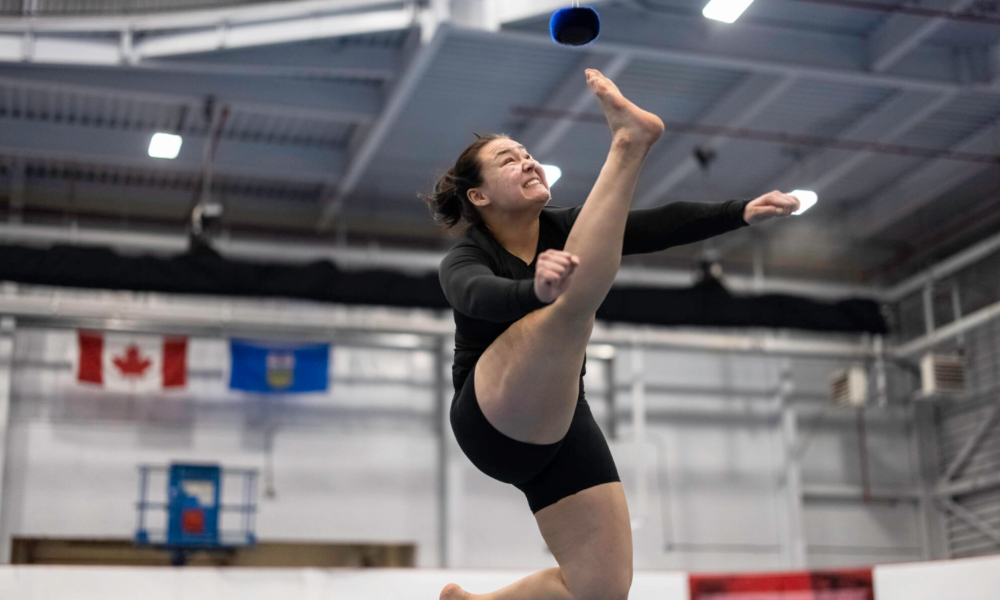
Among the 20 sporting events represented this year were biathlon ski, curling, ice hockey, and figure skating. The Games also featured an Arctic Sports category that included events such as Alaskan high kick, sledge jump, and knuckle hop. Many of the Arctic Sports find their origins in cultural practices, such as high kick, which originated from Inuit hunting. 

The Arctic Games are all about community and perseverance—values that are reflected in the Dene Games, an official event that was incorporated in 1990. Consisting of five events, the Dene Games are rooted in the traditional practices of Dene Nation, celebrating specific skills that demonstrate both strength and technical skill. Sportsmanship and camaraderie are at the heart of the Dene Games, and the concluding event, Hand Games, originates from the celebration of successful hunts.

“Carrying on the traditions is just so important,” Taylor said. ”It’s so great to go to these games and then have it all unfold.”

This year, Taylor competed in five Arctic Sports disciplines: One-foot high kick, two-foot high kick, arm pull, Alaskan high kick, and sledge jump, and medalled in the first three. 

Memorable moments from this year’s Games included the last participation of knuckle hop veteran Chris Stipdonk, who seized gold, and at 37 years old, decided to retire from competition. He established the world record in 2020 and again at the Indigenous Summer Games in 2022. Nunavut celebrated their first-ever gold medal in hockey, brought home by their U19 boys team. 

With over 2,000 volunteers and an emphasis placed on spectator participation, the support from those in the crowd was constant. 

“I think it’s such a great thing to, you know, have that support, not only from people from your contingent […] but from every other place as well,” Taylor said. “I know there were a lot of Greenlandic and Alaskan people watching and it was such a great feeling.”

When it comes to the future of Arctic sports, there are discussions of incorporating them into the 2027 Canada Winter Games in Whitehorse. Many participants and fans hope for them to be included in other international competitions in the years to come. 


If that is to happen, these are great games to spread awareness of Indigenous cultures,” Taylor said. “I would love to see it […] show its debut at the Canada Winter Games, and also, I believe having them included in as many international sporting events would just show how unique these games are. I don’t think there’s really a sport quite like it.”

Local Stories, Student Life

Local Stories: The fabulous Miami Minx

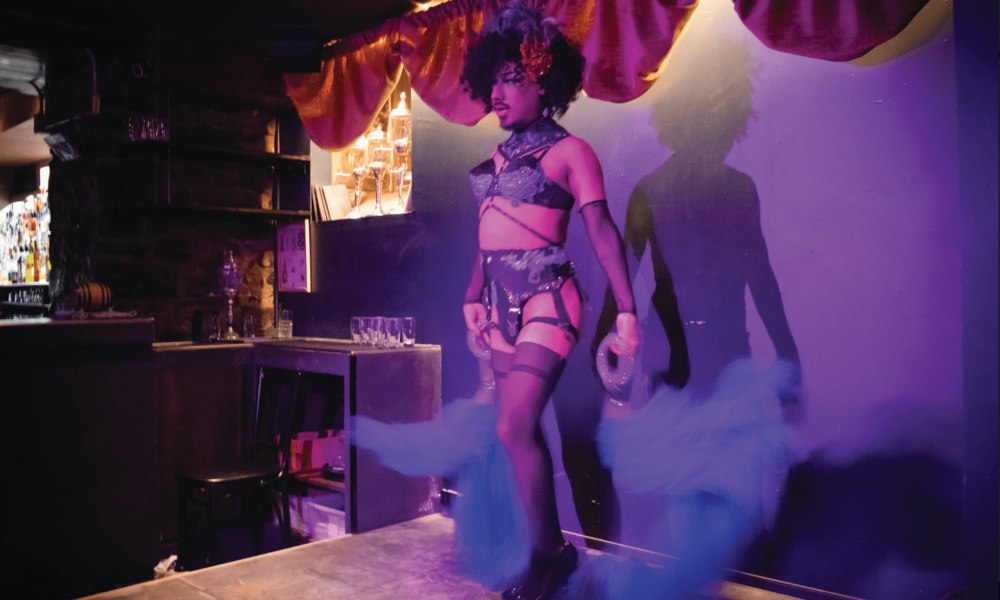
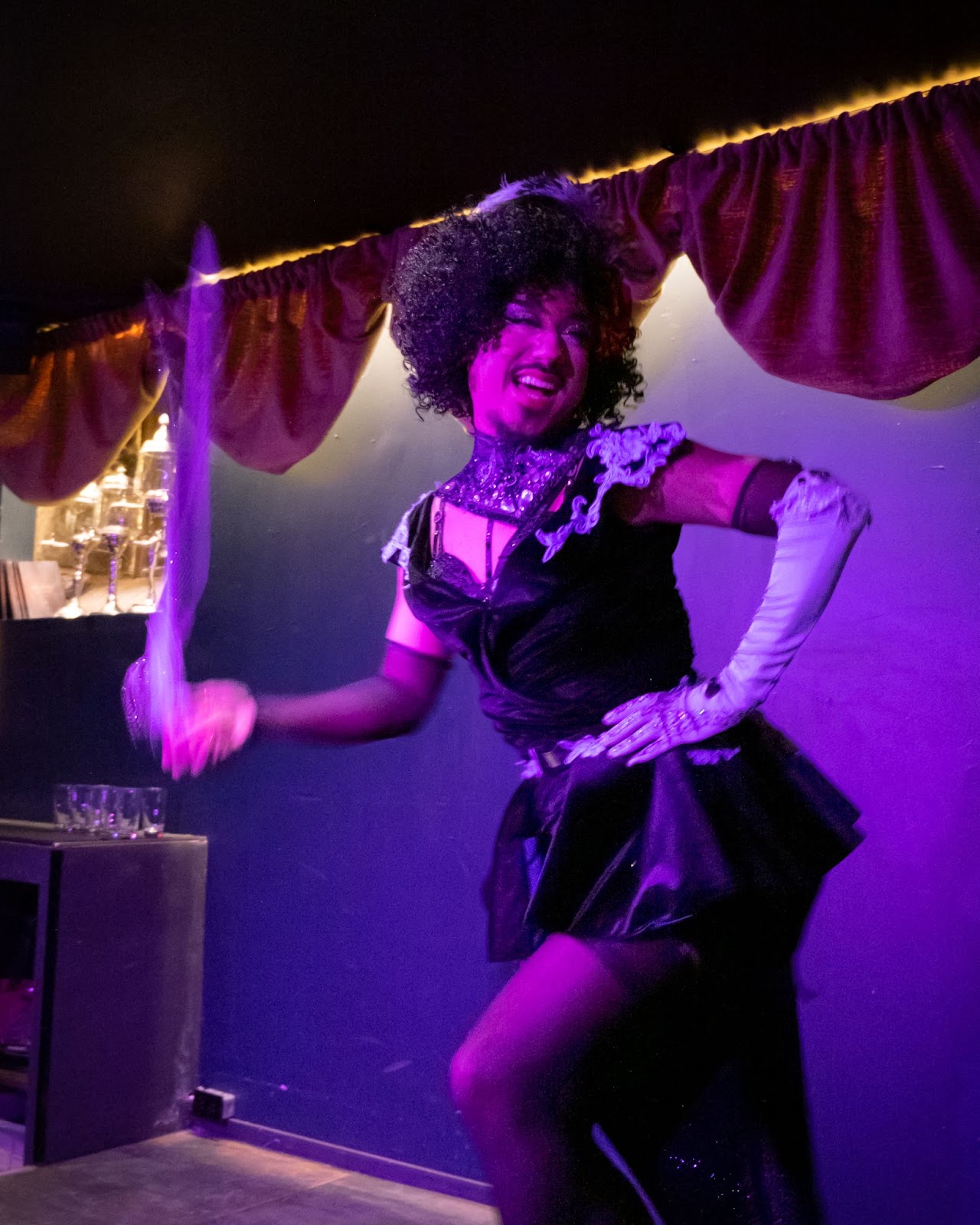
The lights flicker and the poised audience draws to silence. Old school jazz or perhaps Michael Bublé’s ‘Feeling Good’ kicks off, and Miami Minx strides out beaming a flirtatious smile. She commands the room. 

After strutting around the bar floor and teasing the audience—dashing to the left and back again—she whisks off the first clothing item. The show is underway. And the skill, raunch, and thrill only proliferate. The act culminates when Miami is just in pasties, holding a pair of sparkling handcuffs. 

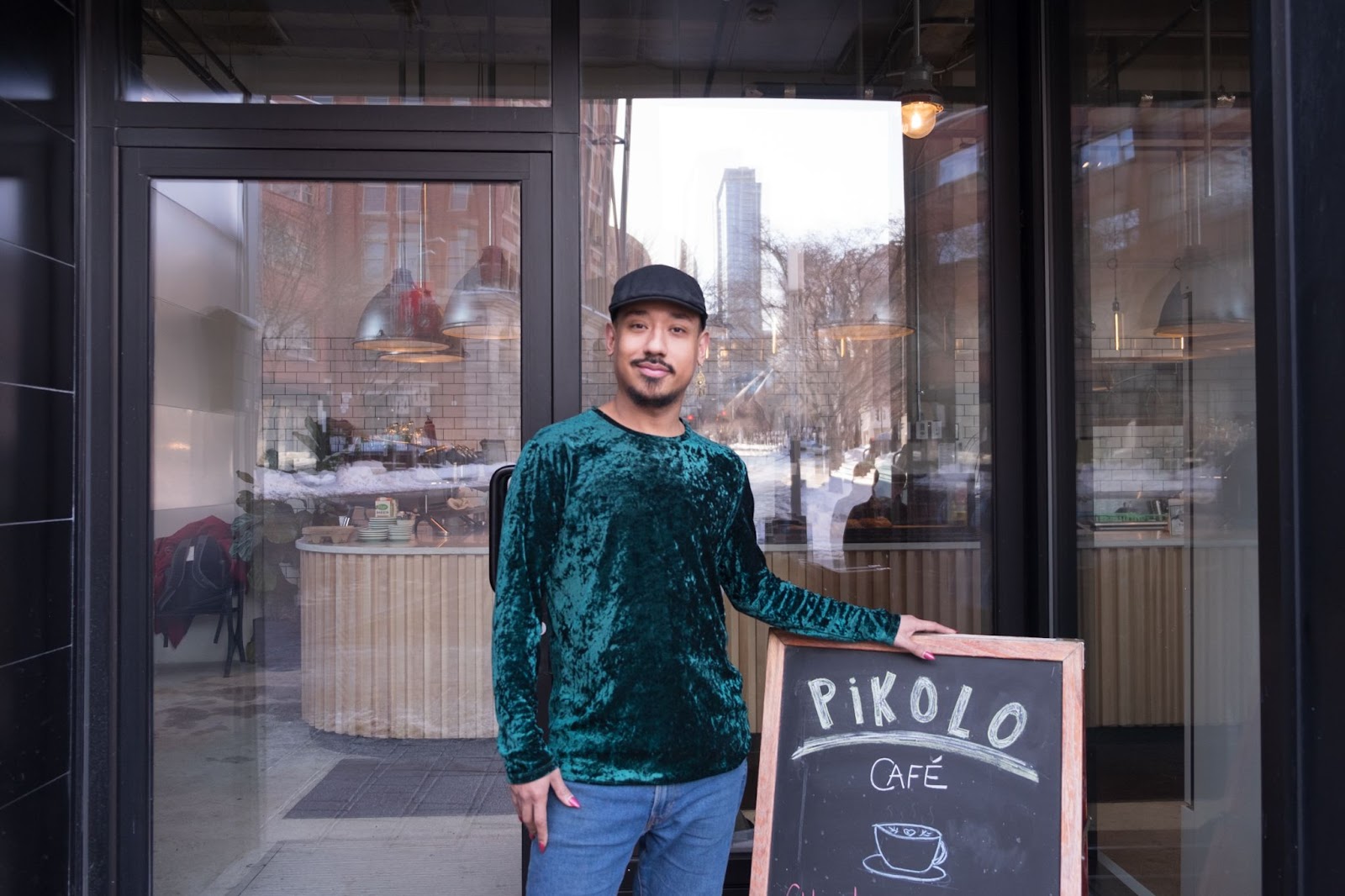
Fabian Moreno, 31, works as a barista by day, mustering cups of joe for students and downtown regulars at Pikolo Espresso Bar. Come night, he takes to Montreal’s burlesque stages and enthralls drag coteries as Miami Minx. 

“[Miami] is an exaggerated version of the normal Fabian!” he exclaims.


Fabian is originally from Doral, Miami. He first came to Montreal at 18 to visit his old neighbours from Miami, who were close family friends, and fell in love with the city, so he migrated in 2010. 

Fabian’s goal was permanent residency. He got into CEGEP but realized he needed a different level of education to obtain permanent residency.  Eventually, Fabian settled on a vocational study in graphic design at the Rosemount Centre, which he completed in 2012. This paved the way for him to settle down in Montreal long-term. 

The Wiggle Room introduced Fabian to burlesque in 2016. Every Wednesday night, he would sit in the front row and soak in the entertainment. He was then asked to help out as a stage kitten, picking up the dancer’s clothes while the audience meowed. 

Burlesque is typically an erotic storytelling performance removing costume pieces, similar to drag, said Fabian , who also considers himself a drag queen—though drag focuses more heavily on lip-syncing. 

To learn more, he volunteered at the Arabesque Burlesque Academy, acquiring credits toward classes.  He used these credits to pay for Class B, a 10-week intensive program at the academy.

 
Fabian made his debut in 2017 back where it all started—The Wiggle Room. Six years in,  Fabian now performs eight to 10 shows a month, performing mainly classic striptease.

Fabian first became a barista at Café Dépôt. And a couple years later, just as his interest in burlesque grew, he worked at a copy centre and shortly after as a barista again at Café Myriade. He also started a translation degree from French to English at Concordia in 2016 and graduated in 2019, though his interest in linguistics waned. 

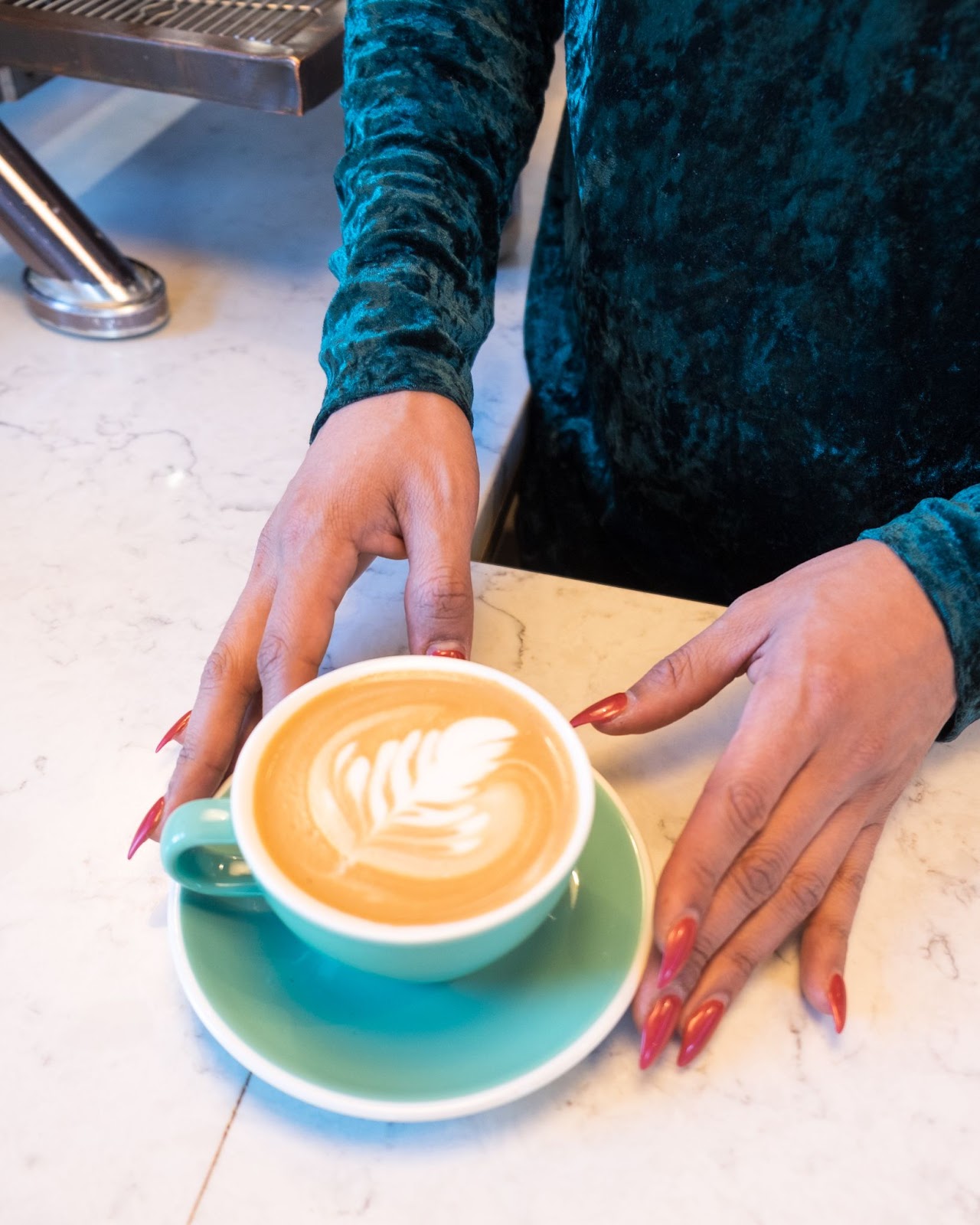
In 2020, Fabian joined Pikolo, which recently moved from Parc Ave. to the Ontario-Clark intersection. At Pikolo, you can recognize Fabian by his black flap cap, clean latte art, and pristine red nails. 

Making coffee as a day job may not offer him the same joy as dancing, but it facilitates his burlesque career and he very much enjoys his colleagues’ company at Pikolo.

Although Burlesque is an industry that pushes back against standard Eurocentric stereotypes of body image and promotes self-expression and Montreal is one of the more liberal cities in North America, Fabian, as a brown queer man, still has to contend with racism and homophobia. 

Some nightclubs, for example, only want skinny white women to perform, and even then, they can receive a hostile reception. Sometimes these adverse attitudes come indirectly with audience members telling Fabian how brave he is for performing. 

“These comments make me kind of feel weird,” Fabian said, collecting his thoughts. “I think what they’re really saying is it would take bravery for them. ”

Fabian now produces his own show called ‘Les Folies Draglesques’ at the Cabaret Mado, a bimonthly show on Thursdays, and performs weekly at the speakeasy Le 4e Mur

He’s also danced at Unity nightclub for New Year’s, and since 2018, has performed at Montreal Pride in front of some 30,000 people.

“It’s the kind of stage that’s so big they have screens for the people who can’t see what’s happening,” he said. 

Fabian intends to keep performing until his body starts to hurt. “I’m 31 now,” he said, chuckling, “[and] this is what I love to do.”

Local Stories is a new series on the stories of Montrealers.

Photos: Mason Bramadat @viewswithmason

Laughing Matters, Opinion

How to sign a lease in 10 days

Now’s the time to look for living accommodations for next year—and, boy, is it stressful! Not every apartment will be right for you. Some will lack natural light, others will exclusively have windowless rooms, like a dungeon of sorts. Not ideal. That’s why I am pleased to announce that I have finally signed a lease (which was by no means an easy journey). It was so difficult that it made combatting hypothermia at Igloofest look like a walk in the park. But it’s how I met him

His name was Vito and he was giving us a tour of an apartment he was leasing. Yes, Vito is my landlord. I was with some of my best friends. He was with his closest confidante and arguably Montreal’s most eligible bachelor: Frank, the contractor handling the renovations in the unit below us. Sure, we bantered casually, but I could have never predicted the spark that would be ignited between us.

After the tour, my soon-to-be roommates and I headed outside and debated whether we could look past the minor rat infestation that drove out the previous tenants. That’s when my friend Suhani proposed the bet that would change my life completely. She told me, “if you can make Vito fall in love with you in 10 days and get him to lower the rent, we’ll all sign the lease.”

Little did I know that back inside the apartment, Vito was having a similar conversation with Frank. Later I would find out that Frank had wagered Vito the following: “If you can make the especially short, crazy-eyed one fall in love with you in 10 days, you can upcharge her on her lease.” The gears had been set in motion. 

In the beginning, we were always trying to trick one another. What did we know? We didn’t get each other yet. Vito took me to IKEA on our first date. As we strolled through a row of sensible desks, I mentioned how lovely it would be to get the apartment fully furnished at no additional cost. He tucked a loose strand of hair behind my ear and whispered, “the place is no longer utilities-included.” 

That day at IKEA, I felt our relationship shift. It was becoming real. He bought me IKEA meatballs and held my hair back when I immediately threw them up. I learned he was the most caring man I’d ever meet, and he learned that I have an aversion to ground beef. 

Before too long, Vito and I would regularly spend hours together scrolling through Facebook Marketplace. We wrote ads for his four-bedroom in the Plateau. Hand-in-hand, we would dream up how we could lie about the distance from campus and get away with it. We watched Property Brothers and joked about how they would never be as in love as we were. We were falling for each other. And fast.

Suddenly, I couldn’t bear to look into his sparkling, muddy eyes anymore. I needed to tell him the truth—that I’d been trying to get him to lower our rent this whole time but fell in love in the process. 

When I finally confessed, Vito admitted his own plot, too. Both upset, we agreed that if our love was meant to be, we would meet at the top of Mount Royal at midnight to sign the lease. If not, we would unfriend each other on Letterboxd and end this fever dream forever.  

Time stood still as I waited for Vito at the top of the mountain—kind of like how it feels when it’s the other person’s turn in Scrabble. I was prepared to leave when I finally saw him with a bouquet of roses and an envelope of lease papers in his beautiful hands. Forgiveness. We embraced each other and signed, gently weeping on each others’ shoulders and taking pictures of our respective IDs for security purposes. 

Without this unpredictable house-hunting experience, Vito and I would have just been two strangers at opposite ends of Milton-Parc, almost meeting, but never really seeing each other.

So basically, the place is a four-bedroom, one-bath. No extra cost for laundry and hydro, but we have to figure out WiFi.

Arts & Entertainment, Pop Rhetoric

2023 Grammys: Historic wins, disappointing losses, and spirited moments

Packed with A to Z-list celebrities, the 65th Grammy Awards  took place at Los Angeles’ Crypto.com Arena, hosted by comedian Trevor Noah for the third consecutive year. After the last few editions saw a disappointing mix of bad nominations and even worse wins (remember when Billie Eilish took home all four main category awards in 2020?), music’s biggest event boasted an exciting night of competition between chart-dominating artists and ignited a conversation about lack of diversity.

When nominations were announced, headlines buzzed over the contenders for top prizes. Despite some of Beyoncé’s past snubs, she took the lead with nine Grammy nominations in three of the four main categories, tying with none other than Jay-Z for the title of most nominated artist of all time. The singer won two Grammys for “Break my Soul” and RENAISSANCE, officially making history as the most decorated artist at the Grammys. Other groundbreaking moments included Sam Smith and Kim Petras’ Best Pop Duo/Group Performance win for their hit “Unholy,” making Petras the first transgender woman to be honoured with the award.

In response to criticism of the Recording Academy regarding the lack of diversity in award categories, nominees, and recipients, this year’s nominations suggested limited progress in a newer direction. The decision to introduce categories such as “Música Urbana Album” shows an effort to slowly address the assumptions that English music is the norm—as evidenced by the Grammy subtitle dubbing Bad Bunny as “singing in non-English”. Likewise, the Academy’s recurring pattern of relegating the work of Black artists to Rap/R&B categories, thereby excluding them from major, pop-focused categories, makes these efforts performative. 

Throughout the last few years, the Grammys felt more like a three-hour showcase of the same two artists sweeping through most, if not all, of the main category awards. Luckily, this trend was broken this year—most of the awards seemed evenly distributed amongst headlining nominees: Lizzo’s hit single, “About Damn Time,” won Record of the Year, and Adele’s “Easy On Me” was recognized for Best Pop Solo Performance.

However, the ceremony did not go without its usual snubs. Despite its absence from the Billboard Hot 100, Song of the Year went to Bonnie Raitt’s “Just Like That”—a surprising moment for Grammy viewers and the categories’ other nominees. Fans predicted Taylor Swift to have this award in the bag for her record-breaking track “All Too Well (10 Minute Version),” which would’ve made this her first-ever win in the category. 

The ceremony concluded with the night’s biggest award—Album of the Year. This highly-anticipated moment brought fans, quite literally, to the edge of their seats. A group comprising each nominee’s biggest fans took the stage in hopes of seeing their favourite artist awarded the top prize. Harry Styles’ Harry’s House won the award, and Styles delivered a tearful acceptance speech. He took a moment to thank his fans, family, and team before admitting how grateful he was, as “this doesn’t happen to people like [him] very often.” This particular line sparked controversy among Grammy viewers and sent the media into a frenzy. While some argued that this line referenced Styles’ modest upbringing and journey into the entertainment industry, others questioned the extent to which this was true, given that the music industry’s structure exhaustively prioritizes young, attractive, privileged white men.

Overall, the Grammys made for a highly entertaining evening, celebrating a diversity of artists and genres who impacted music in 2022. Although many don’t take the Grammys seriously anymore, the discourse it generates still has a lasting impact on the music industry. Considering its important media coverage and nationwide attention, the Recording Academy must continue to address  the structural inequities that fail music and artists time and time again.

Ask a Scientist, Science & Technology

Shining a light on a new breast cancer vaccine’s potential

Most of us know the statistics associated with cancer. It has touched, directly or indirectly, almost every Canadian. But thanks to the relentless work of researchers, around two out of three patients diagnosed with cancer today will survive beyond five years from their initial diagnosis—up from 55 per cent in the early 1990s. The most recent innovations in cancer treatment have stemmed from immunotherapy, a fast-growing and exciting field of study for cancer researchers.

“Cancer immunotherapy unleashes the power of the patient’s own immune system. It is today considered the fourth pillar of cancer therapy,” Sonia del Rincón, assistant professor in McGill’s Department of Oncology, said in an interview with The McGill Tribune.

Recently, University of Washington (UW) researchers developed a cancer vaccine targeting HER2/ErbB2, a protein on the surface of tumour cells which affects one in five breast cancer patients. The vaccine was shown to have minimal side effects, like fevers and fatigue, while generating a significant immune response in the non-randomized trial.

William Muller, a professor in the Department of Oncology and renowned investigator of the HER2/ERbB2 genes in breast cancer, explained in an interview with the Tribune that the paper is a phase I trial, or a safety trial, that looks specifically at a safe dose range and adverse effects.

“The concept of vaccinating patients against specific tumour targets has its roots in the early 90s when Thierry Boon’s group identified the first human [tumour] associated antigen called MAGE-1,” added del Rincón, whose lab studies novel therapies for melanoma and breast cancer.

Vaccines generally work by training the body’s immune system to recognize and attack a foreign body, called an antigen. One such antigen is the spike glycoprotein, found on the surface of the COVID-19 virus. However, because cancer occurs when our own cells grow uncontrollably, specific proteins like MAGE-1 or HER2 that are overexpressed on the surface of only cancerous cells, must be targeted. “The target [of the UW breast cancer vaccine] is unusual in that it’s the intracellular domain of HER2, which is normally not presented on the surface,” Muller said.

The outcomes that the UW researchers reported are also promising because their breast cancer vaccine did not lead to any adverse effects.

“Researchers of the study did not report any severe side effects associated with the DNA vaccine,” del Rincón said. “Patients receiving other types of immunotherapy can be at risk for severe immune-related toxicities.”

Patients enrolled in the study had an 80 per cent five-year survival rate, compared with the expected 50 per cent for patients with stages III and IV breast cancer. Of course, there is still work to do before this treatment could become widely available. The true efficacy of the approach will come from phase II and III trials,” Muller said. 

When it comes to cancer research, only 25 per cent of phase II trials and 40 per cent of phase III trials succeed. Phase II trials are meant to further study a vaccine’s safety and evaluate its effectiveness, while phase III trials are meant to compare the medicine to the best treatments we have today, also known as the gold standard

Dr. Nora Disis, the lead researcher from the UW breast cancer vaccine team, explained in the most recent episode of Freakonomics, M.D. that the rapid development of mRNA vaccines against COVID-19 was in large part because its safety profile in innumerable cancer patients had already been defined.

Whether this breast cancer vaccine or other vaccines under evaluation will change the landscape of cancer therapeutics remains to be seen. But, while the Emperor of All Maladies carries on its reign of terror, cancer scientists and oncologists, like del Rincón, Muller, and Disis, continue to pursue the disease with fervour.

McGill, News, SSMU

SSMU Legislative Council discusses student federations, upcoming referendum

The Students’ Society of McGill University (SSMU) held its second Legislative Council meeting of the year on Feb. 9. Members of the council voted on whether to approve questions for the upcoming Winter 2023 referendum. While questions regarding a fee increase for campus groups such as the Muslim Students Association and Midnight Kitchen were approved, a question regarding the continuation of the Student Support fee was struck down.

The meeting began with two presentations, one of which was a pitch from University of Toronto student Nelson Lee, the founder and CEO of HAVEN, a campus safety app. The app allows users to send alerts, seek resources, and communicate with emergency services in cases of harassment or assault on campus

“We noticed that a lot of current resources [offered by universities] are more on the reactive side, dealing with things such as counselling after a traumatic instance, rather than providing tools for students to preemptively get help from campus police, from their friends or family, or from emergency services,” Lee said.

The second presentation was given by SSMU vice-president (VP) External Val Masny, who recommended several student federations SSMU should consider joining. They suggested Undergraduates of the Canadian Research-Intensive Universities (UCRU) and Inter-Associatif, which are coalitions of student associations at the federal and provincial levels, respectively. UCRU would require a fee collection of $0.50 per semester per student, while Inter-Associatif would require $4 per semester per student. 

Masny argued that, because Inter-Associatif services would allow for both faculty-student unions and departmental student unions to be affiliated, it would be worth considering despite the higher fee. An alignment with UCRU would mean that SSMU could continue to represent student interests on Parliament Hill as part of the organization’s federal lobby week, which, in the past, has helped eliminate interest rates on student loans across the country.

A representative from the Bar Milton-Parc Solidarity Cooperative—a community-owned gathering space—motioned for a plebiscite question asking students whether they are interested in investing five per cent of SSMU’s Capital Expenditure Reserve Fund (CERF) into a project to revitalize Bar des Pins, which has been closed since 2019. The project, which would be owned and operated by the Milton-Parc community, would offer free lunches twice a week, café services, and a co-working space during the day, doubling as a pub at night. 

“The cooperative is going to be owned and operated by the community,” the representative said. “The name of the game is a space that is open to all groups in the area, students and non-students alike.”  

The plebiscite question would be a non-binding trial poll to gauge student interest in the project. The motion passed with 15 votes in favour. 

There was a great deal of contention surrounding a Winter 2023 referendum question that would implement a fee for the for-profit Student Support corporation, which provides the university with access to Calm, Udemy, and Grammarly. In March 2022, the Student Support fee passed in a student referendum for a trial period of one year.

For the upcoming referendum, Student Support is seeking an opt-outable levy fee of $10.29 per semester for providing these subscriptions. Ajamu Attard and Karim Atassi, founder and representative from Student Support respectively, argued that to disapprove the motion would be to deprive students of vital learning services. 

Councillor Amelia Whitcomb began the debate period by asserting that while the services are important to many students, they worry about the corporate nature of Student Support. 

“I feel that working with a for-profit company as a student society is probably not within reason, because for our students to be supporting the profits of a company doesn’t really feel good for me,” Whitcomb said. “I would prefer if it was possible for SSMU to do the leg work on our side and work with the companies on our own.” 

Councillors struck down the referendum question, prompting an email from Student Support on Feb. 13 explaining that their services would be discontinued as of Aug. 13. The company is urging students to fill out a poll stating whether they would have voted yes to the fee.

Moment of the Meeting:

SSMU President Risann Wright announced that the nomination period for executive positions at SSMU has opened and will run until Feb. 20, and encouraged students to reach out to any of the current executives if they are interested in applying. 

Soundbite:

“I recognize that there were concerns about the overall validity of this company as an organization and previous ethics questions, but I think […] this is ultimately a value statement that each of us individually is making about whether this is worthwhile for our peers, and I think that our peers are better equipped to answer that question than we are.” 

— Engineering representative Mahia Reed arguing in favour of the Student Support referendum question

Commentary, Opinion

McGill needs a complete summer term

Registration for the summer term at McGill is set to open in a few weeks. As it stands, McGill students can only take two courses per summer session, or 12 total credits, over the four summer months, and are usually provided with relatively few class options. 

This system, however, is based on outdated academic norms that do not adequately meet student needs. Providing a complete, well-rounded summer semester would enable greater flexibility for students and researchers in their academic careers and would make more efficient use of university facilities and resources. 

The McGill administration has already hinted at making the transition toward having a full summer term. The Working Group on New Programs of Academic Program Delivery, a sub-committee of the Provost’s Office, indicated that the current academic calendar might not be the best way to further integrate online learning and accommodate the university’s credit system, programs, and activities. The working group’s final plan was set to be submitted to the Provost and Vice Principal (Academic) by the end of last semester, but the student community has yet to receive any updates. 

In North America, the emphasis on long summer breaks is part of an outdated yet culturally significant system from over 200 years ago. Schools and universities saw higher rates of truancy over the summer when air conditioners hadn’t yet been invented and seasonal epidemics were prevalent. Additionally, school calendars were initially shaped by the needs of rural and agrarian communities where the help of children was necessary for harvesting. Since then, the summer vacation has established itself as a cultural staple of North American family life and an essential component of the consumer economy. Naturally, to students in today’s context, the structure of the academic calendar may seem quite arbitrary.

A three-semester academic calendar would integrate a complete new summer term that offers the same course load and range as the Fall and Winter semesters. The 120-credit requirement often forces students to compromise on courses of interest to finish their degrees on time. Further, a shortage of learning spaces on campus suggests that McGill’s infrastructural capacity is not meeting the needs of its undergraduate students. A three-semester system would accommodate a greater number of students by spreading full-time student enrollment throughout the year that would help create more space—without compromising on matters of class size and quality. This could allow for more efficient use of university infrastructure as it ensures the continuous presence of students and lecturers on campus. Additionally, a full summer semester would afford students greater flexibility with work-study programs, seasonal work, and internships offered during the winter months. 

Faculty guidelines assert an expectation that professors dedicate at least 50 per cent of their work time to research-related activities. This makes it more difficult for professors to teach during the summer, with graduate students stepping in to provide teaching relief for such positions. Student concerns suggest that while the current system provides more opportunities for graduate funding, it demands a lot from inexperienced teachers approaching intensive courses in an increasingly remote pedagogical environment. These policies may be responsible for substandard instruction quality and shortages of qualified teachers for McGill’s summer terms. If the university plans to seriously rethink its strategic development, it must address the parameters that prioritize its research outputs and limit the course load of faculty members.

McGill’s current academic calendar, therefore, does not accommodate the needs of its students. The university must seriously consider instituting a complete summer semester to provide both students and faculty with greater flexibility. The pandemic has forced our education systems to undergo a transformation. As we adjust to a post-pandemic world, McGill’s gears are slowly grinding to a halt, and we mustn’t let the momentum of positive change in methods of academic delivery die out.

Arts & Entertainment, Pop Rhetoric

Celebrating Black Hollywood—even if the Oscars won’t 

Ryan Coogler. Viola Davis. Keke Palmer. This sounds like the line-up for the next tear-jerking, mind-bending, oh-she’s-acting-acting film, right? Unfortunately, not. It’s a small—and I mean SMALL—portion of the list of Black actors left out of this year’s Oscar nominations and ensuing celebration. Maybe you’ll remember the hashtag #OscarsSoWhite, which blew up in 2015—well, in typical Hollywood fashion, nearly 10 years later, we’re back for a (disappointing) sequel. 

Out of their nearly 100 years of running, this is the 83rd time that there are no Black actors being featured in best actor nominations. There are no women directors at all—and no Black women directors have ever been—nominated in the director’s category. The Woman King, Till, and Nope all grossed millions of dollars at the box office and boast Rotten Tomatoes scores above 80 per cent; yet, none of them garnered a single nomination. 

As I clicked through article after article about Oscar nominations, my heart was dropping. Each one gave a different angle on why Black artists were being shut out of the Academy Awards this season. Some people were mad, railing that even after the awareness spread in 2015 and inclusionary efforts made by award institutions, nothing had really changed. Some people were more jaded, explaining that studios were simply out to do whatever would make them the most money. My mood sank deeper and deeper until I came across an article in the LA Times. The author, Shawn Edwards, argued that yes, so many awards shows and awards institutions ignore Black talent, but there are so many smaller organizations that uplift it.

During this year’s Black History Month, the idea of making this a time to celebrate Black achievement and experiences through Black Joy Month has gained popularity. In that spirit, this isn’t an article lamenting the lack of appropriate recognition for Black artists in Hollywood––this is one that celebrates the institutions that uplift them. Supporting those ones, bringing attention and renown to them is a way to make Black voices heard, Black performances celebrated, and Black experiences told. Don’t let your appreciation end with these awards ceremonies listed here—there are so many more rejoicing in Black talent on-screen.

Toronto Black Film Festival 

In their own words, “the Toronto Black Film Festival is about discovery.” The annual festival occurs every February and seeks to create a space for people to debate cultural, social, and socio-economic topics specific to Black Canadians. The festival hosts a mixture of live musical performances, film screenings, talks from industry professionals, and networking events. They celebrate a milestone anniversary this year—10 years of celebrating diversity within Black communities. It was just a decade ago that this festival was created by its sister festival that happens right here in Montreal.

Montreal International Black Film Festival 

Starting in 2005, the festival sought to showcase Black cinema and bring light to the types of movies often ignored by the mainstream media. Nearly 20 years later, after having welcomed thousands of guests, received international media coverage, and shown films from over 50 countries, the Montreal International Black Film Festival (MIBFF) is still going strong. This festival’s activities aren’t restricted to any one week; they put on workshops, film screenings, debates, and round tables all year round. The MIBFF also maintains a serious commitment to discovering and fostering new talent while seeking to develop the independent film industry in Montreal and across Canada. 

NAACP Image Awards

Finally, coming in a little more prominent than the previous two, are the NAACP Image Awards. Founded in 1967 as a response to Hollywood’s exclusion of Black talent, the awards show was created by the National Association for the Advancement of Coloured People (NAACP) in the United States. Today, the show boasts over 40 different categories, with awards across television, film, music, and literature. The event is broadcast live annually on Fox Network, with this year’s ceremony airing on Feb. 25.  

While there is a lot to be desired with acknowledging Black talent in Hollywood, there is also reason for cheer. And who knows? If the focus shifts to institutions that are praising Black talent—and they are praised loudly and proudly—other awards institutions might have no option but to join in and celebrate it, too. 


The 2023 Toronto Black Film Festival will run from Feb. 15-20. The 2022 Montreal International Black Film Festival ran from Sept. 20-25.

Read the latest issue

Read the latest issue