Latest News

Ask a Scientist, Science & Technology

A PhD in love? Relationship advice from McGill psychologists

Valentine’s Day may be about celebrating love, but it’s also a chance to celebrate the science that helps us understand love and other intimate interpersonal relationships. The McGill Tribune spoke to Catalina Enestrom, a graduate student working at McGill’s Lydon Lab, about the latest research on the psychology of relationships.

Assessing personality is tricky

We all know that first impressions matter, so how do you make a good one? And on the flip side, how do you know if you are judging somebody else accurately? To answer questions like these, researchers at the Lydon Lab conduct speed-dating studies, where participants are asked to rate others on a variety of factors such as attractiveness and personality.

In an article published in the European Journal of Personality, researchers found that participants positively rated the personalities of people they found more attractive. The results also showed that if someone was rated as less attractive on average but as more attractive by an individual, then the individual who found the person attractive was actually worse at accurately assessing their personality. 

The authors hypothesized that perhaps those judged as less attractive by the group were harder to ‘read’ personality-wise. If this were true, it would mean that even though the person who found them more attractive was paying close attention, they still weren’t able to form an accurate opinion.

Are you a good judge of how others see you? 

I don’t know about you, but this speeding-dating study makes me wonder: Am I good at gauging how other people perceive my personality? Thinking about what other people think of you is called meta-perception, and it’s an important aspect of our social behaviour. 

“So for example, I might be thinking right now like, do you see me as someone who is intelligent? Do you see me as warm?” Enestrom said in an interview with the Tribune

Being accurate about these perceptions helps you “course-correct” if necessary. 

“If I see that maybe you’re finding me a bit rude or off-putting, or like maybe I am talking too fast, […] then because of that I can make adjustments to it,” Enestrom said. 

In an article published in The Journal of Psychology, Lydon Lab researchers found that the accuracy of partners’ meta-perceptions do in fact correlate with their relationship’s well-being, especially regarding emotional and personal connections. 

Shared beliefs can act as anchors in stressful situations 

Meta-perceptions hint at another important aspect of interpersonal relationships: The differences and similarities between partners’ beliefs. The overlaps are referred to as shared reality

“It can be something as simple as the sort of small things that make up shared reality, like, ‘I saw this movie, and I saw it in the same way,’” Enestrom explained. “But it can be bigger things like ‘I see my work environment in the same way’.”

Having a sense of shared reality strengthens a relationship for many reasons, including making people confident in their experiences and fostering a sense of belonging. 

During the COVID-19 pandemic, Enestrom looked specifically at health-care workers who had non-health-care partners, and examined what effects shared reality had on their experiences. She followed couples through both the first and second waves of the pandemic, when they were experiencing unprecedented levels of instability and uncertainty, both in their jobs and their lives. 

“What we explored specifically in that paper [is] how does shared reality actually benefit the relationship despite having all this stress in this big, uncertain, unprecedented context,” Enestrom said. “One of the things that we really found was that perceived support stems from shared reality.” 

In a stressful situation like a pandemic, this shared reality and the resulting sense of support and stability was likely critical for health-care workers. 

Another stressful situation, for some couples at least, is Valentine’s Day itself. Enestrom sees a potential for different views of the holiday to fracture a couple’s sense of shared reality.

“One partner might be like, ‘Oh, this is just like a capitalist [construct], they’re just trying to make us spend all this money, it’s consumerist, et cetera,’” said Enestrom, “whereas another partner might see Valentine’s Day as […] a way to show that you care.”

Basketball, Sports

Martlets basketball outduels Concordia Stingers in blowout victory

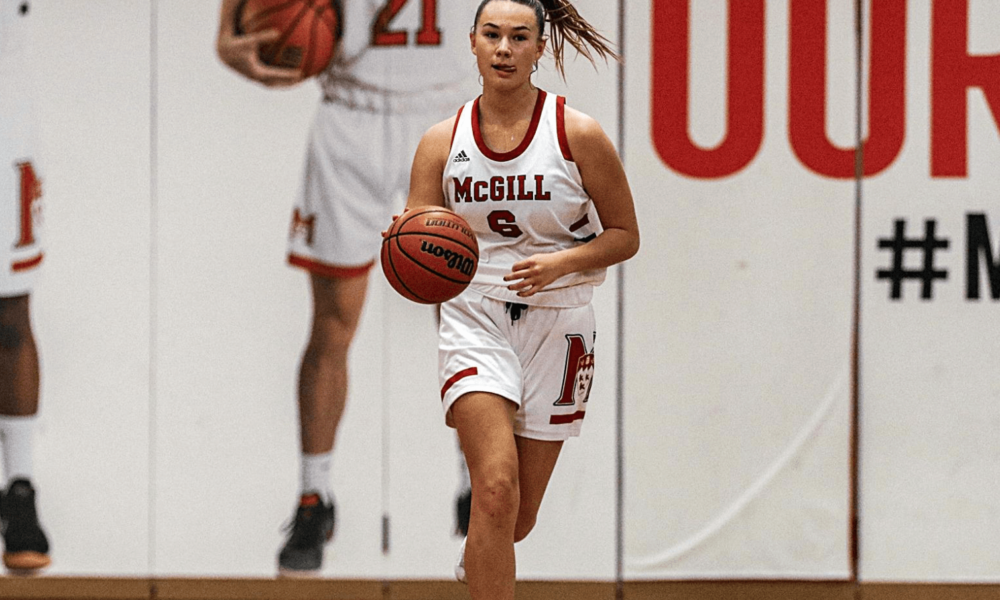
On Feb. 9, as the cold and rainy weather sought to destroy the morale of the McGill fanbase, the Martlets (3–11) provided a cure the only way they know how: A thrilling victory over their most formidable opponent, the Concordia Stingers (3–11). With a full crowd packed into the stands of Love Competition Hall, another great chapter in a never-ending saga between the Martlets and their rival Stingers began to unfold. 

After suffering a 55-44 defeat to Concordia on Nov. 12, the Martlets were eager to strike back. The home court advantage undoubtedly provided a surge of intensity from the top to the bottom of the Martlets roster as they prepared for battle. 

McGill came out of the tip-off with an undeniably gritty presence, turning their always scrappy defence into well-executed fastbreak opportunities. Between this and their poise in the half-court set, they were able to come out as victors at the end of the first quarter with a commanding 17-9 lead. 

In the second quarter, the Martlets continued to play their style of basketball, running their offence efficiently to create three-point opportunities. They continued to expose Concordia’s weak interior defence in the second and overshadowed the Stingers’ strong shot-making ability. Symbolic of this size advantage was Jessica Salanon’s overpowering post move in the second that gave the Martlets the momentum they needed to close out the half with an 11-point lead at 33-22.

After the half, Concordia made its biggest run of the game, owning their offensive identity as skilled shotmakers. The Stingers made it interesting in the third, being down by only eight points in the middle of the quarter. Leading the slight comeback was the stellar shooting of Florence Poirier, who was the leading scorer for the Stingers with 16 points, shooting an efficient six for 10.

Despite the valiant effort, the Martlets were relentless, locking up Concordia’s players on defence and eventually going on a vicious 11–0 run in the third quarter to head into the final frame with a 55-40 advantage.

Daniella Mbengo’s defensive and offensive efforts drastically shifted the momentum of the game, as she finished with 22 points and a game-high five steals, shooting a highly efficient 64 per cent from the field.

“We kept just being aggressive and attacking the basket because that’s our strength against Concordia and we really just wanted to win, so sticking together as a collective was really important in doing that,” Mbengo told The McGill Tribune.

In the final quarter, no hope was left for the Stingers, as the Martlets took the quarter 22-10.

“It always feels nice to win,” Salanon said. “This one was a big one for us because we showed who we really were. We played well, we played as a team, we found our shooters, so it was just a good feeling.”

Despite falling to the Stingers 47-43 in their rematch on Feb. 11, Thursday’s win was a step in the right direction for head coach Rikki Bowles. 

“This win shows how much the team has improved from the beginning of the season and also puts us in a position to clinch a play-off berth with a win this Saturday, Feb. 18 at 2 p.m., once again, against Concordia,” Bowles told the Tribune

Moment of the Game: During the Martlets’ 11-0 run in the third quarter, Daniella Mbengo made a difficult and crucial layup with her off hand that gave the Martlets the boost to finish off the third with a 15-point advantage.

Quotable: “I thought we played a great team game on Thursday, with contributions from many athletes. We were led with 22 points from first-year guard Daniella Mbengo, and we also had a great showing from third-year forward Amelie Rochon, with nine points and eight rebounds.”

––Head Coach Rikki Bowles on the standout performances  

Stat Corner: Mbengo saw 30 minutes of court time, shooting 9-for-14 from the floor and 3-for-5 from the free-throw line, and pulled together a season-high of five steals.

McGill, News, SSMU

Ex-SSMU employees speak out over alleged workplace mistreatment

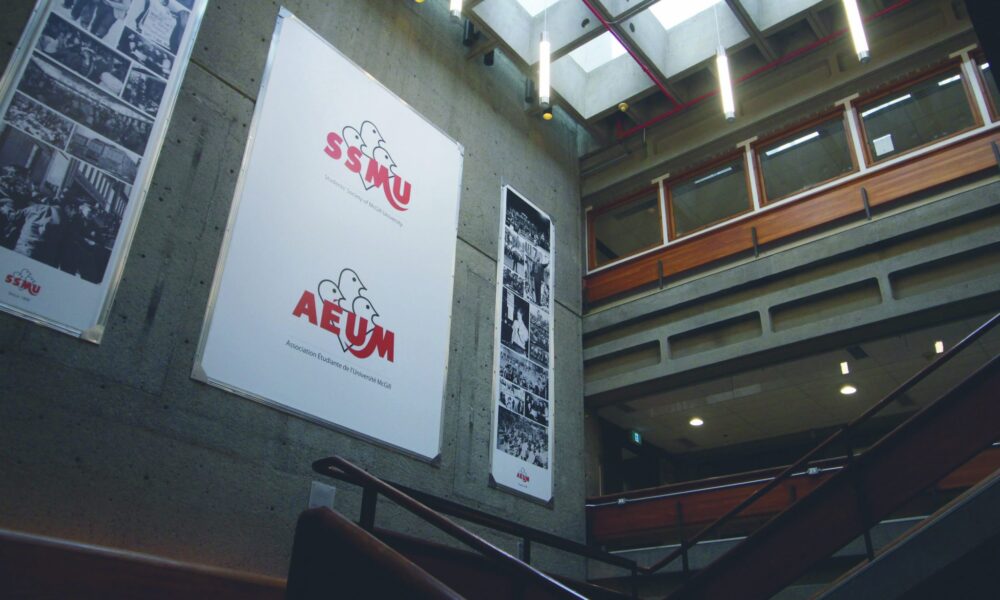
After three years of disagreement over their first-ever collective agreement (CA), the second conciliation between the Students’ Society of McGill University (SSMU) and the SSMU employees’ union (SSMUnion) occurred on Feb. 3. 

After being accredited as a bargaining unit in January 2020, the SSMUnion began negotiations with SSMU in August of the same year. SSMUnion President Mo Rajji Courtney shared with The McGill Tribune that one of the union’s goals is to eliminate the “casual” staff designation that SSMU assigns to the bulk of its employees. This designation means that employees receive no benefits or protections, but are treated like  regular part-time employees fulfilling permanent labour needs. 

“[People] think of [SSMU] as a student governing body and a student representative body, which absolutely is a very important function of SSMU,” Courtney said. “However, it’s also a workforce, and that is forgotten a lot of the time.”

Courtney believes that there are dire consequences to viewing SSMU solely as a governing body. Generally, employment contracts are one year, and positions are not guaranteed to carry over to the following year. Positions at SSMU range from desk jobs in human resources to bartenders at Gerts Bar.

“You might not be offered that contract again,” Courtney said. “Instead, it [may go] to the new president’s friend who doesn’t necessarily know what they’re doing. How are we supposed to offer good quality services to students if there [are] huge amounts of turnover […] and there’s constantly new people who have to relearn everything from scratch?”

In their negotiations, the SSMUnion is also demanding a non-voting seat on the Board of Directors (BoD), competitive pay, research copyright, and a guaranteed, regular workload for employees. Courtney explained that the fluctuating workload caused serious problems for the staff, as employees would sometimes be asked to work 60 hours a week.

“The contract has a set number of hours, and [SSMU] just divided that by the number of weeks,” Courtney said. “There are many weeks where [employees] go without having work, and then weeks where there’s way too much work to do.”

Past Gerts employee alleges negligence, mishandling of paperwork 

Hailey Agostino, an ex-Gerts employee, described an understaffing problem at SSMU in an interview with the Tribune. Agostino began working at Gerts as a café supervisor when they were a student, in November 2021. They found that their responsibilities grew throughout the 2021-2022 academic year. 

“I was working 20 hours a week, but technically, I was working more than that. I just wasn’t logging more,” Agostino said.

After deciding to discontinue their education at McGill, Agostino, who is originally from the United States, approached SSMU to ask for a work permit sponsorship in January 2022. But they believe the SSMU executives’ negligence led to them failing to confirm Agostino’s employment status by September, when their previous permit to stay in Canada expired.

Agostino qualified for a facilitated Labour Market Impact Assessment (LMIA)–-a document that some employers in Canada need to prove that they require a foreign worker for a position instead of a Canadian citizen or permanent resident. SSMU would have had to submit the LMIA form and pay a returnable fee in order for Agostino to fill out their application for a work permit. 

In May 2022, Agostino was told they were promoted to a management position at Gerts Café. However, they recall never receiving a pay increase, benefits associated with that position, or a new contract despite fulfilling the duties that the title encompassed. In the summer of 2022, Agostino grew more worried as they still had not heard back from SSMU about their work visa, and the time remaining on their student visa was quickly running out.

“For most of the early summer, I remember being very hopeful,” Agostino said. “As time went on, we were getting more stressed. It turns out that what was happening was HR [human resources] and the exec team were basically passing the responsibility of dealing with the actual immigration paperwork back and forth, because they both thought that it was the other person’s job to do it. It was just kind of sitting there for months.” 

This was over the summer, before Gerts was set to re-open for the academic term, so the work environment was becoming increasingly stressful, according to Agostino. They felt that executives were not responsive, which made completing simple tasks difficult. Agostino said the last few weeks of summer were especially demanding, marked by having to take on additional management responsibilities that arose from staff absences while simultaneously renovating the Gerts kitchen and planning for Frosh.

“A couple weeks before Frosh was to happen, I remember myself personally spending a lot of time trying to organize the financial situation for Frosh,” Agostino said. “Me and my worker, we were the only two that were cooks in the entirety of Gerts [….] We spent multiple 10-12 hour days trying to cobble this kitchen.”

Agostino and their coworkers, including Sam* who was also trying to obtain a work visa, asked the SSMU executives to expedite the immigration paperwork. Agostino recalled an interaction that Sam had with the SSMU vice-president (VP) External Val Masny, where they both voiced their concerns about the inaction surrounding the paperwork. 

“My coworker [Sam], actually, at one point, said […] ‘I’m sorry, but I’m not coming to work unless someone gives an answer about this immigration stuff,’” Agostino said. “Val sent an email saying, basically, if you don’t show up to work, we’re going to drop this entire immigration thing completely.” 

The Tribune obtained a copy of the email Masny sent, which read “I have come to understand that you are considering not coming in tonight. I want to tell you that it is hard for me to guarantee any specific outcome for the LMIA application. [We] have worked considerably on this. We are continuing to do so [….] [I]f you decide to not come in and go ahead with planning your departure, that would signal us that you are no longer interested in pursuing the application. Please let me know in the next half hour as this will impact tonight’s opening.” 

Agostino eventually had to leave the country and return to the United States because they were never granted a work visa. 

“It was a day after I lost status in Canada that [SSMU] decided that it was just not going to happen, that [they were] going to find different people to fill our roles,” Agostino said. “I literally had a week to vacate the country because I had no other option. 

“They have completely screwed over my entire situation, my life. If they had told me earlier, I would have had a chance to figure something else out. I wouldn’t have had to just cut and run.”

SSMU executives stated that they “do not agree with these allegations” in an email to the Tribune, adding that they are unable to comment further due to confidentiality measures.

Conciliation underway between SSMUnion and SSMU 

The summer was a similarly challenging time for SSMUnion representatives trying to reach an agreement with SSMU. After bargaining began in August 2020, the SSMUnion reached an agreement in principle with SSMU on May 27, 2022. Courtney recounted that SSMU then suddenly went back on their verbal agreements and involved lawyers. 

“SSMU delayed by two months in having [the CA] voted on, and then in the end, they didn’t even vote,” Courtney said. “They said ‘we don’t want to vote until it’s reviewed by lawyers’ [….]  And their failure to involve the lawyers was […] not our problem.” 

After the SSMUnion finally received an 11-page document with over 50 amendments from the SSMU lawyers, the union filed a complaint with the Tribunal administratif du travail (TAT) claiming that SSMU was engaging in bad faith negotiations. 

The SSMUnion and SSMU had a court hearing on Dec. 14, 2022, where the SSMUnion agreed to attempt a few more days of conciliation, the first of which occurred on Feb. 3. Courtney said that while they have some hope an agreement can be reached after this conciliation, they are frustrated with the yearly turnover of SSMU executives. 

“We made some progress. But we’re dealing with now the third round of executives, and SSMU, like the rest of student organizations across McGill, have very poor institutional memory,” Courtney said. “So I’m re-explaining things and having the same negotiations that I’ve had.”

The next two conciliation dates are scheduled for March 7 and March 8. Courtney explained that if an agreement is not reached by the second hearing scheduled for April 26, the SSMUnion will proceed with the TAT trial. 

In an interview with the Tribune, Karine Rainville—a representative from SSMUnion’s parent union, the Canadian Union of Public Employees—echoed similar uncertainty about what would happen if the SSMUnion won  the TAT trial.

“Now, the hearing is not scheduled until April […], and we’re in conciliations, and things are going well,” Rainville said. “We’re quite confident that we’re not going to have to end up with a ruling. But should that be case? If [the Tribunal] decided to rule in our favor, what would the actual remedy be for this? I’m not sure.”

The SSMUnion would prefer for a CA to be reached, but SSMU cannot be forced to ratify a document, even if there is a court ruling in favour of the SSMUnion. As such, there is a chance that the pair would have to return to the bargaining table.

SSMU declined to comment about the ongoing negotiations. Various actors from SSMU and the SSMUnion are under non-disclosure agreements and are thus unable to comment. 

*Sam’s name has been changed to preserve their anonymity.

Article updated 10:30 a.m., February 14, 2023.

McGill Recommendations, Student Life

An ode to agendas

Midterm season is fast approaching, and an influx of exams and assignments is steadily filling our calendars. As tasks pile up, managing deadlines gets even more daunting. But don’t worry; there’s no need to hit the panic button just yet! Here are some tips to help you tackle those deadlines, stay on top of your schedule, and manage your time efficiently.

Keeping track of deadlines

Remembering everything you need to complete might seem challenging, but keeping a written list of your assignments and their due dates is the best way to stay on top of your schoolwork. Having a clear record of your responsibilities will reduce stress and ensure that nothing slips through the cracks. 

The key to successful to-do lists is organizing each task into manageable steps. Start by evaluating the upcoming week and listing your most important tasks and deadlines. Then, focus on each individual day and make a list of achievable goals. It’s important to set realistic expectations, as overloading your schedule with unattainable tasks will only lead to frustration and decreased motivation. By taking small steps and establishing feasible objectives, you’ll experience an increase in productivity and motivation. The satisfaction of completing your daily goals will give you the drive to tackle the next day. 

Sacha Maitre, U3 Arts, is a big believer in making lists. 

“Times like these can feel overwhelming, and lists are the first step into relieving stress,” Maitre said. “Doing this clears your mind on what needs to be done.” 

Prioritization is next up on the organizational to-do list. If you have smaller tasks that don’t require too much time, try to squeeze those in between two classes or at times when you feel a bit more tired, to get them out of the way. This will leave you more time for larger assignments and longer revisions during library study sessions. 

Tips for time management

Wisely managing your time during exam season is essential for maintaining a balance between school and your personal life. This goes hand in hand with the organizational tips mentioned earlier. By maximizing your time during the day and leaving some blank slots in your week for personal pursuits, you’ll be able to balance your workload while maintaining a healthy lifestyle. Whether you’re a morning person or a night owl, make sure to allocate time for self-care activities like spending time with friends, exercising, cooking, and getting enough sleep. 

Mira Almrstani, U3 Arts, stresses the importance of holding a regular sleep schedule during exam season. 

“The time to wake up sets the tone for the entire day, and helps you stay organized and motivated,” Almrstani told The McGill Tribune. “Getting up earlier in the morning means getting things done and out of the way.”

Hard copy agendas or online planners?

Various types of calendars can help you keep track of your deadlines. While some will find it useful to have an online agenda on their laptops, others will opt for hard-copy planners. Maitre is a big advocate for writing things down. 

“It reassures me to write down my to-do lists instead of typing it on a computer,” Maitre said. “It feels more liberating to actually jot it down on a piece of paper.”

Although Maitre has leaned more towards the more material side, Almrstani has been using the note-taking application called Notion

“At the start of every semester, I usually organize my deadlines and readings on Notion. There I can create separate pages and folders for each class,” Almrstani explained. “As the semester rolls out it’s like I created a mini textbook for each course that I can go back to and study.” 

Other great online options include Google Calendar or Microsoft To-Do. But whether you choose digital or old-school lists, they are bound to boost your motivation every time you check off a task. From my agenda to yours, a to-do list reassures!

McGill, News

Turkish students organize donation drive in response to devastating earthquake in Türkiye and Syria

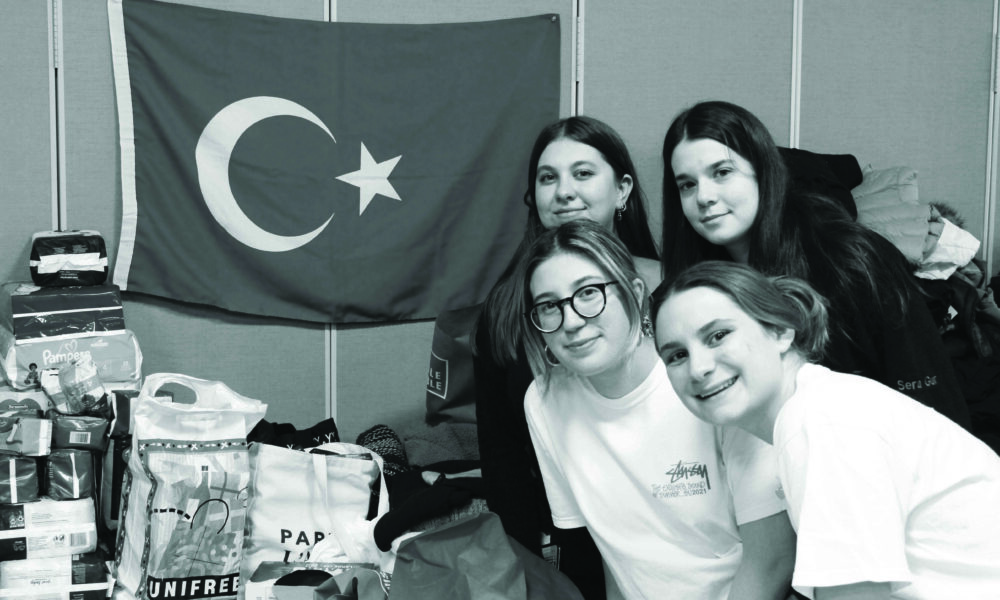
On Feb. 6, Türkiye and Syria were struck by an initial 7.8 magnitude earthquake, followed by a series of quakes, including a 7.5 magnitude aftershock nine hours later. It was Monday morning in the region and Sunday night in Canada. Less than 48 hours later, on Feb. 7, the Students’ Society of McGill University (SSMU)’s ballroom was packed with winter clothes, canned food, and hygiene products. The Turkish Students’ Society of McGill University (TSSMU) booked the room for a donation campaign and scheduled a cargo plane to bring supplies to Istanbul, Türkiye within 24 hours. 

In an interview with The McGill Tribune, co-Presidents Kerem Ozkefeli and Balca Erozeden explained that TSSMU is coordinating its relief efforts with the General Consulate of Türkiye in Montreal and Turkish Airlines. The student group had previously contacted the Consulate General to schedule an information session for students hoping to vote in Türkiye’s upcoming general elections. 

“We’re not directly affiliated with the government in any way,” Ozkefeli said. “Our Consulate General here in Montreal is greatly helping the students [with] the arrangements of these supplies from us to the airport and the loading and the packaging. They’re helping us, but there’s no official affiliation.”

Most of Ozkefeli’s and Erozeden’s families in Türkiye reside outside of the affected regions. But the catastrophe reminds them of the 1999 earthquake in İzmit, which also caused monumental damages and is remembered as one of the worst natural disasters in the country since Türkiye became a republic in 1923. 

“My family was in the centre of that earthquake, so it’s a sensitive topic for my family in general,” Erozeden said. “When I learned about [the earthquake], I was really scared for them […] because they’re traumatized already from this [….] It’s been chaos for a while. They evacuated the city [….] My family is fine, but I hear from my friends, the people they know are still under the ruins.”

The current death toll from the earthquake in both Türkiye and Syria has risen to over 36,000, but rescue teams are still finding survivors more than 150 hours later. Aylin Tezol, U3 Arts and volunteer at TSSMU’s drive on Feb. 6, is worried about the other humanitarian crises that may follow the earthquake, such as floods from damaged dams and houselessness.

“Because it’s on the southeast part of Türkiye, there [are] a lot of dams and now, they’re very panicked about the dams getting damaged and a flood,” Tezol said in an interview with the Tribune. “It’s gonna be very hard to come back from this, even when they’re done with saving everyone. Most of the cities are all down, most of the buildings are gone, so it’s gonna take a lot of time [to] get everything back together.”

Some of the cities affected by the earthquake are also facing snowy and cold weather that has complicated rescue missions. The TSSMU co-presidents stressed that with the risk of hypothermia, winter supplies are some of the most urgent items to donate. 

“The most basic needs are food, non-perishable canned food, and winter supplies such as coats, parkas, gloves, and socks to […] keep them warm,” Ozkefeli said. “We’re collecting some hygiene products […] such as pads, anything from band-aids to baby diapers. Other than that, we’re collecting air-activated warmers that skiers generally use here.”

Tezol added that Canadian dollars are a higher-valued currency than Turkish Liras. She encouraged Canadians to make any financial donations they can afford, since even the smallest amounts can be significant contributions after the exchange rate. 

“The currency is very different, like 70 Canadian dollars is around 1,000 Turkish Liras which means a lot in these regions where they need help,” Tezol said. “After [rescue and relief efforts], we’ll need donations for a long time.”

On Feb. 14, TSSMU announced that another donation campaign will take place Feb. 15 and 16 between 11:00 a.m. and 6:30 p.m. in the SSMU University Centre ballroom. The student group also encourages donations to Türkiye’s Ministry of Interior Disaster and Emergency Management Presidency. McGill Syrian Students’ Association is also accepting donations in the form of  e-transfers to [email protected]

ABCs of Science, Science & Technology

“Black in Pharma” event delves into evolving opportunities in pharmaceutical industry

The “Black in Pharma” panel, organized by the McGill Pharmaceutical Career Student Network (PCSN) and Advancing Black Talent in Pharma (ABTiP) on Feb. 9, was a candid talk about advancing equity, diversity, and inclusion (EDI) in pharmacology. Panellists included Corinne Buchanan-Russell, ABTiP president, Abraham Oniku, a senior manager in Medical Liaisons at Amgen Canada, and Jackie Hardwick, an associate of strategy and operations at Eli Lilly Canada. 

Panellists started off by discussing their experience with EDI and the changes they have observed in pharma. Buchanan-Russell noted that the shared experiences of people of colour in the industry have united them and helped to create a culture of belonging. She referenced her own experience of waiting over 20 years to ultimately find such a platform that uplifts Black talent in the field.

“When we got together, we started with activities and initiatives that brought people together. And I remember our very first significant event, we were all at a Zoom meeting,” Buchanan-Russell said. “We asked everybody to turn on their cameras, and it was a very moving experience to see and be exposed to people who look like us.”

According to Oniku, there has been an increase in the number of Black people applying for roles in the pharmaceutical industry. A career in pharma is often associated with stiff competition, he explained, so there are some CV additions that young Black professionals should aim to have. 

“One of the things that I’ve sometimes seen lacking in Black talent [are] things like internship, co-op, or volunteering—those things help a lot on your resume because people think that you’ve really done something beyond your regular school training,” Oniku said. “So I think, as a Black person, be aware that these are some of the things that employers and hiring managers are looking for.”

As per Hardwick, competent applicants may hesitate to submit their portfolios, as employers sometimes seek years of experience, even for entry-level positions. For Black applicants, having acquaintances and colleagues who can advise them on resumes and qualities prioritized by the hiring staff is an important competitive edge, which is why creating a more diverse and inclusive community is crucial. 

“We could take back our organizations to say, ‘Hey, are we excluding great talent out there just by the virtue of how we’re articulating our job postings?’” Hardwick said.

Oniku believes that the protests sparked by the police killing of George Floyd in May 2020 changed the way Canadian pharma companies approach EDI. 

“I’ve personally been very encouraged by how the pharma industry in Canada responded, ever since the George Floyd issue, to really step up with the [EDI] initiatives,” Oniku said. “[In] my company, for instance, there are a lot of concerted efforts to really bring in some of the interns that we have into the company to be Black or [another] minority group.”

Diversifying the workforce of pharmaceutical companies is essential, as both employers and employees benefit from a stronger feeling of belonging. Customers of different backgrounds also feel more welcome in an inclusive environment, Buchanan-Russell explained. As ABTiP president, Buchanan-Russell—who also has over 30 years of experience working in pharmacology in the U.S., Germany, and Canada—has witnessed first-hand how companies have changed their EDI policies. 

“I think that one of the things that the industry is getting right is that they’re open, they’re listening, and recognizing that there are things that need to be changed and improved in terms of increasing the diversity of their employees,” Buchanan-Russell said. 

Harwick added that although the implementation of EDI practices has ramped up at some companies, others are only just beginning to understand the importance of racial diversity in the workplace. 

“We’ve got some variation within the industry, some companies are leading the way and making some great progress, others are probably in the earlier stages of their journey,” Hardwick said. “There is no end destination on this [since] the needs [and] the expectations continue to evolve. So we’ll have to be up for that challenge.”

As a lot of work still remains to be done, companies that develop life-saving drugs must rethink their approaches in order to create a medical community that supports everyone’s needs. 

Ask a Scientist, Private, Science & Technology

Space Crickets: Creative solutions to deep-space hunger

Landing a human on Mars remains the holy grail of the exciting 21st-century space science arena, with agencies such as the Canadian Space Agency (CSA) and the National Aeronautics and Space Administration (NASA) investigating longer human-piloted space voyages. 

During the McGill Bicentennial Space Week last May, Julie Payette, former astronaut, former Governor General of Canada, and McGill BEng ‘86, commented on the logistical challenges of the hypothetical six-month journey to Mars.

“The problem with humans is they need air and they need water and they need food,” Payette said. “There’s no depanneur or 7/11 out there.”

Nourishing humans on long space voyages remains a conundrum. Thankfully, the Cricket Rearing, Collection, and Transformation System (CRCTS) team, led by recent McGill Bioengineering graduates Alexander Becker and Cynthia Hitti, has been investigating a clever solution. They are studying the feasibility of growing, harvesting, and turning crickets into powder in outer space to use as a food source. Becker and Hitti are contestants in the Deep Space Food Challenge, a contest held in collaboration between NASA and the CSA.

The competition tasked contestants with the creation of novel food production technologies that need little input, while maximizing safe, nutritious, palatable outputs that could be consumed during long space missions. Along with another McGill-led project, the InSpira Photobioreactor, CRCTS was one of 10 Canadian teams to advance to the semi-final round.

CRCTS uses advanced air filters, ultraviolet lamps, and vacuum systems to sanitize the air and completely isolate crickets from the human living environment. Preventing cross-contamination is paramount in space, where air, room, and food are finite, and critical mission infrastructure is fragile. 

“The biggest difficulty in producing food in space is how controlled any system must be,” Becker said. “Nearly all our technical challenges stemmed from the ways in which crickets would circumvent the barriers and safeguards we had put into place to separate the cricket environment from the outside world [….] The last thing we would want is to have crickets chewing through the wires powering life-support systems.”

Despite the challenges that come with controlling organisms as chaotic as crickets, the chirping critters are ideal candidates for extraterrestrial snacks. “They represent a source of protein that is more sustainable and requires far less space to produce when compared to traditional protein sources such as cattle,” Becker explained. 

According to the Food and Agricultural Organization of the United Nations, the protein yield for crickets is about 12 times greater than that of beef with respect to the amount of feed needed, with methane and physical space requirements paling in comparison as well. 

Crickets could one day become a more prominent source of sustainable food on Earth, too, with many African countries, such as Cameroon and Zimbabwe,  already practicing the culinary tradition. Becker described the crickets as being “not particularly needy,” with their main needs being food, water, and dark places to hide. 

After producing food samples for a kitchen-level demonstration and presenting their idea’s feasibility on Earth for their semi-final presentation, Becker and Hitti optimistically await the results. Should they be selected as one of four finalists to advance, they will receive a $100,000 CAD grant to build a full-scale rendition of their project. Becker reassured the Tribune that he and Hitti have no shortage of ideas for further innovation. 

“Crickets can be fed any number of foods and would be very happy eating table scraps and other food wastes. This is something we are actively looking into as an improvement should we move on in the challenge,” Becker said. 

This would allow them to simultaneously feed the crickets and help mitigate waste management problems in space. 

When asked how he feels about a future living in space and eating cricket-based food, Becker expressed optimism.

“Personally, I would love to go to space one day! As a protein supplement, I would be glad to eat cricket powder in my daily meals,” Becker said. “One of our favourite recipes involving cricket powder is a burger that we developed!”

Arts & Entertainment, Film and TV

Junk on Earth: A fun premise gone wrong

If you are chronically online, odds are you have seen clips over the past few months of Diane Morgan’s character Philomena Cunk from the Netflix mockumentary Cunk on Earth. The most notable of these soundbites went viral on TikTok and features Morgan’s character asking Oxford art history professor Martin Kemp, “which was more culturally significant: The Renaissance or Single Ladies by Beyoncé?” The pre-release hype surrounding the series, which premiered Jan. 31, prompted great anticipation in me—so much excitement that I decided to become a television critic for a day. 

In five half-hour episodes, the show ambitiously promises to retrace the entire history of human civilization. Through interviews with academics and narrated walks across historical sights, our socially unaware, dim-witted narrator Philomena Cunk (Diane Morgan) ultimately failed to make me do anything but blow air out of my nose slightly harder than usual. 

My biggest gripe with the series is that the premise could have been better executed—instead, it just feels like a misspend of who knows how many millions of Netflix’s dollars. If only some of the money spent on shooting on location could have been invested in paying some decent comedy writers, I don’t think I would be here writing this review. A sizable gap in the humour comes from the time Cunk wastes asking guests idiotic questions. Before anyone argues that that is exactly the point of the show, I would contend that while there are some funny moments in the interviews, most of the segments are wasted on jokes that do not land. 

The Sacha Baron Cohen–esque humour that Cunk attempts is only funny in the context of secrecy and unassuming participants. Cunk on Earth’s version feels too scripted, and the expert reactions do not mesh with Cunk’s attempts at levity. This is apparent in the section on the Olympic games, where Cunk interviews Dr. Lindsay Coo, a senior lecturer in Ancient Greek Language and Literature at the University of Bristol. Cunk launches into a mini tirade about the audience at the first Olympic games being able to see “right up their (athletes’) bumholes” (since athletes were competing naked), to which Coo doesn’t really have any significant reaction. The lewd quality of this joke is the rule rather than the exception with the humour in this documentary. Perhaps the jokes might have landed better if the audience was better introduced to Philomena Cunk as a character, or if the expert’s reactions, while they were being interviewed, were less contrived. But, in its current form, the interviews feel like a repetitive misuse of audience time and expert talent.

The documentary reaches a point of diminishing returns with Cunk’s attempts at  situational humour. In the fourth episode of the series, “Rise of the Machines,” Cunk interviews Jonathan Ferguson, keeper of firearms and artillery at the Royal Armouries. She spends actual airtime asking him what would happen if she looked straight down the barrel of the gun, and very cleverly questioning the idea of the American Constitution protecting the right to bear arms—since bears don’t have arms (Philomena, we all heard this joke in 2006). In her full interview with Kemp, she asks about the “renaissauce”, and with medieval historian Laura Ash of the University of Oxford, about the “darkages” instead of the Dark Ages. For McGill students, Cunk reminds me of those peers in your lecture who just cannot help but annoy the class with their blend of confidence and stupidity, the ones that make you wonder, “are they actually still talking right now?” 

Some of the dry humour, however, did make me laugh. For example, Cunk describes the guillotine as “the most humane way to decapitate someone in front of a jeering crowd” and explains to her audience that Jesus Christ became a carpenter since he was named after the two words one is most likely to utter after hitting their finger with a hammer. From Jesus to Louis XVI, she runs the gamut of human civilization, as promised, but fails to touch on any interesting aspects. 

Ultimately, the heartening opportunity to produce something that is both educational and comedic was thrown away. Cunk on Earth is best consumed through shortened TikTok clips, as watching it in its entirety feels like a waste of time.

Off the Board, Opinion

Long live Herbert

Herbert came into my life sometime around 2018, a short, wilting thing from the reject corner at Home Depot. He led an unfortunate existence right from the start: About half of the people I told about him misheard me and thought I had named him “Pervert,” which… no. After some trial and error, I found him the perfect corner. I haphazardly installed a hook in my ceiling—which to my utter surprise has remained intact—and had a solid routine of watering and rotating him so all his leaves could photosynthesize. By the start of the pandemic, Herbert nearly reached the floor.

In January 2021, I came to Montreal after finally receiving my study permit, which, as many other international students know, was beleaguered by a toxic concoction of standard bureaucracy and the pandemic. Crossing the border in my parents’ car, Canadian officials peered into my many boxes—random mugs I had taken from home because I liked their weight, Birkenstocks that were deeply unnecessary in Canadian winter, books that I would probably never read, and a single struggling plant (hi, Herbert).

Full disclosure: Herbert had seen better days. The night before, I had mistakenly left him in the car in Upstate New York.  I was stressed about my move and forgot that below-freezing temperatures are not great conditions for a house plant used to a cushy life hanging above a radiator. By the time I discovered Herbert in the morning, most of his stems had frozen and turned a kind of limp, shit brown that was rather pathetic.

As it turns out, importing plants into Canada is subject to scrutiny. Upon inspecting my belongings, a rather dubious border guard asked, “Exactly why are you trying to bring a dead plant into Canada?” The clear implication was that I should surrender Herbert. I explained, somewhat embarrassed and to my mother’s great amusement, that the plant had been quite alive when my journey began two days prior and that I’d really like to keep him if at all possible, due to silly sentimental attachment. Upon interrogation, I assured her that the plant was, in fact, from Home Depot and not laden with any contaminated soil or invasive species

After about 45 minutes, Herbert was allowed into Canada. Once I entered my new apartment, he was placed on a window ledge and given a rather drastic haircut. Although nearly dead, there were about five small leaves that made the cut. 

This plant has seen a lot of my life—college applications, relationships, sick days, diagnoses, an ill-fated road trip, and now, my first apartment. Rather symbolically,  Herbert is like a cockroach: He refuses to die. I don’t say this lightly—I apparently lost my green thumb in the move and have systematically killed every plant I have bought since coming to Montreal (sorry, Linus II). Notably, Herbert never really regrew either; even after a repotting, much experimentation with light and water levels, and a consultation from my much more plant-trustworthy roommate, he totals about eight inches of foliage on a good day. 

You might be wondering what the point of this story is. So far, the takeaways have been that Lily gives her plants old man names and abuses them. While both things are true, it’s probably time to say something sappy. Herbert has taken on a comforting role in my life. I have always been someone who seeks constants in a world of unknowns, and his resilience has been unmatched. I take great pleasure in my routine of caring for Herbert and especially in getting to see a (now very) little green in the otherwise desolate Montreal winter.

God help me when this plant finally kicks the bucket.

McGill, News

Students press Board of Governors about divestment and student representation at community session

McGill’s Board of Governors (BoG) met on Feb. 8 for the first community session of the academic year. The community session, typically held once a semester, is the only opportunity for students to directly engage with members of the highest governing body of the university, who make decisions about McGill’s academic, financial, and business affairs. 

The community session was preceded by the BoG’s regular open session meeting, which featured reports from the Audit and Risk Committee, the Vice-Principal (University Advancement), as well as a presentation highlighting the Desautels Faculty of Management. 

Toward the end of the session, Students’ Society of McGill University (SSMU) President Risann Wright asked whether a motion could be put forth to accelerate the BoG’s review process on divesting from fossil fuels. 

“Three years ago, a decision was made to wait until 2024 to revisit the idea of divesting from fossil fuels,” Wright said. “I wonder if we might have a vote of the Board to see if we could push up or accelerate that timeline to revisit it now and to have the committee take a look at divesting from fossil fuels prior to 2024, given the increasing, consistent calls for divestment.”

Wright’s motion garnered support from McGill Chancellor John McCall MacBain, but prompted concern from BoG Chair Maryse Bertrand, who said it was unwise to make a decision about speeding up the review without consulting the Investment Committee, which would perform the assessment. 

“These are not costless decisions, there are tradeoffs and I think, as a Board, it is very important for us to understand what the tradeoffs are,” Bertrand said. “I can tell you that and certainly the members of the Investment Committee […]  would tell you that they have a lot of anxiety around exclusionary policies and constraints that impose on their ability to manage endowment funds to the best of their abilities [….] It’s a complex issue.” 

After a discussion and amendments, the BoG passed a motion to consult with the Investment Committee, senior management, and other parties first to see if an acceleration would be possible. The Chair is mandated to bring updated information from these consultations to the next BoG meeting. 


The topic of divestment continued at the community session. Emily Hardie, a member of Divest McGill and a U1 Arts student, asked the BoG why McGill had not divested yet, considering how other universities, including Harvard University and Concordia University, were in the process of doing so. 

“I would like again for the Board to reconsider divestment. If it’s not for the ethical argument, I’d say for the sake of your reputation,” Hardie said. “Why not make a plan for 2025, 2030 or make a plan for divestment today? You are a group of 25 people who have this responsibility to make this decision [….] McGill is behind the times.”

Students also brought up food insecurity, the mental health crisis on campus, and the limited student representation on the BoG. Out of 25 voting members, there are two spots for student representation: One for a member of the Post-Graduate Students’ Society and another for the SSMU president. 

Moment of the Meeting

Marc Weinstein, Vice-Principal (University Advancement) updated the BoG about his team’s strategy to secure donations to support the New Vic project. He noted that his team had hired an additional staff member to develop the university’s “narrative” around the project, which has been controversial due to outcry from Indigenous advocates who believe there are unmarked graves on the construction site. 

Soundbite

“Ultimately, [BoG] decisions are made in the long-term interests of the university. Students are probably only there for three or four years. You want an organization that has 200 years of history and wants to continue for the next 200 years to be governed by people who have both the current view […]  but also [those] who have their experience from McGill that have also garnered experience in industry and business.”

— Chair Maryse Bertrand on why members-at-large are disproportionately represented on the BoG compared to McGill students. 

Read the latest issue

Read the latest issue