Latest News

Behind the Bench, Sports

Running should produce feelings of freedom, not fear

CW: Mention of physical and sexual assault

On Sept. 2, Eliza Fletcher was abducted during her morning run in Memphis, Tennessee. Three days later, Fletcher’s body was found in a vacant lot roughly seven miles from where she was taken. 

The tragedy of Fletcher’s death reaffirms the constant dangers of running while female-presenting. In 2016, Alexandra Nicolette Brueger was shot and killed on a run in rural Michigan. Three days later, Karina Vetrano was killed while on a run in New York City. Five days after that, runner Vanessa Marcotte was murdered in Princeton, Massachusetts. In 2018, Mollie Tibbetts, a University of Iowa student, and Wendy Martinez, a Washington D.C. resident, were both stabbed to death during runs. And in 2020, Sydney Sutherland was killed while running in Arkansas. 

These stories are nothing new. 

As a runner myself, I often run with a buddy, be it my dad or a friend. There are times, however, when I need to take time for myself—so I run alone, listen to music, and just think. But, running alone comes with the fear of being harassed or harmed. 

Every runner has likely heard the tips: Don’t wear headphones, change your route, only run in broad daylight, and in well-populated areas. Even that, however, does not always suffice. Despite “doing everything right”, Wendy Martinez and Karina Vetrano were still brutally killed  while simply going for a run in broad daylight in well-populated, “safe” areas. Regardless, the onus should not be put on the runner to avoid being harassed or murdered. Running should be a way to escape the stresses of everyday life, not an additional stressor.

Verbal and physical harassment is far too common an occurrence for all women, runners especially. In a survey by Runner’s World, 60 per cent of female runners have dealt with harassment while on a run. 

When I was in high school, I was running with my friends when a man drove by and rolled down his window to yell “Nice legs!”. I have also been honked at and stared at to the point of feeling incredibly uncomfortable. 

Society’s acceptance of the hypersexualization and objectification of women enables predators to continually harass and attack women. 

When a woman goes out for a run alone at 4:30 a.m. wearing a sports bra and shorts, as Eliza Fletcher did, she is not asking to be harassed or assaulted. A runner who becomes the victim of unwanted sexual attention is not to blame for harassment. And many women runners do not have the privilege of running during daylight hours, in safe neighbourhoods, with a buddy. 

Instead of asking why she was running so early in the morning or what she was wearing, we should instead be asking why we, as a society, are okay with a culture of victim-blaming. Safety should not be conditional on what time it is, what someone is wearing, or what someone looks like. 

Despite strides made towards ending the culture of sexual violence, known sexual abusers are still being elected into office and the gender pay gap still means that women are receiving $0.89 for every dollar a man makes doing the same work. Ending harassment for runners and other athletes means calling attention to how female-presenting individuals are treated as lesser beings or sexual objects, and actively working towards systemic change.

Being able to exercise in the way that most empowers you without fear of harassment or assault is a right everyone should have. Until running free of fear is an option for all people, we must hold each other accountable. Returning home from a run should be a given, not a hope. 

Arts & Entertainment, Comedy

Stand-up show ‘The Remedy’ offers the cure for a boring Thursday night

By day, Deli Planet looks like any other restaurant you’d find inside of a train station—neatly decorated with a simple arrangement of black tables and chairs and plain leather booths lining the walls. But, don’t let its unremarkable appearance fool you. By night, the restaurant transforms: A small stage is set up, a microphone is procured, and a spotlight is illuminated. Deli Planet doesn’t just serve food—it serves comedy shows. On Thursday, Sept. 1, the restaurant hosted The Remedy, a show packed with stand-up performances in association with the Montreal Comedy Club

Throughout the night, eight Montreal comedians each performed around 10 minutes of stand-up. Despite their short stage time, the performers covered a range of themes in their set, creating an engaging show: Joanna Selvarajah and Joel Slavik discussed the perils of online dating, while Wassim El-Mounzer joked about his time teaching English in Korea. Other comics found humour in the mundane facets of everyday life, such as Viveth Kanagaratnam who described his fear of revolving doors. Each performer also had a unique comedic style: Harrison Weinreb took on a slow, deadpan delivery, which contrasted Ahren Belisle’s more animated performance. Hadi Kubba and Jason Houle repeatedly interacted with the crowd to improvise new jokes, while Selvarajah and Weinreb seemed to stick more closely to their prepared sets. The variation in comedic styles and subject matter kept the performances exciting for the audience and made each performance unique.

The show’s compère—the master of ceremonies in stand-up comedy—was comic Ali Mohammadi, who entertained the audience between sets with his sharp crowd-work. Even when his jokes didn’t land with the audience, Mohammadi smoothed the moment over with another quip and kept the show moving. The comic was particularly skilled at callbacks, referencing gags he had made in an earlier part of the show. By returning to these jokes throughout the show,  Mohammadi’s performance gave the diverse sets a sense of cohesion. 

Although all the comics had prepared unique and creative materials, many of the performers had doubts about their set. For example, several prefaced their jokes with a warning that the material was new or still being workshopped. Some were also nervous and spoke rather quickly, still working on their comedic timing.  Many of the performers are just starting out in comedy and are still building up confidence on stage. The night’s sets were impressive overall and each of them garnered many laughs from the audience.

A particularly memorable moment in the show was when El-Mounzer swapped his L.A. Dodgers baseball cap for an audience member’s bucket hat, which was covered in fur in the image of Appa from the series Avatar: The Last Airbender. 

“I look like I’m going to take you fishing,” El-Mounzer joked. “Or like a SoundCloud manager who takes all your money.” 

An evening highlight was a bit from Weinreb about a friend who was moving into a new apartment because they were expecting children. The comedian criticized the friend for their lack of resourcefulness and suggested that they create room for the children by simply “stack[ing] ‘em on top of each other.” In an unwavering, serious tone of voice, Weinreb continued: “I could fit, not even exaggerating, 600 babies in here.” 

While the show featured a wide variety of comedic styles, the performers were alike in the passion and energy they brought to their sets. With talented comics and a sharp compère at the helm, The Remedy provides the perfect entertainment for a Thursday night.

The Remedy: Stand Up Comedy Show’ takes place Thursday nights at Deli Planet on 800 René Lévesque, West. Admission is $15 online and $20 at the door.

Commentary, Opinion

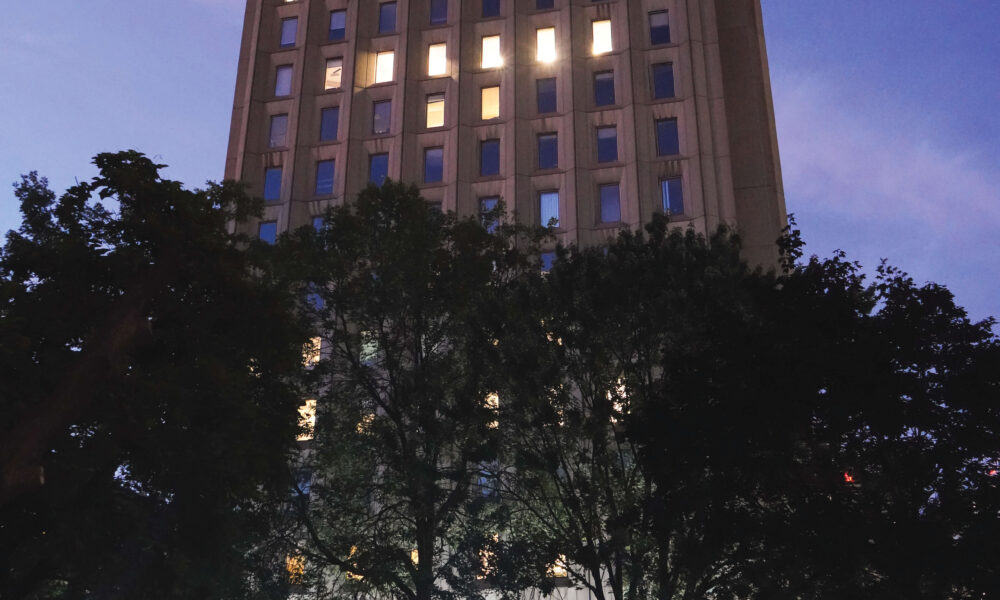
Point-counterpoint: A debate on the aesthetic of Burnside Hall

Burnside is the vision of practicality – Alexander MacKenzie

A quick glance towards Burnside Hall reveals nothing striking about its immediate design. Perhaps the most observant of oceanographers or astrophysicists studying in the building could casually point out its warm sandy colour, and wavy texture adorning the walls outside. Likely only the oceanographer, not without some degree of self-contempt, would remark that the building is shaped like sand waves on a beach. But  since most students entering the building are not architects, features of this sort would go, for the most part, unnoticed. Despite having nothing extraordinary or jarring architecturally, there remain many appreciable things about the building worth students’ attention.

By far, the most enticing feature is that Burnside is located right on top of an extensive underground tunnel system, providing passages to the rest of the buildings in the science and engineering complex. The basement makes for a fantastic refuge and student space, offering a sizable yet cozy study area full of computers, which add a sentimental cybertech ambience. When the lower-level Soupe Café is open, Burnside’s basement is filled with the smell of freshly-baked pastries. Most of McGill’s sandwich enthusiasts already know about the coveted Burnside basement grilled cheese

When entering the building from underground tunnels, students might notice the appreciable lack of crowding around and within the three spacious red elevators. The upper levels generally consist of narrow, colour-themed hallways, with space for hundreds of small rooms, many of which are typically unoccupied. Also, there are great study spaces on the fifth and 11th floors, the latter featuring cozy soundproof rooms and eight-foot-tall windows overlooking both McGill campus and Mount Royal.

Burnside Hall also possesses other purposes on McGill campus. The building was designed to allow for five additional stories if McGill were to ever need more space on campus. The top of the building houses meteorological equipment for use by students of the Department of Atmospheric & Oceanic Sciences to observe the night sky over Montreal.

As far as the average McGill student is concerned, Burnside Hall is a convenient, practical, and pleasant space. It is an invaluable centre for student life on campus and allows astrophysicists and oceanographers, along with the occasional Mathematics or Statistics student, to study, grow, and prosper at McGill.

Burnside can burn –  Sarah Kayed

When it comes to Burnside Hall, McGill’s attempt at Brutalism “fakes it, but never quite makes it”. Most students consider this science faculty building to be ugly, if not depressing. From an architectural perspective, Burnside attempts to imitate the style of Brutalism and fails quite miserably, instead existing as a bleak space unfit for educational needs. 

Brutalism is often characterized by an exposed concrete exterior of little ornamentation, constructed so that the interior serves as a space for social gathering. Additionally, this design approach was connected to ideas of social reform and collectivity within architecture, through a desire for equality. When looking at Burnside, one cannot help but wonder—what ever happened to political architecture? 

Typically, this architecture style adopts inward-facing repetitive windows paired with hidden entrances. At Burnside, however, the façade is primarily glass, taking the spotlight away from the raw concrete exterior. The windows—spanning floor-to-ceiling across all floors—overshadow the concrete’s texture and grain, moving it away from the Brutalist concrete style.

It seems that the only actual Brutalist features of this site are the hidden entrances and the underground tunnels for ease of accessibility. The inside of the building, on the other hand, resembles a labyrinth seemingly impossible to navigate. For a structure to embody equality, accessibility becomes a key element, and, in Burnside, navigational difficulty is the most pressing design issue. No McGillian wants to be lost in a concrete dungeon looking for a lecture hall or computer lab.

A better example of the Brutalist style on campus is McLennan Library. The prefabricated concrete library incorporates a spacious interior with easy access from floor to floor; almost every aspect of the space is visible and students can complete their work in a suitable environment. Comparatively, Burnside is a naive, even hypocritical, imitation of Brutalism that creates an oppressive space for students and faculty.

Off the Board, Opinion

Why everyone deserves therapy

Therapy. There, I said it. A word that, despite its immeasurable benefits, carries the heavy weight of unrelenting stigma everywhere it goes.

In the industrialized world, 25 per cent of adults experience significant mental health problems each year that require intervention in the form of psychotherapy and/or medication. In particular, university students are disproportionately affected by mental health issues such as anxiety—with 56.8 per cent of McGill students reporting a mental health disorder in 2021. These shockingly high rates are largely attributed to the extreme levels of academic stress that university students experience.

While mental health conditions make up an incredible 14.3 per cent of deaths worldwide, according to one estimate, the majority of adults suffering do not seek treatment, citing self-doubt and the fear of judgment from those around them as major deterrents.

Such feelings of self-doubt are becoming increasingly common amid the COVID-19 pandemic. Mental health impostor syndrome, when someone feels like they are not “suffering enough” to seek mental health treatment, is one of the most common modern-day barriers to accessing care. 

In stark contrast to the stigma surrounding mental health, societies around the world place significant importance on physical health and wellness. From going to the gym in the mornings to brushing one’s teeth twice a day, to routine checkups at the doctor’s, people spend hours every day preoccupied with their physical bodies. 

Yet, when it comes to their minds, people are less willing to take preventative measures to invest in their mental wellness. Mental health challenges can be as severe and as deadly as physical ones, and the two can even exacerbate each other..

When it comes to treating mental illnesses, it has been shown over and over that the most effective means is therapy, while therapy paired with medication is more effective than either method alone. 

Despite initially being designed to help people struggling with mental health issues, therapy can provide anyone with a plethora of techniques to enhance their daily life. From distraction strategies like  stress-relieving activities to breathing exercises and  mindfulness, therapists can offer a personalized toolkit to help better manage one’s unique challenges. Further, therapists are trained to be unbiased and confidential listeners that can aid in navigating a broad scope of circumstances. 

Think of the number of times that you have been to your family doctor for routine checkups or mild symptoms like a sore throat or cough. Just as we go to our family doctors when we are feeling physically well, we should encourage the practice of going to a therapist when we are feeling mentally well. Attending therapy regularly can help alleviate future mental health crises while identifying particular issues that one may need to work through.  

Regardless of society’s portrayal of therapy as something reserved for those with the most severe mental illnesses, everybody can benefit from the techniques and tools that a therapist can provide. Even those who do not feel that they need therapy could always benefit from adding another caring and supportive individual to their circle of trust if they are able to do so. 


It is important to acknowledge, however, that therapy is not available to everyone for various reasons, including economic and accessibility factors. Reaching out to mental health professionals and taking the first step can  feel impossible when therapy sessions in Montreal range from $90 to $150. However, there are networks that offer sliding scales and accommodations based on income level and identity.Otherwise, there are other options for students in Montreal, such as the Canadian Mental Health Association and a range of telehealth services. With offerings ranging from free phone and in-person services, there has never been a better time to reach out for help.

McGill, News

McGill unions frustrated with ongoing delays in collective agreement negotiations

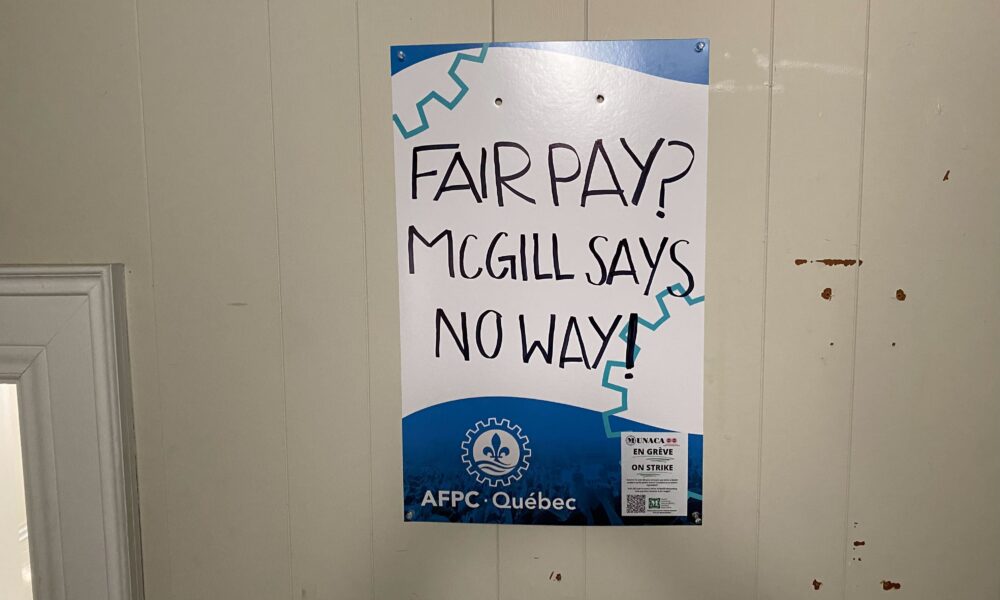
As of Sept. 13, only one of McGill’s 14 labour unions—the teaching assistant unit of the Association of Graduate Students Employed at McGill (AGSEM)—has an active collective agreement (CA) in place with the university, according to McGill’s Human Resources (HR). CAs govern salaries, hours, benefits, and working conditions of unionized employees, and are typically reviewed every three to four years. 

While McGill media relations officer Frédérique Mazerolle says that the pandemic and the economy are reasons why most CA renewals have been delayed, many union representatives believe there is more to the story. Four out of the five union representatives interviewed for this piece say that McGill’s current administrative structure is ill-equipped to handle negotiations with 14 unique bargaining units. In an interview with the The McGill Tribune, AGSEM mobilization officer Kiersten van Vliet identified the university’s HR department’s constant rotation of employees as a hindrance to the negotiation process.

“There has been some turnover in the central HR,” van Vliet said. “So, there are some people who are moving into a role [of] being a negotiator for the first time. McGill’s spokesperson for our negotiations—it is the first time she is ever negotiating.”

AGSEM invigilators’ most recent CA with McGill expired in 2020, and, as a result, the last pay raise employees received was in 2019. While the stipulations under the previous agreement remain in effect during the period between a CA’s expiration date and the signing of a new contract, many CAs do not account for increases in Quebec’s minimum wage and inflation after an agreement has ended. In AGSEM’s case, negotiations for an updated CA began in March 2021, but a government conciliator was called on Sept. 6, 2022 to mediate after repeated stand-offs between AGSEM and McGill.

“It is like a war of attrition—they are trying to see how long we can hold it together, and be serious, and be firm,” van Vliet said. “Time is on McGill’s side as the institution with bigger resources. Especially considering a lot of the unions—AMURE, AMUSE, AGSEM—are majority students, and this is not our day job, they do have a lot working in their favour.”

Thomas Chalmers, president of McGill University Non-Academic Certified Association (MUNACA), believes the university’s “corporate mentality” is at the root of its negotiation issues.

“Even to their own HR department they have cut staff, and […] they lost three or four major HR people to other institutions. So they cannot even keep their own people,” Chalmers said in an interview with the Tribune. “It is evident there is an issue with retention, both in HR and throughout the university, and they are not really effectively addressing it.”

MUNACA has been without a CA since Nov. 30, 2018. Negotiations between the two parties began in earnest in September 2020, but more than two years of bargaining have come to an impasse. McGill requested a conciliator through Quebec’s Tribunal administratif du travail (TAT) in December 2021, but the five meetings since resulted in two days of MUNACA strikes that paralyzed McGill, despite the third-party aid. 

Following the unsuccessful conciliation, McGill requested an arbitrator to settle the dispute. The two parties presented their cases in an arbitration hearing held on Sept. 1. Chalmers says it’s likely that neither party is going to be happy when the “arbitration award”—the final, binding contract made by the arbitrator in lieu of a CA—is released. 

Chalmers pointed out that, while fewer than two per cent of unions go on strike or require provincial intervention, several unions at McGill have resorted to striking over the past few years. He referred to the highly publicized Association of McGill University Support Employees (AMUSE) strike last spring, during which a majority of floor fellows suspended their roles for over two weeks. Since then, AMUSE and McGill have agreed to a contract that was ratified by AMUSE in April 2022. McGill, however, has yet to sign the contract as the agreement must be translated into French first, according to Quebec laws. 

“It is disappointing and shameful that floor fellows have started the new school year without their contract signed,” AMUSE President James Newman said in an interview with the Tribune. “McGill is stubborn. They want to drag out the process. They want to wear the unions down through continued negotiations. It is sad and shameful but sadly typical of employers.”

Professor Raad Jassim, president of the McGill Course Lecturers and Instructors Union (MCLIU), echoed Newman, Chalmers, and van Vliet in his interview with the Tribune, revealing that MCLIU had been close to striking when the pandemic hit. Jassim believes that McGill has no incentive to change its “old-fashioned thinking.” MCLIU’s current CA was signed in September 2020 and expired last month on Aug. 31; they will head to the negotiation table in October 2022. 

“[McGill is] not able to deliver because they are underlaboured and underpowered. They need to increase HR to deal with all the unions around them, and I do not think they have enough lawyers,” Jassim said. “[McGill is] slowing the process [and through this] they think they are going to prevail to convince us otherwise. They won’t.”

Despite concerns about McGill’s HR department, van Vliet believes there is a silver lining in the solidarity built within and across unions.

“As much as it has been frustrating that these negotiations are taking such a long time, I think it is also a testament to the strength of the unions for not caving in [to] their demands,” van Vliet said. “We are not just capitulating to the demands of the employers or what they are saying is possible. We know our value, and we are going to keep fighting until we get the best that we can.”

While the Association of McGill University Research Employees (AMURE) agrees that complex and lengthy timelines have given rise to frustrations, AMURE president Sean Cory believes it is equally as important for members and students to get involved and educate themselves on McGill’s labour issues. 

“If a student works at McGill […] the vast majority are covered by a union. They can contact their union, learn about their rights, and monitor the situation,” Cory said in an interview with the Tribune. “I think attending one of our meetings is a big step towards knowing what is going on and understanding why it is taking two years to negotiate, so I would encourage people to attend.”

AMUSE president Newman additionally emphasized the importance of bidirectional solidarity between the unions and the broader McGill community.

“We need your support and solidarity in all we do to try and get a fair campus for all workers, which means a fairer campus for you,” Newman said. “Because many of you are also workers, and certainly many of you care deeply about labour rights and care about creating a more just university—you’ve shown that through all the activism and protests that you guys have done over the years, particularly the occupation of the Arts building to promote a more inclusive Board of Governors. ”


Commentary, Opinion

Archaeological work at the New Vic is anti-Indigenous

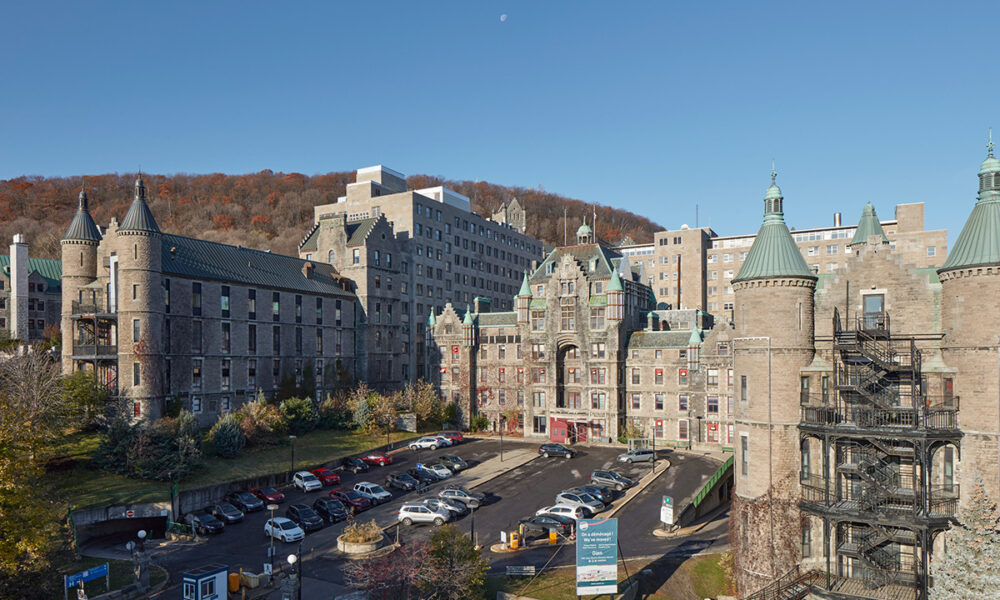
In 2016, McGill contracted private archaeology firm Arkéos to survey the Royal Victoria Hospital site—a necessary step in planning construction at the New Vic. The New Vic is a part of McGill’s Master Plan, an ambitious project to renovate certain buildings in the Royal Victoria Hospital complex. The McGill administration wanted Arkéos to establish whether construction at the site would destroy any cultural artifacts. Neither Arkéos nor McGill, however, sought the permission of or collaborated with, territorial custodians, the Kanien’kehà:ka, for this survey. This failure deteriorated an already tense relationship between the Kanien’kehà:ka and McGill, highlighting how the university remains actively anti-Indigenous. Proceeding with the survey and construction without consent is profoundly unethical and disregards Kanien’kehà:ka sovereignty and right to self-determination.

On Aug. 26, the Kanien’kehà:ka Kahnistensera filed an injunction in Quebec’s courts to prevent construction at the New Vic which is set to begin in early October. Despite the lawsuit against McGill (which has since been dropped), construction plans have not been altered. The area to be excavated, between the Hersey Pavilion and Avenue Des Pins Ouest, was deemed archaeologically important by Arkéos, requiring further investigation into its significance. The Kanien’kehà:ka Kahnistensera assert that this site contains unmarked graves of Indigenous children, forensic evidence of MK-Ultra, and cultural artifacts.

For centuries, settler archaeologists freely conducted fieldwork on Indigenous lands. Often, they removed Indigenous ancestors and their belongings from their resting places without consent, gaining a reputation as grave robbers. Archaeologists rejected Indigenous sovereignty by declaring that they themselves were the stewards of Indigenous pasts. Indigenous peoples were reduced to scientific objects and painted as primitive and inferior to European settlers. These attitudes persist and continue to influence how settlers see and interact with Indigenous peoples today.

In recent years, it has become increasingly common for archaeologists in Canada to work for or in collaboration with Indigenous nations. In 2015, The Truth and Reconciliation Commission stated the importance of collaborative archaeology in their 94 Calls to Action. Both the Canadian Archaeological Association’s Principles of Ethical Conduct and l’Association des archéologues du Québec’s Code of Ethics affirm the necessity of working ethically with Indigenous peoples. Ethical collaboration entails consultation, partnerships, and Indigenous leadership.

The Arkéos survey, however, is not an example of collaborative archaeology. Nowhere in the report is it stated that Indigenous peoples were involved. Maps of the site, environmental data, and a historical account written by failed colonizer Jacques Cartier are the only sources used to pinpoint which parts of the Royal Vic may contain cultural remains. Arkéos did not consider Indigenous oral histories, implying that only European perspectives count as valid evidence. Additionally, the report confines Indigenous presence to ancient “Paleoindian” periods, ignoring post-Contact Indigenous inhabitants and descendants. The archaeologists acknowledge burials, but only in a prehistoric context. This means that concerns raised by the Kanien’kehà:ka Kahnistensera, who firmly assert the presence of modern unmarked graves at the Royal Vic, remain unaddressed. 

McGill is disrespecting the authority of the Kanien’kehà:ka Kahnistensera as clan mothers. The Kanien’kehà:ka Kahnistensera are responsible for protecting the land and the ancestors. Instead of seeking consent for this archaeological survey, collaboration was an afterthought for the McGill administration, who only started consulting Indigenous peoples, notably the Mohawk Council of Kahnawake (MCK), about the New Vic project in late 2021. The MCK, however, answers to Indigenous and Northern Affairs and the Prime Minister of Canada, so they lack the authority that the Kanien’kehà:ka Kahnistensera have over this land.

Construction must stop until the presence of unmarked graves at the Royal Vic is investigated to the satisfaction of the Kanien’kehà:ka Kahnistensera. The McGill administration must agree to meet on the Kahnistensera’s terms and apologize for the harm they caused. Beyond hollow words and vague action points, the university needs to acknowledge that it occupies unceded Indigenous territory, of which the Kanien’kehà:ka Kahnistensera are rightful custodians.

Editorial, Opinion

McGill, what about Pakistan?

Over one third of Pakistan is underwater after devastating floods have killed over a thousand people and left millions displaced. The flooding is projected to worsen in the coming days and over 33 million people left unhoused are in dire need of humanitarian aid. But the McGill administration and student leadership have remained largely silent amidst this environmental and humanitarian crisis, and McGill has yet to divest from fossil fuel companies that are directly contributing to the climate crisis. 

Climate change has increased the severity of natural disasters overall, but continues to disproportionately affect lower and middle-income countries. And in Pakistan, this is unfolding in real time. The McGill community’s inaction reveals the hypocrisy of its treatment of racialized peoples and reflects a broader issue of a university apathetic to their needs.

Despite Pakistan seeing its worst monsoon rains in a decade, the McGill administration has still not released a statement or offered any services to support students from Pakistan who may be affected. In comparison, a week after the war in Ukraine began, former President and Vice-Chancellor Suzanne Fortier released a statement expressing solidarity with Ukraine and offering support for Ukrainian and Russian students. The lack of similar measures for Pakistani students is especially notable because they make up more than twice the student population of Russian and Ukrainian students combined. The Students’ Society of McGill University (SSMU) has also failed to release a statement or mobilize in support of their Pakistani constituency. It is hard for students from Pakistan to receive what they need from the university when the student body representing them chooses to remain silent.

To make matters worse, McGill has refused to divest from fossil fuel companies for decades despite extensive campaigns from student activists. Here we see the inequality of the climate crisis on full display: Higher-income nations and their institutions are responsible for the bulk of carbon dioxide emissions globally, but lower-income nations like Pakistan bear the brunt of increasingly deadly natural disasters. As a colonial institution, McGill is continuing its legacy by making Pakistan, a formerly colonized country, suffer the consequences of Western greed at the expense of human lives.

The university’s silence towards Pakistani students is cold and dehumanizing. How should students be expected to write exams or papers when their families are displaced, or their homes and cities have been destroyed? It is especially appalling considering that McGill fulfilled their duty of offering support and solidarity to students affected by the war in Ukraine. McGill prioritizing one group, white Europeans, over another, South Asians, reaffirms that the university places racialized students at the bottom of its hierarchy of suffering and does not view their pain as equally important.

Considering their treatment of other  racialized groups, McGill’s treatment of Pakistani students is unfortunately unsurprising. Within the past year, McGill has engaged in a legal battle with the Kanien’kehá:ka Kahnistensera (Mohawk Mothers); has resisted calls to change its name to stop memorializing an enslaver of Indigenous and Black people; and threatened to terminate SSMU’s Memorandum of Agreement with the university if they adopted the democratically-passed Palestine Solidarity Policy. These actions taken by McGill, and their inaction regarding Pakistan, reveal a pattern of active apathy towards racialized students on campus. 

McGill’s disregard is embarrassing when compared to positive actions taken by other universities. The University of Toronto announced plans to divest from fossil fuel companies, and Toronto Metropolitan University adopted a new name after repeated calls from students. McGill has become a pariah in its disrespect, and its response to the situation in Pakistan is yet another egregious example.

The McGill administration and student unions must take action in response to the urgent crisis in Pakistan and release a long overdue statement offering solidarity and support—including mental health resources and exam accommodations—to students, faculty, and staff who are affected by the crisis. Students should also become more involved by educating themselves and emailing members of student government to advocate for affected students. McGill must end its immoral investments that perpetuate neo-colonialism and inflict harm on lower-income countries. Finally, McGill must stop acting like a corporation and, instead, act like the institution of higher learning they say they are and listen to the student voices they take pride in developing.

An earlier version of this article incorrectly referred to students from Pakistan as “South-East Asians”. In reality, Pakistan is found in South Asia. The Tribune regrets this error.

Off the Board, Opinion

Don’t publish—and flourish

When I looked down the barrel of the microscope, I could see everything. 

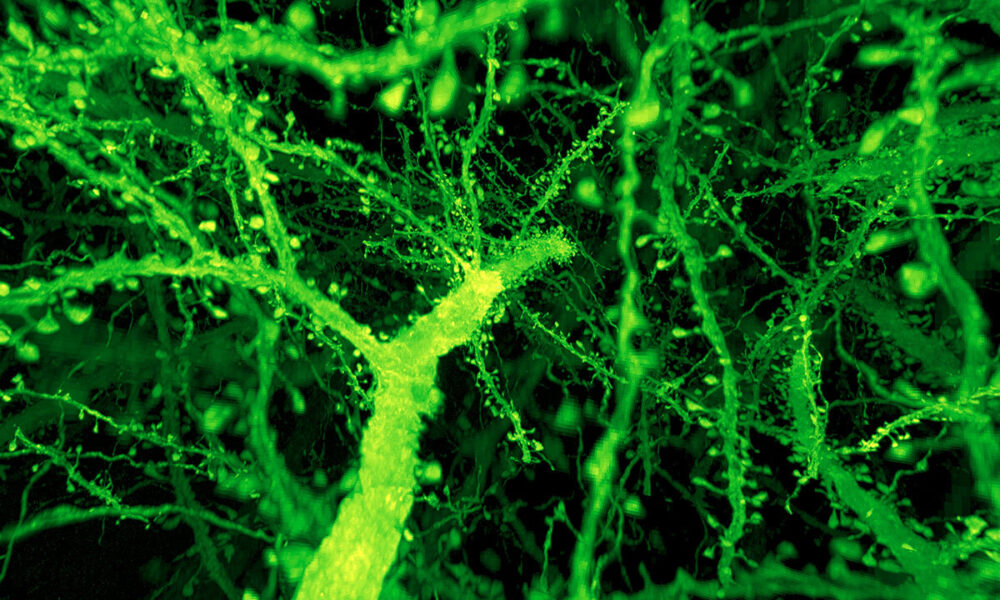
I saw exploding galaxies of green fluorescence, and a network of nebulas dotting a dark, surrounding infinity. I saw the edge of a coastline studded with city lights, and islands surrounded by swirling oceans, like I was peering down from the stratosphere. 

What I was really looking at were the dopamine terminals of neurons, stained with a green fluorescent antibody. Truth was, I was just at work, having a spiritual experience in a dark, stuffy room in Stewart Biology. I was lucky enough to be looking at a slice of bird brain, helping out on a research project about how zebra finches perceive mate calls. 

Moments like this are rare in scientific research, but their thrill is unparalleled. Most lab work, whether it’s data entry or making solutions, feels tedious or very, very complicated. And nothing ever goes the way you expect it will. It’s hard to see how the daily grind fits into the grander scheme of discovery.

Scientific research has inherent value beyond professional merit and academic citations. Getting to do research is a privilege that should be presented as an opportunity to learn something new about the world around us, not just as the next rung up the ladder of a science education. 

But the world of academic publishing is a cutthroat community. The dogma of “publish or perish” haunts academics at every step of their careers, from getting into grad school to securing tenure as a seasoned principal investigator (PI). At a research-oriented, highly competitive university such as McGill, undergraduates are often susceptible to approaching science as a game they want to win. And too often, the beauty of discovery is left behind as a pretty fantasy, a child’s eureka. 

But what might be lost when the new generation of scientists are trained through tests and checkpoints? Science education erects barriers of interest to weed students out starting as early as grade school, where evaluation styles are primarily timed and memorization-based. For kids that don’t perform well under these conditions, they are made to feel like math and science aren’t “for them”, and any curiosity is replaced by anxious aversion. Those that choose to pursue it are conditioned to enter a system that rewards quantity over quality. 

The relentless approach of prioritizing publications over all else creates problems that marr even the most sacred of scientific disciplines. A recent exposé published in Science News casts doubt on findings from a seminal research paper on Alzheimer’s. Allegedly, image tampering had been used to inform an entire field and to fund it, too. What would lead a researcher, in a field that deals so intimately with people’s integrity, to fabricate data? 

The answer is a Darwinian system, where funding agencies, the government, and universities are the ones creating the selective pressure. And the less funding a lab has, the more difficult it is to produce quality research, to publish good papers, and to earn a living. The laws of supply and demand dictate just how merciless the competition becomes—the more research labs applying for grants, the less funding to go around. All of this squeezes the energy out of scientists, thus reinforcing institutional barriers that keep low-income and racialized researchers out of the game. People who have to work multiple jobs and juggle childcare responsibilities can’t be expected to maintain the same productivity level, and their careers suffer for it. 

An obvious fix would be to inject more money into basic research. Another option would be to reexamine how faculties set up tenure applications, which are inordinately based on citation number, and instead consider how a professor inspires the next generation of students to love what they are studying. 

When I decided not to pursue research in graduate school, I asked myself why I was continuing to work at a lab. Other than perks like friendships and good management, there is joy in science for science’s sake. And there is comfort in knowing that, should I publish, my paper would assume its rightful place as a drop in the ocean of discovery.

Football, Sports

Redbirds go down hard at home opener versus Laval

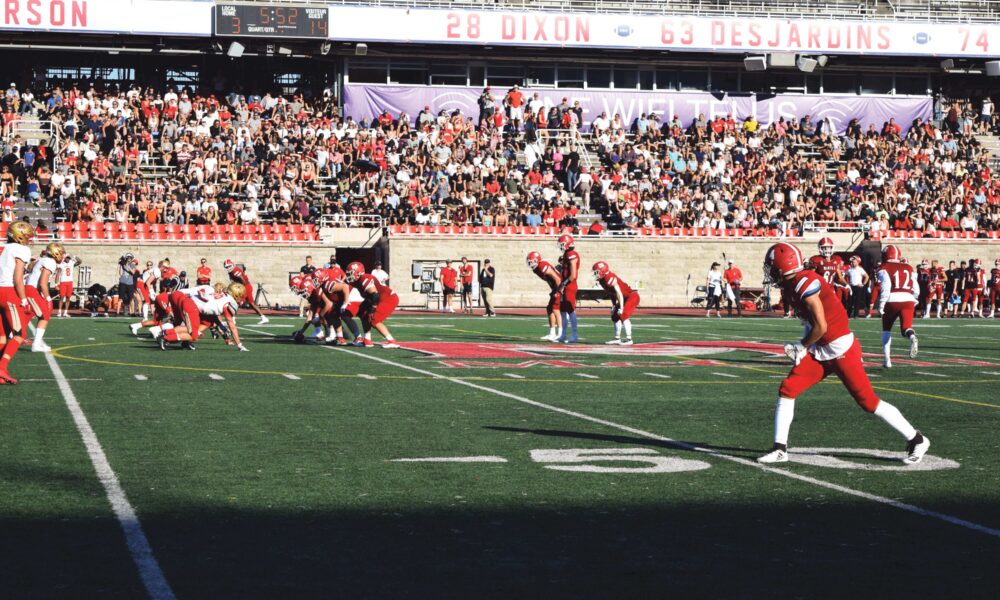
McGill Redbirds Football (0–1) fell 37-20 in their home opener against the Laval Rouge et Or (2–0) on Sept. 3 in front of a rowdy crowd of over 2,300 fans. 

Laval came out strong with a quick touchdown less than three minutes into the game, sending McGill back on their heels and setting the pace for the matchup. Despite the Redbirds earning themselves a field goal just a few minutes later, Laval widened their lead with another touchdown, closing out the quarter 11 points ahead. 

Kicking off the second quarter, McGill struck first with a touchdown from third-year running back, Zacharie Magnan. But Laval answered in kind just over a minute later. Only two minutes after that, Laval struck again to end the second quarter up 28-10. 

After the half, the Redbirds came out to battle, scoring the only touchdown of the quarter. A spectacular dive from second-year running back, Benjamin Bergeron-Spenard, off a pass from first-year quarterback Éloa Latendresse-Regimbald, put the momentum back on McGill’s side. Latendresse-Regimbald, one of Canada’s top football recruits, showcased his skills throughout the game: The 6”4 education major dominated with 132 rushing yards—the next best being 34 from Laval’s Kalenga Muganda—and led in passing yards with a whopping 381. 

“I see a lot of potential,” said Latendresse-Regimbald in an interview with The McGill Tribune. “I know the guys are counting on me so I can count on them and we have each other’s backs, like we did today, and we are just going to improve as we go on.”

Laval’s Kevin Mital closed out the game with his fourth touchdown along with a team safety leaving the Rouge et Or with 37 points. McGill’s Antoine Couture kicked his second field goal of the game to give McGill three more points for a final score of 37-20. 

While Latendresse-Regimbald was acutely aware of the costly mistakes his team made during the game, he believes the team’s dynamic will only get stronger with time.

“I mean, for sure, we had some mistakes on defence and on offence, myself I threw two picks,” Latendresse-Regimbald said. “I think the only way for the upcoming season is up. I think that is the lowest of our capabilities. I think it’s just starting, the whole team is changing, we are changing the whole mentality of the McGill Redbirds and I think it’s a good start.” 

Coach Ronald Hilaire echoed Latendresse-Regimbald’s sentiments. 

“We are not a finished product yet, but we showcased that we can be a very good team when we are disciplined and limit mistakes,” said Hilaire in an interview with the Tribune. “I think almost 700 yards of offence is amazing but defensively we let them down a little bit with some big plays.”

For now, the team looks poised for their first win this weekend at Sherbrooke, hoping not to repeat last year’s record of 1–7. Head coach Ronald Hilaire remains hopeful about the quality and potential of his players.

“[We need to] improve every week. The reality is, if we do that, we stay on that beat, we will be pretty dangerous come playoffs.”

McGill comes home again on Sept. 24 to face the currently undefeated University of Montreal.

Stat Corner: McGill’s William Langlais, a fourth-year tight-end, led the game in receiving yards with 152. 

Moment of the game: After being down by 18 to start the second quarter, quarterback Éloa Latendresse-Regimbald fed running back Benjamin Bergeron-Spenard the ball for a thrilling touchdown dive that reignited the fans and players alike.

Quotable: “We will fix it up and the reality of the season is that it is not a story of one chapter, it is one of many chapters, so I think we will keep growing as the season goes on.” —Head Coach Ronald Hilaire on the potential of his team.

Horoscopes, Student Life

The Tribune Predicts: Back-to-school horoscopes

With the return of campus life and in-person learning, you may be wondering how to get back into the swing of school. But don’t fret, dear reader—the stars are here to plot out the perfect start to the fall semester for you. 

Aries (March 21- April 19): It’s back to the basics for you this fall, Aries. Outfitted with your McGill hoodie and Tim Horton’s coffee in your hand, you’ll have plenty of study sessions in the Burnside basement. But luckily, these study days will pay off—you’ll pass your first evaluation with flying colours.

Taurus (April 20- May 20): With the sun setting earlier, you will have difficulties with your regular routine. It may feel tedious and uninspiring, making you question your choices. Luckily, you will meet a mentor figure who will guide you toward a new passion. 

Gemini (May 21-June 21): This back-to-school season, get ready to bring your A-game, Gemini. An elective will be more difficult than anticipated—you should have gone for Natty D’s or Chem of Food. A new friendship will blossom in Leacock 132. Will it turn into something more? Only time will tell. 

Cancer (June 22- July 22): Sometimes it feels like the world moves on without you, Cancer. It might seem like your friends are making new connections while you are stuck in last year’s old routines. But never fear, in-person classes will bring tons of opportunities for you to make connections. Get ready for a busy social life!

Leo (July 23- August 22): Watch out, Leo. Your fire and extraversion may land you into hot water with a professor or TA this fall. Don’t forget that it’s better to say nothing at all than to say something that you regret. On the homefront, you will quickly adjust to life in Montreal, making you wonder why you even left for the summer.

Virgo (August 23- September 22): With Venus in your sign, there is no better time to socialize, Virgo. Though school is in session, don’t forget that you deserve to have a life of your own. So, this weekend, go for lunch with an old friend, call a family member, or go to Café Campus with your roommates. You’ve got plenty of time for those readings during the week.

Libra (September 23- October 23): This month brings Mercury retrograde to your sign, Libra, and, with it, comes confusion and communication issues. You will find yourself in a conflict with a close friend or family member that may be difficult to get past. Luckily for you, your love life will take a turn for the better after you are reintroduced to a familiar face.

Scorpio (October 24- November 21): You are in for a rough patch at the beginning of the month. Conflicts with roommates may bring you down, but don’t forget that living with others often means compromising. Fortunately, the end of September will bring new surprises and professional opportunities. Go get ‘em, Scorpio!

Sagittarius (November 22- December 21): Your social life is on fire this fall, Sagittarius. You’ll need a planner to keep track of all of your nights out on the town and brunches with your friends. Don’t forget that it isn’t summer anymore—those classes will keep moving with or without you.

Capricorn (December 22- January 19): You’re in for a great month, Capricorn! Your innately meticulous and analytical approach to life will come in handy as classes begin. You have surely constructed the perfect schedule, with classes that’ll challenge you both academically and personally. Just don’t forget to take some time for self-care—you don’t want to burn out.

Aquarius (January 20- February 18): With the moon entering your sign this September, you are searching for a sense of belonging. How you go about this is up to you, Aquarius. You may find yourself joining on-campus organizations to fill the void. 

Pisces (February 19- March 20): Love is on the horizon for you this fall, Pisces. You’re like the one empty seat by the window on the sixth floor of McLennan—everyone’s eyes are on you. Don’t let this distract you from your academic work, though. Your midterms are coming up sooner than you think they are. 

Read the latest issue

Read the latest issue