

Latest News

Research Briefs, Science & Technology

The secrets beneath our skin

Skincare is a focal point in the beauty and wellness industry. One cannot scroll through TikTok or Instagram without seeing Reels promoting various skincare products and regimens. The importance of proper skin health, however, goes deeper than beauty. From 2008 to 2018, there has been a 44 per cent global increase in cutaneous melanoma—the most fatal form of skin cancer. In Canada, melanoma accounts for 1.2 per cent and 1.9 per cent of deaths by cancer in women and men, respectively.

Dr. Ivan Litvinov, a dermatologist and an assistant professor in McGill’s Department of Medicine, and his team recently published a longitudinal study showing that melanoma rates are on the rise in Canada—particularly in southern coastal areas.

The researchers analyzed data from two databases for melanoma patients: The Canadian Cancer Registry (CCR) and Canadian Vital Statistics (CVS). The databases contained information about patients who were diagnosed with invasive melanoma between 2011 and 2017 from all Canadian provinces and territories, excluding Quebec. The researchers categorized the patients according to sex, age, stage of the cancer, anatomical location of the cancer, and the subjects’ place of residence. The percentage of new cases and death rates were compared to previous findings from 1992 to 2010. 

The study showed that diagnoses of all types of melanoma increased in Canada during the 2011–2017 period compared to 1992–2010. However, while the rates of reported cancers were increasing, the death rate has continued to trend downward since 2013. 

“Before, invasive melanoma was certainly a death sentence for the patient. But now, this is no longer the case,” Dr. Litvinov said in an interview with The McGill Tribune. “Now, actually, we have targeted therapies that are able to prolong patients’ lives and, on top of that, we have immunotherapy which has revolutionized skin cancer […] and now up to 65 per cent of the patients are surviving.”

Dr. Litvinov’s research team also found that melanoma does not affect all demographics in the same way. In men, melanoma tends to be more localized near the head and chest areas while, for women, it’s mostly found on the arms and legs. This difference in location could be explained by summer clothing preferences, since exposure to ultraviolet light from the sun or tanning salons is the most common cause of fatal melanoma.  

Notably, they also found that the incidence of melanoma was not the same across all geographical regions. In fact, warm, coastal regions—specifically New Brunswick, Prince Edward Island, southern Ontario and British Columbia—and areas near tourist attractions had higher rates of melanoma than inland areas such as the Prairies. 

Since publishing their paper, the team has done further research into the environmental factors that can lead to increased melanoma rates. They found that greenery, ultraviolet indexes, and high annual temperatures drove melanoma rates up. Rain and a high amount of heat events (such as heat waves), however, drove melanoma down. 

Over the summer, Dr. Litvinov, along with some McGill medical students, visited 25 coastal locations and conducted focus groups where they discussed sun protection, its benefits, and how to structure a melanoma-prevention plan that fits each community. The doctor plans to expand on the current study by incorporating standardized sun exposure questionnaires, which will include factors such as education level, occupation, and attitudes and beliefs towards sun protection. Until then, Dr. Litvinov has some advice for those who want to know how to effectively protect themselves against melanoma: 

“Get out and enjoy the outdoors. Just don’t get a tan and celebrate your natural skin colour. We encourage people to use sun-protective clothing, rash guards, hats, sporting clothing, and use sunscreen,” he said. “For the sunscreen, we recommend broad spectrum SPF of 60 and higher. You need to apply it every 2-3 hours and more frequently if you are doing water activities.”


Features

Sounding out the city

Dylan Hennessy is a part-time busker. Once, when performing at the intersection of Ste. Catherine and Crescent, with about 200 people gathered around him, fireworks started, and he even crowd surfed. 

“It was like something out of a movie,” Hennessy told The McGill Tribune

That same night, someone came and sat in Hennessy’s guitar case, flipped him off, and got booed by the crowd. Hennessy says he occasionally encounters hostility from unhoused people while busking. He began to negotiate with anyone he noticed inhabiting the space surrounding his desired performance spots by asking for permission to use the location or offering to give them a share of his earnings at the end of the night.

“People seem to want to fight me,” Hennessy said. “And that’s no slight against them. It’s like I would imagine that if I was them, I would feel like someone is in my home and they’re disrupting me [….] They would like some fucking peace and quiet probably.” 

With so many noises colliding in most urban settings, quiet is an overlooked luxury: Sounds of industry and transportation lower the value of real estate, making marginalized groups more likely to live near train tracks, highways, and airports. Unhoused people are frequently targeted by businesses with high-frequency noise devices, while those in prison are punished by federal authorities with either deafening noise or a painful deprivation of it. Long-term exposure to loud noise takes a toll on the body. Studies show that people who live or work in loud environments are particularly susceptible to a host of physical, cognitive, and emotional health problems, including heart disease, high blood pressure, and low birth weight. 


Though noise pollution disproportionately affects the disenfranchised, noise ordinances have historically acted as the mouthpiece of a city’s most privileged dwellers. The first comprehensive noise bylaw in North America was passed in the 1930s in New York during the Great Depression, where media and cultural historian Lillian Radovac notes that mayor Fiorello La Guardia saw noise as a “symptom and even a cause of urban disorder.” At a time of economic recession, the anti-noise campaign marshalled the city’s resources to stabilize social stratifications and constrain dissatisfied—and noisy—protesters. Ironically, the raucous din of industrial production and new-age machine inventions at the time was seen by anti-noise advocates as incongruent with a civilized society. The desire for silence came to privilege an upper-class image of intellectual labour, one contained in the carpeted and insulated modern office, floating in a high-rise. Noise was “murdering rational thought”, anti-noise advocate and McGill physics professor H.E. Reilley told Montrealers on the radio in 1931.

Out on the Town, Student Life

Convenience and coffee at Café Humble Lion

Out of my way, out of my way. Trying to get through here, please. C’mon guys, can you not see I’m racing? It’s 9 a.m. and I haven’t had my morning fix. Not drugs, but coffee—my socially acceptable cocaine. Two black Americanos every day, religiously. Three cups if I’m lucky, but that’s as a sort of treat, just for me. Though four, and I’m on thin ice. Five, I’m dancing. 

I have my regular spot for coffee, but I try to go to a couple of different places every week, just to keep my palate on its toes. Café Humble Lion isn’t a new one, but it’s too convenient not to pop in now and again. Convenient with a capital C, as it’s just opposite McGill’s Roddick Gates on Sherbrooke. 

Outside, there are a few featured items scrawled on the glass in an English major’s handwriting; a bunch of flowers underneath, drooping like my mood when I’m walking up to McMed for an Arts class; and a bench at the front for coffee lovers who don’t care if their partners see them cheating. The name is at the top in a large, fading white—and there’s no signpost. 

Now, I know reading can be a slog sometimes, so let’s make this next part more interactive. Put a tick by the pros and a cross by the cons. Ready? 

Here we go: Opening the door, you’re welcomed by a warm and cozy feel—tick. There’s a serving counter featuring a wide selection of pastries, with scones, cookies, and even mini jelly doughnuts—tick. There’s a drinks menu written in chalk to the left of the counter, clearly visible and legible as that, too, is written in an English major’s handwriting—tick. There’s plenty of light—tick. But the lights above the counter look more suited for a lighthouse—cross. Very good, well done for paying attention. 

There’s Wi-Fi, with an easily accessible password at the counter—tick, tick. There are bar stools looking out the window, perfect for coffee dates, and, along the walls, perfect for solo study. And there’s a seating area at the back, with chairs and tables instead of bar stools—tick, tick, tick. The tables, however, are thick, circular, and metal, which looked more suited to a visitor room in a detention centre than a café—it’s a cross from me. 

It’s filled with a mixed bag of clientele. Of course, there’s an awful lot of MacBook warrior, hippie McGillians. But, as we’re downtown, you also find a few metropolitan, keep-their-vests-on-in-the-shower, finance-types as well. They come for the caffeine, the pastries, and the casual meet-and-greet with colleagues, but seeing the students takes them back to their college days, like a passing whiff of reefer. 

I ordered a black Americano (obviously) for $3.25 before tax and tip. To eat, I got a blueberry and chocolate scone and a mini raspberry doughnut, which were $4.90 and $1 each. 

I’m very nostalgic about mini doughnuts. We used to have them in the cafeteria at my secondary school. This one lived up to its rep: Simple, fresh, buttery, sweet, not too doughy, pumped with just the right amount of raspberry jelly, and poof! Just like that, it was gone. Marvellous. 

The scone was less enjoyable. It was far too crisp on the outside, like trying to bite into a glazed pinecone, and I’m convinced the blueberry was a placebo. 

The headliner, the Americano, was better than par, but no birdie. They used a blend of Brazilian, Colombian, and Guatemalan beans, which they freshly ground—thank God. It had a subtle, pleasant aroma and, once cooled, the taste was pleasant too—a hint of dark berry and balanced tanginess. I enjoyed it, but it lacked a degree of richness that roasting the beans for longer would give and, as an unemployed student, I come just for a sliver. 

The clue’s in the name after all: It’s a humble lion. It holds its own, ticks most of the boxes, and, most importantly, you know you can come here and be taken care of. But what it lacks is a bit of flair, a bit of panache, to distinguish itself from other cafés. It’s certainly no king of the jungle, but it’s a decent spot to swing by after school. 

Score: 3.5/5 stars  

Read more of Harry North’s restaurant reviews on Instagram: @roasting_reviews

Research Briefs, Science & Technology

Mapping concussion symptoms in the brain

Concussions affect more than 200,000 Canadians each year, but, despite the injury’s prevalence, patients with the same symptoms often respond to the same treatment differently. This is why some children and adolescents who suffer concussions recover in a few weeks, while others may suffer symptoms lasting several months or even years. A new McGill study analyzed the link between white matter, fibres that connect different brain regions, and concussion symptoms to understand why this might be. 

Concussion symptoms are considered “long-term” or diagnosed as post-concussive syndrome if they last longer than six weeks. These symptoms include dizziness, fatigue, memory loss, and mood swings. Currently, long-term concussions are treated by addressing the individual’s symptoms, such as medication for headaches or cognitive therapy for memory problems, but the results of such interventions can be inconsistent.

Guido Guberman, a McGill MDCM and PhD student in neuroscience, recently published a paper explaining the association between concussion symptoms and damage to white matter connections. He was supervised by Dr. Alain Ptito, a professor in McGill’s Department of Neurology and Neurosurgery, and Dr. Sheilagh Hodgins of Université de Montréal’s Department of Medicine. The three scientists’ findings build on research suggesting that the nature of white matter damage may vary across concussion patients.

“People treat the brain like any other organ and assume that the same specific pathology will lead very reliably to the same clinical syndrome,” Guberman wrote in an email to The McGill Tribune. “That is certainly true for some neurological diseases, but I would argue it does not apply broadly to all of them.”

Guberman’s team analyzed brain imaging data from 306 children with a history of concussions. Dr. Maxime Descouteaux and his team at the Sherbrooke Connectivity Lab, one of the study’s coauthors, used a brain imaging technique called diffusion magnetic resonance imaging (dMRI) to visualize the white matter. Then, they analyzed the strength of association between specific white matter connections and different types of symptoms such as nausea, memory, dizziness, fatigue, and mood changes. This allowed them to classify patients into subgroups based on white matter damage to hopefully inform future treatments based on these subgroup characteristics. 

The study revealed that some types of white matter connections were associated with multiple concussion symptoms, whereas others were more specific to one or two symptoms, such as sleep problems or depressive moods. For example, damage to white matter connections between the left posterior cingulate and the left thalamus were associated with attention and sleep problems, whereas damage to connections between regions in the frontal cortex were associated with impaired decision-making and processing speed. 

This means that two people who suffer a concussion, share the same symptoms, and also have the same type of white matter damage could be expected to respond to treatment for those symptoms more consistently. 

“The brain is, after all, a dynamic organ that is constantly changing; its structure and function being influenced by what we do and are exposed to. Just as symptoms can arise from brain pathologies, it is entirely possible that brain structure and function can be further influenced by these symptoms,” Guberman noted. 

In the future, Guberman and his team hope to examine the link between white matter connections and symptoms in older age groups, and to explore the role of genetics in concussions. There is evidence to suggest that certain genes are linked to how white matter structures relate to brain function. The team plans to apply their analyses to identify potential subgroups in other complex neurological conditions, such as brain injuries in newborns. For young people with concussions, this research offers hope that chronic or prolonged symptoms could soon be treatable.

McGill, Montreal, News

Kanien’kehà:ka Kahnistensera file 141 pieces of evidence in court case against McGill

CW: Mention of sexual assault and abuse

The Kanien’kehà:ka Kahnistensera (Mohawk Mothers) filed 141 pieces of evidence and three affidavits at the Montreal Superior Court on Aug. 25 in their ongoing legal battle with McGill over the New Vic project

The Mothers presented this evidence in the hopes of winning an interlocutory injunction, which would halt renovation of the Royal Victoria Hospital and Allen Memorial Institute (AMI) grounds while court proceedings are underway. This suit is distinct from their earlier federal lawsuit, which was dropped in March 2022. The next hearing is scheduled for Oct. 26, but the Mohawk Mothers are concerned about McGill beginning construction prior to that date.

The affidavits submitted by the Mothers suggest there could be unmarked graves on the site left behind by Dr. Donald Ewen Cameron’s MK-Ultra experiments in the mid-1900s. One affidavit, written by anthropologist Philippe Blouin, examined past research about the possible burial site which faced difficulties due to the secretive nature of the MK-Ultra experiments and the destruction of some archival evidence.

Lana Ponting, one of the few remaining survivors of Dr. Cameron’s experiments, wrote another affidavit. Ponting was a patient at the AMI in 1958 and described her experiences as a subject of nonconsensual drug experiments, sexual violence, attempted brainwashing, and inhumane living conditions. In an interview with The McGill Tribune, Ponting explained that many victims of the experiments have not received justice for the abuse they faced, and pointed to the disregard of the Canadian government, which funded the experiments.

 “It’s not just justice for me, it’s for all the victims of the Allen,” Ponting said. “I’m hoping that we can bring the attention to the government of Canada to fully realize they need to have an inquiry as to why this happened. Why did they allow this to go on for years and years?”

Since their legal struggle began in January 2022, the Mohawk Mothers have refused to hire lawyers, as self-representation is part of their cultural form of justice. In an interview with the Tribune, Kahentinetha, a Mohawk Mother, reiterated that they will not waver on this issue. 

“We do not intend to change our minds at all on representing ourselves,” Kahentinetha said. “We intend to continue in our way to get justice for those children and for us, because we are all together. They are dead, we are alive, but they are still our relatives.”

Member of the Indigenous Law Association and Beausoleil First Nation, Daniel Tamblyn-Watts, 4L, expressed support for the Mohawk Mothers’ decision not to hire lawyers in an email to the Tribune.

“At a fundamental level the Canadian legal system with its roots in Western thought should not be determining the procedures or final judgments in cases like this one,” Tamblyn-Watts wrote. “Only Indigenous legal systems have the legitimacy and jurisdiction to effectively respond to these claims. Indigenous legal systems must be acknowledged and respected as standing on their own.”

While the Mohawk Mothers do not feel that McGill has listened to them, the administration maintains that it is working to address the concerns of Indigenous groups.

“We are committed to collaborating with governments, the Société Québécoise des infrastructures (SQI) […] and Indigenous community leadership to undertake the work necessary to investigate the concern,” wrote Frédérique Mazerolle, a McGill media relations officer, in an email to the Tribune.

The Mohawk Mothers announced in an Aug. 31 press release that they intend to conduct a search using Ground Penetrating Radar (GPR) sometime in September. They assured that the search will not be invasive or damage the grounds. 

Those in need of support can reach out to the Montreal Indigenous Community Network by email at [email protected] or phone at 438-992-4589. A 24-hour helpline for residential school survivors and their families is available at 1-866-925-4419. For those seeking support for sexual violence, OSVRSE can be reached at 514-398-3954 or [email protected].

McGill, News

McGill law professors ‘feeling very positive’ following final union certification hearing

On Aug. 31, Quebec’s labour relations tribunal, the Tribunal administratif du travail (TAT), held its final hearing regarding McGill’s law professors’ efforts to unionize. Since the Association of McGill Professors of Law (AMPL) filed to certify their union in November 2021, the university administration has been fighting the unionization on the grounds that a faculty-specific union is “inappropriate.” 

During the hearing, McGill’s legal team, led by Corrado de Stefano, cited several previous decisions where the Tribunal rejected faculty-specific unions at other Quebec universities, such as efforts by engineering professors at the Université du Québec à Trois-Rivières or by law professors at the Université de Montréal. 

AMPL argued that McGill’s case failed to address the relevant central question before the Tribunal—whether any form of union could be recognized. The team also claimed that McGill cited previous Tribunal decisions that were not applicable to the situation at hand, and that this case is fundamentally distinct because it represents a “greenfields” context, where no collective representation currently exists. 

McGill law professor Evan Fox-Decent, interim president of AMPL, elaborated on the importance of considering the greenfields context in an email to The McGill Tribune.

“In all [the cases presented by McGill], the TAT and the courts were not deciding whether or not a union or bargaining unit would exist,” Fox-Decent wrote. “[The courts were] determining the shape of the union or bargaining unit against the background presumption that some form of collective organization either already existed or would emerge.”

AMPL is not attempting to split from an existing general professors’ union, nor is it trying to compete against other unions for certification. In this case, the question becomes whether any form of union will be recognized, not whether the union structure proposed—in this case, a union specific to the Faculty of Law—is appropriate compared to others.  

Fox-Decent believes that McGill also failed to consider how Canadian labour case law has evolved since the right to collective representation became constitutionally protected. He explained that today, landmark cases in greenfields contexts place a heavy burden on the employer to prove that the proposed union is not capable of representing its members—a question McGill barely addressed. 

“The eight labour law cases presented by McGill were from the 1970s and 1980s,” Fox-Decent wrote. “None of them referenced the Canadian or Quebec Charters [or] freedom of association as a constitutional right.”

According to a tweet from AMPL during the hearing, law professors felt optimistic about their case against McGill. Charlotte Sullivan, President of the McGill Law Students Association, told the Tribune in an email that law students are proud of AMPL’s case for union certification. Many students have shown continued support for their professors’ efforts to unionize by attending hearings or writing letters to the McGill administration.

“We have yet to know the outcome, but the AMPL and their lawyer, Mr. Ataogul, put together an excellent case,” Sullivan wrote.

McGill law professor Richard Gold has been closely following the hearings and believes that unionization would strengthen his faculty. During an interview with the Tribune, however, he emphasized that professors in the Faculty of Law are not all consumed by the cause and are primarily focused on providing the best possible education to their students as the semester begins. 

“I anticipate that once AMPL is certified, it will bring a new sense of purpose, more energy, and greater creative thinking about how we organize ourselves to deliver the best education, scholarship, and policy development possible.” 

Along Party Lines, News

Along Party Lines: Quebec’s provincial elections, explained

Introducing “Along Party Lines,” a new series at the The McGill Tribune aimed at unpacking Quebec and Canadian politics. Up first are the essential details you should know as Quebec’s provincial elections rapidly approach.

Quebec provincial elections will take place in under a month on Oct. 3. In accordance with the Quebec Election Act, McGill classes, labs, and exams will be cancelled on election day. Advanced polling will be available on campus starting Sept. 23. 

What are provincial elections?

Provincial elections occur every four years on the first Monday of October and determine the makeup of the Quebec National Assembly. Each of the 125 seats in the National Assembly is filled by a representative from one of the 125 electoral divisions. The party with the most seats in the National Assembly forms the government, and the party leader becomes the Premier of Quebec. If this party has 63 or more seats, it is considered a majority government; if it has fewer than 63, it is considered a minority government. The Premier chairs the cabinet and appoints the ministers who fill it.

Who can vote and how can they register?

You are eligible to vote if you are a Canadian citizen, over 18, have had a Quebec address for at least six months prior to the election date, and have registered on the list of electors. You can register for or change your address on the list of electors online or by mail until Sept. 19 and in person from Sept. 12–29 at the office of your returning officer.

Where can I vote and what should I bring to the polls?

Polls will be open from 9:30 a.m. to 8 p.m. on election day at predetermined locations. Early voting is also an option, with advanced voting centres open on Sept. 25 and 26 from 9:30 a.m. to 8 p.m. Polling centres are based on one’s home address and can be found on the Elections Quebec website

Part- and full-time McGill students have the additional option of early voting on campus at 680 Sherbrooke Street West from 9:30 a.m. to 8 p.m. on Sept. 23, 27, and 28, or from 9:30 a.m. to 2 p.m. on Sept. 29. Students can vote on campus regardless of what electoral division they live in and will be required to present their McGill ID to enter. 

No matter where you vote, it is recommended to bring a government-issued ID, such as a provincial driver’s licence, health card, or Canadian passport. Voters are also advised to bring their notice of entry or yellow reminder card, which is sent by mail at the start of the election period, as it will speed up the voting process.

What if I have to work on election day?

As per the Election Act, employers in Quebec are required, upon the individual’s request, to give any full- or part-time worker four consecutive paid hours off between the hours of 9:30 a.m. and 8 p.m. in order to vote on election day. 

What if I have COVID-19 or require other accommodations?

Those self-isolating with COVID-19 and those with underlying health conditions that would put them at significant risk if they contracted the virus are eligible to vote by mail. Requests to do so can be submitted online before 5 p.m. on Sept. 25 or by calling one’s returning officer before Oct. 3.

Although advanced polling stations are guaranteed to be accessible, election-day stations are not. Those with reduced mobility, however, can be granted special permission to vote at a different polling station if the one they are assigned to is not accessible. For those who experience other barriers to voting, there are further systems in place to facilitate the process, such as hearing or visual aids.

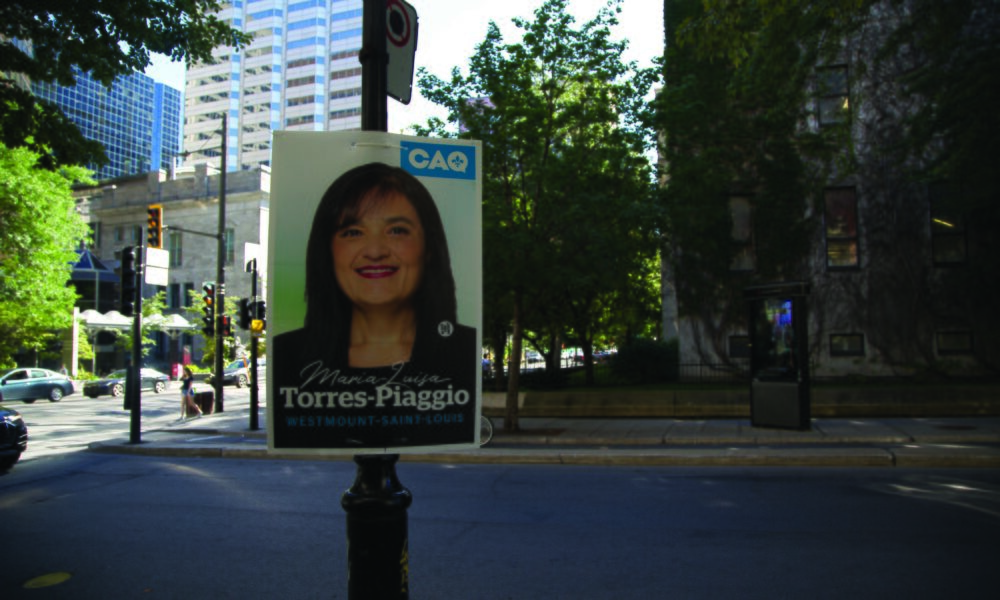
Next week on “Along Party Lines,” a rundown of where the major parties—the Coalition Avenir Quebec (CAQ), the Quebec Liberal Party, Québec solidaire, the Parti Québécois, and the Conservative Party of Quebec—stand on issues such as immigration, Indigenous rights, language laws, affordable housing, the minimum wage, and more.

Commentary, Opinion

Shattering the political illusion of Legault’s anti-immigrant policy

The Quebec provincial election campaign has officially kicked off and, as election day approaches on Oct. 3, voters have much to consider after a tumultuous four years.

This fall, immigration is top of mind. Businesses want more immigrants to relieve the province’s major labour shortages, Bill 96 has stirred intense debate over cultural integration, and there has been rising tension with the federal government as Quebec seeks more autonomy over immigration to the province. Premier Legault’s Coalition Avenir Quebec (CAQ) has maintained a nefariously conservative stance on immigration. But, voters should know that the CAQ’s immigration policies are both hypocritical and exploitative.  

With Legault taking credit for Quebec’s falling deficits and post-COVID economic growth, the CAQ is projected to add even more seats to its majority. Indeed, it has always branded itself as the productive Quebec party focused on economic advancement instead of old questions about separating from Canada. The CAQ has repeatedly defended its decision to cap immigration at 50,000 these last four years, citing the province’s limited capacity for integrating newcomers. Legault has framed high immigration as a cultural and economic threat to French Quebec, but reports reveal that without immigrants’ economic contributions, the province’s output would be nine per cent less in 2021 alone. 

As for other major parties, only the Quebec Liberals have pledged to increase annual immigration to a base of 70,000, and to engage with different regions of the province about how many immigrants they would welcome. The Conservatives want to further decrease immigration with a hand-wavy plan to increase automation and the province’s birthrate to fill labour vacancies instead. Meanwhile, the Parti Québécois is calling for “objective” analysis and less polarization on the issue, despite itself helping to fuel the narrative of a cultural-linguistic threat.

The CAQ wants voters to consider the thriving economy and restrictive immigration policies together, and to conclude that Quebec does not need immigrants. On the surface, it appears that the party’s new nationalist brand is effective and sustainable, further strengthening its record against the opposition parties. 

Unfortunately for the CAQ, however, this is a manufactured political illusion. For one, Legault’s “thriving” economy ignores the elephant in the room—an urgent labour shortage across the board that leaves hospitals short-staffed, impedes technological development, and makes matters worse for struggling small businesses. Representative associations of several critical industries continue to plead to the CAQ government to increase and facilitate immigration, to no avail Among them are the Chamber of Commerce of Metropolitan Montreal and the Quebec Manufacturers and Exporters organization, the latter calling for parties to increase the annual immigration threshold to 90,000 if elected. 

Further, the recent make-up of immigration in Quebec reveals that the CAQ’s policy exploits immigrants’ labour by favouring temporary work permits over granting permanent status. A recent study by the Institut du Québec found that temporary immigrants’ share of total international immigration to the province increased nearly seven-fold from 2016 to 2019—from nine per cent to 64 per cent. These temporary workers are not treated the same as full-status immigrants. They tend to face poorer wages and substandard working conditions, less awareness and enforcement of their labour rights, and extremely long and uncertain wait times for permanent status applications. Many are not adequately considered in long-term government decisions about housing, education, healthcare, or public transit. 

In other words, the CAQ caps immigration and frames it as a cultural issue on the campaign trail, only to quietly optimize the economic return on its low quotas through a surge in temporary immigrant work. Considering the status implications and systemic barriers faced by these workers in both society and the workplace, Quebec under the CAQ has no intention of “culturally integrating” the majority of its immigrants. 

This fall, voters should consider that immigration is becoming more of a political and economic issue than a cultural one, and they should question the ruling party’s stakes in framing it this way. The CAQ’s hypocrisy undermines its proclaimed Quebec-first ideology and suggests that the party is, indeed, no different than its supposedly unproductive counterparts. 

Campus Spotlight, Student Life

Home away from home: Your guide to McGill’s study spaces

McGill’s campus has a plethora of library spaces available for students to explore. To help you discover your second home for this semester, here is a guide to some of the best study spots on campus to suit every one of your academic needs.

The reliable one: McLennan-Redpath Complex

McGill’s main library complex, boasting over 10 floors collectively, has something for everyone. Khôi Nguyễn, U3 Science, often comes to Redpath to study with a group. 

“I like the Cyberthèque that’s below Redpath—the glass rooms. There are also some small rooms on the second or third floor that you can go into to do projects with a group.” 

Both the main floor and the basement of the Redpath building are talking zones, for those who like to work on partner projects or study with friends. If you prefer, however, to study in silence, McLennan has got you covered. Besides the first floor, all other floors are quiet areas.

“As you go higher up [in McLennan], it gets quieter,” Sana Agarwal, U3 Arts, explained.

McLennan-Redpath is open until midnight every day, including weekends. Starting Oct. 17, it will be open 24 hours a day until the end of the semester—perfect for those late-night cram sessions during midterm season! 

The quieter alternative: Marvin Duchow Music Library

If McLennan-Redpath is too busy, check out the Music Library. With quiet, semi-quiet, and talking floors, as well as group study rooms available to book, there are spaces for every type of student. It is also very well-equipped; you can find 54 computer workstations, scanners and printers, and A/V equipment to borrow. Plus, there is no shortage of natural light coming through its stunning floor-to-ceiling windows.

The library, however, closes quite early––9 p.m. Monday through Thursday, and even earlier over the weekend. And, if you’re not a music student, the Elizabeth Wirth Music Building, which houses the library, is a few minutes farther from campus than other, more central alternatives.

The (not so) hidden gem: 680 Sherbrooke 

Located in the same building complex as Le James, 680 Sherbrooke is a favourite study space away from the chaos of the main campus. One of Agarwal’s favourite places to study is the ninth or 13th floor of the building. 

“It’s not as busy as McLennan and Redpath because those are the main libraries everyone goes to. During exams, they are so full you don’t find any space, and it gets a bit loud. 680, I like the vibe of it,” she said. 

Agarwal added that you can often find empty classrooms with whiteboards and projectors to use when group study rooms on campus are fully booked.

Honourable mentions

Birks Reading Room: If you are searching for absolute silence, the Birks Reading Room is a good place for you. As a silent zone, no eating or talking is allowed, and shoes must be taken off at the entrance. The building, which houses the department of Religious Studies, feels like a cross between Oxford and a cathedral—perfect if you want to add some dreaminess to your study routine. lt is located in the Birks building on rue University. 

Lower field: Sometimes even the nicest library can start to feel stuffy. Take advantage of the warm weather while it lasts and take your books outside! Sit under a sprawling tree on the lower field, or find any one of the countless other beautiful outdoor spaces around campus to study in the sun.

Resources to use this semester:

McGill’s library offers a wide variety of resources to students, including computer workstations, laptops, and various other equipment. If the library doesn’t have it, IT Services also offers laptops, microphones, cameras, projectors, and more available to borrow. As a final tip, if you are planning to study in a group, make sure to reserve a group study room well in advance. Happy studying!

Martlets, Rugby, Sports

Gaiters trounce Martlets in season opener

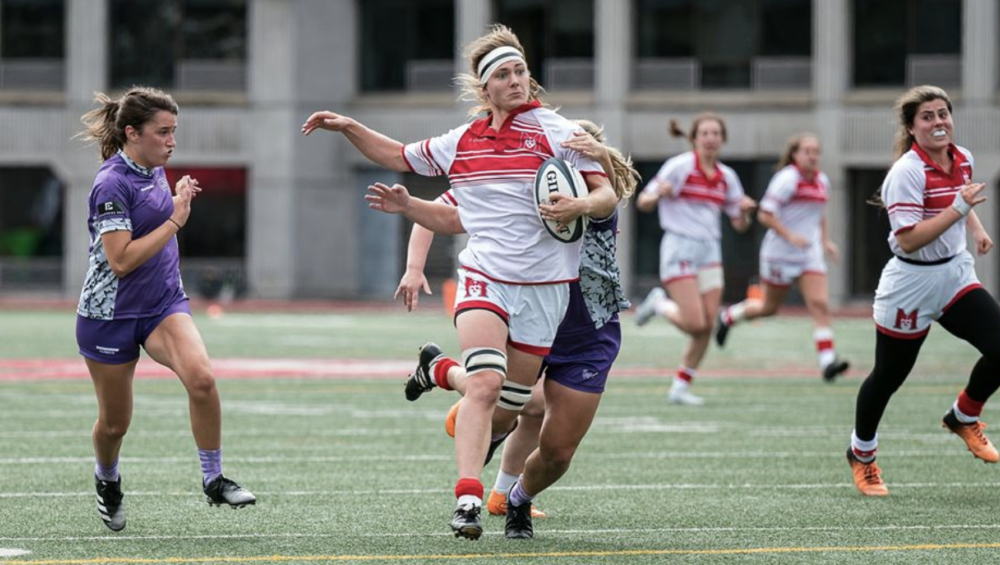
Despite their best efforts, the McGill women’s rugby team kicked off their season with a crushing loss against the Bishop’s Gaiters at the Percival Molson Stadium on Sept. 4. Since 2003, the Martlets have overcome the Gaiters 18 times with only four losses and one tie. The Labour Day weekend game saw a solid turnout for both teams, with the Martlets hoping to start the 2022-23 RSEQ season on a positive note.

The game began with multiple attempts by the Gaiters to break through the Martlets’ defence in the first 15 minutes. A strong effort led by fullbacks Chloe Desjardins and Chloe Dillon kept the Martlets in the clear 30 minutes into the first half. Gaiters forward Katie Locke, however, tore down the Martlets defence in the 31st minute with a spectacular run around the 22-metre line. Locke’s try and subsequent conversion by Michelle St. Laurent led the Gaiters to a 7-0 lead over the Martlets. 

In the remaining period leading into halftime, midfielder Raurie Moffat led the Martlets’ attempt to level the score only to be stifled by a robust Gaiters defence. The first half ended in disappointment for the Martlets with flyhalf Emma Bragg suffering a minor head injury in the 38th minute. Although Bragg was present for the post-game cool down, her selection for the upcoming games is contingent upon a medical test by the team physiotherapist.

The injury and substitution led head coach Allan Swetman to make sudden changes in game tactics in the second half, affecting the team’s performance. 

“The impact of the reserves [and] the shuffling of the team meant that we were a bit clunky in the first part of the second half and it just kind of rolled off from there,” said Swetman in a post-game interview with The McGill Tribune.

Five minutes into the second half, the Gaiters took advantage of a scattered Martlets defence with Katie Locke’s second try and St. Laurent’s conversion leading to a 14-0 scoreline.

The game went downhill for the Martlets from there, with multiple tries and conversions from the Gaiters. In the 66th minute, the Gaiters led 26–0, reflecting the fatigue in the Martlets defence.

According to Swetman, improvements are required in the team’s training regimen to increase stamina to remain competitive throughout the game.

“[The team’s performance] shows that we need to do a little more cardio, [as] we started to ramp down after the break,” Swetman said.

After an unsettling second half, the Martlets trailed the Gaiters 45–0 at the final whistle.

Team captain and hooker Davine Yang applauded her teammates’ spirit and performance in the game but acknowledged the team’s desire to improve over the course of the season. 

“The first half was a strong half, and we just have to keep that up,” said Yang. “[There are] very simple things that we need to work on. In my opinion, it’s an easy fix, and we are not too concerned about it.” 

The Martlets’ next match is against the Carleton Ravens on away turf on Sept. 9. After a tough first game, the team is looking to bounce back and get their first points this RSEQ season. Yang looks forward to leading the Martlets to victory against the Ravens.

Read the latest issue

Read the latest issue