

Latest News

Soccer, Sports

McGill Soccer squads open their seasons to an energetic home crowd

On Aug. 31, both the Martlets (1–1) and the Redbirds (0–1) began their RSEQ campaigns against the Université du Québec à Montréal (UQAM) at McGill’s Percival Molson Stadium. In front of a rowdy home crowd, the Martlets fell 2-1 while the Redbirds earned a point in a 1-1 tie. 

The Martlets took the field first. In a physical game, they conceded two early goals that silenced the crowd. The team, however, was still determined and kept pressing hard, stringing together nice pass sequences in the midfield and receiving their reward in the 18th minute. Elisabeth Pronovost, a first-year midfielder from Chambly, Quebec, closed the gap on UQAM in her first game as a Martlet. Pronovost’s goal was the last of the half as the whistle sounded and the teams regrouped. 

“My energy comes from losing or being the underdog, so of course when the team scores two goals, I just want to make one in, then two, three,” Pronovost said in an interview with The McGill Tribune. “I love my team and am really looking forward to having a great season with these girls.”

In the second half, the Martlets found success in centrefield, with many scoring chances by first-year Chloe Renaud, but were unable to translate it into points. As the game continued, tempers flared between the Martlets and the Citadins, resulting in three yellow cards in the 90th minute—two to UQAM and one to McGill’s Renaud. 

In a post-game interview, Stephanie Hill, a third-year physical therapy student who anchors the Martlets’ backline, spoke about taking on more of a leadership role within the team this season.

“I hope to encourage and guide [the new players] during the season and help them keep their confidence up,” said Hill.

Afterward, it was the Redbirds’ turn to step onto the field. Even as the rain started coming down, the crowd grew and was electrified during the team’s introduction. Jean-Marc Yao, a senior midfielder, got the home crowd going with an early goal in the 10th minute after a pretty ball from Pedro Gulli, a freshman forward who previously laced up for John Abbott College. In the 12th minute, UQAM’s Patrick Denis was given a red card for a dangerous and reckless foul on third-year transfer midfielder Yosr Frej. Frej, who hails from Rabat, Morocco, had to momentarily leave the game to get his head patched up. The Redbirds played the remainder of the time against a 10-man Citadins squad. 

It was a 20th-minute penalty kick that determined the final score. While it was nearly saved by keeper Ludovyck Ciociola, a first-year management student, his valiant effort wasn’t enough to keep the ball out. Ciociola later kept the score even with a brilliant punch save on a dangerous UQAM shot. 

The Redbirds strung together solid attempts on the wings, sending their opponents scrambling in the second half. A bandaged Frej played with great determination and heart in the midfield, yet the Redbirds failed to find the net again.

After the whistle blew, Ciociola spoke with the Tribune about the team’s takeaways following their first game. 

“I feel like we gave too much at the start and weren’t able to hold pace, but it’s the first game and everyone had a bit of nerves to shake out,” Ludovyck conceded. “Offensively, we were missing the last touch before the net.”

Bilal Bouchemella, second-year computer science major who wore the captain band this game, expressed his excitement about the upcoming season.

“The game was a solid opener but could have been improved by a little more offensive effort,” Bouchemella said, echoing his teammate. “Last year, I helped my teammates but I was a little younger. This year I’ve come in with the idea of being engaged with the team the best I can. I’m satisfied with the team, and the confidence we have.”

Catch the Martlets and Redbirds back at home for another double-header on Sept. 16 against Université du Québec à Trois-Rivières at 6 p.m. and 8 p.m., respectively.

*The interviews were translated from French by the author.

Arts & Entertainment, Pop Rhetoric

Lisa LaFlamme’s firing sets internet ablaze

On June 29, CTV National News terminated its contract with esteemed Canadian news anchor Lisa LaFlamme. LaFlamme has worked for the network––owned by Bell Media––for 35 years and was voted Best National News Anchor in April 2022. When news of LaFlamme’s termination came to light, dedicated viewers, journalists, and countless social media users expressed outrage. Many have claimed that the decision to let LaFlamme go was an overt expression of discrimination on the basis of gender and age. While Bell Media executives have denied these accusations, this situation indicates how public opinion has justifiably turned to support victims of clear sexism and ageism.

In many professional fields, particularly the media industry, appearance stands in for competence and proficiency, making it difficult for older women to maintain long careers as young women are often considered more “appealing.” A news anchor is expected to maintain a particular image to please viewers and to uphold the values of the network. LaFlamme has spoken out in the past about the extensive time and effort she puts into dyeing her hair to disguise any greyness. In 2020, she publicly stated that she would no longer be covering up her natural hair as she could not visit a hair salon due to the COVID-19 pandemic. LaFlamme stated that she found the decision “liberating.” While feminists online have applauded her candour, it likely contributed to her termination from the company. Allegedly, CTV executives made derogatory comments in the CTV newsroom about her greying hair—highlighting concerns about ageism and sexism within the industry. 

Companies like Bell Media have a moral duty to prioritize journalistic integrity and credibility over physical appearance. In firing a recognizable and widely respected female journalist with visible grey hair, Bell Media is discouraging women from entering and prospering in the field of broadcast journalism. The implications of LaFlamme’s termination represent the intersection of ageism and sexism, suggesting that women have an expiry date in the media industry. This sends a troubling message to prospective women journalists who are faced with vastly different career obstacles than their male counterparts.

When LaFlamme posted a video on Twitter on Aug. 15 informing her viewers of Bell Media’s decision not to renew her contract, she said that she was “blindsided” by the decision. Anyone who saw the video would have no choice but to believe her. Companies such as Wendy’s, Dove Soap, and Sports Illustrated have publicly criticized how Bell Media treated LaFlamme. Dove Soap, for example, launched a social media campaign called #KeeptheGrey, expressing their solidarity and outrage with the circumstances surrounding LaFlamme’s termination and hoping to draw attention to the ageist implications of her dismissal. The way Bell Media has handled this situation signifies a lack of loyalty and consideration within the company, which could break the trust their network has built with their viewers and tarnish their reputation. Bell Media has yet to clarify the reason for her termination, effectively refusing to take accountability for their alleged discrimination. 

Lisa LaFlamme’s dismissal demonstrates how ageism disproportionately affects women and impedes their ability to succeed in the media industry. For women in media, it’s a double-edged sword—if you’re young, appearance can serve as a benefit, but you aren’t taken as seriously as male colleagues. And as you get older, men are seen as wiser whilst women become expendable. According to these biases, grey hair on a woman is a sign that she is becoming obsolete and out of fashion, while grey hair on a man makes him appear distinguished. Women are encouraged to fight their natural aging processes, placing a higher value on beauty than competence. This raises a dangerous question: How can viewers put their trust in media networks such as Bell when they clearly prioritize image over quality journalism?

Arts & Entertainment, Film and TV, Internet, Music

What we liked this summer

While the start of the fall semester typically means replacing movie nights with late-night study sessions at Redpath, the Arts & Entertainment team isn’t ready to forget their summer favourites just yet. Here are the best tunes and flicks to check out from the all-too-short summer break.

Marcel the Shell with Shoes On Dana Prather 

(baltimoremagazine.com)

Marcel the Shell With Shoes On is a heartwarming ode to the importance of community. Despite premiering at the Telluride Film Festival nearly a year ago, Marcel the Shell took over the big screen—and stole many hearts—with its wide release by indie production company A24 on July 15. The film combines live-action and stop-motion animation to tell the story of Marcel (Jenny Slate), a one-inch-tall shell who lives alone with his Nanna Connie (Isabella Rossellini) after an unexpected accident separates them from the rest of their shell family. When documentarian Dean (the film’s director and co-writer Dean Fleischer-Camp) moves into their house, he films the shell’s daily routines, capturing Marcel’s inventive tricks for moving around his oversized environment. At only 90 minutes’ runtime, this delightful film will leave you feeling the warm fuzzies long after the credits roll.

Architectural Digest’s “Space Savers” – Isy Stevens

(architecturaldigest.com)

This July, Architectural Digest (AD) dropped Space Savers, a YouTube series that challenges three interior designers—with vastly different stylistic approaches—to reinvent the same space using professional rendering software. Throughout each 20-minute episode, viewers witness spectacular transformations, discover various trade tricks, and gain insight into each designer’s unique aesthetic. The series is a refreshing addition to AD’s YouTube content, previously dominated by video tours of lavish homes and celebrity enclaves. By allowing up-and-coming designers to showcase their creative processes and philosophies, Space Savers brings a more accessible touch to the iconic magazine and pivots away from its often hyper-elevated approach. Ultimately, this must-watch series revitalizes AD’s digital platform.

The Rehearsal   –   Charlotte Hayes

(variety.com)

From Nathan Fielder, the creator and star of Nathan for You, comes The Rehearsal, a quasi-doc-comedy on HBO that nearly defies categorization in its absurdity. The show follows the socially awkward comedian as he helps strangers rehearse for difficult conversations—by building to-scale replica models of where the interactions will take place and hiring actors to play the participants’ real-life friends and family. But after Nathan becomes particularly invested in his second episode’s subject, he abandons the show’s original premise and opts to conduct a five-episode-long “rehearsal” in which he and a participant practice raising a child. The show is a meta-exploration of parenting, interfaith relationships, and the ethics of child acting that perfectly blurs the lines between fiction and reality, comedy and drama. Fielder uses his signature cringe-comedy to create a morally divisive yet refreshingly original series.

Beyoncé’s Renaissance – Millie Roberts

(theguardian.com)

After years of isolating pandemic restrictions, the full reopening of nightclubs has gradually taken place across the world—and, almost as if beckoned, Beyoncé has also returned with her seventh studio album, Renaissance. The album offers listeners an hour-long, hedonistic escape into their own personal nightclub, free from insecurity and sorrow. Saturated with joy, one highlight track, “Cuff It,” epitomizes the album’s vibrant and addictive personality. Renaissance cuts across genres such as house, funk, R&B, and more to create a non-stop celebratory experience. Sampling from the likes of Donna Summer and Big Freedia, Beyoncé makes it clear that Renaissance is an ode to Black queer and woman artists of the past and present. With this album, she creates a sonic renaissance of music history and culture, reminding her audience that Black musicians have prevailed at the forefront of musical innovation for decades.

Harry’s House by Harry Styles – Adrienne Roy

(pitchfork.com)

This summer, it seemed like nobody could get Harry Styles off their minds. The former One Direction star is no stranger to success, but his popularity skyrocketed upon the release of his third studio album, Harry’s House, on May 20. Completed in 2021, the album reflects on how the pandemic has shaped us, collectively and individually. Every song evokes nostalgia,  equally capturing the sadness and beauty of growing up. While Harry’s House doesn’t significantly differ from its predecessors lyrically—many songs are about the rush of falling in and out of love—melodically, this album proves that Styles’ aesthetic sensibility is evolving beyond what most thought was possible. Tracks like “Music for a Sushi Restaurant,” “Grapejuice,” and “Boyfriends” stand out for their unexpected scatting, groovy synth beats, and stunning harmonies, respectively. What Harry’s House may lack in lyrical depth is made up for by an intimate listening experience, so sweet it doesn’t need a Flake (or two).

Arts & Entertainment, Social Media

Where do I begin? BeReal

BeReal—this year’s new social media sensation—is an app that prides itself on its authenticity over other social media platforms, and has quickly amassed over 10 million daily users. The concept is straightforward: At a randomized time each day, a notification is sent out, giving users two minutes to post a photo of what they are doing at that moment. While the app says there are only two minutes to post a BeReal, users may post at any time following this notification.

One of BeReal’s marketable strengths is the level of interconnectedness it provides for friends on the app. Users can see a snapshot of what their friends are doing during the day and interact easily through selfie reactions or comments. 

BeReal’s short notification time frame allows users to treasure the simplicity and comfort of the mundane. Nowhere else would people post the unspoken elements of their day-to-day lives: Watching TV in bed, waiting at the doctor’s office, or sitting in class. BeReal also sets itself apart from other social media apps through the dual camera feature, which shows both the user and the user’s point of view. Many people, however, do not post on time, reducing the number of truly candid BeReals and straying from the app’s original goal. 

Despite being 2022’s most popular app, BeReal has come under scrutiny for the falsehoods that it breeds. Many users bash the fact that BeReals can be posted at any point, even over a day after the notification has popped up. While the ability to fabricate reality is part of social media’s appeal, some have suggested penalties for those who do not post on time in accordance with the notification—such as not being able to see others’ posts. 

Why post at work when you know you’re going to the beach later? What if you missed the BeReal when you were taking a nap? Might as well wait a few more hours until you’re at that party. 

For many users, BeReal has become more of a production than a true display of reality. Late posting, however, has not interfered with the popularity of the app. This is because the success of BeReal doesn’t come from its simplicity or truthfulness, but from its flexibility and user compliance. The user pool would likely decline if BeReal cracked down by only letting users post within two minutes of receiving the daily notification. Its success relies on the ability to use the app just like any other social media platform: Performatively.

Despite its flexible user interface, BeReal’s key to success will also be its downfall. TikTok users have already begun to criticize the fact that BeReal enables its users to use the app dishonestly. The more friends users gain on the platform, the greater the demand for interesting BeReals, and the less likely posts reflect life accurately. As it becomes more popular to use the app to show off a highlight of the day rather than a dull moment, the further BeReal deviates from its original intention.

One thing is certain—BeReal is inviting users because of its consistency. The app provides a unique comfort: See a daily snapshot of your friends’ lives while recording one of your own to look back on. Because of its engaging premise, it will likely remain successful for a while longer. Still, it will inevitably die out when the next great social media app becomes popular, which will surely allow users to show off even more falsified highlights of their life. Maybe then social media users will start to be real.

Arts & Entertainment, Music

Artist Spotlight: Lucas Fournier

Montreal’s status as a must-stop city for popular artists and bands is partially due to its vibrant independent music scene, which thrives amidst a culture of diverse genres and styles. Singer-songwriter Lucas Fournier, U2 Arts, was attracted to the city for similar reasons and chose to come to McGill in 2020 with the hope of sharpening his musical expertise. After releasing his debut album, Many Waters, in 2021, Fournier is aiming to refine his style for his upcoming EP, set for release by the end of the semester.

Hailing from Toronto, the indie-folk artist has always been one to dream up little impromptu melodies but only started writing seriously in late high school. During this time, Fournier taught himself to play guitar and piano, and at the beginning of the pandemic, Fournier picked up another skill: Music production. More specifically, he focused on sound design and composition. In both the music that he writes and listens to, Fournier gravitates towards styles without genre-specific rules or limitations.

“My two biggest inspirations are definitely Bon Iver and Radiohead,” Fournier explained in an interview with The McGill Tribune. “[They’re] two different artists genre-wise, but just artists that I feel that they’ll have an idea and they’ll let that idea take them wherever they want. [That’s] something that I try to do with my music.”

Fournier’s first album, Many Waters, centred on his high school experiences and feelings of estrangement. His second EP—which he’s yet to title publicly—is a more nostalgic and musically sophisticated selection of songs aiming to convey universal experiences of feeling confused whilst coming into adulthood. 

Fournier released “Lakeside,” the first single from his upcoming EP, on Aug. 26. The song features heartbreaking lyrics that describe Fournier’s feelings of imposter syndrome and a gorgeously simplistic cello accompaniment, evoking a vastly different emotion from the peppier, yet still glum, sounds of the first album. The cello arrangement has a stellar solo mid-song, creating a slow pure melody that supports the lyrics’ nostalgia for a childhood gone by.

“I feel like I’ve appeared in this adult world and don’t know how to navigate it,” Fournier said. “In a society and in a university that’s very […] competitive and […] now that I’m an adult, it’s like it’s all come to the forefront that I’m not good enough.”

“Lakeside” is only the tip of the iceberg of Fournier’s musical growth. The theme of transitioning to adulthood heavily influences the new EP., Fournier hopes that his fellow Gen Zers will relate to the experience of losing formative teen years to isolation during the COVID-19 pandemic. “That’s a big part of the lyrics of ‘Lakeside,’” he said. “This kind of imagining back when I was a kid, none of this—we weren’t competing with each other, life [was] fun.”

As Fournier continues to develop his sound as an artist, it is encouraging to see how he relates to his growing audience. If his new EP is anything like “Lakeside,” fans are sure to expect some quality tracks in the near future. If anything, Fournier’s new album proves that the indie scene, while small, is jam-packed with talented musicians who are continuously raising the bar of Montreal music. 

“It’s difficult as an indie artist to turn your art into something that can sustain you career-wise—that’s my goal right now,” Fournier said. “I have ambitions of making it big. I don’t know if that’s going to happen, but I want to do music full-time because it brings me a lot of satisfaction and I love it.”


Lucas Fournier’s music is available to stream on all major platforms.

Sports

Back to the roster: Nine teams make their long-awaited return to varsity sports

After McGill Athletics announced that nine varsity teams would not be able to compete during the 2021-2022 seasons due to pandemic-related staff shortages, the teams are set to make a thrilling return for the 2022-2023 seasons. The returning sports include artistic swimming, alpine skiing, badminton, baseball, field hockey, golf, lacrosse, rowing, and woodsmen.

Back in 2021, The McGill Tribune reported on the athletes’ discontent over being barred from competition at the varsity level. The 2021 announcement left many McGill athletes disheartened, especially after previous lockdowns had halted their practices. Alice Saito, a U2 rower for the Martlets, shared her experience with the Tribune

“We were disappointed when McGill Athletics told us that we couldn’t be considered varsity because we were putting the same amount of work and commitment as we would in a

normal season,” said Saito. “It also prevented us from getting more racing experience in Ontario against the other teams that we would normally have in preparation for [Canadian University Championships.]”

After over two years, no one is more excited about the return of cut sports than the athletes themselves. 

“All of us have been training hard to get back in shape and show everyone, but mainly Athletics, that baseball is back and that it deserves its place on the varsity roster,” said Auguste Guern, a fourth-year infielder for the Redbirds’ baseball team.

Of course, the athletes affected by this cancellation are hard at work making up for the lost time. Not only did the cancellation affect the athletes’ abilities to stay in shape and on top of their training, it also had mental health implications for many. Not being able to play the sport they love at the varsity level amongst other athletes left many feeling isolated and unfulfilled.

For returning athletes such as Milo Young, a third-year student majoring in industrial and labour relations who has been on the squad since 2019, the comeback of varsity baseball brings renewed hope for the 2022 season. 

“I think we have a pretty talented team and a chance to be really competitive this year,” said Young. “It’s a young team too, so the future is certainly bright. Hopefully this season, we can take a step in the right direction to bring McGill baseball back to the dominant force it was.” 

Athletes across the board are hoping to restore their sport’s former glory despite being affected by the cancellation. This newfound motivation, combined with the desire to prove themselves to McGill Athletics, is sure to bring about riveting games and a captivating season.

However, athletes in their last years, like Young, are experiencing mixed emotions about their final seasons. Indeed, McGill’s cancellation of several varsity sports strongly impacted athletes who missed out on the chance to compete during the majority of their university careers. 

“It’s kind of bittersweet for me because I know this is my last season of baseball, but I’m just enjoying every minute being part of this great group of guys,” Young said. “It’s crazy that the last time I played for McGill baseball was as a first-year and now I’m graduating.”

With so many sports back at the varsity level, the McGill community is looking forward to cheering for their friends and classmates as they make their highly-anticipated return to the prized roster.

McGill, News, PGSS, SSMU

Governance 101

Students’ Society of McGill University (SSMU)  

What it is:

The Students’ Society of McGill University is the undergraduate student union. SSMU supervises undergraduate clubs and student organizations, operates Gerts Bar & Café, and advocates on behalf of all undergraduates at the McGill Senate. SSMU is composed of six executive members, a Legislative Council comprised of representatives from undergraduate faculty associations, and a Board of Directors that ensures that SSMU abides by its constitution. As SSMU members, undergraduates can attend its biannual General Assembly and vote in SSMU referenda. 

Who’s who:

Risann Wright was elected SSMU President at the end of the Winter 2022 semester. The rest of the executive team consists of Hassanatou Koulibaly as vice-president (VP) Student Life, Marco Pizarro as VP Finance, Val Mansy as VP External, Kerry Yang as VP University Affairs, and Cat Williams as VP Internal. Other recognizable faces at SSMU include Wallace Sealy, the building manager who often occupies the front desk of the University Centre, and Alexandre Ashkir, the chair and speaker at Board of Directors meetings, General Assemblies, and Legislative Councils.

Recent Events:

Since July, SSMU has been entangled in a lawsuit filed by McGill Arts student Jonah Fried over the Palestine Solidarity Policy, which passed with a 71.1 percent majority during the Winter 2022 referendum but never went into effect. After the initial Winter 2022 vote, the McGill administration threatened to terminate its Memorandum of Agreement with SSMU if the student union implemented the Palestine Solidarity Policy. Over the summer, SSMU suspended Solidarity for Palestinian Human Rights McGill for “harrassing” SSMU about its decision to drop the Palestine Solidarity Policy.

Post-Graduate Students’ Society (PGSS

What it is:

The Post-Graduate Students’ Society represents graduate students and postdoctoral fellows. Like SSMU, it advocates on behalf of students to the McGill administration and holds several seats in the McGill Senate. PGSS is made up of six executive members, a Legislative Council composed of PGSS executives and representatives from the Post-Graduate Student Associations, and a Board of Directors. In accordance with its mandate to create a financially accessible social environment for graduate students, PGSS plans several events throughout the year. PGSS also runs Thompson House, an affordable restaurant and bar on McTavish exclusively for  graduates and associate members

Who’s who:

The new executive team took over their respective roles on June 1 after being elected in March 2022. The current members include Kristi Kouchakji as PGSS Secretary General, Onkeya Dike as External Affairs Officer, Faezeh Pazoki as Financial Affairs Officer, Adel Ahamadihosseini as Internal Affairs Officer, Naga Thovinakere as Member Services Officer, and Hossein Poorhemati as University Affairs Officer. 

Recent Events:

Compared to SSMU, PGSS has fewer notable events as it is relatively controversy-free. Throughout the academic year, PGSS offers a variety of health and wellness activities for its members, such as yoga and karaoke. In September 2022, the student union will run an orientation program designed to build community between its members. The next PGSS general meeting will take place on Nov. 16, and its first Council meeting, held at Thompson House, will take place on Sept. 4. 

McGill Senate

What it is:

The McGill Senate is responsible for overseeing all academic matters at McGill. It is composed of 111 members from various constituencies around the university, including students, faculty, staff, administrators, Board of Governors members, and alumni. Students hold several seats in the Senate: Each undergraduate faculty association elects a student, both the SSMU President and VP University Affairs are members, and PGSS holds four seats. 

Who’s who:

The McGill Senate is where you’ll find some of the key decision makers at the university, including Chancellor John McCall MacBain,outgoing Principal and Vice-Chancellor Suzanne Fortier, Chair of the Board of Governors Maryse Bertrand, Deputy Provost (Student Life & Learning) Fabrice Labeau, and interim Principal and Provost and Vice-Principal (Academic) Christopher Manfredi—Fortier stepped down on Sept. 6.

Recent Events:

In April, the Senate approved plans for new academic programs at McGill, such as a Population and Global Health program in the Faculty of Arts and a Certificate in STEM Foundations in the School of Continuing Studies. Senate members also debated whether to keep certain pandemic accommodations in place long-term, such as the flexible Satisfactory/Unsatisfactory (S/U) grading option, or whether to mandate lecture recordings, but has not yet  agreed on whether to keep the policies in place.

Board of Governors (BoG)

What it is:

The BoG is McGill’s highest governing body. It has the final authority over all academic, business, and financial matters at McGill, and is also responsible for the maintenance and management of the university’s property. It is composed of 25 voting members, which includes the Chancellor, the senior administration, a member each from SSMU and PGSS, some faculty members, alumni, Senate representatives, and administrative staff. Two non-voting student observers from the Macdonald Campus Students’ Society and the McGill Association of Continuing Education Students also hold seats on the BoG. 

Who’s Who:

Many members of McGill’s Senate also sit on the Board of Governors: Christopher Manfredi  and John McCall MacBain are both members. Maryse Bertrand is Chair of the Board, and her vice-chairs are Claude Généreux and Pierre Matuszewski. Risann Wright, in her capacity as SSMU President, also sits on the BoG, along with Naga Thovinakere, a PGSS executive.

Recent events:

In April, the BoG passed McGill’s 2023 annual budget and approved the appointment of Lisa Shapiro as the next Dean of the Faculty of Arts. Professor Angela Campbell, Associate Provost (Equity & Academic Policies) also presented the annual report on McGill’s Policy against Sexual Violence, which  summarized the developments and cases received under the Policy in 2021. 

McGill, News, The Tribune Explains

Tribune Explains: Accessing healthcare as an international student

At the start of every academic year, the contract for the compulsory International Health Insurance (IHI) plan comes into effect for all registered international students at McGill. The McGill Tribune sought out common experiences among students to clarify the process of accessing healthcare as an international student in Montreal. 

What is the International Health Insurance program?

IHI is a private health insurance plan provided by Medavie Blue Cross through International Student Services (ISS). Enrolment is compulsory for international students, with an annual charge of $999 CAD automatically billed to the student’s Minerva account unless they apply for and are granted an exemption. Students may qualify for an exemption only if they are covered by a Canadian provincial healthcare program, such as Quebec Medicare (RAMQ), but not if they have another private insurance plan. 

Once paid for, the contract can be activated on Minerva as early as Aug. 1, and it is effective for the entire academic year. The plan consists of basic and supplementary health benefits. Basic health benefits include reimbursements for hospitalization, diagnostic tests, and physician fees. Supplementary health benefits cover services such as vaccinations, physiotherapy, psychotherapy, and prescription drugs and medicines.

International students are also eligible for dental coverage, provided by Desjardins, through the Students’ Society of McGill University (SSMU). Those attending classes at the Macdonald campus qualify for the Macdonald Campus Students’ Society (MCSS) health and dental plans


Where should you go if you have specific questions about the IHI policy?

The McGill International Health Insurance Handbook details the coverage IHI plan-holders are entitled to. Confusion surrounding the plan, however, has spurred an active student discussion forum, with at least 20 related posts on the McGill Reddit in 2022 alone.

Isadora Borges, a PhD student in the Faculty of Arts with over five years of experience navigating the IHI policy, told the //Tribune// that she would direct all those unfamiliar with further questions to Blue Cross itself, reachable at 1-888-588-1212 between 8 a.m. and 9 p.m. from Monday to Friday. 

“We’re paying this big fund to Blue Cross, but we [students] do a lot of free labour online answering a lot of posts that I feel are very banal questions that can be easily Googled, or very specific questions that medical professionals are better equipped to answer,” Borges said. “[The Blue Cross] are the ones with access to your healthcare file [….]. In the end, medical advice should not be crowd-sourced.”


How can you access health services off-campus?

International students are generally advised by the Wellness Hub and peers to take advantage of the coverage offered by off-campus clinics. Students can use Maple virtual care to consult doctors online as well.

“The Wellness Hub has an off-campus care directory for student-friendly clinics, which is a good place to start,” Stella DiCicco, U1 Arts, said in an interview with the //Tribune//. “It is important to call ahead [though] because [the directory] is outdated.”

For mental health treatment, McGill students have 24-hour access to keep.meSAFE, a counselling service that can be reached through the My SSP app. General practitioners at the Wellness Hub, Maple, or other off-campus clinics can provide the referrals required to see a psychiatrist. The cost of a diagnosis is fully covered by IHI up to three times the RAMQ Schedule of Fees. Psychiatry treatment fees will be reimbursed up to $5,000 per contract year. Prescription drugs and medicines are reimbursed up to 80 per cent with no maximum. While the McGill University Health Centre (MUHC) and Maple can bill Blue Cross directly, most other off-campus health services will require that students pay up-front. After doing so, students can use the receipts to file an insurance claim with Medavie Blue Cross to get reimbursed.

Science & Technology, Student Research

Team of undergrads designs water-filtering backpacks for low-access communities

Every day, more than 800 million people globally travel 30 minutes or more to access clean drinking water. Although access to clean water has improved since 2000, a lack of sanitation and sewage infrastructure, water treatment plants, and environmental factors like droughts mean that one in three people—especially those in rural areas—do not have a local clean water source. Their journeys are often gruelling and involve long walks in hot weather with water containers  weighing up to 50 kilograms.

As part of McGill’s Impact200 program, Bernadette Ng and a team of six other McGill students in the Faculty of Engineering invented a product to alleviate some of the challenges associated with accessing clean water. The result of the team’s efforts, SOLar-A, is a backpack that promises to make the water collection journey less arduous: It is designed to comfortably carry 10 litres of water while simultaneously filtering toxins from the load.

SOLar-A uses a two-part filtration system to purify water of any physical or chemical contaminants. After passing through a physical filter that removes debris, the water undergoes solar disinfection (SODIS), a decontamination process that relies on sunlight to kill pathogens. The pack is also equipped with an ultraviolet measurement tool that uses the energy generated by the user’s footsteps to detect when the water has received sufficient sunlight exposure to eradicate toxins—or when it’s drinkable.

“In many communities, people have to walk long distances to have access to water and need to go through a few hours to clean the water,” Ng wrote in an email to The McGill Tribune. “With SOLar-A, they can start cleaning the water from the source, and save time in the disinfection process.”

In May 2022, SOLar-A underwent its first field test in the region of La Jagua at Alauca in Honduras. Ng and her team consulted with local communities after the test to collect feedback on the design’s comfort and to study its effectiveness in eradicating common pathogens such as E. coli. They found that SOLar-A was convenient and efficient, but the SODIS sterilization component isn’t yet able to reduce E. coli levels within a reasonable time frame. Ng and her team plan to refine these features of SOLar-A into an improved prototype.

According to Ng, the journey to create SOLar-A was a long one. She first became interested in equitable water access in high school, where she learned about Me to We, a charity targeting global poverty. While in CEGEP, Ng joined Global Brigades, a non-profit with chapters on many college campuses that provides hands-on experience to students interested in tackling global health challenges. 

When she arrived at McGill, Ng was intent on continuing her efforts toward increasing water access and partnered with fellow engineering students to brainstorm solutions that they could reasonably achieve at the undergraduate level. 

Ng’s training as an engineer, coupled with her humanitarian background, gave her a unique perspective on the role of technology and engineering in social problems.

“​At school, we are given tools on how to solve problems and find solutions. But, often, we are not taught how to truly understand the problem at hand,” Ng wrote. “I believe that before […] trying to solve a humanitarian problem, it is first most important to create personal connections with the communities.”

Ng believes that more undergraduate students can put their ideas into action while still in school—having all the answers is less important than a willingness to learn. In fact, most faculties have clubs that offer hands-on learning opportunities, such as McGill BioDesign.

“Failing and trying is part of the process of learning from your mistakes and that is something that students should keep in mind when being afraid to take initiative and be a leader,” Ng wrote. 

McGill Recommendations, Student Life

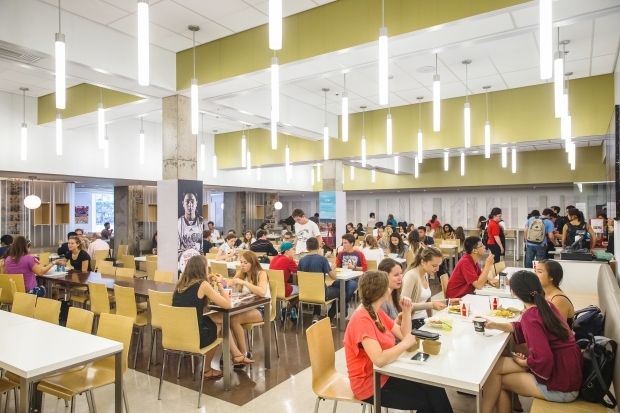
Where to munch on campus when crunched for time

1. Super Sandwich

Where: 1115 Sherbrooke Street West  (basement of the Le Cartier building) 

What: A hidden dep-turned-eatery that promises to deliver a sandwich within 15 seconds. This is mainly owing to the minimal toppings they offer and the ample practice they have in the art of making sandwiches. From crab meat, ham, and tuna to egg and cheese, there is a sandwich option for everyone. The best part is their bread, fresh and toasted to perfection. And to add to the list of things that we love about this place, their sandwiches are priced between $2.75 and $5! Having a Super Sandwich is considered a rite of passage for McGill students, and, because of their quick service and convenient location, it is the perfect meal to grab between classes.

2. Quesada

Where: 475 Sherbrooke Street West (inside the Carrefour Sherbrooke residence)

What: A well-known campus eatery with tacos, quesadillas, burritos, nachos, and burrito bowls on its Mexican-inspired menu. The food is prepared right in front of you, so if you’re pressed for time, this is a great grab-and-go meal spot. Each item on the menu is highly customizable, with different meat and vegetarian options to choose from. It will cost you approximately $10-13, so it doesn’t weigh too heavily on the pockets—and you can also use your meal plan dollars for it. We also recommend this place because of its convenient location and nice outdoor patio for when you want to work outdoors on a breezy, fall day—even their indoor seating is quite comfortable. A side tip: Ask for extra sauce once they prepare your meal; they usually dole it out for free!

3. Sansalizza 

Where: 3576 Ave du Parc, opposite New Residence Hall

What: A fast food restaurant that offers pizzas, sandwiches, burgers, fries, and poutine in different sizes and flavours. The pizzas and the tandoori chicken sandwich are some of their most popular dishes. The restaurant also offers a make-your-own-pizza option where you can choose from their many toppings and craft a pie suited to your specific cravings. Sansalizza also offers halal meat for those who prefer it. A bonus of this fast food place is that it accepts the McGill OneCard dollars, so if you’re a student on the meal plan or have leftover dollars from the previous year, this is a great option! But, even without the OneCard, a meal here ranges from $10-15.

4. Frostbite

Where: McConnell Engineering (on the ground floor, inside the EUS mall)

What: A student-run ice cream shop with a range of delightful flavours and really good prices. Conveniently located inside the engineering building, you can quickly snag a scoop or two between lecture breaks. From waffle cones to six-scoop cups, they have a size that fits all (ice cream version). With 30 flavours on their menu, you are sure to find something that suits your taste buds, although their pralines and cream is a personal favourite. Their two-scoop baby cup costs $3, and their six-scoop, extra-large cup costs only $5.50! On top of this, they offer some really fun discounts, including toonie Tuesday (where a baby cup is only a toonie and two quarters), and, if you fail a midterm, they offer ice cream on the house to help cheer you up. Their usual opening hours are 12-6 p.m. on weekdays, and, for this week, they’re offering a $0.50 discount on all cones, so scoop that deal up right now! 

5. Other eateries to check out: 

  1. Subway in the basement of the Arts Building (or the submarine-themed one across Stewart Bio on 1100 Dr. Penfield): Another great grab-and-go meal option
  2. Gerts Bar and Café on 3480 McTavish Street: For when you have the time to sit and eat or want some drinks with cringey names
  3. Lola Rosa Café on 545 Rue Milton: Cute restaurant serving vegetarian and vegan meals
  4. McGill Pizza on 645 Rue Milton: An inexpensive and old-school McGillian spot for delicious brunch and pizza

Read the latest issue

Read the latest issue