Although fall may be the perfect weather to head out for a walk, when you’ve barely woken up and are already late for your 8:30 class, it’s good to know all of your commuting options. For such last-minute panics, the Tribune presents various alternatives to help you make it to your lectures on time, and maybe even stop for coffee.
1. Biking
Incorporating cycling into your morning routine is not only healthy, but also a time-efficient means of getting to school. Biking is also a fun way to start the day—unless your commute is uphill—with cool morning temperatures making it the perfect time to go for a ride. Luckily, you need not be a bike owner to incorporate this exercise into your daily life.
Bixi, a public bike-rental service, offers monthly and yearly packages for just $18 and $92, respectively. You can rent a bike from one of their many stations and drop it off at a station near your destination, making it quite a convenient way to get to campus and around the city. There are a few stations near campus, with the most popular ones being on the corners of McTavish and Sherbrooke, and University and Milton. Other stations around campus include those on Sherbrooke and Aylmer, Sherbrooke and Hutchison, and University and Prince Arthur.
In case you don’t want to commit to a longer membership, Bixi also offers one-way passes for a flat fee of $1, and a variable charge depending on the time of day. The regular bike costs 15 cents per minute, while an electric one is 30 cents per minute. With a membership, the regular Bixi costs 10 cents per minute, after 45 free minutes, and 12 cents/minute for an electric bike. With or without a membership, Bixi bikes are one of the cheaper options to get to campus.
2. Public transport
The Société de transport de Montréal (STM) offers a range of flexible train, metro, and bus routes to fit into your commuting schedule. You can order a rechargeable OPUS card for $15, which you can load with tickets and passes. For students, the STM offers a reduced-fare OPUS card that you can order online through Minerva, under the student menu.
For students, the monthly pass costs $56.50, the weekly one costs $29, and a one-way ticket costs $3.50. There are also other fare deals such as unlimited evenings, unlimited weekends, and 24 hours whose fares are accessible on their website. If you plan on making more than 15 trips a month via metro or bus, the monthly pass is definitely the way to go.
Buses are one of the most convenient and accessible ways to get to campus. The buses most used by students are the 24 which runs on Sherbrooke and has a stop right in front of the Roddick Gates, and the 144 which has stops near the Tomlinson Fieldhouse, the Strathcona Anatomy and Dentistry Building, and the Stewart Biology Building. The metro is also a great option for those who live close to a station. You can get off at the McGill metro station––exiting a couple of streets below Sherbrooke, on boulevard Robert-Bourassa, and walk up to campus.
3. Communauto
If you live farther away and are in an absolute rush, you can also rent a car from Communauto, a low-cost vehicle-sharing company. Prior to renting, however, you have to sign up for an account and get it verified—a process that usually takes a couple of days.
While they do offer different memberships, they also have a free plan under which you can pick any of their marked cars off the road (called the FLEX option). This option allows you to drop the car anywhere within their parking zones and costs 40 cents per minute, $12.75 per hour, or $50 per day. With Communauto, you can also reserve a car, which is less costly than their FLEX option. Fuel costs of up to $50 per trip are covered by them, and you can learn more about how their service works here.
Word around campus is that if you’re looking for an easy elective to fit into your schedule, Professors David Harpp and Joe Schwarcz’s World of Chemistry Courses are for you. The dynamic duo, Chemistry of Foods (CHEM 181) and Chemistry of Drugs (CHEM 183), have consistently been some of the most popular electives for science and non-science students alike. With curricula including historical, practical, and chemical aspects of food in CHEM 181 and drug history, marketing, and mental illness in CHEM 183, the courses cover a wide range of chemistry-related topics. To help gain a better understanding of their appeal, The McGill Tribune spoke with students who have taken or are currently taking these classes.
Cynthia Wang, U1 Science, is enrolled in Chemistry of Drugs and saw the course as an opportunity to balance out her hectic academic schedule.
“I heard from people that it was a relatively easy class and, as an elective, that’s kind of what I’m aiming for,” Wang said. “My courses are already pretty heavy at times and I don’t think there’s a need to find an elective that requires too much time in my schedule.”
For Wang, the courses’ reputations as “bird courses”—a reputation built through discussion platforms such as Reddit and Facebook—have been a major selling point. The content is presented through a series of pre-recorded lectures that students are free to watch at their own pace—within reason. As part of the asynchronous learning style, students have access to the transcripts of the videos and can adjust the playback speed to their liking, making for a customizable learning experience. Even better, the exams are taken fully online.
What’s more, says Sonya Colliander, U1 Arts, who took the Foods course last winter term, is that the asynchronous style of the course offers the attractive advantage of flexibility.
“Because they’re self-directed and there is no actual lecture time—they’re just videos uploaded on MyCourses that can be worked through whenever you want—a lot of students find that good for their schedule,” Colliander explained.
Of course, students who have taken the courses speak highly about its content.
“Since I used to study health science [in CEGEP], I still have interest in any subject related to that field,” Wang said. “[This class] allows me to learn about drug history and the effects of medicine throughout time, which I find interesting.”
Despite being science courses, CHEM 181 and 183 are, fortunately, not limited to science students. In fact, classes are composed of students from nearly every faculty on campus, with approximately 50 per cent from Science, 30 per cent from Arts, and 20 per cent from Management, Education, Agriculture/Environment, Music, Law, and Engineering, according to the course information.
According to Sahar Sakhi, U1 Agriculture and Environmental Sciences, little to no chemistry background is required for success in the World of Chemistry courses. Sakhi, who is taking the Drugs course this term, believes that the course is accessible to anyone because it doesn’t go into dense and incomprehensible detail about science or chemistry.
Since the courses are pre-recorded, however, they no doubt lack the essential community elements embedded in in-person classes.
“I think one of the downsides about this class is that it’s not as interactive as other classes. You don’t see the teachers or your classmates; everything is kind of on your own,” Sakhi said.
Colliander adds a note of caution that “it is really easy to procrastinate in the class because there are no deadlines throughout the semester, so it is up to you to stay on top of the lectures and quizzes.”
With classes finally going back in person, students can definitely look forward to learning in a real class setting, with the teacher and classmates up close and personal. If you still want an interesting online science course that allows flexibility, however, the World of Chemistry courses could be just what you need.
According to the Canadian Cancer Society, nearly 7,000 Canadians will be diagnosed with leukemia this year with a mortality rate of nearly 50 per cent. Similarly, over 10,000 will be diagnosed with non-Hodgkin’s lymphoma—a specific type of cancer that causes lymphocyte cells to develop abnormally. Many research institutions across the globe have undertaken the challenge of developing a treatment for these cancers, and some have succeeded in creating a quality care program for patients.
This past July, the McGill University Health Centre (MUHC) was named one of the leading providers of immune effector cell (IEC) therapy, a revolutionary new treatment for more advanced cases of leukemia and lymphoma. Specifically, the MUHC now offers a new immunocellular therapy for adult patients diagnosed with a form of blood cancer resistant to standard treatments. Referred to as CAR-T therapy, it has been proven to prevent relapses for 60 per cent of patients in studies conducted on children over a five-year period.
Other forms of cancer treatment, such as surgery, radiation therapy, and chemotherapy, have been standard approaches to care for years, yet are not always successful with various or new forms of aggressive cancers.
CAR-T therapy is a form of immunocellular therapy that involves extracting T cells, a type of white blood cell, from the patient’s blood. Following this, the T cells are taken to a lab to be reprogrammed to attack cancer cells by introducing the T cells to a gene that codes for the chimeric antigen receptor, which binds to the surface of a target cancer cell and destroys it. From there, the CAR-T cells can be given to the patient via infusion.
Due to its ability to target cancer cells directly, CAR-T therapy is considered a promising treatment for leukemias and lymphomas that were previously thought to be incurable. The opening of the MUHC CAR-T program to the general public, and its designation as one of the centres in Quebec that provides this cutting-edge therapy, extends the frontiers of cancer research and therapy accessibility in Canada.
“CAR-T treatments are leading-edge therapies that offer a chance of cure for certain patients with lymphoma who have failed conventional therapies, often including high doses of chemotherapy followed by autologous stem cell transplants,” said Dr. Michael Sebag, director of the IEC Therapy Program of the MUHC, in an email to The McGill Tribune.
Similar to all forms of cancer treatment, CAR-T immunotherapy has several serious side effects. As an intense form of immunotherapy in which the T cells become biochemically altered, the introduction of the gene to the T cells can result in a mass eradication of B cells which produce the antibodies needed to fight off viruses.
Therefore, patients on CAR-T can become susceptible to other infections. Some reactions to CAR-T therapy may be more severe than others, the worst and most frequent being cytokine release syndrome. This is caused by the fast release of cytokines, small proteins that regulate the immune system, into the blood from the tampered T cells. This causes respiratory problems, nausea, and fever, among other symptoms.
Despite its high success rate, CAR-T cell therapy can be hard to access. The treatment process is expensive and in Canada, it is only offered to those who meet strict needs-based criteria. In Quebec, the government has dedicated $35 million a year to fund this form of therapy, which is expected to help 60 adults and 10 children each year. In Canada, the total cost of CAR-T therapy nears half a million dollars per patient, rendering the therapy less accessible—a major point of criticism.
Despite its drawbacks, CAR-T cell therapy has been nothing short of revolutionary in the field of cancer research. It opens up a new chapter for the longed-for progression of cancer treatment and the advancement of the McGill Cancer Care mission, providing hope and inspiration for both medical professionals and patients around the world.
“The MUHC University Health Centre is committed to bringing cutting edge therapies [to] our cancer patients,” said Sebag. “We are thrilled to have assembled a talented and dedicated team to deliver these.”
Located in the Maude Abbott Medical Museum on the second floor of the Strathcona Building, Radiology of the abdomen for the surgeon showcases 10 works of embroidery, each depicting a different abdominal organ.
Split up between two glass cabinets, the exhibition appears unassuming at first, but, on second glance, it reveals beautiful depictions of the human body. It displays organs such as the spleen, the stomach, and the liver, among others, highlighting parts of the body hard at work in our day-to-day lives. A graduate student in biotechnology law at l’Université de Montréal, Catherine Tsatoumas manages to connect both the scientific and the artistic in a unique way that unites these two often disparate worlds.
“I started embroidery when I was a teenager in high school,” Tsatoumas revealed in an interview with The McGill Tribune. “For the past 20 years, I have been doing embroidery professionally, alongside my university studies.”
Radiology of the abdomen for the surgeon came about from her work with the McGill University Health Centre Patient’s Committee. The care and attention Tsatoumas devotes to her work shines through each piece, and, because she is a full-time student as well, each piece takes her a couple of months to complete. Tsatoumas has also taught Greek-Byzantine style embroidery in the Hellenic Communities of both Montreal and Ottawa. Reflecting this, the main stitchwork she uses in her embroidery is called the Byzantine stitch. The exhibit was stitched together from multiple different parts of her background and experience, creating the works people see today.
The true beauty of this exhibit is in its simplicity. Held in only two glass cabinets, the 10 pieces are beautiful in their minimalism. Each organ is carefully hand-sewn onto either turquoise or white silk squares, symbolizing surgeons’ scrubs and radiologists’ robes, respectively. The exhibit takes the inner workings of the human body, normally only pictured clinically in medical textbooks, and represents them in the vibrant medium of embroidery. The resulting work is both whimsical and captivating. Tsatoumas’ interest and expertise in both the human body and embroidery are put on full display.
One of Tsatoumas’ pieces, Radiology for the Surgeon, stood out in particular for its representation of the human abdomen. This piece attracts the eye with its bold, fanciful hand-stitched title and multitude of colours, from pulsing reds to silvery blues. Each organ stands out on the white background, shown in a creative, compelling way guaranteed to intrigue even the most hardened Arts student.
“[This is] a miniature collection of all the organs of the abdomen,” Tsatoumas explained. “This piece is supposed to be the introduction to the nine pieces of the collection. That is why it is so large, and it encompasses everything.”
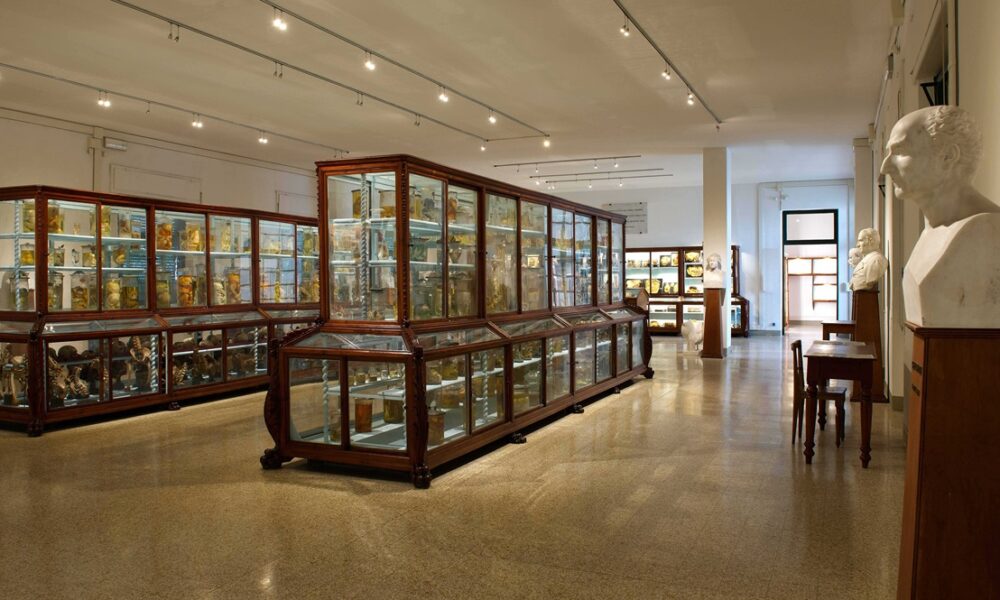
Surrounded by medieval-looking medical tools, sections of brains in jars, and other scary, pointy medical instruments in the Maude Abbott Museum, Radiology of the abdomen for a surgeon offers viewers an alternative look into human anatomy: A warm, inviting exhibit complete with brightly coloured images and playful embroidered fonts. Tsatoumas hopes to continue doing similar work in the future, with plans to create a collage of ailments of the human breast and one of the ear.
“I would like for all to marvel at the human mind and how it can assimilate its functions and be creative,” said Tsatoumas. “After all, scientific inventions are geared by talented artists and, above all else, draw attention to the wholeness of the human body.” Radiology of the abdomen for the surgeon is on display at the Maude Abbott Medical Museum in the Strathcona Building until Sept. 23.
In this week’s segment of Along Party Lines, The McGill Tribune looks into the stances of the major political parties regarding Bill 96 and Bill 21.
What are Bill 96 and Bill 21?
An Act respecting French, or Bill 96, was adopted in the National Assembly of Quebec on May 24. The bill introduces a set of amendments to the province’s Charter of the French Language, Bill 101, to further protect the use of the French language in Quebec. Under the legislation, the enrollment capacity for English-language CEGEPs will be limited to 17.5 per cent of the total provincial CEGEP population and access to English programs in French-language CEGEPs is restricted. The bill also decrees that immigrants can communicate with government agencies in a language other than French during their first six months in the province, after which public services will only be offered in French.
The government also invoked the notwithstanding clause when it ratified Bill 96. Under the notwithstanding clause, Parliament and provincial legislatures may exceptionally enact legislation that is in violation of certain sections of the Canadian Charter of Rights and Freedoms and safeguard it from legal challenges for five years. The clause is generally frowned upon, but the province also invoked it with Bill 21, an Act respecting the laicity of the State.
Bill 21 prohibits public service employees, including teachers and public defenders, from wearing religious symbols—hijabs, turbans, crucifixes, and jewellery, for example—in the workplace. Despite the bill taking effect in 2019, Bill 21 remains a controversial law in Quebec politics and has been criticized for disproportionately targeting religious minorities such as Muslim women.
Both Bill 96 and Bill 21 were adopted under the CAQ government led by Premier François Legault. Despite public opposition to the bills, Legault has remained an advocate of both and has vowed to continue protecting the French language.
Legault’s continued support of Bill 21 stems from his argument that secularism and religious freedom are not mutually exclusive. When Bloc Québécois leader Yves François Blanchet was asked about his support for Bill 96 and Bill 21 during a 2021 federal election debate, Legault was outraged by the moderator’s insinuation that the laws were racist and discriminatory. He defended the bills as exemplifying the “values of Quebec.”
Liberal leader Dominique Anglade has made it clear that her party is opposed to both bills.
A resolution was passed at the PLQ’s 40th youth wing convention on Aug. 6 to investigate the impositions Bill 96 places on anglophone and allophone students in English CEGEPs. If elected, Anglade’s government would exempt Indigenous peoples from Bill 96 and repeal the notwithstanding clause, the cap on English CEGEPs, and the six-month deadline imposed on newcomers to learn French.
Éric Duhaime, the Conservative Party’s leader, opposes the new language laws. Although a francophone himself, Duhaime held a press conference—during which he spoke English and French—condemning the bill’s linguistic policies. He hopes to bridge the Anglo-Franco divide and recognizes bilingualism as an asset for the province, not a weakness. He plans to repeal Bill 96 if elected.
However, Duhaime is in favour of Bill 21, arguing the government and its officials should remain secular before the citizens of Quebec.
Despite proclaiming that language issues should not be at the forefront of the provincial campaign, spokesperson of Québec solidaire, Gabriel Nadeau-Dubois, voted in favour of Bill 96. Québec solidaire is critical of some of its provisions, including the six-month learning period for newcomers and the neglect of Indigenous languages. The party plans to reverse the six-month grace period for immigrants and to consult with Indigenous leaders to officially protect Indigenous languages in Quebec, if elected.
Nadeau-Dubois also promised to contest Bill 21 if Québec solidaire wins the majority.
Next week on Along Party Lines, The Tribune/will break down how these parties compare on Indigenous issues, separatism, and pan-Canadian relations.
In the midst of add-drop season, any study space at McGill is filled with students frantically scrolling through the McGill course catalogue in search of the perfect class—one that will fit into their packed schedules, help them increase their GPAs, and make their lives a little easier. How much they enjoy the course is only an afterthought. Academic fulfillment is no longer the point or, seemingly, even a prevalent factor in university life. To prevent this, McGill needs to take steps to ensure that students are able to enrich themselves academically without concern for their futures.
As an exchange student from London, the add-drop process itself was a new world for me. In the United Kingdom., studying a program where you “major” in more than one subject or have the option to “minor” is rare, although options are becoming increasingly available. In most degrees, students only have a few elective courses they can take, and there is usually a small pool to choose from. The “shopping period” doesn’t really exist for courses in the U.K. As a result, there is a smaller range of difficulty between courses that are deemed “easier” or “harder”, and, thus, students take courses for interest or to fulfill prerequisites. Even sites like Rate My Professor and the amount of Reddit forums discussing what classes to take were new territory. I’ve spoken to other exchange students who have been equally puzzled by the culture of switching classes and cultivating schedules.
This raises the question: Why are students at McGill and other North American universities prioritizing their grades over what they really want to study? When students are paying thousands of dollars for their education, it is unclear what they truly gain in picking courses that stray miles away from their majors.
The overwhelming answer: To be a more competitive candidate. Both the job market and grad schools expect increasingly unrealistic standards from graduates. Perfect GPAs, unblemished academic records, along with an array of internships and extracurriculars are prerequisites. At Yale Law School, the average GPA for successful applicants is 3.94. When this is compounded with McGill’s varied course examination style and difficulty, it becomes obvious why students are hesitant to challenge themselves with courses that mean long hours and struggling grades when easier routes are available to them. The perceived rewards for high grades and GPA outweigh semesters of intellectually challenging but engaging classes.
But some contest whether this culture of picking “bird” classes is necessarily a bad thing. Not only is the motivation behind this strategy very reasonable, but students may also find themselves learning about subjects outside of their normal scope of academia. So, while I was surprised by the add-drop system, it was refreshing to see how normalized it is for students to take a variety of subjects. Arguing that this encourages a wider breadth of learning, however, can easily be countered when factoring in that most students taking these “easier” classes do not engage quite so vigorously with the syllabus as they might with a course required for their degree.
McGill needs to encourage its students’ focus on academic fulfillment. McGill contributes to the problem by allowing a disparity between course assessment styles, with some renowned for easy marking and lax teachers while others are known for intensive workloads and course content. From “Natural Disasters” (EPSC 185) to “The Art of Listening” (MUAR 211), students only need to have a browse on Reddit to get a run-down of which classes might be favourable to their transcripts. Generations of students have publicly discussed the pros and cons of certain courses, making it impossible for course reputations to not contribute to future choices. Standardizing more cohesive workloads and attendance policies across the university would be a productive start. As an institution that prides itself in “expanding minds,” McGill allow its students to learn without their grades being the main determinant of their academic journey.
On May 26, TSN’s Rick Westhead broke the news that a sexual assault lawsuit against Hockey Canada, the Canadian Hockey League (CHL), and eight unnamed CHL players had been settled. Filed on April 20, the lawsuit alleges that a young woman was sexually assaulted in a hotel room in June 2018 by those eight CHL players, including members of the 2018 Men’s National Junior Hockey Team.
To close out an evening of celebration at the star-studded 2018 Hockey Canada Foundation Golf and Gala event in London, Ontario, many of the players in attendance stepped out for a night on the town. Praise rang through the ears of the young Canadian players, fresh off a gold-medal win, and the feeling as though the city was theirs began to settle in.
After meeting one of the players at Jack’s—a staple of the university town—the young woman says the player gave her copious amounts of alcohol, isolated her from her friends, and lured her back to the player’s hotel room where the two engaged in sexual acts. Without the knowledge or consent of the young woman, the first player then invited seven others.
According to the lawsuit, the eight players sexually assaulted the young woman for hours. When she attempted to leave the room, the group directed, manipulated, and intimidated her into remaining. The number of men in the room, some of whom had brought golf clubs with them, threatened physical harm and further coerced her into staying.
The young woman says that, after the sexual assaults, the players forced her to shower and state on video that she was not fearful, intimidated, or intoxicated prior to the incident. The players’ lawyers later shared the recording with The Globe and Mail in an attempt to exonerate them from any wrongdoing.
Like the domino effect outcome of the #MeToo movement where the surfacing of one story prompted the exposure of many others, this 2018 case of sexual assault was not an isolated incident. On July 22, after receiving a report on the incident, Halifax police opened a criminal investigation into a group sexual assault that was said to have occurred in 2003 involving members of Canada’s 2003 Men’s National Junior Hockey Team. The allegations state that more than a half dozen players from the team were recorded during the tournament raping an unresponsive woman.
For young hockey players everywhere, the news came as a shock. What happens when the people you look up to, those who represent your country, use their collective power to exploit? Caiden Daley, a Western Hockey League (WHL) alumnus and member of the McGill men’s hockey team, struggled to digest the events of 2018.
“Hockey being a sport that I’ve loved for my whole life and hearing that news, opened up my eyes to what can happen,” Daley shared with the Tribune. “[Sexual assault] shouldn’t be in any culture, it’s not acceptable anywhere, and I just hope that players hear that news and take a step back and think to themselves about what hockey is about.”
The McGill Tribune / Mika Drygas
The players knew what they were doing that night was criminal. They knew that a lack of physical evidence and a video stating the assault was consensual would blur the case in a court of law. They also knew that the structures designed to hold them accountable would fail to do so—just as they had failed so many times before.
And so, while those two players went off free, traded across the country to pursue their professional hockey dreams, the young woman underwent several years of counselling and multiple attempted suicides.
Echoes of the violence inflicted by the Swift Current case have continued to ring ever since. The Saskatoon Blades in 1995. The Windsor Spitfires in 1995. The Barrie Colts in 2000. The Soo Greyhounds in 2012. The Gatineau Olympiques in 2014. The same story on repeat. Just different towns, different teams, and different players. The CHL—Canada’s major junior hockey league that represents the Ontario Hockey League (OHL), Western Hockey League (WHL), and Quebec Major Junior Hockey League (QMJHL)—has produced generations of local hockey “heroes” whose destructive actions face no repercussions.
As journalist Laura Robinson lays out in her 1998 book Crossing the Line: Violence and Sexual Assault in Canada’s National Sport, patterns of sexual abuse often stem from players’ confrontations with a litany of hypersexualized hazing rituals and sexually abusive coaches. “They are also very angry and frustrated with the powerlessness they feel, especially when they have been abused by men they looked up to and trusted,” Robinson writes. “One of the ways they believe they will get rid of these bad feelings is to transfer them to someone else.” In 1994, for instance, 135 sex crime charges were laid against the senior players, owners, coaches, and trainers of the Ontarian team, Tilbury Hawks. The case uncovered initiation “games” that centered on the boys’ rectums, penises, or mouths—rituals that are not uncharacteristic of other junior hockey teams throughout Canada.
University hockey teams cannot be sidelined in discussions of the sport’s pervasive culture of sexual violence. Misogynistic environments and assault allegations are commonplace within university sports teams, such as Boston University, the University of Michigan, and Carleton University, to name a few. In 2014, the University of Ottawa men’s hockey team was suspended in response to allegations of group sexual assault in Thunder Bay.
When asked if the recent Hockey Canada scandal had prompted any changes to education and training programs received by the McGill men’s hockey team, executive director of McGill Athletics Geoffrey Phillips told the Tribune by email, “[t]he safety and well-being of our student-athletes is always the number one priority of McGill Athletics. The messaging and support offerings to student-athletes is ever-evolving based on current social issues and how best to address them.”
Currently, in addition to completing It Takes All of Us, the mandatory online sexual violence education program for the entire McGill community, student-athletes are also mandated to complete an annual anti-hazing education course. According to Phillips, coaches hold “team building exercises throughout the year to harness a strong, inclusive environment.”
The Tribune reached out to McGill’s men’s hockey coach David Urquhart regarding the issue of toxic masculinity in hockey culture, but he respectfully declined the interview request.
Although the responses from McGill hockey representatives indicate that there are some structures in place to educate players, the normalization of sexual violence and the silencing of survivors is deeply entrenched in hockey’s too-often permissive culture. These values cannot be erased by the “It Takes All of Us” program, inclusive “team building,” and an anti-hazing education course. These surface-level initiatives are sorely inadequate, failing to acknowledge the depths of the problem endemic to male hockey culture—a problem decades in the making.
Recent parliamentary hearings targeting Hockey Canada’s cover-up of the 2018 case have expanded to investigate deeper-seated issues within the organization. Notably, the hearings revealed the existence of a multi-million dollar fund that is supported by registration fees from youth players across the country and used to pay out settlements in cases of alleged sexual assault. Hockey Canada has deployed the fund to write checks at their own discretion, allowing the organization to avoid the participation of their insurers on issues that are deemed uninsurable, such as sexual assault. Until recently, parents and players have been unaware of the fact that their registration fees are being used to cover up cases of alleged sexual assault; the fund had remained a well-kept secret for decades and is not listed in the organization’s handbook.
An investigation by The Globe and Mail revealed that the reserve fund exceeded $15 million in recent years. Hockey Canada CEO Scott Smith and chief financial advisor Brian Cairo both defended the existence of the fund because of the uninsurable nature of the settlements. Senior executives testified that Hockey Canada handles many sexual assault cases every year and has paid $8.9 million to settle multiple cases of alleged assault since 1989.
While the 2018 sexual assault case was not the first assault involving National Junior Hockey Team members, it was the first time that Hockey Canada was unable to conceal their players’ egregious actions from those outside the tightly-bound organization. It was the first case to reveal that this fund had been dedicated to settling sexual assault claims behind closed doors. It was the first to prompt the Canadian government to put an unprecedented freeze on the $7.8 million of federal funding allocated to Hockey Canada each year.
Courtney Szto, an assistant professor at Queen’s University whose work specializes in sports, physical cultures, and intersectional justice, ties these mass cover-ups to the lack of impartial third parties within sports establishments with which athletes can openly communicate their experiences.
“The lack of accountability [….] is similar when any sports organization likes to deal with issues in-house and participants are not provided with any external oversight,” Szto wrote.
“If you have an issue with a coach, who do you go to? Who can you trust? Historically, those people you would raise an issue with are also the people who determine your playing time, your salaries, and/or any other potential opportunities you might receive; hence, people learn to stay quiet because they don’t know who to trust.”
This culture of silence is not exclusive to Hockey Canada. As a country, Canada muzzles its history and past injustices—its settler colonialism, its enslavement, its misogyny—the consequences of which run through the very fabric of the nation. Despite learning about the 2018 sexual assault allegations against the CHL players that very year, the federal government did not follow up on the complaint until the news became public, failing to hold the players or organization accountable, like so many others.
The thunderous silence from current and former NHL players and coaches is disheartening as well. There was no whistleblower in 2018. Nor in 2003. The code of silence implicates all players, as it enables the dangers of hockey culture to remain unchallenged behind closed doors.
“Even if you don’t think you’re affected, you are,” Daley said. “We’d all like to change— it doesn’t just take one person, it’s a whole community. Things need to be changed and need to be taken care of and put into the right direction. And hopefully, hockey culture can keep moving forward[s] instead of backwards.”
In response to the pressures inside and out of the hockey world, Hockey Canada continues to show that they truly do not care to change. The only action taken has been the resignation of Michael Brind’Amour, former president of Hockey Quebec and the organization’s board chair. CEO Scott Smith has also continually refused to step down—a decision Szto believes obstructs any tangible change from occurring within the organization.
“Personally, I think you need to clean house at Hockey Canada for the sake of rebuilding trust,” Szto said. “I know not everyone was complicit or involved in the recent incidents that have received news attention, but, without a clean slate, there will always be questions about who knew what and when. I don’t think in this instance you can make meaningful changes with so many of the same pieces still in play.”
Despite calls from the majority of Canadians for his resignation, the Hockey Canada board has made clear that they will continue to support Smith’s reign. He was even asked to hand out medals and trophies at several tournaments this past August. This passivity on behalf of the organization illuminates their unwillingness to reform leadership and take accountability for their utter failure to protect any person or player from the dark current of hockey culture.
The NHL’s investigation into the 2018 sexual assault case is still ongoing. As the names of the assaulters have been speculated upon but not made public, there is hope that they will be met with harsh discipline.
But any hope that the hockey establishment will work to implement true change is tempered by the broken promises, closed-door cover-ups, and hockey’s code of silence. It’s a hope stifled by hockey’s continual lack of reform—a hope no one has the heart to truly believe in.
McGill’s campus is looking very different this semester as students return to fully in-person learning for the first time in over two years. COVID-19 restrictions have been relaxed, Zoom lectures are becoming a thing of the past, and campus life seems to be coming back strong. For many new and returning McGillians alike, this fall may feel exciting, daunting, and unfamiliar. The McGill Tribune talked to some students about this semester’s return to classes.
“It’s my first real year because last year all of my classes were online. I prefer in-person––I feel like at home I was less motivated, but it was maybe easier to follow the class because you could just rewatch the lectures. But even if it is harder now, I feel like I am more motivated. To see all the people and interact with them––I prefer that.”
– Alexis Shank, U2 Arts
“I’ve been much happier with in-person classes. I felt very isolated at home––I was in a little cave inside all day. Now, I have to get out. I had one in-person class last year, and now all my classes are in-person. It feels much nicer, seeing and meeting new people. While the greater social contact is great, now I’m in my classes and I hear this symphony of coughing. I might wear a mask just for my own peace of mind.”
– Johnny Carter, U2 Education
“Last year, I didn’t have any fully online classes. I always had the option to go and I liked the assurance that, if I got sick, I would be able to watch recorded lectures, but now some profs are not recording lectures. And it’s frustrating because now you go to class and hear a lot of coughing because people feel pressured to go to class. Generally, I do prefer in-person, but it was good to know if you got sick, you wouldn’t fall behind. I also wish individuals would be more responsible––at least if people could wear a mask. I don’t think it’s necessarily a bad thing that they lifted the mask mandate, but I think more insistence on responsibility would be good.”
– Mia Szabo, U1 Arts
“[The lack of COVID-19 restrictions] is weird. My roommate had COVID-19. People want to be in this post-COVID world, but we’re not quite there yet. But it does seem like when people do get COVID-19, it’s a regular occurrence. It’s manageable, but it’s also scary; it’s your first week living away from home and you get COVID-19.”
– Lucinda Silverman, U0 Arts and Science
“Last year was a bit different––I did one year of dental school, so a lot of it was online. Professors obviously had to adjust because they were healthcare professionals, which I think was responsible of them. But, at the end of the day, not everyone is going to be happy. A lot of our labs got cancelled and things had to be adjusted. But I think it was the right move because we were surrounded by healthcare people. This year, I like being in person––it feels like we’re back to normal. It’s weird to see Frosh starting again and people being more social than the past two years.”
– Kenneth Tan, M1 Medicine
“When class was online, I found it difficult to find opportunities for social interaction. Additionally, since I was starting my first year of university, the overall transition was a lot more difficult than if school was fully back in-person. The transition to going back in-person has been overall very smooth because it’s something that I’ve been wanting for a long time. Once I heard that school was going to be back […] I went in with the mentality of wanting things to return to normal as soon as possible.
[With COVID-19], I always think that it’s better to be safe than sorry because, while restrictions have been lifted, COVID-19 is still a thing, and catching it can still put a roadblock on your life. I’ve never minded masks, but I’m glad that large groups of people can gather and socialize again.”
Burnside is the vision of practicality – Alexander MacKenzie
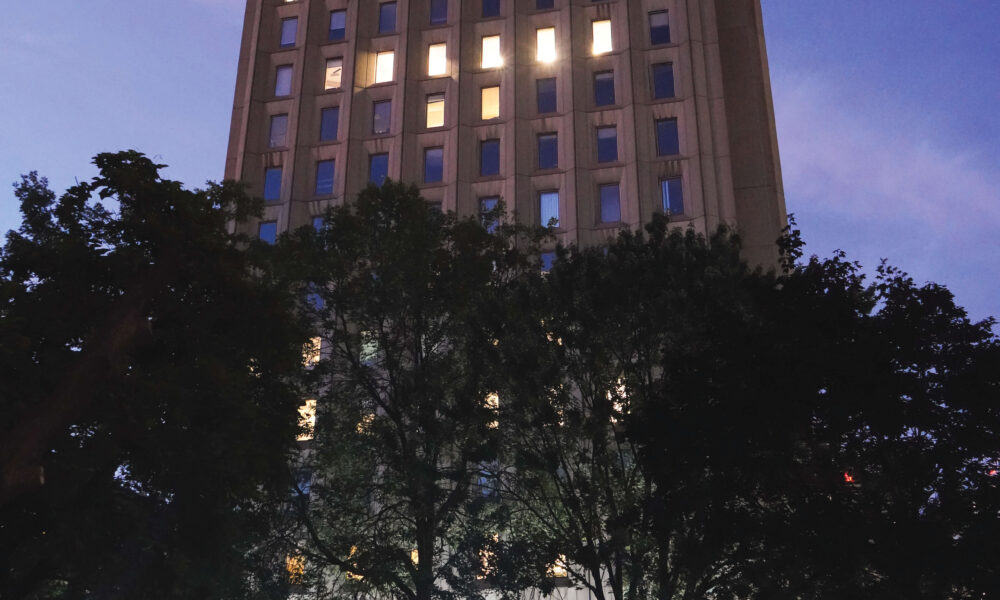
A quick glance towards Burnside Hall reveals nothing striking about its immediate design. Perhaps the most observant of oceanographers or astrophysicists studying in the building could casually point out its warm sandy colour, and wavy texture adorning the walls outside. Likely only the oceanographer, not without some degree of self-contempt, would remark that the building is shaped like sand waves on a beach. But since most students entering the building are not architects, features of this sort would go, for the most part, unnoticed. Despite having nothing extraordinary or jarring architecturally, there remain many appreciable things about the building worth students’ attention.
By far, the most enticing feature is that Burnside is located right on top of an extensive underground tunnel system, providing passages to the rest of the buildings in the science and engineering complex. The basement makes for a fantastic refuge and student space, offering a sizable yet cozy study area full of computers, which add a sentimental cybertech ambience. When the lower-level Soupe Café is open, Burnside’s basement is filled with the smell of freshly-baked pastries. Most of McGill’s sandwich enthusiasts already know about the coveted Burnside basement grilled cheese.
When entering the building from underground tunnels, students might notice the appreciable lack of crowding around and within the three spacious red elevators. The upper levels generally consist of narrow, colour-themed hallways, with space for hundreds of small rooms, many of which are typically unoccupied. Also, there are great study spaces on the fifth and 11th floors, the latter featuring cozy soundproof rooms and eight-foot-tall windows overlooking both McGill campus and Mount Royal.
Burnside Hall also possesses other purposes on McGill campus. The building was designed to allow for five additional stories if McGill were to ever need more space on campus. The top of the building houses meteorological equipment for use by students of the Department of Atmospheric & Oceanic Sciences to observe the night sky over Montreal.
As far as the average McGill student is concerned, Burnside Hall is a convenient, practical, and pleasant space. It is an invaluable centre for student life on campus and allows astrophysicists and oceanographers, along with the occasional Mathematics or Statistics student, to study, grow, and prosper at McGill.
Burnside can burn – Sarah Kayed
When it comes to Burnside Hall, McGill’s attempt at Brutalism “fakes it, but never quite makes it”. Most students consider this science faculty building to be ugly, if not depressing. From an architectural perspective, Burnside attempts to imitate the style of Brutalism and fails quite miserably, instead existing as a bleak space unfit for educational needs.
Brutalism is often characterized by an exposed concrete exterior of little ornamentation, constructed so that the interior serves as a space for social gathering. Additionally, this design approach was connected to ideas of social reform and collectivity within architecture, through a desire for equality. When looking at Burnside, one cannot help but wonder—what ever happened to political architecture?
Typically, this architecture style adopts inward-facing repetitive windows paired with hidden entrances. At Burnside, however, the façade is primarily glass, taking the spotlight away from the raw concrete exterior. The windows—spanning floor-to-ceiling across all floors—overshadow the concrete’s texture and grain, moving it away from the Brutalist concrete style.
It seems that the only actual Brutalist features of this site are the hidden entrances and the underground tunnels for ease of accessibility. The inside of the building, on the other hand, resembles a labyrinth seemingly impossible to navigate. For a structure to embody equality, accessibility becomes a key element, and, in Burnside, navigational difficulty is the most pressing design issue. No McGillian wants to be lost in a concrete dungeon looking for a lecture hall or computer lab.
A better example of the Brutalist style on campus is McLennan Library. The prefabricated concrete library incorporates a spacious interior with easy access from floor to floor; almost every aspect of the space is visible and students can complete their work in a suitable environment. Comparatively, Burnside is a naive, even hypocritical, imitation of Brutalism that creates an oppressive space for students and faculty.
Therapy. There, I said it. A word that, despite its immeasurable benefits, carries the heavy weight of unrelenting stigma everywhere it goes.
In the industrialized world, 25 per cent of adults experience significant mental health problems each year that require intervention in the form of psychotherapy and/or medication. In particular, university students are disproportionately affected by mental health issues such as anxiety—with 56.8 per cent of McGill students reporting a mental health disorder in 2021. These shockingly high rates are largely attributed to the extreme levels of academic stress that university students experience.
Such feelings of self-doubt are becoming increasingly common amid the COVID-19 pandemic. Mental health impostor syndrome, when someone feels like they are not “suffering enough” to seek mental health treatment, is one of the most common modern-day barriers to accessing care.
In stark contrast to the stigma surrounding mental health, societies around the world place significant importance on physical health and wellness. From going to the gym in the mornings to brushing one’s teeth twice a day, to routine checkups at the doctor’s, people spend hours every day preoccupied with their physical bodies.
Yet, when it comes to their minds, people are less willing to take preventative measures to invest in their mental wellness. Mental health challenges can be as severe and as deadly as physical ones, and the two can even exacerbate each other..
When it comes to treating mental illnesses, it has been shown over and over that the most effective means is therapy, while therapy paired with medication is more effective than either method alone.
Despite initially being designed to help people struggling with mental health issues, therapy can provide anyone with a plethora of techniques to enhance their daily life. From distraction strategies like stress-relieving activities to breathing exercises andmindfulness, therapists can offer a personalized toolkit to help better manage one’s unique challenges. Further, therapists are trained to be unbiased and confidential listeners that can aid in navigating a broad scope of circumstances.
Think of the number of times that you have been to your family doctor for routine checkups or mild symptoms like a sore throat or cough. Just as we go to our family doctors when we are feeling physically well, we should encourage the practice of going to a therapist when we are feeling mentally well. Attending therapy regularly can help alleviate future mental health crises while identifying particular issues that one may need to work through.
Regardless of society’s portrayal of therapy as something reserved for those with the most severe mental illnesses, everybody can benefit from the techniques and tools that a therapist can provide. Even those who do not feel that they need therapy could always benefit from adding another caring and supportive individual to their circle of trust if they are able to do so.
It is important to acknowledge, however, that therapy is not available to everyone for various reasons, including economic and accessibility factors. Reaching out to mental health professionals and taking the first step can feel impossible when therapy sessions in Montreal range from $90 to $150. However, there are networks that offer sliding scales and accommodations based on income level and identity.Otherwise, there are other options for students in Montreal, such as the Canadian Mental Health Association and a range of telehealth services. With offerings ranging from free phone and in-person services, there has never been a better time to reach out for help.