
Latest News

Know Your Athlete, Soccer, Sports

Know Your Athlete: Mara Bouchard

Starting university is a challenging time of transition for all first-year students, both academically and socially. For student athletes, this period is particularly difficult, as they are presented with the additional challenges of meeting teammates, coaches, and staff that will become critical figures in their daily lives.

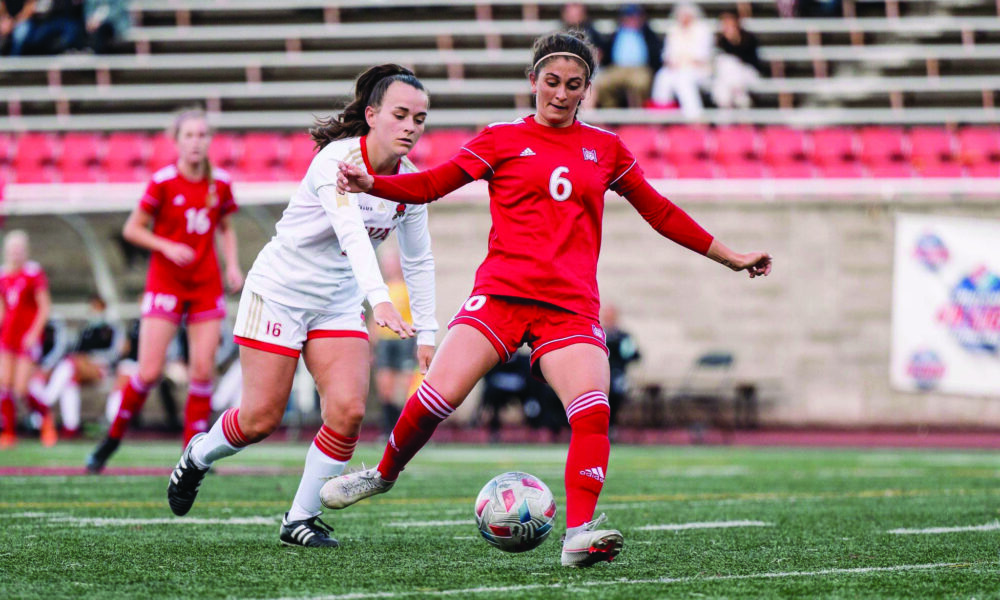
Mara Bouchard, U1 Arts, is a first-year student on the McGill Martlets soccer team who previously played for Vanier College in Montreal. Despite the barriers that many first-year student athletes face, the midfielder from Granby, Quebec found the adjustment to university life to be smooth and straightforward. 

“As a rookie and first year on the team, I was very much included by the rest of the players and veterans,” Bouchard said in an interview with The McGill Tribune. “I think being from Quebec made it easier to bond with the team, as there are a lot of other members of the squad from this province.”

Bouchard performed well in her rookie season with the Martlets, helping McGill achieve the second best defensive record in the league. Bouchard cited her past experience at the National High Performance Center (CNHP) directed by Soccer Quebec in Montreal as a reason for her success. 

“Soccer-wise, I thought it was a great season for me,” Bouchard said. “I was expecting to do well coming from a strong soccer background and playing at CNHP. Especially for my first year, I ended up in a place that I was happy with.” 

The Martlets had an especially impressive showing this season given the larger share of newcomers to the team. The squad placed third in the RSEQ, finishing the year with a 7–4–3 record. Although the Martlets fell short in the playoff semi-final game against Université Laval, they ended the season on a hot streak, winning their final four of five regular season matches. In Bouchard’s eyes, this late-season push proved the team successfully achieved their goal for the season. 

“The result of the semi-final against Laval was obviously not the one we had hoped for,” Bouchard said. “Our goal [for] the year was to become the most improved team. I think we accomplished and proved our goal to everyone, including ourselves.”

Heading into the Fall 2022 season, Bouchard is optimistic about the team’s future and is looking forward to building on this past year’s momentum.

“This year, finishing third was certainly a success for the program, particularly given the shortcomings of the recent past,” Bouchard said. “Our objective for next year is to continue to improve and earn a playoff spot once again. Our coaches have done an excellent job so far in my time here, and I know they are going to push us further to properly develop our individual and team play while we all progress toward the ultimate goal of a championship.”

Off the pitch, Bouchard is halfway through her first year as a psychology major. However, Bouchard’s top priority after university is to continue pursuing her love of and passion for the beautiful game.

“After McGill, I definitely want to keep playing soccer,” Bouchard said. “I am hoping I can find a pro contract in Europe somewhere and hopefully play professionally for a few years after I graduate. If this plan does not work, I will use my degree to pursue my goal of becoming a psychologist. I would love to be employed in this field in the future, and am enjoying studying the subject so far here at university.” 

Next August, training camp will build upon the strong bonds forged between players and coaches throughout this season. Bouchard looks to lead the midfield next season amongst a dedicated squad that is poised to improve on this season’s success.  
McGill, Montreal, News

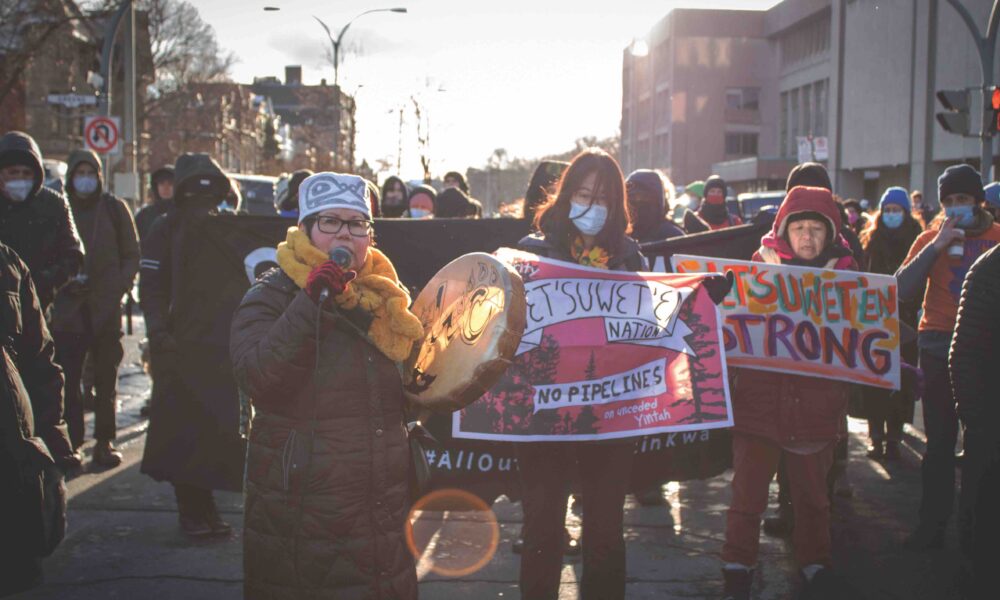
Montrealers, McGill students march in solidarity with Wet’suwet’en land defenders

The Montreal chapter of the activist group Convergence des luttes anticapitalistes (CLAC) hosted a protest in support of Indigenous sovereignty on Nov. 27, marching in front of and around the Montreal office of the Royal Canadian Mounted Police (RCMP). McGill students and Divest McGill members participated in the demonstration alongside other environmental, Indigenous, and other activist groups.

The primary focus of the protest was a recent escalation of the construction of TransCanada Energy’s Coastal GasLink (CGL) pipeline’s through the unceded territory of the Wet’suwet’en First Nation in British Columbia, which has been ongoing since 2019. The project has garnered much criticism, as it began without the proper consent of Wet’suwet’en, and police have been quick to use force to suppress dissenters, using police dogs, destroying property, and threatening people with rifles. This November, the RCMP invaded resistance camps—like the Coyote Camp—violently arresting activists and journalists. 

Marlene Hale, a land defender from the Small Frog Clan of the Wet’suwet’en nation, spoke at the protest and expressed her frustration with the Canadian government’s seizure and occupation of their land. Hale described how government officials avoided going through the proper channels of Wet’suwet’en leadership for their consent, instead seeking approval from the twenty band councils, who all signed on to the project. Hale brought this up to Prime Minister Justin Trudeau at a town hall in Saint-Hyacinthe, Quebec back in 2019.

“[I asked him,] ‘how do you not know that [for] consent in our nation, you’re supposed to go to the hereditary chiefs?’” Hale said. “They know who’s going to sign, who is the weak link, and who they can get [consent from] to do the work they want for as little as they can [….] The consent was not given by the right land title holder, which is the hereditary chief, Woos. Right now, he is on his own territory fighting [the RCMP] to gain access to his own home.”

The RCMP has confronted Wet’suwet’en land defenders several times over the last couple of years in an attempt to quell resistance to the pipeline. From Nov. 19 to Nov. 20, they had arrested 29 people, including two journalists, in British Columbia; protestors were trying to interfere with the pipeline’s construction in order to protect the land. The latest wave of arrests spurred protests across the country, including the one in Montreal this past Saturday. Eve Saint, the daughter of Wet’suwet’en hereditary Chief Woos, described the RCMP’s treatment of the protesters and journalists who were arrested, including Wet’suwet’en land defender Sleydo’.

“I just gotta give a lot of love to Sleydo’ because she is a mother, she is an Indigenous Wet’suwet’en mother, [and] she is raising her babies on the Yintah, on the land,” Saint said. “And now, these courts have […] criminalized her and [are] trying to keep her from moving freely on her own land, on her own territory.”

Saint herself has been on the frontlines of the fight; she was arrested alongside three others at Gidimt’en Checkpoint on Feb. 7, 2020 while defending Wet’suwet’en land. Saint condemned the violence the RCMP has inflicted on her people over the past week.

“We have elders that are being dragged off the Yintah, that are being denied their medication, and that had to go to the hospital,” Saint said. “This is at the hands of the RCMP. This is how they look at Wet’suwet’en people, this is how they look at Wet’suwet’en women, mothers, matriarchs, hereditary chiefs. They point their guns at us when they want us off that land so they can steal it. It is stolen land. They want us dead.”

After Saint finished speaking, the group marched toward downtown Montreal, followed by police officers who maintained a heavy presence throughout the demonstration.

In a subsequent webinar on Nov. 28, Ellen Gabriel, who is part of the Turtle Clan within the Mohawk nation of Kanehsatà:ke, compared the situation to the Oka crisis that occurred in 1990. At the time, the Sûreté du Québec (SQ) provincial police force violently invaded Kanehsatà:ke land that developers wanted to turn into a golf course. Following SQ raids of Mohawk territory, there was a 78-day standoff as the police faced down Mohawk warriors defending their land. Then-Quebec Premier Robert Bourassa eventually brought in the Canadian military to replace the SQ, and the standoff ended whenMohawk warriors had to surrender.

“The fact that the RCMP are being the root squad for Coastal GasLink as the SQ were for the municipality of Oka and the rich developers means that we haven’t gotten very far in the reconciliation process that Trudeau and others keep talking about,” Gabriel said. “This is not reconciliation. [Indigenous peoples] were here long before Europeans arrived, and we are still being treated, 500-plus years later, as if we are disposable, as if our rights don’t matter.”

McGill, News, SSMU

SSMU Legislative Council approves motion calling for resignation of President Daryanani

The Students’ Society of McGill University (SSMU) Legislative Council convened on Nov. 25 for their last meeting of Fall 2021. During the meeting, councillors approved a motion to urge SSMU President Darshan Daryanani to submit a letter of resignation within 48 hours of the motion being ratified by the Board of Directors (BoD). 

The motion, brought forth by management representative Nathaniel Saad, pushed for Daryanani to be held accountable for failing to fulfill his presidential responsibilities as chief officer and spokesperson of the Society. While presenting the motion, Saad cited the president’s absence from Legislative Council sessions and Executive Committee meetings—which Daryanani is required to attend as president—since the start of the term. 

“I feel that the Legislative Council has been left in the dark,” Saad said. “The president needs to represent members of the student body which he is not doing, [and] we are currently unaware of whether he is being paid [….] This is an unsustainable situation and allows the situation to potentially replicate in the future. It is a dangerous precedent to set.”

Should the president fail to issue a letter of resignation, the motion dictates that the Legislative Council, pursuant to consultations from students and faculties, will call for a special SSMU General Assembly within the first week of the winter semester to vote on whether the president should be impeached. 

The session’s question period revolved around the president’s absence. SSMU executives reaffirmed that the matter is confidential. 

“When individuals go on leave it is an HR matter,” vice-president (VP) Finance Éric Sader said. “As such it is not relevant to the Legislative Council or the student body to know the precise details. All that is important is that the president is on leave and the Society is functioning quite well.”

When asked why the absence of the president and the general manager has not been communicated to the student body, specifically through SSMU’s most-used student communication channel—the SSMU listserv—vice-president (VP) Internal Sarah Paulin replied  “no comment.” 

The motion passed with 19 council representatives in favour and nine abstaining. During the roll-call vote, all five executive members present abstained.  

In other matters, arts representative Yara Coussa brought forth a motion, seconded by arts representative Ghania Javed, concerning amendments to the internal regulation of student groups. After a debate period, during which SSMU executives disclosed concern about a lack of consultation, the motion was postponed. 

Executives argued that approval of the motion contradicts the duties of the executives. For example, the motion proposes to limit the VP External’s discretionary ability to provide funding, which is granted by the Society’s constitution

Coussa apologized to the executives for the lack of consultation, and stated that the personal refutes were unnecessary.  

“I understand that we have not completed the necessary consultations for this motion and for that I apologize,” said Coussa. “However, there is no need to be rude and impolite to the mover and seconder who wanted to emphasize the voices of advocacy groups on campus [….] Being a councillor is a learning curve, and we are not perfect here.”

Moment of the Meeting: 

Councillor Saad called for the vote on the “motion regarding the absence of the SSMU president” to be conducted through a roll-call rather than through normal procedure. 

Soundbite: 

“You have all been councillors for a semester. You have all had a chance to speak to each other and debate on contentious topics. I ask that you have compassion for your fellow councillors and some amount of respect for the members of the gallery [….] I require that you please respect these people [….] It is not okay to use the type of personal and direct attacks that we have seen.”

—Speaker of Council Alexandre Ashkir responding to comments that were made concerning the motion on amending the internal regulations of student groups. 

A previous version of this article incorrectly stated the normal SSMU voting procedure keeps the voters anonymous. In fact, a voting record is posted on the SSMU website after every meeting. The Tribune regrets this error.

McGill, News

McGill changes masking policies amid rise in COVID-19 cases on campus

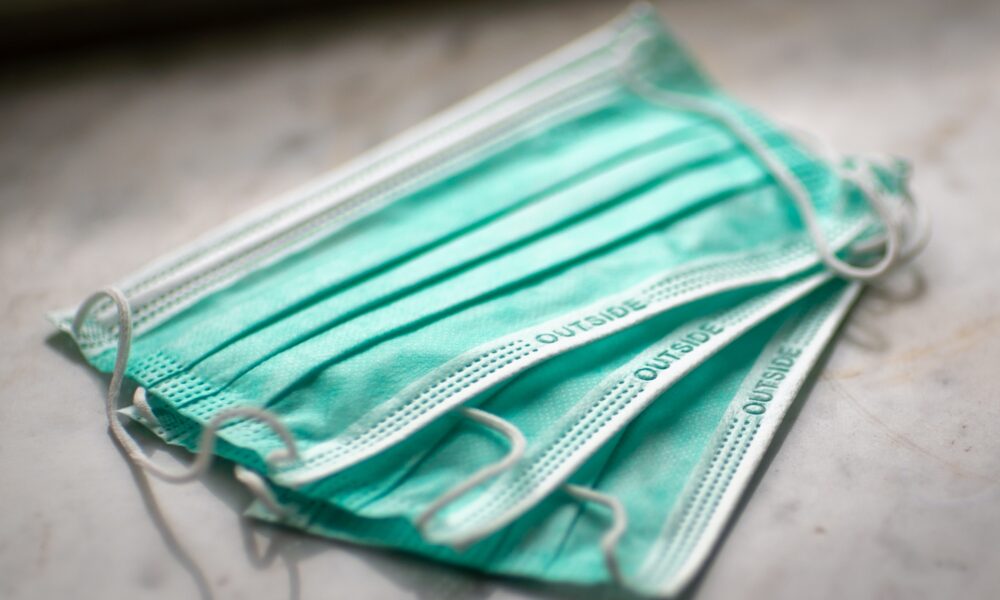
McGill announced a new masking guideline on Nov. 19 in a university-wide email from the co-chairs of the new Recovery and Operations Resumption Committee (ROR), associate provost (Teaching and Academic Programs) Chris Buddle and deputy provost (Student Life and Learning) Fabrice Labeau. The update stipulates that community members should replace their procedural masks after every four hours of use. The email also included other updates on McGill’s COVID-19 management, such as details on its rapid testing pilot project. 

The masking directive comes in the wake of rising cases on campus—there were 28 confirmed cases between Nov. 7 and Nov. 20—and is in line with the Quebec government’s contact tracing protocols. These protocols dictate that those wearing a fresh mask—i.e., one that has been worn for less than four hours—are considered “low-risk” if exposed to COVID-19 in a classroom. Those wearing a mask for more than four hours when they are exposed in a classroom will be deemed “medium or high risk” and will be required to get a COVID-19 test. 

In an email to The McGill Tribune, Frédérique Mazerolle, a McGill media relations officer, stated that the university is aiming to make this mandate as easy as possible to adhere to.

“Masks are available at the entrance to most buildings on our three campuses,” Mazerolle wrote. “It is important to stress that a number of preventive measures will continue to be in effect for the [Winter 2022] semester. The health and safety of our students and staff is the guiding principle of all of our planning. Our mission is to provide students the safest and best experience possible despite the current global pandemic.”

Despite Mazerolle’s insistence that masks are readily available to all, some, like Nagashree Thovinakere, a graduate student in the Integrated Program in Neuroscience, feel they have to stockpile masks to comply with the new directive. 

“I have access to masks in the lab where I work, but that is not the case elsewhere on campus,” Thovinakere said in an interview with the Tribune. “So what I have been doing is carrying extra masks with me.”

Bridget Griffith, a post-doctoral researcher in the Department of Epidemiology and Biostatistics, stated that the expense of buying masks—when not readily available on campus—adds to the challenge of compliance. Griffith also thought that the policy might be more effective if it drew attention to better mask hygiene and more consistency in wearing masks correctly. 

“Often, I see people not wearing the mask properly, wearing the masks multiple days in a row or storing the mask in their pocket,” Griffith said. “This puts people in situations more risky than they think they are.”

Ashika Jain, a pharmacology graduate student, on the other hand, feels that McGill has done an adequate job in making masks available to the student body. However, Jain mentioned the new requirement is still somewhat challenging to comply with because of the nature of lab work.

“It can be difficult for me [to change my mask every four hours] when I am doing an experiment in particular,” Jain said. “But, since the accessibility for masks has increased, it is feasible.”

Mazerolle explained that McGill’s new masking guideline is just one of many initiatives currently in place at the university—McGill has also begun a rapid COVID-19 testing project in the Trottier Engineering Building Cafeteria.

“The voluntary rapid COVID-19 testing pilot project for asymptomatic people has been used by more than 500 students, faculty, and staff since its launch on November 8th,” Mazerolle wrote. “The initiative is open to any student, faculty or staff member who wishes to be tested. Individuals that have tested positive are directed to get a confirmatory (PCR) test from an authorized testing site and to self-isolate.”

The results of the rapid test arrive within 15-20 minutes. The testing project is set to continue for the rest of the Fall 2021 term.

McGill, News

McGill holds first in-person convocation since onset of COVID-19 pandemic

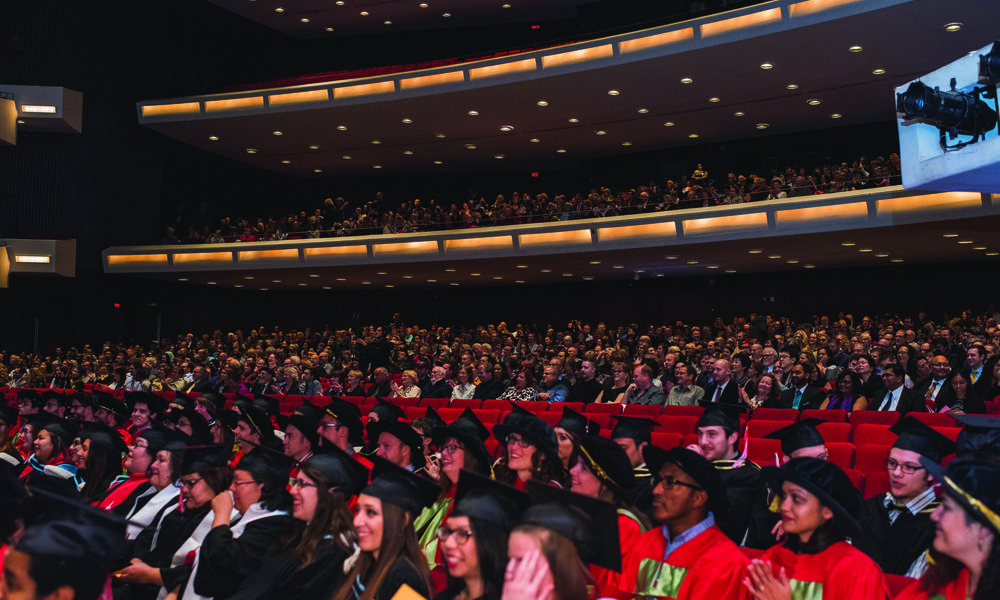
McGill held its Fall 2021 Convocation ceremonies at Place des Arts on Nov. 25 and Nov. 26, marking the first time that convocation has taken place in-person since Fall 2019. There were four separate ceremonies, two on each day, to honour the approximately 700 students who completed undergraduate, graduate, or certificate programs at McGill as of August 2021.

The university announced that the Fall 2021 convocation would be in-person in an Oct. 22 university-wide email sent on behalf of principal and vice-chancellor Suzanne Fortier. In an interview with The McGill Tribune, Sireena Divecha, a member of the Fall 2021 graduating class who earned a degree in materials engineering, recalled waiting anxiously for the news.

“I’m so happy. It’s the first convocation since COVID that’s going to be in-person,” Divecha said. “I’m so glad I made it. All through summer I was hoping, waiting for the email where they said it is going to be in person.”

The university implemented a number of COVID-19 safety measures, such as checking vaccination status and enforcing mask mandates, to protect graduates and guests. Sina Hashemi, a member of the Fall 2021 graduating class who received a certificate in oral and maxillofacial surgery, spoke to the Tribune after the first convocation service. Hashemi expressed gratitude that the university, in his experience, closely adhered to COVID-19 measures. 

“[The ceremony] was very nice,” Hashemi said. “I noticed they took all the precautions, like cleaning the microphone after every speaker. It was really nice to be back and see everybody, all the graduates sitting together with their families and having live music and whatnot.”

Aliia Shakirova, a member of the Fall 2021 graduating class who obtained a master’s degree in atmospheric and oceanic sciences, felt for her friends who only had online ceremonies.

“I had a few friends who graduated last year, and they feel very sad that they don’t have any convocation in person,” Shakirova said. “I am from Russia, and I was doing a Bachelor’s in Moscow and we didn’t have any sort of convocation at all, so that’s like the first experience for me, so I’m very glad.”

Frédérique Mazerolle, a McGill media relations officer, explained in an email to the Tribune that in-person ceremonies are being planned for those who had virtual convocations—the Spring 2020, Fall 2020, and Spring 2021 classes.

“This Fall’s ceremonies only included the Fall 2021 Convocation cohort,” Mazerolle wrote. “However, the University is actively planning the in-person ceremonies our past cohorts so richly deserve, the first of which will take place in Spring 2022. Invitations […] will be sent in the coming months. McGill will continue to take a prudent planning approach that allows us to adapt as the health and well-being of our community remains a top priority.”

In addition to its convocation ceremonies, the university held an online Indigenous Scarf Ceremony on Nov. 22—a tradition it introduced in 2011— to recognize the 91 First Nations, Métis, and Inuit students in the Fall 2021 graduating class. This year’s ceremony involved speeches, live music from Mi’kmaq performer Don Barnaby, and the presentation of specially-designed scarves. In his speech, provost and vice-principal (Academic) Christopher Manfredi commended the graduates for their hard work and reaffirmed the university’s dedication to reconciliation.
“You have many reasons to be proud of yourselves and to feel confident in your abilities,” Manfredi said. “As you embark on your next chapter, know that McGill will continue the important work outlined in our 52 calls to action with the aim of truth and reconciliation with Indigenous communities.”

Science & Technology

CHIME telescope maps the expanding universe

On Apr. 28, 2020, an unusually intense fast radio burst (FRB) was detected by the Canadian Hydrogen Intensity Mapping Experiment (CHIME) telescope located near Penticton, British Columbia. Although it was only partially captured by the telescope, the radio burst was intense enough in magnitude that, according to scientists working on the project, it outpowered the average detected FRB by a factor of 15. Upon detecting the fast radio burst, CHIME observers manually sent out an astronomer’s telegram to other astronomers observing that region of the sky.

“[An astronomer’s telegram] is a one-paragraph blurb sent out to the community to basically say ‘hey, I detected something, you guys should point your telescopes at it,’” Paul Scholz, a fellow at the University of Toronto’s Dunlap Institute for Astronomy and Astrophysics, explained to The McGill Tribune. “[Observers using x-ray telescopes] looked back at their data and found that there was also an x-ray event at the time of the fast radio burst.”

In conjunction with data other telescopes provided, astronomers discovered that a magnetar located in the Milky Way galaxy was the cause of the fast radio burst. Functionally a neutron star with an immense magnetic field, a magnetar would be capable of producing the type of fast radio burst that CHIME detected.

The CHIME telescope itself has a relatively unusual look for a telescope. Resembling four conjoined halfpipes, CHIME is able to survey a much larger swath of the sky than most other radio telescopes. In addition, the telescope has a broad frequency coverage of 400 to 800 MHz, making CHIME ideal for mapping the presence of hydrogen gas. Since hydrogen gas is the most abundant element in the universe, measuring its expansion rate allows cosmologists to find the expansion rate of the universe itself.

“Five to seven billion years ago, [the universe] started accelerating outward. The slowing down diminished and now it’s expanding more rapidly every day,” Mark Halpern, a professor in the physics department at the University of British Columbia, said in an interview with The McGill Tribune. “We’re trying to explore this shape change in the expansion history. The way we would like to do that is to measure how fast things are moving and how far away they are, looking back in time.”

A side proposal for CHIME was to monitor the radio burst emitted by pulsars visible from the northern hemisphere. Pulsars are neutron stars capable of producing FRBs much like magnetars, but with steady recurring pulses that magnetars lack. However, the project increased in scope, aiming to monitor signals from a wide range of FRBs; the difference was that their origin was completely unknown.

“Near the beginning of CHIME, we realized that it would be extremely useful for detecting fast radio bursts,” Scholz explained. “In the decade before CHIME started up, there had been around 50 FRBs detected. We went from 50 FRBs […] to 500 FRBs in a year.”

So far, CHIME has been able to map over 1000 FRBs, including the magnetar detected in April 2020. This has allowed scientists to conclude that magnetars are at least one possible cause for some of the FRBs detected by CHIME. 

To speed up the identification process, a new system was set up to make the data much more accessible to the wider scientific community. The system, called CHIME VOEvent Service, releases curated samples of the detected FRBs with their original frequency and size. This automation increases the speed at which the detection of fast radio bursts can be communicated to other telescopes, allowing them to work more efficiently with each other.

“We can expect many new observations of FRBs to be taken by a variety of telescopes around the world, as they respond to the VOEvent trigger just moments after an FRB occurs,” wrote Andrew Zwaniga, the lead developer of the CHIME/FRB VOEvent Service and a research assistant in the physics department at McGill, in an email to the Tribune. “This will give a new window into the kinds of signals that may accompany FRBs, such as optical light, X-rays, and gamma-rays. This could be crucial to understanding the engine that produces an FRB.” 

As it enters its fourth year, the project continues to accumulate data. With every passing year, astronomers get closer and closer to uncovering further glimmers of the mysterious workings of the universe.

Commentary, Opinion

Movember should spotlight BIPOC men’s mental health

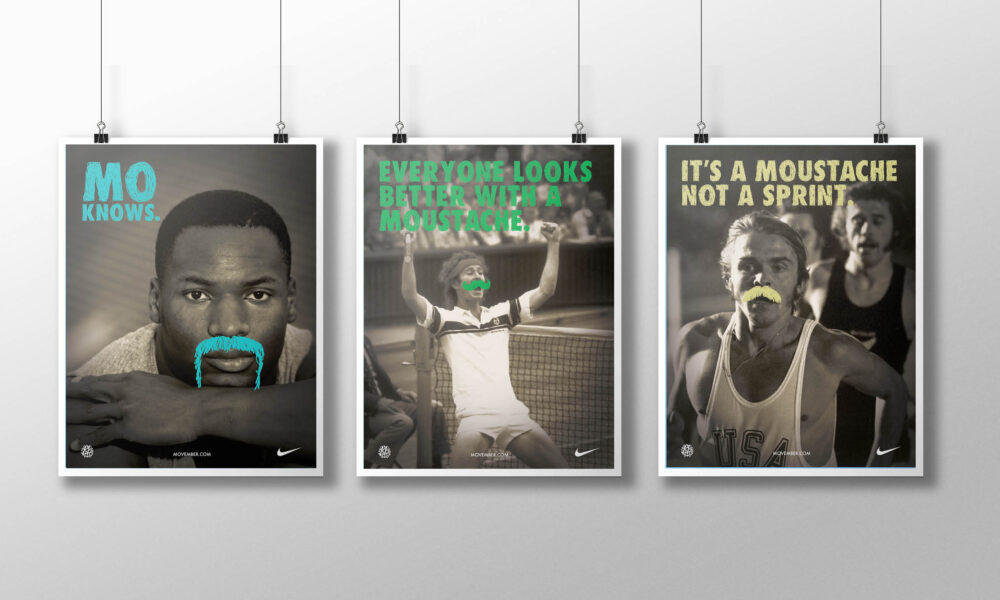
The Movember movement’s popularity has risen over the past decade since its founding in 2003. Movember is an annual event where participants grow moustaches during November to raise awareness for men’s health concerns, primarily cancer. Recently, however, they expanded their mission to support men’s—often overlooked—mental health struggles. In Canada, men account for 75 per cent of suicides, linking to pervasive stigma around mental health. Many organizations like Movember are working tirelessly to dismantle this culture and destigmatize men’s mental health. 

Certain marginalized communities face distinct challenges when it comes to their mental health and their access to support. The lack of diverse voices within discussions of men’s mental health must be brought to light to address concerns unique to BIPOC men, and Movember must take an intersectional approach to create universally effective campaigns. 

BIPOC communities historically and currently face systemic discrimination, and harmful stereotypes continue to affect the way Black men are treated in medical and social spheres—discouraging conversations about mental health. This rhetoric comes from within communities and from institutions that have historically discriminated against racialized men, such as school systems. Many view mental illness as a personal shortcoming rather than a real, diagnosable, treatable reality. When this reluctance to address mental health is paired with racism, the consequence is Black men often exhibiting searing hatred and distrust toward not only the system, but mental health treatments, and even themselves. Given that BIPOC communities face systemic discrimination in healthcare, there is often a lack trust in the fields of psychology and therapy. But, there is also a gap in representation in psychology. Due to a lack of analogous life experiences, white clinicians frequently underestimate the effects of racism on a person’s mental health, resulting in poor quality of treatment. This lack of diversity widens the gap of experience and knowledge regarding various traumatic and life-altering experiences between physicians and therapy-seeking individuals. 

This year, a move was made toward addressing mental health concerns amongst racialized men through a partnership between Contiki and Movember. This included a series of virtual panels to discuss challenges to BIPOC mental well-being. The panels aimed to offer tools and methods that men can take to support and empower themselves and others. This is an excellent step forward to showcase the particularities of racialized men’s mental health and help tackle the issue of lack of resources and treatment. 

When speaking to McGill students about their work load, there is often a consensus: McGill is notorious for its academic rigour and high expectations. The reality is that many students risk their mental or physical health in order to excel in their coursework. BIPOC students face especially harmful situations when McGill’s demanding academic environment is paired with racially rooted stigma around mental health. McGill, therefore, must increase their mental health resources for their BIPOC students: The university should hire counsellors who can cater to the BIPOC student population. Frameworks that centre white students’ experience cannot be expected to work for racialized individuals.  


McGill seems to have understood this to some extent; they have recently started to offer mental health resources for the BIPOC community. Particularly, the Student Wellness Hub offered a limited time workshop series called “Being Black at McGill.” The workshop series was a chance for Black students to share their experiences while reflecting on the impact racism and discrimination can have on their mental health. The workshops’ popularity indicates the need for McGill to offer more resources and campaigns to suit the needs of BIPOC students. Movember is a strong and poignant campaign because men’s mental health continues to be overlooked, but we must pay careful attention to the individuals and communities who face the brunt of it and make change for them—because we see them and they deserve more. 

Know Your Athlete, Sports

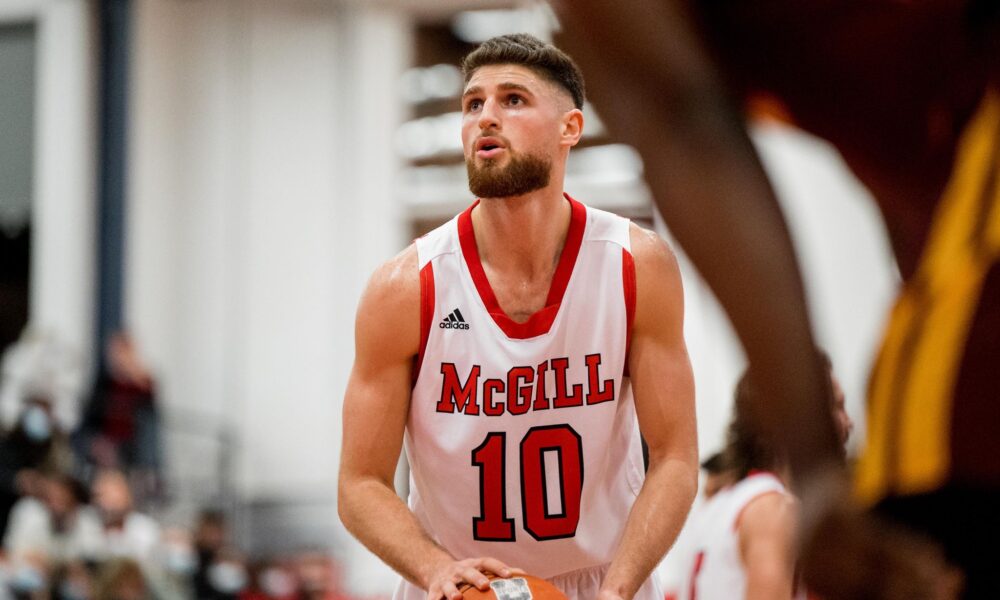
Know Your Athlete: Jamal Mayali

Jamal Mayali, a fifth-year Political Science student, was named the McGill athlete of the week on Nov. 15 after steering the Redbird basketball team to a win in their opening game of the RSEQ season against Concordia. In 29 minutes of court time, he made nine of 16 field goal attempts and six of 12 attempted three-pointers. With this impressive game record, Mayali is a player to look out for on the Redbirds squad this season.

As a product of Bill Crothers Secondary School, a prestigious sports academy in the Greater Toronto Area, Mayali arrived well-suited to his position on the McGill team. The academy has a gifted athlete program, which exposes students to job opportunities in a variety of sports fields such as management, promotions, coaching, and health sciences. 

“I learned a lot [at Bill Crothers] from the coaching staff to older veteran players. [The school] helped me to get [attention] from university schools [across Canada],” Mayali said in an interview with The McGill Tribune

After graduating from Bill Crothers in 2017, Mayali enrolled at McGill and has played basketball for the Redbirds since his first year.

Last year, he was also awarded the opportunity to play overseas for the Palestinian National Basketball team in the 2021 FIBA Asia Cup. The opportunity to play in the Asia Cup was a culmination of Mayali’s childhood dream of representing the Palestinian National Basketball team.

“The [Palestine Basketball] Federation has been reaching out to me for a couple of years now. [However], I didn’t have time to play for them before as I was in university,” Mayali said. “The pandemic presented an opportunity to play overseas [as the RSEQ season was suspended].”

University can be tough to navigate, especially for student athletes. The academic demands and the athleticism required to play varsity sports can take a toll on one’s mind and body. Mayali was honest in admitting his journey at McGill as a student athlete has not been easy.

 “[To be a student athlete] is tough, I wouldn’t lie to you,” Mayali said. “We practice almost twice a day, six to seven days a week, and with school you have to be able to manage that too.” 

Apart from basketball, Mayali has a keen passion for martial arts. He competed in boxing as a child and even wanted to pursue it as a career at one point. However, given the full-time demand of the sport, Mayali, on the advice of his mother, decided to pursue basketball and has kept the childhood passion at bay—for now. 

“[My mother] said, ‘You got to get a degree first and maybe after school [you can consider] fighting again,’” Mayali recalled.

As a student athlete, Mayali sees sports, and in particular, team sports, as an important part of university life. 

“Individual sports are great, and you learn a lot of things from them, but [the skills] you learn from team sports apply a lot to the real world,” Mayali said. “There are a lot of things only sports can teach us.”

The troika motivating Mayali to play basketball at the varsity level is his country, his parents, and his teammates.

“[To play for] my country Palestine motivates me [along with] the commitment that my parents have put into me and supporting my goals since I was young, and my teammates,” Mayali said. To him, the Redbirds Basketball team is “kind of like an army regiment—you are fighting for the guy next to you.”

Features

From feminism to feminisms

I’ve lost count of the number of times I’ve brainstormed the perfect slogan to scribble on my cardboard sign right before a protest. Almost always, I end up settling on something I deem to be just so-so. The same thing happened in January 2017, a day after Donald Trump’s inauguration, when I joined what felt like the rest of the world at the Women’s March in Washington D.C. for possibly the largest single day of protest ever, cardboard sign in hand. 

While I didn’t have a “pussy” hat—pink hats with little cat ears sparked by then-president Trump’s comments about grabbing women “by the pussy”—I was the stereotypical attendee in almost every way: A white 15-year-old girl, passionate, idealistic, more than a little naive, and fully prepared to have no voice the following day from all the chanting and screaming.

I think this is the side of feminism many relatively privileged girls and young women are introduced to first. It’s made readily available to us. It’s the stuff that makes the news. —iIt’s loud, and it’s flashy. I don’t say any of this to belittle protesting, or this brand of feminism more broadly, but as I’ve grown up, I’ve realized how many other forms feminism can take.

It turned out that what I once saw as a relatively homogeneous movement was much more site-specific than I had thought. For example, In Washington D.C., where I’m from, for example, the feminism I engage with in Washington D.C., where I’m from, is often entangled with federal politics: Which senate and congressional races are looming, whether the candidates are progressive or regressive on so-called “women’s issues,” and so on and so forth. Only when I got older did I learn about other feminist movements other forms of feminism taking place in my city, namely Black feminist organizing like Jaimee A. Swift’s Black Women Radicals. These non-mainstream forms of feminism rarely receive marginal the same external validation and media coverage, but nevertheless carry out vitally important work.

While it’s easy to think of feminism as only the sort of concrete and easily -identifiable activism we see in the news, like Women’s Marches, in reality, it encompasses much broader, more nuanced movements, ideologies, and art forms. This is probably why Alexandra Ketchum, a faculty lecturer in McGill’s Institute for Gender, Sexuality, and Feminist Studies, offered me thesome sage advice to “: “I would go with plural of ‘feminisms’ rather than single ‘feminism.,’” she said. 

Traditionally, scholars have summarized the historical stages of the feminist movement into three, and more recently four, “waves,” each characterized by a set of core principles and practices. As the story goes, during the first wave, first-wave feminists were mostly preoccupied with securing the right to vote for white women, while second-wave feminists took up a broader range of issues, like reproductive rights, the wage gap, and more, rallying around the cry “the personal is political.” Third-wave feminists rejected much of prior feminist thought, further challenginged notions of gender and sexuality, and began to advocatinge for the feminist movement to adopt a more an intersectional approach. 

Behind the Bench, Sports

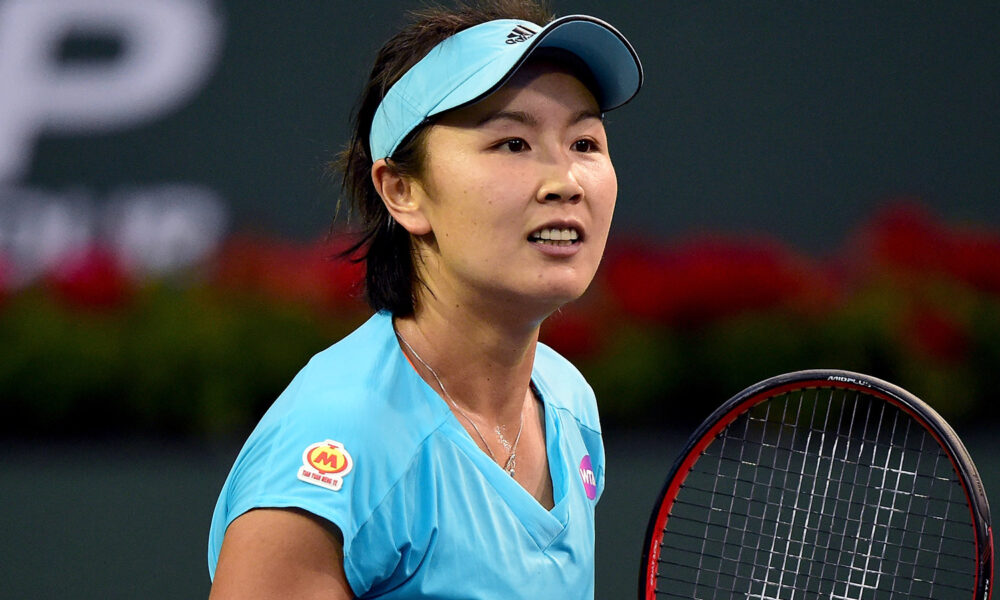
Peng Shuai resurfaces, but justice for survivors is nowhere to be found

Content Warning: This article discusses sexual violence. 

On Nov. 2, Chinese tennis player Peng Shuai posted a statement to Weibo, a Chinese social media platform, accusing former vice-premier Zhang Gaoli of sexually assaulting her in his home three years prior. Shortly after, the statement was deleted from the platform and Peng Shuai disappeared from the public eye.

The post was censored and Chinese media did not allow citizens to search certain terms related to the situation, such as Peng Shuai’s name. This disappearance has led to international concern for her safety.

The hashtag #WhereIsPengShuai has been trending on various social media platforms and fellow athletes such as Serena Williams, Naomi Osaka and Novak Djokovic expressed their distress over the situation. 

On Nov. 17, an email allegedly written by Peng Shuai to Steve Simon, the chairman and CEO of the Women’s Tennis Association (WTA), attested to her safety and well-being. Simon openly questioned the veracity of the statement, tweeting that “​​Peng Shuai must be allowed to speak freely, without coercion or intimidation from any source.”

Simon has threatened to cease the WTA’s business in China if the safety of the tennis player is not confirmed. 

On Nov. 20, disturbing footage of the tennis player dining in Beijing was released. In the videos, Peng doesn’t speak and clearly looks uncomfortable. Though the videos are a reassuring indicator that Peng is alive, the footage does not guarantee her security or comfort. 

That Peng Shuai could have her autonomy stripped just for telling her truth reflects a larger culture of silencing and dismissal that many athletes face when they speak out about sexual assault within the sports world. Over the years, multiple athletes have been reduced to silence regarding the sexual abuse they have endured at the hands of coaches and teammates.

Sexual violence is severely underreported, and sports organizations such as USA Gymnastics have also played a part in encouraging the culture of silence in athletics. It appears that the athletes’ performances and organizations’ reputations are deemed more important than athletes’ mental or physical health.

In 2018, former USA Gymnastics coach Larry Nassar was tried and sentenced to prison for sex crimes. Nassar had sexually abused at least 265 girls and women under the guise of medical treatment and procedures. This abuse was covered up and brushed under the rug by multiple institutions at the expense of the athletes.

Michigan State University received reports of sexual abuse regarding Nassar in the 1990s yet continued to employ the doctor. Only in 2015 did the FBI begin privately investigating him. Between the beginning of the investigation by federal authorities and the public denunciation of his abuse by The Indianapolis Star, Nassar had abused more than 40 women and girls.

The Nassar case is a clear example of the failure of athletic institutions and organizations to treat sexual abuse and assault cases seriously. As recently as 2021, Alen Hadzic, a fencer for Team USA, was allowed to compete in the Olympics despite multiple accusations of sexual misconduct against him. Allowing athletes and coaches with a history of sexual misconduct to attend and participate in sporting events is detrimental to those athletes who have experienced sexual abuse—and also puts others at risk.

Prominent American gymnasts who suffered abuse by Nassar, such as Simone Biles and Aly Raisman, have denounced the system that enabled their abuse and faced backlash for speaking out. However, Peng’s situation is particularly worrying because the entire narrative of her story is controlled by the Chinese government. 

The case of Peng Shuai reveals a culture of silence that blankets athletes around the world, protecting perpetrators and stifling survivors. There need to be significant changes made in the way cases of sexual abuse and sexual misconduct are handled by athletic institutions. When reports of abuse are constantly dismissed or pushed aside, athletes are led to believe that speaking out will change nothing, while abusers are never held accountable.

Read the latest issue

Read the latest issue