


Latest News

Know Your Athlete, Sports

Know Your Athlete: Elizabeth Ling

Calgary native Elizabeth Ling has been making waves on the McGill swim team. After winning the first Quebec Cup competition of the season, Ling was named RSEQ Athlete of the Week for her impressive achievements.

In addition to winning three gold and one silver medal during her first meet of the season, Ling broke two school records, registering her 50 free time at 25.47 seconds on a relay, just under that of Olympian Andrea Nugent’s time of 25.55, set in 1993. This remarkable feat led the McGill women’s swim team to win the first Quebec Cup competition of the season.

Ling’s performance comes as no surprise, as she has tremendous discipline and drive. She started swimming when she was 10 years old and has put in constant effort ever since, eventually making her way to the University of Calgary Swim Club.

“My first club never really pushed me, but moving to a pretty intense team [like Calgary] allowed me to get better and be recruited for the McGill team,” Ling explained in an interview with The McGill Tribune.

As a U2 student in civil engineering, Ling has learned how to focus on schoolwork while keeping her broader goals in mind. Both of her parents are civil engineers, which led to her passion for the subject and inspired her to pursue an engineering career of her own.

What Ling enjoys about swimming with McGill is the positive team atmosphere. The team always encourages each other to do better—fist bumps and high fives keep morale high during practice and at competitions.

A supportive team was a big factor in Ling’s decision to swim at McGill. A healthy, harmonious swim squad can be its own source of motivation and an additional incentive for athletic excellence. There are never discouraging comments between the swimmers—instead, the positive environment makes swimming easier and more fun.

“Everyone is super nice and super supportive,” Ling said. “They’re extremely positive, especially during practice. With my old club, people would make negative comments during practice, but I haven’t had any of that this year.”

Ling is also grateful for the guidance of Peter Carpenter, who has been coaching the McGill swim team since 2009. He was awarded the U SPORTS Fox 40 men’s Coach of the Year award in 2018 and 2020. There is something gratifying about being pushed to do your best by your coach, explained Ling, and Carpenter’s attention to the mental as well as physical health of the swimmers helps them to perform at their best.

“My old club team would get mad at you if you missed practice, but Coach Carpenter is really understanding if you’re stressed and overwhelmed and need to miss a practice,” Ling said.

Ling is loving Montreal, especially in the fall. After living her whole life in Calgary, she felt it was time for a change. So far, Montreal has been living up to her expectations, both in athletics and in lifestyle. Ling recommends Chungchun for the best Korean corn dogs in town. 

In the future, Ling will continue to swim for the McGill varsity team while she finishes her degree in the next three years, and hopes to eventually make the national team. Last summer, Ling was a project management intern for a civil-engineering company, and plans on interning for them again next summer. 

“I’m happy to be doing actual engineering courses this year, as I did chemistry and math last year,” Ling said. “It’s still pretty hard to transition from online classes to in-person classes.”

As advice for aspiring competitive swimmers, Ling advised to keep pushing: Most swimmers go through a period where they want to quit, she said, but it is important to work through that urge. Perseverance is necessary for athletes in general.

“If you push through it and try harder in practices and do your best, it will reward you,” Ling said.

Ling’s goal for the team is to finish with more points than last year and to continue producing good results. One thing is for sure: Ling will give her all to make sure her goals become a reality.

Arts & Entertainment, Film and TV

Korean Film Festival Canada portrays self-empowerment

The eighth iteration of the Korean Film Festival Canada runs from Sept. 30 to Oct. 30 this year, and features the theme “Narratives Beyond Borders: Women’s Perspectives in the Korean Cinema.” The struggles many women face in determining their identities emerge as a common thread in the festival’s offerings. Bae Chang-ho, director of Whale Hunting, explained how the films navigate both the construction and spontaneous expression of femininity.

“There is naturally given femininity, and femininity given artificially in tradition, family, society, education,” said Bae in an interview with The McGill Tribune. “The latter femininity has tied and repressed women.”

Three of the featured films, The Apology, The Woman Who Ran, and An Uninterrupted View of the Sea, perfectly capture the festival’s essence. At the heart of these films lies the seemingly never-ending struggle to discover oneself. 

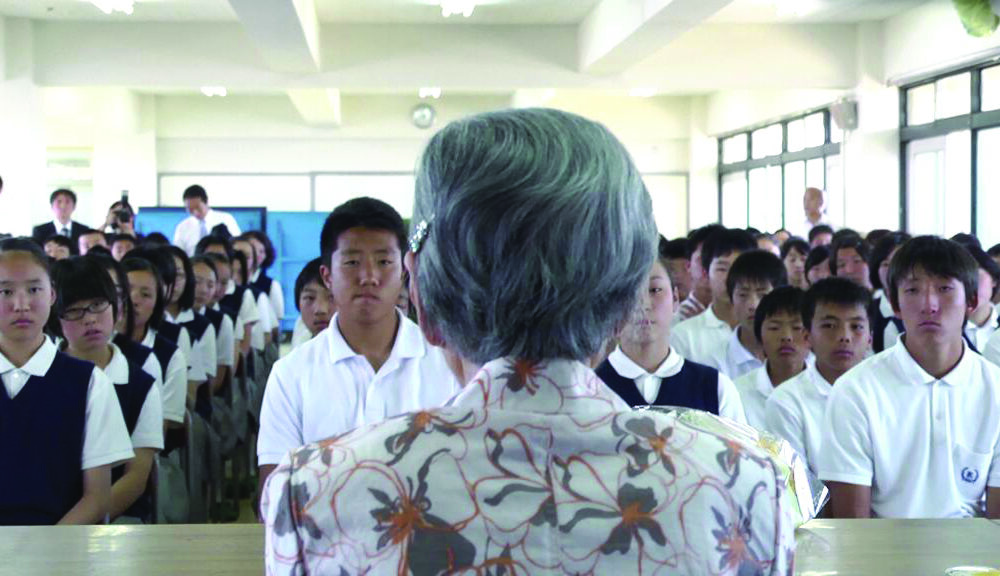
The Apology, by Tiffany Hsiung, is a compelling and eye-opening documentary that follows the personal stories of three former “comfort women.” The women in the film were among 200,000 others who were forcibly taken and sexually exploited by the Japanese Imperial army during the Second World War. The film is not only a captivating historical piece, but a moving emotional journey. One of the women in the film expressed, “[she wants] to be reborn as a human, as a woman, as someone’s precious daughter, married into a precious family and have [her] own precious family.” By documenting the stories of real women, interlaced with elements of trauma and hope, Hsiung succeeds in creating an intimate and harrowing connection with the viewer.    

The Woman Who Ran by Hong Sang-soo is about a woman who has never been apart from her husband since being married. When he leaves for a business trip, she finds herself alone for the first time and takes the opportunity to visit old friends. The film pushes the viewer—even those who are not married, in love, or in any kind of relationship—to self-reflect, and think on how one’s life decisions don’t always turn out the way one wants or hopes. This quality of normalcy is what makes the film so interesting; the quest for independence can be felt universally. Sang-Soo magnificently portrays the ordinary.

An Uninterrupted View of the Sea Short Film 1 by Mika Yatsuhashi chronicles Yatsuhashi’s great-grandfather’s struggle to prove his American identity as a Japanese immigrant. The short film is a conglomeration of old photographs, super 8mm films, and FBI documents. In the span of just 15 minutes, Yatsuhashi introduces, and educates the audience about the emotional hardships specific to immigrant life, as well as the structures which enforce these difficulties. The old photographs transport the viewer into the life of her great-grandfather. 

 “I chose to use only the archive material because that is how I connected to this story,” Yatsuhashi said in an interview with The McGill Tribune

In the movie, the photographs and film act as looking glasses; they allow the audience to connect with the person even if through a distant lens. The film displays a very real and important struggle that many people tend to ignore.

“I learned that you should define your own identity and not strive for the acceptance of a government [or] population, because all you’ll do is tire yourself out or worse,” Yatsuhashi said. “[Upon] realizing this, you can form your identity yourself, and not base it upon the values of a government.”

Even though the bulk of films centre culturally specific stories and experiences, the struggle to achieve inner peace, to develop an identity, and to attain a sense of belonging, resonate universally. The Korean Film Festival succeeds in directing a conversation about women’s struggle to define themselves.

Editorial, Opinion

Land acknowledgements are not political, but should be accompanied by political action

On Oct. 16, a Montreal Canadiens announcer read a land acknowledgement aloud ahead of the team’s home opener at the Bell Centre, with the Canadiens having declared earlier that day that it will now be a permanent addition to their home games. On Oct. 20, Quebec’s non-Indigenous Indigenous Affairs minister, Ian Lafrenière, responded by saying, “it’s important to recognize that the First Nations were here before us and that we now live together, but we’re getting into a debate between historians who don’t agree with each other. I think it might be a mistake.” Lafrenière also questioned why a sports team had decided to participate in “political” affairs. Land acknowledgements signal a recognition of the land on which settlers gather, and are themselves only the beginning, not the end, of reconciliation. Lafrenière’s comments showed that the Quebec government is unwilling to accept even the most symbolic action in support of Indigenous Peoples. 

Lafrenière cloaked his disagreement with the Habs’ land acknowledgement in arguments about the historical obscurity of which Indigenous group(s) were the original inhabitants of Tiohtià:ke (Montreal). This critique could have been a legitimate one in theory, but instead reads as an attempt to discredit the Canadiens’ efforts at moving toward reconciliation—a move that was applauded by the Mohawk Council of Kahnawà:ke. If Lafrenière’s genuine concern was historical accuracy, his comments would have been accompanied by some kind of praise for the action or recommendation on how to improve it, as opposed to challenging the Habs’ decision altogether. But this is old news: Lafrenière is a minister under an administration that refuses to believe systemic racism exists in its province, let alone officially recognize the National Day for Truth and Reconciliation.

The idea that the world of sports is apolitical terrain is simply untrue: Systemic oppression infiltrates all facets of life, and sports have a long history of activism. Lafreniere’s questioning of the Canadiens’ decision is an affront to every fan and player who has dealt with systemic oppression, not to mention those players who are themselves Indigenous, like Habs goaltender Carey Price. The nationalism associated with sports teams also plays into the anti-woke rhetoric employed by Lafrenière and his ilk, which purports to protect Quebecois culture by ignoring the voices of marginalized peoples. 

The widespread use of land acknowledgements is a relatively novel phenomenon. Their purpose is straightforward, asking settlers to take a moment to reflect upon the history of the land they are gathered on and recognize its traditional stewards. This can be a meaningful process, but some Indigenous activists and commentators have become critical of individuals, businesses, or organizations who instrumentalize land acknowledgements to position themselves as allies without taking any meaningful steps toward reconciliation. To make matters worse, many larger institutions recycle the same vague land acknowledgements, limiting opportunities for meaningful reflection. What is meant to be powerful is eventually reduced to a ticked checkbox on a list, a facade of allyship without substantive advocacy for Indigenous communities. 

Take McGill as an example––the university’s website lists a land acknowledgement, but the administration has consistently failed to respond to demands from its Indigenous students. For instance, it took multiple vandalizations for the James McGill statue to finally be removed from its spot on campus following over a year of controversy, with no promise that the removal would be permanent. Perhaps McGill’s land acknowledgement would be more meaningful if it engaged with the university’s own entanglement in settler-colonialism and enslavement. But instead, it exists separately from the university’s brief acknowledgement that James McGill enslaved Black and Indigenous people. 

Land acknowledgements are a mere first step in the process of unlearning and relearning history, and must above all be coupled with genuine efforts in support of Indigenous communities to have any true impact. In the McGill context, students holding events can lead by example and listen to suggestions from Indigenous activists on how to make land acknowledgements more meaningful. As well, the minister of Indigenous Affairs should recognize the demands of his constituency instead of wasting time disputing the wording of a land acknowledgement. 

McGill, News

Where is Gerts Café? Opening postponed after delays in equipment shipping

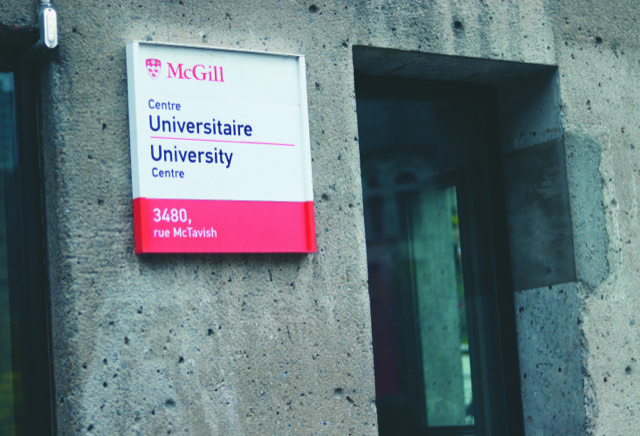
The Students’ Society of McGill University (SSMU) University Centre, located at 3480 McTavish St., re-opened at the start of the Fall 2021 semester, offering space for studying, club gatherings, eating, and socializing. Gerts Campus Bar was also reopened with a new concept: A Gerts Café that would operate out of the same space as the bar during the day. While the bar section of Gerts has been in operation since Sept. 14, the cafe side has yet to open.

Inside Gerts, students can see a cafe-style counter set up in the corner closest to the entrance. Signage and arrows throughout the University Centre direct students toward “Gerts Café” at the ground level. There are also Quick Response (QR) codes posted on the Gerts entrance doors that lead to a webpage listing Gerts Café opening hours. Gerts doors, however, remain locked until 12:30 p.m., when the bar officially opens. 

Many students, like Maya Sokoloff, U3 Arts, did not know Gerts would be adding a cafe, despite having been to the bar. Nevertheless, she expressed enthusiasm toward the concept.

“I only know [Gerts] as a bar,” Sokoloff said. “I think it is such a good idea [for Gerts to have a cafe]. Especially with it getting colder and rainier, I feel like there have been less communal spaces for people to hangout inside and having a nice student area for people to just do work, get coffee, and eat seems like a great idea.”

Gerts manager Nadine Pelaez explained that a series of logistical obstacles are behind the cafe’s delayed opening.

“An endeavor like this [has] so many moving parts,” Pelaez said in an interview with The McGill Tribune. “The whole cafe is an entirely new business, so that in itself takes a lot of time. Another delay is that it took a second for our machines to arrive. [Because] this is a new business, I want to get a new espresso machine, I want to get a good grinder and to be selling good coffee, so with COVID supply chains, things [took] longer than we originally anticipated.”

Pelaez also cited staff schedules and training as a challenge to opening.

“It takes so much coordination to hire and start people out,” Pelaez said. “Here, everything has been from scratch. These six baristas, this is my starting lineup, we have to train them all at the same time but also everyone has class, half of them have class on the Mac Campus, and it is so hard to coordinate.”

Rex Hamilton, U1 Science and a bartender at Gerts, noted that shipping delays have had an impact on Gerts’ operations.

“There has been a huge backlog, not just of café equipment, but all over the world for all different sectors […] because of COVID-19,” Hamilton said in an interview with the Tribune. “[Gerts Bar] has been short on tequila, there is a huge tequila shortage. But the [cafe] equipment did arrive a week or two ago, so I know [Nadine] has been scrambling to get the cafe staff ready.”

Despite backorders and the learning curve of opening a bar after a three-year hiatus, Hamilton has had a positive experience at Gerts so far and has enjoyed getting to know the McGill community. 

“It has been a really good team, and we [have] all got each other’s backs,” Hamilton said. “I hope [the cafe staff] has fun and enjoys it too [….] I have met a lot of kids in the McGill universe through this job. It kind of feels like I am at the centre of everything if I am working [at Gerts]. So many different people come through [….] It is really cool to work a job where I feel like I am a part of the McGill community.”

Arts & Entertainment, Poetry

Comedic, joyful, and sombre: ‘The Best Canadian Poetry of 2021’

Canadian poets, consistently overshadowed by American writers, rarely get the recognition their talents deserve. is A collection of 50 poems by Canadian poets, the Best Canadian Poetry 2021 anthology is curated by its guest editor Souvankham Thammavongsa, who has author of five books, including How to Pronounce Knife, and received several literary awards. Published on Oct. 5, the book features poetic reflections on the transience and joy of this past year. Many poems share themes of aging and loss, while others interject bizarre and comedic variety into the array. 

Many featured poets happen to be Montreal locals. Hayden Ward explores his childhood memories in his poem, “From the Nurse’s Cabin Porch, Keats Island.” Formatted into a series of haikus, the poem recalls himself as a young child as his mother frees him from a wasp swarm. By switching from third to first person, Ward finds meaning in both living through and retroactively remembering his childhood memories of summers in British Columbia. Similarly, Mary Dean Lee, a professor in the Faculty of Management, navigates her childhood memory of her brother’s death in “Riddle.” Lee captures the traumatic effects of this loss on her family by using a disjointed structure and rhythm to mimic the unique ways that family members process trauma. The separation between lines emphasize her family’s emotional estrangement from each other. 

Other poems focus on lighter matters, including the horror of teenage acne and the (accidental) killing of a peace lily plant. David Ezra Wang’s poem, “acne, blood, and all things that flow,” may resonate with many students who hoped, in vain, that their acne would disappear as they transitioned out of their teenage years. Wang expresses his discomfort with going out in public with acne, and wonders if he would find love if only he “really exfoliated.” Kayla Czaga, who admits to writing a first draft of “The Peace Lily” on a Thrifty Foods receipt, contemplates the simultaneous frustration and relief of killing her beloved houseplant. Czaga juxtaposes her guilt with the poem’s beautiful imagery that captures the plant’s slow death, unaffected by the countless internet tricks Czaga employs in an attempt to save it.

One of the funniest poems in the anthology is George K Ilsley’s “Another Woman in Canada,” a found poem that ranks his 10 favourite one-star reviews of Canadian short story writer Alice Munro’s short story collection, Dear Life. Ilsley highlights the unintentional irony of several reviewers who either dislike Canadians entirely, or believe themselves to be better literary critics than those who awarded Munro the 2013 Nobel Prize in Literature. For instance, reviewer number two says of Munro’s fiction, “The characters are boring and bland, like Canadians.” The Canadian poets in the anthology clearly refute this statement, discussing any and all aspects of the vibrant human experience that prove they are quite an interesting bunch. Between struggling with mental illnesses (Roxanna Bennett), shielding parents from embarrassment (David Romanda), and finding freedom in motherhood (Louise Carson), each poet has something new to say. 

No matter whether a reader is a frequent or first-time poetry fan, Best Canadian Poetry 2021 is an excellent way to experience new and established Canadian poets. Bursting with personality, this anthology has something for everyone, and is a touching reflection on the highs and lows of 2021.

Best Canadian Poetry 2021 is available for purchase online or through local retailers.

Off the Board, Opinion

God, it’s brutal out here

As a third-year student, I feel like I should have this whole “university lifestyle” thing figured out. This year, however, I am living on my own for the very first time and at times feel as lost as I did in my first. I am someone who needs personal space and who takes great pleasure in spending time by myself, so conceptually, living alone sounded appealing to me. After a year of living with my entire family and being constantly around people, I could not wait to once again “leave the nest” and move into a studio apartment. 

When I arrived in Montreal for the first time since the COVID-19 pandemic began, I wasted no time reuniting with old friends and fully embracing the freedom I missed so much. But I quickly came to the stark realization that I was now facing life alone. Although many people think of living alone as a luxurious experience, I noticed right away that I was more anxious than I had been in a long time. A simple trip to the bank by myself sent me into a panic. And while it was amazing to see friends again, I did not anticipate the amount of time that I would spend by myself. Even though McGill has returned to primarily in-person teaching, I somehow only have one in-person class. This makes meeting new people more difficult and magnifies loneliness and solitude. One positive that has come with all of this unexpected “me-time” is the significant strides I have made in improving my self-image and self-confidence. It is no fun to live with a roommate who hates you, and that still holds true when you are your own roommate. As I learn to do a lot of things by myself for the first time, it is an important reminder to go easy on myself when I inevitably make mistakes.

One thing I initially failed miserably at was cooking. After living in residence in my first year and then spending a year at home with my parents, I never really learned to cook. And while I spent the first week living alone mostly eating out, I eventually decided I had to at least start preparing my own breakfast. In making this one meal alone, I set off the smoke alarm in my apartment and gave myself food poisoning. After this experience, I thought for sure that I would be taking full advantage of my roll-over meal plan money for the remainder of the semester. However, there is no better way to learn than being thrown into the deep-end, no matter how intimidating it may be. I can now proudly say that I have learned to cook numerous different meals with the help of internet recipes and my parents over Zoom. 

Despite all of these growing pains, there are some significant upsides to living alone. I can design my place to fit my needs and my needs only. I do not have to share my space with anyone else and therefore can set it up in a way that suits me. I feel more comfortable spreading my things around the apartment and listening to my own music without headphones. I also do things at my leisure––I no longer have to work within the schedule of other roommates or family members. But I also learned to appreciate the relationships I have with my friends and family.

Because I am no longer constantly surrounded by family members or roommates, I actually have the opportunity to miss them. I am able to choose exactly who I want to spend my time with, which makes the moments I do spend with friends and family all the more meaningful.

Spending countless hours alone can be extremely lonely and anxiety-provoking, but it can also help with self-discovery and self-love. The world is a daunting and scary place, but I am slowly learning how to conquer it all on my own.

Commentary, Opinion

Quebec’s hospital vaccine mandate deadline extensions highlight a crumbling health care system

Quebec recently extended its deadline for the mandatory vaccination of all health care workers until Nov. 15. Additionally, the province announced that all people over the age of 13 would need to show proof of vaccination or their vaccine passport before entering health care facilities for non-essential reasons, such as visiting those in care. Quebec’s Health Minister Christian Dubé’s decision to extend the vaccine mandate deadline overlaps with the implementation of a mandatory vaccine passport to enter health care settings. Although both the mandate and the extension have brought the government under fire, the extension is the best possible option considering the circumstances. 

Dubé’s approach may seem confusing, since visitors are being asked to get vaccinated, while the people caring for those who are most vulnerable to COVID-19 are not. Those who oppose vaccination mandates applauded the extension, while many workers saw the decision as a compromise that undermines the government’s authority. Indeed, vaccine mandates have received backlash across the province, recently escalating to a legal challenge to the order. However, if Dubé had maintained his original deadline, the health care system would have lost around 22,000 workers who are currently unvaccinated—a figure that represents around 4 per cent of the province’s total health care workers. Although the percentage seems slim, it is enough to make the whole system crumble

Quebec’s health care system has been on the edge of failure for months: Emergency rooms are closing due to exhausted and burnt out workers, and COVID-19 wings are consistently overwhelmed. Workers have reported forced overtime work, with a nurse clocking in four 16-hour shifts back to back at one point. The loss of 22,000 nurses and doctors would be catastrophic and would result in the loss of 600 beds and 35 operating rooms province-wide. The province cannot afford to take that risk. The Quebec government holds responsibility for guaranteeing safe, reliable, and quality medical care to the population—and despite Dubé’s promises of “mammoth changes,” the situation remains critical. Taking this into account, enforcing the original deadline would have been a huge mistake. The fact that the provincial government had to choose between the short term and the long term safety of Quebecers, however, reveals a weak system with deep-rooted issues like understaffing and inhumane working conditions. 

The optics of Dubé’s decision are not ideal but the optics do not matter as much when the foundations of the system are at risk. There is a risk that the general population, and more importantly the unvaccinated staff, will not take the government’s threats seriously anymore. Furthermore, it seems like Quebec is ceding to a tiny sector of the population who is refusing to comply with public health recommendations. Nonetheless, that tiny sector could be responsible for a severe health crisis. Additionally, it is estimated that 80 per cent of the Quebec population is adequately protected against the virus. Although the vaccine does not completely eliminate the risk of infection and death, it does have the power to reduce it to a manageable level. But because the risk is not zero, especially for people who are dealing with other health issues, the government should continue the implementation of simultaneous measures like mandatory testing and increased vaccine information campaigns, and should also add new measures like limiting the access to non-essential areas like cafeterias as a way to both curb the spread of the virus and incentivize the unvaccinated staff. 

Fundamentally, the Quebec government must not grant any more extensions on this Nov. 15 deadline. Patients’ lives are at risk and should not be compromised any longer. If the idea of a vaccine mandate is no longer plausible, then new implementations of regular testing must be put in place immediately. Dubé has been firm about his intention to enforce the deadline, and the fact that, since Wednesday’s announcement, 1000 healthcare workers have gotten vaccinated, is proof that his approach is working. The cost-benefit analysis that the government is doing is brutal. It seems like officials are having to sacrifice safety for stability, and the consequences eventually fall back onto the general population. But considering the bleak situation we are in, the government is choosing the least harmful option. 

Commentary, Opinion

Facebook’s blackout should inspire us to reevaluate our relationship with the internet

On Monday, Oct. 4, at approximately 11:30 a.m., the entirety of Facebook shut down due to an internal malfunction. Its 3.5 billion users were denied access for approximately six hours, resulting in global panic and complaints. With WhatsApp, Messenger, Instagram, and all the other Facebook-owned platforms also down, many of McGill’s clubs and student-run organizations were left scrambling to find alternative methods of communication. Despite the temptation to surrender to the simplicity of remote learning, the outage served as a reminder that students and instructors should stay grounded in tangible learning, like taking handwritten notes rather than typing, and attending in-person lectures rather than watching the recorded ones. 

The outage was a stark reminder of our dependence on social media. In a boom of online school and work, the pandemic has become a turning point: Society has now entered an irrevocable interdependent relationship with the internet. 

Within four hours of the shutdown, Twitter’s official account tweeted about the influx of new users migrating to their platform from Facebook. Within hours, the tweet amassed over 2.4 million likes. Many news sources were providing live updates throughout the incident, the first serious outage Facebook has had since 2019. As the software came back online, Facebook apologized in a tweet, and CEO Mark Zuckerburg also issued a statement in a post. However, already exposed was the terrifying reality that Facebook dominates our lives. 

Billions of people use Facebook every day, relying on it for communication of all sorts. Outside of North America, WhatsApp is the main platform for communication. With over two billion users worldwide, it was estimated to generate between five and 10 billion dollars in revenue for Facebook in 2020 alone. Added to Facebook’s monopoly on advertising and user data, the company has immense control over its users’ behaviour and encounters. At McGill, students use Facebook to chat with classmates and discuss course material—a now-normalized version of study groups. But many clubs and student-run activities at McGill also rely on Facebook’s apps for communication purposes, especially over the pandemic. 

But many clubs and student-run activities at McGill also rely on Facebook’s apps for communication purposes, especially over the pandemic. With many operations now fully online, social media and the internet permeated into nearly all aspects of life. This rapid switch from analogue to digital prompted the development of online softwares designed to ease the transition, propelling platforms like Zoom to see an unprecedented boom in popularity. The internet is convenient and efficient, and as the world slowly opens up and normalcy returns, society is left with a growing—and potentially permanent—dependence on online technologies. 

However, as much as society needs the internet, the internet also needs society. The outage resulted in Facebook shares plummeting 4.9 per cent—their biggest drop in almost a year. There is heavy corporate reliance on the customer base, and Facebook depends on their users to generate revenue. A self-sustaining cycle is created: The internet and social media are made popular by society and society uses them due to their popularity. This growing reliance on technology suggests the internet will continue to remain a crucial part of everyday life, but such a codependent relationship could have disastrous consequences, leaving society’s future entanglement with technology uncertain. 

Luckily, the majority of McGill’s coursework is distributed through myCourses, which is not a Facebook platform, but we can rest assured that if Zoom were to go down in a similar way, it would certainly result in campus-wide panic. With no alternative way to deliver online classes, McGill will need to confront post-pandemic academia as roughly half of the academic schedule would be thrown off course dramatically.

News, SSMU

SSMU Board of Directors debate J-Board’s judgment on SPHR McGill v. SSMU case

On Oct. 21, the Students’ Society of McGill University (SSMU) Board of Directors (BoD) met to address several motions, including a motion to ratify the SSMU Judicial Board’s (J-Board) final judgement on Students in Solidarity for Palestinian Human Rights McGill (SPHR) v. SSMU. 

The original Nakba Day motion was discussed and approved by the SSMU Legislative Council on May 13, in an allegedly confidential session. Typically, the Legislative Council approves in a public session. Once motions leave the Legislative Council, they go to the SSMU BoD to get ratified. The SSMU BoD is a significantly smaller council and they often meet in confidential sessions. SPHR and Bryan Buraga, a student representative for SPHR and former SSMU president, submitted a petition to the J-Board, claiming that the BoD’s choice to not approve the Nakba Day motion was invalid because the vote occurred in a confidential BoD session. The final J-Board ruling dictated that the BoD should reassess the original motion regarding Nakba Day and bring it to vote again. 

The majority of the SSMU BoD’s discussion revolved around whether or not to approve the J-Board’s ruling. Many BoD members expressed concern that the J-Board ruling does not hold, because the Legislative Council approved the motion in an allegedly confidential session. 

“I hope that the [BoD] can go through the facts and make sure that there are no other errors, as well, so that there is not a continual back and forth [between J-Board and BoD],” said BoD member-at-large Beatrice Mackie. 

Mackie also defended the BoD’s decision to keep the meeting minutes involving the Nakba Day decision confidential.

“I do feel uncomfortable with the remedy of allowing the minutes to be published even if our names are taken off, simply because it has happened before where members of the Board and SSMU have received death threats and threats to their safety,” Mackie said, “I would strongly recommend against [making the meeting minutes public].”

Alex Karasick, SSMU Legislative council representative to the BoD, apologized for the BoD’s nearly four-month delay in submitting required documents requested by J-Board. 

“My apologies to the Judicial Board and former president Buraga for both our delay in responding and the delay in form,” Karasick said. “It was an unfortunate combination of internal factors and just bureaucracy [….] SSMU is an absolute horrendous beast of bureaucracy.”

The motion to ratify the J-Board ruling was not passed by the BoD; instead, it was replaced by a motion to reconsider the judgement and have director Karasick provide J-Board with a written statement of the reconsideration. This second motion passed with seven votes in favour, two abstentions, and none opposed. 

The Board also addressed a motion regarding nominations to the BoD and a motion for the interim replacement of SSMU president Darshan Daryanani by SSMU vice-president (VP) Finance Eric Sader as the signatory on SSMU meeting minutes and documents. The motion to temporarily cede these responsibilities to Sader was unanimously passed. 

Moment of the Meeting:

The meeting opened with an overview of SSMU’s financial audit, presented by two members of the Fuller Landau accounting firm. One finding from the audit was that fees for the SSMU Health & Dental Plan had decreased for individual students by an average of 12 dollars per student, but that the overall fees collected by SSMU for the plan increased by 70,000 dollars because 439 more students subscribed to it.   

Soundbite:

“If you folks feel like you have not had the opportunity to say your piece, I might suggest that you send it back to the J-Board and make sure that this time you submit your respondent forms and declarations on time so that we can adjudicate this as expeditiously as possible. Otherwise it would be nice to see the Board of Directors ratify it at this point and just go through the procedures properly and follow things by the letter as laid out in the internal regulations.” 

—Former SSMU president Bryan Buraga on behalf of SPHR McGill trying to expedite the decision process that began four months ago.

Student Life

McGill’s witching community is a-brewing

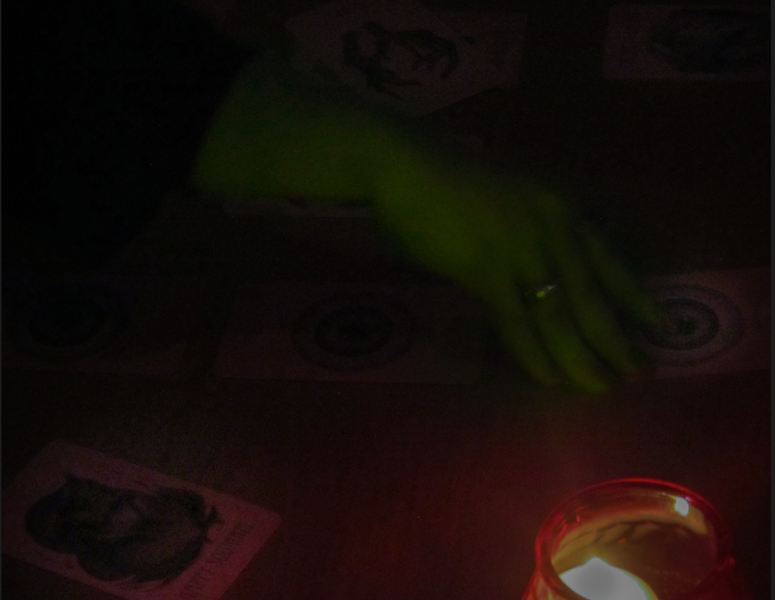
The night of Oct. 22 took on a new kind of chill, when witches and queer folk alike gathered to attend “The Witching Hour” at Notre Dame Des Quilles, reading tarots, pasts, and futures.

Witchcraft may seem like ancient history, but even McGill has connections to it. McGill’s Gender, Sexuality, Feminist and Social Justice Student Association (GSFSSA) and Classics Students’ Association (CSA) collaborated to host “The Witching Hour” event with the intention of creating a safe space for both witches and queer folk. Taylor Douglas, U3 Arts and vice-president (VP) Events of the GSFSSA, explained the inspiration for the event in an interview with The McGill Tribune.

“I love the idea of reappropriating the scary witch women with independence as terrifying and beyond,” Douglas said. “Like, let’s throw this event where everyone is a witch and they’re scary and kind of queer.” 

There are many connections between gender, sexuality, and witchcraft. Rebecca Toropov, U3 Arts and CSA’s VP Events, discussed at length how witchcraft, queerness, and other marginalized communities have, in the past and present, been socially and systemically “Othered”—something Toropov believes forges solidarity among them. 

“After being considered the ‘Other,’ after being oppressed, there’s a lot of power [in] finding your people and coming to them in a safe space and utilizing that,” Toropov remarked. “I think that’s where magic is.”

The goal of the event was to create a safe place for witchy and queer communities to connect, and with attendees spending most of the night reading tarot cards and discussing fortunes, the event fulfilled its purpose. 

For many in the witchcraft community, the pagan holiday of Samhain (pronounced sah-win) is a celebration that coincides with Halloween. 

The ancient Celts believed that the barrier between the human world and the Otherworld thinned during Samhain, allowing for spirits, like deceased ancestors or supernatural beings, to walk among the living. Later, due to Samhain’s connection with pagan beliefs and practices, the holiday was vilified and associated with satanic practices, thus evolving into the Halloween we know today. Samhain is a time to honour past loved ones, but also a time of change in nature. 

Lou Schraeder, a student studying environment living in Montreal, has been practicing witchcraft since childhood. Like many people, Schraeder was drawn to the practice because of its focus on the self and personal growth. 

“That deeply intimate personal passion [is] something I haven’t been able to find in other aspects of our society,” Schraeder said. “I feel we have such a fast-paced, individualistic, and competitive and isolating culture. [With magic] you feel so vulnerable, but supported at the same time.”

With such ancient roots, it can be daunting to approach Samhain from a modern context. However, Schraeder made it abundantly clear that there is no definitive or uniform way to celebrate it. 

“I am a definite fan of candles and salt on entryways, dried rosemary for protection and luck,” she said. “I always make sure that [rosemary] is on my body somewhere,” Schraeder said. 

In addition, Schraeder carves jack-o-lanterns and watches classic seasonal movies. Her rituals for Samhain are simple, but they all relate back to ideas of self-connection and of celebrating cycles in nature. 

For your own practice, associations with Samhain may include: Apples, gold, rosemary, crows, onyx, and honey. To honour the dead, you can also make soul cakes. Try leaving them out as offerings or add them to a meal to give thanks and remember those who have left us.

Each individual’s practice is different because everyone finds connections to the earth and to themselves in unique places. If you’re a new practitioner, do your research and follow what you connect with. Remember, you don’t have to play by the book; there is no set way to celebrate magic. So good luck and happy Samhain, little witches.

Read the latest issue

Read the latest issue