Latest News

Research Briefs, Science & Technology

Study finds gender gap continues to persist in archaeology

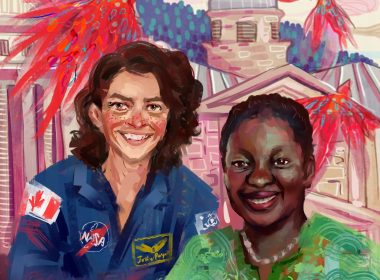
For centuries, women have fought to have their scientific contributions recognized, and the challenge to secure tenure-track positions in academia is no different. Despite women representing two-thirds of all Canadian doctorates in archaeology today, they only comprise one-third of the country’s tenured faculty. 

Lisa Overholtzer, an assistant professor of archaeology in McGill’s Department of Anthropology, and Catherine Jalbert, a member of the advisory board of the Canadian Archaeological Association, conducted a study that examined gender disparities in academia, probing four main areas: Doctorates earned, research awards received, tenure-stream faculty, and the placement of PhDs.

Using data from Statistics Canada, Overholtzer and Jalbert analyzed PhD recipients by gender over the past 15 years. They found that women received 58 per cent of archaeology doctorates during the 15-year period, and that two-thirds of all archaeology PhD recipients in the last five years were women. The current representation in faculties, however, does not reflect these statistics, with women composing only 33 per cent of archaeology faculty members across Canada.

Overholtzer and Jalbert found that some women leave academic positions due to its “chilly climate,” a term that refers to the subtle practices that stereotype, exclude, and devalue women in the workplace. These actions include gender stereotyping, dismissing women-led research accomplishments, perpetuating sexual harassment, and ignoring the disproportionate care responsibilities of women. 

According to the study, obstacles facing women in the field became more prominent when the representation of women reached a level considered threatening by men—somewhere between 20 and 35 per cent. Such obstacles pushed women out of the discipline, a trend the study termed the “leaky pipeline.” 

“The biggest leak in the ‘pipeline’ happens precisely at the moment we are close to breaking the glass ceiling—that is, entering as assistant professor,” Overholtzer said in an interview with The McGill Tribune. “The point that we saw most women leaving was right after getting a PhD and before getting a tenure-track job.” 

The study shows that women’s lower success rates in grant competitions, tenure-track job searches, and tenure-track hiring in archaeology all contribute to poor retention of women in the proverbial pipeline of archaeology.

“Given that these women are doing so well on the market in the U.S., I do not think you can say that all women archaeologists are unqualified, poorly trained, or [are] leaving academia entirely,” Overholtzer said.

While this study focusses on gender disparities within archaeology, the findings closely mirror sexism in other fields. 

“As it turns out, archaeology in Canada fairly closely approximates the average for all the professoriate overall,” Overholtzer said. “Malinda Smith, [a Canadian political scientist], demonstrated how despite the increasing number of women as PhD recipients, the faculty representation remains stalled at one third. That is exactly the number we found for archaeology overall.”

These gender disparities are often more pronounced for women with other marginalized identities. 

A recent survey by the Canadian Archaeology Association (CAA) of Canadian archaeology faculty found that between 87 and 90 per cent of the 551 respondents self-identified as white. The Indigenous and Latin American scholars were represented in similar numbers to the Canadian population, at 5.3 and 1.1 per cent respectively. However, Black and Asian archaeologists were starkly underrepresented in the survey, at zero and 2.7 per cent.

Overholtzer hopes this research will prompt people to think critically about hiring practices to identify where biases must be addressed. She aims to use her position as an assistant professor to open doors for more women and people from underrepresented communities. 

“Part of the reason we talk about needing to diversify higher education [is because] faculty serve as role models,” Overholtzer said. “If you see yourself represented in the professoriate, then you see a place for you.”

Know Your Athlete, Sports

Know Your Athlete: Juliano Cobuzzi

McGill Redbirds Soccer centre-back Juliano Cobuzzi, U4 Engineering, spends most of his spare time on the soccer pitch and in the kitchen, two places central to his upbringing.

Cobuzzi’s soccer career began under the watchful eye of his father, his first coach. Some of his earliest memories centre around his time playing soccer. Cobuzzi realized his love for the sport from a young age, when he noticed that game cancellations affected his mood. 

“I distinctly remember games being cancelled because it would rain and getting super upset about it,” Cobuzzi said in an interview with The McGill Tribune

Cobuzzi developed his love of the game into a skill, competing in high-level club soccer throughout his youth and playing with the Montreal Impact Development Academy, an elite soccer program. After training with Impact, Cobuzzi even considered playing professionally.

“I was a part of the Impact Academy from 13 or 14 to 19 years old,” Cobuzzi said. “I went to a couple of national team camps and was a part of the provincial team. My original goal was to play professionally in some capacity, but that never really worked out. I had a lot of injuries, and obviously, it is difficult.”

After high school, Cobuzzi knew he wanted to go to university while continuing his soccer career as well. As a chemical engineering major and a computer science minor, Cobuzzi currently serves as a machine learning research assistant. In March 2020, he was granted the Eugenie Ulmer-Lamothe (EUL) Award, a scholarship awarded to fund summer research projects for undergraduate chemical engineering students.

Outside of academics, Cobuzzi cited the camaraderie amongst his teammates as the best part of his experience at McGill. Most of his friends are either current or former members of the program, and they have developed lasting bonds while on the team together. Cobuzzi enjoys spending time with his teammates, whether it be on pre-season trips or away games in Quebec City.

“That is another reason why I really love the game,” Cobuzzi said. “It is not a solo game, it is with a team, and I really excel at that. That is the main part I enjoy.”

Team bonding is critical to team success; however, the COVID-19 pandemic has made it difficult, forcing the team to carry out all bonding activities virtually. Although many members of the men’s soccer team are not currently in Montreal, Cobuzzi believes that his team has improved in communication since the start of the winter semester.

“We have Facebook chats and the coach sets up Zoom meetings sometimes,” Cobuzzi said. “Once a week, we get together for a run, and […] we even went snowshoeing.”

Cobuzzi remembers being raised in two foundational places: The field and the kitchen. Cobuzzi, who was born into a 100 per cent Italian family, said his heritage and culture are big parts of his life. His favourite dishes to cook include chicken stir fry and the Italian classic: Baked rigatoni.

“A big part of my upbringing is being in the kitchen with the family cooking Sunday lunch,” Cobuzzi said. 

All four of Cobuzzi’s grandparents were born in Italy. With such a strong Italian heritage comes a rich culture passed down through the generations. For him, that culture is best expressed through cooking. 

“I feel like most stories and traditions are passed down at the dinner table,” Cobuzzi said. 

Cobuzzi is looking forward to being an independent adult once he graduates from McGill this spring.

“Hopefully, the things I learned at McGill can be used in the future and the rest of my life.”

Off the Board, Opinion

Anti-Asian racism was rampant before COVID-19-related hate

Since the onset of the COVID-19 pandemic in Canada, incidents of anti-Asian racism across the country have surged. In Montreal, several statues at Quan Am temple were defaced, the main gates of Chinatown were vandalized, and a Korean man walking to a market was stabbed in the city’s Notre-Dame-de-Grâce neighbourhood. Between March and December 2020, the Montreal Police Service (SPVM) recorded 30 crimes targeting Asian-Montrealers, a five-fold increase from 2019. These statistics are disheartening, but they still do not reflect the underreported racial slurs and stereotypes that Asian-Canadians face every day in the workplace, at school, or simply while minding their own business in public. Often, anti-Asian racism is dismissed as harmless, which only normalizes discriminatory behaviour and undermines the severity of these issues.

Walking through the streets as an Asian person in Montreal or even on McGill campus, it is not unusual to hear a racial slur directed my way. A significant part of my racialized experience is not necessarily being a target of racism but constantly anticipating when it will come next. That is why I plug in my AirPods, hit shuffle on Spotify, and turn up the volume to avoid hearing any racist remarks hurled my way. When asked where I am from, no one is satisfied with my answer of “Vancouver”—where I was born and raised—and often go on to ask where my parents are from, only content when I reply with “Hong Kong.” Time after time when I rebuke these remarks, I am told by a non-Asian person that their behaviour is not racist and that their “Ni Hao” just meant that they wanted to say hello. These incidents are hostile and enraging; I remember every one, and I dwell on some for months.  

The recent spike in hate crimes towards Asians in North America has been attributed mainly to the rhetoric purposely used by the previous U.S. President, who referred to COVID-19 as the “Chinese virus.” While the former President’s large platform amplified his remarks, they are still no different from the derogatory slurs that have long been casually tossed around by individuals. These remarks encourage hate, and their widespread use normalizes anti-Asian racism to a point where the damage to Asian people is overlooked. As a result, I often shove aside my experiences of racism, believing that they are less important because there are other BIPOC facing more severe forms of oppression.

Anti-Asian racism is not limited to harmful rhetoric—these beliefs also perpetuate discriminatory behaviour. Common stereotypes labelling Asian people as smart and hardworking have portrayed them as one-dimensional, reducing their chances of getting hired or promoted to managerial positions. A report presented by Ascend Pan-Asian Leaders found that, of minority groups, Asians were the least likely to be promoted to executive positions in Silicon Valley—even though they are the most likely to be hired by tech companies. The pandemic has only surfaced how harmful these attitudes can become, and yet anti-Asian racism is still swept under the rug until a videotaped assault grabs our attention.

As McGill students return to campus for the Fall 2021 semester, many Asian students will be doing so in fear of becoming the victims of COVID-19–related hate. As social distancing and quarantine have instilled a sense of loneliness in all of us, the additional xenophobia rampant towards Asian Canadians adds to feelings of ostracization. Asians are not the carriers of coronavirus, and rhetoric blaming us for the pandemic must stop. While vaccines can snuff out the pandemic, Canadians must dismantle the discrimination that faces Asian-Canadians and continue to examine under-platformed forms of racism.

Arts & Entertainment, Pop Rhetoric

Accessing local arts scenes—TikTok style

Most Montrealers are familiar with the vibrant, animated entertainment cornucopia that is its arts scene. With safety restrictions suspending live performances, artists have had to adjust to the hindrance of lockdown life. Creatives, however, are by no means taking a break from showcasing their art; from comedy to dance to drag, artists have adapted to virtual performances. Yet, there is a digital sphere ripe for the taking—and one that a few Montreal performers have recently started onboarding: Everyone’s favorite procrastination guilty pleasure, TikTok.

What makes TikTok stand out amongst other social media apps is its notoriously addictive, algorithm recommendations. Unlike other competing platforms, the app does not prioritize showing users content from accounts that they already follow, but rather promotes new videos based on viewer preferences collected from user data. The subsequent result is an endless self-reinforcing stream of content that digitally bewitches any unsuspecting user.

But it is possible to use this algorithm to work for you, not at you. Recently, I embarked on a quest to discover the Montreal side of TikTok. Several “mtl” hashtag searches later, my feed figured out what I wanted.

Indeed, the Montrealers of TikTok have fostered a community on the app, sharing inside jokes about the city’s various neighbourhoods, its penchant for ongoing construction, and its pre-pandemic nightlife. Recently, one TikTok that features a comedic, faux-French-accent voiceover assigning various Montreal icicles ratings from one to 10 went viral, amassing 4.3 million views. The user who posted the video, Maryze, is a Montreal-based alt-pop artist, whose TikTok follower count grew by 20,000 within the first few days of posting the video. In an interview with The McGill Tribune, Maryze admitted that she did not anticipate going viral, but was particularly pleased with how many TikTok followers became listeners of her music.

“I received a lot of messages from people who [wrote], ‘We came for the icicles but we stayed for the music,’” Maryze said. “I was getting about 50 song plays a day, but when the icicle video came out, my music was up to [about] 500 plays a day.”

As Maryze noted that when she was inundated with icicle-related comments, fellow Montreal artist and TikToker Eve Parker Finley reached out to offer support and encouragement. 

Musician, singer, and sketch comedian Eve Parker Finley observed how, like many millennials, she downloaded TikTok at the start of the pandemic to pass the time. Eventually she ended up making short comedy videos in October 2020, inspired by the TikTok culture and the medium itself. 

“I was so enthralled by its intense energy,” Finley said. “[Making TikToks] turned into a way to connect with people and also grow an online community. People discover me through comedy, but then also come to see my music, and vice versa.”

As an entertainment platform, TikTok does not limit the scope of its creators’ videos. Finley’s content ranges from showing off her instrumental abilities—her repertoire includes violin, viola, piano, and saxophone—to reacting to viral videos, to lovingly poking fun at Montreal life. Yet, the platform appears to function beyond simply connecting artists to audiences. Finley recalled one of her videos, in which she films a mattress on the street, with “Je reste debout jusqu’à la fin” spray painted on it. 

“People are always like, ‘The Montreal art scene is dead,’” Finley says in the video. “And I’m like, ‘Oh really? Take that.’”

 It only took a few hours for this video to make its way over to Lorem Ipsum, the very art collective that spray-painted the mattress. Through the power of the algorithm alone, artists are able to connect on TikTok, signalling an evolution toward digital collaboration. 

Montreal drag queen Matante Alex also enjoys the sense of community she has found through TikTok. Her content largely consists of makeup and drag outfit videos, masterfully edited to emphasize transformations with sassy voiceovers peppered throughout. 

“I like replying to [commenters and] being sarcastic with them,” Alex says. “On Instagram, there is no interaction.”

TikTok’s sense of community permeates the platform from a local to a worldwide scale. Fans can gain an authentic, personality-driven perspective of an artist while also engaging in more personal interactions. 

“People don’t follow you for that one specific thing you do,” Alex says. “They follow you because of you.”

Much of Alex’s content is in French. She noted that while the TikTok Francophone community is smaller than the Anglophone one, local Francophones can still quickly build a following and community. 

Increased viewership can build a community, but it can also result in the need to remain consistent in maintaining one’s brand. Professional drummer and TikToker Domino Santantonio has gone viral from her drumming videos, which have garnered over 650,000 TikTok followers and even scored her an invite to TikTok’s “It Starts On TikTok” campaign. Santantonio, with her signature high-ponytail, has created a brand for herself covering well-known songs on her drum set out of her home studio. Now, collaborating with brands from all over the world, Santantonio felt the pressure to post everyday, a common sentiment among artists on TikTok. 

“I try to post every day, but sometimes it’s hard to be regular,” Santantonio said. “You have to be creative and sometimes you just don’t feel it.”

For Domino, however, this pressure acts as a compelling force to produce quality content and keep fans engaged. Consistently posting content is simply becoming an alternate career.

In the wake of the pandemic, Cirque du Soleil temporarily laid off the majority of its staff, leaving many performers stageless. No longer performing in Axel, Cirque’s ice show, Abadi Al-Obaidi, skater and artist, began performing on TikTok, posting ice skating and acrobatics trick videos daily. Al-Obaidi, however, is no stranger to performing digitally. He has garnered over 600,000 TikTok followers not only through sheer talent, but also from his pre-existing fan bases on Flipagram and Musical.ly, which later became TikTok. The content creator veteran has encouraged his performer friends to join the app, pointing to the potential it holds for the art community.

“I keep telling all my artist friends, ‘You need to get on TikTok,’” Al-Obaidi said. “There are no rules. You will find people who like what you’re doing and you can focus on your art.”

Slowly but surely, the app is proving to be a looking glass into the Montreal art community. Many Montreal artists have yet to join the platform, but the momentum is building: Noted singer and comedian Tranna Wintour recently joined, as well as band La Fièvre. Artists are beginning to realize that the platform stands out among other social media networks. Users can attempt to localize their For You page to their respective communities, and they may ultimately find that discovering new artists during a pandemic is not as impossible as it seems. 

Presave Maryze’s upcoming single here

Buy Eve Parker Finley’s latest album, Chrysalia, here.

Check out Matante Alex’s drag here, and music here.

Check out Domino Santantonio’s drumming here.

Check out Abadi al-Obaidi’s content here.

Editorial, Opinion

Virtual student government elections offer a more accessible framework

As the Students’ Society of McGill University (SSMU) executive election campaign period takes off this week, this year’s candidates will migrate to virtual platforms and social media to campaign. Online elections present new challenges to student engagement and require innovative approaches to campaigning. But if harnessed properly, the remote circumstances could serve to expand election accessibility in the long term. SSMU can take this opportunity to reflect on the barriers of past elections and maintain the benefits of a virtual campaign period even after the pandemic. 

With Zoom fatigue worsening as the pandemic drags on, student leaders must think outside the box to engage students. Remote learning has made it more difficult than ever for students to remain connected to the community, ultimately decreasing their likelihood of participating in student politics. For instance, SSMU’s September 2020 special referendum saw a meager 12.8 per cent voter turnout, the lowest in five years. Engagement in this year’s election is of particular importance, considering McGill’s plans to return to in-person learning for the Fall 2021 semester, which will surely present unique obstacles for incoming representatives. 

To make better use of online tools, SSMU could help candidates reach more students by allowing them to campaign on more platforms, in line with the Science Undergraduate Society’s Feb. 17 decision to allow candidates to campaign beyond Facebook. Additionally, the implementation of online resources like recorded information sessions and condensed versions of official SSMU election documents could remove the red tape around running for a position. Reading through SSMU’s lengthy election bylaws is daunting––the Internal Regulations of Governance is 54 pages alone and is only one of five internal regulation documents candidates are charged with reviewing. Making condensed online materials available can encourage students to run for positions that may have otherwise intimidated them, promoting accessibility. 

Some of the potential advantages of this new format are already evident. For individuals who are well-suited to a role, but who may be uncomfortable approaching strangers in-person about their platforms, expanded online campaigning can facilitate community outreach. Online flexibility also allows candidates to diffuse their election platforms easily. While corruption regarding unsolicited online messaging has been a concern in the past, SSMU can create a more equitable legislative framework to facilitate online campaigning. For instance, election rules must be updated to eliminate hostile or exclusive environments, setting a positive precedent for years to come.

Despite the benefits of online platforms, the merits of in-person information dissemination about SSMU elections cannot be ignored. Candidates may have trouble reaching those to whom they have no prior connection, as their social media posts tend to be seen only by their friends. One possible solution is to require that all Facebook campaign pages link all the other candidate’s pages to ensure easy access to each platform. And although it appears unlikely that elections will take place entirely online past this exceptional year, virtual platforms like Gathertown and Glimpse that mimic in-person booths can further complement existing election norms. 

When students return to campus, SSMU must find ways to maintain the accessibility of this virtual election while transitioning back to in-person events. In-person campaigning techniques like handing out flyers and approaching people on campus are integral to the campaign process and should not be abandoned, but giving candidates more campaigning tools will improve engagement in student government. 

While many students will want to be rid of any reminders of life during the most isolated stages of the pandemic upon their return to campus, SSMU should think about how it can use lessons learned throughout this tumultuous year to make student politics more welcoming and engaging in years to come.  Despite the drawbacks, this new online experience will result in overdue technological updates to the in-person election regulations currently in place. SSMU’s mission statements enshrine accessibility for the diverse needs of students. Now that new campaigning options have been unearthed, SSMU can act on its mission by adjusting elections to be as equitable as possible. 

Commentary, Opinion

COVID-somnia is ruining students’ schedules

As student routines change due to COVID-19, many are noticing disturbances in their sleep schedules. Experts attribute “COVID-somnia” to anxiety surrounding the pandemic, such as feeling helpless in the face of a global crisis. While students at McGill lead efforts to combat these mental health difficulties, educators and administrators must show support by being accommodating and ensuring that students are not overwhelmed by isolation, despair, and loneliness. 

In addition to McGill’s pre-existing culture that prioritizes academic results over mental well-being, COVID-somnia is a dangerous phenomenon. Research reports that this pandemic-induced sleep deprivation, while sometimes motivated by physiological factors, mainly stems from fear and anxiety caused by the disruption of normal routines. Before the pandemic, students connected with peers at communal spaces on campus, but the social lives of everyone are now limited by measures that prevent gatherings. For some students, this is coupled with a change in living environment, ranging from moving in with roommates that are near-strangers or returning home to family. 

Most instructors offer helpful asynchronous learning options for those in different timezones. Despite this, students have to resist allowing lecture recordings to pile up when they choose to take a break from school work. When the boundary between school and the home is blurred, it becomes difficult to find time and space for relaxation. With unfamiliar and overburdened schedules, students resort to revenge bedtime procrastination, staying up late doing leisure activities because they may feel that time has been exhausted by the mental labour of work-related activities.

To counter COVID-somnia, students can benefit from adopting sleep hygiene practices such as creating a space dedicated to attending “Zoom university.” Humans associate brain function to specific environments, which is why studying in bed can make it harder to fall asleep in it. Meanwhile, course instructors should initiate dialogue with students to identify changes that can be made to mitigate the challenges of online learning. During these unforeseen and stressful circumstances, professors can help alleviate stress by eliminating requirements for medical notes and other forms of proof for those in need of extensions.  

For international students, altering normal sleep cycles is often the only way to engage with classes and virtual student life in real-time. Different time zones and living environments create unequal experiences, and some students face even more barriers to a healthy sleep routine than their peers living in Montreal. 

Effectively living in two time zones amplifies a sense of disconnectedness from university life, which can intensify feelings of loneliness and anxiety. Increased screen time also exposes students to blue light emissions, which interrupt circadian rhythms in the body that sync sleep schedules with outdoor light levels. Coupled with COVID-19 anxiety, these hybrid schedules present unique challenges. Meanwhile, student club events are usually inconvenient for those in most other time zones. Students face the dilemma of choosing between attending the event and having an irregular sleep schedule or sleeping at a time suitable to their time zone but missing out on social engagement. 

This general trend of late timings is largely unaccounted for by student organizers due to a lack of alternatives. Student groups tend to host events after school hours to ensure that those in Montreal are able to attend. To find a solution for international students, student services like International Student Services and the Student Wellness Hub can equip students with the tools to manage new and unusual routines. These services can also serve to connect students going through the same experiences.

When addressing challenges posed by a pandemic, there is no one-size-fits-all solution. Consequently, trying to replicate pre-COVID realities is inadequate. Instead, improving morale requires abandoning previous conceptions of academic excellence and fostering an environment where students can prioritize something integral to their functioning—a good night’s sleep.

Arts & Entertainment, Theatre

Words with Will lets playwrights talk back to Shakespeare

Content warning: The following deals with discussions of sexual assault and death.

Words with Will is an annual theatre workshop hosted by Repercussion Theatre Company that explores William Shakespeare’s works through a critical lens. Each year, playwrights are invited to personally engage with Shakespeare and his texts, as well as debut their new projects. This year, Works with Will took place from March 2 to 4 on Facebook Live and showcased the plays Black Fly, created by Omari Newton and Amie Lee Lavoie, and Wardo, created by Jimmy Blais. 

On the first evening of the three-day event, Repercussion’s Artistic and Executive Director, Amanda Kellock, led a roundtable discussion with the playwrights to talk about their upcoming projects and their relationships to Shakespeare’s work. 

Black Fly co-creator Omari Newton noted that his frustration with Shakespeare’s portrayal of BIPOC characters inspired him to write an adaptation of Titus Andronicus. Co-creator Amy Lee Lavoie was also dissatisfied with the lack of agency and dialogue that Shakespeare gave his female characters compared to their male counterparts in the original play. 

In their adaptation, Newton and Lavoie shift the focus away from the Romans and place the attention on the play’s victimized characters, allowing them to gain restitution. Aaron, who plays a minor role in the original play, is a protagonist in Black Fly, and notably speaks in verse with a hip-hop cadence. 

Newton elaborated on why he felt it was important to use hip-hop in this adaptation. 

“I came into Shakespeare [… and] immediately felt a connection to acting in verse because I was a big hip-hop fan,” Newton said. “Part of my work as a writer […] is to make the establishment recognize that urban art forms are as impressive and as worthy of study and reverence as classic works.” 

In the original play, the character Lavinia is sexually assaulted, mutilated, and then left mute for the rest of the show. In Black Fly, Lavinia regains her voice, which allows her the opportunity to condemn her perpetrator. 

During the event’s third evening, Jimmy Blais, the creator of Wardo, discussed how his relationship to Shakespeare as a form of colonialist art inspired him to write Wardo.  

“I fell in love with Shakespeare at a young age […] but later in life I started to question Shakespeare’s position in my life, and I started to see it as an abusive relationship in some ways,” Blais said. “It’s hard to get away from the fact that it’s […] a cultural flag for colonialism.” 

Inspired by the activists who protested the Coastal Gaslink pipeline on Wet’suwet’en lands in 2020, Blais strived to express his frustrations with the RCMP’s treatment of Indigenous people through art, and chose Shakespeare as his target. 

Wardo is the story of an Indigenous teen, Dylan, who ends up in the home of a Shakespeare-loving family after spending much of his youth in the foster care system. The play explores how Dottie, Dylan’s foster mother, has good intentions in teaching her children Shakespeare, but ultimately falls short in recognizing the colonialism embedded in the playwright’s work.

In the scene that Blais showcased at Words With Will, Dottie takes Dylan and his foster brother to Parliament Hill to roast marshmallows. While playing with a stick, Dylan is tragically shot and killed by RCMP officers, jolting both the play’s characters and its audience back to the reality of the systemic racism that oppresses Indigenous peoples in the Canadian justice system. 

When Blais discussed his play, he explained his reluctance to rework an existing Shakespeare text. 

“I didn’t want to do it within Shakespeare’s frame,” Blais said. “There’s a big part of me that’s conflicted, but […] in doing Shakespeare in any form, I am perpetuating this colonialist art [….] I feel like at this point in my career […] I am done doing Shakespeare because of the time and space and resources that we still give it still to this day […] and the only way for me to cut ties with it is to burn it down.”  

Commentary, Opinion

Gratitude alone does not help emergency workers

Gratitude, like many conventions observed in everyday life, is remarkably pleasant yet wholly unnecessary. No one would lose sleep without it, but small gestures of thanks have their purpose. Whether someone has held the door open or returned a lost belonging, showing gratitude demonstrates care for others and reminds people that they are worth our time and effort. In the context of the pandemic, gestures as simple as giving someone an extra mask can have a similar impact. However, gratitude alone cannot sustain someone. Showing thanks is important, but ultimately does not satisfy fundamental needs, which are going unaddressed for many emergency workers. 

One popular act of gratitude that emerged during the pandemic is Clap for Our Carers. During the start of the COVID-19 pandemic in the spring of 2020, many used applause to express appreciation for front-line health professionals. Organized through social media and performed from open windows and balconies, these events originated in countries such as Italy that were hit particularly hard in the early months of the pandemic. The movement became prominent after it spread to Britain, where it continued weekly until the end of May. Similar tokens of thanks have appeared elsewhere in the world, whether plastered on billboards as in Beirut, or lit-up on national monuments, like the Christ the Redeemer statue in Brazil. In Montreal, police even flashed their lights and sounded their sirens in appreciation.

These acts of gratefulness have unfortunately overshadowed the tangible challenges many of these workers are facing. In Quebec, around the same time as these campaigns were taking place, the province was suffering from a critical lack of frontline workers at nursing homes, further compounded by a preexisting lack of funds. This disconnect highlights one of the main issues concerning emergency workers: Rather than viewing them as real people with real needs, they are portrayed as one-dimensional heroes. While that is a positive message, it can conceal the need for extra support to maintain workers’ physical and mental health during this trying situation. The government can regulate overtime rules for individuals who have to work long hours and subsidize extra pay for those working excessive, yet often necessary, amounts of overtime. 

Even as vaccinations are underway, we must acknowledge that the plight of emergency workers will not be remedied overnight. In some parts of Canada, the vaccine rollout has not sufficiently reached frontline workers, with some hospital public relations executives receiving their inoculations first. Similarly, workers who may not be labelled “frontline workers” but who are nevertheless considered essential workers, such as grocery store employees and teachers, have been given no clear message on when they will be vaccinated. Gig workers, like delivery drivers, are also in similarly vulnerable positions, as some see them as independent contractors instead of essential workers. 

Teachers and professors are other examples of people who are forced to adapt their routines and take on more difficult work for the same pay. Not only are instructors expected to teach both virtually and in-person, but they also have to deal with hostile parents who are facing their own difficulties. University professors who are expected to adapt to constantly changing plans face similar issues. For example, McGill’s Faculty of Arts remote teaching guidelines were modified from Fall 2020 to Winter 2021, a change that impacted both professors and students.

There is no question that gratitude can feel wonderful on the receiving end. However, kindness cannot keep someone from falling sick, nor can it ensure they have access to fair compensation. While change is necessary on a systemic level, everyone can do better to show tangible appreciation to workers, from McGill students tipping delivery drivers more, to executives and administrators providing better emergency benefits. Platitudes must not drown out the real needs of essential workers, especially not during a time like this.

Student Life

Opening up Saint-Henri’s community fridge

A little over four years ago, a previously unhoused man in Saint-Henri came up with an idea to give back to his community. Seeing that there were few resources available in the east of Montreal to individuals in precarious financial situations, he decided to start a community fridge to ensure access to healthy food and reduce food waste. The idea behind the initiative is straightforward: Stationed in a public space, the community refrigerator encourages neighbourhood residents to contribute food.

The fridge has since blossomed into Le Frigo Communautaire Saint-Henri, a community initiative fuelled by donations and loyal volunteers who organize the fridge and prepare food. 

“When I moved back to Montreal three years ago, I found out about the fridge and would bring food almost everyday,” Claude Chevalot, the manager of Le Frigo Communautaire, said in an interview with The McGill Tribune. “We managed to raise money and made meals during Christmas. It went on like this for a while [until] the fridge broke down. We couldn’t put a new one in the same spot [anymore] since the landlord did not want us to.” 

The original fridge was located in Fattal, a cluster of commercial loft buildings populated primarily by low-income individuals. Many residents in the area relied on the community fridge for food. After it broke down, it took Chevalot six months to find a suitable location for its replacement; the new fridge is not far from the original one, located behind Friperie Sidneys at 5165 rue Notre Dame Ouest. 

The COVID-19 pandemic has exacerbated food insecurity—with unemployment and poverty rates skyrocketing, healthy groceries have become unaffordable to many. Thankfully, Le Frigo Communautaire is receiving a consistent flow of donations, which has helped the initiative remain up and running throughout the pandemic. 

“Restaurants and food services were closing, so I would often wake up to find boxes of food on every step of my staircase,” Chevalot said. “We would rush to get everything to the fridge [.…] We made more and more partnerships with local merchants.”

As many people regularly frequent the fridge, most of the supplies are quick to run out and some residents cannot arrive in time to access their share. To address the demand, Chevalot puts together weekly food baskets for people in the community upon request. 

With the help of five dedicated volunteers, the project quickly gathered momentum. As Le Frigo Communautaire hopes to prepare more food baskets for families in need, their biggest challenge is finding storage space. 

“We are not a registered charity, which means that we cannot give tax income receipts,” Chevalot said. “The best thing that could happen to us is to have a sponsor who could allow us to have a large storage space. We [also] need volunteers with cars able to carry heavy boxes to help us pick up donations.”

Community refrigerators have been popping up across Canada in response to increasing rates of food insecurity and food waste. Given how the pandemic has aggravated issues of financial precarity, seeing people come together to support their neighbours through difficult times is what makes initiatives like Le Frigo Communautaire so fruitful. Community-led efforts like these put resources directly into the hands of those in need. Mutual aid initiatives like the Community Cooks Co-operative are based on similar principles of community support.

“Right now […] we make gigantic food baskets for over 35 families,” Chevalot said. “Many times people who receive these baskets write to us to tell us that they feel loved and cared for, because we take the time to know them. We will put some surprises for the kids and […] prepare meals to give parents a break.”

If you are looking to get involved with Le Frigo Communautaire, you can donate via Interac using the email address [email protected], bring food to the fridge, or make food donations for the food baskets.

Chill Thrills, Student Life

Montreal lights up with Luminothérapie

Under curfew, the city sleeps early. The flame of Montreal’s infamous nightlife seems to have been extinguished, leaving no trace of the nocturnal glowscape it once was.

If you have wandered downtown recently, you’ve likely encountered a series of spinning wheels in Quartier des Spectacles. These glowing rings are no alien spacecrafts––they are part of the public art installation LOOP, which hopes to bring back the light that the city has been missing.

LOOP, the 2016-2017 winner of the Luminotherapié multidisciplinary competition for public art installations, features 13 giant glowing loops, which use visual art, light, and sound to pay homage to Quebec authors and artists.  

Olivier Girouard, the artistic director of Ekumen, the company behind LOOP, began the project in 2017. His background in music helped him create LOOP.

“The tools that you use for live performance and outdoor performance art are basically the same,” Girouard said in an interview with The McGill Tribune. “Once you’ve done that, it’s easy to transpose that into bigger space.”

Girouard and fellow artist Jonathan Villeneuve were also interested in creating a public merry-go-round, but could not do so for security reasons. Instead, they found a creative alternative.

“I had just run the Toronto marathon and I was interested in human-powered machines,” Girouard said. “With LOOP, we used that same idea and we took the merry-go-round and flipped it on its side.” 

The artists were inspired by the Zoetrope, a device that predates film reels and uses the same circular motion to produce moving images. 

“We reproduced [the Zoetrope] with flickering light,” Girouard said. “The brain creates the illusion that the images are moving.” 

This year, LOOP took an interesting turn when SODEC, a government organization supporting Quebec’s cultural enterprises, was invited to show a piece at the Frankfurt Book Fair, an event which features a pavilion dedicated to a different country each year. This year, with Canada being featured, SODEC hoped to highlight Quebecois culture in the installation and reached out to the creators of LOOP to do a variation of the piece for the book fair.

“SODEC wanted Quebec to be more represented and approached Quartier des Spectacles to do an installation, and we adapted that this year into a new version of LOOP, with 12 stories all representing a Quebec author or book,” Girouard said. 

Each loop tells its own story, such as that of the children’s book Au-Delà de la Forêt by Nadine Robert and Gérard Dubois. The images depict the tale of a rabbit curious about what lies across its forest and climbs the trees only to find a deer in another forest staring back at him.

Not only does the exhibition feature a wide assortment of literature, but its interactivity makes it unique. The lever-pulling action required to activate the installations keeps visitors warm during the winter months.

“In the public space, interactivity is really important,” Girouard said. “What makes [LOOP] special is the different layers of experience; from a distance it’s a light sculpture, already an experience from afar. When you get closer, you see people activating it and you have the option of activating or not. It’s a combination of the sound, the images, the literature, and the sculpture; a meeting of all that art together.” 

LOOP is not the only installation to light up Place des Arts this year; Entre les Rangs allows visitors to walk through a variety of ethereal winter vegetation, and Nouvelle Lune uses music, shadows, and light to reveal images representing the culture of the Quartier des Spectacles.

Girouard is also behind Coeur Battanta five-minute light show on Rue St. Catherine that can be seen every night at 6:00 p.m. from different buildings throughout Montreal. 

“I wanted to create a piece in solidarity with the public and artists of Montreal to say that we’re still here,” Girouard said. “It’s a five-minute short story representing the year we’ve just been through—the disillusion, the changes, but with an ending describing better days ahead.”

Read the latest issue

Read the latest issue