Latest News

Commentary, Opinion

Don’t expect much from in-person courses this winter semester

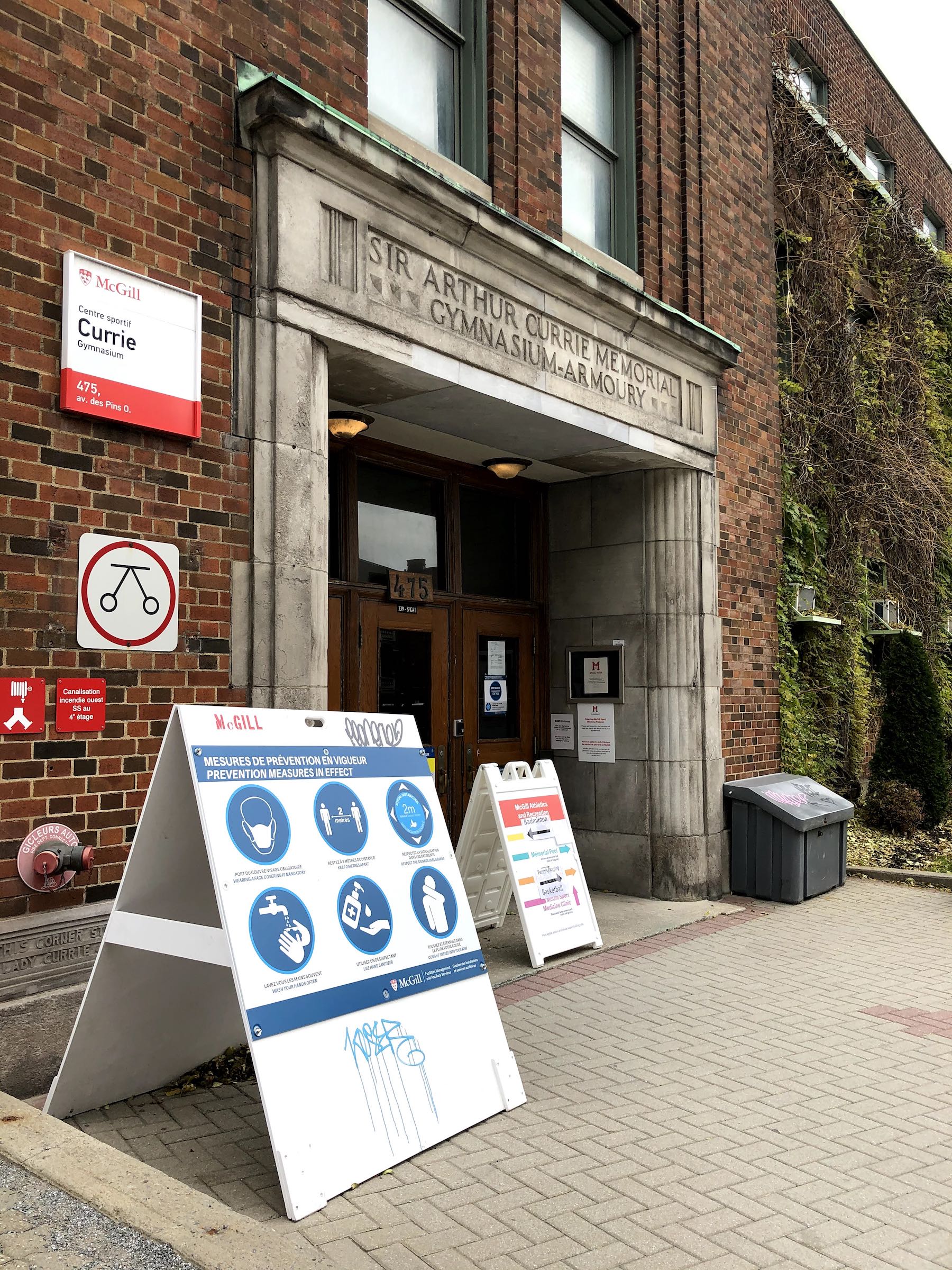
Despite announcing earlier in the semester that the Winter 2021 semester will mostly take place remotely, on Nov. 4, McGill sent an email describing its intention to expand in-person teaching for Winter 2021. The news broke while COVID-19 outbreaks continued to rise within primary schools and high schools, and alongside growing evidence that the educational sector had become the main driver of transmission in Montreal. With winter approaching and new daily coronavirus cases plateauing at a high number, concerns about classroom ventilation are amplifying, and schools are scrambling to find alternative ways of preventing further outbreaks. Clearly, in-person teaching has been difficult to manage and has exacerbated the pandemic in Quebec. 

Given the current situation in Montreal and my own experience with attending in-person classes, McGill’s decision is unreasonable. The school should be cautious when promoting it and students should not expect a high quality learning experience.

In their email outlining McGill’s plan for the winter semester, Associate Provost (Teaching & Academic Programs) Christopher Buddle and Deputy Provost (Student Life & Learning) Fabrice Labeau shared a link to a FAQ page that summarized the health precautions and tiers of academic activities to be implemented. However, the page did not mention or elaborate enough on important issues like ventilation and the use of masks. Indeed, the school has yet to disclose much about its COVID-19 ventilation plan. Although masks are mandatory when commuting indoors, once students are seated, they are not, and instructors cannot require students to wear them. Having been inside a socially-distanced classroom, I can attest that students are seated closer than one would expect and that there remains a significant health risk. Aerosols, such as those produced by sneezes, can reach distances over two meters, and students may forget to put their masks on when moving around. The school should reconsider the spacing of seats, or enforce the wearing of masks in classrooms. 

Furthermore, although McGill’s administration has recognized that students prefer in-person teaching, it cannot expect most of them to show up. Many students have already decided to stay away from campus for the winter. Ensuring that these students are able to participate equally can add additional strain to professors and TAs, who will need to balance two very different teaching formats this upcoming semester. 

Beyond the specifics of in-person courses, the pandemic is unpredictable, and students may not even have the opportunity to come to school. McGill moved ongoing courses that would be classified under the “Tier 2” category online when Montreal entered the red zone in early October, and they have yet to be held in person again. Tier 2 teaching, which consists of seminars, conferences, tutorials, and lectures, will be moved back online this winter if the city remains or re-enters the red zone—a highly likely scenario. Sudden switches in course delivery can be burdensome and confusing for faculty and students alike. The evidence shows clearly that there is uncertainty regarding the progression of COVID-19, and students’ learning will be impacted by new developments.

Although the prospect of attending in-person courses is exciting for many students, expanding them may not be realistic. This is due in part to concerns regarding the school’s ventilation systems, the lack of information on the health measures that will be implemented, the low number of students that will be able to attend, and the possibility of remaining in a red zone. Although McGill has reported few cases of COVID-19 transmission on McGill’s campus, the school needs to be more explicit about its plan for Winter 2021 and must reconsider some of the measures it put into place previously. In the meantime, students must demand more information from McGill and, unfortunately, not get their hopes up about having a quality experience on campus next semester. 

Science & Technology

What machines cannot learn, and what they should not be taught

Artificial intelligence (AI) developers are no longer satisfied with programs that play checkers and optimize search engine results, and have moved toward loftier ambitions such as diagnosing leukemia and probing the creators’ inner emotions. Humans often perceive AI as being inherently superior to their own minds, completely free of earthly flaws and fallacies. However, according to Meredith Broussard, author of Artificial Unintelligence, all technology is fundamentally imbued with the beliefs and biases of those who design it—for better or worse.

Broussard presented her critical look at contemporary media’s infatuation with AI at an event for the Feminist and Accessible Publishing and Communications Technologies’ Speaker and Workshop Series. She emphasized the important distinction between “real AI,” or technologies that currently exist, and those of science-fiction fantasies. 

The ultimate goal of AI research is to create a general intelligence that can adapt to a broad variety of situations, which some scientists argue may not even be possible. Building a sentient computer with this type of intelligence is a far cry from even the most cutting-edge computer programs being developed today. Current applications of AI, such as machine learning, are all forms of narrow AI focussed on mastering very specific tasks.  

“Narrow AI is just math,” Broussard said. “It’s computational statistics on steroids.” 

This form of AI is not transcendental, but rather a program that, when fed copious amounts of data, improves itself. All of its algorithms are produced by humans, and people inevitably build their own biases into the code they write.

Broussard describes “technochauvinism,” a term she coined in 2018, as the tendency to place computers and their decision-making prowess above human intelligence. The concept originates from the select group of white male mathematicians educated at prestigious universities who started developing the field of AI in the 1950s. According to Broussard, these men embedded their own biases in the technologies they imagined.

Technochauvinism also affects which researchers and projects receive funding. Renowned AI expert Marvin Minsky, who was part of a group of early advocates for space elevators, is just one of the privileged scientists benefitting from this system. His hypothetical technology has managed to stay relevant in intellectual circles despite the billions of dollars in funding it would require and the fact that it will likely never be realized

The technochauvinism that benefits Minsky, according to Broussard, is also responsible for male students and faculty members in STEM-related disciplines continuing to harass their female peers at alarming rates, making these fields discriminatory towards women, as well as inherently more dangerous. This is a fact Broussard sees reflected in current technologies.

“The computer is not inherently liberating,” Broussard said. “Just because we use technology does not mean that we are furthering the cause of justice. In fact, the opposite is true. Many times when we’ve used technology, what we’re doing is embedding existing biases in code, and we are perpetuating existing social injustices.”

Broussard presented a number of techniques that can be used to repudiate the obsession with AI. Foremost, Broussard advised the audience to understand what AI really is: A machine designed by primarily male scientists that only knows as much as it is taught. Next, governments should establish a federal consumer protection agency to audit and regulate the algorithms that regulate everything from social media feeds to decisions in healthcare.

Broussard concluded by recommending that consumers assume discrimination is the default in all automated systems and learn to recognize the impact these technologies have on labourers. She gave the example of “ghost workers,” the people who perform the often traumatizing job of filtering content posted on some of the internet’s most popular sites. 

“When you flag something horrific on Facebook, it [first] gets evaluated by an algorithm, but if the algorithm fails […] then that piece of horrific content goes to a person for evaluation,” Broussard said. “We need to recognize that ghost work is happening, that there are people who are operating these machines behind the scenes, and make better working conditions.”

Editorial, Opinion

University should not be financially debilitating

The Students’ Society of McGill University (SSMU) is one of many university student unions taking part in Debt-Free Degree, a campaign organized by the University Students’ Council at Western University and the Undergraduates of Canadian Research-Intensive Universities coalition. The campaign’s goal is to advocate for financial accessibility within post-secondary institutions. According to its website, 54 per cent of Canadian graduates finish their degrees with student debt, and 45 per cent end up owing $25,000 or more. Student debt can be stressful and at times debilitating, and can impact things like one’s credit score. In turn, the campaign calls for doubling government investment in the Canada Student Grant program and changing the Canadian student loans grace period from six months to two years.

The statistics provided by the campaign are abhorrent, especially when social pressures paint university as necessary to succeed in one’s career, leaving students with seemingly no choice but to take on debt, which can be debilitating for those with or without parental support. This phenomenon should no longer be normalized. Therefore, McGill students should call for better government policies, including those proposed by Debt-Free Degree, and McGill must do more to make itself accessible to students regardless of their financial background.

Between tuition costs, extra fees in certain specialized programs, and the cost of rent, groceries, and other necessities, university is staggeringly unaffordable. While not mandatory in first year, McGill housing is typically seen as a rite of passage and generally costs far more than an average apartment in Montreal. All of these costs are on the rise—McGill’s recent international student tuition hike and rising costs of living in the city are indicative of an upward trend that threatens to force even more students into debt to finance their studies.

McGill’s complicity in this crisis goes beyond raising costs. On top of requiring students to pay exorbitant amounts of money to access the institution, the university also fails to provide students with sufficient means to ease their financial burden. The university’s scholarship opportunities almost exclusively reward those with extremely high grades.

Perhaps such high standards would be more permissible if McGill’s need-based initiatives offered more security, but this is not the case. Work study positions require students to be receiving all possible government aid, generally meaning that they have already taken on the highest possible debt level. Further, many scholarships and aid programs require students to have a certain GPA or take a certain number of classes to be eligible. All of these restrictions make accessing aid extremely difficult, and force students into precarious or emotionally taxing positions before they can receive support.

While Canadian tuition prices are comparatively less expensive than the United States’ exorbitant ones, this argument allows Canadian post-secondary institutions to justify education costs that are nevertheless inaccessible and unaffordable. For this reason, the success of the Debt-Free Degree campaign is crucial. Expanding awareness of the issue, especially when it comes to policymakers, is the first step, and the campaign’s proposed policy changes is a move in the right direction. 

However, achieving substantive long-term change requires a collective rethinking of the entire notion of student debt. It should not be normal for students to have to sacrifice financial security before they even start their careers to gain access to that career in the first place. This attitude is dangerous, and debt will continue to pile on unless governments and post-secondary institutions enact change. More radical policy proposals like universal student debt cancellation are dismissed as unrealistic, but popular support and government pressure can eventually make them a reality. 

It is not normal that so many must deal with overwhelming debt at such a young age. Students can benefit from demanding better from McGill and advocate for policies that help alleviate the financial burden of attending university. Students are more than just funding opportunities for post-secondary institutions, and it is time that policy reflects that. 

Sports

Team building is essential to the success of first-year athletes

Team building is often regarded as trivial and little more than a way to “get to know people.” Sure, icebreakers can become repetitive, but there is a valid reason for the constant emphasis on team synergy, especially in sports. The reason is pretty simple: Teams that know and understand each other play better as a cohesive group.

However, during the COVID-19 pandemic, team building has become more difficult—trust falls cannot exactly be done over Zoom. As a result, 2020’s first-year athletes at McGill have been forced to find new ways to build the necessary bonds with their new teammates. Jamie Gunter, U0 Management, and goalkeeper for the McGill Men’s Varsity Soccer team says team bonding is one of the main reasons he reached out to the McGill men’s soccer this Fall.

“I emailed [Coach Mounicot] around the end of March,” Gunter said in an interview with The McGill Tribune. “I had a friend of mine [that] I played with a couple [of] years ago who’s a year up and he’s on the team right now, so I just mentioned [in my email], ‘Hey I know someone on the team looking to try out’ and [Coach Mounicot] emailed back ‘Keep you posted.’” 

Gunter’s first practice was somewhat unconventional, as it was completely non-contact, but it was successful nonetheless. 

“I ended up emailing [Coach Mounicot] again to figure out what was happening, and he said, ‘We will actually be practicing, non-contact,’” Gunter said. “I ended up being given the okay to come and I went and practiced with them, and now we’re here.”

Gunter’s bond with a former teammate helped him in this case, but that bond was developed prior to their arrival at McGill. Monty Weatherall, U1 Arts and 2020’s RSEQ Men’s Rugby Rookie of the Year, emphasized the importance of team bonding, especially at McGill.

“Being part of the rugby team was so crucial to how I fit in here [at McGill],” Weatherall said in an interview with the Tribune. “I came from the UK and knew one person here, but except for that, I knew nobody. You come into the rugby team environment, and it’s the same with every sports team, and you go in there and you’ve instantly got 50 friends.”

The effects of Weatherall’s integration into the team were noticeable, as he was named not only RSEQ Men’s Rugby Rookie of the Year but was also one of four McGill rugby players to be named to the All-Star First Team.

“We have a great balance on the rugby team,” Weatherall said. “We performed really well, coming sixth in Nationals last year, and we also have a great social life in a normal year, going out and seeing each other.” 

Monty Weatherall playing Rugby for McGill University (McGill Athletics)

Being around like-minded teammates is something Sophia Monahan, U0 Arts, places great value in as a member of dance groups Mosaica and United Groove.

“Being around dancers who are just as passionate, but also have different inspirations [is my favourite part of dance],” Monahan said in an interview with the Tribune. “It’s really nice to be around people that are passionate about the same thing.” 

Monahan elaborated on the importance of shared experiences in dance, especially now with the added emotional and mental burden of virtual rehearsals. 

“I find [online rehearsals] a lot harder,” Monahan said. “The main aspect of [dance] is going into the studio and dancing with other people [….] Specifically, I find it a lot harder to remember my choreography when not in the studio.”

Sophia Monahan continues to practice dance, despite the closure of dance studios (Sophia Monahan)

First-year athletes need to foster new bonds between teammates, but with seasons being cancelled, this team building is becoming increasingly difficult. The success Gunter experienced with making the soccer team was the product of a bond formed on a previous team, and now Monahan is already noticing that the virtual nature of practices is making training more difficult. 

Some organizations, like the Varsity Council, have done their best to create solutions to this problem. However, replicating a normal first-year experience is difficult, and the results are understandably imperfect. Braden Tennill, U0 Engineering and pitcher for the men’s baseball team, explained the efforts his team has made to create bonding experiences.

“There’ve been a couple of varsity bonding events that [McGill Baseball] joined in on,” Tennill said in an interview with the Tribune. “[But as for] that formative experience of being a first-year on a sports team, I kind [of] don’t have it this year.”

The negative impacts of this loss for first-years is undeniable. Luckily, Weatherall’s experience from being on the team last year allows him to be a mentor for newcomers struggling to adapt. 

“We meet every other Monday for ‘Hat Monday’ on Zoom,” Weatherall said. “In a normal season, every Monday practice is a ‘Hat Monday’ where you turn up in a funny hat for practice. It’s super awesome as some people will turn up in crazy stuff.”

The men’s rugby team has made efforts to host activities to specifically welcome first-years. These traditions existed in the past, but have been adapted so they can be continued on biweekly Zoom meetings.

“We also have a tradition on the team that one first-year takes the role of ‘The Weatherman,’ so before every game they put out a weather report, and also the ‘Riddlemaster’ puts out a riddle,” Weatherall said. “We have people doing that again this year, but obviously they do it before our Zoom calls. Also, we have split ourselves in groups of six or seven for senior players making sure the younger lads, especially the first years in [residence], have someone to talk to. It’s like a buddy group, people checking in on each other making sure that everyone is coping with school and the red zone.” 

The rookie season plays a critical role for many athletes in finding their places within their team’s dynamic, but sports teams provide more than just exercise for athletes. 

“[The team is a] breath of fresh air from being stuck in your room doing school work,” Gunter said.

Tennill pointed to the communal aspect of baseball and the family that his team has become. 

“[My favorite part of the team is] having a group of people you can rely on at McGill.” 

Weatherall builds on Tennill’s sentiment, linking his team’s synergy specifically to their performance.

“Our togetherness definitely makes us pretty successful as a team,” Weatherall said. “When it comes down to it, we are all very willing to put our bodies on the line and fight for each other on the pitch.” 

Team building is critical to a team’s success. Having unquestionable trust in one’s teammates allows athletes to perform their best out on the pitch, in the dance studio, or anywhere in between. Despite the circumstances, sports teams at McGill are attempting to create healthy and cohesive team environments, especially with their new first years—a task that, however challenging, will be vital to their future success.

Arts & Entertainment, Film and TV

Our friend, Alex Trebek

Every weekday at 7:30 p.m., Jeopardy!’s title credits flash across the television screen. Three contestants and a family friend walk out onto the floor to an enticing crescendo, their names announced by legendary narrator, Johnny Gilbert, as they receive a well-deserved standing ovation from the studio and at-home audiences. Half an hour later, viewers go their separate paths, feeling a bit better and richer than 30 minutes prior. On Nov. 8, 2020, the world said its final goodbye to the host of Jeopardy!, Alex Trebek.

At 80, Trebek died from complications of pancreatic cancer. A testament to his spirit, Trebek continued to film episodes two weeks up to his death, which will air until Christmas Day. Having spent 37 seasons as host, Trebek left his podium empty for the first time since Jeopardy’s revival in 1984. But Trebek was not just a game show host: He was devoted to life-long learning, and in this respect, he was in a league of his own.

Born in Sudbury, Ontario on July 22, 1940 to a Ukrainian father and Franco-Ontarian mother, Trebek grew up in a bilingual household. His Northern Ontario roots grounded him, instilling a hard-working mentality—a “Canadianness” he would later claim made him brave in the face of cancer. He graduated from the University of Ottawa with a degree in philosophy and with his heart set on a career in broadcast news. The Canadian Broadcasting Corporation (CBC) was the  starting point for this dream: Here, Trebek hosted different shows, ranging from a teen music program, Music Hop, to covering curling and other sports. But it was on game shows that Trebek developed the passion that viewers know him by today. His Canadian trivia shows included Strategy, an afternoon program, and the classic high school competition, Reach for the Top. Over the next several years, he flourished, taking the reins of both American and Canadian quiz shows, and eventually landed his role as host of the newly revived Jeopardy!.

Jeopardy!’s concept is straightforward: Three contestants, three rounds; answer right, win money; answer wrong, lose money. Trebek, as host, read the answers and verified whether contestants were right or wrong in their questions. This simple concept made for an intriguing competition. Contestants like Brad Rutter, Ken Jennings, and James Holzhauer dominated the game. The first female winner of the Tournament of Champions, Rachael Schwartz, 20-time champion Julia Collins, and the first winner of both the Teachers’ Tournament and Tournament of Champions, Colby Burnett, changed public perceptions of who could compete in trivia. These contestants, among the plethora of Jeopardy!’s fantastic competitors, established personal bonds with Trebek, making the mid-round conversations during the show more entertaining. In fact, in his memoir, The Answer Is, Trebek recalled having tears in his eyes seeing Jennings leave after his historic 74-game run.

In his 36 years, Trebek extended past the question-answer format. He was known to contribute comments after the questions and in discussion, adding his insights and connecting pieces of knowledge together. In doing so, Trebek pushed trivia beyond the sphere of right-or-wrong and into an interactive experience of sharing knowledge and learning from each other. His fashion became something of note, as he switched up his facial hair and wore consistently fantastic suit and tie combinations. His factual accuracy, due to his collaboration with researchers, mixed with his witty humour and ability to connect with people, made him into a beloved icon. Trebek embodied what Jeopardy! strived to do—favour the positives, emphasize the importance of knowledge, and have some fun along the way.

Alex Trebek’s graciousness, work ethic, and character were vital to generations of viewers. Trebek was never the star of the show, nor did he want to be; he was a friend who made us feel less alone in loving trivia. He was a champion of life-long learning and for that, the world is eternally grateful. 

Commentary, Opinion

Switch banks: It may save the planet

The Royal Bank of Canada (RBC) recently became Canada’s first major financial institution to refuse to invest in fossil fuel drilling in Alaska’s Arctic National Wildlife Refuge (ANWR). RBC’s new policy comes after the U.S. government’s controversial decision to open some of the refuge for oil and gas development, to the objection of many environmental organizations.

RBC’s policy is a good one. Without drastic mitigation efforts, experts warn, climate change will become irreversible. Action needs to be taken soon, and banks, universities, and other corporations must do their part. Accordingly, corporations need to be held accountable, and students, in particular, can play a key role in this. Today’s students will be the next generation of employees and employers. At a crucial point in the climate crisis, they have the power to influence corporations’ policies—and it all comes down to where they put their money.

While RBC’s new policy is an important start, it does not appear to be particularly ground-breaking. The bank is not divesting from any of its current oil investments or refusing to invest in oil development in other locations. All RBC is doing is promising not to invest in drilling in the ANWR in the future. The policy, it seems, costs the bank very little. In fact, it may help them—it is good for public relations. RBC’s decision, therefore, is likely not a moral one, despite what the company might like the public to believe, but a strategic one. 

Still, RBC remains the first and only Canadian financial institution to publicly affirm it will not invest in oil and gas development in ANWR. Consumers ought to take note of this. In a capitalist society, one of the few things consumers have power over is which companies and businesses they support with their money. If consumers want to demonstrate that climate change is important to them, they need to support companies that reflect their values and, on the flip-side, refuse to support companies that do not. 

This strategy is behind many environmental and social movements, such as ethical veganism, the fair-trade movement, the push against anti-fast fashion, and the zero-waste campaign. If demand  decreases, companies are forced to take action to improve their practices. As a result of consumers’ boycotting products and companies that do not reflect their values, companies have made changes or have suffered as a result. There has been a rise in mainstream plant-based products, with popular fast-food chains now offering plant-based alternatives. Likewise, some restaurants and grocery stores now supply compostable bags, second-hand shopping has become popular, and, in the changing market, companies that have failed to adapt have suffered. Voting with dollars does affect change.

Students have a unique ability to create change. They have the drive: Generation Z—who make up 55 per cent of today’s university students—is more concerned with climate change than any previous generation. Students also have the means: Gen Z contributes $44 billion in annual purchasing power and is on track to become the largest generation of consumers. If students can carry this drive and concern over to their spending habits, then companies will be forced to take action if they wish to attract and maintain their business. 

At the university, Divest McGill has been demanding that the administration divest from fossil fuels since 2012. And just last year, students participated in the largest march in Quebec history to protest climate change. If McGill students can funnel this drive into another area where it counts—where they spend their money—then they have the power to enact meaningful change.   

Students should be aware of their power over the market, and ought to use it. This needs to extend to every institution that profits from their money, including banks. It is likely that RBC’s intentions behind their no-drilling policy are not as pure as they claim, but if their policy is supported, and it results in more business (and more profit), they may implement further climate-friendly policies in the future. This is capitalism—if it pays for a company to combat climate change, then the company is incentivised to do so.

Arts & Entertainment, Film and TV

RIDM filmmakers return to their roots to heal wounds from the past

This year, the Rencontres Internationales du Documentaire de Montréal (RIDM) documentary film festival looks a little different. Tuning in from home, viewers pay for a pass to view a series of documentaries, running from Nov. 12 to Dec. 2. RIDM has curated a catalogue of eight distinct sections, each featuring 11 different films. Until Nov. 18, RIDM is streaming a set of three sections—“Disrupting History”, “Exploring Nature”, and “Seeking Communities”—each responding to different concerns of contemporary society. 

In the “Seeking Communities” section, three films in particular stood out as tender explorations of returning to one’s geographical and personal roots to gain a deeper understanding of one’s history and self.

Ndagukunda déjà dir. Sebastien Desrosiers and David Findlay

Sébastien Desrosiers and David Findlay’s Ndagukunda déja, translated as I love you still, is a beautiful ode to a Desrosiers family history and personal past. In the film, Desrosiers travels to Rwanda in an attempt to find his father, who disappeared from his life at a young age, and to understand the impact of the Rwandan Genocide on his life. Amidst the search for his father, he finds himself as well.

“My father wasn’t on Facebook nor in the yellow pages,” Desrosiers said. “So how do you go about finding him? This [was] a person who left no trace.” 

All Desrosiers knew was his father’s name. Light acoustics hum as the film opens in vibrant, gossamer shots of Rwanda, the camera following Desrosiers’ boyish gait down mud roads and up clay steps in the blooming of a yellow sun. There, Desrosiers rekindles his connection with estranged family, as they lead him through landmarks and recall the genocide that killed 45 members of his paternal family, forcing his father to migrate to Quebec. Ultimately, Ndagukunda déjà is a spectacular short film, with delicate, earnest cinematography, and a story of intergenerational healing after tragedy. The film touches every heart through its unshakeable belief in the power of unthreading the sutures of shared history.

In the Shadow of the Pines dir. Anne Koizumi 

In the Shadow of the Pines by Anne Koizumi is a masterfully crafted claymation film that packs a non-linear punch to the gut, as an eight-year-old Koizumi runs through a forest of mossy pines, asking for one more memory from a father no longer there. Ultimately, the film is an apology that Koizumi never got to make. 

Her father, a Japanese immigrant who worked as a janitor at her Canadian elementary school, made Koizumi feel ashamed as a child for their poverty and for reminding her of their Japanese identity. As an adult, Koizumi is able to contextualize her father’s difficulty of assimilation with his strenuous upbringing as a neglected child in Japan.

In the Shadow of the Pines explores similar themes as other selections in the “Seeking Communities” section. Notably, Koizumi and Desrosiers remember the embarrassment they felt as children about their parents. Both tried to ignore their fathers when they were younger, thinking that by acknowledging their fathers’ roles in their lives, they would have to come to terms with their “otherness” in their predominantly white, middle-class classrooms.

Monologues du Paon dir. Matthew Wolkow 

Matthew Wolkow’s Monologues du Paon (Peacock’s Monologues) is a love letter to two cities: Montreal and Lisbon. Through his care of carrier pigeons, Wolkow explores his relationship with his Portuguese neighbour Orlando, who immigrated to Quebec in 1960. Interspersing clips of the two cities, flying carrier pigeons, and tales of Portugese emigrants, Wolkow effortlessly crafts a semi-fantastical dialogue between tales of human and avian migration.

“One must sometimes go far in order to better return, to remember,” Wolkow said. “This attachment to their birthplace homing pigeons owe […] to their instinct [….] Every departure was not the object of arrival but of an eternal return.”

Arts & Entertainment, Books

Kasia Van Schaik’s literary talents bridge separate spheres

Kasia Van Schaik, also known by her pen name Kasia Juno, is a McGill doctoral candidate whose work focusses on environmentalism, feminism, and physical spaces. Her writing has been featured in popular journals, including The Los Angeles Review of Books and The Best Canadian Poetry Anthology. Currently, Van Schaik straddles the line between academic and creative writing, simultaneously writing her dissertation on American postwar women writers and preparing a short story collection for publication, tentatively entitled We Have Never Lived on Earth

“I feel like my creative and my academic work are quite related,” Van Schaik said in an interview with The McGill Tribune. “I do find [that] when I focus more on one, the other one suffers. So, at this moment, I just try to squeeze in the creative work where I can.”

In her upcoming collection, Van Schaik uses narrative structure to explore the connection between ecological change and human emotions. For instance, one story features a world threatened by the possibility of Montreal skyscrapers floating up the Saint Lawrence Seaway, while in another, women are legally prohibited from sitting in front of mirrors for more than 10 minutes. 

“Together, the stories in We Have Never Lived on Earth suggest that love, like water or oxygen, is a resource easily polluted by greed,” Van Schaik said. “Balancing hope, fear, and a nostalgia for the present, the stories in this collection portray [our] struggle to understand what it means to live on Earth.”

Ecological writing is not a novel topic for Schaik: Her poetry chapbook, Sea Burial Laws According to Country (2018), received the Mona Adilman Prize at McGill for the best collection of poems relating to environmental concerns and was adapted into a concert performed by the Montreal Music Labs in 2019.

“I’m really interested in defamiliarizing the everyday,” Van Schaik said. “Sea Burial Laws According to Country is made up of found poetry. I found certain sea burial laws from all over the world, and I’ve used those as prose poems throughout the book [….] I was interested in thinking about the arbitrariness of ocean borders, these huge bodies of water that we divide up, and [how] our different cultures have laws about how we interact with them.”

Van Schaik’s fascination with literature and writing began in her youth when she moved from her birthplace of South Africa to Western Canada.

“I’ve always loved reading,” Van Schaik said. “I remember being a total bookworm when I was a kid. You know how it is when you move somewhere new, it takes a while to get to know people and to know a culture. For a while, I built my world in books.”

Van Schaik’s literary passions continued into her post-secondary education. While at Concordia University, her short story, “The Fox,” won the Quebec Writers’ Federation Short Story Prize in 2009. The story’s publication helped her realize how her work had the potential to reach and affect a wider audience.

“There’s something magical about that process, something inside you, your perceptions and ways of seeing the world, and then it’s on a page and other people are able to see the world in the same way,” Van Shaik said. “After that [story], I took writing more seriously and did an M.A. in English and Creative Writing [at the University of Toronto] and decided to pursue that in quite a more formal way.”

As a member of Poetry Matters, a university-based group that facilitates workshops and conversations surrounding poetry, and as a teaching assistant at McGill, Van Schaik encourages students and writers to embrace self-expression and appreciate art.

“I really think that learning how to observe the world around us, both in a political and a creative way, is another way to engage,” Van Schaik said. “Whether it means writing about it, singing about it, or creating art in some other way, for me, the most important thing is to teach myself to listen and to perceive and to see the world around me and to find what is unique and beautiful.”


Student Life

McGill’s Indian Student Association moves Diwali celebrations online

Diwali, the festival of lights, is a major cultural event for Indian communities around the world. During the five-day celebration, families illuminate their households with oil lamps and candles and come together to worship Lakshmi, the goddess of wealth and prosperity. Traditionally, the McGill Indian Student Association (ISA) would host a Diwali party as a means to kick off the Indian New Year. The event is important to McGill’s Indian community, and the inability to host an in-person gathering is undoubtedly a major disappointment. Starting on Nov. 8, the ISA began hosting a week of virtual events to bring people together despite the physical setbacks.

Sannah Ratra, U2 Arts and ISA Vice-President Communications, commented on the importance of Diwali as a social event that connects those who celebrate it. For university students who have moved away from their families, the virtual event provided a unique opportunity to embrace their culture with new people. 

“Diwali to us means celebration and time with our loved ones,” Ratra wrote in a message to The McGill Tribune. “Even though most of us are so far away from home, we have tried to make our members feel closer to home by hosting these events.”

The ISA faced a new set of challenges while attempting to offer the full experience of Diwali virtually. Crucially, they considered time zones and Zoom fatigue in their decision to break up what is usually a longer event.

“This year we decided to host [a] Diwali week where we had a bunch of events all through the week,” Ratra said. “We started on Sunday with Bollywood Trivia on Zoom, we had ‘Cook with ISA’ on Monday on Zoom where we made chickpea curry (Chole) and Rasmalai shots. On Tuesday we had a live Zoom where we did a Bhangra workshop and today [Nov. 13] we hosted a Yoga workshop also through Zoom.”

The ISA’s virtual celebration for Diwali provided an impressive range of activities to make students feel welcome, especially as many Indian students can feel homesick during this time of the year. Notably, the decision to include a cooking workshop as a part of their itinerary was true to the traditions of the festival and gave students a chance to enjoy the food they may have eaten at home with their loved ones. A Diwali celebration by tradition involves family feasts, and any Diwali week would not have been complete without a warm meal. 

The Bhangra workshop was similarly important because Bhangra, a traditional form of dance popular in India, is an integral part of Indian party culture. The workshop reminded students of the energy of an in-person party and also gave participants a chance to blow off steam and move their bodies. With prolonged hours spent indoors, a few minutes dedicated to moving around can be a good way to relieve stress and bring joy. This is especially important for students during Diwali as no New Year’s celebration feels complete without dancing among friends and family. The ISA did a great job in bringing together the Indian community at McGill, giving students the opportunity to start the new year with some new friends. 

The ISA has shown that even though students may be far apart during these difficult times, we can be close together in spirit. The virtual Diwali celebration was a stellar example of maintaining unity during the holidays, despite the tough circumstances.

Photos of the event can be found on the ISA’s instagram page (@isamcgillu). 

Student Life

How to combat digital eye strain

With the new reality of remote learning, many students are constantly staring at screens. Spending the day focussed on Zoom classes and meetings may leave some students feeling extra tired or dizzy. Although extended use of digital devices will not permanently damage your eyes, they can still cause bothersome symptoms such as eye discomfort, blurred vision, headaches, and difficulty sleeping. Digital eye strain is a common condition which has been exacerbated with the recent uptick in remote school and work. Thankfully, simple changes to your work station and daily habits can have small but impactful effects on your eye health. 

Below, The McGill Tribune has compiled some simple ways to relieve digital eye strain. However, prolonged eye strain may be a sign of something more serious that should be discussed with an ophthalmologist.

Correct positioning

The top of the computer screen should be at eye level. Additionally, the screen should be placed approximately an arm’s length away from one’s face to protect the eyes and alleviate neck and shoulder pain: Placing a laptop a comfortable distance away minimizes eye strain and allows your entire screen to be viewed without head and neck twisting. If possible, the screen should be slightly tilted back to avoid glare from ceiling lights, as too much glare can make it difficult to see objects on your laptop. Glare can also be reduced by placing blinds over nearby windows or installing an anti-glare screen on the display. 

Adjust your settings

Changes in brightness, text size, and colour temperature can make a world of difference. Try adjusting screen brightness to be approximately the same brightness as the surrounding workstation. Turning down the brightness level of screens reduces exposure to blue light, especially during the night. When reading or writing long documents, increase the text size and keep contrast moderate to avoid eye strain. Lastly, reduce the screen’s colour temperature to lower blue light emission for better long-term viewing comfort. 

Blink more

One simple way to minimize eye problems is by blinking more frequently. When staring at a screen, people tend to blink only half as much as normal, which can lead to evaporative dry eyes. Blinking helps to flush the eyes in their natural fluids. Another option is to use moisturizing eye drops to refresh the eyes when they feel dry. 

20-20-20

Taking breaks from staring at a screen is important. One trick is to keep in mind the 20-20-20 rule: Every 20 minutes, try looking at something 20 feet away for a minimum of 20 seconds. It is also recommended to take more extended breaks from digital devices. Every two hours, take a longer 15 minute break and set a recurrent timer as a reminder of when to look away.

Night mode

It is well known that digital devices emit blue light, which is linked to poor sleep quality. Although blue light is not damaging to the eyes, it suppresses melatonin, a hormone that influences circadian rhythms and helps you sleep. Consider turning on night mode on devices in the evening to decrease the blue light exposure. Switching off devices one hour before going to bed or wearing glasses with a blue light-blocking filter are also good options for reducing blue light exposure. 

Read the latest issue

Read the latest issue