Latest News

News, SSMU

Indigenous student leaders call for SSMU VP Internal’s resignation

Indigenous students are calling on Students’ Society of McGill University (SSMU) Vice-President (VP) Internal Sanchi Bhalla to resign in a letter after allegedly failing to support Indigneous students. The letter asserts that she has failed to fulfill her mandate by declining to allow Indigenous students to use SSMU’s Listserv to advertise an upcoming protest.

The email, which was sent to Bhalla on Oct. 18, referred to a motion presented at the Oct. 10 SSMU Legislative Council meeting regarding the federal government’s recent decision to appeal a ruling that would compensate First Nations children harmed by the child welfare system. SSMU Indigenous Affairs Commissioner Tomas Jirousek presented a motion condemning the government’s action and requested Legislative Council’s support in organizing a demonstration to protest the appeal. The letter states that Bhalla failed to provide support to Indigenous communities, as outlined in her mandate, by being reluctant to use the Listserv to mobilize students.

“[Our mobilisation efforts] require [that] the VP Internal [allow] us to use the Listserv,” Jirousek said. “She was notified both at Legislative Council, [was mandated to do so] at the same council, [and] she was previously reminded in private messages between members of the executive committee. [Her actions] largely led to a breakdown in mandated allyship from the executive team. It threatens our ability as the Indigenous student community to mobilize on a rapid basis.”

In the letter, which was forwarded to The McGill Tribune, Jirousek threatened to resign from his position if Bhalla does not step down due to her lack of support for Indigenous students. Additionally, the letter states that Indigenous students will not be reapplying for the position of Indigenous Affairs Commissioner and will withdraw their support for the Indigenous Affairs Committee.

“By failing to provide timely allyship to Indigenous students, VP Bhalla demonstrated a lack of respect towards the issue as well as the labour that Indigenous students had applied,” the letter reads. “The VP’s lack of support for Indigneous students also demonstrated a lack of respect for the issue of First Nations’ children who have been displaced by the child welfare system.”

Indigenous student leaders cited Bhalla’s alleged lack of support as part of a larger structural issue within SSMU, as Indigenous groups that work under a SSMU portfolio rely on executives to provide them with both financial and organisation support. Catie Galbraith, co-chair of the Indigenous Students’ Alliance, explained that this reliance on external bodies places excessive amounts of strain on the students running them.

“I think it’s representative of this bigger issue of Indigenous students and Indigenous student groups being in such a precarious position all the time,” Galbraith said. “It’s very stressful and it’s very harmful.”

Jirousek agreed, attesting to the importance of having reliable institutional support.

“We do a lot of labour,” Jirousek said. “We’re a small community, and Sanchi and her actions right now are taking away our ability to focus on other issues. You now have three Indigenous students [working in SSMU], all that could be doing work in other regards whether personal, or [academic], or [….] professional. Instead we’re here focused on Sanchi because she’s become a problem for our community.”

Update: The SSMU Executive team has sent a response to the Indigenous student signatories regarding their letter.

Features

From fame to shame

In 2006, Tom Traves, then-president of Dalhousie University, formed a coalition of 11 schools, nine of which were among the top 15 research universities in Canada. The 11 presidents of the represented universities signed an open letter addressed to Maclean’s Magazine, denouncing their method of producing university rankings for their annual Education issue. These schools refused to participate in the Maclean’s questionnaires, which gathered administrative data about schools’ student bodies and opinions of other institutions.

Martlets, Sports

Martlet cross country take bronze at RSEQ-UNB

The McGill cross country team competed on Oct. 12 in the RSEQ-AUS Interlocking Meet, hosted by the Université du Québec à Montréal (UQAM) at Parc Maisonneuve. A total of 316 runners representing 15 teams competed in the men’s and women’s eight–kilometre categories. The nationally-ranked Martlets finished third overall with fourth-year runner Elizabeth Hirsch claiming an individual second place. 

The Martlets were impressive in the season’s first eight–kilometre run. Hirsh, McGill Athlete of the Week, capped off a 29:16.5 effort with a podium finish, her third over the last four races. Accompanying her in the top ten was third-year Sandrine Veillette, who finished with a time of 30:19.00, fourth-year team captain Chloe Fleurent-Gregoire (placed 14), and third-years Laura Carlton (19) and Brianna Mendes (28), taking home a total of 68 points for McGill.

“The first [eight-kilometre race] of the season is: c’est impressionnante; it’s not [necessarily] a struggle but requires focus,” Fleurent-Gregoire said after the race. “[The] first [four-kilometres are] okay, the [next two] you can fall asleep [because] it’s four repetitive laps. But the last [two-kilometres], [you] step it up and show what [you] have.” 

Despite missing out on what would have been their fourth successive first-place finish, the Martlets put on a competitive display against the nation’s top teams. They fell just short of the Laval Rouge et Or, who recorded 67 points, and the Queen’s University Gaels, who took 49.

The McGill Men’s team, however, endured a tough loss as the team failed to build upon an improving trend of overall finishes. First-year Henry Wellenstein, who finished in 39th place, fifth-year Simon Bernier (58), first-year Noah El Rimawi-Fine (63), second-year Oliver Cyr (79), and third-year Jeremy Obrand (117) combined for a total score of 250 to finish in  tenth place at the meet. 

Wellenstein, who has been McGill’s brightest spark for a fourth successive race, was enthusiastic about his performance. 

“This is my first year [on the team], so I’m kind of just going with the flow,” Wellenstein said. “A lot of work goes into running at the race-pace. We do a lot of interval [runs] where we’re slower than the race-pace [and] faster than the race-pace, […] but its [also] about pushing hard physically and mentally [to win].” 

The team, coached by 32-time conference Coach of the Year Dennis Barrett, remains positive about improving their times ahead of the provincial championships. 

“It’s my first [eight-kilometre race] since last year so it was definitely more difficult, but Coach [Barrett] is always on me about improving my cadence, to take more steps per minute,” Hirsch said. “He wants us to start out in the front [and] be confident about it [….] That is what I did today. It was scary, but [we] need to challenge ourselves.”

The cross-country team’s next challenge will be the provincial championships in Quebec City on Oct. 26, followed by the highly anticipated Nationals in Kingston on Nov. 9. 


Moment of the Meet:

Fourth-year runner Elizabeth Hirsch started the race at the front of the pack, displaying confidence as she kept control throughout the run to eventually take home the silver medal. 

Quotable:

“[We’re] a very different team compared to last year, […] but what’s cool about McGill is that we have a lot of depth. It’s not just three [or] four girls but ten girls that are all strong [runners], so we’re always competitive. We’re really hoping to win it this year.” – Martlet captain Chloe Fleurent-Gregoire on improving upon the team’s fifth place finish at last year’s Nationals. 

Stat Corner:

The Martlets (68 points) narrowly missed out on the second-place finish to their rivals, the Laval Vert et Or (67). 

NBA Preview
Basketball, Sports

NBA Preview: The new fan’s guide to 2019-20

Let’s face it: Montreal isn’t the best city for basketball fans. However, the Raptors’ Championship win may have spurred the genesis of basketball-fandom across the country. Thousands of first-time fans packed into the Jurassic Park on Peel Street to watch the improbable dark-horse squad headed by Kawhi Leonard thrash the Warriors, and in the process, fell in love with basketball. 

When the NBA season starts on Oct. 22, fans without a team will have to choose where to place their loyalties. There’s no lack of excitement coming into the 2019–2020 NBA season with everyone on the all-star starting lineup, including Leonard, playing musical chairs. The McGill Tribune compiled a list of the most thrilling teams to support before the bandwagons leave the stations.

The Philadelphia 76ers

Even those that question the value of the team-building process can’t deny that the 76ers are looking impressive this year. Joel Embiid lost 20 pounds over the summer, which is sure to make him better defensively and lighter on his feet. Ben Simmons may have learned to shoot, even draining his first ever three-pointer in a preseason game. Furthermore, the off-season addition of veteran Al Horford will add to their depth and defence. Without Kawhi Leonard in the Eastern Conference to stop them, the 76ers will be contenders this coming season.

Los Angeles Clippers

The recent addition of Leonard and Paul George to an already elite Clippers’ roster has Lakers and Warriors fans concerned. Hot off one of the greatest playoff runs in NBA history, Leonard is now on an even better team, he’s ready to cement his legacy, and it’s time for the battle of LA to return.

Denver Nuggets

The Nuggets’ roster has remained mostly unchanged, unaffected by free agency. They are the only top team with any continuity, an undervalued aspect in building team chemistry. If Nikola Jokic continues with his unique take on the centre position while being surrounded by exceptional shooters and highly anticipated rookie Michael Porter Jr., they just might be in the mix to win it all this year.

Los Angeles Lakers

With the recent addition of Anthony Davis, the Lakers have catapulted into championship contention. By pairing Davis with Lebron James, holding on to Kyle Kuzma in the Davis trade, and landing valuable shooters like Danny Green, the Lakers are looking to prove that they still own LA.

Dallas Mavericks

Dirk Nowitzki retired last year, but this year’s Mavs roster isn’t any less European. Former Rookie of the Year Luka Dončić paired with recent 7’3” addition Kristaps “The Unicorn” Porzingis should make for a deadly combination.

New Orleans Pelicans

This might be the most exciting assembly of young talent to ever grace the NBA. Zion Williamson, possibly the most talked about NBA prospect of all time, will be paired with Lonzo Ball, a talented playmaker no longer suffering from a weird jump shot. The two should make for a flashy and explosive duo, churning out highlights on a nightly basis, and potentially propelling their team to the playoffs.

Houston Rockets

The Rockets have been hovering in finals contention for the last three years, but the Warriors have stopped them at every turn. The blockbuster trade of Chris Paul to Oklahoma City for Russell Westbrook might be what gets them through the blockade though, with the Warriors now weakened by Klay Thompson’s injury and the loss of Kevin Durant. With both James Harden and Westbrook setting all-time records for ball possession in the last few years, however, it’s unclear how both teammates will share the spotlight.

If there has ever been a year to get into the NBA, this is it. Nearly every team has been reshaped by free agency and trades, and there’s no clear frontrunner. Anything could happen, and fans have a fantastic chance to choose a team.

Science & Technology

Searching for the Fountain of Youth

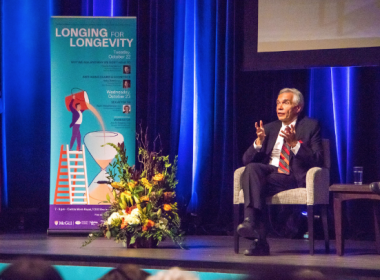
Montreal community members crowded into the Redpath Museum Auditorium on Sept. 27 for a Freaky Friday lecture. In the talk, Professor Joe Schwarcz, Director of the McGill Office for Science and Society, discussed humanity’s historical attempts to delay aging. 

“Nobody looks forward to getting old,” Schwarcz said. “Historically, there has been this search for the Fountain of Youth, and, over the years, many anti-aging regimens have been developed.”

One such regimen consisted of bathing in sour donkey milk and was practiced by Queen Cleopatra in the first century BC. Modern science suggests that, since sour milk contains lactic acid, the remedy could have had a slight rejuvenating effect. Lactic acid belongs to a class of compounds called alpha hydroxy acids (AHAs) that speed up the turnover of skin cells and are now marketed in cosmetic face creams. 

In the 19th century, physiologist Charles Brown-Séquard observed that eunuchs suffered from medical problems and hypothesized that a substance present in the testes was the key to health and longevity. He injected himself with extracts from dog testes, inspiring other researchers to further investigate gland transplants. 

This tradition continued into the early 20th century when John Brinkley, a charlatan without medical credentials, made a fortune by transplanting the testicles of goats into the scrota of aging men. 

“He had very few complications because he never connected the goat testicles to anything, but he had plenty of men saying how happy they were, […] undoubtedly due to the placebo effect,” Schwarcz said. “Although we look back on these ventures as being virtually comical, […] this really was the beginning of hormonal therapy.” 

Attempts to exploit the gullibility of the public persisted, even as legitimate science advanced. Human growth hormone (HGH), the production of which declines as a person ages, became a widely promoted remedy after a 1990 study observed that HGH treatments increased lean mass and bone density in elderly men. 

“HGH, at the time, was very difficult to come by,” Schwarcz said. “But there were clinics that popped up […] that were offering HGH injections for much less than [the expected price], so no one knows what they were actually injecting.”

 When public awareness caught up, companies instead began marketing an HGH ‘secretagogue,’ a substance that supposedly stimulates the secretion of raw materials to form HGH proteins inside the body. However, HGH levels decline because of the reduced activity of enzymes that assemble raw materials into proteins, not because of a shortage of raw materials.

“Supplying these secretagogues is like supplying bricks and windows and doors and hoping that they will assemble themselves into a building, which will not happen because the builder is missing,” Schwarcz said. 

Schwarcz also noted that the manipulative tactics of advertisers are present in many modern anti-aging products. 

“Marketing very often uses clever words such as ‘It may help’ […] and, as soon as you do that, you are protected legally,” Schwarcz said.

Some companies push this principle above and beyond. Based in Arizona, the Alcor Life Extension Foundation specializes in cryonics, a pseudoscience that insists on freezing human corpses in the hope of resurrecting them in the future. 

“It [costs] at least $100,000,” Schwarcz said. “This is of course nonsense. When you are cold and dead, you are dead.” 

While some make expensive bets on futuristic technologies, Schwarcz’s recommendations for prolonging life are a lot less flashy. Okinawa Island in Japan is home to more centenarians than any other place in the world. The lifestyle of this population is characterized by a high consumption of fish, vegetables, and fruit, a low consumption of red meat and processed food, and high levels of activity. 

“Eating a proper balanced diet, […] exercise, and [genetics] are a few keys, but these are not highly marketable,” Schwarcz said. “There constantly are these miracle solutions, but there are no miracles.”

McGill, News

Meet the federal election candidates

Lianna Canton Cusmano, Green Party of Canada

For Cusmano, a spoken word poet, writer, and arts educator, the Green Party isn’t running on a one-issue platform. While the Greens’ focus on the environment is important to them, Cusmano was primarily motivated to run because of the experiences they have had living within Montreal. 

“I think [the Greens] have the most ambitious and comprehensive plan to achieve the change that we need,” Cusmano said in an interview to The McGill Tribune. “The climate crisis has been building for a really long time. The other thing is that I’m an underemployed university graduate, who is a feminized, trans, non-binary person living in the gig economy, who lost their job [and] their apartment. So all of these issues affect me personally. And I’m one of the more privileged ones.”

For example, Cusmano finds the Greens’ emphasis on housing an important key to reducing the high number of Inuit people affected by homelessness. In Montreal, Inuit peoples represent 10 per cent of the Indigenous population, but close to 45 per cent of the city’s Indigenous homeless population.

“When you look in this riding in particular, we’re [seeing] places [becoming] gentrified,” Cusmano said. “So in terms of policy, the Green Party will appoint a Minister of Housing to strengthen the National Housing strategy and make [housing] a legally protected, fundamental human right. [We will also commit to] regional increased housing investment, rent assistance, eliminating first-time home buyer grants, and finding nonprofit housing cooperatives and organizations, which [are] especially helpful for vulnerable communities like students and seniors.”

None of this comes at the expense of the Green Party’s environmental platform, which Cusmano believes is one of the most important issues of the campaign.

“I think the first [goal is] stricter targets,” Cusmano said. “We’ve seen other parties that target and promise [….] and fail to hit targets, and what the Green Party is proposing is to set a target of a 60 per cent reduction of greenhouse gas emissions by 2030 so that we reach net zero emissions by 2050. And you accomplish this by setting [lower] legal emission limits for industries [and] by setting carbon fees, [while] making sure that everybody at the municipal, provincial, and federal level is doing everything that they can do reduce emissions, so that we don’t put profit ahead of the environment in our future.”

Marc Miller, Liberal Party of Canada

The Liberal Party has faced plenty of blowback for their decision to purchase the Trans Mountain Pipeline in May 2018, but for Liberal incumbent Marc Miller this doesn’t negate their environmental priorities going into the 2019 federal election. 

“So the Trans Mountain Pipeline [included] a flawed process that, namely, did not take into account proper consultation with Indigenous [communities],” Miller said. “And so we revamped the process by which these projects are approved. And we were at a point where we had to make a decision as to whether to purchase it or not. But when you take a step back, Canada is one of the largest net [exporters of] petroleum products in the world, [so] the responsible decision was to purchase that pipeline, knowing that those petroleum products would get to market through other means, including rail cars, which [are] much more dangerous.”

To mitigate some of the environmental damages, Miller said that proceeds from the pipeline, if the government decides to sell it, will be reinvested into green initiatives.

He also spoke to the benefits of diversity in relation to driving economic development, which he said will benefit economies suffering from labour shortages, like that of Quebec. 

“[Immigration is] a cornerstone [of] our economy, and our diversity makes our country better,” Miller said. “Because it’s a split jurisdiction, we are currently trying to encourage our partners in the [Quebec] government to be more generous. So this is [of] a particular concern [not only] to the diversity of the country, but it’s also a concern in the job market, because there is [an] over [one] hundred thousand person labor shortage in Quebec.”

With four years in Parliament under his belt, Miller remains inspired by individual Member of Parliament’s ability to make a difference.

“It has been a comforting revelation to me [that when you’re part of] an ambitious government that is forward-looking and cares about the people they represent, you can make [a difference] individually as a Member of Parliament,” Miller said. “We [made a] number of lofty promises in 2015 and you’ll see a number of others come out in our platform [this year]. And I think there’s a lot more work to do.”

Sophie Thiébaut, NDP

Having represented Saint-Henri-Est–Petite-Bourgogne–Pointe-Saint-Charles–Griffintown as a City Councillor for the past 10 years, Thiébaut is no stranger to Montreal or its people. She was initially drawn to the NDP because of their ambitious environmental platform, and said that the final straw was when the Liberal government purchased the Trans Mountain Pipeline. For the NDP, this begins with recognizing the science behind climate change and acting accordingly.

“We want to be carbon-neutral [and] to reduce our greenhouse gases completely by 2060 in a situation [so we can] keep the temperature rise under 1.5 degrees,” Thiébaut said. “We don’t want to put any more money in the fossil fuel industry. We want to put money in the for these workers to go into training [for] new industries, [such as] construction.”

Another promise that was attractive to Thiébaut was their attitude to racial discrimination and hate speech. 

“I think that, in Canada, we have the chance to have a beautiful society with a beautiful diversity and the NDP wants to show that everybody has a place in this society and everybody can do what they want,” Thiébaut said.

The NDP has proposed a national strategy for protecting communities against online abuse.

“We want to speak about the reality of racism [in Canada, and we] would like to fight against that,” Thiébaut said. “We would like to have a [law regarding] what you can [say] on the internet, because [right] now, anyone can say anything and there is no recommendation to impose that [would make someone take] responsibility. [We would like]to remove these kinds of bad words. It’s impossible to accept that in our society, so we will work on that.”

Michael Forian (Conservative Party of Canada)

Given that Forian is currently finishing up his Bachelor’s degree and on the verge of beginning a Master’s, he can relate to many of the issues that students in Montreal face. For example, he plans to advocate for homeowners and renters who are currently facing a rising cost of living by eliminating the financial burden that energy bills pose.

“What we can do as a government [….] is to remove the GST [….] off [of] home heating bills and home energy costs,” Forian said. “This will immediately […] alleviate the blow [to] homeowners and renters once we’re in power. So by eliminating the GST, I feel confident that [we] can help families, students, individuals be able to have more money in their pocket. And I think that’s a better thing at the end of the day, because we have individuals [who are] are able to spend your money better than the government can.”

Forian also believes in the Conservative’s plan for health care. By gradually increasing the Canadian Health Transfer (CHT) and Canada Social Transfer (CST), he said that Canadians will be able to rely on steady health services.

“So if we look at the numbers, the two transfers are providing $55 billion to provinces and territories for health and social programs. So under our Conservative government, Canadians will be able to count on us being able to ensure that there is stable and increased [funding for] health and social programs.”

One of Forian’s main priorities is to bring a young, conservative voice to Ottawa.

“I’m somebody [who has] worked in government previously, but on the provincial level, [so] I know the riding very well,” Forian said “I know the people [who] are the major stakeholders, I’ve met with the student leadership before, and also I feel that it’s important to have a voice that has these connections and is able to ensure that those those stakeholders are heard.”

Students who are eligible to vote in this year’s election should have received a voter information card, which indicates their assigned polling station. Electors that did not receive a card should check their registration status at elections.ca; no matter their registration status, all voters are required to present identification before casting their ballot.

McGill, News

Inaccurate SSMU French translations pose issues for Francophone students

The Students’  Society of McGill University (SSMU) has been facing backlash for inaccurate French translations of its weekly email newsletters. Translation errors made certain emails incomprehensible, such as suggesting that Gerts’ cups were throwing trash onto the Lower Field. The translations were met with disapproval by many francophone students.

Sanchi Bhalla, SSMU Vice-President (VP) Internal, explained that SSMU cycles between two student translators who translate the Listservs from English to French. One of them was preoccupied with academics and decided to use a machine translator for this particular email. 

“[The] translator came clean and they were brought in for a meeting with [Human Resources],” Bhalla said. “We also sat down with the Francophone Commissioner and we realized that [francophone] students would rather have no French than [incorrect] French. We felt like we weren’t doing our duty as a union to represent all of our students.”

After the first error was found in an email sent on Sept. 8, an apology email sent out on Sept 16 also contained mistakes which were pointed out by several students on Reddit. The text was  translated from English literally, without consideration for consistent gender agreement, idioms, and overall flow, and structure. The translations improved until Oct. 7 listserv, in which the similar errors resurfaced.

SSMU’s Francophone Commissioner, Juliette Chesnel, has the job of protecting the  rights of francophone students on campus. She spoke to The McGill Tribune about her response to the email’s aftermath.

“After the first bad translation happened, one of the VPs asked me, ‘What should we do about this?’” Chesnel said. “I [felt] like the best option [was] to issue a statement saying that [they are] about [this] and that [they’re] going to work on it. That’s why they issued a statement [by email], but there were also mistakes [there], which was a bit confusing and disappointing. I’ve been meeting with the communications manager and we’ve been working on [the issue].”

Chesnel reflected upon her own experiences as a francophone student at McGill.

“One of the main issues I wanted to work on, because I’ve experienced it [myself] is the submission of papers in French because it’s something that McGill really advertises,” Chesnel said. “When I got to McGill, I submitted my first paper in French and it took the professor two months to correct [it]. [The class] needed the assignment [so that we could work on] the final [project] and the whole class had two months for it while I had two weeks [….] Even though we’re an anglophone institution, we’re still in Quebec.” 

Mary Anne Poutanen, a professor in McGill’s Quebec Studies Program, weighed in on the faulty translations.

“I’m not saying [poor-quality translations are] an issue just in Quebec, you see this all over [North America],” Poutanen said. “You have large populations of people who speak a [minority] language, whether it’s [the hispanic population] in the United States or Francophones in other parts of Canada [….] There’s a carelessness of institutions not tuning to really reliable sources to make those translations. The question is, this carelessness, how do you interpret that?”

Poutanen also reflected on how she would have approached a similar situation.

“I know myself that I wouldn’t put anything out there publicly without it being corrected out of respect,” Poutanen said. “Every day is a learning experience, so if I make a mistake I want to know about it.”

As a result of the criticism, Bhalla reported that SSMU will now outsource their translation work to an external company alongside the student translators to prevent against future mistakes. 

“What we’ve moved on to now is we have a student translator but we also have an external company that we use as a proofreading source,” Bhalla said. “The two work in conjunction to provide the best translations they possibly can. We are working with professionals as well, because, while we do authorize student jobs and want to provide students a place to work on campus, we understand that sometimes you are preoccupied as a student and there are things that slip through the cracks.” 

Bhalla reaffirmed SSMU’s commitment to serving McGill’s student body.

“Hold [SSMU] accountable,” Bhalla said. “When you hold us accountable when things happen, we do change, and we’re always striving to be better.”


Martlet Volleyball
Martlets, Sports, Volleyball

Martlet Volleyball stumbles against Saint Mary’s Huskies

Martlet Volleyball (8–4) hosted the Saint Mary’s University Huskies (2–2) on Oct. 11, losing in three sets. Despite close scores in every set—21–25, 21–25, and 30–32 respectively—the Martlets were unable to close out a single set against the punishing play of the Huskies.

In the first set, Saint Mary’s started strong, maintaining their lead throughout. However, the Martlets closed the 10–1 gap before giving up the set by four points. Despite a slow start, two kills from second-year middle blocker Charlene Robitaille picked up the pace for the Martlets. 

McGill came out hot in the second set, maintaining a lead thanks to the dominant play of fourth-year hitter and captain Rowan Fletcher, fifth-year hitter Clare Nishikawa, and second-year Libero Catherine Vercheval. The trio continuously contested the Saint Mary’s attack, scoring repeatedly on blocks. The Martlets stayed persistent and narrowed Saint Mary’s lead to 19–18. They continued to compete and looked to have found their rhythm, but the Huskies ultimately pulled away, winning the set 25–21. 

“We’re trying to make sure our serve-receive is more stable because when we started to pass well, the game was different,” Head Coach Rachel Béliveau said. “We do have to put more pressure when we are hitting; […] the difference between the two teams is that they can hit fast, and we are not as fast and powerful as they are [….] It is a good preparation for us.”

The crowd was on the edge of their seats for the entirety of the third set as the Martlets found themselves in a win-or-go-home situation. The home side put up another strong defensive performance and a lengthy late-game rally brought the best out of both teams, making for an exciting match with the score tied 28–28. An exceptionally executed kill was the decisive point in the Huskies’ win.

“I think it was our first game home so we needed some time to adjust,” fourth-year power hitter Elisabeth Perault said. “We really need to watch the middle on the other side, so we are going to make a new game-plan against that.”

Despite the loss, the Martlets put up a solid performance lead by impressive play from Fletcher and  Robitaille. This game’s lineup saw many new players play exceptionally well, including first-year right-side hitter Clara Poire and first-year power hitter Victoria Iannotti.

The Martlets came back strong in a second match against the Huskies on Oct. 12, winning in straight sets to close out preseason play. They begin their regular season on Oct. 17 when they host Laval (7–5).


Moment of the Game: 

Near the end of the third set, with the teams tied at 28–28, fifth-year middle blocker Myriam Robitaille hit an incredible kill down the heart of the Saint Mary’s defence to put McGill in the lead. 

Quotable: 

“We have a lot of new parts, so I think we need to work on the team chemistry together. I think that is what’s missing, […] knowing the girl who’s playing beside you, knowing whose responsibility it is to take the ball.”- Third-year hitter and captain Rowan Fletcher on where the team is looking to improve over the season.

Stat Corner: 

The Oct. 11 game saw the return of fifth-year middle-blocker Myriam Robitaille after a year-long hiatus. It was a strong comeback, as she managed eight kills, one dig, three stuffed blocks, and a pair of assisted blocks in the match. 

McGill, News

SSMU passes moratorium on auxiliary fees to achieve divestment

In the third Legislative Council of the year, the Student’s Society of McGill University (SSMU) debated the Motion Regarding Policy on Moratorium on McGill Fees Until Fossil Fuel Divestment the longest and most extensively. While SSMU has already issued a statement in support of fossil fuel divestment, it has yet to take direct action against the administration. By passing the motion, SSMU aims to exert its influence by vetoing the creation or increase of student auxiliary fees.  

SSMU to withhold the creation of any new student fees until McGill divests 

The first motion on the agenda, the Motion Regarding Policy on Moratorium on McGill Fees Until Fossil Fuel Divestment, passed with 22 in favour, four against, two abstaining. The motion prevents the creation of new auxiliary fees and increases to existing fees, which are collected from students to be used by the McGill administration for various projects and departments. By withholding the creation or increase of these fees, SSMU hopes to financially constrain and pressure the McGill administration into divesting from fossil fuel companies. This motion was the most dramatic action taken against the administration for the divest campaign. 

During the question period, Beatrice Mackey, Law representative, voiced a constituent’s concern over whether it is smart to politicize student services. Vice-President (VP) University Affairs Madeline Wilson responded by emphasizing how the administration uses student fees. 

“Student Services have always been politicized,” Wilson said. “A lot of Student Services are self-funded units [meaning] a lot of the money to fund these services already exists. In the case that [the motion passes] and fees from students are not on referendum questions in the future, there are other sources for this money to come from.”

Council members also expressed concerns about the effectiveness of the moratorium and its implications for the study body. Sebastian Duckett, the proxy for Senate representative Andre Lametti, voiced the SSMU Senate’s opinion over the motion. 

“At our most recent senate caucus meeting, this motion was discussed in detail and the response was overwhelmingly against it,” Duckett said. “Firstly, we believe that the moratorium on student fees will simply remove the student voice from the student process. Currently, the University allows [SSMU] to approve or deny any fees before being put to referendum. [….] If the administration is forced to circumvent SSMU to run referendums on fees, they will do so and it will become the new norm.”

In response, supporters of the motion emphasized the power of SSMU to represent students’ stance against fossil fuels and take direct action against the administration. 

“As students, the biggest power that we have is money at this university,” Wilson said. “We pay an exorbitant amount of fees to the university. When we go on strike, that is because we are intellectual workers and our inability to comply with the university is a form of direct action. When we pass a moratorium, that is showing that our money is where our mouth is.”

Quote

“[SSMU] is able to do our part in obtaining climate justice. Over the past few weeks in office, we’ve been working with Divest McGill to help uplift their campaign and work in solidarity with them. We can use the power that we have as students, 23,000  strong, to send a message to this administration that divestment is our top priority,” SSMU President Bryan Buraga said.

Moment of the Meeting

Members of Divest McGill funneled into the room for the debate portion of the motion to pass a moratorium, attempting to encourage the Council to adopt the motion. They were able to bring extensive knowledge about the history of divest campaigns and their successful impact on other issues.   

Read the latest issue

Read the latest issue