Latest News

Rugby, Sports

Youth give rugby a “try” through Redbirds Rugby-CRARR partnership for community safety

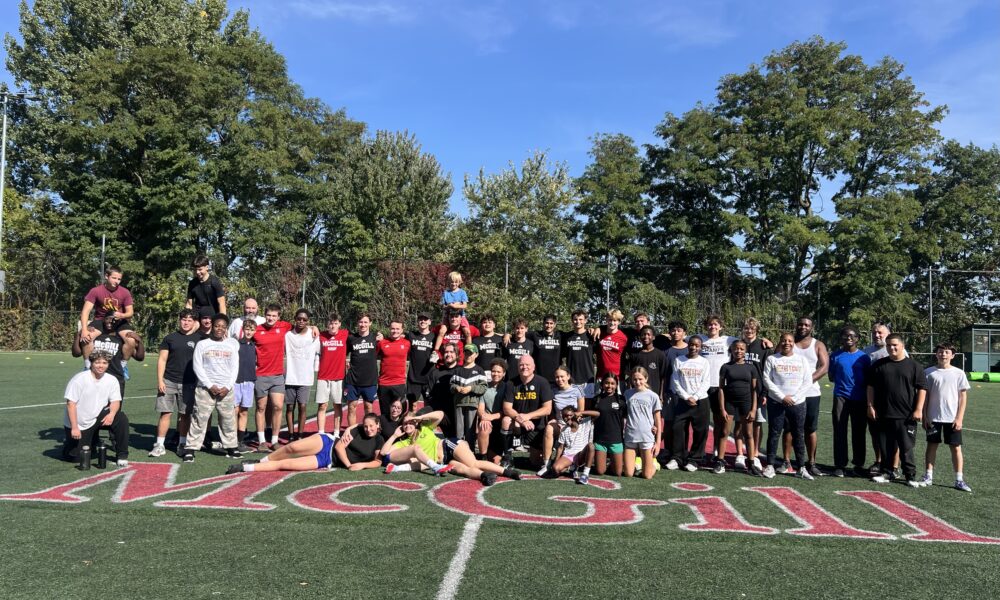
On Oct. 4, approximately 50 youth from the Greater Montreal Area ran sprints, played touch rugby, and learned the fundamentals of the sport, coached by varsity athletes from McGill’s Redbirds Rugby Team, on Forbes Field. The training event was the second half of an initiative led by Montreal’s Center for Research-Action on Race Relations (CRARR) this year—the first, a press conference and information session on Sept. 4—as part of their Rugby for Community Safety initiative, in partnership with the Redbirds and the Jamaica Association of Montreal.

The Rugby for Community Safety series is a part of CRARR’s broader Together Against Violence project, which uses sport to unite and empower youth from diverse areas of Montreal to engage with their communities, meet potential mentors, and build skills that act as emotional outlets to help mitigate violence. CRARR commenced the project in 2023 with support from the City of Montreal and other major sponsors such as the Société de transport de Montréal, running a range of sports-focused events such as basketball skill sessions. 

In an interview with The Tribune, CRARR Project Coordinator Nicole Machlout affirmed that the ongoing collaboration between the Center and the Redbirds represents much more than the sport itself. 

“We [aim] to bring together people from marginalized communities, kids who normally don’t have as many opportunities to learn about new sports, with the goal of hopefully getting them off of the streets, or to [safely and productively] prevent them from being involved in crime,” she explained.

Machlout dove further into how sports sessions like those in the Rugby for Community Safety series have lasting impact.

“We want to inspire kids that are at risk. Specifically with sport, the goal is to teach discipline for them to have a sense of growth,” she said. “It’s a great way to kind of instill self care, because they’re doing something that makes them feel good […] and also [is] extremely healthy. [….] If [youth are] able to have access to the sport [and thus] able to meet mentors, […] that will also build a network and create connection. So if they want to pursue this on, let’s say, a varsity level, […] it’s giving them access to that.”

Starting at 9:45 a.m, the youth in attendance—aged 12 to 20—began by listening to presentations on the connection between sports and youth violence prevention, and were introduced to the CRARR affiliates and Redbirds Rugby players running the session. After participants practiced the fundamentals and played in a round-robin tournament, the event concluded around 1:00 p.m. Participants were then offered refreshments, and invited to attend the ensuing Martlets Rugby game—the final match of the regular season—at Percival Molson Stadium. The Martlets ultimately came back from a 21-point deficit to beat the Bishop’s University Gaiters 38-35.   

The Rugby for Community Safety session foregrounded interactive and hands-on learning about the sport, with the Redbirds demonstrating fundamental rugby skills such as catching, kicking, passing, and tackling. The Redbirds also prioritized camaraderie, promoting a lighthearted, supportive environment that made trying something new as approachable as possible for attendees.

In an interview with The Tribune, scrum-half, club president of McGill Rugby, and third-year Engineering student Ashton Wright expressed how giving back to the Montreal community simultaneously gives back to the Redbirds varsity program.

“We really are growing our presence within the community and growing the effect that we can have, the positive impact we can have,” Wright said. “This collaboration [is] hopefully going to be revisited in the future. It’s definitely something we enjoy doing, getting the boys out and spreading the game of rugby.”

First-year Arts student and second row Redbird Nikolas Begic echoed Wright’s sentiments in an interview with The Tribune.

“I think it’s really important that, as a school, as a team, we give back to the community and come out here,” Begic said. “I love spreading the game, a game that builds teamwork and community. [….] [I] really feel privileged to be in the position I am [to] teach.”

Sports Staff Writer Zain Ahmed is a member of the Redbirds Rugby team and was a lead organizer of this event. He was not involved in the publication of this story.

McGill, Montreal, News

Milton-Parc residents suffer from a lack of accessible healthcare

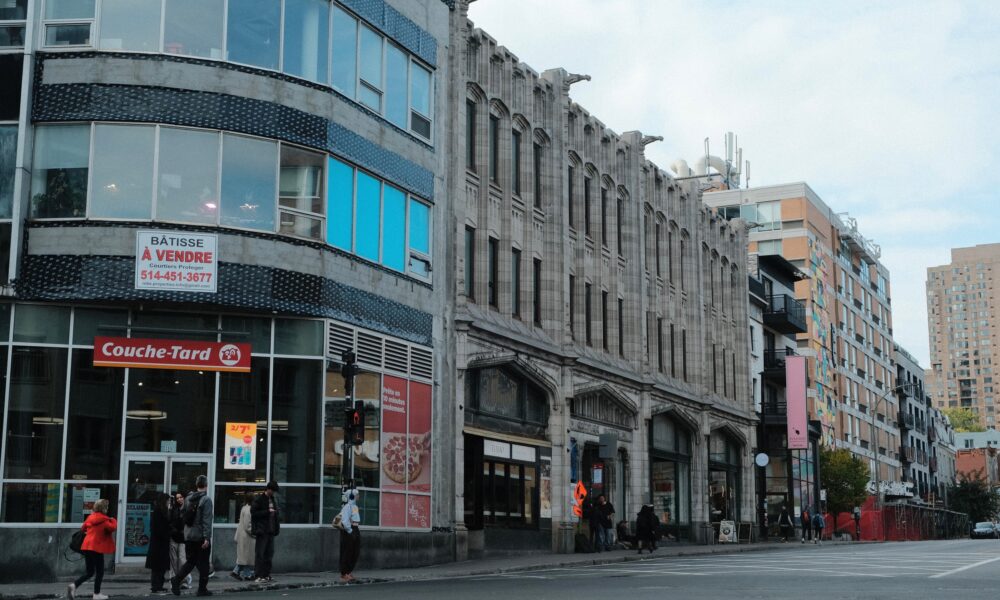
Milton-Parc, which contains residents ranging from McGill students to senior citizens, lacks a walk-in clinic, local community services centre (CLSC), or any other form of accessible healthcare, leading to it being dubbed a ‘medical desert.’ A recent report by La communauté Milton-Parc found that six out of ten residents of Milton-Parc who were surveyed lack a family doctor, and many are unaware of the alternate healthcare options available to them. 

Despite being in the heart of Montreal, Milton-Parc residents must travel farther to access healthcare than those living in surrounding areas. Most residents of the Plateau-Mont-Royal area, which contains Milton-Parc, have access to healthcare through service from the CIUSSS du Centre-Sud. Milton-Parc, however, falls under the CIUSSS du Centre-Ouest-de-l’Île-de-Montréal, which comprises a network of hospitals outside of their neighbourhood. 

In an interview with The Tribune, Milton Park Citizens’ Committee President and McGill course lecturer Garrfield Du Couturier-Nichol explained that the medical crisis in Milton-Parc began six years ago, when the neighbourhood’s local clinic closed in 2019.

“There used to be a CLSC clinic in the [Air Transat Tower],” Du Couturier-Nichol stated. “That closed down, and since then, there’s been a problem because Milton-Parc is part of the Jeanne-Mance Plateau-Mont-Royal area. So we’re basically split between two CIUSSS authorities. [….] It basically goes by your postal code. For a lot of people, especially seniors, that’s very confusing.” 

The bureaucratic division of the Centre-Sud and Centre-Ouest authorities, coupled with the sheer distance from the nearest clinic, leaves elderly, often technology-illiterate residents unsure of where to go for medical attention, Du Couturier-Nichol told The Tribune.

“I’m almost 83, and I have a bit of a mobility problem, but I’m still able to get around. So I can use public transport when it’s working to get to the CLSC,” he said. “But a lot of seniors in my age group have problems with mobility, so it’s difficult for them. They don’t know whether they belong in CIUSSS Centre-Sud, or CIUSSS Centre-Ouest, because it’s a very confusing thing for a lot of people. A lot of people are not computer-literate. And most of this [navigation] is done online, so it creates a problem. Since 2019 when [the local CLSC clinic] closed, a lot of seniors have basically just given up.”

While the lack of accessible healthcare falls hardest on seniors, many McGill students living in Milton-Parc also feel the strain when they need medical care. One resident, Annika Arya, U1 Arts, spoke in an interview with The Tribune about her experience accessing healthcare. When she fell ill this month, the lack of clinics in Milton-Parc forced her to either use Uber or walk 30 minutes to the nearest emergency room. 

Arya also discussed her experiences attempting to seek services at McGill’s Student Wellness Hub. She called for more accessible healthcare options throughout McGill’s campus and residential areas.

“I [have gotten] two appointments out of maybe the 10 times that I’ve called [the Wellness Hub],” Arya reported. “I think that McGill needs to make it a priority to implement more health clinic facilities throughout campus, including [in] Milton-Parc and the residence areas.”

The McGill Media Relations Office (MRO) stated in a written response to The Tribune that they are taking steps to address the wider issue of healthcare accessibility, and ensure McGill students can find the support they need.

“We are […] actively working to mitigate the impact of broader systemic challenges in the provincial healthcare system—such as limited access to primary care and mental health services—by expanding our interdisciplinary care model, improving pathways and increasing our capacity to timely appointments, and strengthening partnerships with local organizations,” the MRO wrote.

Du Couturier-Nichol suggested the establishment of a mobile clinic would be a positive step to remedying Milton-Parc’s medical challenges, before introducing a more permanent solution.

“The first step would be to have at least a mobile clinic once or twice a week in the Milton-Parc area to start looking at the problem and understanding the number of seniors who may have medication or health-related problems or need social work. And then progress from there,” he stated. “Look for a location that’s fairly central in Milton-Parc to establish a permanent clinic.”

All Things Academic, Student Life

Don’t squirm, it’s time for midterms

With reading week behind us, preparing for midterms is almost as unappealing as completing them. For some, building healthy and fruitful study habits feels like an impossible feat. If you’ve been spending more time researching optimal study tips than reviewing your actual class content, fret no longer. The Tribune has composed a midterm survival guide.

Ditch the library and try a cafe

Montreal is home to a fantastic cafe culture; use your mountain of deadlines as an excuse to try out some of Montreal’s vibrant options. Bring a fellow struggling classmate, treat yourself to a delicious drink, and savour the last whispers of terrace season as you study. If you are avoiding libraries, but still craving a close to campus late-night study session, check out the Second Cup on St. Laurent. Located at the intersection of rue St. Laurent and avenue du Parc, Second Cup is open until 10:00 p.m. on weekdays, and 12:00 a.m. on Friday and Saturday. 

Trying new places, bringing friends, and exploring Montreal are all benefits to cafe studying, which make midterm-cramming less isolating and repetitive.

If a library is what you prefer…

If the ensured silence, outlets, and privacy of a library are the features that facilitate your productivity, broaden your horizons away from the packed Schulich and McLennan by exploring the many other beautiful libraries McGill and Montreal have to offer.  

Located only three metro stops from the McGill station, the National Archives of Montreal is open to the public from 9:00 a.m. to 5:00 p.m. Monday through Friday. Its beautiful interior with warm lighting, high ceilings, and intricate architecture makes it a must-try for study sessions.

Even closer is Concordia University’s Webster Library, a mere fifteen minute walk from Roddick Gates. This library is open to the public 24 hours a day, seven days a week, only requiring a Concordia student ID between 11:00 p.m. and 7:00 a.m.. It is a great option for students looking to escape campus for a few hours while remaining in a student environment.

If you prefer to squeeze library-time in between classes, stay on campus and check out the Nahum Gelber Law Library, Birks Reading Room, the Islamic Studies Library, or the Marvin Duchow Music Library. These are excellent choices if you seem to know one too many familiar faces at Schulich or McLennan, or simply can’t find a seat during peak midterm season.

Remember, revising is not an all or nothing game

Don’t let perfection become the enemy. Be kind to yourself if you don’t achieve everything you want to, and take mindful breaks instead of doomscrolling. It can be easy to call 15 minutes of Instagram Reels your study break, but try to use those 15 minutes to go for a walk outside instead. Get your blood pumping, ingest some fresh air, and fully disengage from your work so you can start again feeling refreshed.

Set yourself up for success

A full course load is overwhelming, and it can be tempting to sit down and attempt to conquer everything at once. Although stress can be a strong motivator, it can also generate unproductive, scattered studying. Instead, make a study plan in advance, setting smaller goals for each day. Creating a weekly plan with each day’s tasks outlined allows you to get everything done in small digestible doses, while avoiding a stress-induced rut of procrastination.

Taking good care of your mental and physical health during midterms is incredibly important. Before any to-do list or cafe adventure can happen, you must fuel your body with real food, lots of water, and quality sleep. These pillars should be the backbone of every study session. As appealing as coffee, energy drinks, and vending machine snacks are, let them be treats—not foundations—of long study sessions.

(Kate Sianos / The Tribune)
Arts & Entertainment, Books

What we liked reading this fall break

The Sirens of Titan by Kurt Vonnegut – Jeremy Zelken, Contributor

If you are anything like me, you probably read Kurt Vonnegut’s Slaughterhouse Five about three times in high school. While I had always insisted it was his best work, I have to admit—I was humbly mistaken. The Sirens of Titan, a book I couldn’t put down this break, completely eclipsed it.

Written in Vonnegut’s signature deadpan humour and cosmic cynicism, the book follows Malachi Constant, Earth’s richest and most corrupt man, as he is swept into a wild interplanetary journey with the eccentric and unwilling Beatrice Rumfoord. Along the way, they encounter extraterrestrial beings, a Martian army, and bizarre religions, all culminating in a story that questions the purpose of it all. Each moment of absurdity and anomaly is delivered with equal sincerity and pensiveness. Even at its most surreal, the emotional undertone is surprisingly human—more so than in any of his other novels. Vonnegut somehow finds meaning in the meaningless.

It’s always a pleasure to read something that makes you feel every emotion at once. If you enjoy laughing at misfortune, questioning your existence, and finding comfort in confusion, this book is for you.

The Rachel Incident by Caroline O’Donoghue – Anna Roberts, Contributor 

Caroline O’Donoghue’s charming coming-of-age, The Rachel Incident is addictive. After fervently reading this across long train rides and at every spare moment of my break, I can easily say it is one of the most electric books I’ve read in months. Set in Cork, Ireland in the 2010s, during the economic recession and tension over abortion laws, the novel explores the messy life of a girl in her early twenties as she makes a series of many questionable decisions. 

After settling in London, Rachel hears that her old college professor is in a coma, spurring her to reflect back on her final year of university in Cork. In this flashback, she meets her soon-to-be best friend and flatmate, James, who encourages her to pursue an illicit relationship with her older, married professor. When this attempted affair fails in an unexpected way, Rachel launches into an unsteady relationship with another man while overburned with duties at an internship under her professor’s wife. During this period, she is forced to grapple with the culture in Ireland at the time, her intense relationships, and her desperate desire for a career in publishing. 

The novel is deeply tender, yet witty; O’Donoghue masterfully moves between humour and seriousness, weaving together plotlines and creating complex relationships. The heart of the novel is the platonic love between Rachel and James; while they fall in and out of love with other men, their bond remains at the centre of their story.

Cult Classic by Sloane Crosley – Dylan Hing, Contributor

Imagine if, one day, all your exes started appearing out of nowhere, and your cult-like friends became obsessed with what comes next. It’s everyone’s dream, isn’t it? Cult Classic, comedy writer Sloane Crosley’s second novel, inquires whether our choices are really our own and what it means to decide to love.

Lola, an editor at a New York City magazine, finally gets engaged—but then begins running into her exes. Under these circumstances, she’s roped up in a conspiracy that questions the very idea of free will—are we making our own choices, or are we subject to the subliminal effects of the world around us? Through these constant appearances of exes, both Lola and the reader are left to wonder whether she is really happy with her fiancé, or whether she simply settled for lack of a better option.

Despite the unsettling actions of some of the characters, Crosley manages to endear the reader to the strange but mostly unremarkable cast of her novel. Her background in nonfiction humour strengthens her writing; the comedy is mainly descriptive, because this novel is meant to reflect questions of reality. So, if you’re interested, give it a try. I’m sure it’ll be a cult classic.

Basketball, Behind the Bench, Rugby, Sports

Kelsey Mitchell’s collapse sparks reflection on what happens when “The Fever” burns too hot

In the third quarter of Game 5 of the Women’s National Basketball Association (WNBA) semi-finals against the Las Vegas Aces, Kelsey Mitchell’s legs locked mid-stride. The Indiana Fever guard suddenly slowed, freezing in pain as her body began to betray her. In an instant, a highly-anticipated playoff game became a medical emergency, and Mitchell’s season hit a terrifying breaking point.

“My muscles stopped producing [energy after reaching] maximum capacity,” she later explained in a written social media post. “I went into a sense of numbness/paralyzing feeling with no movement from my lower extremities for up to 5 to 7 seconds.”

As Mitchell’s body crumpled, the game’s referee stepped forward instinctively, catching her before she hit the hardwood. Mitchell’s teammates rushed in, surrounding her with towels to block cameras. The arena fell silent. She was carried off the court and taken to the hospital for treatment. What had looked like a simple cramp was quickly identified as something far more serious: Rhabdomyolysis, a dangerous condition that can be triggered by extreme physical exertion, dehydration, and heat exposure.

Rhabdomyolysis occurs when skeletal muscle breaks down faster than the body can repair, causing the tissue to disintegrate and die. As this happens, toxic proteins flood the bloodstream. Normally, the kidneys filter these substances out, but when overwhelmed, they cannot keep up. Symptoms can include muscle pain, weakness, dark urine, nausea, or fatigue. The condition may also lead to kidney failure. 

Though rhabdomyolysis is rare, with only 26,000 people developing the condition annually in the United States, athletes like Mitchell are at high risk as rhabdomyolysis’s effects can be easily mistaken for ordinary gametime exhaustion. 

For a player who carried her team through a season defined by adversity, the moment was especially haunting. The Fever had already lost five players to injuries, including star point guard Caitlin Clark. In her seventh WNBA season, Mitchell remained the team’s anchor. She was averaging 20.2 points per game and was a 2025 WNBA MVP finalist. On that September night in Las Vegas, she had already scored 15 points before her injury sent her off the court. 

Mitchell’s teammate Sophie Cunningham described the moment vividly on her podcast Show Me Something. “She just got a full body cramp. Imagine having a charley horse, but times 100,” Cunningham said. “She was a little sick, super dehydrated, but really the doctor just said […] she played till her wheels came off.”

The Fever lost in overtime to the Aces, 107-98, which capped off their fairytale playoff run after a hard-fought season. But Mitchell’s collapse raised a question that reverberates far beyond professional basketball: How close can athletes come to their limits before crossing into danger?

‘No pain, no gain’ is a common refrain, but research from University of California Los Angeles Health highlights the dangers of equating the two. Overtraining disrupts hormones like cortisol and testosterone, impairs recovery, and strains mental health. Fatigue, persistent soreness, and decreased performance are warning signs that an athlete needs rest. Hydration, sleep, and rest days are therefore not optional, but critical to performance and safety.

Thankfully, Mitchell is expected to make a full recovery. But her experience is more than a cautionary tale: It is a call to action. Professional athletes like Mitchell are trained to push boundaries, but they should not have to gamble with their health to prove their worth or win a championship. The WNBA and its teams need to examine how a culture of constant performance may blur the line between dedication and danger. With longer seasons, grueling travel, and ever-intensifying competition brought on by the league’s expansion, player welfare must not be an afterthought.

For athletes, rest and recovery are not a luxury, but a necessity. WNBA coaching staff and medical teams must better monitor athletes and encourage open communication about fatigue so players can speak up before they break down. 

Mitchell’s collapse serves as a vivid reminder that winning should never come at the expense of well-being. Even the strongest athletes are still human, and true strength means knowing when to stop.

Commentary, Opinion

More housing for the unhoused

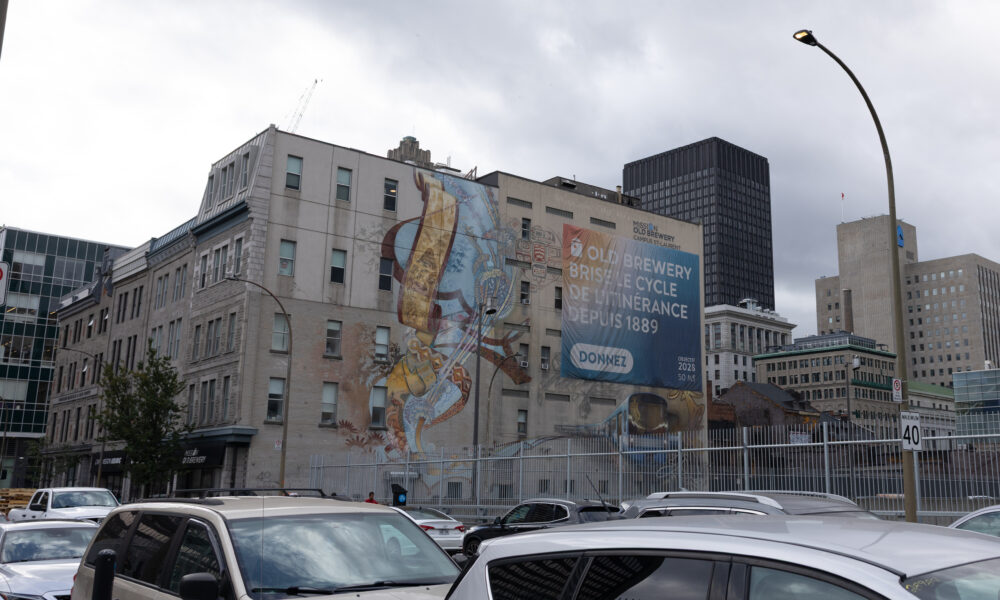
Montreal’s new $2 million CAD housing fund demonstrates an increased political resolve to aid the city’s unhoused population. The fund is dedicated to the expansion of housing non-profits; Plante’s government aims to double the number of housing units available for unhoused individuals. The city is dividing the funding among four non-profit organizations dedicated to developing below-market housing: Old Brewery Mission, Gérer son Quartier, Interloge Centre-Sud and Corporation Mainbourg. This initiative is expected to add roughly 6,300 units, offered below market rates, over the next decade. Old Brewery Mission, in particular, will receive $400,000 CAD to help finance 237 new apartments by 2028. 

This announcement comes in the wake of an intensifying capacity crisis among homeless shelters in Montreal, forcing some shelters to turn individuals away and others to offer overflow visitors nothing but chairs to sleep in. Quebec’s health department reports that ‘visible’ homelessness increased by 33 per cent in Montreal and 44 per cent in Quebec between 2018 and 2022. In recent years, encampments have also become increasingly common in Montreal, but the city often targets and dismantles these temporary settlements, forcing unhoused individuals to constantly relocate. 

However, this funding initiative comes against a backdrop of troubling policy decisions that reveal Montreal’s contradictory approach to its unhoused population. The STM’s closure of the Atwater metro entrance last winter—a crucial warming space—exemplifies the city’s pattern of displacement over care. Such hostile policies, from metro closures to the dismantling of encampments, prioritize pushing vulnerable people out of sight rather than addressing root causes. The $2 million housing fund represents a step in the right direction, but it cannot exist in isolation from these exclusionary practices. The city must reconcile its commitment to creating housing units with its simultaneous deployment of hostile architecture and exclusionary policies that treat unhoused people as problems to be removed rather than community members deserving of dignity and protection.

Long-term units like the ones Old Mission Brewery is constructing provide unhoused individuals more stability, dignity and long-term support. For instance, last year, Old Mission Brewery began turning open dormitories with bunk beds into small private rooms offering more privacy and dignity for unhoused individuals. These more welcoming spaces, known as ‘chambrettes’ allow unhoused individuals to sleep in a quieter environment, providing more privacy and safety. 

Investing in stable, affordable housing for the unhoused population also reduces the costs of homelessness in the long run. For instance, in Montreal, the health, social, and judicial services for unhoused people with mental illnesses costs more than $55,000 CAD per person per year. The benefits of this municipal investment in addressing the housing crisis are mutually reinforcing. 

After Plante unveiled this fund, the upcoming November election has brought housing policy to the forefront of political debate. Luc Rabouin, the Projet Montréal candidate running to succeed Plante in the November election, expressed his plan to increase the funding envelope to $5 million CAD next year if he is elected. Meanwhile, Ensemble Montréal‘s Soraya Martinez Ferrada has promised to develop at least 2,000 transitional and permanent housing units with psychosocial support during her first term and create a $10-million CAD matching fund to encourage private and philanthropic contributions toward homelessness initiatives. Transition Montréal’s Craig Sauvé opposes dismantling encampments and proposes increasing property taxes on wealthy homeowners to fund homelessness initiatives. Futur Montréal‘s Jean-François Kacou put forth a policy to partner with the city’s hotel industry to offer monthly packages for citizens experiencing temporary involuntary homelessness..

The diversity of approaches among candidates raises critical questions about Montreal’s future relationship with its unhoused population. Will the next administration prioritize housing-first solutions that foreground humanity and empathy towards its vulnerable residents, or will it continue the pattern of dismissal and displacement? As voters head to the polls, they must consider which vision aligns with the kind of city Montreal aspires to be—one that treats housing as a human right, or one that continues to criminalize poverty. The choice facing voters, and their prospective candidates is not merely about housing policy—it’s about what kind of community we want to build together.

Off the Board, Opinion

I promise I’m not a first-year

Last week someone’s jaw dropped when they learned that I’m in third year. Suddenly they wanted to know everything about me: What I’m studying, where I’m from, and if I’m sure I’ve been at McGill for two full years already. 

What I find startling is that whenever people are floored by what year I’m in, their disbelief is founded in the same faulty logic: That I am too full of life to be anything but a froshie.

I admit I have more energy than most; the secret to this youthful facade isn’t an inordinate amount of caffeine, but rather an inordinate amount of love.

I made it a rule a number of years ago to fall in love every day. Not ‘lawfully-wedded-wife’ love; something smaller, but no less real. Some days it’s a perfect pair of brown suede boots I spot on campus. Other days, a stranger who holds the door. Today, the perfectly ripe plum I had as a snack and the way my friends piled into the DESA office to spend time with me during my office hours. 

Even if I achieve nothing else in any given 24 hours, every day I find something to love.

I’ve been told that I use the word ‘love’ too liberally. I fundamentally disagree. There is so much love to have, to share, and to hold that I can’t come up with a single reason to hoard it in the crevices of my heart. 

So yes. I love loudly and I love too much. I let love spill through the cracks in my soul because I love the way it tastes on my breath. I love entirely and wholly and endlessly and daily and I do not care if it is disconcerting. I am a kid and the world is my candy store. Sue me.

I love waiting in slow-moving lines with my friends, just to buy overpriced coffee to drink together while we commiserate. I love bathroom graffiti and reading the messages that have been painted over and re-written with endless dedication and resilience. I love experiencing world-shattering heartbreak, because when love ends, heartbreak is the proof it was there to begin with—I feel so lucky to have gotten to experience something so profound, even if, in hindsight, it was never meant to last.

This love keeps me grounded, and it takes many forms: Appreciating the ordinary, romanticizing the mundane, and, most importantly, pulling glimmering silver linings out of seas of grey. Sparkles are often the only difference between the gorgeous and the grotesque, so to think of them as childish seems silly: I firmly believe that no matter how old you are, sparkles can help. There is always a glittering silver lining to be found, even if you have to paint it on yourself.

I won’t pretend love is a catch-all solution. My insistence on retaining a love for the utterly unremarkable doesn’t grant me immunity from the realities of university life. Just because I love love doesn’t mean I’m always just-peachy; my friends have wiped my tears and eaten pints of ice cream straight from the carton with me.

However, there is something to be said about letting the world excite you; about treating so-called ‘frivolous’ love as something adult rather than something naive. If love is what makes life beautiful, why on earth should we ever stop looking for it? 

Love doesn’t happen all on its own, but that’s what makes it worth it. Sifting through the unremarkable and finding something beautiful is a beautiful act in and of itself; love is formed and found where you look for it.

So I collect it.

I pick love like berries and spread it on my toast every morning; I use it to sweeten my tea; I wear it as perfume. It fills my days with life and lore, and, apparently, disguises me as a first-year. 

While I do wish people could guess my age a little more accurately, there is, as always, something to love in this misconception: It proves that whatever life is lost between first year and third year can—with enough looking and enough love—always be found.

Features

Decolonizing the Canadian museum

A reassessment of the curatorial practices for Indigenous art

In the soft hours of a pristine morn, mountainous clouds greet the crags of Lake Superior’s rocky coast. A stark-white reflection of a young sun floats atop the smooth water currents in the tranquil scene. Reposeful rock mounds puncture the wet surface, basking in the forenoon heat, still and untouched amongst their barren landscape. Dim shadows of obscured light rest in the background of blue and pearl-white paint. Canadian painter, Lawren S. Harris, captures the serene convergence of land and sea in his 1920s work, //Morning, Lake Superior//.

The peaceful scene hangs in the Claire and Marc Bourgie Pavilion, the gallery of Quebec and Canadian art at the Musée des beaux-arts de Montréal. Contrasting its quiet blues with the sharp green landscapes or harsh, icy mountains of its neighbouring images, //Morning, Lake Superior// draws museum-goers in with its poetic essence. Traversing the first-floor gallery of early Canadian modernism, one can find Harris’s piece beside other works from its artistic school of origin, the Group of Seven

In the 1910s, the Group of Seven began as an unofficial social group for artistic discussion before being halted by several members’ participation in the First World War. The school of artists reformed after the war and achieved its real celebrity status in the 1920s when they began exhibiting their landscape paintings across the nation. 

With sweeping strokes of bold paint, exaggerations of colour and shape, and expressive depiction of the country’s boundless regions, this inventive, modernist visual style was hailed as a uniquely Canadian artistic language. The paintings reimagine the landscapes in romanticized abundance—an elegy to their idyllic fruitfulness and poetic possibility. 

These seven artists—Franklin Carmichael, Lawren Harris, A. Y. Jackson, Frank Johnston, Arthur Lismer, J. E. H. MacDonald, and Frederick Varley—are forever cemented as ubiquitous figures in the cultural lexicon of Canadian art.

But in glancing back at these triumphant images, a thrum of cultural absence pounds against the paint-packed canvas. The Indigenous groups who populated and developed these lands are painted out of Canada’s narrative history. 

Decades after the formation of the Canadian Confederation, the Group of Seven sought to create a distinctly Canadian style, a physical representation of the country’s burgeoning settler-colonial identity and an assertion of their cultural sovereignty. In expansive portraits of the landscape’s balance of dynamism and repose, this school of artists found this recognizable mode of depiction as an assertion of Canadian nationalism in paint.

However, these romantic, visual odes to the lands upon which the settlers stand, steal, and proclaim independence uphold the ‘Pristine Myth,’ an outdated perception of pre-settlement territories as an untouched wilderness, undeveloped and technologically primitive. The visual lexicon of Canadian landscape art erased Indigenous histories—their dense populations and spiritual connections to the land—while also justifying settler-colonial presence and developments. Indigeneity was painted over in these nationalist landscapes, left to buzz in the periphery of a visual ‘Canadianism.’

This is not to say that the Group of Seven’s artwork intentionally sought to erase the evidence of Indigenous existence, but their impact is clear. Their works were symptomatic of a cultural mythmaking—a fabrication of colonial presence within the land’s storied past. Though breathtaking, they exist as products of didactic Canadianism that set out to establish ideals of their growing confederation. 

With an awareness of harmful language present in the Group of Seven’s landscapes, sinister qualities appear atop the canvas. 

Lake Superior, also known as ᐊᓂᐦᔑᓈᐯ ᑭᒋᑲᒥ //Anishinaabe Gichigami//, or ‘Anishinaabe’s Great Sea’ in Anishinaabemowin, has had an Indigenous presence for over 9,500 years. //Morning, Lake Superior//, though aesthetically stunning and contextually historic, silences the voice of Indigeneity into mere hushes across the canvas. In depicting the landscape as totally barren, the image takes new form, morphing into a scene of colonial violence and a representation of the cultural idealism of systemic erasure. These paintings are simply another mode of colonial, institutionalized control—a visual oppression of Indigenous existence. In denying Indigenous presence, these images continue cultural genocide. It is a visual ignorance of the physical harm inflicted on Indigenous groups in land dispossession. The hum of colonial cruelty only lies dormant until woken by a critical lens.

Distortions of the Historical Narrative

What does it mean to be visually Canadian in the wake of colonial violence and systemic erasure? How does one grapple with the inherent violence of Canada’s art archive? 

The visual language of erasure has been a stain on Canadian artwork since the beginning of settler-colonial art production and acquisition. In depicting absence, settler-colonial Canadians preserved the belief that the land was theirs for the taking. Writing Indigenous Peoples out of their history and altering the truth of settler-Indigenous relations became a strategy for dominion and control.

Canadian history maintains that colonial encounters with Indigenous Peoples were peaceful—a diplomatic bestowal of land granted as a gift to a nation of new immigrants. This epistemically violent belief revises the history of the 19th and 20th-century Numbered Treaties: Indigenous Peoples actively took part in the legislation for land cohabitation, and were then misinformed about the signed legal documents, which agreed to their dispossession of the land and subsequent physical displacement. The institutional learning spaces of museums—houses of history—have continuously perpetuated this myth of gifted land and legislative subordination, remaining ignorant of any depiction of violence in the settler-colonial strive for land possession.

Reilley Bishop-Stall, assistant professor of Canadian Art and Visual Culture at McGill, who specializes in the art production of Indigenous and settler histories, spoke with //The Tribune// about this culture of representation.

“Indigenous Peoples were dispossessed of the land, liberty, and territorial rights,” Bishop-Stall said. “The extensive collections of Indigenous cultural materials in museums across the globe cannot be detached from the history of salvage anthropology and the belief that Indigenous Peoples were destined to ‘disappear.’”

This distortion of representation was a strategic process of elimination and a propagation of Indigenous disappearance for the justification of settler-colonial land development.

The Harmful Archive

Historically, the acquisition of Indigenous art was often intertwined with the violent narratives of this systemic displacement. Artworks were often looted and stolen in the process of land dispossession. Not only does the existence of these pieces in museums preserve harsh narratives, but these art objects were, for a time, the only trace of Indigenous presence in the Canadian museum. 

The distinction of these works as ‘artifacts’ rather than ‘artworks’ harkens back to the Canadian institution’s control of the Indigenous historical narrative and the concept of ethnography, a scientific method for outlining the cultural and social customs of peoples. This classification and the lack of contemporary artworks by Indigenous Peoples instill in the Canadian public a perception of Indigenous existence as something historical—an artifact itself.

“We were always portrayed as people of the past, relics of the past,” Celina Yellowbird, the Curatorial Assistant of Indigenous Cultures at the McCord Stewart Museum, said in an interview with //The Tribune//. “Everything was setting us up as if […] we’re no longer existing today.”

Indigenous histories in the Canadian museum were recorded by violent colonialists, resulting in homogenizations, misrepresentations, and systemic erasure of artistic provenance. The lack of provenance—the recorded origin of an art object—led to a flagrant grouping of all Indigenous art together, instead of classifying each work as a creation of the distinct cultural, spiritual, and artistic practices within each tribe. This results in an ethnographic othering of Indigenous Peoples—a process of both exoticization and an enabling of systemic inequalities in the museum space. Looking at the Canadian museum feels utterly disconcerting in the context of its colonial past.

Amending Misrepresentation in the Museum

Contemporary curatorial practice and institutional self-criticism have led to progress in the decolonization of museum spaces.

In 2015, the Truth and Reconciliation Commission (TRC) of Canada published its final report, outlining 94 Calls to Action for the Canadian government to amend its colonial and contemporary wrongdoing through reconciliation and protection of Indigenous Peoples. The 67th Call to Action directly addresses these institutional misrepresentations, stating, “We call upon the federal government to provide funding to the Canadian Museums Association to undertake, in collaboration with Aboriginal peoples, a national review of museum policies.”

Now, the practice of Indigenous art curation has taken steps towards creating a dialogue between the museums and the Indigenous tribes represented in their archives. 

In conversation with //The Tribune//, Jonathan Lainey, the Curator of Indigenous cultures at the McCord Stewart Museum, said, “The major change is that now Indigenous Peoples have more room. We give them more space to actually tell their own story, their realities, their voices.”

The McCord Stewart Museum’s permanent Indigenous art exhibition, //Indigenous Voices of Today: Knowledge, Trauma, Resilience//, was curated in conversation with the tribes from which the displayed artworks originate. The exhibition’s accompanying video piece features interviews with Indigenous spokespeople of Quebec, platforming their experiences alongside their artworks.

Amplifying the archival voice of those systematically censored throughout history, the display of Indigenous objects by Indigenous curators and tribes reformulates their presence in the Canadian museum. 

“The museum’s voice is really not visible. All of the texts [on the museum walls] are written in the ‘we’ form,” Lainey said, describing the permanent exhibition. “So it’s us. This is what ‘we’ are. This is what ‘we’ went through. It’s the voices of Indigenous people.”

That does not mean all museum reconciliation work is complete. The sheer existence of art objects in the museum is a symptom of colonialism that still requires addressing. 

Repatriation is another important method for institutional decolonization. The question of object ownership looms over museum institutions today; though in many instances, due to the altered or unrecorded provenance of Indigenous objects through regional generalizations—such as ‘North’ or the ‘Plains’—repatriation is a highly complicated process of return. By breaking down the walls of the museums and inviting Indigenous groups into the archive collection, work can be done to identify and address these gaps in information.

A North American Problem

The weaknesses and disparities of the archive are not solely a Canadian issue. Having been raised in northern California, I have witnessed firsthand similar archival disparities present in American museums. Western hegemony over the objects in the museum archive has preserved a distorted account of Native histories. Just as Canadian museums are working to dismantle colonial history, American institutions have worked to uncover modes for proper representations of Native art histories.

Rosie Clayburn Katri, a Tribal Historic Preservation Officer in California, works directly with federal institutions and groups to further rectify the systematically silenced past of Native peoples. She highlighted the importance of respectful methods for exhibiting Native art in museum spaces.

“It’s consent. [….] You have to have the full consent of the community and to be working with actual First Nations governments,” Clayburn Katri said.

Providing platforms and creating agential positions for Indigenous and Native people to interact and reassert their presence in the foundationally colonial space is absolutely necessary. Indigenous histories must be told, this time, in the original voice of the land. Allowing access to these archives for interaction is fundamental to healing the reverberations of colonialism. 

It is the role of the museum to dehistoricize the language of Indigeneity, to provide space for exhibiting contemporaneous Indigenous art practices alongside historical pieces. 

“Reclaiming our identity and asserting ourselves in the museum is also getting hands-on access to these items, and being able to look at them and relearn our way of life,” Clayburn Katri said.

As a public, it is our duty to critique a history preserved by those in power. We have to change the way we look at art and the methods for display. We cannot take down settler-colonial art pieces; we should instead reframe and recontextualize them. 

In every museum we walk through, we must apply a critical lens to the practices of displaying artworks. We can still look at the work of the Group of Seven as an important contribution to modernist painting styles. However, we cannot ignore its colonial undertones and textual language of erasure. History belongs to everyone, but it has long been told by those in power. It is everyone’s job to identify and dismantle the systems that perpetuate distortions of Indigenous existence.

McGill, News

BREAKING: McGill faculty pass historic resolution supporting academic and cultural boycott of Israel

On Oct. 10, 2025, the McGill Association of University Teachers (MAUT), which represents full-time professors and librarians, passed the Resolution to Endorse the Academic and Cultural Boycott of Israel—marking the first official collective action for Palestine taken by McGill faculty to date.

The motion, introduced by ten professors across multiple faculties, asserts that Israel’s actions in Gaza constitute genocide under the UN Genocide Convention, and that its system of governance over Palestinians amounts to apartheid. The motion cites reports from international organizations, including Amnesty International and Human Rights Watch, to argue that, by maintaining ties to Israeli universities that are deeply intertwined with the state’s military and political infrastructure, McGill is complicit in settler-colonial violence. 

The resolution subsequently calls on McGill to recognize its role in perpetuating genocide, to divest from companies complicit in Israel’s occupation, and to sever academic partnerships with Israeli institutions. It also draws parallels between its current demands and MAUT’s prior discussions about divesting from Russian companies after Russia’s invasion of Ukraine, and McGill’s divestment from South Africa during apartheid. 

McGill’s Media Relations Office declined to comment on the resolution’s content or passing. 

In an interview with The Tribune, Daniel Schwartz, associate professor in the Languages, Literatures, and Cultures department at McGill, noted that some faculty were concerned that the motion could infringe on academic freedom. He explained that the boycott proposed by MAUT does not target individual Israeli academics, and argued that critics’ appeals to academic freedom are misguided given the conditions faced by Palestinian scholars.

“We’re not trying to boycott or silence any of our Israeli colleagues. [….] This is really about institutional relationships,” Schwartz said. “The idea of invoking values like academic freedom and discussion is […] a little bit in bad faith, because you can’t have a real dialogue with somebody who is buried under rubble and doesn’t have any universities.”

The vote needed to meet a quorum of 100 professors to be binding, with a simple majority in favour allowing the motion to pass. Of the 150 members who registered for the SGM, 114 attended. Professors noted that some faculty members walked out of the meeting in an apparent attempt to reduce attendance and break quorum. However, the meeting maintained quorum throughout, and the resolution ultimately passed with 104 in favour, eight opposed, and two abstaining.

In an interview with The Tribune, Alia Al-Saji, professor of the Department of Philosophy, described her surprise at the motion’s passing, noting that the nature of this SGM is unprecedented.  

“I’ve been at McGill for 23 years, and I’ve been in MAUT for 23 years, and I did not even expect us to be able to have a meeting on this,” she said. “So just having the meeting was kind of incredible.”

The resolution includes a two-year sunset clause, meaning it will require renewal through a future vote. In an interview with The Tribune, Rula Abisaab, professor of the Institute of Islamic Studies and one of the presenters of the resolution, reflected on her initial reaction to the motion’s passing, while emphasizing that continued oversight from MAUT will be necessary to ensure McGill works toward meeting the outlined calls to action.

“We [are] euphoric, we are very, very, happy, but I think now the work starts,” Abisaab said. “We feel the responsibility of actually […] making sure that it is observed in the […] different faculties. [….] So we have to be diligent. We have to be aware.”

Al-Saji highlighted the resolution’s broader significance for academic freedom at McGill and beyond, noting that Israeli academic institutions have demonstrated a pattern of censoring criticism of Israel among their students and faculty, and preventing Palestinians from accessing an education equivalent to Israelis’. As of May 2025, the UN reported that Israel’s assault on Gaza destroyed all universities, killing at least 5,479 students and over 190 university staff. 

Specifically, Al-Saji mentioned Nadera Shalhoub-Kevorkian, who was suspended from Hebrew University and arrested by Israeli police for criticizing Zionism on a podcast. 

“There isn’t academic freedom for Palestinian students in Israeli universities, there isn’t academic freedom for actually, anyone who wants to criticize the genocide,” she emphasized. ”We’ve seen academics be suspended for speaking out against Zionism. It’s our duty, if we actually do believe in academic freedom deeply, to have this voice.”

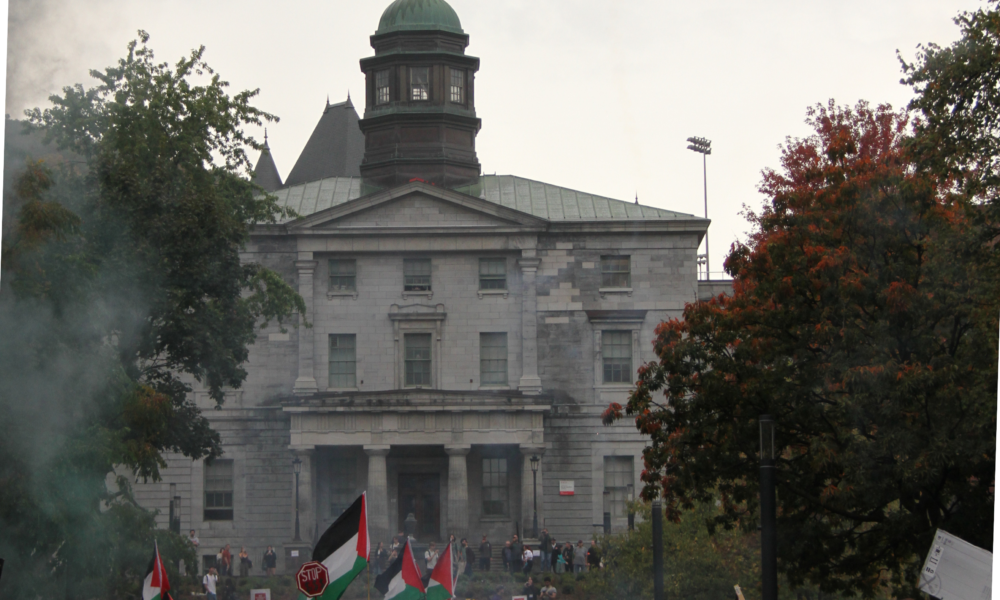
Earlier this month, over 500 McGill students voted to hold a one-day strike on Oct. 7, calling on the university to divest from companies supplying Israel with weapons, and to drop disciplinary cases against pro-Palestinian activists. Mayada Elsabbagh, professor in the Department of Neurology and Neurosurgery, reflected on the significance of recent student activism at McGill and shared what she hopes students will take away from this motion. 

“I know a lot of students in the activist movement who’ve been incredibly brave, not just in the last two years, but for many, many years, [and] have been disappointed, skeptical, frustrated with the position of faculty members,” Alsabbagh said. “I hope that, in some small symbolic way, today’s vote reassures the students of what we all know, [which is] that students always stand on the right side of history.”

Editorial, Opinion

McGill, your students condemn genocide—so must you.

Today, Oct. 7, 2025, McGill students are striking in support of Palestinian liberation. On Sept. 29, the Students Society of McGill University (SSMU) held a Special Strike General Assembly (GA), in which Students for Palestine’s Honour and Resistance (SPHR) presented a motion calling for a strike for divestment. Students exceeded the Special Strike GA’s required quorum of 500 students, and the motion passed in nearly unanimous favour. The motion was ratified on Oct. 6 by an online student vote, with a record 9190 (36.3 per cent) voter turnout: 67.5 per cent in favour, and 32.5 per cent opposing. 

The motion calls on McGill to divest from companies involved in manufacturing weapons used in Israel’s ongoing genocide in Gaza, such as Lockheed Martin and Airbus, and cease research and financial partnerships with these organizations. Students are also demanding amnesty for peaceful pro-Palestine protesters who have been targeted by McGill’s disciplinary systems. This collective action represents something far more significant than just missing one day of class: it is a clear refusal to accept McGill’s institutional complicity in Israel’s genocide in Gaza. 

Canada’s recognition of Palestine as a state, alongside acknowledgments from 157 of the 193 UN member states—representing 81 per cent of the international community— has marked an unprecedented shift in international pressure to hold the Israeli state accountable for its incessant violence against Palestinians. The United Nations has only now begun to explicitly define Israel’s actions in Gaza as a genocide. This recognition, while significant, is long overdue. That it took this long for global institutions to apply the correct terminology does not mean the genocide only began when it was named; it reflects a decades-long failure to respond to Palestinian suffering. However, legal and symbolic recognitions have yet to yield meaningful consequences. International institutions, including the UN, have time and time again proven largely ineffective in halting Israel’s ongoing violence, the mass killing of civilians, the use of starvation as a weapon, the bombing of hospitals and schools, sexual violence, and the deliberate targeting of children. This failure is mirrored by McGill’s continued investment in corporations complicit in these atrocities, despite urgent calls from its student body to divest.

McGill has not only failed to acknowledge its own complicity in the genocide, but has actively and unjustly suppressed student activism calling for full divestment. Following last October’s protest, the university filed an injunction specifically targeting SPHR. It also imposed ID card scanning requirements during pro-Palestinian mobilizations in April, and again Oct. 7, 2024, intensifying surveillance of student organizers. In recent months, McGill has heightened police presence and threatened students with disciplinary action for participating in peaceful demonstrations. These tactics, which are codified further through McGill’s revised Memorandum of Agreement (MoA) with SSMU, conflate all forms of pro-Palestinian activism with violence, vilifying student protestors and undermining student freedoms of expression and assembly in the process.

The timing of the strike is not coincidental. Oct. 7 marks two years since the Hamas-led attack on Israel, a tragic event that Netanyahu and his cabinet have since weaponized to justify their ongoing genocide in Gaza. Oct. 7 also marks one year since McGill shut down its campus in anticipation of pro-Palestinian protests, citing ‘security concerns.’ Today’s strike represents more than defiance of McGill’s genocidal investment profile; it reclaims a date the university has since used to frame pro-Palestinian advocacy as dangerous, and declares that the Oct. 7 attacks cannot serve as a justification for Israel’s abhorrent and incommensurable brutality toward Palestinians. 

This strike’s power lies not in disruption for its own sake, but in its ability to reframe the classroom as a space for accountability. By walking out, students challenge the assumption that education is neutral. The strike is a signal to the administration that students will not remain passive when their university invests in mass violence. 


Today, Oct. 7, the student body must take the opportunity the strike presents for action—not merely by skipping class, but by participating in protests, having difficult conversations, and staying vigilant, knowing that meaningful solidarity demands discomfort. To faculty, the responsibility is twofold: accommodate students who strike, and stay informed on both student politics and McGill’s financial ties in aiding genocide. And to the McGill administration, the demands are clear: End retaliatory measures against protestors. Divest from weapons manufacturers. Cut ties with the Israeli state. Let this be the last time students must strike for Palestine.

Read the latest issue

Read the latest issue