

Latest News

McGill, News, PGSS

PGSS hosts first meeting of the academic year, recognizing two new student associations

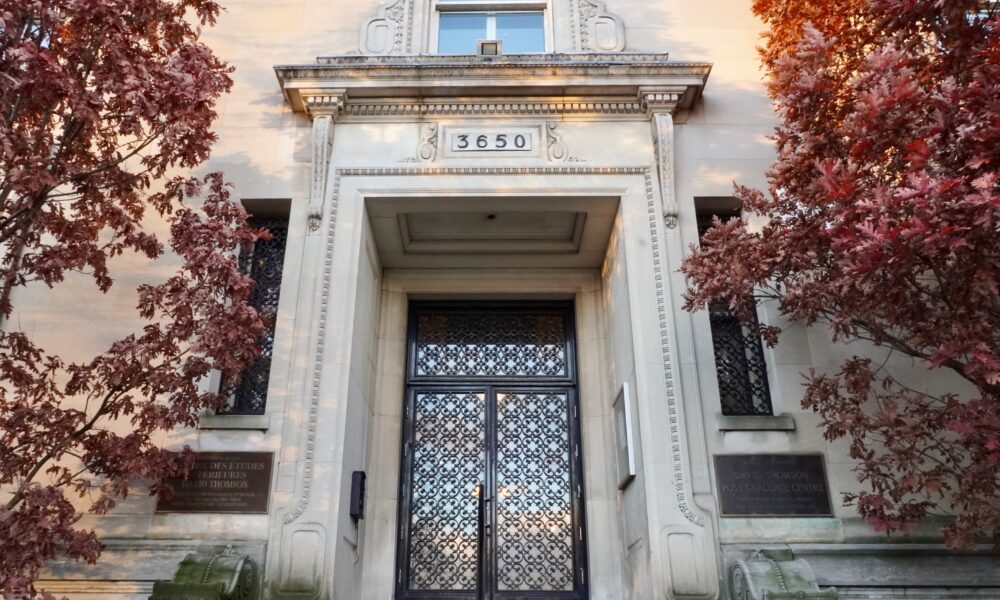
McGill’s Post-Graduate Students’ Society (PGSS) convened for their first meeting of the academic year in the ballroom of Thomson House on Sept. 10, where they discussed their plans for the months to come and reported on how they prepared for these goals over the summer. 

The meeting began as Zoe Neubauer, External Affairs Officer, announced a collaboration they planned with the McGill Community Council: An anti-austerity rally on Oct. 1, from 12:00-1:00 p.m. at the Roddick Gates. Neubauer explained how the rally will address McGill’s ongoing budget cuts and austerity policies, as well as the first of a series of university layoffs in response to McGill’s deficit

The meeting then moved to an announcement of the Association of Graduate Students Employed at McGill (AGSEM)’s priorities for the academic year. PGSS Councillor for the Department of Philosophy and AGSEM Representative Molly Dea Stephenson presented these primary concerns, stressing the importance of the union’s existence. 

“[Student workers] can sometimes feel like [AGSEM] is just this separate thing, but the fact is it is this membership, and it only works when its membership gets involved,” Stephenson said. “So I’m here to give you some ideas on ways to get involved.” 

Stephenson went on to describe numerous paths for members’ involvement, including showing up to the occasional rally or assembly, or working as a delegate for one’s given department. This task is vital, as the delegate role is one of the basic functioning units of AGSEM, connecting the workers within the society to the society membership as a whole. 

Next, after PGSS members motioned to approve routine ratifications of the PGSS Society Policy Manual as well as the 2025-2026 Executive-Commissioner Work Plan, the meeting covered motions to recognize two new Post-Graduate Student Associations (PGSAs). 

The first motion recognized the Kinesiology and Physical Education Graduate Student Association (KPEG) as a new PGSA. KPEG’s membership recently reached 25 members—the minimum requirement allowing a graduate association to be recognized as a PGSA, per guidelines outlined in the PGSS Bylaws and Society Affairs Manual

Councillor for the Association of Postdoctoral Fellows of McGill University Emily MacLeod raised a concern about how the recognition of a new PGSA would affect funding for existing PGSAs. Secretary-General Sheheryar Ahmed responded by clarifying how the budget process works within PGSS. 

“The way PGSAs’ funding works is that we’re paying $10 [CAD] on our student statements that basically is returned to the statement vis-à-vis their PGSA’s funding,” Ahmed explained. 

Ahmed continued to describe how KPEG was previously part of a broader PGSA, and after reaching the minimum membership requirement, now has the ability to operate as its own branch. Following Ahmed’s explanation, the motion passed, formally establishing KPEG as a PGSA. 

The following motion to recognize a second PGSA, the Sustainability in Engineering and Design Student Society (SEADSS), was then brought to attendees’ attention. SEADSS Representative Camille Nepveu described how the society also recently reached the mandatory minimum of 25 members. She conveyed her excitement about SEADSS becoming a PGSA as the motion was passed. 

Moment of the Meeting: In his Secretary-General Report to the Council, Ahmed announced the creation of an informal PGSAs Working Group composed of members of the PGSS Executive Committee. These members delivered an updated PGSS presentation, created by the Member Support Commissioner Kali Heale, at over 25 events such as departmental orientations with the goal of increasing engagement with the society. Ahmed reported that the Working Group will soon plan an event for the executives of all PGSAs later in the Fall term.

Soundbite: “Austerity policies have already negatively affected McGill, [in the] learning and working environment, and as austerity continues to be implemented, these kinds of effects will only increase. [We are] trying to come together and demonstrate to the administration that we do not accept this austerity climate, [and that] there are alternatives, that there are better ways to organize.” — Zoe Neubauer, External Affairs Officer.

Commentary, Opinion

Quebec cuts into education in a callous attempt to balance its budget

After large public outcry from various parents’ associations, teachers, and administrators, the Quebec government rescinded the $570 million CAD budget cut it made to education back in June, promising to put $540 million CAD towards student services. Though this attempt at financial redress seems like a genuine commitment to meeting Quebecers’ demands and supporting education, it is simply a perfunctory measure to justify continued austerity measures, further degrading this province’s social programs.

Over the past few years, there has been a steady rise in right-wing populist governments in the United States and Canada, with politicians looking for any way to lower their debt, even if it comes at a great social cost. A striking example of this is the Department of Government Efficiency (DOGE) in the United States, a project spearheaded by billionaire Elon Musk. Musk established DOGE with the promise to cut $2 trillion USD in fraud, waste, and abuse. Instead, he cut just over ten thousand government contracts without reclaiming even a fraction of the money Musk insisted the government was wasting. Despite the United States’ threats against Canadian territorial sovereignty, the increasingly conservative American political climate is still deeply influential in Canadian public and political discourse, particularly when it comes to investments into education

The Coalition Avenir Québec’s (CAQ) commitment to reducing fiscal deficit has fallen similarly on the shoulders of essential social sectors. For many years, Quebec has had thousands of teaching positions vacant at the start of the school year. This isn’t due to a lack of trained professionals, but rather a quick turnover rate in the field: 20 to 30 per cent of teachers change careers within five years. Who could blame them when the government shows such blatant disregard for their profession? In addition, about 10 per cent of teaching staff in Quebec schools do not have a teaching diploma, causing the quality of education to suffer.

Quebec’s $540 million CAD bandaid package also comes with some stipulations—notably that all the money must be spent on student services. To ensure this, schools will have to prove what actions they are taking to reduce their budget, increasing their administrative burdens and further harming their operational efficiency. In making expectations of educational institutions’ budget reporting more strict, the CAQ government problematizes schools’ ability to mobilize their budgets into concrete projects. Although the Quebec Government is restoring the majority of the original budget, these funds are more difficult to access and translate less efficiently into meaningful changes in schools.

Even before financial cuts, education in Quebec faced an extremely tight budget. The government’s further restrictions will disproportionately harm children with learning disabilities. The staff and tools required to address their needs have been particularly targeted by the budget cuts. Schools have a duty to provide an equitable learning environment for all of their students; it is especially crucial to help those with special needs at a young age. 

While the goal of reducing the debt is a noble pursuit, the Quebec government has demonstrated that it is willing to slash crucial spending for public education while spending exorbitantly on other projects. In February 2023, Quebec launched SAAQclic, an online platform for the Société de l’assurance Automobile du Québec which went over budget by $500 million CAD and ultimately failed. Evidently, when it comes to fiscal responsibility, the CAQ government is not only incompetent but entirely inimical to those whose interests they are meant to serve.is not only incompetent but entirely inimical to those whose interests they are meant to serve.

Since the Quiet Revolution, Quebec has prided itself on having strong labour unions and a commitment to social services. It has the highest provincial income tax rate and a large per cent of the money goes to funding public services that benefit all Quebecers regardless of class. Paying these taxes becomes harder to justify once the services citizens receive are a shell of what they once were. Quebec’s debt must be reduced, but it cannot come at the cost of the future generations.

Off the Board, Opinion

Embracing the unaesthetic

I love seeping into an aesthetic. Going for walks in the park in a long skirt, colour-coding my notes, listening to an ‘indie morning’ playlist over gentle sips of coffee. Yet, watching my grandfather empty the guts from a fish, I realized that aesthetic lifestyles set unrealistic expectations of beauty and alienate cultural practices and identities that don’t fit into aesthetic moulds. 

We were fishing off a pier on the Potomac, a B-grade river carrying industrial chemicals and sewage waste of Washington, DC. My grandfather propped three poles on the railing as we sat on folding camping chairs, tapping the poles to feign the aliveness of our bait. We caught three fish and dumped them in a margarine bucket. He killed the fish over the bucket’s lid, and laid them out on a nearby picnic bench. One was an invasive catfish, which only stopped flopping when he pulled the womb out. “The eggs are good fried,” he said, smiling. His hands were bloody and the fish’s moisture was still on my t-shirt. Was I living that cottagecore life? I was definitely enjoying nature—with all its beauty, excitement, and laughter—but not in the Pinterest-perfect way. 

Social media thrives through aesthetic and lifestyle trends, converging into genres such as light and dark academia, old money, and clean girl. These aesthetic categories represent more than fashion, encompassing films, music, products, and hobbies. Yet when trends include activities, those interests may become based on the aesthetic rather than the act. “Frolicking in the meadows” is not only not a hobby, but consequentially sets unrealistic visual expectations for a hobby. I like to bake but my bread could double as a cannonball. I enjoy hiking, but anticipate dirty sneakers. A person’s interests thus change when the trend inevitably falls out of style.  

In the past year, a counterculture of influencers have made themselves a niche in the ‘unaesthetic.’ Vlogs centre average morning routines and normal home decor. The unaesthetic sits within the broader trend of ‘de-influencing’—in which social media personalities attempt to dissuade hyper-consumption behaviours typical of viewers enjoying aesthetics-based platforms—and, in the process, pushes back on the unrealistic expectations of aesthetic lifestyles. Yet by making the unaesthetic a trend, it succumbs to the surrealism of aesthetic lifestyles. The unaesthetic becomes the next aesthetic, where authentically beautiful moments don’t fit into this new script of normalcy.

Products—from your cute local coffee shop to your favourite skincare company—promote their brand through the use of aesthetics. The reason for this strategy is clear: The consumer cannot try the product so therefore relies on advertisements to convey how the product would make them feel. However, this style of marketing often avoids talking about the substance of the product: How strong is the coffee? How fragrant is the perfume? It allows companies to mark up the price of a product or service, even if it is of average quality. Thus the consumer, interested in a particular aesthetic, will pay for the product’s vibe as much as for the item or service itself. Even the recent unaesthetic trend promotes unaesthetic products, subsequently treating the unaesthetic like another marketable aesthetic. 

Aesthetic idealism also sidelines cultural practices. Many aesthetics focus on ‘slow living’ and ‘rural’ lifestyles, often featuring charming villages and pretty views. Idealized rural life, however, fails to incorporate the livelihoods of many communities in the Global South. For example, thatched roof homes are a staple architectural practice all over the world, but only Western European homes are featured in ‘renovation inspo,’ and called ‘cottages’ over ‘huts.’ Lifestyles that promote material aestheticism are likewise incredibly expensive and antithetical to the cultures the aesthetic takes inspiration. While there is no rule about who can and cannot embrace a certain aesthetic, the foundations of many aesthetics fail to incorporate all cultures. 

My summer consisted of fishing, hanging out in cafes, baking pie, and walking on the beach; but the enjoyment came from the authenticity of moments with family and engagement of my culture, not an alignment with an aesthetic.

Behind the Bench, Football, Sports

The NFL’s creepy new AI ad is proof the league is out of touch

Fans of the National Football League (NFL) watching the season opener between the Dallas Cowboys and Philadelphia Eagles on Sept. 4 may have been surprised to see a giant AI-generated baby staring back at them during a commercial break. More shocking, though, is the fact that it was an official NFL ad.

Ride the Float” is the first advertisement in the NFL’s 2025 season kickoff campaign titled “You Better Believe It.” The ad is a minute long, takes place on an enormous parade float, and is chock-full of celebrity cameos and references to each of the NFL’s 32 teams. On paper, it is a promising concept, with potential to inspire the excitement typical of the football season’s debut. In practice, however, everything about the ad feels kind of… off. 

Whenever a scene in “Ride the Float” includes a crowd of people, the group is composed of faceless humanoids moving in a way that can only be described as inorganic. A giant hovering bear in a Chicago uniform squirms artificially above the float. Most disturbing, though, is the baby. Decked out in full Las Vegas Raiders gear, the infant is so obviously AI-generated that it is easy to forget the ad was produced by a league whose teams are worth $7.1 billion USD on average.

In the NFL’s eyes, however, this strategy is right on target. In a press release accompanying the “You Better Believe It” campaign, Tim Ellis, the NFL’s Chief Marketing Officer, said, “Our fans are at the heart of this campaign — their joy, optimism and belief in what’s possible — and we embraced AI to bring them even closer to the game they love.” 

According to the same press release, the ad’s blend of generative AI and computer-generated imagery was meant to give the NFL’s creative team “freedom to experiment.”

But for viewers, it does not feel like “Ride the Float” delivered anything new, or at least anything that could not have been achieved without AI. Fans’ opinions of the ad were dismal. Claiming that the league used generative AI for “innovation” is, frankly, insulting—watching the ad makes it clear that this was simply a cost-cutting measure. For a league with as much money and popular appeal as the NFL, such blatant dismissal of the idea that fans might want a final product with substance is significant. It implies to viewers that the NFL does not care about them—only about their bottom line.

Aside from its AI use, “Ride the Float” further signals how out of touch the NFL is. In a glossary accompanying the campaign’s press release, the league tries to define the word ‘aura.’ The best definition the NFL can come up with for this intangible, powerful vibe is, “Aura = something you want to have.” If the marketing team had taken five minutes to ask anyone familiar with popular culture at all, they would have come up with a much better definition. 

The NFL’s out-of-touch problem extends further than the campaign. A beloved Sunday tradition for NFL fans is NFL RedZone, a seven-hour nonstop whiparound show covering every game of the day. For years, host Scott Hanson would start the show by saying, “Seven hours of commercial-free football starts now.” That promise has disappeared this year, as ads have begun to infiltrate the program, to the anger and frustration of many. The show is already only available by subscription—starting at $14.99 USD a month—so existing subscribers feel as if any return on investment is going away. As RedZone shows, the NFL is seeking any opportunity it can to monetize the love of the game, and everyone is expected to just accept it.

So, where should the NFL go from here? The answer is simple: They need to listen to their fans. At the end of the day, football supporters are the lifeblood of the league, as in any sport. With fans’ overwhelmingly negative responses to the NFL’s AI-generated ads and RedZone commercials, it is clear the NFL needs to rethink their priorities and start putting viewers first again. 

Art, Arts & Entertainment

‘Pounding the Pavement’ grapples with the ethics of representation in street photography

Montreal street photographer Gilbert Duclos and then–17 Pascale Claude Aubry engaged in a 10-year legal battle after he photographed her in public and published the image without her consent. As a result, in April 1998, the court ruled that although such photographs could still be legally taken in the public sphere, their publication would be prohibited without the permission of the subject. 

Pounding the Pavement, now showing at the McCord Stewart Museum, sets out to capture the zeitgeist of Montreal through the lens of a bygone era prior to the so-called ‘Affaire Duclos,’ when street photographers were uninhibited by the photo-rights of their subjects. The advancement in modern technology and the lag of the laws that followed created a unique few decades in which, unsuspecting of a camera flash, the urban landscape and all its inhabitants could be photographed in their most dramatic, telling, and often ridiculous forms. 

Pounding the Pavement aims to present Montreal life, energy, and conflict through a variety of viewpoints, resulting in a diverse subject matter. It attempts to cast light on working class, queer, multiethnic, and Indigenous history unraveling on the city’s streets. 

However, for an exhibition based on the idea that a complete image of Montreal can only ever be achieved through a multitude of viewpoints, the photographers themselves hail from remarkably homogenous backgrounds. Although it features several women and queer photographers, almost all participants are white, and a vast majority possess at least one university degree. Bruce McNeil, the key exception as the only racialized photographer featured—who specifically talks about social injustice in his work—was a McCord Steward Museum employee at the time they amassed his photographic collection. This raises questions about the level of intention behind his inclusion. 

Despite its lack of diversity, Pounding the Pavement has a direct focus on the experience of Montreal’s urban working class, often living below the poverty line, an experience unlikely to be relatable to many of the degree-holding contributors to the exhibit. Their relation to the largely young, disenfranchised, or marginalized subjects is starkly similar to that of the museum guests, who pay $17 CAD to leave the bustling Sherbrooke street and wander wide-eyed through an austere, white-walled building, viewing selective projections of a conceptualized outside city. The display grapples with an idea of urban grit through a perspective that is eminently upper-class and isolated from many of Montreal’s foundational working communities.

Nevertheless, it would be a stretch to call the printed work of these majority white men photographers an entirely inaccurate artistic pursuit. There is nothing necessarily untrue about their depictions. However, they likely resonate more with many of the exhibition’s similarly-backgrounded viewers than the average Montrealer. The image—leaving behind a large portion of Montreal’s residents—is unfinished. 

Pounding the Pavement never explicitly states its opinion on the ‘Affaire Duclos,’ but hints that the evolution of photo rights led to the decline of street photography—showing subjects how they desired to be seen takes away the honesty of their portrait. And truthfully, the featured images, ripped from a spur-of-the-moment intensity, appear genuinely unique to a time in which photographers had unbridled control over image rights. However, this exclusive power of storytelling is not entirely synonymous with realistic narratives, as subjects unable to consent have no power to request that a photographer capture their life as they see it.

Inclusivity goes beyond the mere formality of representing the underrepresented, and thus, a narrative of a city told only through the lens of its upper-class residents is not just unethical, but also incomplete—no matter how talented its writers are. Pounding the Pavement is a deeply creative sight that is unable to achieve its vision of capturing the innate diversity, and therefore essence, of Montreal.

Horoscopes, Student Life

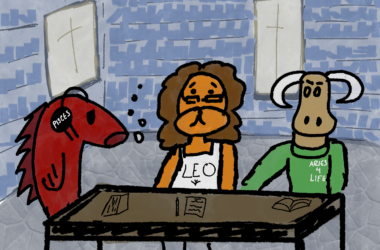
The Tribune Predicts: Fall horoscopes

With the add-drop period ending, the sun setting earlier, and the days getting colder, fall is inevitably on the horizon. While we can’t predict your GPA, The Tribune consulted the stars to see what autumn has planned for you.

Aries (March 21 – April 19): Aries, you will juggle your numerous extracurricular activities like a pro, but that one bird course you thought would be easy will turn out to be a hassle. Prioritize time management, attend office hours, and speak with TAs this fall. It will help you more than you think.

Taurus (April 20 – May 20): The colder days and earlier sunsets will throw you off from your usual rhythm. You might feel like there is never enough time to do everything, but remember that there are only 24 hours in a day. Don’t overwork yourself, and take time to breathe this season.

Gemini (May 21 – June 21): Caffeine and the McLennan Library will be your closest companions. But don’t worry—those long nights spent rereading the same sentence in your textbook for the third hour in a row will (hopefully) generate fruitful results. You’re in for a ride. Good luck!

Cancer (June 22 – July 22): Your work ethic will lead to the discovery of some of the best study spots and hidden gems on campus and beyond. Due to your work load, you might consider dropping out (more than twice), but you’ll also find that new, cozy places across Montreal will save you from spiraling out of control.

Leo (July 23 – Aug. 22): You //love// being right, but this fall, you might have to start questioning yourself. An overly bold email to a professor could be just the tip of the iceberg. Being so sure of everything may cost you a grade, a friend, or something else you care about. Proceed with caution.

Virgo (Aug. 23 – Sept. 22): Happy birthday, Virgos! This season, someone new will enter your life, maybe as a study partner at the Nahum Gelber Law Library or a new friend at Bar des Arts. Whether this connection grows into a close friendship or something more, pay attention because it will shape the rest of your year—for better or for worse.


Libra (Sept. 23 – Oct. 23): You crave balance, but you will find yourself caught in chaos. Expect last-minute schedule changes, late assignment discoveries, and miscommunication with friends. However, things will smooth out towards the end, and this season will have finally taught you to master the art of patience.

Scorpio (Oct. 24 – Nov. 21): Love is in the air for you, Scorpio. Everyone will have their eyes on you, and not because you’re always late to class. Whether you deepen a current relationship, reconnect with someone from the past, or meet someone new, expect attention to follow you everywhere.

Sagittarius (Nov. 22 – Dec. 21): You will level up professionally this season. Whether you find a job, earn a promotion, or finally join the club you’ve been eyeing, your resume is in for a serious glow-up. 

Capricorn (Dec. 22 – Jan. 19): Like Libras, you can expect change to come fast this season. From unexpected deadlines to extracurricular commitments you forgot you signed up for, you will be forced to branch out of your comfort zone and adapt. Luckily, your natural ambition will help you navigate this season of change with extreme ease.

Aquarius (Jan. 20 – Feb. 18): Your social life will boom this season. Between club meetings, family events, parties, and concerts, you’ll barely have time to breathe. Just remember to find time to study. After all, summer is over, and your midterms won’t ace themselves.

Pisces (Feb. 19 – March 20): Will you change majors, find a new hobby, or finally let go of something holding you back? Only time will tell. But one thing is for sure: A new beginning awaits you in an important area of your life. 

Arts & Entertainment, Internet, Music

VMAs? More like Tate McRae concert

The 2025 MTV Video Music Awards (VMAs) aired on Sept. 7, featuring stunning looks, heartfelt speeches, and star-studded performances. Out of 13 impressive numbers, one stood out from the rest: Tate McRae’s. Her showstopping performance solidified her status as the best dancer in the music industry.

Accompanied by a group of dancers, Tate McRae performed a mashup of “Revolving Door” and “Sports Car,” two songs off her latest album, So Close to What, with choreography by Robbie Blue. The number begins with more conceptual choreography as McRae and her dancers demonstrate their flexibility, contorting themselves into seemingly impossible shapes. It then concludes with a complex dance sequence: McRae steps onto a sand-covered stage, where every movement sends dust scattering artfully around her and her dancers. The VMAs’ performance-heavy format can become tiring to watch, but McRae’s act broke the evening’s monotony, captivating the attention of at-home viewers and celebrities alike. From lifts and splits and fire to sand, she left viewers in awe. 

For those familiar with her background, McRae’s level of excellence was not a surprise: Tate McRae was a household name in the dance world before she became one of today’s rising popstars. As a child, she trained at the Professional Division of the School of Alberta Ballet, one of Canada’s top ballet schools. She holds some of the most coveted titles in the dance world, winning silver at the Youth American Grand Prix  in 2015—the largest ballet competition and scholarship audition in the world. The star also won the American National title of Best Dancer at The Dance Awards three times: As a mini (2013), a junior (2015), and a teen (2018). She even participated in So You Think You Can Dance: The Next Generation at age 12, placing third against the best of the best child dancers in the United States. As one of the most decorated child dancers in the industry, many view Tate McRae as a dance prodigy.

This professional training was on full display in her VMAs performance last week. While other performances included dances as part of their musical acts, no choreography came close to matching the difficulty and precision demonstrated by McRae and her dancers. Both Sabrina Carpenter and Lady Gaga, for example, performed the viral choreography from their respective music videos. Carpenter recreated the “dance break” in the music video for her song “Tears,” completing a series of jazz-like steps. Similarly, Lady Gaga’s performance incorporated the iconic moves from her music video for “Abracadabra,” which consists largely of upper-body movements to imitate a monster-like figure. When viewing these performances alongside McRae’s, it becomes apparent that Carpenter’s and Gaga’s dances are far more rudimentary. This is not to say that simplicity is bad. In fact, it’s their dances’ simplicity that allows them to become viral trends, as fans can easily replicate the routines. TikTok users, for instance, frequently recreate the dances from both “Tears” and “Abracadabra,” thereby circulating the songs and increasing their popularity. 

While virality is certainly appealing to most artists as it expands their outreach, what makes Tate McRae’s performance stand out is its unachievable nature. McRae’s routine is not something the average person can recreate in their living room without breaking their backs (and probably taking some furniture out with them too). The mastery required for McRae’s performance creates a satisfying contrast to the night’s more basic performances, making her the obvious standout.

Ultimately, 2025 VMA performers like Sabrina Carpenter and Lady Gaga are singers who can also dance. Tate McRae, conversely, is a dancer who also sings. Tate McRae’s performance last week was career-defining as it separated her from other popstars, proving that she is in a league of her own.

Commentary, Opinion

McGill’s notice of default with QPIRG demonstrates hostility towards student activism

On Aug. 8, four McGill unions signed an open letter in solidarity with the Quebec Public Interest Research Group (QPIRG) in response to McGill’s notice of default on QPIRG’s Memorandum of Agreement (MoA). In the notice, the university threatened to suspend student funding to the group if it did not retract its support for the Solidarity for Palestinian Human Rights (SPHR). 

In their open letter, the four unions—the Association of McGill University Support Employees (AMUSE), the Association of Graduate Students Employed at McGill (AGSEM), the Association of McGill University Research Employees (AMURE), and the Association of McGill Professors of the Faculty of Arts (AMPFA)—condemned this notice of default and praised QPIRG for its invaluable contributions to McGill’s community, including its textbook loan program, community research, and affordable programming. Suspending their funding would jeopardize these initiatives, creating disadvantages for students relying on the affordability and opportunities QPIRG provides. 

The open letter raised concerns about the threat to organizational autonomy that the notice of default poses; the termination of QPIRG’s MoA not only demonstrates McGill’s neglect of the group’s crucial role in the uplifting of the McGill community, but also follows a broader pattern of hostility towards peaceful pro-Palestinian activism.

This is not the only time McGill has targeted a student organization for its support of the Palestinian liberation movement. McGill sent a notice of default to SSMU in July 2024, claiming that SPHR—which was then a SSMU-sanctioned club—was violating the MoA between the union and McGill by “intimidating and harassing” community members despite its peaceful protests. In this letter, McGill demanded that SSMU remove SPHR’s status as an official SSMU organization and halt its funding, eventually threatening to terminate SSMU’s contract if they failed to do so. Despite disagreeing with the notice of default, SSMU removed SPHR from its official clubs. This decision was made concerning how the threat of further action would hinder SSMU’s ability to sustain its clubs, services, and members. 

In perhaps its most blatant abuse of institutional power to date, McGill sent a notice expressing intent to terminate its contract with SSMU in April for hosting a three-day strike that called for divestment from companies complicit in Israel’s genocide in Palestine. 72 per cent of voting SSMU members democratically voted for the strike. Although McGill and SSMU restored their MoA following a lengthy mediation period this past summer, threatening to cut ties with SSMU over the student strike is deeply hypocritical. McGill’s blatant pattern of violence against student activism —such as using tear gas against protestors and employing external police forces to dismantle the pro-Palestinian encampment in July 2024—demonstrates a blatant overreach of institutional leverage. 

McGill’s willing and persistent repression of mobilization for—or even association with—the Palestinian liberation movement is deeply concerning, especially when this repression terminates crucial university services. Considering how essential both QPIRG and SSMU are to the McGill community, it is apparent that McGill will stop at no limits to stifle pro-Palestine action among the student body. Its multiple threats to terminate contracts with student-run organizations, simply for affiliating with the pro-Palestine movement unjustly strips these organizations of their organizational autonomy.
Furthermore, McGill’s despotic repression of student movements that do not align with its agenda is alarming. McGill students have historically played a central role in social movements, speaking out against the apartheid in South Africa and the Vietnam War. If student advocacy back then pushed McGill to become the first Canadian university to divest from South Africa, then McGill should treat students’ pro-Palestinian activism with due respect. McGill must rescind its notice of default on QPIRG and allow them to continue to support SPHR and its pro-Palestinian efforts; it is not for them to dictate what their students can or cannot advocate for.

Editorial, Opinion

With far-right extremism on the rise, McGill must actively counter hate

On Sep. 9, white nationalist group the Second Sons announced the opening of a Montreal division. This expansion is part of a rising wave of extremist ‘active clubs’ across Eastern Canada. Framed as organizations propagating a combination of fitness and men’s mentorship, these ‘active clubs’ co-opt medieval aesthetics and martial rhetoric to recruit young men and promote an ethos of nationalism, misogyny, and white supremacy. The group’s rhetoric frames white Canadians as victims of cultural displacement, a narrative rooted in the “Great Replacement” theory, which villainizes immigrants and people of colour. 

This growth is not atypical: neo-Nazi active clubs have increased by 25 per cent worldwide since 2023, with more than 181 active chapters operating in 27 countries, including Canada. The announcement of the Second Sons’ Montreal chapter follows a recent march by a “Canadian men’s nationalist” group, which took place in Ontario’s Niagara Region over Labour Day weekend. 

Resurging white nationalism across Quebec and Ontario poses pressing questions of student susceptibility and institutional responsibility at universities like McGill. Universities are not only targets for recruitment, but also risk becoming complicit in fostering hate when such conversations are presented as innocuous ‘debate.’ These organizations openly encourage violence and target marginalized communities that form much of McGill’s diverse and international student body. While recruitment for these groups often happens off-campus, universities are crucial in shaping whether such rhetoric is normalized or rejected. McGill has previously hosted speakers whose rhetoric dehumanizes entire communities, such as Mosab Hassan Yousef, a former Israeli military informant who has made explicitly Islamophobic statements that frame an entire religious group as expendable. By allowing speakers like Yousef on campus, McGill reinforces extremist rhetoric and signals to socially vulnerable students that dehumanizing communities is acceptable discourse, in turn encouraging these students to delve into hateful extremist ideologies. 

In Quebec, this increase in political and ideological extremism cannot be viewed as an isolated incident. The province’s increasingly conservative political climate—particularly around topics such as immigration and secularism—has enabled policies that disproportionately affect religious minorities. Provincial leaders consistently scapegoat immigrants for social and economic hardships, most notably the housing and healthcare crises. Premier François Legault, for instance, has falsely claimed that 100 per cent of Quebec’s housing crisis can be attributed to immigrants. This environment redirects economic and cultural anxieties away from structural issues and toward scapegoated ‘outsiders.’ Extremist groups exploit this dynamic, channeling public frustration into racialized hostility. By positioning themselves as defenders of ‘heritage’ and masculinity, organizations like the Second Sons weaponize economic hardships—particularly rising living costs—to recruit young men into white nationalist networks. 

The establishment of a Montreal division of the Second Sons only fortifies the immediacy of this risk. If left unaddressed, the rise of white nationalist and extremist groups in Quebec undoubtedly leave McGill students, particularly those who feel socially isolated, amenable to joining hateful networks. In 2020, McGill students attempted to form a ‘White Students Union’ with the baseless rationale that McGill does not serve the interests of white students. This example alone should be a wake-up call for the McGill administration that campus spaces are not immune to white supremacy. 
Universities have a responsibility to provide supportive environments that combat bigotry by offering accessible mental health resources, anonymous peer-support lines, and inclusive social spaces that strongly counteract hateful ideologies. McGill must actively reject hate speech and abolish existing platforms for extremism, and instead foster critical media literacy and community-building. By prioritizing student safety, belonging, and mental health, McGill can prevent far-right radicalization and protect its marginalized communities, all while setting a crucial precedent for other universities, and greater Quebec, to follow suit.

Sports

Know Your Team/Tournament Recap: Varsity Golf

Earlier this week, the Martlets and Redbirds Varsity Golf Team travelled to La Bête Golf Club in Mont-Tremblant to compete in their second Réseau du sport étudiant du Québec (RSEQ) competition of the season. The Redbirds finished fourth out of the nine competing universities in their division, while the Martlets finished third out of six.  

The Redbirds kept pace with the results of their first RSEQ outing in August, with Sept. 9’s successes led by Benjamin Blanshay, who recorded 232 strokes across the circuit. Blanshay was closely followed by his teammate, Adley Abols, who finished with a score of 234. Abols recorded the first and only hole-in-one in Redbirds history last season as a rookie. 

It was also an exciting tournament for the Martlets. Second-year star Astoria Yen had a fantastic outing, finishing the tournament as a co-winner. She shot 233 strokes over three rounds, becoming the first-ever Martlet to achieve an RSEQ podium finish. This accomplishment reflects Yen’s already-strong play this year, as she finished third during the August RSEQ tournament. 

In an interview with The Tribune, Yen described her experience achieving a historic result. 

“I didn’t realize until some of the guys came up to me and told me that [I set a school record],” Yen said. “I was just trying to perform and actually do my best to not look at the scores as I go throughout the day. I cannot do anything to change what has already been shot. I didn’t really realize it was such a big deal until after the fact. It didn’t really hit me until a day ago after the tournament ended.” 

Yen also highlighted the recent success and prominence of the Martlets Golf program. 

“Our girls’ team is really developing right now,” Yen stated. “We went from not having a program to something that [Head Coach] Pierre [Brisebois] has tried really hard to build [and] we saw a lot of potential that helped us secure that third place team title.” 

Redbirds golf captain Camden Purboo, who has also represented Jamaica at the national level, discussed the responsibilities that come with being the captain of a successful McGill varsity team.

“Because, as [Yen] said, it is an individual sport, but we play as a team, [helping them know] that the guy beside you or behind you will play for you [is my role],” Purboo said in an interview with The Tribune

Purboo also emphasized the importance of “picking each other up” and preparing for the next hole when a teammate is having a rough day. 

With the Varsity Golf season only being a month long, spanning from August until the end of September, the team is strategic about their training regimen. In a written statement to The Tribune, team member and coach’s assistant Mathieu Sénéchal pointed to the importance of McGill’s golfers working on their mental preparation and gearing up for gameplay scenarios in between RSEQ tournaments.  

Sénéchal continued that when the team is not focusing on the mental aspects of competition play, they travel to La Bête Golf Club, 130 kilometers outside of Montréal, or to a nine-hole course in South Shore. During these sessions, Sénéchal shared that training consists of playing either a nine- or eighteen-hole round, followed by practice on the driving range or short game areas.

“During the rounds, [the] coach comes and sees every player, focusing on different little aspects specific to [individual] needs to get better,” Sénéchal wrote.

With their season ending soon and the RSEQ Championship approaching in less than a week, both the Martlets and Redbirds are in contention for Nationals, and look to excel in the postseason. Sénéchal celebrated the team’s strong and unprecedented season. 

“We have had solid performances from the veterans on the [Redbirds] team, as well as impressive starts from the newcomers, which have put us in this situation,” he wrote. “As for the Martlets, I believe it is one of the strongest teams we have had, and they are showing off their skills quite well. They are determined and focused.” 

It will be exciting to watch McGill’s golf team continue their quest to make school history. 

Read the latest issue

Read the latest issue