


Latest News

Features

Morals and meaning: An atheist’s second look at religion

My parents never pushed me towards religion. They are atheists themselves, so my exposure to Christianity was limited to attending Friday night youth group sessions with my aunt at her local Evangelical Lutheran church. I remember attending a Halloween service when I was 11 or 12—on that particular evening, the pastor told us we would be protected from the demons of horror movies, as long as we were baptized and followed the teachings of the Lord. I, meeting neither of these requirements, was terrified on the drive home, even though my parents had told me not to believe the things that the church had taught us that night.

Despite the pastor’s warnings, my disbelief in a higher power only grew as I got older. More recently, however, I’ve noticed that atheism makes it difficult to answer the sorts of questions that one might find themselves asking when trying shrooms for the first time (I assume, that is…),  like “Can one ever be genuinely altruistic?” and, “How does one go about making their life meaningful?” Unfortunately, atheists don’t often believe these questions have definite answers. I’m not all that satisfied with this conclusion. 

This dissatisfaction has become harder and harder to ignore throughout my time at McGill, particularly in the past 12 months, presumably because of the increased independence I have as an “adult” who lives alone. In any case, it has forced me to reevaluate the views I’ve held so strongly for the past 20 years—crucially, this has meant addressing my convictions towards faith.

I think there are two things fundamentally wrong with the way I have been approaching conversations about religion. The first is that I have judged religion from a “right or wrong” perspective, getting hung up on the truth of different cosmologies and beliefs, rather than focusing on the impacts that faith has on believers and communities. 

Najda Kassam, U3 Arts, who grew up Muslim but now feels more agnostic, continues to understand the comfort that faith gives people. 

“Nobody wants to feel like they have to be the strongest human alive, they don’t want to deal with everything on their own, it is painful and sad,” Kassam said in an interview with //The Tribune//. “And I felt that way, [because] I was trying to deal with it all on my own. But when I think about it, I find it’s easier to cry in the arms of my friends, right? And that’s kind of what religion does for people.”

People have turned to religion in times of crisis for as long as it has existed. To dismiss this found comfort in the name of science or “rational” thinking is irresponsible and, frankly, rude. My preferred method of self-soothing involves several hours’ worth of Instagram reels, so to each their own. 

At a societal level, religion has inspired artists and architects around the world for centuries. It has created spaces for communities of like-minded people to form. It brings peace and provides one with a general way of being. While it would be incorrect to say that organized religion has been harmless throughout human history, it is equally problematic to ignore the reasons people have turned to faith in the first place.

The artistic and ritualistic practices that emerged from religion create a myriad of beautiful things to engage with, regardless of whether you hold the corresponding faith.

Kat Mulligan, fourth-year French Studies student at Concordia University, is a regular church-goer, despite identifying as an atheist.

“I like hearing the organ music, the choir, and I like that it’s a sort of meditative space,” Mulligan said in an interview with //The Tribune//. “I think Catholicism does a good job with aesthetics, so especially as someone who doesn’t have the faith aspect to religion, I like the kind of show they make of their religious experience.”

These environments have built avenues to experience the beauty of religion while simultaneously being surrounded by people who show up for causes they care about. This in itself can have a restorative effect on your faith in humanity.

“I really like the aspect of ritual, and I think it’s nice when people go all in on something [….] In general, I like the idea that Catholicism wants you to hold yourself to a high standard morally,” Mulligan said. 

My second error was to think that ‘religion’ and ‘atheism’ mean the same things to everyone who uses the terms. Throughout my interviews, it became clear that people do not necessarily stand by every aspect of a particular doctrine, and that part of coming of age is deciding for yourself what aspects of faith (or a lack thereof) are meaningful and valuable for you. Even I, a diehard atheist, find myself praying before writing an exam or waiting to hear back from an internship application. Seeing doctrines as monoliths ignores a lot of individual variation in belief and practice. The beauty of having a belief system partially lies in the way each person adapts it to their own life in practice.

“It doesn’t have to be one rule for everybody, and there are so many different parts of the interpretation that you can make as you go. That’s the point of any piece of literature you’ll ever read in your life,” Kassam said. “It’s all interpretive. No one’s going to read the same thing the same way.”

//Perhaps//, I thought, //there was some interpretation of faith that could help my atheistic heart with its existential line of questioning.//

Alongside each person’s unique interpretation of their beliefs and traditions, the students I spoke with all had their own approaches to the relationship between religion and morality. Jordan Ona, third-year English Literature student at Trent University, mentioned the Sermon on the Mount from the Gospel of Matthew as an important source of moral guidance. Its teachings encourage one to practice compassion, humility, and forgiveness.

“That is one thing I appreciate that religion stresses on, is that it really does strip away everything you think is important,” Ona said in an interview with //The Tribune//. “Like having good skin care, a good body, being smart and in school? No, it’s loving your neighbour, your mom and dad, brother, everyone you love, and just washing everyone’s tears away. That’s what’s important.”

In contrast, Kassam’s takeaway was less about specific instructions from a holy text, and more about the fact that, as humans living on the same planet, we are all innately connected. However, this feeling of connection, in her eyes, is not entirely removed from the idea of faith.  

“I think God is this interconnectedness within us and these strings that attach us and the ties that we are, and so it would be sort of like severing that if I dishonoured it, or if I didn’t go about [life] in a way of acknowledging everything around me,” Kassam said.

This narrative ties into other faith-related aspects of Kassam’s life, namely the existence of the soul, and the value of curiosity and education.

“I kind of think that [education is] the way I carry through with my faith,” Kassam said. “So even though I don’t necessarily have to go to mosque or have to be in a certain place to pray, I find that being inquisitive and learning and finding things out and doing research gives me this sort of meditative, or religious sort of aspect to it.”

Zachary Liu, U3 Science, highlighted the overlap that atheists and theists may have in their belief systems despite taking different routes to reach the same conclusions.    

“A lot of the values that I think of when I think of religion, I think I have not necessarily the same values but similar ones, except mine weren’t obtained through religion,” Liu said in an interview with //The Tribune//. “When I want to help someone or do something that I deem to be morally right, it doesn’t have anything to do with any external force. This is just me wanting to do it because I want someone else to be happier.” 

While Liu currently identifies as an atheist, Liu’s father was Catholic, and his mother was Buddhist. Understanding religion was thus an important part of his upbringing, even if it did not ultimately inform his moral compass. 

“For some parts of my family, it’s a big part of what their community looks like,” Liu said. “And then so for me, it’s important, for example, if I want to understand my grandparents. I think it’s important to have that context of their social circle like in what their events are like.”

Sam Kunesch, U3 Science, echoed a similar idea to Liu, on the premise that while religion can help people find meaning and direction, it is not the only way to do so. As a biology student and a former Catholic, Kunesch looks to the biological principle of reciprocity for moral inspiration, which is reminiscent of the biblical teaching to “love thy neighbour.”   

“Reciprocity is a strategy where an organism acts in a way that temporarily reduces its own fitness while increasing another organism’s fitness, with the expectation that the other organism will reciprocate the favour later,” Kunesch said in an interview with //The Tribune//. “So we have an evolutionary advantage to something that is also advised to us by the Bible [….] It’s the closest thing to what I consider a universal truth when the religious people and the scientists can agree on something.”

*** 

One of the final questions I asked each of my interviewees was whether they thought life is inherently meaningful. In retrospect, I sounded an awful lot like Jaden Smith talking about the political and economic state of the world, but it was one of the driving questions behind this project, so I asked it anyway. 

It wasn’t until Ona asked me how I would answer it myself that I realized I hadn’t considered the question all that deeply. It took merely a few seconds of critical thinking to realize that, while life may not have some greater, philosophical meaning, the fact remains that I am alive now, surrounded by people whom I love. My care for others exists whether it is biologically, divinely, or philosophically motivated, and I would be doing a disservice to myself and the people around me by not embracing it.         

Whether you find your meaning and morals by following the word of God, through the principle of reciprocity, or simply out of the goodness of your heart, it would seem that ultimately, we are all working towards one common goal: To help and to love one another. And really, what more can we do?    

Editorial, Opinion

Students, you must strike for Palestine. No justice, no class.

On March 3, 2025, Students for Palestine’s Honour and Resistance (SPHR) at McGill submitted a motion to the Students’ Society of McGill University (SSMU) Speaker, calling for a three-day student strike in support of Palestinian liberation. Accordingly, SSMU hosted a Special Strike General Assembly (SGA) on March 27, during which the required quorum of 500 members was well exceeded and the motion passed with  679 “Yes” votes and 13 “No” or abstaining, making this the first strike motion to pass through the SSMU GA in recent McGill history. The motion was then put up for ratification to the student body through an online ballot, which closed on March 31, with 3933 student voter turnout, which equates to 17 per cent of the student body. 2731 (72 per cent of non-abstaining voters) voted “Yes”, while 1061 students (28 per cent of non-abstaining voters) voted “No”. 

Scheduled to occur from April 2-4, the strike is timely and urgent, considering Israel’s most recent violation of a ceasefire deal with Hamas signed in January 2025. On March 18, 2025, the Israeli military launched air strikes that killed 430 Palestinians and wounded hundreds of others. McGill continues to enable this genocide through their failure to divest in the face of widespread student protest

The strike demands that McGill fully divest from all weapons manufacturers associated with Israel’s genocide, end research partnerships with groups benefiting from the sale of military technology, and cease disciplinary cases against students who have been involved in advocacy or protest relating to Palestinian liberation. As the strike is not mandated, students are still encouraged to attend their exams and submit assignments, but are expected to skip class. SPHR will be offering strike-related programming during the three days, including workshops, rallies, and other events.

With recent incidents of expulsion, arrest, and even threatened deportation of pro-Palestine students who have peacefully demonstrated at U.S. universities and colleges, a united student front is imperative. Exhibiting commitment to and solidarity with protest efforts is crucial to ensuring the safety and protection of student protestors, particularly given McGill’s history of suspending and punishing those who have demonstrated on behalf of the Palestinian liberation movement. McGill’s administration has responded to previous negotiation efforts by SPHR with apathy and disregard for students’ concerns, while protests on campus last summer were met with police aggression, tear gas, and pepper spray.

In light of a new agreement between SSMU and McGill banning students with a disciplinary record—including infractions relating to protest demonstration—from serving in a SSMU executive position, the strike symbolically honours the work of SPHR and other pro-Palestine organizations who have been outspoken in the face of disciplinary and safety risks. It is our obligation as students to demonstrate solidarity not only with the Boycott, Divestment, and Sanctions (BDS) movement but also with the organizers who have shown up time and time again to protest Israel’s genocide. 
All undergraduate students should see it as a moral responsibility to strike. Crossing the picket line by going to class not only sends the message that the student body is divided, ultimately weakening the strike’s impact, but also demonstrates apathy for Palestinian life and for the activists who have put their academic careers at risk for the cause. Professors can and should demonstrate solidarity with students throughout the strike by being flexible with exams, presentations, and deadlines or even participating in programming during the strike—as various members did during the encampment last summer. Crucially, students must not interpret the strike period simply as “time off” but engage with the mobilizing efforts coordinated by SPHR. Refusing to attend class not only communicates the student body’s commitment to BDS goals, but also opens up time for students to engage in advocacy and deepen their understanding of and commitment to the Palestinian liberation cause. It takes utter moral negligence to attend class during the strikes. It takes an absence of humanity to continue to look away. Demand divestment. Disrupt the status quo. Defend Palestinian liberation. Students, strike.

Commentary, Opinion

Duolingo claims to teach everyone—but does it really?

Duolingo’s very name—rooted in the Latin “duo” (two) and “lingua” (language)—champions multilingualism, which seems fitting considering the function of the app as a language-learning tool. Yet, ironically, Duolingo’s design choices often speak only one language: The language of exclusivity. 

In a generation where technology shapes our daily lives, the design choices embedded in massive platforms like Duolingo reveal a lot about who is included—and who is left behind—in the digital language-learning community. While Duolingo offers courses in many widely spoken languages, Indigenous languages, many of which are already endangered, receive far less of their attention. Duolingo only offers two: Navajo and Hawaiian. Duolingo’s design choices are also inaccessible for users with autism, as its intense graphics and reward systems make its platform intimidating. 

Individuals with autism often experience sensory overload from sudden sounds, rapid visuals, and inflexible evaluation structures. Duolingo’s flashing animations, rigid lesson structures requiring users to complete tasks in a specific order, and pressure to maintain a “streak” by going on the app daily can overwhelm them in this way. I realized that what was marketed as a fun and accessible way to learn could, in reality, be frustrating and discouraging for some. Gamified aspects, such as losing hearts for incorrect answers and the expectation of fast-paced performance, can amplify anxiety, making it harder for neurodivergent users to engage. 

The presence of ads in the app’s free version intensifies these problems.  These ads disrupt the flow of learning, creating unnecessary stress for users who rely on consistency. They’re also often filled with bright images and intrusive sounds, leading to similar issues of overstimulation. For some individuals with autism, particularly those who experience difficulties with concentration, ads limit their ability to learn effectively.

To improve inclusivity, Duolingo could implement a “Safe Mode,” eliminating penalties, disabling flashing animations, reducing sound effects, providing text-based instructions, and removing ads. “Safe Mode” would ensure a more accommodating learning environment for all users with cognitive differences.

Beyond its inaccessibility to individuals with autism, Duolingo’s structure exposes global power imbalances in language learning. While the platform offers courses in Indigenous languages, the learning experience for these languages is often minimal compared to English or French. 

Duolingo grants popular languages advanced features, varied lessons, and interactive exercises, while Indigenous languages receive limited content and fewer resources. This imbalance reinforces historical colonialism, which prioritizes the languages of colonizing powers while marginalizing Indigenous languages and cultures. By continuing to elevate certain languages over others because of their popularity with users, Duolingo perpetuates the exclusion of Indigenous languages, making it more difficult to preserve and promote them today.

By creating a “Community Resource Hub,” Duolingo would be taking a first step to address this interlinguistic disparity. This program would allow Indigenous language speakers to upload open-source materials to the app, allowing active Indigenous participation in language preservation. 

At McGill, the university’s limited offering of Indigenous Studies, which only provides a minor in the field, reflects a broader institutional pattern of not prioritizing Indigenous voices in education. For students at McGill, this lack of representation is a stark reminder that colonial legacies are still at play, not just in historical contexts but in the very systems that shape our learning environments today—including language-learning platforms.

Rethinking Duolingo’s design choices is not just an improvement but a necessary step toward a more equitable digital future. For platforms that have the power to shape how we learn, inclusivity is not just a matter of choice: It’s a responsibility.

Montreal, News

Av. du Parc building collapse displaces local residents

A wall of 5990 Av. du Parc, a vacant building in the Mile End, collapsed on the evening of Monday, March 17. The collapse severely damaged the neighbouring apartment building, Parc 5998. Though no one was injured, the incident has left residents displaced without a timeline for return. 

Amanda Solomon, a resident of Parc 5998, was in her apartment when the wall collapsed.

“I was sitting on the couch in my living room [….] I heard a loud noise, so I turned and looked, and basically all of the third and second story [of the] building, the wall of that entire side crashed down in a couple of seconds,” Solomon told The Tribune.

Parc 5990 is owned by Habitat 237 Grande-Ile S.E.N.C. and was abandoned for years before the collapse. Mikaela Germani, communications associate at McGill’s Schulich School of Music and a resident of Parc 5998, had noticed visible issues regarding the next-door building’s condition in the preceding months, such as falling bricks and a bowing wall. 

Parc 5998 had already been evacuated over these concerns last March, and the city erected fences to bar pedestrian access to the building. Still, according to Germani, no other concrete action was taken by the city to remedy the issue after it was deemed safe for residents to return. Germani raised her concerns directly to the city on March 8, which resulted in firefighters visiting the building. Nevertheless, it ultimately deteriorated to the point of collapse.

The collapse heavily damaged Germani’s apartment. Her window was smashed through, and bricks littered her living room floor. In an interview with The Tribune, Germani reported that firefighters who responded to the scene told her that, had she been sitting on her couch during the collapse, they “wouldn’t be talking right now.” 

“When they told me that, it didn’t really hit me because I was running on adrenaline,” Germani said. “So it wasn’t until, finally, I had sort of a safe space to settle down at the end of the night that I started to think about the fact that I had almost died, and in the days that followed, it was really all I could think about. It was always in the back of my mind that I could not be here right now. How would I feel about that, you know, what would be the legacy of my life?”

Nearly two weeks after the collapse, residents of Parc 5998 remain displaced, with no information from the city or their landlords on when a safe return will be possible. Cole Johnson, a resident of Parc 5998 and a PhD student in McGill’s Department of Educational & Counselling Psychology, expressed in an interview with The Tribune the toll the evacuation has taken on his academic and professional life.

“I’ve had a lot less bandwidth and time to attend to things that I would normally be attending to,” Johnson said. “We’re entering the end of the semester right now. I have my own course responsibilities. I have TA responsibilities [….] I’m living out of a suitcase in a friend’s apartment. So the stress that comes with that, and the uncertainty definitely can weigh on a person, especially when we are over a week out from the incident now, and we’re just starting to get a vague idea about when this might be resolved.” 

The city is expected to commence demolition work shortly, but residents have not been given a clear timeline. According to Johnson, the owner of Parc 5990 has been difficult to reach since the collapse, though the city is trying to secure a contractor to begin work. Deteriorating buildings are a city-wide issue, continually posing a danger to Montreal residents. Germani urged Montrealers to bring any of their concerns about abandoned buildings directly to the city by calling the non-emergency helpline 311. She also expressed her desire for the city to be proactive in preventing future collapses.

“This isn’t the first building that’s collapsed in Montreal, right? Because it’s been left, it’s been abandoned, it’s become derelict,” Germani said. “Does it really take someone’s death for action to be taken?”

News, SSMU

Students vote “Yes” to strike for Palestine at Special General Assembly

Hundreds of students ratified a motion for the Students’ Society of McGill University (SSMU) to strike for Palestine following a Special General Assembly (SGA) on March 27. The SGA exceeded its quorum of 500 students, and the motion passed with 679 in favour and 13 against or abstaining. It was then put to a ratification vote to the SSMU constituency on March 27. Of the 3,933 students who voted, 72 per cent, or 2,731 students, ratified the motion, casting a “Yes” ballot. SSMU members will go on strike April 2-4.

The strike motion asks that students not attend class during the three-day period to call on McGill to accept three demands. The first states that McGill must divest from companies linked to the manufacturing of weapons that the Israeli government uses against Palestinians. The second request is that the university end research partnerships with institutions benefiting from the sale of military technology, and the last demands that the university cease all disciplinary cases currently filed against students involved in advocacy for Palestine. Students for Palestine’s Honour and Resistance (SPHR) at McGill will host programming over the strike period, encouraging students to attend political education and cultural events rather than classes.

At the SGA, the student who submitted the motion gave a five-minute presentation on the strike’s intent. The student—who wished to remain unnamed—began by addressing Israel’s continuation of its genocide of Palestinians since violating the ceasefire agreement on March 18. The violence includes several ground invasions by the Israeli army, which have killed over 1,000 Palestinians. The student also drew attention to Immigration and Customs Enforcement (ICE)’s abduction of student activists across the U.S. The speaker asserted that McGill students have a continued responsibility to demand that the university end participation in military research and funding that goes toward the Israeli occupation in Palestine. 

“Students have long been at the forefront of change, leading the charge against the Vietnam War, standing on the front lines of the civil rights movement, and driving the struggle against apartheid in South Africa,” the student said. “We learned from history that students have the power to force the hands of our political class and administrations and that divestment is possible.”

During the question period following their presentation, the speaker noted that students can still submit assignments and attend exams during the strike, but should remain absent from class whenever possible. The student added that they hope that if at least half of undergraduates go on strike, professors will change deadlines and lesson plans to adapt. 

SSMU Vice-President (VP) External Affairs Hugo-Victor Solomon told The Tribune that groups across campus have reached out to him to show support for the strike and are preparing to implement measures to accommodate students participating. 

“This was a really rare moment of hope,” Solomon said. “We saw that the online registrations exceeded 800, close to 900 in fact [….] Working with the strike petitioners has been a really rewarding process. It’s cool to actually fulfill what SSMU is meant to do, which is be a vehicle to support student democracy and campaign efforts.”

A representative of SPHR, who wished to remain unnamed, emphasized McGill’s role in setting a precedent for other universities in an interview with The Tribune. They hoped that if students ratify the strike motion and pressure McGill to grant its demands, other institutions across North America may be inspired to do the same.

“It’s like a chain reaction,” the representative said. “Which is exactly what happened when McGill divested for South Africa, […] which made […] other universities divest as well, and the apartheid ended due to boycott and divestment.”

Jayden, a GA attendee graduating this year, told The Tribune that the overwhelming student support for the strike marks a newer, stronger wave of mobilization for Palestine than they have seen in the last four years.  

“Sometimes, as students, we might feel a little powerless in these circumstances, especially when our tuition is what’s funding this,” Jayden said. “But we’re seeing that so many different faces, so many different cultures, so many different nationalities are coming together and acknowledging that the plight of one person is also our plight. What does it mean about our world if we’re not all trying to thrive for a safer, better, more peaceful world altogether?”

Behind the Bench, Sports

“We’re all human”: Refereeing blunders through the years

Referees are constantly stuck between a rock and a hard place. The call they make will be sure to anger at least half of the people watching the game. It’s a thankless job that takes an incredible amount of hard work to progress to the top level. Occasionally, referees make decisions so blatantly wrong that there’s nothing even the most casual of fans can do to avoid shouting at their TV screens or joining in on jeers in the stadium. Here are some of the most consequential, confusing, and downright comical refereeing mistakes throughout sports.

Josip Šimunić (eventually) sees red

The 2006 FIFA World Cup brought one of the most peculiar refereeing blunders in soccer. Croatia was fighting for their survival, needing a win against Australia to advance to the round of 16. With his squad winning 2-1, the Croatian defender Šimunić pulled back Socceroo star Harry Kewell, earning the defender a yellow card. Disaster struck in the 90th minute when Šimunić laid a crunching tackle on an opposing player. English referee Graham Poll showed the Croatian a second yellow card, which would normally add up to a red card. But Poll simply didn’t show Šimunić the red. Amazingly, Šimunić received a third yellow card for arguing with the official after the match had concluded, which culminated in a red card. This made him possibly the first player ever to receive three yellow cards in a match.

The “Fail Mary”

The 2012 NFL season began with officiating uncertainty. The referees had entered a lockout in the summer, and the league was forced to replace them for the beginning of the season with officiating crews from lower levels, even pulling some high school referees. A Week Two showdown between the Green Bay Packers and Seattle Seahawks had fans begging for the refereeing lockout to end. The Seahawks were down by five, and they had the ball in Packer territory with less than ten seconds left on the clock. Quarterback Russell Wilson scrambled around the pocket, looking for an open receiver. He spotted Golden Tate in the back corner and aimed to deliver to his target. Tate blatantly pushed Green Bay’s Sam Shields in the back, causing the defensive back to fall over. 

This missed call was compounded by the calamity that occurred when Tate “caught” the ball for a miraculous touchdown. One official signalled that the ball was intercepted by Packer M.D. Jennings, while another signalled touchdown. To everyone watching, it was clear that Jennings had intercepted the football. After 10 minutes of confusion, the replacement referees reached a verdict: Touchdown. This debacle quickly accelerated negotiations to end the lockout, and an agreement was reached two days after the game.

The Imperfect Game

In the 240,000-plus games of Major League Baseball played, only 24 of them have been a perfect game, making it one of the rarest achievements in sports. A perfect game is when a pitcher retires all 27 batters he faces without allowing a baserunner. However, it should be 25 perfect games. On June 2, 2010, Detroit Tigers pitcher Armando Galarraga only needed to get Cleveland utility man Jason Donald out to go down in baseball history. Donald hit a sharp ground ball to first baseman and future Hall of Famer Miguel Cabrera, who fielded it cleanly and threw over to Galarraga, who was covering first base. 
The throw clearly beat Donald, and he should have been called out. However, first base umpire Jim Joyce inexplicably called the runner safe. The immensity of this decision was realized by fans and players alike. Cabrera looked as if he was on the brink of tears. What followed was an even more unexpected tale of forgiveness. Joyce, who was previously voted the best umpire in the league by the players, was beside himself when he realized he got the call wrong. While Joyce talked to Tigers general manager Dave Dombrowski, Galarraga entered the room and shared a hug with Joyce. The Tigers pitcher left the umpire with a simple message that everyone should remember the next time they’re shouting at a referee for a blown call: “We are all human.”

Emerging Trends, Student Life

One’s company, two’s a crowd, three (p.m.)’s a darty

You don’t always need an excuse to host a day party or ‘darty’—usually, just a backyard—but this past St. Patrick’s Day saw an overwhelming number of afternoon get-togethers, even by Montreal standards. With spring weather rearing its head, darties per capita can be expected to skyrocket. But what makes Montreal and McGill such great places to host darties? Are they any different from the festivities in university towns like Kingston? Who invented the darty?

Day drinking, presumably, is about as old as normal drinking, and we have records of ancient Greek men hosting intellectual banquets called symposiums. Literally meaning “drinking together,” the participants would argue over philosophy and show off their nice items, which is by all means pretty similar to a modern-day darty.

The term first surfaced on Urban Dictionary in 2008, but has gained more traction in recent years after being published on accounts popular among university students like Barstool Sports and university publications such as the Ohio State University’s The Odyssey and the University of Maine’s Her Campus.

The Tribune reached out to students who have hosted and attended darties to get their take on the darty scene at McGill. Meave Harrington, U3 Arts and a Montreal local, talked about how she first learned about darties through her family.

“The first time I heard of the term darty was from my older sisters who also went to McGill,” she said. “They were preparing me and really hyping darties up and saying it’s a great opportunity to come together with your friends on a really nice day and relax from all the schoolwork.”

Harrington also praised the city for being extremely darty-friendly.

“I’ve hosted darties in Jeanne-Mance, and that’s a great place for a lot of people to come together and play things like spikeball, or even bring a pong table,” Harrington said.

Kirk Slocum, U1 Arts, felt that there was no major difference between throwing darties in Montreal compared to other schools in the area. Nevertheless, he acknowledged that the high number of students who live off-campus creates a strong party culture. 

“I don’t know if McGill specifically is a better place to host darties compared to other schools, but the fact that all students are forced to have apartments after first year means that there’s a greater percentage of students living in the student neighbourhoods,” Slocum said. “They form a good community, and a good community is better for parties.”

In Montreal, drinking in parks is permitted before 8 p.m. if accompanied by food, which makes the city more welcoming to picnic darties. However, McGillians have had mixed experiences with police enforcement shutting down their events.

“I feel like the only downfall about darties is that the cops can come through even though it’s 3 p.m. on a Saturday. You can get unlucky,” Harrington shared.

Slocum, however, found that the police were relatively relaxed when it came to daytime events. He also expressed no preference when comparing darties to parties, though he’s hosted two of the former in the past.

“I personally like darties but not any more than parties. And I don’t know if there’s any difference between them; it’s just that when a darty’s done, you can still go do stuff after,” Slocum said.

On the other hand, Harrington emphasized her appreciation for darties, highlighting how good weather and open space can be conducive to making new connections.

“I really like darties, and I know so many other people that do because it’s a really wholesome event,” she said. “Parties are a bit cliquey-er, I feel like the crowds at darties are more outgoing. Everyone likes to be outside. Parties are dark and cramped, while darties are bright and open.”

With the late spring snowstorm (hopefully) behind us, now’s a great time to consider planning a darty for yourself! All it takes to host a successful one is daylight hours and a group of willing friends. With that in mind, whether you need a break from studying or just finished your final exams, it’s the perfect time to darty the day away.

Sports

Meme madness: The internet’s sporting circus

In the age of social media, sports have evolved beyond competition into fertile ground for internet comedy. From sideline antics to questionable celebrations, athletes and coaches unwittingly transform into viral sensations with a single expression, gesture, or moment. As sports and internet culture continue their inevitable collision, The Tribune examines some of the most enduring memes across three major leagues.

National Football League (NFL):

Trump dance celebration: Touchdown of trolling

In terms of viral celebrations, few can compete with the unexpected presidential dance moves that somehow emerged from the gridiron. Players gyrating all together with staccato, terribly orchestrated Trump-like ‘lack of swagger’ became an instant internet sensation in the 2024-25 season, once again proving that touchdown celebrations can be an occasionally volatile vehicle for performance art to overlap with politics. 

Patrick Mahomes: The alleged match-fixer meme

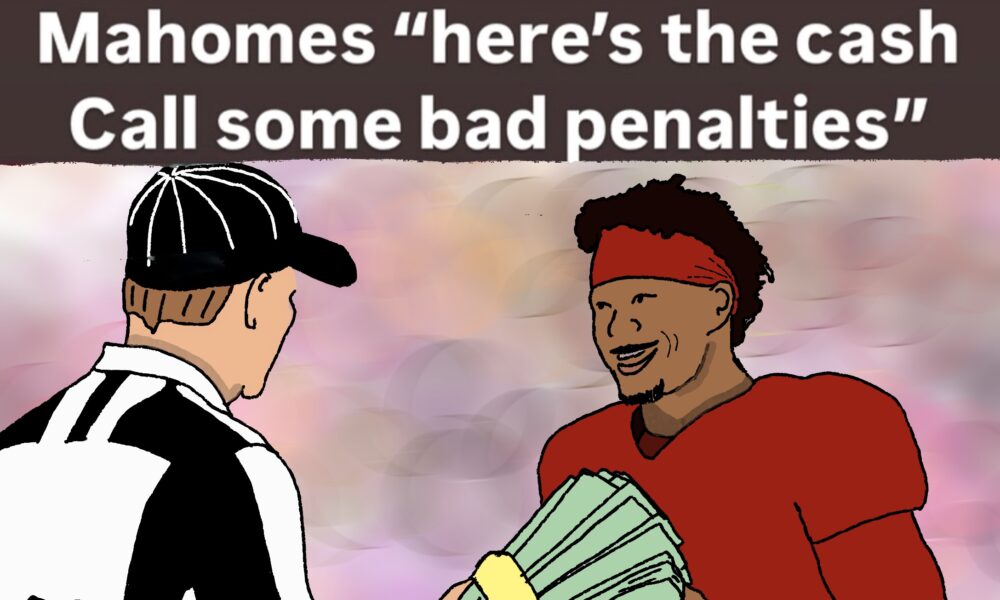
Conspiracy theorists and meme lords unite! The constant joke that Patrick Mahomes, the Kansas City Chiefs quarterback, is secretly orchestrating game outcomes has transformed him from MVP quarterback to internet-appointed master of sports manipulation. Every perfectly thrown pass and touchdown now comes with a host of suspected corruption. Then, of course, the Chiefs lost the Superbowl to the Eagles this year, which provided the internet with endless new meme content against Mahomes and the Chiefs. 

Bill Belichick: The human poker face

In the world of explosive emotions that is the NFL, Bill Belichick—the former General Manager of the New England Patriots and current Head Coach at the University of North Carolina Chapel Hill—remains the ultimate meme of stoicism. His expressionless stare became an internet shorthand for general indifference and nonchalance, transforming the coach into a living, breathing meme that speaks volumes by saying and doing absolutely nothing in the face of positive or negative circumstances. 

National Basketball Association (NBA):

Shannon Sharpe’s “Lakers in 5” prophecy

Shannon Sharpe’s unwavering belief that the Los Angeles Lakers will triumph in exactly five games has transcended sports commentary, becoming a cultural phenomenon. Embodied by a compilation of different memes rhyming together, this viral NBA meme culminates in the famous punchline “Lakers in 5.” Sharpe’s passionate proclamations have turned a statistical prediction into internet art, making “Lakers in 5” a mantra of unfiltered optimism.

The Drake curse: Musical jinx extraordinaire

When Drake supports a team, internet folklore suggests disaster will follow. His appearances at sporting events have become a meme of spectacular misfortune, with fans religiously tracking which team will next fall victim to the rapper’s seemingly supernatural ability to hex championship hopes. The only teams that seem to make it out alive are Canadian, like when the Toronto Raptors beat the Golden State Warriors in 2019 to win the NBA Final

Crying Michael Jordan: The meme that launched a thousand tears

No sports meme pantheon is complete without the iconic tearful Michael Jordan face. What began as a moment of athletic vulnerability transformed into the internet’s most versatile reaction image, immortalizing raw emotion in pixel-perfect ridicule. Used across sports, pop culture, and many other formats, the crying MJ meme has been taking the internet by storm for years, including in Jordan’s own documentary, The Last Dance

English Premier League (EPL):

Thierry Henry’s laugh: Comedy gold in football commentary

Thierry Henry’s infectious, somewhat mischievous laugh has become more memorable than some of his actual goals. Stifling laughter in many circumstances, his consistently playful grin makes his punditry moments all the more entertaining. His varied, humourous expressions have transformed serious football analysis into comedy gold.

Gary Neville: The Monday Night Football meme machine

Monday Night Football transformed from mere sports analysis to a comedy sketch, largely thanks to Gary Neville’s animated reactions. His passionate dissections of gameplay and snapshot reactions of shock and excitement, microphone in hand, have made tactical analysis feel like stand-up comedy, entertaining millions even beyond traditional football fandoms with his witty retorts and hilarious one-liners.

Jurgen Klopp: A walking meme

Less a manager, more a walking meme-generator, Klopp’s touchline antics, masterful interviews, and aggressively expressive celebrations have turned Liverpool’s sidelines into a circus act. Every fist pump, every incredulous look is internet content waiting to happen. His eye-catching, full-body, erratic reactions to even the smallest occurrences on the field encapsulate the term ‘body on the [touch]line.’ 

Horoscopes, Student Life

The Tribune Predicts: Finals season horoscopes

Are you curious about what this finals season has in store for you? Forget your study guides—the answers are written in the stars.

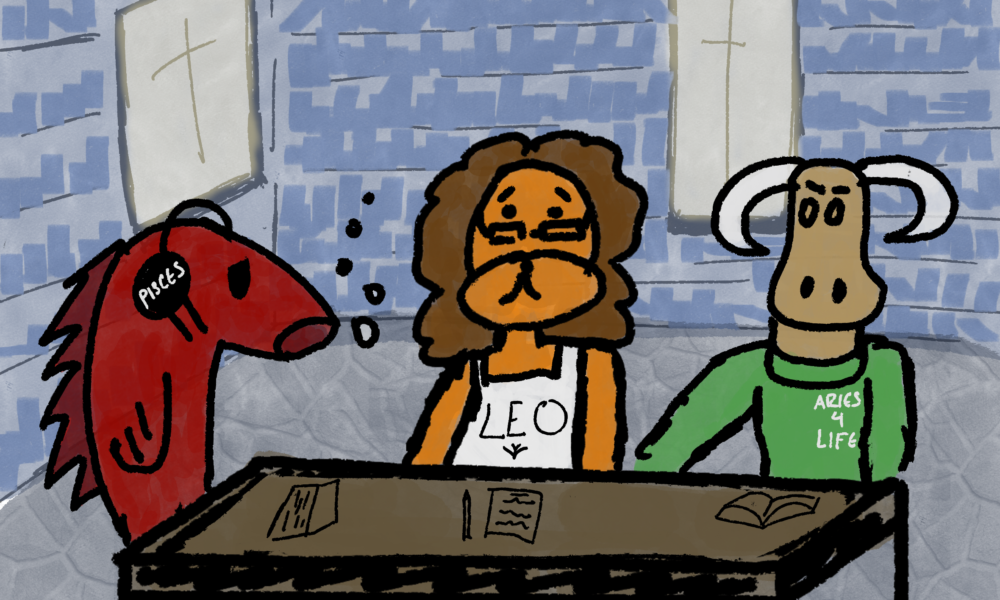
Aries (March 21-April 19): As finals approach, chances of securing a comfortable spot in one of the McGill libraries become increasingly slim. No matter how desperate you are for a seat, beware—you must avoid the Schulich basement at all costs. The stars predict a familiar foe may be lurking there, ready to throw off your focus. 

Taurus (April 20-May 20): Sure, you may feel a bit sluggish this spring, but that doesn’t mean you’re immune to the study bug. In the next week, a call with a loved one will give you a surge of motivation to hit the library. Have you called your parents lately? 

Gemini (May 21-June 21): Your curiosity knows no bounds, and neither do your questions. While you’re typically tempted to type a flood of queries in the class group chat, you’ll put those frantic fingers to better use this finals season. The stars predict you’ll book back-to-back office hours appointments.

Cancer (June 22-July 22): Your compassion and sensitivity will make you the recipient of many late-night calls from friends dealing with finals-induced stress. Offer support whenever you can, but don’t forget to prioritize your well-being. Turn on do-not-disturb when you need time for yourself—we won’t judge.

Leo (July 23-Aug. 22): There may only be a few days of classes left, but that won’t stop you from making a new friend before the semester is over. This finals season, you’ll find out that the best friendships are built on shared panic and caffeine. 

Virgo (Aug. 23-Sept. 22): You’ve organized your studying schedule down to the last minute, but a welcome interruption will throw a wrench in your plans. Embrace spontaneity—it may be exactly what you need to refocus and recharge. 

Libra (Sept. 23-Oct. 23): Libra, you have a lot on your plate in the coming weeks, but you’ll find a new hobby to help you de-stress. Whether it be colouring books, crocheting, or yoga, the stars suggest you invite a friend to unwind with you. 

Scorpio (Oct. 24-Nov. 21): Scorpio, this finals season, your intense focus will be unmatched—but be warned: Your drive might lead you to burn the midnight oil a little too long. The stars predict you’ll thrive best if you remember to take breaks. Sometimes, the most productive thing you can do is step away and recharge your batteries.

Sagittarius (Nov. 22-Dec. 21): As exams approach, you’ll feel the pull between adventure and study sessions. For you, frequent walks to clear your mind and explore are inevitable, but make sure you return to your textbooks afterward!

Capricorn (Dec. 22-Jan. 19): Your determination is unmatched, but this finals season, your natural pessimism will start to creep in. You’ll find yourself doubting whether all your hard work will pay off, but rest assured—it will. Stay focused and trust that your effort will lead you to success, even if it feels like the odds are stacked against you.

Aquarius (Jan. 20-Feb. 18): Your bold, impulsive nature means you’re never afraid to take risks—even with your study schedule. In the past, last-minute cramming may have given you those pleasant adrenaline rushes, but this spring, you’ll find that consistency pays off. Believe it or not, you’ll finally learn to pace yourself, and you’ll conquer finals season without breaking a sweat!

Pisces (Feb. 19-March 20): You’re no stranger to sacrificing sleep for a few extra hours of cramming. If you have plans to work in the library after dark, avoid the silent floor—it will drain your energy rather than fuel your focus. The stars suggest you seek a lively new study space that keeps your mind sharp!

Soccer, Sports

Dribbling through professional success as a young athlete

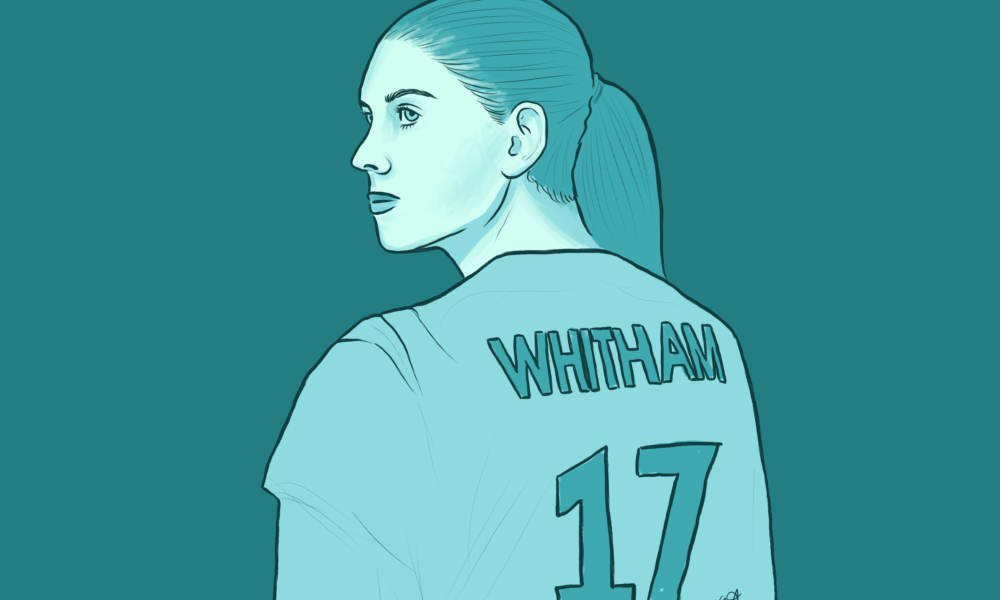
At just 14 years old, McKenna (Mak) Whitman has made history as the youngest player to ever appear in a National Women’s Soccer League (NWSL) match. She debuted for NJ/NY Gotham FC in their 2025 season opener against the Seattle Reign. A rising star in women’s soccer, Whitham has been a standout talent from a young age, earning recognition for her exceptional skills on the field. Signed just before her 14th birthday in July, she not only became the youngest player in NWSL history but also became the youngest athlete in any sport to sign a name, image, and likeness (NIL) deal with Nike

Whitman’s rapid progress as a professional athlete reflects a broader trend in the NWSL—more young players are breaking into the league, and there are currently over a dozen athletes featured on rosters this season who are under the age of 18. Whitham’s record-breaking debut depicts both the increasing opportunities for young talent and the new demographic of the sport.   

However, Whitham’s debut also sparks an important discussion about whether the NWSL’s current policies provide enough support for young players. The league has established safeguards—including pediatric medical evaluations, safety assessments, and long-term development plans—to help athletes who are under 18 transition into the professional scene. 

Despite these measures, fans and parents have concerns. Competing in such a physically demanding league against experienced professionals presents risks, from physical injuries to mental and emotional fatigue. A 2019 study found that 35 per cent of elite athletes experience burnout, depression, and anxiety. While these young players receive structured support, managing education alongside a professional career, and handling the pressures of early commercialization are pressing issues.

The increasing presence of young athletes in professional sports raises concerns about whether players are being pushed into the spotlight too soon. While early talent development is crucial in competitive sports, the pressure of performing at a professional level as an adolescent can have lasting effects on an athlete’s physical, mental, and emotional well-being. The transition from youth soccer to the NWSL is not just about skill level but also about handling media attention, sponsorship deals, and the weight of audience expectations. With a plethora of different media platforms using their name as a buzzword and the inevitable negative criticism that comes with this career path, it is easy to see how this could negatively affect an athlete’s mental health.

With 13 minor players joining the NWSL since 2024, it is evident that the youth are starting to make their mark on the league. While athletic success at such a young age is a remarkable achievement, it often allows players to put less focus on their academic careers as they know they can secure their future through athletics. This approach may seem pragmatic but it is not without its risks: If the athlete gets injured or is dropped from their team, they would not have the safety net of higher education to use as an alternate path. The NWSL must take the protective measures needed to ensure that young players’ studies are also prioritized, alongside their athletic journey. 

The NWSL and other leagues must continue refining their policies to strike a balance between fostering young talent and ensuring the players’ long-term well-being. Going forward, the fan community must appreciate not only the immeasurable talent of young athletes, but also recognize the hardships and added stress they endure. As a fanbase, it could be as simple as not engaging with any form of public scrutiny or criticism directed towards the athlete and being aware of the toll excessive media and attention can take on an individual. As the trend of younger players entering professional sports continues to grow, leagues, teams, and sponsors must see and take responsibility for the holistic approach needed to ensure young athletes’ well-being.

Read the latest issue

Read the latest issue