Latest News

Private

Top tastes: The highest-ranked Beli users at McGill

In 2020, Judy Thelen and Eliot Frost created Beli, an app that allows you to rank restaurants you’ve been to. Activity tracking apps such as Letterboxd and Strava have exploded in recent years, but Beli has something a little different from them all: Leaderboards based on your location. The number of restaurants you’ve visited in your life is quantified and ranked against others in your city or against your friends. What’s more, there are individual leaderboards for universities, so you can finally confirm who has the most refined palette on campus. Currently, on the overall ranking board, McGill ranks 44th amongst all participating schools, with NYU dominating at first place.

The Tribune talked to three high-ranking Beli users at McGill to understand what they love about food, the app, and, of course, being really good at eating.

Ella Waxman, BA’ 24, is the number one user in the McGill circuit and Montreal, with almost 1000 restaurants logged on her account. Waxman shared how she first got involved with the platform.

“I started using Beli two and a half years ago when my friend introduced me to it,” she explained to The Tribune. “Initially, it was a competition between us two, but I’ve been grateful to grow up on the periphery of the food industry—my dad used to design menus for restaurants, and then I worked in a couple bars and designed a couple cocktails so I’ve always loved everything food-related.”

However, Waxman stated that her logging activities began long before Beli’s inception, where her reviews took a more traditional character.

“Back in the day, I got into Foursquare, and I used to become a mayor of a place on Foursquare, so I definitely started going to places and ranking them before the existence of Beli.”

Foursquare, an online city guide that showed places to eat, drink, shop, or visit based on insights from fellow users or local experts, shut down its app in 2024. On it, users could follow other people, suggest new places to visit, post reviews, offer insider tips and ‘check in’ to the app when visiting a venue. A “mayor” in Foursquare was a person who checked into a place the most.

Kasen Korstanje, U2 Arts and one of the top 10 users at McGill, wrote to The Tribune about how Beli has helped him think more critically about food.

“Trying new food doesn’t only open you up to a whole world within food, but I think it connects you with everything around you,” he wrote. “The memories associated with food are super powerful, and trying new foods makes space for more memories to be made and more possibilities to reach back to the past and remember life through food.”

On a similar note, Waxman echoed the importance of using the app to stay in touch with friends.

“Starting at a young age, connecting over food was always a huge deal because of my upbringing. Getting to share that part on an app—now that I’m living away from home, I can see what my friends are up to and connect with them.”

Finally, each interviewee shared their opinions on Beli’s leaderboard system. Waxman confessed that her competitive nature fuels her logging.

“I’ve always been a very competitive person; whether it’s extracurricular, academic, professional—it motivates me. Currently, I’m the number one user in Montreal, I think for over a year now, and around 780th in the world,” she said.

Korstanje, on the other hand, did not feel as intensely and shared he instead uses Beli as a source of inspiration for what restaurant to try next. 

“I love looking at everyone on the McGill leaderboard and getting inspo for where to go out and eat next,” he wrote. “For me, trying new restaurants is like a movie buff going to the movie theatre or an artist going to a gallery. It’s a way to get exposed to a form of creativity and expression. The food world is full of thinkers, creatives, and people pushing the boundaries of what food can be.”

Arts & Entertainment, Film and TV

Red lights on the silver screen

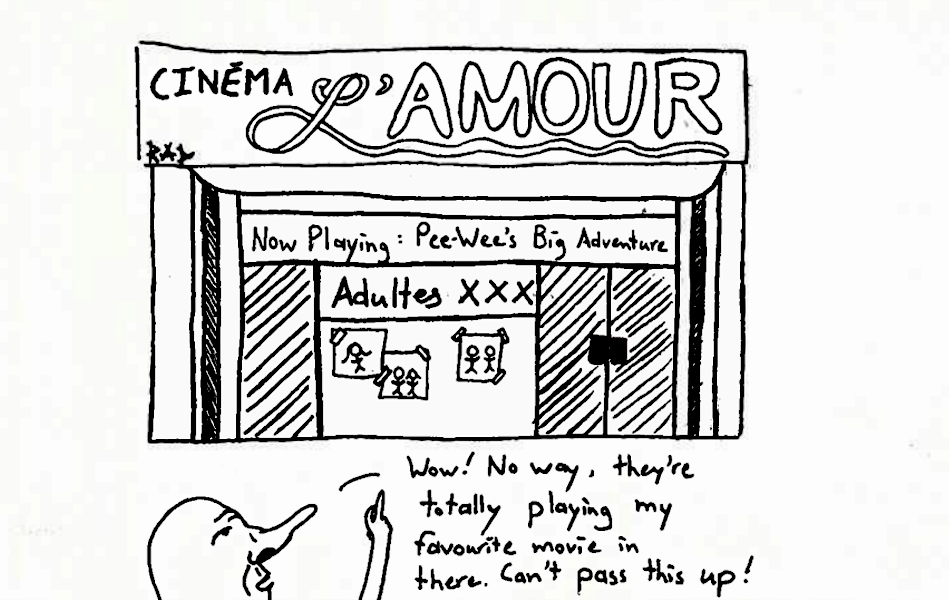
Hiding in plain sight, you might have passed it by once or twice. It’s whistling past the graveyard, tucked away beneath the fairyland starlight of St-Laurent: Cinéma L’Amour has become a defining symbol of Montréal’s modern adult entertainment industry—and one of the last Cinemas Libertins of its kind. 

In all its vintage grandeur, the cinema delivers on its promises as a discreet cruising location. Playing primarily 2000s hardcore pornography, the theatre embraces a nostalgic, no-frills approach to adult entertainment, providing a playspace for its community as long as consent will allow. The velvet seats are generously proportioned. Open daily from 11 a.m. to 11 p.m., admission for visitors (who must be 18+) is $16.50 CAD—with free-entry promotions for couples all day on Mondays and Tuesdays and evenings on Thursday. The cinema also offers free-entry promotions for trans women on Wednesdays. Whether you come for the films, the atmosphere, or even just for a good time, L’Amour is good company to have on a red night out. 

A frequent patron who wished to remain anonymous spoke to The Tribune about L’Amour’s significance to trans women in particular. 

“The alternative is to meet these random strangers at their apartments or nearby parks; it’s scary. This space makes me much more comfortable,” they said.

Built in 1914, the building was originally a Jewish Vaudeville theatre called Le Globe; the theatre played Yiddish films during the 20s and 30s, undergoing its first renaming to The Hollywood in 1932. In 1969 it was turned into a location for the American adult theatre chain Pussycat. By 1981 Cinema L’Amour was officially established as it exists today, now a small three-generation family-run business.

At one point in time, there were actually two such cinemas: One in Montreal, and another just across the bridge bordering Ontario. As a result of differing provincial adult content laws, each film had two editions—one explicit, one heavily edited. With Ontario imposing stricter restrictions, many Ontarians would travel to Montreal just to see the unedited screenings.  

A regular of 10 years who wished to remain anonymous noted the familiarity of the crowd. 

“It’s not uncommon to see some old and new people every week. I met a colleague here once,” he admitted with a laugh. “It’s one of those things where you just give a nod and move on.” 

Unlike Entre Nous 2, another popular swinger venue that was forced to close down due to lack of business during COVID-19, Cinema L’Amour has only grown in popularity since the pandemic.

The resurgence of interest in adult venues reflects a broader shift—one that has been years in the making. Long before the pandemic, the opening of L’Orage, a Montreal swinger lifestyle club, marked a pivotal moment in Montréal’s history, redefining Québécois liberal attitudes towards sexuality. As the first club in North America to accept swingers into a private play area, the club became the centre of legal controversy after a 1998 police raid led to 41 members being charged with public indecency. This marked the beginning of a landmark court battle that would redraw the limits of public decency. 

Though initially convicted at lower courts, Jean-Paul Labaye, owner of L’Orage, was given a favourable ruling after appealing to the Supreme Court in 2005, reshaping Canada’s obscenity laws and establishing a framework that defines indecency not by moral standards but by context, consent, and potential harm.  

A fact often overlooked about Montreal is that it ranks third in terms of global adult film production, just behind Los Angeles and Amsterdam. In fact, it is the birthplace and headquarters of MindGeek, renamed Aylo—the parent company behind Pornhub, Brazzers, XVideos and many other pornography subsidiaries. 

One insider who wished to remain anonymous spoke on the importance of these types of spaces to the local community.

“There aren’t that many third spaces today, they’re dying out,” X said. “A lot of people here treat it like their home because for many people it kind of is their home.” 

Montreal’s unique cultural profile has long placed it at the forefront of sex liberalism in North America. With its progressive and defiant spirit, the city is actively pushing the envelope when it comes to reimagining what a city’s role might be in acknowledging sex work and legitimizing adult entertainment as an integral component of personal freedom.

Arts & Entertainment, Fashion

Angie Larocque brings Godfather chic to Paris Fashion Week

There is no such thing as “too dramatic” in fashion designer Angie Larocque’s world. Speaking to The Tribune from her car, she exudes both the glamour and grit that define her work. This year, from March 3 to 11, she represented Quebec on one of the biggest stages in fashion: Paris Fashion Week.

For Larocque, the moment was monumental. 

“I am the only Québecoise designer at Paris Fashion Week this year, though there was one a couple of years ago. It’s rare,” she said. “I am feeling very privileged, very lucky, very proud.”

Born in Gaspésie, Larocque draws inspiration from the rugged coastline and vast waters of her hometown. She speaks passionately about the untapped talent in the province, believing that Montreal’s rich artistic culture will, over time, carve out a larger space on the global stage. 

“There is a smaller market [in Quebec], and there are many designers and artists who have a lot of talent that is not appreciated here, so they leave,” she explained. “The cost of producing in Montreal is higher, but I feel it’s important to give work to our community.” 

Larocque’s 2025 collection is a love letter to cinematic drama, particularly The Godfather. The old-school mafia aesthetic—luxurious, sensual, and intense—feels like a natural fit for her.

 “I love the darkness, the passion, the fire,” she said. “Last year’s collection was all about drama […] this one is about love and loss.”

Her designs are steeped in a sense of fatal romance that is unmistakably Larocque’s. Black, red, and white dominate the collection, with each colour and fabric chosen deliberately. 

“Black lace is for the darkness, the drama,” she says. “Red is passion, fire. White is love.”

Larocque’s dresses celebrate the woman’s form with corsetry, sensual silhouettes, open backs, and lace detailing. Beyond beauty, she wants her clients to feel powerful.

 “When women wear my dresses, they feel sexy and confident, empowered,” she said. “That’s what matters.”

Though haute couture is often seen as exclusive, Larocque embraces its focus on craftsmanship. In fact, it’s what drives her passion: Working one-on-one with clients to compose a personal piece of art that captures the client’s “aura.” Her bridal gowns, in particular, are intimate projects. 

“It’s special,” she said. “Choosing the fabric, the details—living that moment with them.”

Larocque has always known she was meant for fashion; she laughs as she recalls sketching designs into the margins of her notebook instead of paying attention in math class. At first, she pursued hairdressing and makeup, working on film sets and in theatre. But the pandemic forced her to reevaluate. 

“I had a child, and I was buying local clothes for my son,” she said. “And I thought, ‘Why am I not doing this myself?’”

She began with the children’s clothing brand Biggismall, and within one year, she transitioned to high fashion. However, success in fashion is no easy feat; for Larocque, it’s all about intention. 

“I work three jobs, I’m a mom, I sleep four hours a night,” she highlighted. “I never stop […] You have to manifest it. Write down your goals. Take baby steps. Nothing is impossible.”

Though Paris has been a dream, Larocque is focused on what’s ahead. She’s planning her own event—separate from Montreal Fashion Week or Montreal’s Mode, Arts, Divertissement  (M.A.D.) Festival—to make sure her work reaches a local audience and stands apart from mainstream fashion. Larocque’s independent approach isn’t just about showcasing her work; it’s about shaping a distinct identity that aligns with the bold, confident women she designs for.

It’s unsurprising that her dream celebrity client is someone who exudes this vision: Angelina Jolie. “Or Eva Green. Monica Bellucci,” Larocque said. Her creations are made for the femme fatale—women who are striking, confident, and undeniably daring.

Daring: Much like her dresses, and much like Larocque herself. The world of fashion may not yet fully recognize Quebec’s talent, but with designers like Angie Larocque, that’s bound to change.

Science & Technology

Energy poverty in Canada demands political attention

With 20 per cent of Canadian households facing energy poverty—when individuals lack reliable and affordable access to energy services—it is surprising how little political and research attention this social issue receives.

Motivated by this research gap, Mylène Riva, an associate professor in McGill’s Department of Geography, and her collaborators set out to identify hotspots of energy poverty in Canada and the socioeconomic factors driving them.

“Energy poverty is a situation that happens when people cannot access enough energy services at home to meet their needs, maintain healthy indoor temperature, and live in dignity,” Riva explained in an interview with The Tribune.

In their study, Riva and her collaborators first determined Canada’s geographic distribution of energy poverty at the municipal level using data from the 2016 Canadian Census. The study uses two common thresholds to define households as energy-poor: The narrower one was spending more than 5.4 per cent of their total income on domestic energy services—a figure that is twice the national median—while the more conservative benchmark was 10 per cent—a common figure used in other countries.

The authors found that clusters of energy poverty—localized areas with characteristically high energy poverty—are not evenly distributed across the country.

“When we look at the spatial clustering, we see that [energy poverty] is especially problematic in Atlantic provinces, Ontario, and the northern parts of provinces,” Riva reported.

Nearly two million Canadians live in municipalities classified by the study as energy-poor. However, this figure is likely an underestimate, particularly in urban areas where many renters have utilities included in their rent, making energy costs more challenging to track.

Next, the researchers identified socioeconomic, demographic, and housing factors underlying energy poverty. They found that older populations, higher unemployment rates, lower incomes, and old or unaffordable housing were all associated with increased energy poverty. Rural municipalities were also more vulnerable.

Although the study did not explicitly analyze energy prices, the researchers suspect regional differences in the cost of energy may contribute to disparities. Atlantic Canada and Ontario, where energy prices are high, appear to correlate with elevated levels of energy poverty.

These findings highlight geographical inequalities in energy access and have strong policy implications.

“Energy poverty and climate change are happening in the context of the severe housing shortage and housing affordability crisis in Canada,” Riva said. “So, there should be more effort to build affordable housing, but also housing that is energy-efficient. There also are a lot of investments in improving the energy efficiency of houses.”

Beyond housing, policies such as increasing the minimum income and capping electricity prices could substantially benefit people facing financial hardship.

“My hope is that this research and others that look at energy poverty across Canada bring this issue a little further up on the policy agenda,” Riva said. “In a country like Canada, it is unacceptable that 20 per cent of households are potentially facing energy poverty.”

Moving forward, Riva advocates for future research on the impacts of energy poverty in the summer. So far, she has investigated this topic in Nova Scotia and Quebec from a health perspective.

“Through research that we have done in Bridgewater, for example, we see that people living with activity limitations or chronic health problems are more likely to experience energy poverty,” Riva said. “They also might be more disproportionately impacted by the health effects of living in cold dwellings [in the winter] or hot dwellings in the summer.”In the face of climate change, Canada plans to transition toward more sustainable energy. To make a just transition, Riva emphasized that we must consider the differential impacts that policy decisions can make on various groups: The energy sector should focus on social equity and address the needs of vulnerable people, who often deal with socioeconomic challenges beyond energy poverty, during the transition to cleaner energy.

Editorial, Opinion

Quebec’s potential ban on public prayer epitomizes the hypocrisies of selective secularism

With the announcement of a new committee on secularism, the Coalition Avenir Québec (CAQ) government is poised to tighten restrictions on religious expression, especially through the expansion of Bill 21—a 2019 law barring public employees from wearing religious symbols—and a potential ban on public prayer. The CAQ committee will assess how public institutions have implemented secularism since the bill’s enactment, and whether this implementation aligns with the province’s vision of secularism.

Quebec’s secularist policies have their roots in the Quiet Revolution, when the government reduced the role of the Catholic Church in public institutions both due to the church’s corruption and inefficiency during the Grande Noirceur and as a strategy to modernize Quebec’s economy and education system. Today, however, secularist legislation increasingly targets and disproportionately harms religious minorities while being justified under the guise of neutrality. Muslim women who wear the hijab are particularly injured by these policies, as exemplified by the banning of religious symbols and dress in public institutions. 

Religious groups whose attire is integral to their faith—including Sikh turbans and kirpans, Jewish kippahs, or hijabs—bear the oppressive weight of Bill 21’s regulations. Given that wearing a headscarf is, for many Muslims, a compulsory act of faith, the ban dangerously undermines the freedoms of religious practice. By contrast, Christian symbols, such as the famous Mount Royal cross, remain neatly exempted from the ban, as the bill contains a clause permitting religious symbols in public spaces if they represent a component of Quebec’s cultural heritage. As a result, the province’s Christian history is given preference and is permitted to persist publicly, a further testament to so-called “neutrality” as a facade for religious discrimination and xenophobia.

With the CAQ’s latest committee, restrictions are set to tighten even further, including potentially expanding prayer restrictions beyond public institutions to all public spaces. Quebec Premier François Legault has cited instances of Muslim Montrealers praying during pro-Palestinian protests as justification for the ban, a rationale that, by portraying individuals who choose to practice their faith during protests as more disruptive, threatening, or extremist than their fellow protestors, isolates and racializes religious minorities. 

Restrictions on public displays of religion will also only deepen the ostracization of religious minorities from public sector jobs, as they will be forced to either yield their religious expression or turn towards the private sector. As a result, the public sector will become increasingly homogenized and experience a stark drop in religious—and, by consequence, ethnic and racial—diversity. Such a blow to public sector diversity would not only disadvantage job-seekers but also undermine the quality of public services. Diverse employee backgrounds are imperative to ensuring public institutions comprehensively serve groups of all demographics. 

Such barriers to entering the public sector pose a particular risk to Quebec’s non-Christian immigrant populations, exacerbating cycles of mistreatment rooted in Canada’s already racially-exclusive history of immigration policies. Education policies further exemplify this discrimination, as Quebec offers in-province tuition rates for students immigrating from France and Belgium, nations with which the province has built relations of reciprocal tuition benefits. However, Quebec has not formed equivalent relations with French-speaking African nations, effectively excluding students from these countries from accessing reduced tuition. Together, these patterns of mistreatment for religious minorities reflect how the CAQ government has privileged its white, Christian population at the cost of minority groups, all while framing their actions as neutral. 
Quebec must end its use of secularism as a justification for discriminatory treatment of religious minorities and welcome diversity back into the public sector. Being exempt from Bill 21 and the proposed prayer ban, McGill has the opportunity to serve as a model for other institutions in Quebec by providing support for religious minorities within its faculty and student body. Particularly given the university’s international and religiously diverse demography, McGill must affirm its commitment to freedoms of religious expression on campus by reminding students that they are welcome. McGill has a responsibility to create spaces for religious minorities to safely and comfortably practice their religions, as well as to properly advertise and distribute existing resources through events and programming. In collaboration with student groups representing religious minorities on campus, McGill must offer support and allegiance to its future graduates, many of whom would be painfully disadvantaged by the work of this secularism committee.

Art, Arts & Entertainment, Film and TV

What we did not like this break

The Arts & Entertainment section has decided to complain. We present an attack on architecture, travel entertainment, and terrible takes on television.

The CN Tower – Kellie Elrick, Arts & Entertainment Editor

I do not like the CN Tower! Visiting Toronto over reading week, I stood in King’s College Circle, admiring the oaks and arches and widow’s walks and—eurgh! There it was. It’s grey and bland and phallic (the positioning of the Rogers Centre does not help). I have no desire to go up the CN Tower, and I don’t want to rotate while I eat. Towers, in general, do not do much for me. The only tower I have climbed is the Tour Montparnasse, which is objectively not a very good tower (although perhaps one of the benefits of these aesthetically abominable towers is that once you’re inside, you don’t have to look at them). It feels wrong to bash a Canadian monument right now—and I do take great comfort in the fact that it’s taller than any tower in the United States—but the fact remains. Fucking ugly tower.

The (lack of) TVs on planes – Charlotte Hayes, Arts & Entertainment Editor

Look, I know everyone on the plane has a phone. And I know every one of those phones can download hours of Netflix, perfectly tailored to their taste and flight time, but I’m still mad about it. Where did the little seatback TVs go? What am I supposed to do when my phone inevitably dies after I spend three hours calling my mom because I got to the airport way too early? My readings? Don’t be ridiculous. The sacred art of the plane movie is disappearing before our very eyes. Future generations will never know the unique joy of flicking on that tiny screen and settling in for a mid-budget action-romcom—the kind you almost saw in theatres but never quite made time for. Sure, with a streaming service, I can curate my movie selection to match my taste exactly (and avoid awkwardly fast-forwarding through some risqué content with a child seated behind me), but it’s just not the same. The joy is entirely lost if I know what movies are available even a second before I’m in my seat. It’s a real tragedy.

TV isn’t real life—and that’s the point – Yusur Al-Sharqi, Managing Editor

Nothing on Earth irritates me more than the imbecilic complaint that “this would never happen in real life.” Okay? And?

Over the break, I heard from several people they disliked certain TV shows because they were “unrealistic”—Grey’s Anatomy, Euphoria, even Gossip Girl. But do you really want to see what the life of a surgeon or a high school student is like? Do you want to spend six hours standing in an operating room, elbow-deep in bloody intestines, or in a classroom watching a bunch of teenagers scroll through TikTok for an entire school day? That’s your prerogative, I guess… but personally, I love the drama. 

The most absurd criticism I heard was that Keeping Up with the Kardashians isn’t realistic. No kidding. The show is a meticulously staged, champagne-soaked fever dream—and that’s what makes it a work of art. You can’t airbrush your face in real life, but Kris Jenner’s flawlessly digitally enhanced face on my screen? Iconic. If you’re looking for reality, then maybe reality TV isn’t for you.

The point is that TV isn’t meant to reflect our everyday lives. It’s made to entertain, captivate, and sometimes be totally absurd. While I’m escaping reality in the plane crashes and hospital shootings and cocaine-laden parties that grace my screen, you realism-lovers can go pay bills or wait in traffic for an hour. Enjoy that!

For favourable takes and recommendations, see our previous articles on ‘What we liked this break.’

Science & Technology

What makes a runnable city?

Curating a culture of active living is central to achieving the United Nations’ Sustainability and Development Goals (SDGs), specifically SDG 3, healthy living, and SDG 13, climate action. Active living is a lifestyle that promotes physical activity as an integral part of daily life—whether it be cycling to work or choosing to walk instead of drive—which has been shown to improve health and boost creativity. 

However, creating societies built around active living goes beyond convincing everyone to take up a recreational sport. The infrastructure itself significantly influences the exercise choices people make. 

This relationship was recently explored by Grant McKenzie, associate professor in McGill’s Department of Geography, whose paper in the Journal of Transport Geography analyzed the effects of infrastructure on running habits, in particular focusing on the gender divide in recreational running.

“We looked at some spatial and temporal patterns, and we also looked at some regressions to basically tell us what factors in the built environment, as well as socioeconomic and demographic, contribute to where men and women would choose to run,” McKenzie said in an interview with The Tribune. 

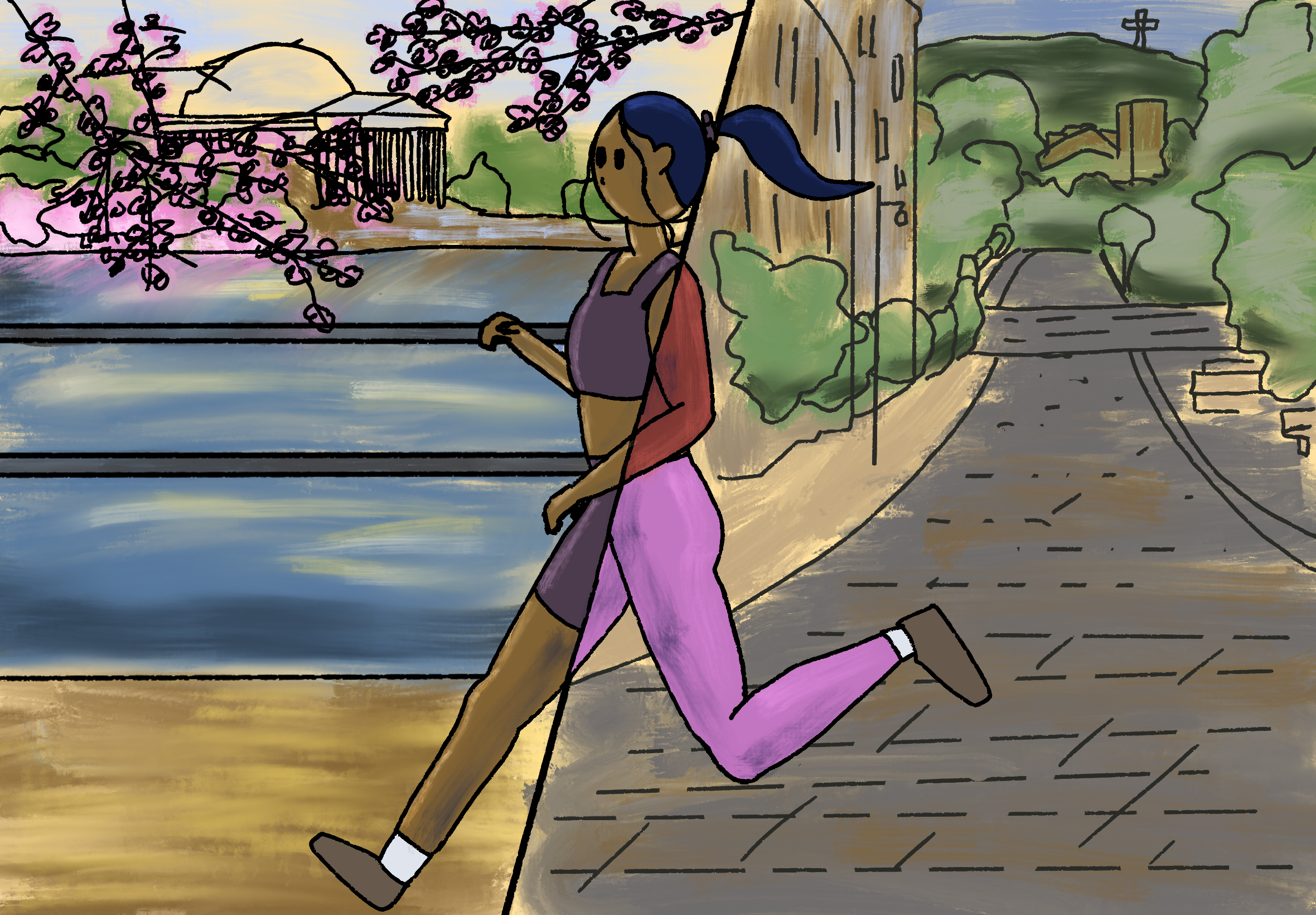
Using data from Strava, an exercise-tracking app, McKenzie analyzed the habits of recreational runners in Washington D.C. and Montreal. His research supported previous findings—there is a clear gender divide in where and when people choose to run—but also provided new insight into the role infrastructure plays in these decisions.

While it was not surprising that women are more likely to run during the day than at night, the difference was more profound than expected, with only 8.8 per cent of running activities conducted by women in Montreal during the night—compared to 13.1 per cent of running activities by men.

“We looked into a couple cases in Montreal to find certain areas where there was a dominance of women running during the day, and then that completely disappeared, and [that same area] was more dominated by men in the evening and night,” McKenzie said.

While the presence of women runners decreased in some areas after nightfall, other areas saw an increase in women runners at night compared to during the day. Infrastructure played a key role in these patterns. 

The study found that at night, women preferred routes near bike lanes, parks, and public landmarks, illustrating how city design influences perceptions of safety.

“There’s a lot of evidence and research on things like street lights: Having street lights and having homes with their outdoor lights on has a big impact on where people choose to walk and the perception of safety in a neighbourhood,” McKenzie explained.

Interestingly, while McKenzie’s team initially hypothesized that crime levels would dictate where women ran, they found only a weak correlation. Instead, the perception of safety was a stronger determining factor.

“There’s some background from the social psychology literature on this: That crime actually isn’t a representation for perception of safety, and so perception of safety and crime are actually very different beasts,” McKenzie said.

These findings highlight the complex factors necessary to address to make active living accessible to all.

“A lot of [our findings] have big implications for how we organize our public space. We’re helping to answer what it means for public policy to encourage development, safe spaces, and the development of neighbourhoods for active living, and a lot of this work is aiming to help that discussion,” McKenzie explained.

Ultimately, this work amplifies the voices of those who rely on active transportation. In North America, cities are largely built around private vehicles, often overlooking the needs of pedestrians and cyclists. Addressing these gaps is key to the creation of truly accessible and vibrant urban spaces.

Arts & Entertainment, Film and TV

Best and worst moments from the 2025 Oscars

Daniel Blumberg wins Best Score for The BrutalistAnnabella Lawlor, Staff Writer

A stark clanging of percussive metal counts two eighth notes and one whole note. The plucked guts of the piano’s strings shudder in the stark wind, amongst a wave of tremendous brass. Softly grazed piano keys twinkle beneath the monumentality of Daniel Blumberg’s industrial soundscape for The Brutalist. The score, at first sentimental and triumphant, lures us into Brady Corbet’s vision of post-war American hope, revealing from its depths the landscape’s decay as it corrodes immigrant architect László Tóth’s fictitious ‘American Dream.’ 

Blumberg’s Oscar win for Best Score is one of the most well-deserved of the night. He renders every strike of marble, every treacherous spark, every severe structure of the film into towering melody. 

It’s also a win for London’s independent music scene. In his speech, Blumberg thanked the folks at Cafe OTO, a pioneering Dalston venue for avant-garde and improvisational music. A member of the OTO scene for over a decade, Blumberg brings its creative authenticity to the Oscars stage. By acknowledging his fellow musicians, he reminds us of the film score’s essence: A space for collaboration and melodic convergence.

A historic night for Costume Design – Isobel Bray, Contributor

Costume designers play an essential role in shaping a film’s visual identity, ensuring that every character—from leads to extras—fits seamlessly into the world of the story. This year, an actor from each nominated film took the stage to pay homage to the visionaries who dressed their on-screen personas, against a backdrop of colourfully sketched costumes from each film. From Glinda’s extravagant gowns in Wicked to the priestly garb in Conclave, each actor brought life to the diversity of skills exercised by their respective costume designers. This year’s presentation was a wonderful way to highlight these artists’ work, bringing well-deserved recognition to an often overlooked aspect of filmmaking.

This moment became even more special when Paul Tazewell, the costume designer for Wicked, made history as the first Black man to win an Academy Award for Best Costume Design. With a career spanning over 30 years in Broadway and film, Tazewell called the win “everything.” His attention to detail and love for the Ozian universe shone through in his designs, bringing a fresh but faithful touch to the beloved world of Wicked.

Adrien Brody and Halle Berry’s “payback” kiss—the new age handshake? – Bianca Sugunasiri, Staff Writer 

A notably scandalous moment of the 2025 Oscars was the “payback” kiss between Halle Berry and Adrien Brody (although I’m not sure that getting kissed by the Halle Berry can be considered payback). Brody, who won Best Actor this year for his role in The Brutalist, first won this Academy Award for Best Actor in 2003 for his role in The Pianist—which made him the youngest actor to ever win in that category. 

Undoubtedly, his inappropriate behaviour on stage overshadowed that achievement when he infamously pulled an unsuspecting Halle Berry into a forceful kiss as she presented him with the 2003 Best Actor award. Berry later noted in an interview that the kiss wasn’t staged, describing her thoughts in the moment as, “What the f— is happening.” 22 years later, Berry approached Brody on the pre-ceremony red carpet, jokingly apologizing to his girlfriend, Georgiana Chapman, before kissing him. Although there appears to be no bad blood between the actors, I just have to wonder…whatever happened to an old-fashioned handshake? 

Latvia wins its first Oscar – Charlotte Hayes, Arts & Entertainment Editor
Hollywood’s Biggest Night saw Flow, a breathtaking wordless animated independent film created on the free animation software blender, took home the prize for Best Animated Feature, beating out a number of heavyweight contenders from Disney and DreamWorks. On top of its triumph as an independent film, Flow marks the first time a Latvian film has won an Oscar, and to say Latvia was excited is an understatement. A statue of the film’s protagonist, a small black cat, was erected in the capital city of Riga, and the directors received a hero’s welcome with a celebration thrown in their honour upon their return to the country.

Conferences

Journalism In Crisis

March 22nd is The Tribune’s annual conference at Thompson House 3650 McTavish Street! Don’t miss out on industry focused panels, a practical workshop, and an inspiring keynote, all for free with catering.

Features

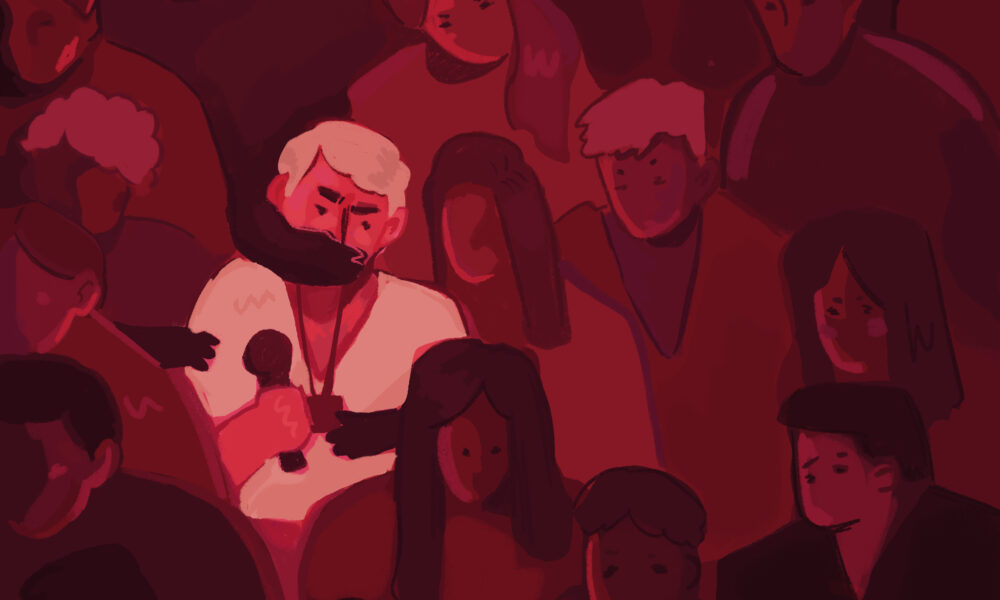
Under the neon lights: The paradox of Montreal’s nightlife

Freedom or a culture of harm?

Author: Malika Logossou, Student Life Editor

Recently, the news of Muzique closing its doors sparked public outcry. The club cited the change in the party scene as the reason for its closure; John Gumbley, one of the club owners, told CTV news that young adults drink and party less, a trend supported by statistics. Many lamented the club’s closure, fearing that the loss of the long-time Montreal staple would negatively impact the rest of the city’s club scene. Others felt indifferent, citing the club’s longstanding unsafe reputation. As Gumbley admitted to CTV news, “Muzique was like, I think, the last ‘boy scout’ of clubs where it was anything goes, and it was a bit on the raunchy side.”

Testimonies from undergraduates echo the consequences of the ‘boys’ club’ atmosphere.

 “From what I remember, almost every girl I know that has gone to Muzique has had some sort of bad experience with the guys there,” Anastassia Haidash, U2 Arts, wrote in a written statement to  //The Tribune//. “It has really been forever since I have heard of anyone I know going there for a night out because of bad experiences in first year.” 

Josephine Morchoisne, U3 Arts, who regularly goes clubbing, expressed similar sentiments.

“Even if we were with two guys, it wasn’t safe at all [….] I have never felt unsafe in a club except for Muzique,” she told //The Tribune//. 

Muzique’s reputation for being an unsafe club is well-documented, with countless negative reviews circulating on online forums and social media. Yet, often missing from these discussions is a deeper examination of why so many nightclubs—Muzique included—stay open until financial struggles, not safety concerns, force them to shut down. 

Reasons for going out

Clubs like Muzique follow an outdated model, where quality music, good service and decent drinks are not the primary mechanisms of attracting customers. Instead, policies like free or discounted entry for women are used to attract men partygoers, who are more likely to spend big on tables and bottle service. Not only does this create an environment within the club where men behave creepily, but this approach reinforces the idea that women clients exist to attract men, reducing them to commodities rather than clubgoers in their own right. Clubs also fail to enforce strict anti-harassment policies and remove known offenders. This reflects a nightlife industry that prioritizes profit over people by objectifying women and treating harassment as an unfortunate but unavoidable consequence. 

Thousands of women go clubbing every night. Many enter these spaces with excitement, seeking a fun night out with friends. Others are influenced by the romanticization of nightlife or the desire to fit in.

“It is most definitely for social reasons [that I went clubbing],” Haidash wrote. “At the beginning of first year, I had this picture in my head of what clubbing was like (definitely because of movies), and I was excited to go, but after maybe a week of university starting, I only went out to try and fit in and make friends.”

For some, clubbing represents a step into adulthood.

“Two years of pent-up COVID solitude made clubbing sound like the purest essence of going out. As downright corny as it sounds, going to Café Campus truly felt like a sign of no longer being a teenager who relied on house parties and siblings to get drunk,” Gilad Maianski, BA ‘24, explained in an interview with the //Tribune//.

The cost of participation

The cost of clubbing extends beyond entrance fees and overpriced drinks. For many women, it requires a constant state of vigilance—an unspoken understanding that harassment is not an anomaly but an inevitability. 

“Women getting taken advantage of and disrespected on a night out is disgustingly common,” Haidash wrote. “From getting repeatedly spoken to to getting grabbed, touched, etc, it happens pretty much every night out.”

Elise Holbrook, U2 Music, has had similar experiences, and highlighted how blurred the concept of consent becomes in a club setting.

“You just make eye contact with [men] and maybe start dancing with them, and then they think they can grind on you and bite your neck—like, that happened to me,” Holbrook recalled. “Even with the women, there wasn’t always consent exchanged. I never felt uncomfortable, but it’s still something to be aware of.”

“I don’t think I’ve ever gone out without being harassed at least once. Just last month, I had to jab a guy under the ribs on the Barbossa dance floor because him and his friends kept kicking us and trying to mosh,” Estora Marshall, U2 Arts, wrote to //The Tribune//. “I think at a certain point you get used to it: You’re never going to have fun in Montreal without getting a thick skin and sticking up for yourself.”

Over time, the frequency of this persistent objectification fosters a more subtle, tacit problem: A troubling sense of resignation as women begin to perceive harassment as an unavoidable aspect of nightlife.

A search for safer venues

Growing intolerance for the handsy men on dark dance floors has led to a shift in club demographics, with young adults going to lesser-known clubs to escape harassment. 

“The places that I tend to go are a little bit smaller, [which] means that there’s not as many creeps, but maybe they don’t have as many resources and you don’t get that full clubbing, Charli xcx experience,” Holbrook said. “So you lose a little in the wildness, which is too bad, but sometimes it’s a compromise you have to make if you don’t wanna be creeped on.”

Morchoisne, who goes out two to three times a week, favours smaller clubs for the music and more welcoming social atmosphere. 

“I love house music, so my favourite club would be Flyjin [….] [I love Le Bar Baby] because […] it’s really well decorated, and just the vibe is nice to have drinks with friends and go dancing. And the most important thing is that the entrance is free in most places; even if you are on a budget, you can go out.”

Many queer spaces also offer alternatives to traditional clubs, creating a safer, more inclusive environment for 2SLGBTQIA+ partygoers. Venues like Club Chez Mado, Champs or raves like Latex provide diverse nightlife experiences, celebrating queer expression without fear of judgment or exclusion. However, queer spaces, often assumed to be safer alternatives, can also be sites of harassment. Many straight people seek refuge in these venues to escape predatory behaviour in mainstream clubs, inadvertently undermining the purpose of these spaces. As queer clubs become more widely attended, their original intent can become diluted, and the very people seeking “refuge” are met with the same dangers they hoped to avoid.

The clubs I feel safest in are those that are not advertised as gay but are frequented by gay people,” Marshall wrote to //The Tribune//. “Unfortunately, people now treat “gay clubs” as safety centres or “themed” experiences. I think all the straight girls started going to gay clubs because they thought that there wouldn’t be any creepy guys, causing the creepy guys to infiltrate the gay clubs in order to find the straight girls.” 

The current commercialization of gay clubs strips them from their original intent of providing a safe space for queer individuals. In doing so, it undermines their importance as inclusive spaces for self-expression and diminishes the authentic gay club experience.

Holbrook highlighted another troubling aspect of this shift: The objectification of queer women within these spaces.

“I’ve been to a few different clubs and had queer experiences at them and every single time I was perved on by old men who sometimes I had to push off by force […] and they thought that what I was doing with another girl was a spectacle for them.”

She also noted that harassment remains prevalent even in queer spaces, particularly when she is unaccompanied by men friends.

“Most people have experienced harassment,” Holbrook said. “I noticed a difference when I go with my male friends or not, regardless of the sexuality of my male friends. If they’re away from me, I’ll get harassed, especially in places like Unity.”

Despite this, many queer women still find gay clubs to be an improvement over more mainstream venues.

“I still feel safer in gay clubs, though, because it still does not compare to the risks of the bigger straight clubs. Protecting you and your friends from a couple creepy people is easier than trying to avoid hundreds of them,” Haidash added.

Where reporting mechanisms exist, they are often ineffective, placing the burden of safety on those most at risk to defend themselves.  This leads to a shift in the club scene with many patrons, in particular women and queer people, avoiding larger, mainstream clubs.

What can we do?

Overall, Muzique’s closure is a sign that young people are less willing to compromise on an uncomfortable or unsafe clubbing experience—they are willing to sacrifice a crowded dancefloor for better music, stylish venues, top-notch service, and a safer experience. Clubs should take note, and curate unforgettable experiences or cater to unique niches rather than continuing to use women to funnel as many men as possible into a massive venue. 

While clubbing remains a vital pastime for socialization and escapism, it should not come at the expense of personal security. If the nightlife industry is to be truly safe and inclusive, it must implement meaningful reforms. Club owners must enforce zero-tolerance policies, train staff to handle harassment appropriately, and ensure that safety takes precedence over profit. 

Beyond institutional accountability, social attitudes must shift. Students and young adults play a critical role in reshaping club culture—not just through public discourses or online reviews but by making intentional choices in where they spend their money. Voting with your dollar sends a clear message: If you don’t appreciate the environment or values of clubs where people are routinely harassed or mistreated, don’t give them your business. Instead, find places that align more closely with your values and support those venues so they thrive.


Read the latest issue

Read the latest issue