Latest News

Arts & Entertainment, Books

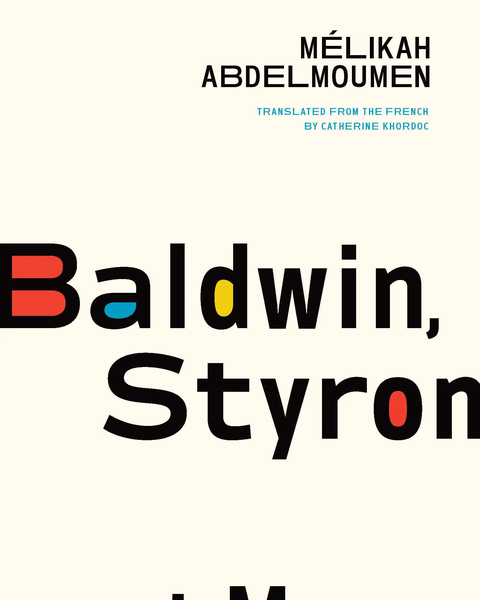
‘Baldwin, Styron, and Me’ is a contemplative exploration of converging identities

Cigarette smoke caresses the wooden beams of William Styron’s colonial Connecticut home. The piercing smell of whiskey drifts across the creaking pine floors. In the airy afternoons, one can hear the clacks of dueling typewriters, marking each side of the historic property as their own. But into these bristling nights, Styron and his houseguest, James Baldwin, find themselves in stimulating discussions: Arguing, compromising, and honing their literary precision into thoughtful exchanges on race, religion, and selfhood. As the grandsons of an enslaver and an enslaved person, respectively, Styron and Baldwin contemplate the nuances of whiteness and Blackness in 1960s America—exploring how writers can contribute to this cultural dialogue that shapes a shared history and what it means to exist in a racist world.

Québécoise writer and magazine editor Mélikah Abdelmoumen’s newly translated book, Baldwin, Styron, and Me, is a hybrid fiction-memoir that weaves the encounters between literary icons Baldwin and Styron—during Baldwin’s nine-month stay with the Connecticut author—into accounts of her own life in Quebec. Born to a Tunisian father and a Québécoise mother, Abdelmoumen navigates the complexities of her cultural identity in a Canadian province deeply tied to a unified, and now racialized, provincial selfhood.

Abdelmoumen explores the complex history of racial congruence through Baldwin and Styron’s relationship. She gives fictionalized dialogue to their encounters, illustriously assuming the literary voice of each author to imagine how they may have spoken to each other throughout their lengthy, conversational nights. It was during this stay that Baldwin encouraged Styron to embark on his new project, the novel The Confessions of Nat Turner. Told from the perspective of Nat Turner, an enslaved man in the Antebellum South, Styron took from the minimal written records of Turner’s life to tell the story of his rebellion against enslavement. Abdelmoumen describes the novel’s initial critical acclaim and subsequent critique. Whether Styron’s creative liberties accurately or respectfully depicted the internal experience of Black identity during slavery is still carefully debated

One writer featured in the literary critique Nat Turner: Ten Black Writers Respond, Vincent Harding, wrote,

“There can be no common history until we have first fleshed out the lineaments of our own, for no one else can speak out of the bittersweet bowels of our blackness.”

When Abdelmoumen’s Styron questions his ability to understand Blackness 100 years prior, Baldwin responds, “In the way that his story resonates in our time. Mine, and yours. By remembering that we are inextricably connected and that your story is my story and that my story is yours.”

Through these imaginations of the past, Abdelmoumen reminds that in the wake of tragedy and trauma, we can only heal our wounds through empathetic, understanding, and direct confrontation with this problematic past. At the same time, she questions to what lengths one could accurately explore the Black identity while using a privileged, white pen: How could Styron even begin to capture the intense legacy of racism and intersectionality in America?

This anecdote of the past seamlessly transports us into Abdelmoumen’s present: On her way home from work while living in Lyon, France one night, she was assaulted, mugged, and called a racial slur. She speaks of her experience as the “Other” in both Québécois and French society, as someone who existed within Quebec and Tunisia in cultural tandem. She also reminds her Québécois readers of the province’s recent spike in racial injustices and hate crimes.

Abdelmoumen posits that once we identify violence and ugliness for what it truly is, we can truly move forward—but not so fast that we forget the traumatic truths of the past. Through these literary explorations, we can listen to and learn from those whose experiences differ greatly from our own. It is in this space that Abdelmoumen realizes her own identity—not in rigid, definitive permanence, but as a fluid thing to be molded and shaped throughout time. 

“Following in no one’s footsteps, I chose my identity: It is not, nor will it ever be, fixed,” Abdelmoumen asserts.

McGill, News, SSMU

The Tribune Explains: SSMU’s new Memorandum of Agreement with McGill

On Feb. 28, the Students’ Society of McGill University (SSMU) and the administration signed a new Memorandum of Agreement (MoA)—a document outlining the two parties’ cooperation. Coming in at 118 pages long, The Tribune breaks down what students actually need to know about the new MoA, how it differs from the previous version, and why it matters.

What is the MoA?

The MoA is a crucial aspect of how SSMU operates. The SSMU is a student-run organization registered as a not-for-profit incorporated under the Canada Not-for-profit Corporations Act. Despite its independence from McGill, the terms of its relationship with the university are central to its functioning—defining its ability to operate on the McGill campus and for clubs and services to use the McGill name. 

Without an MoA, student clubs and services cannot legally use the McGill name or work out of the University Centre, fundamentally disrupting SSMU’s operations.

Typically valid for five years, the new agreement will remain in effect until May 31, 2029. This MoA includes a couple of key adjustments, including new requirements for hopeful SSMU executives and changes to how McGill and SSMU can resolve any Notices of Termination—formal announcements that either party wants to end the agreement. The MoA also includes details on the SSMU office’s upcoming move to the fourth floor of the University Centre. 

What are the new rules for SSMU executive and executive nominees?

Under the previous MoA the only requirement to run for a SSMU executive position was to be an undergraduate student who had taken at least 18 credits in the 18 months leading up to the election. The previous MoA also stipulated that all SSMU executives and Board of Director members would be subject to the Code of Student Conduct and Disciplinary Procedures, although there were no further details on candidates’ eligibility. 

Now, SSMU executives and directors cannot have a disciplinary record at McGill, an offence under the student code of conduct, or have been suspended from the university. 

How has the process of resolving MoA-related issues between McGill and SSMU changed?

The default clause in the previous MoA outlined that an “event of default” would occur if SSMU breached the MoA, its own constitution, Quebec law, or faced serious financial issues. In the event of default, the money “assessed by the University for [SSMU]” would be put into a trust fund overseen by representatives of both parties until the default was resolved. The new MoA no longer includes this clause. Instead, either party can now issue a Notice of Termination at any point, with the issue being taken to an impartial third-party mediator. 

To SSMU President Dymetri Taylor, this adjustment takes away some of the University’s financial power over student union in negotiations over default. 

“The reason for the change was more or less to give some leeway and have it be more of a conversation amongst equals,” Taylor explained to The Tribune.

Where are the SSMU offices going?

Currently located in suite 1200 of the Brown Building, the SSMU offices will be moved to the fourth floor of the University Centre following this school year, taking over suites 401 and 403-409. While most of the space is currently unoccupied, it includes the Club Lounge, the McGill University Photography Students Society office, and the Queer McGill library. The SSMU has yet to finalize where the clubs’ spaces will be relocated to, although he alluded that libraries from various SSMU services may be consolidated into a single space.

As for the current SSMU offices, McGill will take over the space to create more offices for staff on campus. According to Taylor, this is in part due to financial constraints that have forced the university to cut down on its external leases in and around Montreal. 

Commentary, Opinion

Canada must look to its own history—not the United States’—when forming solutions to the fentanyl crisis

First distributed in the 1960s as an intravenous anesthetic, fentanyl is a synthetic opioid 50 to 100 times stronger than heroin. As one of the world’s most frequently used opioid analgesics, fentanyl’s high potency poses a severe risk of overdose, particularly when consumed unknowingly through dealer lacing.

With a mere kilogram of smuggled fentanyl capable of killing over 500,000 people, the drug has emerged as a popular subject of the border control discussion, particularly as it provides a pretext for U.S. President Donald Trump’s tariff threats. On March 4, the U.S. imposed a 25 per cent tariff on Canada and Mexico, as well as a 20 per cent tariff on China, a known source of fentanyl’s component parts

With demands for heightened international action to address fentanyl trafficking, Canada is facing a crucial turning point: Will the government follow the U.S. approach, built around law enforcement and criminalization, or adopt a harm reduction strategy rooted in Canada’s own history of progressive drug policies?

Although Trump’s claims of a severe fentanyl trafficking problem are false, with only 0.2 per cent of all fentanyl intercepted at US borders actually coming from Canada and more drugs flowing from the U.S. into Canada than vice versa, the Government of Canada has strategically prioritized addressing the fentanyl trade to stop tariffs. Hoping to appease the Trump administration, Canada appointed Kevin Brosseau as Commissioner of Canada’s Fight Against Fentanyl, or “Fentanyl Czar,” on Feb. 11.

Additionally, the Government of Canada has followed the U.S. in classifying Mexican cartel groups as terrorist organizations, despite cartel groups lacking the characteristics of genuine terrorist activity, which is defined as politically, religiously, or ideologically motivated. By contrast, cartels lack symbolic governance targets, and are instead profit-driven. Attention towards cartel groups as key participants in the fentanyl trade is crucial, but inaccurately terming cartel activity terrorism will lead to unreasonably punitive justice outcomes

We know from experience. In the 1970s, former U.S. President Richard Nixon attempted his own War on Drugs—a series of policy initiatives intended to destroy the illegal drug market by increasing prison sentences for dealers and users. His overly punitive laws left vulnerable and impoverished groups subject to mass criminalization, death penalty sentences, and increased long-term health risks. The War on Drugs was also intimately tied to race. Policies like the Smoking Opium Exclusion Act disproportionately persecuted Chinese immigrants, while the hyper-criminalization of crack relative to cocaine punished traditionally Black crack-users more harshly than traditionally white cocaine-users, serving to both reflect and reinforce systemic racism. Now, as the War on Drugs experiences a revival under President Trump, Nixon’s racist and despotic drug philosophy is at risk of spreading to Canada.

To avoid mimicking the punitive U.S. model, Canada must lead by example through the implementation of harm reduction strategies for the fentanyl crisis. Such an approach would not be foreign, either: Canada’s public health strategy has deep historical roots in harm reduction, with Montreal, in particular, being a pioneer. With CACTUS Montreal—established in 1989—hosting one of the first needle exchange programs in North America, the city has served as a hub of enlightened drug policy. Now, CACTUS has expanded its services and received government approval, serving as one of four safe injection sites in the Montreal area. The sites offer a crucial space for people to use substances under medical supervision and with clean supplies. Plus, evidence shows safe injection programs reduce the risk of overdose, limit the spread of infectious disease, and create networks of trust between healthcare officials and those with addictions. 


Additionally, in 2016, Canada abolished the prescription requirement for naloxone—an overdose-reversal medication also known as Narcan. The government has also remained committed to providing naloxone for free to drug users and their families and friends. Together, these initiatives reflect Canada’s historical recognition of substance use as a public health issue rather than a criminal one. The country’s powerful reputation as a leader in harm reduction strategies should not be sidelined in the face of tariff threats; it should instead be amplified, serving as a foundation upon which Canada can continue building a productive and holistic response to the fentanyl crisis.

News, SSMU

Recap: SSMU referendum and executive election voting period extended after quorum fails

On March 7, the Students’ Society of McGill University (SSMU) delayed the closure of polls for the 2025 Winter Referendum and Executive Election for another week, as just 8.8 per cent of members voted, falling significantly short of the 15 per cent quorum. Polls were initially slated to close on March 7 at 5:30 p.m. but will now close on March 14 at the same time.

In a written statement to The Tribune, SSMU President Dymetri Taylor expressed disappointment that quorum was not met, but noted that the voting period’s overlap with Winter Reading Break from March 3 to 7 could have been a cause for the low voter turnout. 

“We were able to get 8.6 per cent in the first week, so had it been back-to-back weeks of school, we most certainly would have gotten to 15 per cent,” Taylor wrote. “This hasn’t been an issue in previous years; however, outreach and promotion could also be improved.”

Taylor then explained that one possible solution could be to establish a recurring, consistent voting period for the election and referendum that avoids overlap with reading week.

“That would mean we likely have to opt for a nomination period in late January and a voting period in the last two weeks of February,” Taylor wrote. “Overall, [the failed quorum] gives much to think about for improvements, for both the setting of periods and for the way elections are advertised.”

Among such services included in the referendum are questions on renewing the SSMU Menstrual Health Project Fee, which distributes free menstrual products on campus, and the Indigenous Equity Fee, which funds the work of the Indigenous Affairs Committee

Along with executive elections and service fee questions, three changes to the SSMU constitution were included on the ballot. One constitutional amendment stands to make the Vice-President (VP) Finance hired by the SSMU Board of Directors, rather than elected by students. The second constitutional amendment seeks to eliminate the position of VP Sustainability and Operations, reallocating the responsibilities of this role to other executives. The third change would remove Section 1.3 of the constitution, which SSMU argues will better protect the student union from litigation. 

Susan Aloudat, the sole candidate for VP University Affairs, believes that students may have “checked out” from following university issues when reading week began. However, Aloudat emphasized the importance of the referendum and election in SSMU’s operations. 

“I hope we meet quorum because operations for vital services and initiatives that every student rely on to some extent are counting on it,” Aloudat wrote to The Tribune.

A previous version of the article stated that the VP Finance would be appointed, rather than hired, by the SSMU Board of Directors. The Tribune regrets the error.

Science & Technology

Weekly Ozempic shown to improve control of type 1 diabetes

While both type 1 and type 2 diabetes involve issues with insulin—a hormone needed to absorb sugar from the bloodstream to produce energy—their methods of action are not the same. Type 1 diabetes (T1D) is an autoimmune disease in which a patient’s immune system attacks their pancreatic cells, thereby preventing the production of insulin. Type 2 diabetes (T2D), on the other hand, involves insulin resistance and a gradual loss of insulin production. 

For decades, management of T1D has revolved around insulin therapy, requiring patients to balance blood sugar levels by using automated insulin delivery (AID) systems while carefully monitoring diet and physical activity. 

However, a new study conducted by McGill researchers suggests that combining AID systems with semaglutide—an injectable medication that slows digestion, reduces appetite, and stimulates insulin release from the pancreas, known commercially as Ozempic—could help people with T1D gain more control over blood sugar levels while simultaneously using less insulin. This research marks a major step forward, as semaglutide has primarily been used for T2D and weight management.

Melissa-Rosina Pasqua, an assistant professor in McGill’s Division of Endocrinology and Metabolism, conducted this research with 28 T1D patients, observing the effects of semaglutide as an add-on therapy to AID. 

After 11 weeks of gradually increasing semaglutide dosage, followed by four weeks on full-dose treatment while using the AID system, the study found several key benefits from employing both treatments simultaneously. Patients experienced improved blood sugar control, spending 4.8 per cent more time within their target glucose range than a placebo group. 

Additionally, daily insulin requirements decreased by an average of 11.3 units, indicating a reduced need for insulin to manage blood sugar levels. Participants also saw an average of 5.3 kilograms of weight loss—a significant finding given the rising prevalence of obesity among individuals with T1D. Importantly, the treatment did not lead to a significant increase in hypoglycemia—when blood sugar levels are too low—which is a major safety concern for diabetes management. 

“This was in keeping with what we see in other populations using this drug, such as weight loss, blood sugar, less insulin, but it was nice to see it in T1D. Other similar drugs have been studied in T1D, like liraglutide, but never with this form of insulin therapy, and not with such pronounced effects,” Pasqua said in an interview with The Tribune

Even with AID systems, many people with T1D struggle to maintain stable blood sugar levels. Post-meal blood sugar spikes remain one of the biggest challenges for T1D patients, as rapid changes in glucose levels can be difficult to control. By slowing digestion and reducing the need for large insulin doses, semaglutide treatment may help prevent these extreme fluctuations.

“AID is great for overnight glucose control, but there are still issues meeting targets for daytime glucose, mostly due to meals. Semaglutide predominantly helped with this obstacle,” Pasqua said.

Despite promising results, Pasqua noted that additional research is needed before semaglutide can be widely recommended for T1D. Two participants experienced a rare condition called euglycemic ketosis, a state where the body produces ketones—a backup energy source—despite normal blood sugar levels. While this did not progress to serious complications, it underscores the need for further safety evaluations.

Additionally, some participants struggled to tolerate the highest dose of semaglutide, suggesting that personalized dosing strategies may be necessary. Future research will explore how to maximize benefits while minimizing side effects.

“It’s important to take the results with a grain of salt. This drug is not for everyone, and it’s still important to be careful of side effects,” Pasqua said.

For now, semaglutide remains an off-label option for T1D patients, but these results suggest that new treatments are on the horizon. With further research, a weekly injection could someday be a game-changer in diabetes care, offering more control over blood sugar, lower insulin needs, and improved overall health.

Arts & Entertainment, Books

Is ‘Percy Jackson and the Olympians’ a textbook for life?

If you had asked me at age 10 what I most wanted to be, I would’ve said a demigod. No series has ever commanded my attention and captured my affections the way that Rick Riordan’s Percy Jackson and the Olympians saga has. His world dances along the cusp of reality and fiction, stealing my imagination with no intention to return it. 

I fantasized about which godly parent might claim me, donning an orange shirt and brandishing a toy dagger. Riordan’s characters were my dearest friends and teachers, fostering bravery, cleverness, and kindness. I travelled from the entrance of the Underworld to the heights of Olympus, fought battles against Cyclopes and paddled across the River Styx without ever leaving my bedroom. I was privy to a world that no one else could see; so enamoured that during exams I painstakingly forced myself to lock away my beloved books, because how on earth could one be expected to study DNA strands when my darling characters were floundering in Tartarus

This March, back in my childhood bedroom, I revisited my favourite passages. Staring at the worn covers, I wondered what had entranced me back then. As I flipped through the lovingly dog-eared pages (book purists, please stay calm), the sentences bore the same effect that they had on me all that time ago—a world of magic and miracles just as vivid in colour as it was through young eyes, if not more. Revisiting Camp Half-Blood as an adult, I have a deepened appreciation for its complexity. 

I was drawn back by a particular passage in Riordan’s The House of Hades— an argument where Cupid forces demigod Nico di Angelo to confess his heart’s deepest secret. With more naive eyes, I had seen Cupid as a brute, a target of my impassioned anger. But reading it again led me to realize the character personifies an intrinsically real facet of love: The part that’s uncomfortable and terrifying, that strips you to vulnerability. 

The world of mythology walks the line between fantasy and fact, reflecting our day-to-day experiences through lofty quests and fated prophecies. It is because of this parallel that, for centuries, we have felt so strongly for these characters and recreated them age after age. Where other words might struggle to leave the pages of a book and take flight in imagination, mythology comes alive as if enchanted. 

This world of myth and magic followed me through to adulthood, turning my attention towards the Trojan War. My passion for Greek mythology passed from Percy to Patroclus when I read The Song of Achilles by Madeline Miller and wept over his tragic heartbreak. I became enraptured with the song “Achilles Come Down by Gang of Youths, a seven-minute depiction of Achilles’ psychological turmoil, as he’s choked by grief, hovering on a precipice. I was further enticed to read Margaret Atwood’s The Penelopiad, a beautiful blend of prose and poetry in the voices of Trojan War women long forgotten. 

The influence of mythology is timeless throughout art, literature, and performance. Everyone in the modern age has consumed traces of mythology, whether they are aware of it or not. So deeply ingrained in pop culture, it’s hard to notice its presence. It is in our common vernacular—Achilles’ heel, playing at Cupid. It’s in brands we use often: Nike, Amazon. Even Mythology-inspired media: If you’re a Swiftie, you’ve probably heard the song “Cassandra,” based on the myth of Cassandra of Troy. 

Elizabeth Ellison, Department Head of Classical and World Languages & Individuals and Societies at Elmwood School, gave the example of Finding Nemo in an interview with The Tribune. She often uses this as a gateway to introduce Homer’s  Odyssey. Traces of myths exist even in the archetypes that most stories are carved from today, from the oversexualized and underestimated Helen of Troy to the foolhardy and ambitious Achilles.

It is truly singular how mythology has transcended regions and time in this way. But why? Why is it that mythology delights and inspires, centuries after its inception? 

Lynn Kozak, associate professor of Classics at McGill University, suggested in an interview with The Tribune that myths allow for immeasurable multiplicity—infinite “fanfictions” reviving the same stories over and over. These core myths are so robust that no matter how many times they are reformed, much like the Ancient Greek monsters, they continue to attract attention. Within this variation, there are numerous gaps to fill and interpret, allowing for the easy proliferation of new stories. 

Ellison articulated some additional reasons why myths continue to captivate youth today. For her, the core of these stories is their humanness—and it is what draws us back time and time again. In the words of Homer’s Achilles, “[the gods] envy us because we are mortal, because any moment may be our last. Everything is more beautiful because we are doomed.” 

The gods are compelling because they are crafted to be sacred but never rise above human fallibility. Gods, heroes, and monsters alike have become the tropes constantly revisited through culture, their lessons acted out in centuries of art. We cling to them because it allows us to access timeless human elements, to adopt perspectives that provide clarity and connection.

Mythology is accessible not only in its content, but also its form: Storytelling. Ellison shared an anecdote of a time she was stuck on a bus in Athens and decided to share a well-known story to pass the time. Children and adults alike were at the edge of their seats, urging her to go on. Beyond the story itself, sharing it in this form paid homage to how myths were once propagated verbally— a form that, although uncommon, still captivates audiences today. It draws on the human desire for relatedness through imagination by skirting the edges of our reality and touching on the universal struggles and joys that bind us together. 

To consume mythology is to look into a mirror that reflects our own world; but that mirror soon becomes a portal to another world entirely. 

Ellison also notes that these modern reimaginings foster accessibility for young students, funneling them towards mythological interest. They play on children’s innate curiosity about the world, drawing them past the modern retelling back to history. Kozak seconds this notion, describing these interpretations as “gateway drugs”  to discovering the core myths. 

Although modern reimaginings can have wonderful effects, there can be a concern about becoming oversimplified in our adaptations— something that Kozak highlighted. They referenced a paper they co-wrote on Miller’s Song of Achilles, mentioning how it was almost too homonormative. Achilles and Patroclus’ romantic relationship was so clearly defined that it lost the relational complexity present in Homer’s Iliad. They intimated that revisions of ancient myths, particularly attempts to highlight silenced voices, can come at the expense of engaging with the aspects of those characters that already exist. Kozak mentions Atwood’s The Penelopiad as an example where the confident intelligence that typified Homer’s Penelope was eclipsed by something more martyr-like. 

Despite their flaws, I am eternally grateful for myth reincarnations as they’ve granted me both companionship and knowledge. From Orpheus and Eurydice, I learned to trust in love and oneself; from Daedalus and Icarus, to be mindful of hubris and to moderate ambition; and, of course, Hades and Persephone taught me never to accept pomegranates from shadowy men. All equally valuable morals. 

Mythology is a tie that weaves through time and space to bind us. It connects us to history, childhood, and one another. I hope to return to Camp Half-Blood one day, as I know there are infinite adventures to be had and numerous lessons to be learned. But for now, I leave you with the words of Nico di Angelo: “With great power comes… great need to take a nap. Wake me up later.” 

Science & Technology

How elite coaches navigate adversity and sustain success

What does it take to win consistently at the highest level of Olympic and professional sports? While a growing body of research is examining serial winning coaches—those who have led teams and athletes to gold medals and championships over extended periods—most studies have focused exclusively on their triumphs, leaving a critical gap in understanding how they navigate periods of adversity.

In light of this, Madison Fraser, a researcher at the McGill Sport Psychology Research Laboratory, collaborated with Gordon Bloom, a professor of Sport Psychology at McGill and the lab’s director, to investigate how successful coaches handle difficult seasons. Their study sheds light on the strategies elite coaches employ when facing challenges that threaten team success and morale. 

At the core of high-performing teams is team culture—the shared goals and behavioural norms that unite athletes. While strong team culture fosters unity and cohesion, poor culture can lead to miscommunication and conflict as athletes operate under different behavioural guidelines.

Fraser identified athlete motivation as a key factor in cultural breakdown within the team. 

“Several coaches mentioned a lack of drive within their team, where they had been successful for so long that senior athletes developed a mindset of ‘we’re going to win.’ Winning became more of an expectation [than an aspiration]. They were missing that extra motivation to strive for excellence,” Fraser explained in an interview with The Tribune.

The study also revealed the disruptive influence of what coaches considered “problem athletes”—those who often fail to uphold team values.

“Sometimes there’s role conflict—the athlete wants to be the star player while the coach [envisions them as] a role player. In other cases, athletes might come from environments where selfish behaviour was tolerated,” Bloom said in an interview with The Tribune.

Coaches have developed various strategies to address these challenges, including early identification of potential issues, establishing clear expectations, and building meaningful relationships with athletes.

However, the first encounter with a challenging season often proves particularly daunting, even for experienced coaches. The study revealed that post-season reflection emerged as a crucial practice, with coaches analyzing both their actions and those of their athletes to implement improvements for subsequent seasons. 

Another key finding was the importance of strong social support networks—from family, staff, or organizations—to help coaches better handle stress during difficult periods. 

“Coaches need to feel like they are not carrying the weight of their team’s success alone. That was a real struggle for a lot of them this season. Some even felt their universities weren’t as supportive once the team stopped winning, despite years of success,” Fraser said. “Having that social support is huge. It can really help reduce pressure and support overall well-being, which is something we’ve seen backed up in research, too.”

While this study focused on Canadian university coaches, Fraser acknowledged the need for broader research across different coaching contexts and levels. Future research following coaches over longer periods could provide greater insights into the psychological flexibility that impacts the fluid nature of team culture throughout a season.

Additionally, the findings were limited to the perspectives of head coaches, suggesting future research could benefit from including insights from athletes, assistant coaches, or other team personnel. 

Bloom also emphasized the importance of incorporating crisis management into coach education.

“In coach education classes, we don’t focus on what to do when things fall off the rails. High-level coaches need preparation for handling their first bad season,” Bloom said.

This research underscores that even the most accomplished coaches face significant challenges. Their ability to learn from these experiences and implement strategic changes often determines their long-term success. By better understanding how elite coaches navigate difficult seasons, the sports community can better prepare future leaders for both triumph and adversity.

McGill, News, SSMU

SSMU Legislative Council discusses updates on Black Student Inclusion policy, MoA renegotiation, and First Year Council election

The Students’ Society of McGill University (SSMU) held its fourth Legislative Council meeting of the year on Thursday, Feb. 27, discussing a Black Student Inclusion policy, Coucillor updates, and the granting of full status to several McGill clubs. 

The meeting began with an announcement from a representative of Agence Voltaic, announcing that their photography studio is now open on weekends and evenings to accommodate more students, in an effort to address low participation in graduation photos.

Next, Vice President (VP) University Affairs Abe Berglas discussed the launch of a special research project focused on students facing financial difficulties, and spoke to their current efforts to advocate for students through the McGill Senate

“We are collectively drafting a letter to Deep Saini about the vandalism that happened on campus with the windows because he asked senators to consider that,” Berglas said. “We also met with a suicidality caseworker at the Office of the Dean of Students in response to the death of a first-year student about a month ago.”

Berglas concluded with an update on the progress of renegotiating SSMU’s Memorandum of Agreement (MoA) with McGill, which has since been completed. 

Following this, Athletics Councillor Melanie Renaud presented the Athletics and Recreation Report. She highlighted that the Varsity Council recently organized a holiday charity event to collect over 100 shoe boxes filled with donated supplies for unhoused women. 

The Varsity Council also hosted a successful Welcome Back brunch on Jan. 22, which brought together over 150 athletes from 16 different teams. Looking ahead, the 2025 motionball Marathon of Sport, scheduled for March 23, will raise funds for and awareness of the Special Olympics Canada Foundation

The meeting then moved to a brief question period. Science Councillor Eric Zhao raised a concern regarding the delay in the First Year Council (FYC) election. President Dymetri Taylor attributed the issue to a miscommunication between the SSMU Elections team and the VP Internal, which had resulted in an advertisement oversight. 

“The Vice-President believed that the Elections team would be the ones to advertise for the election, while the Elections team believed the Vice President would be the one that would be advertising it,” Taylor explained. 

Taylor further explained that holding the election mid-year was impractical due to timing constraints and logistical issues. Moving forward, the next president will be responsible for organizing an election in September to establish the FYC. He also noted that, due to the human resource nature of the issue, issuing warning letters could complicate the election process further. 

The Council then moved to discuss the SSMU Policy on Black Student Advancement and Inclusion. This Policy aims to ensure targeted support for Black students at McGill, establish accountability structures to address systemic barriers, enhance Black student representation in leadership and decision-making roles, and provide financial and institutional support to Black student groups. After a presentation outlining the Policy’s goal to build on existing efforts and create a more inclusive and supportive environment for Black students at McGill, the motion was approved. 

Lastly, the Council discussed and approved a Motion on Full Status Club Recommendations, which recommended that the Legislative Council approve the granting of full status to six McGill clubs: Club de Débat Francophone, McGill Climbing Club, McGill E-Sports Students’ Association, Palestinian Cultural Club, and McGill Women’s Networking Group. After brief summaries of each club’s activities, the motion was passed unanimously. The meeting concluded with a confidential session.

Moment of the Meeting:

Berglas discussed they will be holding a queer compassion training on March 12, which will be open to all students. 

Soundbite: 

“Last fall, McGill’s Redbirds soccer team was able to reach playoffs for the first time since 2018, and they didn’t stop there. They went all the way to the semifinal round of the U SPORTS championship.” – Athletics Councillor Melanie Renaud proudly noted as she concluded the Athletics and Recreation Report.

Features

Knit purl, knit exhale

Using fibre arts to de-stress and re-focus

We sat on the comforter in her bedroom, the winter rain drumming on the window. Under the loop, wrap it around, and pull it through. Under, wrap it around, pull it through. Again. This is the way my mother taught me to knit. Over time, the words have faded into my fingers, and the once-vivid memory of learning has exiled itself to my muscles.

If I’m being honest, I’m not a particularly brilliant or speedy knitter. I prefer using simple stitches, and my scarves still turn out squarish or small. But for me, kitting isn’t about the product; it’s about the process. Years after my mother’s lessons, I still pick up a scarf project over the summer to chill out after stressful work days. When doing readings for school, I still knit to give my hands something to occupy themselves with so I can concentrate on the texts. I noticed that the simple repetitive motion of drawing the yarn back and forth is relaxing, meditative, and a way to channel my fidgeting so I can focus.

I wondered if I could unravel other crafters’ stories with fibre arts and see if there is something unique with the needle and thread as a tool for de-stressing and concentration. One consensus was that the slow and gradual repetition is calming—like hearing the predictable splash of a wave on the sand or the low beat of the bass in R&B music.

“[Crochet] is continuous. I don’t have to look at it. I don’t need to think. My brain can just relax,” Evi Missios, Vice President of the McGill Knitting Club, said in an interview with The Tribune.

Noa Garmaise, U2 Management, who has knitted since the age of six, echoed the sentiment: “I think just the repetitive nature of it is very relaxing for me.”

Research backs this up.

“A lot of stress-reduction activities are simple, repetitive things,” said Blaine Ditto, a professor in the Department of Psychology at McGill.

The same response is triggered by other relaxing activities, like watching a video of a tortoise chomping on a banana, listening to our favourite song on loop, or going on a walk and feeling the rhythm of our feet pressing on the pavement. With knitting, people experience the effects of calming through repetition in two distinct ways: A distraction from negative thought patterns and a form of tactile stimulation allowing us to better engage with our environment.

Between midterms, work deadlines, and growing political concerns in my hometown of Washington, DC, I’m often consumed by day-to-day worries. As a student, my life is a constant muddle of coloured chunks on Google Calendar and pages of to-do lists. While stress responses are normal, they’re supposed to fluctuate, surging occasionally to help us manage imminent physical threats and respond to urgent situations. However, ruminations on the future and anticipatory concerns can lead to high levels of continuing stress without a productive outcome.

“People are running scenarios a lot,” Ditto said. “One of the strange things about the stress response is that, in addition to running into the stresses of everyday life, people are sort of creating stress by trying to anticipate and solve problems in advance [….] While taking your mind off of current and possibly future issues, you’re just sinking into this slow, relaxed breathing state.”

When I knit, the turning of the needles over and over between my fingers and the gradual counting of stitches pull me away from my worries and into the present because I’m able to be immersed in my hands instead of my head. The tactile nature of fibre arts provides a sharp contrast to our intangible anxieties. The rhythm of the stitches parallels the slow, relaxed breathing that comes with untangling ourselves from the busyness in our head.

In re-centering ourselves in the present moment through tactile repetition, we also practice mindfulness. As David Dunkley, an associate professor of Psychology at McGill, noted in an interview with The Tribune, mindfulness can apply to any activity that allows us to focus in the moment.

Fibre arts are also unique in that they are portable and easy to bring out in a pinch.

“I keep my knitting and crochet in my bag, so if I’m feeling kind of stressed I can pull it out and, right where I’m sat, I can start destressing right away. I bring it to bars, I bring it to class, I bring it everywhere,” said Jess Sekora, Primary Rep of the McGill Knitting Club.

“If I’m really stressed, like if I have three assignments due this week, I don’t care,” Missios shared. “I would still take out two hours during my day [to crochet] because I knew it would help me. I could just chill for a second and not have to worry about what I have to get done.”

Doing fibre arts doesn’t have to fully cut us off from the world; it can actually tie us into it. I have to remember whether I have to knit or purl, but I’m still able to engage with my surroundings. In class, the mindless repetitive motion is grounding, letting me listen to my professors unobstructed by distractions on my devices.

There is an ongoing scientific debate about the correlation between fidgeting and focus. For example, a 2024 review study published in School Psychology Review finding significant variation between individuals in the efficacy of fidget toys, with no overall positive correlation between fidgeting and focus. However, studies recognize the different ways people find to self-regulate: Kathrine Isbister, a professor of Computational Media at the University of California, Santa Cruz, writes in The Conversation that, “Psychology research about sensation seeking tells us that people often try to adjust their experiences and their environments so that they provide just the right level of stimulation.” Acknowledging that much of the support for fidgeting in focus and relaxation is anecdotal, she emphasizes the importance of trusting people’s personal experiences and allowing them to dial in their sensory input to suit their needs.

For many, including myself, the fibre arts are an aid to consume and absorb information. Garmaise said that, while knitting, she likes to listen to a podcast, and when she was younger, she would read. Missios said that she crochets while watching television. Sekora was knitting a rather intricate hat during our conversation.

For many fibre artists—especially for those who use it while listening to music or looking at screens—knitting and crochet act as a buffer against pure online consumption because they’re still productive activities. We’re not only giving ourselves a tactile repetition that calms us, but—unlike going for a walk or playing a game—we’re also creating something useful and lasting.

“I just found myself being on my phone too much and my screen time being high. I felt sluggish, I just didn’t feel good. And then when I started crocheting, I felt like I was actually productive with my life,” Missios said.

Instead of feeling frustrated or unfulfilled by looking at screens, I’ve gained a sense of accomplishment because I know that I’m producing something that takes effort, patience, and skill. Students, whether for assignments or in relationships, often fall into perfectionism, which sets unachievably high standards. When I knit, the emphasis is on growth, my standard being only to continue manipulating the yarn and improve over time.

“[Through knitting and crochet], I’ve learned patience and letting myself make mistakes. Knitting takes a while, but you really have to let yourself go through the process of it, of creating. There’s no deadlines. It’s just a craft, and it’s not going to be perfect,” Sekora said.

Like many art forms, the community around knitting and crochet is incredibly tight-knit and welcoming. Historically, knitting has not just been an idle hobby, but a way to come together as an act of personal and political expression, especially for women. When I was a kid, my mother brought me and my sister to the Maryland Sheep and Wool Festival, a pastoral event to peruse yarns, pet sheep, and meet other knitters, shepherds, weavers, spinners, and dyers. The fibre arts community doesn’t just encompass those with needles and hooks but all levels of the art, from animals to manufacturers to our homes. At McGill, the Knitting Club has fostered a space to connect and teach other knitters and crocheters, bringing a slice of the community to our campus.

“I mostly don’t even do it for the crochet itself. I was having a hard time finding a friend group at McGill, and then when I came across the Knitting Club, I was like, ‘These people are like me,’” Missios said.

When I knit, I am usually not among other knitters, instead working on a piece while in class, listening to an audiobook, or watching a show with my roommate. Yet, this practice started with my grandmother, then my mother, then me. The skill has been passed through my family generationally, and I now use it to ground myself and relax. Knitting is a thread that connects me to my family, my community, the physical world, and a sense of calm amid my knotted thoughts. When you don’t know what to do with yourself, start with a stitch.

Commentary, Opinion

As non-profit Autism Speaks closes operations in Canada, the federal government must learn from their missteps

When the federal government unveiled its new Framework for Autism in Canada strategy last year—following years of activism demanding a plan to address disparities—the reaction from families impacted by autism was strongly critical.

Opponents argued that the new autism strategy lacked two essential ingredients: Dedicated funding and firm deadlines. This news coincided with the decision of the non-profit Autism Speaks (AS) to close its Canadian operations last month, this time eliciting celebration from many in the autism community.

AS had long ago gained a reputation as a controversial organization. Its original mission was to find a “cure” for autism, and in later years it ran offensive advertisements and indulged the idea that vaccines may cause autism—a theory that experts have repeatedly proved to be false

Now, in a decisive moment where critics are calling for the federal government to establish better support for those in the autism community, AS’s missteps should act as guidance towards more effective and comprehensive federal autism support. 

This starts with including the voices of those with autism. For its first decade of operation, AS did not have representation of individuals with autism on its Board of Directors. While the Canadian government purports to use a “Nothing Without Us” principle—ensuring those with lived experience are meaningfully involved—there must be a standard of continued consultation with autism advocates and stakeholders when implementing recommendations.

In 2024, AS allocated only 12 per cent of spending towards services and support going directly to people with autism and their families. The organization’s Canadian branch reported spending about five million dollars to connect families with resources over the past eleven years. For reference, the company has had an average expenditure of as much as four million dollars annually, since 2006. The remaining money was spent on research, fundraising, and awareness. 

AS also repeatedly ignored advocates and neglected to address their complaints. In 2009, they released an ad campaign, titled I Am Autism, comparing autism to cancer and blaming autistic children for their parents’ failed marriages. After aggressive backlash, AS removed the clip and promised to shift away from negative, fear-based messaging. However, they continued to produce content with the same harmful tone, framing autism as a tragic condition. In 2019, their 100-Day Kit for parents of newly diagnosed autistic children mentioned the stages of grief for those who want their children to “get better.” While the toolkit does contain useful material to help parents adjust, it also attributed spousal arguments to displaced anger about autism, and included a parent testimonial comparing their child’s diagnosis to that of leukemia. Autism is not a fatal disease.

Now, the autism community in Canada is speaking up about its disappointment with the federal framework, which lacks substantial initiative for support for those with autism and their caregivers. The federal government needs to address their disappointments—both from AS and from the government’s own past failures—and deliver a detailed plan that avoids repeating these past mistakes. 

The government’s excuse for its insufficient autism support resources has been largely attributed to jurisdictional squabbles, as they cite the fact that healthcare is under provincial control. Quebec released an action plan on Autism Spectrum Disorder for 2017-2022, which was generally comprehensive but also lacked clarity on enacting measures. No specific updated action plan has been released since.

In recent years, AS changed its mission statement, apologized for its harmful ad, appointed members with autism to its board, and stopped funding research casting doubt on vaccines. But its response was belated. While AS Canada claims public perception was not a factor in its closure, the damage was done and it was clearly too late to make amends.

To operationalize their new strategy, the Public Health Agency of Canada (PHAC) has established the National Autism Network, setting aside six and a half million dollars over five years. As this sum gets carved out, the Canadian government should note the failures of AS to prioritize services. They need to avoid following in their footsteps by dedicating sufficient amounts to reducing diagnosis wait times, opening up spots in group homes, and improving access to education. 

There’s still time, however, for the federal government to get it right.

Read the latest issue

Read the latest issue