

Latest News

News, SSMU

SSMU BoD approves motions seeking to increase UGE funding, change executive roles

The Students’ Society of McGill University (SSMU)’s Board of Directors (BoD) debated fee increases for the Union for Gender Empowerment (UGE), purchasing access to a grammar service, Antidote, for more students, and proposed changes to the executive committee roles at their Feb. 18 meeting. 

The meeting began with a public report from Parliamentarian Jessica Bakar regarding the hiring for the Nominating Committee’s Alumni Representative position. 

Following the report, Director of Clubs and Services Hamza Abu Alkhair presented the Motion Regarding the Increase of the Referral Services Fee—an opt-outable semesterly fee split among the UGE and four other SSMU services. This change would increase the total referral services fee from $6.03 CAD per semester to $7.28 CAD, with the UGE’s share raising from $0.75 CAD to $2.00 CAD. The UGE expects this would result in a $45,000 CAD increase in revenue, allowing the group to offer a broader variety of products and keep up with rising costs. 

Director and Arts Undergraduate Society President Sofia Garofolo asked why the UGE fee was going up when the Menstrual Health Project fee was also being increased. Keith Bellec-Warrick, a post-graduate member of UGE in the Faculty of Education, responded, explaining the difference between the two services.

“There are a couple differences that are fundamental to our functioning that differentiate what the UGE offers as services and supplies versus what the Menstrual Health [Project] does,” Bellec-Warrick said. 

While the Menstrual Health Project focuses exclusively on providing menstrual health products, the UGE also provides gender-affirming products, safe sex supplies, workshops, and educational resources. Bellec-Warrick also called attention to the rising cost of menstrual health products since 2020, further justifying the fee increase.

General Manager Maya Marcus-Sells voiced her support for the motion, as well as her concern that it could be too late to include it in the Winter 2025 referendum. SSMU President Dymetri Taylor noted that there was “no guarantee” that the motion would meet the deadline even if approved.

Abu Alkhair motioned to approve the motion and send it to McGill “expeditiously.” The motion did not, however, appear in the Winter 2025 referendum.  

The meeting also saw the approval of the purchase of an additional 800 subscriptions to the French version of Antidote—a bilingual grammar software. Taylor reported that SSMU had hit the cap on the number of seats in this service, leaving about 1,600 students who had registered for Antidote barred from access. 

Taylor thus proposed buying the remaining 800 additional seats for a total cost of $22,400 CAD, pulled from student support fees. Abu Alkhair added further support for the purchase.

“It’s especially worth noting that Antidote was founded and headquartered in Montreal, so it’s a Canadian company, and it always feels good to support local tech.”

The motion passed unanimously. 

VP External Hugo-Victor Solomon then brought forward a two-part motion from the Legislative Council. This motion would reduce the Executive Committee from seven positions to six by assigning the duties of the VP Operations and Sustainability to the VP Internal, and make the role of VP Finance a hired position as opposed to an elected one. 

Solomon clarified that even if the VP Finance role was appointed, the candidate would have to be selected by a hiring committee and approved by students through a referendum. Director Fawaz Halloum said that he had reservations about making the VP Finance position an appointed role, citing the difficulty in finding a sufficiently qualified candidate. The motion to add this question to the Winter 2025 referendum passed.

Moment of the meeting:

The BoD also approved the addition of the SSMU Musicians Collective (MUSCO) fee increase for the Winter 2025 referendum ballot. Abu Alkhair noted that this fee increase would also go towards subsidizing instrument rentals to make instruments more accessible. This motion ultimately did not appear on the referendum ballot.

Soundbite

“To have someone who’s already familiar with accounting principles, you’re looking for someone who’s in their third or fourth year, and it’s just going to be a very narrow slice of students, and we already struggled to have people run.” — Director Fawaz Halloum regarding the process of finding a qualified candidate for the VP Finance position.

Science & Technology

CogSURF connects minds, empowering the next generation of cognitive scientists

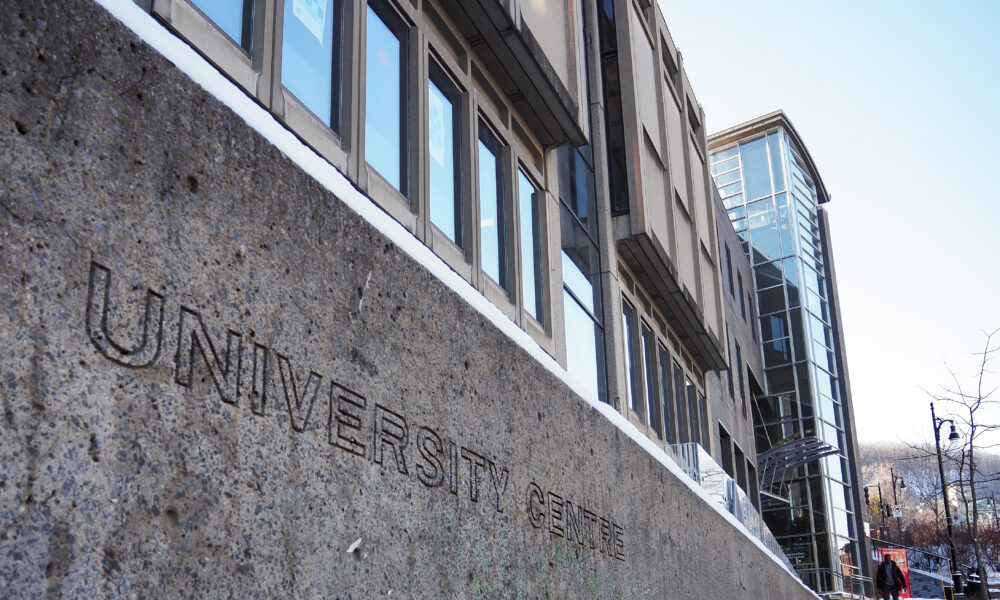
The Cognitive Science Undergraduate Research Forum (CogSURF), Montreal’s first undergraduate-led conference of its kind, will host its inaugural event on Feb. 27 at the University Centre. This event aims to showcase undergraduate talent and break down the barriers to open science for undergraduate students across Montreal. With over 340 registrations, CogSURF will offer a day filled with presentations, networking opportunities, and showcases of research disciplines across the cognitive sciences.

Le Thuy Duong Nguyen, a U3 student in McGill’s Honours in Cognitive Science program and executive chair of CogSURF, began developing the conference in July 2024, where she assembled an executive board of undergraduate students from McGill.

“I personally found my passion for science and research through going to open conferences,” Nguyen said in an interview with The Tribune. “This was really a big mission of mine—to create something that would be accessible to all levels, universities, and disciplines to converge at one big event.”

Maria Lagakos, CogSURF’s executive co-director of partnerships and fellow U3 Honours in Cognitive Science student, explained some of the difficulties in the early stages of developing CogSURF.

“We really did this from the ground up,” Lagakos said in an interview with The Tribune. “As undergraduate students, we’ve had limited experience with conferences [….] It’s a little bit harder usually for undergrads to get involved in these large-scale conferences.”

Nguyen also discussed the development of CogSURF’s slogan: Connecting Minds, Making Waves.

“It’s been a really fun experience coming up with our slogan, which is really integral to our mission,” Nguyen said. “The logo itself has been a long process in the making. We went through so many iterations, and converged on this one where different waves represent different disciplines that are converging at this one conference.”

The event will open with a speech by Nguyen, followed by a presentation from keynote speaker Nancy Kanwisher, a professor of Brain and Cognitive Sciences at MIT.

“[Kanwisher] is my absolute role model and scientific hero,” Nguyen expressed, reflecting on how Kanwisher presented at one of the very first conferences Nguyen attended, sparking her interest in cognitive science research.

Afterward, there will be a flash talk session, where undergraduate students showcase their research in three-minute thesis-style presentations. Following lunch, CogSURF will hold a poster presentation session where 30 committee-selected undergraduate students will present their innovations, after which another flash talk session will take place. The day will also include a panel discussion featuring experts from a wide range of disciplines and institutions, including Ian Gold, Karim Jerbi, Doina Precup, Stevan Harnad, and Charles Reiss.

“I think we have top-notch speakers. This is my ideal panel scenario, and I’m really excited for it,” Nguyen said.

The closing ceremony will then announce the award recipients, and to commemorate the evening, CogSURF will host a ‘5 à 7’ networking event at the McGill Faculty Club.

Benjamin Lévesque-Kinder, a third-year undergraduate student in McGill’s Neuroscience program and executive co-director of partnerships at CogSURF, spoke about the future of the organization.

“Right now we’re hosting [CogSURF] at McGill, but we would really love to see it hosted by UdeM, Concordia, and UQÀM, in a way that most conferences do, where they jump around [locations],” Levesque-Kinder said in an interview with The Tribune. “The host institution brings their own perspective and intellectual background into it.”

The executives emphasized the importance of inter-university collaborations, which they believe is essential for CogSURF to become an annual conference attracting students from across Canada and beyond. CogSURF serves as an important step for undergraduate students to get involved in open science research, increasing accessibility and transparency in the cognitive sciences field.

Arts & Entertainment, Theatre

Fairies square off against lords in ‘Iolanthe’

From Feb. 14-22, the McGill Savoy Society brought Gilbert and Sullivan’s 1882 comic opera, Iolanthe, to life at Theatre Plaza. The show follows young shepherd Strephon (Matthew Erskine, BA 2022), and his beloved Phyllis (Aniela Stanek, U0 Arts). After he joyfully announces their engagement, a few wrinkles become apparent: She is a ward of the state, and he is just a lowly shepherd (even if he is secretly a fairy). When the engagement is rejected by parliament, he does what any half-fey suitor would do, and calls in his mother’s company of fairies. The company—that apparently is the collective noun for fairies—in turn does what any company of fairies would do, and infiltrates the British House of Peers.

“What makes Iolanthe special is its magic,” Erskine told The Tribune. “It’s a show about fairies, half-fairy, half-mortal shepherds, and sneering peers. It’s just imbued with such magic and wonders.”

The story unravels from there, by turns tragic and comic, chronicling the rising and falling fortunes of our star-crossed lovers. 

“Iolanthe is a really amazing operetta because it threads that line between a really great comedy and also some dark and tragic bits that you don’t see in a lot of comic operas,” Michael Quinsey, BA 2022 and Stage Director of the production, commented. “You have some nice dark music that’s a lot of fun to work with, and on top of that, there’s some huge energetic ensembles that are just so much fun to put together on stage.”

Unfortunately for Strephon, while he is scheming how to gain permission for the engagement, Phyllis spots him with his fairy mother—who looks much younger than she really is—and assumes that he is flirting with her. 

“She’s a girl’s girl. I feel like she’s very in love with both herself and Strephon,” Stanek said about her character. “She’s in her own little world, […] but by the end of the show, she’s become a lot more accepting of other people.”

A particularly energetic turning point comes towards the end of the first act, as Strephon is inducted into the House of Peers, as part of the fairies’ master plan. In an eerily current turn of events, our hero is suddenly vested with complete control to both make and approve laws. But fear not! Rather than slashing foreign aid budgets, he directs his unbridled executive power towards the noble aims of more lenient sentencing for criminals and support for the poor. 

Unfortunately, even the satisfaction of a well-implemented social welfare policy is not enough to fill the woman-sized hole in Strephon’s heart, and he pines after Phyllis hopelessly.

As it turns out, Strephon is not the only one pining away—the Lord Chancellor (Samuel Valentim-Gervais) also has eyes for Phyllis. When she rejects him (and all of her other suitors, for that matter), the Chancellor spirals into despair, delivering a truly impressive patter song on a timeless theme: Bedrot. Reassuringly, it seems that even the Victorians couldn’t get out of bed, as he bemoans his unrequited love with his faithful teddy bear. 

The second act culminates with an aria from Strephon’s fairy mother, Iolanthe, strikingly moving after the comedic first act, in which she sacrifices her own life in a selfless plea for her son’s marriage rights. Luckily for the characters, her tragic sacrifice is brief, and the Fairy Queen (Ashley Bissonnette) collaborates with the House of Peers to revise all necessary rules in order to save Iolanthe’s life, approve the marriage between Strephon and Phyllis, and pair up all the rest of the fairies with parliamentarian partners. 

With all of the conflicts simultaneously resolved by the Fairy Queen, whose bouncy incompetence is a perfect equal and opposite to the pomp and circumstance of the Lords, they all dance off stage in a fittingly whimsical finale for a thoroughly whimsical production. 

Iolanthe was onstage at Theatre Plaza from Feb. 14-22.

Science & Technology

How simulation learning is shaping inclusive healthcare

Simulations are becoming a more and more common training method for medical students. In a typical simulation, students resolve a medical case presented by an actor, and then participate in debriefing sessions led by a supervisor to analyze and critically review their experience and performance. This process commonly follows the “Promoting Excellence And Reflective Learning in Simulation” (PEARLS) framework, developed by Adam Cheng and Walter Eppich in 2015. While this protocol has been effective in safely preparing medical students for interactions with real patients, work remains to be done on incorporating diversity, equity, and inclusion into the trainings. 

In a recent paper published in the journal Advances in Simulation, Niki Soilis, a doctoral student at McGill’s Institute of Health Sciences Education, presents an altered version of the PEARLS protocol which examines the impact of social structures on healthcare and explores ways to mitigate systemic inequalities.

Soilis, now completing her doctoral studies, previously worked as the education manager at McGill’s Steinberg Centre for Simulation and Interactive Learning at the Faculty of Medicine and Health Sciences for eight years. During that time, she noticed a significant underrepresentation of marginalized communities in medical training—an issue she is now tackling through her research.

“That became kind of the driver of, ‘How do we, as a program, start to integrate more inclusive and diverse perspectives in our curriculum?’ I started to look at the ways we can go more mainstream and make it into the culture of our programs,” Soilis said in an interview with The Tribune.

To address this gap, Soilis collaborated with other professionals to incorporate the Community Links Evidence to Action Research (CLEAR) toolkit into medical simulations. Developed at McGill, the CLEAR toolkit helps healthcare practitioners integrate advocacy and awareness of social determinants of health into their daily practice. 

Initially tested by frontline healthcare workers who attested to its efficacy, the toolkit was subsequently integrated into the PEARLS approach to debriefing, ultimately leading to the creation of the PEARLS Debriefing for Social Justice and Equity (DSJE) tool. Implementing the PEARLS DSJE tool is more cost-effective as compared to creating separate simulations programs specifically for diversity and inclusion.

“So we kind of merged two worlds, hoping that they would be more accessible,” Soilis said. “It was a way of allowing people to really have dialogue on a consistent basis, rather than making programs that are just dedicated to that. Simulation is one of the most expensive educational modalities—it’s known as highly effective, but it’s much more expensive than classroom-based teaching—so this became a way of making [diversity, equity, and inclusion] more incorporated.”

The PEARLS protocol underwent further refinement after consultations with Cheng and Eppich, its original creators. One of the key additions was an “Activism” phase, which encourages discussions on how systemic inequalities affect patient care and how practitioners can address these barriers.

This phase prompts medical trainees to consider how follow-up care should be handled while recognizing the complex intersectional realities of medical treatment.

“My research is specifically in [houselessness], and one of the interventions that we’ve discussed in groups is, when a person comes in, doing an analysis of their psychosocial profile and understanding their context,” Soilis said. “Where do they get to sleep? Are they on a substance? So sometimes it’s not these grand changes: It’s just having an awareness of a bigger picture, not just the person.” 

Another key update to the PEARLS DSJE framework is its emphasis on community engagement. In practice, this means incorporating discussions about systemic inequalities within healthcare, the marginalization of certain communities, and strategies for fostering a more supportive and inclusive medical environment.

Soilis and her team hope that by implementing this new version of the framework, healthcare professionals can actively work towards reducing harmful biases in medical practice.

“It shouldn’t be the only way. It should still [be part of] a better-integrated curriculum, but this is one way, and we’re hoping that through our experience in implementing it, others will see its value,” Soilis said.

Soilis offered some advice for current and future medical students at McGill. “Just stay open, in practice, to reflecting on [yourself] continuously,” Soilis said. “Look at why we are the way we are, with a nonjudgmental stance, and reflect on how it affects how we deliver care.”

News, SSMU

SSMU Executive candidates talk transparency between students and admin at debate

The Students’ Society of McGill University (SSMU)’s candidates’ debate for the Winter 2025 election took place on Feb. 18, with eight of 10 listed candidates for the Executive Committee in attendance. The virtual event comes ahead of the election, which will take place from Feb. 21 to March 7. Each applicant independently answered questions submitted by current executives, student unions on campus, and undergraduate attendees before engaging in debate with their opponent. 

The Vice-President (VP) Finance candidates were the first slotted to debate, but as neither Dylan Seiler nor John Vogel was present, the debate moved on to the role of VP University Affairs.

As Susan Aloudat is running for the position unopposed, the debate portion of her presentation was skipped. Aloudat explained she intends to mediate issues between the student body and McGill administration by encouraging student participation in SSMU elections and referendums. The result of these votes, she said, creates empirical evidence of what undergraduates want, which she believes is the best tool to compel the administration to support student initiatives. 

The current VP Internal Zeena Zahidah is running for re-election unopposed. She explained that she intends to navigate moments of turmoil for SSMU by prioritizing transparency between students and the Board of Directors. Zahidah remarked that turmoil arises when student newspapers write what she claimed to be misleading headlines and articles about the student union. She cited that this could be a result of issues in SSMU’s transparency regarding their internal proceedings. 

The night then turned to candidate debates as VP External hopefuls, Seraphina Crema Black and Jaanashee Punjabi, began their introductions. 

Black stated that as a student senator and a Legislative Council member, she has experience advocating for students to university administration. If elected, she intends to strengthen McGill’s relationship with other universities across Canada and Quebec to form a united front against tuition hikes. She also intends to advocate for all student activist groups across campus equally, disregarding any personal preferences or biases she herself may hold. 

Punjabi said her experience as a Sustainability Commissioner and a member of the Legislative Council has given her insight into SSMU’s potential to create change on campus. As VP External, she claimed she would promote collaboration between governing bodies and advocacy groups so that SSMU may better represent students’ voices on campus and beyond.

A student submitted a question online asking how both plan to represent activist and community groups on campus to McGill administration. 

“I’m very dedicated to remaining impartial, leaving my own positionality behind, and really listening to the student body,” Black said. “Whatever I believe has nothing to do with that. It is my duty to represent their opinions and their needs best.”

“I believe that communication and transparency is the most important,” Punjabi said. “Furthermore, making sure to take note of what needs to be represented at different organizational levels […] and making sure everyone is equally heard and demands and expectations are met. It’s part of my platform, and one of the main reasons, the biggest reason, I’m running.” 

Next, the two candidates for VP Student Life, Hamza Abu Alkhair and Raihaana Adira, introduced their platforms. 

Abu Alkhair stated that his three goals as the VP Student Life would be to increase visibility and collaboration among clubs on campus, as well as simplify their logistics. He also noted that as the current Director of Clubs and Services—a role which took on the bulk of the VP Student Life portfolio amidst the position’s ongoing vacancy—he is already familiar with the responsibilities of the position.

“I’m ensuring that I’m interacting a lot with the constituents, the clubs themselves, and the people who want to apply for those clubs,” Abu Alkhair said. “I created a rubric as well that assesses the finances [and] alignment with campus policies and a few other things which do make the [club status approval] process faster for both me and the club.”

Adira’s platform is focused on improving undergraduates’ mental health by supporting student groups and grassroots organizations which provide resources and assistance on campus. 

“I want to really focus on mental health supports and advertising resources like the Peer Support Center, because if students are struggling with their mental health, they can’t engage in other SSMU-related activities,” Adira said. 

Kareem El-Hosini, who is running unopposed for VP Sustainability and Operations, then presented his platform, drawing attention to wasted spaces in university buildings and unaffordable food options on campus. This is El-Hosini’s second bid for the role as the results of his first run in the November by-election were nullified due to a lack of voter engagement.

The debate concluded with a presentation from current SSMU President Dymetri Taylor, who is currently running for re-election unopposed. His former opponent, Sarah Abdulkarim, was disqualified from the race due to a lack of administrative approval allowing her to extend her degree beyond 120 academic credits. Taylor stated that he has three main goals for next year, should he be elected: Improving governance by working with a consultant, increasing student solidarity, and creating more efficient processes for conducting business between the society and its clubs and services.

Throughout the debate, 10 students were in the audience. Taylor acknowledged this low attendance, and the low voter turn-out of past SSMU elections, in a written statement to The Tribune

“I think students who vote will already participate. The issue is that there is more general student disinterest in the electoral process,” Taylor wrote. “For example, 1,000 students have unsubscribed from receiving the simply voting emails, which is equivalent to signing away one’s right to have their voice heard. It’s, frankly, quite worrisome.”

Hockey, Sports

The Tribune’s sports highlights of the week

International: Canada clinches the 4 Nations Trophy 

In a finish that perfectly encapsulated the spirit of international hockey, Team Canada secured a pulsating 3-2 overtime victory over Team USA on the back of a show-stopping finish from number 97, centre Connor McDavid. In the stands and across the country, the crowd went wild. 

Carving their route to the final, Canada defeated Finland 5-3 and Sweden 4-3 in two back-and-forth showstopping games, but fell short 3-1 to Team USA in their last preliminary fixture. Within nine seconds of the opening buzzer, both Brady and Matthew Tkachuk—brothers from the U.S.—as well as Brandon Hagel of Canada saw the sin bin for dropping their gloves and letting the fireworks rip. Canada could not come away with victory—that is, until the final. 

Canada centre Nathan MacKinnon kicked off the scoring in the first period with a nifty wrist shot that nestled into the back of the net. Shortly after, though, USA enforcer Brady Tkachuk tapped in the puck to level the score. The back-and-forth affair saw momentum swings that kept fans on the edge of their seats, with neither team able to establish more than a one-goal advantage throughout regulation time. Midway through the second period, defenseman Jake Sanderson hurled the puck at goal, and it flew in off a slight deflection for a 2-1 lead for the USA. Every shot and every save seemed to echo with championship implications. And that is exactly how it went, with USA centre Sam Bennett shelving an assist from right winger Mitchell Marner to tie the game up in the latter stage of period two. 

In the end, it took sudden death overtime to separate the evenly matched sides, with Canada finding that extra gear when it mattered most. With the clock creeping down, at the eight-minute mark of overtime, Team Canada found a moment of brilliance. Fans had their hearts in their mouths as McDavid screamed up the ice to get in position in front of the net. Marner’s hard work in the left corner of the USA defensive area culminated in a smooth flick pass back into the middle of the ice to McDavid, who controlled the puck, pulled back, and released his shot. Everything seemed to move in slow motion. The puck crashed into the net, and Canadians all around the world unleashed a collective cheer. 

After a tumultuous month for Canadians in the political sphere following threats from U.S. President Donald Trump, this win was momentous, with Prime Minister Justin Trudeau remarking to the U.S.: “You can’t take our country—and you can’t take our game.”

McGill: Redbirds hockey wrestle a win in the quarter-finals 

In a tense quarter-final matchup, the fourth-place McGill Redbirds Hockey secured a crucial 2-1 victory over the fifth-ranked Université du Québec à Trois-Rivières (UQTR) Patriotes in Laval on Wednesday night. Right winger Charles-Antoine Dumont emerged as the hero, netting the game-winning shot with just over three minutes remaining in regulation. 

The game, which started 40 minutes late due to a shattered glass pane during warm-ups, showcased McGill’s defensive prowess as they nullified the UQTR attack through each period. Although neither team scored within the first period, forward Alexandre Gagnon opened the scoring midway through the second period, asserting his dominance and swinging momentum in McGill’s favour. 

Away days always come with a bit more than what meets the eye, and this game was no smooth skating. UQTR’s forward, Felix Lafrance, evened the score on a power play late in the second, and after a serious battle in the UQTR defensive end, Dumont’s clutch goal off a rebound from centre Xavier Fortin sealed the win for the Redbirds. Goaltender Alexis Shank stood strong with 21 saves, giving McGill their fifth win in six meetings with UQTR this season.The Redbirds proceeded to capitalize on their lead with a dominant 5-2 victory away at Trois-Rivières, sweeping the series and skating proudly into a league semi-final series against Concordia Stingers starting on Feb. 26. Earlier this season, the Redbirds lost to the Stingers 1-3 in a regular season faceoff and 3-7 in the Corey Cup. A high-stakes week lies ahead as the team hopes for redemption and a shot at the final. Fly Birds!

Editorial, Opinion

Winter 2025 SSMU Executive Endorsements

The Tribune’s Editorial Board presents its endorsements of the candidates for the 2025-2026 Students’ Society of McGill University (SSMU) Executive Committee. Editors researched and communicated with each candidate before leading an Editorial Board discussion on the candidates’ qualifications and vision for their prospective roles. Editors with conflicts of interest abstained from discussing, writing, and editing relevant reviews.


President

Dymetri Taylor 

Taylor’s second run for election, after one year of holding the President position, centres on three core tenets: Governance, identity, and fiscal. He plans to update the governing SSMU documents and delegate the powers of the SSMU Board of Directors (BoD) to the SSMU Legislative Council, allowing the latter to receive reports, authorize spending, and more, in an effort to allow for a democratic and comprehensive decision-making process. To create a stronger campus-wide community, Taylor will focus on orientation week for first-years, planning an introductory SSMU presentation for all first-years, encouraging them to get involved with university governance, and increasing campus engagement with student bodies. Fiscally, Taylor hopes to save money by combining the VP Internal and VP Sustainability and Operations positions. He wants to use this money to host more events, such as a carnival or re-instating Frosh dinner. He wants to work toward divestment from weapons manufacturing through the Board of Governors (BoG) but states that it’s a matter of phrasing the proposal in a way the BoG can approve. Taylor additionally has plans to improve institutional memory, voter turnout, and administrative relations—all through better record-keeping, freshman engagement, and public emphasis on student concerns. 

Endorsement: Yes, with reservations to Dymetri Taylor

The Tribune endorses Taylor for a second term. He has concrete plans to increase student democracy and allow for more students to hold decision-making powers. Taylor’s year of experience holding the position has given him the institutional experience to effectively and seamlessly improve governing documents and increase student engagement. However, The Tribune is wary of Taylor’s approach to student calls for pro-Palestine activism and divestment from Israeli weapons manufacturing. While he claims he has plans to continue working with the BoG to draft a divestment proposal—an area where his institutional memory could prove an asset—in his one year in the role, he has not taken any concrete steps toward this. Furthermore, he must work tirelessly to gain back the trust of the student community regarding upholding student democracy, given recent calls for his impeachment. He must be honest and open with the student body of SSMU’s constraints, and take a firmer stance in support of student activism. 


VP Finance

John Vogel

Vogel cites experience with administrative financial work, which he deems the key focus of VP Finance. He hopes to sustain current VP Pauline Jolicouer’s eradication of SSMU’s deficit, while also improving administrative efficiency: A lack of which has previously caused delays to SSMU approving funding applications and club bank accounts. This would allow Vogel to maximize financial allocations to campus activism and local community groups, in collaboration with VP External. As the SSMU member who moved to impeach President Taylor in December 2024, Vogel reports no concerns about their collaboration if both are elected to the incoming executive team. Vogel further states that his motion to impeach was symptomatic of longstanding structural problems with SSMU, which he stated are not VP Finance’s focus. He commits to publicly advocating for progressive political movements supported by a student majority that highlight these issues with SSMU’s governance, particularly the right to Palestinian liberation. 

Dylan Seiler: 

Seiler’s campaign centres around improving financial accessibility, transparency, and efficiency within SSMU. A key issue he aims to address is the understaffing of various Finance committees, such as the Funding Committee, which has caused delays in club and service funding. By properly staffing these positions, he hopes to reduce bureaucratic inefficiencies. To promote transparency, he would release monthly financial expenditure reports and push for financial discussions to be held in public sessions rather than private ones. Dylan also prioritizes increasing accessibility to financial resources for student services, which currently lack direct access to their bank accounts. Drawing on his experience in the Music Undergraduate Students’ Association (MUSA), where he turned a $6,000 CAD deficit into a $5,000 CAD surplus by cutting unnecessary costs without reducing services to students, Dylan believes his financial expertise and governance experience set him apart from other candidates. 

Endorsement: Yes, with reservations to Dylan Seiler 

The Tribune endorses Seiler’s campaign for VP Finance. The VP Finance position requires extensive experience with large budgets and navigating bureaucratic barriers, which Seiler has demonstrated experience in with his work at MUSA. His close collaboration with the current VP Finance, Pauline Jolicoeur, provides a strong foundation for and assists in a smooth transition to, the work he would be taking on next year. Furthermore, Seiler’s McGill-focused campaign emphasizes transparency and accessibility by centring concerns of students, particularly regarding insurance coverage, club and service budgets, and SSMU expenditures. However, both Seiler and Vogel’s failures to appear at the SSMU candidates’ debate on Feb. 18 raise concerns over how committed they are to earning students’ votes. 


VP Sustainability and Operations

Kareem El Hosini 

El Hosini’s platform prioritizes the reallocation of space within the University Centre to better serve students’ needs. In particular, he intends to implement procedures for determining which clubs and services are in spaces appropriate to their needs, and consider reassigning space to provide offices for clubs that are currently on the waitlist, or provide larger offices for clubs that would benefit from them. He is also interested in finding ways to better utilize the two cafeteria spaces and the bookable rooms in the University Centre. Beyond the allocation of space, El Hosini hopes to improve transparency and communication through channels like an anonymous feedback form. In the area of sustainability, El Hosini has proposed providing more support for SSMU’s community garden. 

Endorsement: Yes, with reservations to Kareem El Hosini

The Tribune endorses El Hosini for VP Operations and Sustainability. El Hosini’s experience in operations and logistics from previous engineering internships would be an asset in the role. Further,  The Tribune appreciates his commitment to ensuring that space in the SSMU building is allocated fairly and efficiently—although The Tribune urges him to implement a robust consultation process involving all potentially affected parties and stakeholders. It is crucial to ensure that decisions about space allocation are made carefully and equitably, and that the SSMU building is accessible and welcoming to all students. Additionally, El Hosini’s platform remains unchanged from his previous run in the Fall 2024 SSMU By-Election, the results of which were nullified because it did not meet quorum requirements. The Tribune encourages El Hosini to consider ways to develop his intentions for the role, in particular in the areas of student engagement and sustainability. 

VP Internal: 

Zeena Zahidah*

Zahidah’s campaign focuses primarily on strengthening ongoing and traditional events such as Four Floors and Faculty Olympics, as well as placing more emphasis on the structure of the committees—namely the First Year Council. She wants to reinvigorate SSMU’s presence on campus and emphasize to students that SSMU is student-led and representative of the student body. 

*Zahidah did not respond to communication from The Tribune, so we were unable to ask her questions and evaluate all aspects of her campaign.

Endorsement: No to Zeena Zahidah 

Despite Zahidah’s experience in the role, as she is the current VP Internal, her lack of responsiveness and dedication to the role concerns The Tribune especially as her responsibilities as VP Internal will increase if the role of VP Sustainability and Operations is cut. Her goals for the upcoming school year were vague, despite having had a year to hone them. Executive hopefuls, both incumbents and newcomers, ought to be able to actively express a clear vision and passion for the role. If elected, The Tribune encourages Zahidah to increase her presence and responsiveness within the role, and clarify her aims for the next academic year. 


VP External

Jaanashee Punjabi

Punjabi has served as Sustainability Commissioner at SSMU and currently works as VP External for the McGill Environment Students’ Society. She has demonstrated strong leadership and a deep understanding of the importance of student engagement within both university structures and broader community initiatives. Her advocacy efforts span across various social justice causes, including collaborations with organizations like UTILE, ECOLE, and the McGill Office of Sustainability . Additionally, her involvement in municipal-level youth advocacy showcases her ability to engage with external groups and strengthen ties between SSMU, student unions across Quebec, and other universities. Punjabi’s platform is built on the goal of expanding student representation at the municipal and provincial levels, and has a proactive approach to fostering collaboration with external organizations. 

Seraphina Crema Black: As the VP External of MUSA, a member of the Legislative Council, and a student senator, Black attests that her past experience advocating for students’ interests has prepared her well for the responsibilities of VP External. Among Black’s priorities for the role is to strengthen SSMU’s ties with other student unions across Quebec to fight against common threats—such as tuition hikes. Stressing the need for SSMU’s engagement beyond McGill, Black looks to maintain strong ties with the Milton-Parc community and continue collaborating with UTILE on housing initiatives. Black also aims to build on Hugo-Victor Solomon’s work of engaging the student body through email and social media communications, as well as on-the-ground tabling on campus. Black believes that proactive engagement of student groups and transparency with constituents will create a trusting relationship with the student body, enabling her to best advocate for their needs. Black aims to maintain an unbiased stance on to genocide in Palestine and to represent students’ interest based on referendum votes, rather than personal views, noting that the Policy against Genocide in Palestine received a majority vote from students.

Endorsement: Yes, with reservations to Jaanashee Punjabi

While she expresses strong commitments to student movements, Indigenous advocacy, and Palestinian solidarity, Punjabi’s plans for translating these commitments into actionable policies remain vague. The Tribune believes that while Punjabi’s commitment to student activism is clear, the VP External role requires a more structured and detailed plan of action for students at all levels. Moreover, The Tribune holds that unlike Black’s proposed platform, the VP External role demands a greater commitment to anti-oppressive, anti-colonial politics, and that Solomon’s tenure demonstrated that support for Palestine and advocacy for SSMU’s constituency can, in fact, go hand-in-hand. 


VP Student Life

Raihaana Adira:

Drawing on experience on the Arts Undergraduate Society (AUS) Legislative Council, Financial Management Committee, the Dean of Arts Committee on Student Affairs, among involvement in departmental student associations, Adira is making her second bid for an SSMU executive position. She previously ran against Taylor for president in a by-election. This time around, she says she wants to focus on student services, mental health, and club funding. Her platform for VP Student Life has four key components: Addressing mental health, accessibility, supporting student groups, and advocating for affordable food options on campus. Specific actions within these goals include advocating for McGill to reinstate floor fellows in the residences, establishing a mental health task force, streamlining club approvals, and advocating for more student-run food options on campus. 

Hamza Abu Alkhair: 

Currently serving as Director of Clubs and Services, Abu Alkhair has effectively taken on many responsibilities of the vacant VP Student Life role. He aims to strengthen McGill’s sense of community by improving event promotion and cultural club integration and advocating for centralized platforms, in person and online, to enhance visibility. He also prioritizes increasing awareness of student services, including photography services offered by the McGill University Photography Students’ Society and free meals provided by Midnight Kitchen, through accessible information hubs. To address room booking inefficiencies faced by clubs outside the SSMU building, he proposes a streamlined venue booking system with an up-to-date contact directory. Additionally, he calls for revamping the SSMU website and replacing mandatory in-person workshops for club executives with self-paced training modules. Drawing from his leadership experience as former president of the Arab Students’ Network (ASN) and involvement in student governance, Abu-Alkhair is committed to improving accessibility, engagement, and transparency within SSMU. 

Endorsement: Yes, with reservations to Hamza Abu-Alkhair

Abu-Alkhair’s plans to improve event promotion, bolster club accessibility, and revamp SSMU’s website address key issues facing McGill students. His experience as Director of Clubs and Services and the president of an SSMU service gives him a leg up with a strong understanding of the role. His proposals to simplify room booking and enhance communication between student groups demonstrate his commitment to improving campus life and knowledge of the unique avenues available to VP Student Life to achieve these goals. However, his platform lacks a clear strategy for student mental health, a central aspect of the role, and he has not outlined concrete steps to ensure diverse student groups are represented. Given the VP Student Life portfolio’s responsibility for relations with clubs, services, and independent student groups—as well as for mental health promotion and collaboration with Student Services—The Tribune believes Abu-Alkhair is a strong candidate but urges him to prioritize a comprehensive mental health plan and a tangible framework for student representation.  


VP University Affiars

Susan Aloudat: 

As the VP Events for the ASN the last three years, Aloudat is now shifting her focus to the SSMU University Affairs portfolio. Running unopposed, Aloudat’s platform is based on three main priorities: Creating space to actively listen to students’ needs by instituting an open-door policy, being transparent around her work by maintaining the VP University Affairs blog, and organizing workshops to brainstorm solutions for students’ concerns. Aloudat wrote to The Tribune that her platform is purposefully “malleable” as she intends to shape her priorities around student needs once in office. She explained that she wants to start community consultations with SSMU services as they have their fingers on the pulse of the McGill student community and then extend to individual students. 

Endorsement: Yes, with reservations to Susan Aloudat The Tribune appreciates Aloudat’s commitment to listening to student concerns and shaping her actions based on constituent consultations. While Aloudat is a suitable candidate for the role, The Tribune encourages her to be more specific and ambitious in her plans for the VP University Affairs portfolio. This executive position is heavily involved in advocacy, research, and promoting equity; juggling these responsibilities is no small task. Therefore, The Tribune recommends that Aloudat find strategies to determine policy priorities early on so that she can actively work toward those goals during the year. Further, the VP University Affairs has one of the few student seats on the McGill Senate—a key leverage point in advocating for students to the administration. The current VP University Affairs, Abe Berglas, has set a high standard for how to effectively and consistently advocate for students through this governing body. Aloudat should consider how she can make the most of this opportunity.

A previous version of the article stated that Black wished to remain “neutral” on her stance on Palestine. Black in fact hopes to remain unbiased to advocate for students’ opinions as expressed through referendum questions. The Tribune regrets the error.

Science & Technology

The unspoken crisis: How fears of aging are expressed in news reporting

With the prevalence of cosmetic procedures, skincare products, and diets aimed at reducing the effects of aging, and with tech entrepreneurs spending millions annually in the hopes of reversing the process, aging is often seen as something to be feared and prevented at all costs. Five years ago, when the first wave of the COVID-19 pandemic made its way to Canada, it disproportionately struck older adults, specifically those in long-term care homes: Around 80 per cent of COVID-19 deaths occurred in adults aged 65 and older. Although mainstream media heavily reported on the deaths of older individuals, their portrayal reflects our society’s underlying negative sentiment towards older adults and aging. 

In a recent paper published in Ageing & Society, Oluwagbemiga Oyinlola, medical social worker and doctoral candidate at McGill’s School of Social Work, and his colleagues examined how the media’s portrayal of COVID-19 deaths in long-term care homes often employed a tragedy narrative that elicited a sense of pity for older adults while simultaneously trivializing their deaths. 

Examining news outlets’ portrayals of older adults during the pandemic provides deeper insight into societal attitudes toward this age group. Media coverage often depicted older adults as vulnerable and helpless, reflecting society’s tendency to view older people as a burden. This portrayal not only reinforced pre-existing negative stereotypes regarding older adults but also shaped public perception, in turn influencing the public health response. 

“[Articles] were written within the lens of a humanitarian crisis and tragedy rather than through the lens of action and really supporting older adults to grow and thrive in long-term care,” Oyinlola said in an interview with The Tribune.

To analyze media reporting, Oyinlola and his colleague, postdoctoral researcher Sabrina Lessard, independently reviewed 74 articles on long-term care home residents during the pandemic, with the sample drawing from both Ontario and Quebec. Their analysis, in collaboration with their supervisor Professor Tamara Sussman, helped uncover insights into societal attitudes towards older adults as reflected in the media. 

“The [sources in the] reporting mostly came from government officials and those working in long-term care. Although the main focus was older adults, they were totally excluded when it came to hearing their own experience,” Oyinlola added. 

The fact that reporting on older individuals relied almost completely on the perspectives of workers and family members, rather than the individuals themselves, speaks volumes on how older adults are viewed as an “othered” group that requires pity instead of as integral members of society. 

“Excluding older adults as a separate entity is a tragedy and form of ageism in itself and stigmatizes them as a separate group which needs humanitarian [support],” Oyinlola said. 

Additionally, media coverage primarily focused on those living in long-term care homes, despite only four per cent of older individuals residing in these facilities. This focus, portraying the deaths within these centres as a spectacle and tragedy, overshadowed the broader issues facing older adults during the pandemic. 

“COVID-19 taught us very explicitly that ageism is a highly embedded and internalized feeling about aging and being old,” Sussman remarked. “The fear is so high for all of us that we are willing to do everything we can to ‘other’ and [exclude] older adults as a way of reassuring ourselves from our own anxiety towards aging.” 

By framing these events as an inevitable tragedy rather than addressing the situation as one that requires protective action from both governments and the general public, older adults were effectively alienated from the wider community. 

The next stage of Oyinlola’s research aims to explore the first-hand experiences of older adults during the pandemic. To properly address the issues facing older adults in Canada moving forward, we must unpack our negative perceptions of aging and reconsider our obsession with youth.

Off the Board, Opinion

A struggle meal, among friends

I looked on, half horrified, half intrigued, as she set the timer for 10 minutes. Trying to hide my disgust, I attempted to confirm that this wasn’t some kind of strange mistake, a careless slip of the finger on the time selection wheel: “Did you mean to select 10 minutes, there?”

“Yeah, of course,” she responded, matter-of-factly. “That way, all the water cooks out, and the noodles get nice and soft. If you add the seasoning packet first, the flavour soaks in while it boils.” 

As a two-minute (or maybe three, if I get distracted) ramen-boiler, I was flabbergasted, but I decided after a few minutes that we could probably still be friends. Tolerance, after all, is crucial in such polarizing times as ours. 

At this point, the party was winding down, and the remaining guests were transitioning from tipsy to hungry. My friend’s ramen boiling—misguided as it may have been—set off something of a chain reaction. The smart thing to do would probably have been to boil a large pot of water and cook the packets all at once, but as it happened, a steady stream of people began preparing their own bowls of noodles, each one slightly different from the last. Whether it was boiling the water on the stove or using a kettle, cooking the noodles for two, three or four minutes (or, alas, 10…), adding vegetable bouillon or soy sauce or sriracha, or a host of other minor tweaks, everyone had their own routine—and everyone was convinced theirs was the best. 

While I was shuffling around the kitchen, avoiding the paths of these impromptu ramen chefs (it is, after all, impossible not to be in the way in a student’s kitchen), a whole world of instant ramen variations was revealed to me. I took on the role of observer, discovering details that had been lurking just beneath the surface, hidden in each of our solitary, late-night culinary pursuits. Instant ramen is the ultimate “meal of least resistance,” scarfed down at the kitchen counter between essays, or between parties. 

In his essay “Unzipping Mr. Rabbit,” Rob Percival writes about the way ultra-processed foods such as instant ramen disconnect us from traditional, tangible, and communal ways of preparing meals: “They are made for mindless consumption [….] We eat them alone or on the move. They are pre-prepared and pre-chewed.” 

Percival, in the end, decides to hunt and skin his own rabbits. While I don’t think my landlord would appreciate that, Percival’s ideas about taking time to physically prepare and give thanks for our food—and, crucially, to do this together—resonate with me. A well-planned soup can feed eight people for the cost of one UberEats delivery, and there’s no better place for a good conversation than over a simmering stew, with the snow falling outside and a cup of tea in your hand. 

Unfortunately, there’s no way to get around the fact that cooking takes money and time, and it is so easy to pay the 80 cents, take the five minutes, and eat in the dark, accompanied only by the glow of your half-written essay. 

In A Sand County Almanac, Wisconsin naturalist Aldo Leopold echoes Percival’s concern, writing, “There are two spiritual dangers in not owning a farm. One is the danger of supposing that breakfast comes from the grocery, and the other is that heat comes from the furnace.”

While I love Leopold, my midterm tomorrow morning precludes me from the noble labour of chopping my own firewood, and I fear that rent on a farm in the Plateau may be beyond my price range. The strange thing about our modern, industrialized context is that chopping your own firewood is a luxury, rather than a money-saving act of self-reliance. 

But I don’t think that’s the whole story: Cooking in community can drastically reduce the cost of groceries per person, while building bonds and strengthening social support networks at the same time. Three years of cooking for others in university has convinced me that it is not just an indulgence, but a necessary act of resistance in a society that pushes people to cook their instant noodles in three minutes, and eat them in two.

McGill, News, Recap

Recap: Alphonso F. Saville, IV reimagines colonial American Christianity in guest lecture

Alphonso F. Saville, IV, assistant professor of American Religious History at Union Presbyterian Seminary in Charlotte, North Carolina, delivered a talk on Feb. 18 titled “John Marrant’s Gospel: Reimagining Christianity in Colonial America.” Hosted by McGill’s Department of History and Classical Studies, the talk centred around research from Saville’s book, The Gospel of John Marrant: Conjuring Christianity in the Black Atlantic. The book is the first full-length study of Marrant, who was America’s first Black ordained minister. 

During the talk, Saville described Marrant’s life, writings, and missionary work, examining how he engaged with Christianity as both a tool for survival and a means of resistance. Saville also challenged conventional narratives surrounding early African-American religious history. Through literary and historical readings of Marrant’s autobiography, Saville drew connections between Marrant’s life story and its intersection between African and Protestant-European spiritual traditions and mythologies. Central to Saville’s argument was the notion of Conjure, a magico-religious tradition established by enslaved Africans in colonial North America. Saville explained that the pervasiveness of Conjure practices in early African-American religion exemplifies traditional African religions’ influences on early Black Christianity. 

“Early Black Christianity was shaped less by the doctrinal systems of Euro-American Protestantism and more by the rich and cosmological religions of west and central-west Africa,” Saville explained. “This African-rooted foundation is evident in the performative aspects of early Black worship, where prayer, song, and dance sermonizing often carried the cadence and intent of conjure rituals. Through these practices, congregants evoked spiritual powers to heal wounds, resist systemic violence, and enact justice.”

He cautioned against the tendency to approach transatlantic religious history primarily through Eurocentric frameworks. In doing so, he warned, one risks overlooking African American spiritual and social autonomy, as well as the profound African contributions to the religious development of the Americas.

“America’s religious history is not a monolith,” Saville said. “It is a tapestry, woven from many traditions, stories, and perspectives. Including these diverse voices enriches our understanding of the past and equips us to address the challenges with the present.”

As he concluded, Saville reflected on the lessons that can be drawn from Marrant’s gospel.

“[Marrant’s] story is not just a historical artifact,” Saville said. “It is a mirror, reflecting the ongoing struggle for justice and the creative ways people of faith continue to fight for their dignity and humanity.”

Read the latest issue

Read the latest issue